
Introduction
Xiaomi’s newly released Built-in Cable Power Bank 20000 22.5W 2026 retains the brand’s familiar minimalist aesthetic while introducing a standout functional upgrade: an integrated USB-C fast-charge cable that tucks away neatly to function as a convenient carrying lanyard. As a co-author of the updated 3C power bank Chinese standard, Xiaomi continues to spearhead industry compliance and safety benchmarks.
Housing a robust 20000mAh cell arrangement, the internal batteries pass rigorous safety evaluations—including nail penetration, crushing, thermal chamber exposure, and overcharge testing—without catching fire or exploding. The cells also show zero lithium plating after 300 intensive aging cycles. Output performance reaches up to 22.5W via broad protocol support covering PD3.0, PPS, QC3.0, FCP, SCP, and AFC. For diagnostics, it supports wired PC connectivity to inspect real-time battery status, charging telemetry, and anomaly logs.
Having previously explored earlier iterations of this series, ChargerLAB is set to deliver an in-depth breakdown of this latest high-capacity model.
Product Appearance
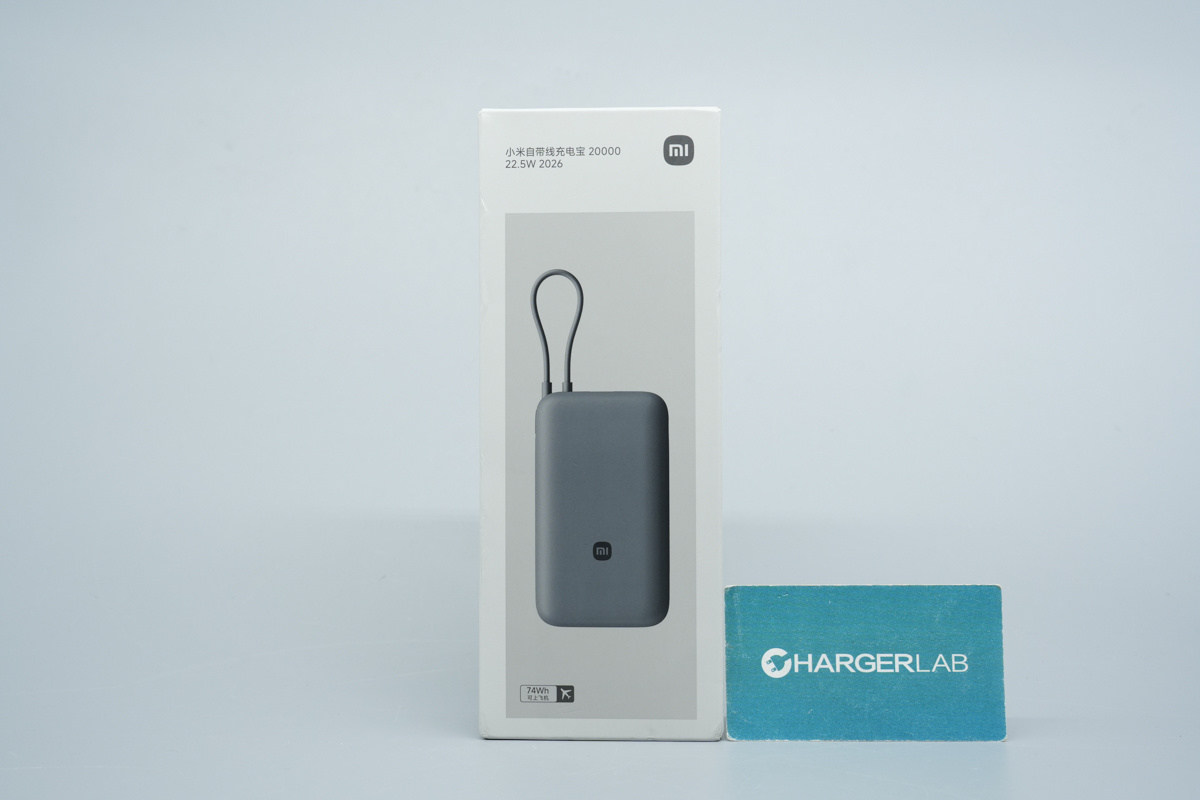
The front packaging retains Xiaomi's signature minimalist white aesthetic, featuring the product name "Xiaomi Built-in Cable Power Bank 20000 22.5W 2026", the Xiaomi logo, and the 74Wh airline-safe compliance icon.
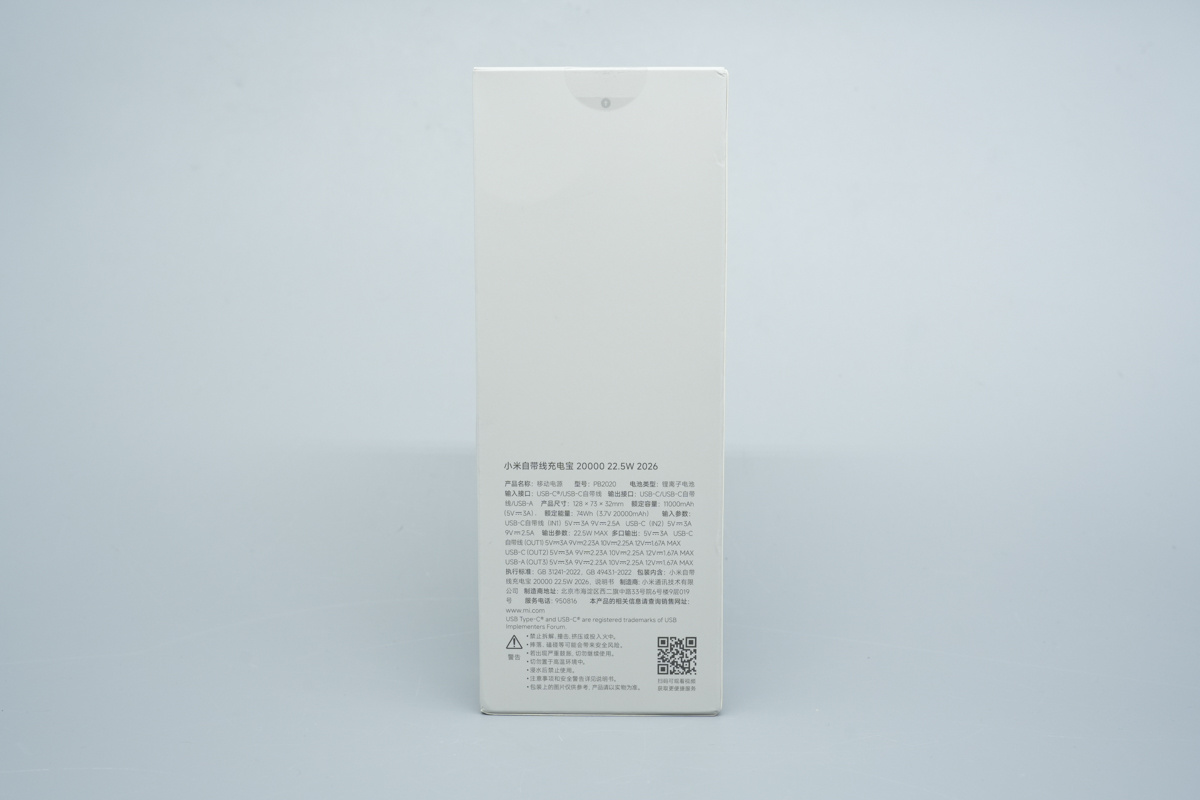
The back of the box is detailed with various product specs, manufacturer info, and warning instructions.
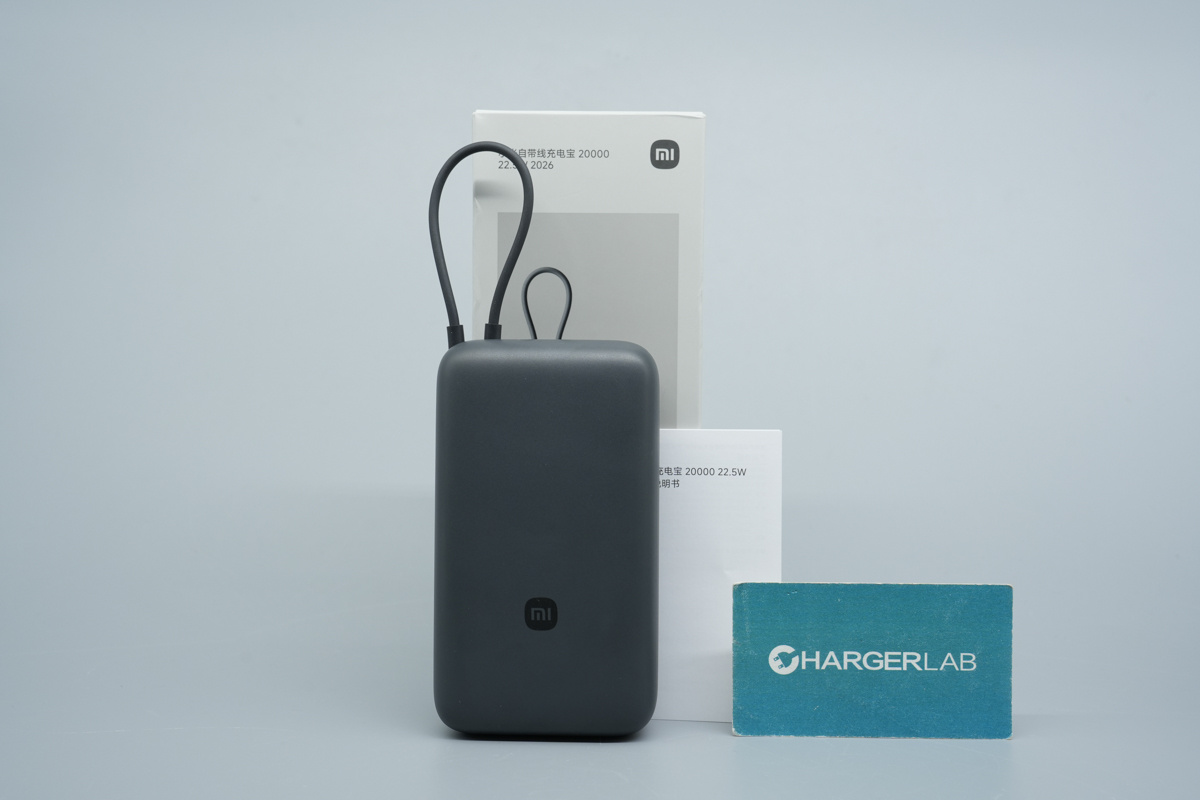
Unboxing the package reveals the dark gray power bank unit along with a paper user manual.
Product Exterior Design
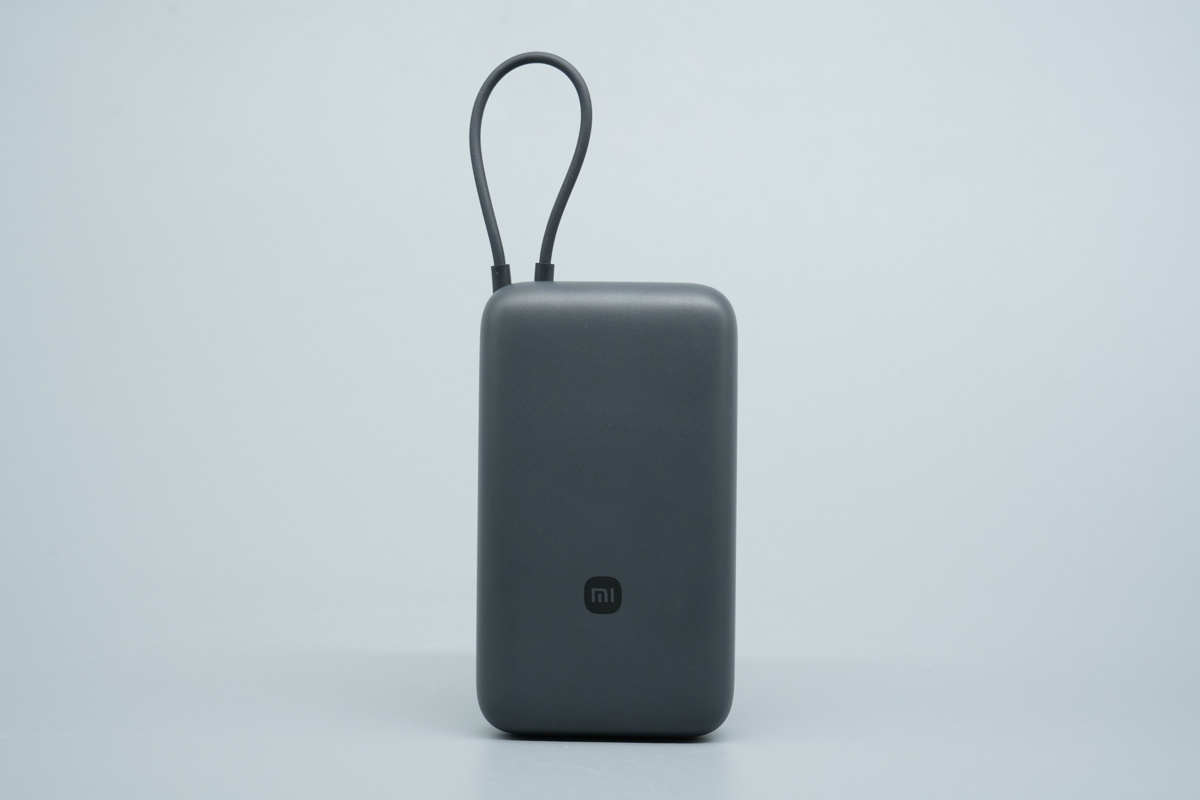
Encased in a dark gray, flame-retardant PC+ABS shell with a refined matte finish, the power bank delivers a smooth, fingerprint-resistant grip and a sophisticated, professional aesthetic.
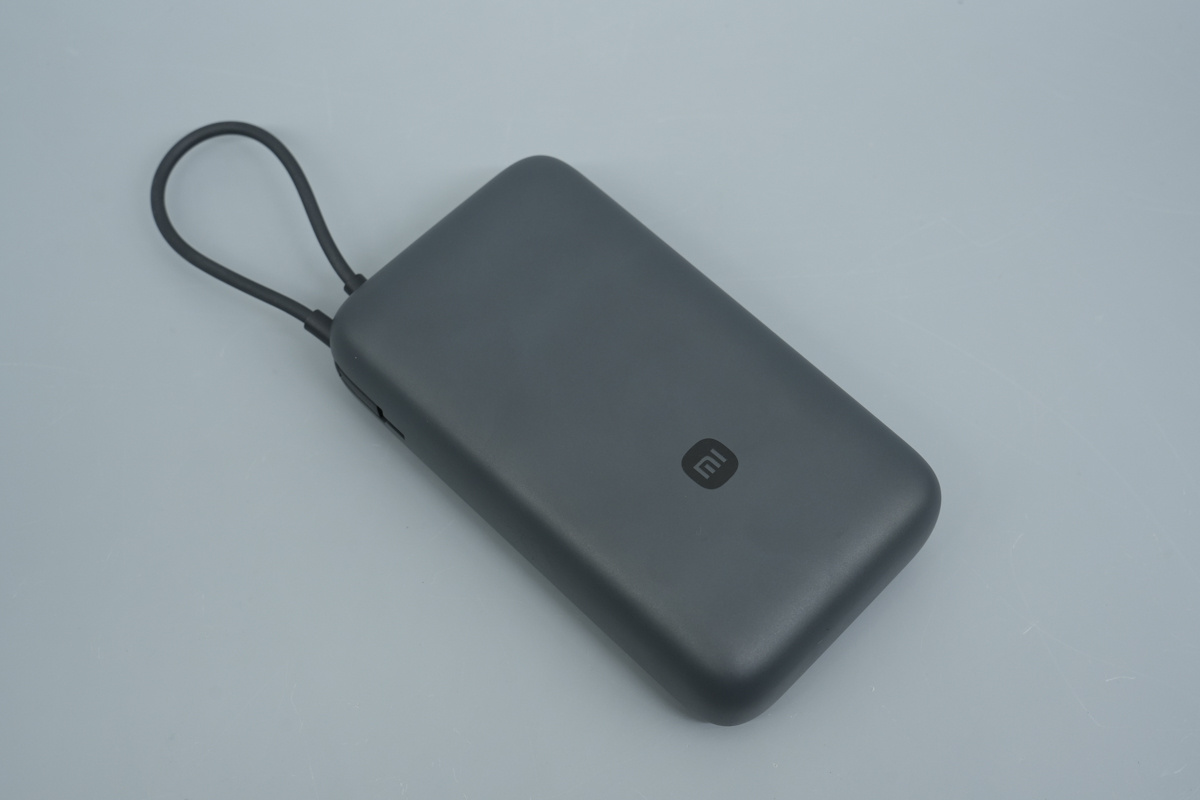
The center of the front panel adopts a glossy finish, printed with the brand logo for high recognizability.
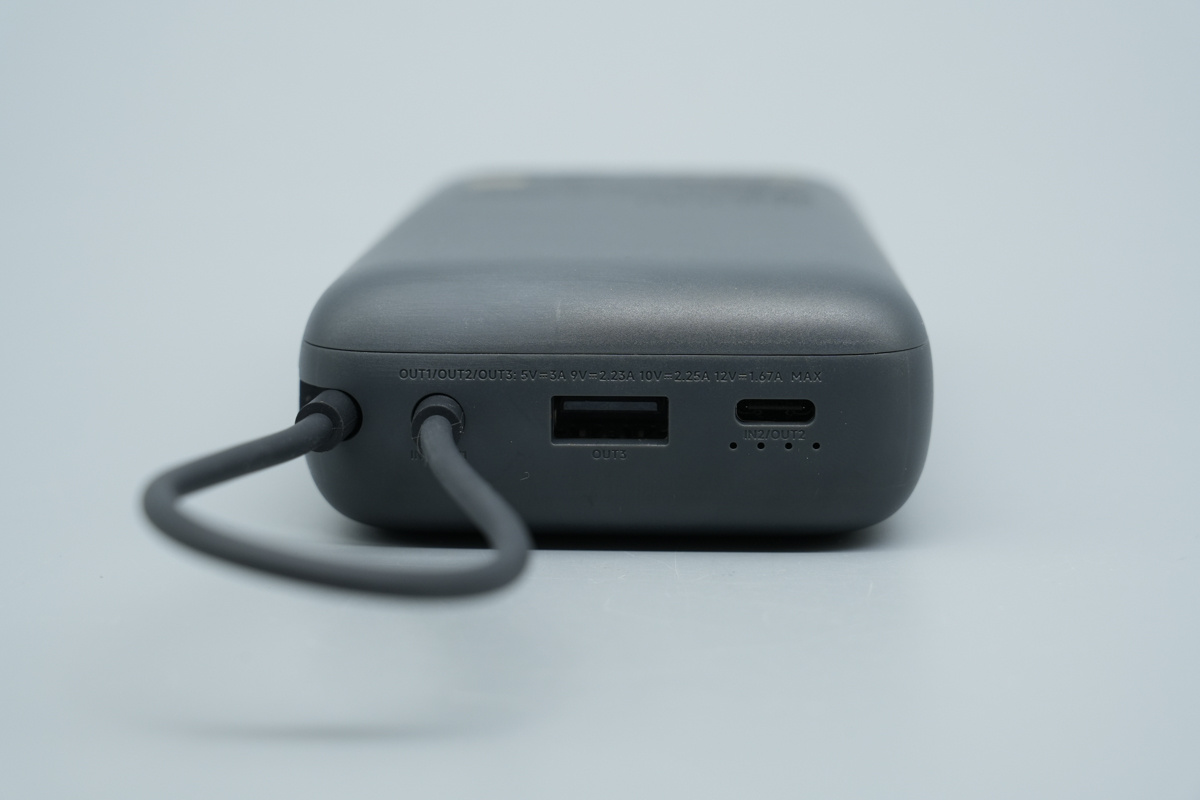
The top is equipped with a versatile array of ports and an integrated cable, including a permanently attached USB-C built-in cable, a USB-A output port (OUT3), and a USB-C bidirectional port (IN2/OUT2).
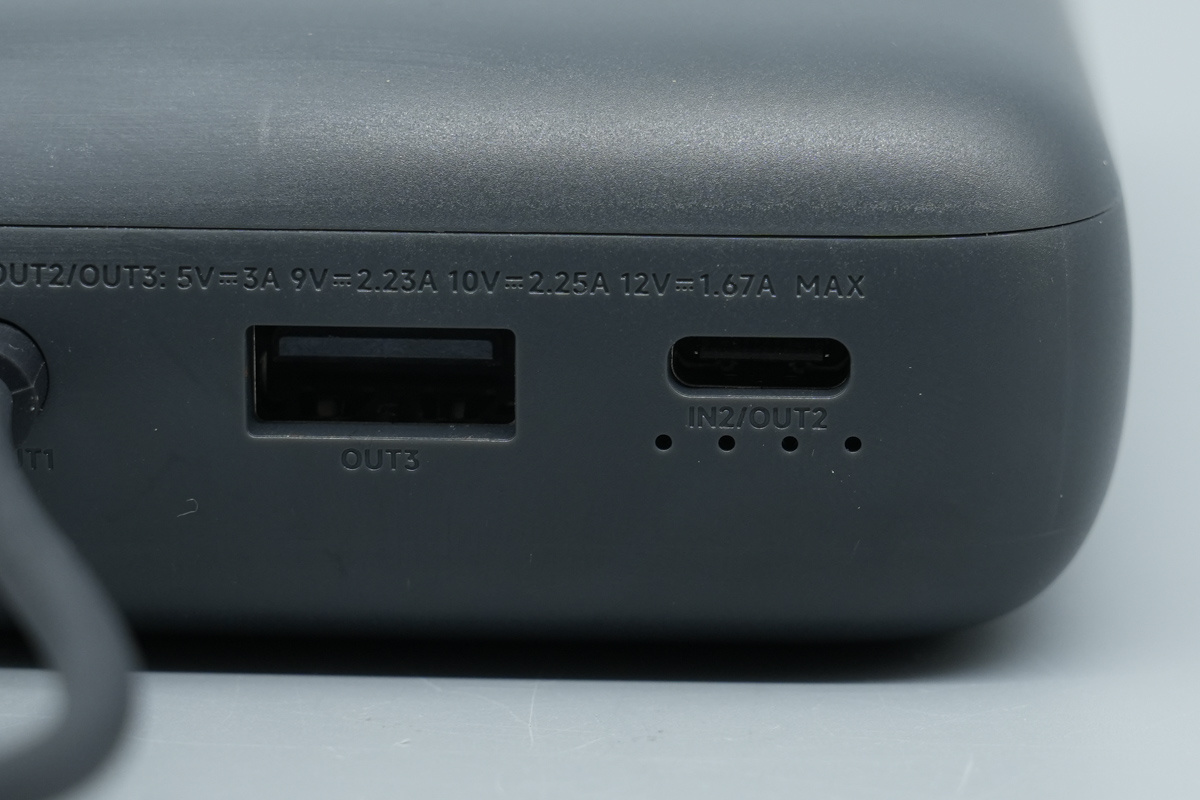
Parameters and markings are clearly printed above the ports:OUT1, OUT2, and OUT3 all support outputs of 5V 3A, 9V 2.23A, 10V 2.25A, and 12V 1.67A, delivering up to 22.5W MAX.
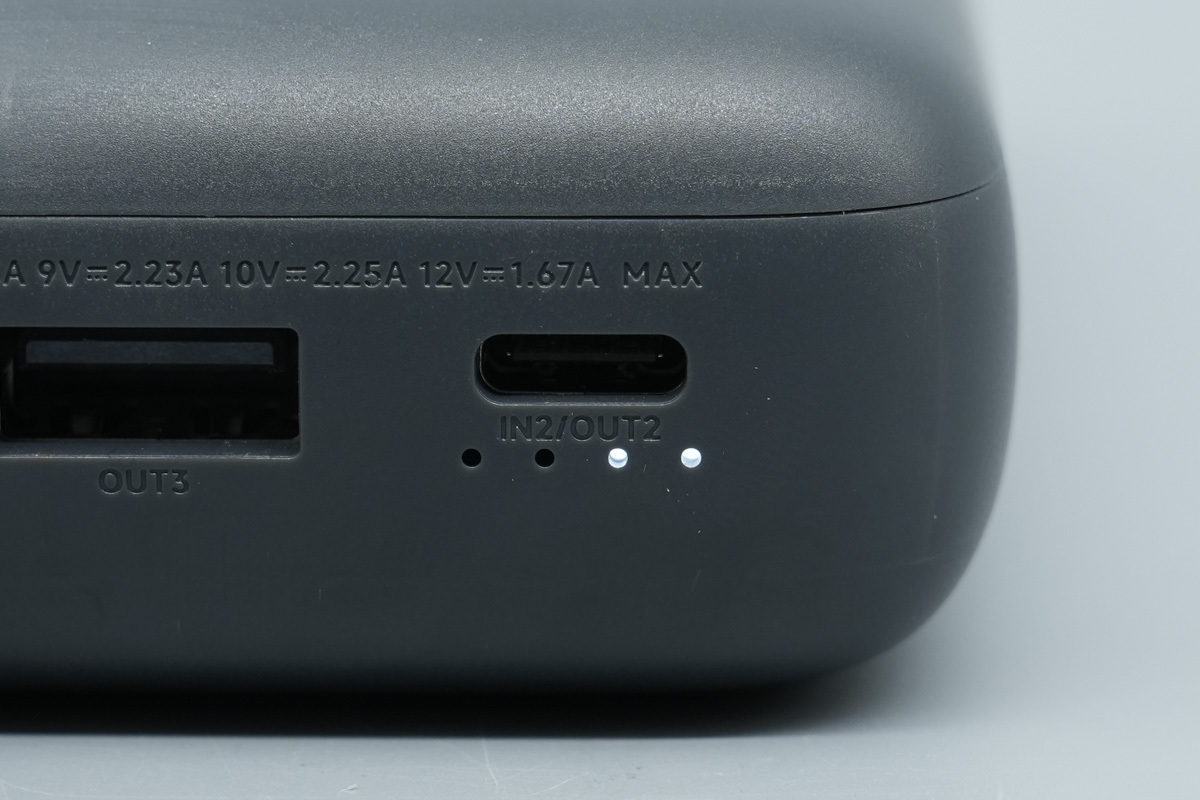
Four white LED indicators sits beneath the Type-C interface, providing clear real-time battery level visibility upon activation.
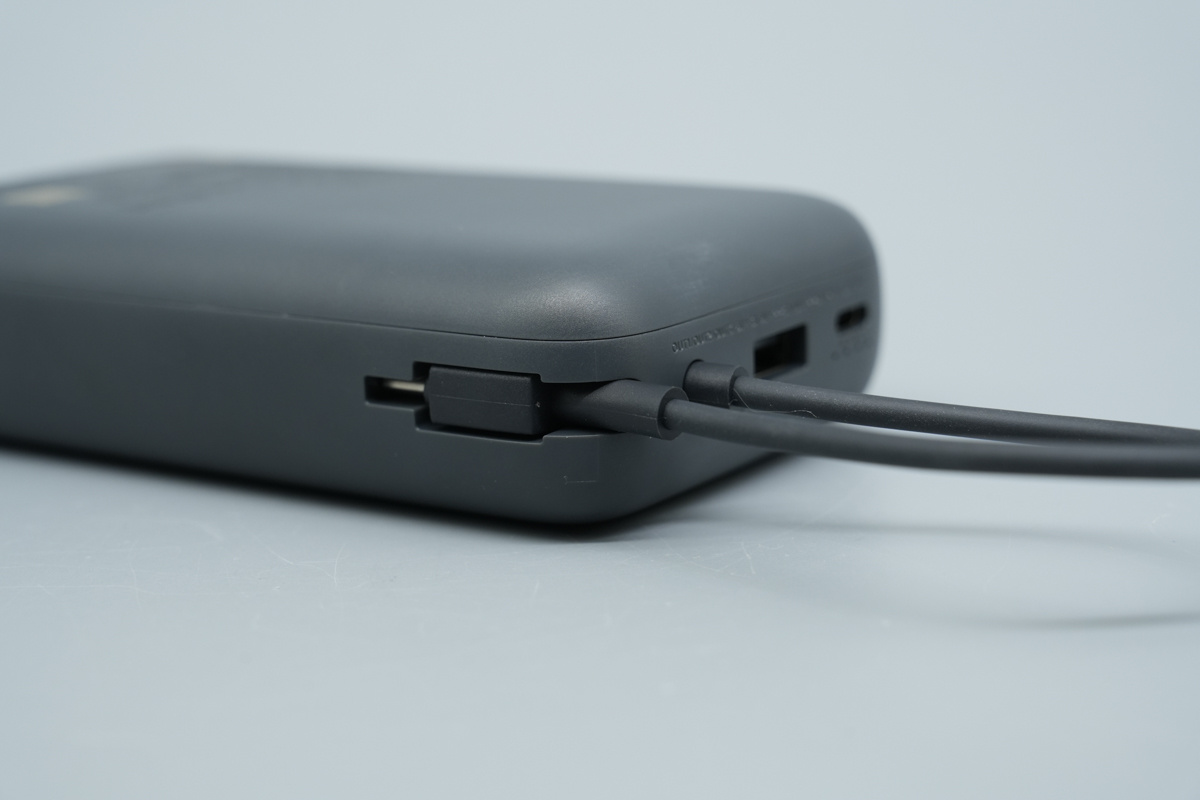
The integrated USB-C fast-charge cable boasts a clever design with its connector head neatly stowed in a dedicated side slot, doubling as a convenient carrying lanyard for on-the-go use.
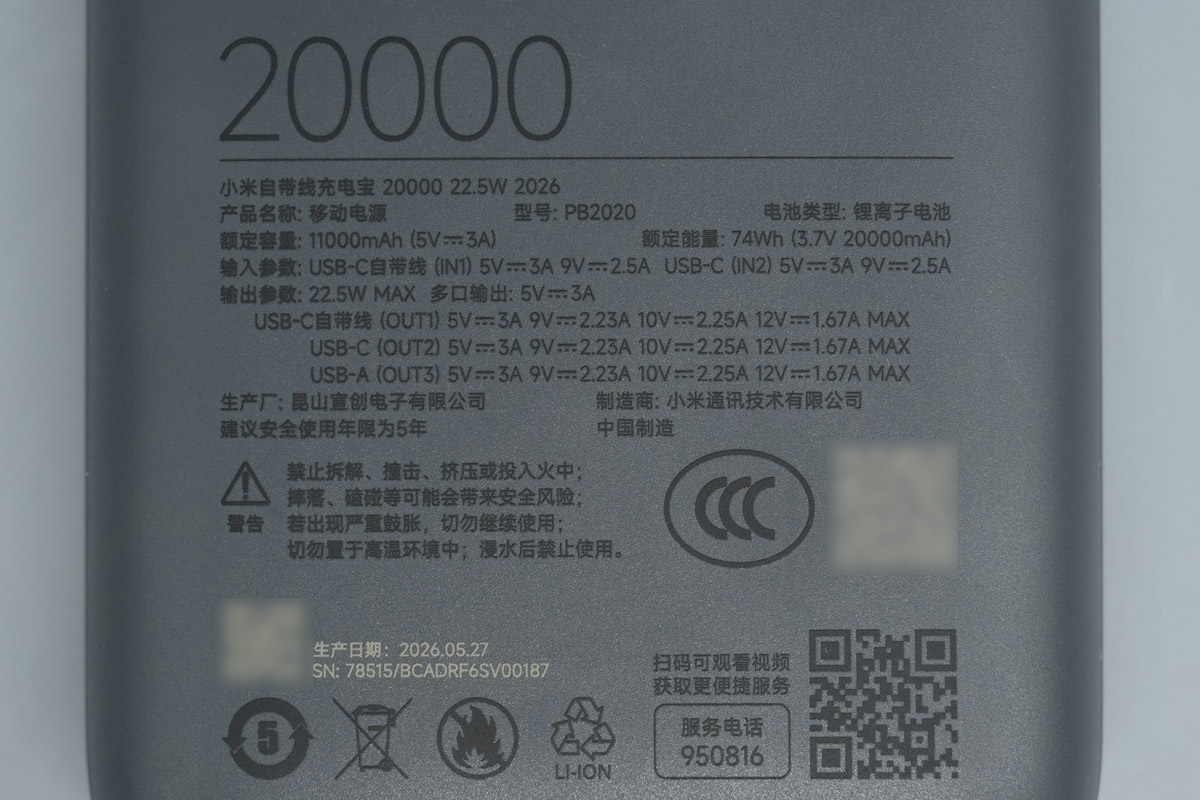
The nameplate parameters on the back:
Product Model: PB2020
Battery Type: Lithium-ion battery
Rated Capacity: 11000mAh (5V 3A)
Rated Energy: 74Wh (3.7V 20000mAh)
Input:
USB-C Built-in Cable (IN1): 5V 3A, 9V 2.5A
USB-C Port (IN2): 5V 3A, 9V 2.5A
Output:
Max Single-Port Output Power: 22.5W MAX
Multiple Ports Output Simultaneously: 5V 3A
Single-Port Output Specs per Interface:
USB-C Built-in Cable (OUT1): 5V 3A, 9V 2.23A, 10V 2.25A, 12V 1.67A MAX
USB-C Port (OUT2): 5V 3A, 9V 2.23A, 10V 2.25A, 12V 1.67A MAX
USB-A Port (OUT3): 5V 3A, 9V 2.23A, 10V 2.25A, 12V 1.67A MAX
Manufacturer: Kunshan Huangchuang Electronic Co., Ltd.
Maker: Xiaomi Communications Co., Ltd.
Recommended Safe Use Period: 5 years
Origin: Made in China
Production Date: 2026.05.27
The product has passed 3C certification.
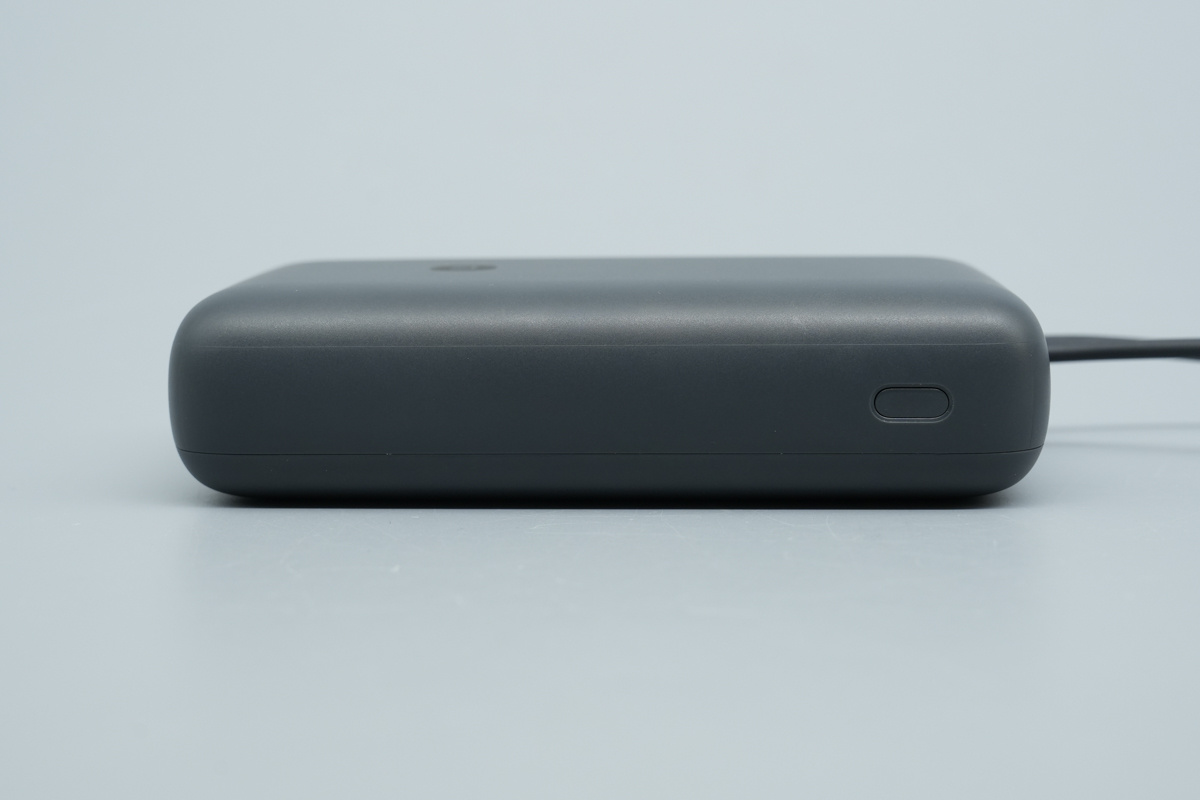
A racetrack-shaped power button sits on the side of the chassis, engineered with a slightly recessed, flush profile to guard against accidental activation in a bag or pocket.
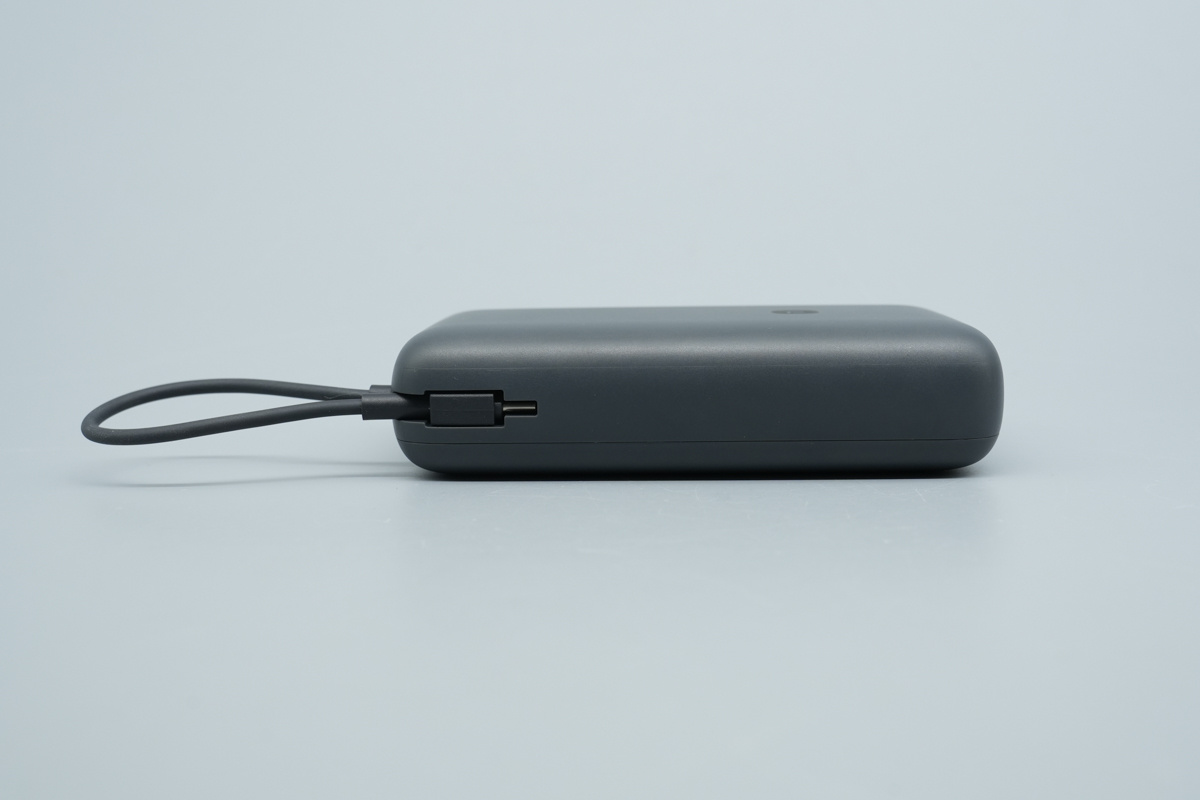
The opposing side features an integrated cable storage groove, clamping the wire securely in place to prevent loosening or detachment during daily carry.
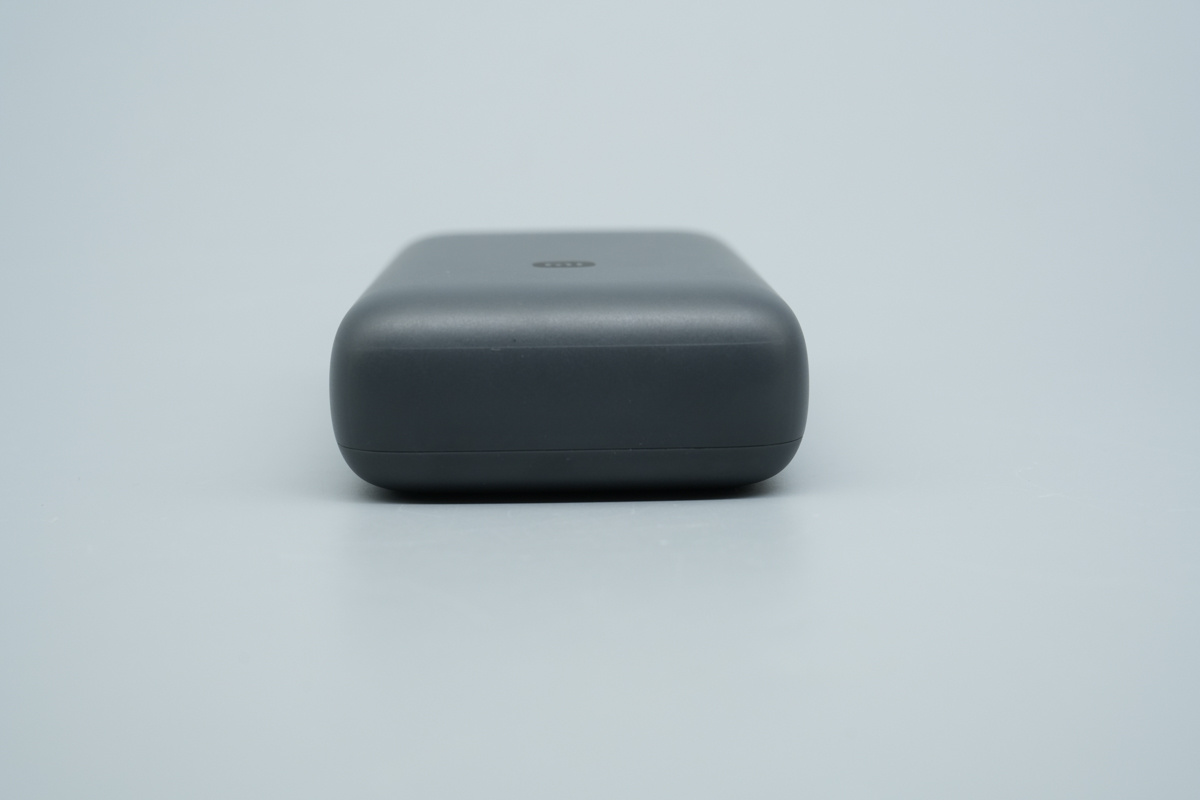
The bottom edge of the body features a rounded chamfered transition without any printed parameter silkscreens, enhancing the overall visual uniformity.
Physical Specifications
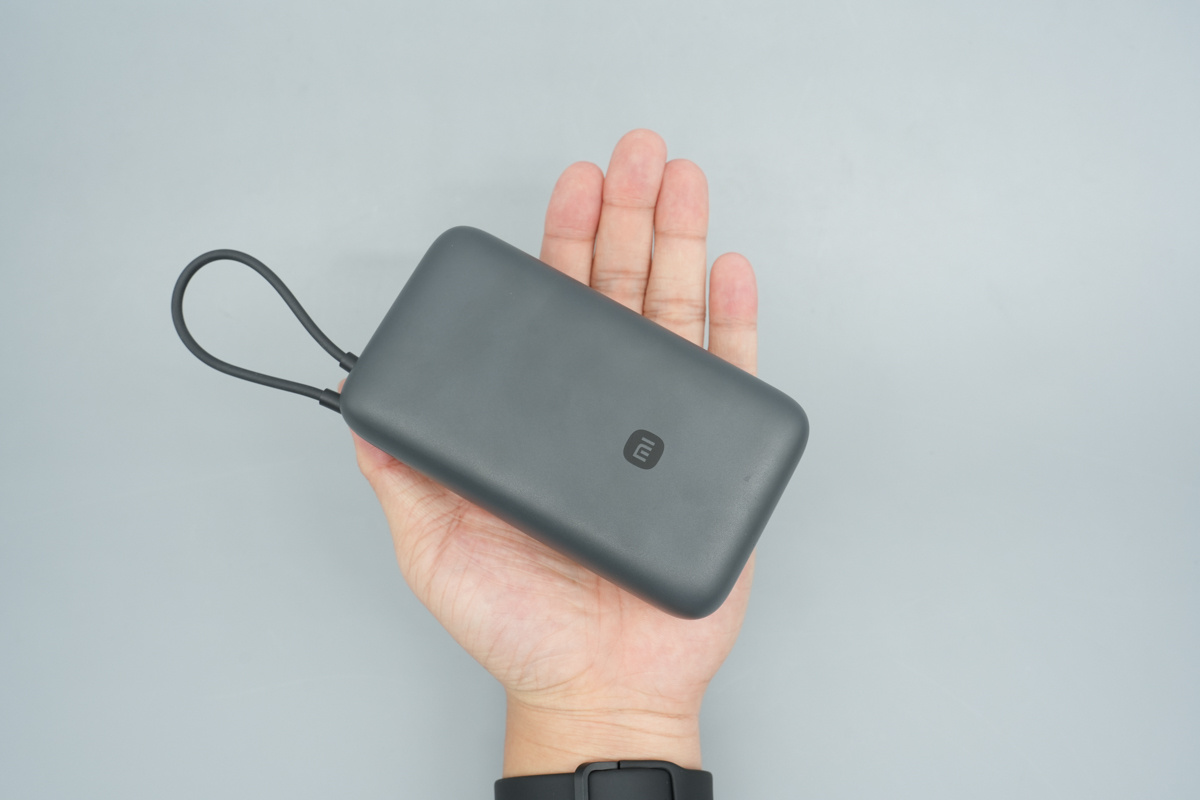
That's how big it is in the hand.
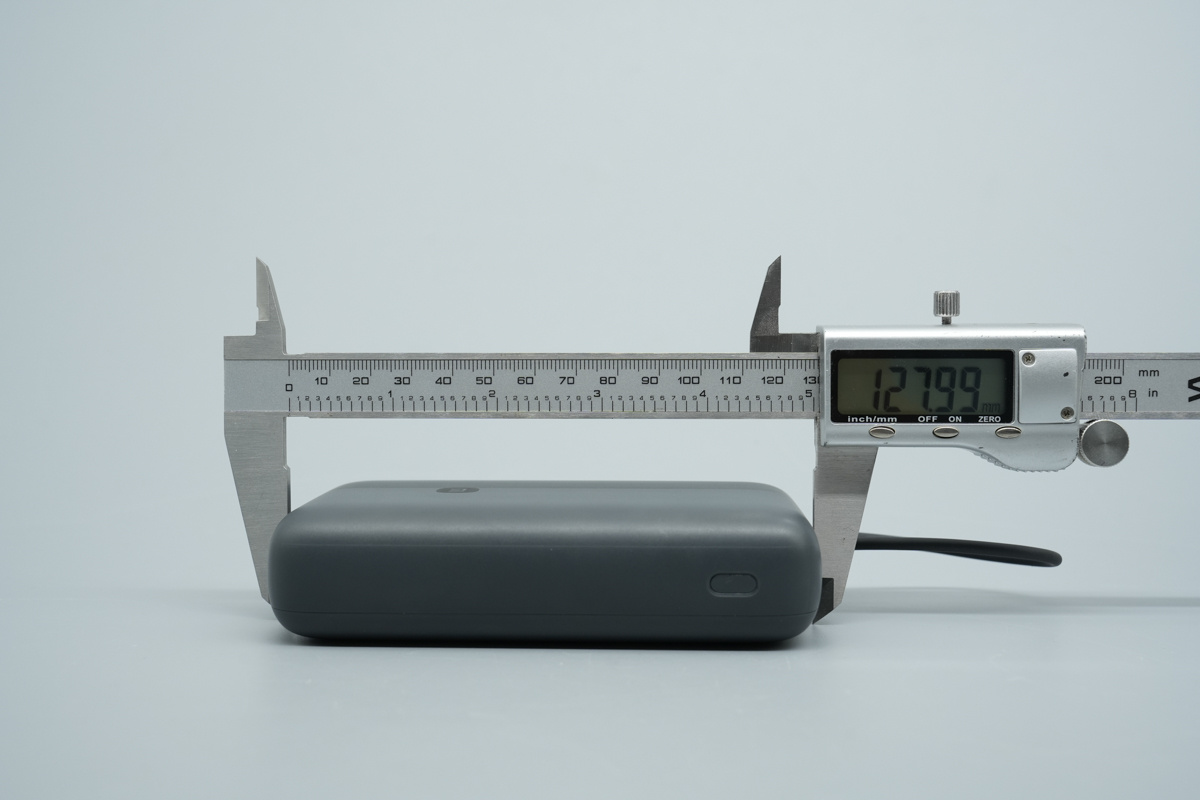
The length of the power bank is about 127.99mm (5.039 inches).
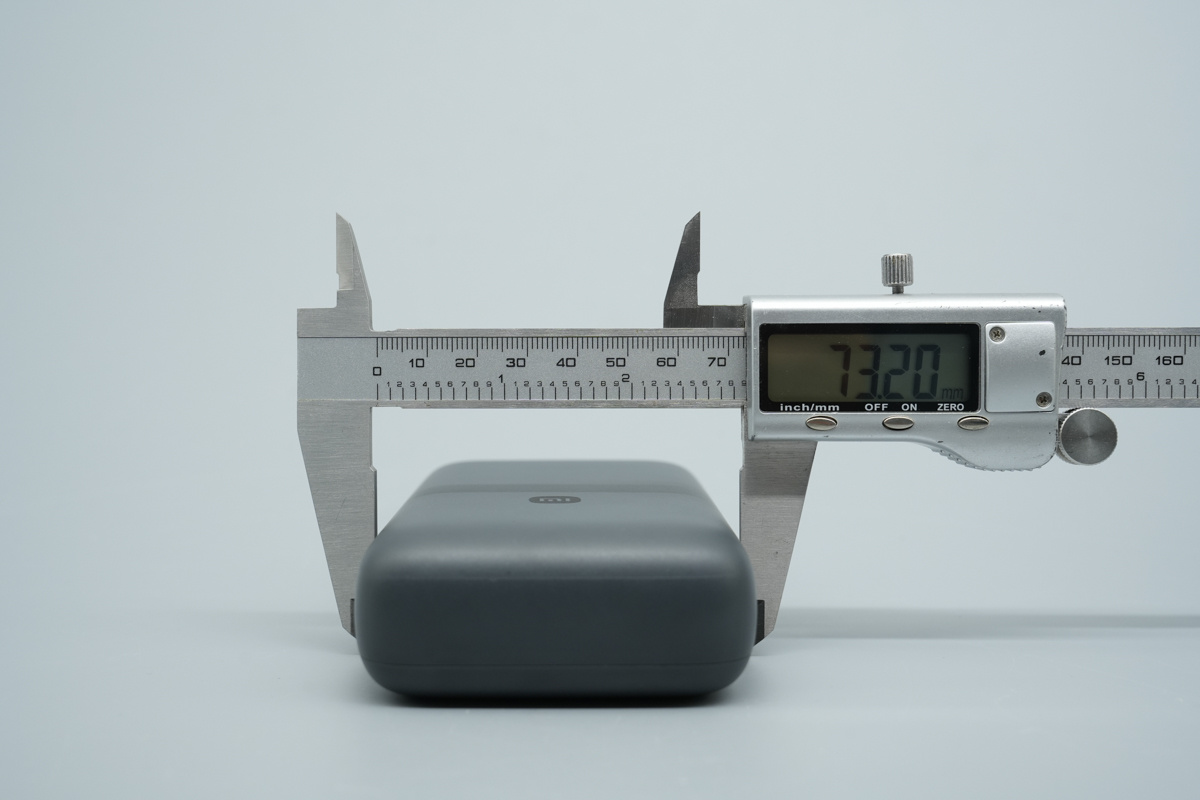
The width of the power bank is about 73.20mm (2.882 inches).
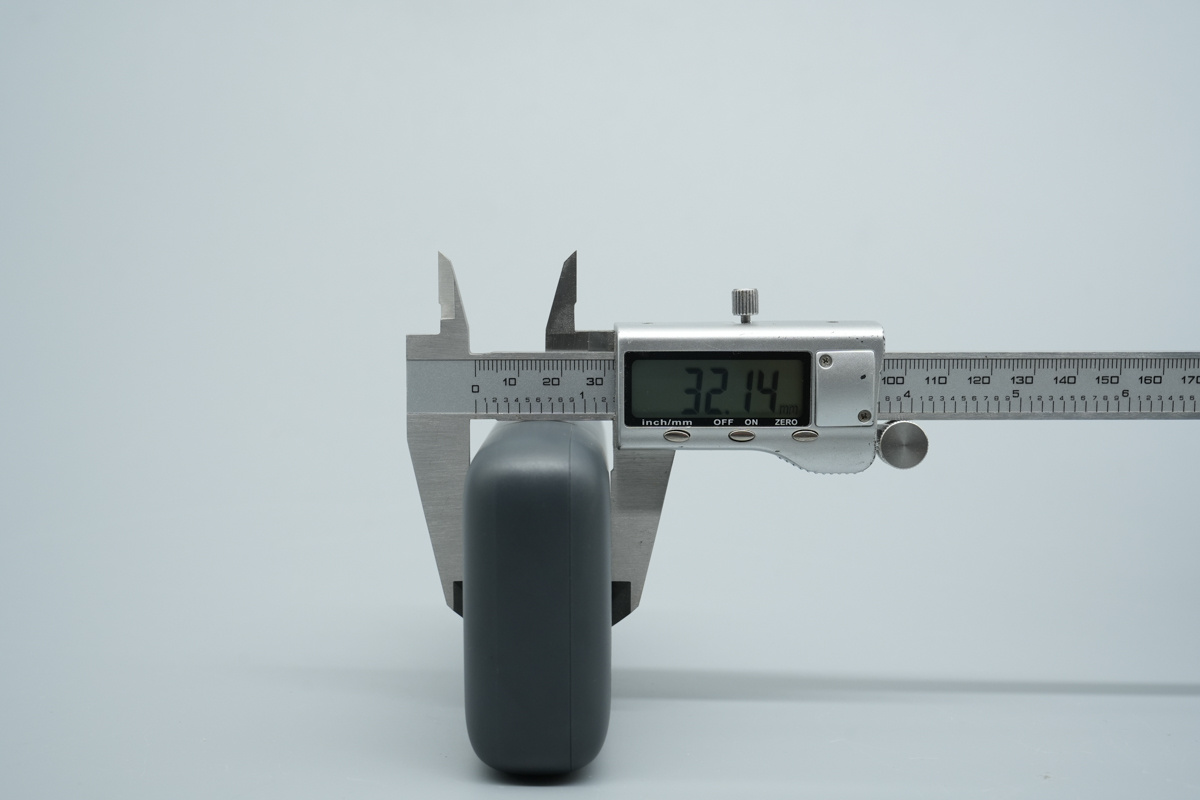
The thickness of the power bank is about 32.14mm (1.265 inches).
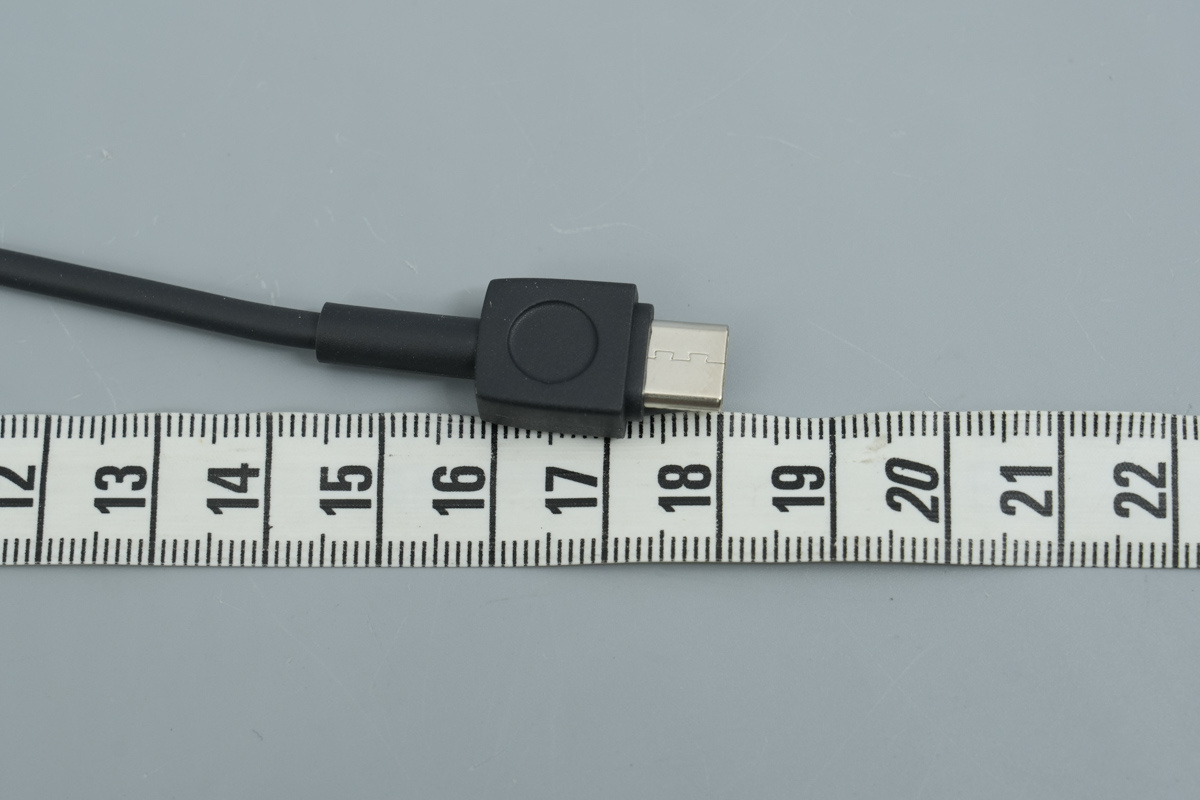
The length of the integrated cable is approximately 18cm.
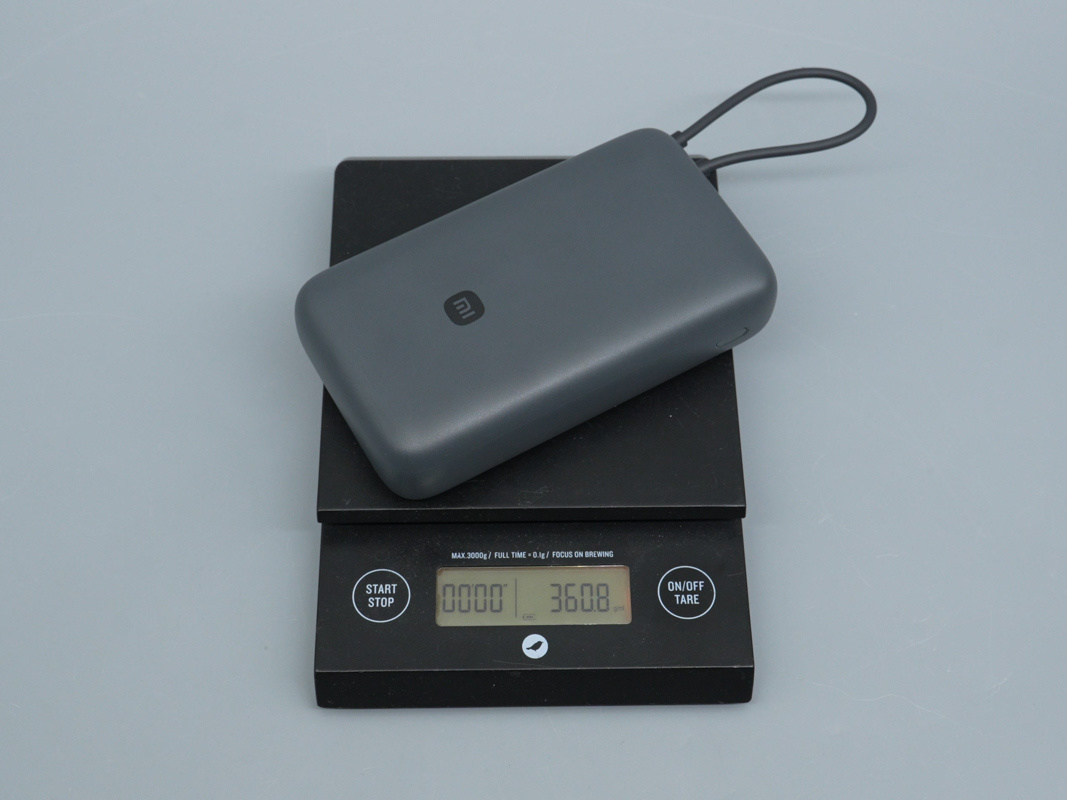
The weight is about 360.8g (12.73 oz).
Fast Charging Protocol Compatibility
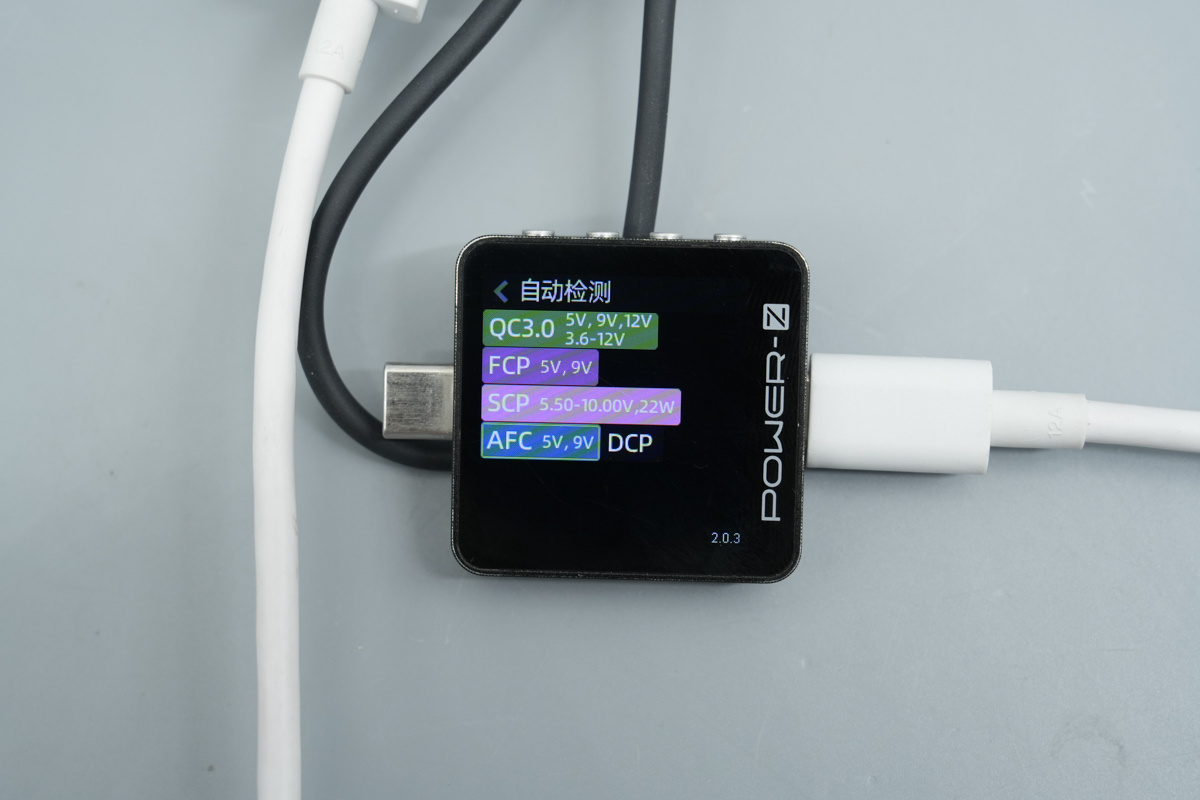
ChargerLAB POWER-Z KM003C shows that the integrated Type-A port supports QC3.0, FCP, SCP, AFC and DCP.
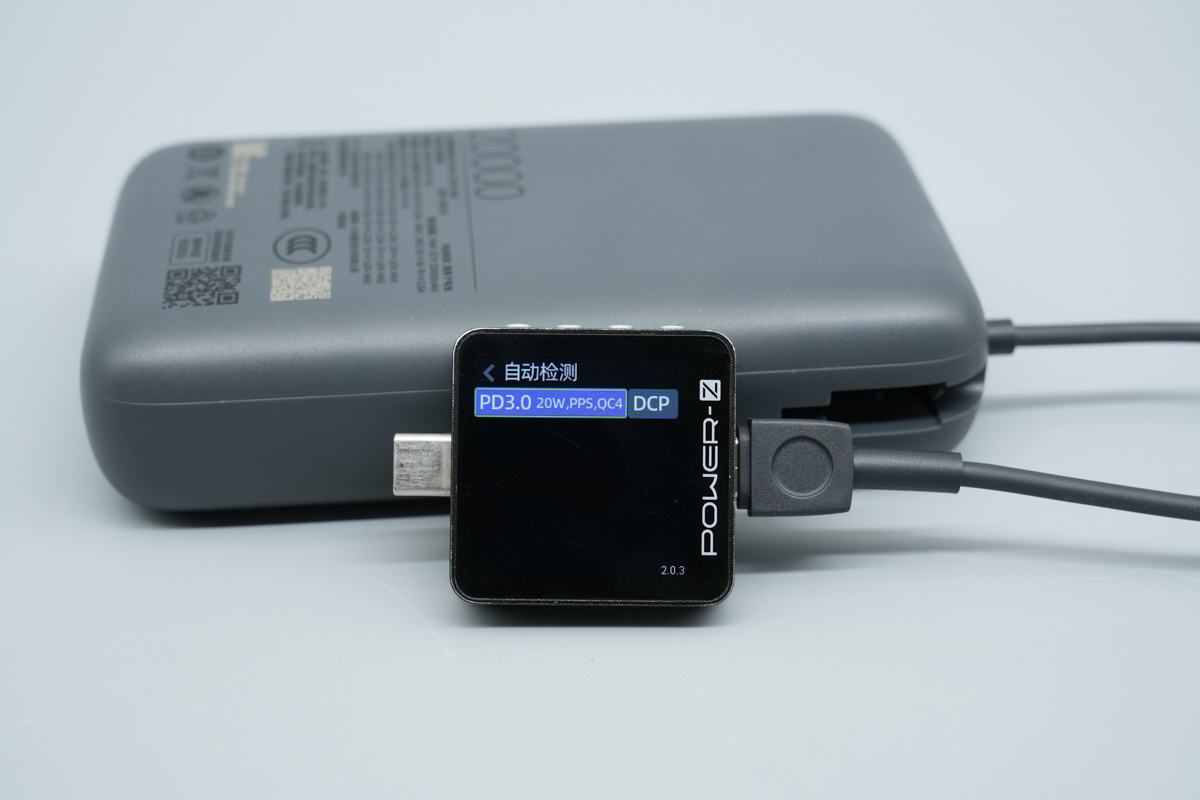
ChargerLAB POWER-Z KM003C shows that the integrated USB-C cable supports PD3.0/PPS, QC4 and DCP.
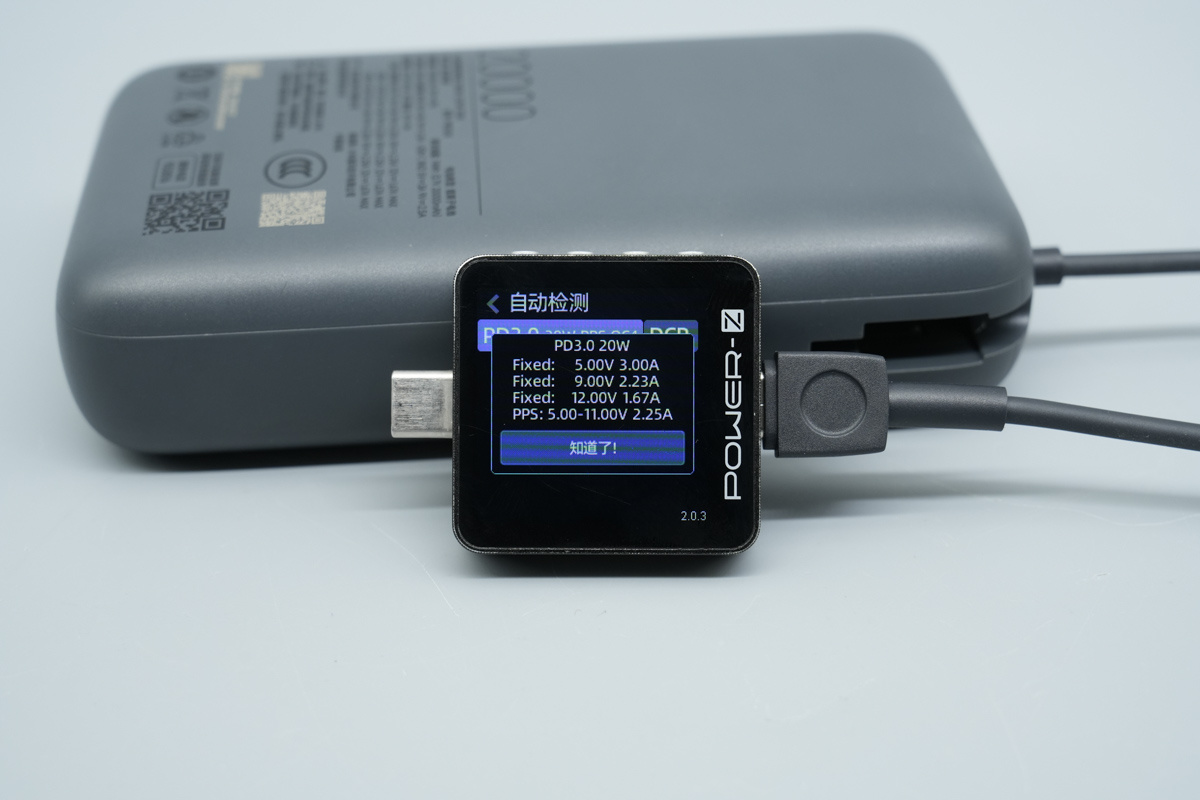
And it also supports three fixed PDOs of 5V3A, 9V2.23A and 12V1.67A, and features a PPS subset: 5-11V 2.25A.
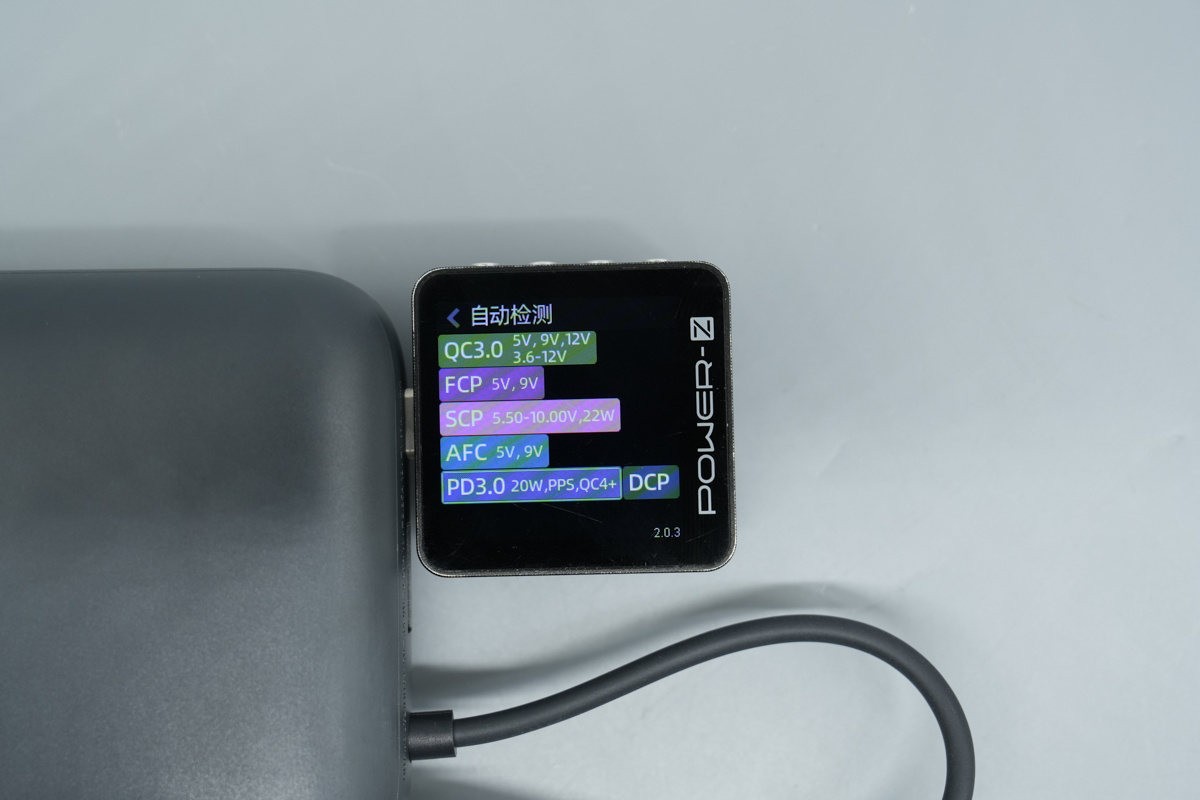
ChargerLAB POWER-Z KM003C shows that the USB-C port supports QC3.0, FCP, SCP, AFC, PD3.0/PPS, QC4+ and DCP.
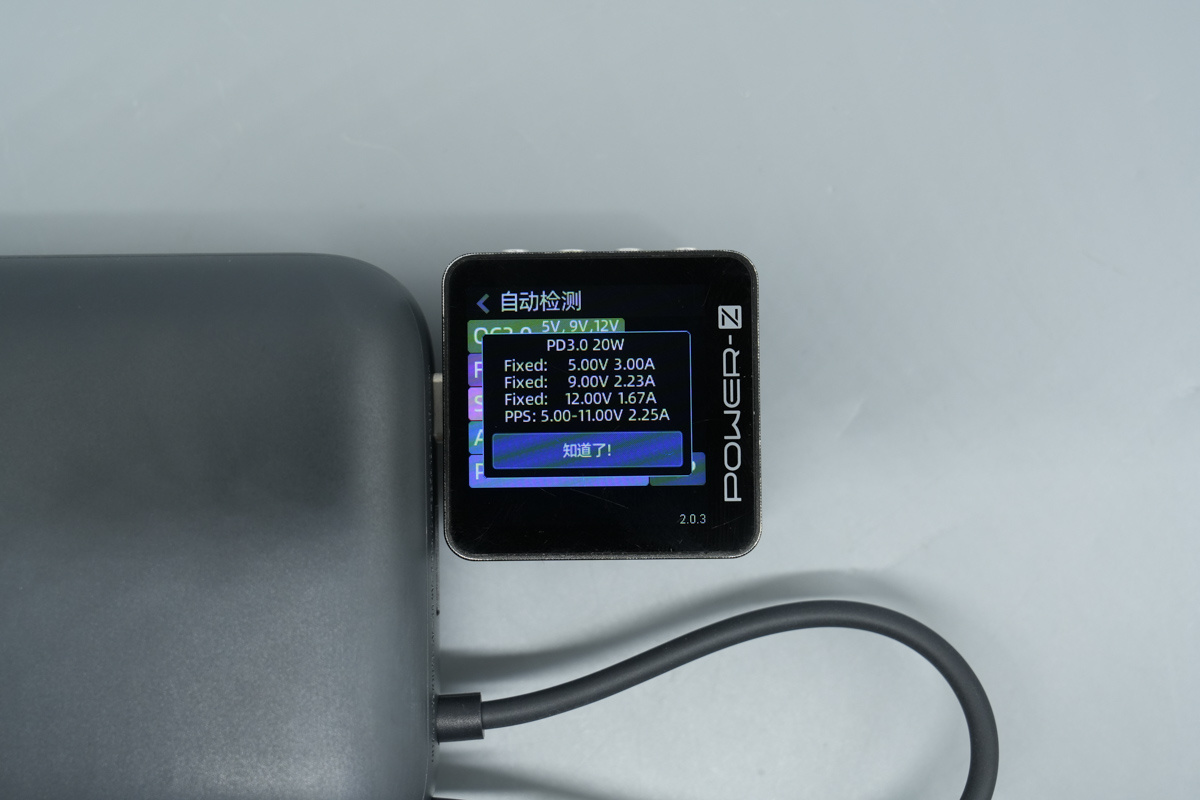
And it also supports three fixed PDOs of 5V3A, 9V2.23A and 12V1.67A, and features a PPS subset: 5-11V 2.25A.
With the exterior design and protocol compatibility covered, it is time to open up the unit for a thorough teardown.
Teardown
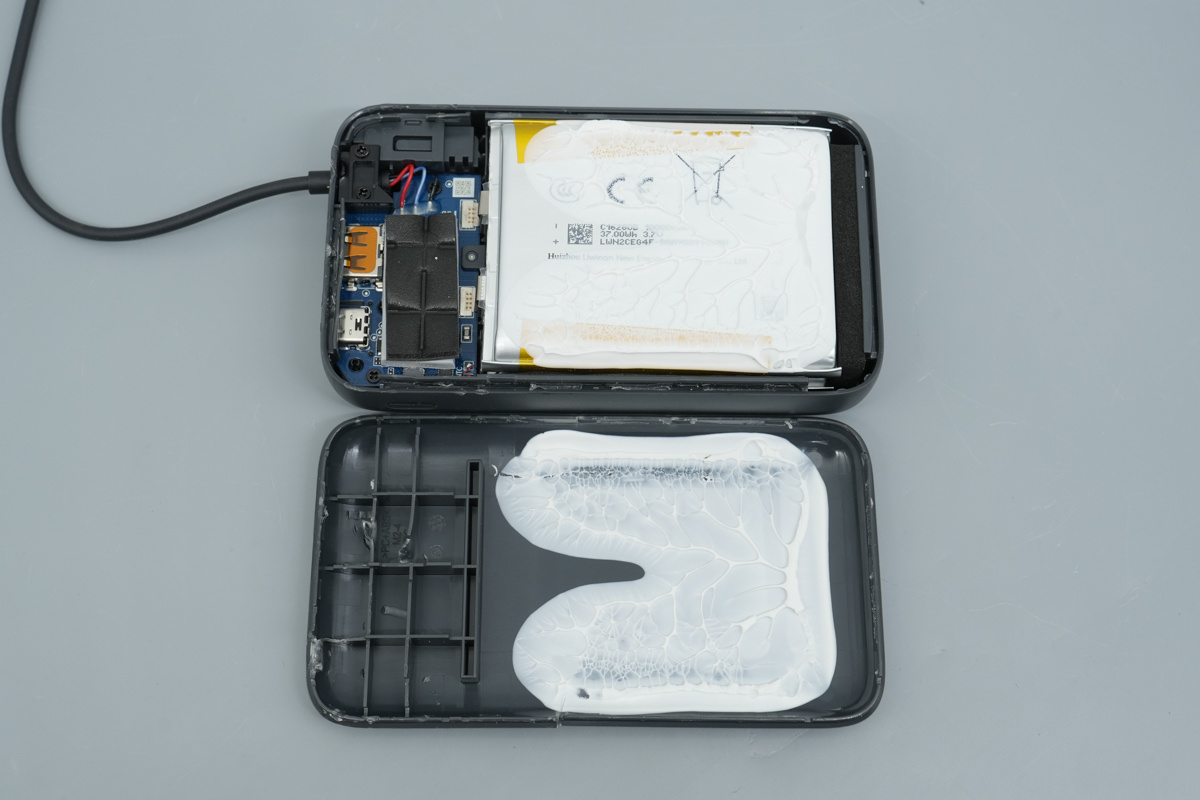
The back chassis panel is pried open along the side seam, revealing the interior of the casing is fixed with a combination of snaps and a large amount of potting compound, resulting in a very tight bond.
Once opened, the internal structure is clearly visible, featuring an upper PCBA and lower lithium polymer battery cells. The surface of the PCBA is covered with a thick layer of black foam, which provides cushioning and shock absorption.
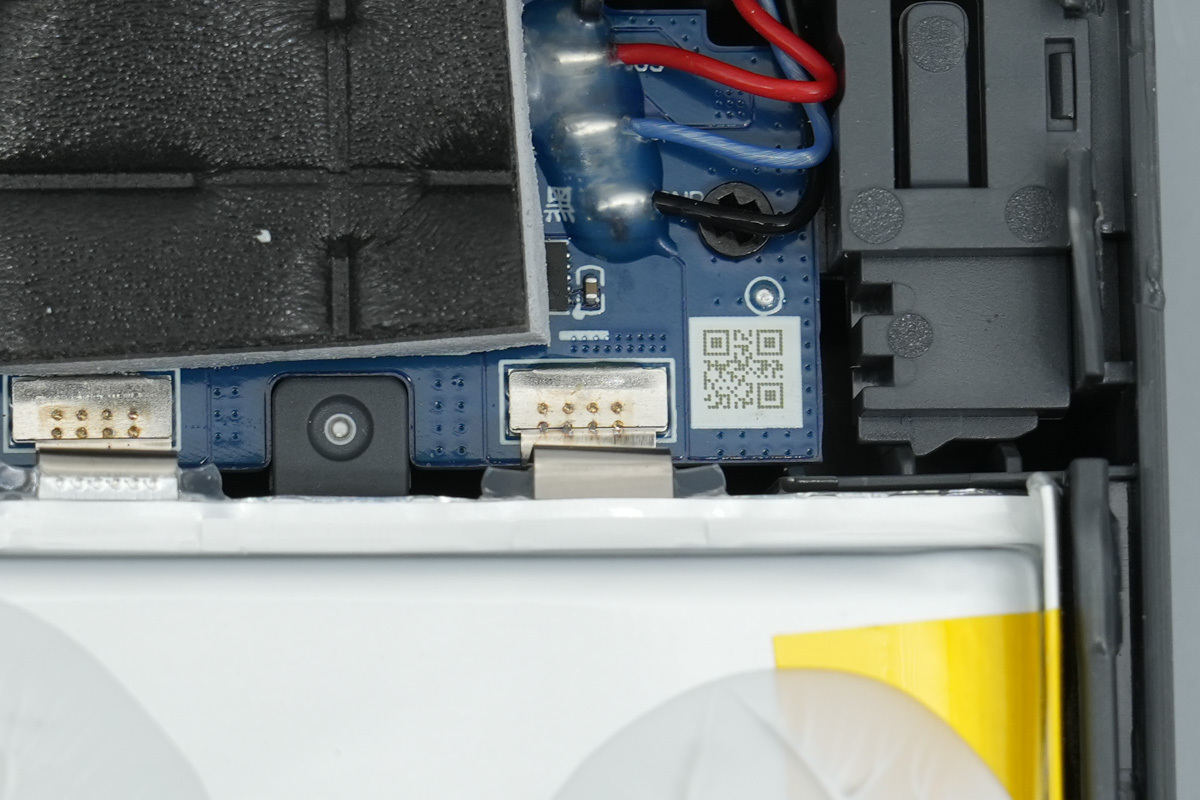
The connection between the cell tabs and the PCBA, where the spot-welding craftsmanship is neat and secure.
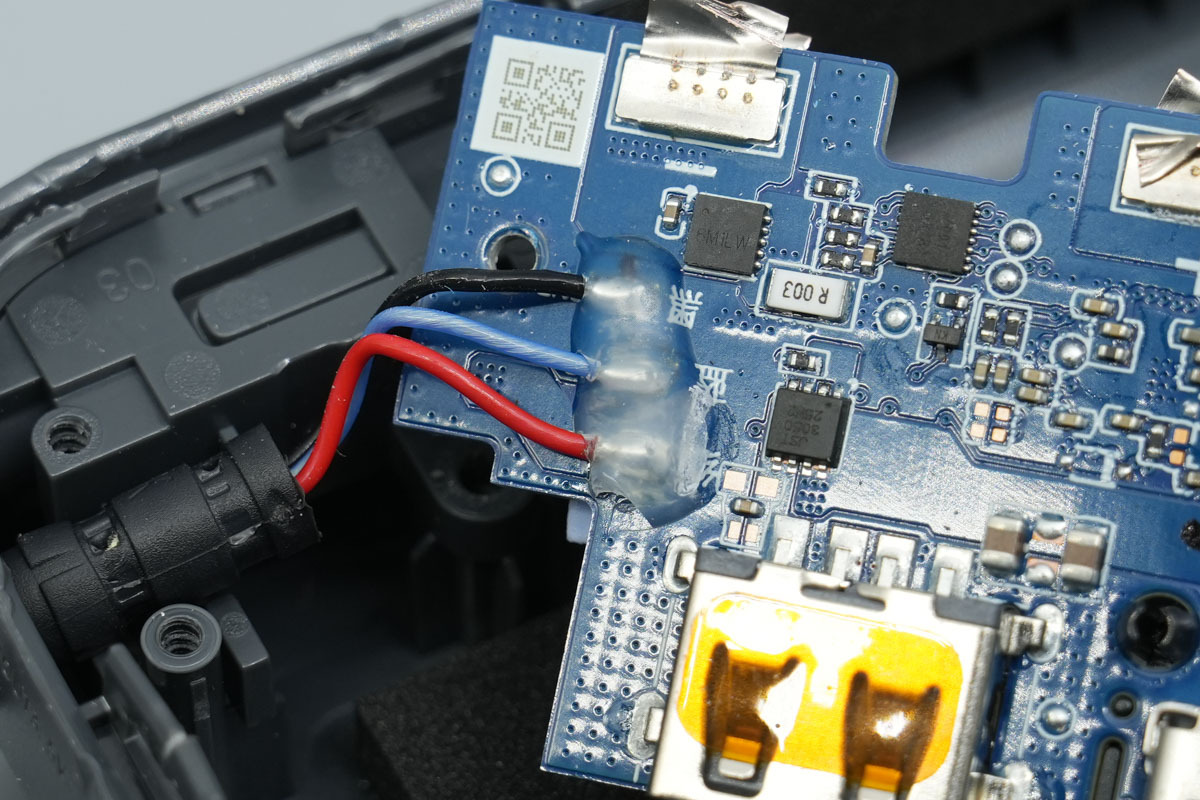
The red, blue, and black wires of the built-in USB-C cable are directly soldered onto the mainboard, with the solder joints fully filled and secured with transparent insulating adhesive for fixture and protection, preventing unsoldering caused by daily pulling.
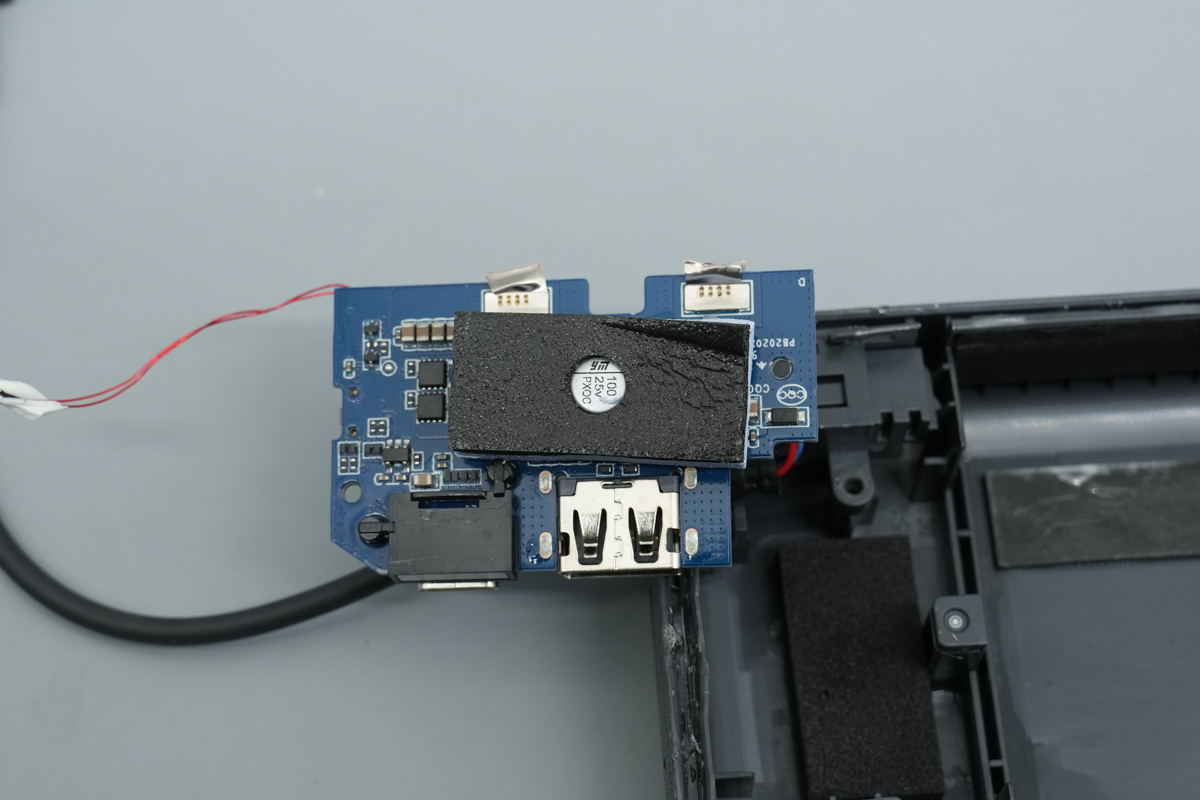
Removing the PCBA from the casing reveals that a rectangular black foam pad is similarly affixed to the back of the mainboard, with a filtering solid cap exposed through a cutout in the mainboard.
Battery Cell Analysis
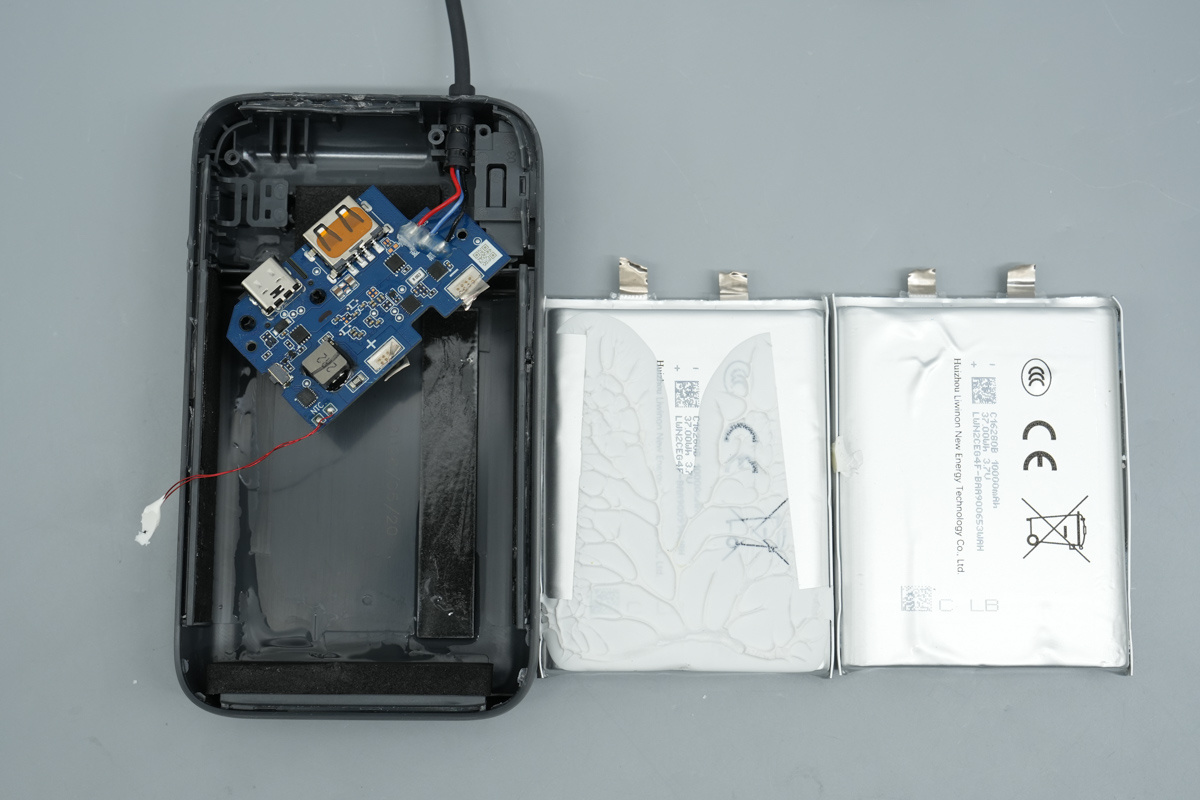
Separating the battery cells and the PCBA mainboard from the bottom shell of the body reveals that a large area of fixing adhesive is also applied inside the bottom shell, which stabilizes the structure and enhances the safety of the battery cells.
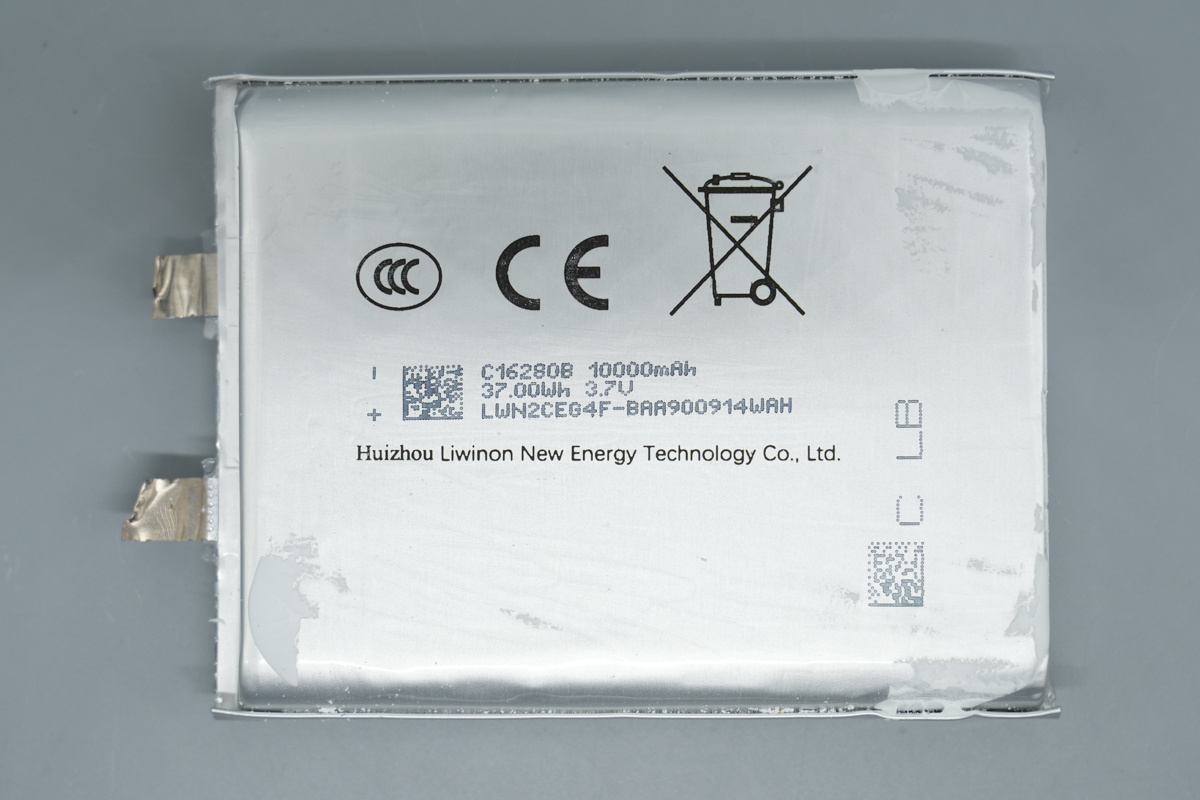
The battery cells are from Liwinon, model C16280B, with a single-piece capacity of 10000mAh, an energy rating of 37.00Wh, a nominal voltage of 3.7V, and the cells have successfully passed CCC certification.
PCBA Analysis
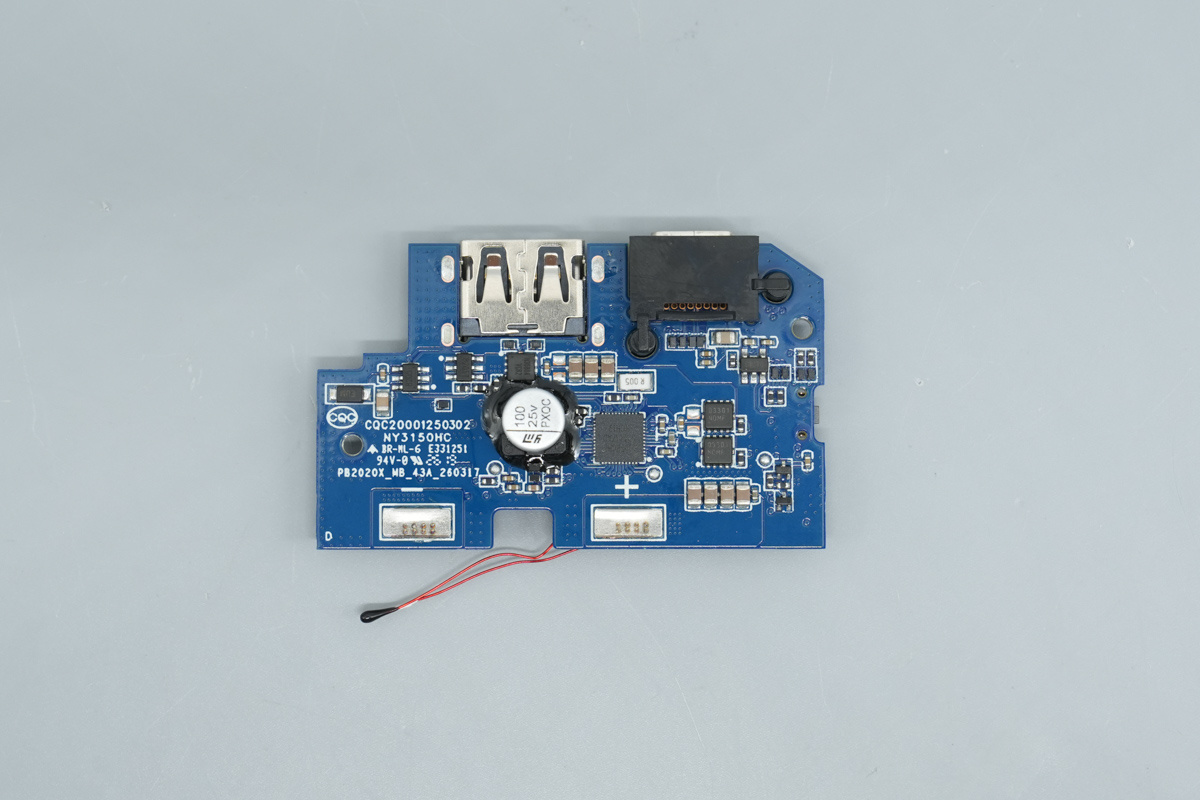
The front of the PCBA shows a compact and reasonable component arrangement, with a filtering capa in the center and the master control chip and various interfaces distributed on both sides.
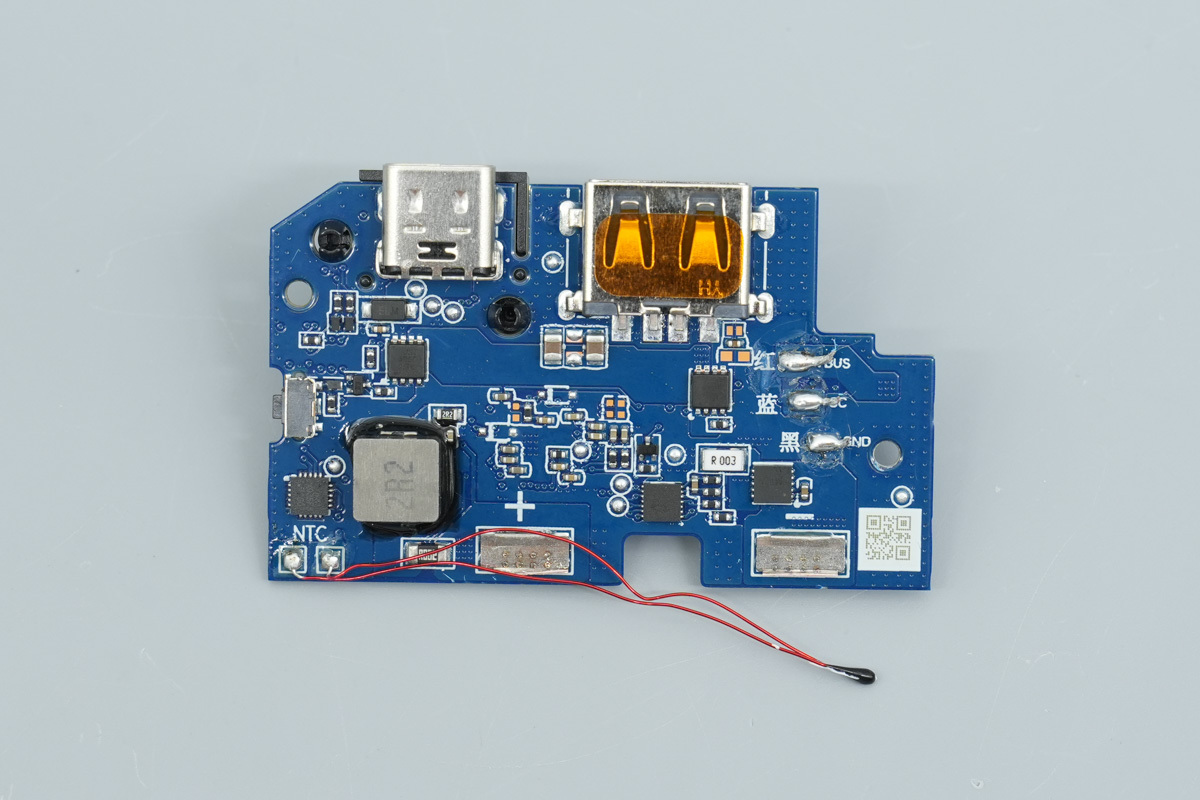
The back of the PCBA features a large-sized alloy choke, MOSFETs, and an NTC thermistor used for detecting the temperature of the battery pack.
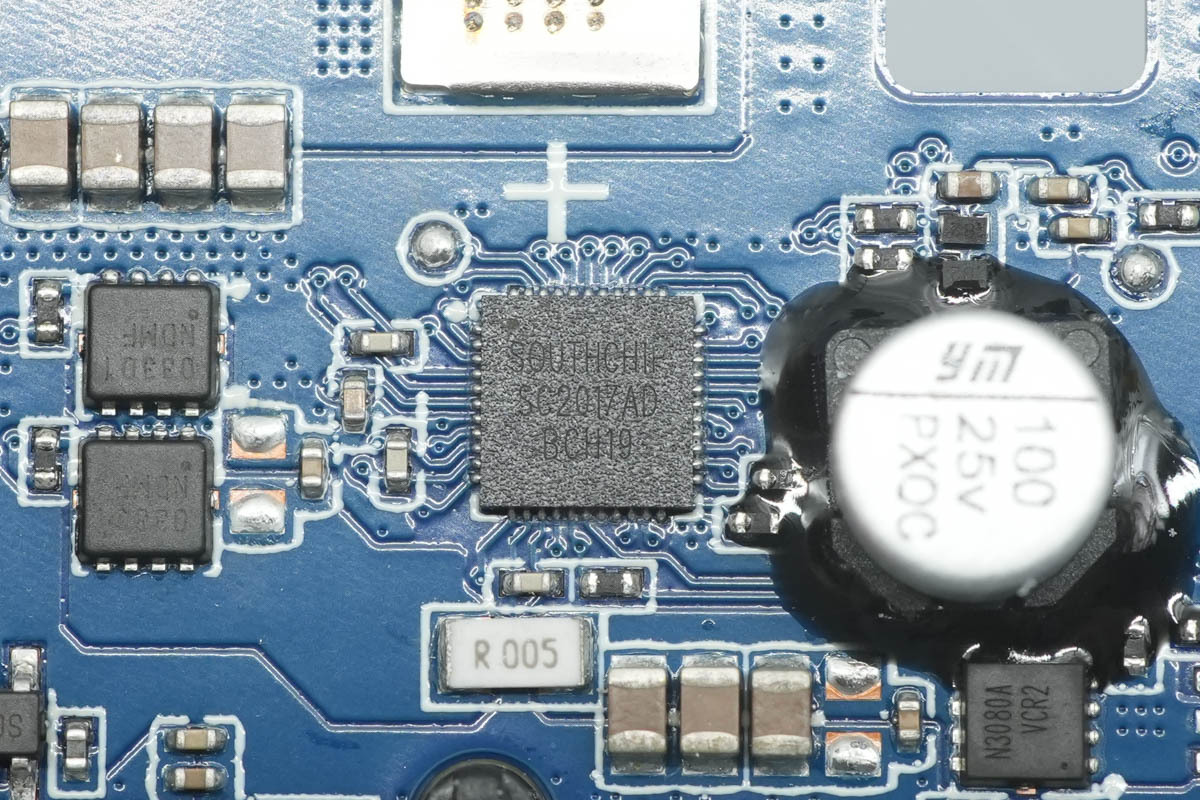
The power bank SoC is from SOUTHCHIP, model SC2017A, utilizing a QFN44 package and integrating both a buck controller and an MCU internally.
This chip significantly streamlines the peripheral component count and optimizes BOM by featuring a built-in USB PD baseband physical layer, Type-C detection, VBUS discharge path, VCONN power supply, and a comprehensive suite of system protection circuits.
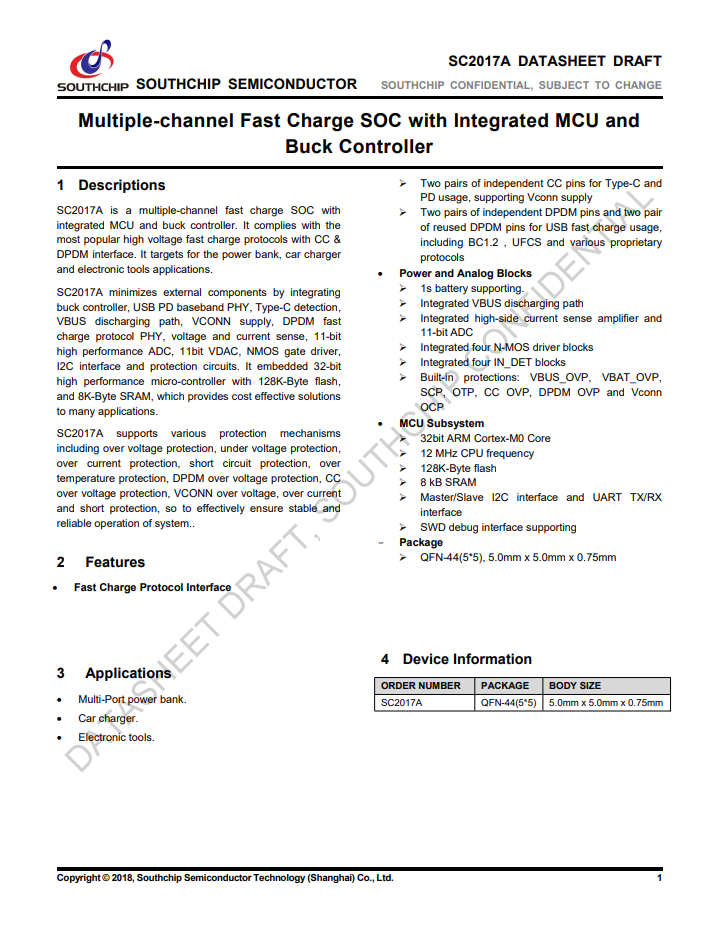
For application, the SC2017A is primarily targeted at multi-port power banks, car chargers, and power tools markets, providing an efficient and stable single-chip solution for high-voltage fast-charging devices.
In terms of protocol compatibility and system configuration, it is equipped with two independent sets of CC pins and DP/DM pins, which not only support standard USB PD protocols and Vconn power supply, but also feature broad compatibility with BC1.2, UFCS, and multiple mainstream proprietary fast-charging protocols.
Its internal MCU subsystem adopts a 32-bit ARM Cortex-M0 core, with built-in 128KB Flash and 8KB SRAM, delivering robust programmable capabilities. Additionally, the chip integrates a high-precision 11-bit ADC and VDAC, supporting comprehensive and multiple protection mechanisms including OCP, OVP, SCP, and OTP.
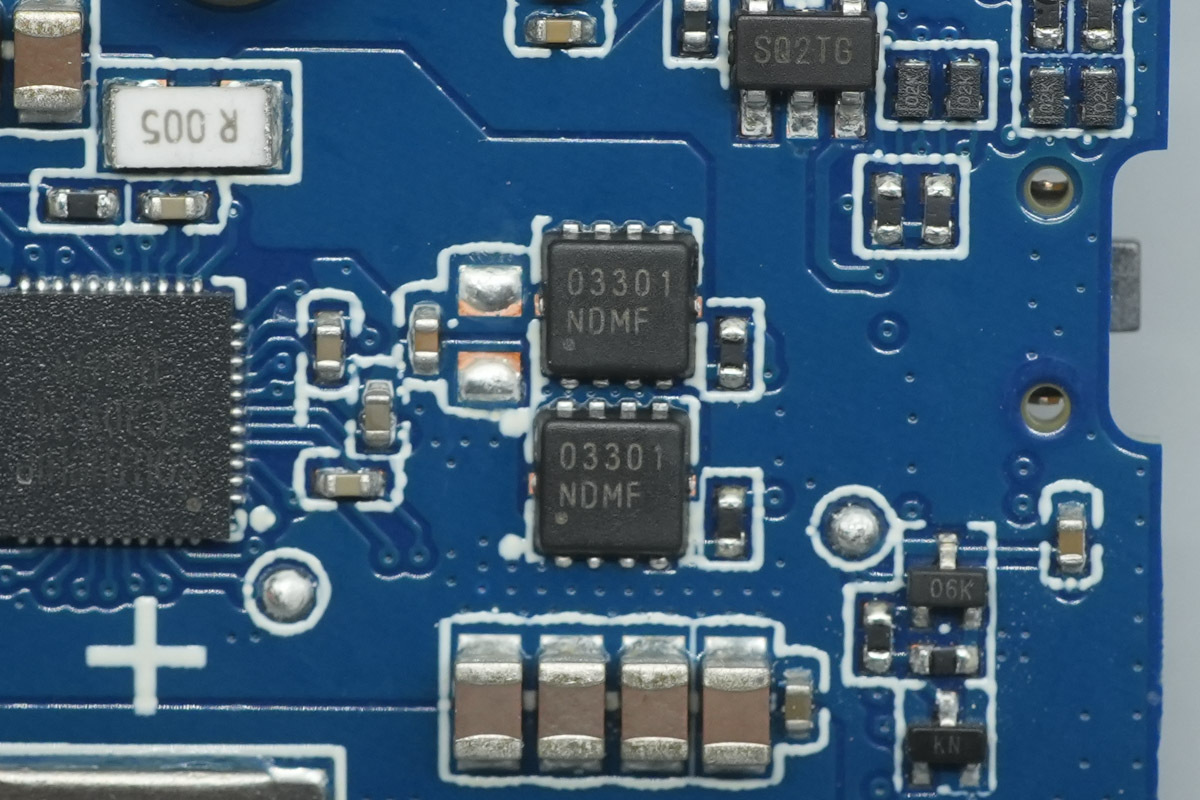
The two step-down MOSFETs, marked 03301.
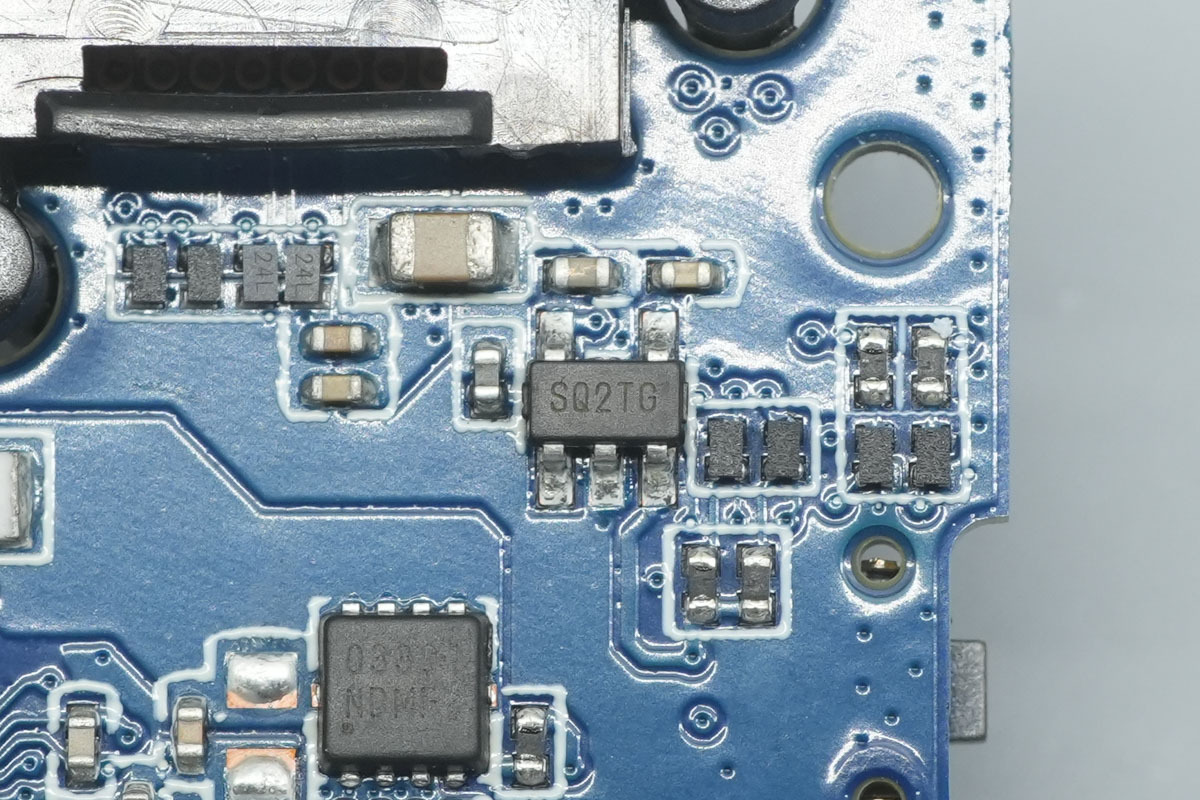
A chip, marked SQ2TG.
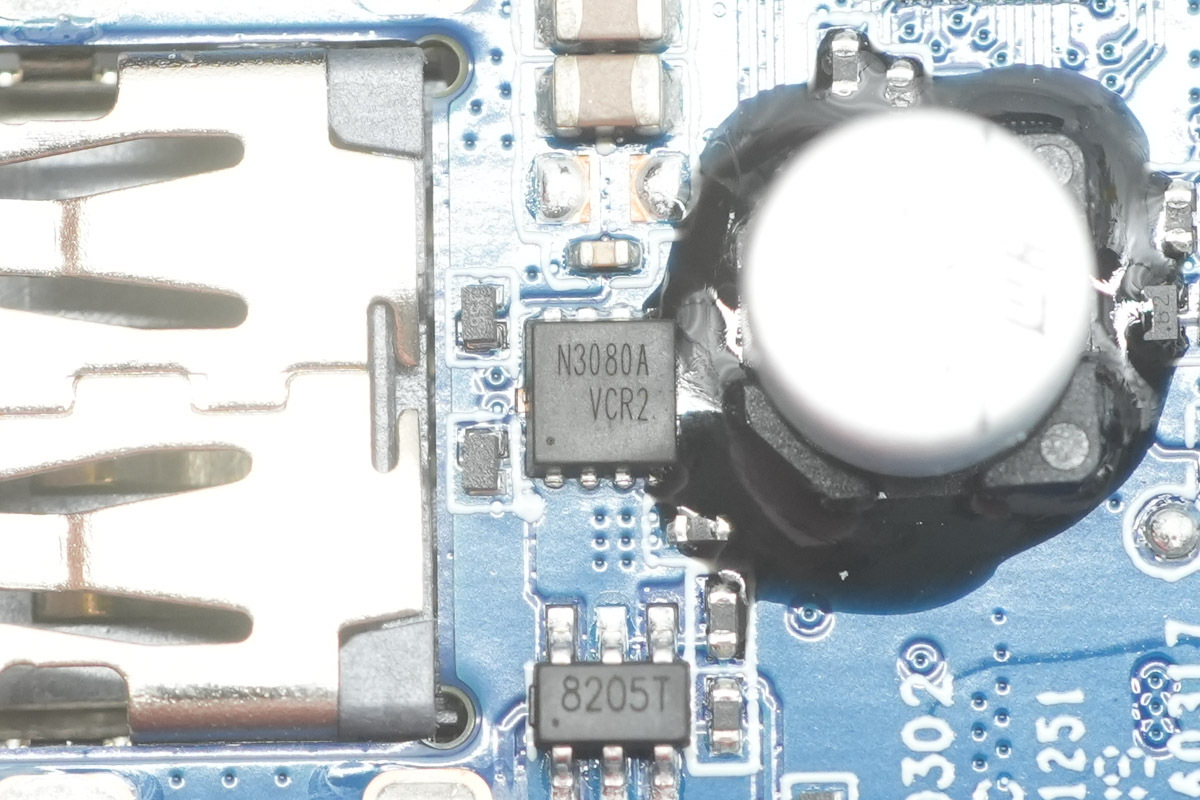
The VBUS MOSFET used for the USB-A port, marked N3080A.
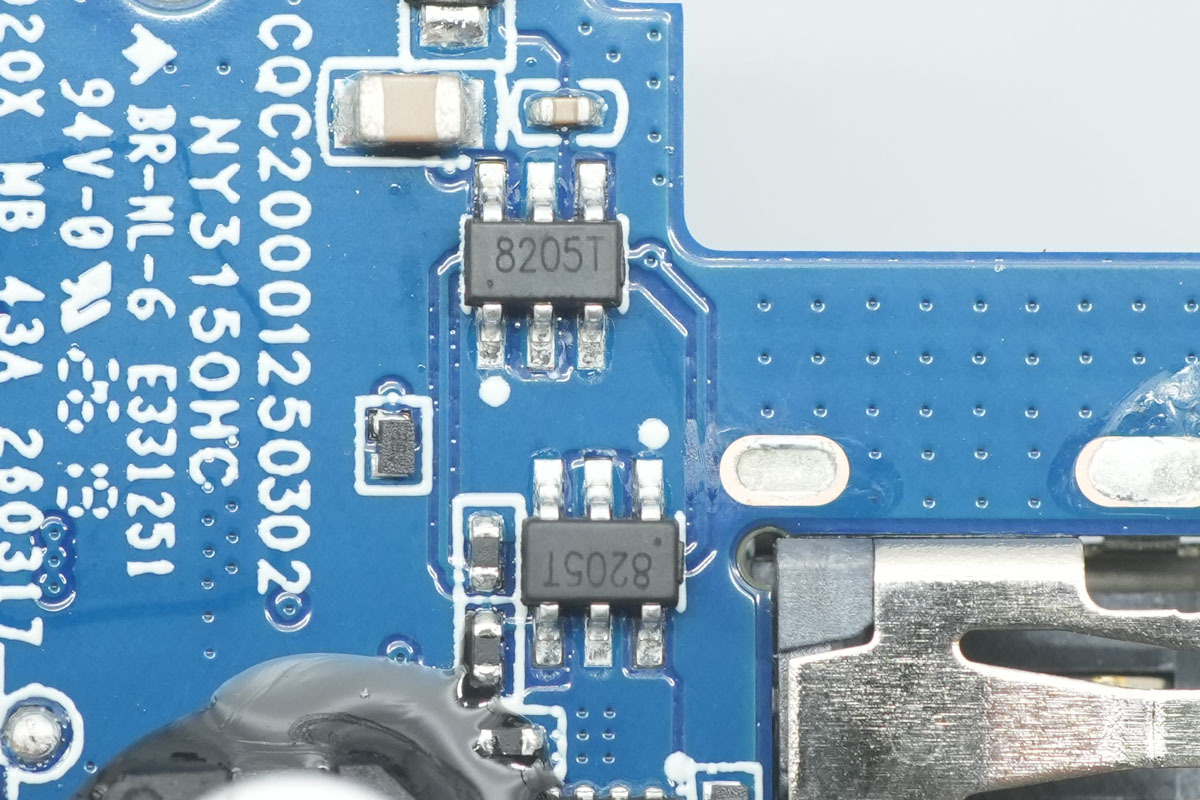
Two devices, model 8205T.
The VBUS MOSFET used for the USB-C port is from JESTEK, model 03111, 30V and 10mΩ, and in a PDFN3333 package.
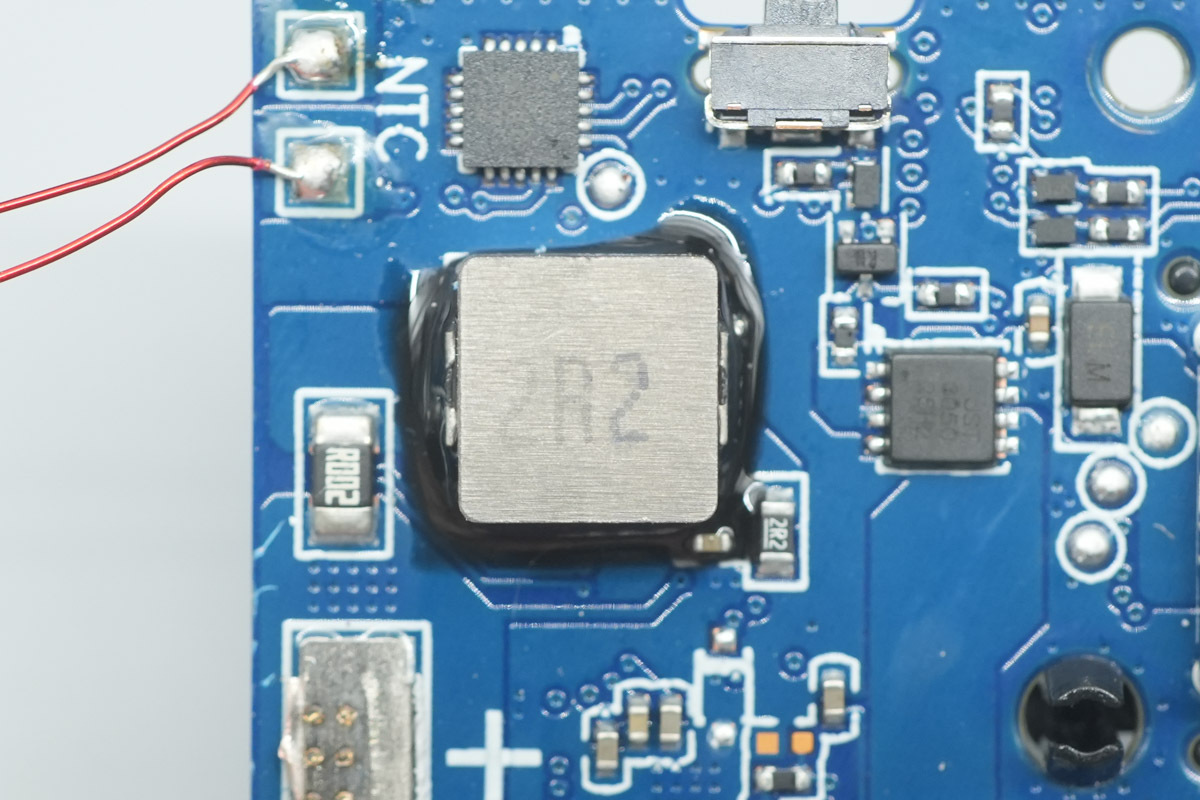
An alloy choke.
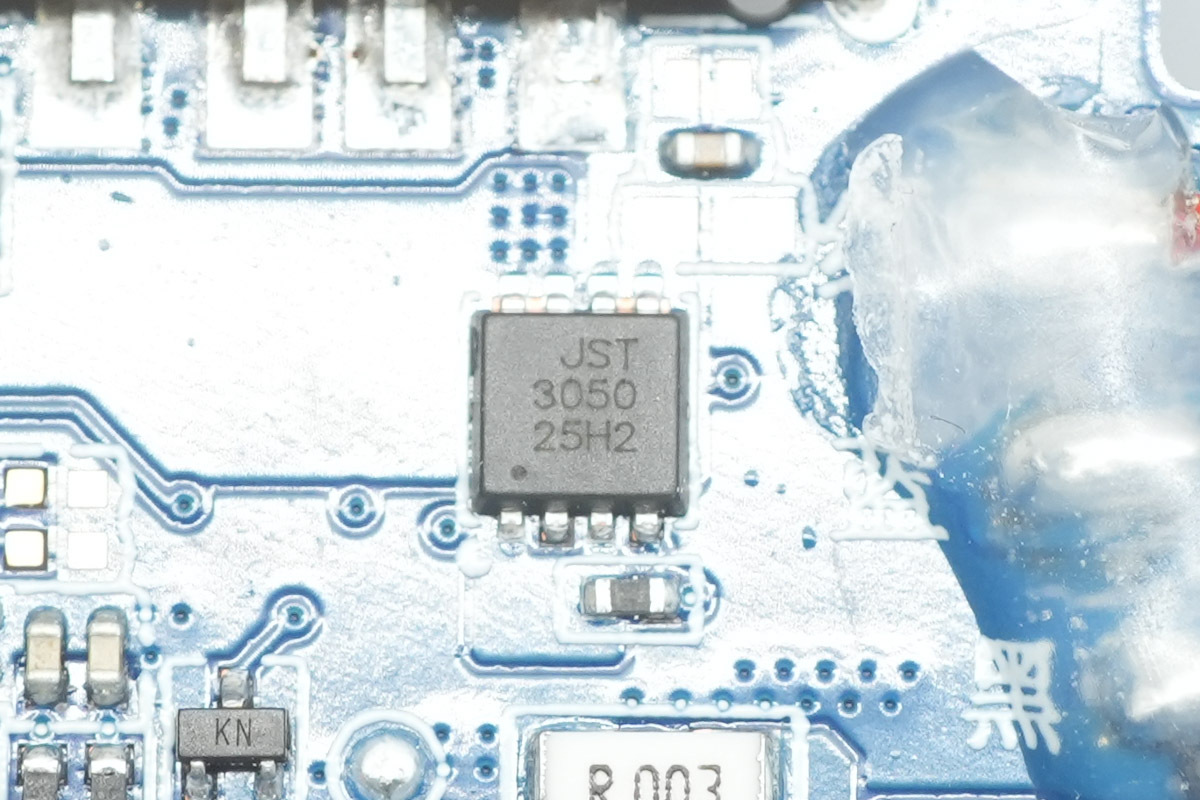
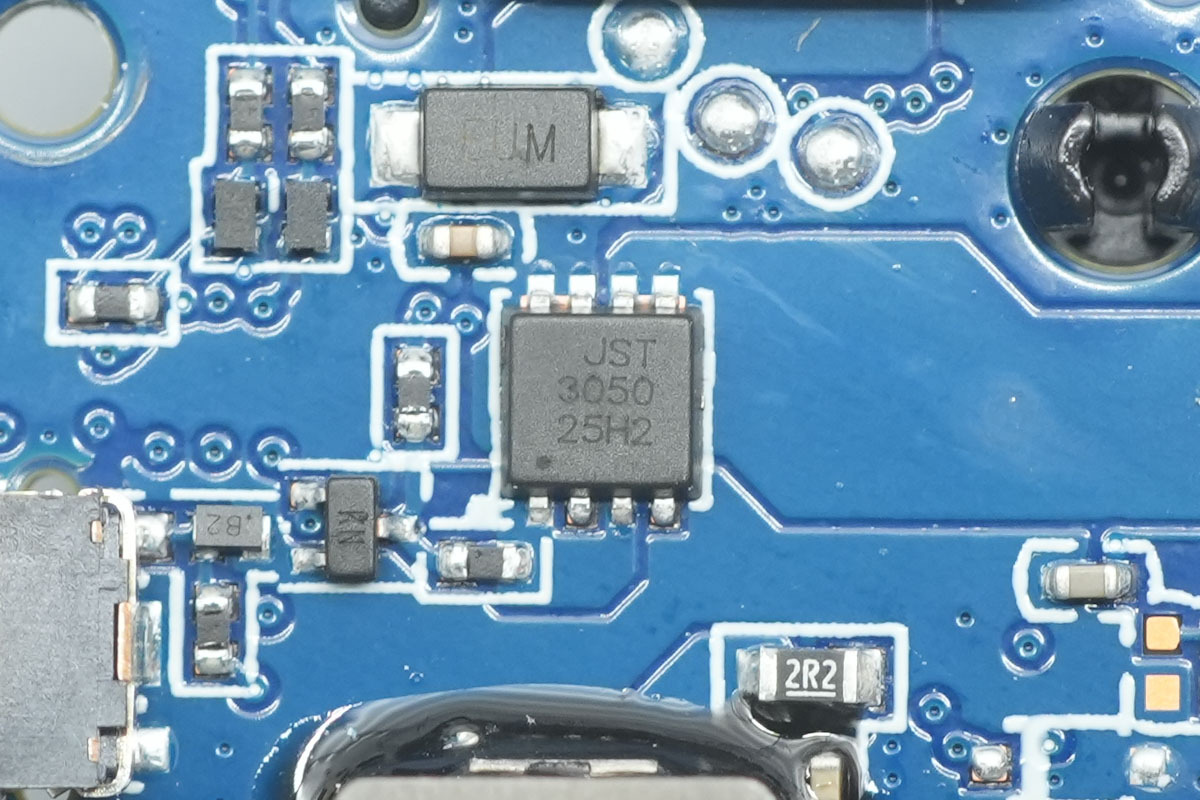
The VBUS MOSFET used for the built-in cable is also from JESTEK, model JST3050.
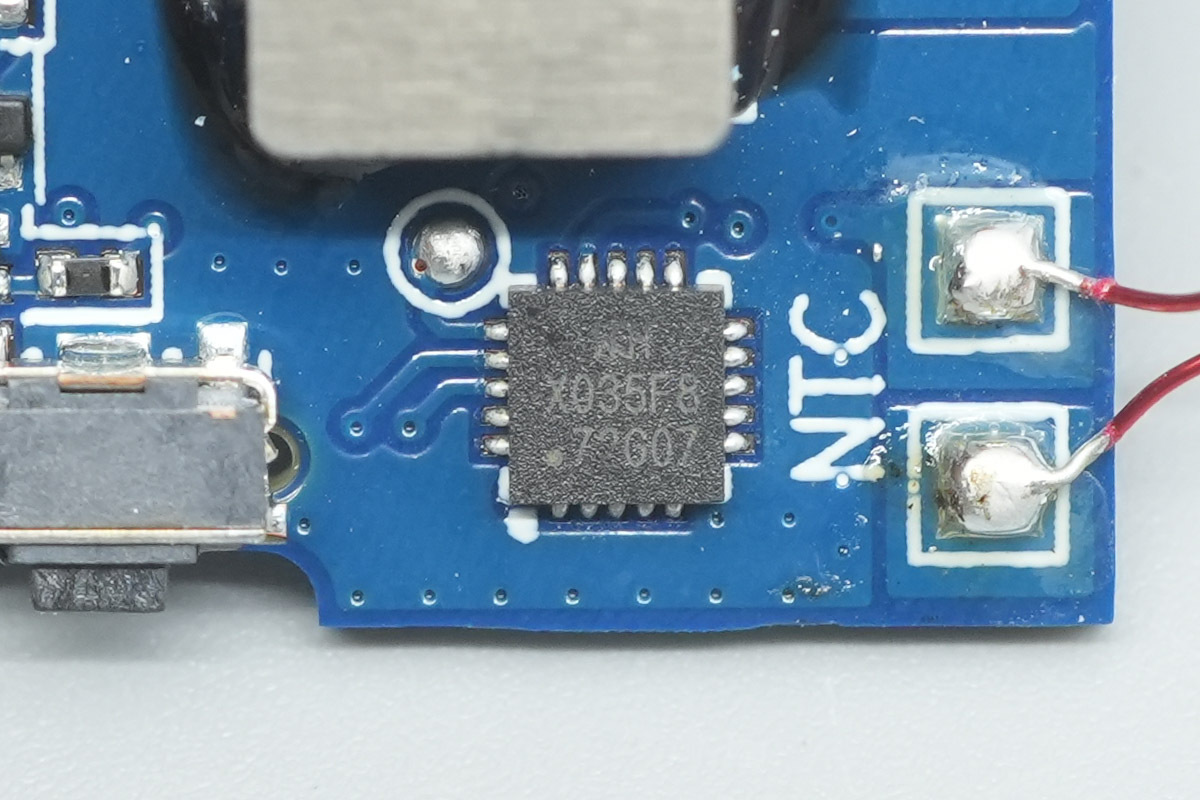
An MCU used for implementing product info query is from WCH, model CH32X035, which is an industrial-grade microcontroller designed based on the QingKe V4C core, operating at up to 48MHz with built-in 20KB SRAM and 62KB Flash, packaged in a QFN20 outline.
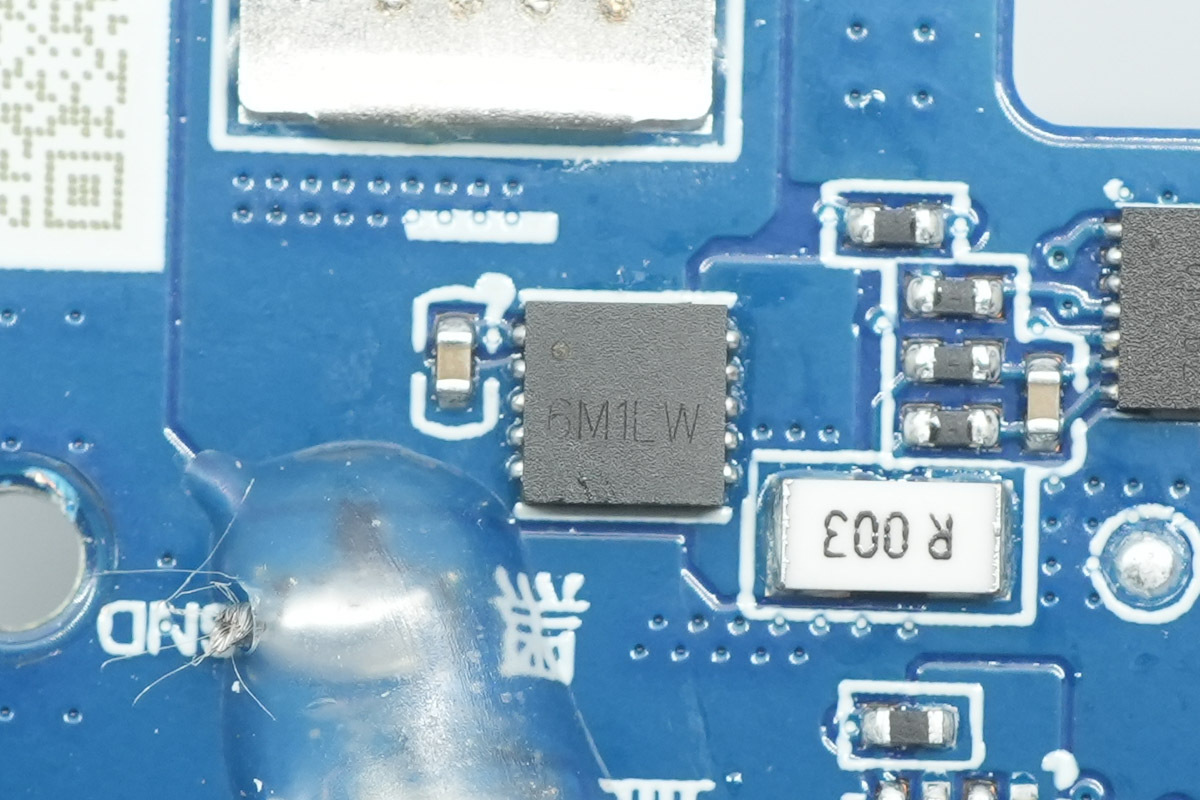
A lithium battery protection IC, marked 6M1LW.
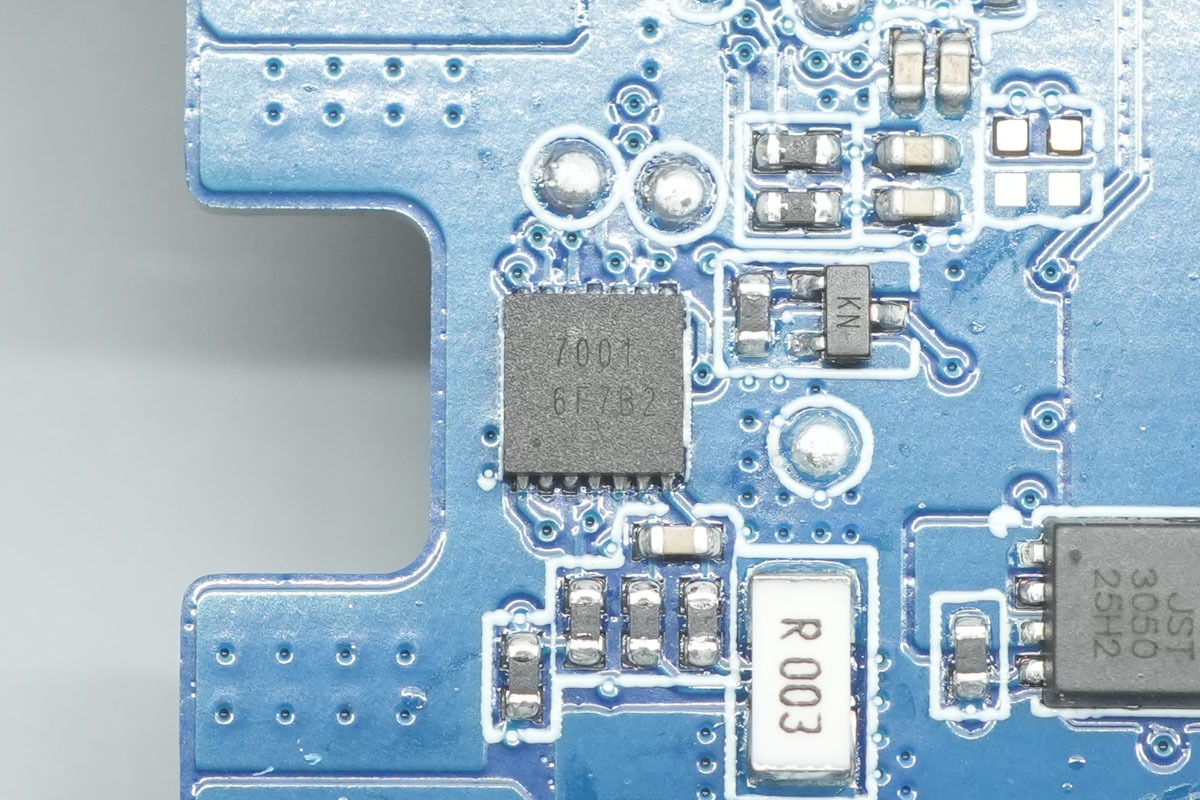
A component, model 7001.
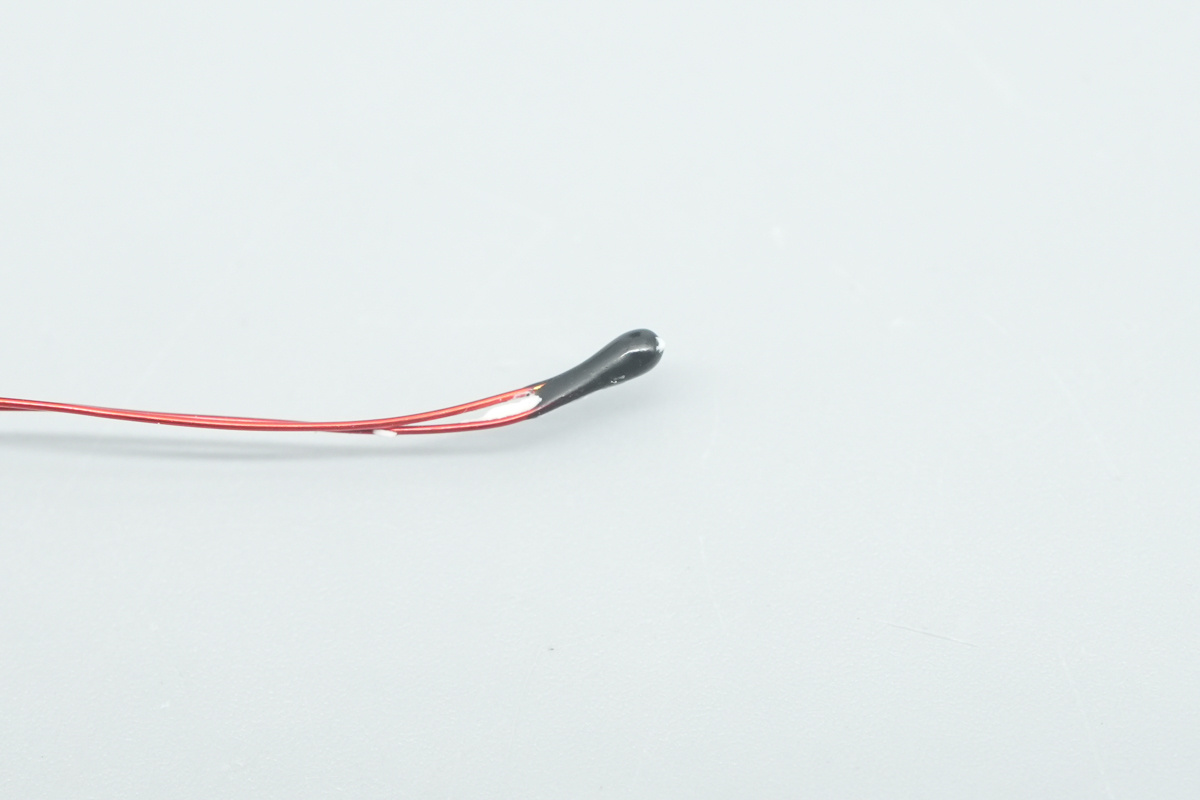
This is the NTC thermistor probe.
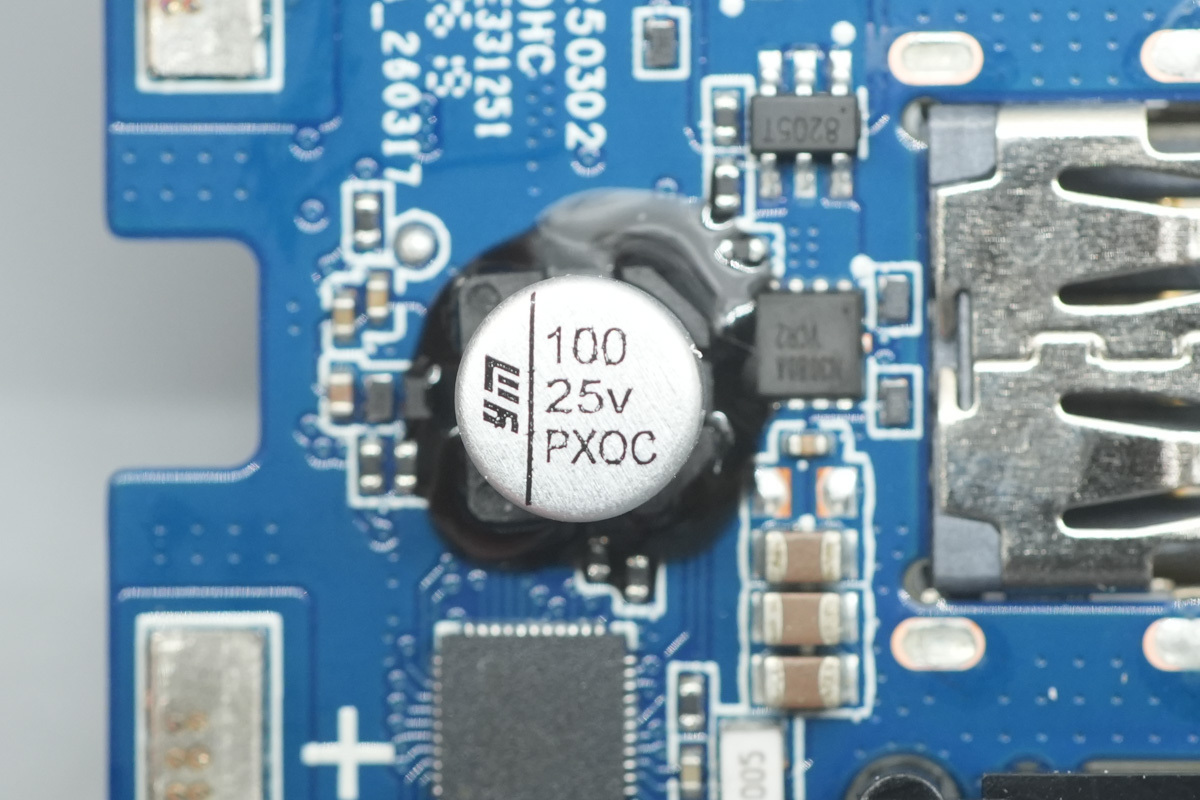
A solid cap used for charge and discharge filtering, spec 25V 100µF.
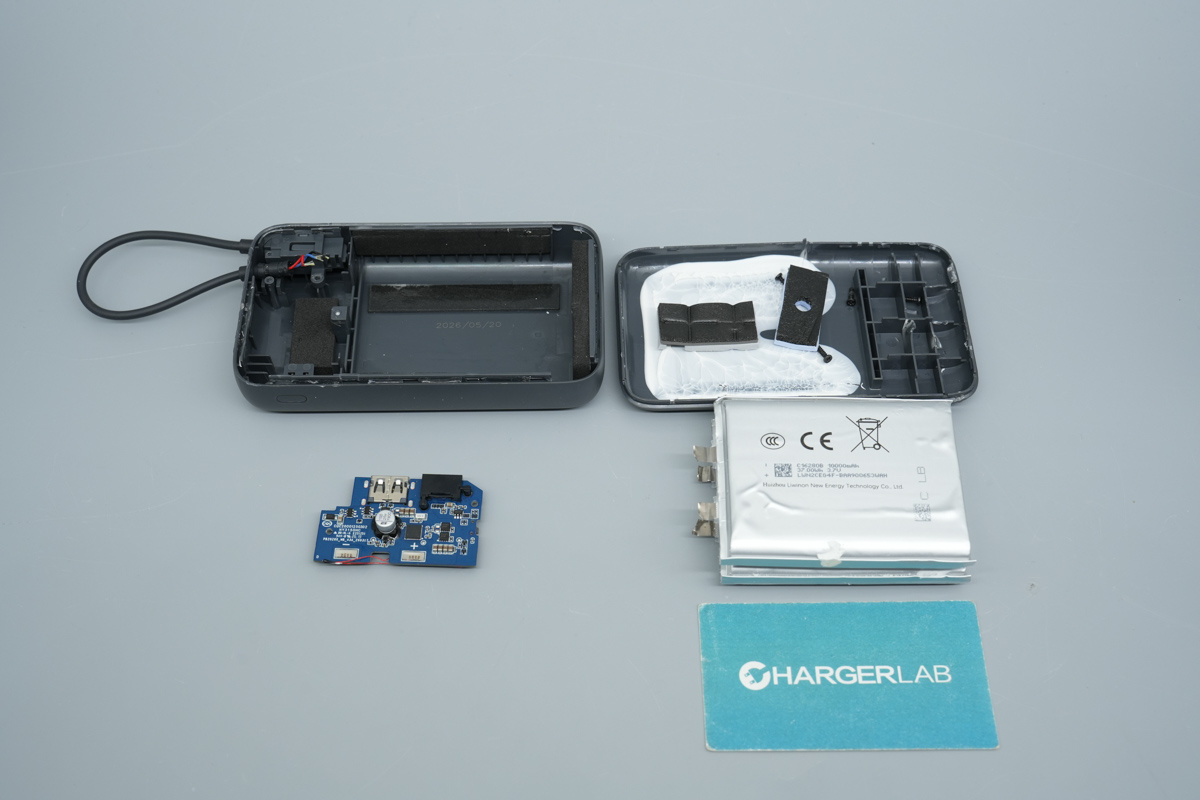
Well, those are all components of the Xiaomi Built-in Cable Power Bank 20000mAh 22.5W 2026.
Summary of ChargerLAB
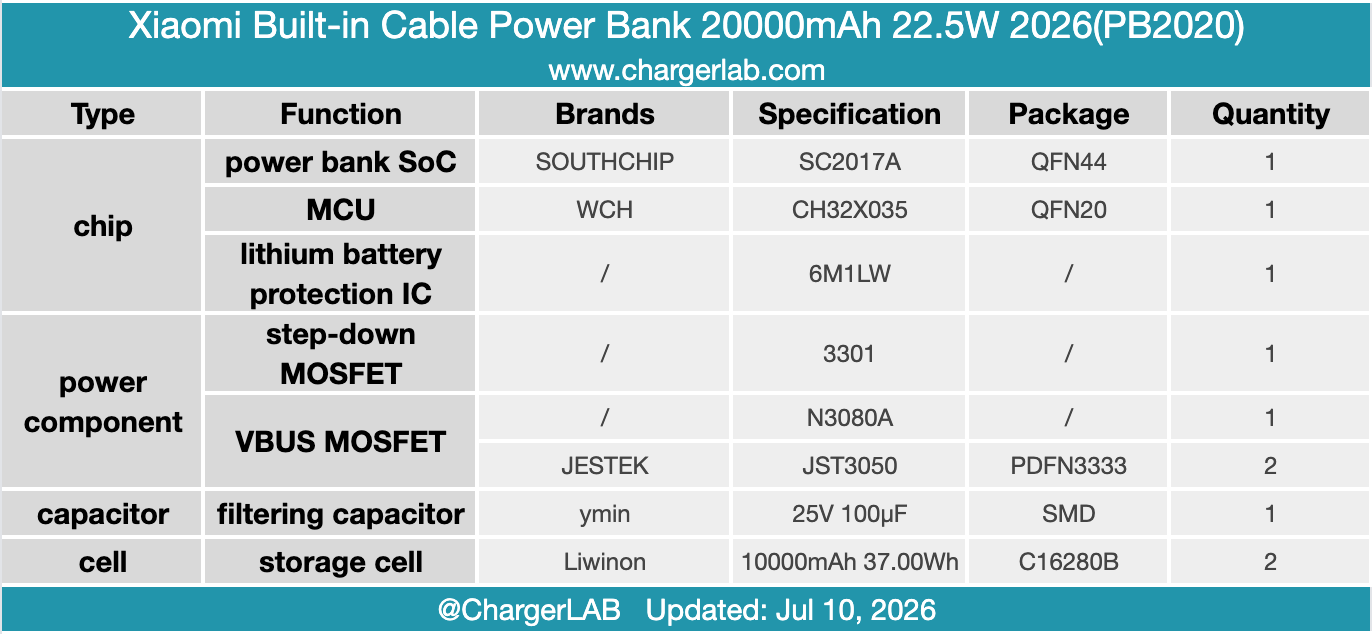
The Xiaomi 22.5W 20000mAh Power Bank with Integrated Cable (2026 Edition) continues to exhibit exceptional build quality and component selection. Encased in a flame-retardant shell, the internal assembly relies on extensive structural adhesive and dense damping foam to lock the cells and PCB securely in place. The captive cable is soldered directly onto the PCBA and heavily encapsulated with insulating potting compound to guard against strain separation during routine handling.
Power delivery is driven by SOUTHCHIP's highly integrated SC2017A SoC for 22.5W fast-charging performance, complemented by a WCH CH32X035 MCU dedicated to system telemetry and display.
Energy storage is provided by dual 10000mAh lithium polymer cells sourced from Liwinon. Fully CCC certified and aligned with strict new national standard safety benchmarks, the cells successfully withstand penetration, crush, thermal abuse, and overcharge tests with zero fire or explosion hazards, anchoring safety at the hardware core.
In summary, this power bank combines high capacity and extended runtimes with the convenience of an integrated cable design that eliminates tether anxiety on the go. Supported by high-grade component choices and rigorous safety engineering, it stands out as a dependable, highly secure fast-charging tool for everyday mobility.
Related Articles:
1. Teardown of the Xiaomi Ultra Slim Power Bank 10,000mAh 45W
2. Liwinon's C16280B Cells Secure a Coveted Spot in Xiaomi's Supply Chain to Power the New 20000mAh Fast-Charging Power Bank
3. Xiaomi UltraThin Series Upgrades Its Slim Profile with ATL Battery Tech