
Introduction
haha TRAVEL is the exclusive private-label brand created by Hong Kong’s leading electronics retailer, Fortress, custom-engineered for modern globetrotters. Built on a philosophy of lightweight, ultra-portable, and highly practical design, the brand delivers comprehensive electronic accessory solutions to eliminate power and connectivity anxiety while on the go.
Its diverse product portfolio features travel adapters, chargers, power banks, multi-in-one cables, and the haha SIM travel data card.
Recently, ChargerLAB got their hands on an ultra-thin magnetic wireless power bank from haha TRAVEL. Designed specifically for travel convenience, the manufacturer highlights an exceptionally sleek profile measuring just 8.7mm thick and tipping the scales at a mere 115g.
Under the hood, this power bank packs a 5000mAh cell, capable of delivering up to 20W PD wired fast charging alongside a maximum of 15W wireless fast charging.
Join us as we crack open this ultra-slim magnetic power bank to reveal the engineering, build quality, and internal components hidden inside.
Product Appearance
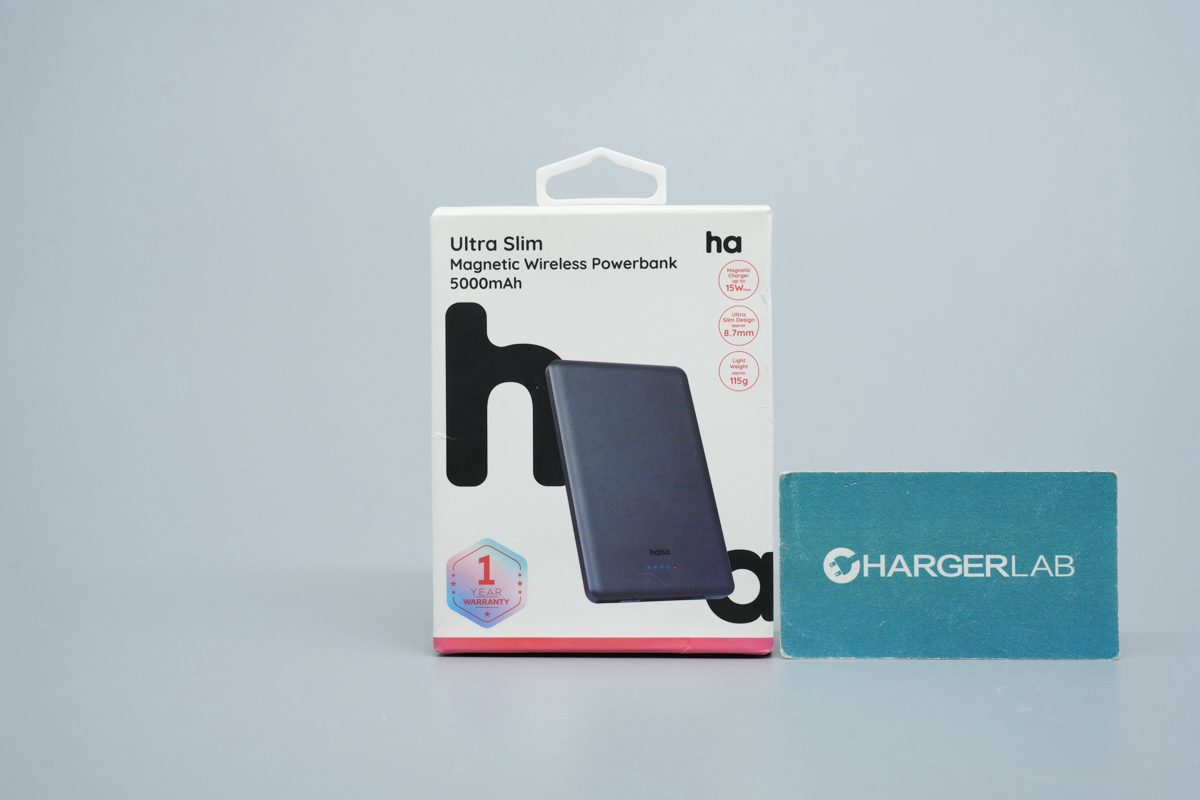
The packaging box features a clean, minimalist white aesthetic. The product name, "Ultra Slim Magnetic Wireless Powerbank 5000mAh," is printed boldly on the top to highlight its 5000mAh capacity, with a summary of 3 core selling points prominently displayed on the right.
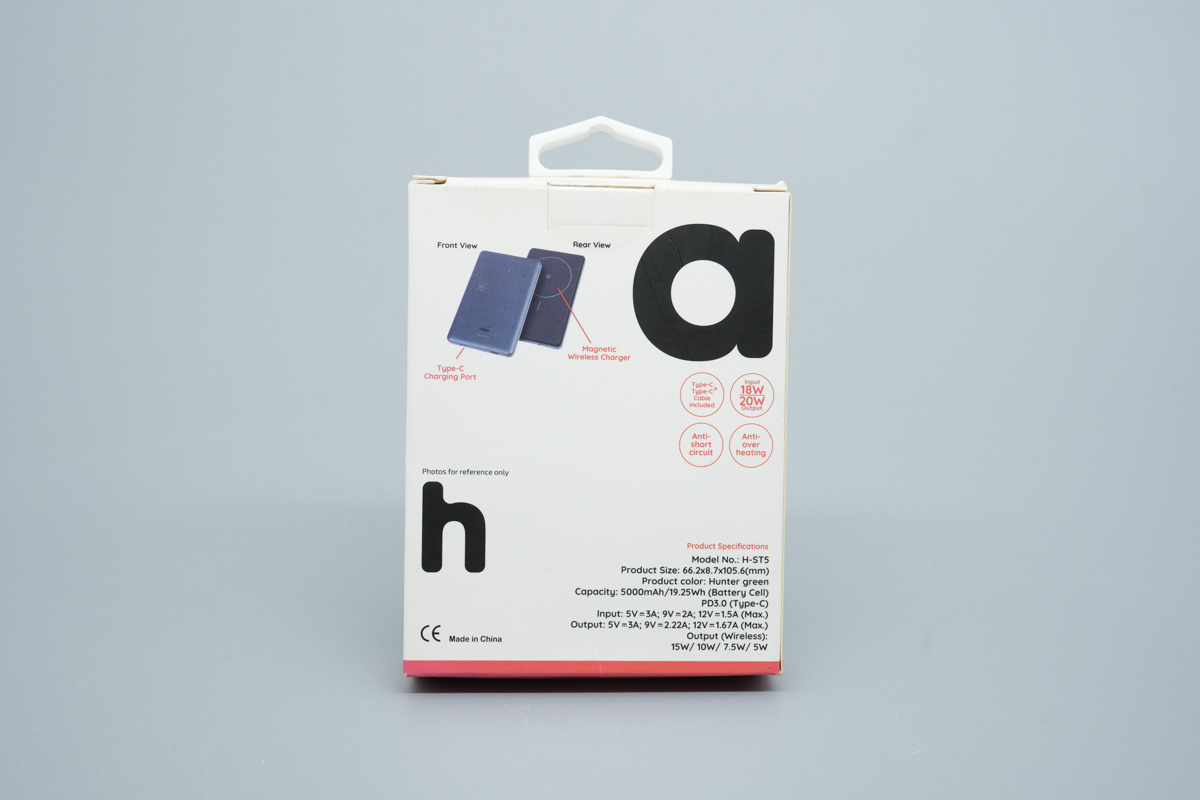
The back of the box features 3D renderings showcasing both sides of the power bank, along with a comprehensive breakdown of technical specs. We will dive deeper into the exact parameters in the upcoming physical teardown analysis.
The side of the box is printed with the haha TRAVEL brand logo.
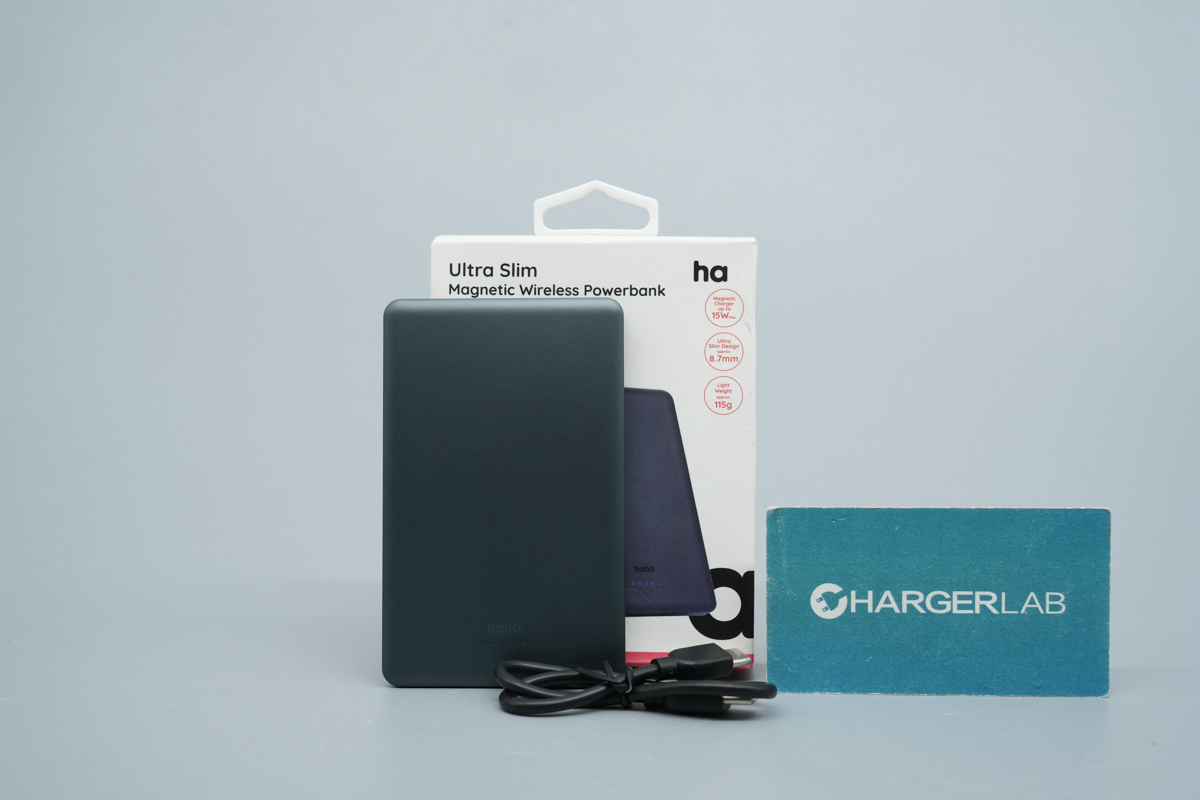
Opening the box reveals the haha TRAVEL power bank unit and a matching black data cable.
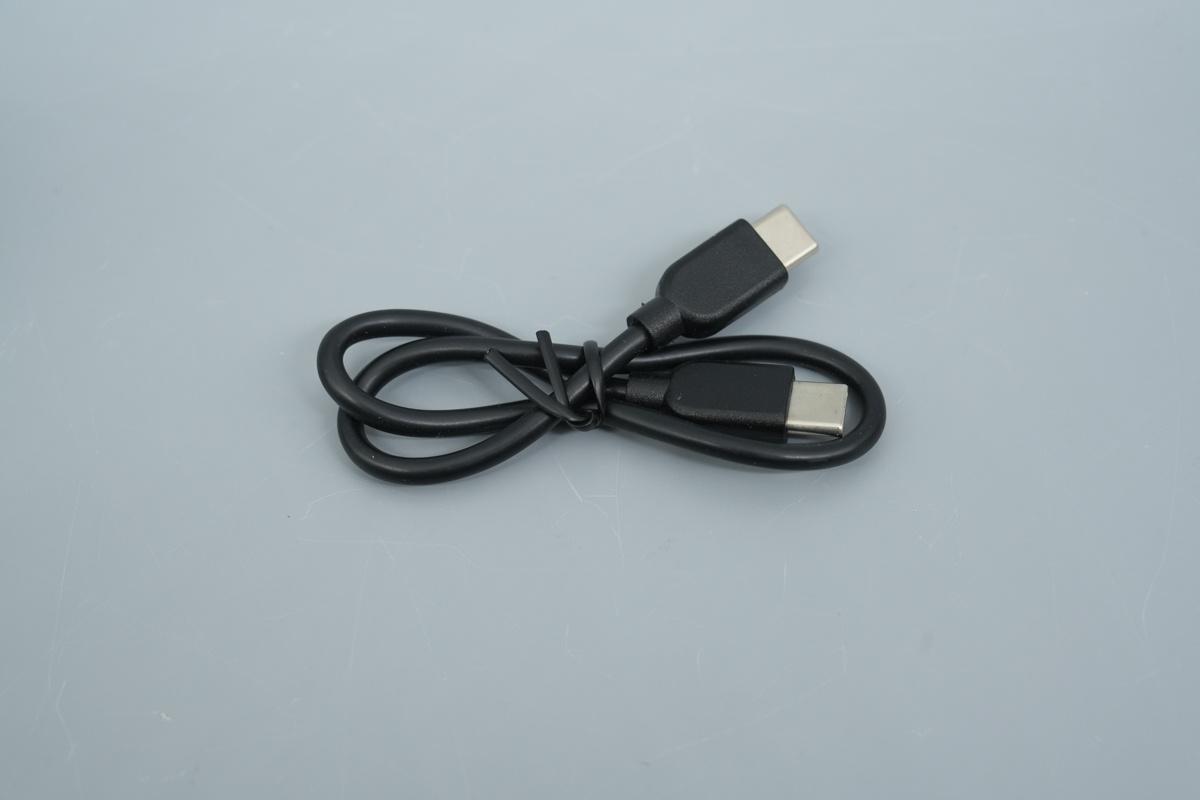
The included data cable is a black USB-C to USB-C short cable, secured with a black cable tie, making it ideal for use with the power bank.
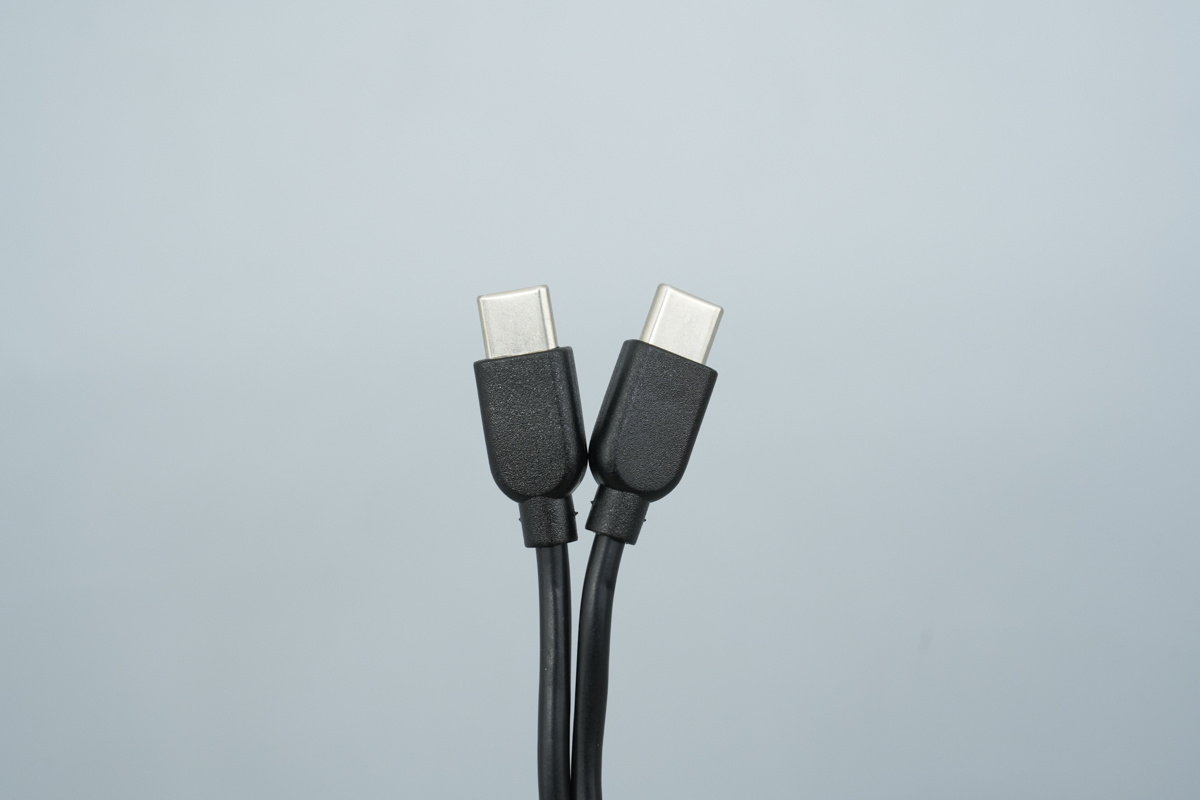
The cable features USB-C interfaces on both ends, adopting conventional black molded strain relief terminals.
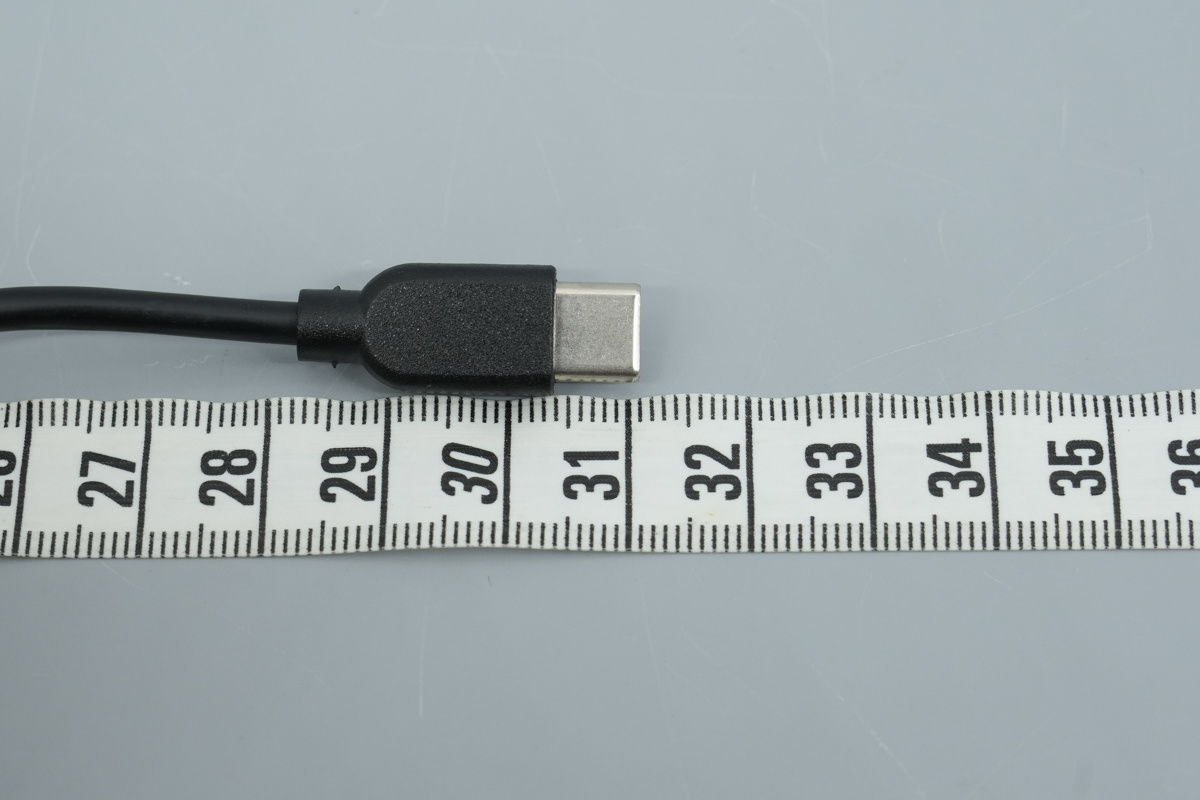
The length of the integrated cable is approximately 31cm.
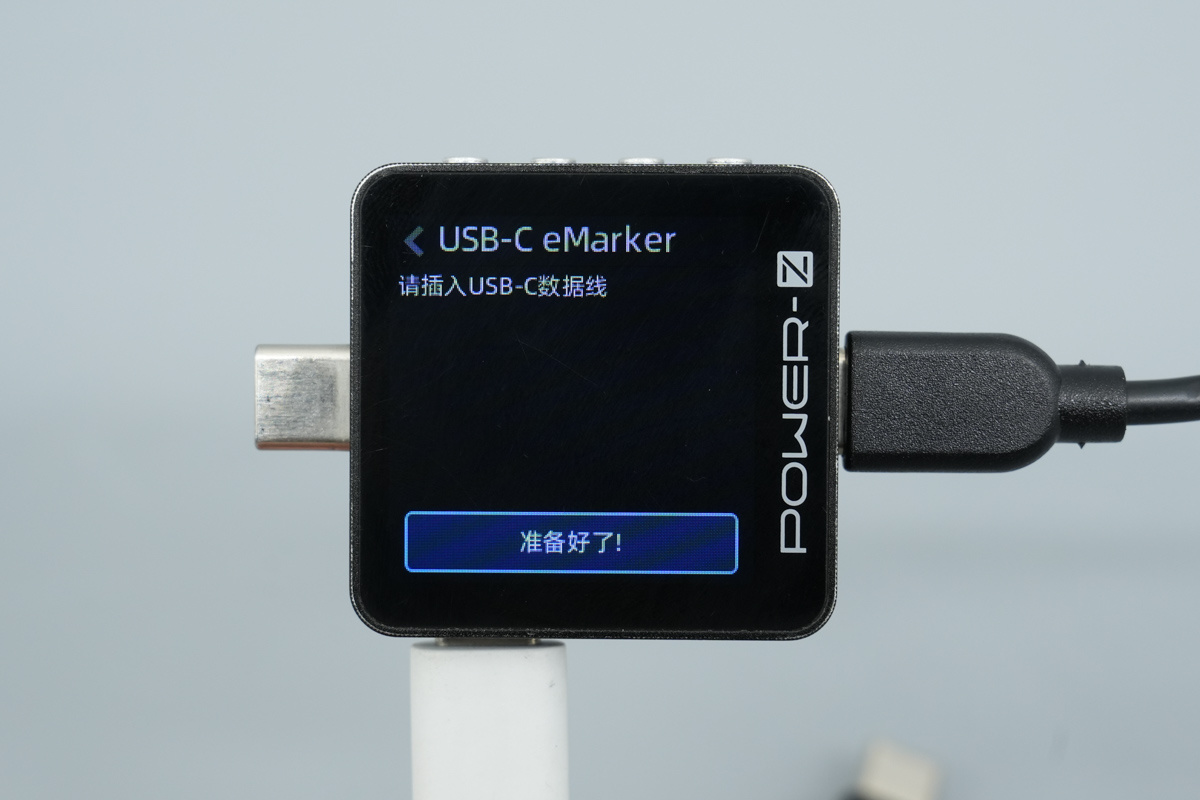
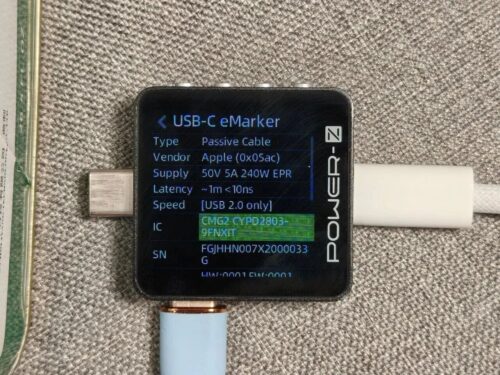
ChargerLAB POWER-Z KM003C shows that the cable supports that it doesn't contain an E-Marker chip, which is a 3A cable.
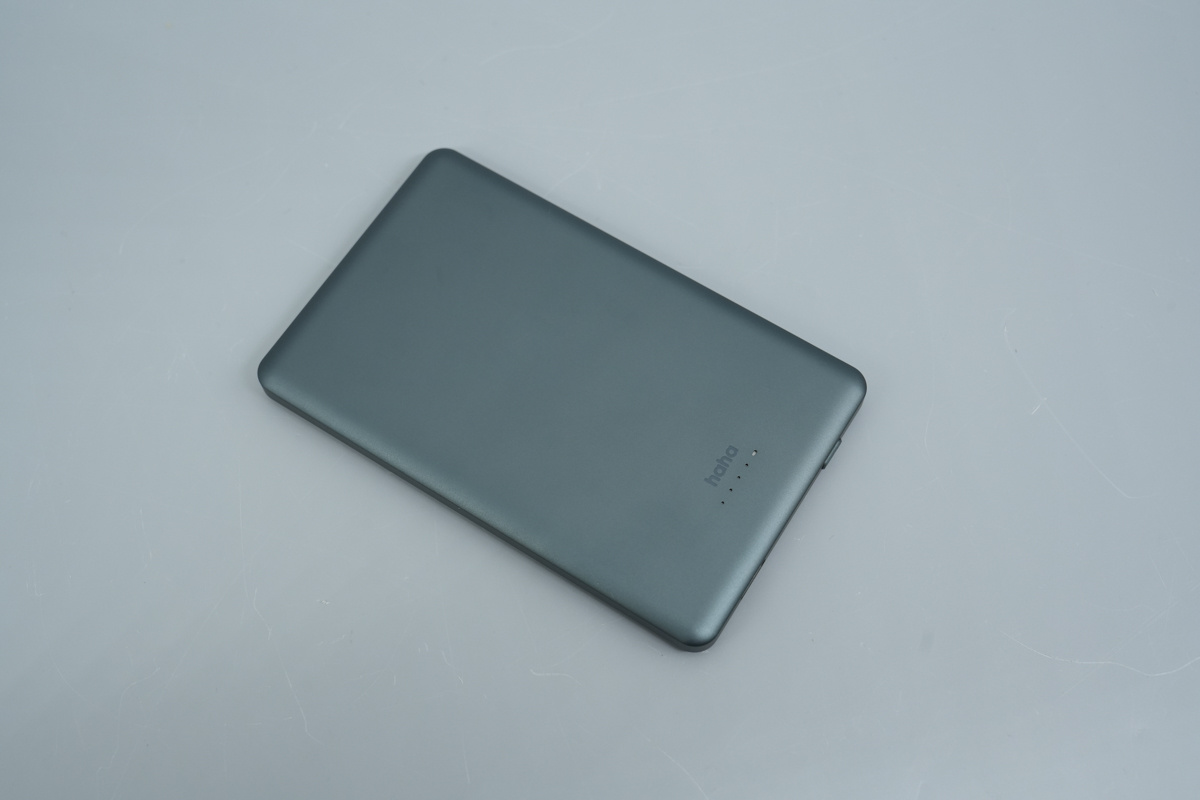
The chassis of the power bank is finished in a grayish-green matte, skin-friendly coating that offers a delicate tactile feel while resisting fingerprint smudges. The bottom-right corner is printed with the brand logo and a row of power LED indicators.
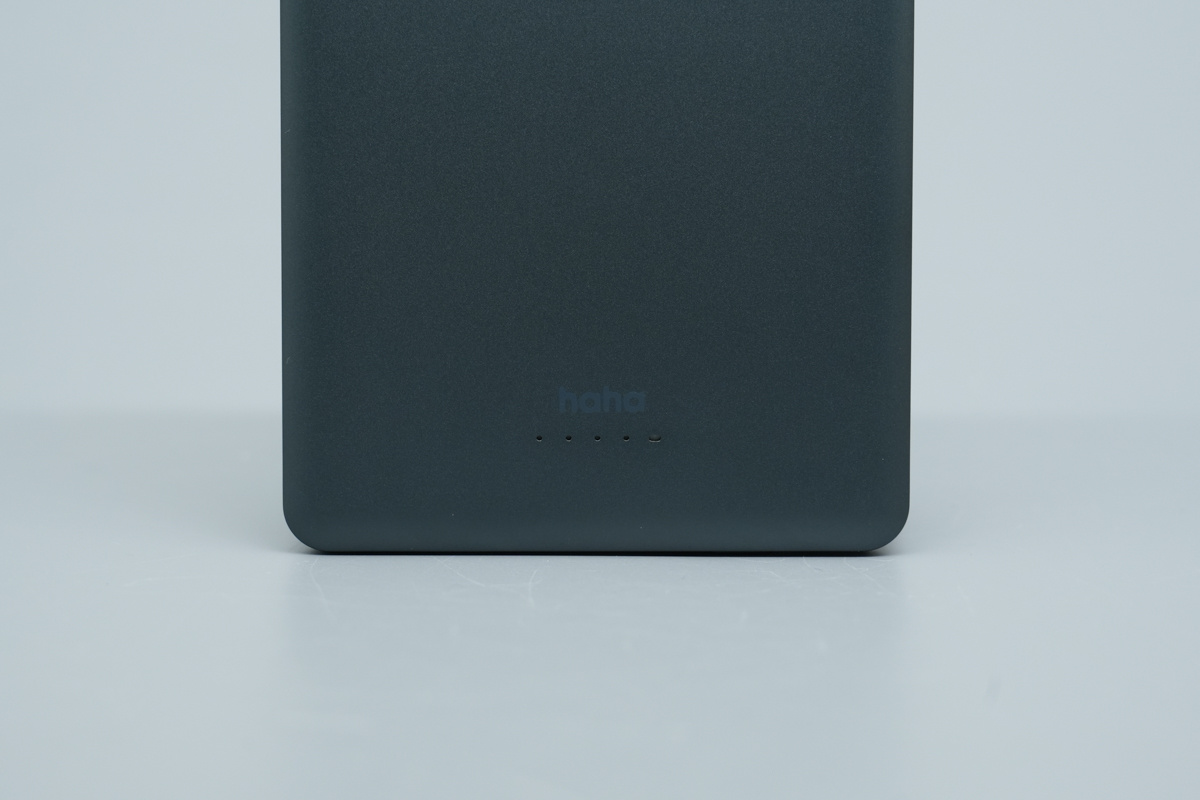
The logo and the LED indicators on the front of it, featuring a total of 5 openings designed with micro-perforated light transmission.
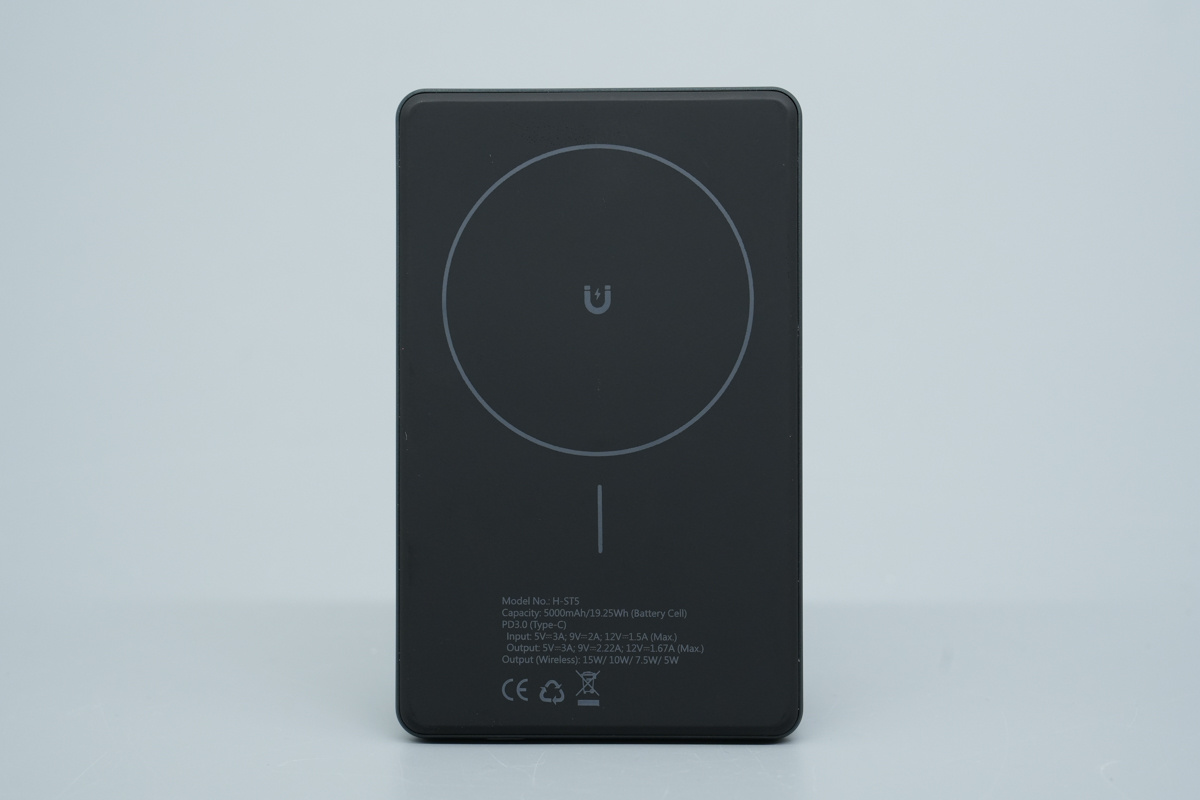
The back of it adopts a completely flat panel design, with a prominent magnetic alignment ring clearly printed in the center and alignment magnet outlines at the bottom.
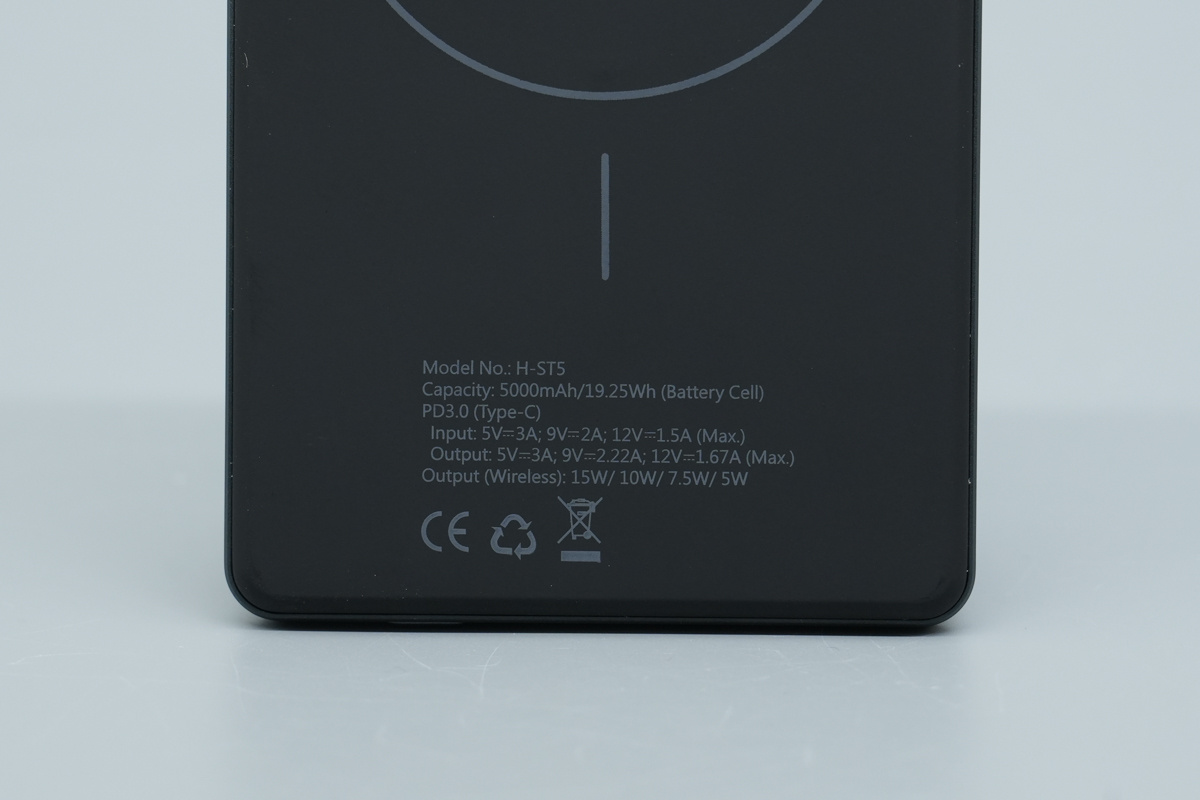
The detailed parameters are as follows (matches the outer packaging):
Model: H-ST5
Battery Capacity: 5000mAh / 19.25Wh
USB-C Input: 5V/3A, 9V/2A, 12V/1.5A (Max)
USB-C Output: 5V/3A, 9V/2.22A, 12V/1.67A (Max)
Wireless Output: 15W / 10W / 7.5W / 5W
This product has passed the CCC certification.
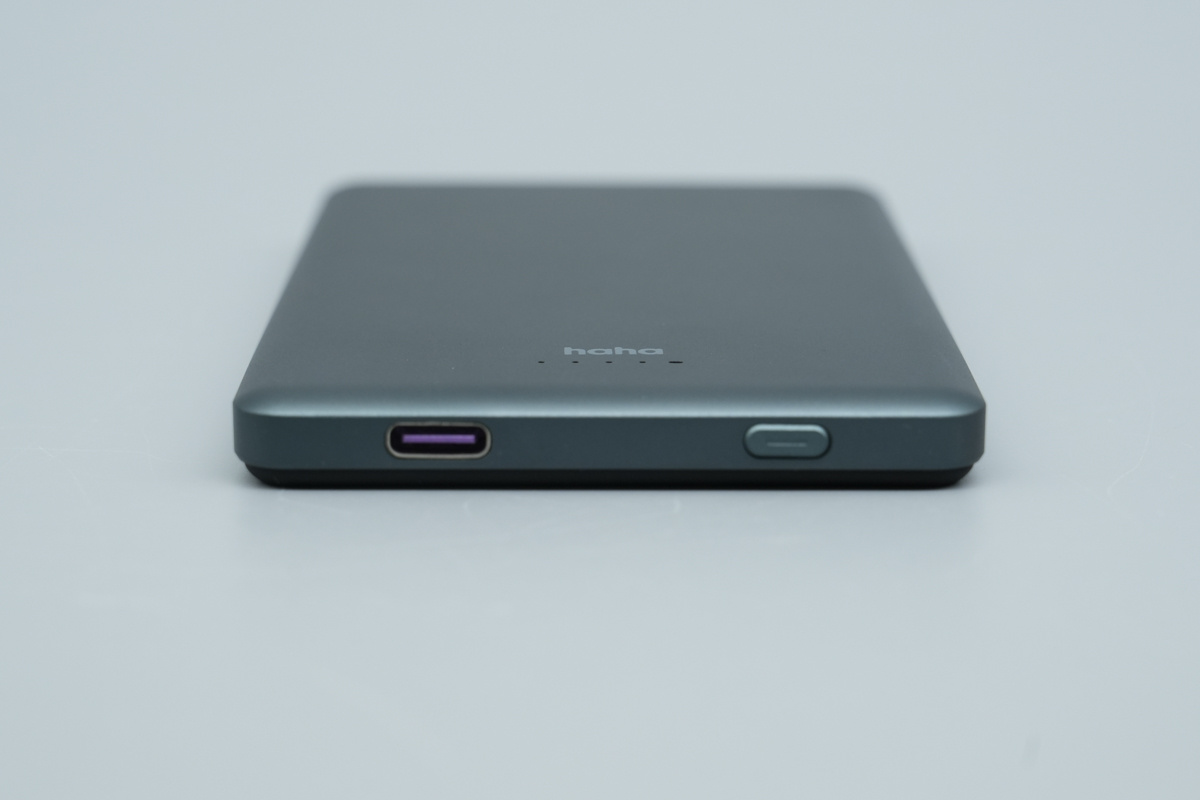
Moving to the bottom, a bi-directional USB-C fast-charging port on the left, paired with a physical power button on the right.
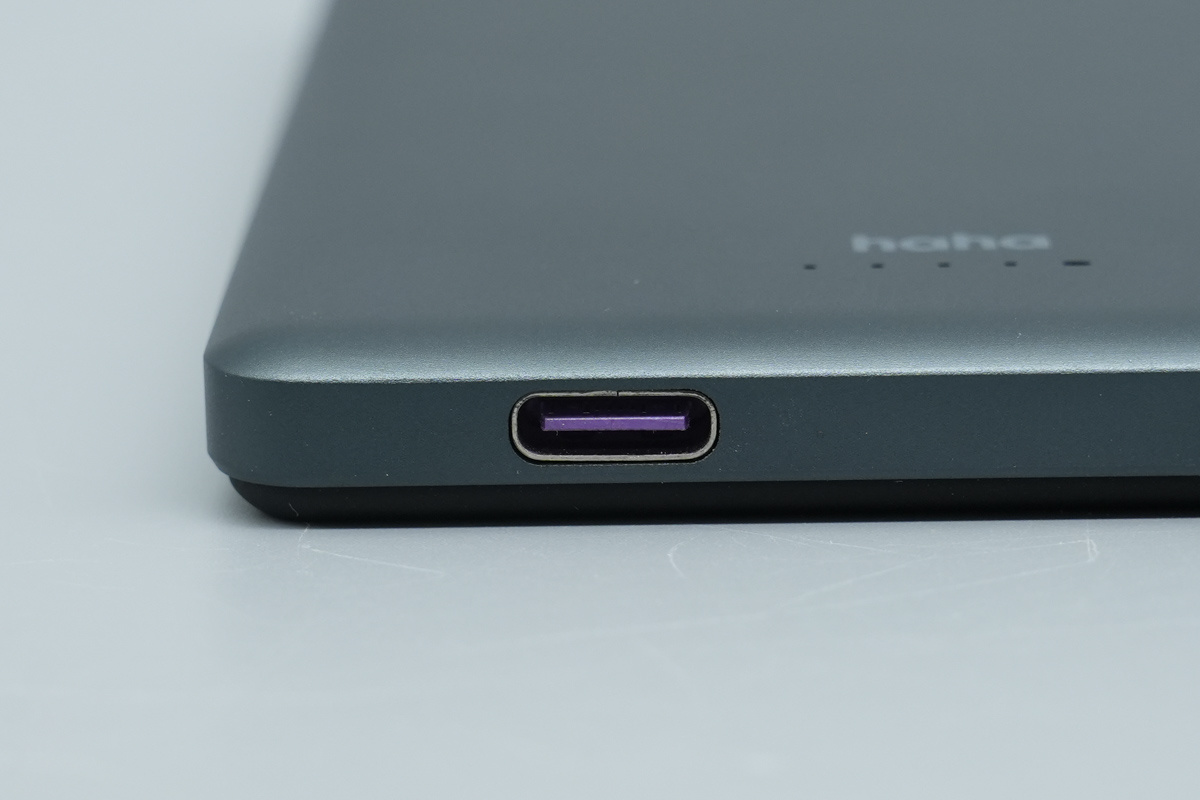
The interior of the USB-C port adopts a purple plastic sheet, indicating that the product supports fast charging.
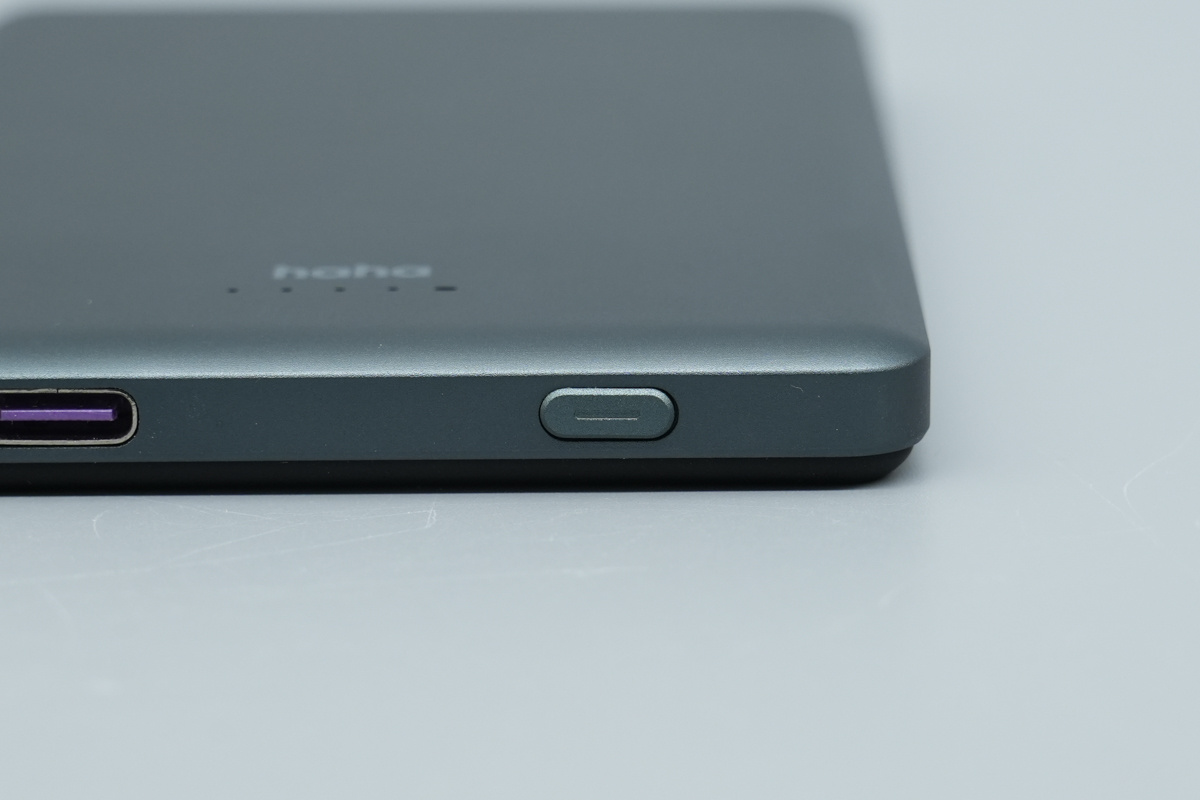
The power button adopts a pill-shaped, slightly protruding design, with a horizontal raised ridge added to its surface.
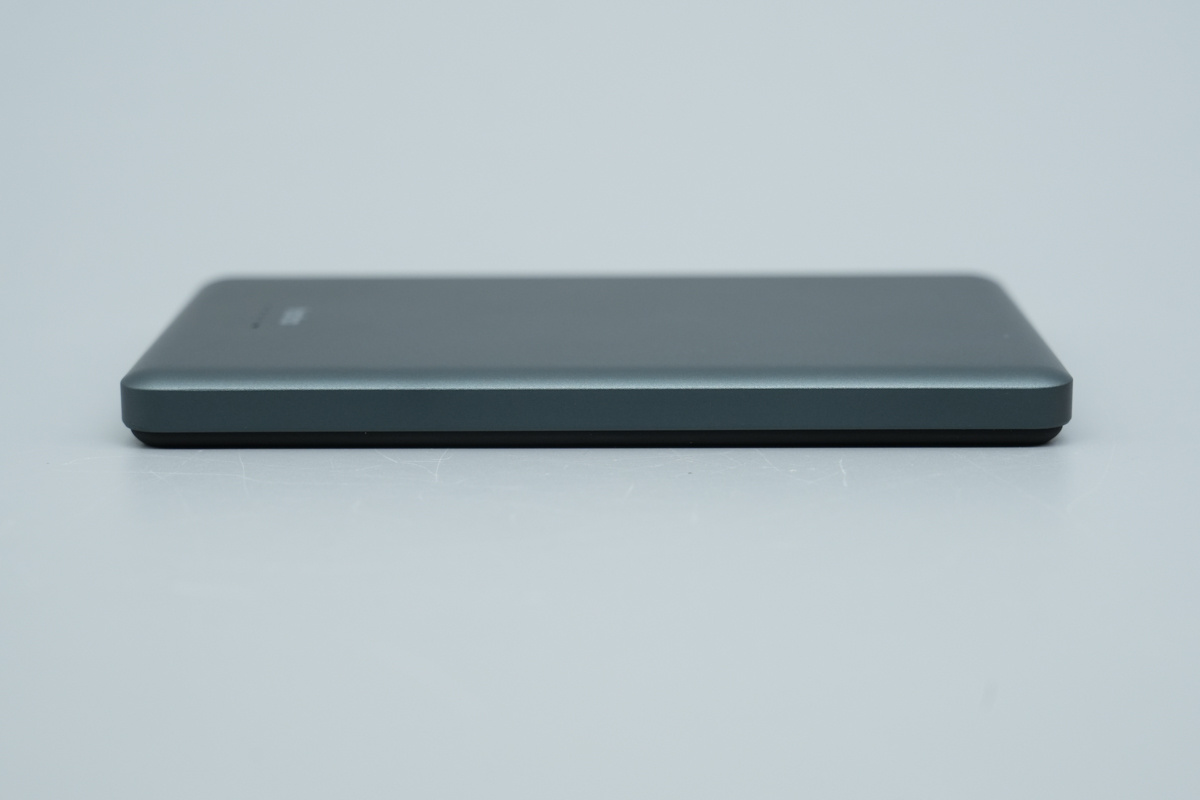
Detailes of the sides and edges show that the four corners and edges adopt a relatively rounded transition treatment, ensuring a comfortable grip that does not dig into the hand.
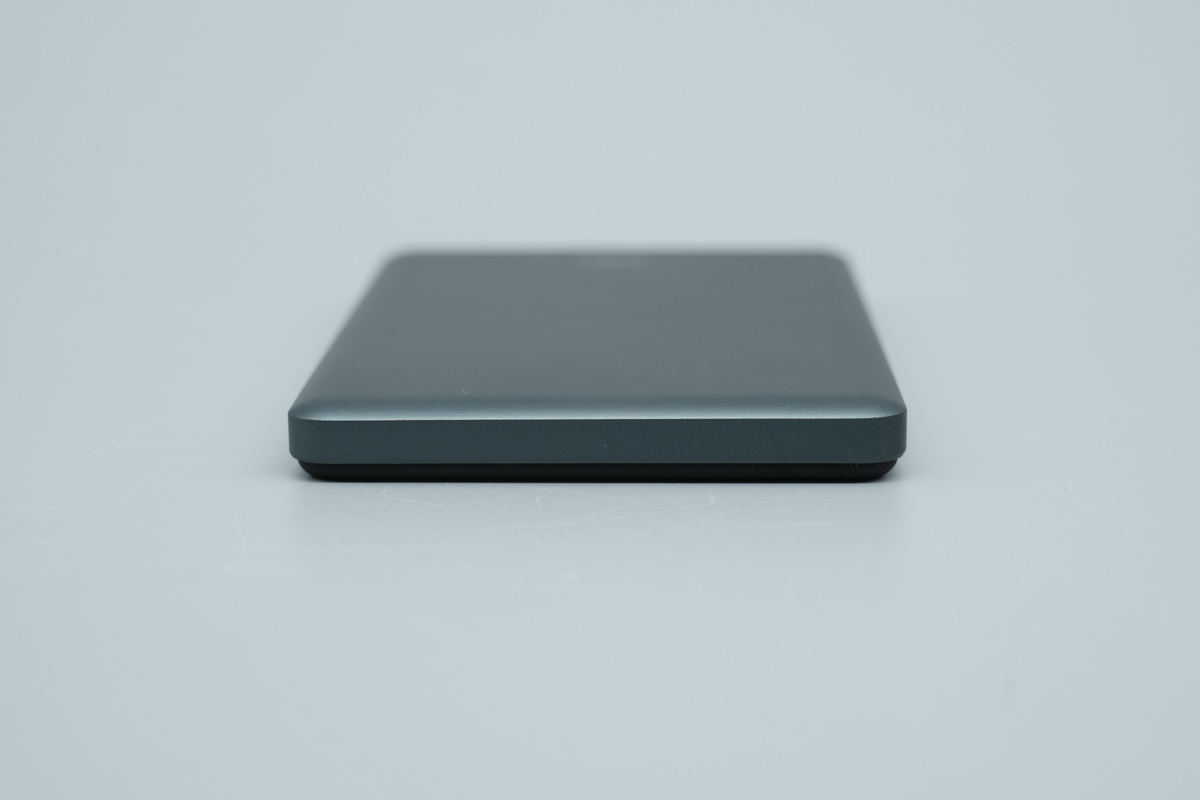
The top of the power bank likewise features no buttons or port openings.
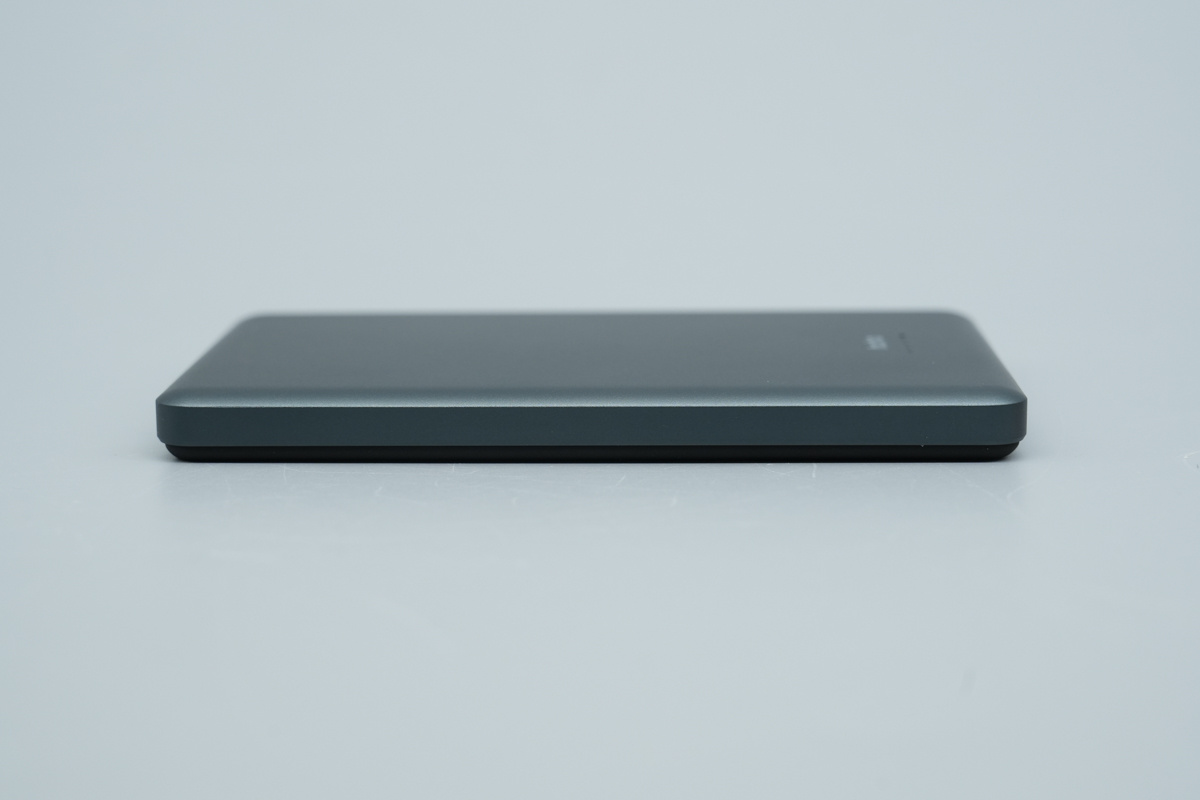
Viewing the power bank from another side profile reveals a sleek, seamless unibody design with no extra cutouts or ports other than the ones on the bottom.
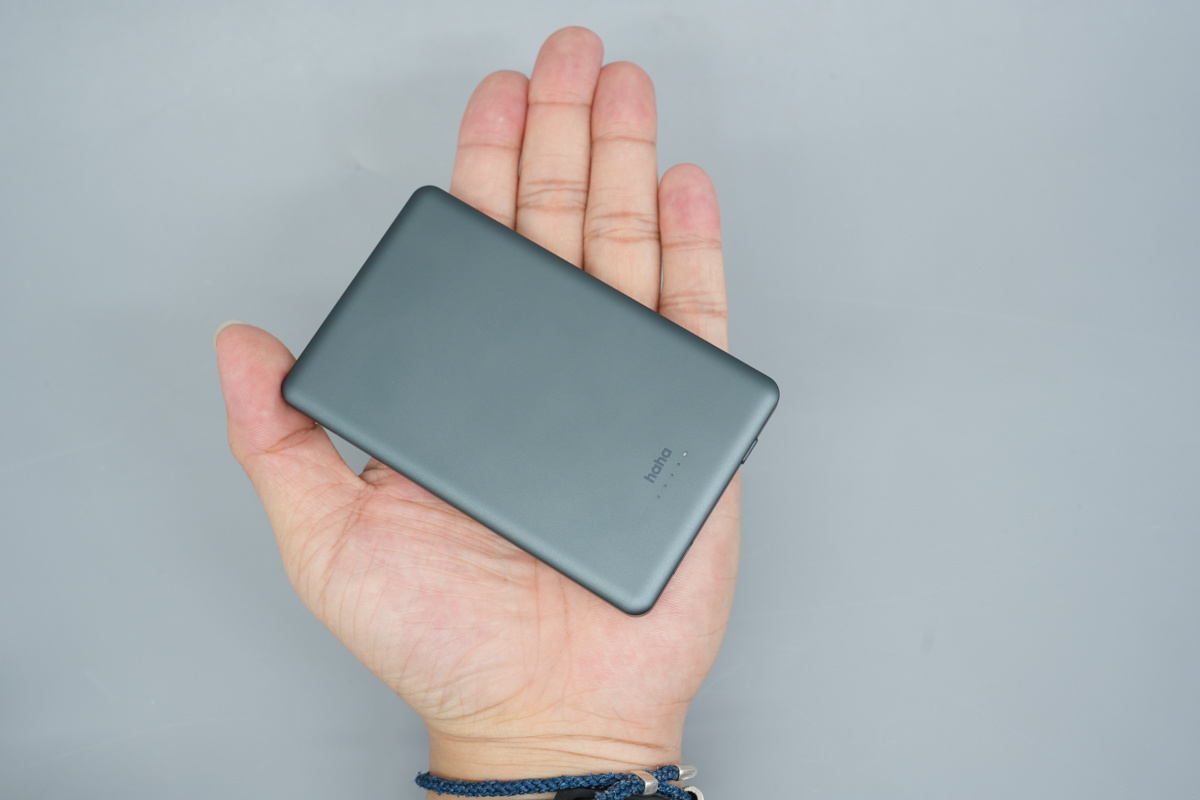
That's how big it is in the hand.
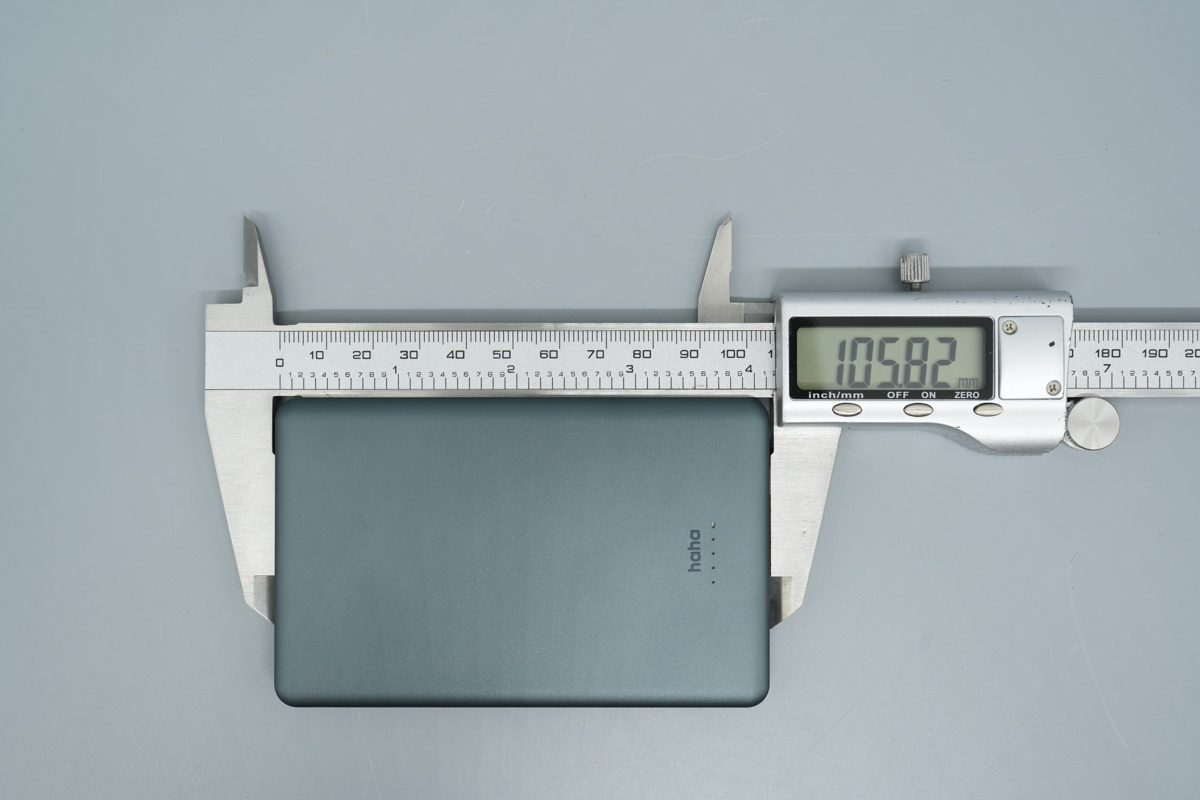
The length of the power bank is about 105.82mm (4.166 inches).
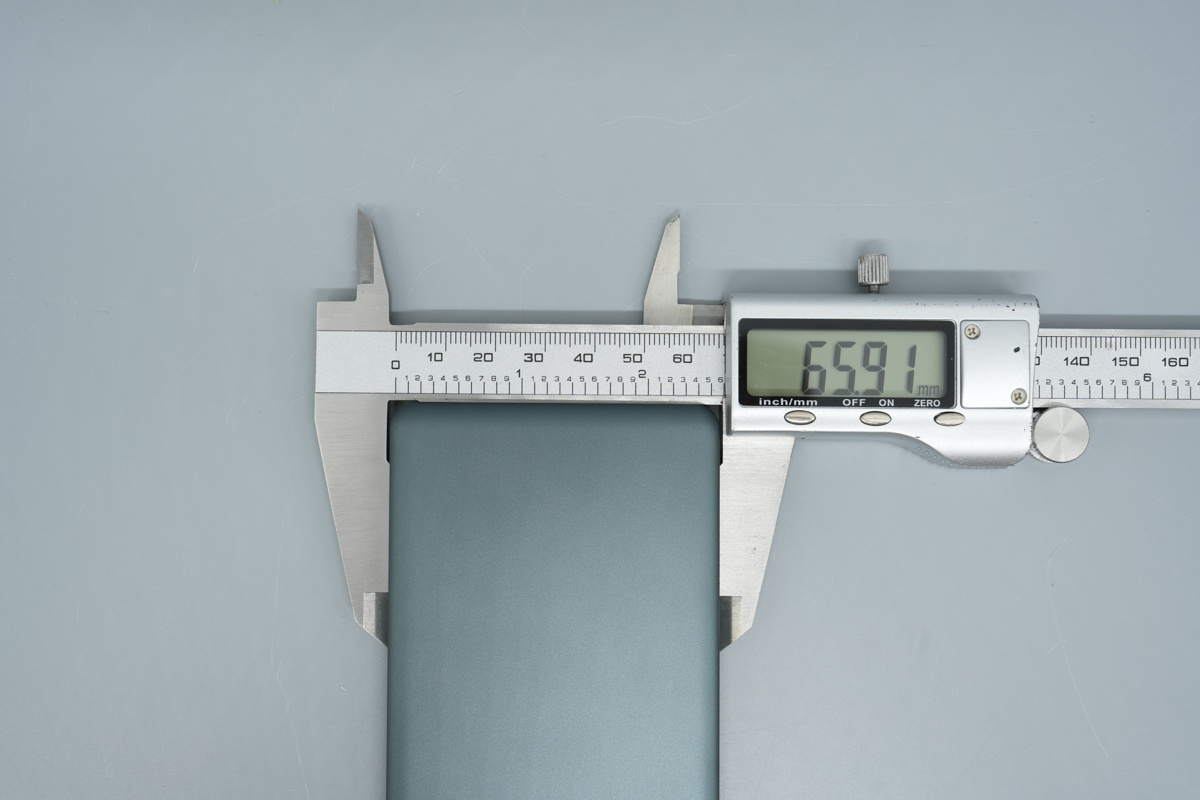
The width of the power bank is about 65.91mm (2.595 inches).
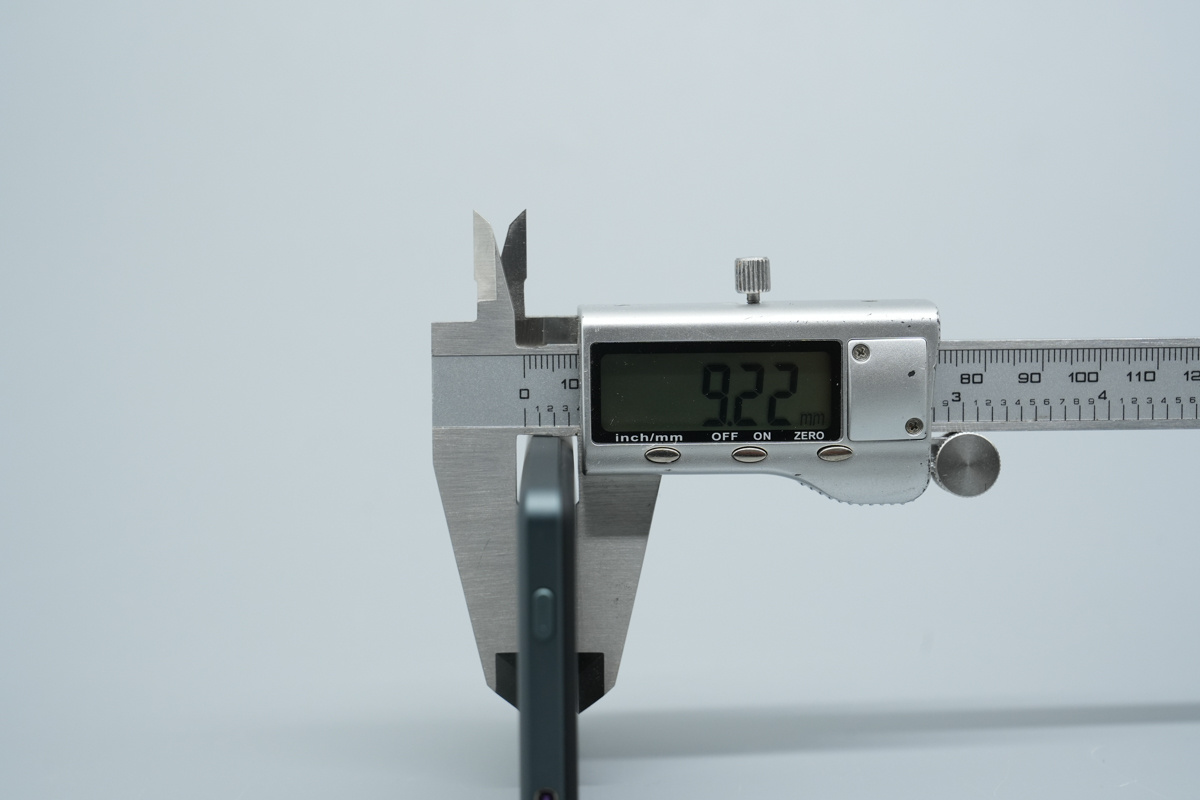
The thickness of the power bank is about 9.22mm (0.363 inches).
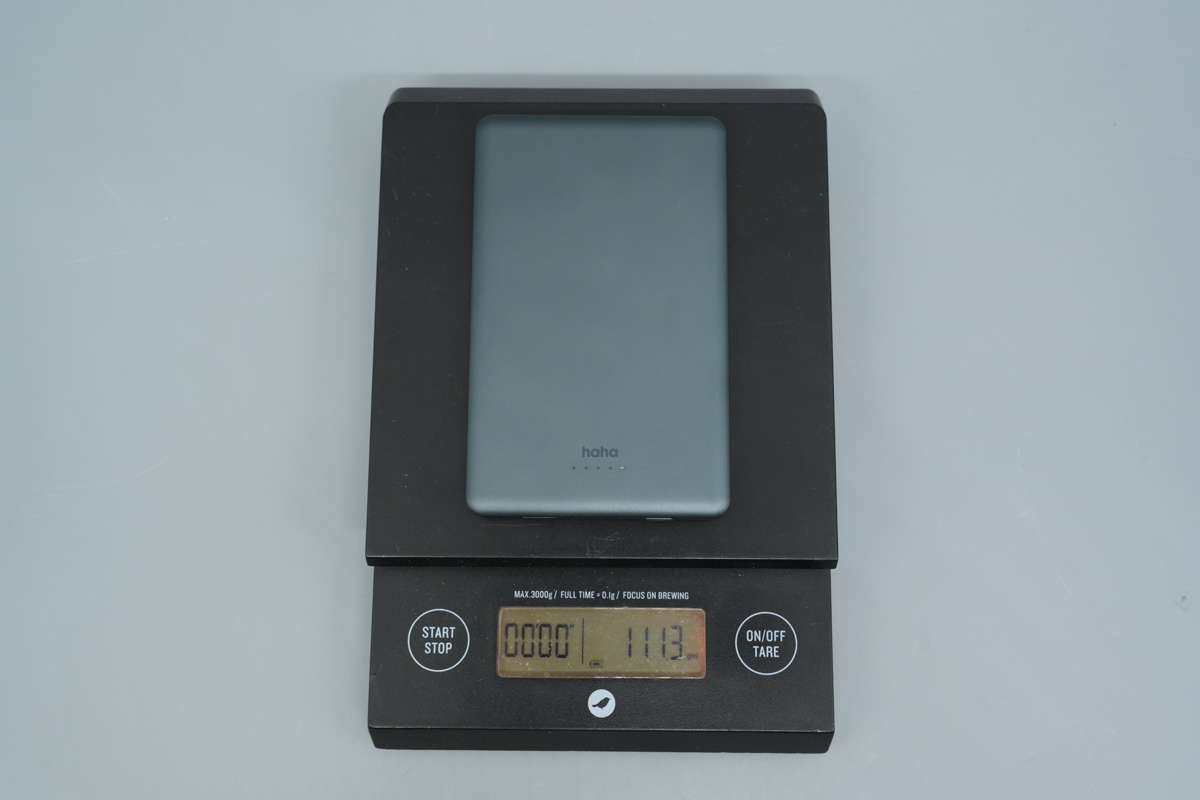
The weight is about 111.3g (3.93 oz).
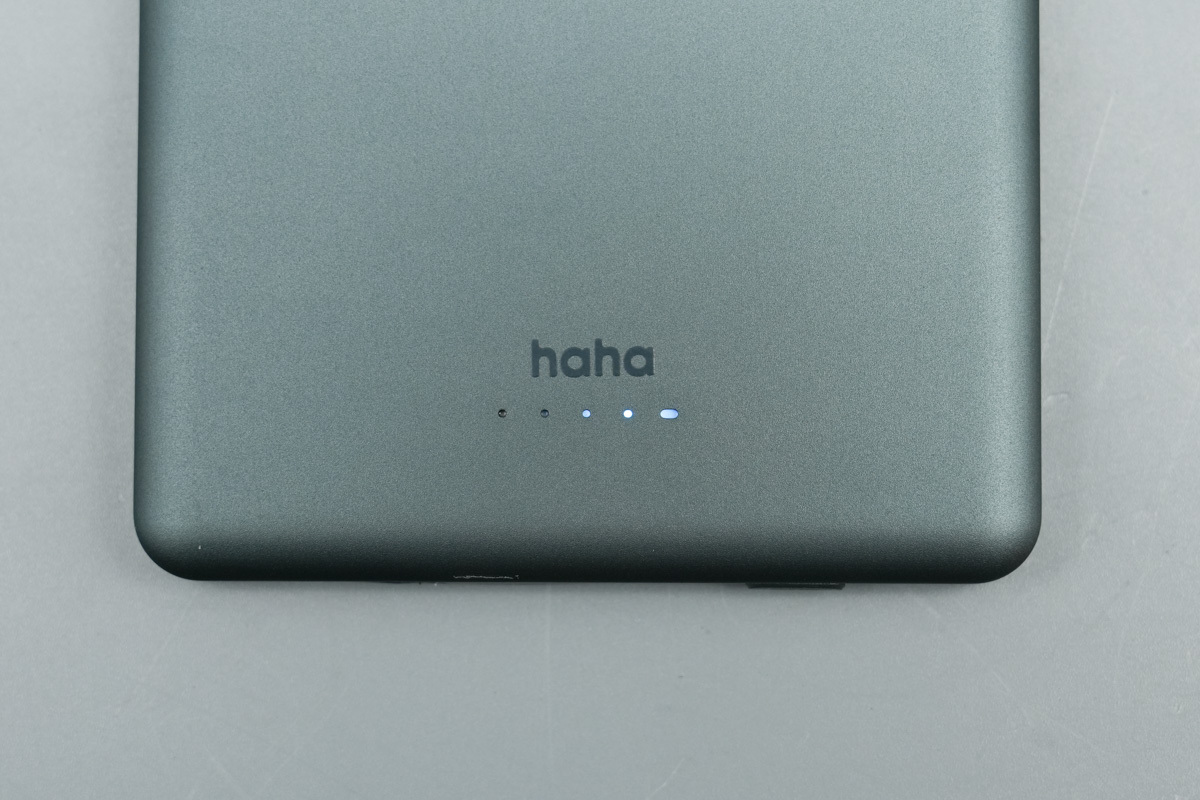
Pressing the power button activates the hidden indicators at the bottom front, featuring a dedicated fast-charging status light on the far right and four white LEDs on the left for battery level.
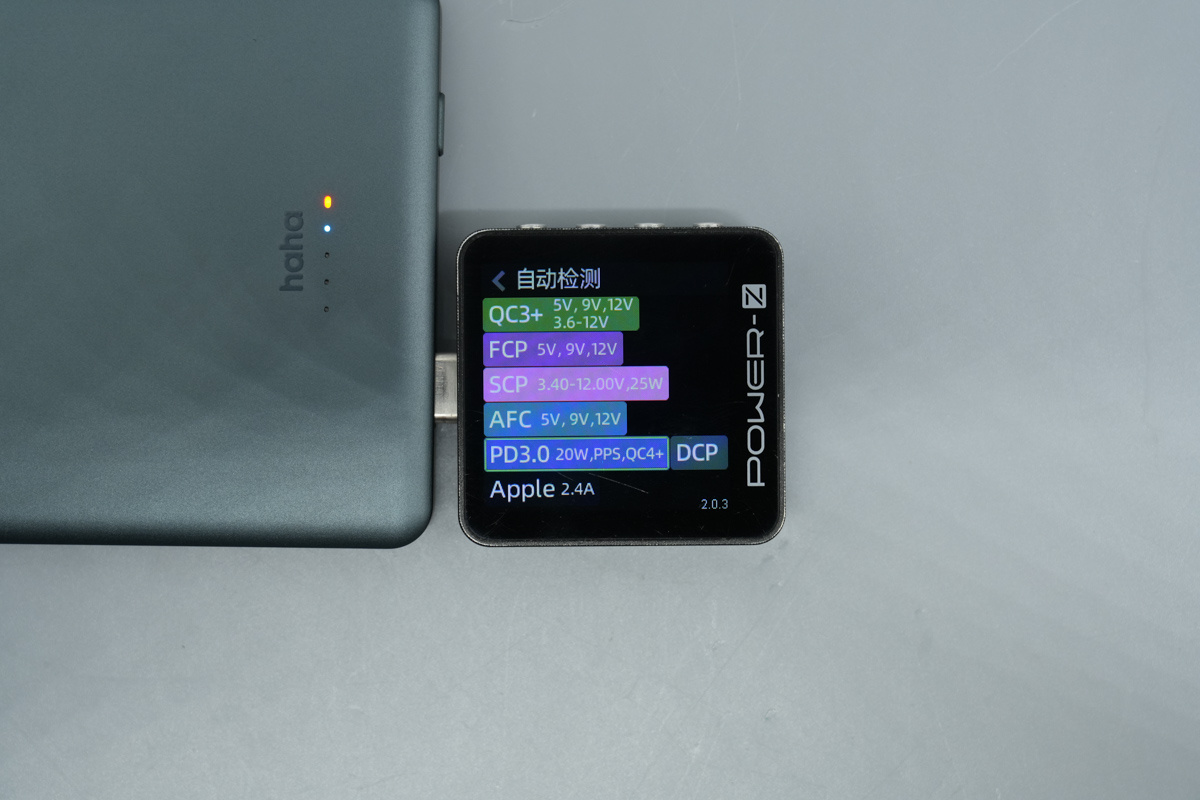
ChargerLAB POWER-Z KM003C shows that the USB-C port supports QC3+, FCP, SCP, AFC, PD3.0/PPS, Apple 2.4A and DCP.
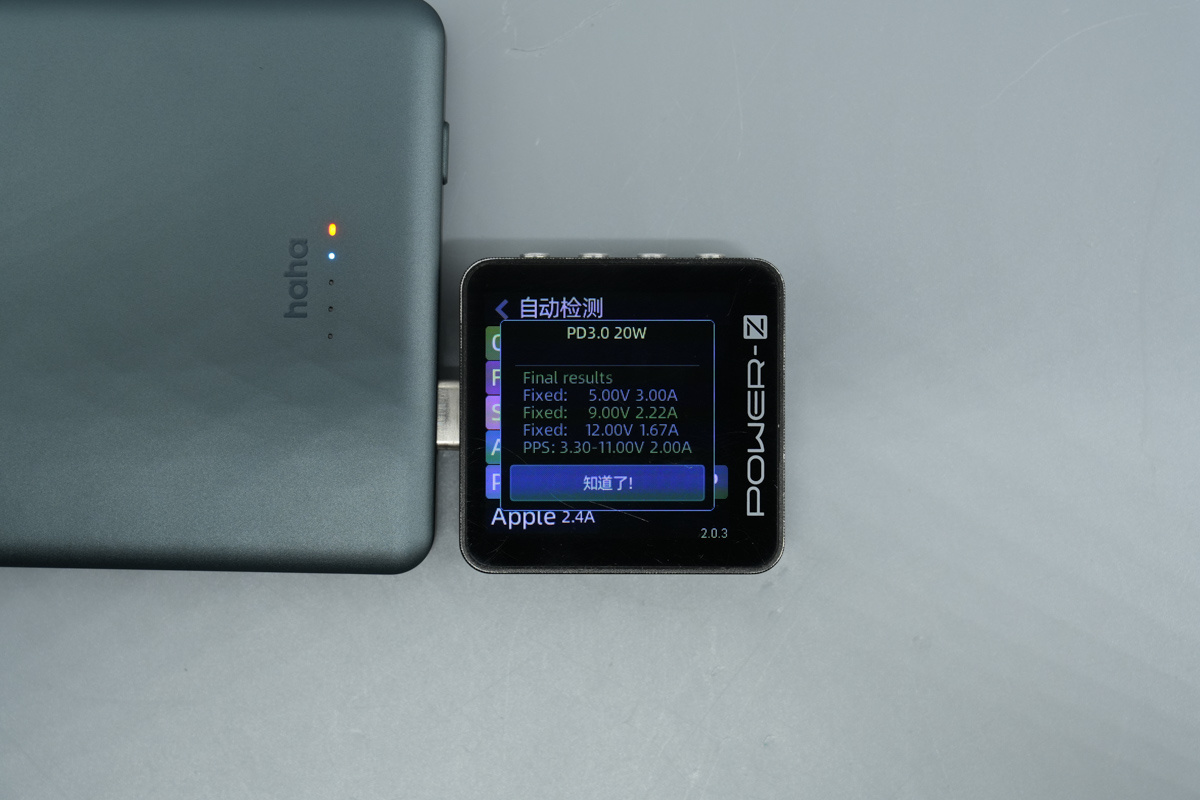
And it also supports three fixed PDOs of 5V3A, 9V2.22A and 12V1.67A, and features a PPS subset: 3.3-11V 2A.
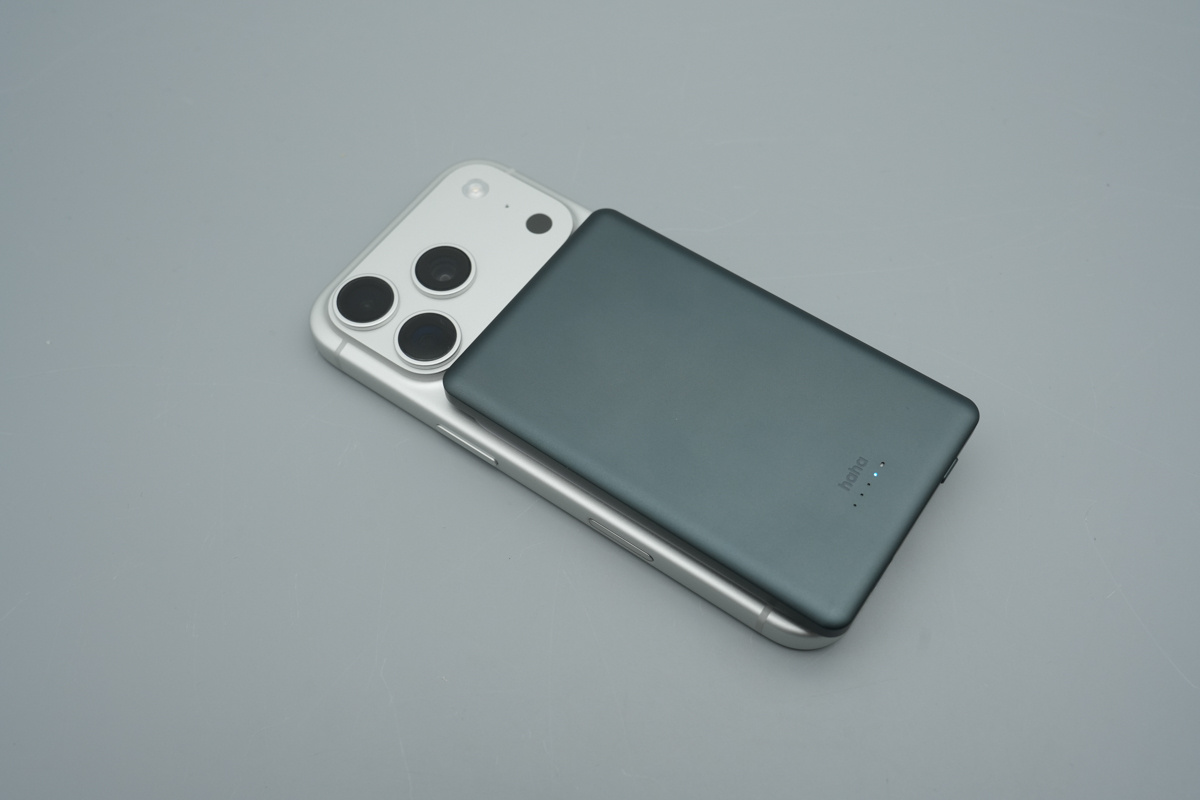
Attach the power bank to the back of an iPhone Pro for actual testing.
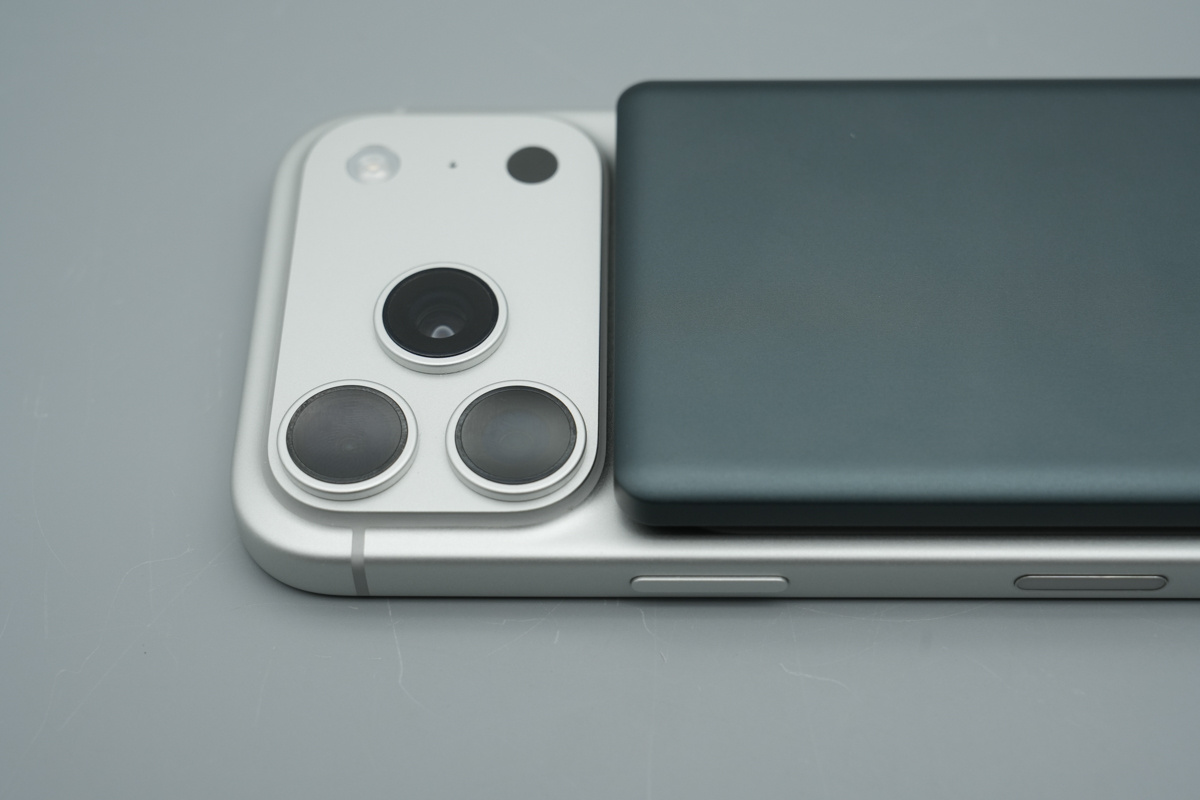
After attachment, the power bank does not obstruct the iPhone 17 Pro camera module at all, without affecting the normal grip or photography of the phone.
With the exterior tour wrapped up, it's time to dive into the teardown.
Teardown
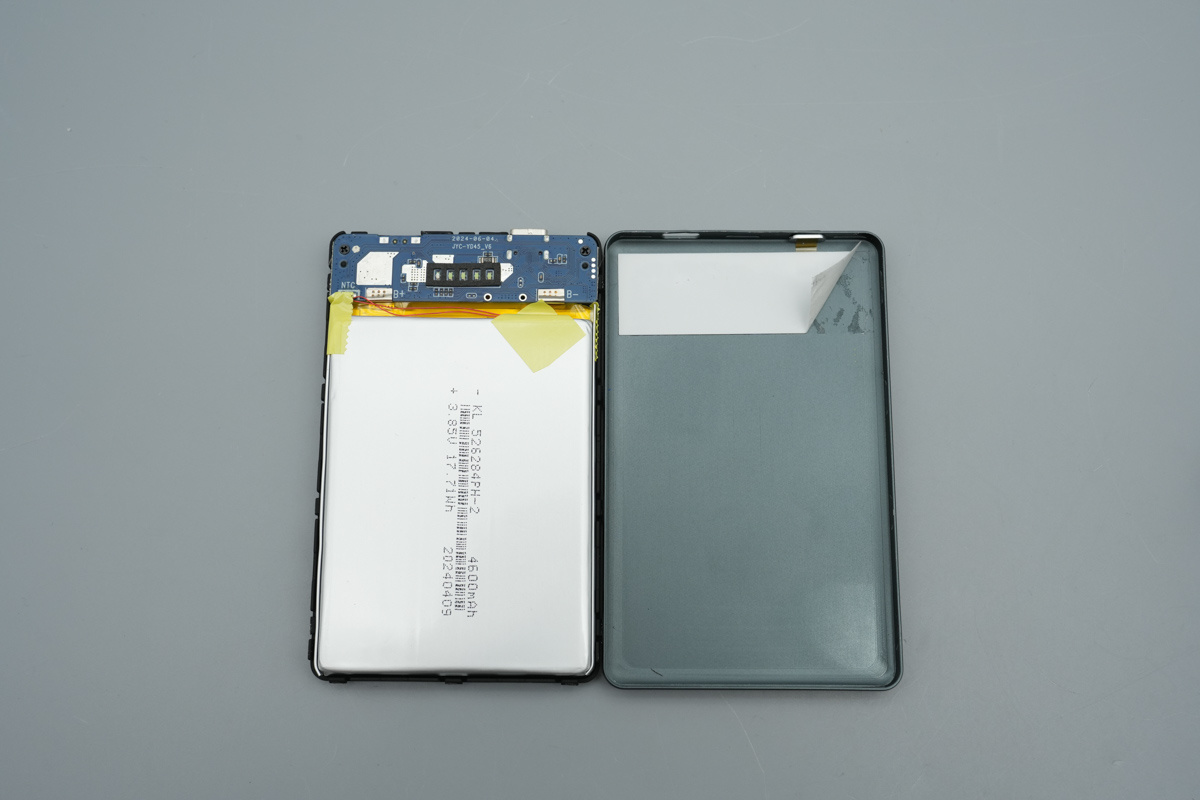
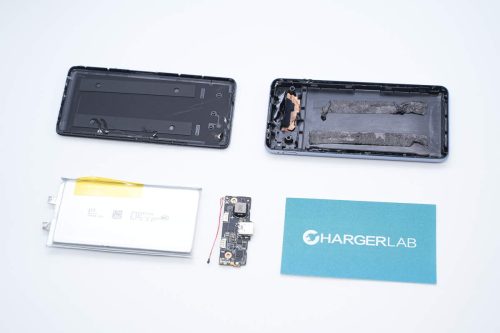
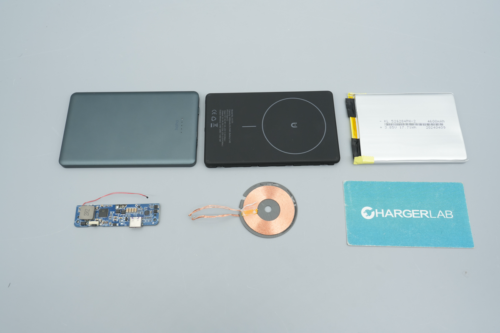
Prying open the rear cover along the seam reveals the internal battery cell and PCBA layout.
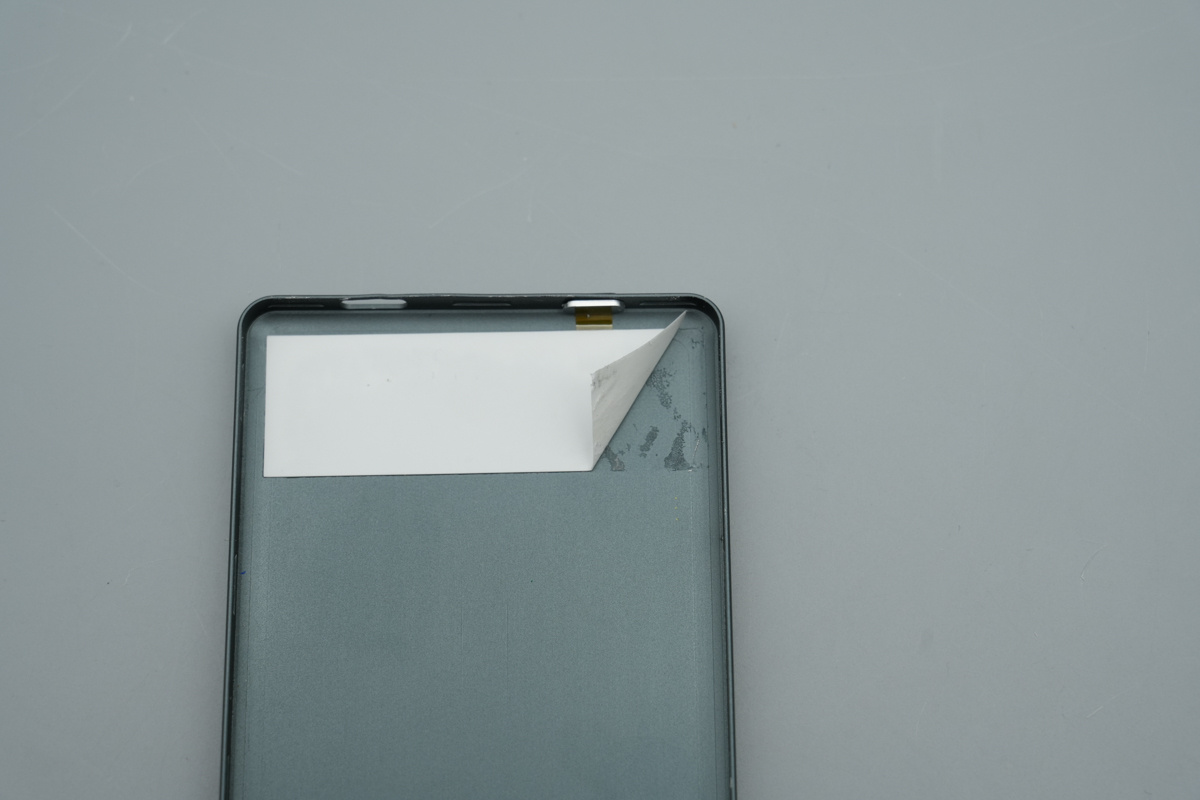
The inner side of the front cover, which is affixed with a large area of insulating sticker to prevent short circuits caused by contact with the metal back cover.
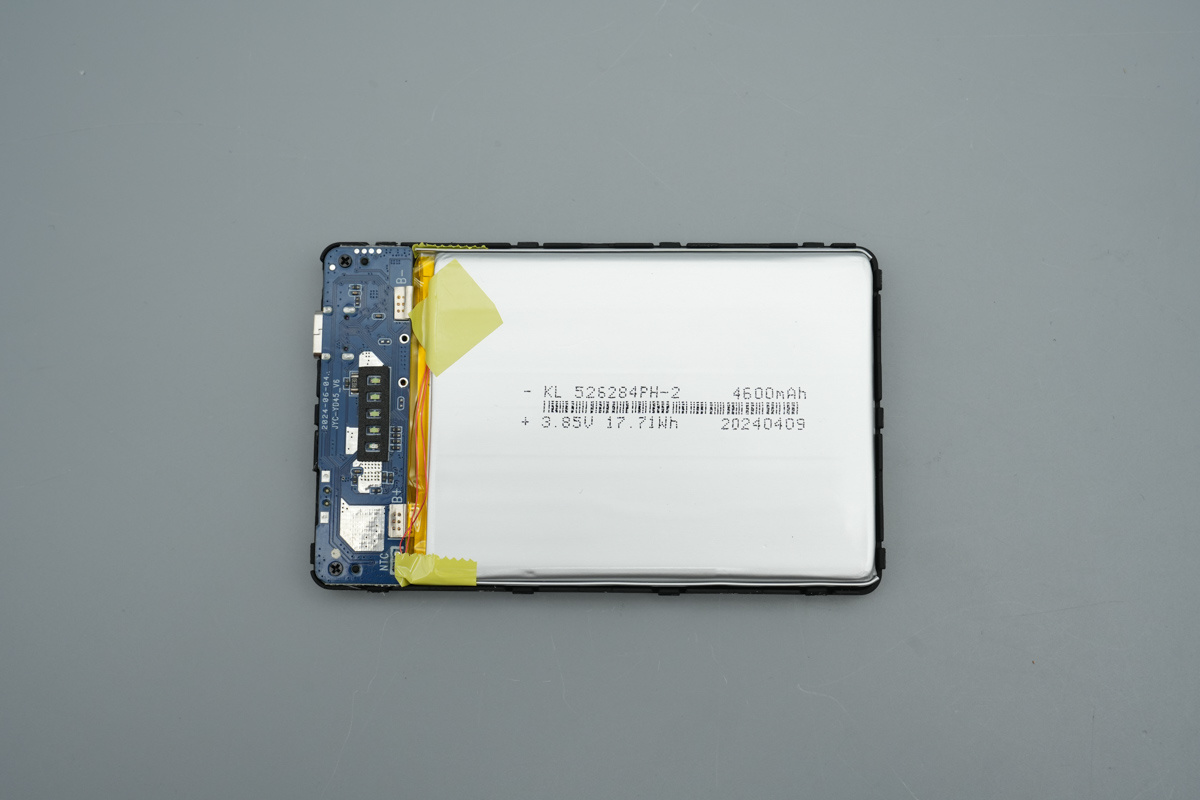
The internal of the power bank is a silver lithium-polymer battery cell, with the PCBA mainboard located at the top. The top of the battery cell is wrapped and protected with yellow insulating high-temperature tape.
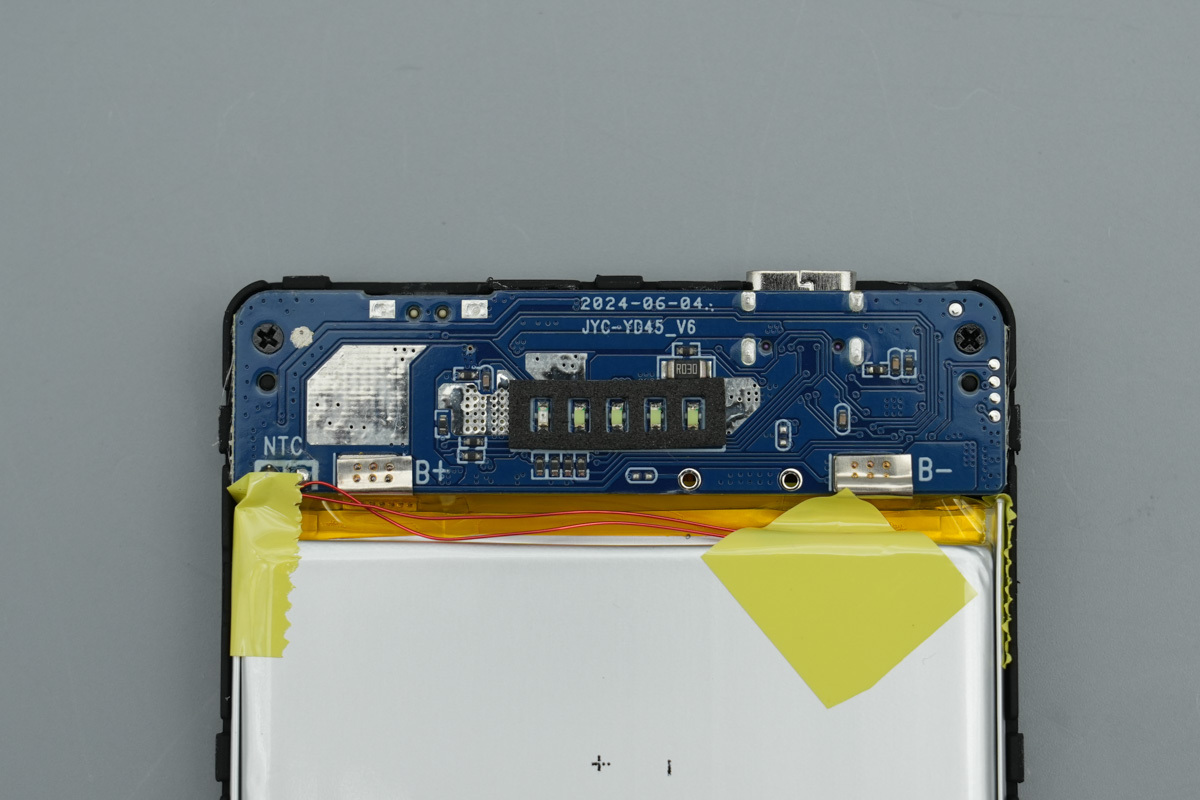
The front of the PCBA mainboard is printed with the production date 2024-06-04 and the PCB number JYC-YD45_V6. A piece of black foam is affixed in the middle, which is used to insulate the light from the LED indicators.
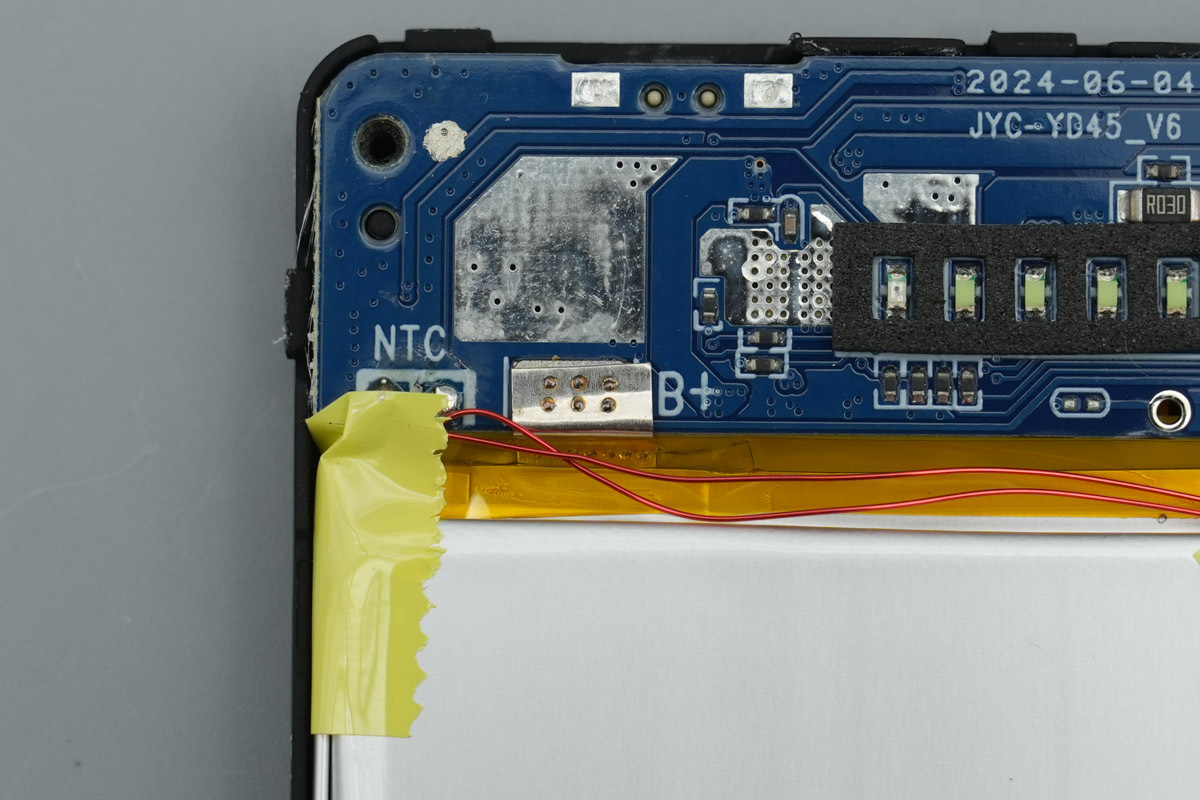
The battery tab and the B+ negative electrode area on the motherboard feature rounded solder joints, with two red NTC thermistor wires routed from the side.
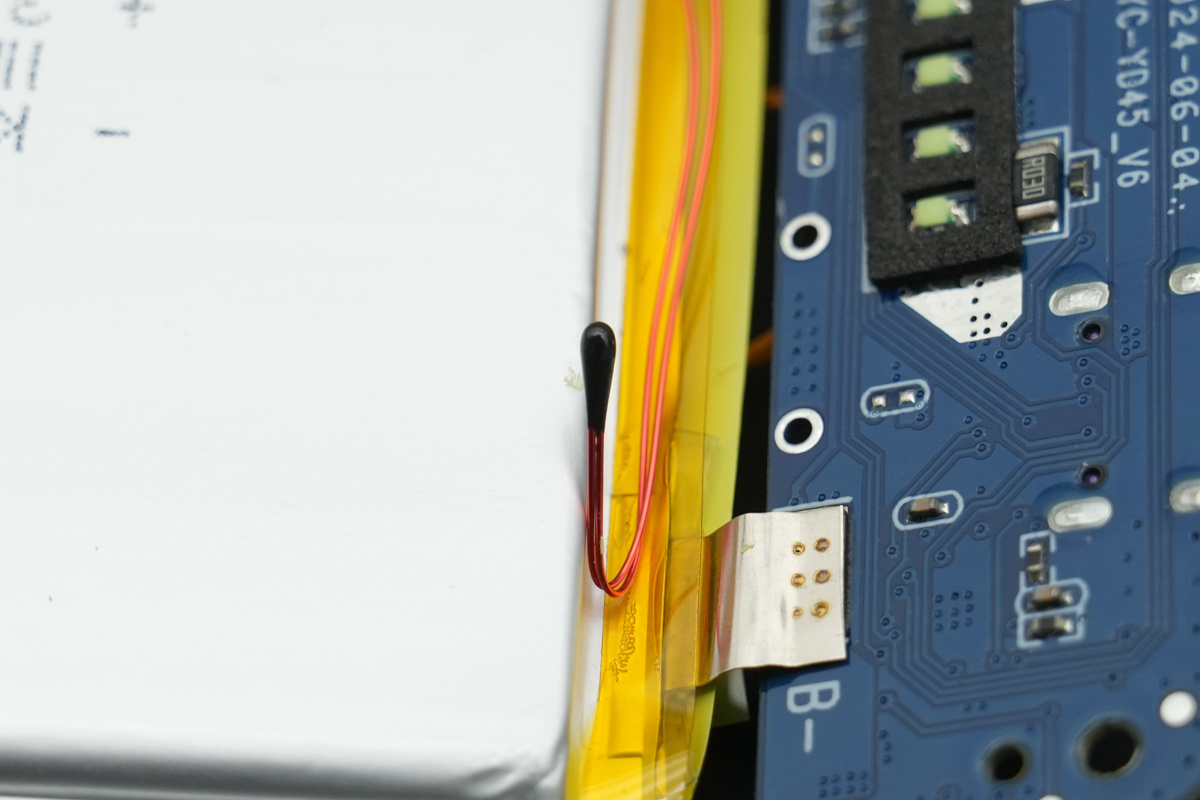
The NTC thermistor probe is placed along the side of the cell to monitor battery temperature in real time during charging and discharging, ensuring safe operation.
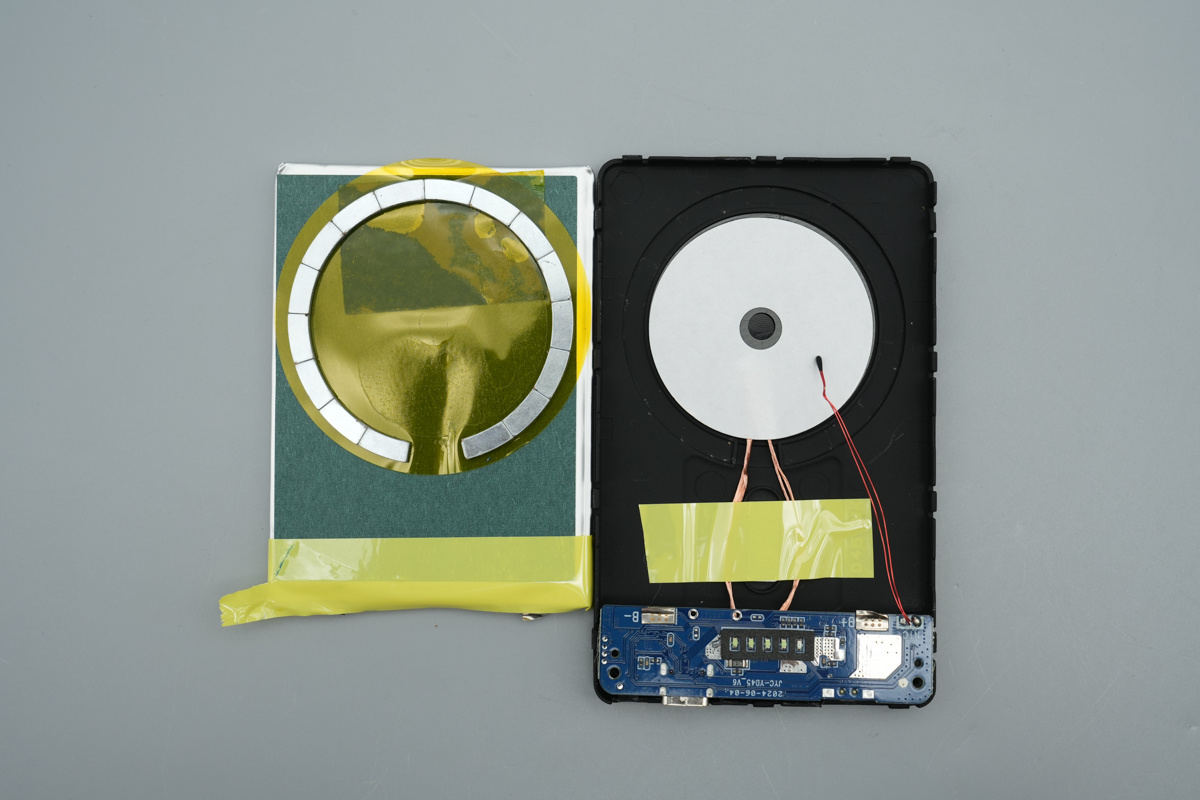
Desoldering the cell from the PCBA reveals a wireless charging coil attached to the back of the motherboard, coupled with a circular magnet array positioned between the bottom of the cell and the rear housing.
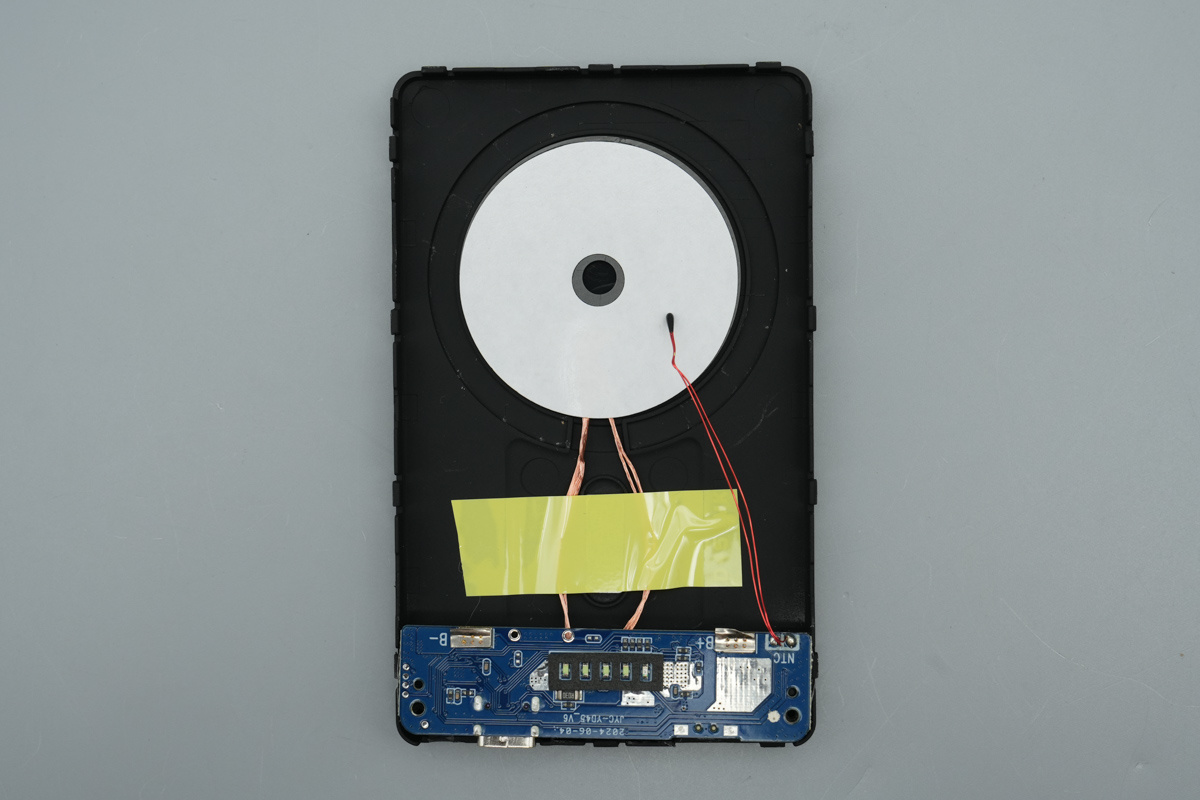
The internal structure on the side of the wireless charging panel reveals a white magnetic isolation sheet with a central opening and a coil in the middle, featuring reserved grooves for placing a magnet array. The bottom case is secured with yellow fixing tape, through which red NTC wires are threaded to detect the temperature of the wireless charging and prevent overheating.
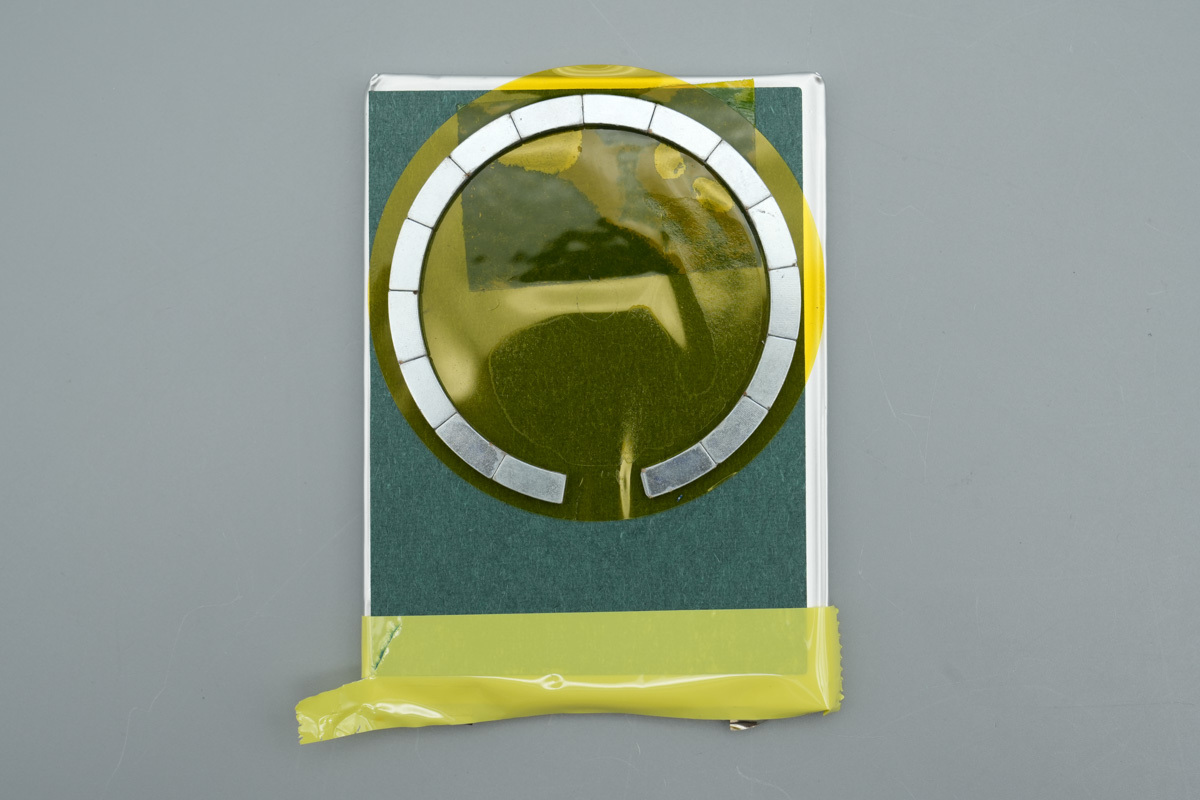
The back of the battery cell features a magnetic ring made up of several curved sub-magnets, sealed and secured under a layer of yellow high-temperature tape for insulation.
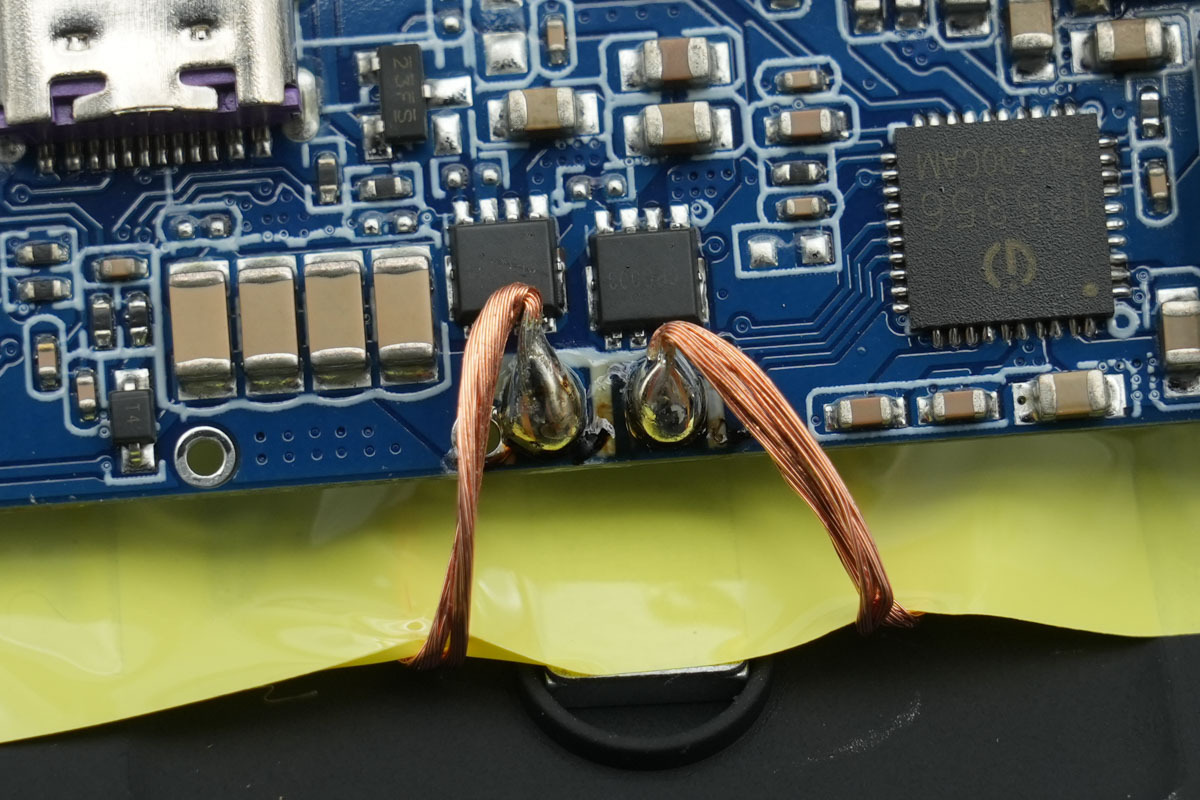
Both ends of the wireless charging transmitting coil are directly soldered to the two solder pads on the PCBA mainboard using Litz wire, with full and rounded solder joints.
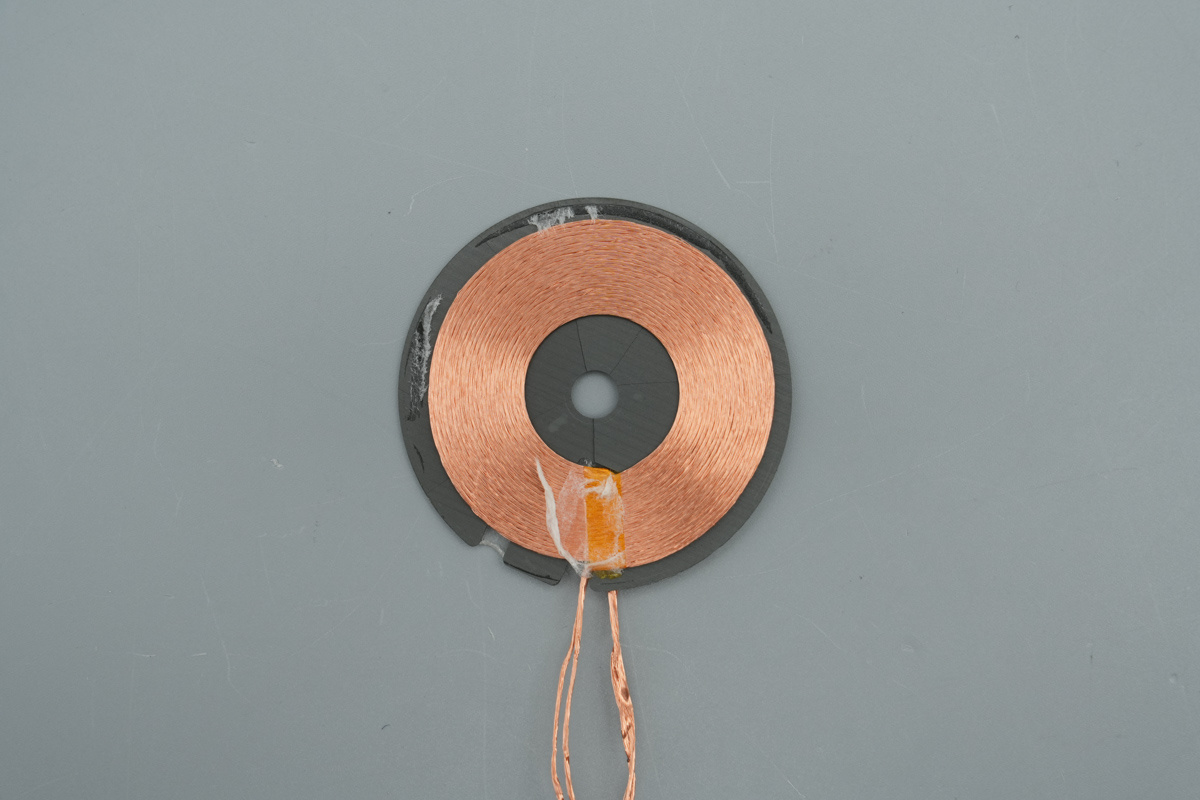
The wireless charging coil, wound with Litz wire, is tightly wound on top of the black magnetic isolation sheet with regular workmanship, and high-temperature tape is applied at the lead wire for insulation.
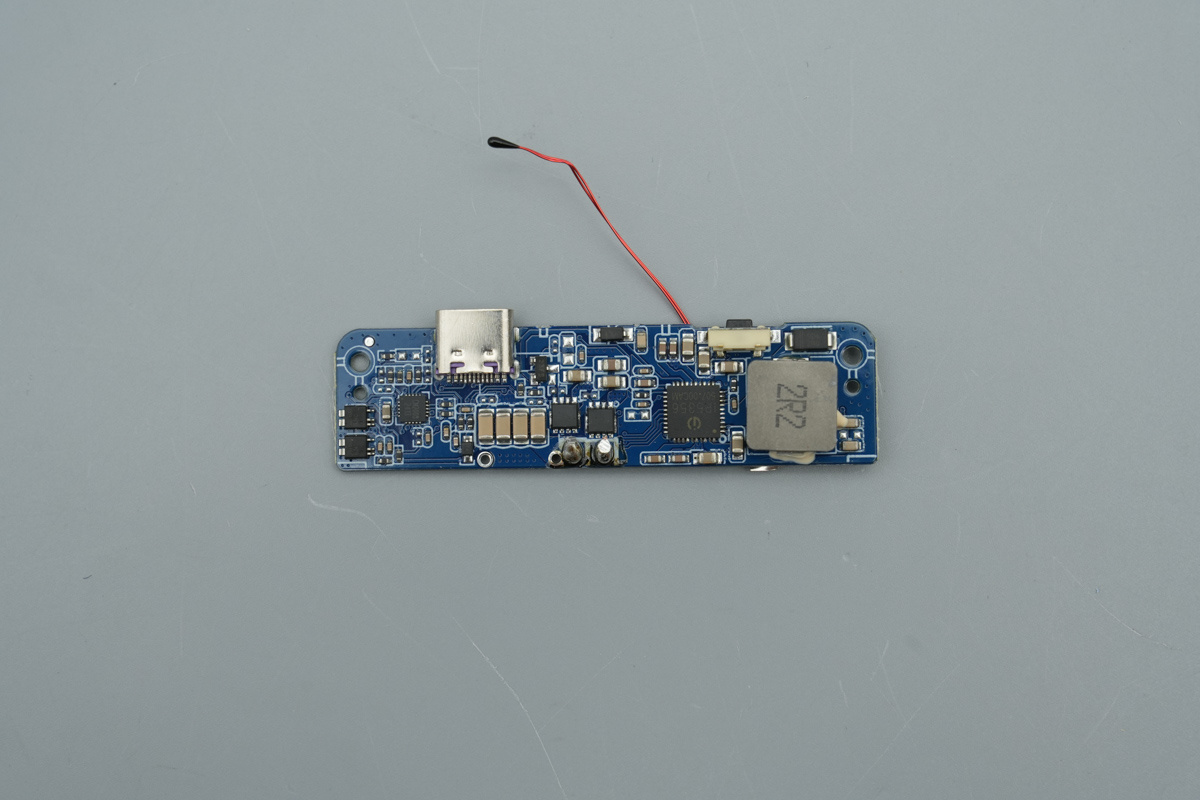
Cut the connecting wires and remove the PCBA. The front of the mainboard packs a dense array of components, featuring a USB-C receptacle on the left and core chips like the master control SoC and MCU occupying the center.
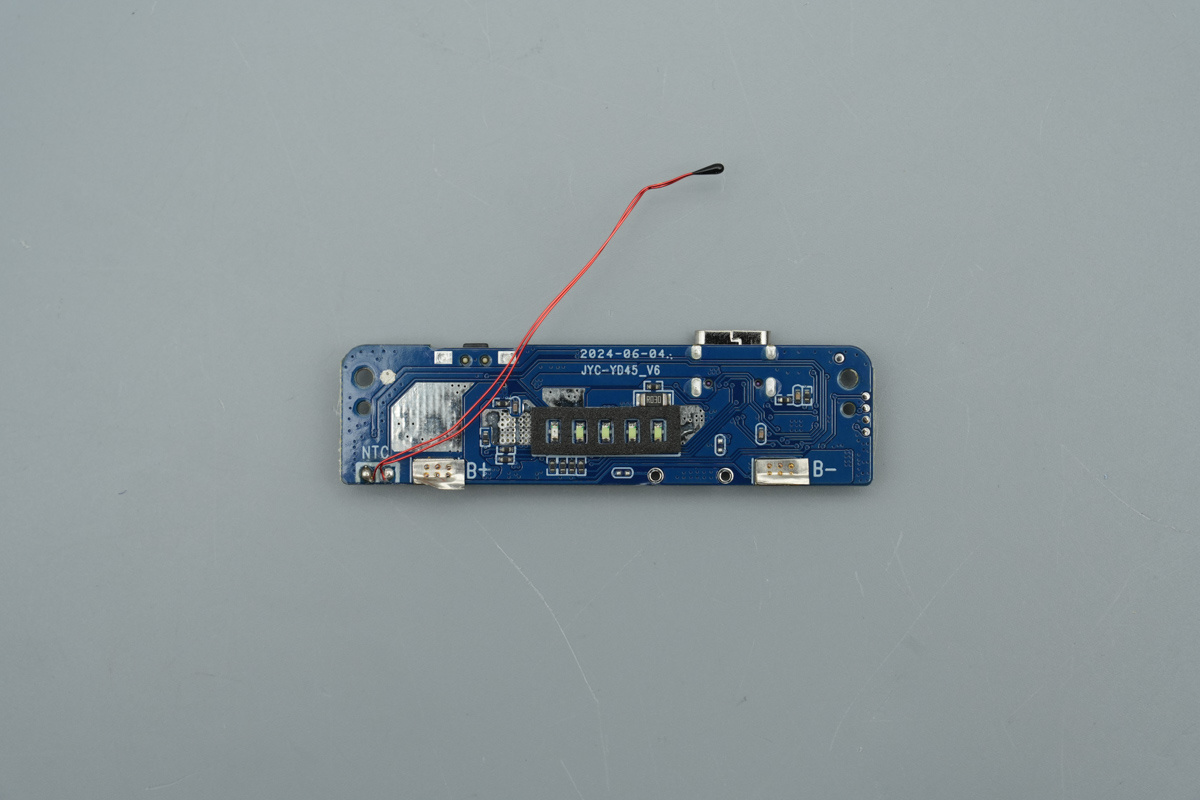
The back of the mainboard houses the buttons, ports, and NTC thermistor pins, alongside an array of five LED indicators masked by black light-shielding foam.
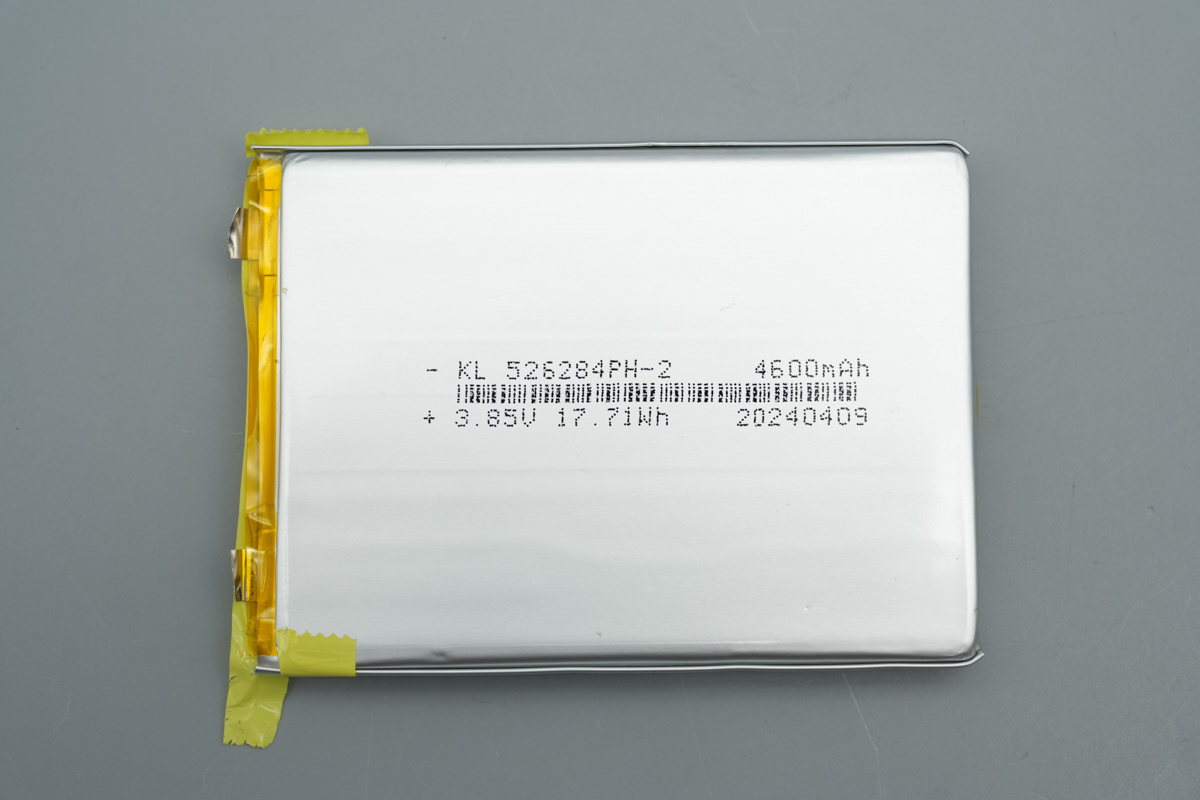
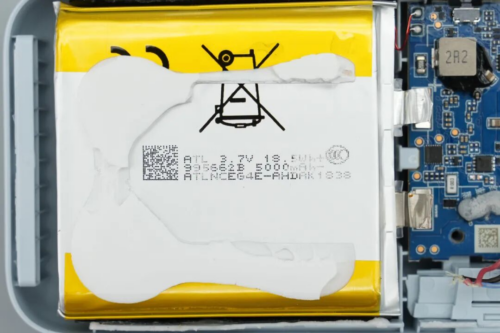
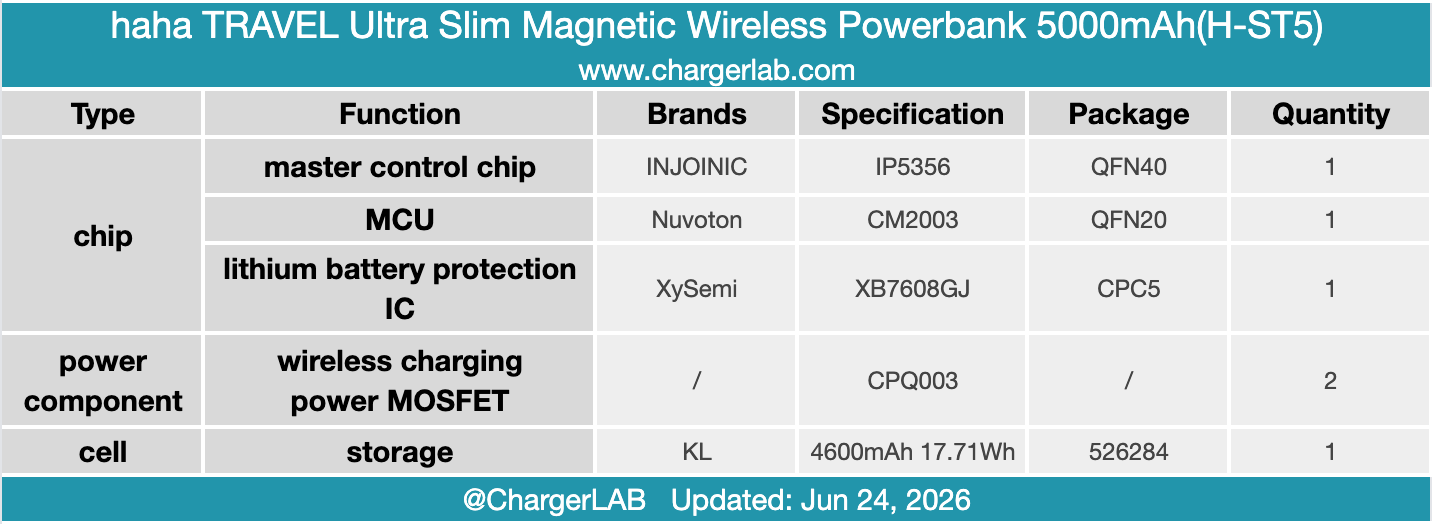
The printing on the internal cell indicates model number KL 526284PH-2, with a nominal capacity of 4600mAh, a voltage of 3.85V, and an energy rating of 17.71Wh. The manufacturing date is April 9, 2024.
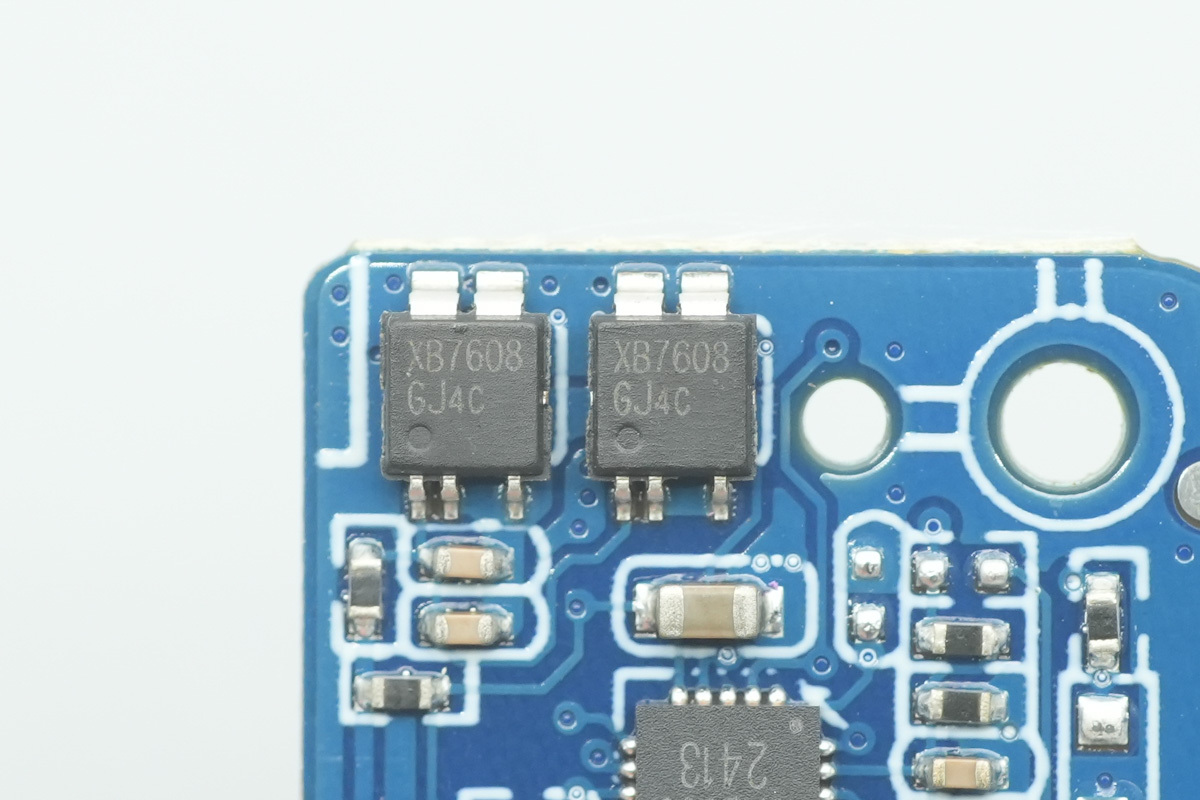
Two lithium battery protection ICs from XySemi, model Model: XB7608GJ, which feature integrated MOSFETs and provide comprehensive protection functions, including overcharge, overdischarge, overcurrent, and load short-circuit protection, housed in a CPC5 package.
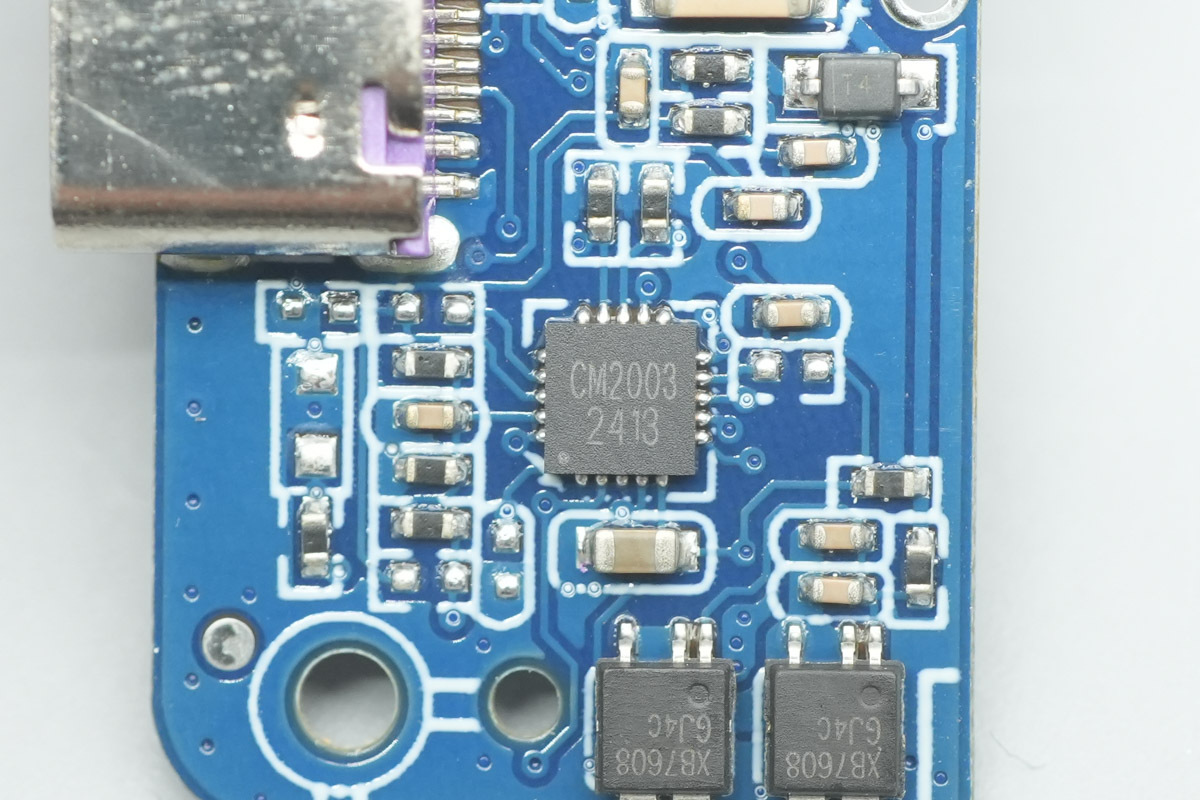
Located in the center of the mainboard is an MCU from Nuvoton, marked CM2003, which is utilized to implement wireless charging-related functions.
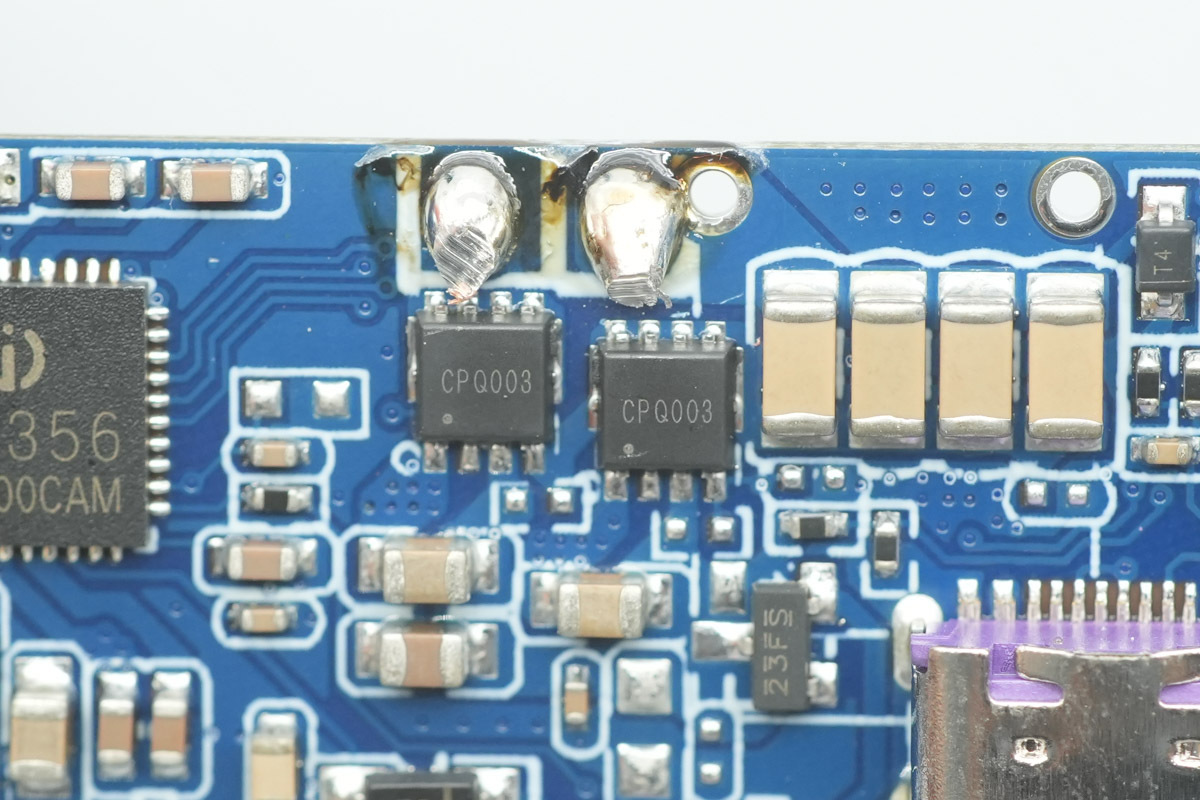
Two MOSFETs located on the top edge of the mainboard, marked CPQ003, serve as the wireless charging power MOSFETs.
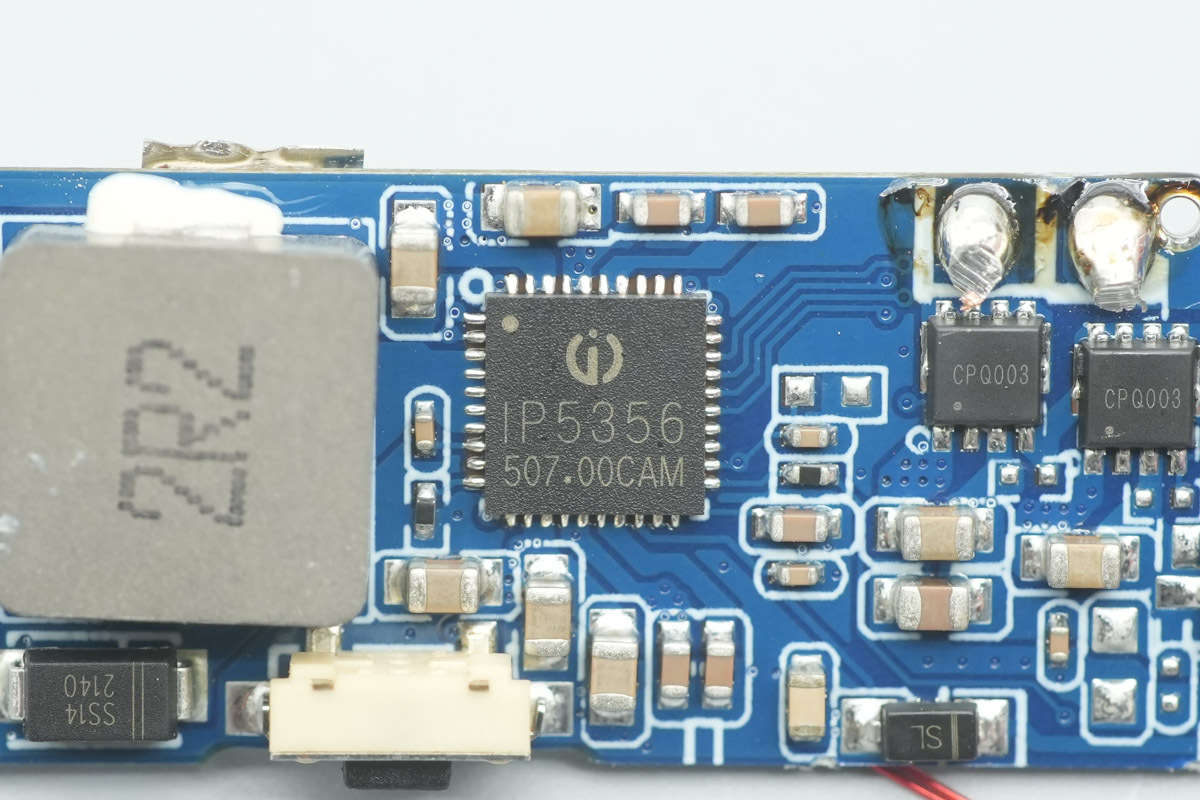
The master control chip of the power bank is from Injoinic, model IP5356. This is a highly integrated power bank SoC chip that supports multiple mainstream fast-charging input/output protocols, along with a buck-boost converter, lithium battery charging management, and battery power indication. It provides a complete turnkey solution for the development of fast-charging power banks.
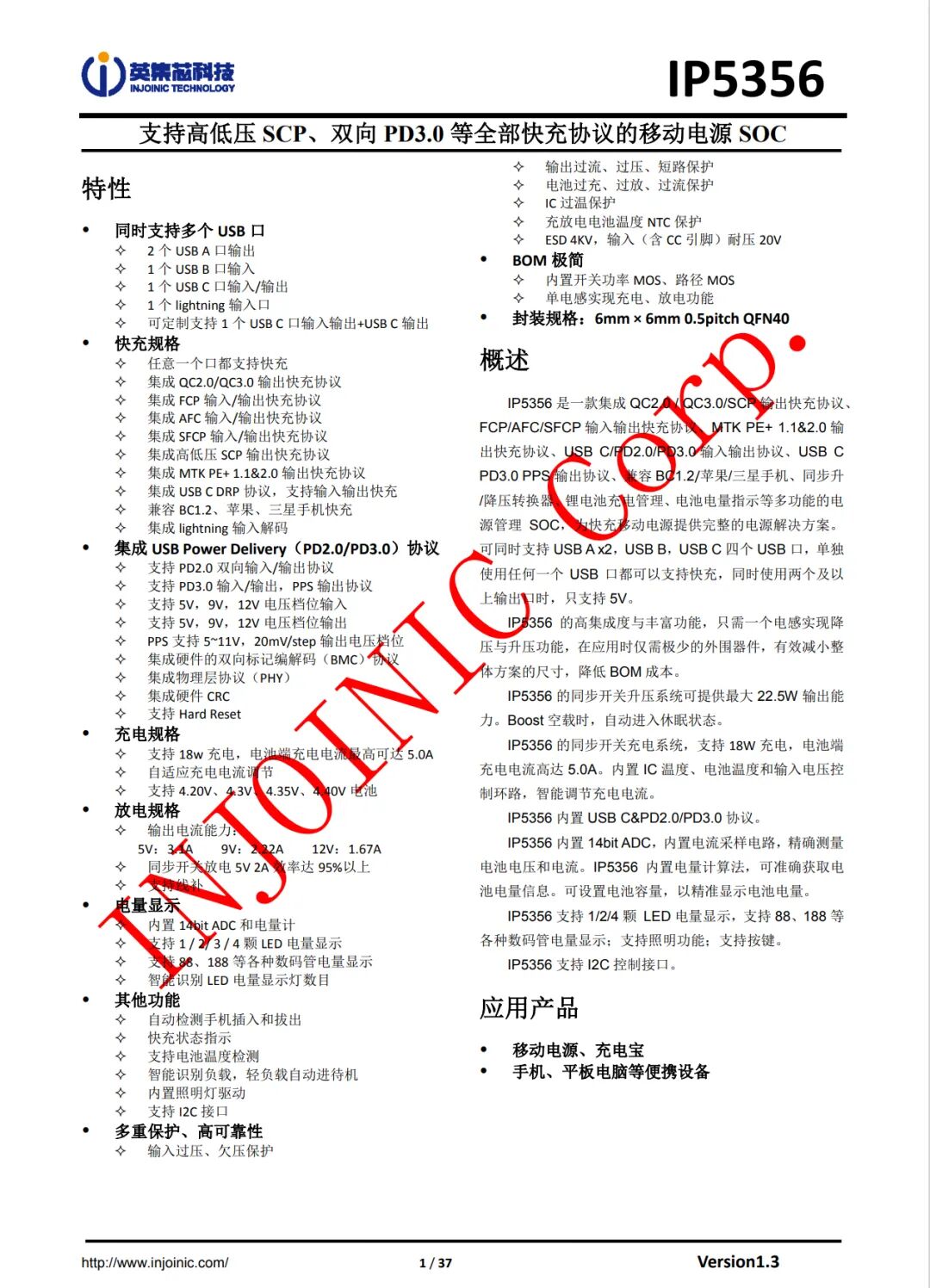
The synchronous switch boost system of the IP5356 delivers a maximum output power of 22.5W and supports independent control across four ports, including dual USB-A, Micro-USB, and USB-C. Fast charging is enabled when any single USB port is used, while dual or multi-port output defaults intelligently to 5V.
Integrating all power MOSFETs and power path management MOSFETs, it requires only a single inductor to achieve both buck and boost conversions. This extremely low external component count minimizes the overall solution footprint and lowers BOM.
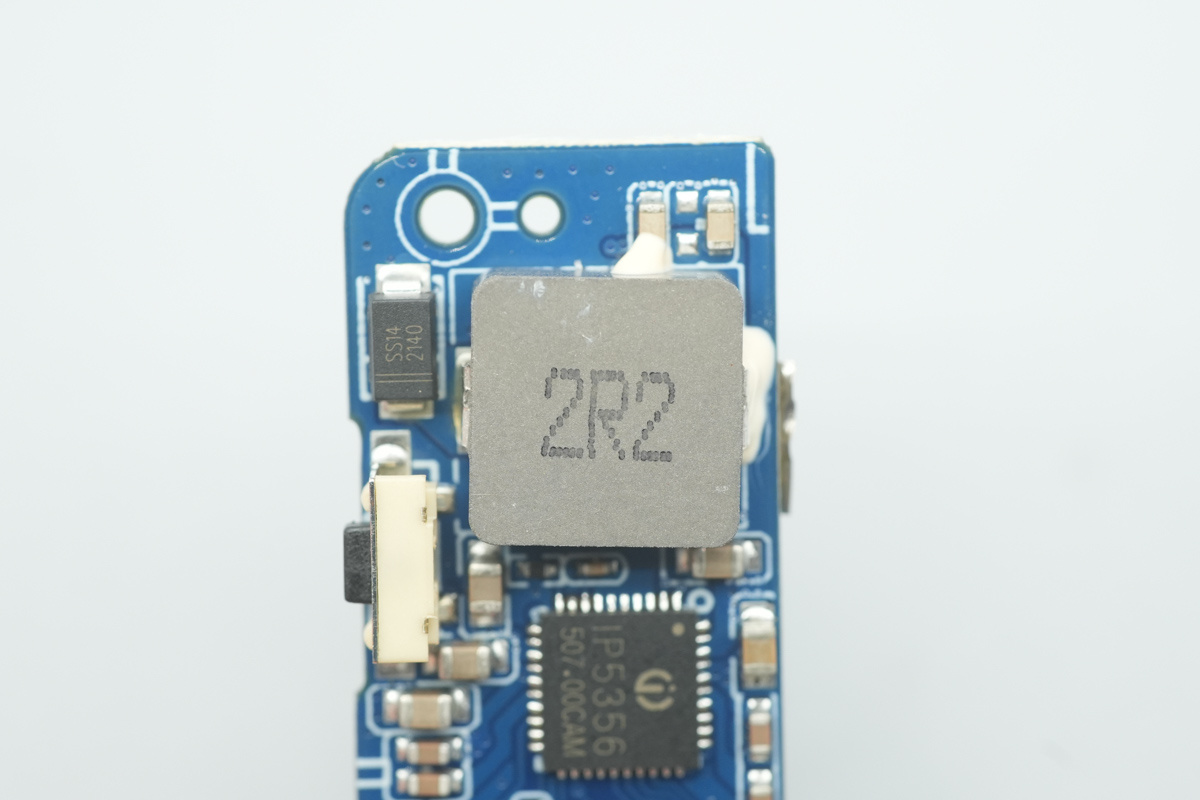
A 2R2 alloy choke match with the Injoinic IP5356 master control chip to perform buck and boost voltage conversions.
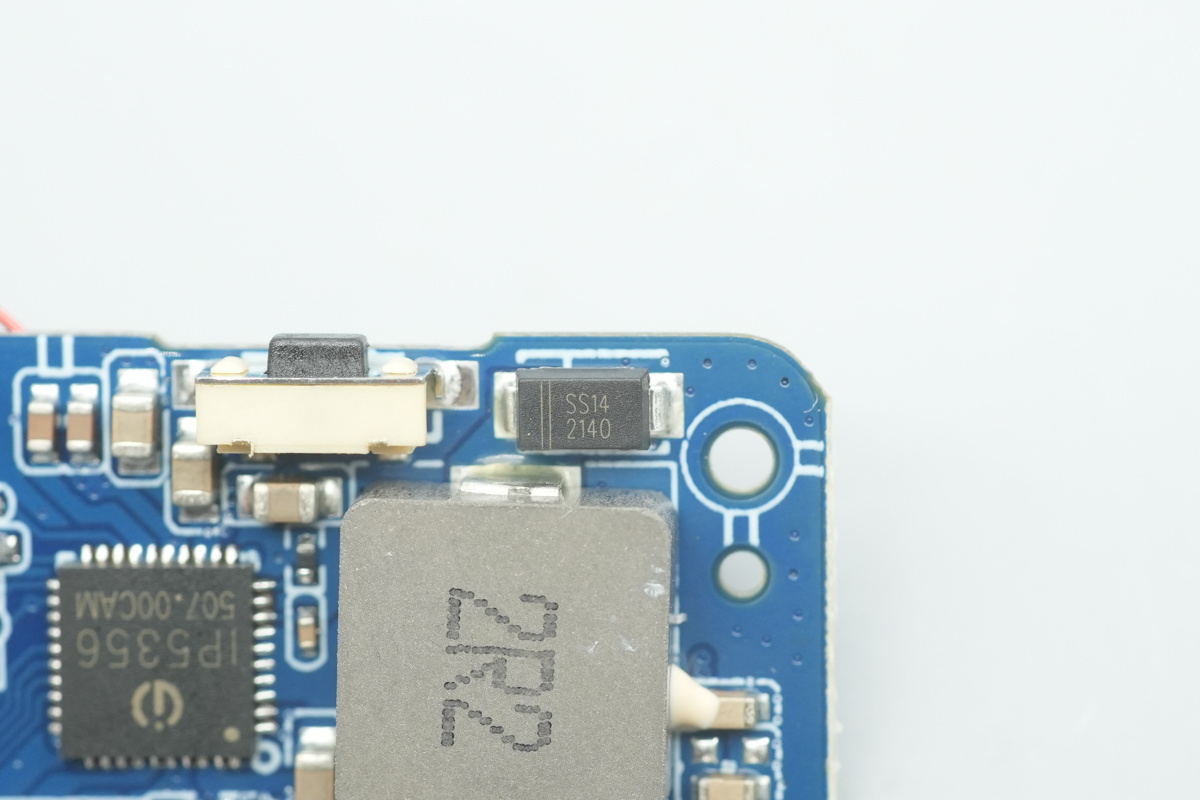
Above the choke sits a diode, marked SS14.
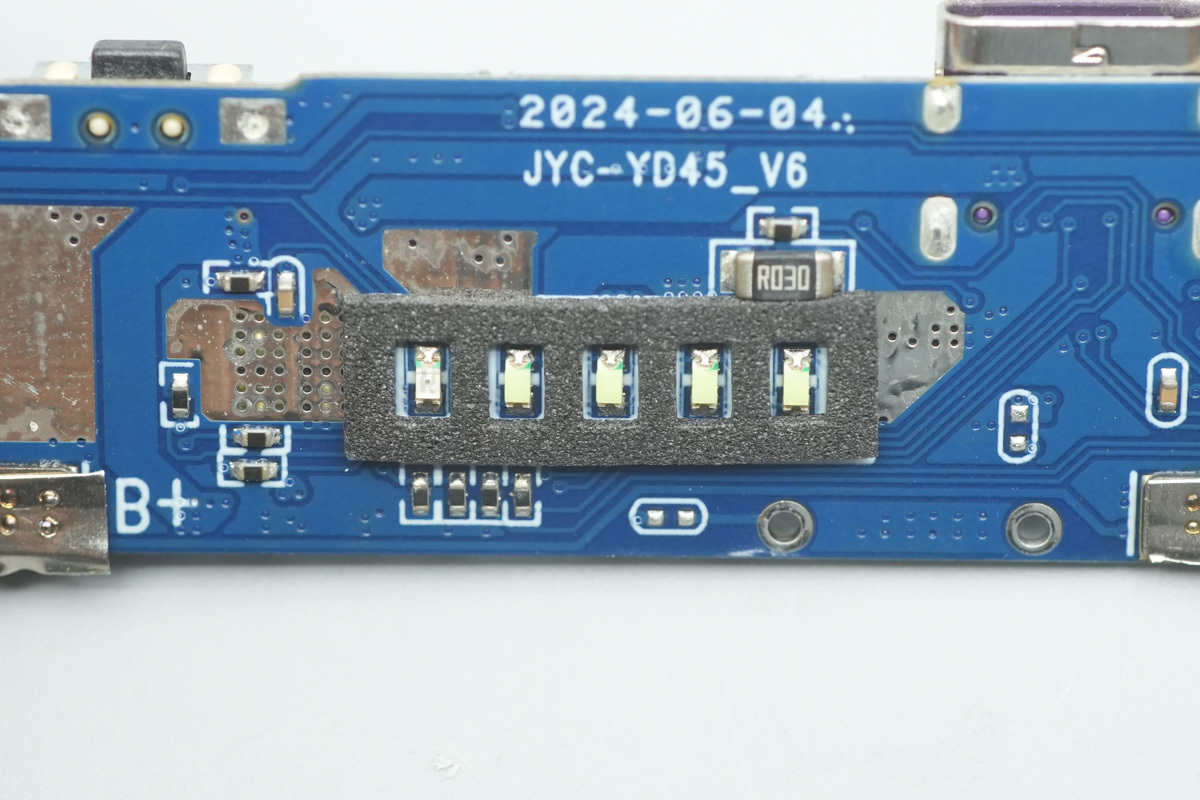
Underneath the black light-leakage prevention foam on the back of the mainboard, we can see five neatly arranged SMD LED indicators soldered in place.
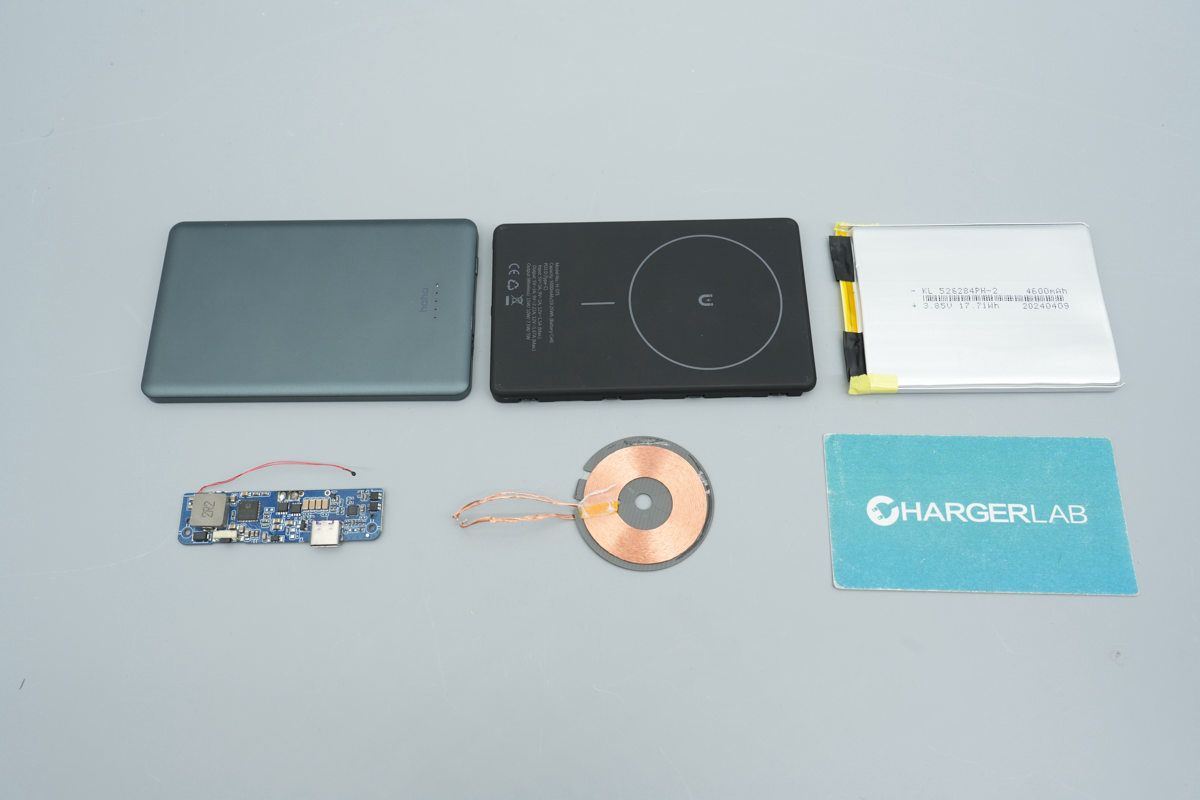
Well, those are all components of the haha TRAVEL Ultra Slim Magnetic Wireless Powerbank 5000mAh.
Summary of ChargerLAB
The haha TRAVEL Ultra Slim Magnetic Wireless Powerbank delivers a sleek, travel-friendly design that stays out of the way of your iPhone's camera array during everyday use. Performance-wise, it packs a punch with 20W wired PD fast charging and 15W wireless output. Thanks to its broad protocol compatibility, it’s the perfect companion for topping up on the go.
Under the hood, the internal layout is incredibly compact, centered around the highly integrated Injoinic IP5356 SoC. This powerhouse single-chip design manages buck-boost conversions and multi-protocol handshakes, drastically simplifying the surrounding circuitry. Safety is also a top priority, featuring a Nuvoton MCU, XySemi XB7608 battery protection, and an NTC thermistor to keep temperatures in check.
Related Articles:
1. Leading the Charge, Baseus and Highpower Collaborate on Safety-First Power Bank
2. Teardown of the Anker Nano 10000mAh Ultra-Thin Magnetic Power Bank
3. Injoinic Unveils IP3066 | The All-in-One Chip for Safer, Faster Power Banks