
Introduction
Renowned for safety and durability, BULL has become a household name for power solutions. With over 3,000 patents and advanced features like overload and overcharge protection, the brand offers a complete ecosystem of sockets, switches, lighting, and fast chargers for home and office use.
ChargerLAB recently reviewed BULL’s new UFCS-enabled 86-type fast-charging wall panel. With its sleek, matte champagne gold finish, the unit blends perfectly into modern home aesthetics. The design cleverly merges power and charging: it features new Chinese standard-compliant five-hole AC outlets paired with a USB-A and a USB-C dual USB fast-charging ports.
The panel delivers a robust 30W fast-charging output from both its USB-C and USB-A ports. With support for a wide array of protocols—such as UFCS, QC3.0, FCP, SCP, AFC, and PD3.0—it is compatible with most modern smartphones and tablets, making on-the-go charging easier than ever.
BULL’s new panel is already a familiar sight in business lounges at major transportation hubs across China. With implementations in cities like Guangzhou, Shenzhen, Shanghai, Nanjing, Suzhou, Qingdao, and Kunshan, it has become a staple of core travel networks, providing travelers with effortless access to standardized, high-speed charging.
ChargerLAB previously tore down a BULL 20W fast-charging wall panel. Now, we are diving deep into the internals of this new panel to see how it is engineered and built.
Product Appearance
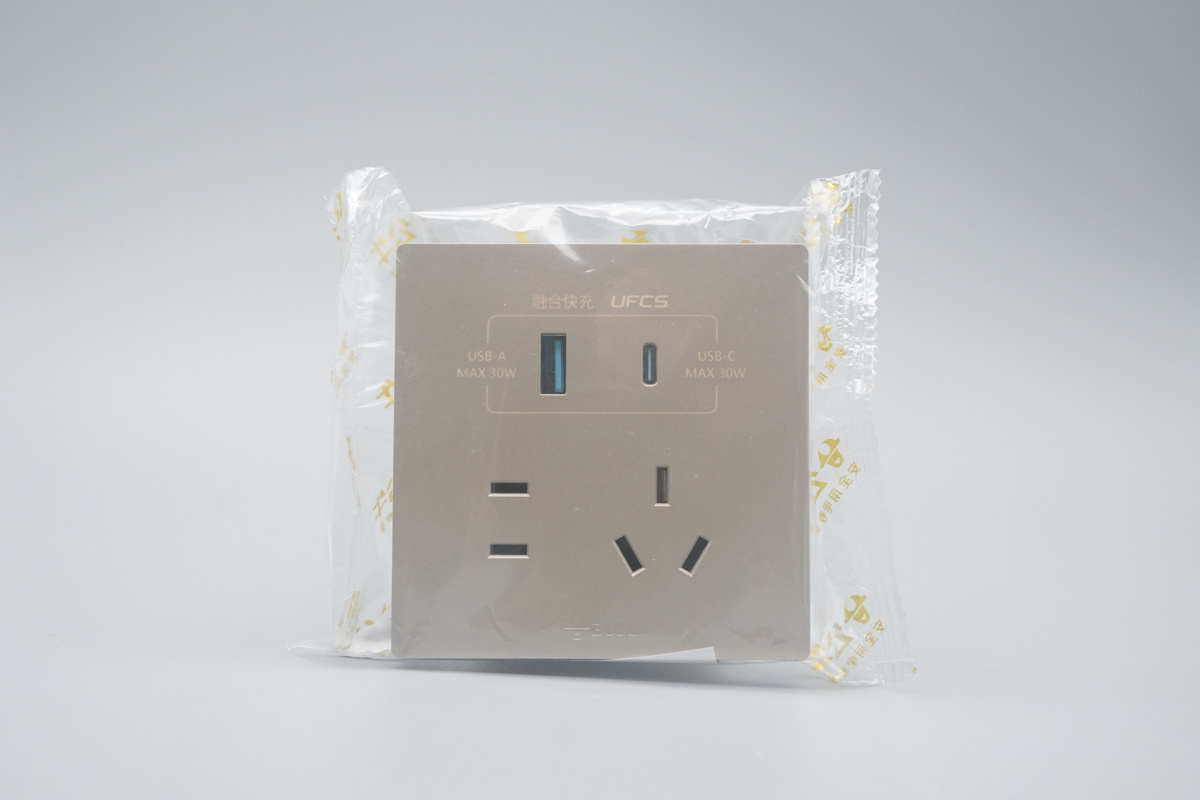
The panel comes in standard, practical packaging, featuring the minimalist transparent plastic shrink-wrap typical of 86-type wall products.
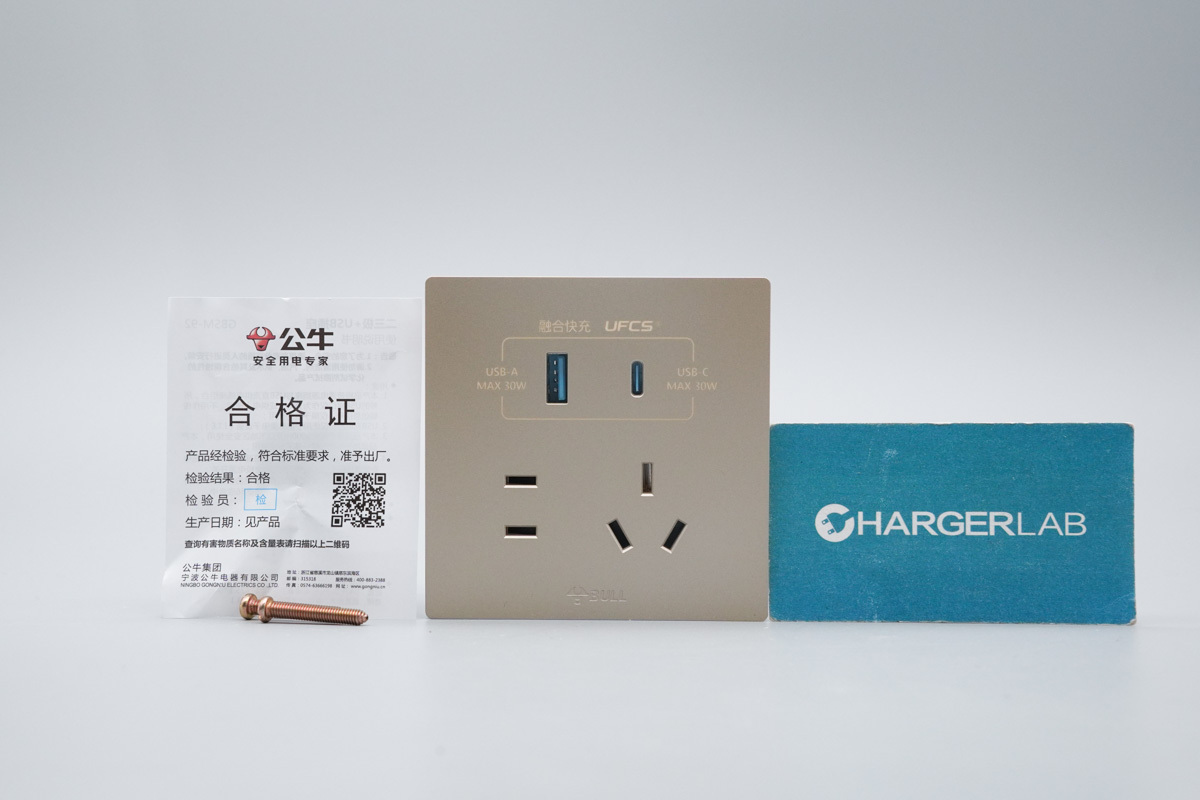
Inside the box, you will find the BULL 86-type wall panel unit, a certificate of conformity, and two installation screws.
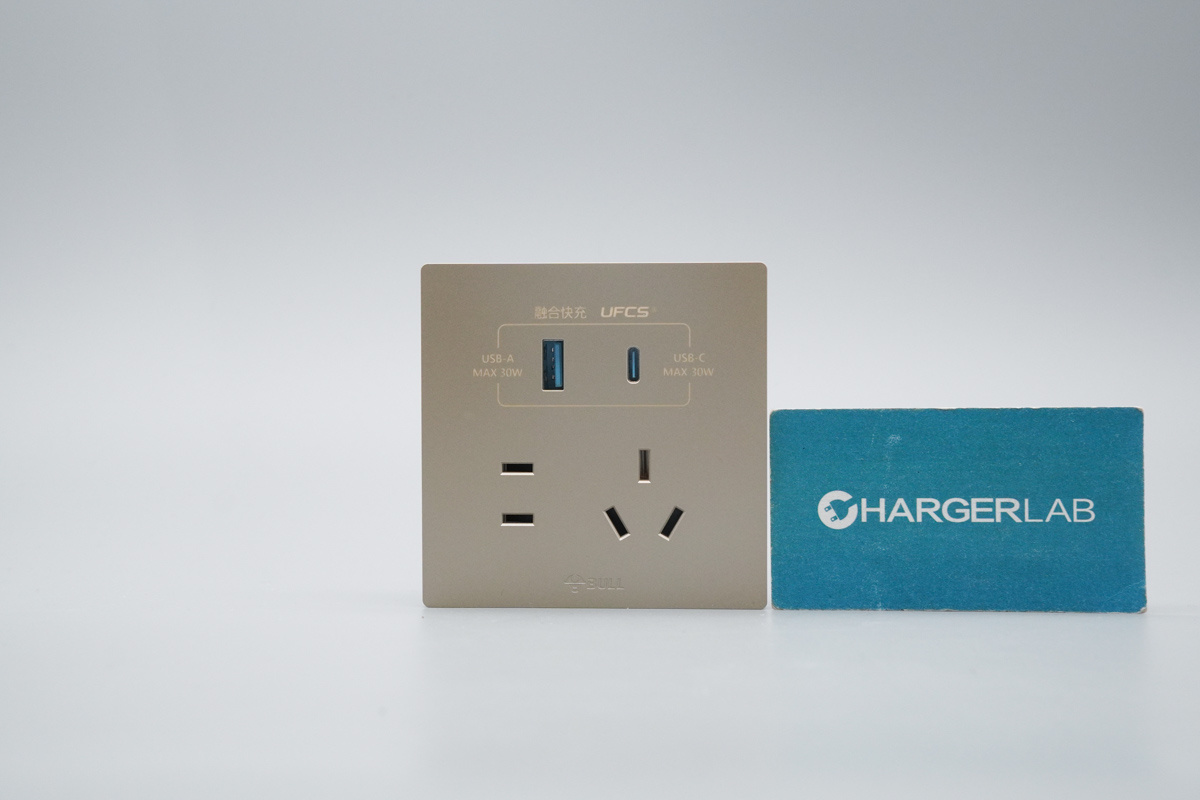
The panel sports a sleek champagne gold finish with a premium matte texture. It features a USB-A and a USB-C USB port at the top, a new Chinese standard-compliant five-hole AC outlet at the bottom, and is finished with the signature BULL logo.
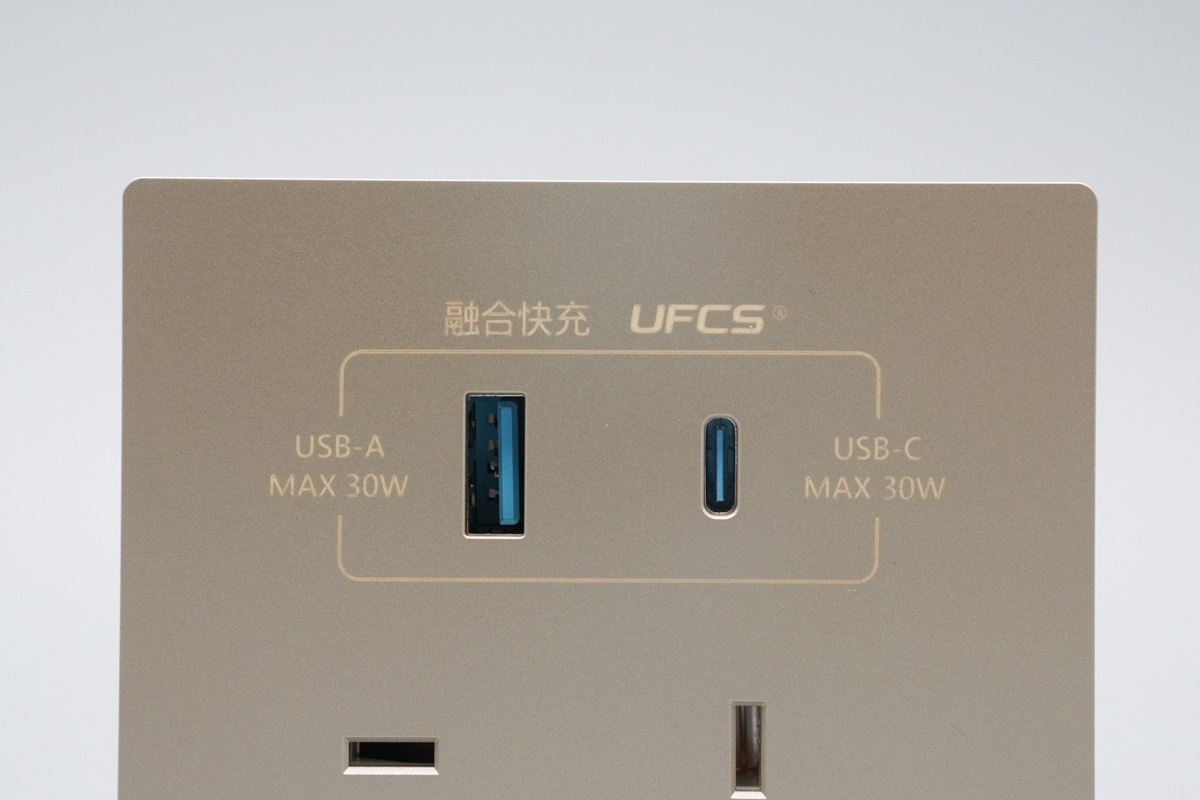
The UFCS logo sits proudly above the ports, highlighting its support for the latest fusion fast-charging standard. Additionally, both the USB-A and USB-C interfaces are marked with their MAX30W output power.
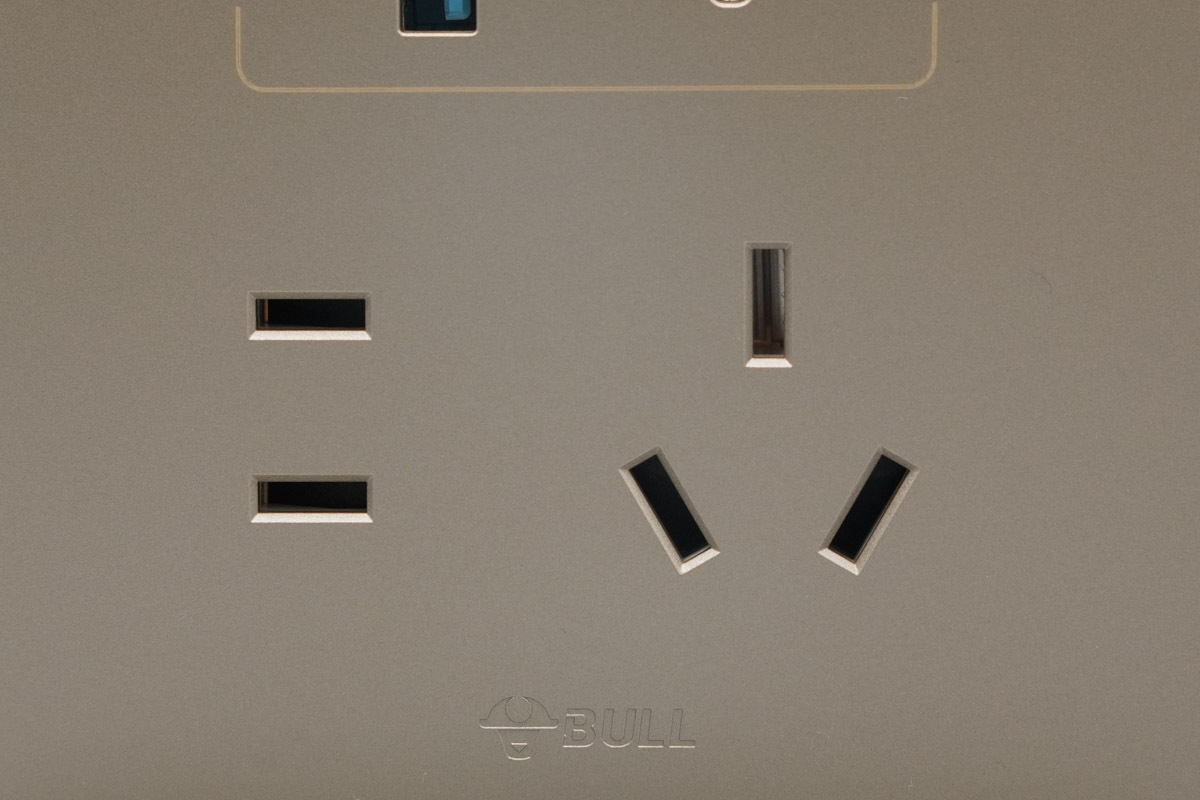
Below is the AC socket. All outlets feature integrated black safety shutters, which effectively block foreign objects and prevent accidental contact, offering an extra layer of protection to keep children safe.
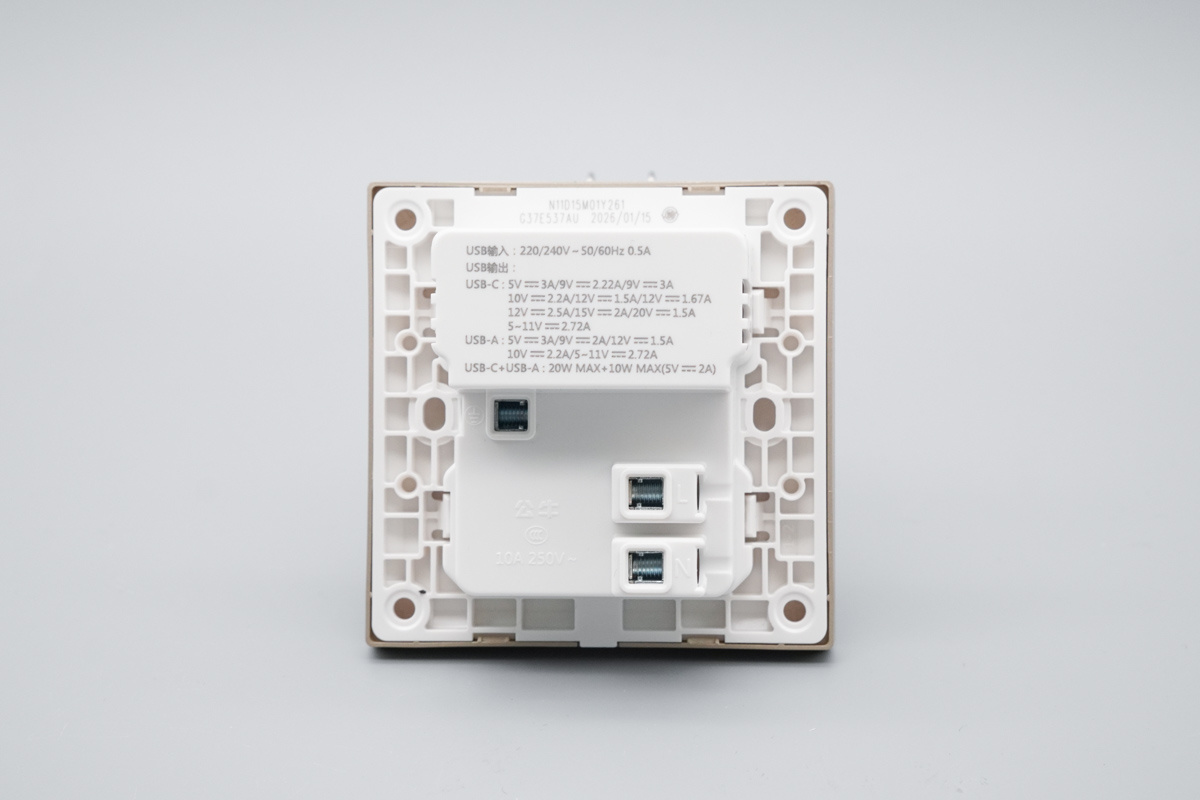
On the back, the raised top-left section features the internal USB fast-charging module, enclosed by a custom white plastic casing. The AC terminals connection are positioned on the bottom-right and are clearly marked.
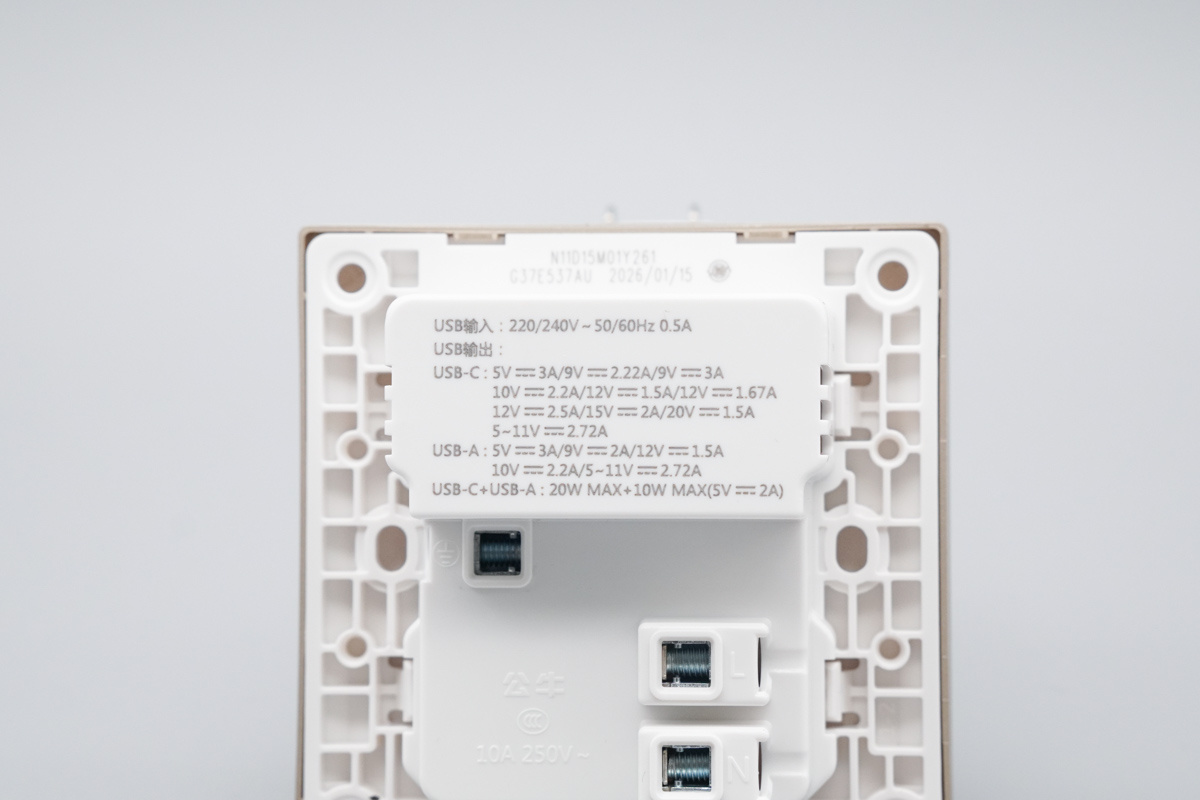
Detailed electrical specs are printed on the top of the fast-charging module’s protective casing:
USB Input: 220/240V~ 50/60Hz 0.5A
USB Output:
USB-C: 5V3A / 9V2.22A / 9V3A / 10V2.2A / 12V1.5A / 12V1.67A / 12V2.5A / 15V2A / 20V1.5A / 5-11V2.72A
USB-A: 5V3A / 9V2A / 12V1.5A / 10V2.2A / 5-11V2.72A
USB-C + USB-A: 20W MAX + 10W MAX (5V2A)
Production Date: January 15, 2026
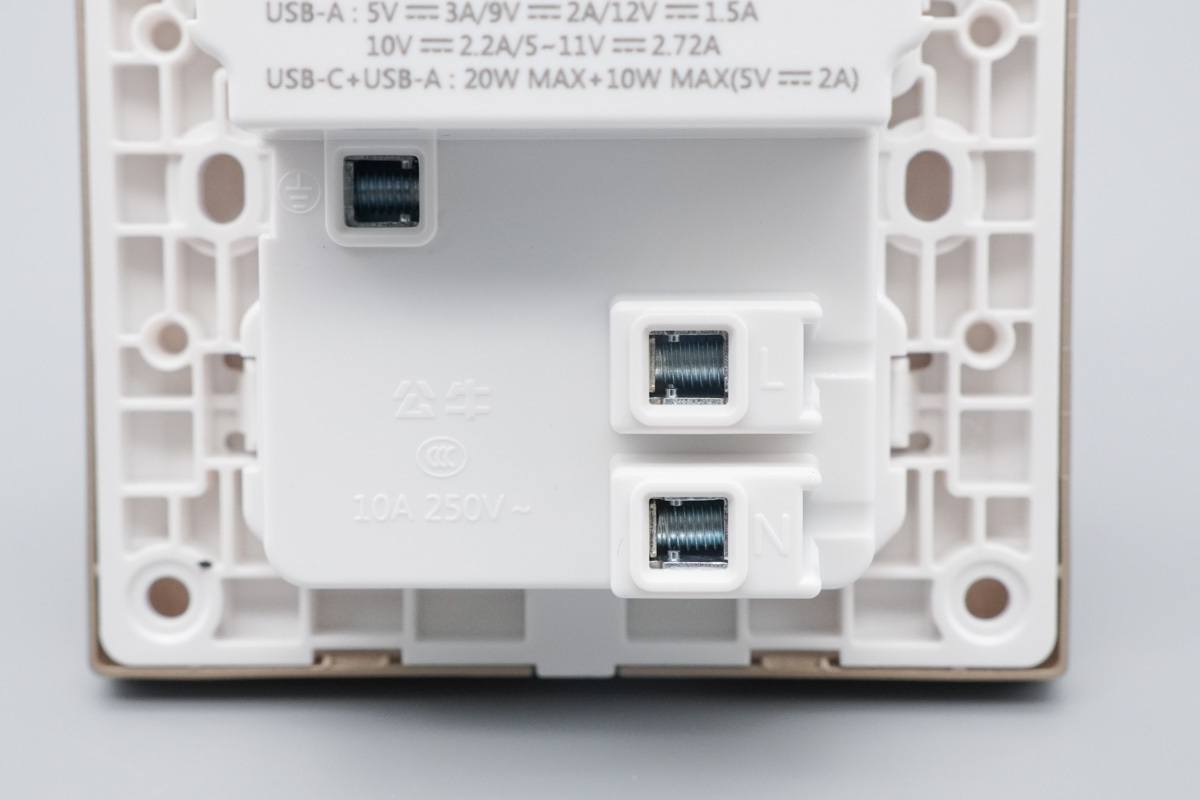
The AC connection terminals on the back are marked for Live and Neutral lines. They utilize a screw-clamp wiring design and are rated for 10A 250V~ specs.
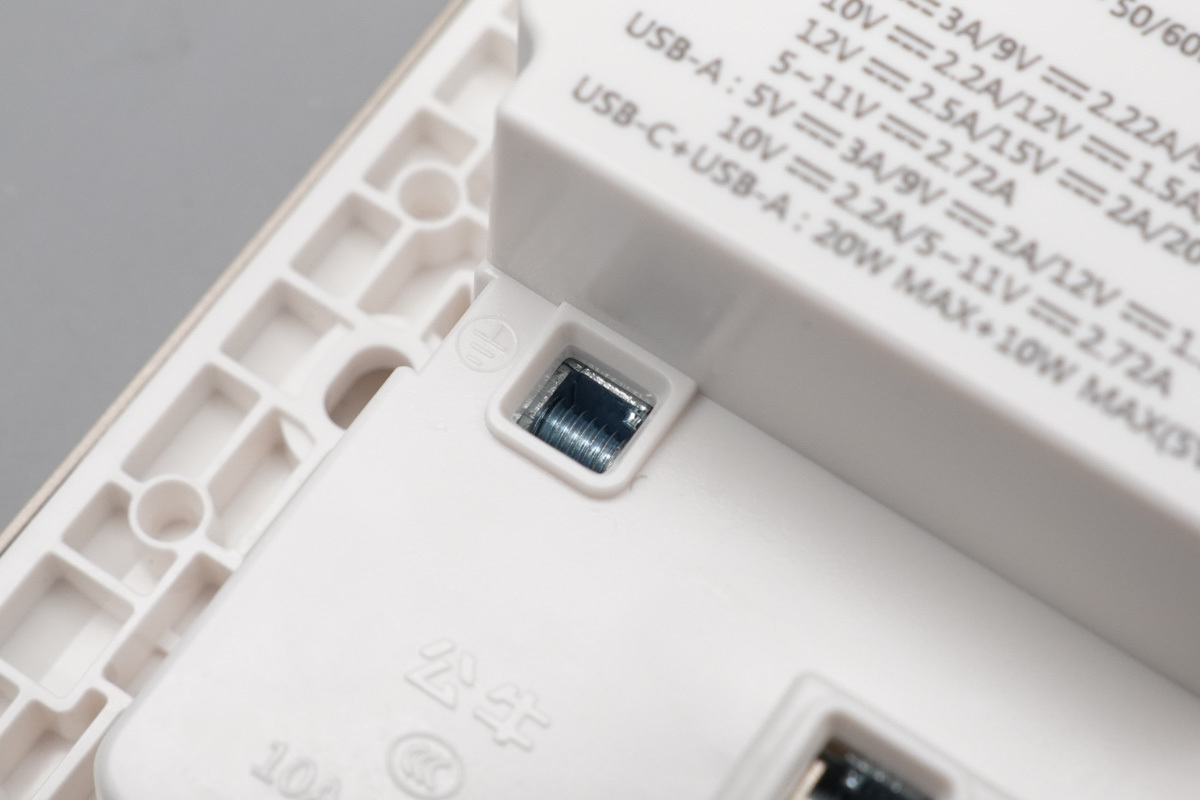
Here is the grounding wire terminal, clearly identified with the standard ground symbol next to it.
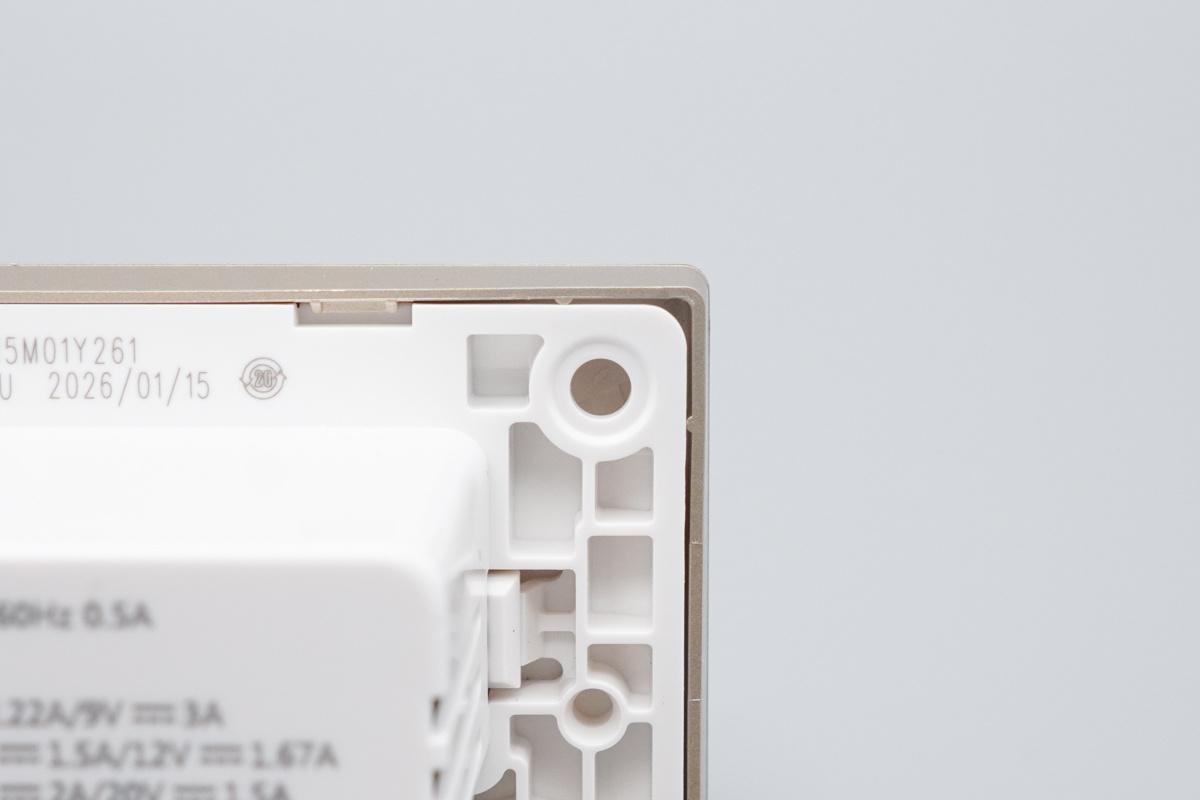
This is the top retaining clip, designed to secure the outer housing.
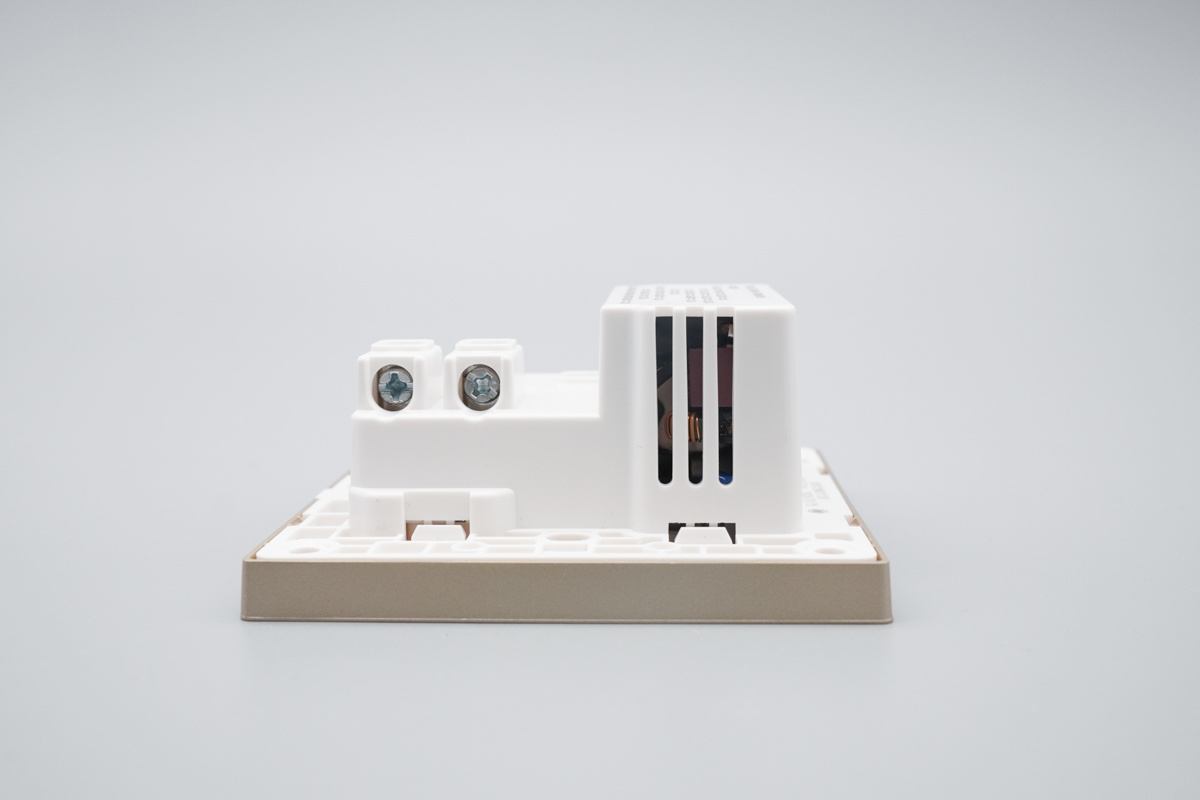
The fast-charging module features a grille ventilation design to facilitate effective heat dissipation.
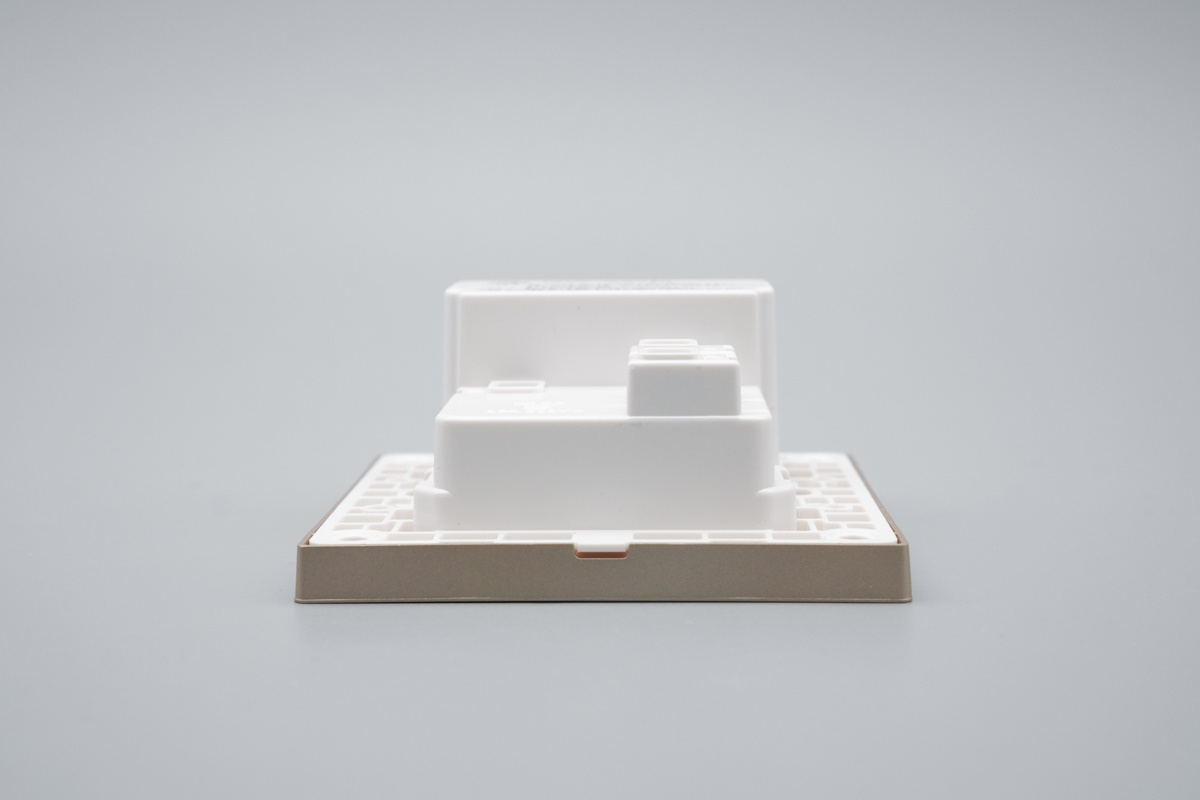
The AC socket section of the panel is designed without ventilation grilles.
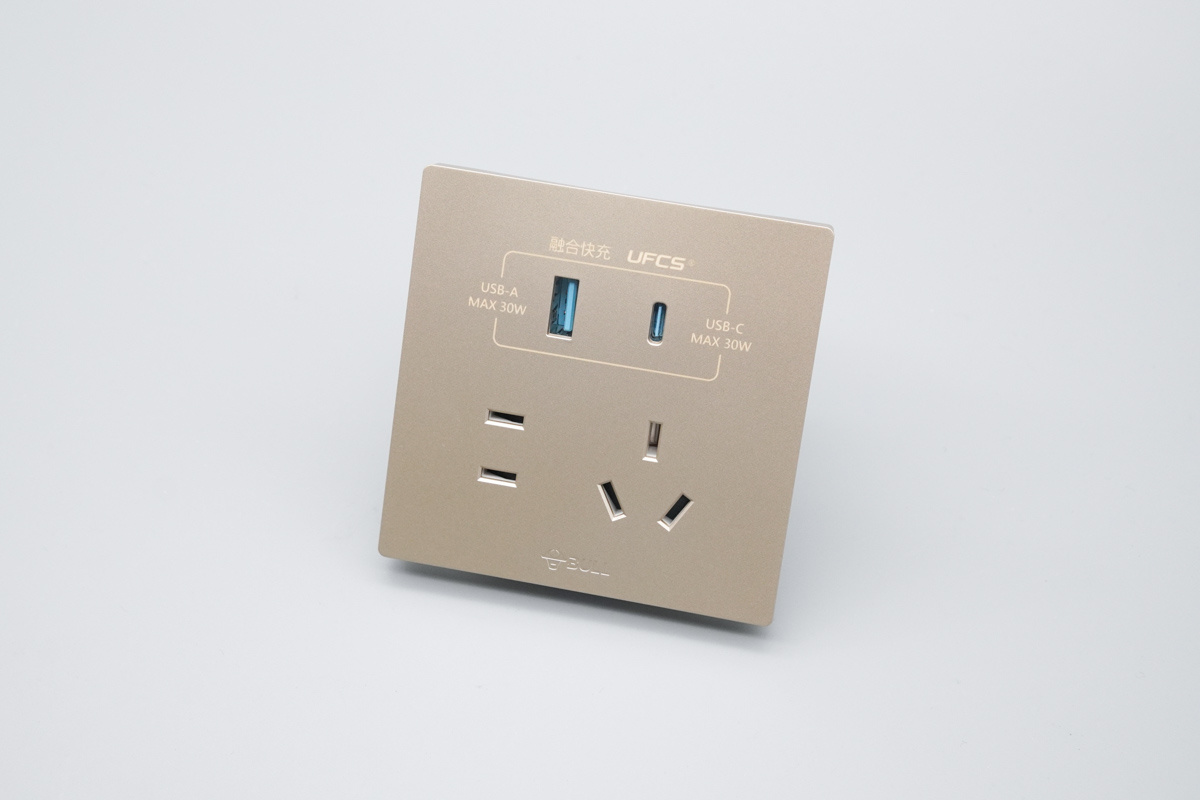
With its sleek angled profile and champagne gold finish, it is an ideal match for contemporary home decor.
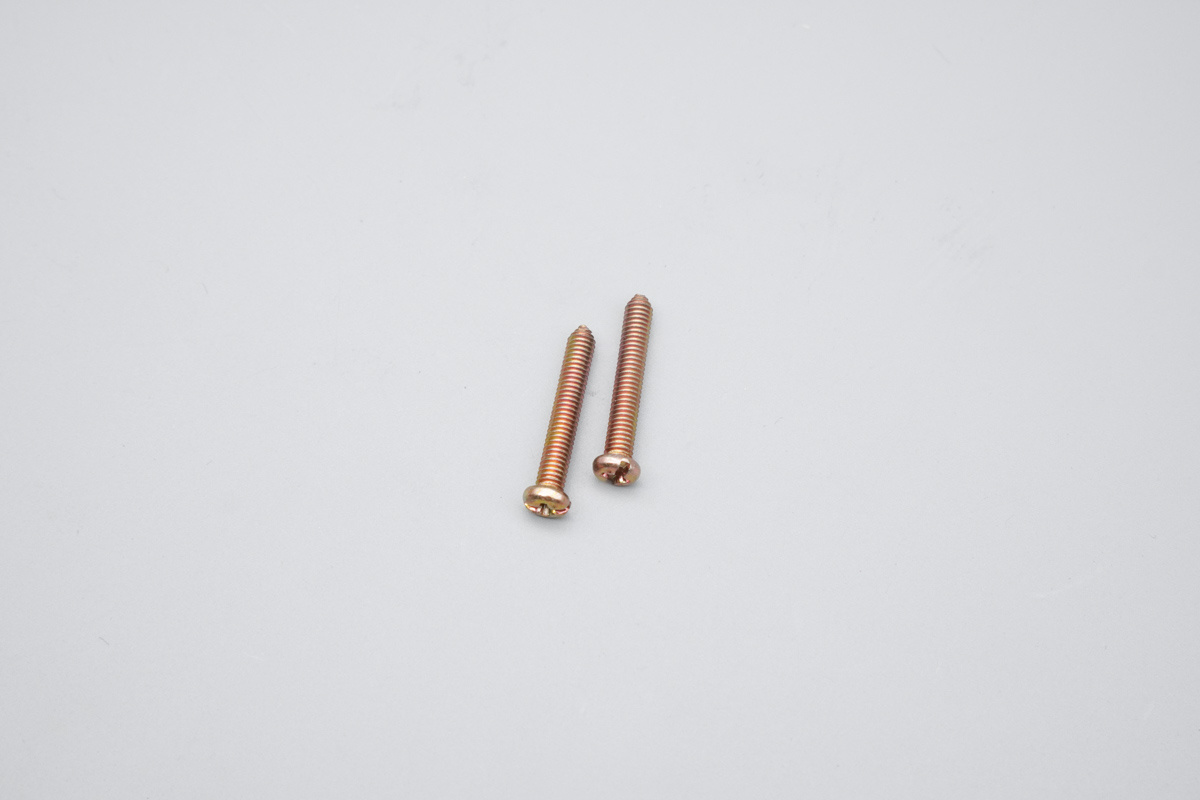
The product is accompanied by two brass-colored long mounting screws.
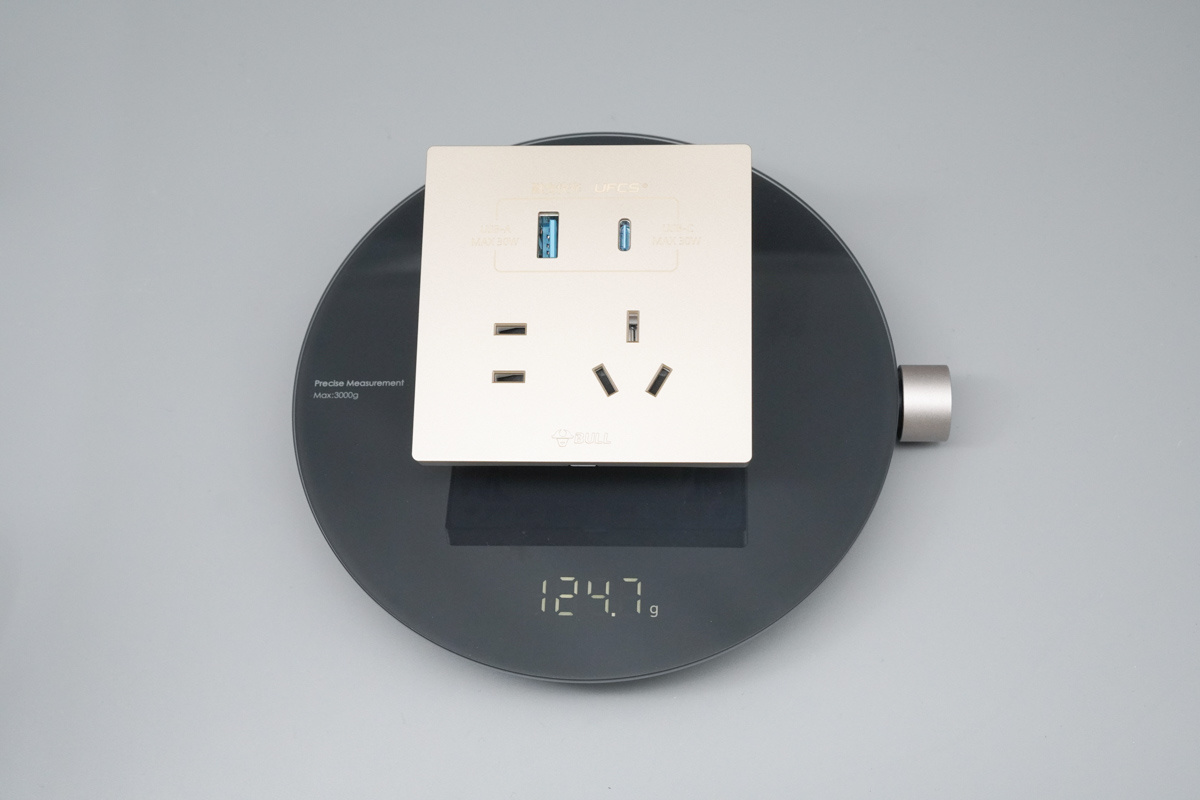
The weight is about 124.7g (4.40 oz).
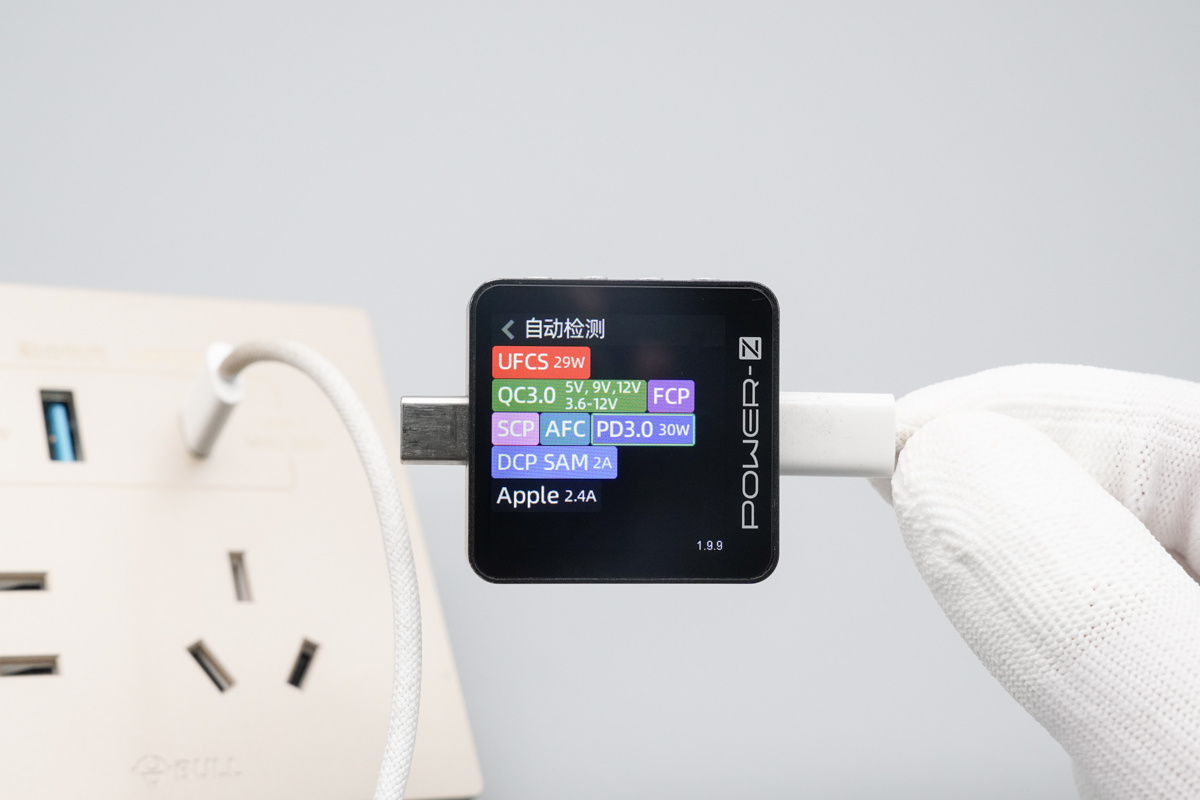
ChargerLAB POWER-Z KM003C shows that the USB-C port supports UFCS, QC3.0, FCP, SCP, AFC, PD3.0, Samsung 5V2A, DCP and Apple2.4A.
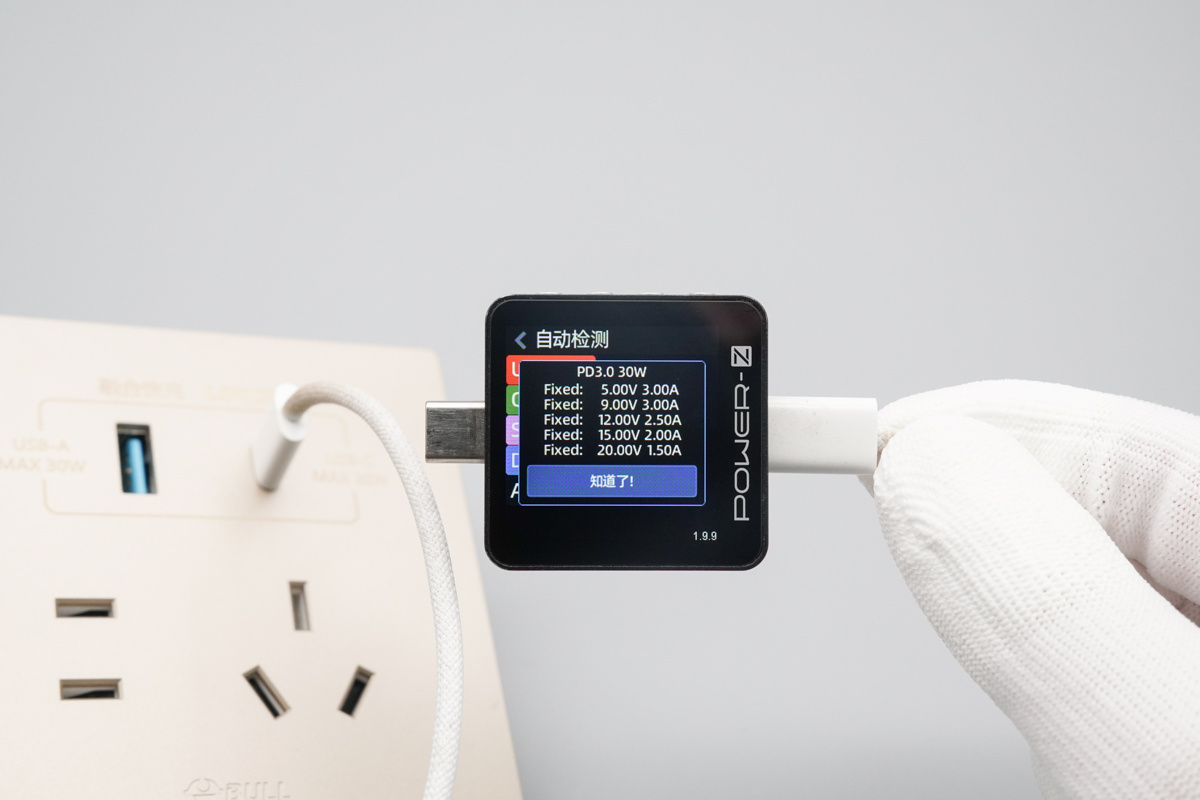
And it also supports three fixed PDOs of 5V3A, 9V3A, 12V2.5A, 15V2A and 20V1.5A.
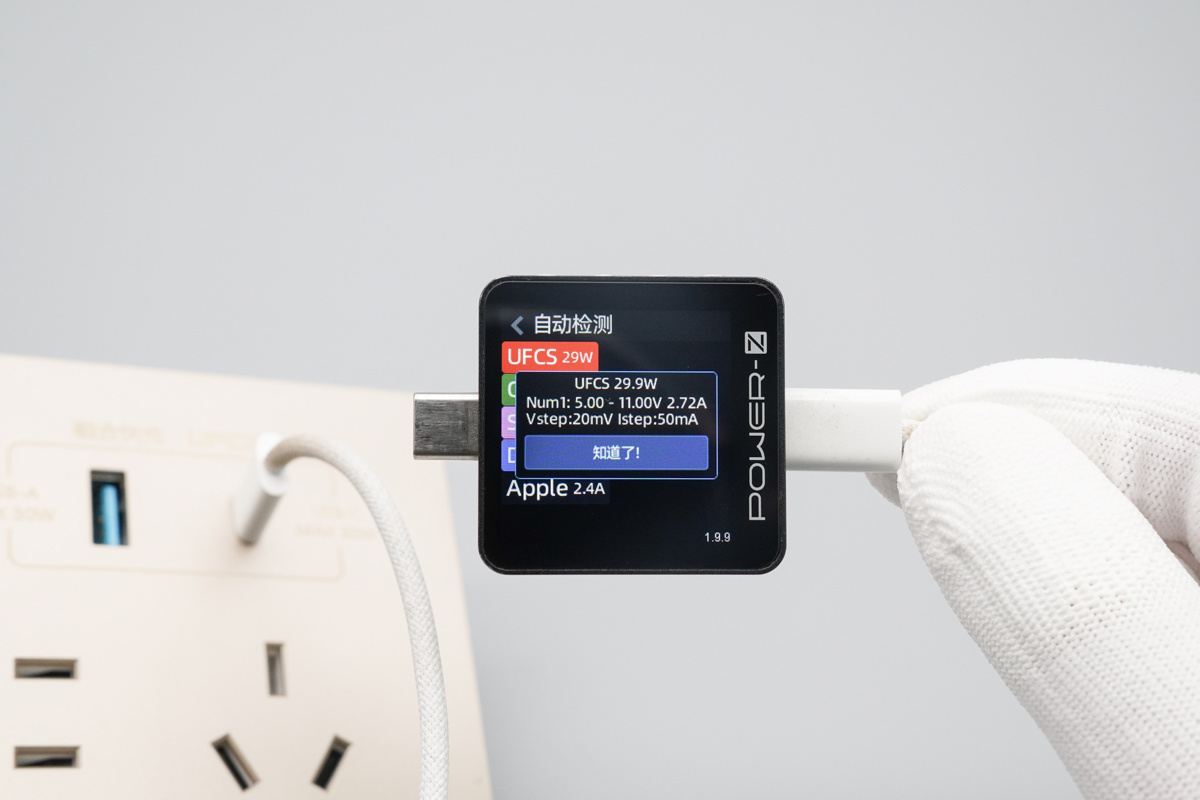
And it supports the UFCS protocol and is rated for 5.00-11.00V 2.72A.
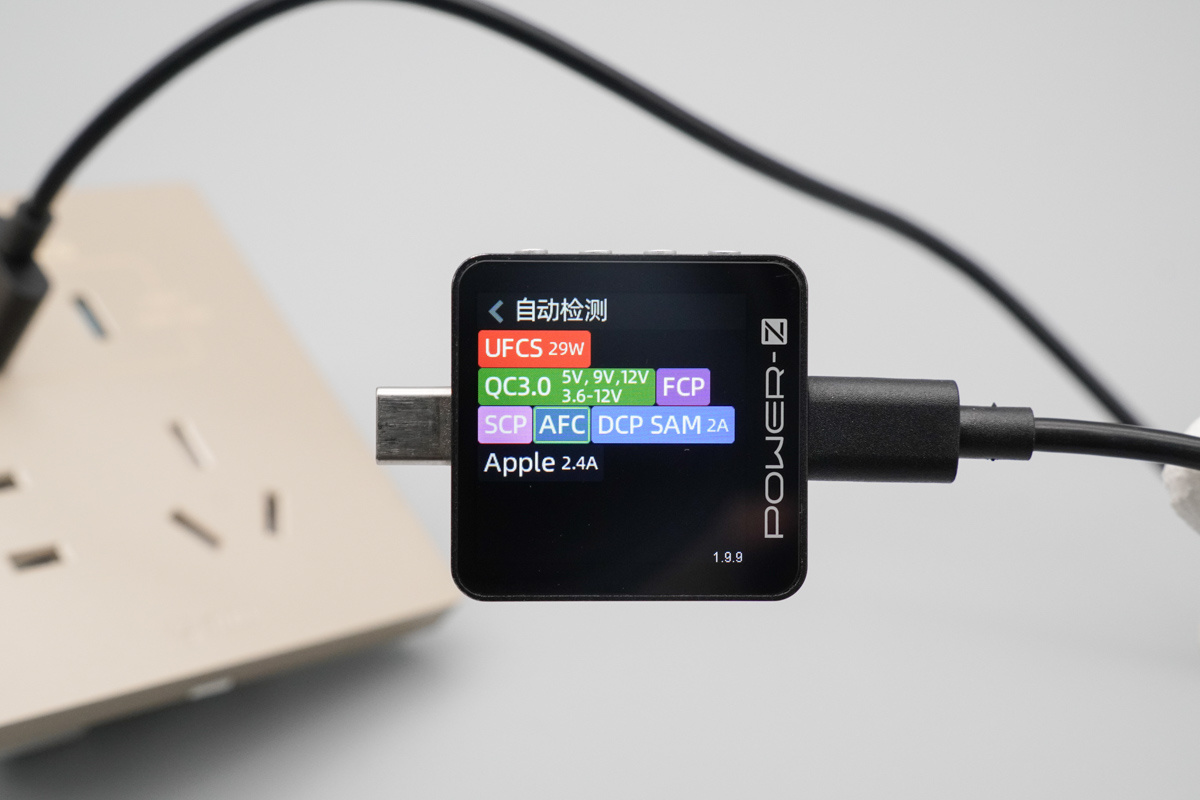
ChargerLAB POWER-Z KM003C shows that the USB-A port supports UFCS, QC3.0, FCP, SCP, AFC, PD3.0, Samsung 5V2A, DCP and Apple2.4A.
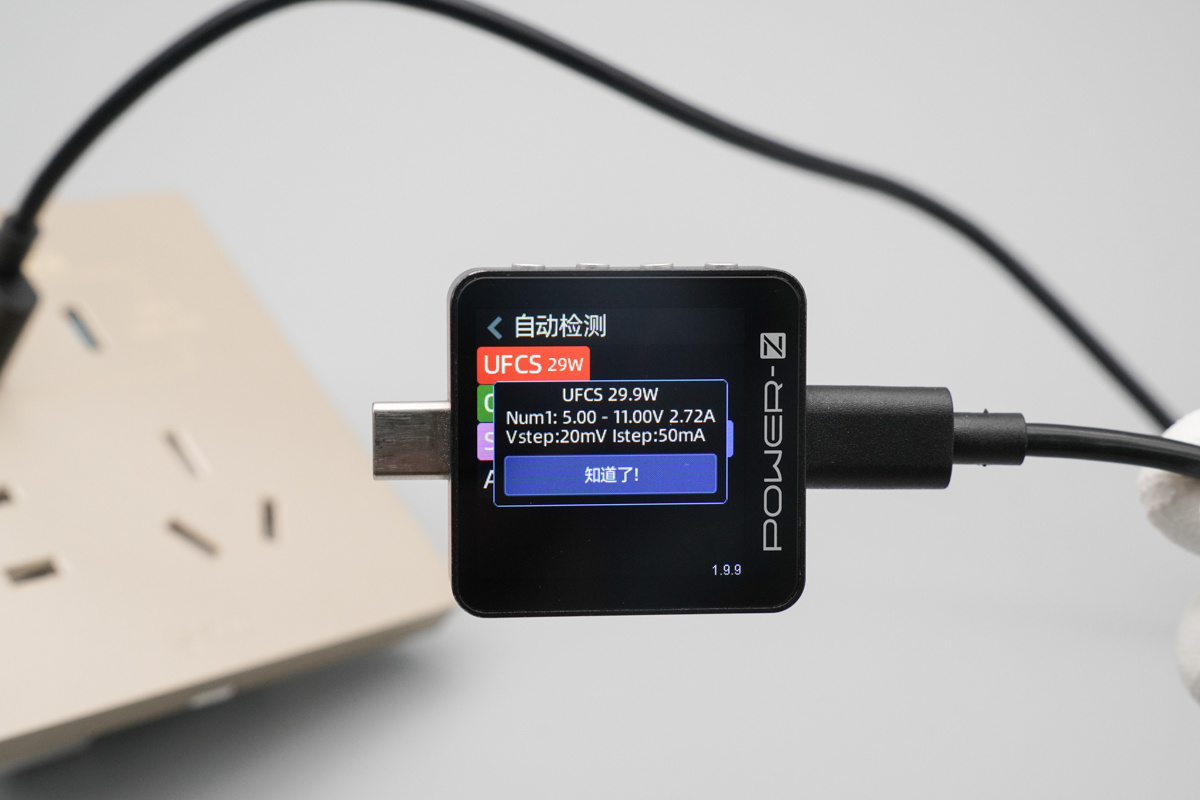
And it also supports the UFCS protocol and is rated for 5.00-11.00V 2.72A.
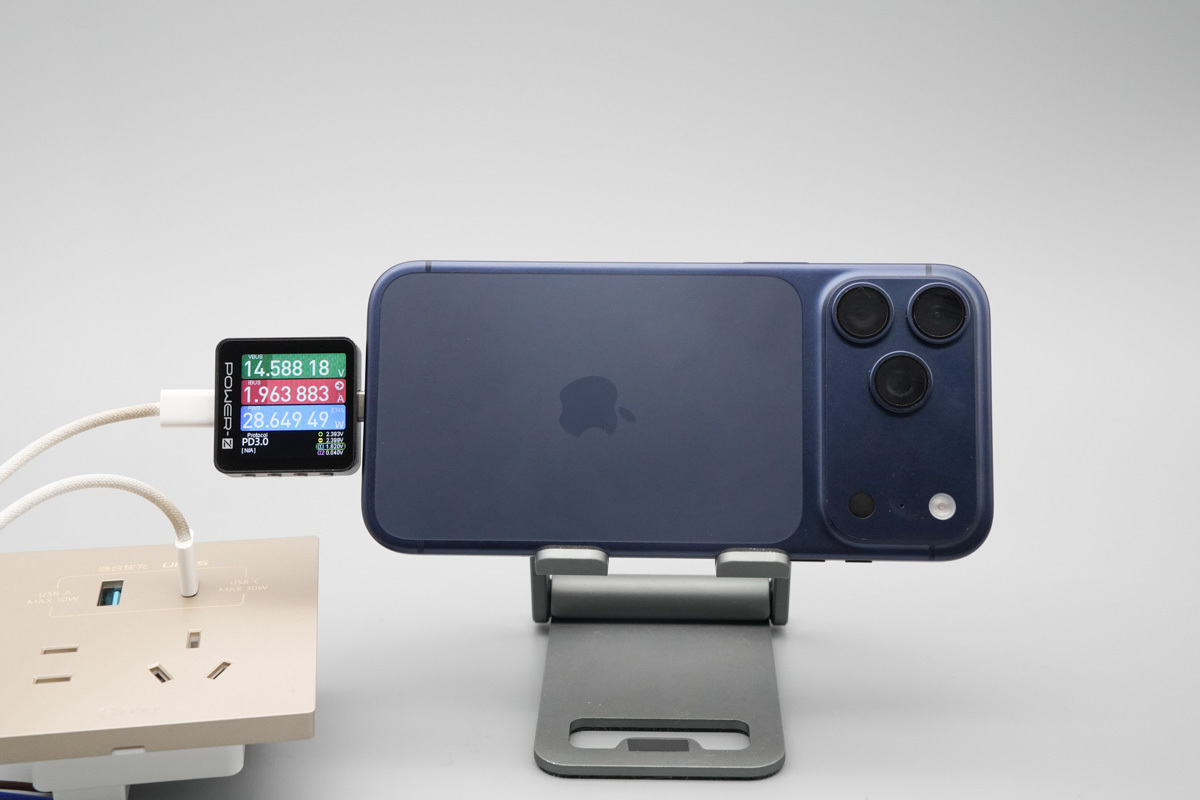
When charging the iPhone 17 Pro via the USB-C port, the measured output is 14.58V and 1.96A, reaching a power output of 28.6W and confirming a successful PD fast-charging handshake.
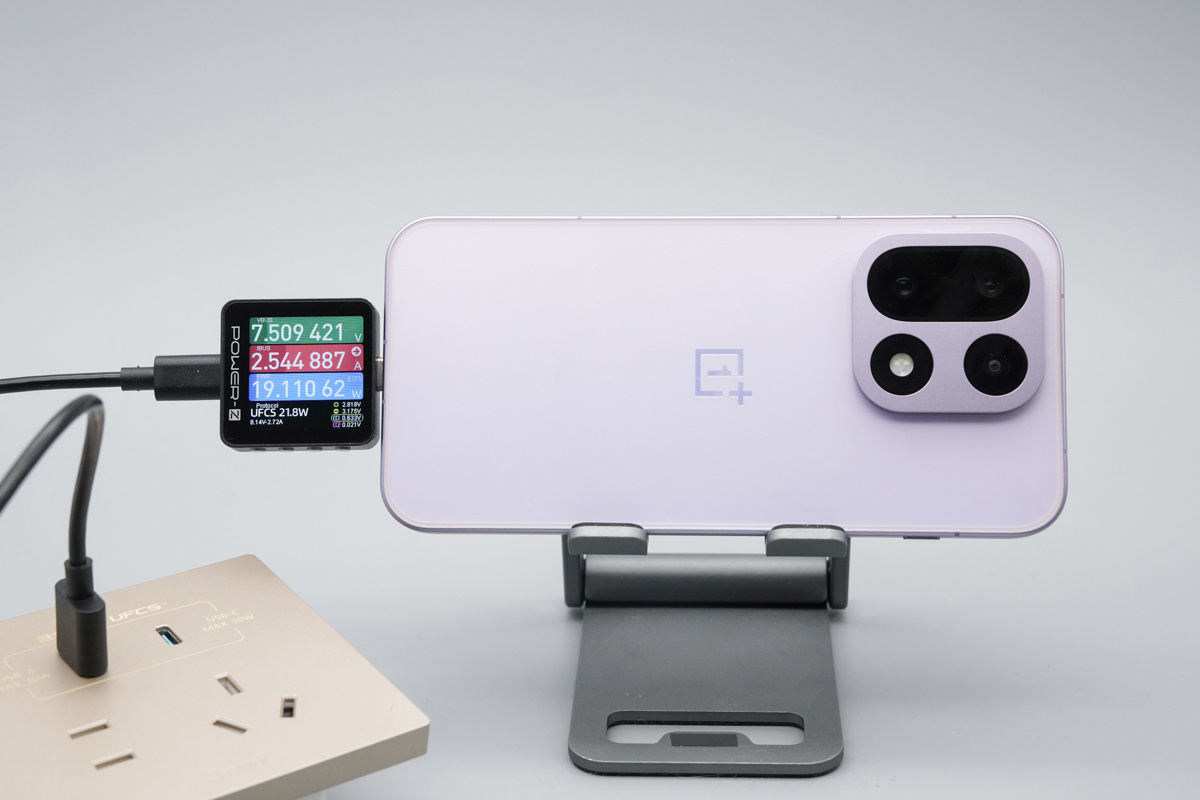
When charging the OnePlus 15 via the USB-A port, the measured output is 7.50V and 5.54A, reaching a power output of 19.1W and confirming a successful UFCS fast-charging handshake.
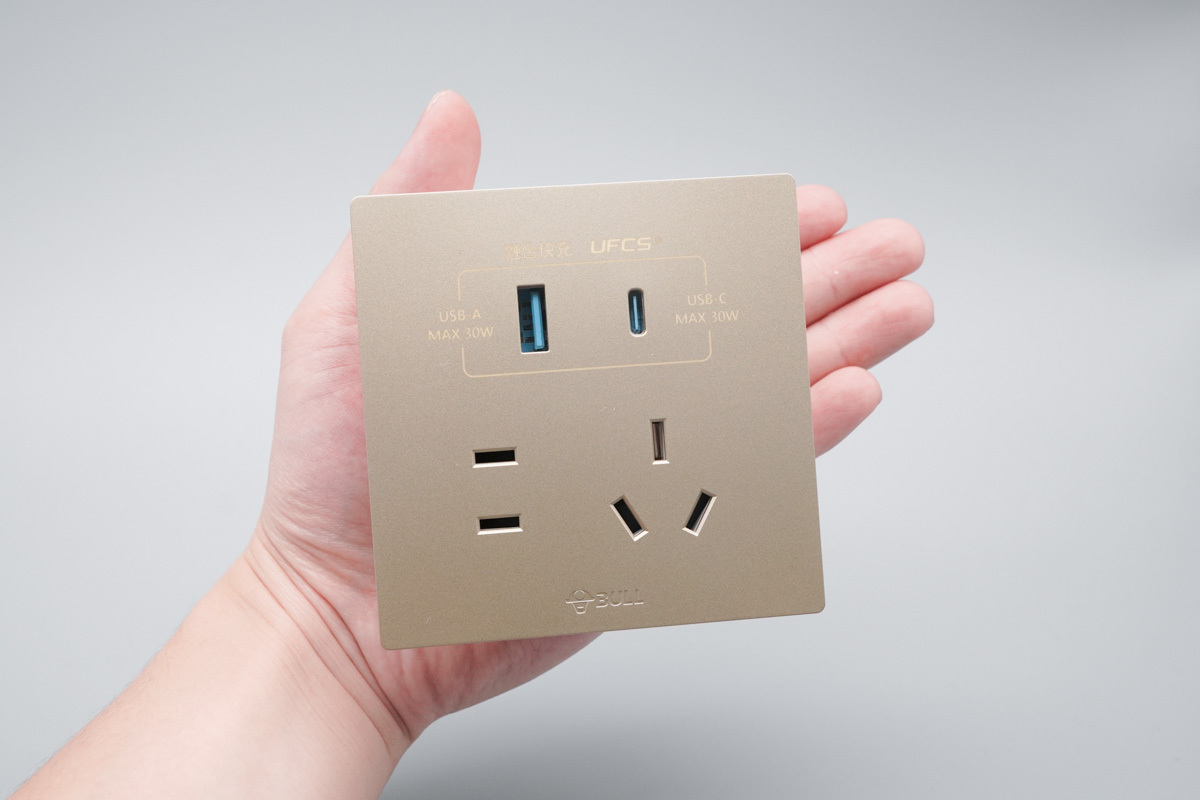
That's how big it is in the hand.

The length of the panel is about 86.12mm (3.391 inches).
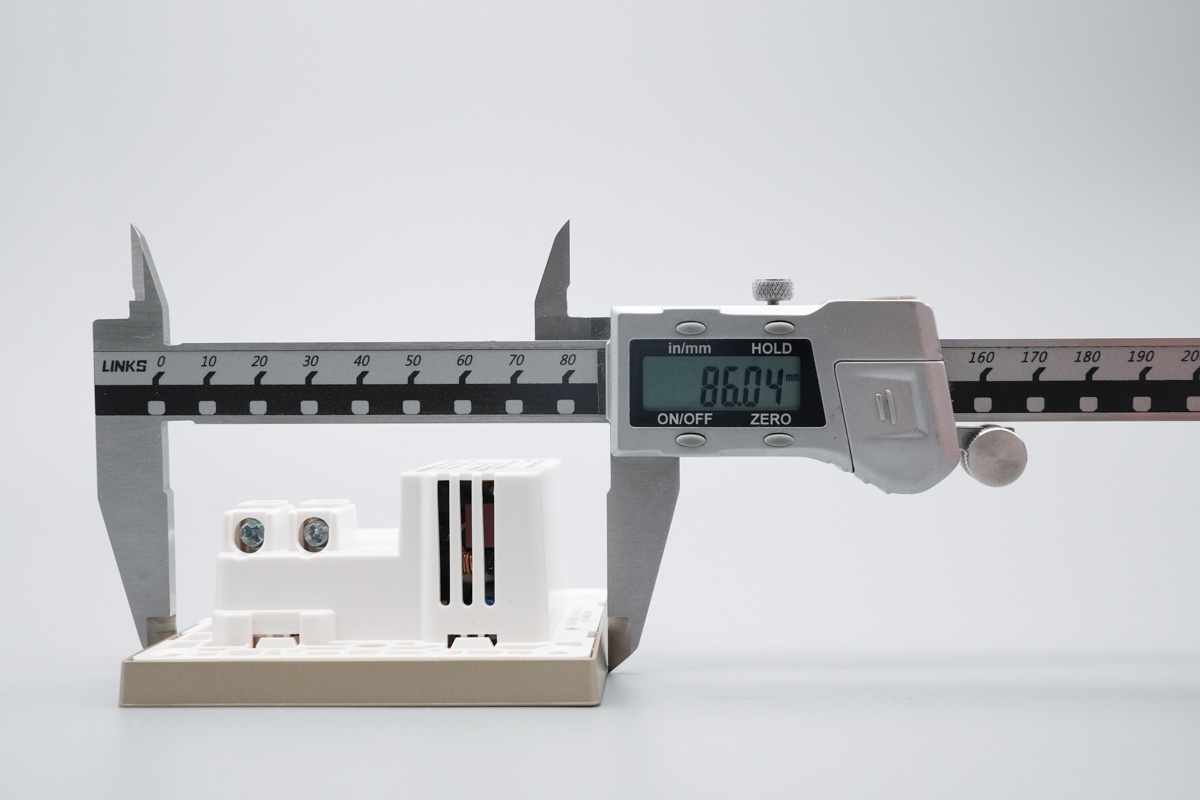
The width of the panel is about 86.04mm (3.387 inches).
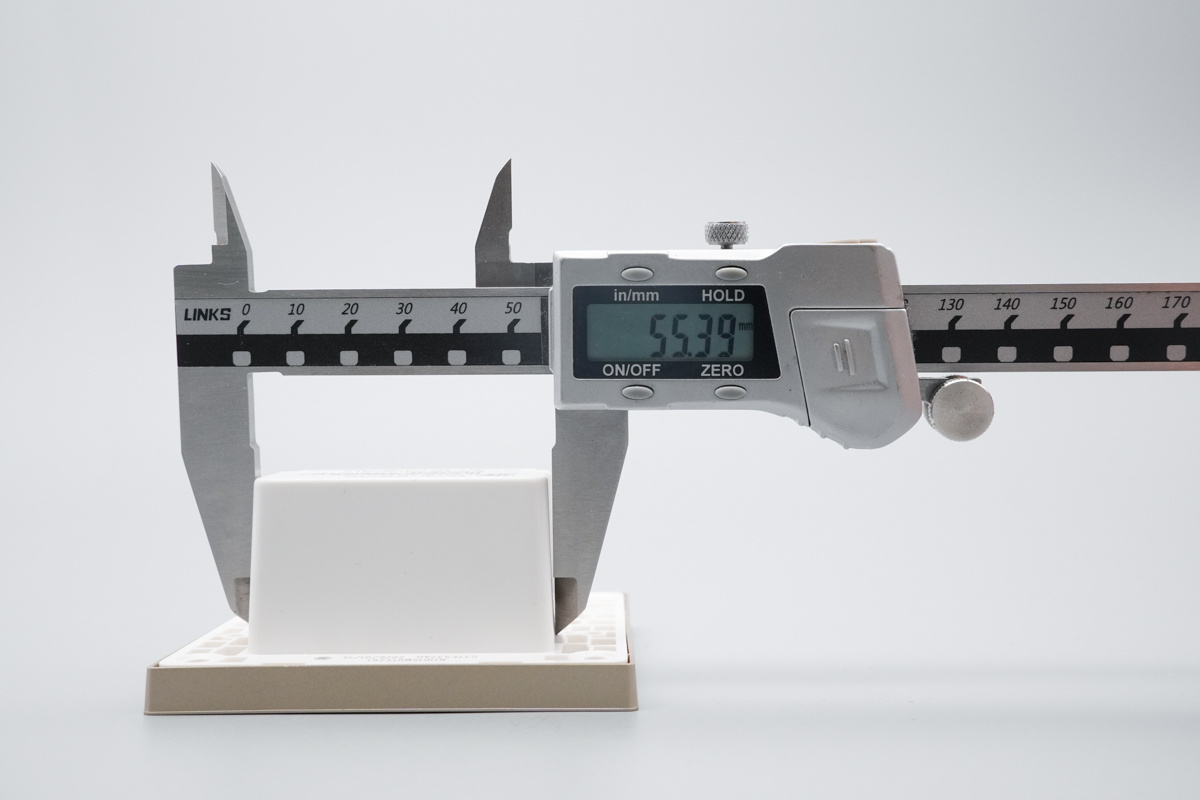
The width of the module portion into which the back-mounted dark box is 55.39mm (2.181 inches).
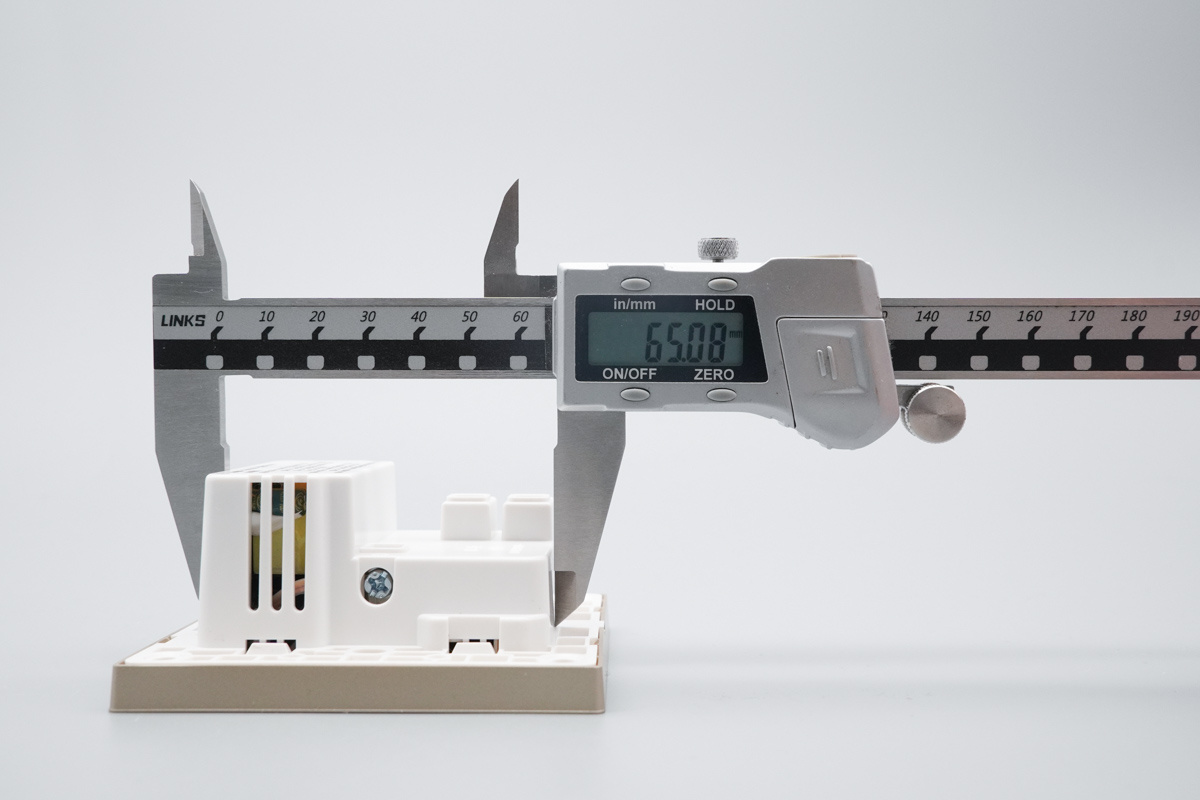
The length of the module is about 65.08mm (2.562. inches).
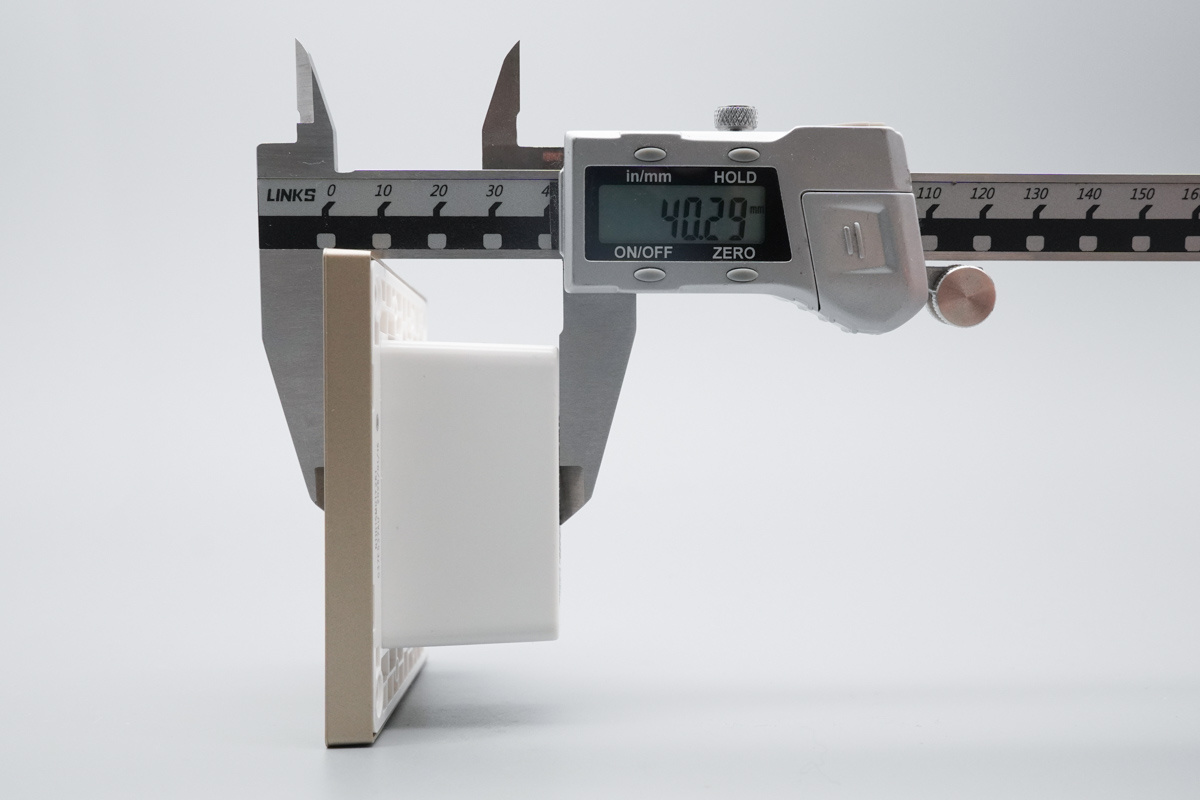
The thickness of the panel is about 40.29mm (1.586 inches).
After examining the exterior design and fast-charging compatibility, we now move on to the internal teardown here at ChargerLAB.
Teardown
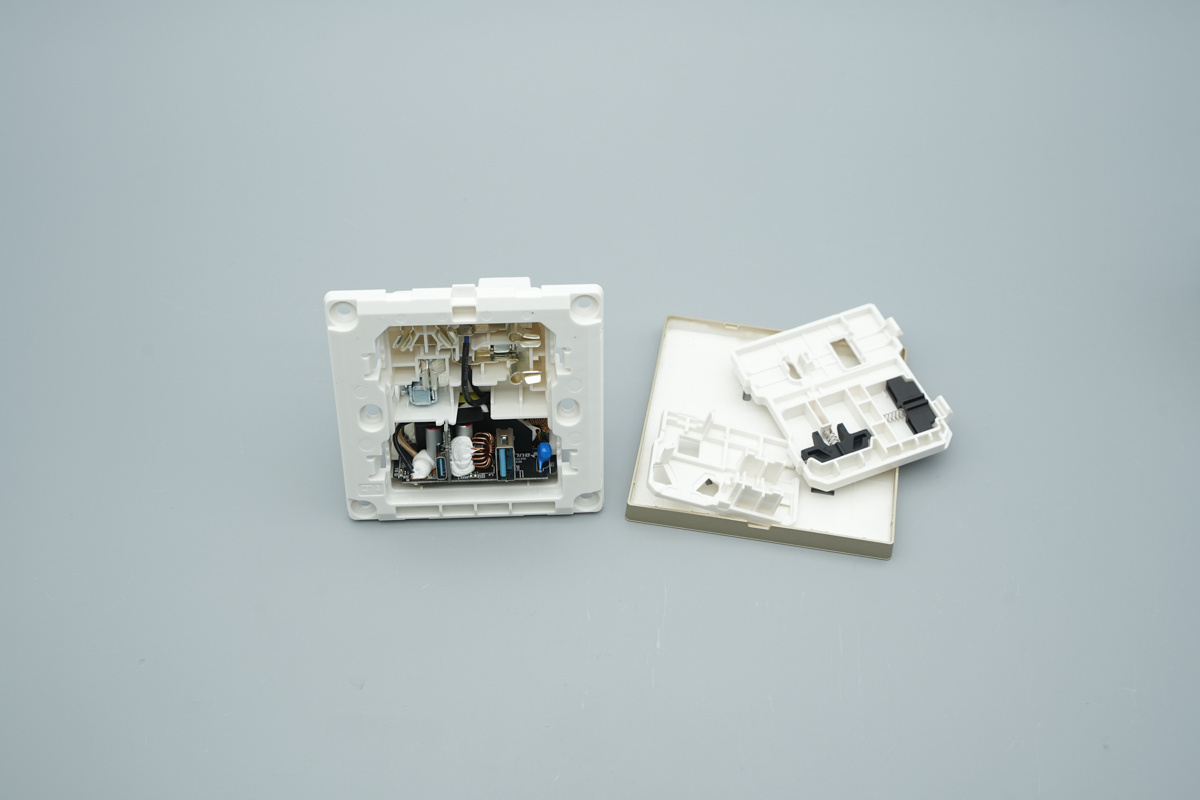
Once the front cover and clips are removed, the panel separates into two distinct parts. The internal AC outlet features high-quality integrated copper busbars, with the black fast-charging PCBA tucked securely below.
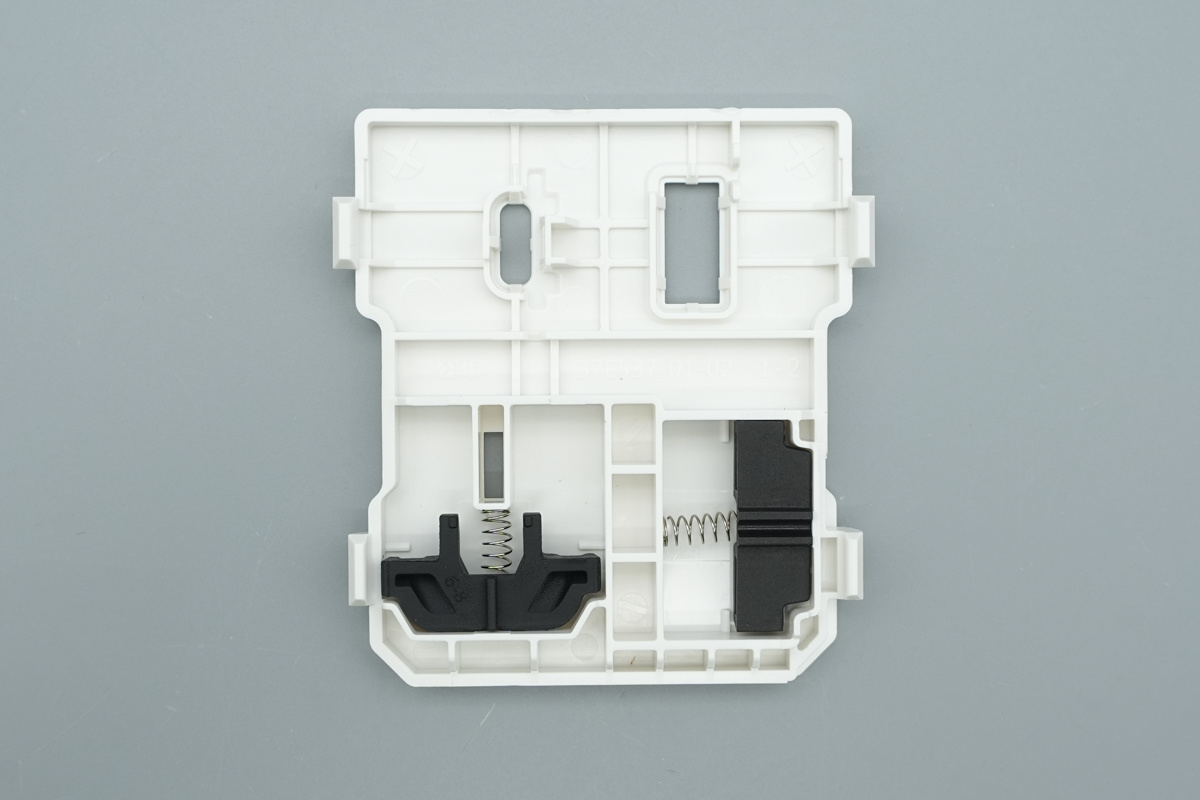
The back of the detached cover plate reveals the child-safety shutters and the integrated spring-loaded reset mechanism.
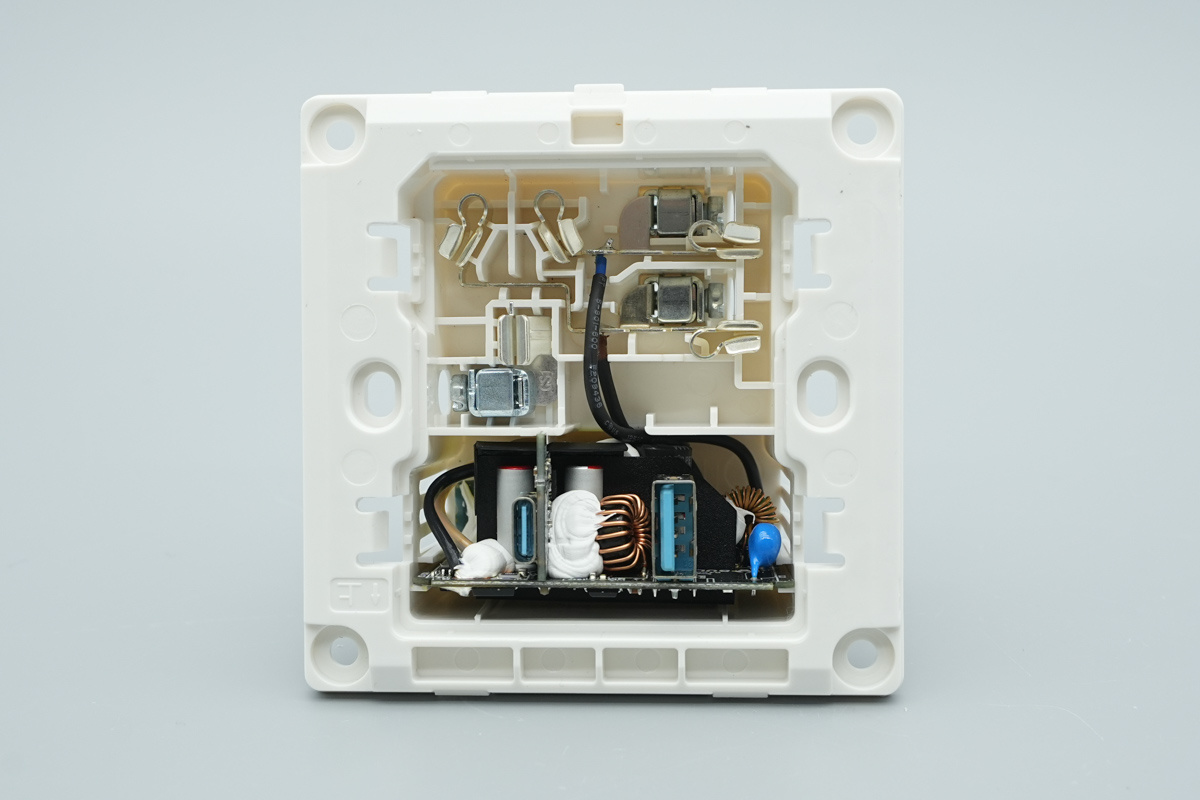
The internal structure of the panel features a distinct separation between high and low-voltage circuits. The upper section contains the AC wiring and integrated copper busbars, while the fast-charging PCB is located at the bottom, connected to the AC terminals via wires to receive power.
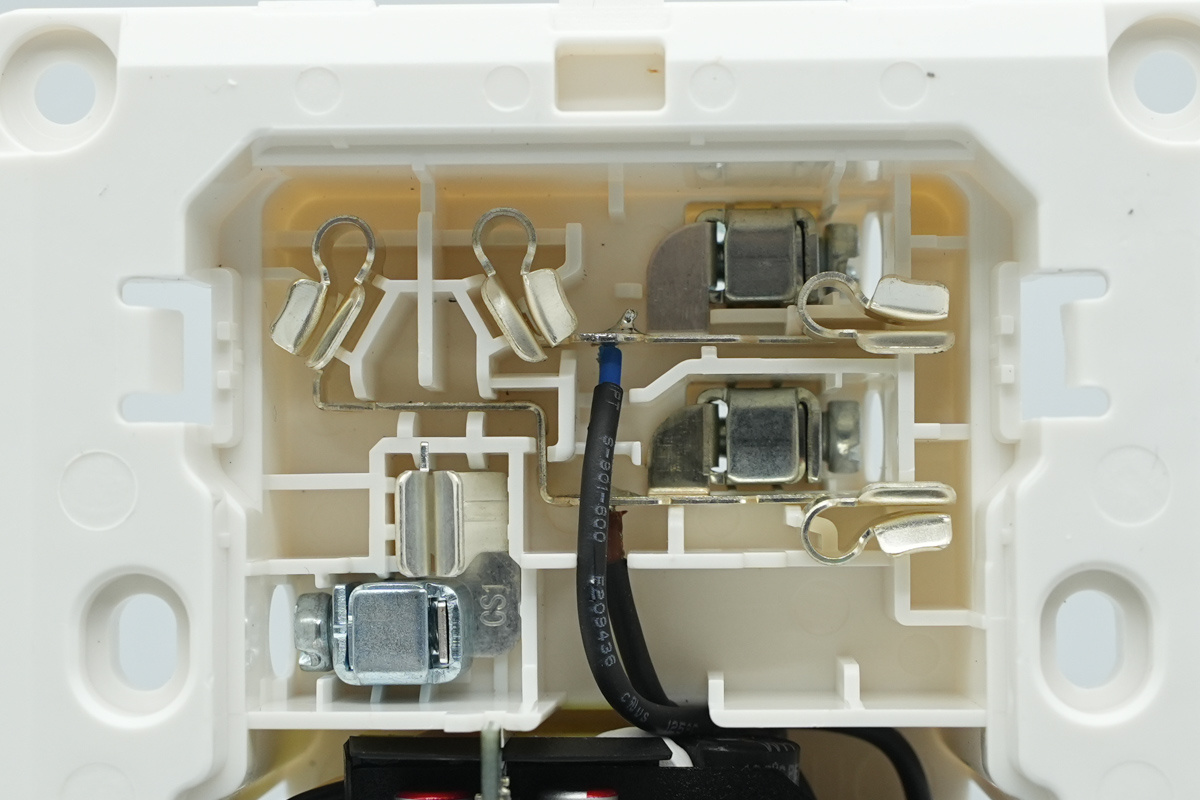
The AC outlet features robust, integrated brass busbars that effectively prevent overheating during high-current operation. A soldered connection links these busbars to the wiring of the fast-charging module.
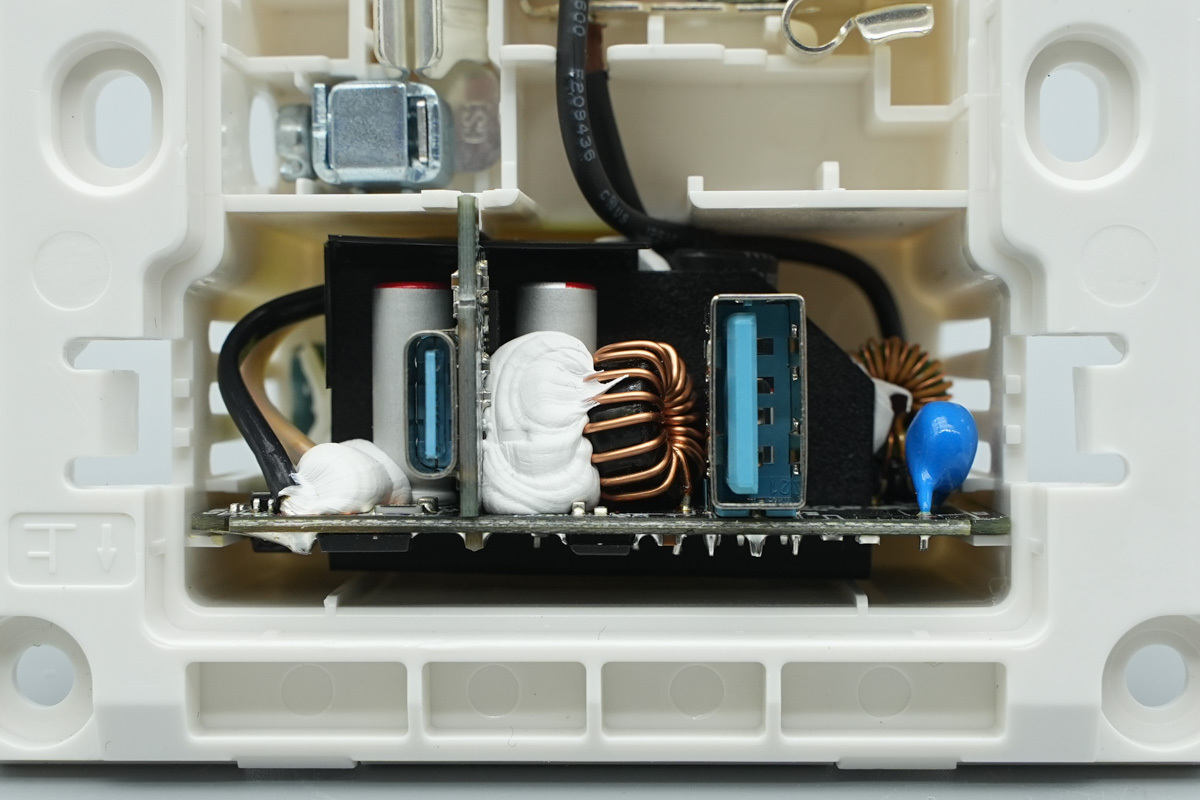
The fast-charging PCBA module is housed within the bottom grille slot. A significant amount of white potting compound is applied between the components to secure them in place and facilitate thermal dissipation.
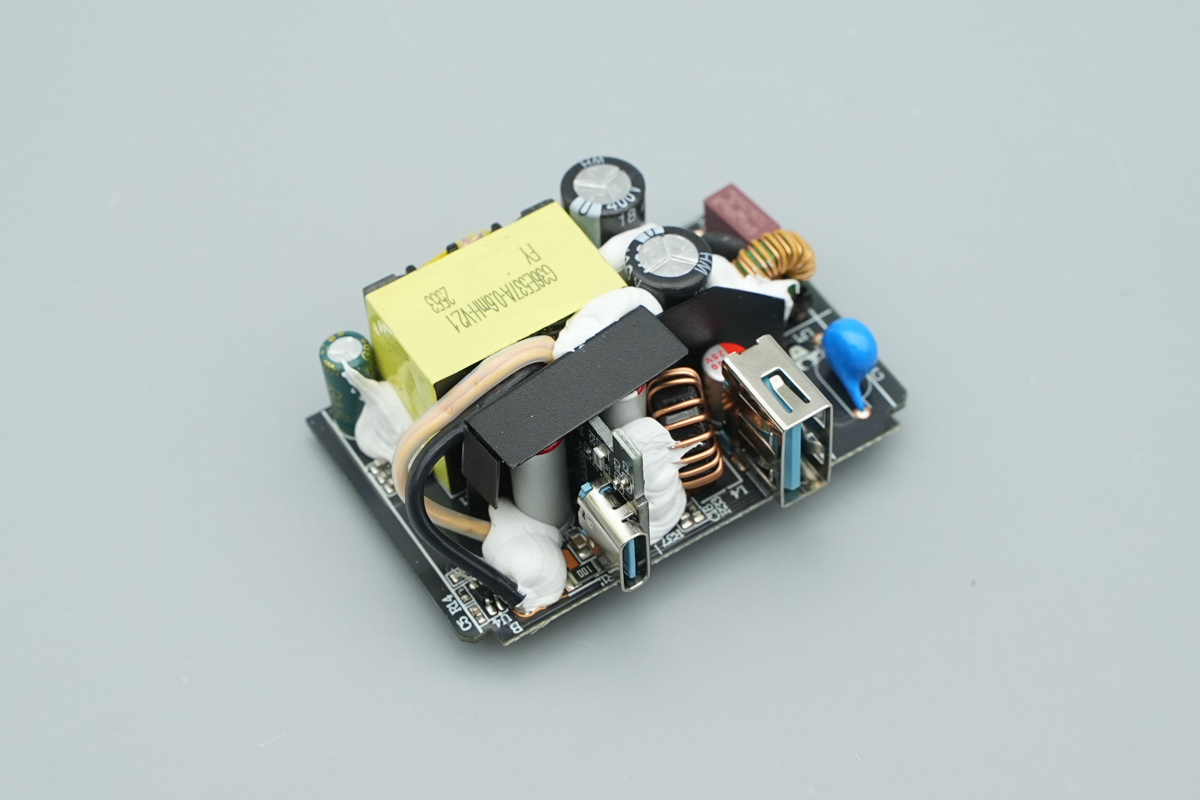
With the PCBA extracted from the casing, we find a highly compact component layout, with transformers, caps, and chokes all securely reinforced with white potting compound.
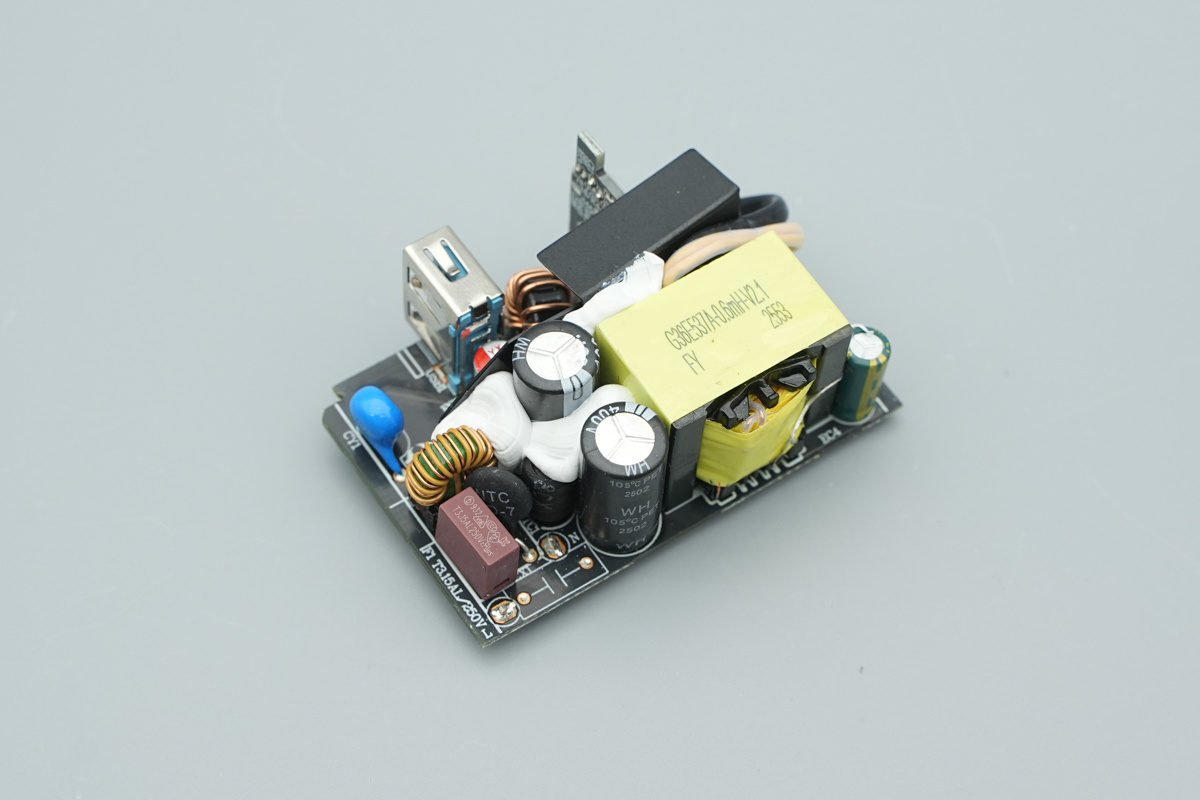
From another angle, the transformer is marked with the product serial number and production batch info.
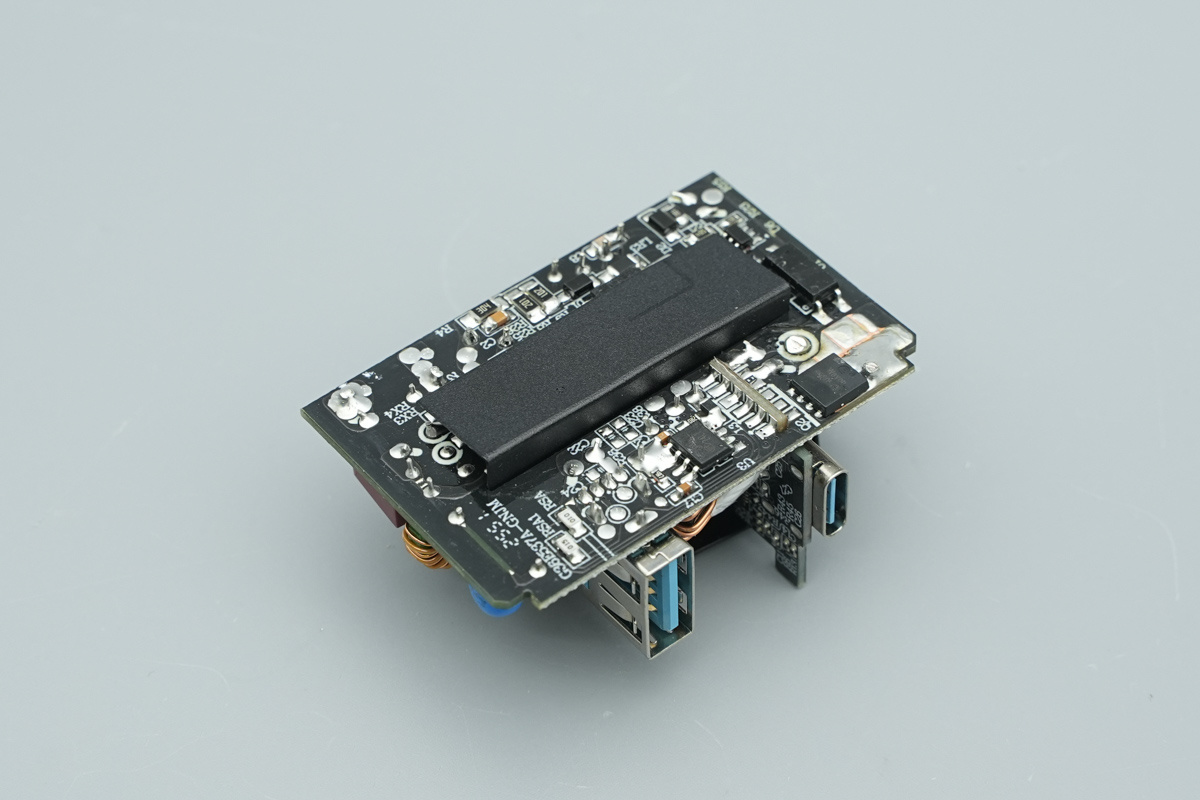
The back of the PCBA is covered with a black insulating Mylar sheet.
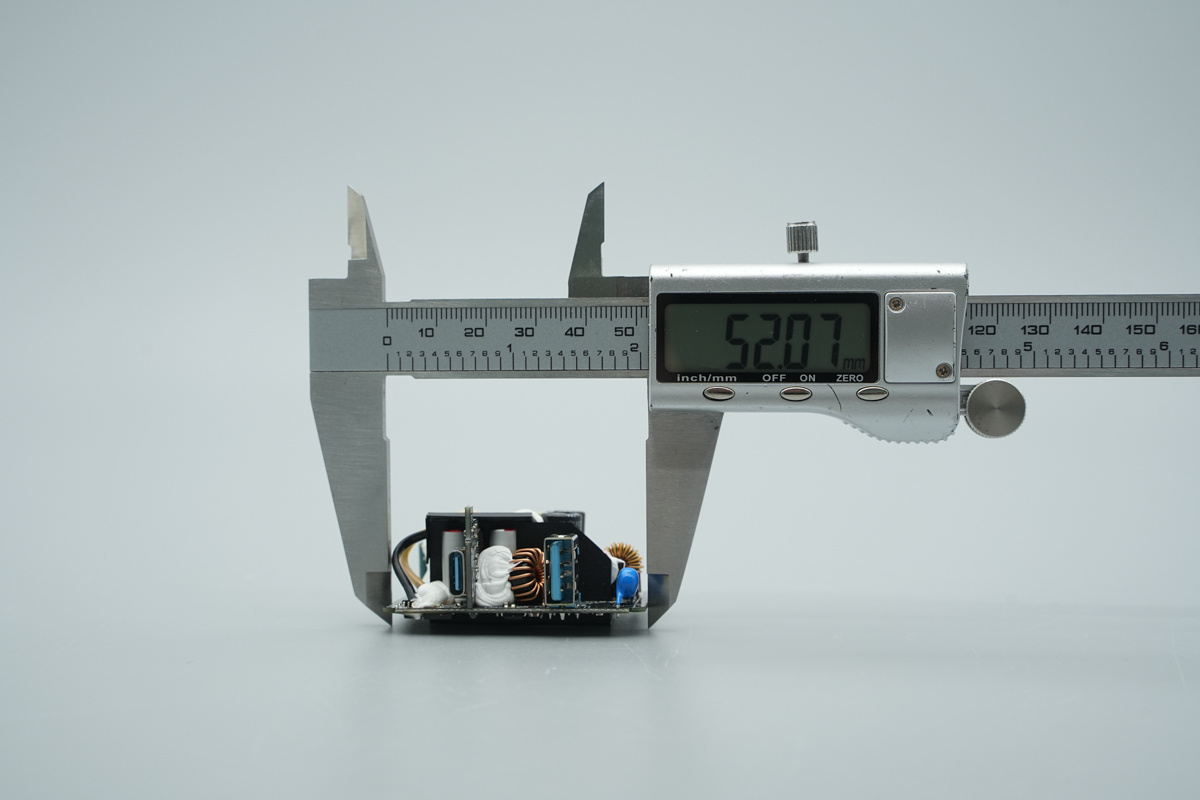
The length of the PCBA is about 52.07mm (2.050 inches).
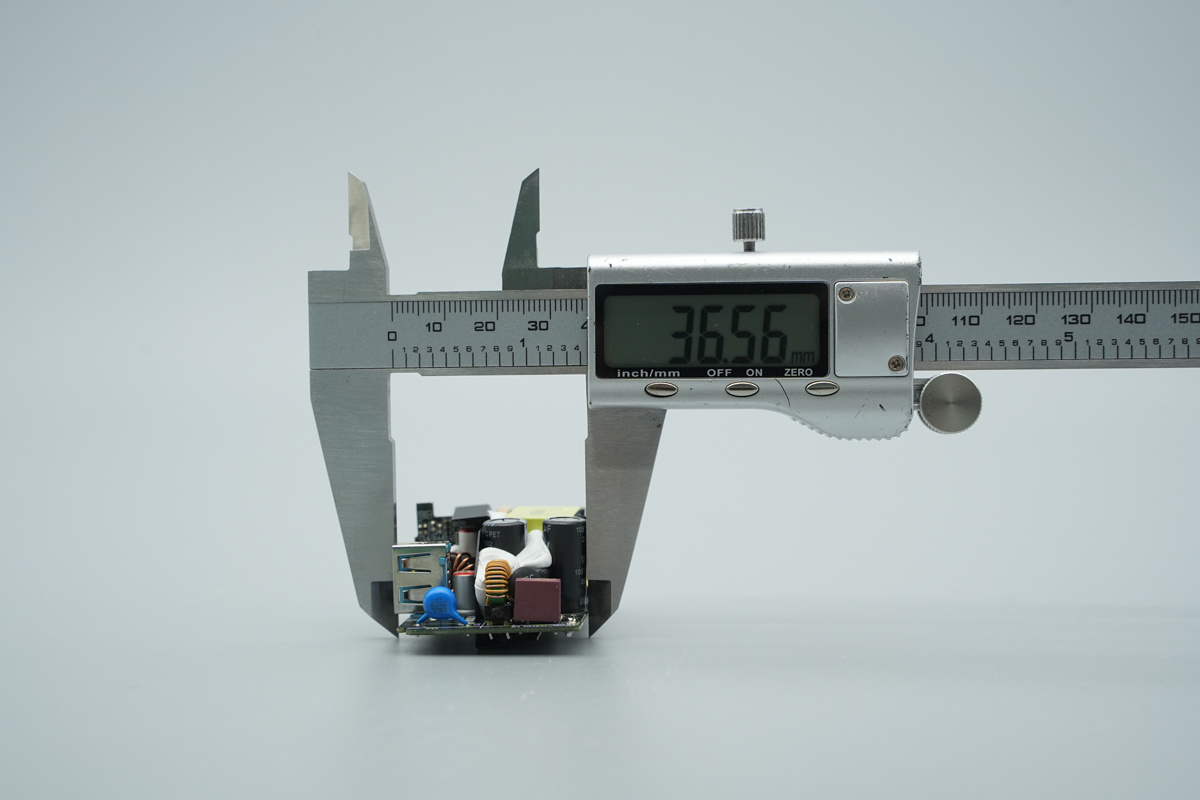
The width of the PCBA is about 36.56mm (1.439 inches).
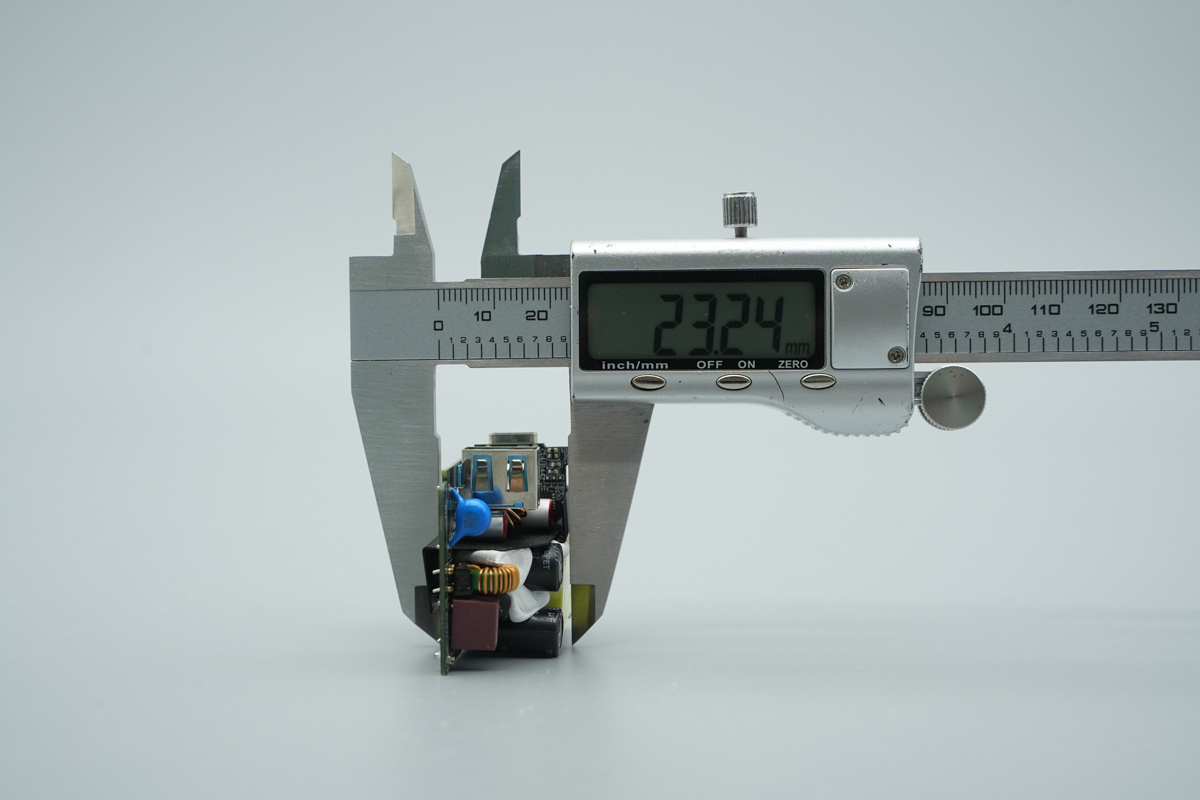
The thickness of the PCBA is about 23.24.mm (0.915 inches).
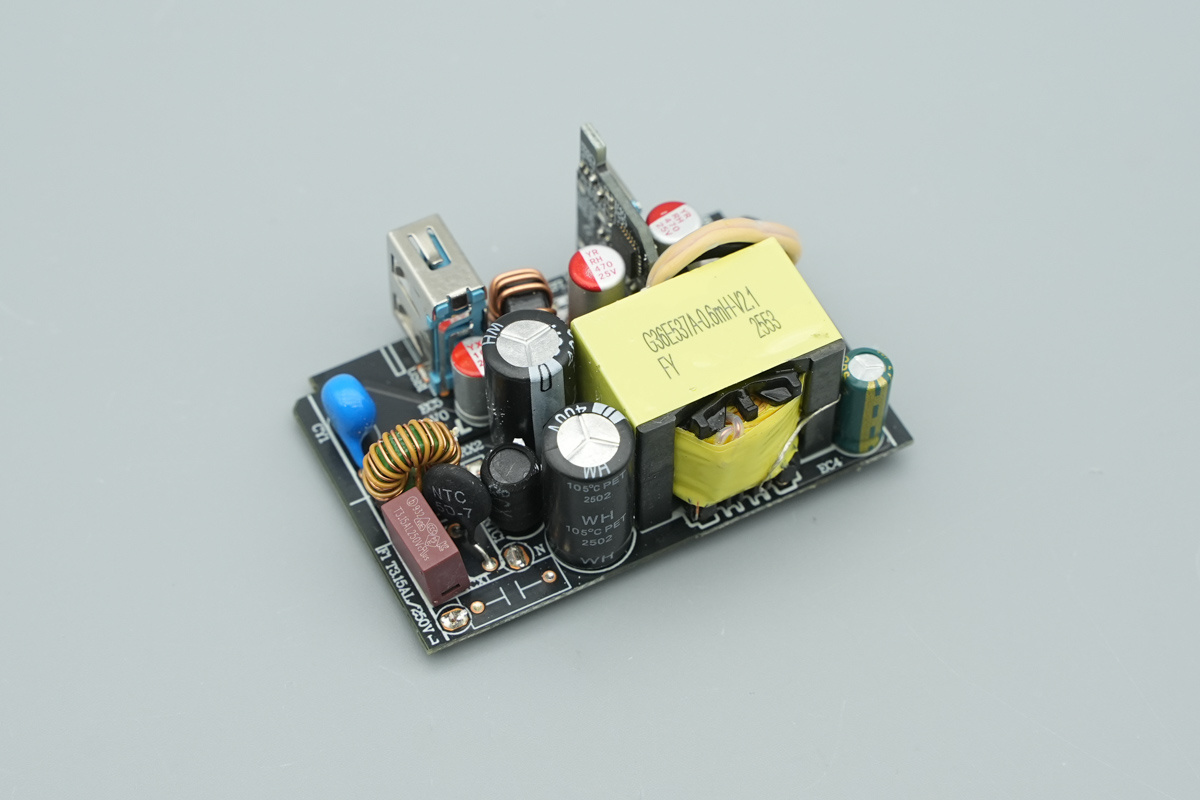
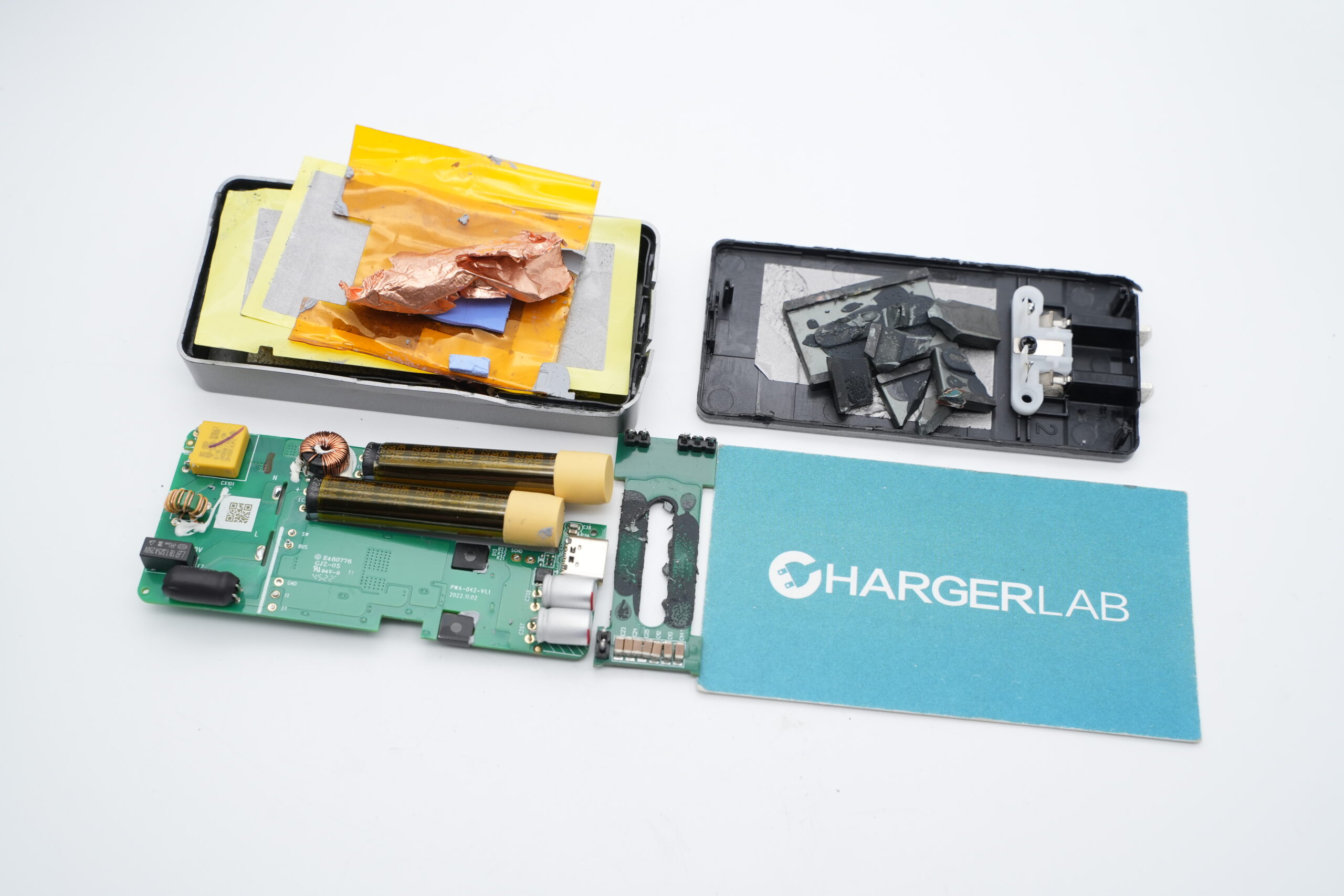
Clearing away the white potting compound from the PCBA.
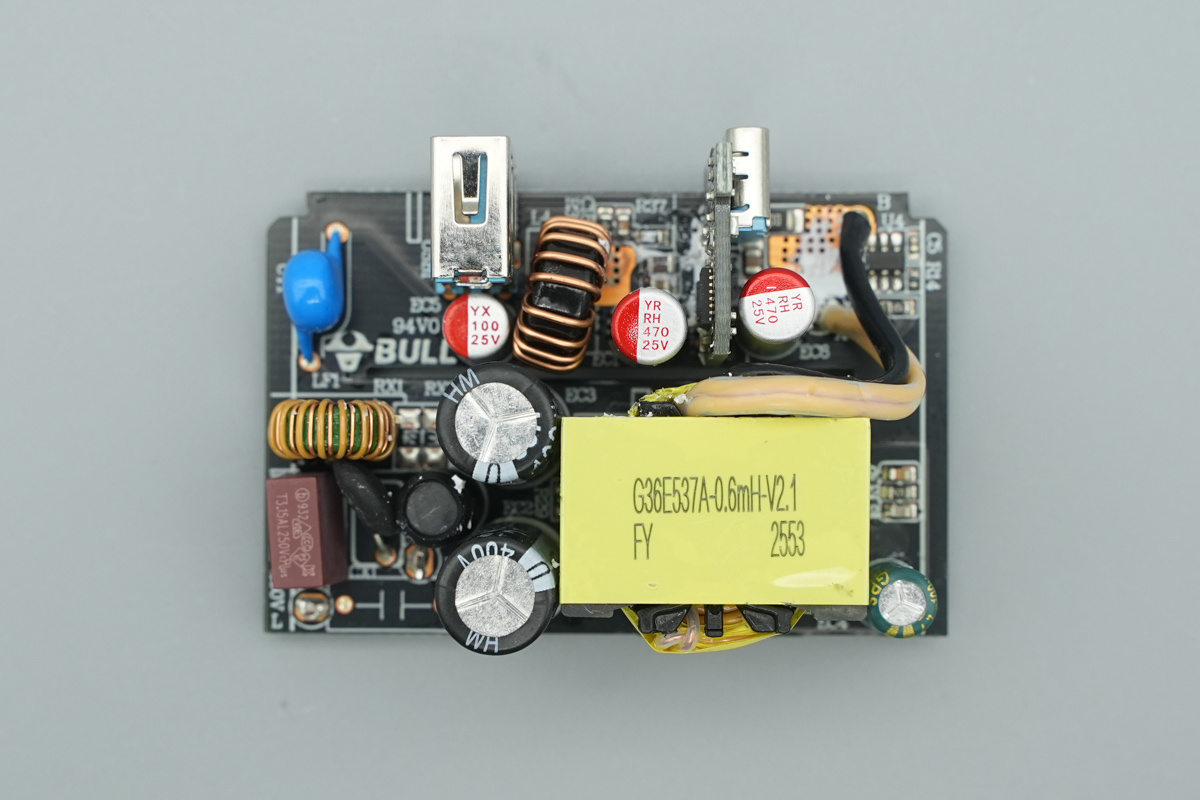
The component density on the top of the PCBA is exceptionally high. On the left, we observe the input EMI filtering circuit and the primary high-voltage electrolytic cap. The center houses the switching transformer, while the upper edge features output filtering caps, the USB-A port, and the USB-C output PCB.
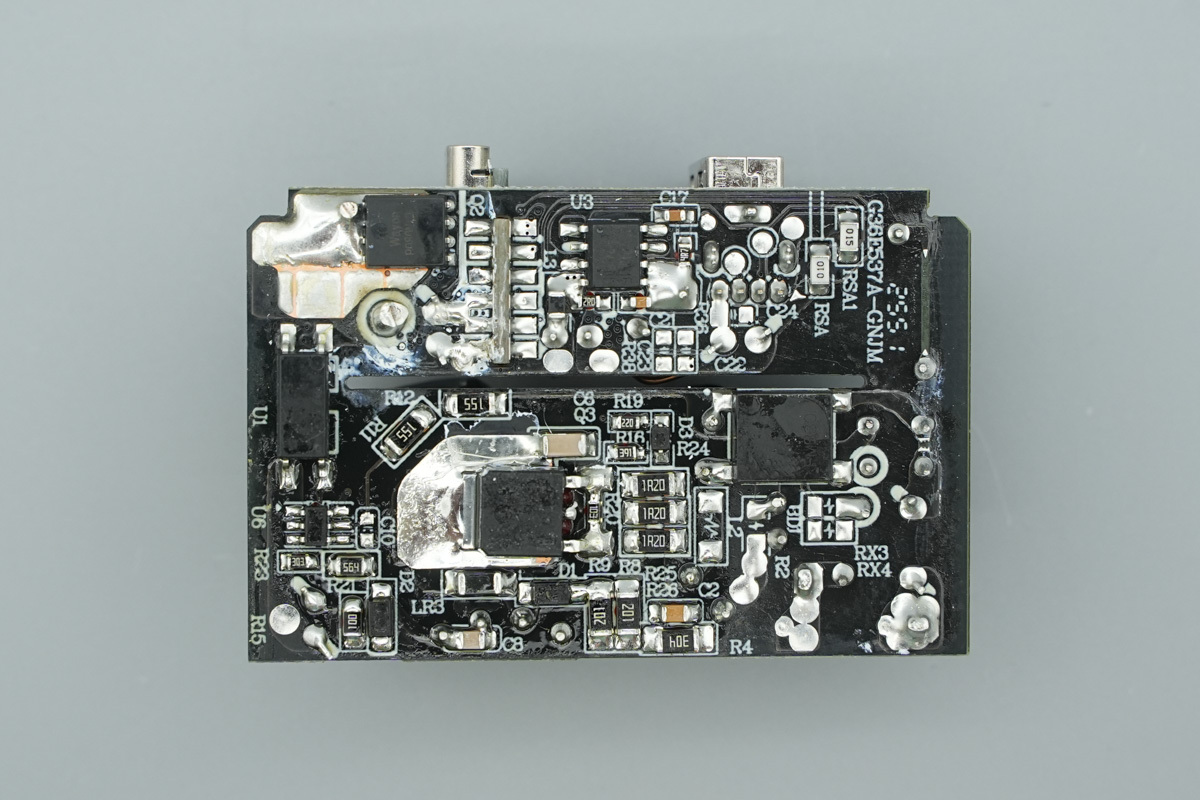
The back of the PCBA houses the rectifier bridge, primary and secondary master control chips, and their associated power components. An isolation slot is milled between the primary and secondary sides to guarantee safety.
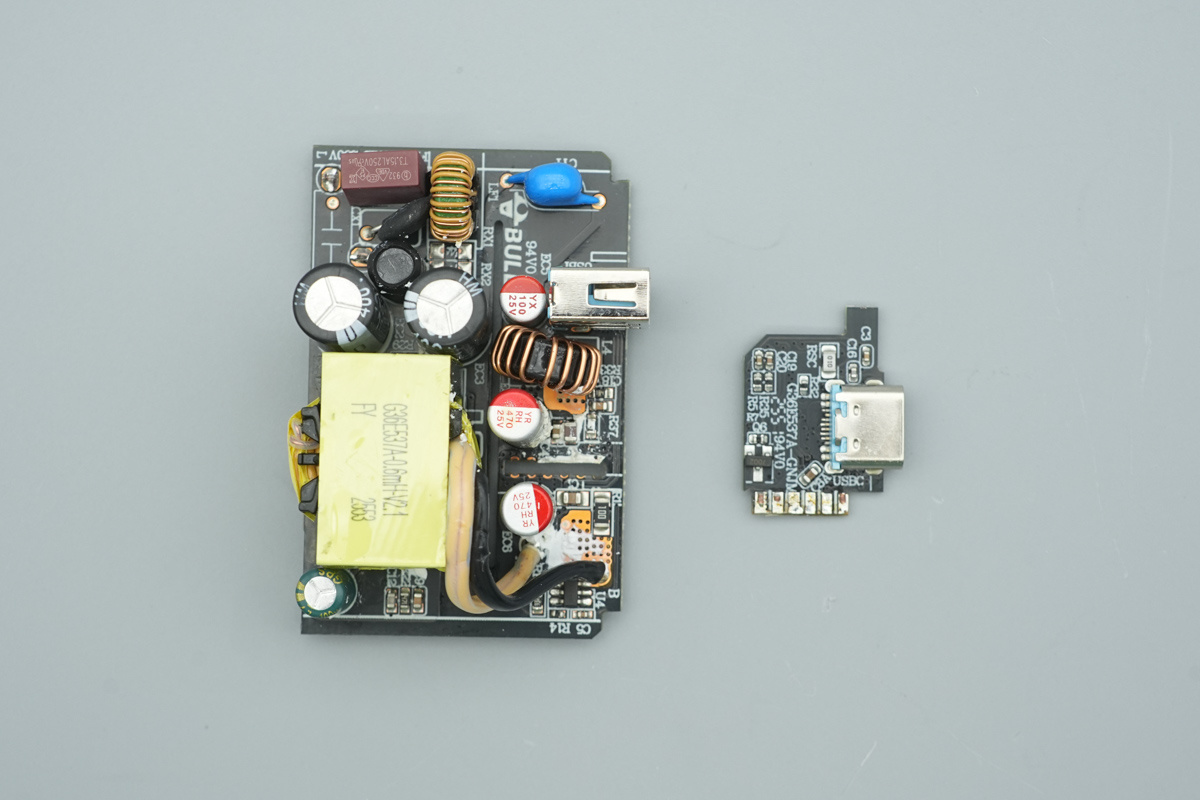
Removing the USB-C output PCB.
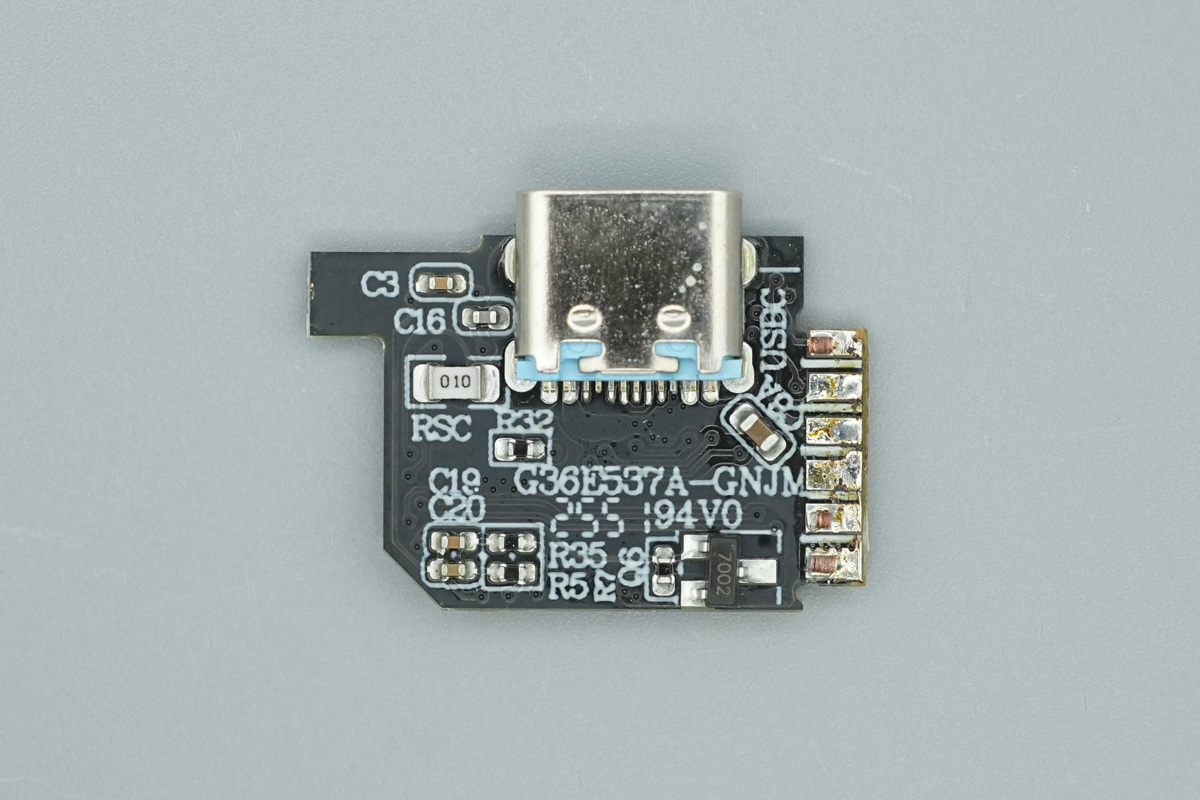
The front of the USB-C output PCB is equipped with a female USB-C connector.
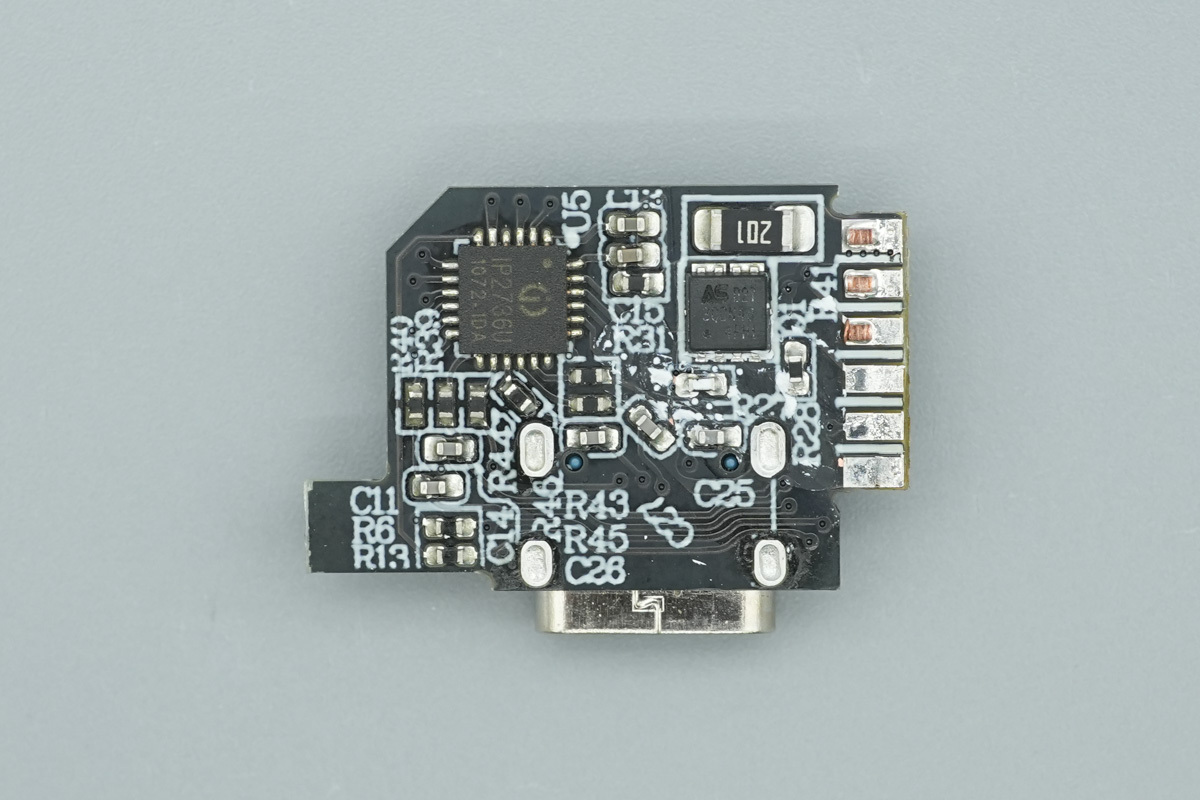
The back of the PCB features a soldered protocol chip and its corresponding VBUS MOSFET.
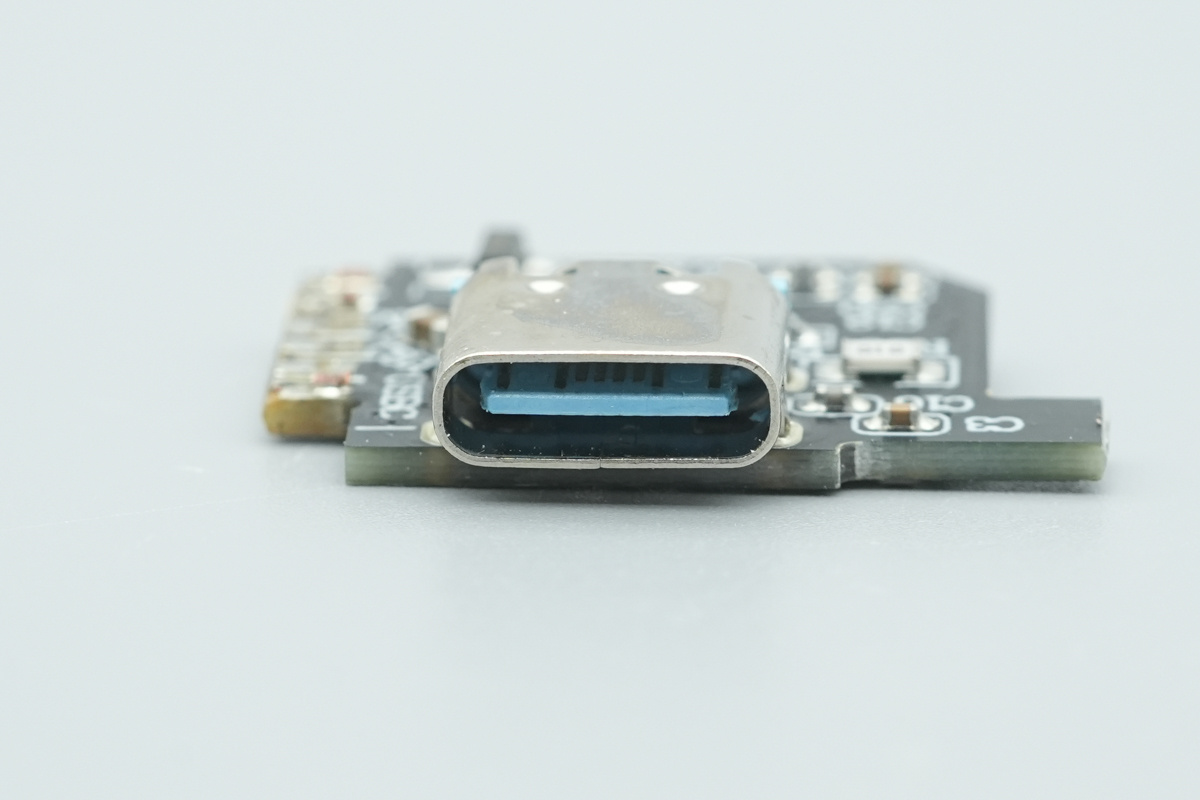
The interior of the USB-C female connector features a light blue plastic sheet.
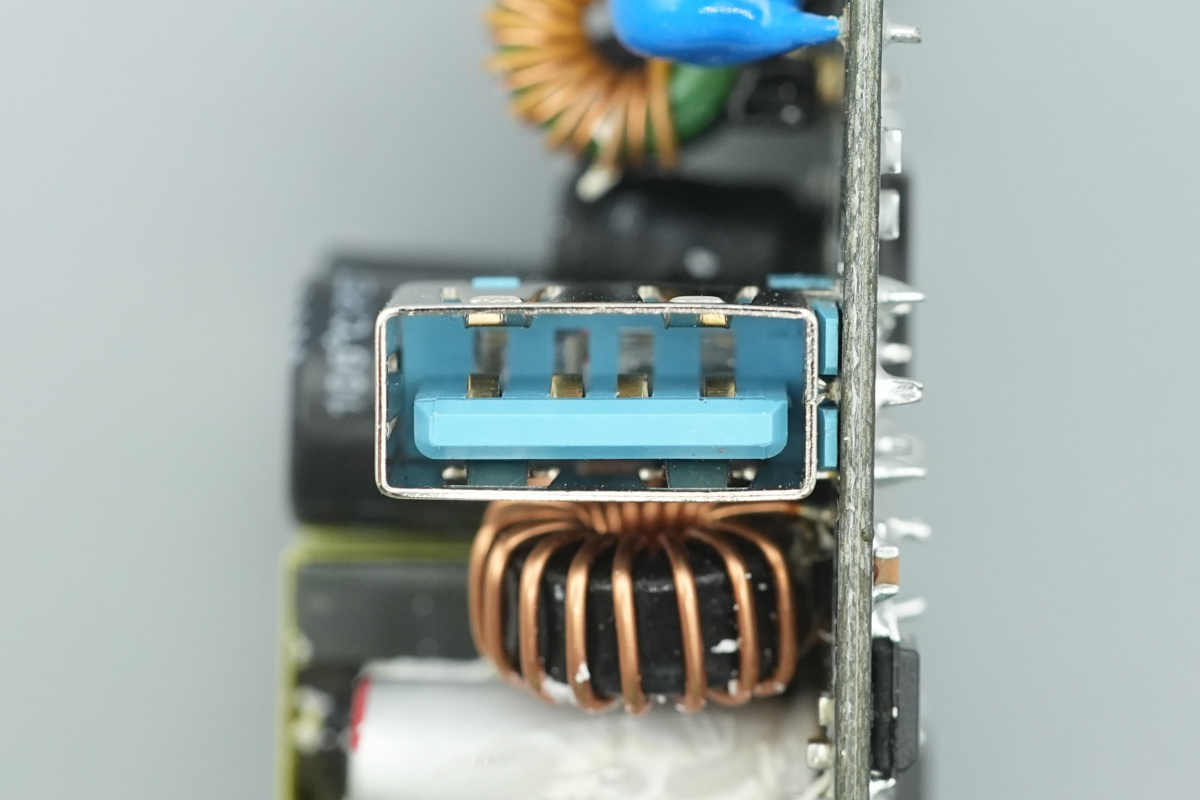
The USB-A female connector also features a light blue plastic sheet.
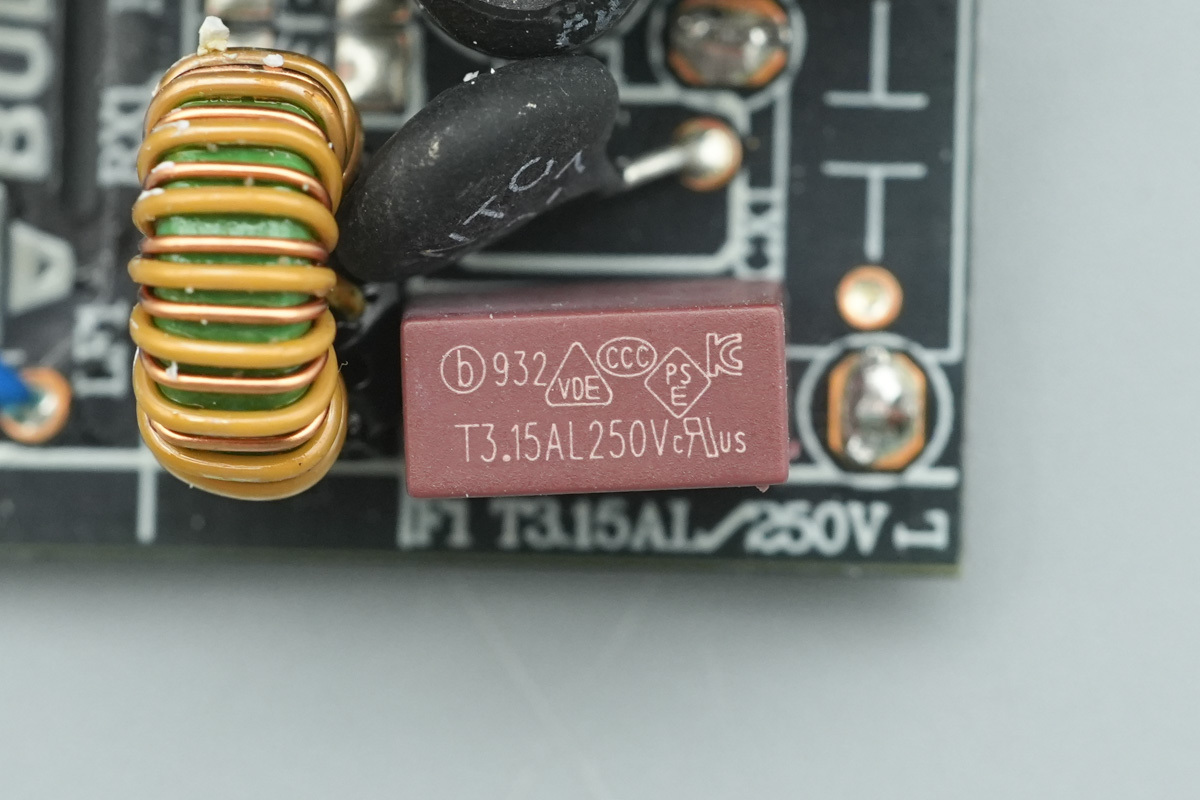
This is the input time-delay fuse.
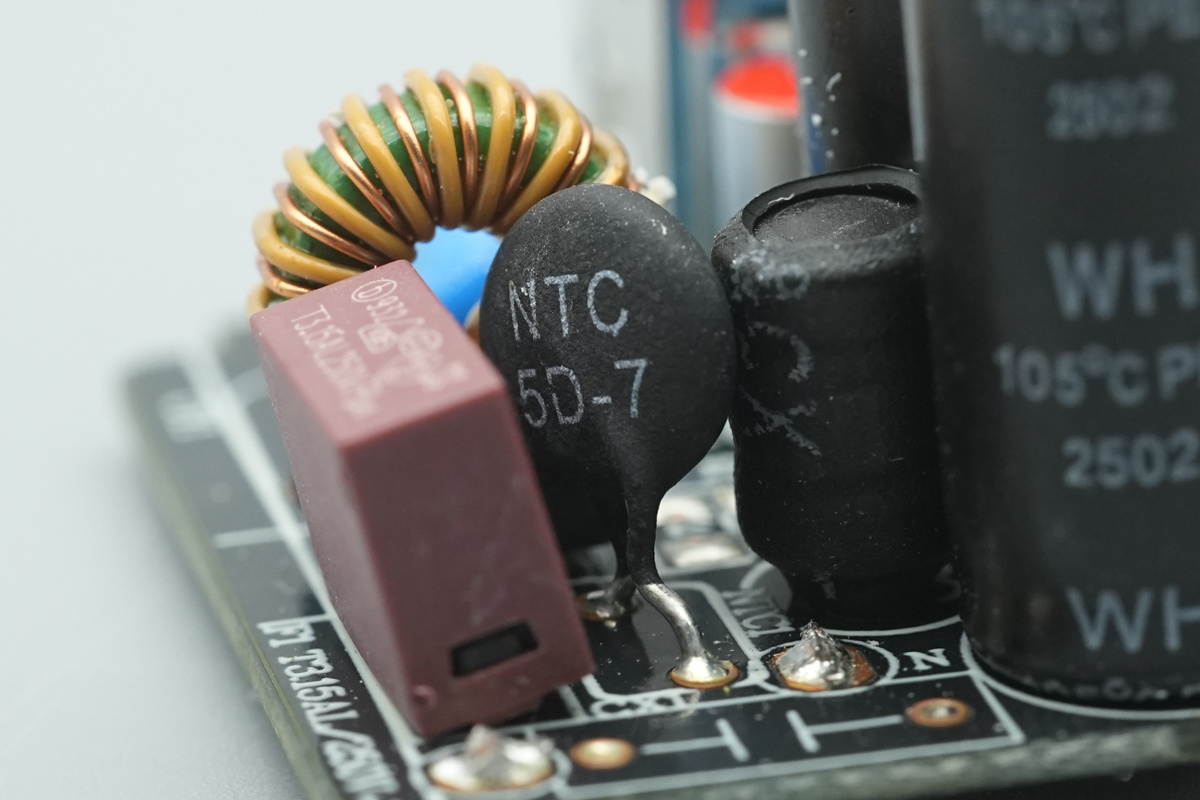
Next to the fuse is an NTC thermistor, which is utilized to suppress inrush current during power-up.
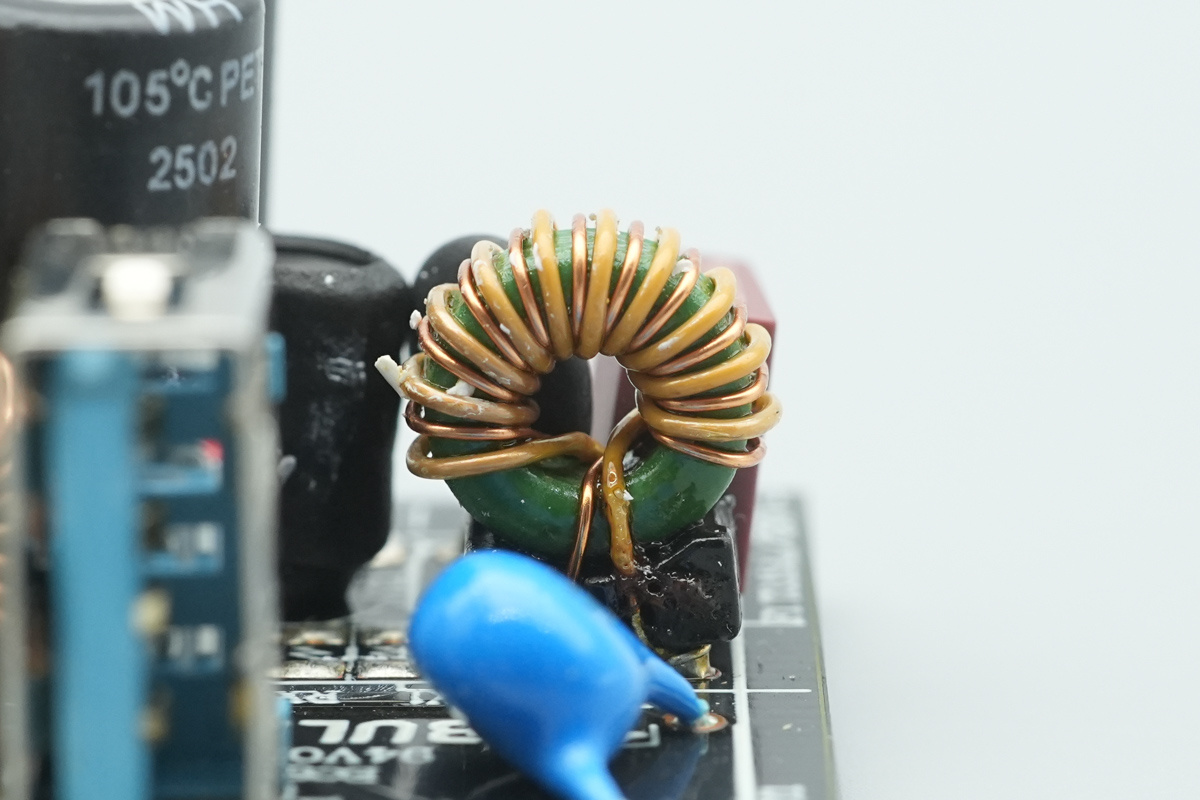
The input end features a common-mode choke for EMI filtering, complemented by a Y-cap located alongside it.
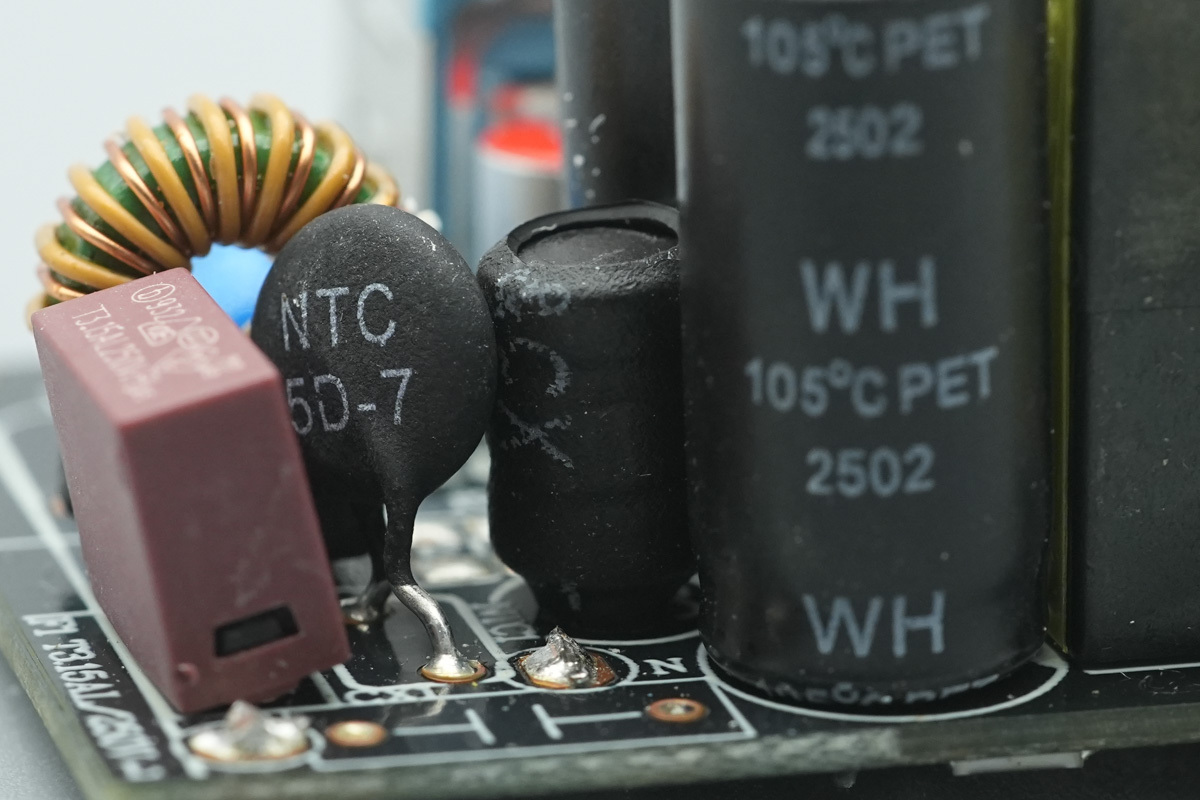
Beside the NTC thermistor, there is an I-shaped choke, which is sleeved with heat-shrink tubing for electrical insulation.
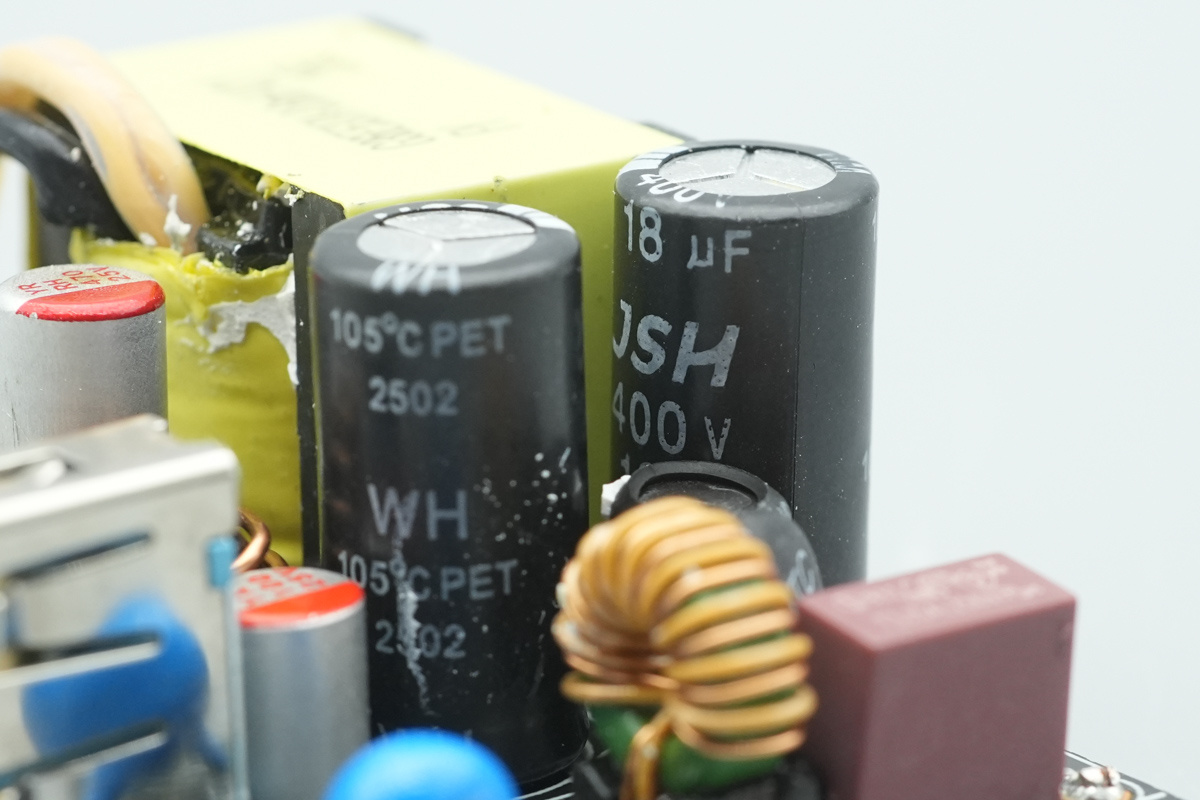
The primary high-voltage electrolytic filtering caps are from JSH, 400V 18μF each.
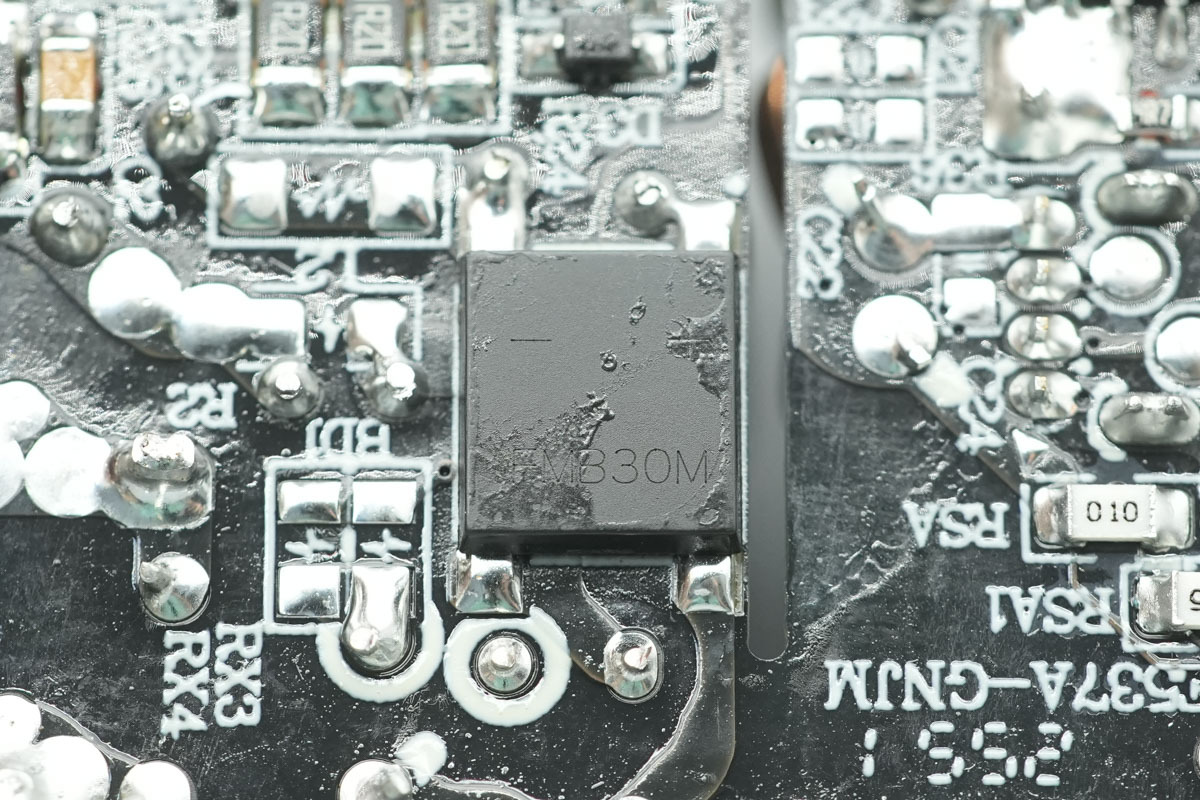
The rectifier bridge at the input end, model FMB30M .
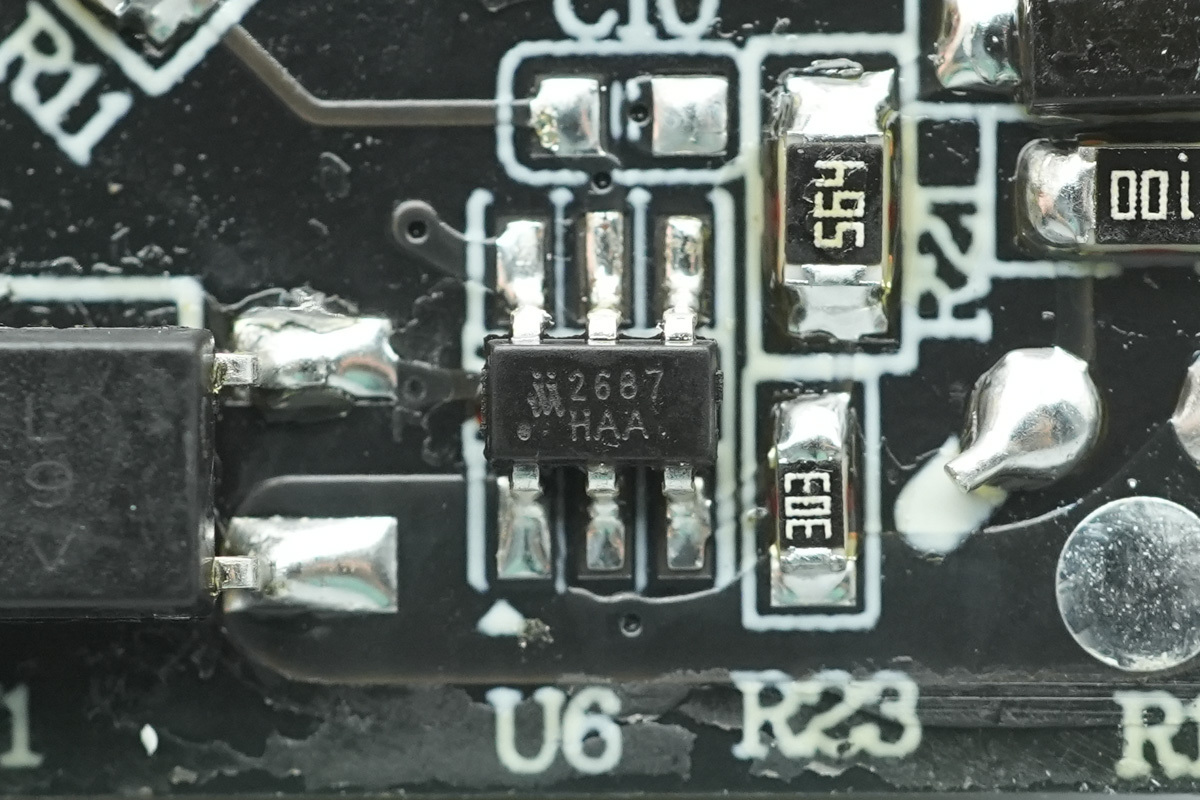
The master control chip is from MERAKI, model MK2687. Its 100V Vcc tolerance optimizes PD auxiliary power supply designs, supporting the full USB PD PPS 3.3V-20V output range without requiring additional voltage regulation circuitry.
Featuring MERAKI's proprietary technology, the MK2687 significantly reduces voltage spikes on primary and secondary power MOSFETs during startup, thereby enhancing system reliability. As a PWM IC, it integrates multi-mode operation (CCM/DCM/QR) and a multi-stage frequency curve to effectively maximize system efficiency.
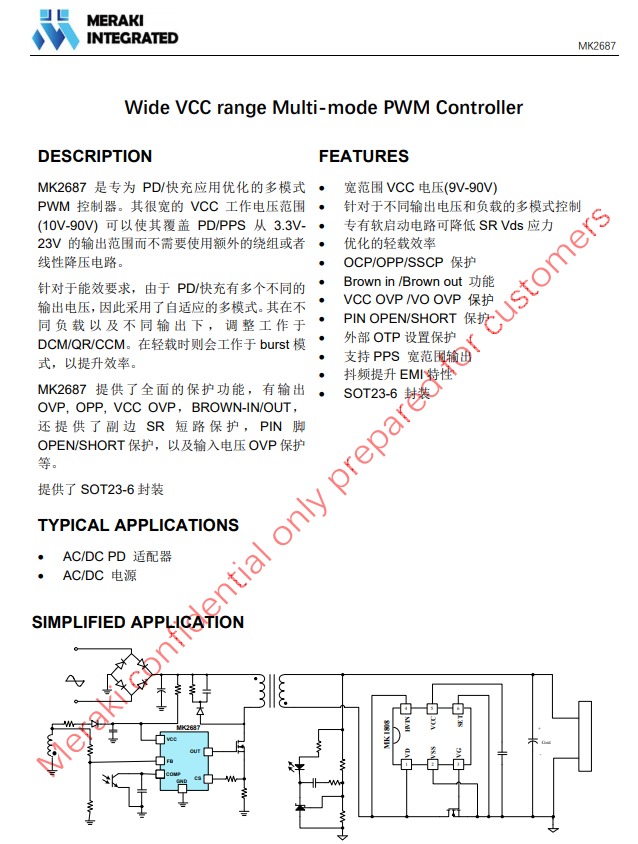
The MK2687 integrates comprehensive protection features, including Output OVP, OPP, Vcc OVP, Brown-in/out protection, secondary-side SR short-circuit protection, pin open/short protection, and input voltage OVP. It is housed in a compact SOT23-6 package.
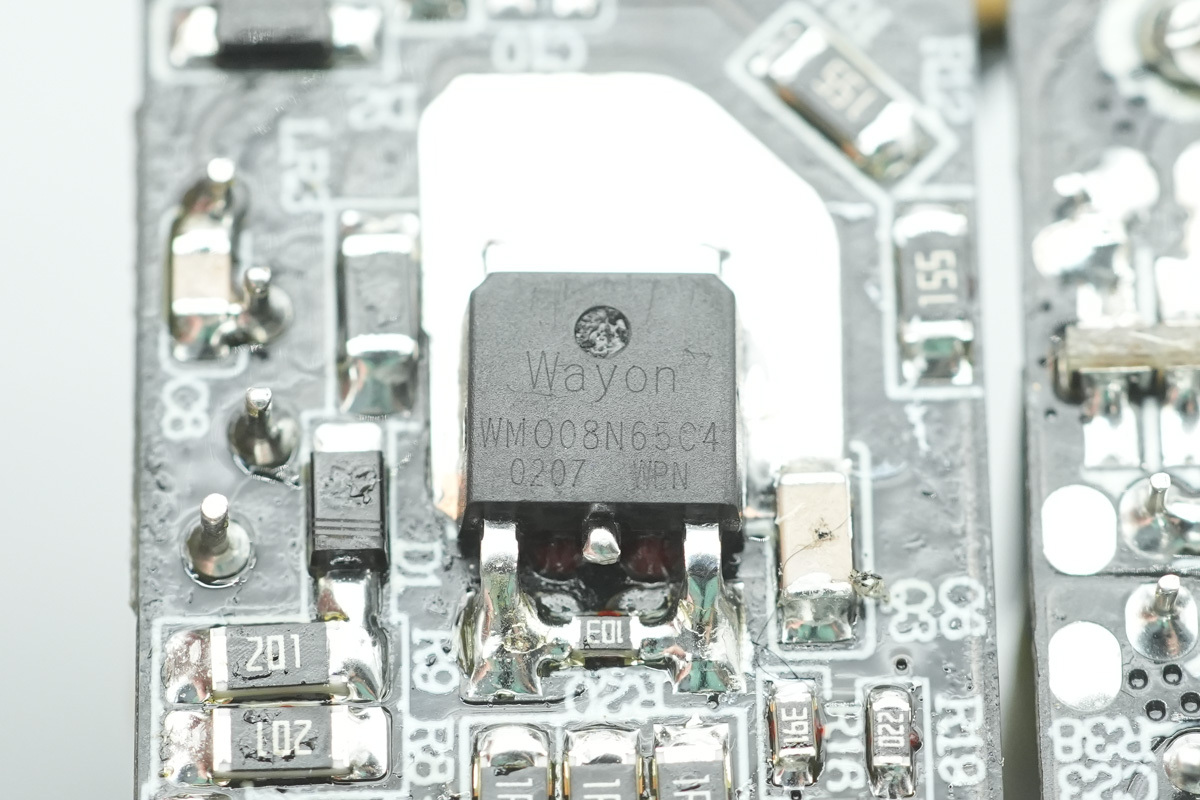
The primary switching MOSFET is also sourced from Wayon, model WM008N65C4, 650V.
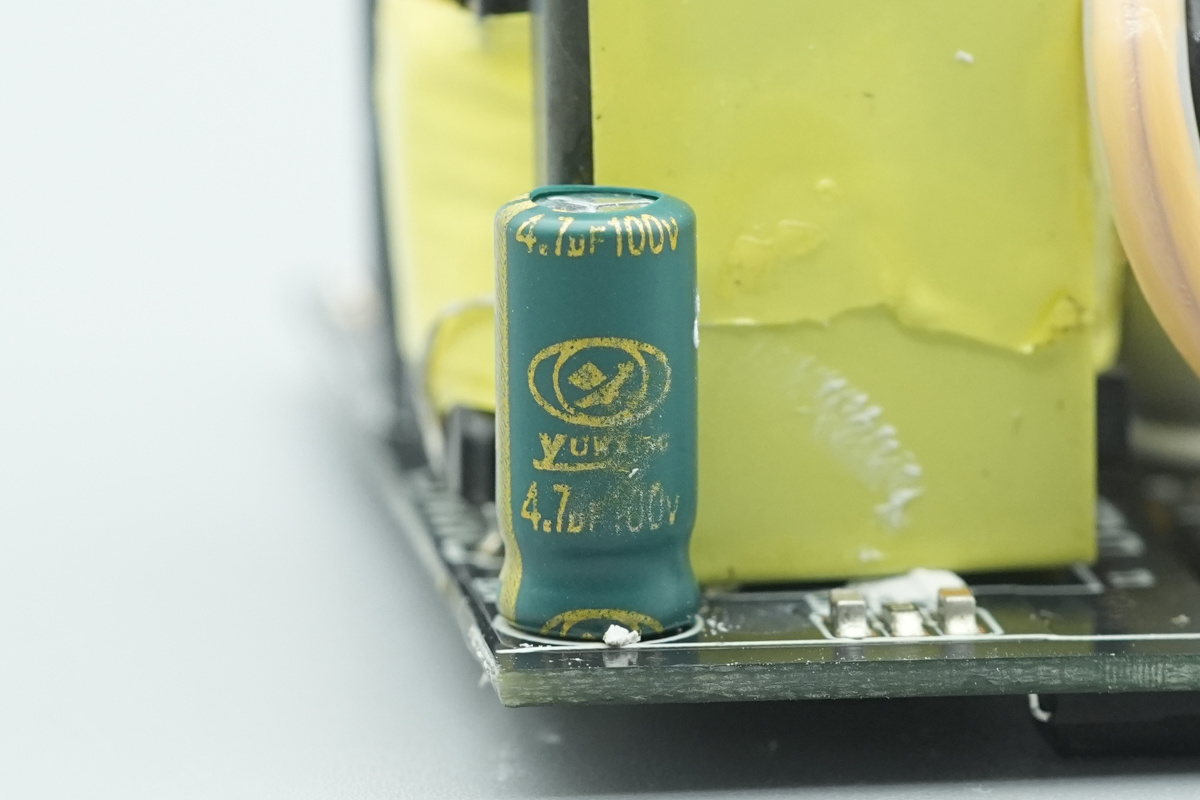
The cap used to power the master control chip is from YUNXING, spec 100V 4.7μF.
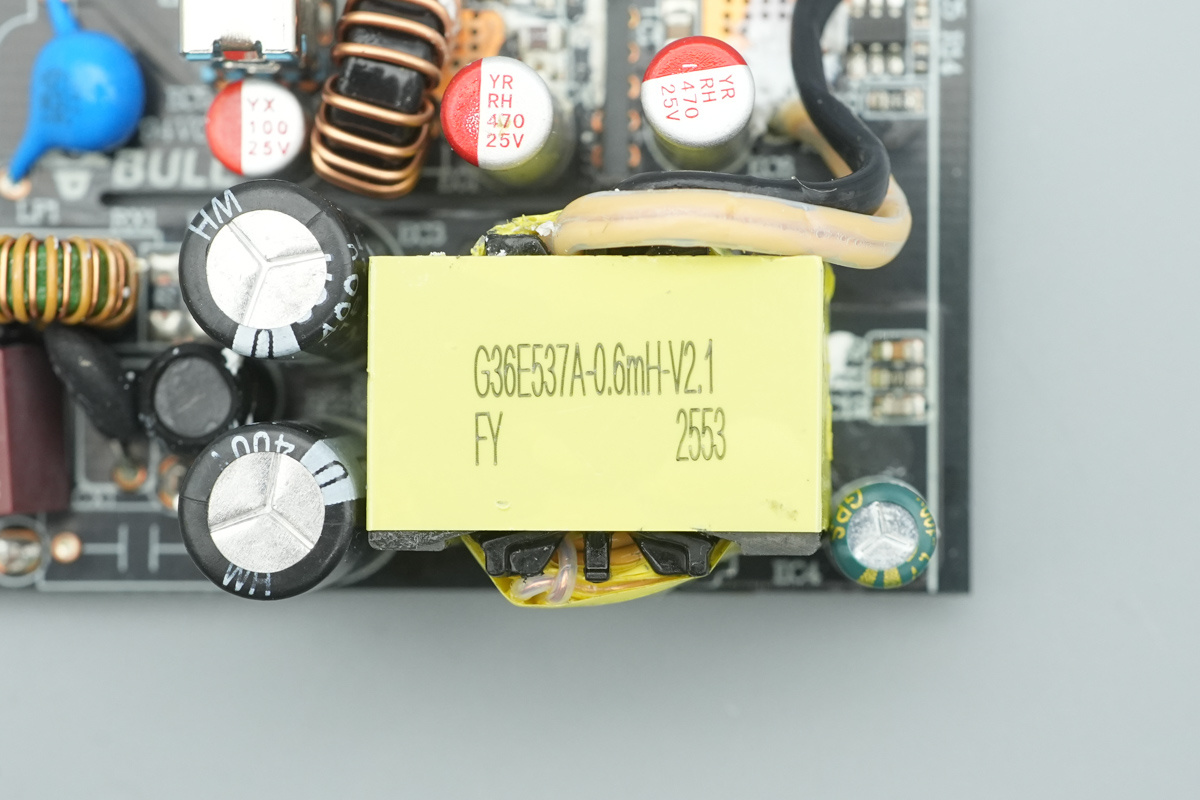
The transformer, marked G36E537A-0.6mH-V2.1.
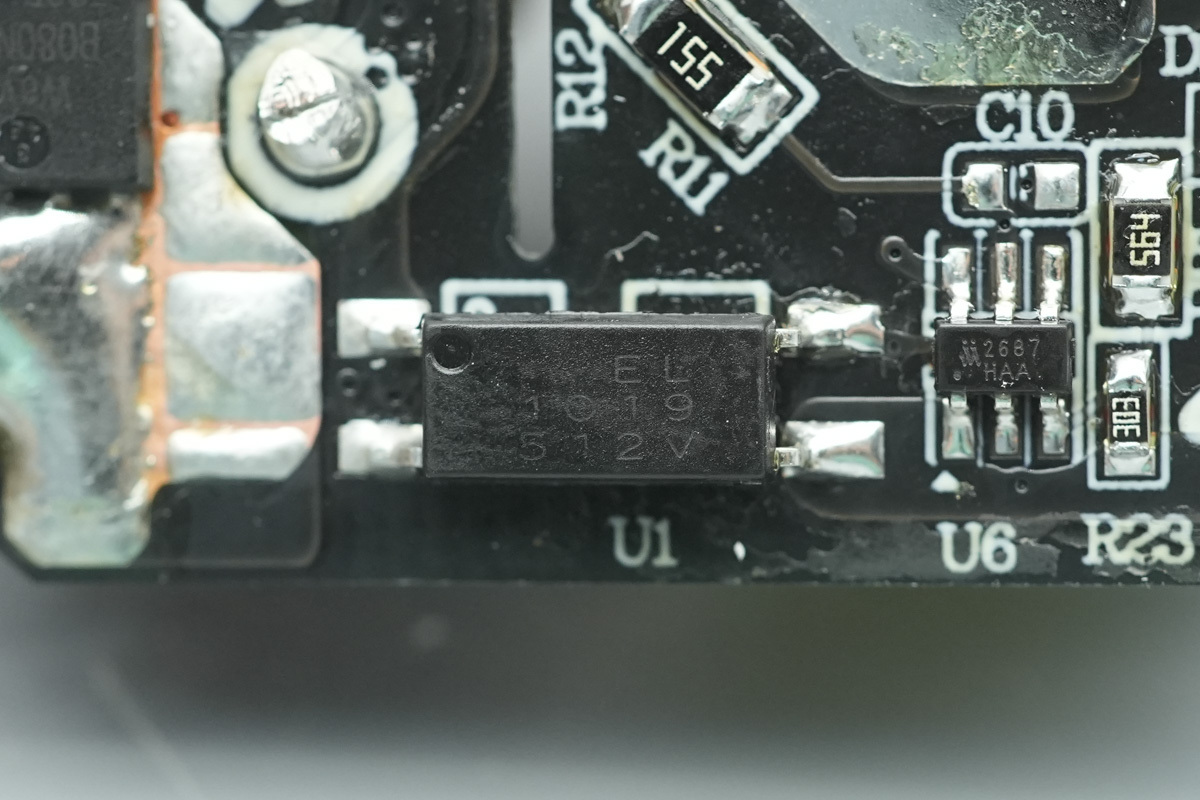
The optocoupler connected between the primary and secondary sides is from Everlight, model EL1019, used for output voltage feedback regulation.
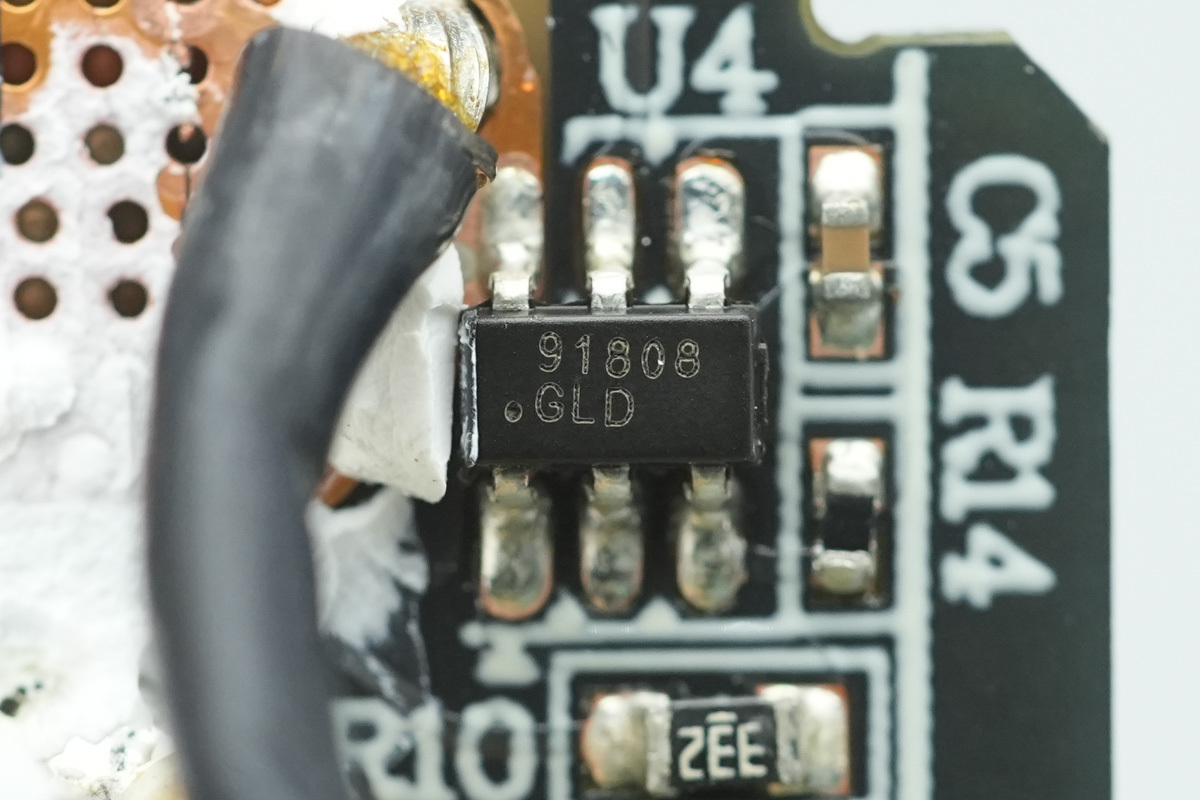
The synchronous rectifier chip is from MERAKI, model MK91808, a compact solution designed for flyback topologies. It is compatible with CCM, DCM, and QR operating modes and utilizes proprietary self-power technology for Vcc, enabling direct high-side placement without the need for auxiliary windings.
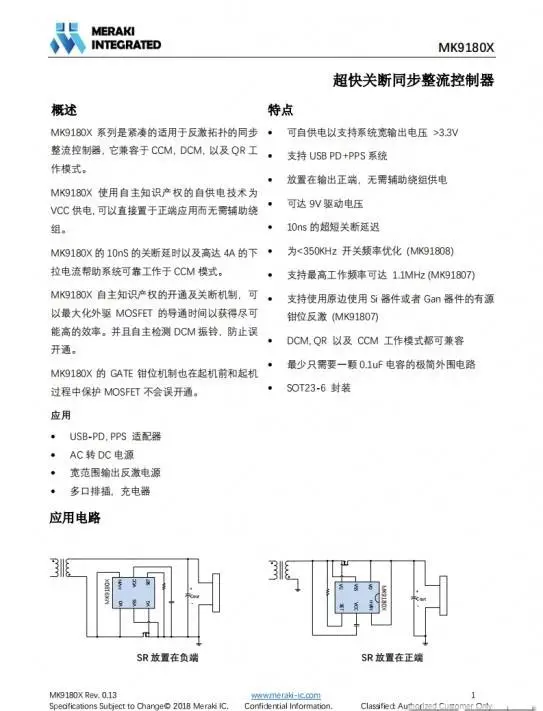
The MK91808 features a 10ns turn-off delay and a 4A sink current capability, ensuring reliable operation in CCM.
Utilizing proprietary turn-on and turn-off mechanisms, it maximizes the conduction time of the external MOSFET to achieve peak efficiency, while autonomously detecting DCM ringing to prevent false triggering. Furthermore, it employs a gate clamping mechanism to prevent accidental MOSFET conduction during startup.
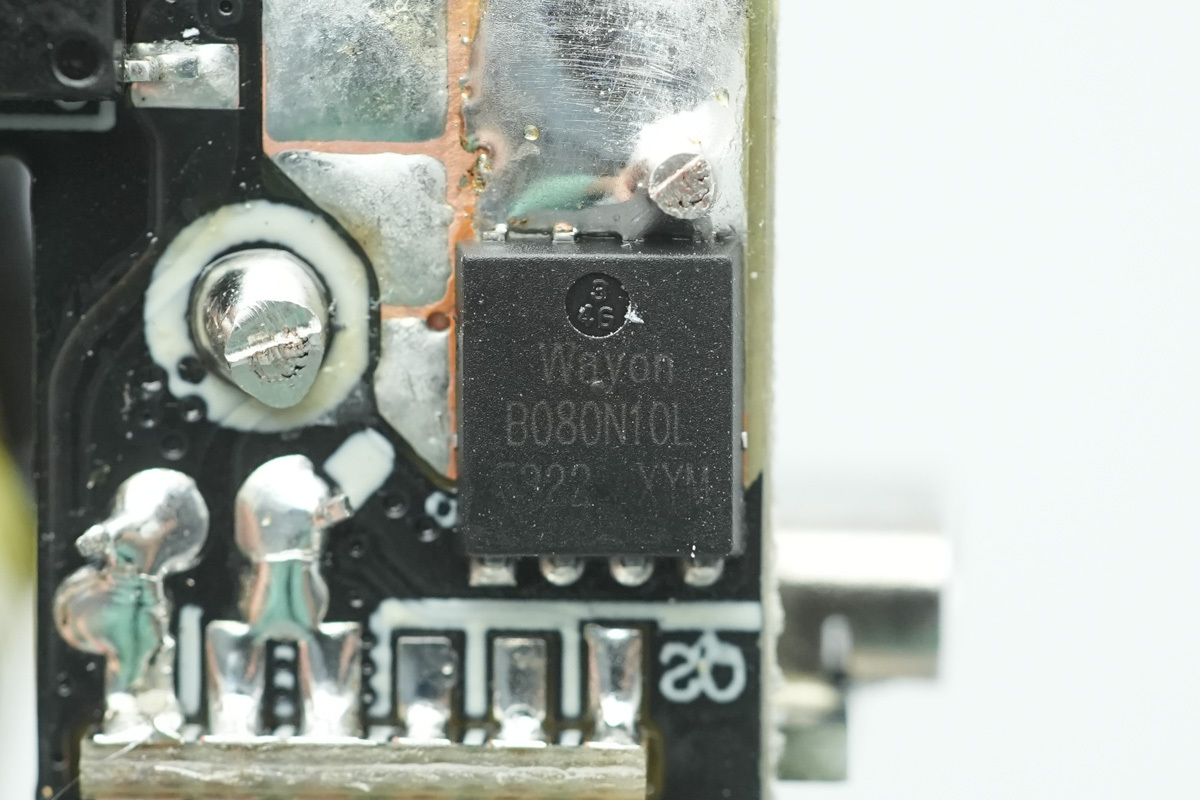
The secondary synchronous rectifier MOSFET is from Wayon, model B080N10L, 100V and 8mΩ, and housed in a PDFN5060 package.
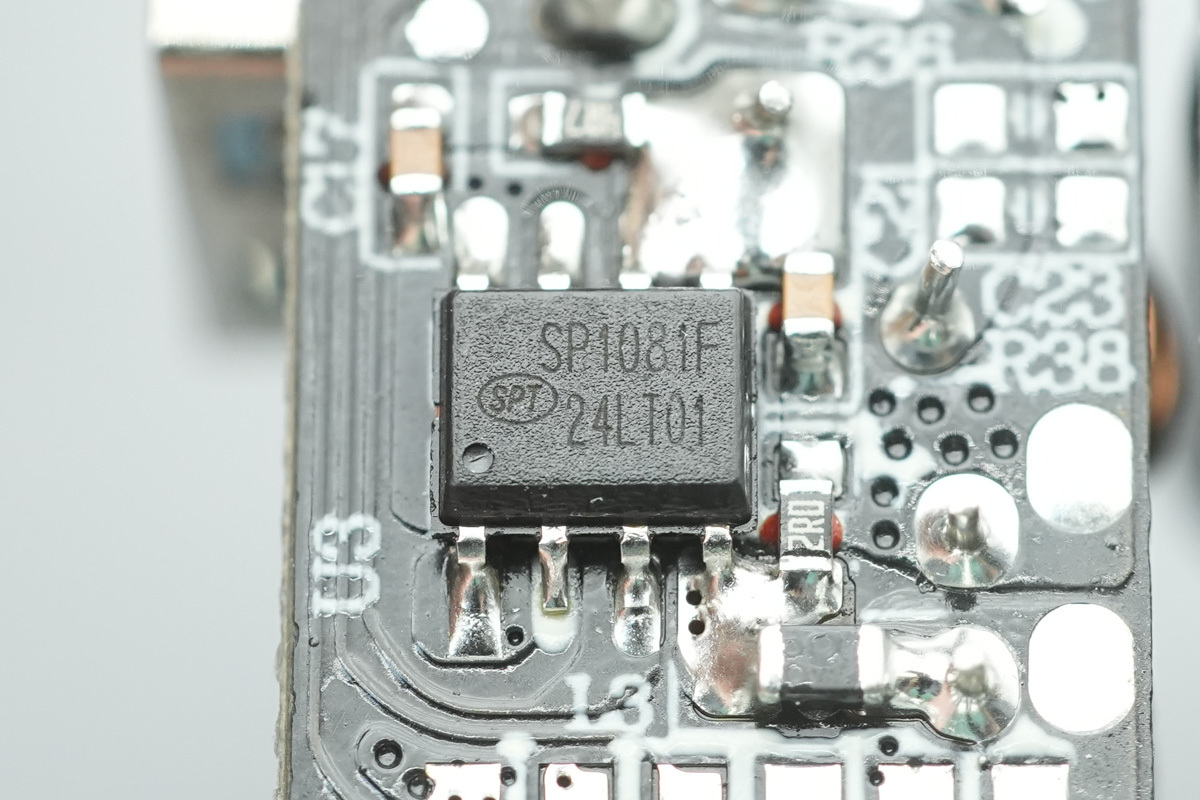
The synchronous step-down chip is from SPT, model SP1081F, which uses an SOP-8L package and has a MAX output current of 3.1A. It is designed for a wide power supply voltage range of 4.5V to 30V.
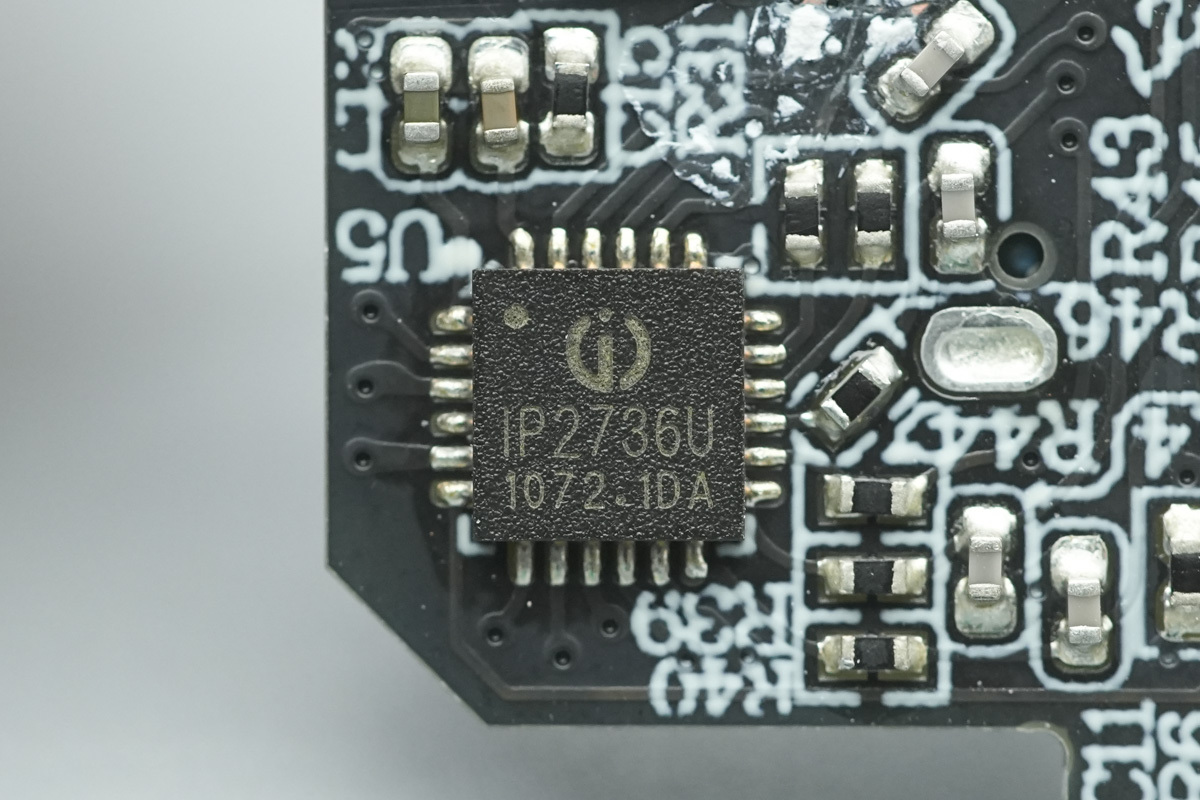
The protocol chip is from INJOINIC, model IP2736U, a highly integrated fast-charge protocol IC designed for USB ports.
It supports a comprehensive range of standards, including USB Type-C DFP, PD 2.0/3.1/PPS/EPR (28V), HVDCP (QC5/4+/3+/3.0/2.0), FCP, SCP, AFC, SFCP, MTK PE+2.0/1.1, UFCS, Apple 2.4A, BC 1.2, and Samsung 2.0A. This chip provides a complete solution for single-output applications such as power adapters and car chargers.

The IP2736U features high integration and a rich feature set, requiring minimal peripheral components. This significantly reduces the overall solution footprint and lowers the BOM.
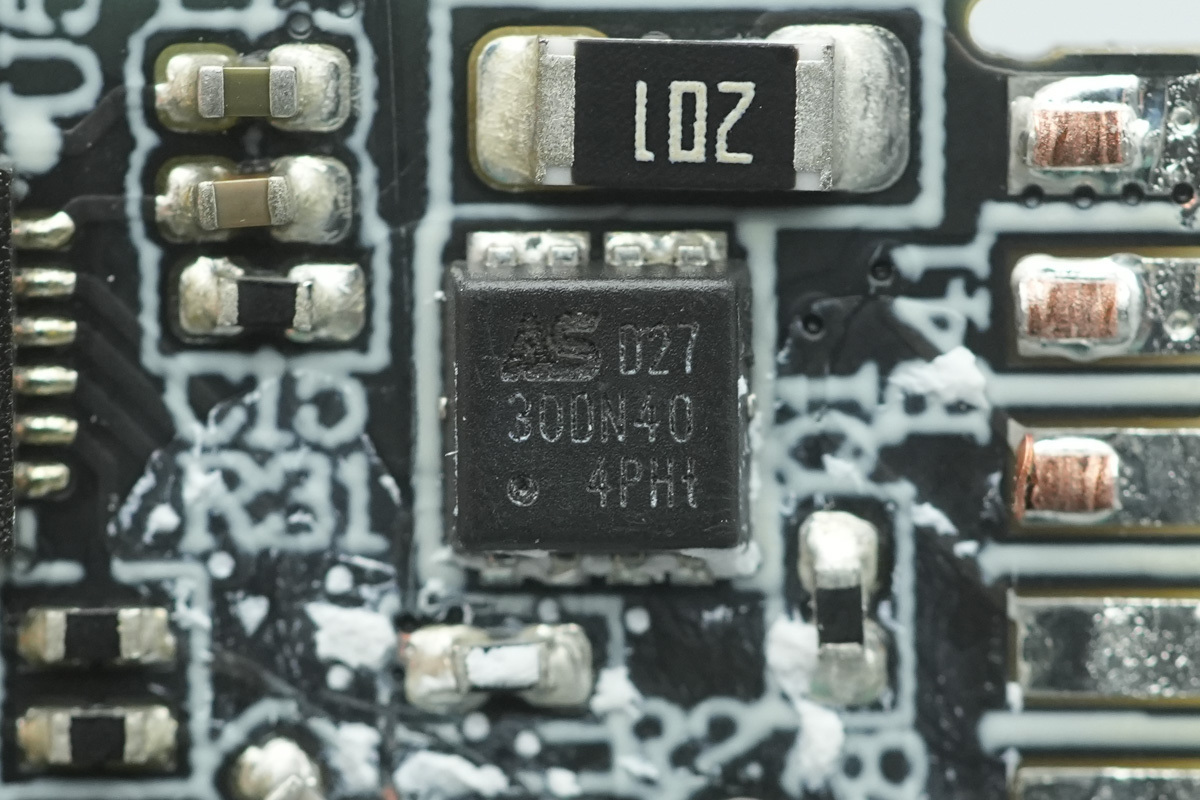
The output VBUS MOSFET accompanying the protocol chip is from ASDsemi, model ASDM30DN40E, a dual NMOS, 30V and 8mΩ.
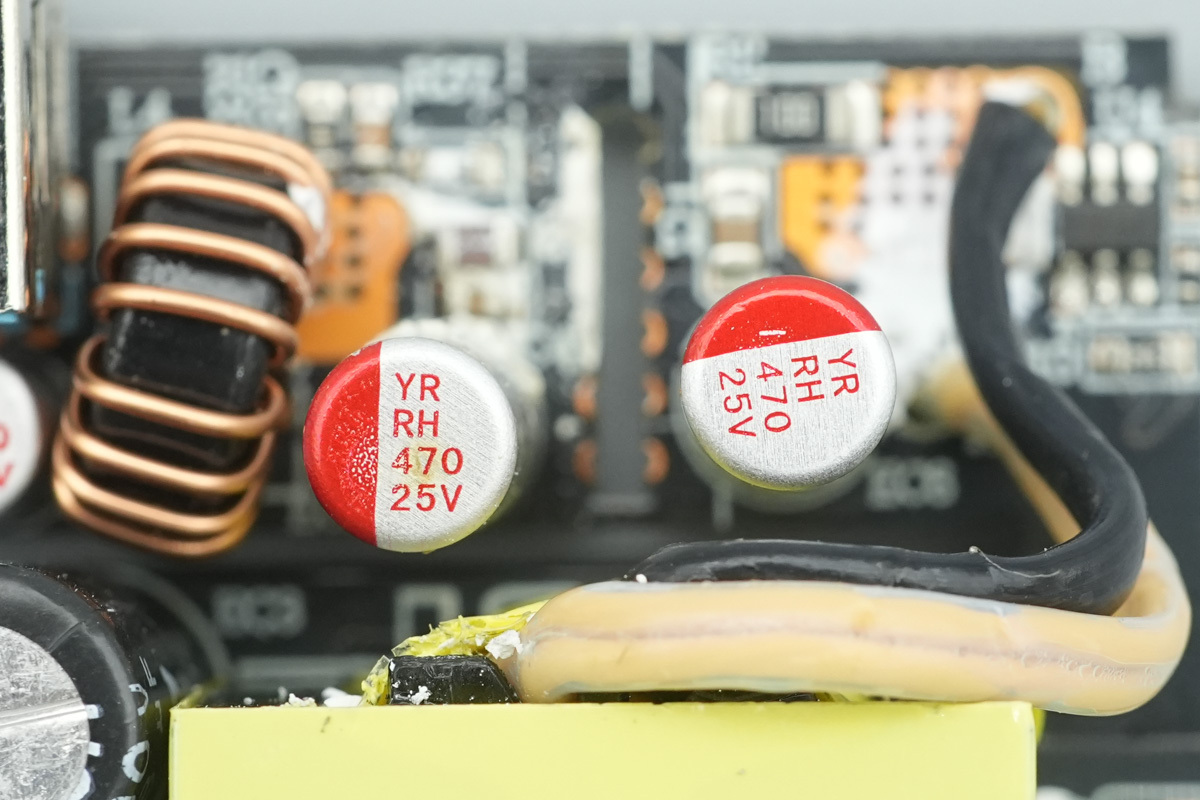
Two output solid filtering caps on the secondary side of the mainboard, 25V 470μF.
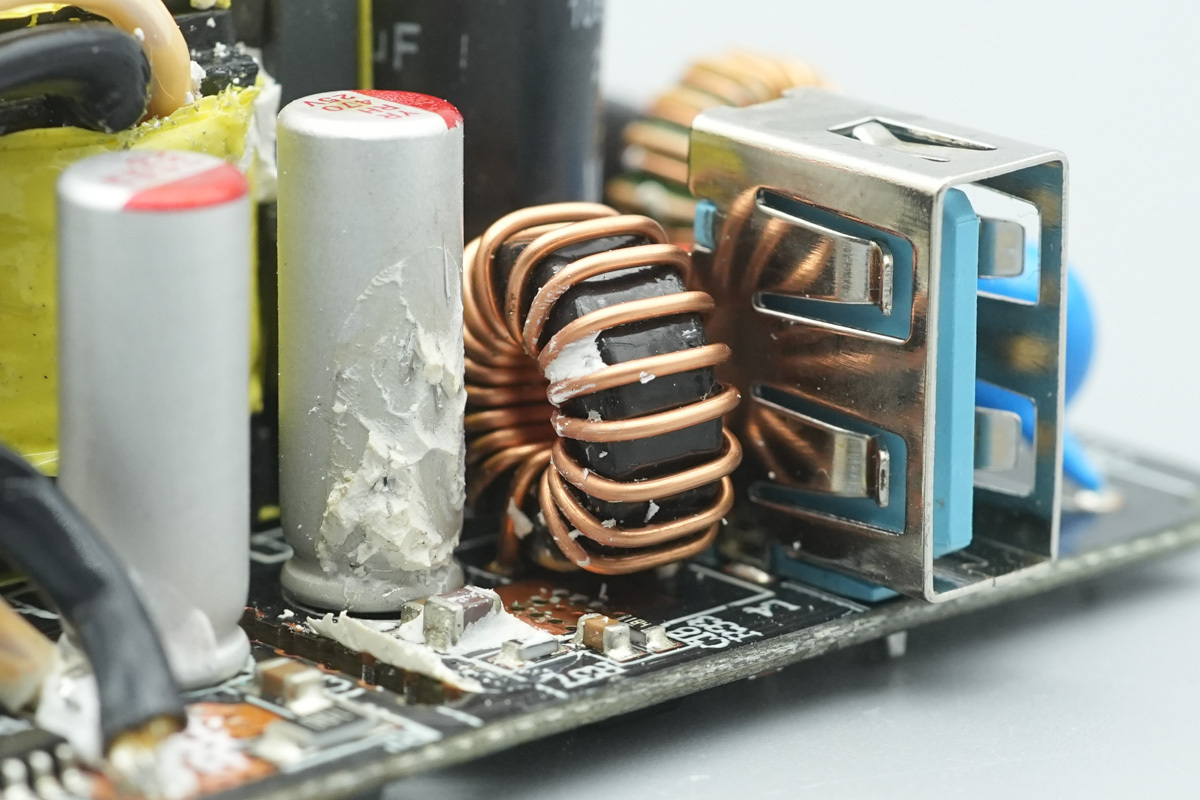
A step-down choke.

Well, those are all components of the BULL UFCS Fast-Charging 86-Type Wall Panel.
Summary of ChargerLAB
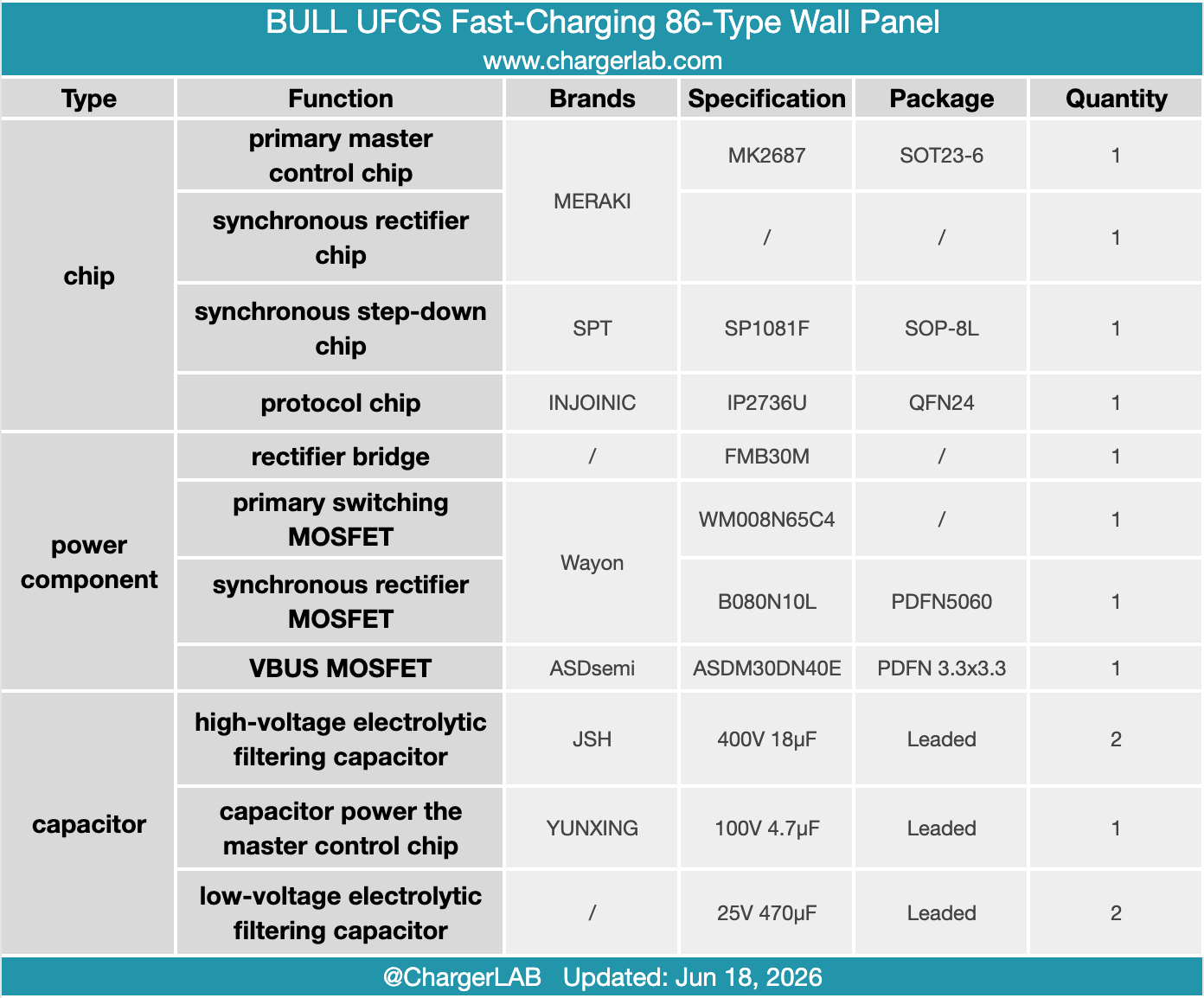
The BULL 30W UFCS fast-charging 86 wall panel features premium integrated brass busbars for reliable AC power delivery, complemented by built-in safety shutters for enhanced household protection.
Inside the fast-charging module, the compact PCBA layout is reinforced with white potting compound around key components—including the transformer and chokes—to ensure superior durability and heat dissipation.
The internal specs are equally impressive: it is powered by MERAKI’s MK2687 primary controller and MK91808 synchronous rectifier controller, paired with the SPT SP1081F buck converter and INJOINIC’s flagship IP2736U protocol chip. This powerhouse configuration ensures wide-ranging compatibility, including support for PD and the UFCS fusion fast-charging standard.
In summary, this BULL 86 wall socket delivers a professional-grade blend of traditional utility and modern charging efficiency, making it an essential upgrade for any smart home.
Related Articles:
1. Teardown of BULL 67W GaN Digital Display Power Strip (GNV-ML1676)
2. Enhancing Electrical Safety | Introducing the Bull Outlet Timer
3. Rainproof Your Power | Introducing the BULL Anti-rain Power Strip