
Introduction
In October 2022, to comply with prevailing EU regulatory requirements, Apple transitioned the iPad (10th generation) from a Lightning port to USB-C. With this change, the entire iPad lineup fully adopted the USB-C interface. However, the Apple Pencil (1st generation) could no longer be charged directly via the iPad’s port. To address this, Apple included an Apple USB‑C to Apple Pencil Adapter in the Apple Pencil package to enable proper charging and pairing.
By March 2025, with the release of the iPad (11th generation), Apple’s entry-level iPad lineup received another incremental update. However, users who require pressure-sensitive input still need to purchase the Lightning-based Apple Pencil (1st generation). As a result, the Apple USB-C to Apple Pencil Adapter remains in production as of 2026, with minor design revisions. Next, we will take a closer look at the product’s design.
Product Appearance
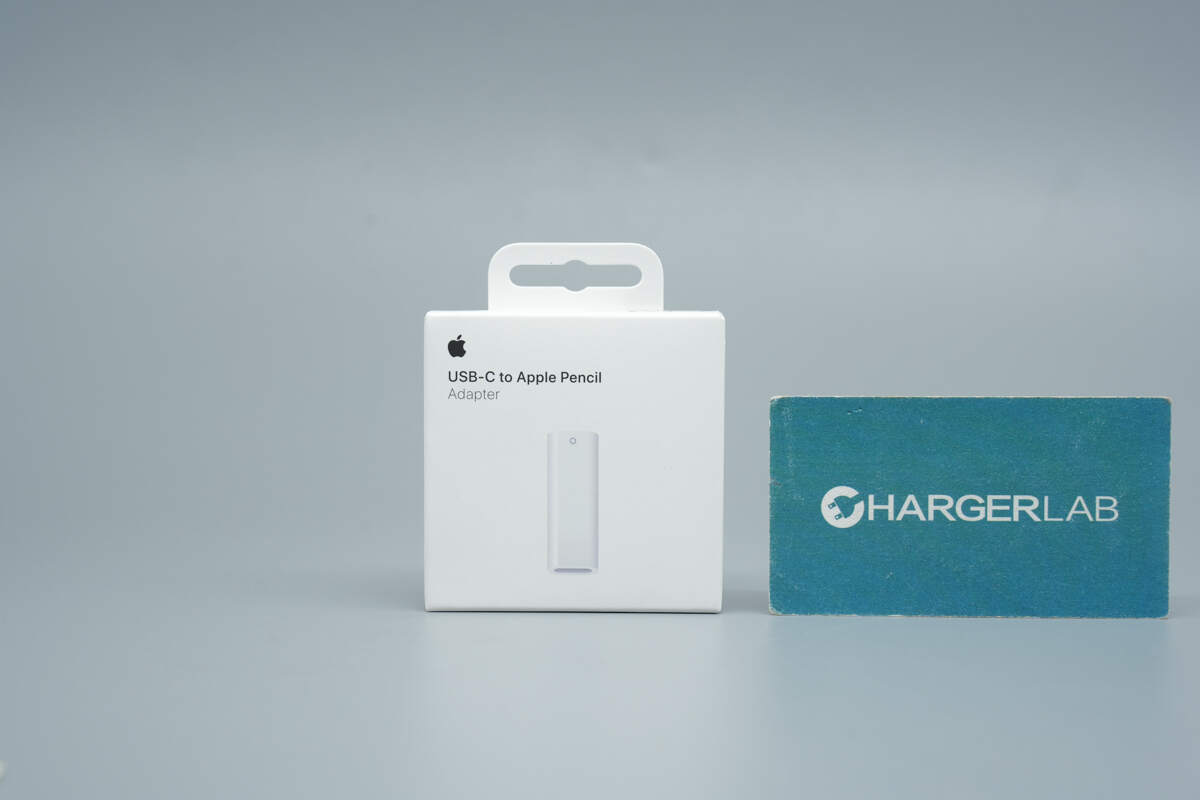
The packaging continues Apple’s signature minimalist design, with the Apple logo and product name printed on the top.
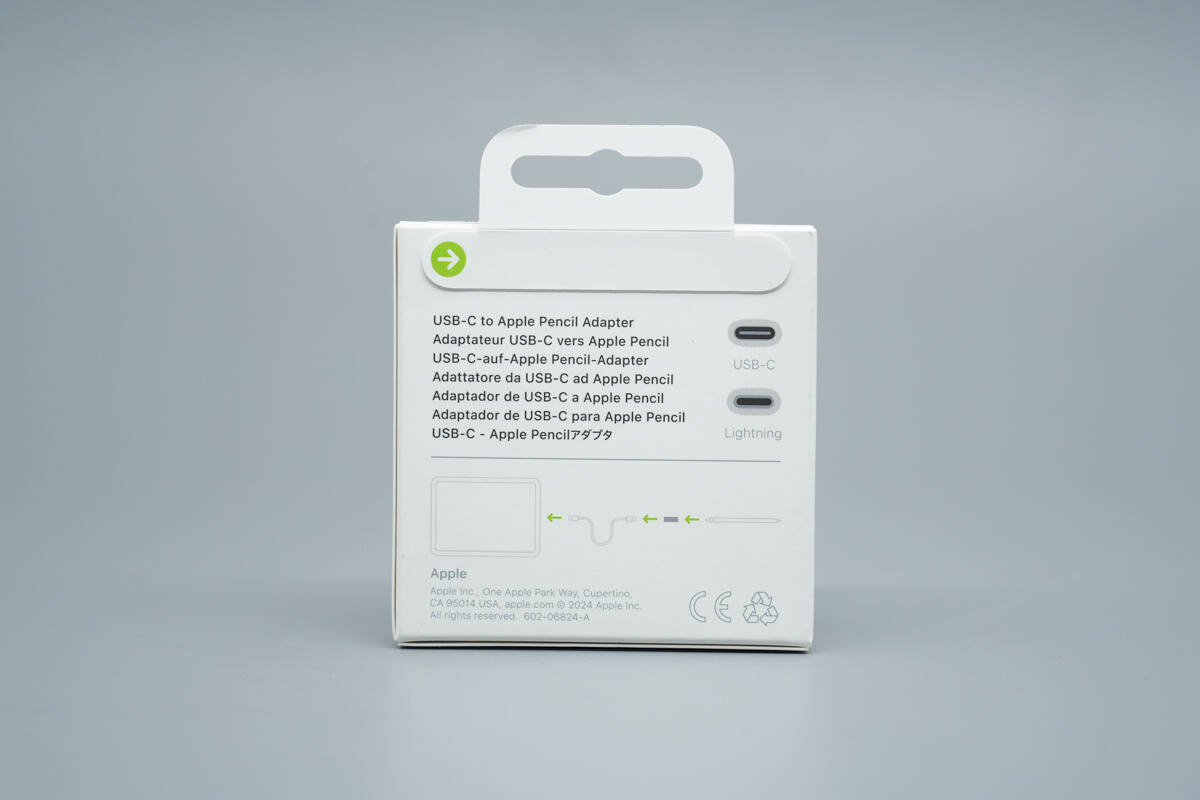
The back features the product name in multiple languages, while the right side illustrates the two connectors: a USB-C interface on one end and a Lightning interface on the other.
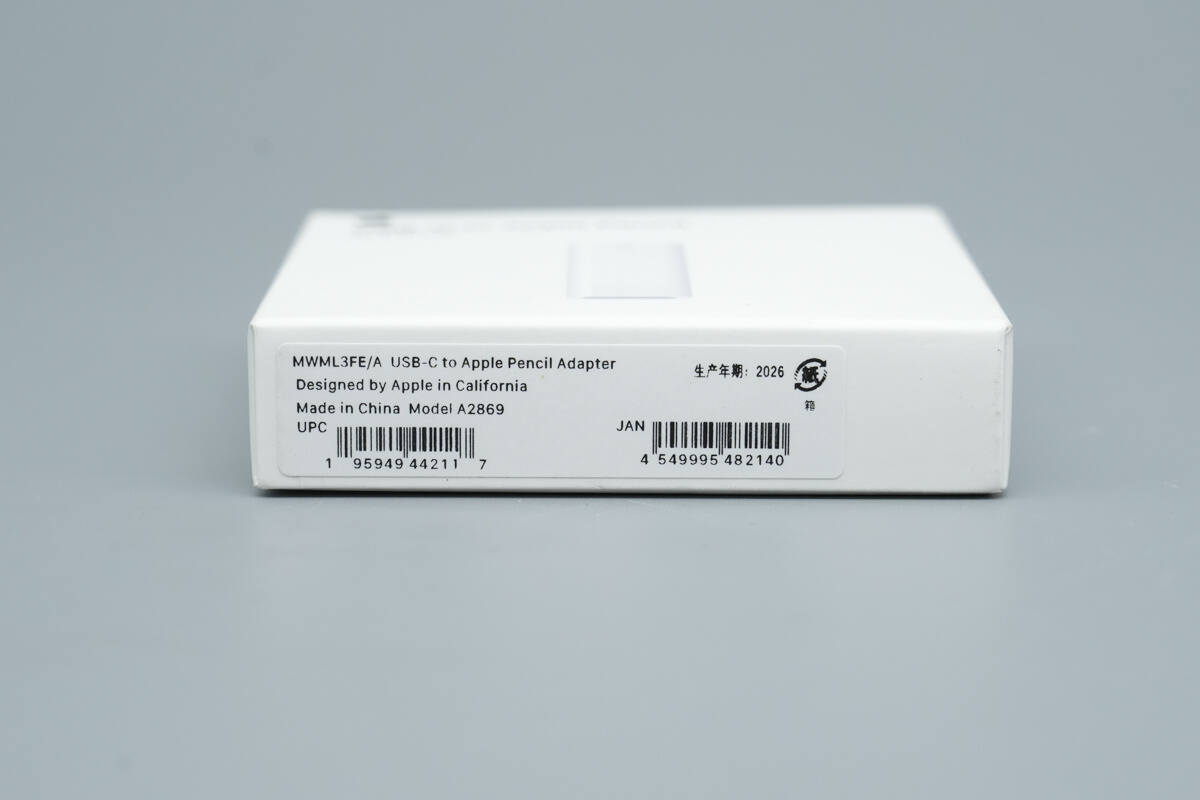
A barcode label is affixed to the bottom of the packaging, indicating the product model as A2869 and the country of origin as China.
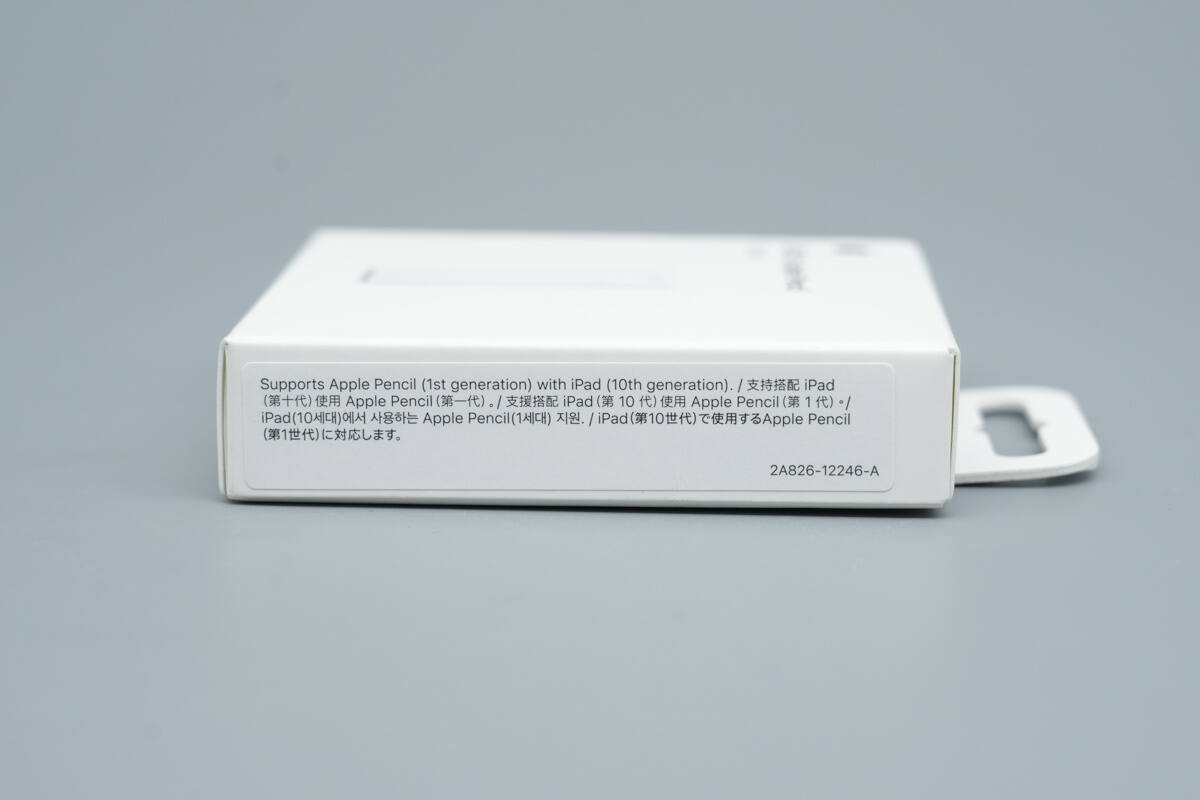
Compatibility information is printed on the side of the packaging.
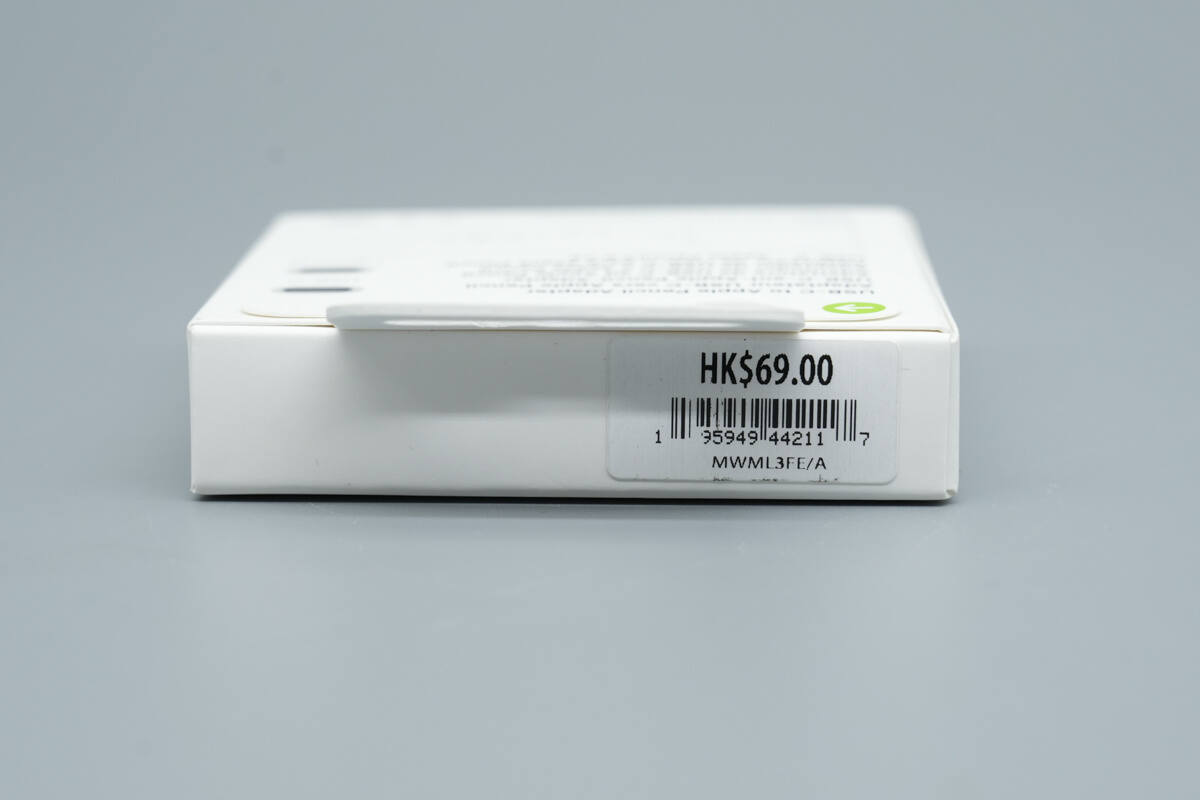
A price label is affixed to the other side of the packaging, indicating a retail price of HKD 69.
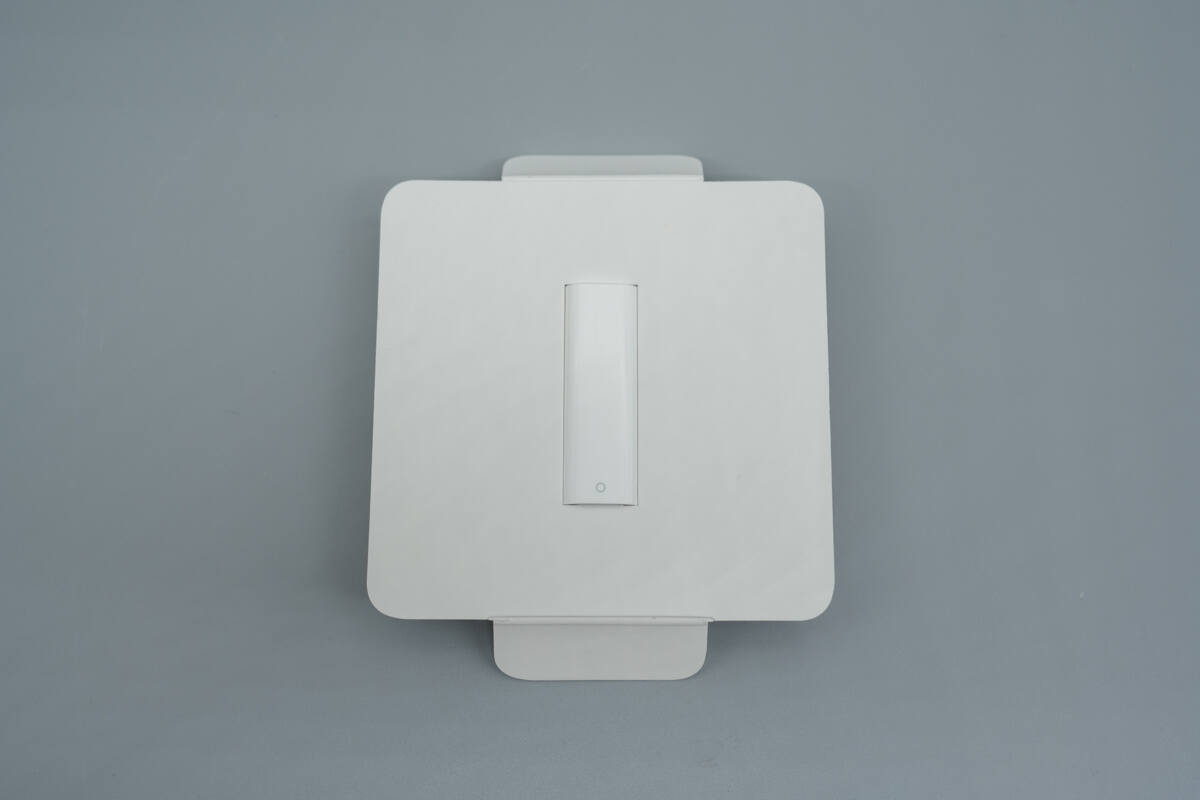
Upon opening the package, the adapter is secured within an eco-friendly paper tray.
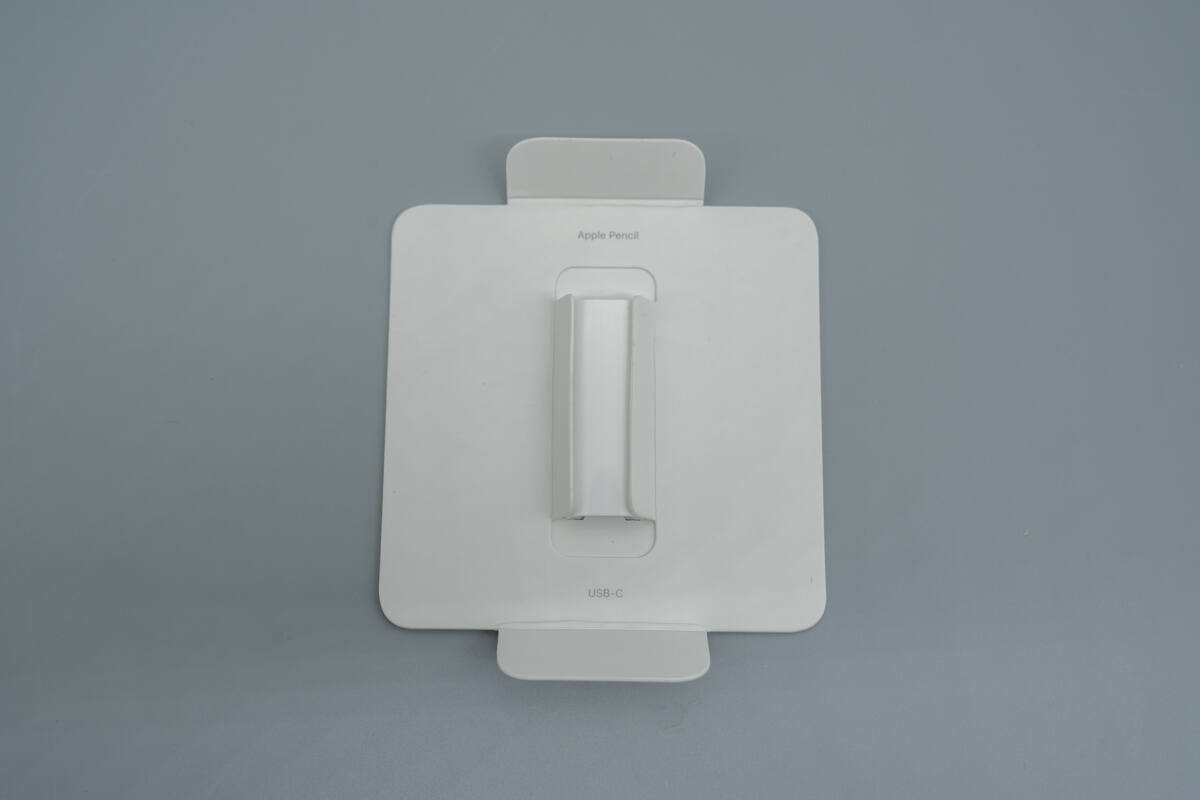
The reverse side of the tray features instructional markings, with “Apple Pencil” labeled at the top and “USB-C” at the bottom, helping users quickly distinguish the correct orientation during use.
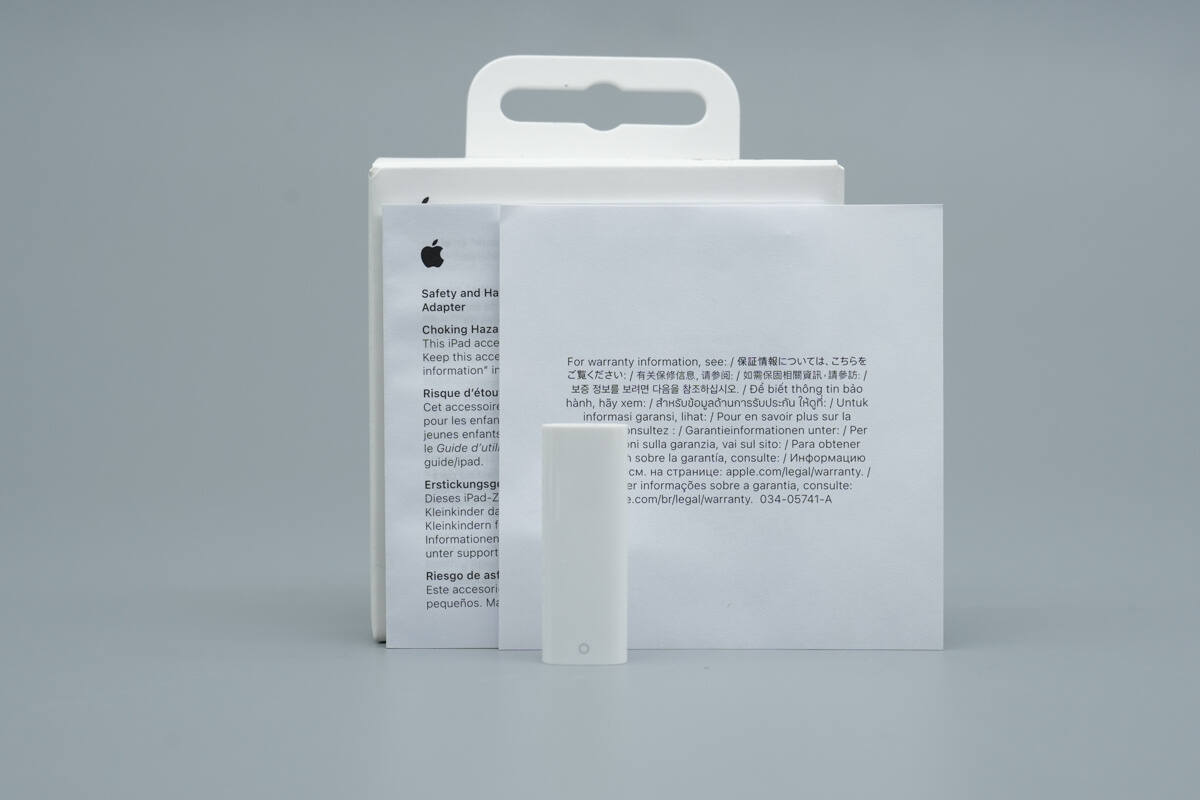
The package includes the adapter along with printed materials such as a multilingual safety guide and warranty information.
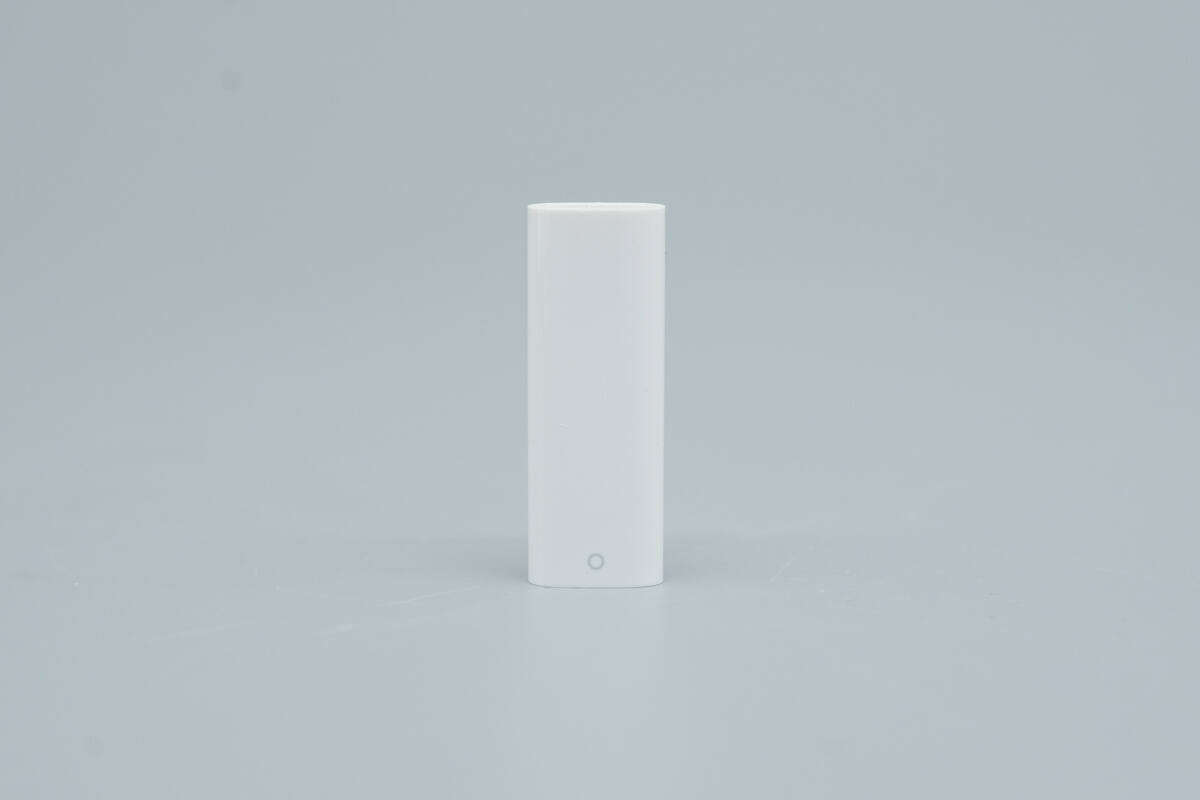
The adapter’s enclosure is made of glossy white plastic.
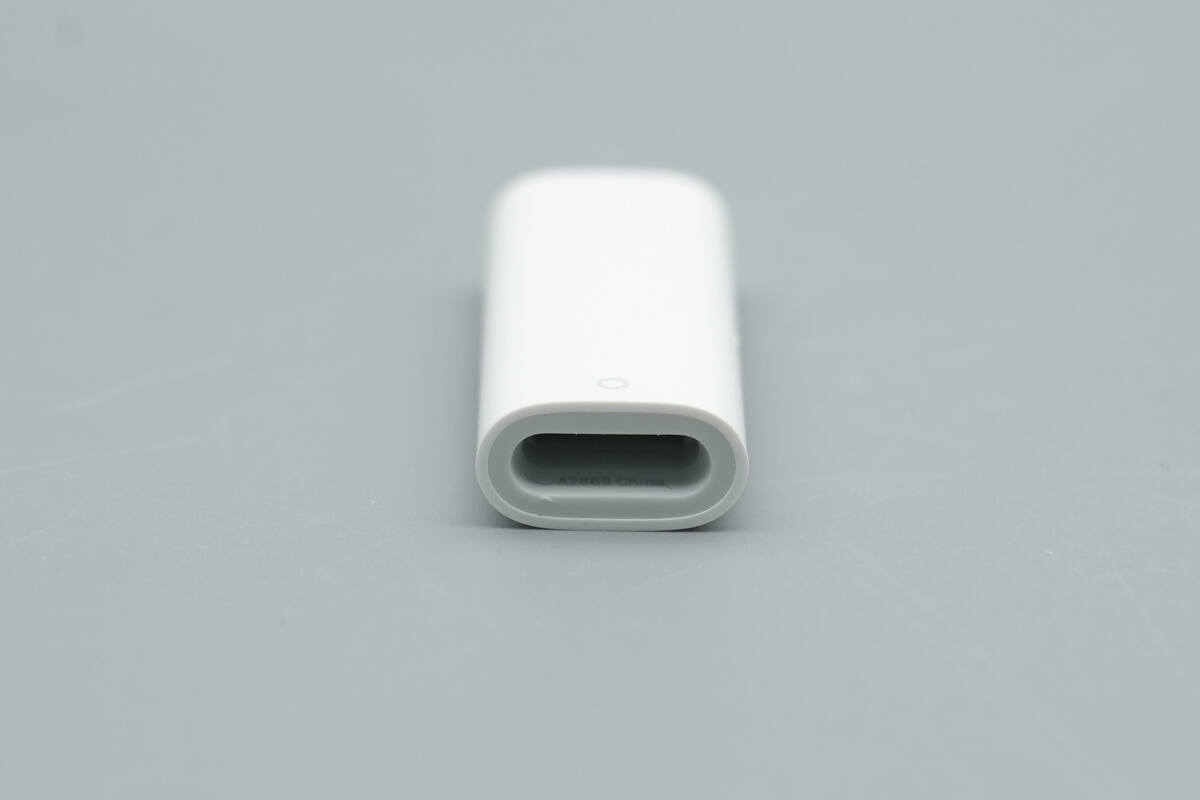
Close-up of the Lightning connector for Apple Pencil.
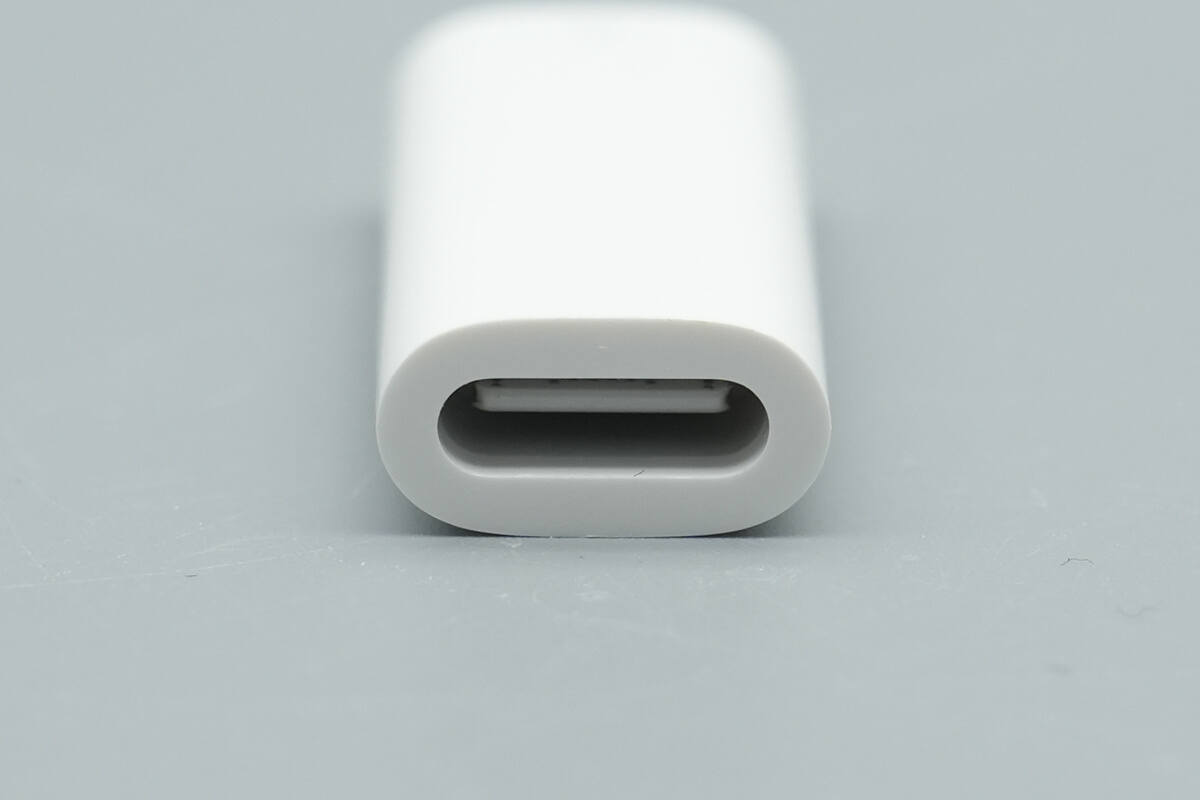
On the opposite side, the internal USB-C plastic sheet is visible.
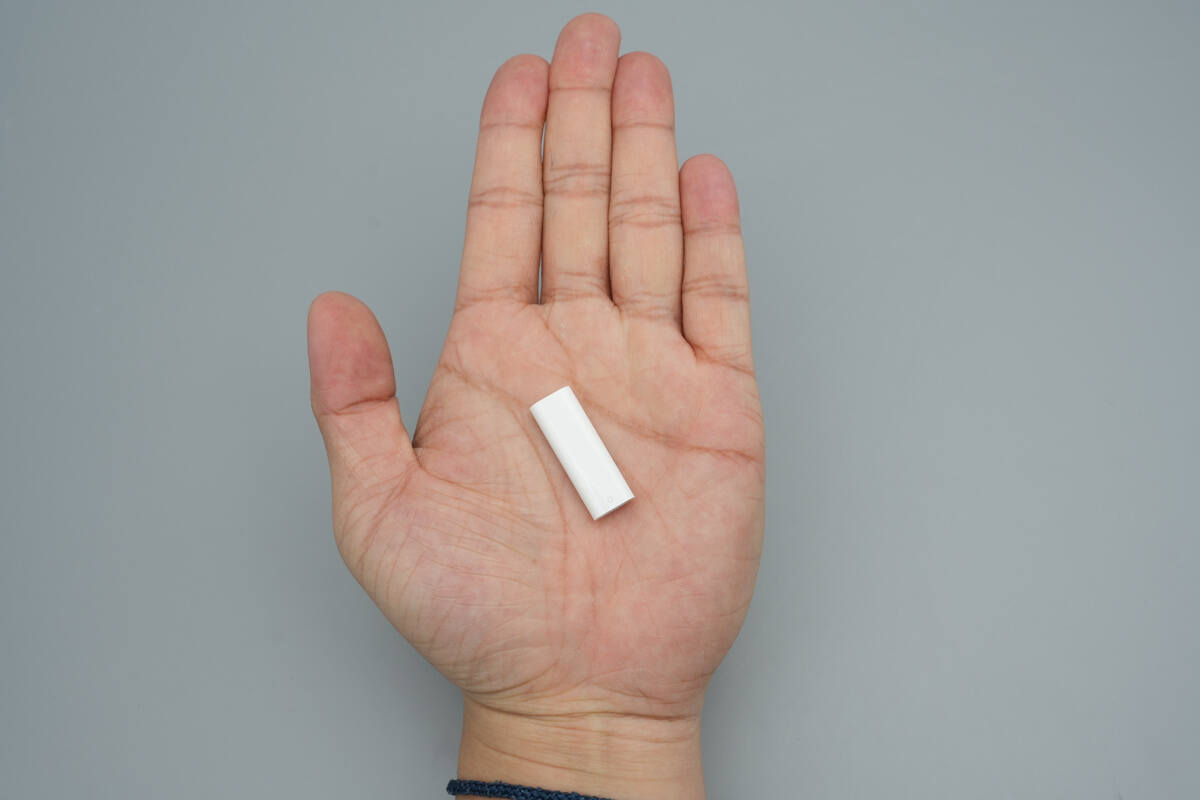
That's how big it is in the hand.
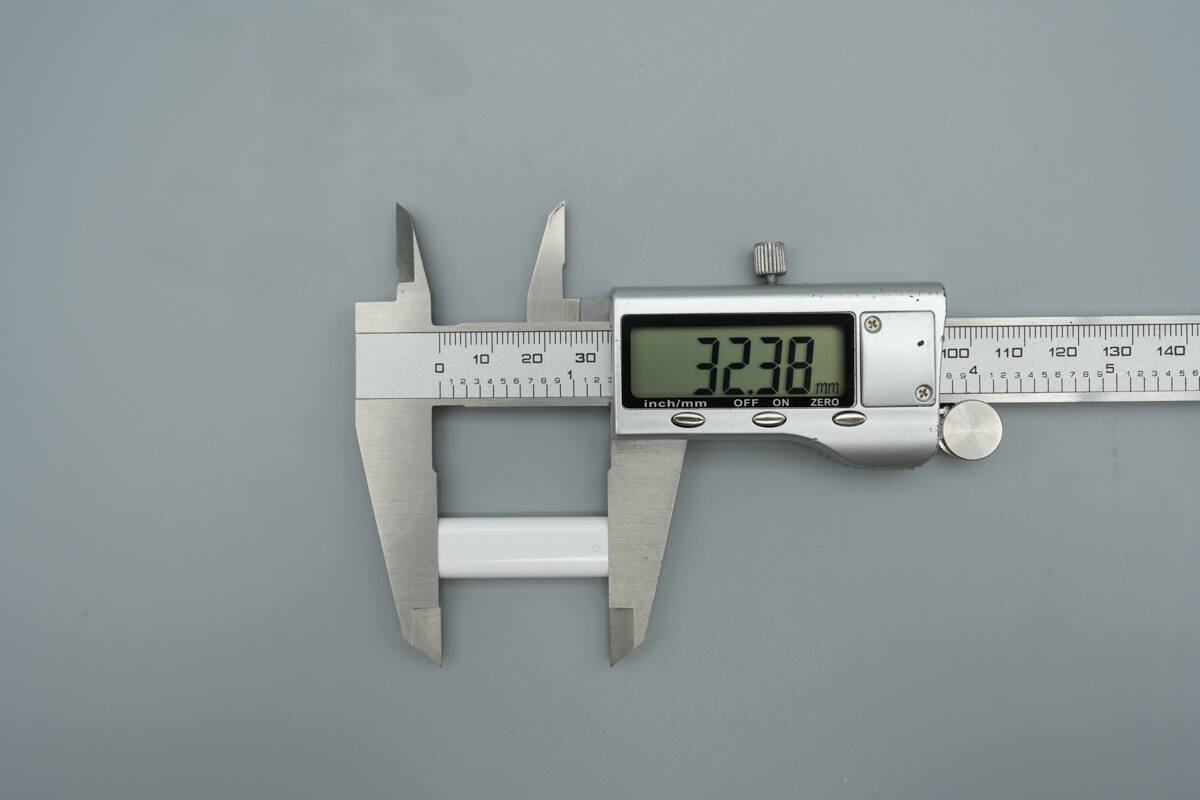
The length of the adapter is about 32.38 mm (1.27 inches).
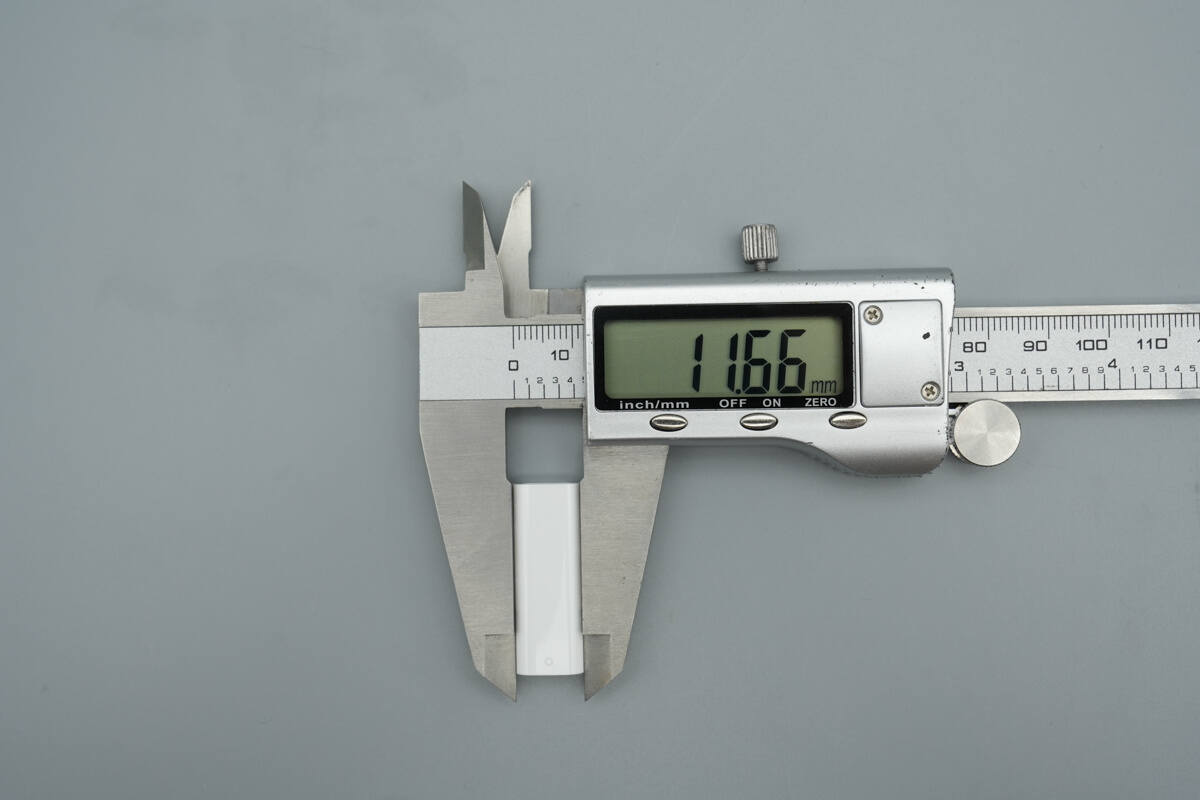
The width is about 11.66 mm (0.46 inches).
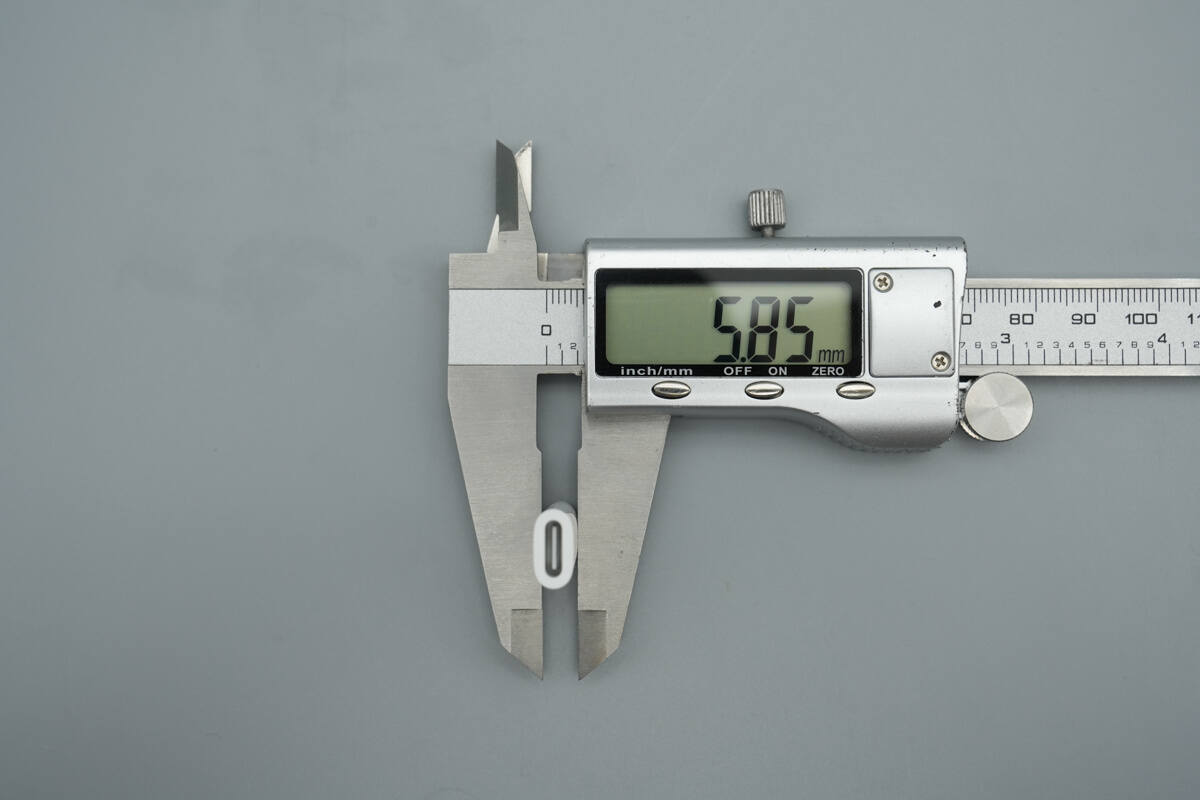
The thickness is about 5.85 mm (0.23 inches).
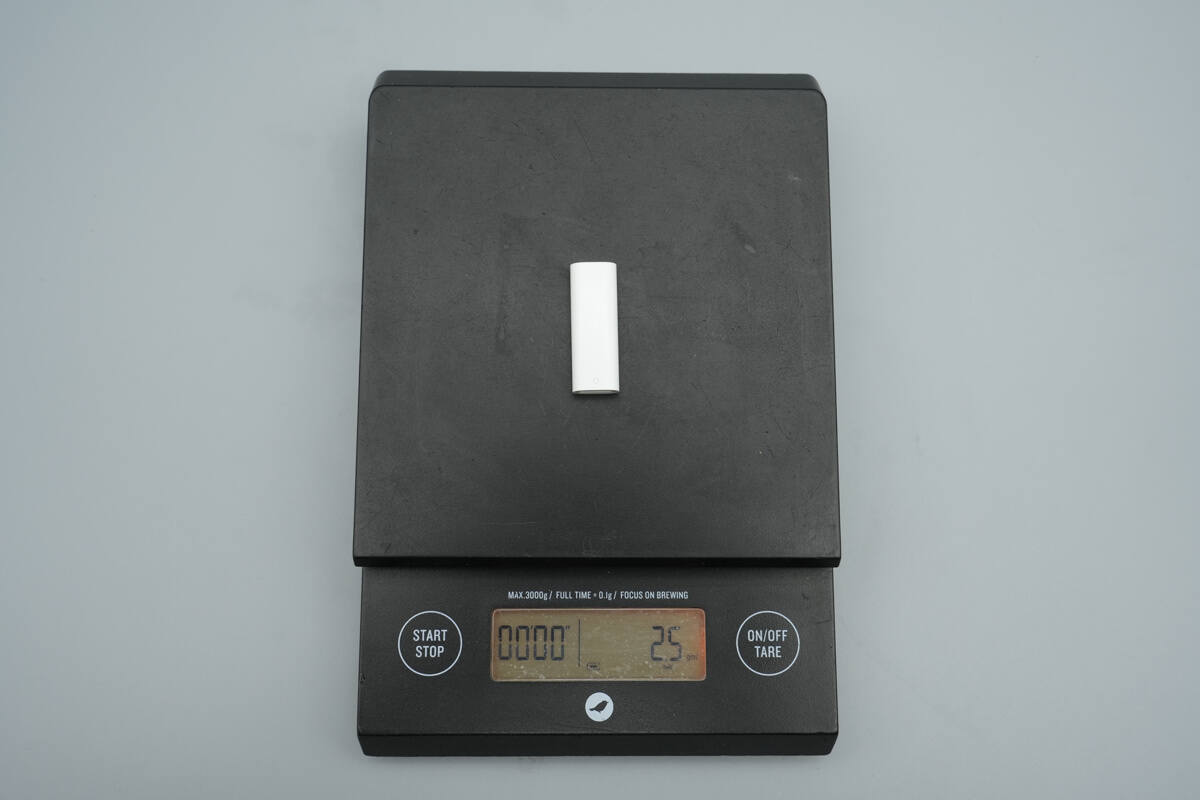
The weight is about 2.5 g (0.088 oz).
Teardown
Next, let's take it apart to see its internal components and structure.
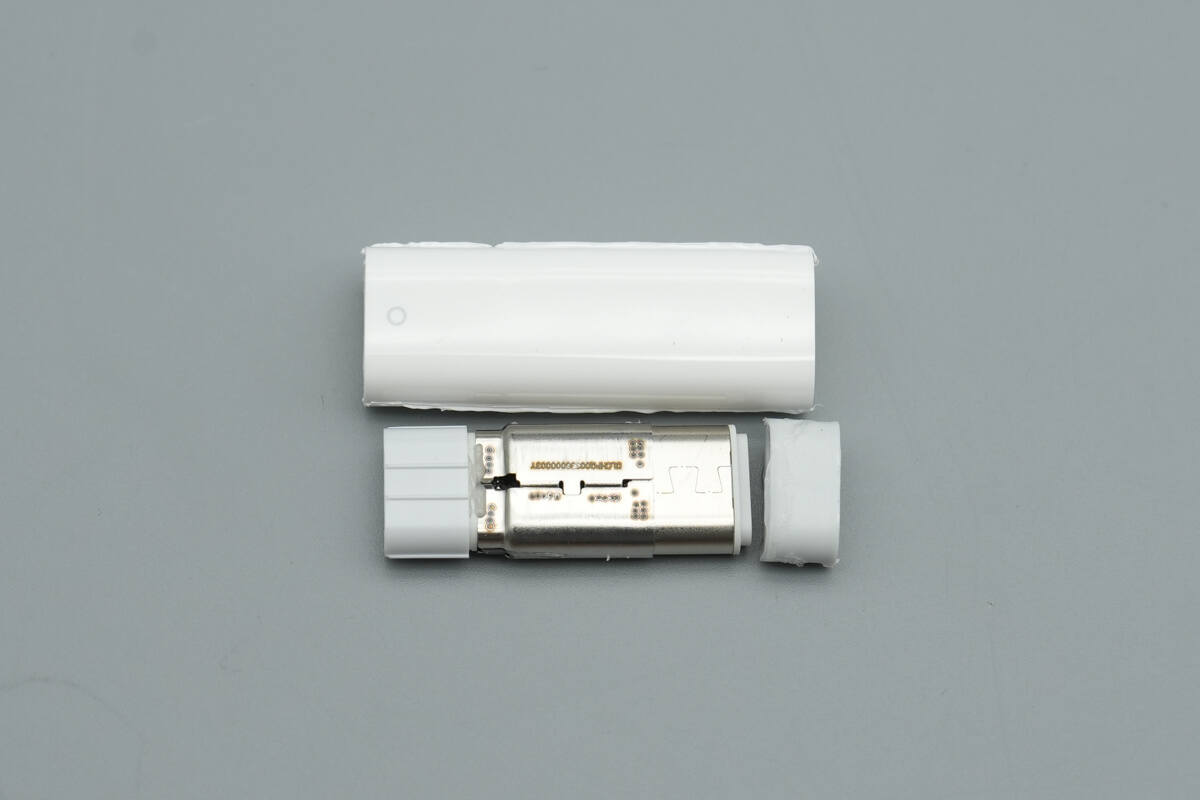
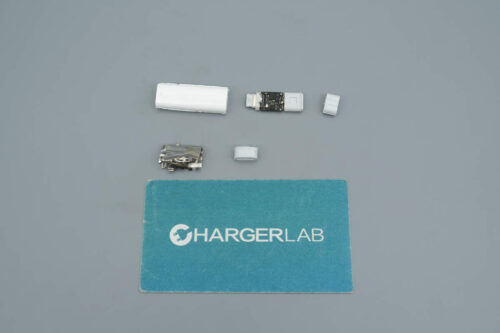
Cut open the plastic outer shell with a cutting tool. The PCB module is enclosed within a metal shielding housing.
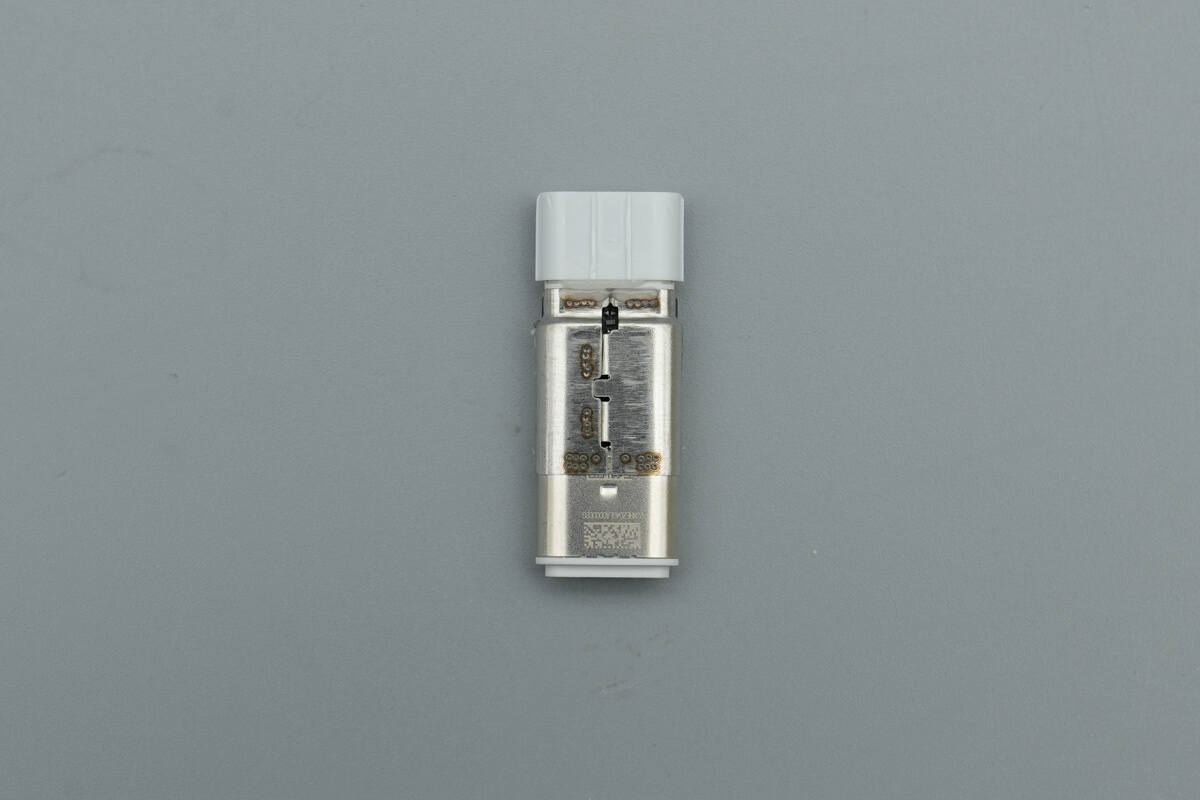
The metal shielding is secured in place using multiple spot welds.
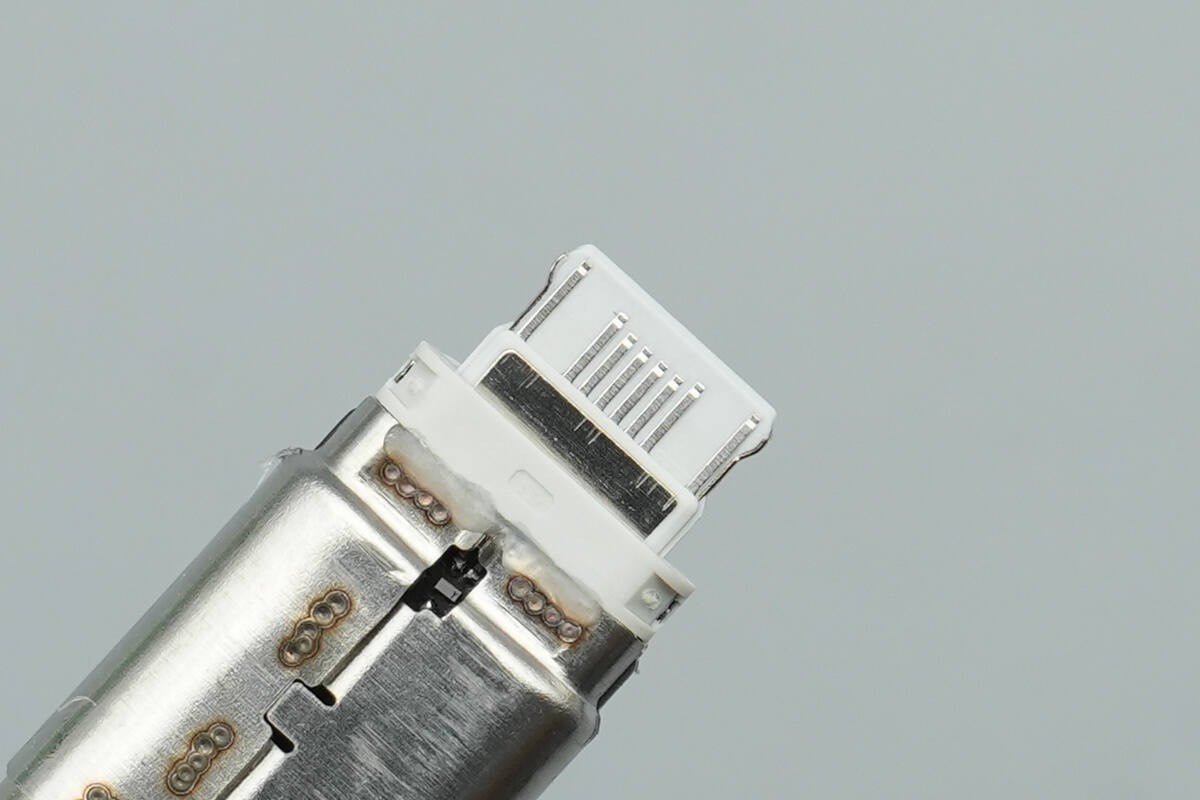
With one end of the plastic housing removed, the internal structure of the Lightning plug is exposed.
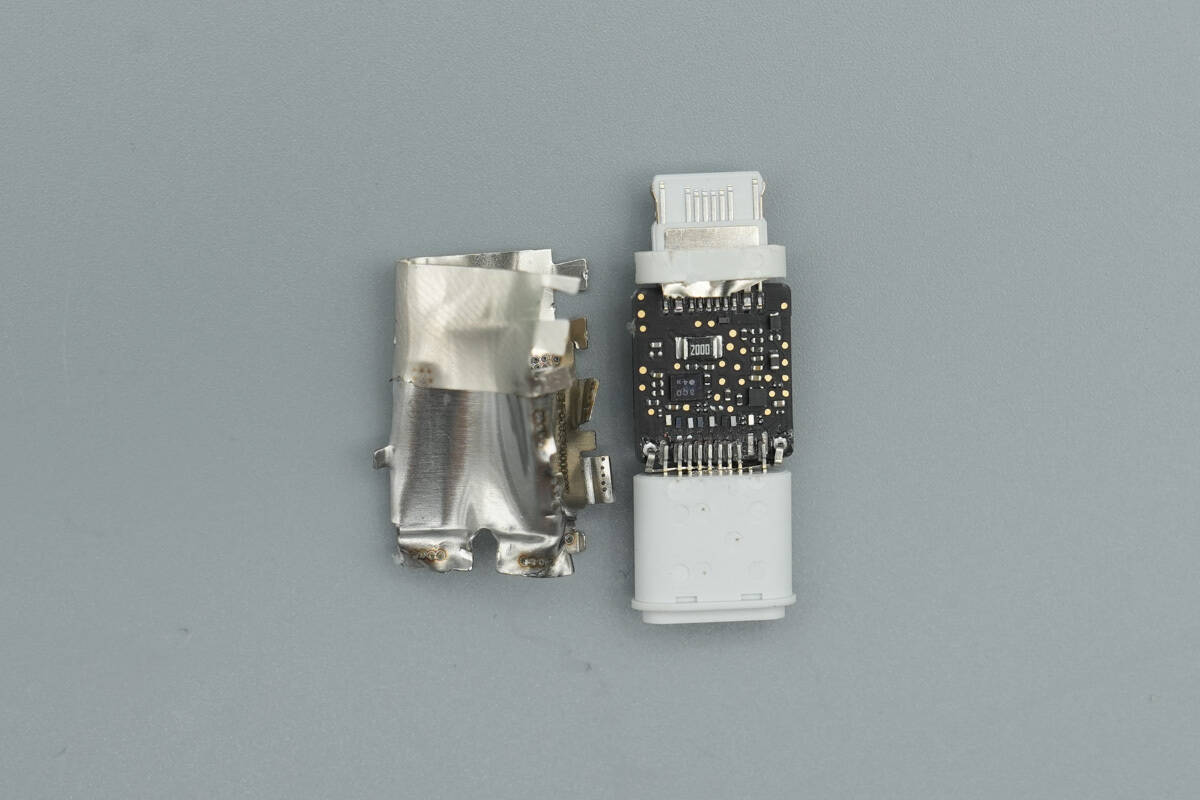
After cutting open the metal shielding, the PCB is exposed. Compared with the 2022 version, the most significant change is that the USB-C receptacle has been redesigned with a plastic housing instead of a metal-shielded structure.
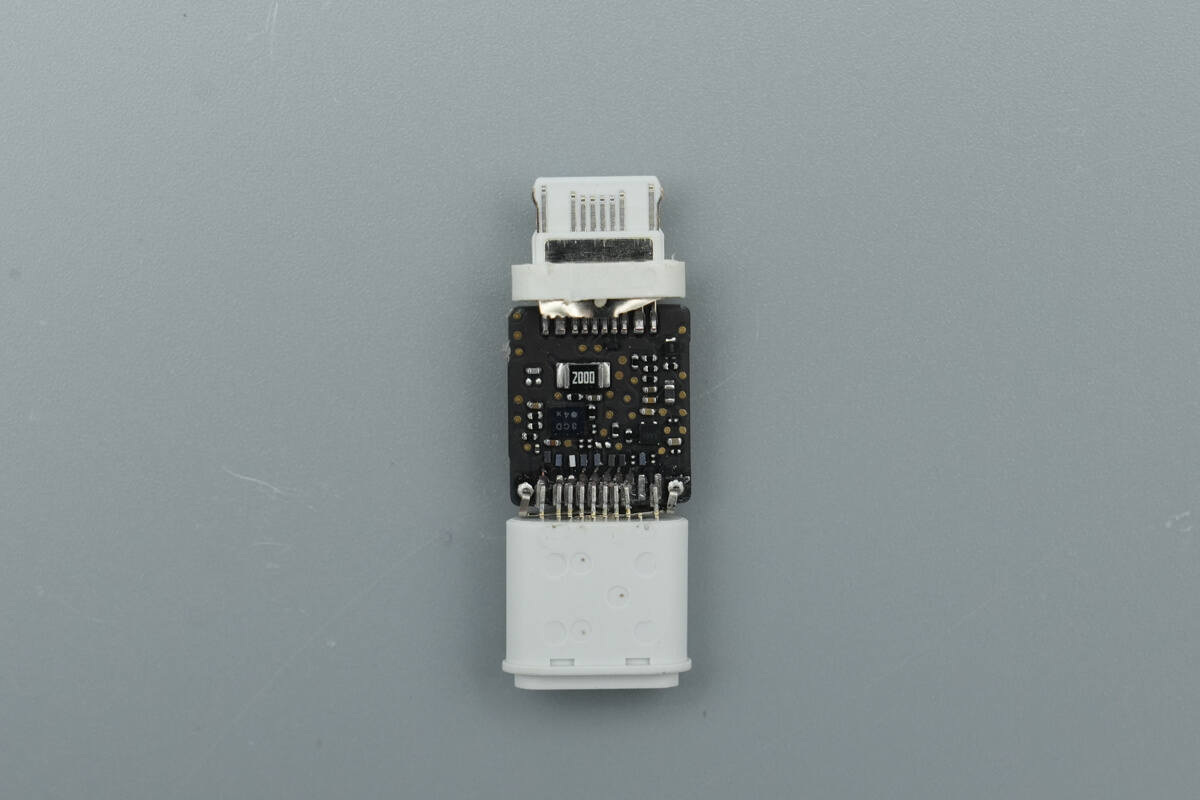
Overview of the PCBA front side.
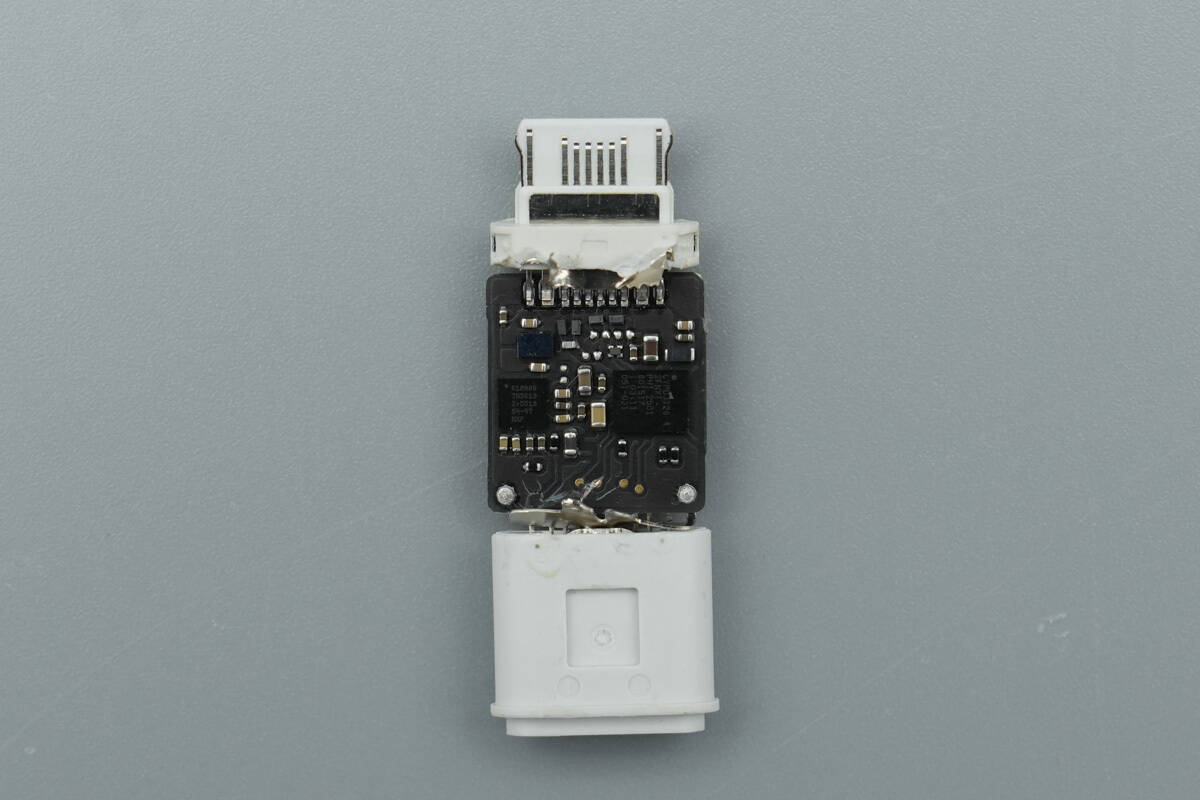
Overview of the PCBA back side.
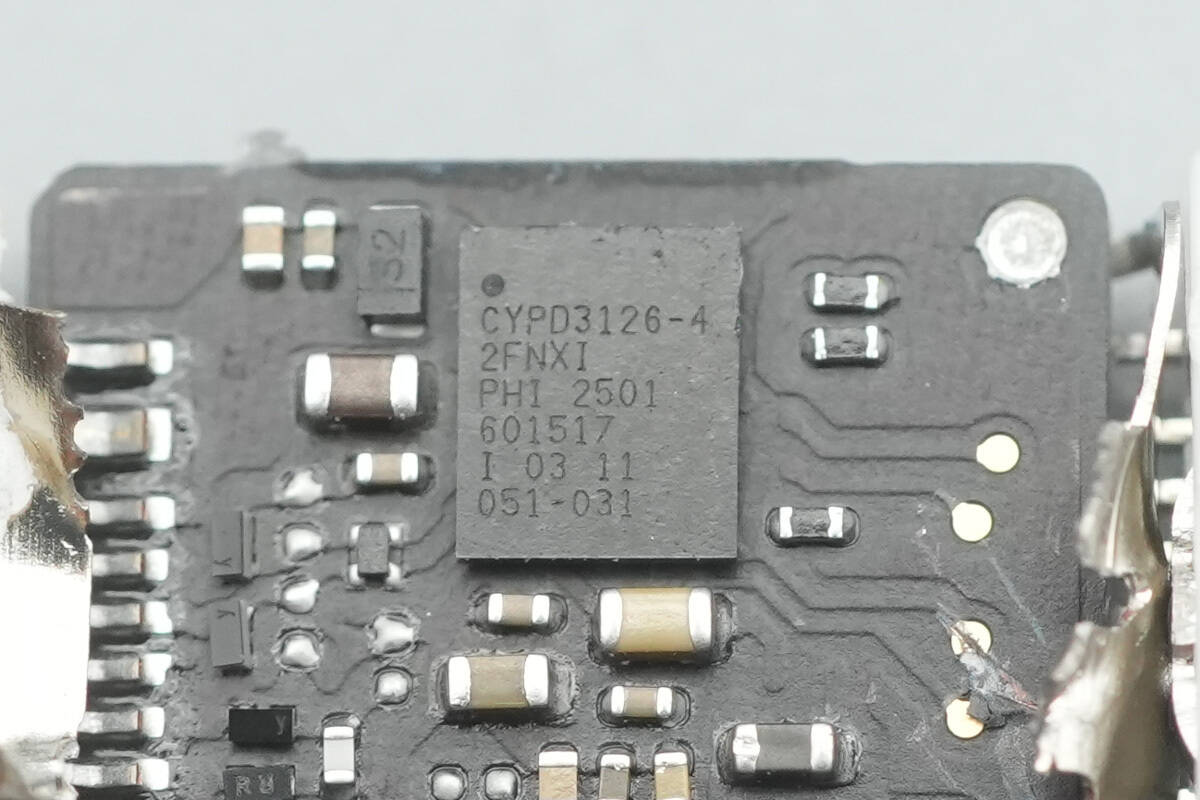
The Infineon CYPD3126-42FNXI belongs to the CCG3 series of highly integrated USB Type-C controllers. CCG3 is a complete USB-C and USB Power Delivery port control solution designed for applications such as laptops, displays, docking stations, and power adapters. It comes in a 42-CSP package.
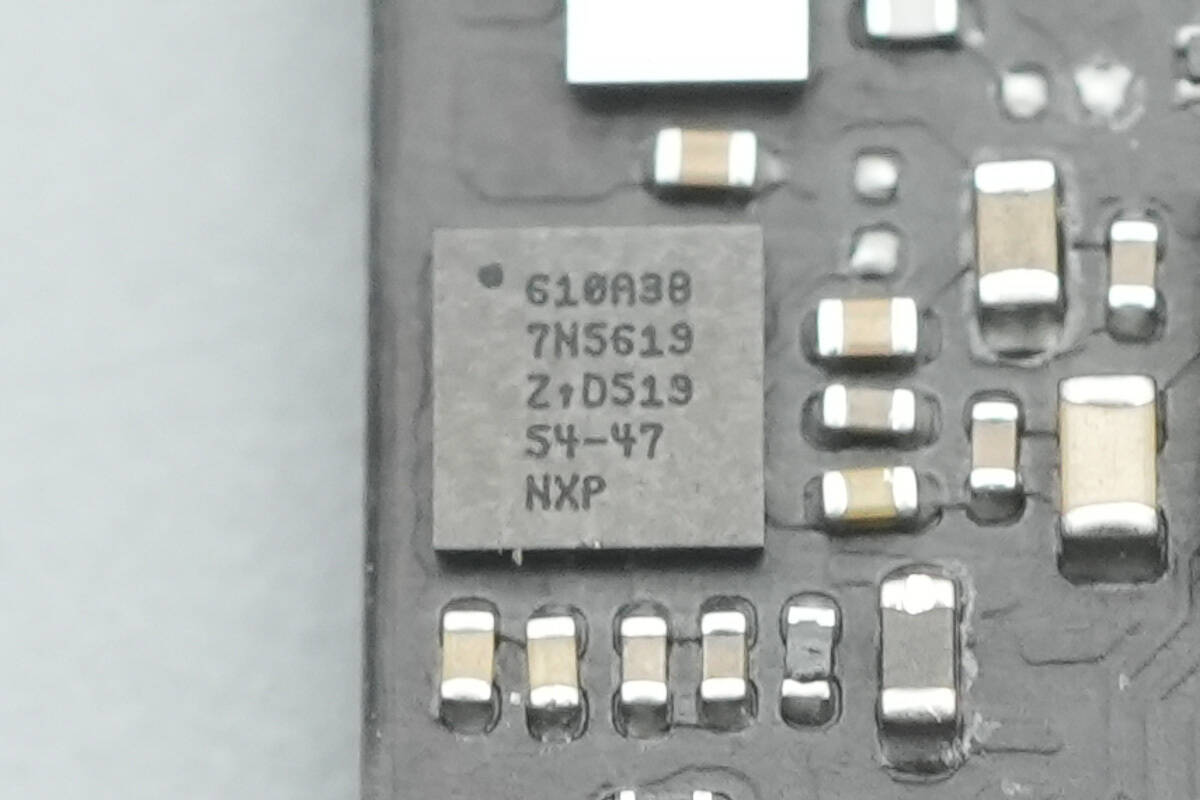
Another chip is from NXP, marked “610A3B”. It is an Apple-customized component used for Lightning interface authentication and is consistent with the charging IC used in the Apple 7th-generation ecosystem. As a result, it does not support Lightning-based USB Power Delivery fast charging.
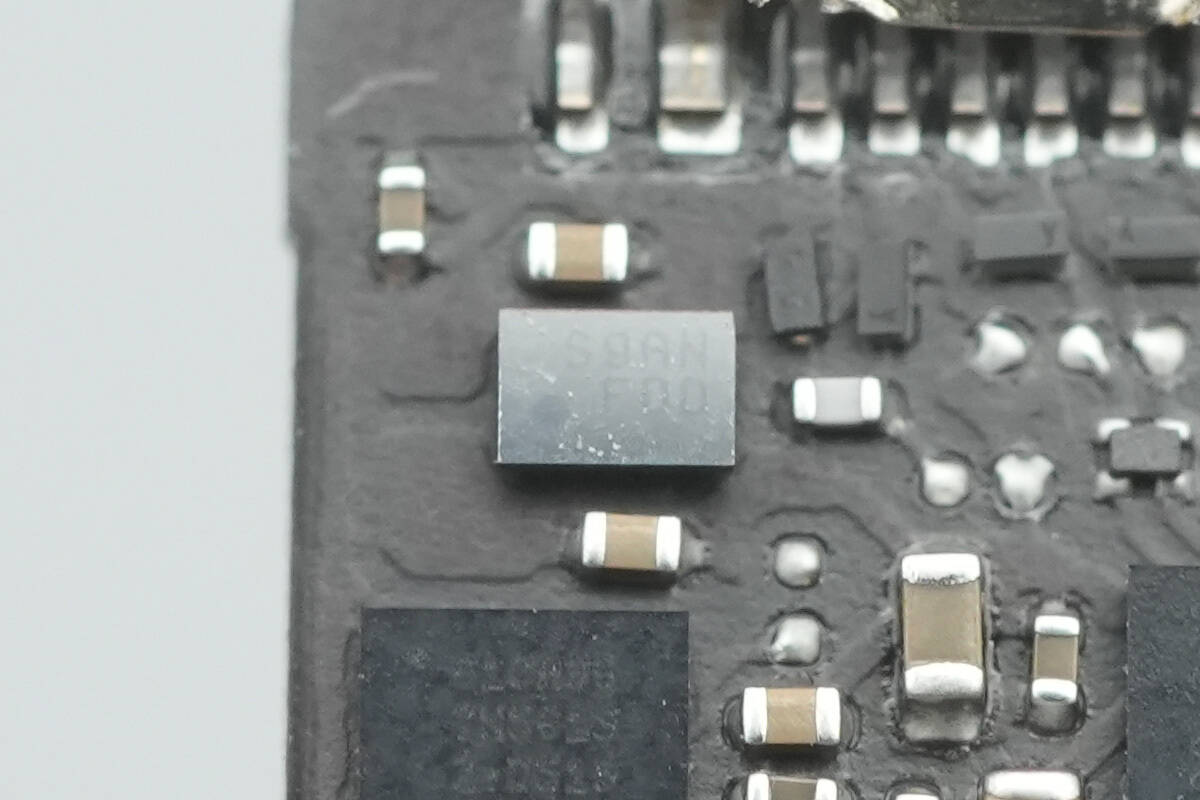
There is a chip marked “S9AH”.
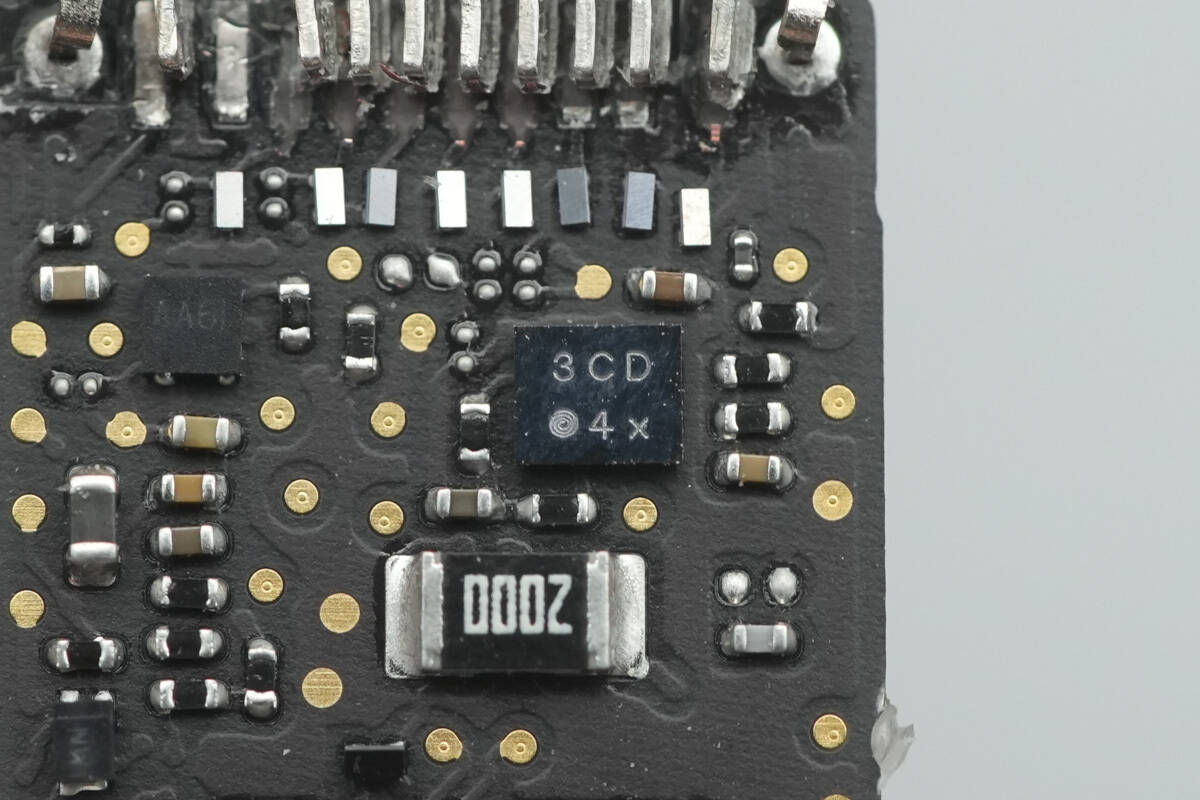
There is a chip marked “3CD”.
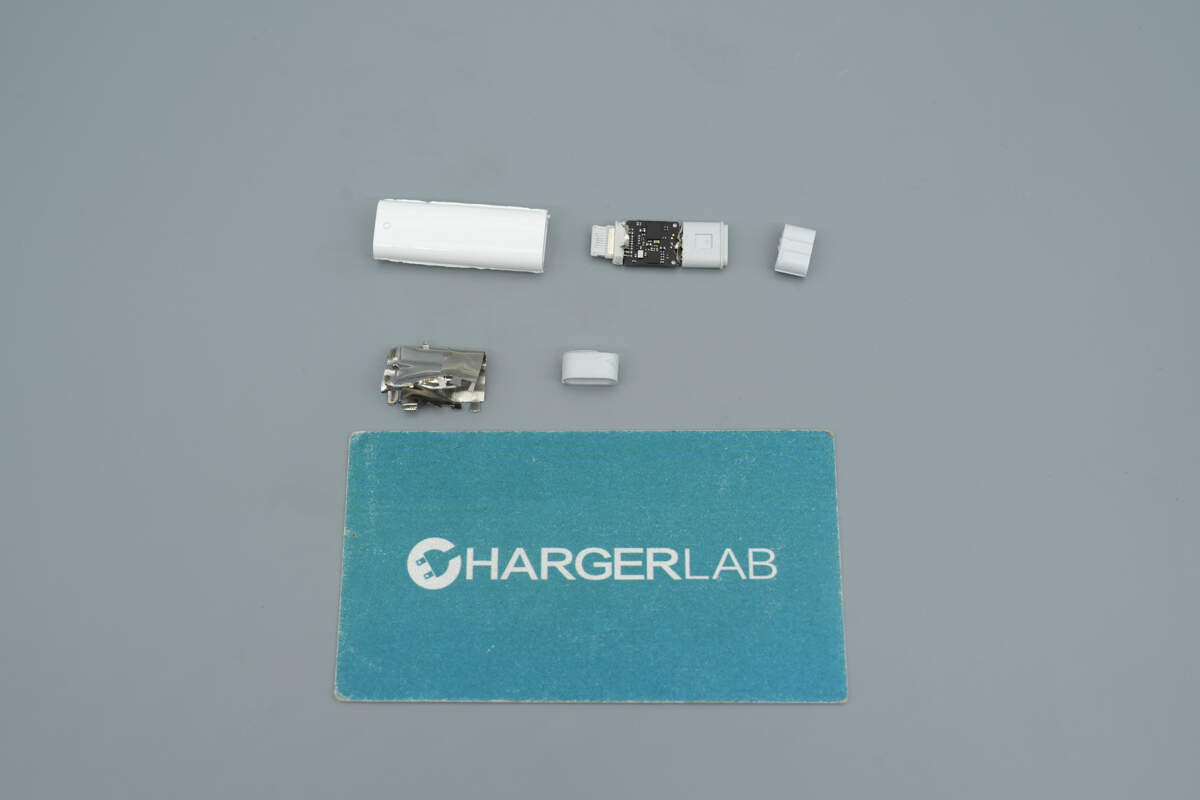
Well, those are all components of the Apple USB‑C to Apple Pencil Adapter.
Summary of ChargerLAB
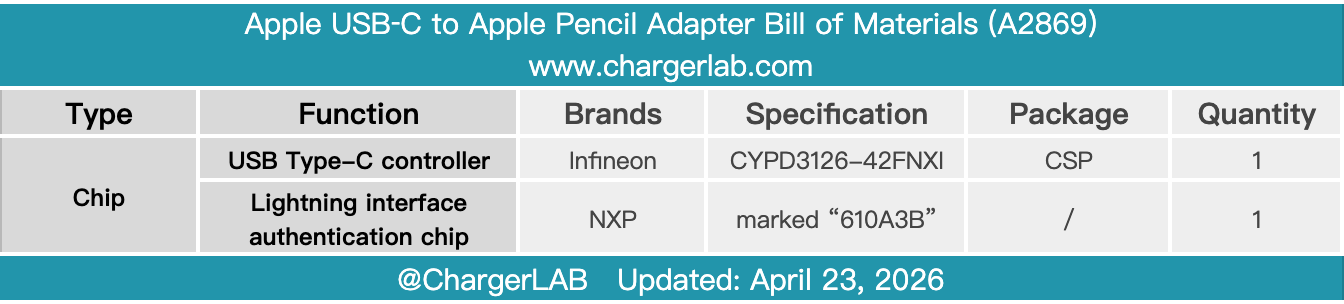
Here is the component list of the Apple USB‑C to Apple Pencil Adapter for your convenience.
To enable compatibility between the first-generation Apple Pencil and the iPad (10th generation), as well as the iPad (11th generation), Apple introduced a hybrid conversion solution that integrates both a Lightning socket and a USB-C socket into a single adapter. Within its extremely compact form factor, the device incorporates chips from Infineon and NXP, responsible for protocol control and power management, respectively.
Although the internal structure continues to use a steel-reinforced, spot-welded shielding design for mechanical strength, several detailed design changes have been introduced. Compared with the previous revision, the most notable update is the USB-C receptacle section, which has transitioned from a metal enclosure to a plastic housing, while the overall connection method remains unchanged.
Related Articles:
1. Teardown of Xiaomi 33W USB-A Charger (MDY-16-EF)
2. Teardown of SHARGE HyperTower 170W Power Bank (X6)
3. Teardown of Baseus PicoGo Air Power Bank (E00337)