
Introduction
The industry has increasingly raised safety standards for power banks. The new 20263C Power Bank Standard (GB47372-2026) sets stricter requirements for battery safety, temperature control, and intelligent monitoring.
In response to these industry regulations, Baseus recently launched the PicoGo Air MagSafe Power Bank, which emphasizes aerospace-level safety. This product meets the certification requirements of the 2026 standard and features excellent thermal management and safety protection systems, including a built-in glacier cooling structure that significantly enhances heat dissipation.
The PicoGo Air features an ultra-thin 6.8mm aluminum alloy body and supports 22.5W wired fast charging as well as 15W wireless fast charging. In terms of intelligent monitoring, it also supports NFC interaction with smartphones, allowing instant connection to the Baseus App to quickly check battery health and temperature. Next, we will take a closer look at the product’s design.
Product Appearance
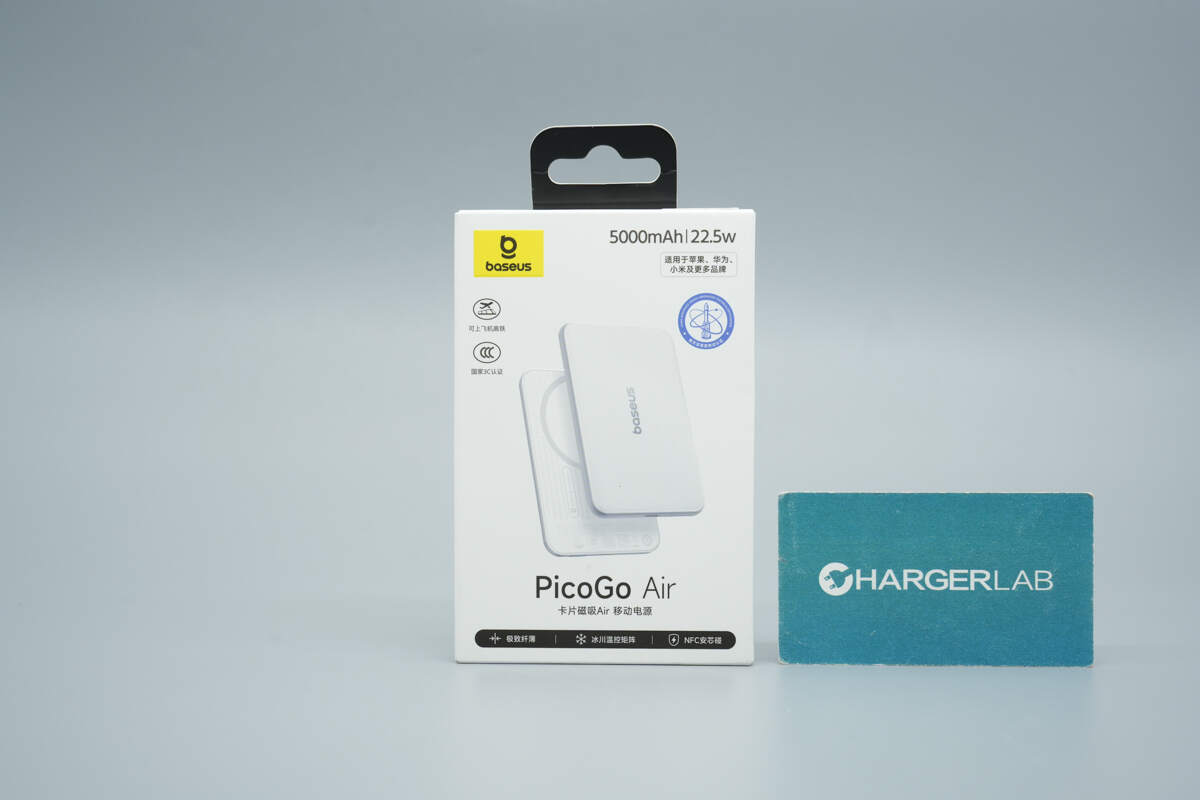
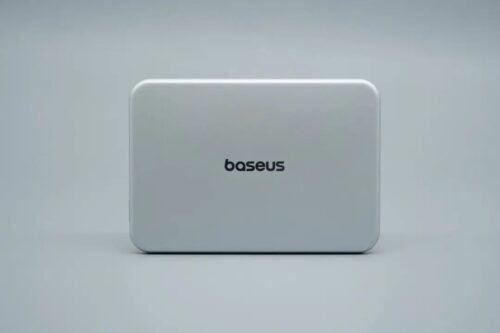
The front of the packaging features an image of the product, its specifications, and the product name.
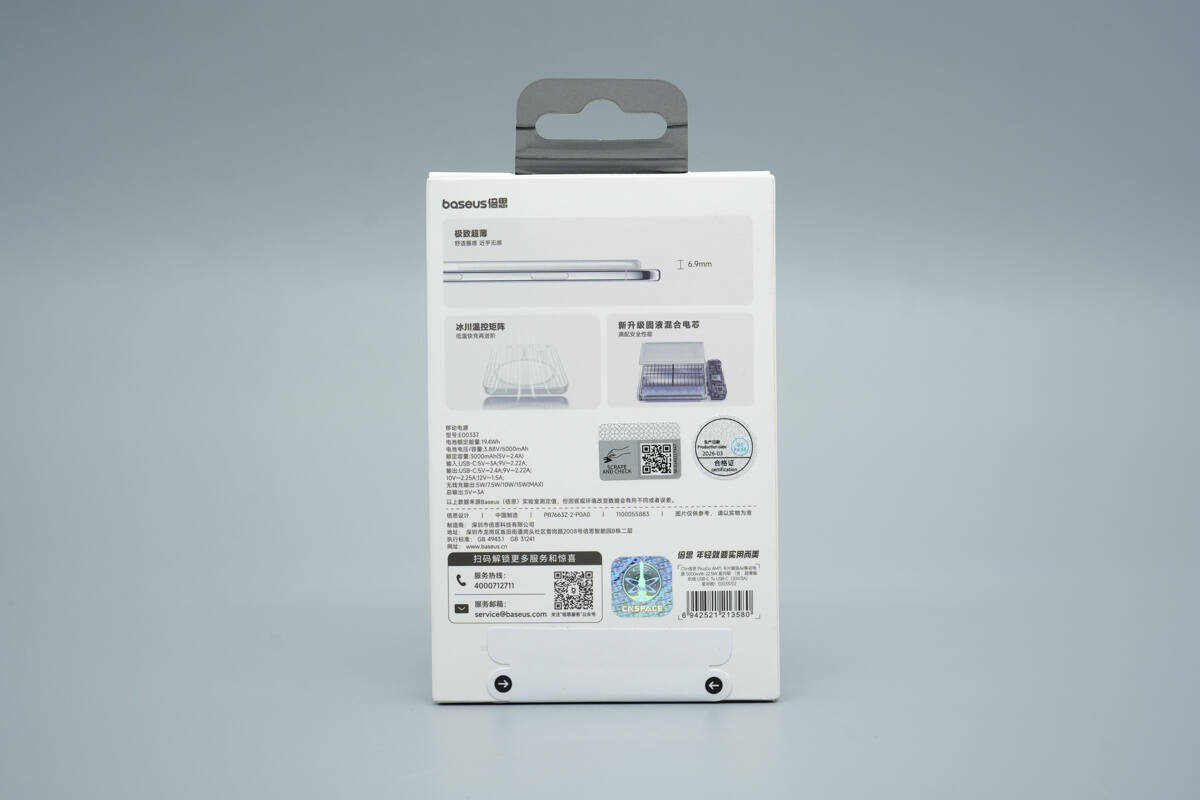
The back of the packaging displays the specifications and key selling points.
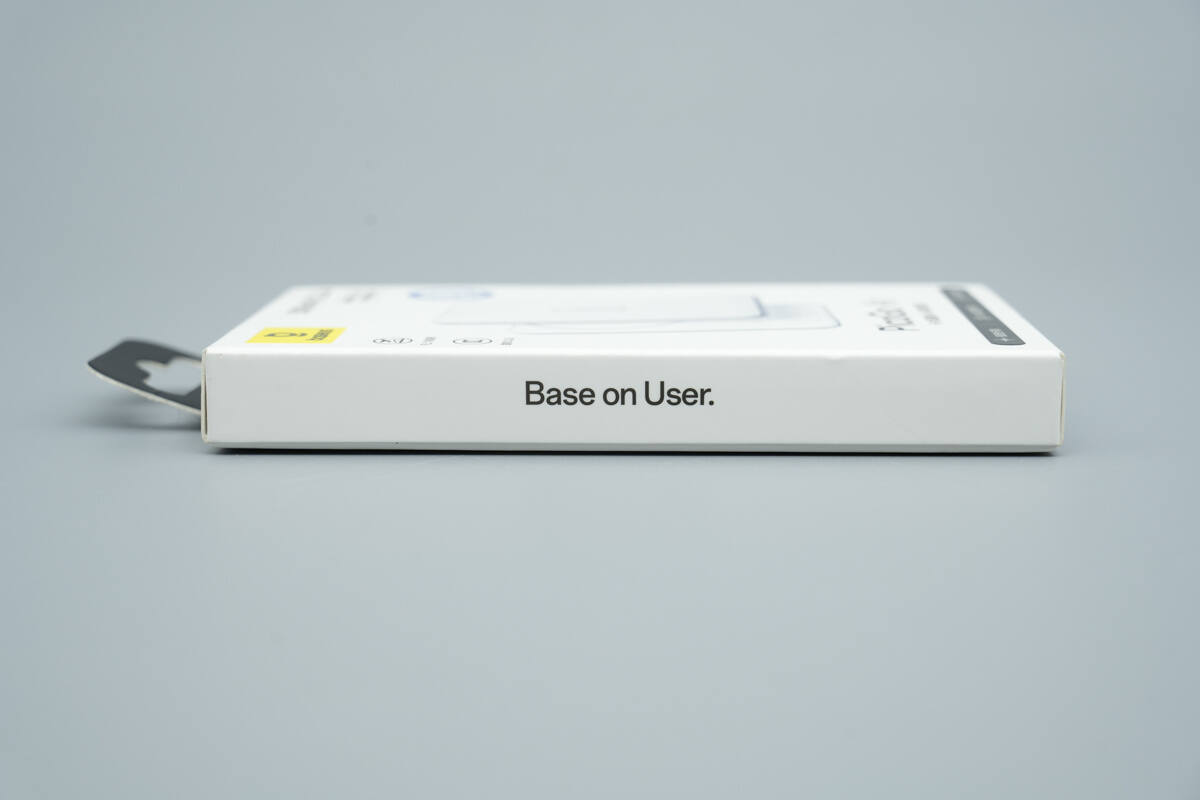
The side of the packaging features the brand philosophy: "Base on User."
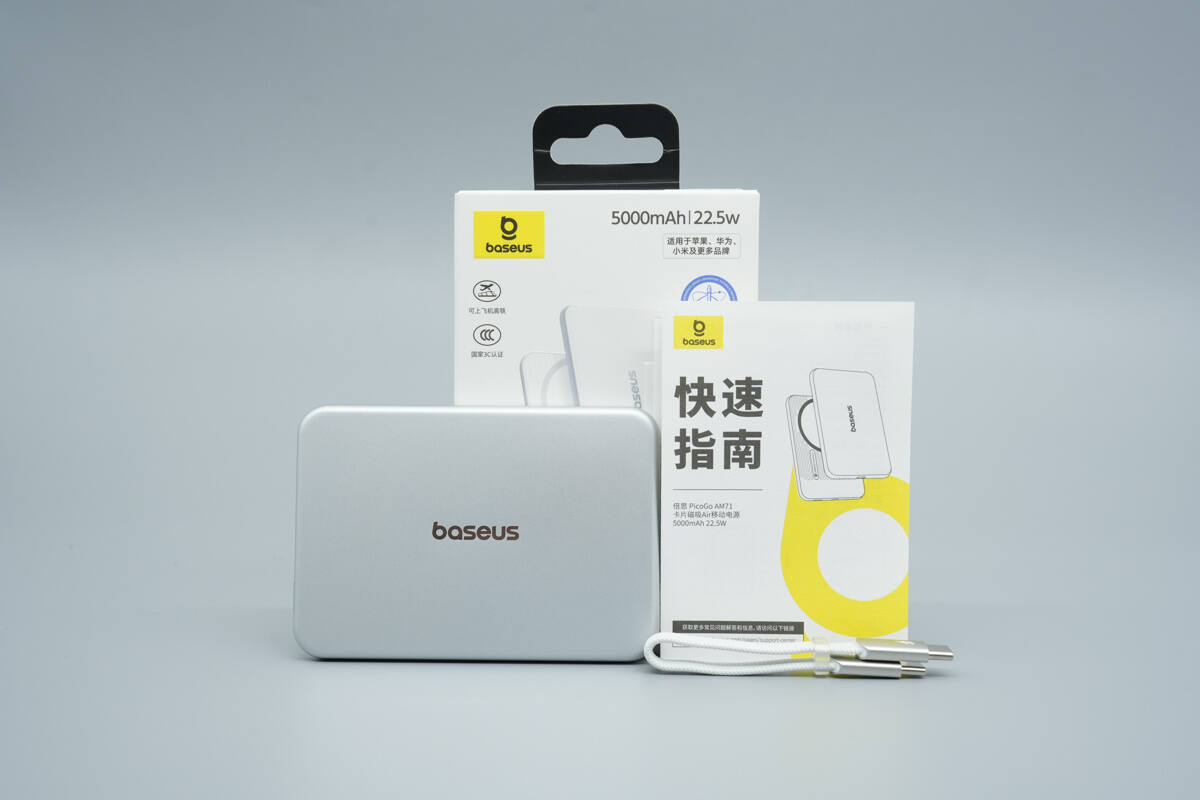
The packaging includes the power bank, a quick start guide, and a short white data cable.
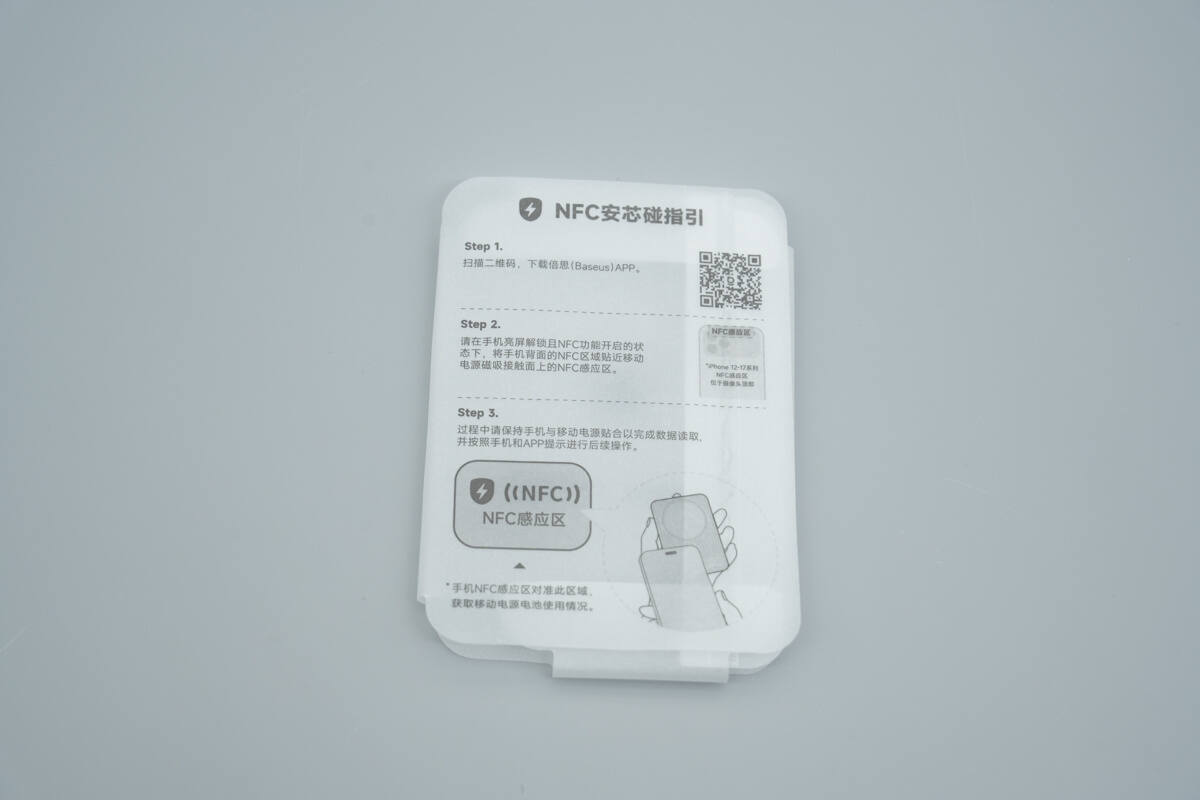
The packaging also includes an NFC instruction guide.
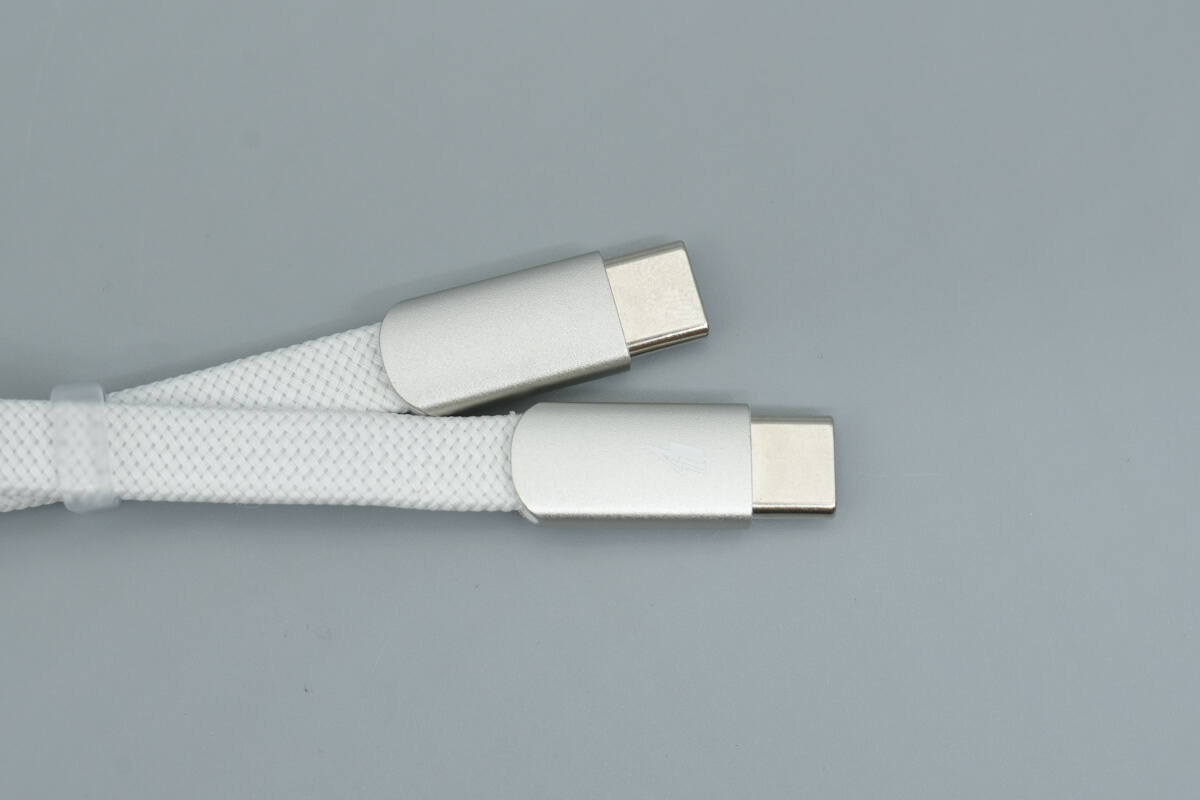
The included white dual USB-C short cable features a braided design, with silver metal housings on the connectors.
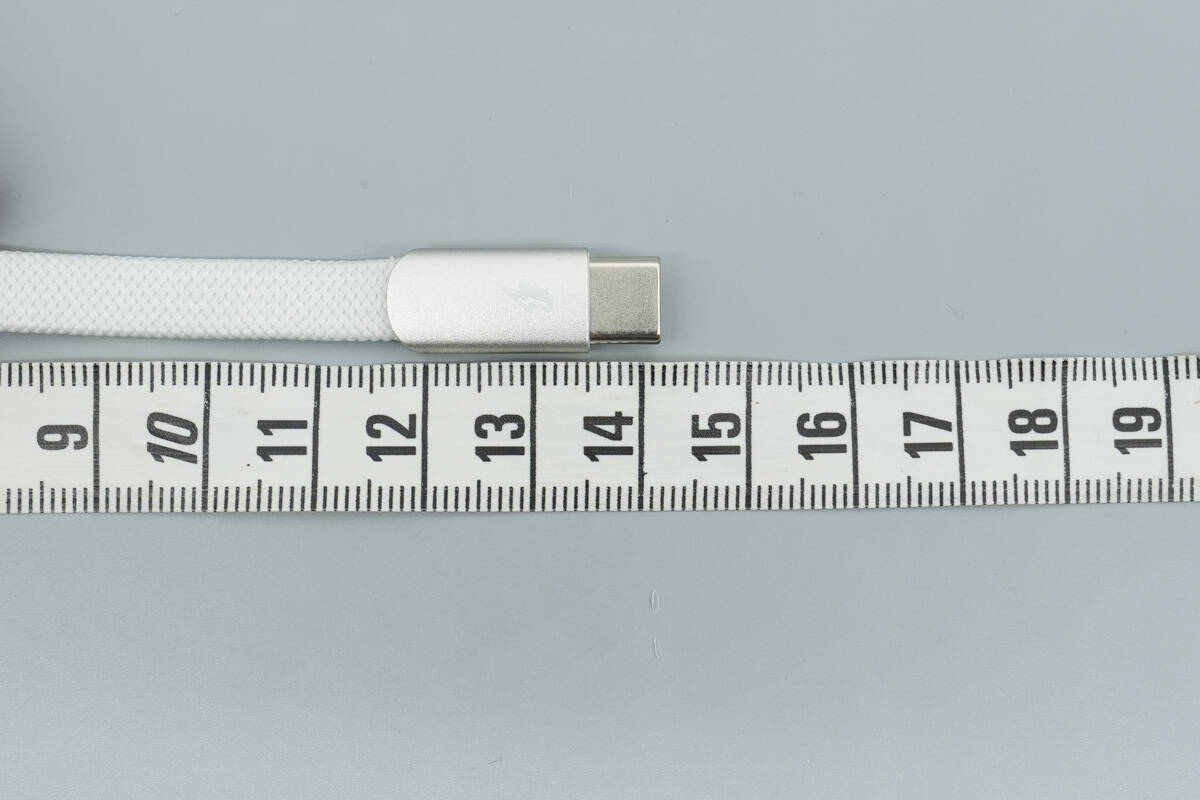
The length of the cable is about 14 cm (5.51 inches).
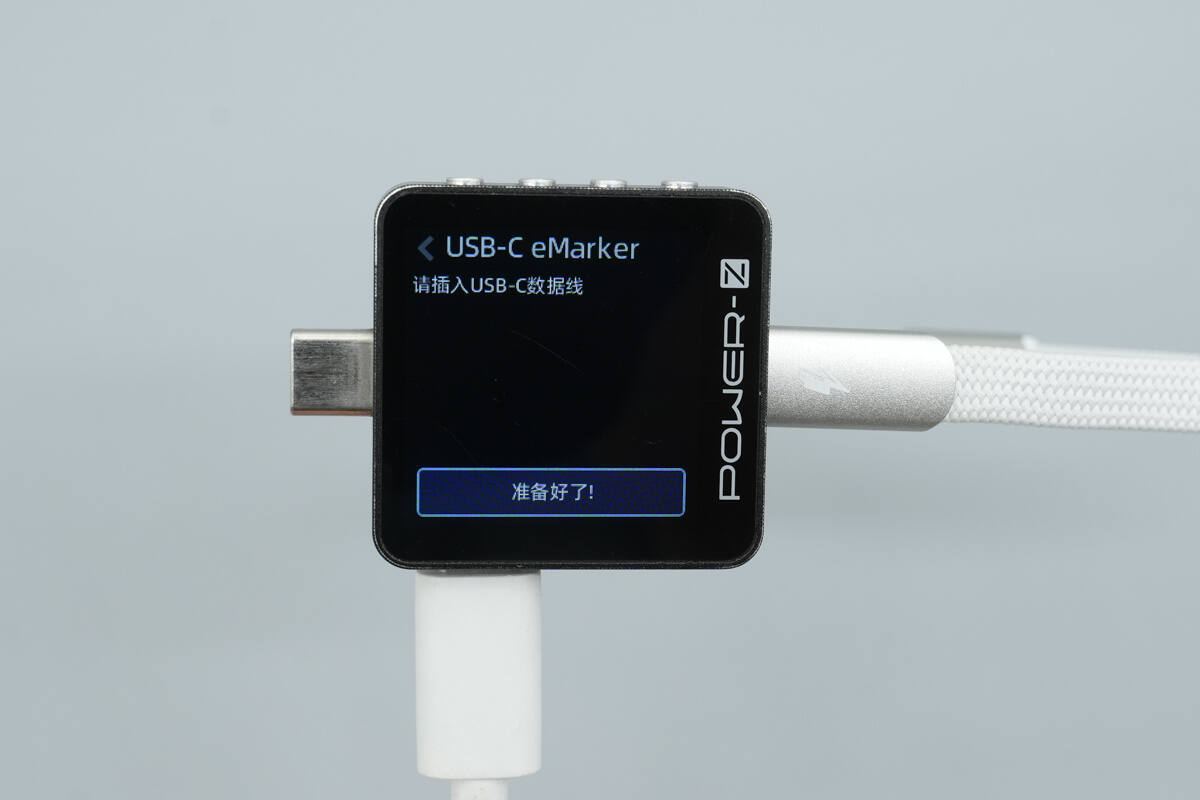
ChargerLAB POWER-Z KM003C shows that it does not have an E-Marker chip.
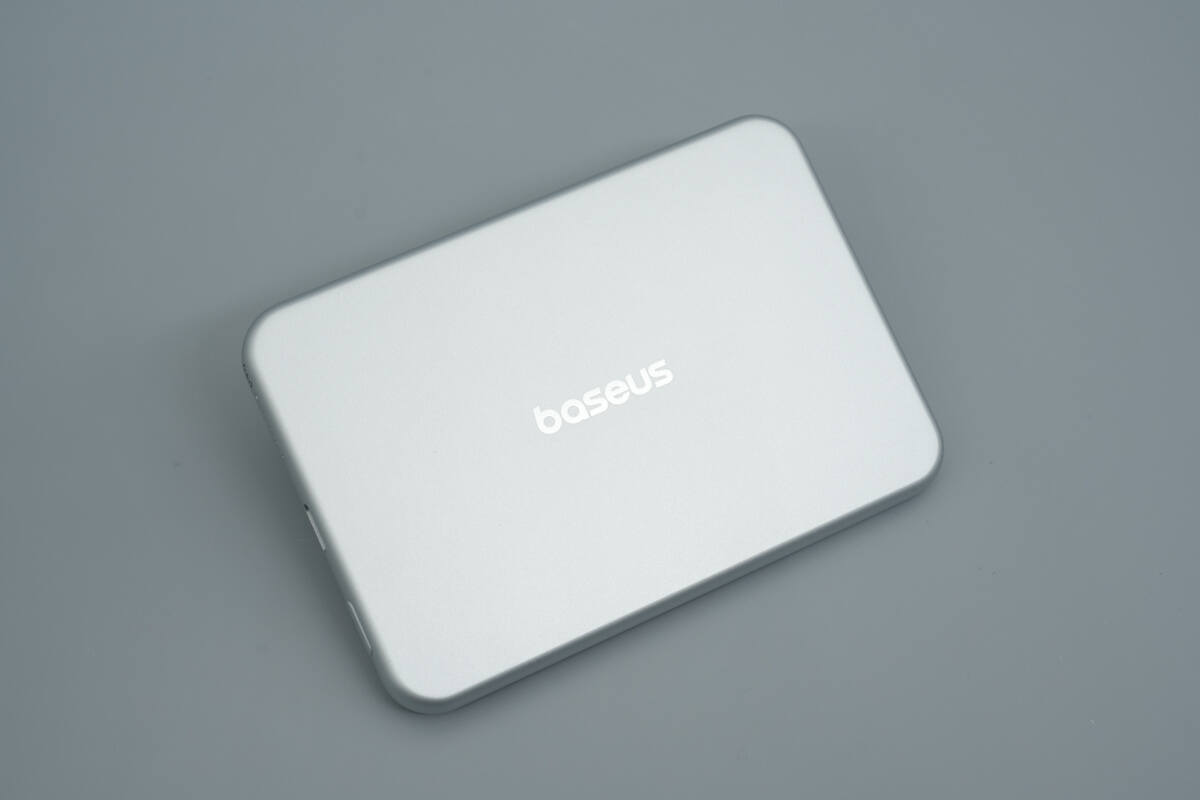
The power bank’s casing is made of a unibody aluminum alloy, finished with anodized sandblasting.
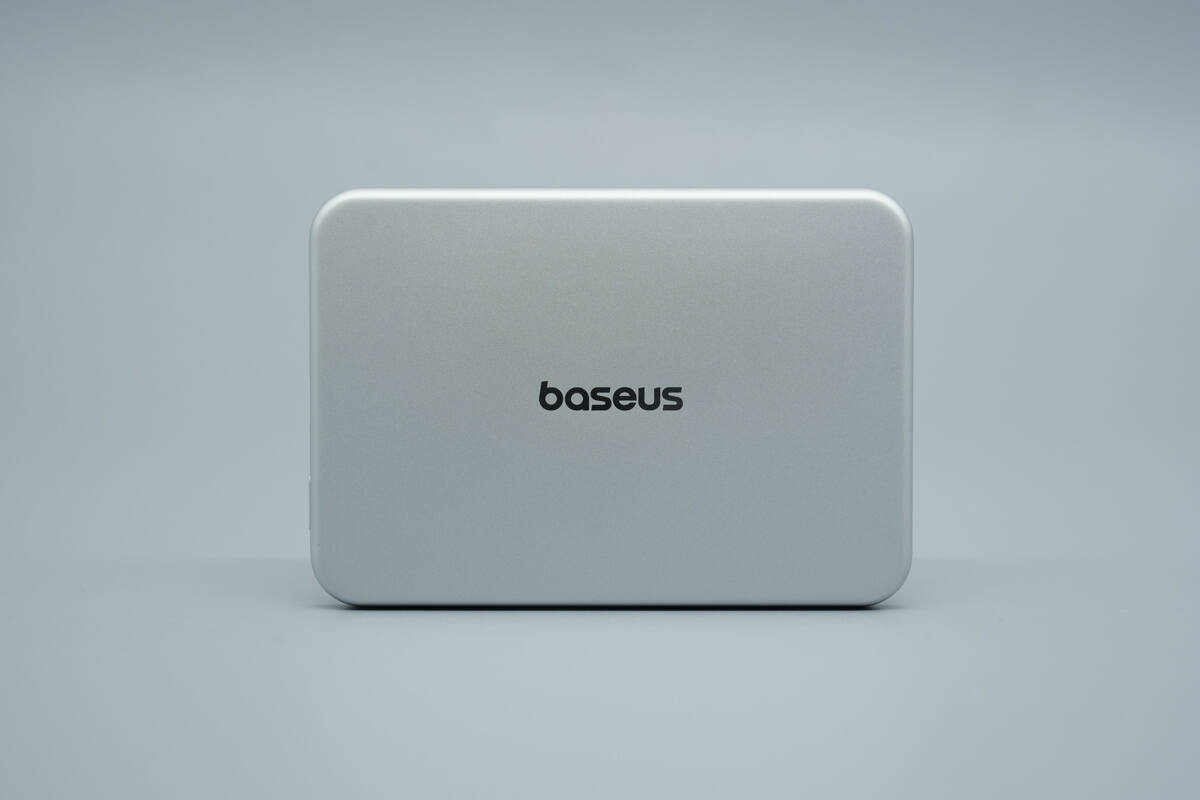
The front center features a black Baseus logo.
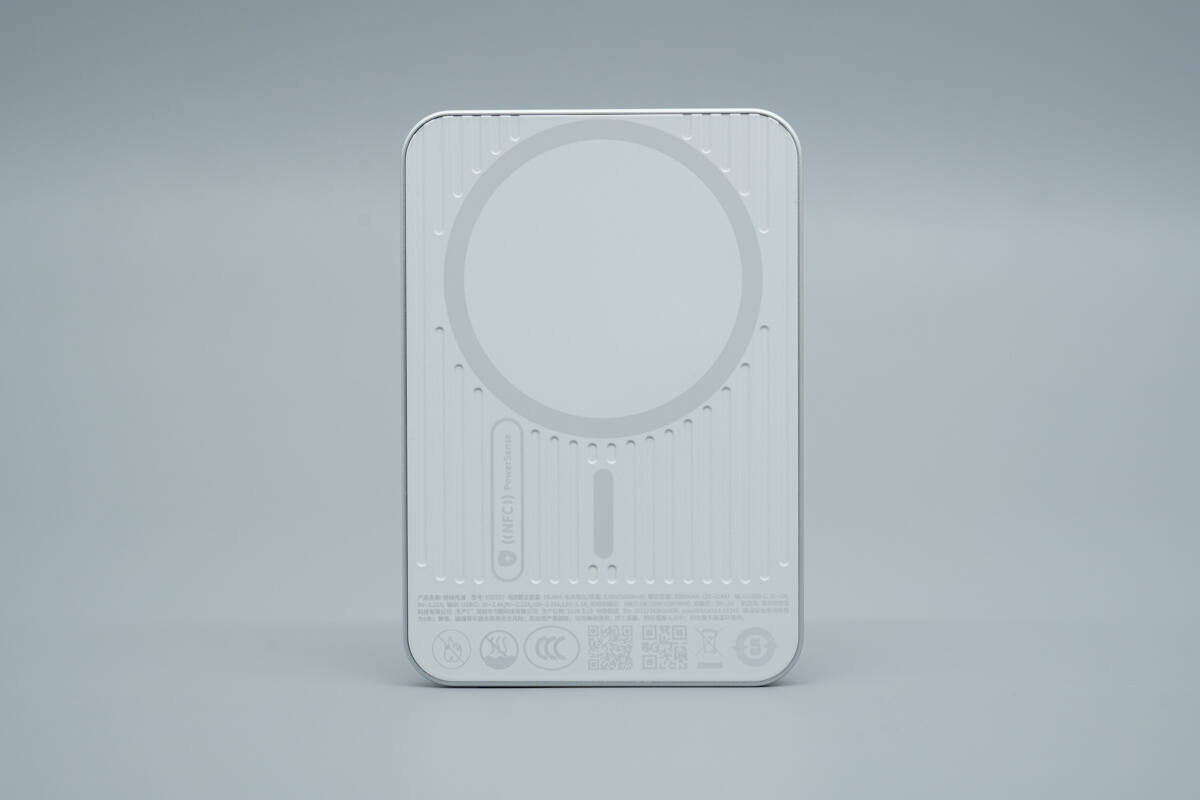
The back features a MagSafe magnetic alignment ring at the top, with the specifications and NFC sensing area located below.
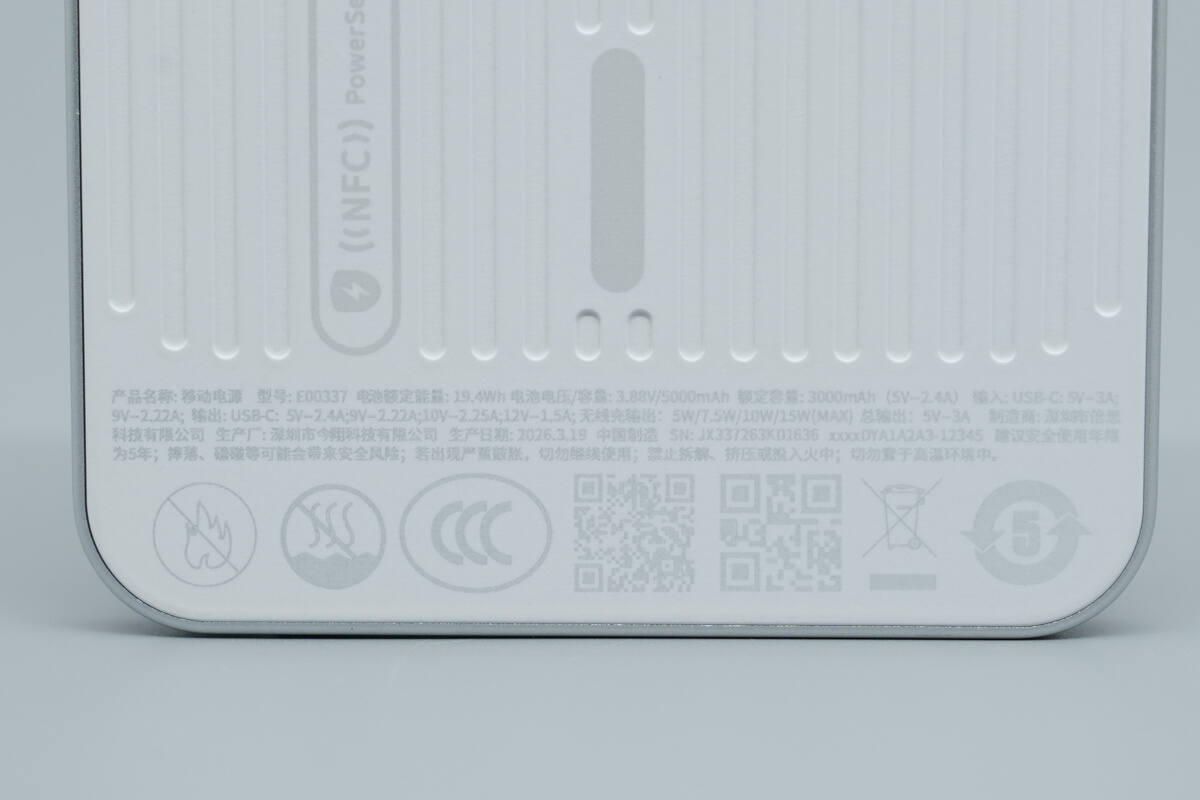
Model: E00337
Battery Rated Energy: 19.4Wh
Battery Voltage/Capacity: 3.88V / 5000mAh
Rated Capacity: 3000mAh (5V–2.4A)
Input (USB-C): 5V–3A, 9V–2.22A
Output (USB-C): 5V–2.4A, 9V–2.22A, 10V–2.25A, 12V–1.5A
Wireless Charging Output: 5W, 7.5W, 10W, 15W (MAX)
Total Output: 5V–3A
The product has passed CCC certification.
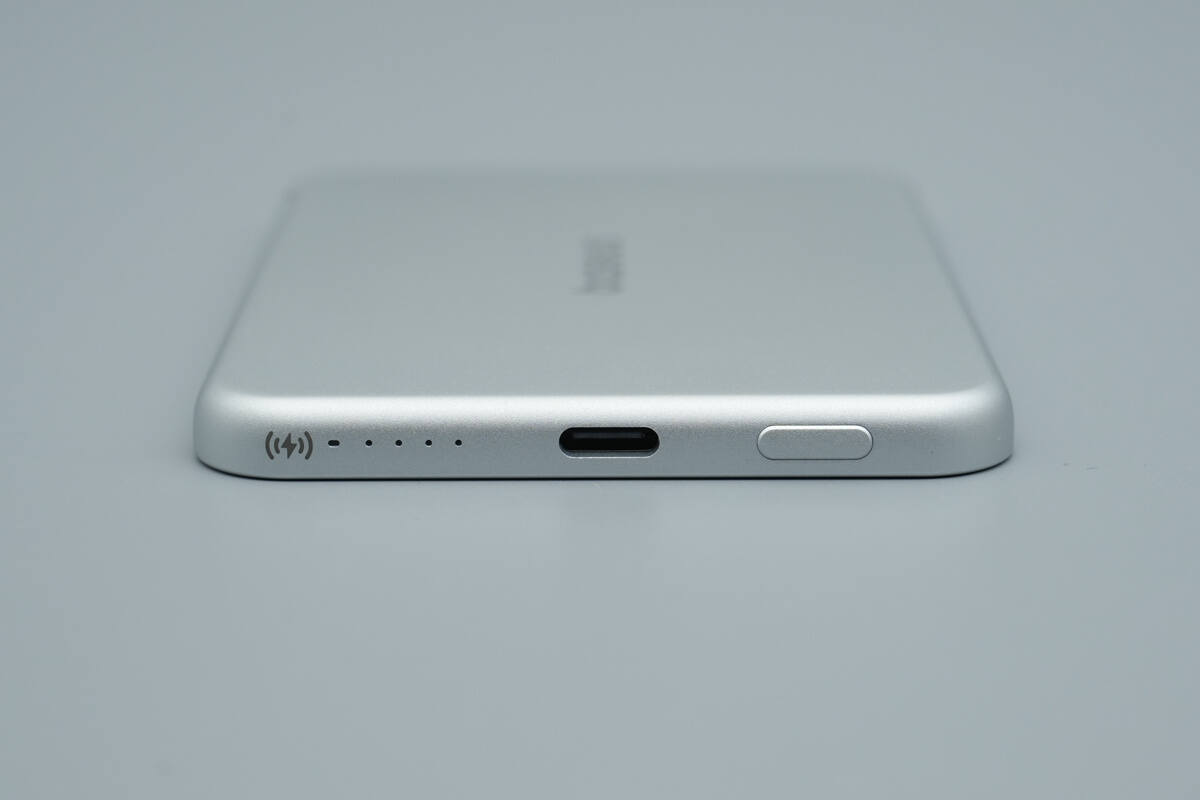
On the side, from left to right, are the LED indicators, the USB-C bidirectional port, and the power button.
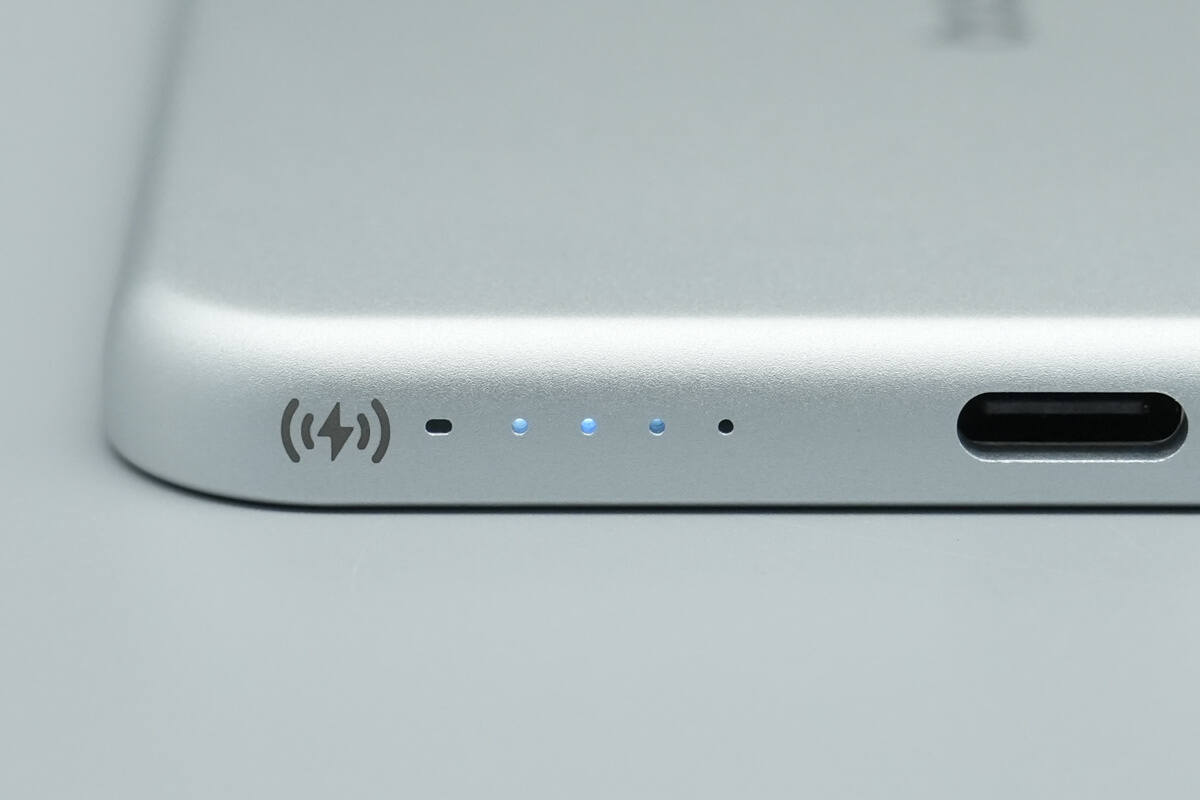
When the power button is pressed, the LED lights turn on. The first LED on the left indicates wireless charging, while the four LEDs on the right indicate battery level.
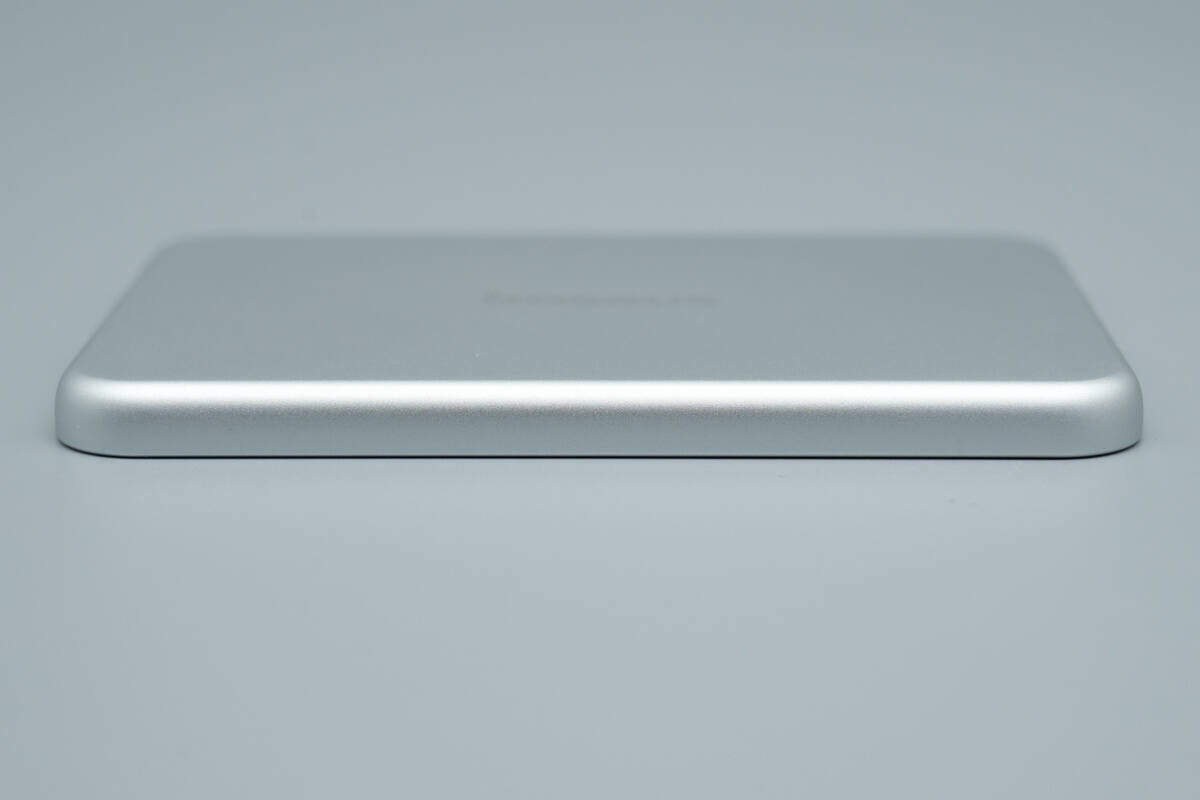
The rounded corners combined with the metal material give the device an exceptionally slim appearance.
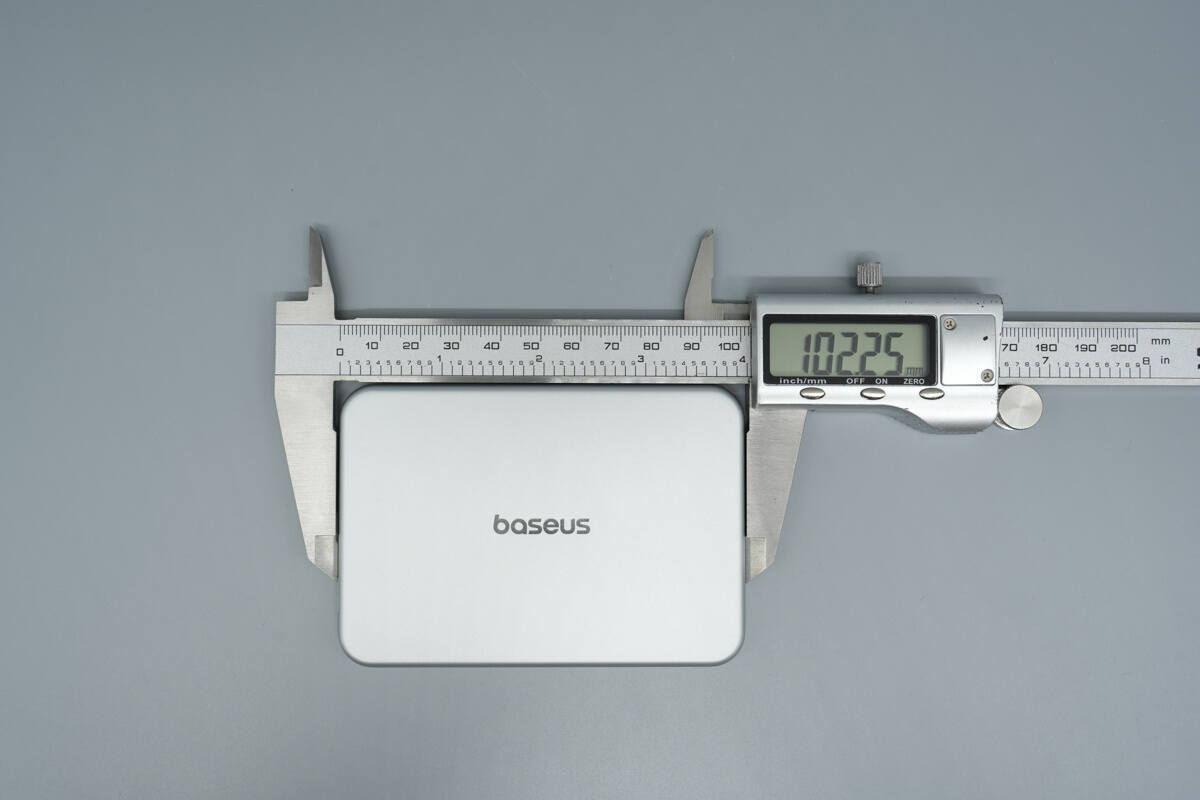
The length of the power bank is about 102.25 mm (4.026 inches).
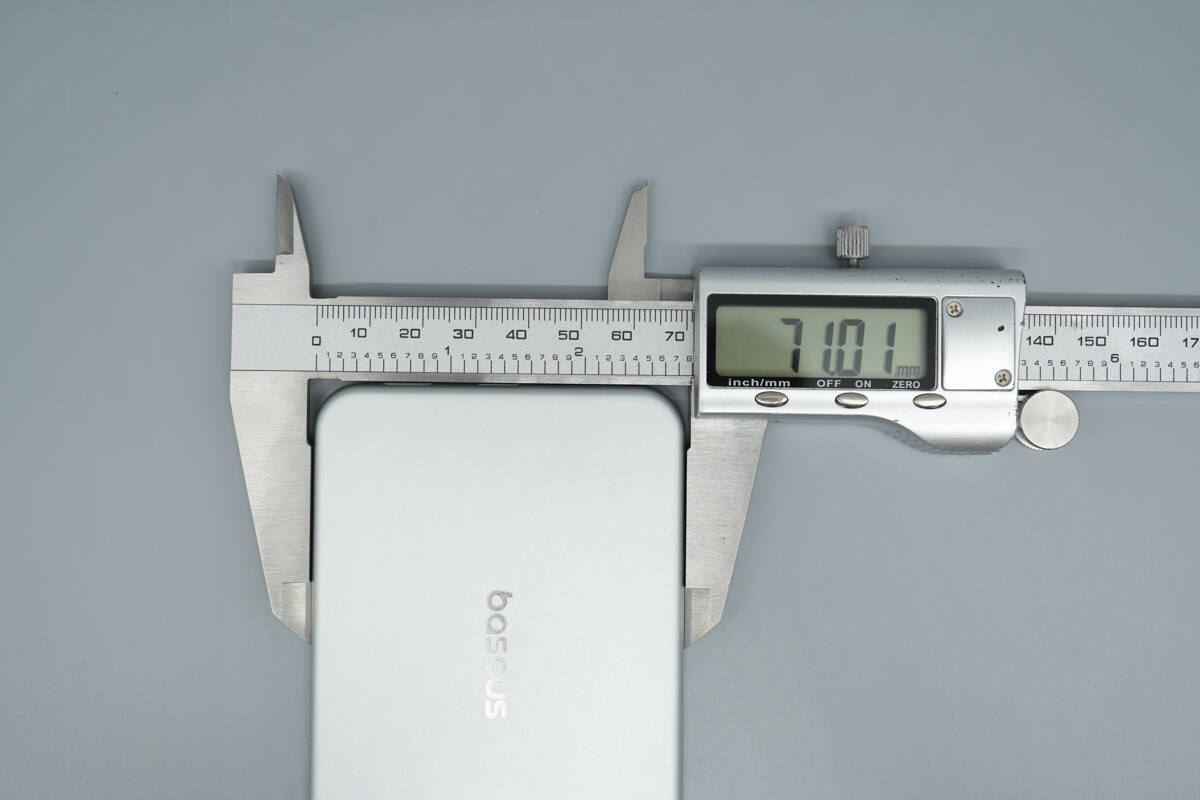
The width is about 71.01 mm (2.8 inches).
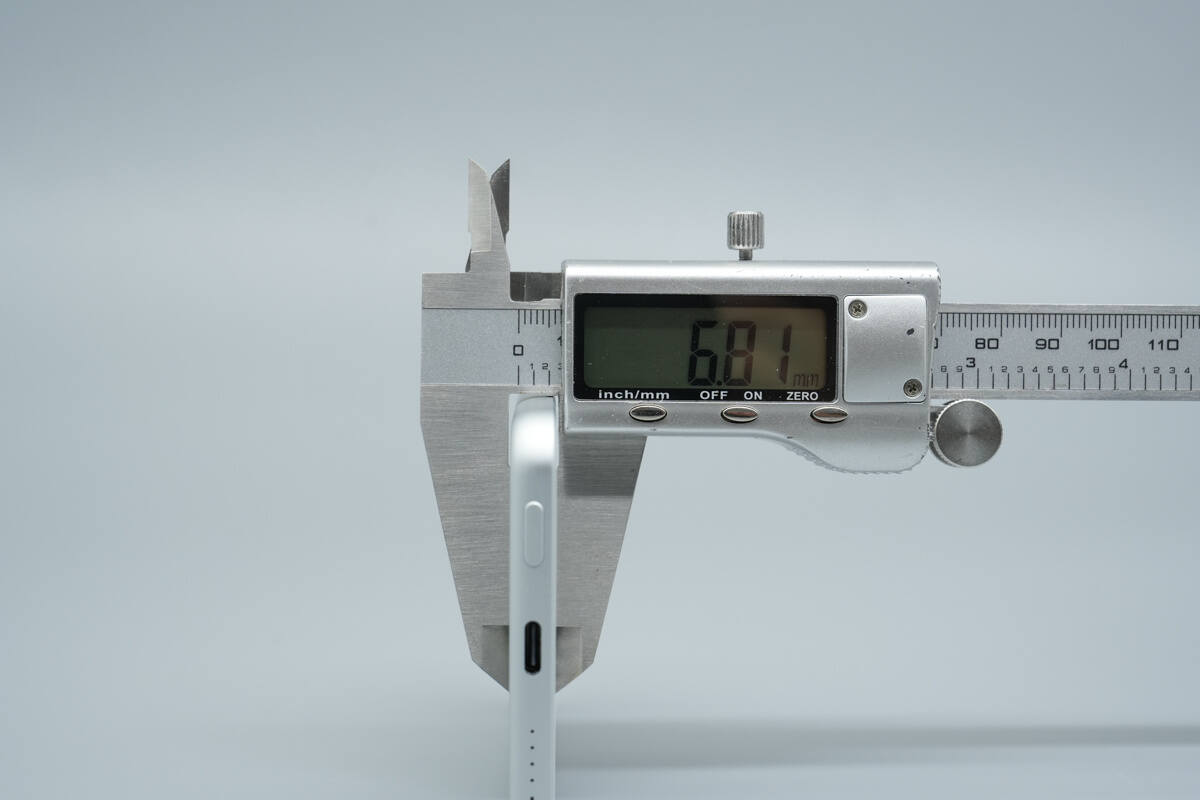
The thickness is about 6.81 mm (0.27 inches).
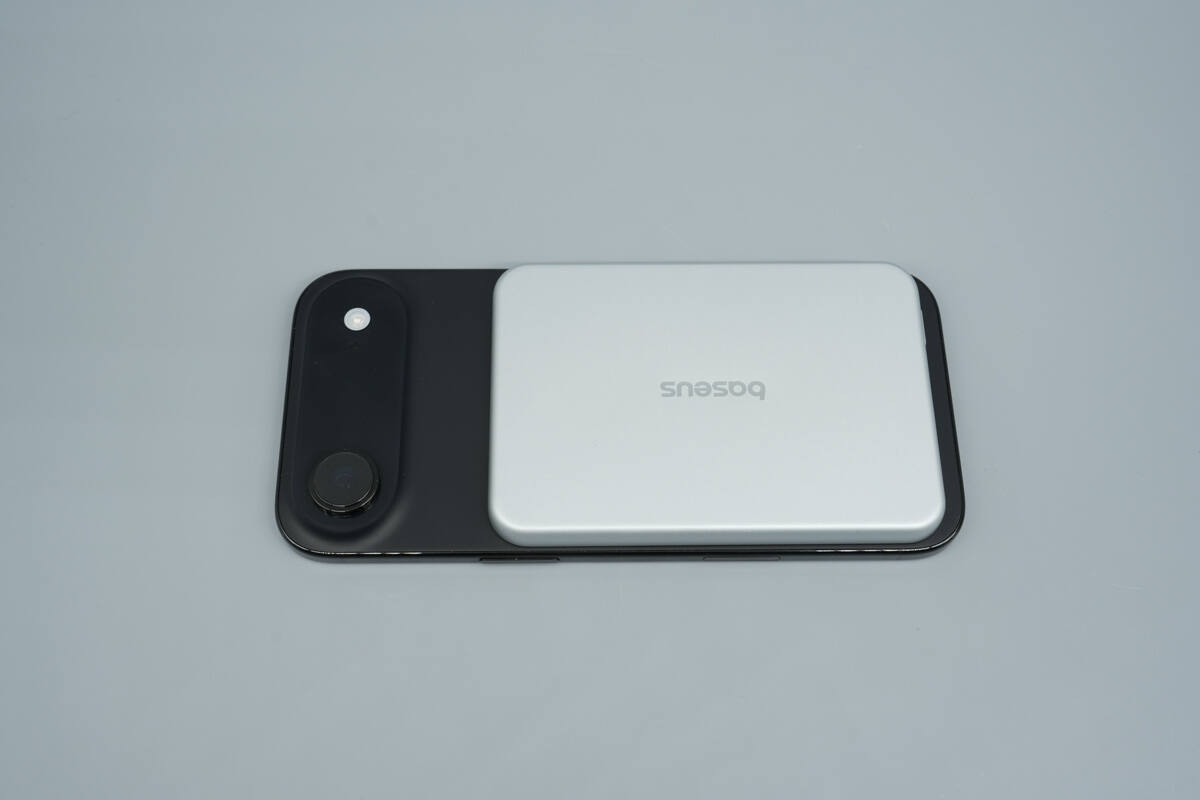
When attached to the back of an iPhone Air, it does not obstruct the camera.
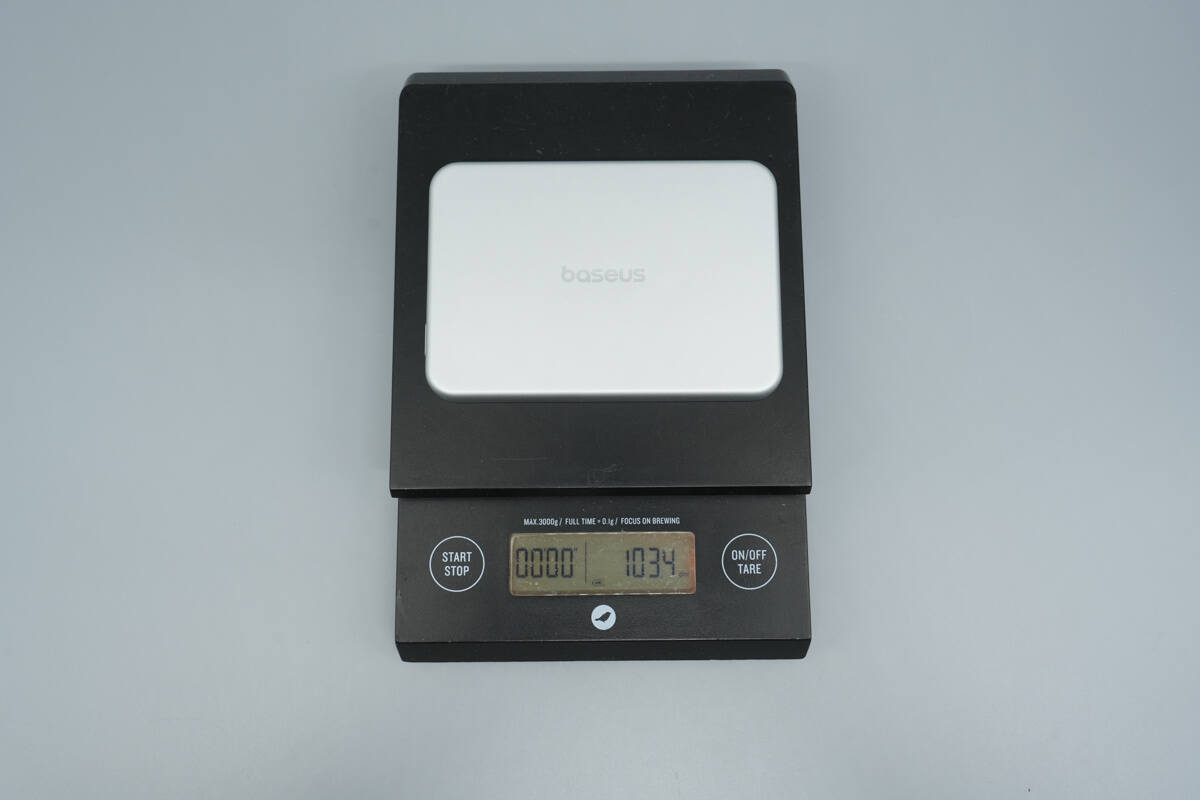
The weight is about 103.4 g (3.65 oz).
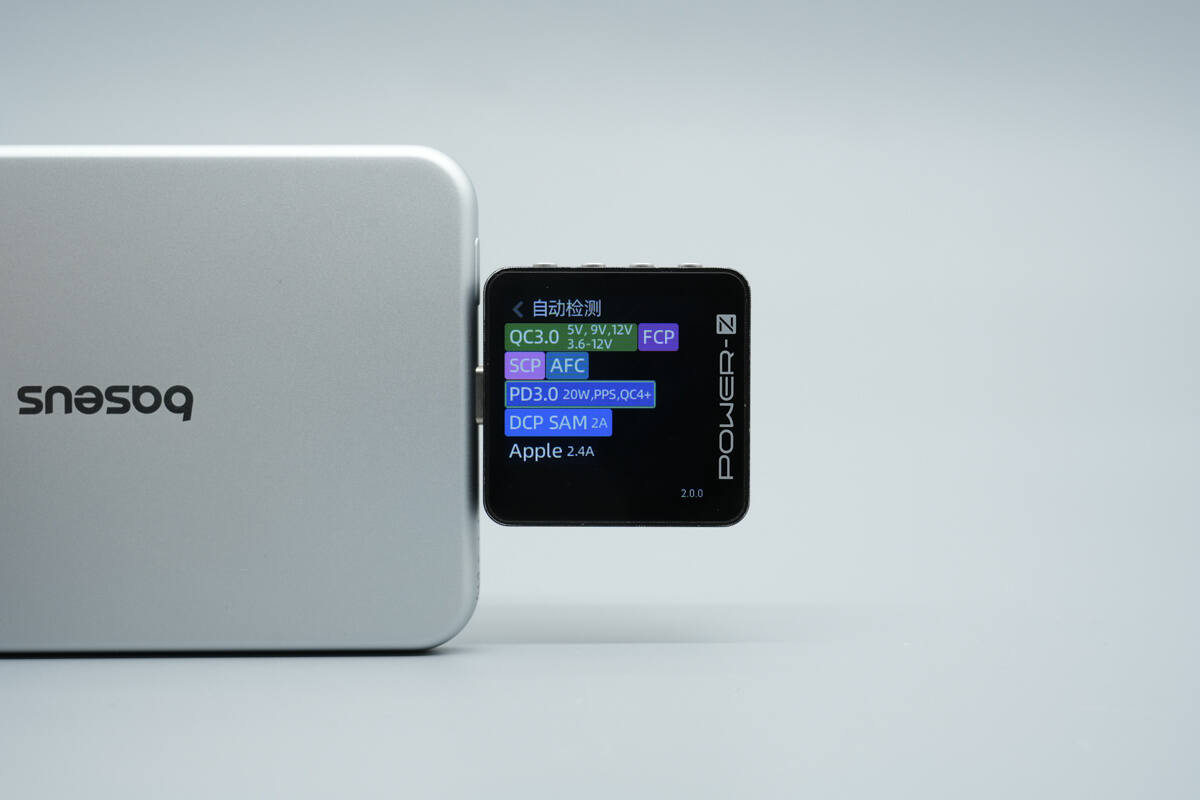
ChargerLAB POWER-Z KM003C shows that the USB-C port supports QC3.0, FCP, SCP, AFC, PD3.0, SAM 5V2A, and Apple 2.4A charging protocols.
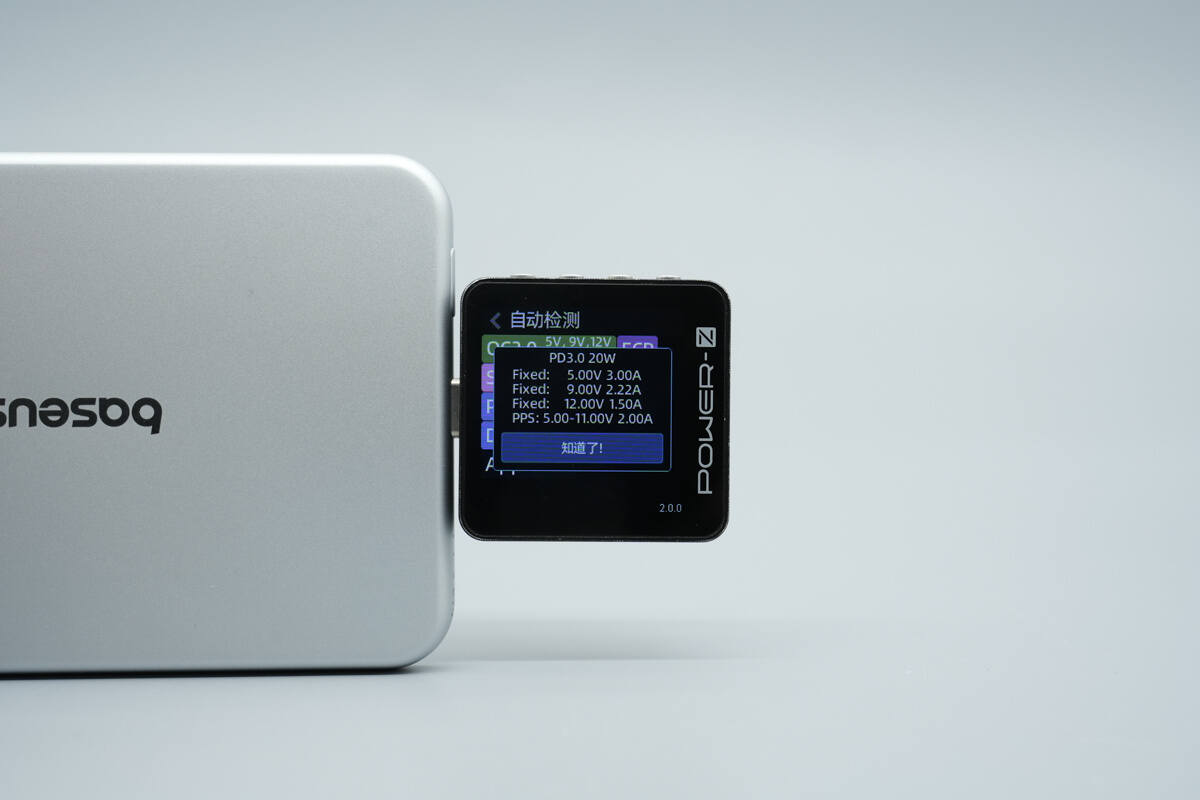
The PDO report shows that it supports three fixed voltage levels: 5V/3A, 9V/2.22A, and 12V/1.5A, as well as a PPS voltage range of 5–11V/2A.
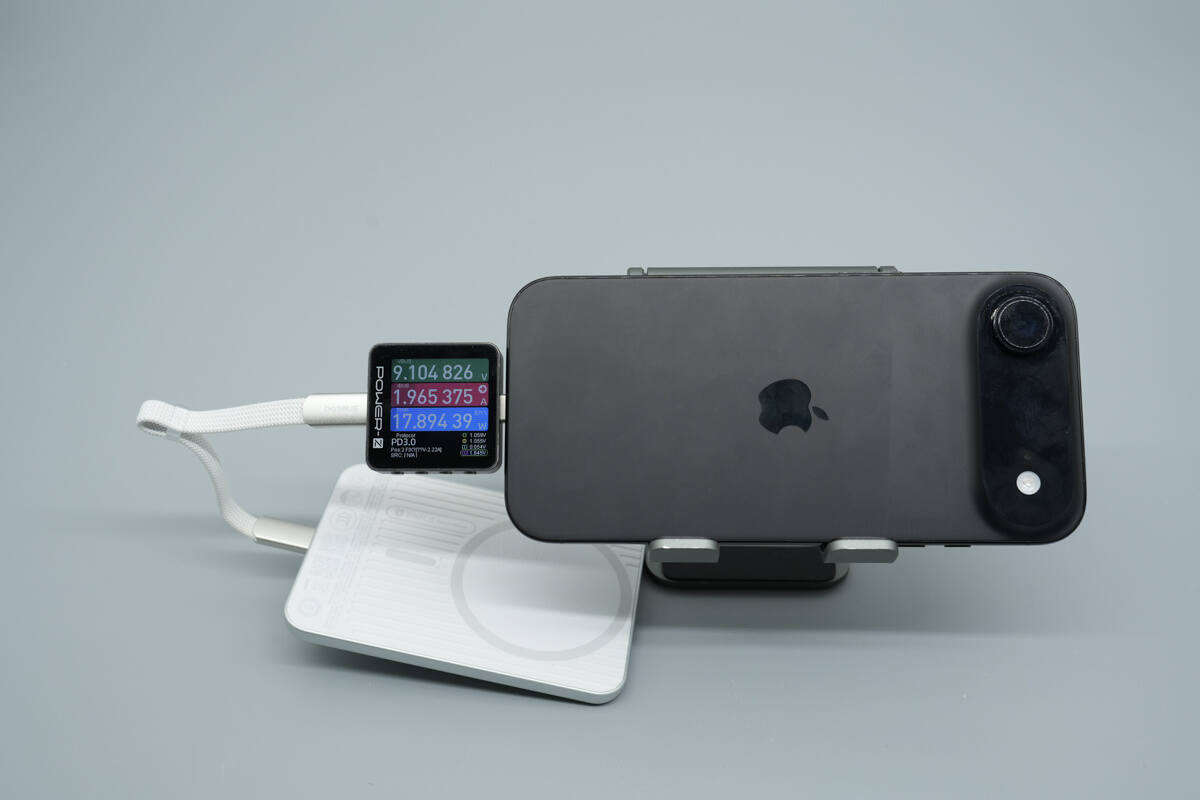
When used for wired charging of an iPhone Air, the output power can reach 17.89W.
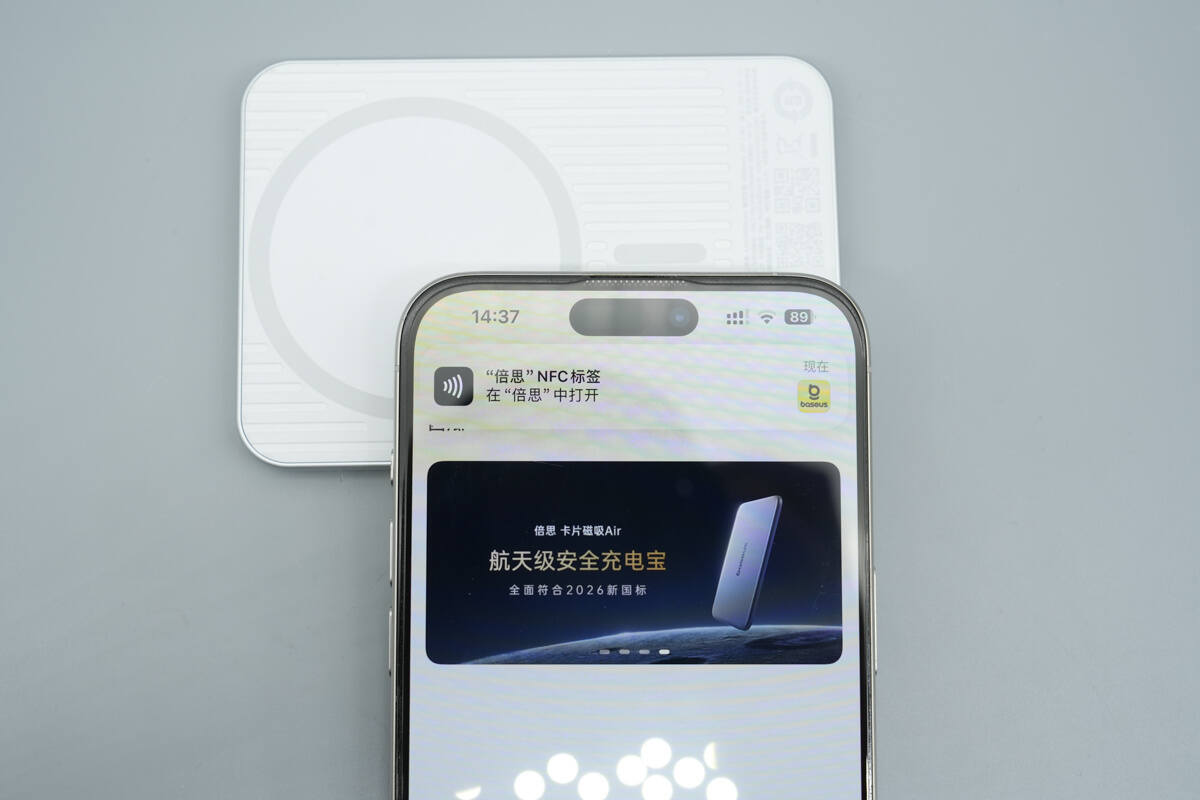
When the top of the iPhone is brought close to the NFC mark on the back, the phone displays a dedicated NFC tag card.
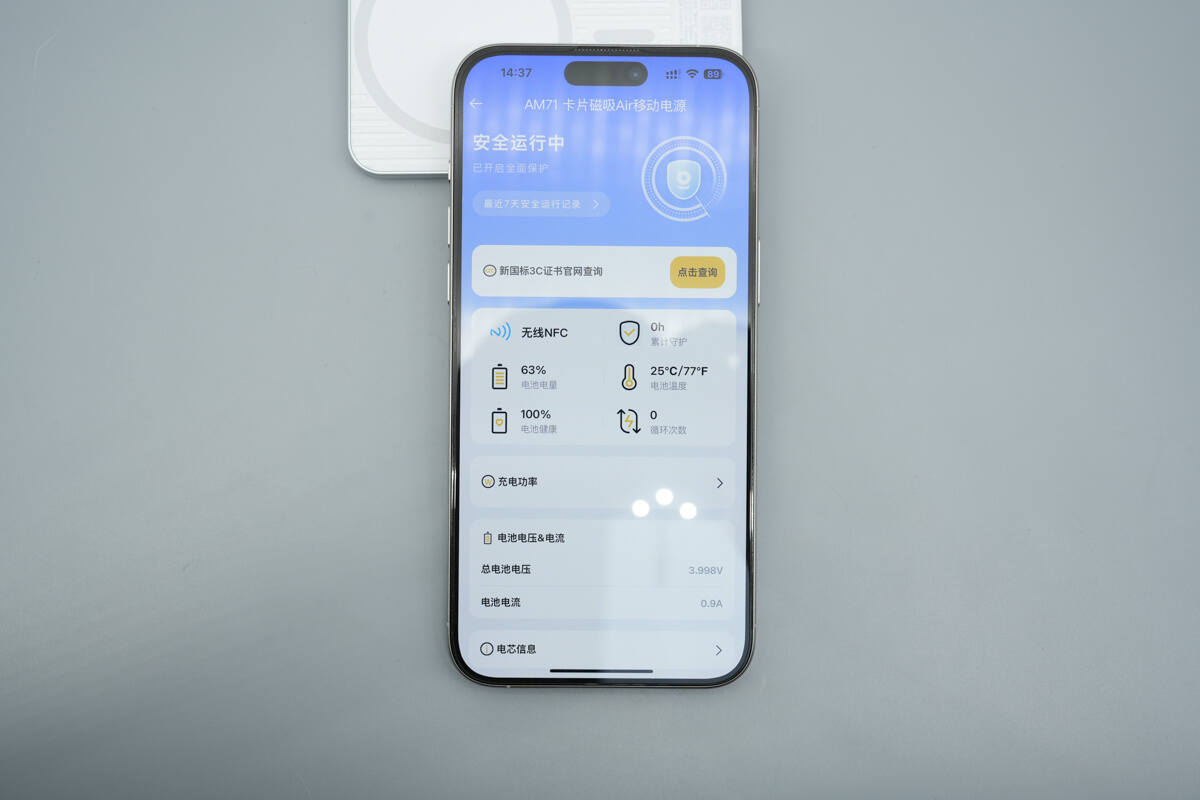
By tapping the pop-up, users can enter the Baseus App, where they can directly view the remaining battery level and access real-time data from the power bank, including cell temperature, battery health, charge-discharge cycle count, and the cell’s operating voltage and current.
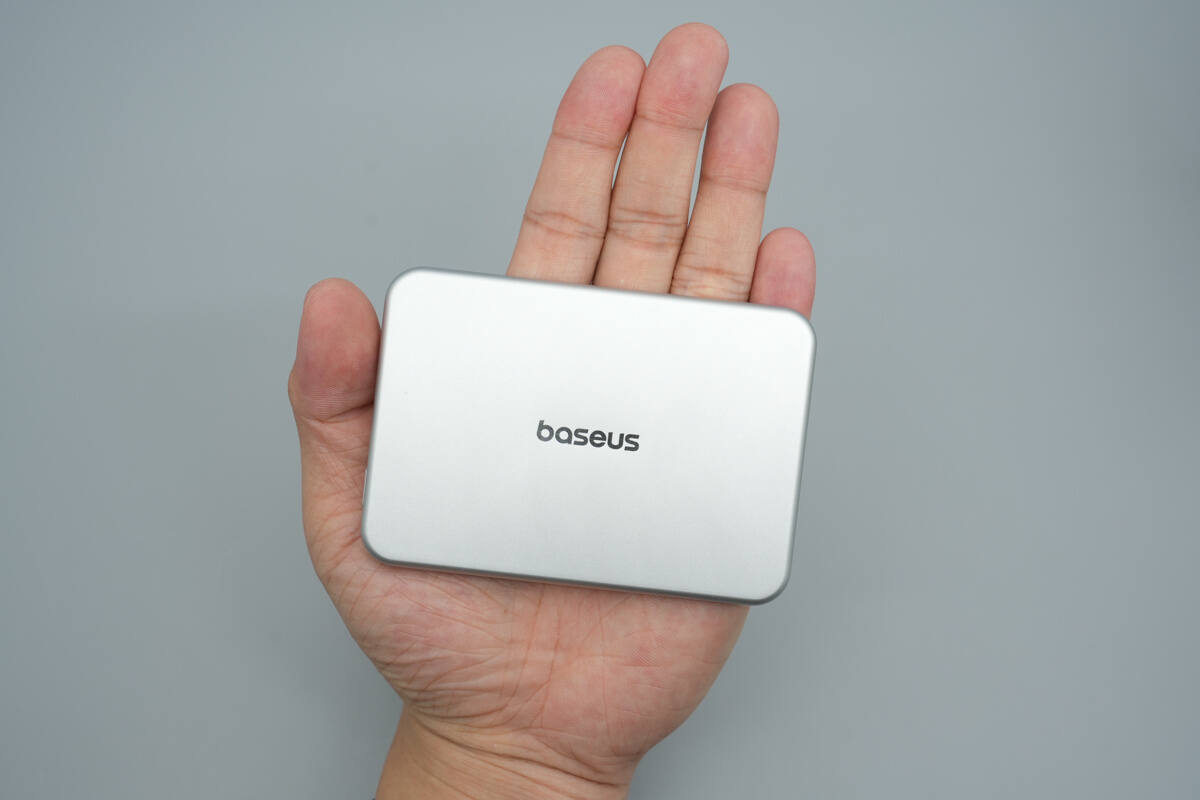
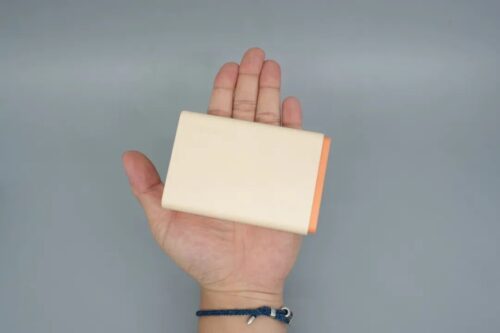
That's how big it is in the hand.
Teardown
Next, let's take it apart to see its internal components and structure.
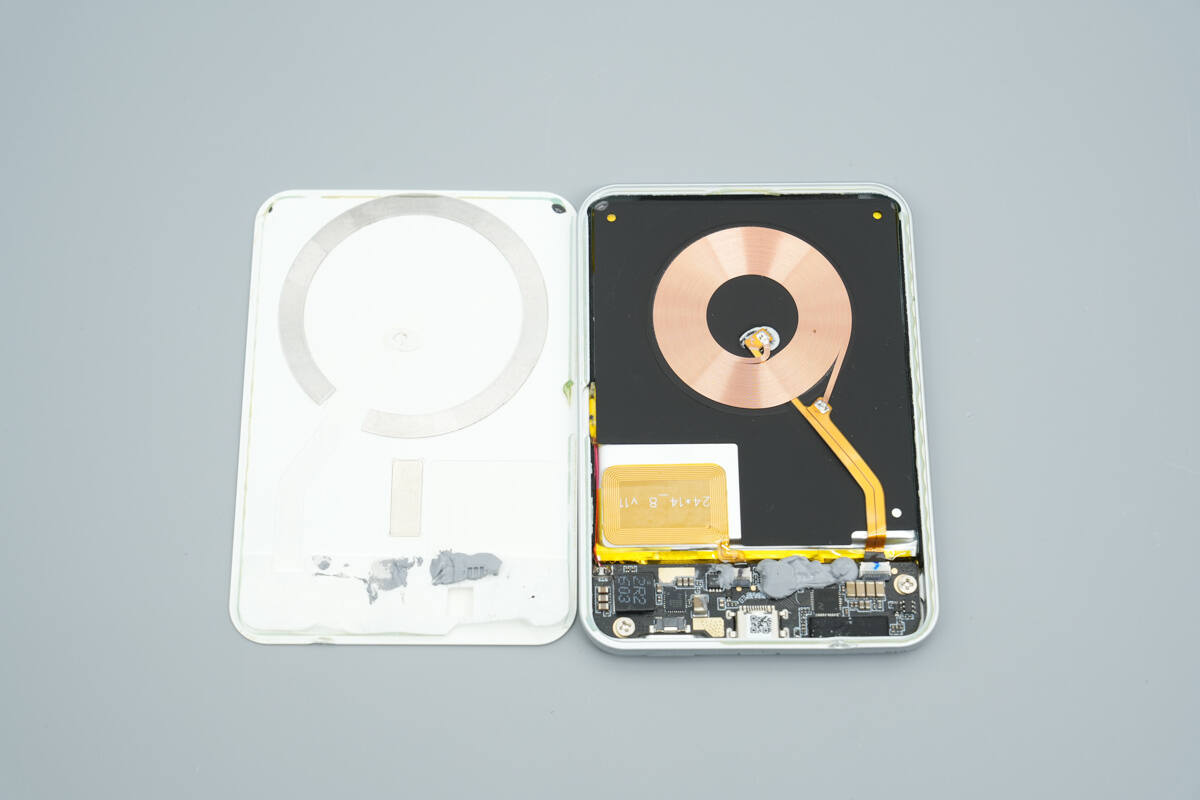
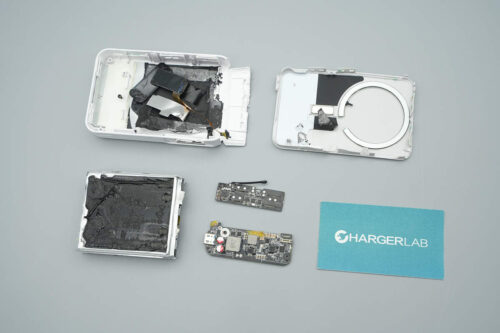
Removing the white back panel reveals the internal layout.
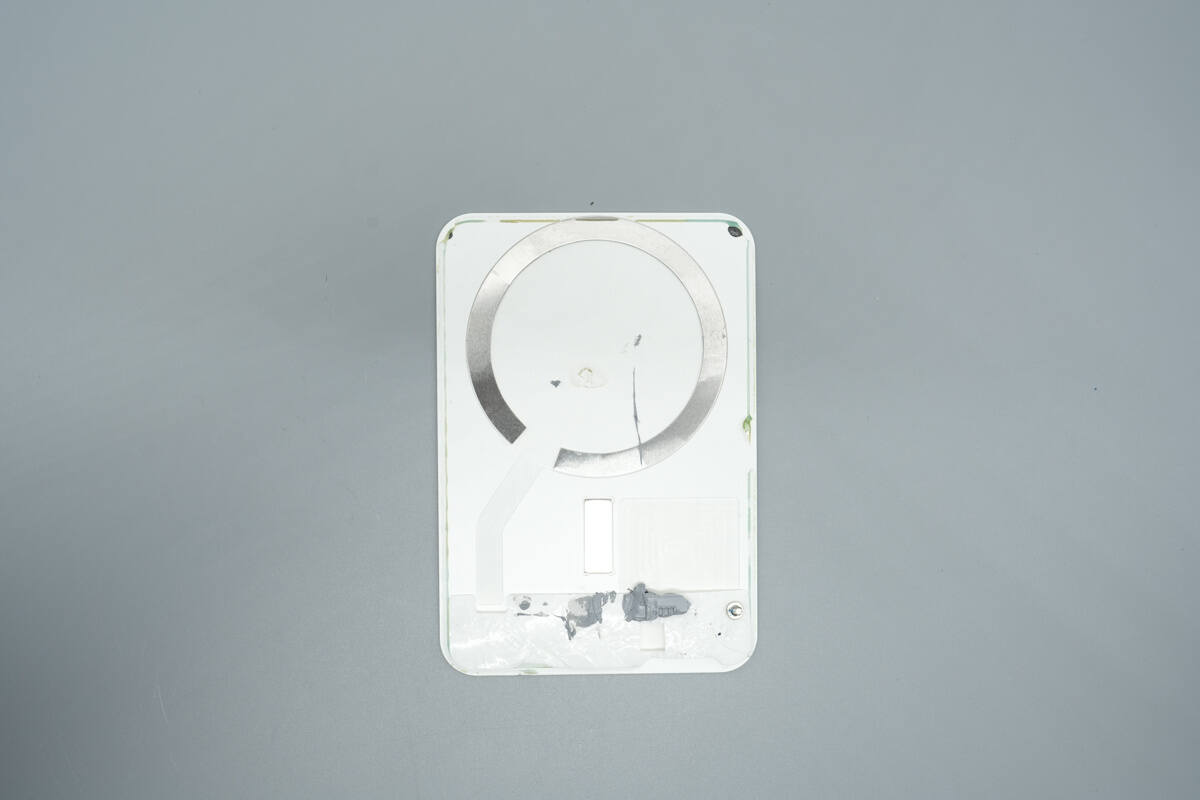
It uses ultra-thin magnets.
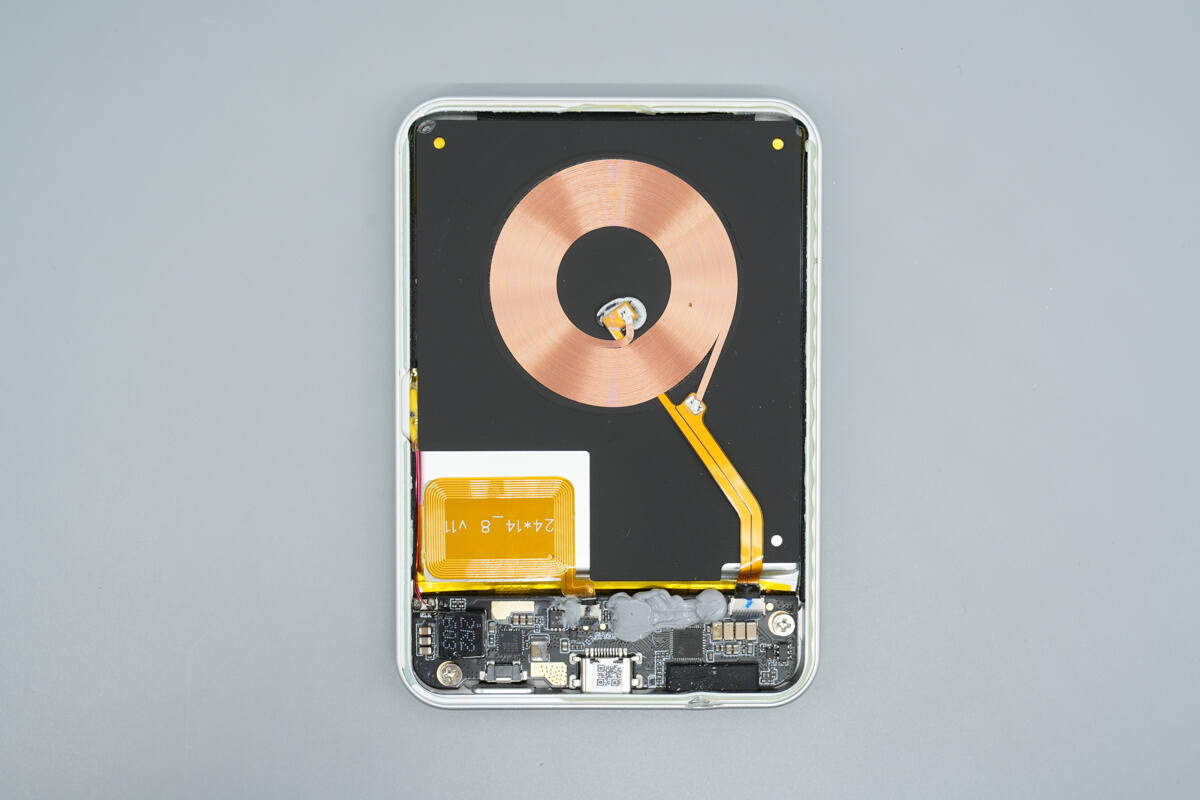
In the lower-left corner, there is a flexible antenna for NFC communication, and at the bottom is the PCBA module.
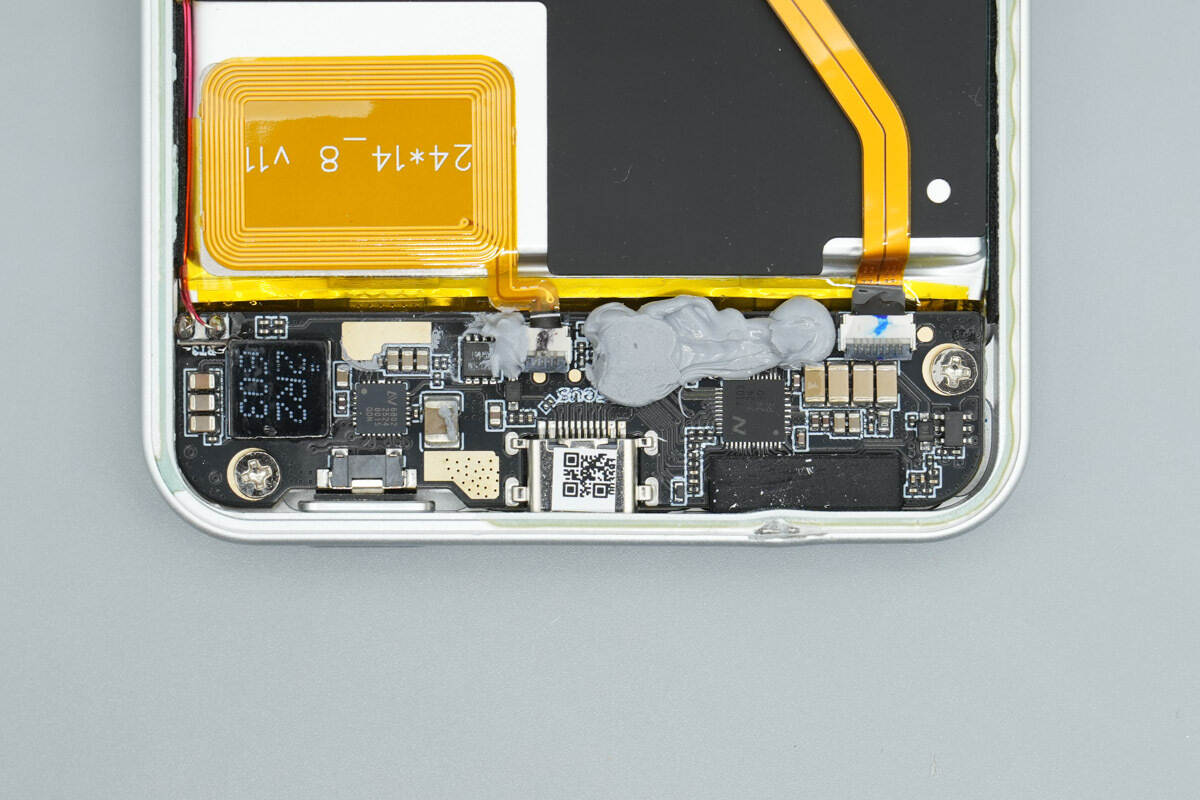
A large amount of gray thermal paste covers the heat-generating core components.
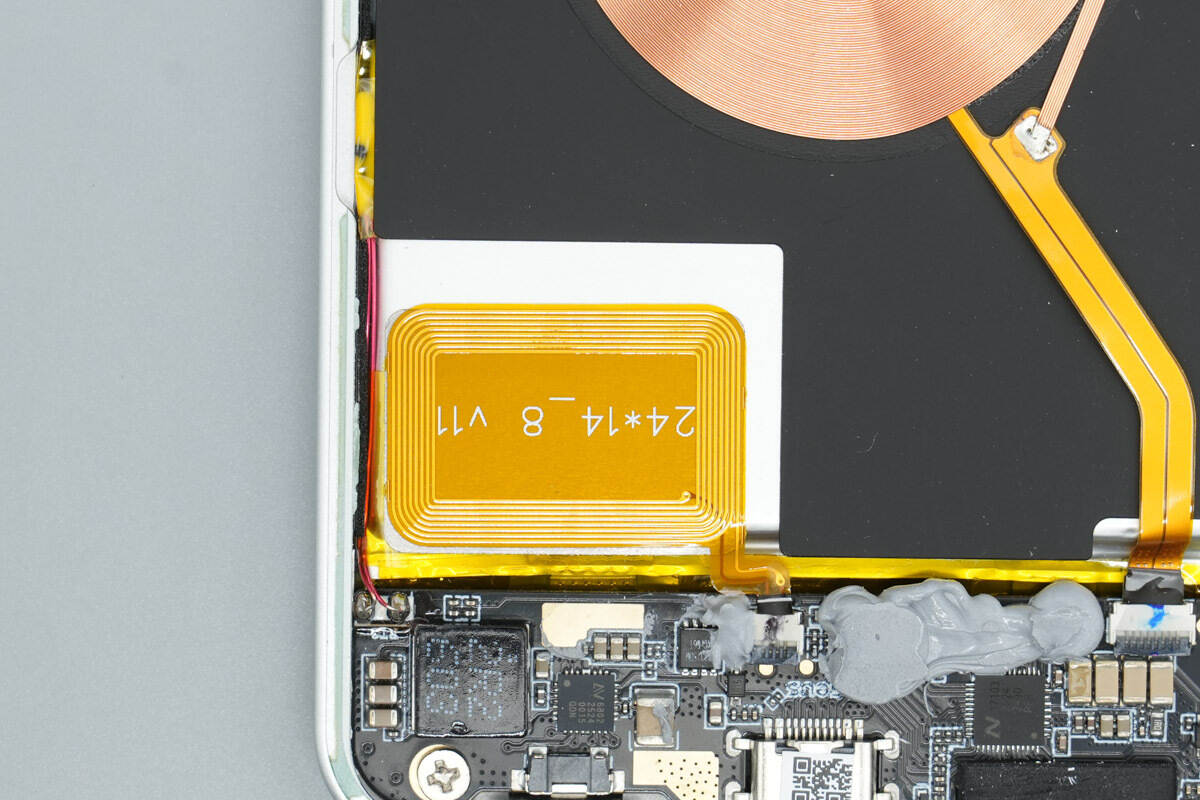
The yellow FPC flexible antenna is marked with “24*14_8V11.”
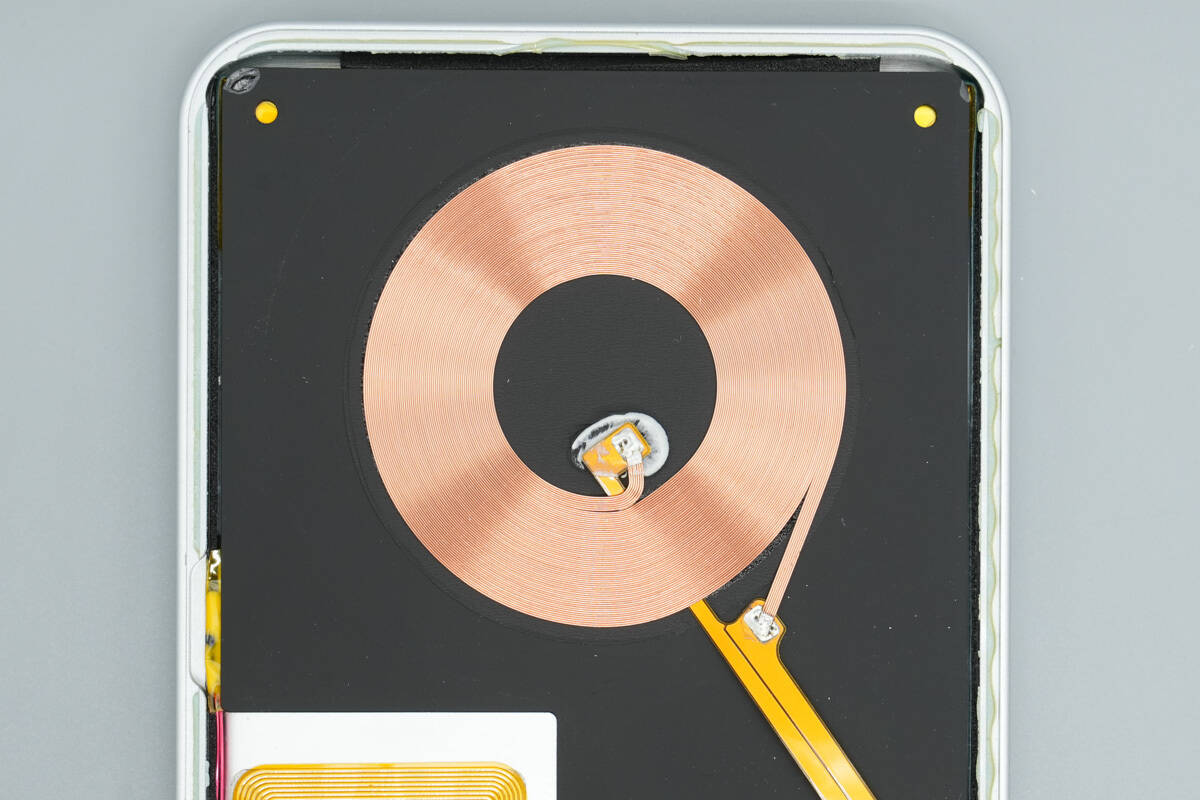
The wireless charging coil is denser and thinner than conventional coils and is connected to the PCBA via a flexible ribbon cable.
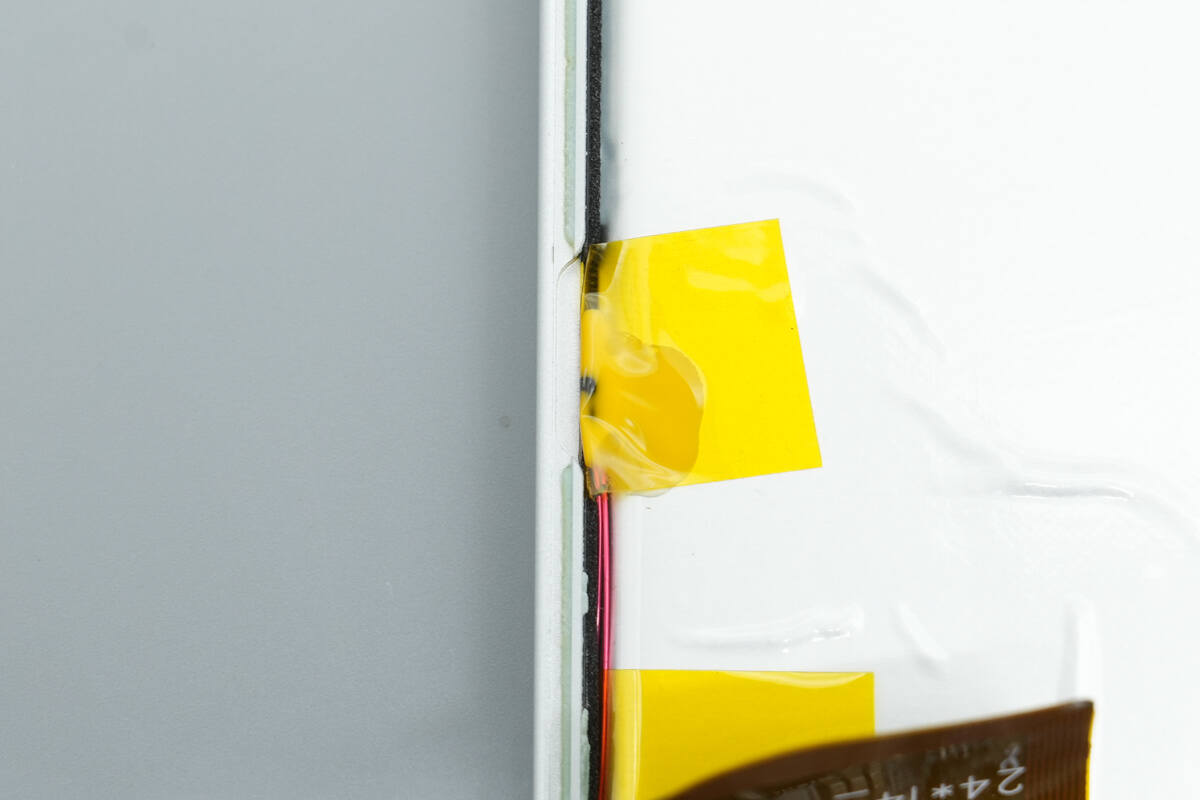
Yellow insulating tape is used along the edge of the battery cell to secure the thermistor.
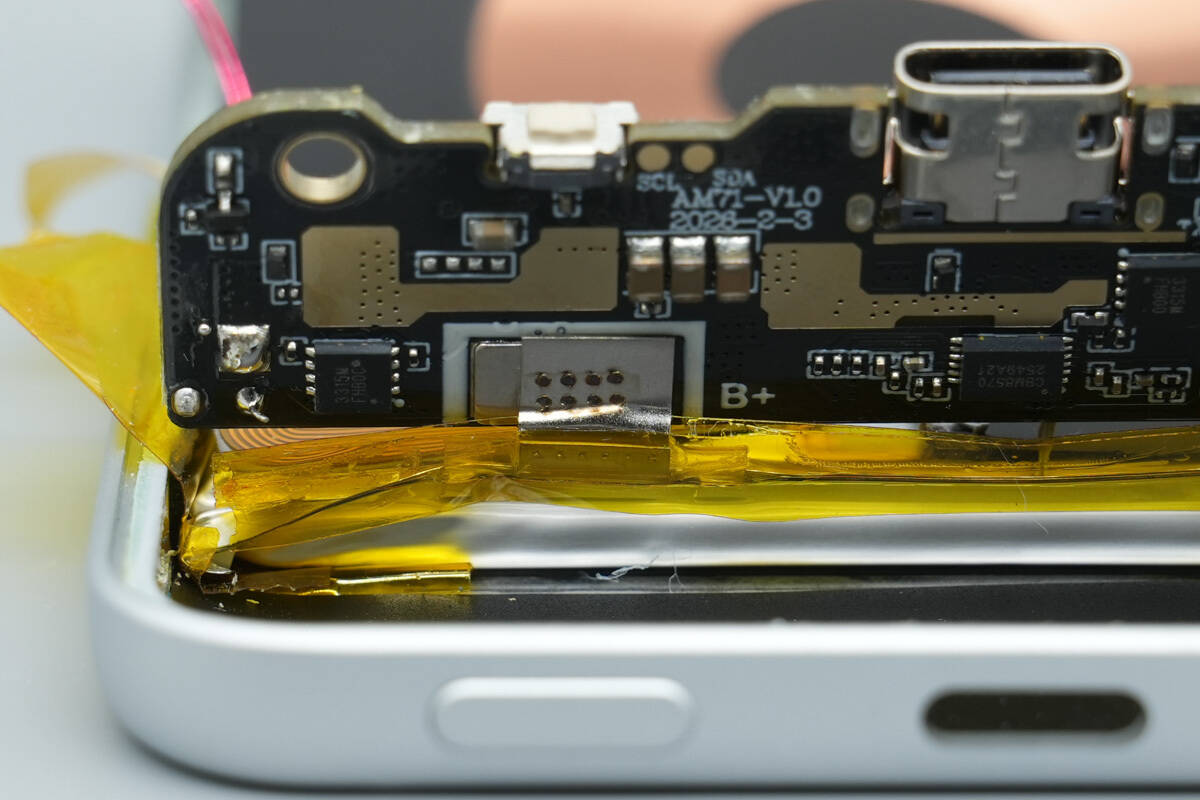
The battery tabs are solidly soldered to the PCB and insulated with high-temperature tape.
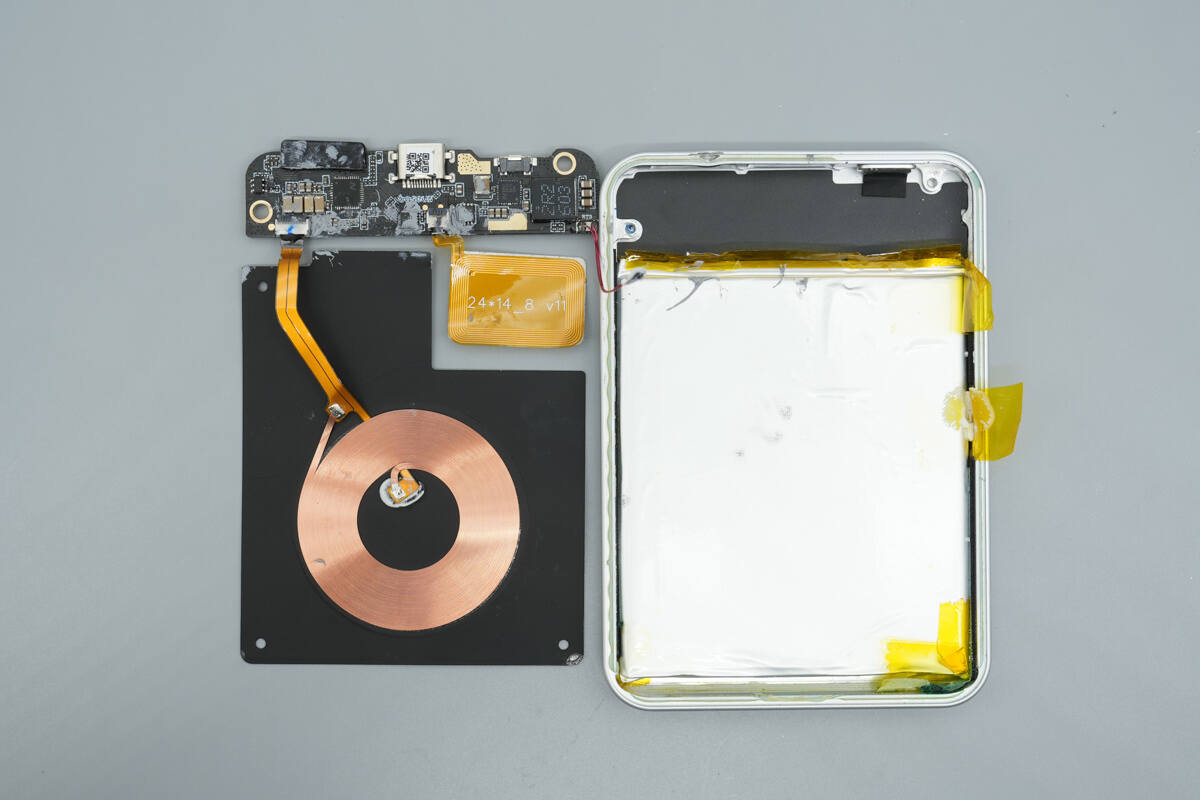
Remove the PCB, charging coil, and NFC antenna.
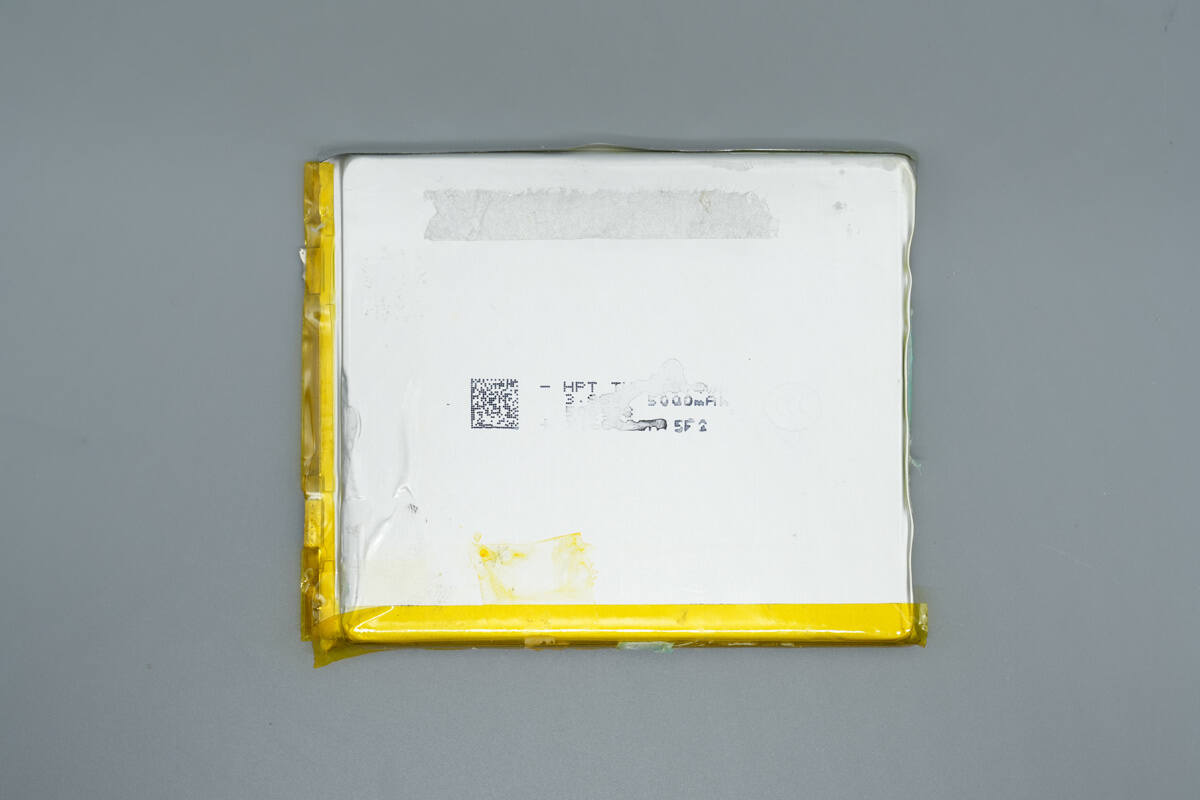
Remove the battery cell.
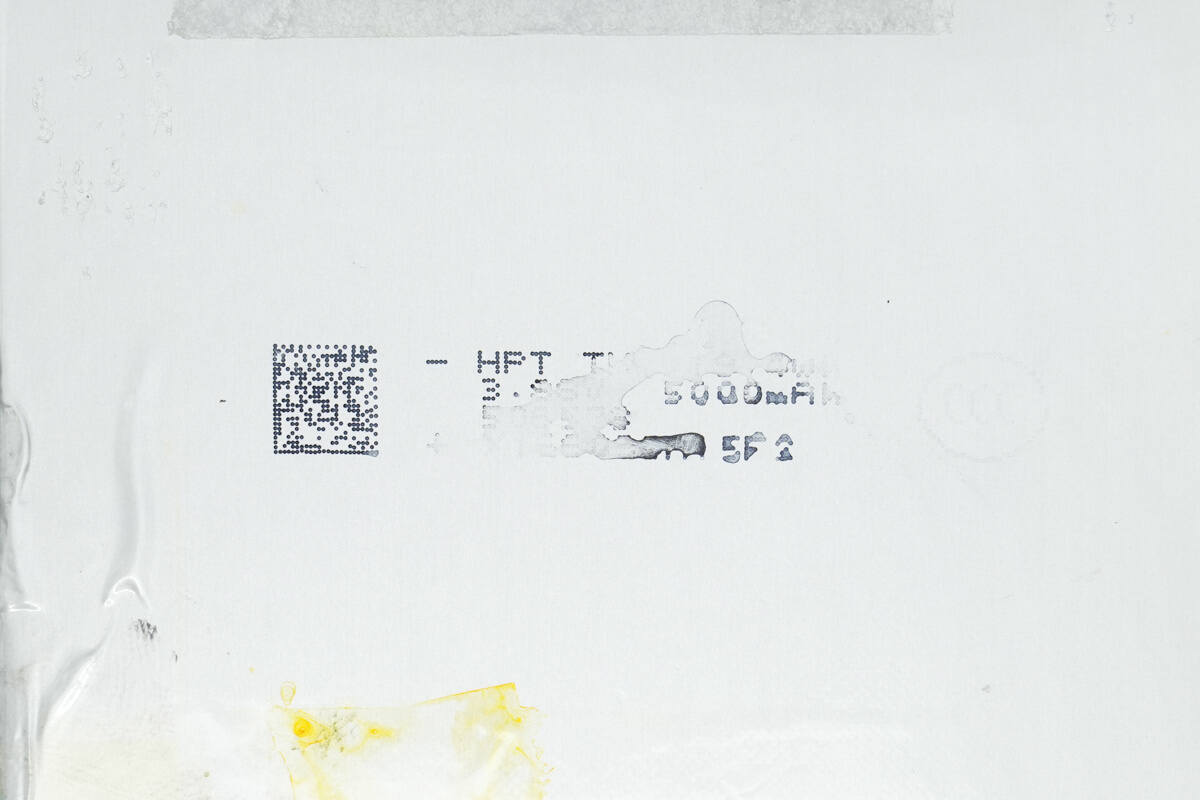
The battery cell is from HPT, with a nominal voltage of 3.88V and a capacity of 5000mAh.
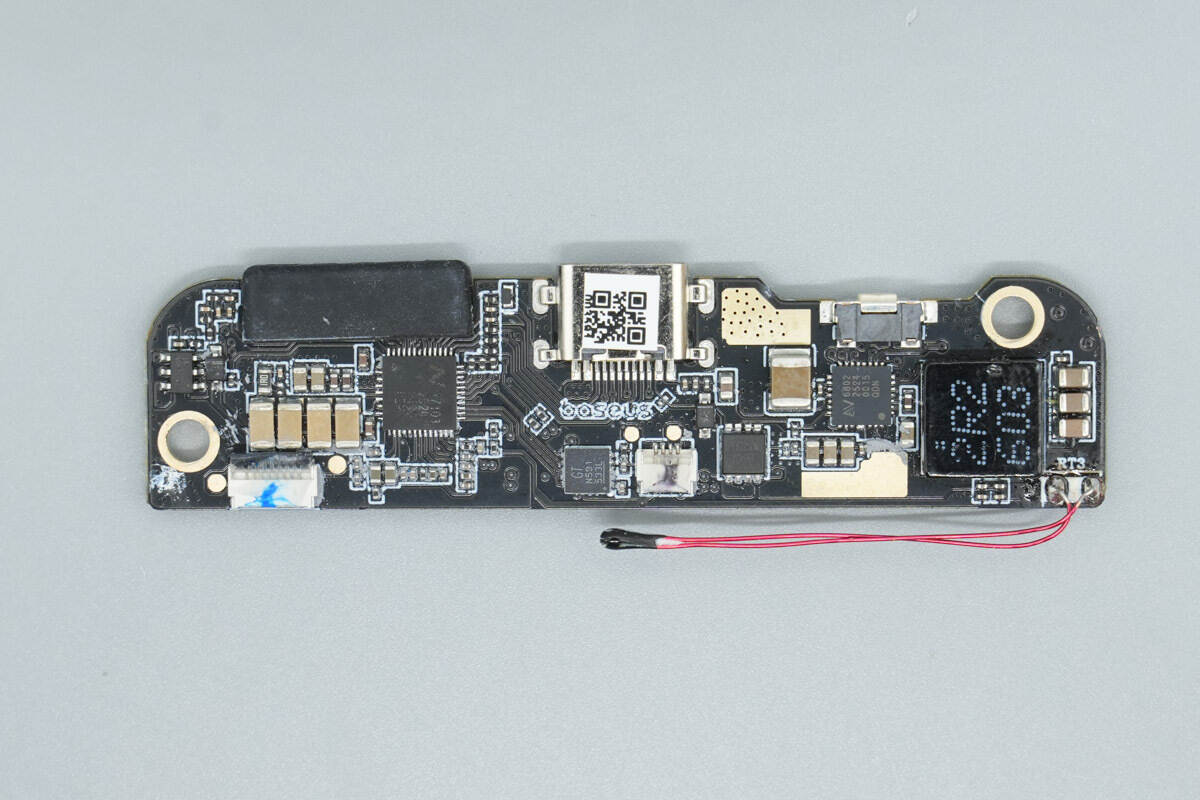
The front side of the PCB features a densely packed component layout.
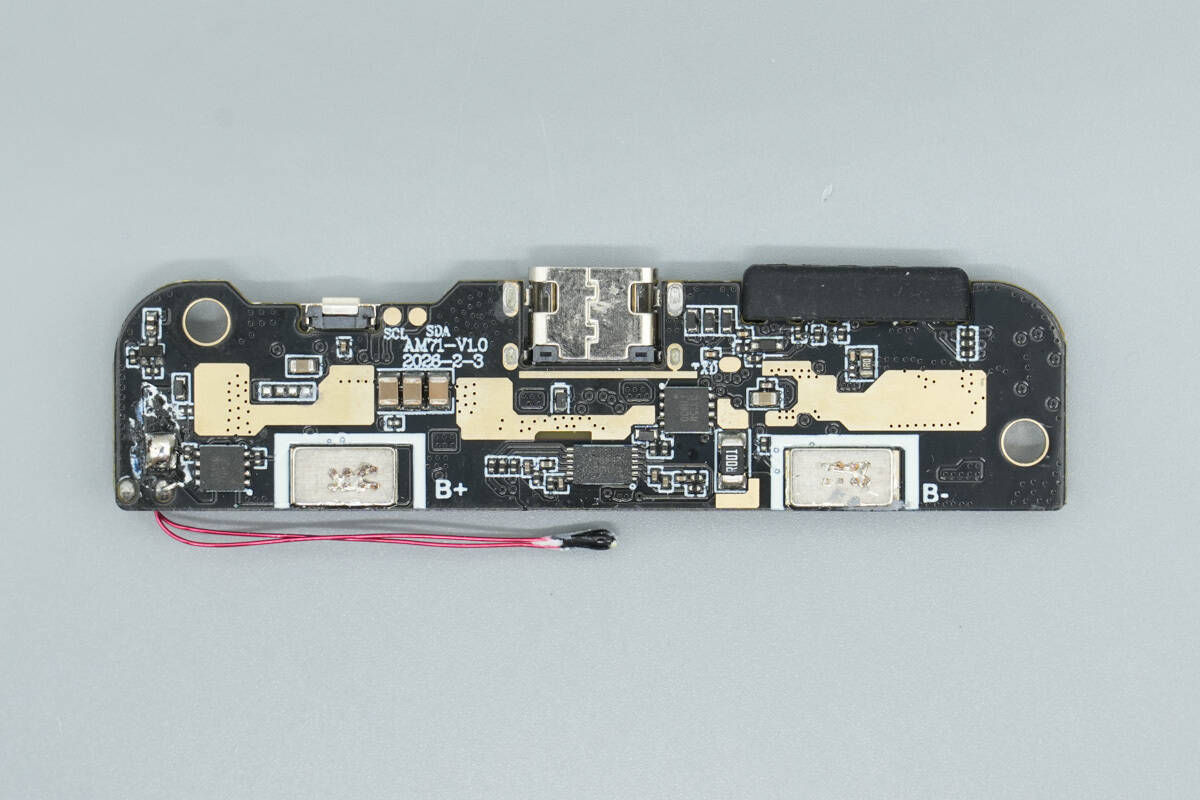
The back side has two large tin-plated copper foil areas, which enhance its capacity to handle high current.
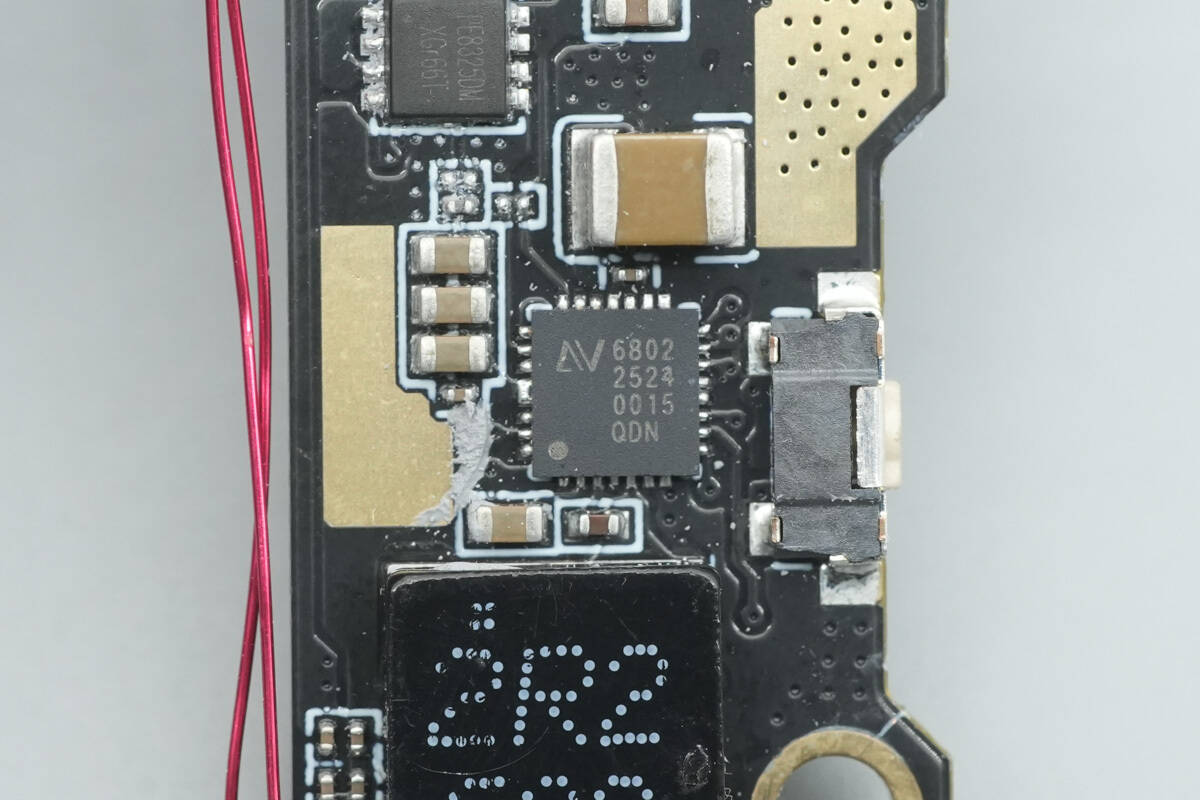
The power management IC is from NuVolta, model NU6802, in a QFN30 package, specifically designed for high-efficiency buck charging, as well as reverse boost applications.
This device supports a wide VBUS operating voltage range of 4.4V–13V, covering the full charging process, including trickle, constant current, constant voltage, and termination stages. Under a 9V/2A operating condition, its buck charging efficiency reaches 95.5%, while the reverse boost efficiency is 95%.
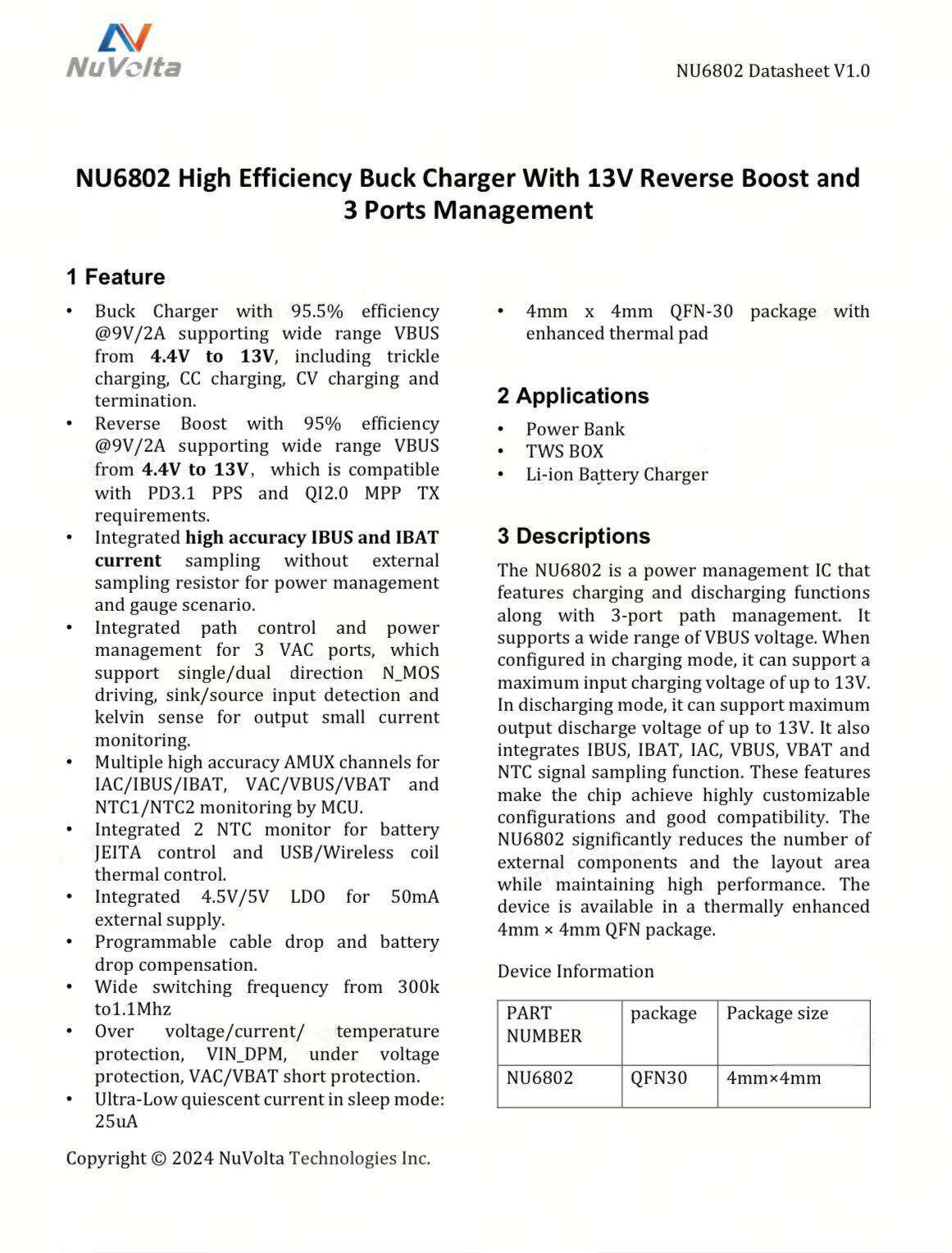
The chip’s reverse boost function is fully compatible with PD3.1 PPS and Qi 2.0 MPPTX standards, making it an ideal solution for power banks, TWS earbud charging cases, and various portable lithium-ion battery charging devices.
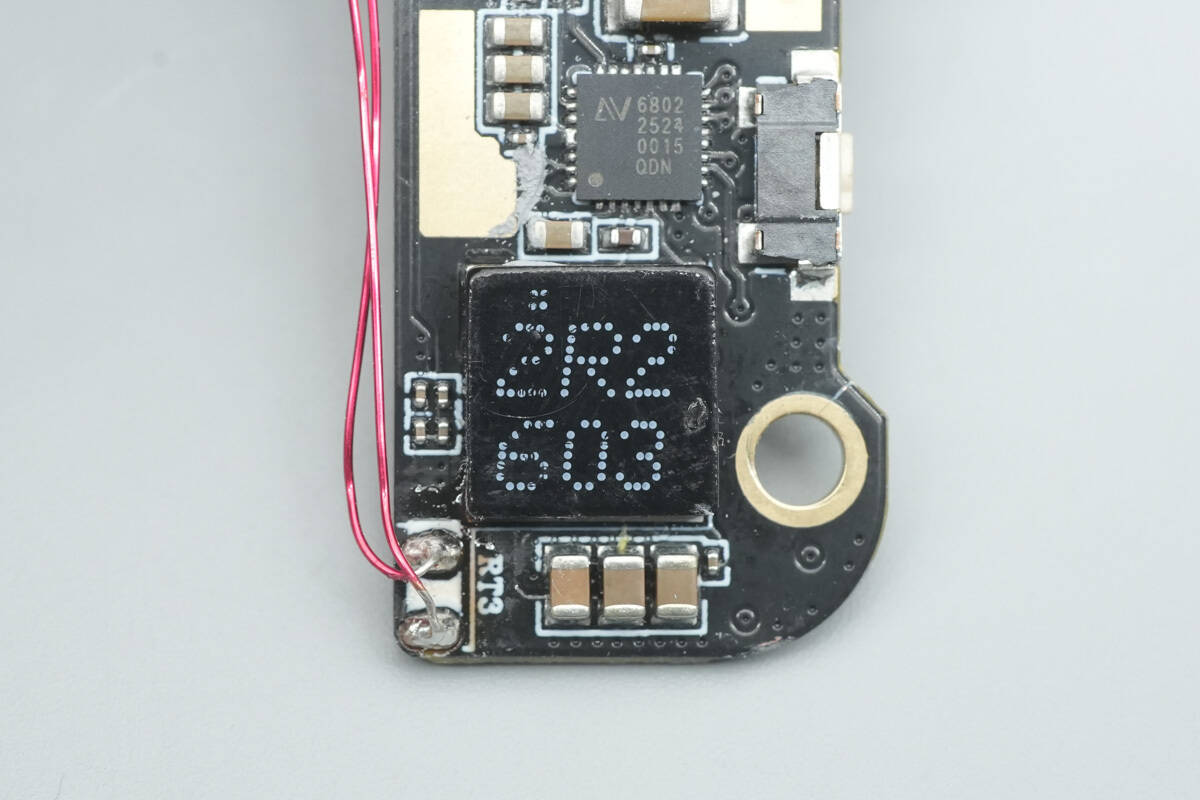
The planar inductor is from Sanding, part number SDXGL0720D-2R2MTP. It has a nominal inductance of 2.2 µH with a tolerance of ±20%, a DC resistance of 9.8 mΩ, and is suitable for high-current applications. Its maximum saturation current reaches 17.5 A, while the rated current is 14.0 A.
In terms of material and structure, it is wound with flat enameled wire and uses a composite magnetic powder formula. Thanks to a unique manufacturing process, it achieves low loss while significantly enhancing current carrying capacity under the same test conditions, easily meeting the strict temperature control requirements of the new national standard.
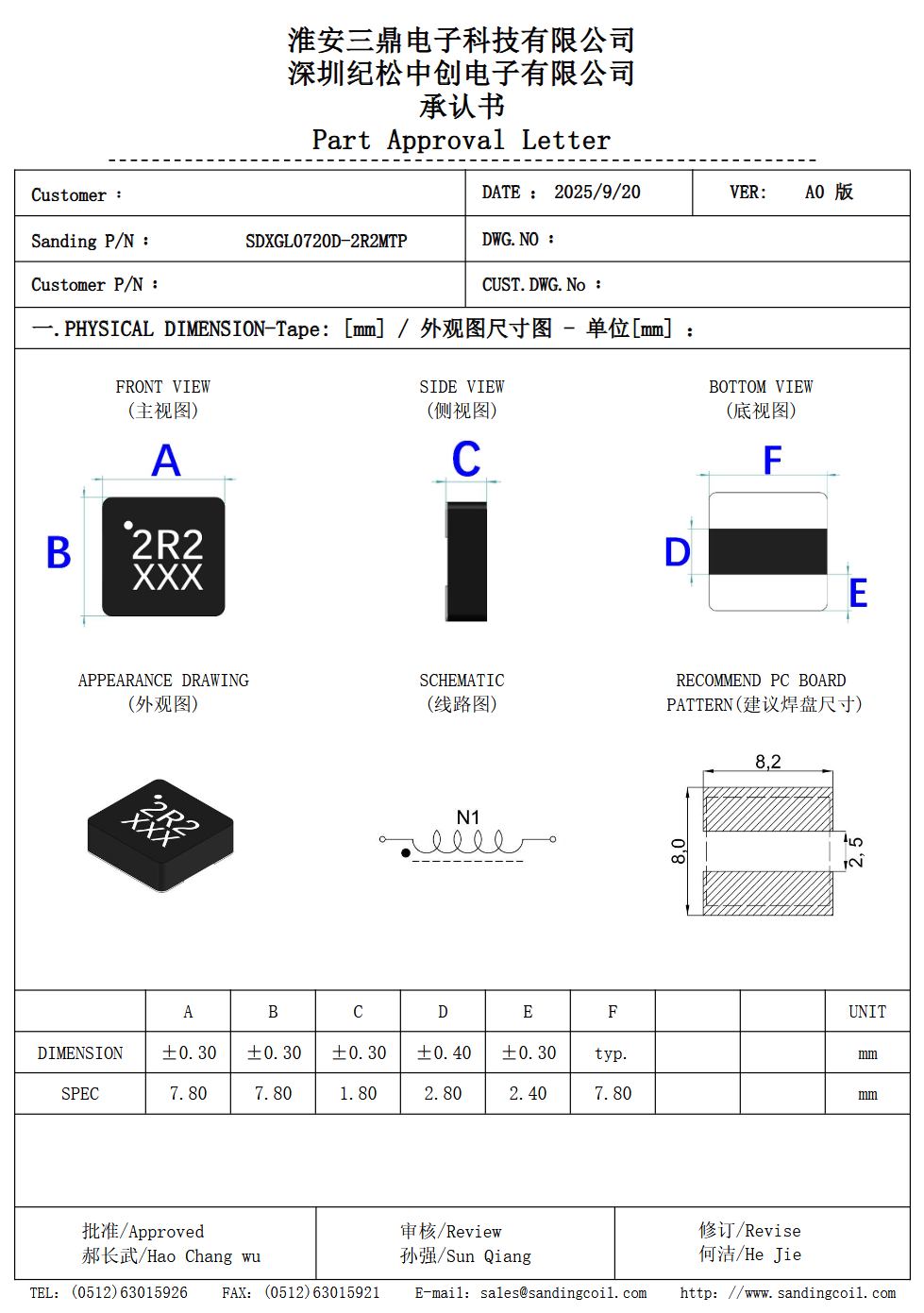
It uses a 13-inch reel wrapped in a plastic-sealed bag, which helps with moisture protection and long-term storage. Each reel contains 1,500 pieces, and a standard outer carton holds 13,500 pieces when fully loaded.
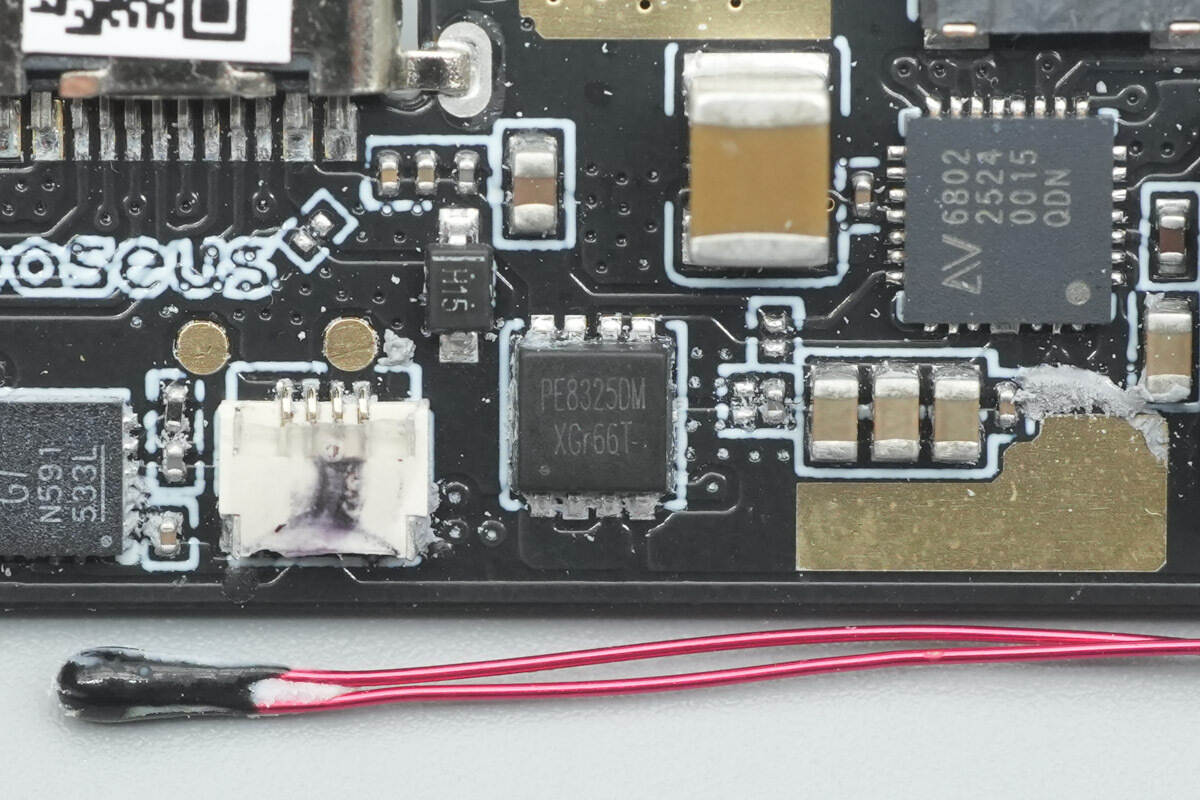
The VBUS MOSFET is from Semi-one, model PE8325DM. It is an NMOS with a voltage rating of 30 V, housed in a PDFN3333 package, and has an on-resistance of 10 mΩ.
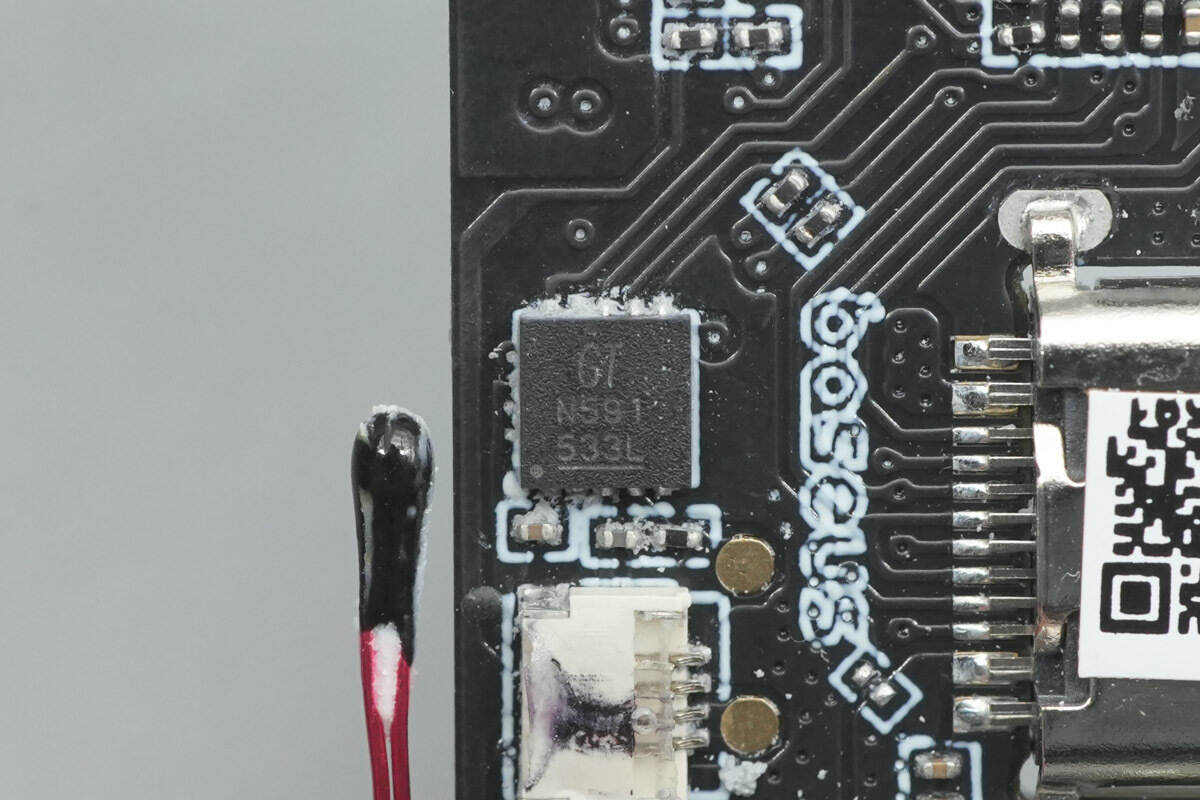
The smart card chip is from GT, marked with N551, and is used to enable NFC smart interaction functionality.
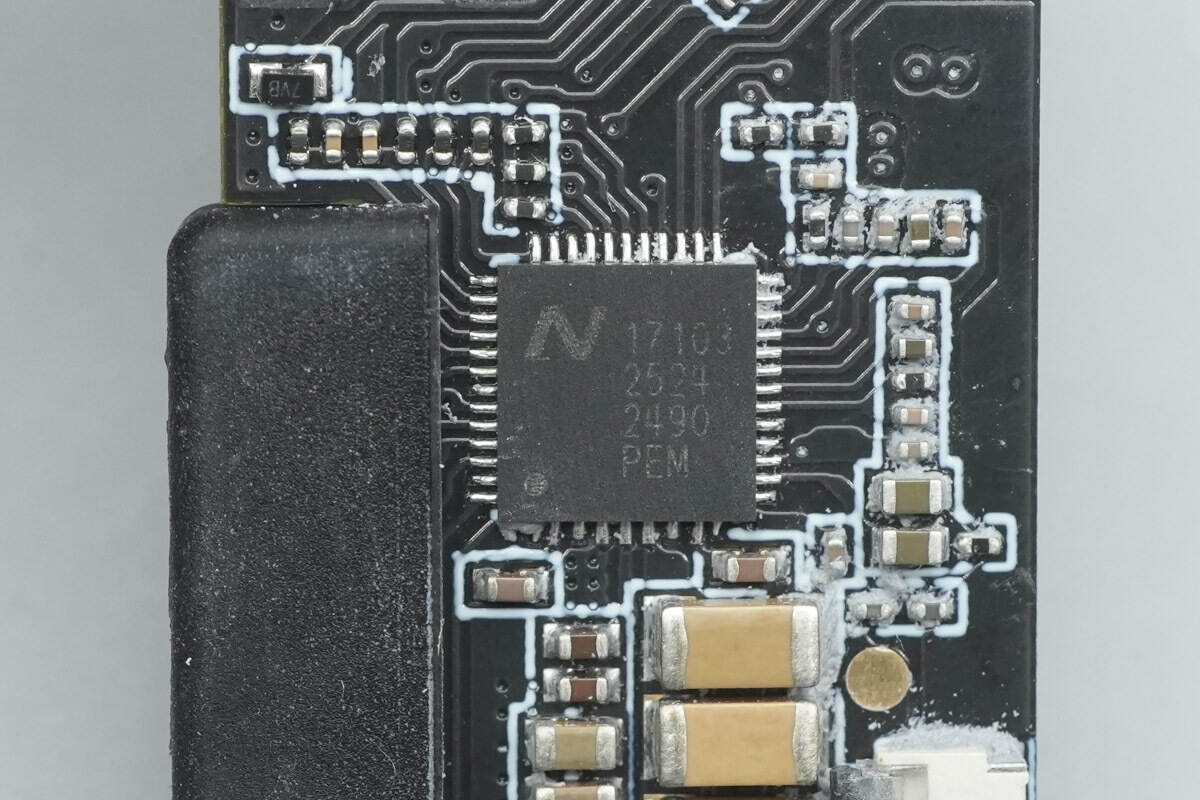
The wireless charging power bank SoC is from NuVolta, part of the NU171XX series, model NU17103. It is specifically designed for Qi2 wireless charging power banks, supporting 15W MPP simultaneous charge-and-discharge, allowing the power bank to function as a desktop wireless charger with continuous connection.
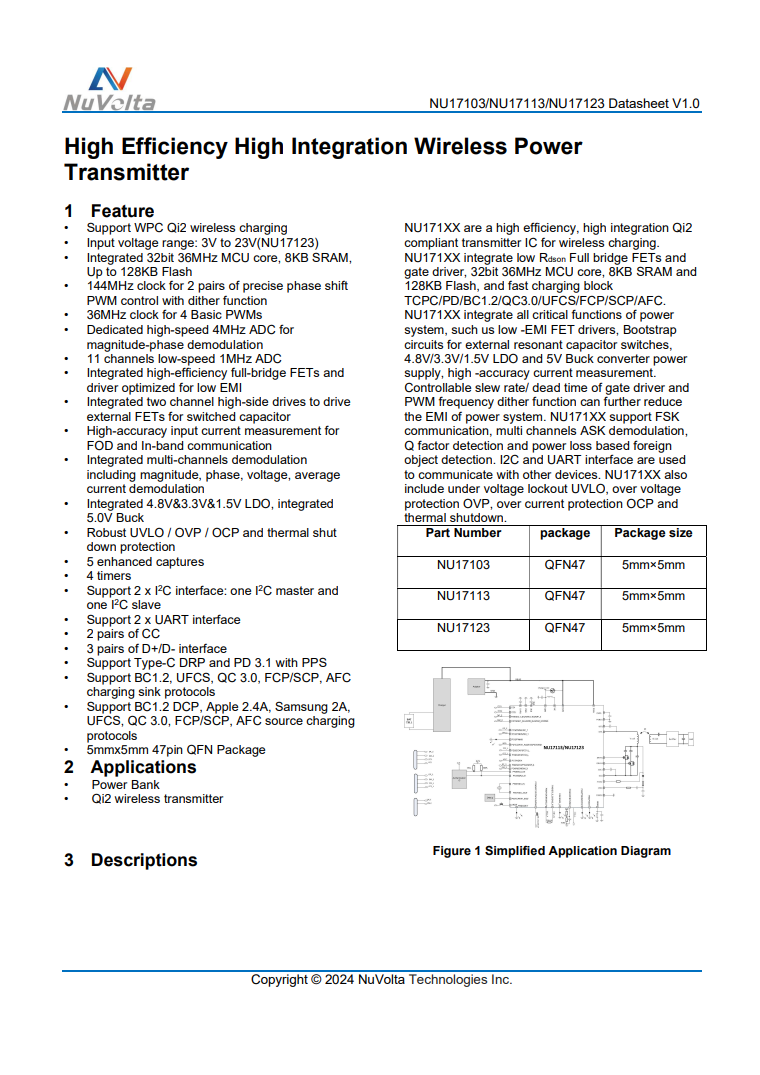
The NU17103 comes in a QFN47 package and integrates a 32-bit MCU core, low-resistance full-bridge MOSFETs with drivers, and built-in fast charging protocols including PD, QC3.0, and UFCS, streamlining peripheral circuit design and saving valuable internal space in compact power banks.
Additionally, the chip features high-precision Q-factor detection, adjustable power MOSFET driving, and hardware frequency dithering to effectively reduce EMI. Coupled with multiple safety protections such as over-voltage, over-current, and thermal shutdown, it ensures comprehensive stability and reliability for the device.
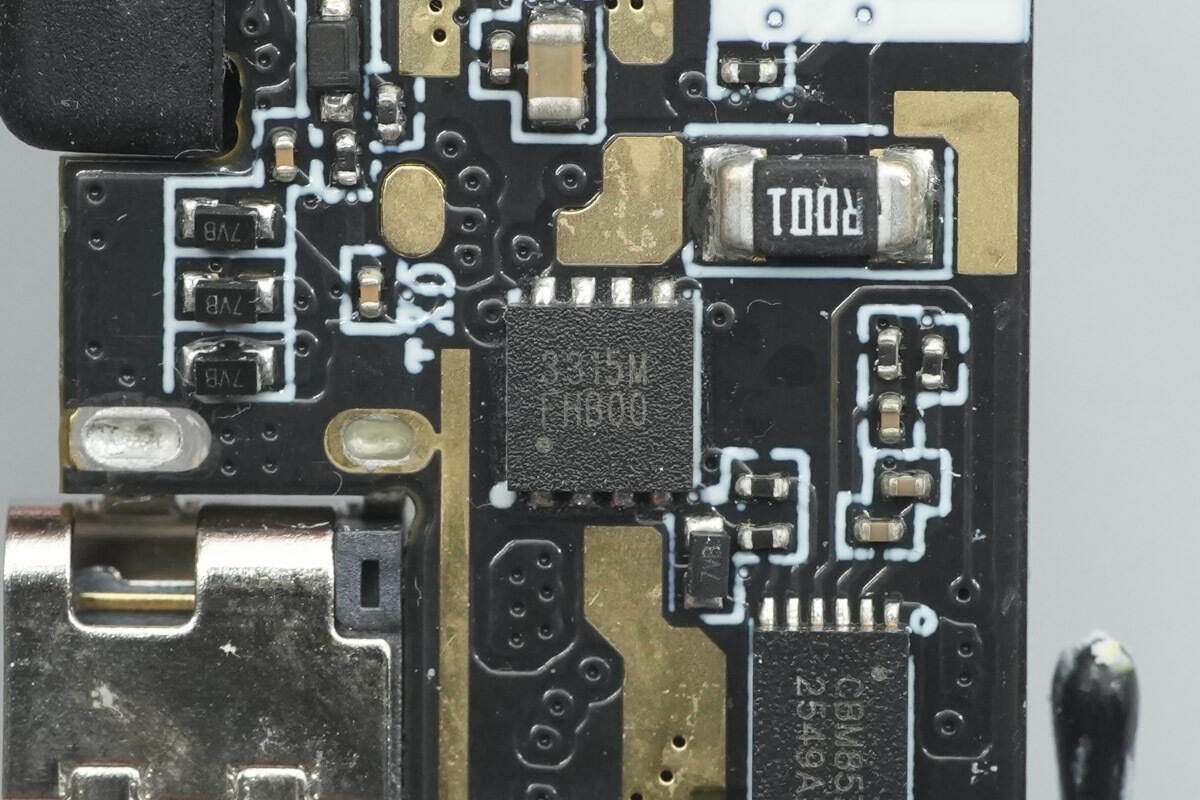
The wireless charging power MOSFET is from Semi-one, model PED3315M, with an 18 V voltage rating, 3.0 mΩ on-resistance, and comes in a DFN 3×3 mm package.
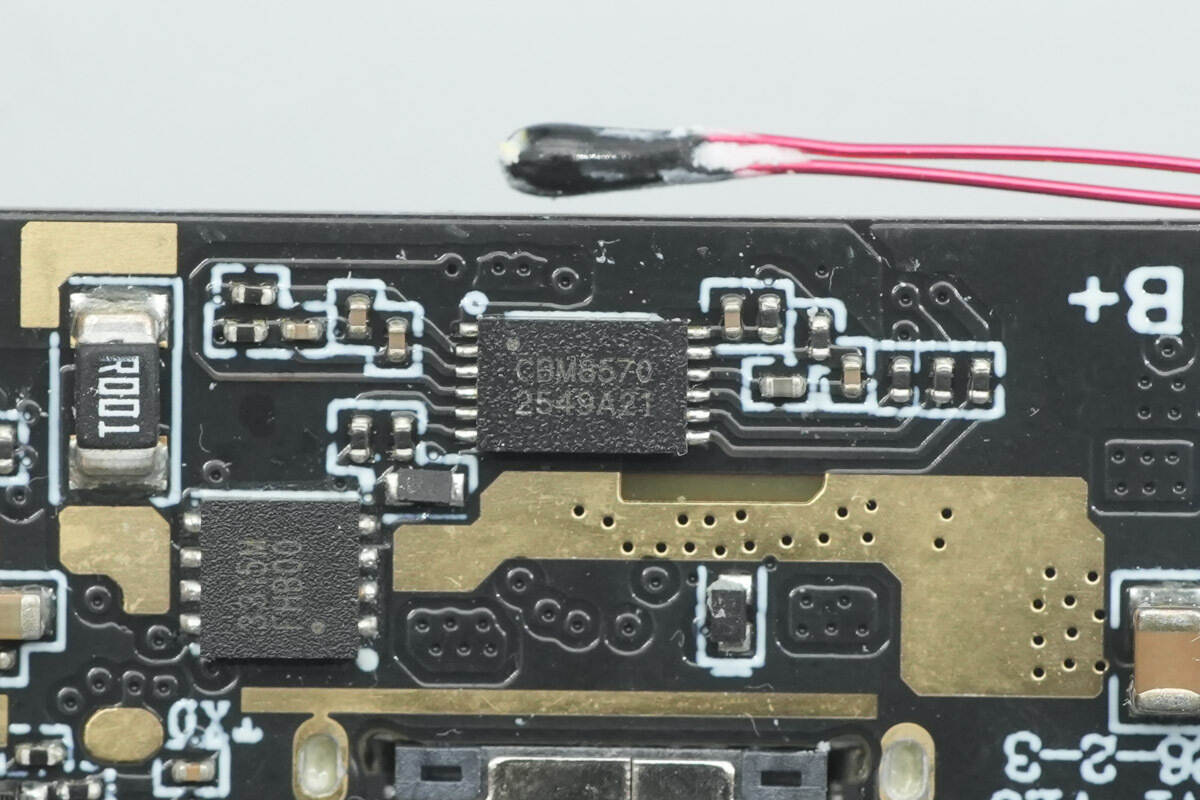
The battery protection chip is from Chipsea, model CBM8570. It is designed for 1–2 cell lithium-ion battery applications, comes in a DFN12 package, and integrates six protection functions: over-voltage, under-voltage, over-current, short-circuit, over-temperature, and self-diagnosis.
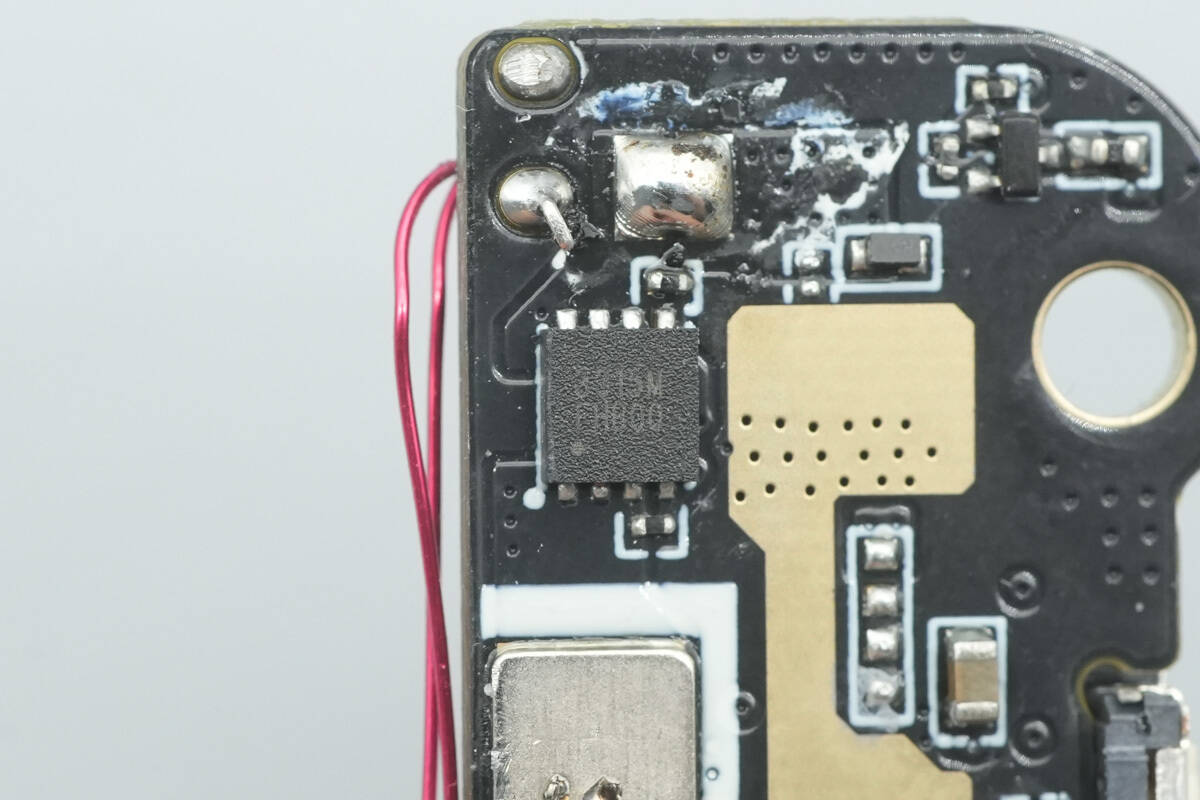
Another battery protection MOSFET is also marked with 3315M.
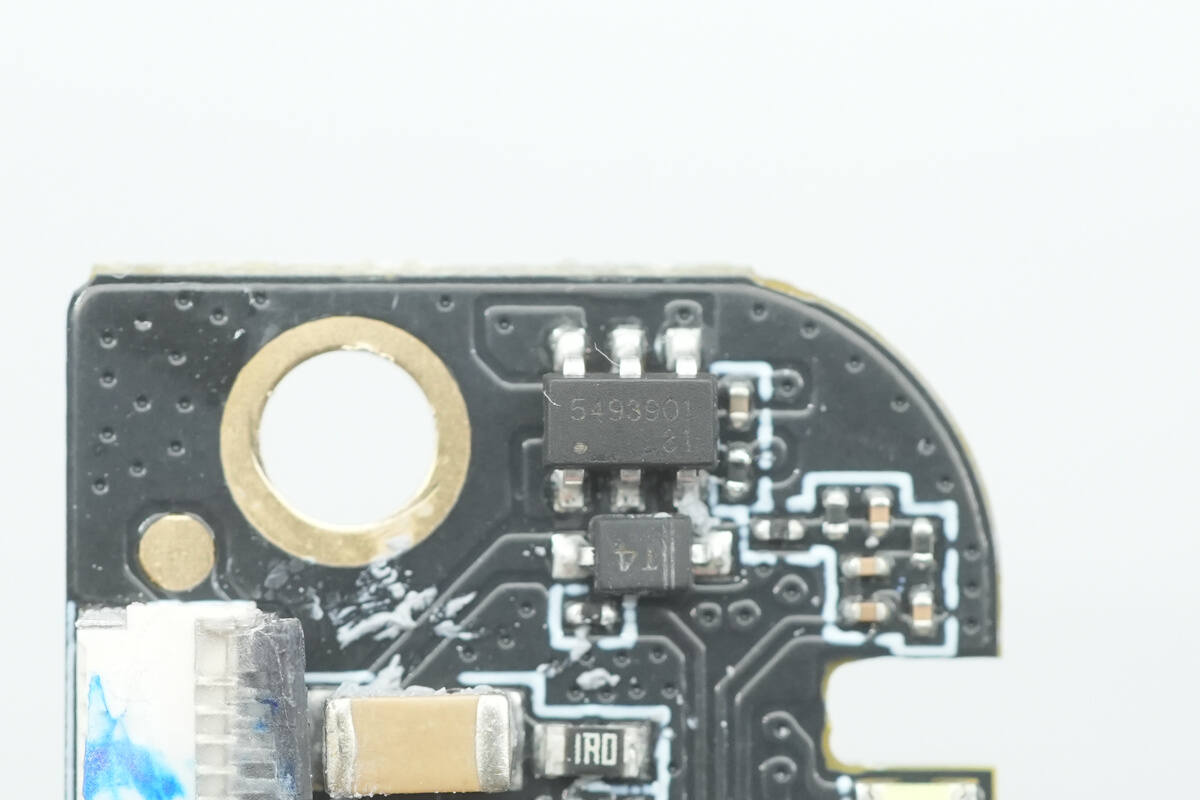
A close-up of a chip marked with 5493901.
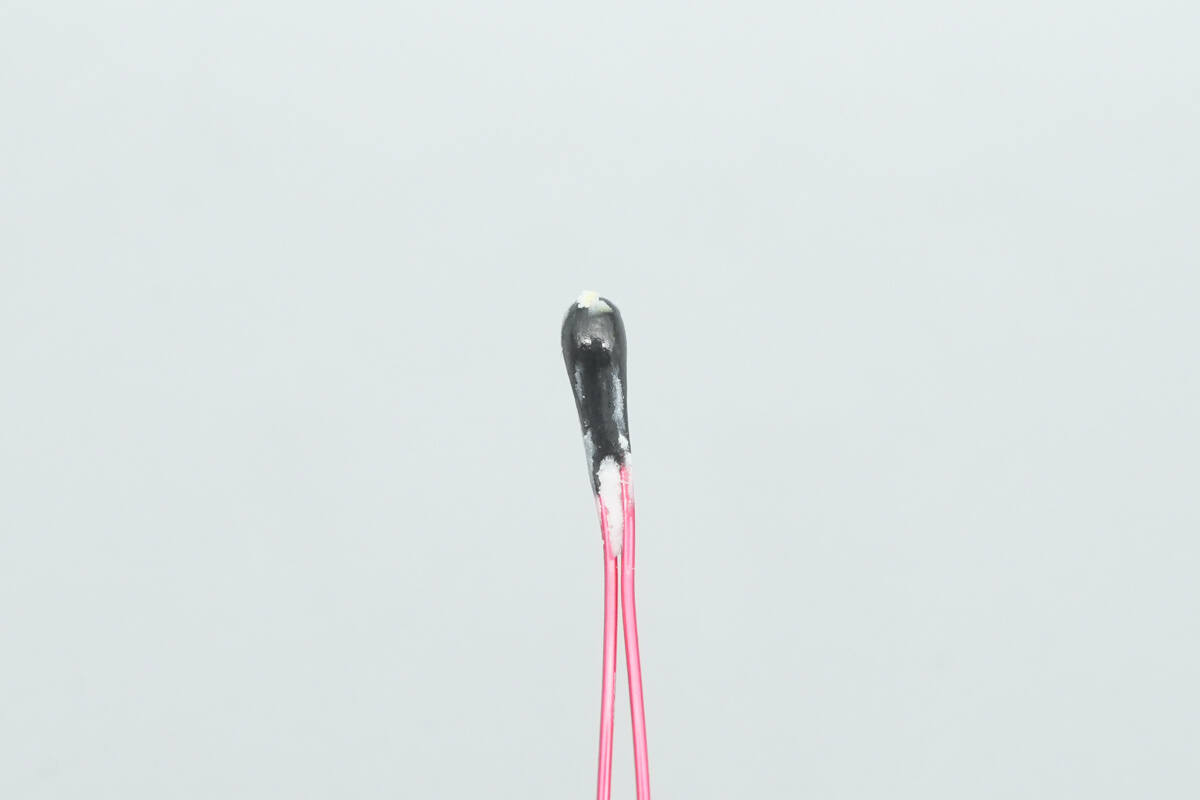
A close-up of an NTC thermistor.
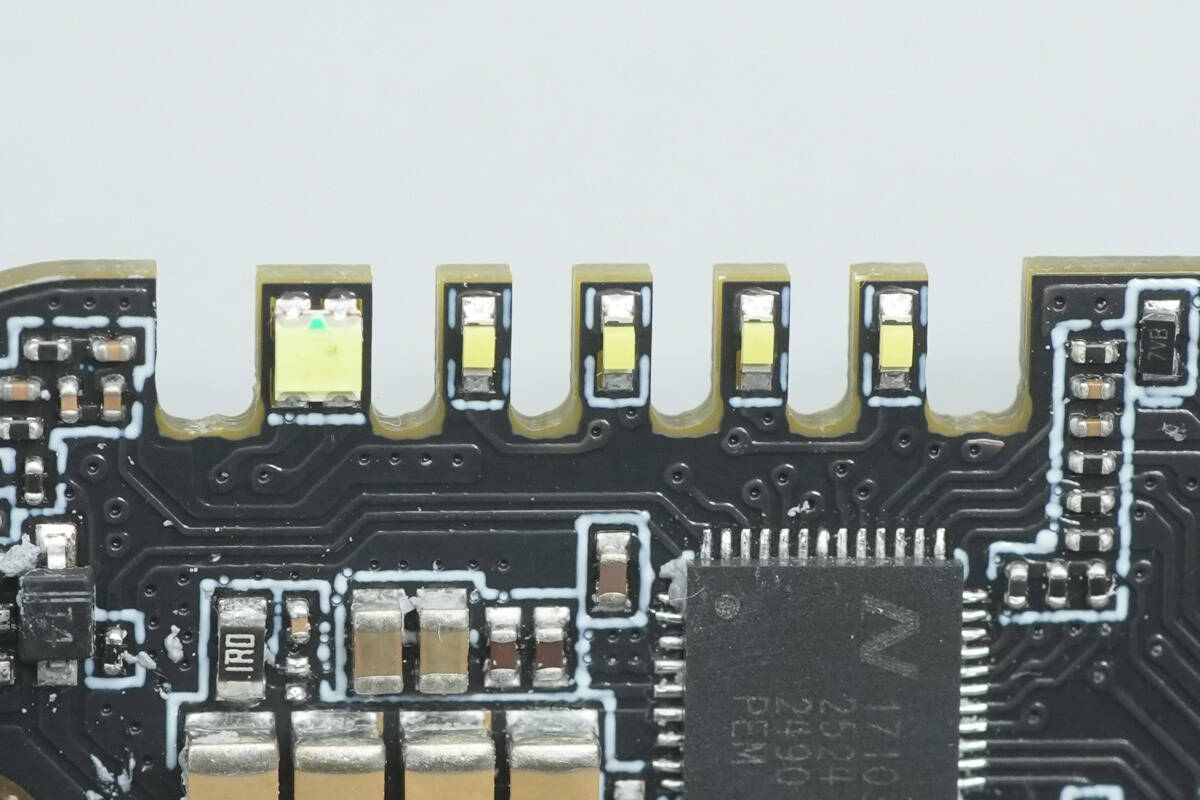
A close-up of the LED indicators.
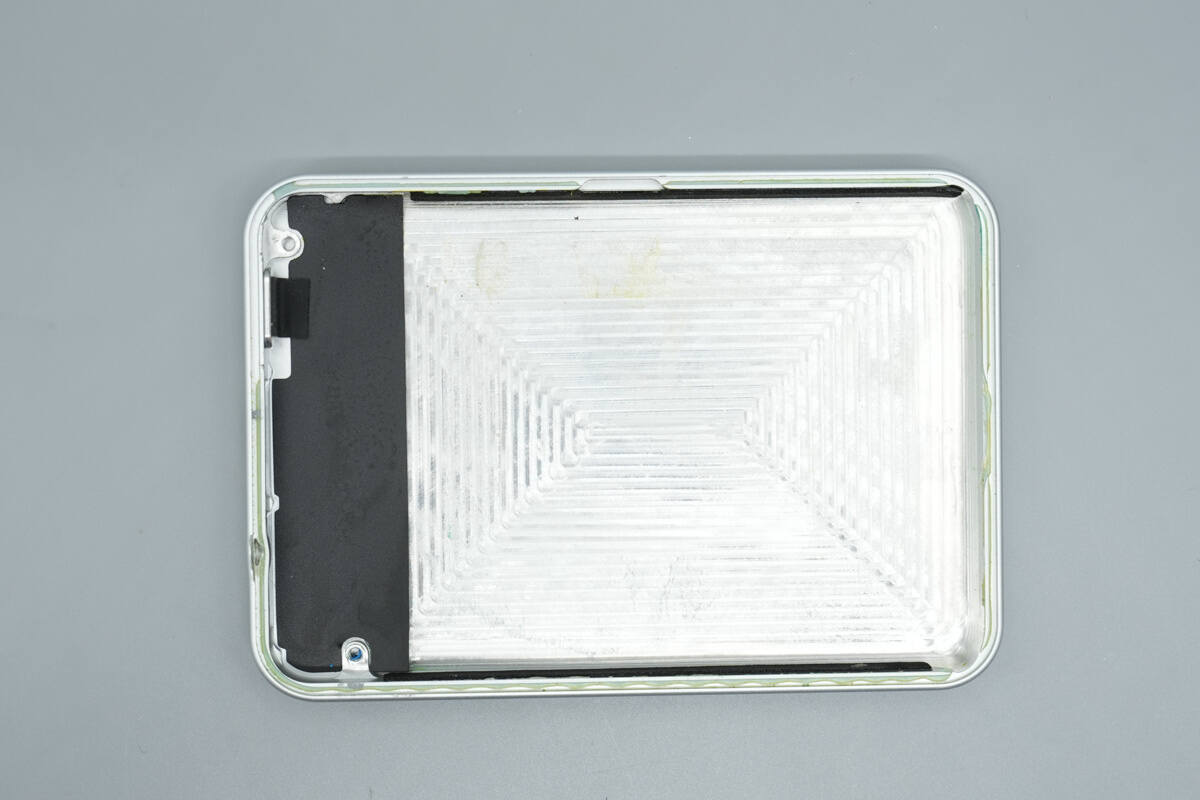
The inner side of the aluminum alloy casing is machined using CNC-integrated milling, creating dense stepped textures that enhance the product’s heat dissipation.
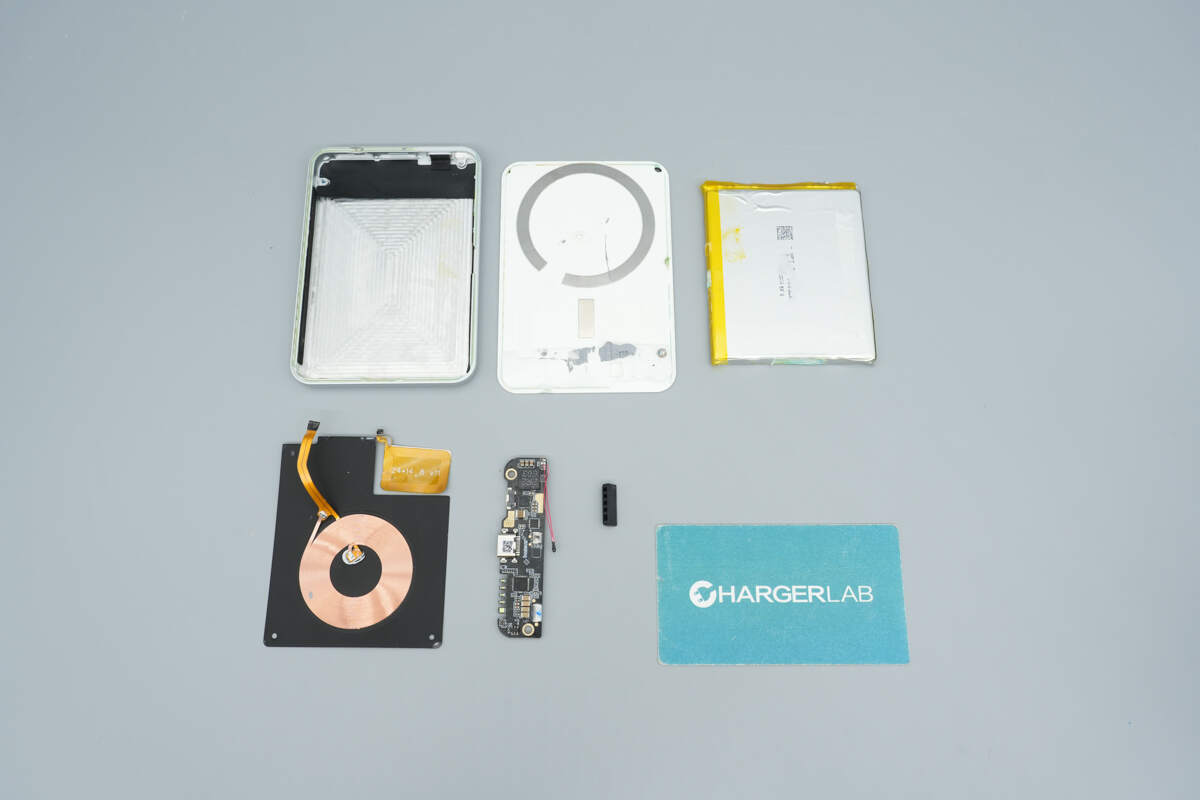
Well, those are all components of the Baseus PicoGo Air Power Bank.
Summary of ChargerLAB
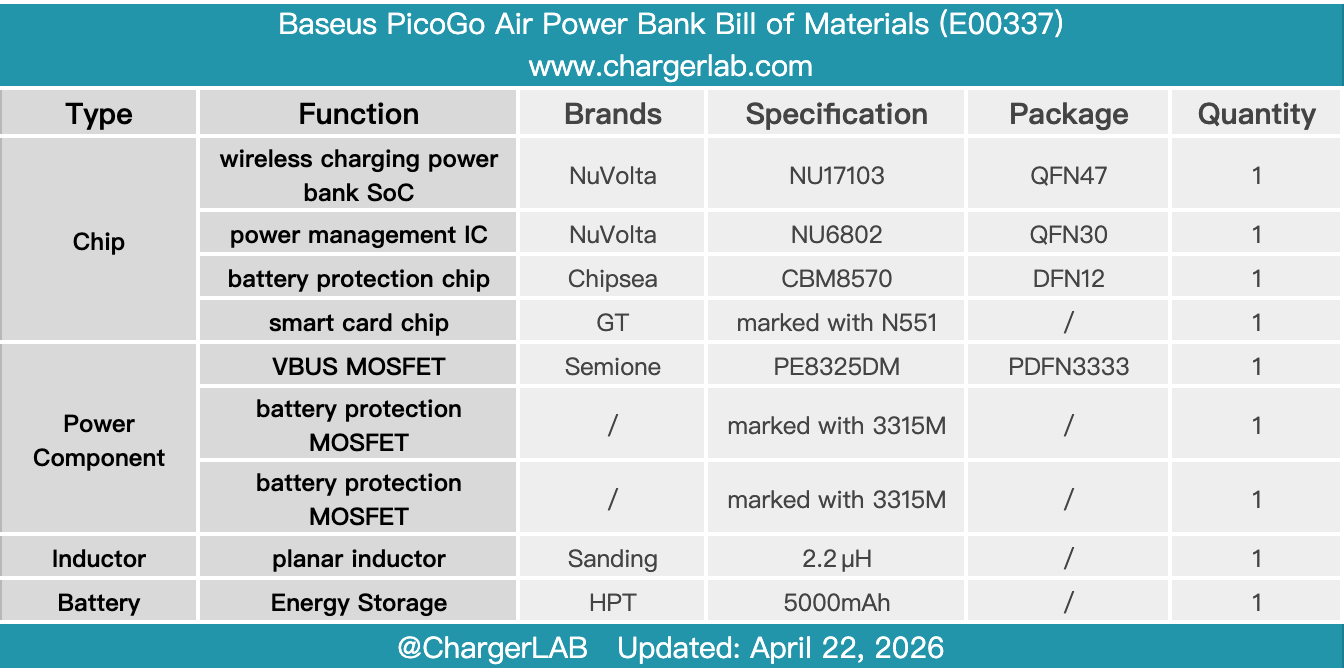
Here is the component list of the Baseus PicoGo Air Power Bank for your convenience.
It integrates aerospace-level safety with an ultra-slim design concept. The casing is made of unibody aluminum alloy with an anodized sandblasted finish, measuring only 6.8 mm thick, complemented by rounded corners. When attached to the back of a phone, it provides an excellent grip without obstructing the camera.
It also supports NFC functionality, allowing users to launch the Baseus App and directly access underlying data such as cell temperature, health status, and cycle count, significantly enhancing the smart user experience.
After taking it apart, we found that it features a unibody aluminum alloy casing with extensive thermal gel filling. It is equipped with NuVolta’s highly integrated NU17103 SoC, specifically designed for Qi2, along with the NuVolta NU6802 switching charging chip. The battery cell is a high-voltage, high-energy-density 3.88 V 5000 mAh unit from HPT and is protected by Chipsea’s CBM8570 battery protection chip, complemented by multiple NTC thermistors. Overall, this is an ultra-slim power bank, making it an excellent choice for users seeking a lightweight and convenient charging experience.
Related Articles:
1. Teardown of UGREEN Nexode Air 45W GaN Charger (X840)
2. Teardown of Tesla 4-in-1 USB-C Hub for Model 3/Y (TSL04)
3. Teardown of Lincoln 1760W Portable EV Charger