
Introduction
Recently, SHARGE launched the HyperTower 170W Power Bank. According to the official description, this product features a four-channel independent charging architecture, supporting simultaneous fast charging for multiple devices. It is equipped with five high-performance automotive-grade cells, offering a total capacity of 25,000mAh. The power bank also includes a high-definition full-color display, providing users with clear information on remaining battery level, real-time charging and discharging power, temperature status, and battery health. Next, we will take a closer look at the product’s design.
Product Appearance
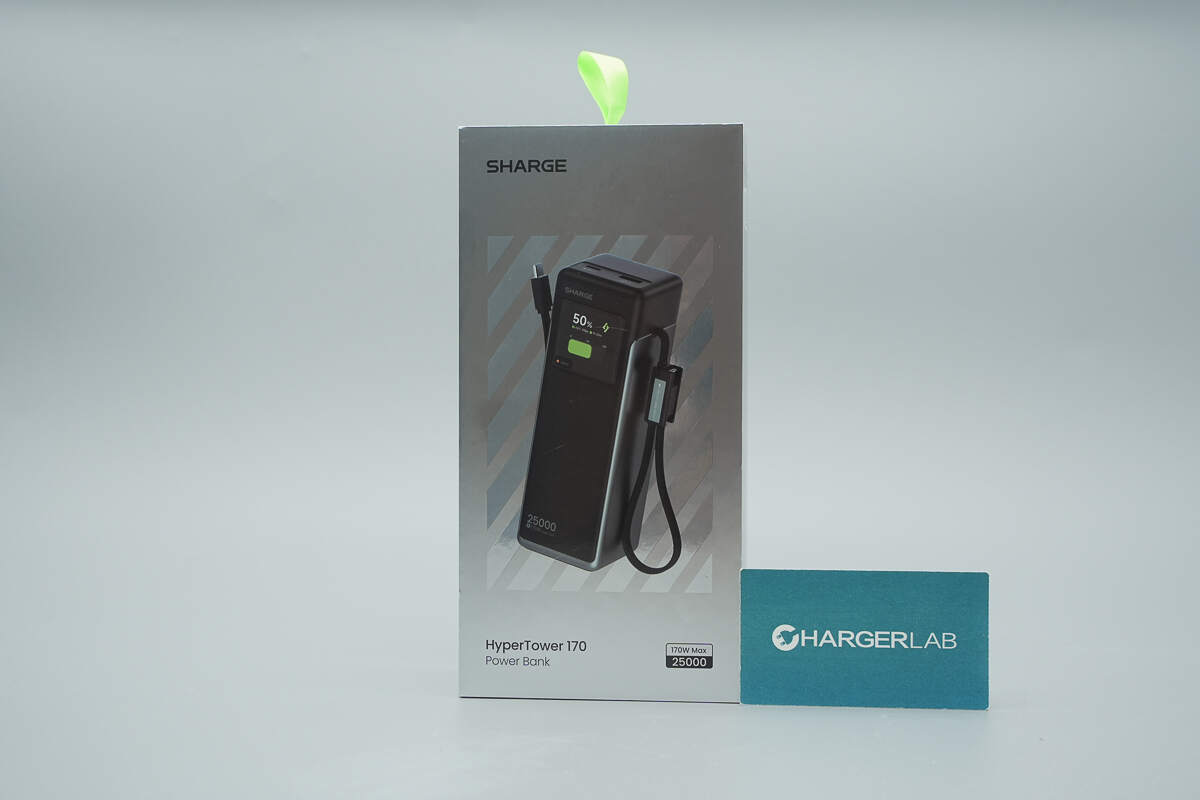
The front of the packaging features the product’s appearance and the brand logo.
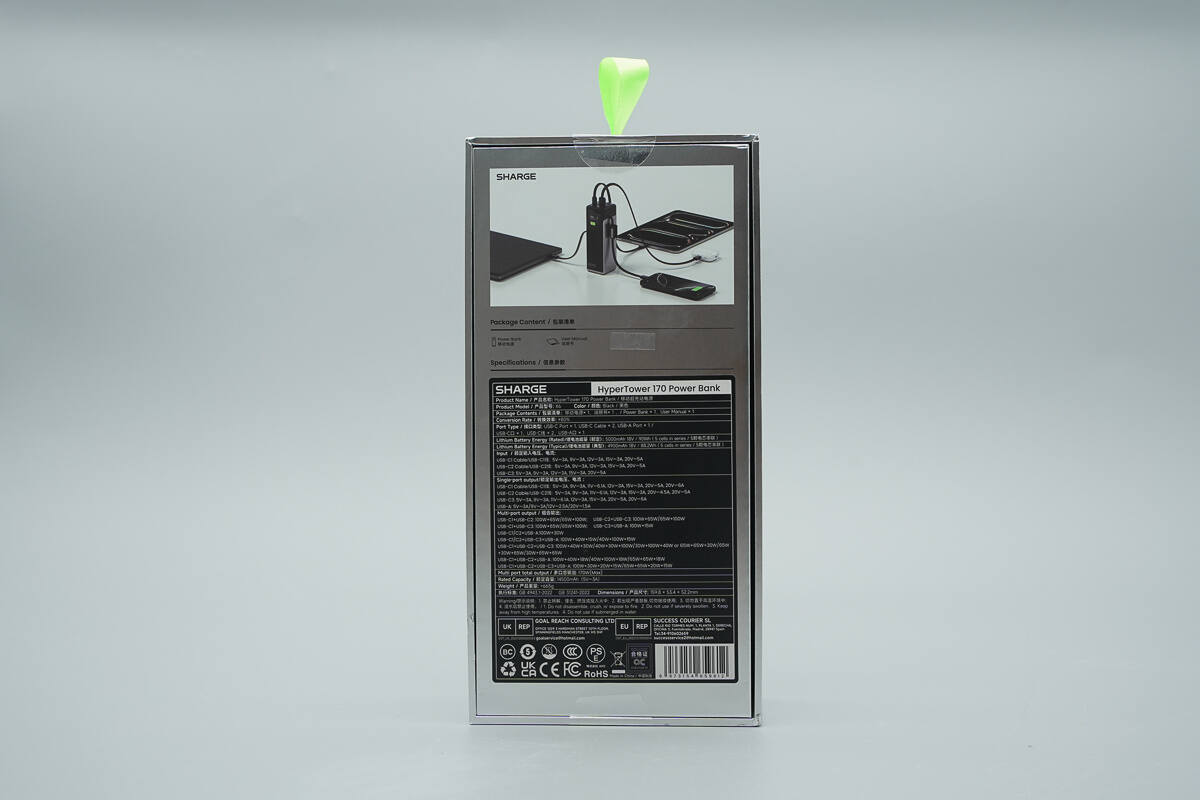
The back of the packaging box displays the product specifications.
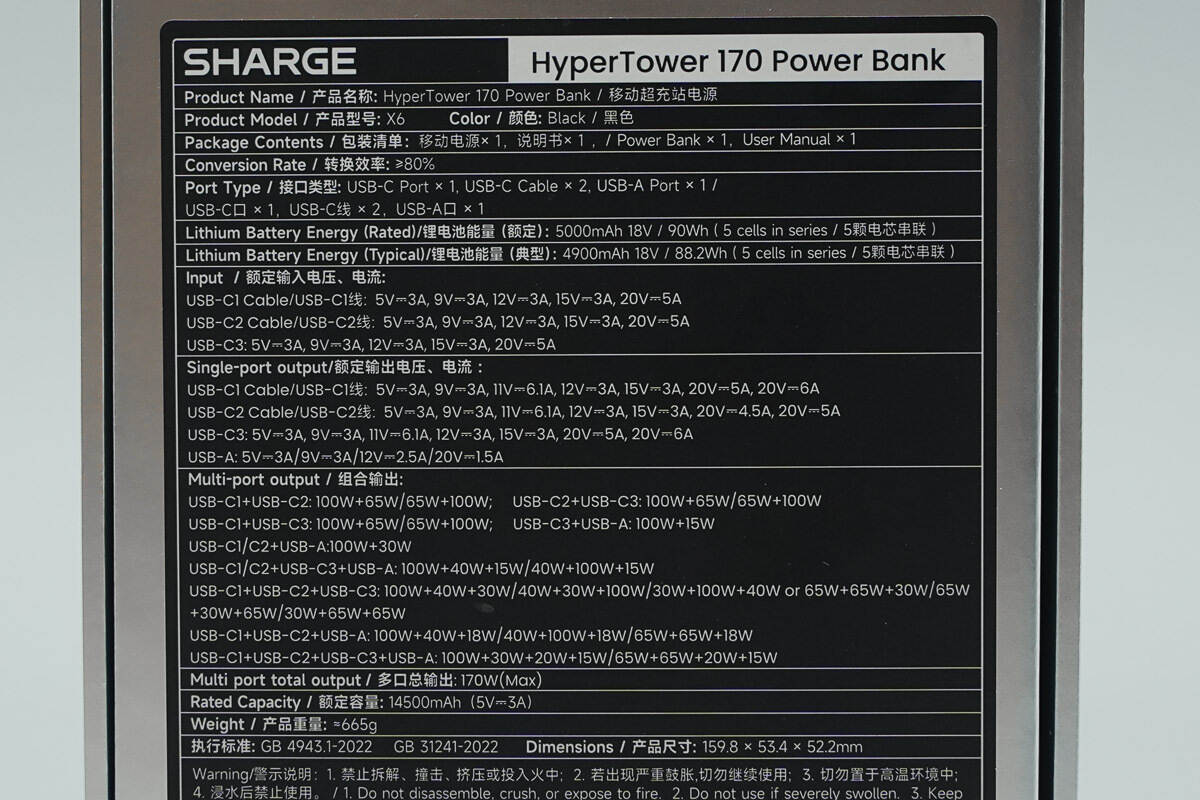
Packing List: Power Bank, User Manual
Conversion Efficiency: 80%
Port Types: USB-C 1, USB-C 2, USB-A 1
Lithium Battery Energy (Rated): 5000mAh 18V / 90Wh (5 cells in series)
Lithium Battery Energy (Typical): 4900mAh 18V / 88.2Wh (5 cells in series)
Rated Input Voltage and Current:
USB-C1: 5V 3A, 9V 3A, 12V 3A, 15V 3A, 20V 5A
USB-C2: 5V 3A, 9V 3A, 12V 3A, 15V 3A, 20V 5A
USB-C3: 5V 3A, 9V 3A, 12V 3A, 15V 3A, 20V 5A
Rated Output Voltage and Current (Single Port):
USB-C1: 5V 3A, 9V 3A, 11V 6.1A, 12V 3A, 15V 3A, 20V 5A, 20V 6A
USB-C2: 5V 3A, 9V 3A, 11V 6.1A, 12V 3A, 15V 3A, 20V 4.5A, 20V 5A
USB-C3: 5V 3A, 9V 3A, 11V 6.1A, 12V 3A, 15V 3A, 20V 5A, 20V 6A
USB-A: 5V 3A / 9V 3A / 12V 2.5A / 20V 1.5A
Combined Output:
C1 + C2: 100W + 65W / 65W + 100W
C2 + C3: 100W + 65W / 65W + 100W
C1 + C3: 100W + 65W / 65W + 100W
C3 + A: 100W + 15W
C1 / C2 + A: 100W + 30W
C1 / C2 + C3 + A: 100W + 40W + 15W / 40W + 100W + 15W
C1 + C2 + C3: 100W + 40W + 30W / 40W + 30W + 100W / 30W + 100W + 40W or 65W + 65W + 30W / 65W + 30W + 65W / 30W + 65W + 65W
C1 + C2 + A: 100W + 40W + 18W / 40W + 100W + 18W / 65W + 65W + 18W
C1 + C2 + C3 + A: 100W + 30W + 20W + 15W / 65W + 65W + 20W + 15W
Total Multi-Port Output: 170W (Maximum)
Rated Capacity: 14,500mAh (5V 3A)
Product Weight: 665g
Standards Compliance: GB4943.1-2022, GB31241-2022
Product Dimensions: 159 × 85.3 × 45.2 mm
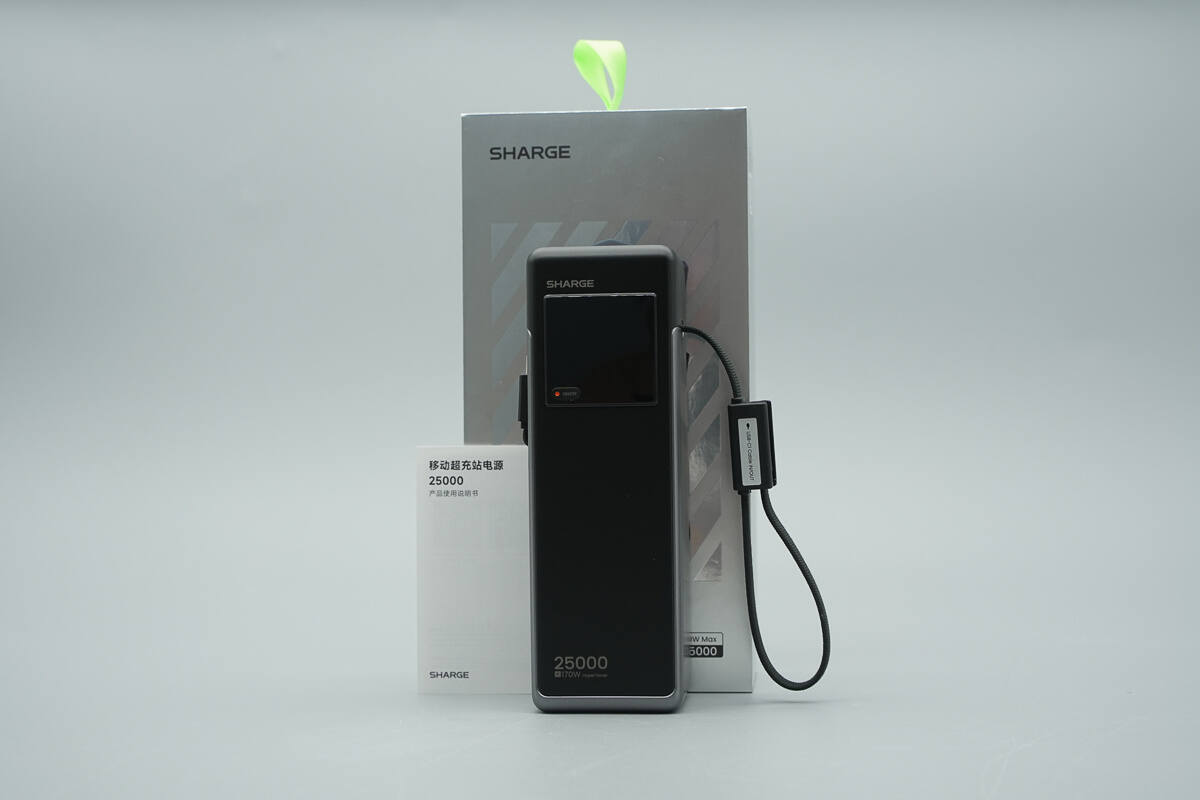
Packaging includes the power bank and the user manual.
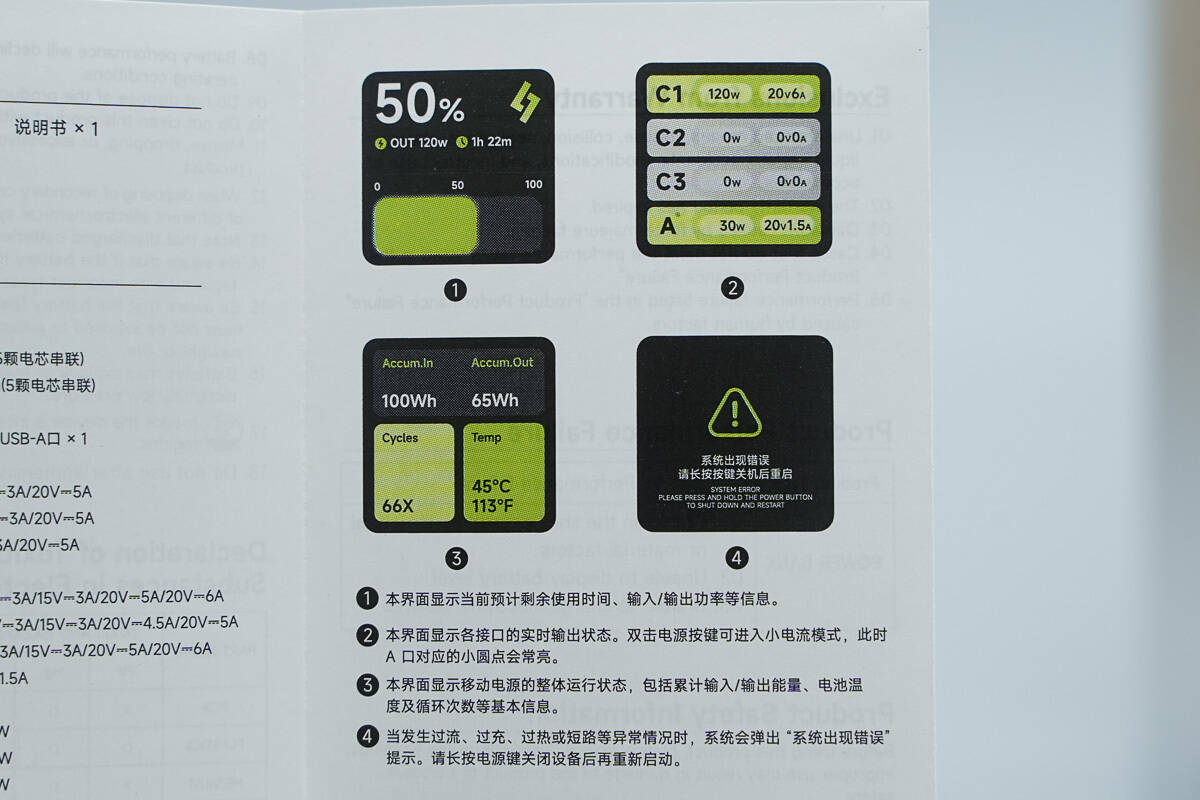
The user manual provides a detailed overview of the four main UI functional modules on the display: estimated remaining time and power, status of each port, overall operating status, and system error notifications.
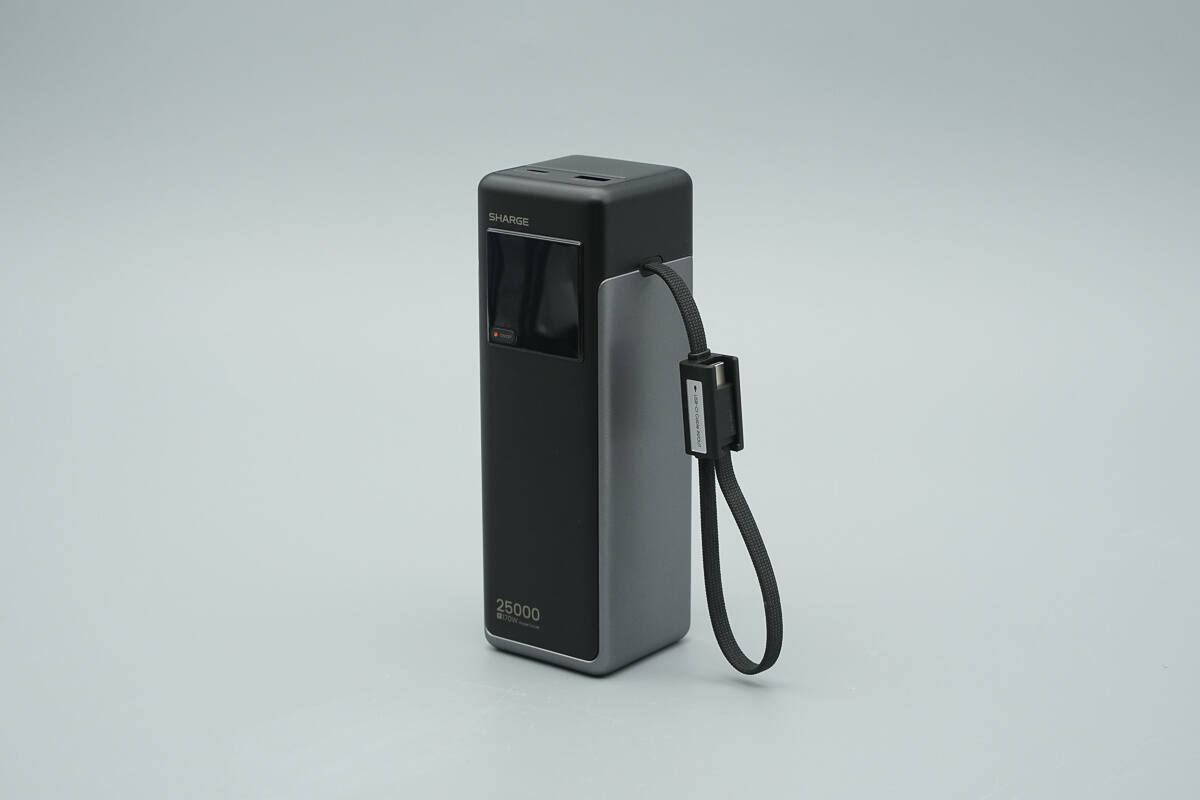
The front view of the device shows a black panel paired with a silver-gray casing, exuding a strong tech-savvy aesthetic.
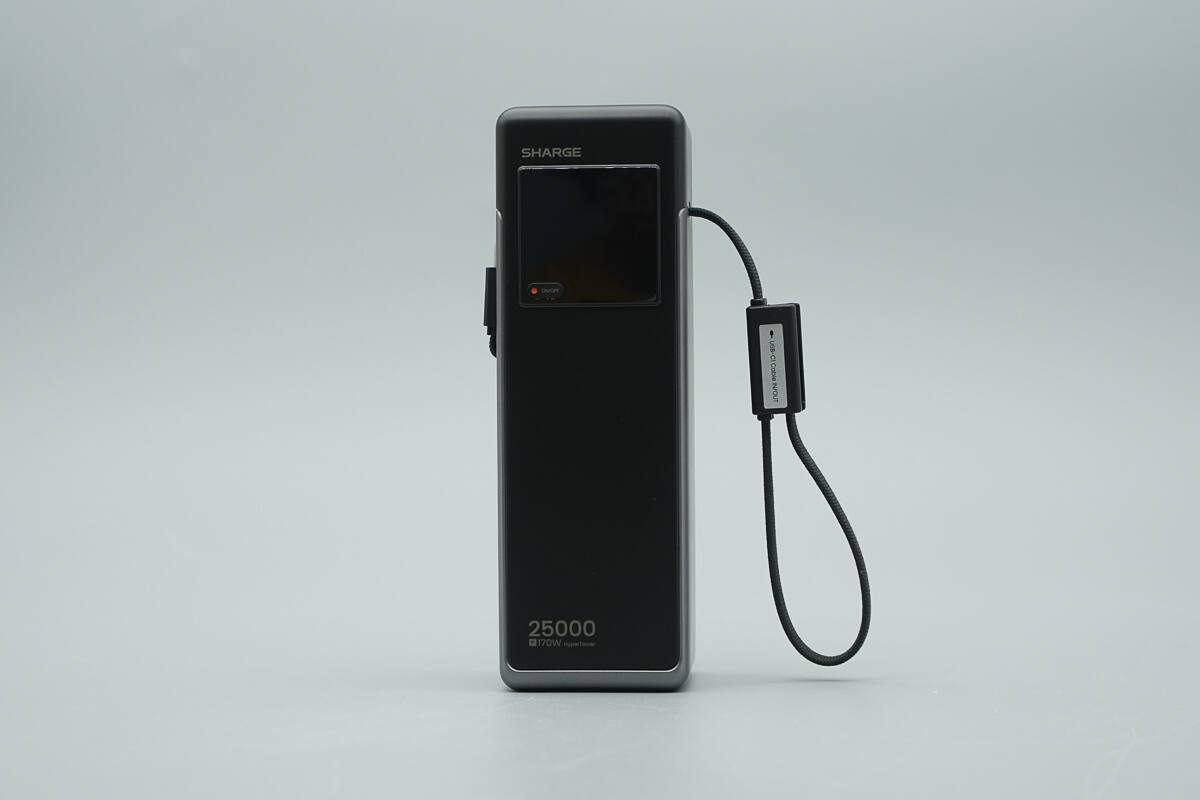
The lower front of the device features the inscriptions “25000” and “170W Hyper Tower,” with a red power button located at the bottom-left corner of the display.
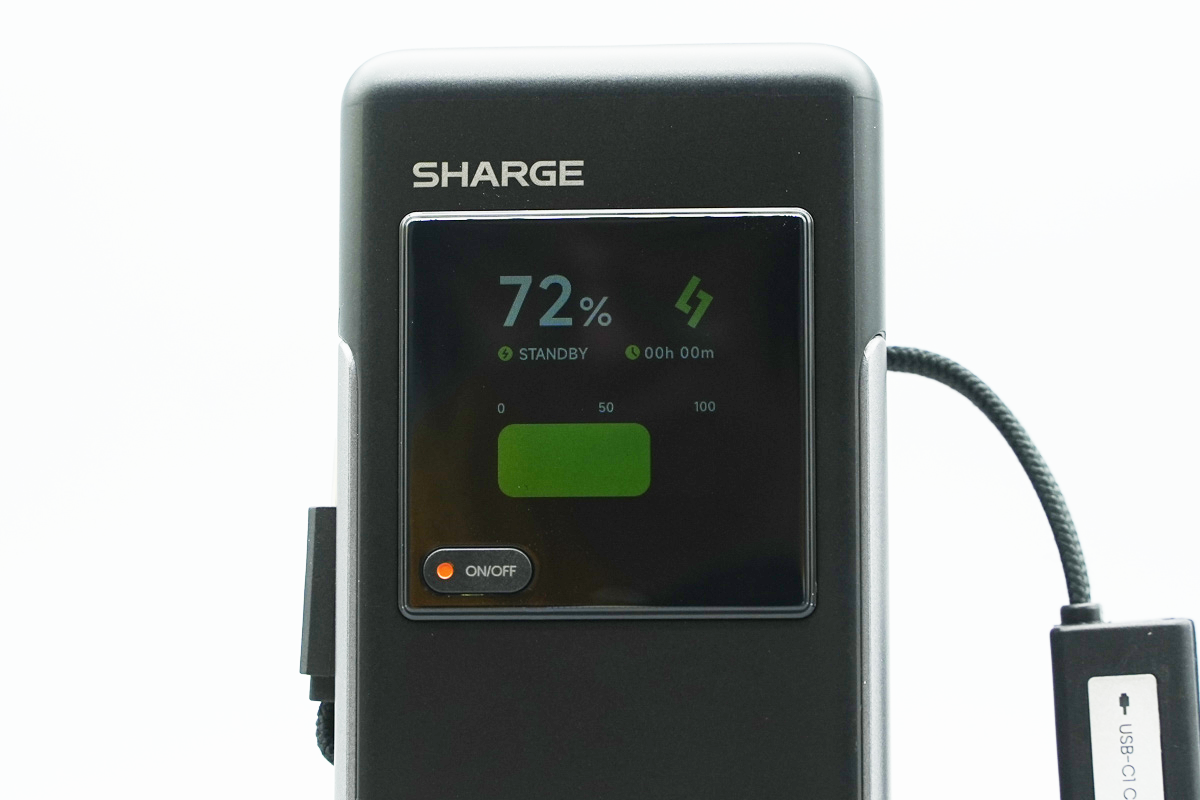
When the screen is on, the main interface displays the current battery level at 72% and the estimated remaining usage time.
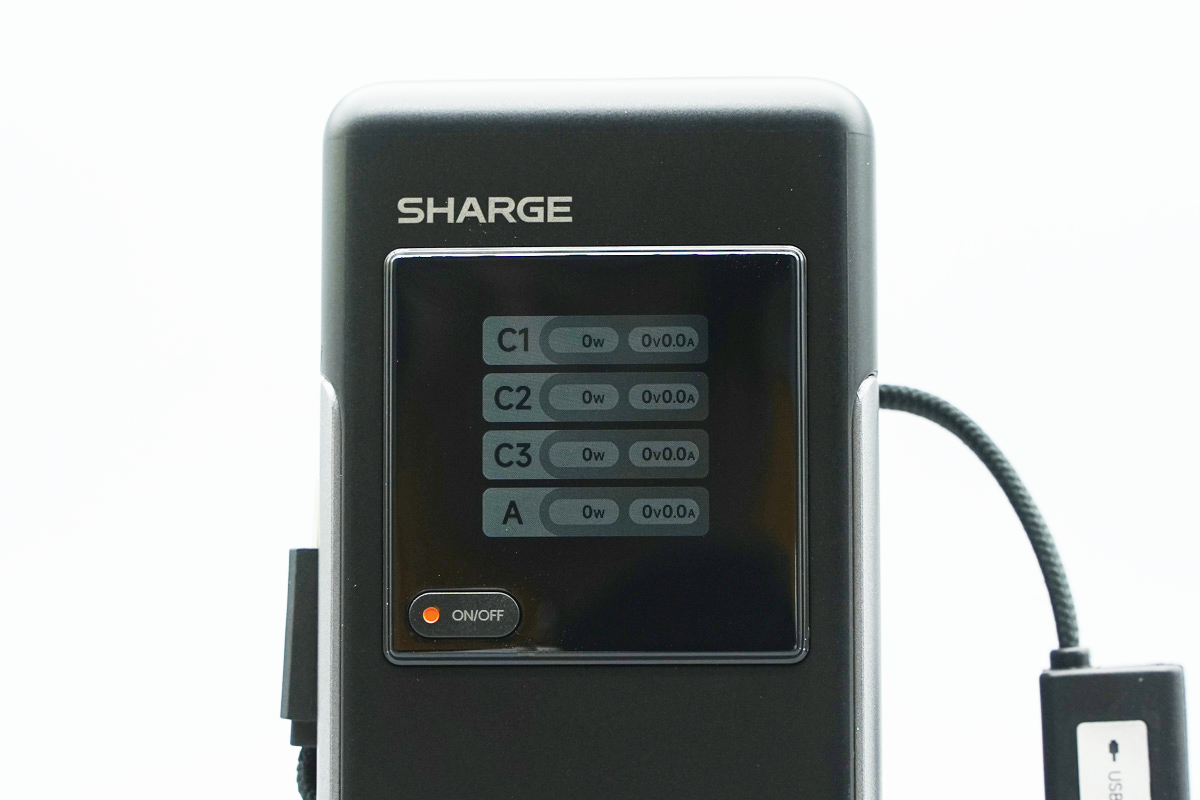
Close-up of the output interface.
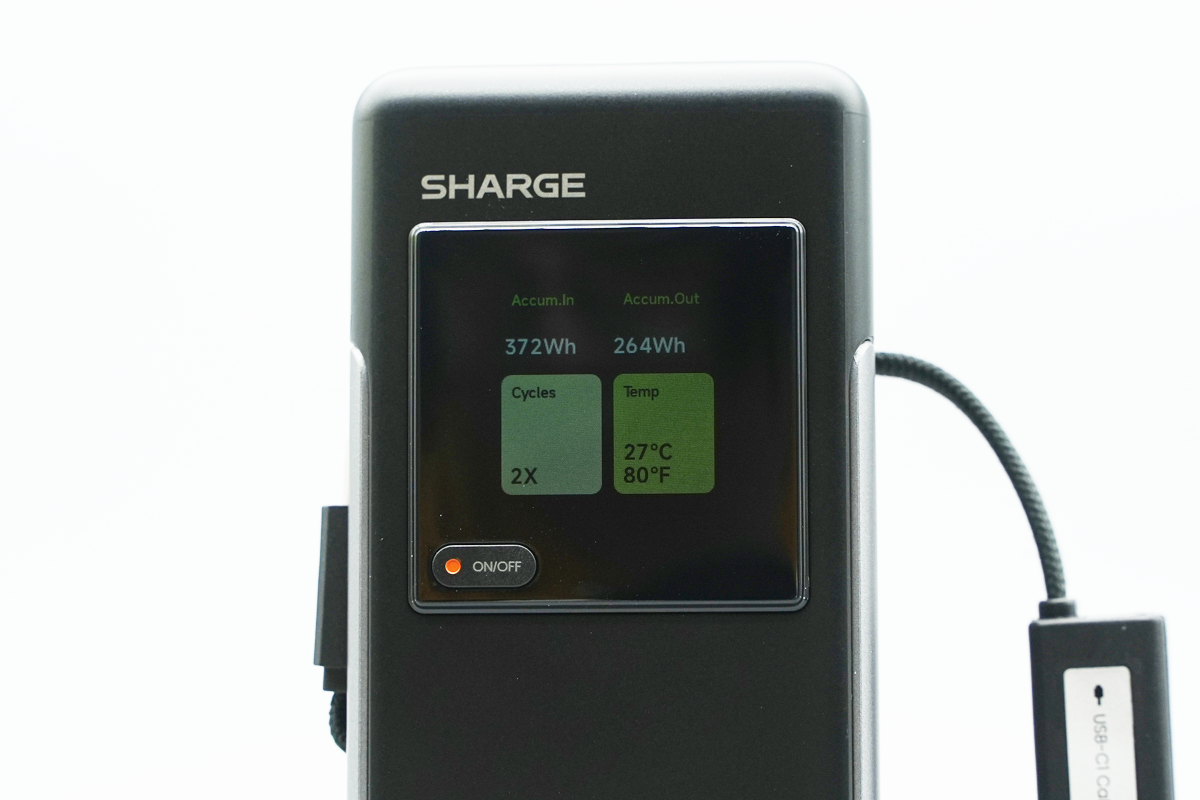
Switching the screen to the operating status interface displays the charge and discharge energy, battery cycle count, and current temperature.
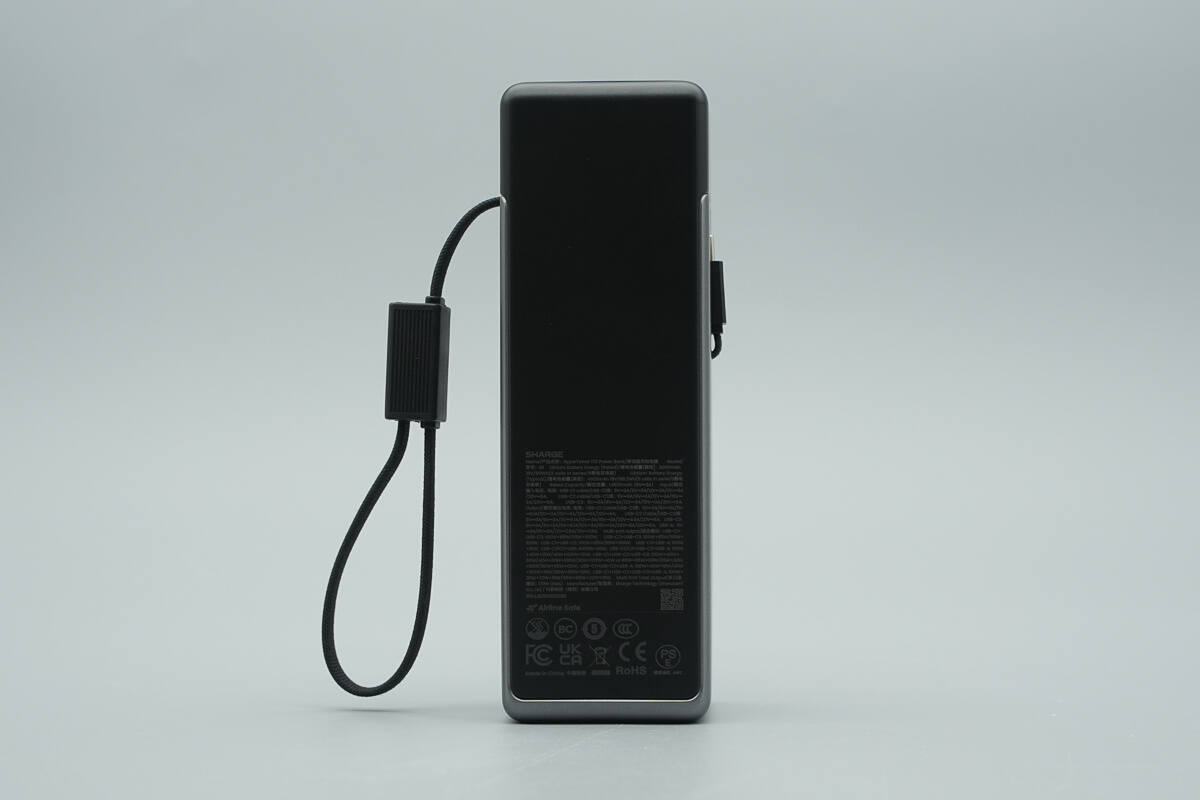
The back of the power bank displays the product specifications. On each side, there is one braided cable and one retractable cable.
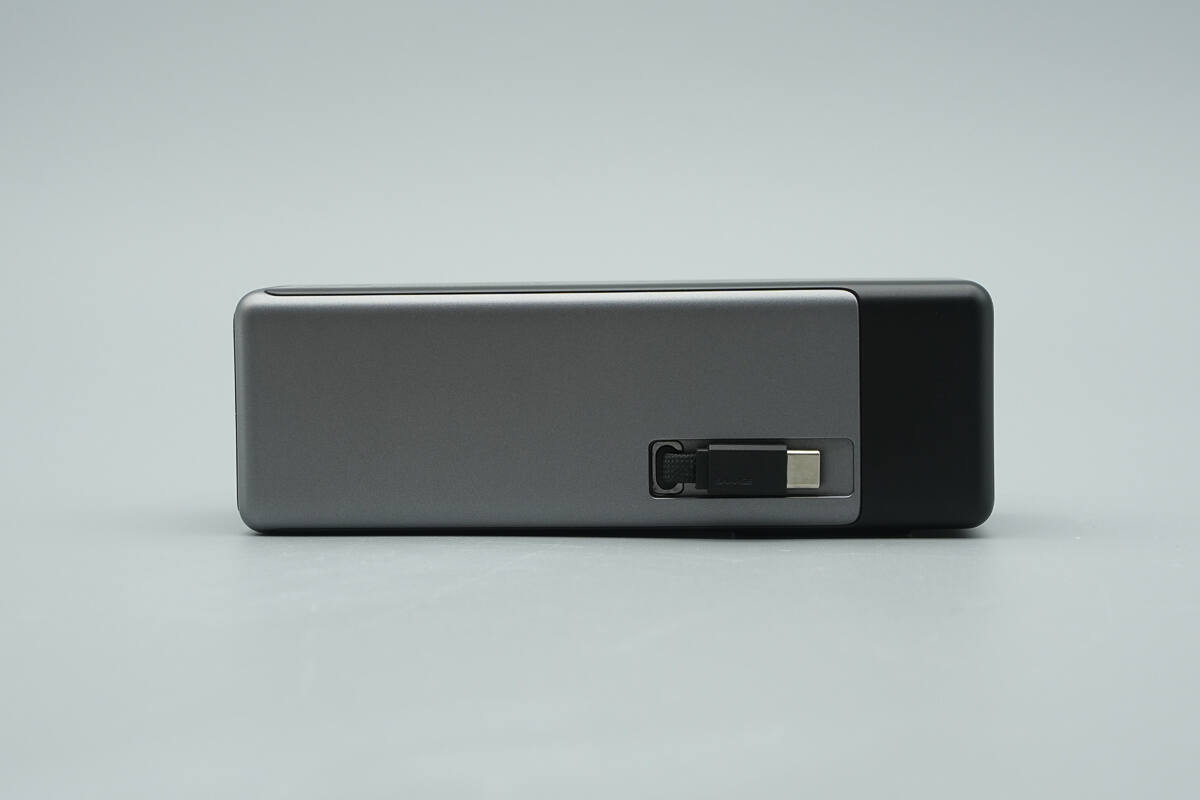
On this side, there is the retractable cable, with its end stored in the cable management groove.
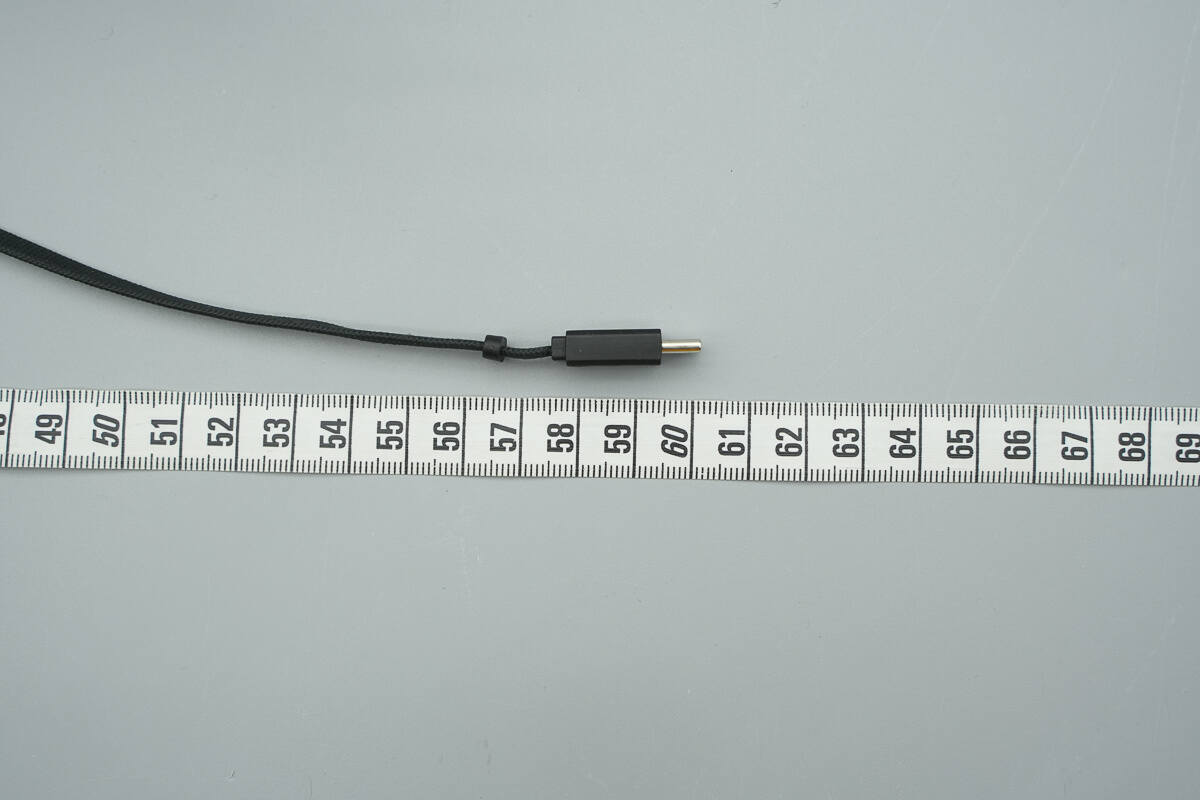
The length of the retractable cable is about 60 cm (23.62 inches).
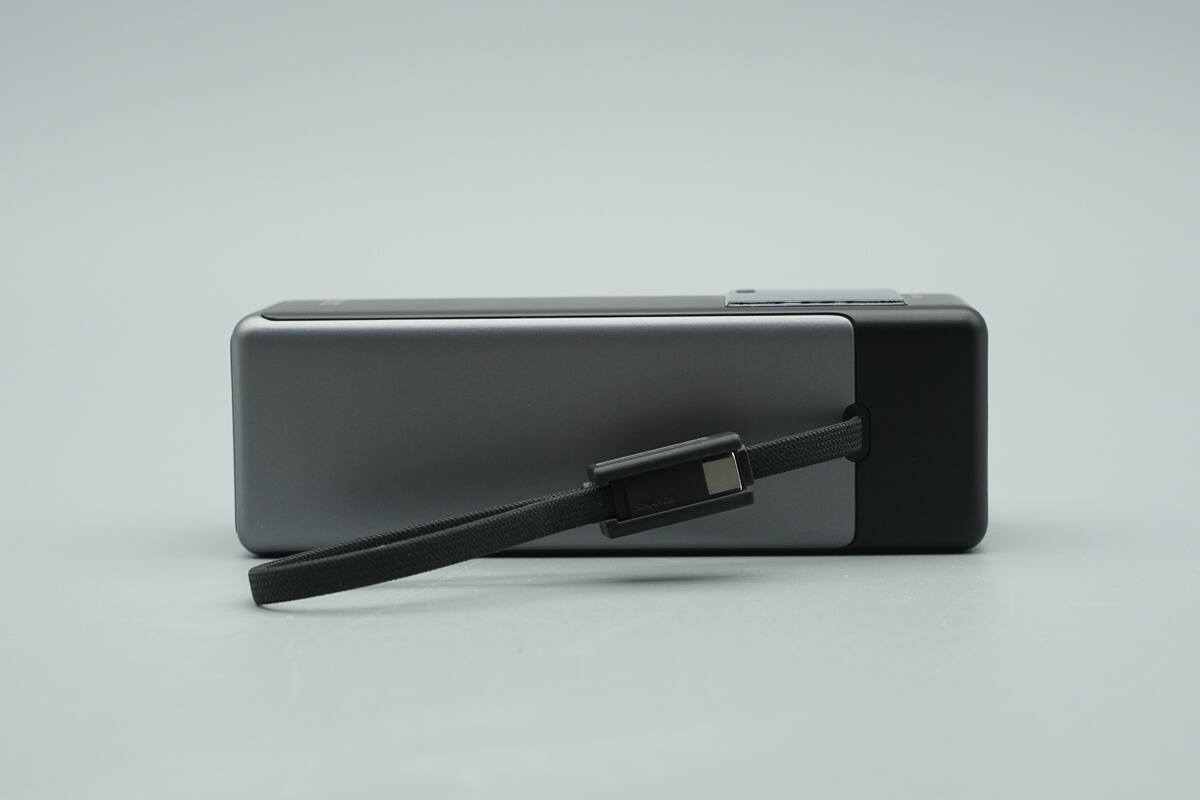
On the other side, the cable is secured and stored on the side using a clip.
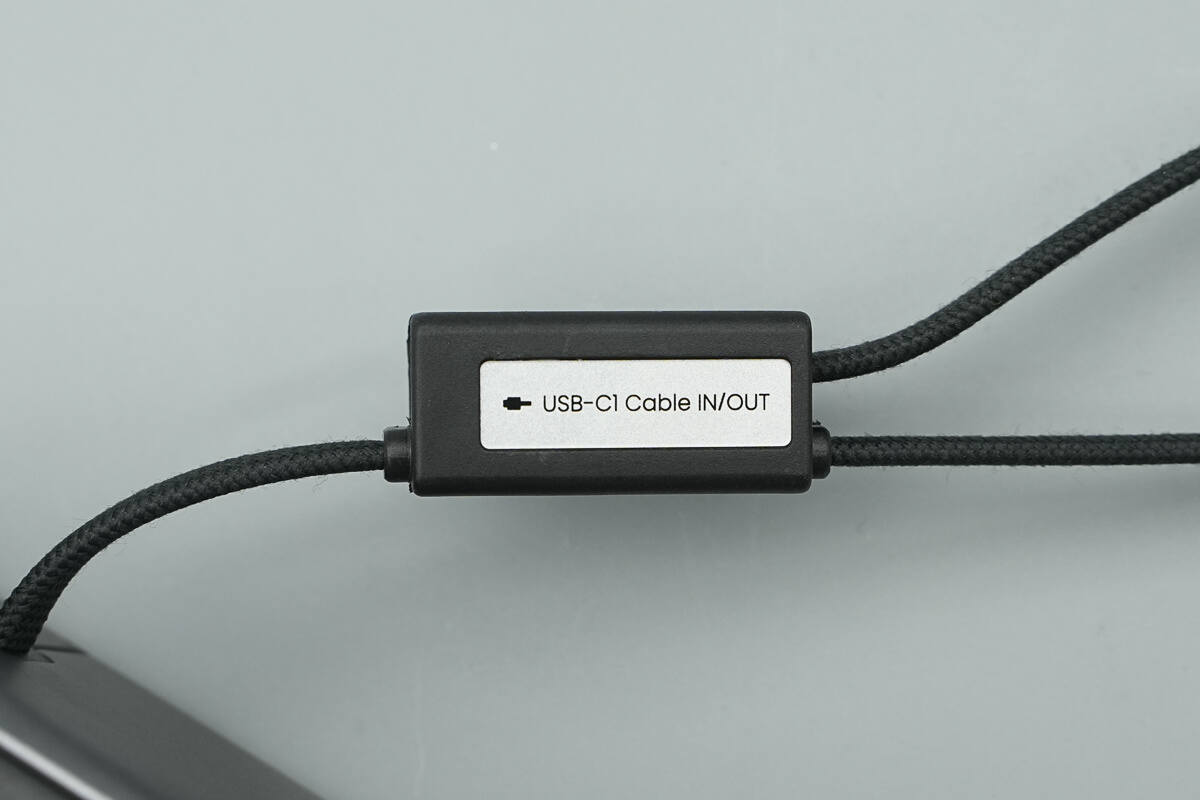
The braided cable features a slot structure for the pull strap.
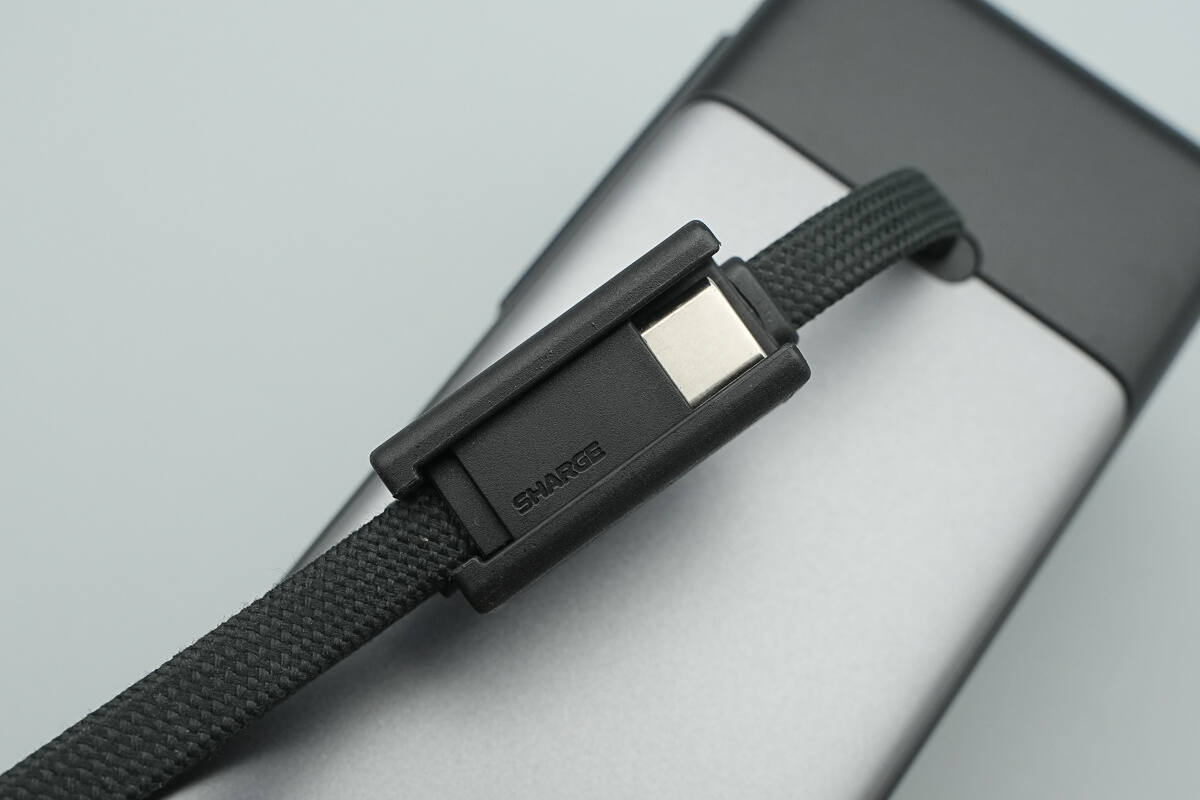
Close-up of the cable end in the device’s slot when stored; the cable can be removed by pulling it upward.
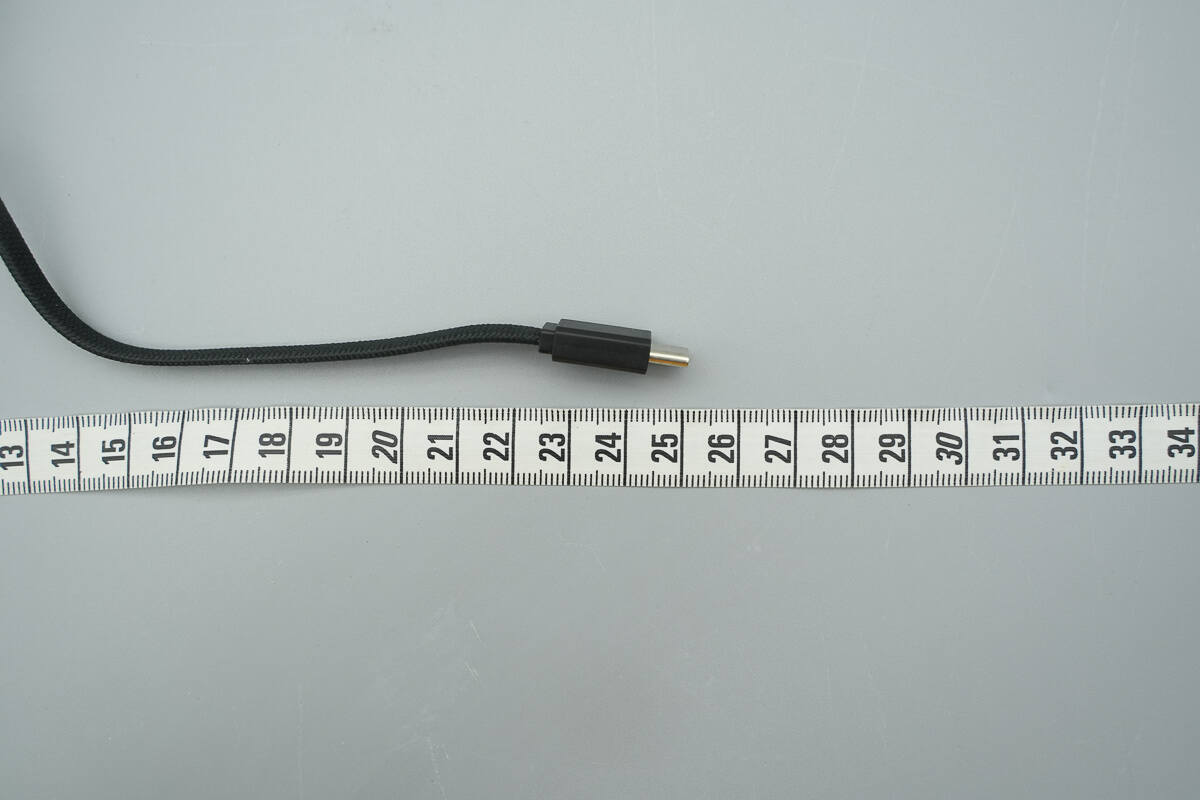
The length of the braided cable is about 25 cm (9.84 inches).
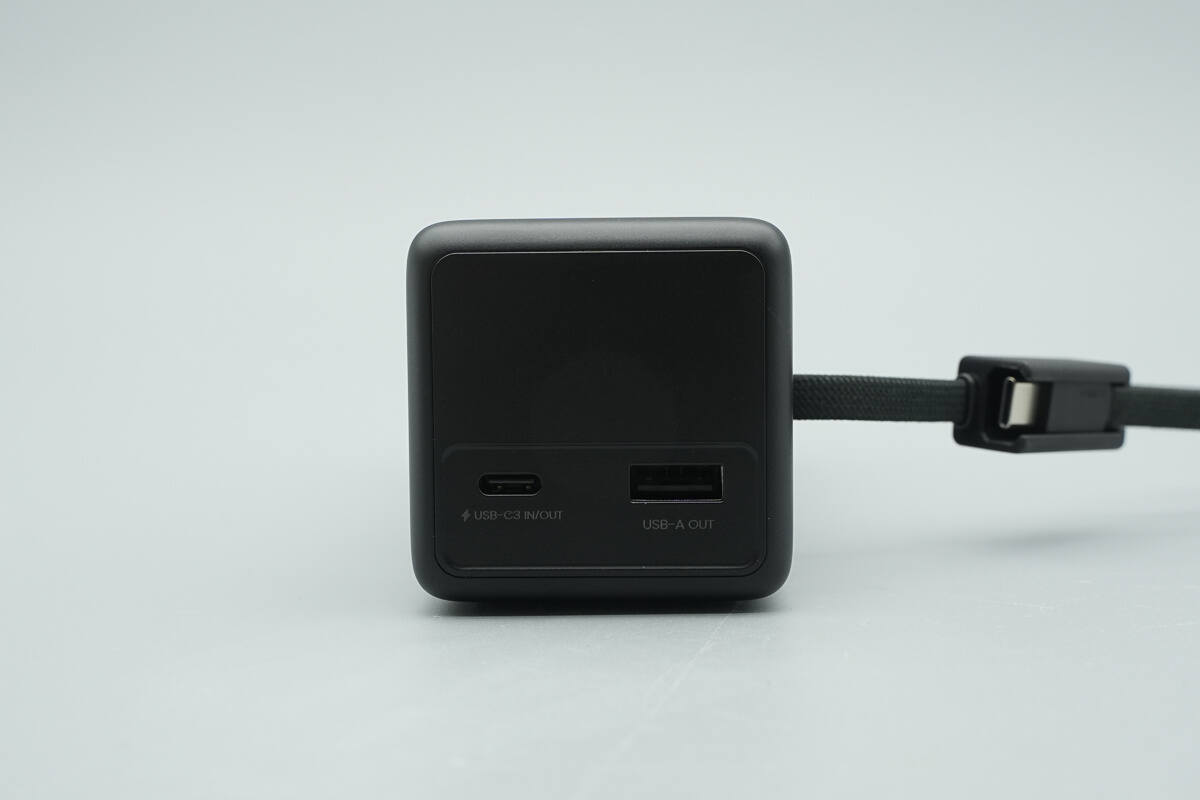
The top of the device features a USB-C3 port and a USB-A port.
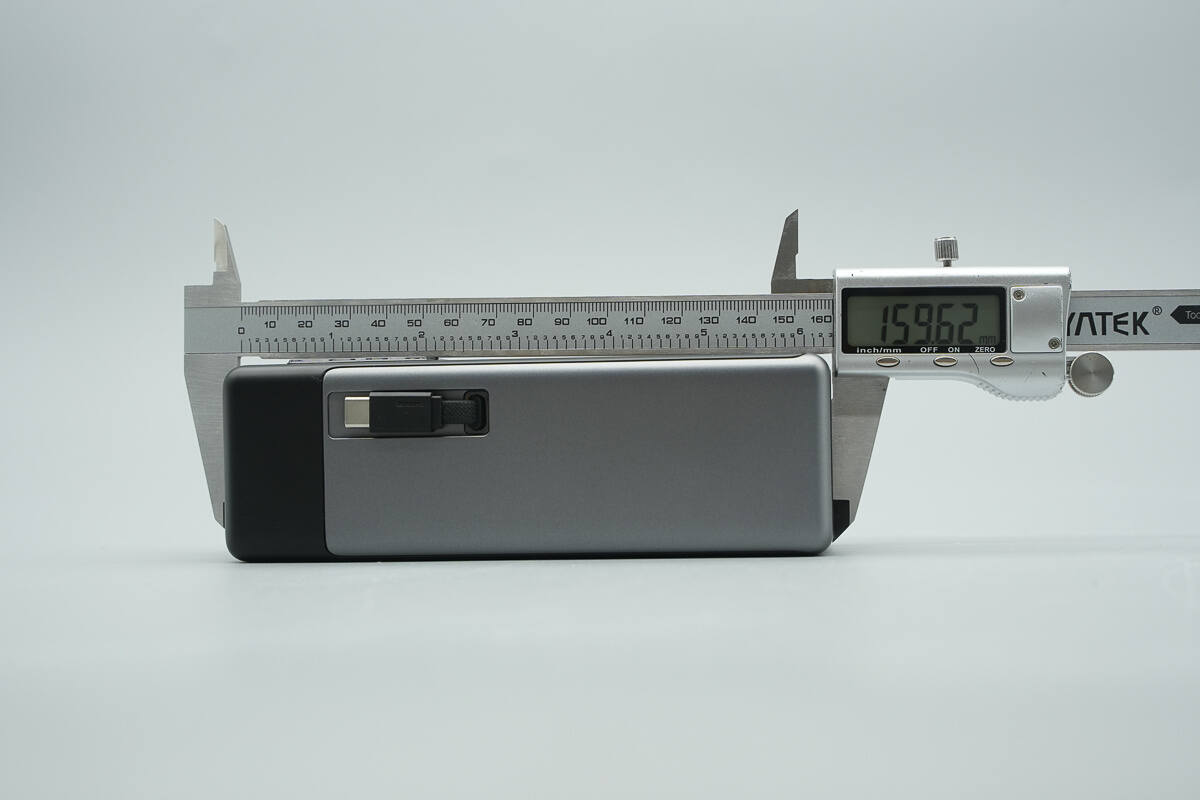
The length of the power bank is about 159.62 mm (6.28 inches).
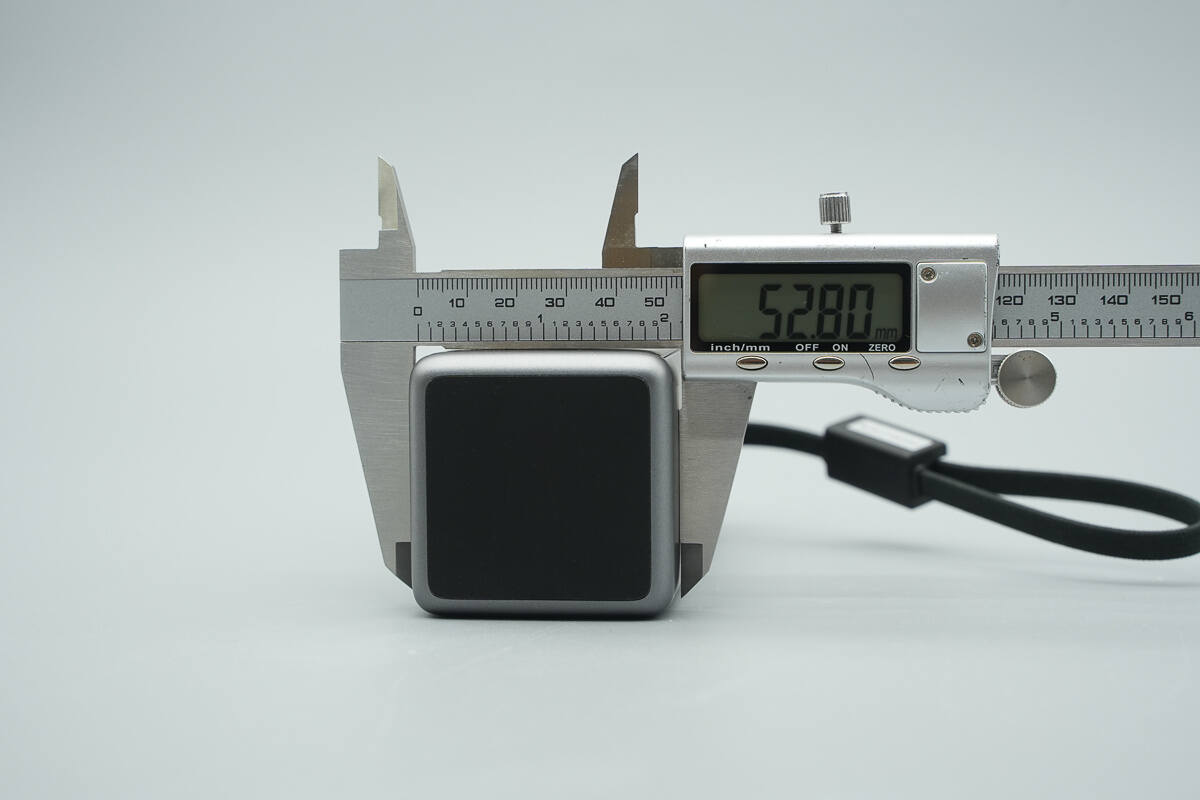
The width is about 52.80 mm (2.079 inches).
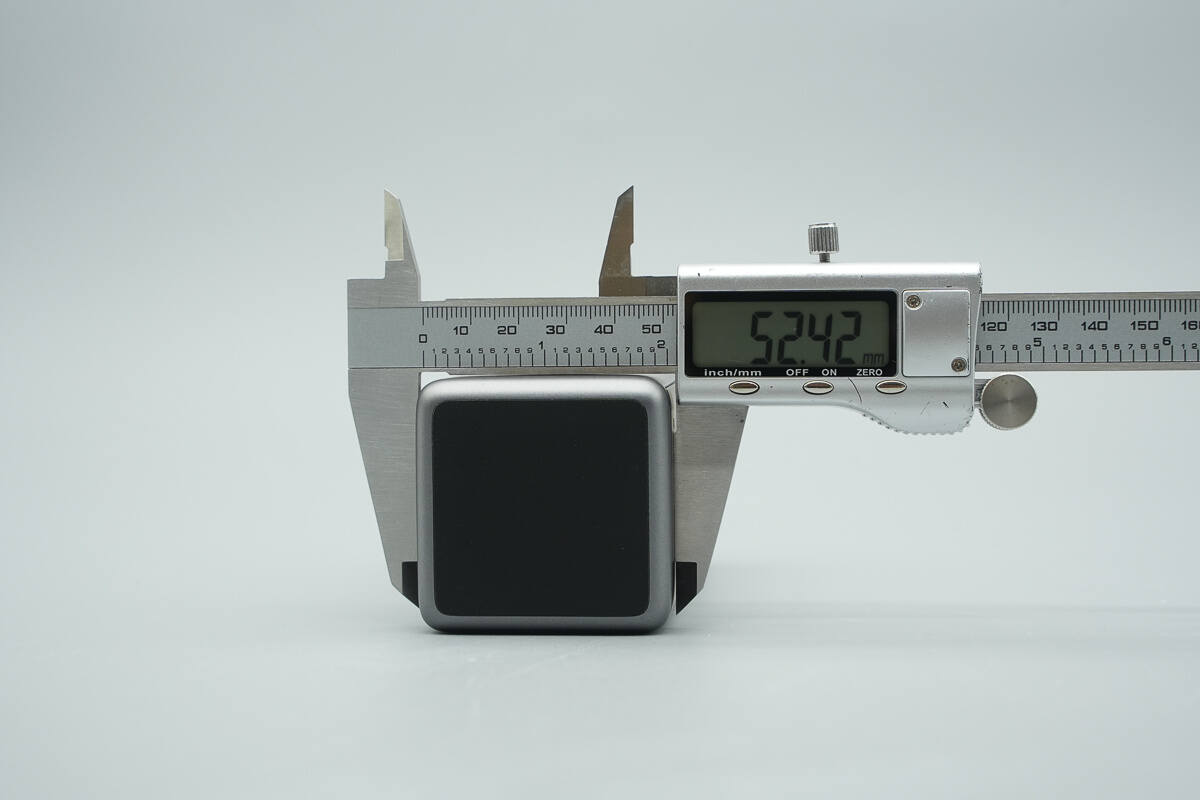
The thickness is about 52.42 mm (2.064 inches).
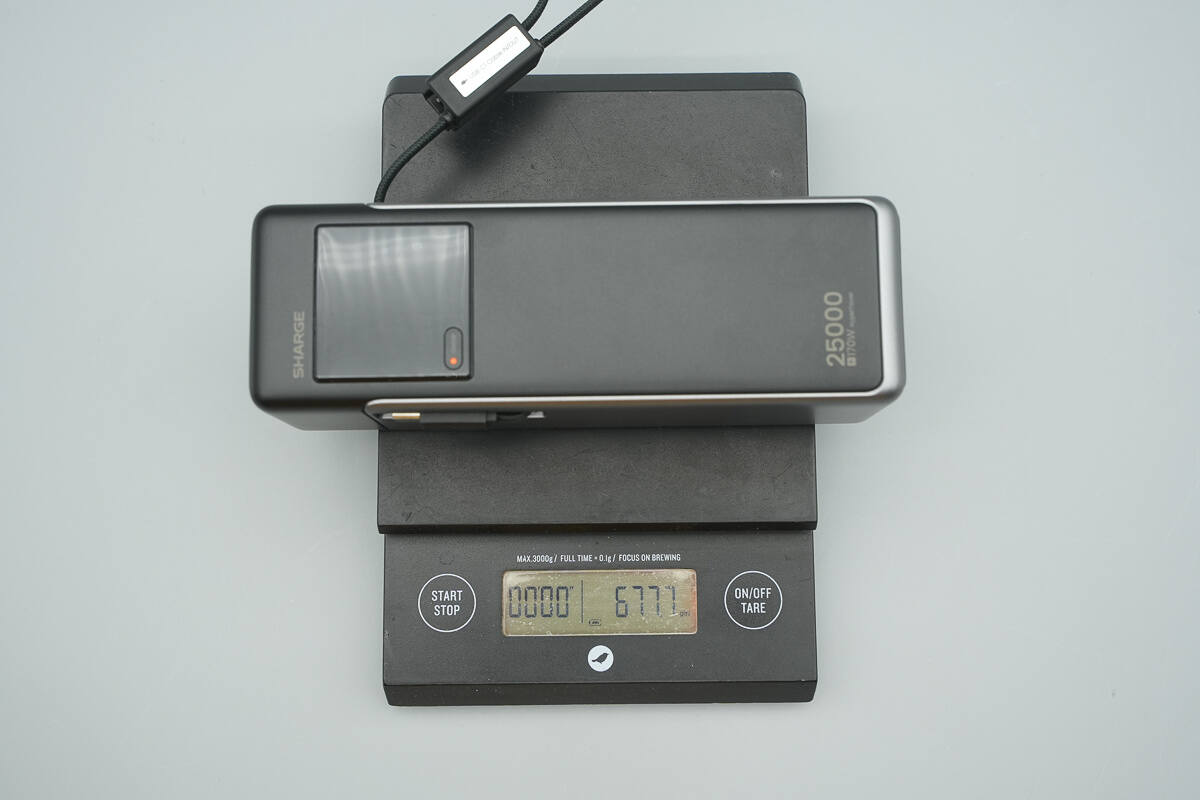
The weight is about 677.1 g (23.88 oz).
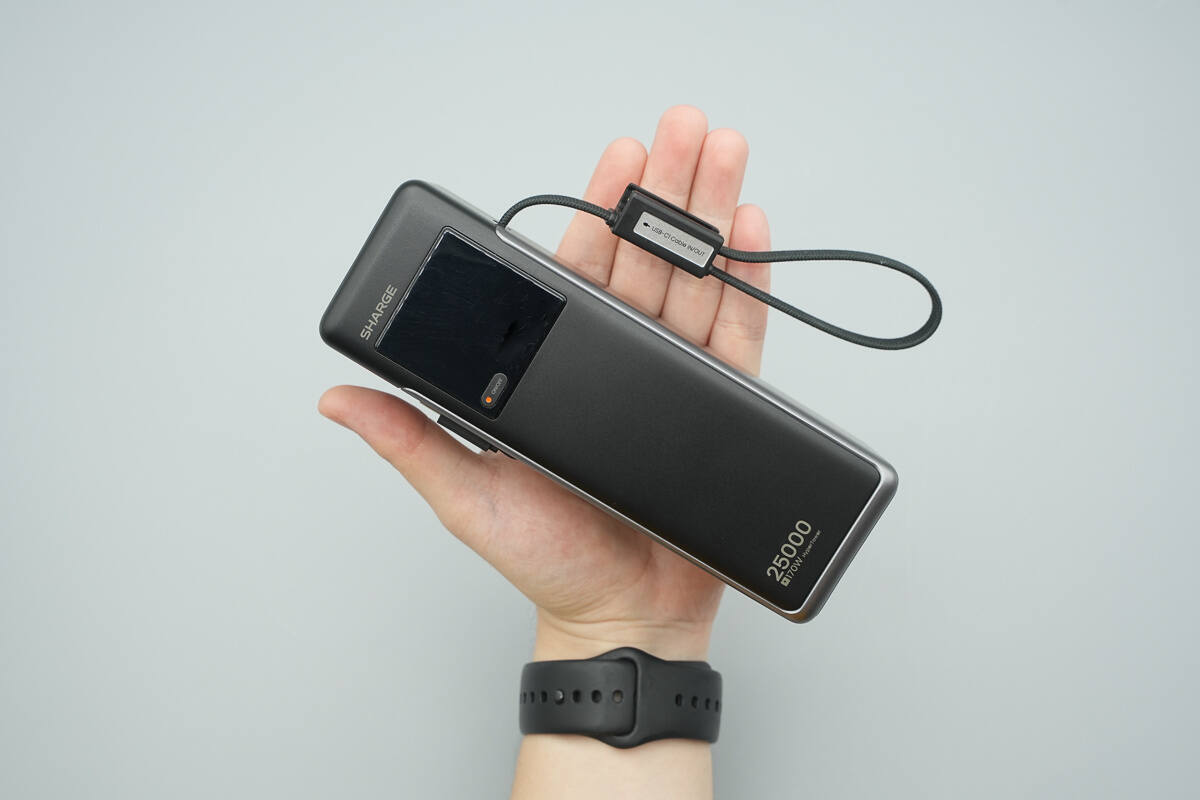
That's how big it is in the hand.
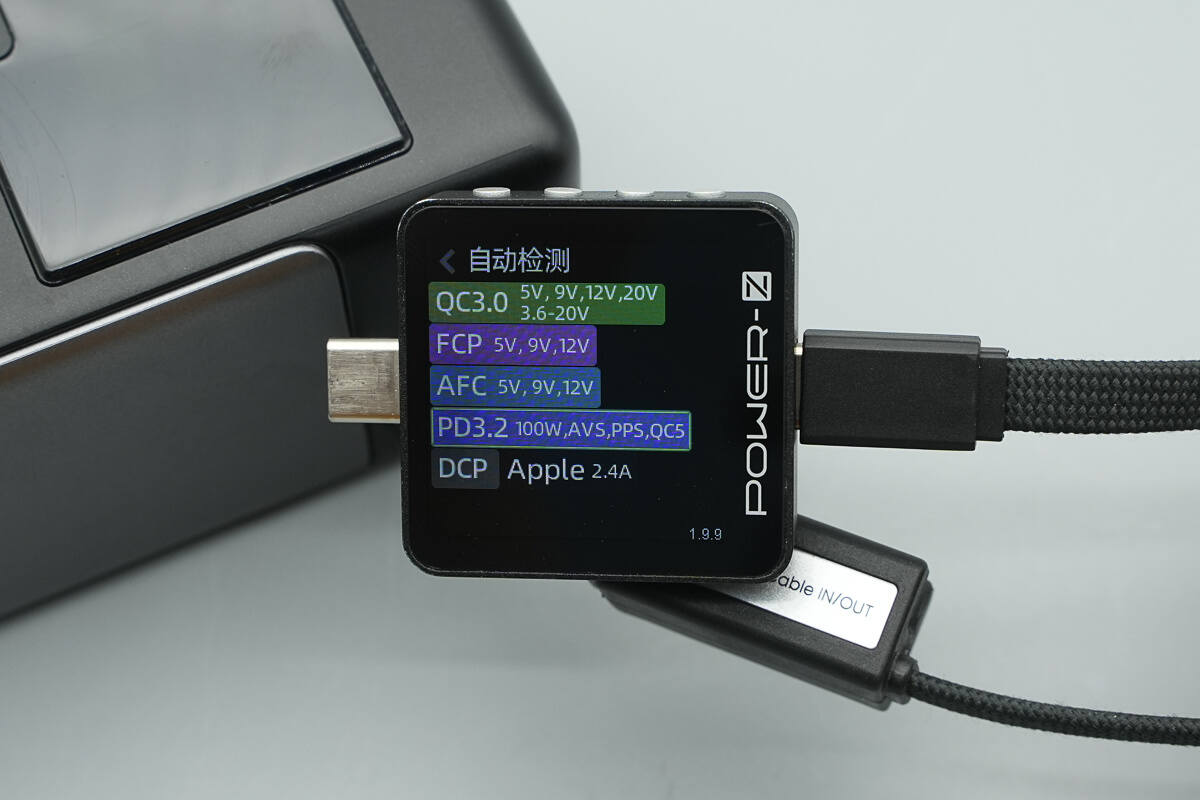
ChargerLAB POWER-Z KM003C shows that the braided cable supports QC3.0, QC5, FCP, AFC, PD3.2, AVS, PPS, DCP, and Apple 2.4A charging protocols.
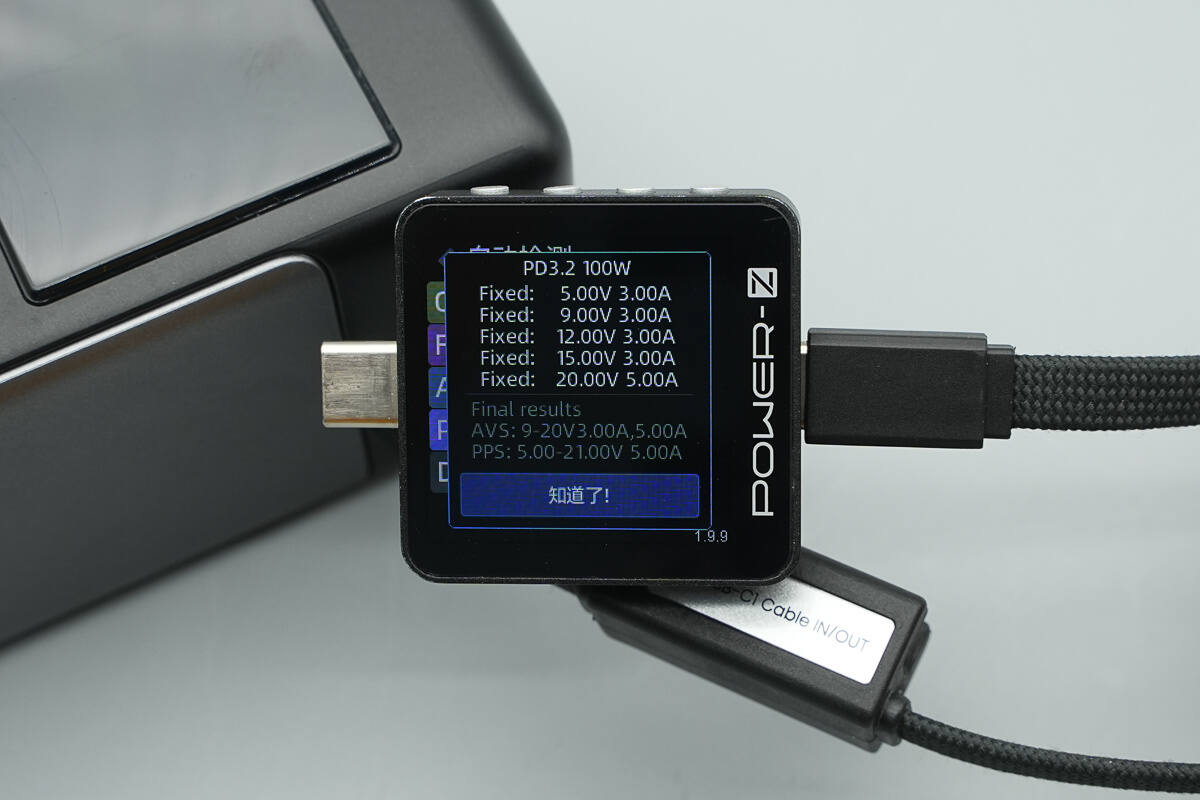
It also supports five fixed PDO profiles of 5V3A, 9V3A, 12V3A, 15V3A, and 20V5A, as well as PPS levels of 5–21V 5A and AVS levels of 9–20V 5A.
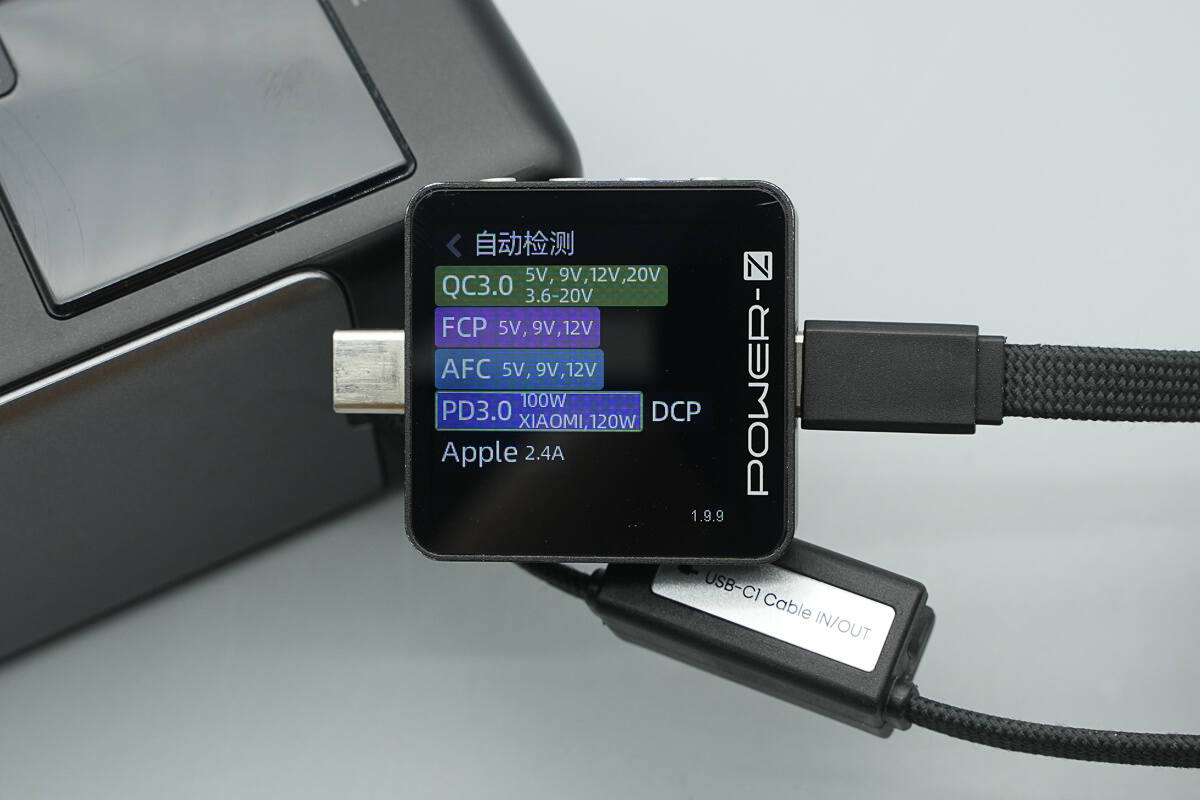
It also supports Xiaomi 120W fast charging.
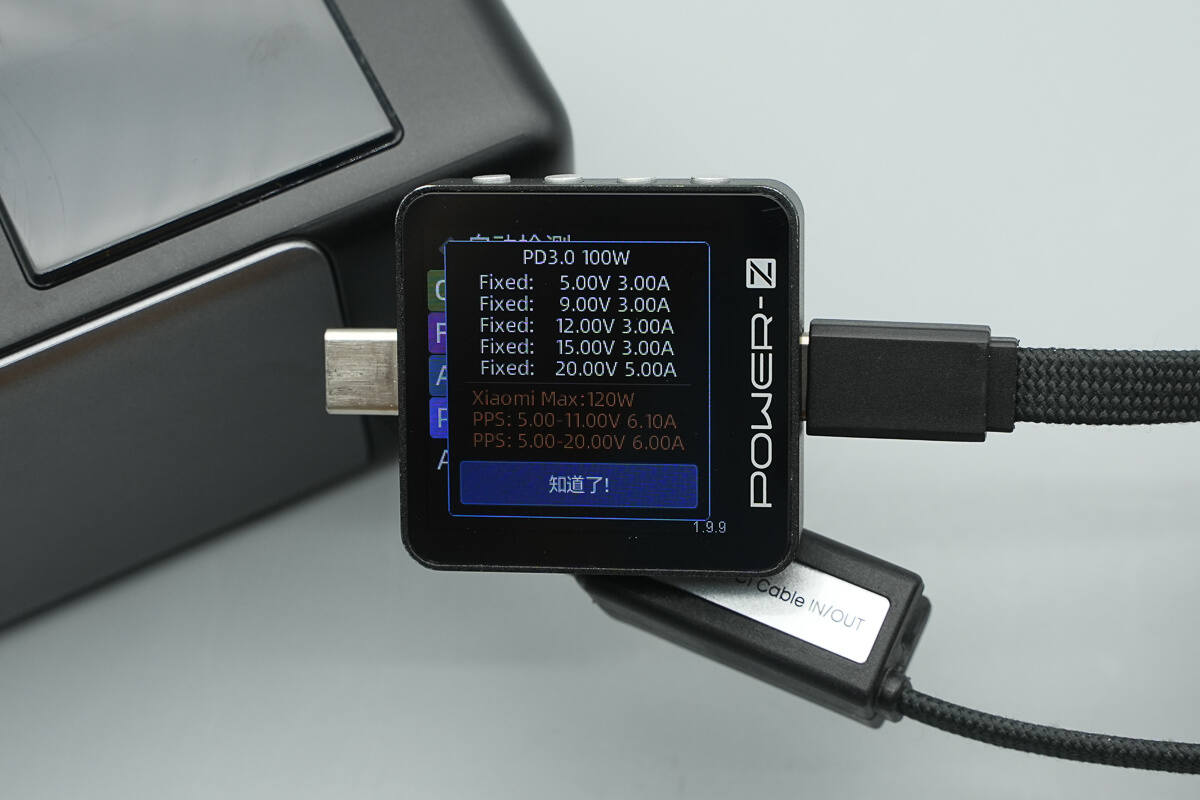
The PDO messages support Xiaomi 120W fast charging, as well as two sets of PPS levels: 5–11V 6.1A and 5–20V 6A.
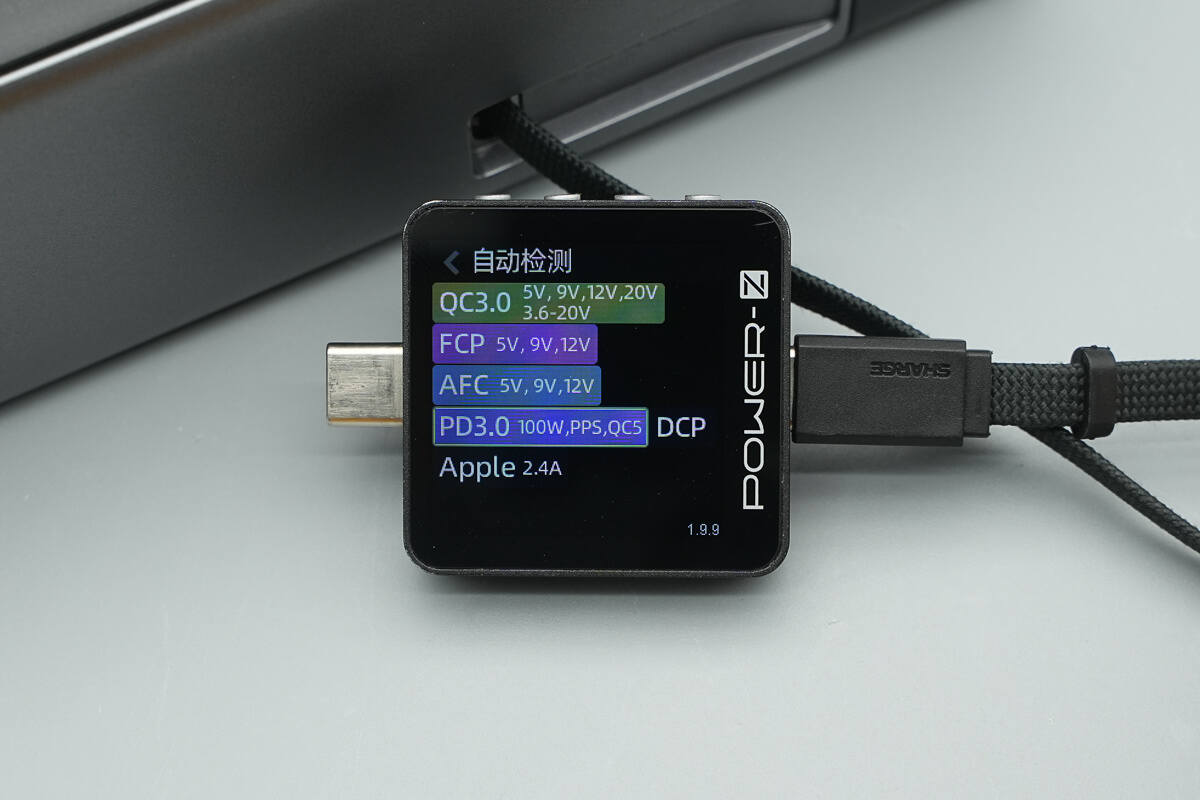
ChargerLAB POWER-Z KM003C shows that the retractable cable supports QC3.0, QC5, FCP, AFC, PD3.0, PPS, DCP, and Apple 2.4A charging protocols.
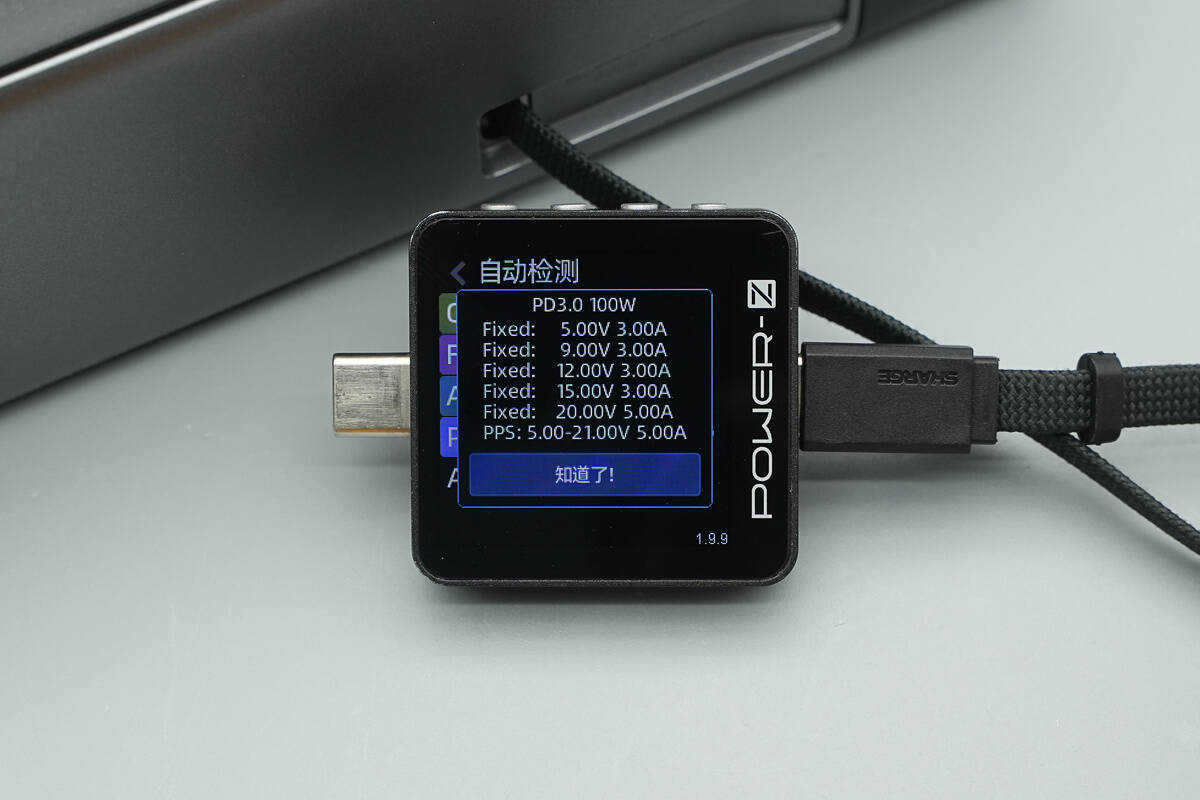
It also supports five fixed PDO profiles of 5V3A, 9V3A, 12V3A, 15V3A, and 20V5A, as well as a set of PPS, which is 5-21V5A.
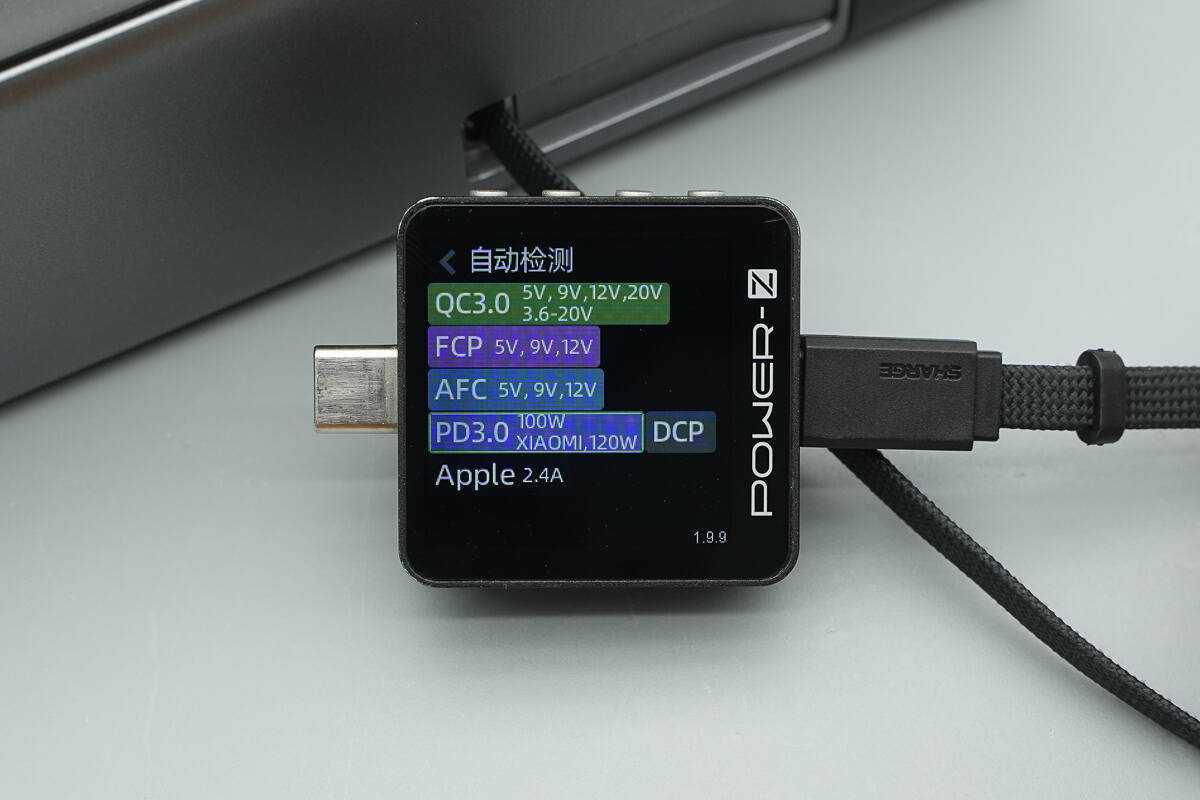
It also supports Xiaomi 120W fast charging.
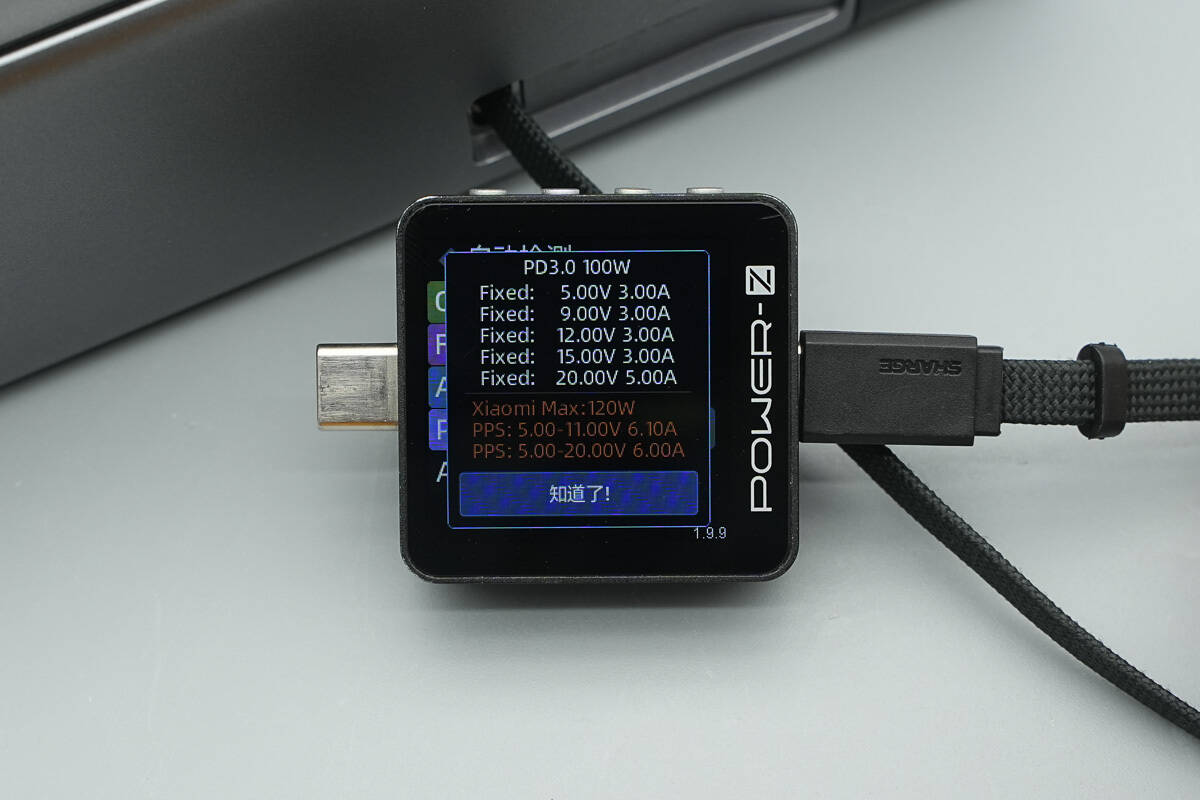
The PDO messages support Xiaomi 120W fast charging, as well as two sets of PPS levels: 5–11V 6.1A and 5–20V 6A.
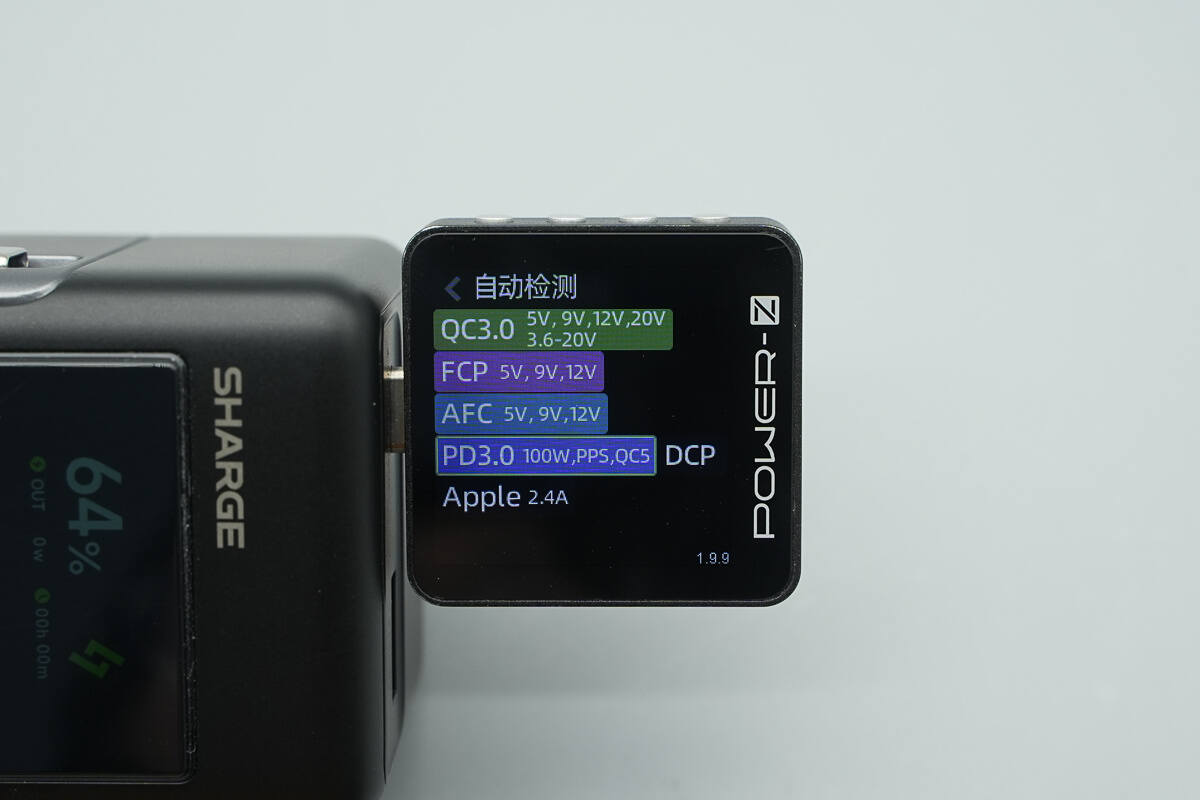
ChargerLAB POWER-Z KM003C shows that the USB-C3 port supports QC3.0, QC5, FCP, AFC, PD3.0, PPS, DCP, and Apple 2.4A charging protocols.
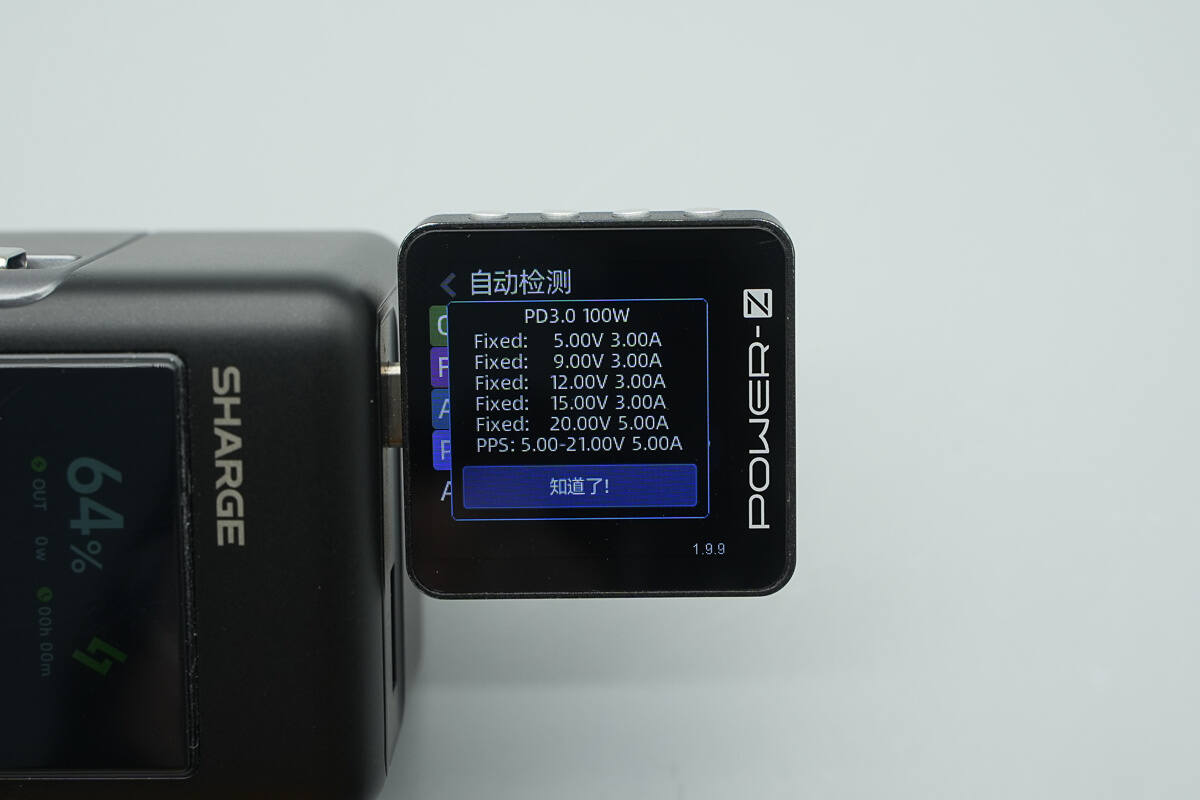
It also supports five fixed PDO profiles of 5V3A, 9V3A, 12V3A, 15V3A, and 20V5A, as well as a set of PPS, which is 5-21V5A.
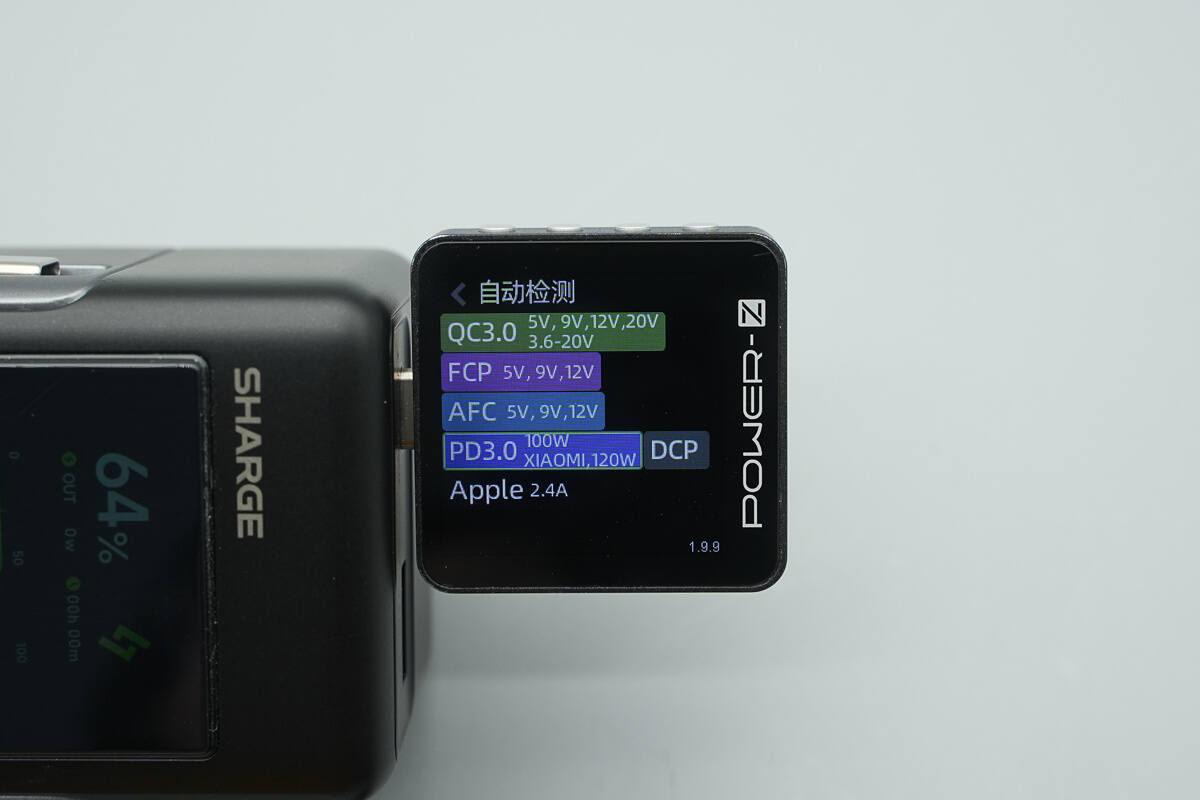
It also supports Xiaomi 120W fast charging.
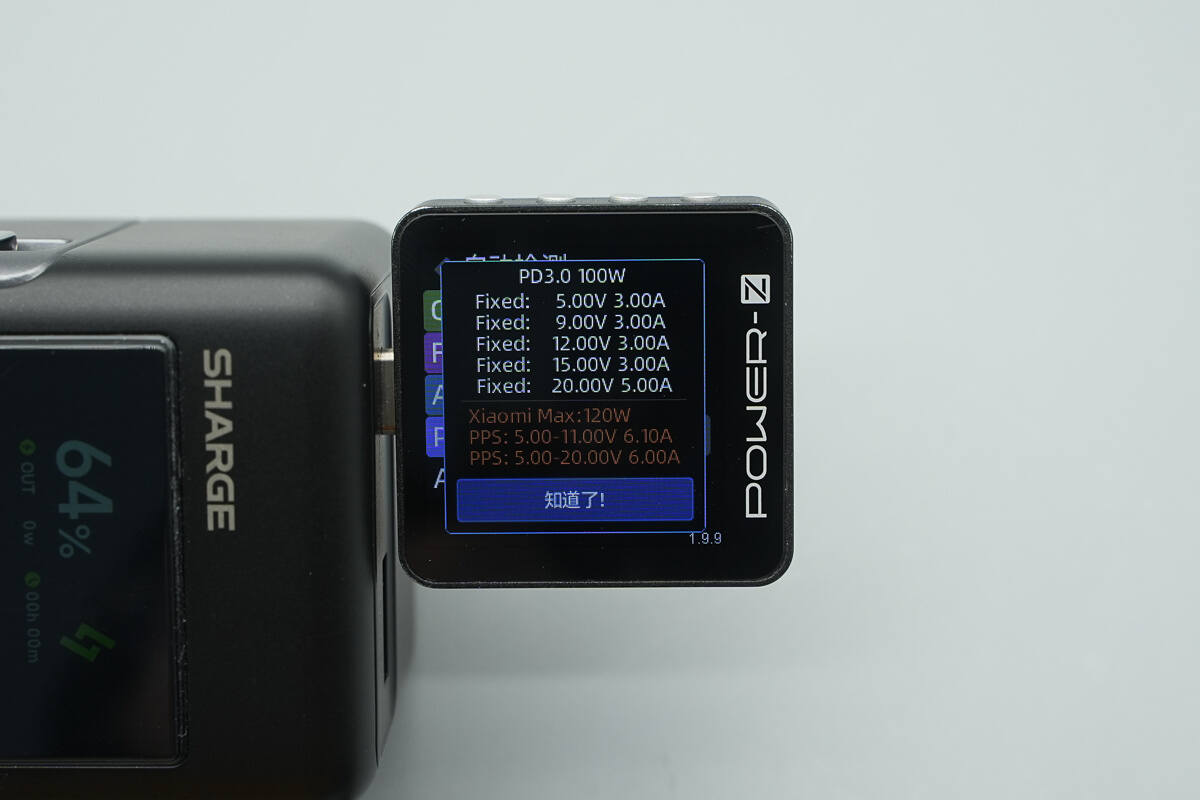
The PDO messages support Xiaomi 120W fast charging, as well as two sets of PPS levels: 5–11V 6.1A and 5–20V 6A.
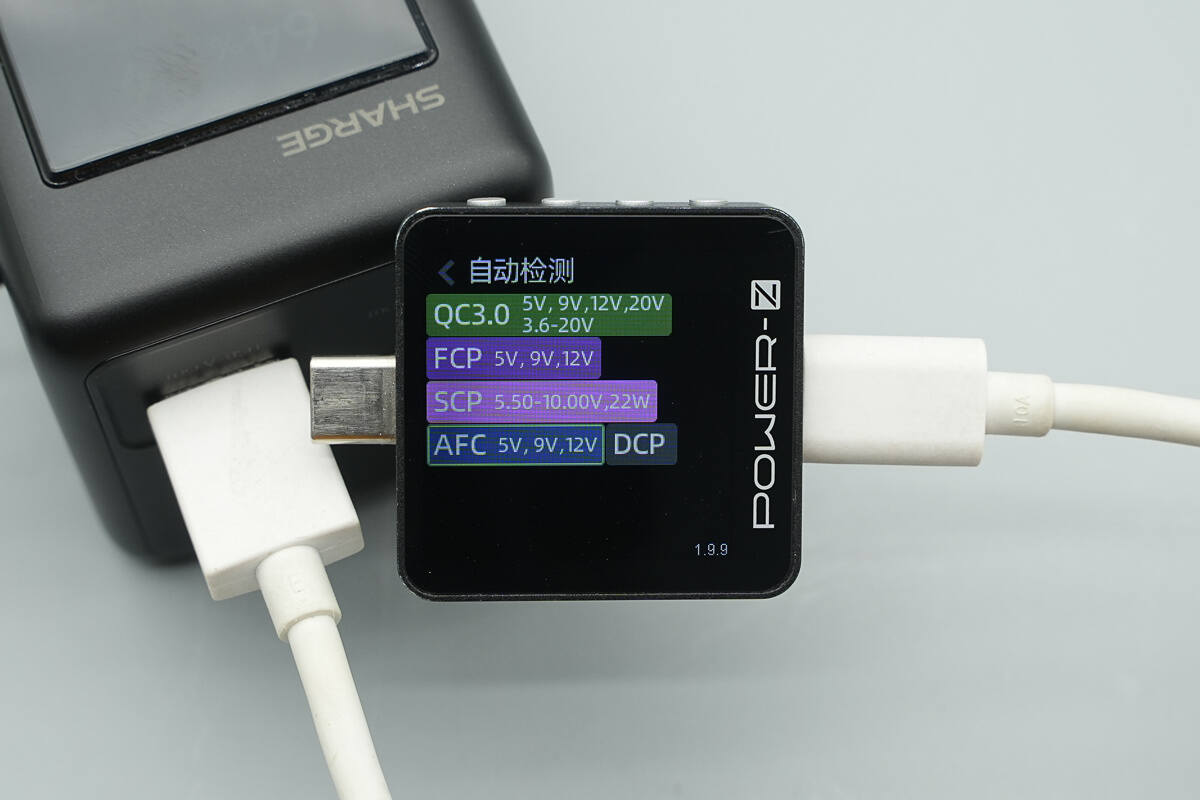
ChargerLAB POWER-Z KM003C shows that the USB-A port supports QC3.0, FCP, SCP, AFC, and DCP charging protocols.
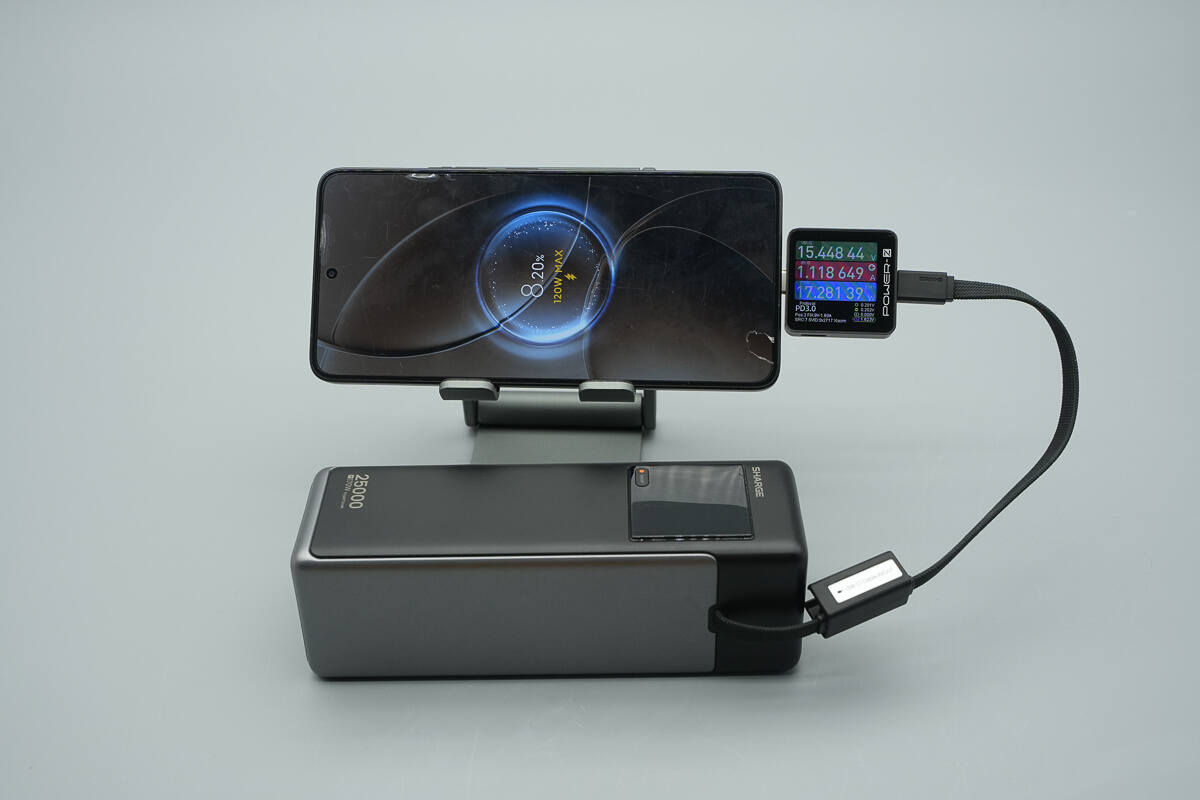
When using the power bank to charge a Xiaomi phone, it successfully activates the 120W MAX Xiaomi Surge fast charging.
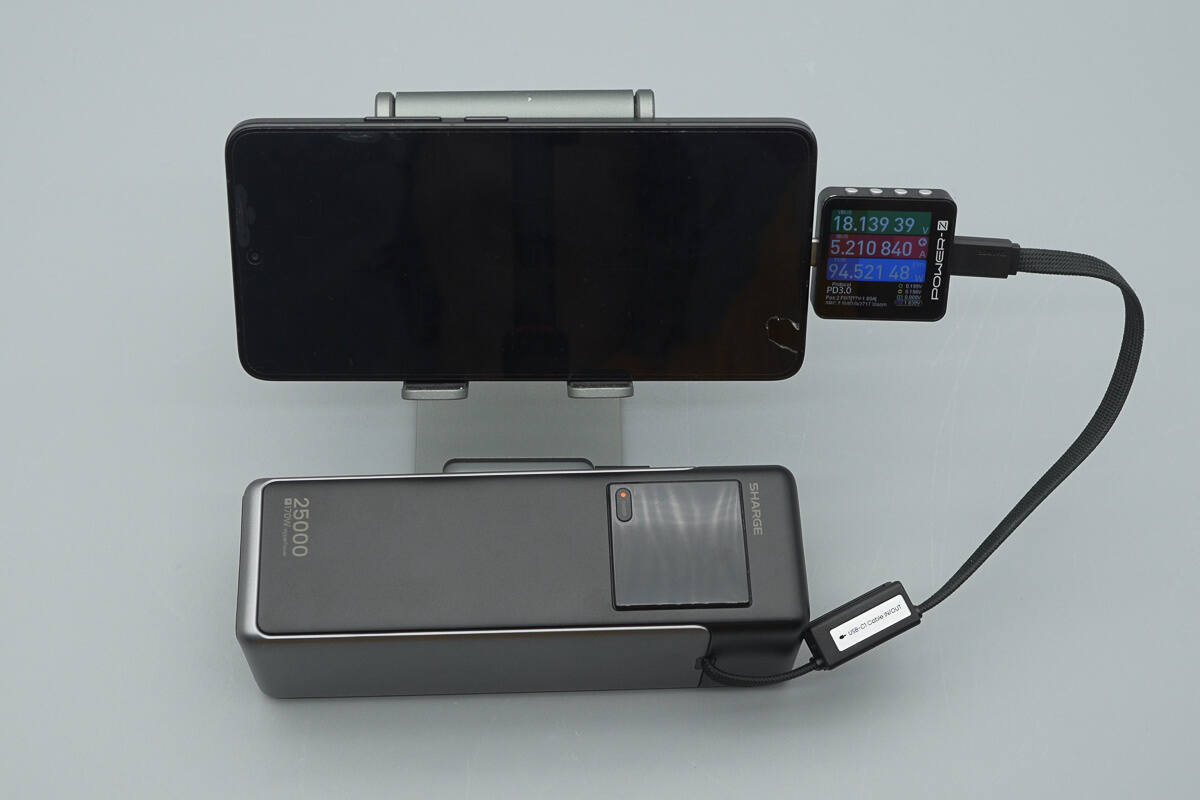
Once the power stabilizes, it reaches 94.5W.
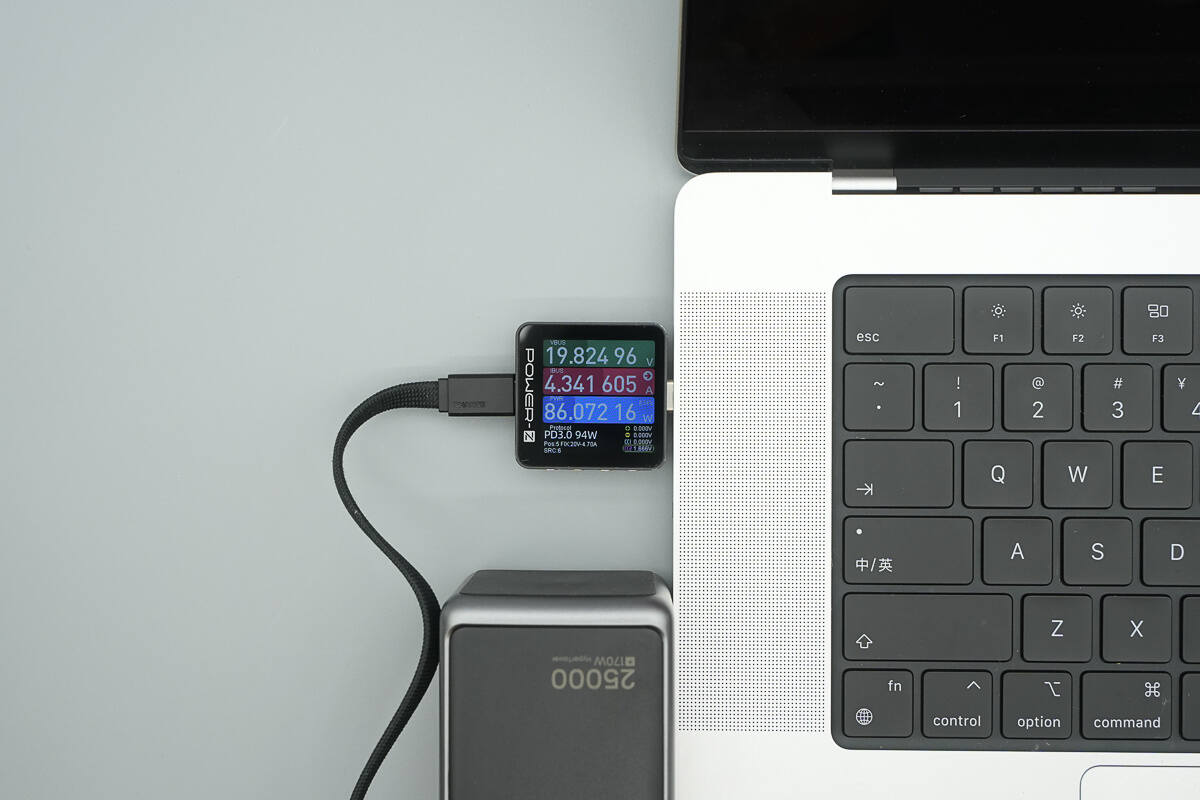
When charging a MacBook Pro 16, it activates PD 3.0 fast charging, delivering up to 86W.
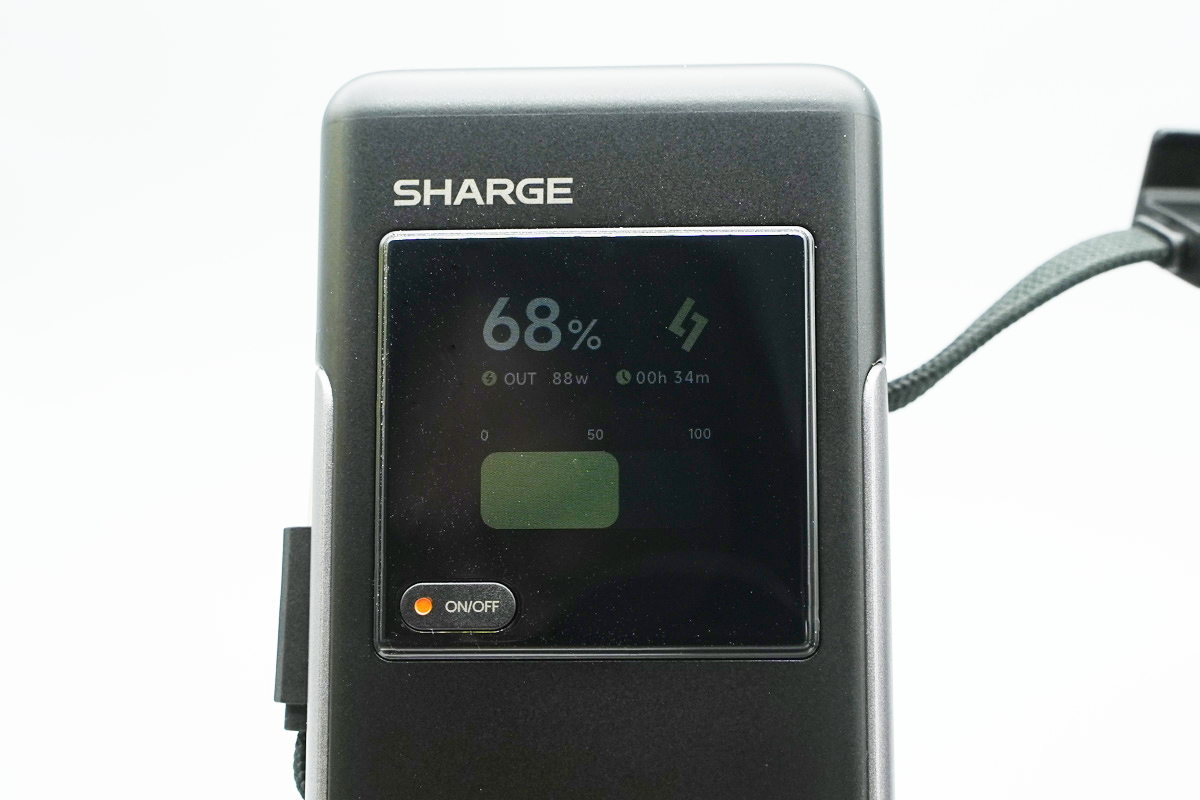
When the power bank is discharging, the screen displays the current total output power and estimates the remaining usage time.
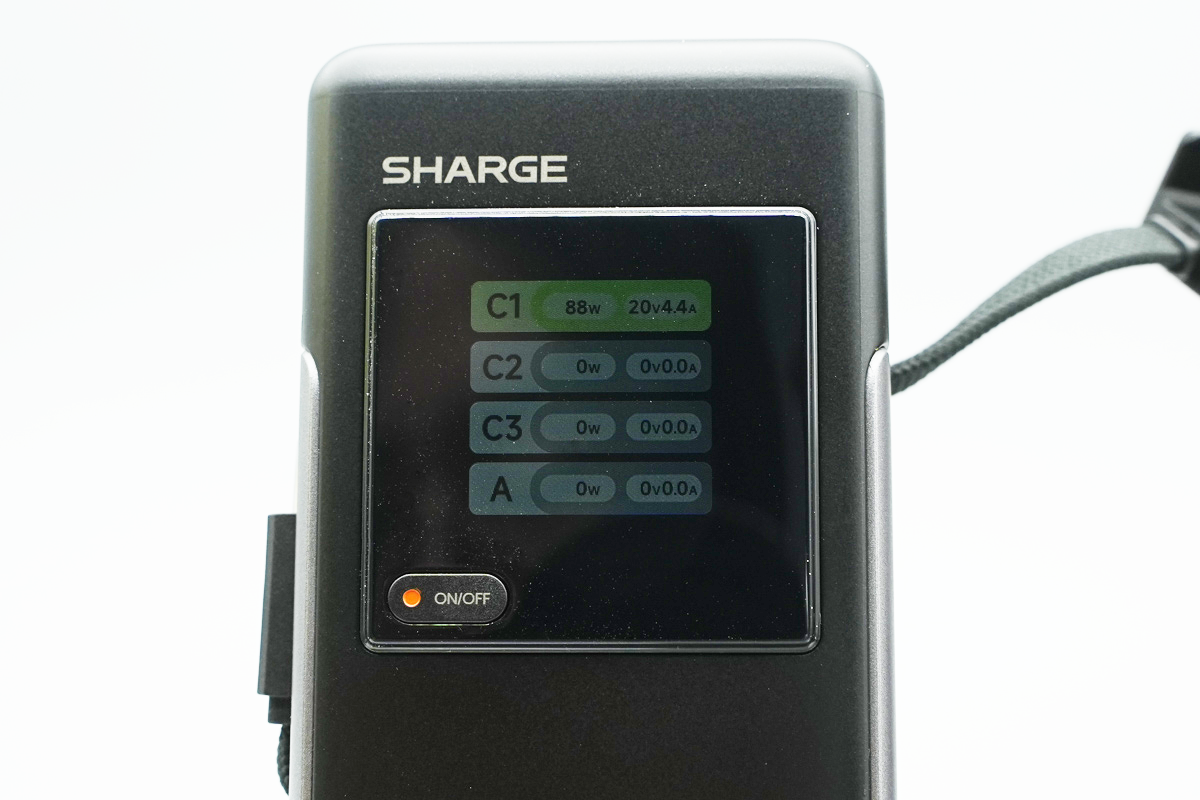
Switching the screen to the port output status interface shows that the C1 port is currently outputting 20V at 4.4A.
Teardown
Next, let's take it apart to see its internal components and structure.
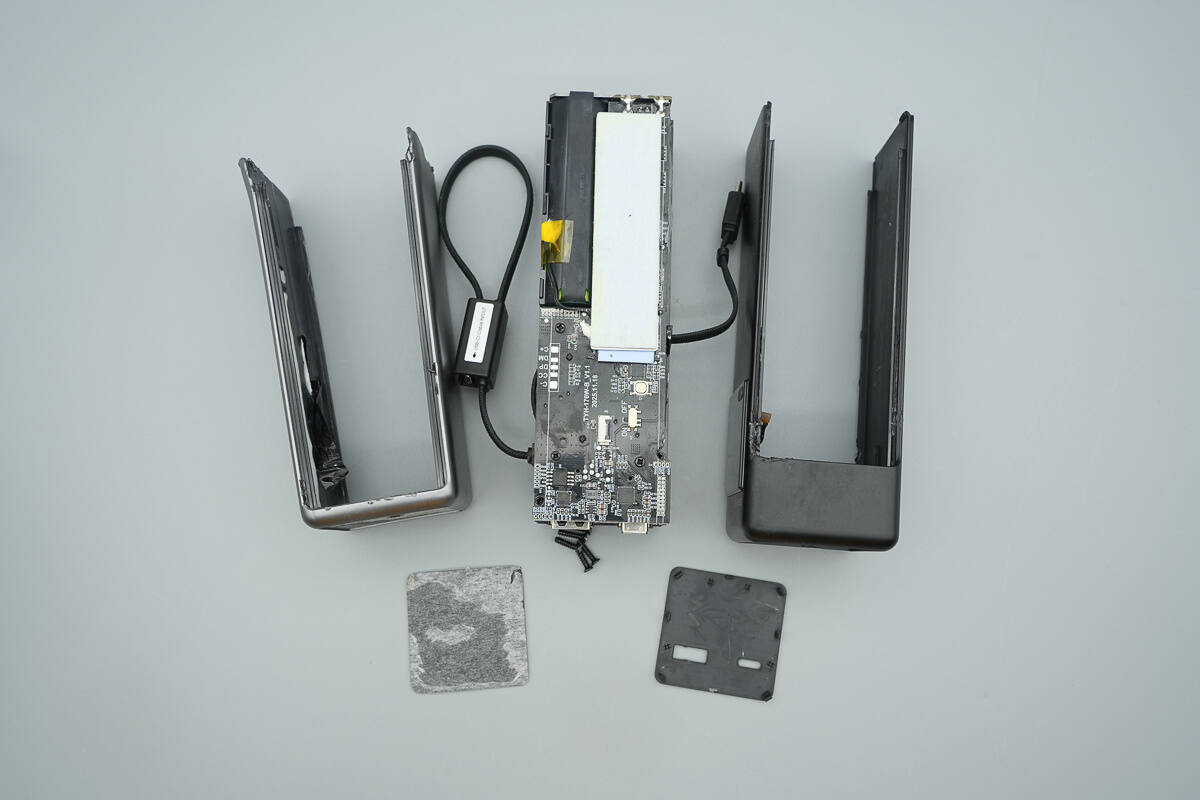
Remove the U-shaped casing; the inner side of the shell is lined with multiple foam pads for cushioning.
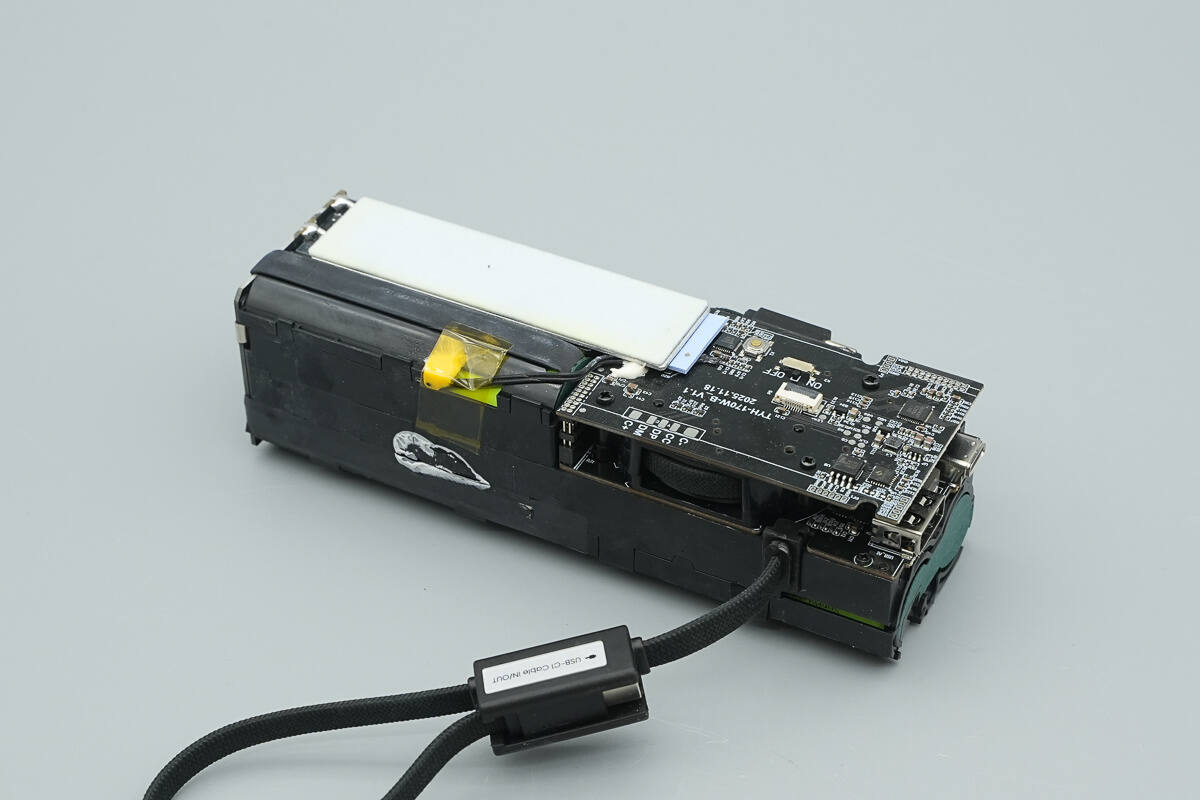
The PCBA module is tightly integrated with the battery pack, and the PCB is equipped with large-area thermal pads.
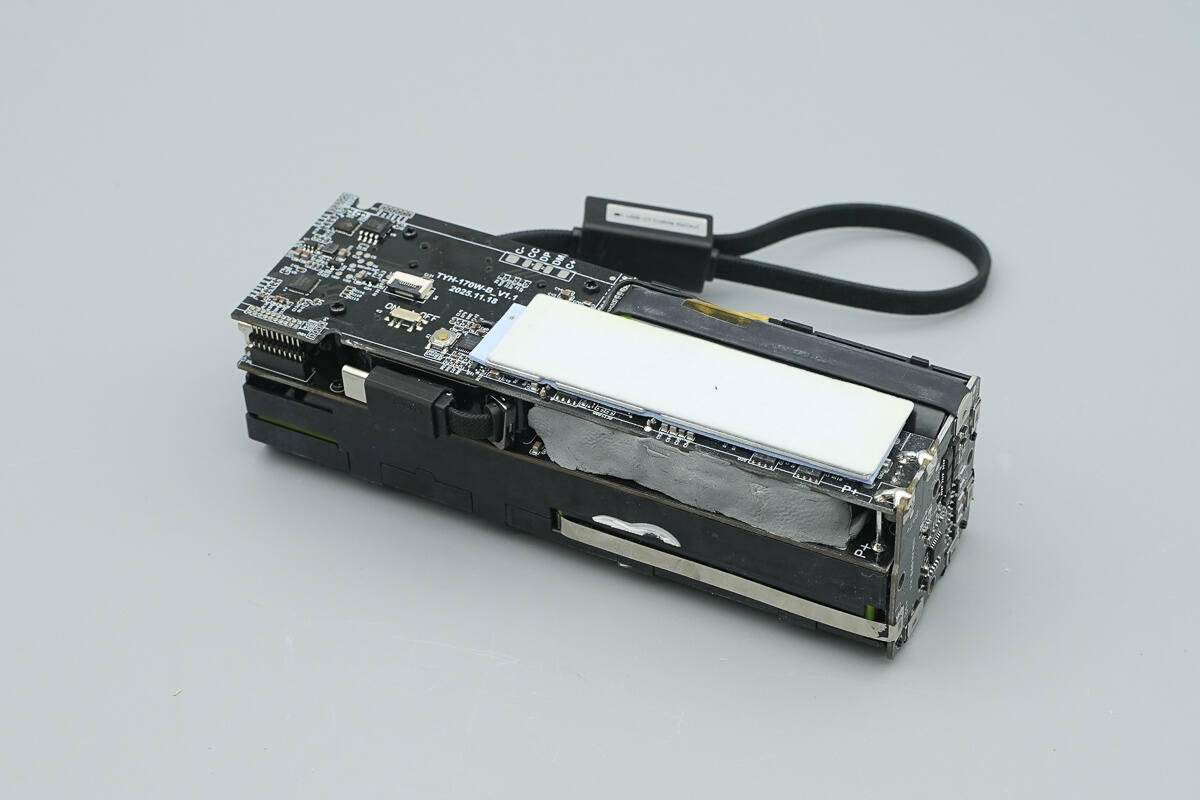
View of the other side of the module.
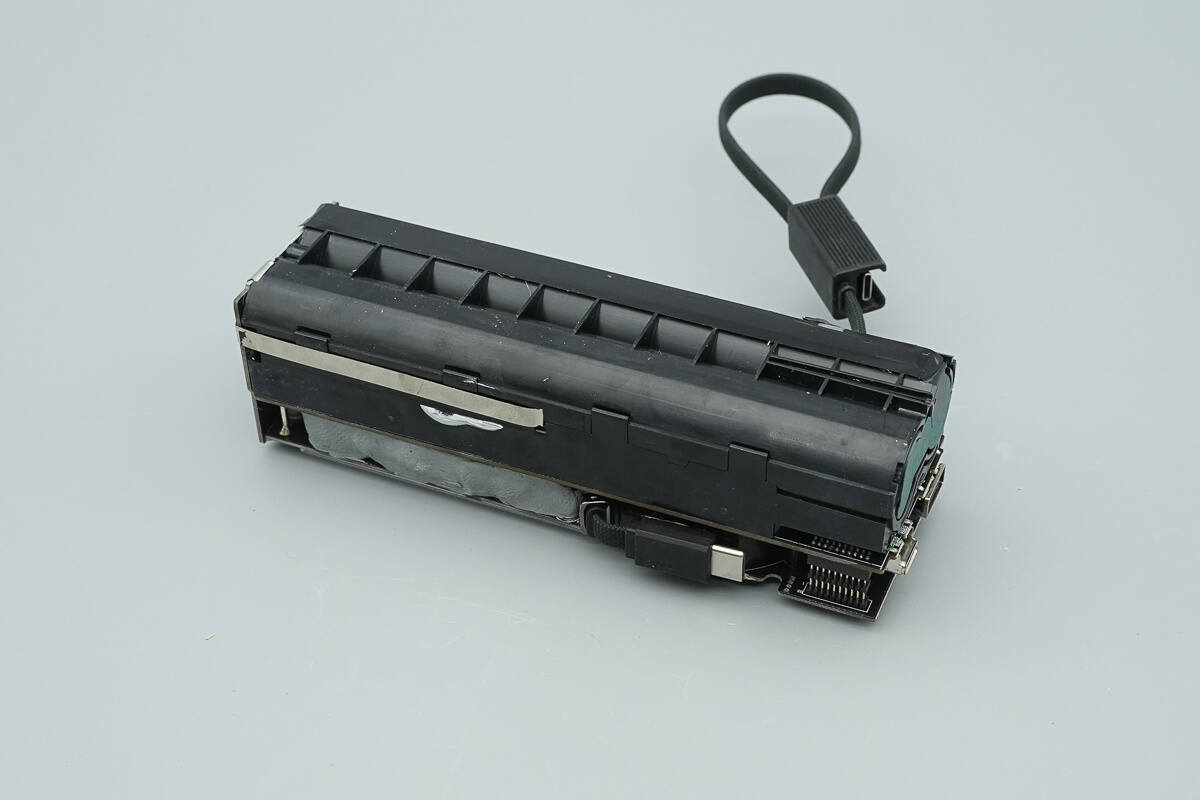
The battery pack is equipped with a plastic protective frame.
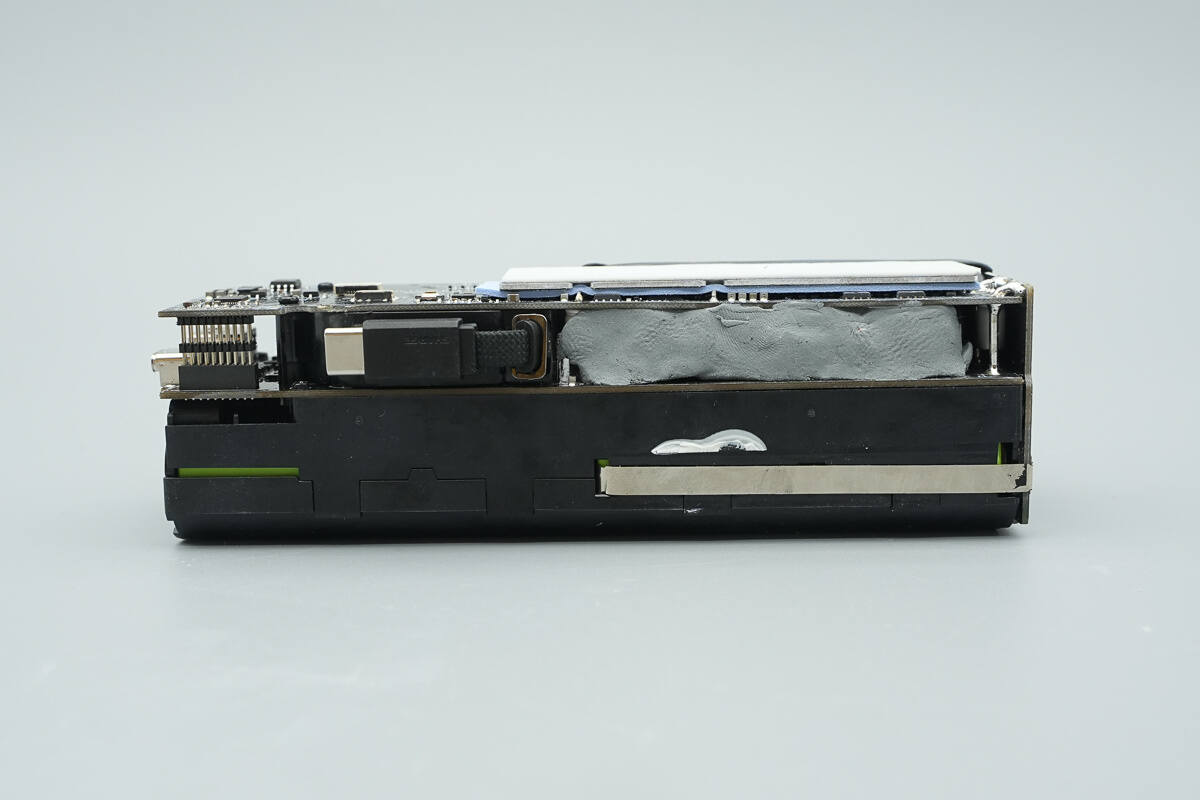
From the side view, the stacked structure of the battery pack and PCBA is visible. The PCBA is divided into upper and lower layers, connected with pins, and the gap between them is largely filled with gray thermal gel.
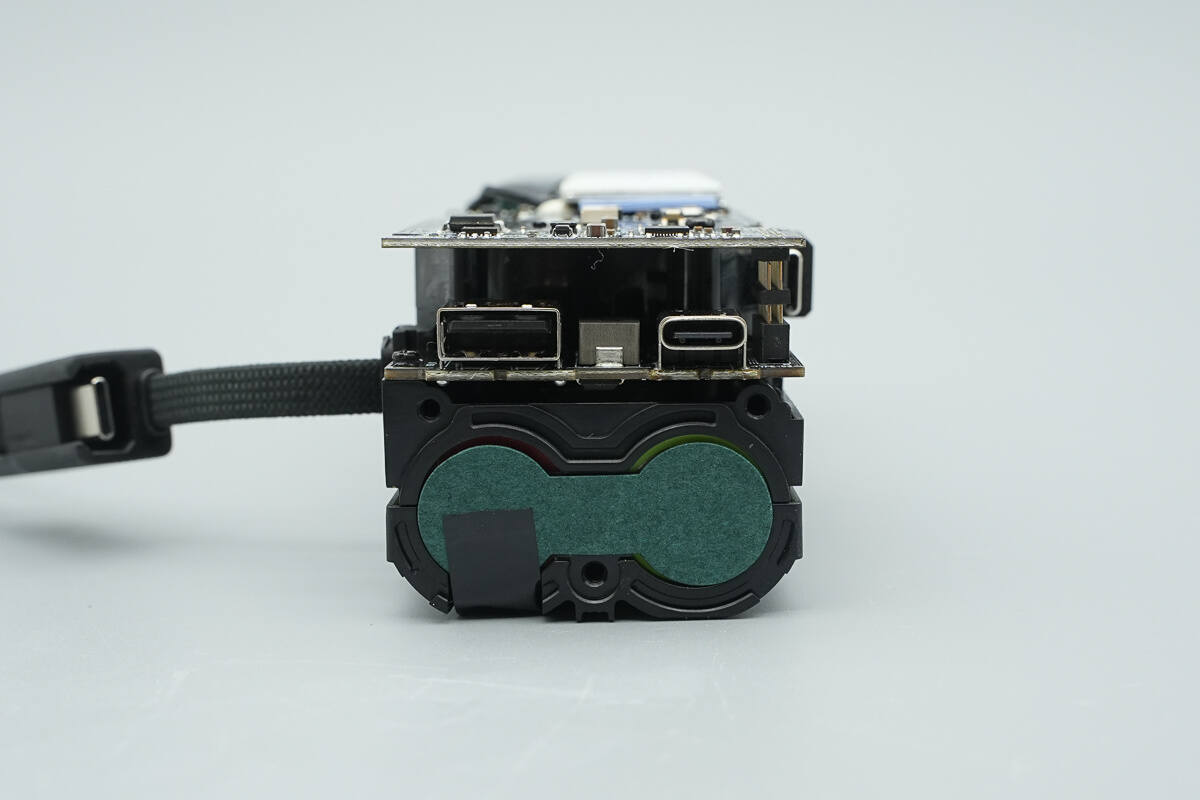
The top of the module features USB-C and USB-A ports.
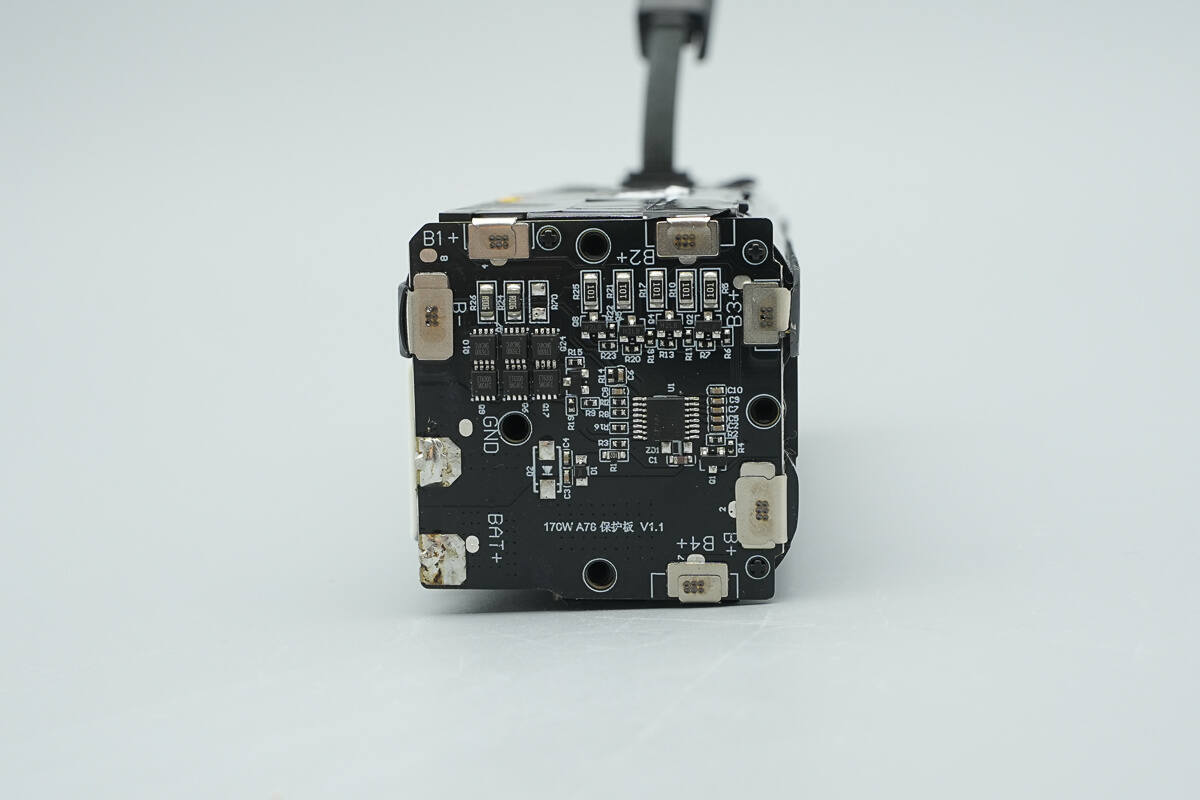
The bottom of the module houses the battery protection PCB.
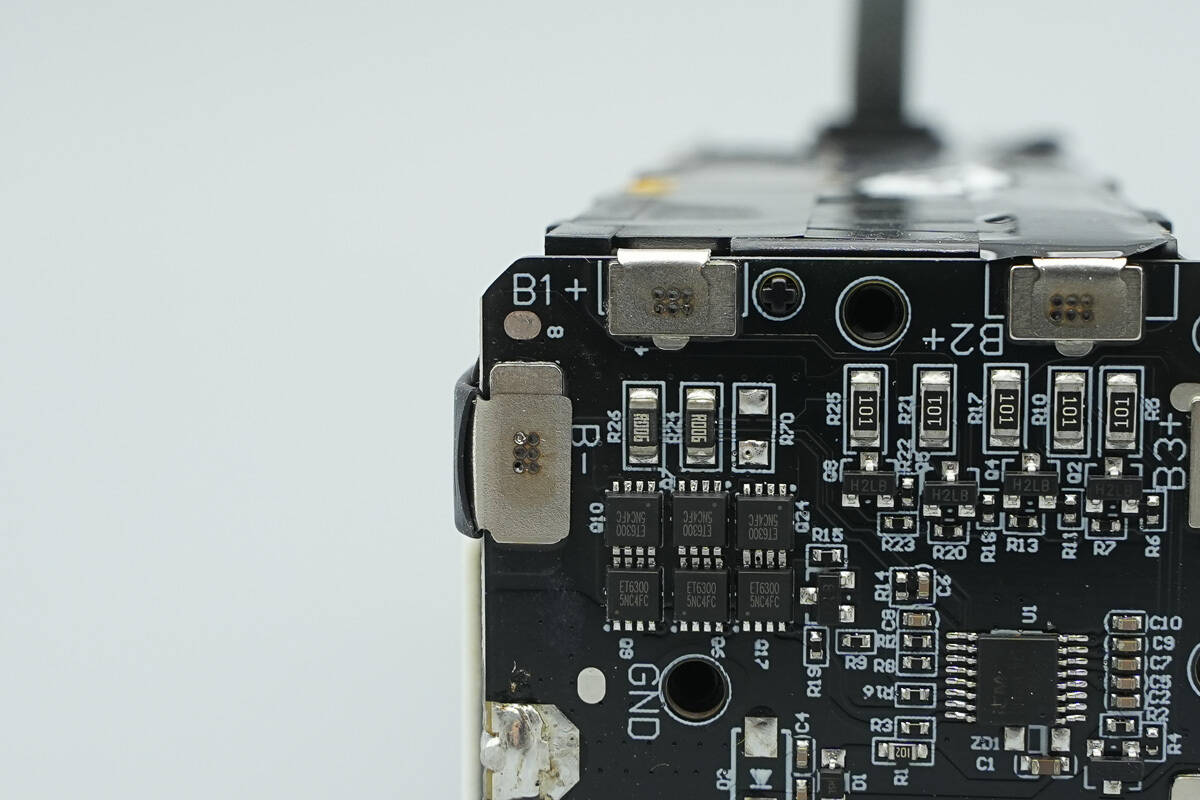
Close-up of the battery solder points on the protection PCB.
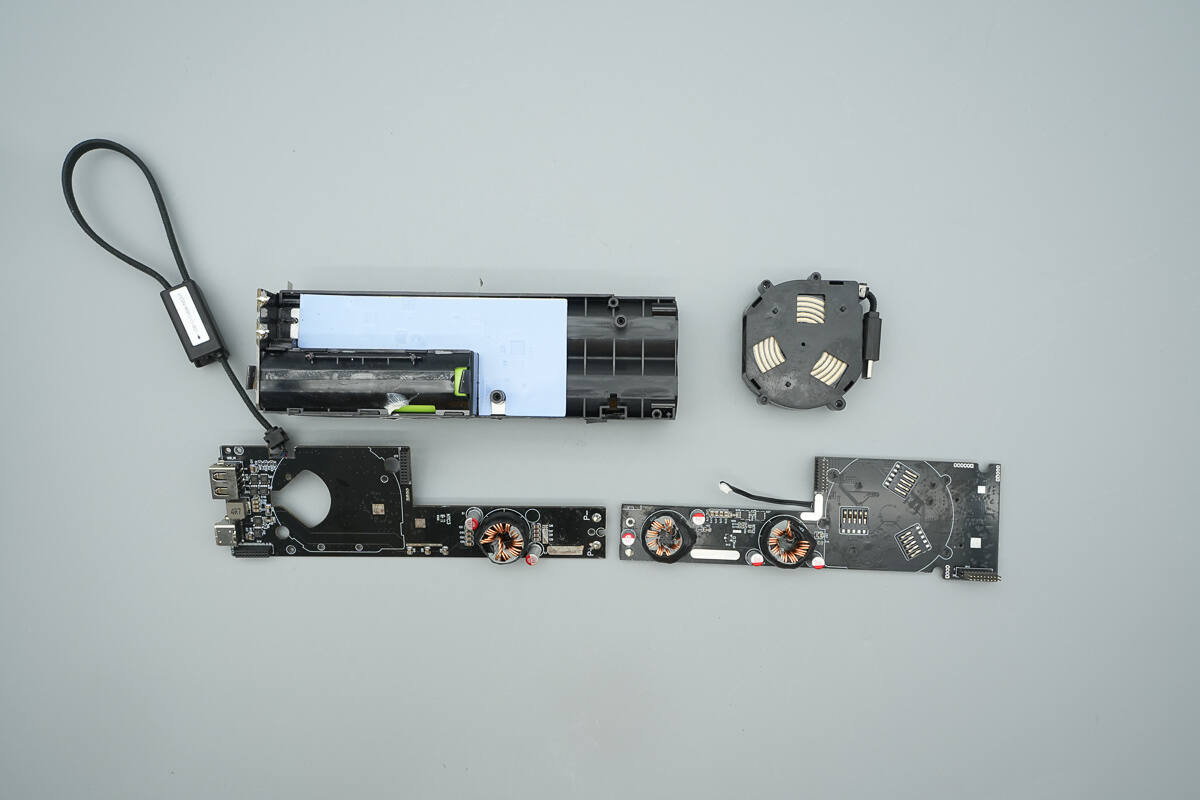
Separating the two stacked PCBs and the retractable cable module reveals the blue elongated thermal pad on top of the battery pack.
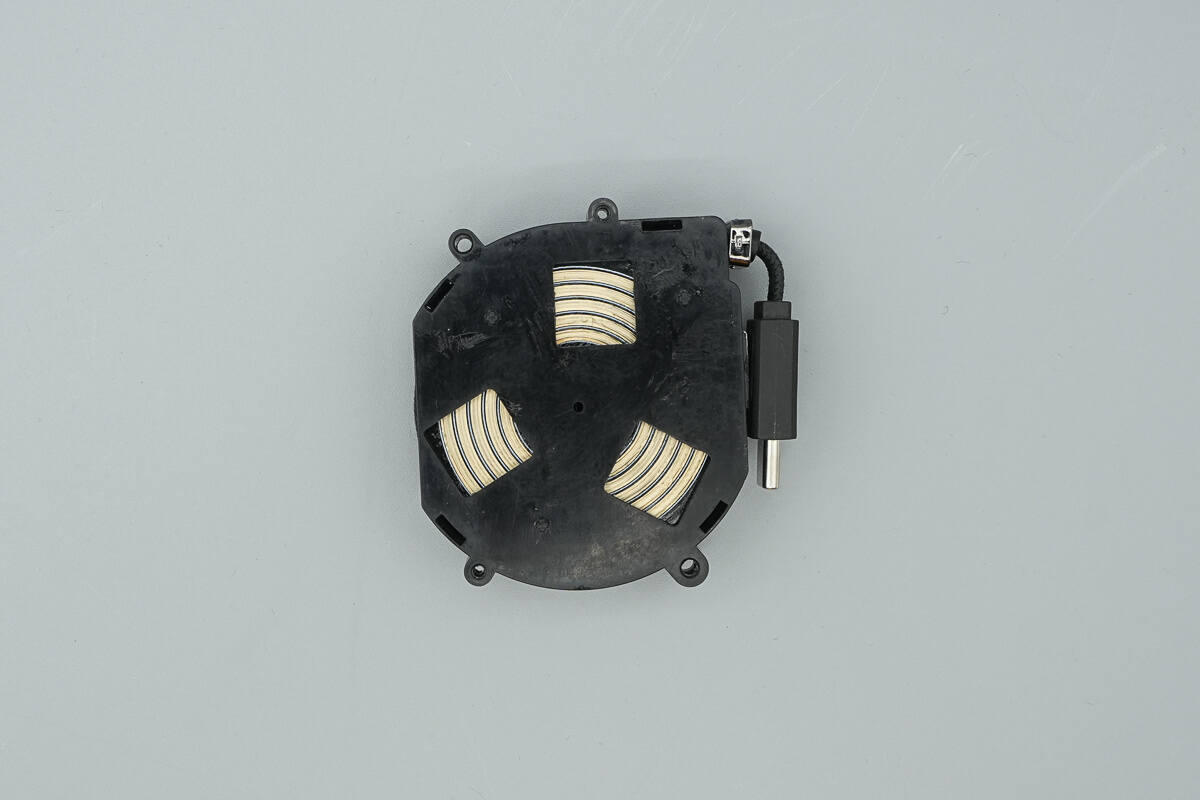
Close-up of the retractable cable module.
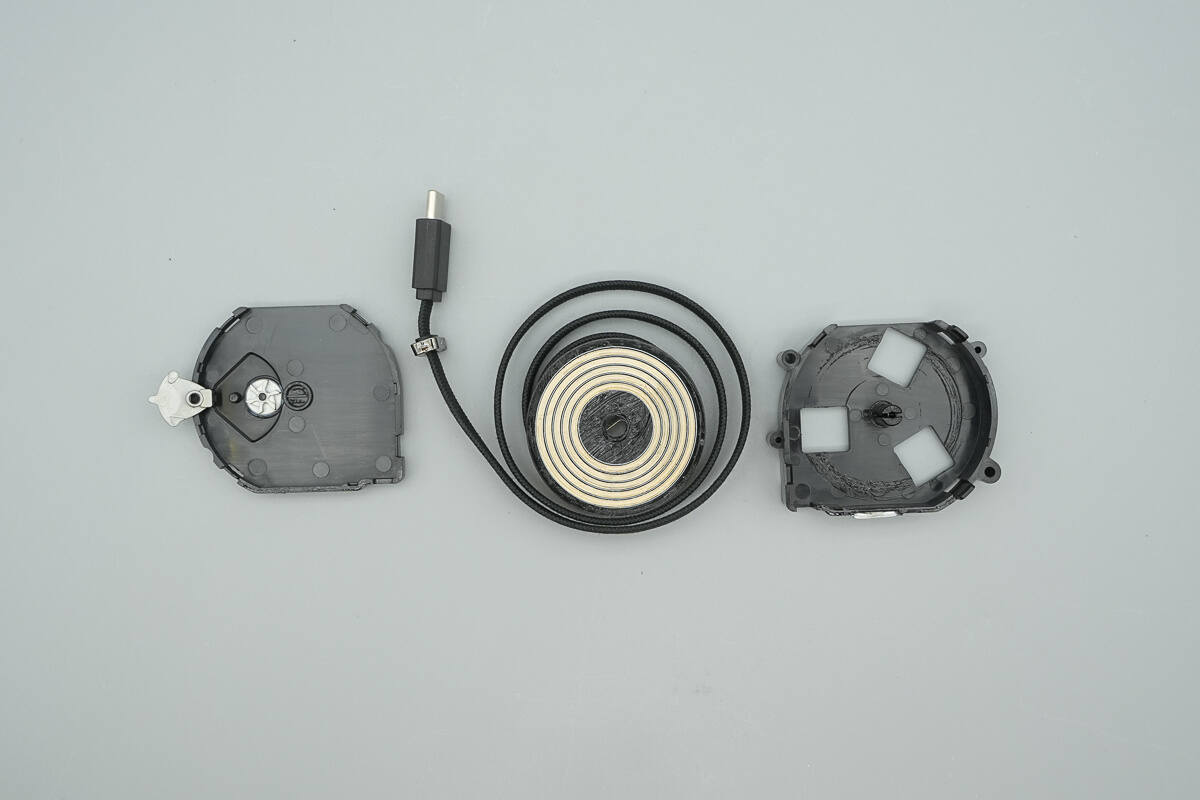
Disassembled the retractable cable module.
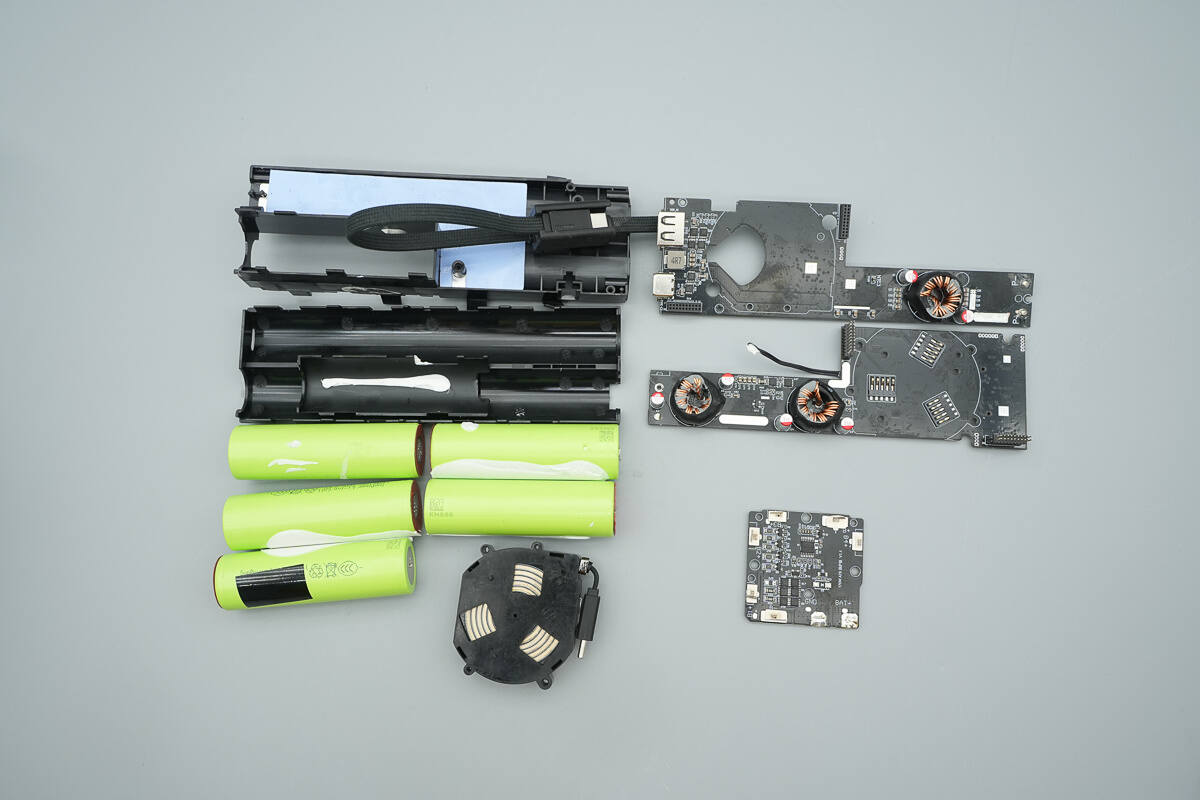
Separate the battery pack and the lithium battery protection PCB.
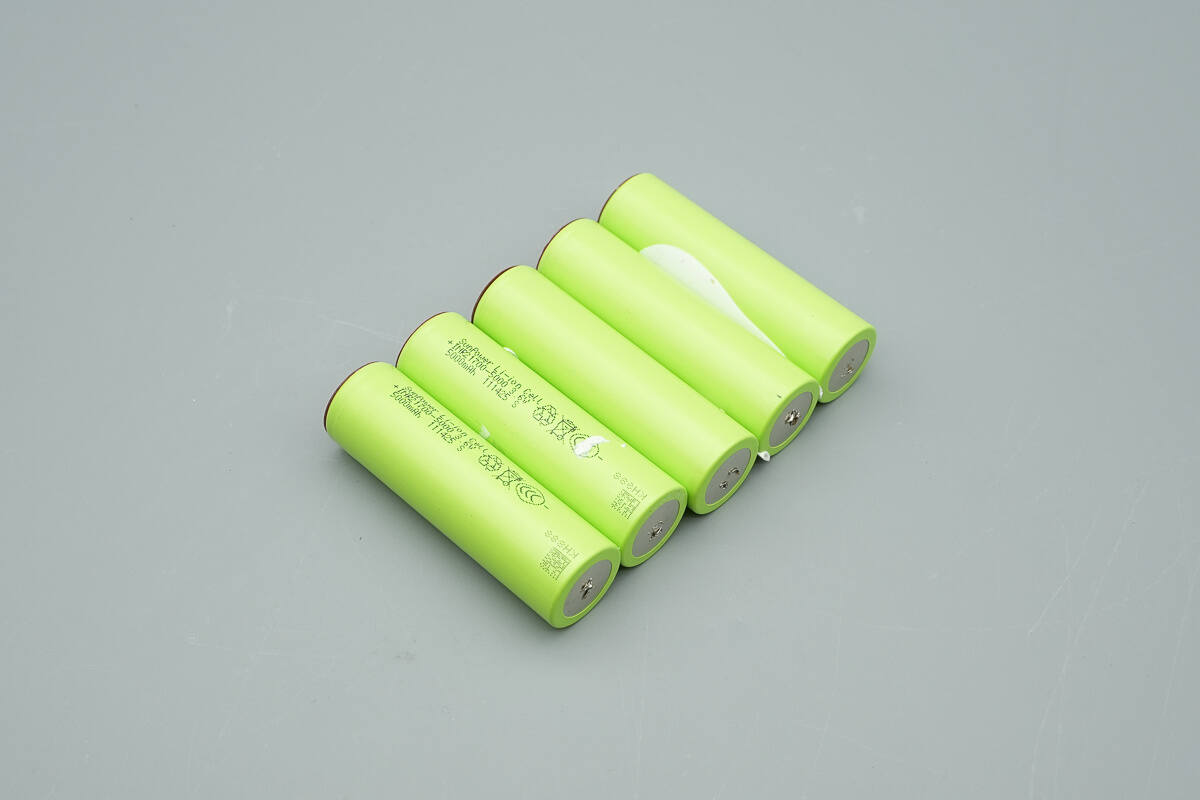
The battery pack consists of five 21700 cells.
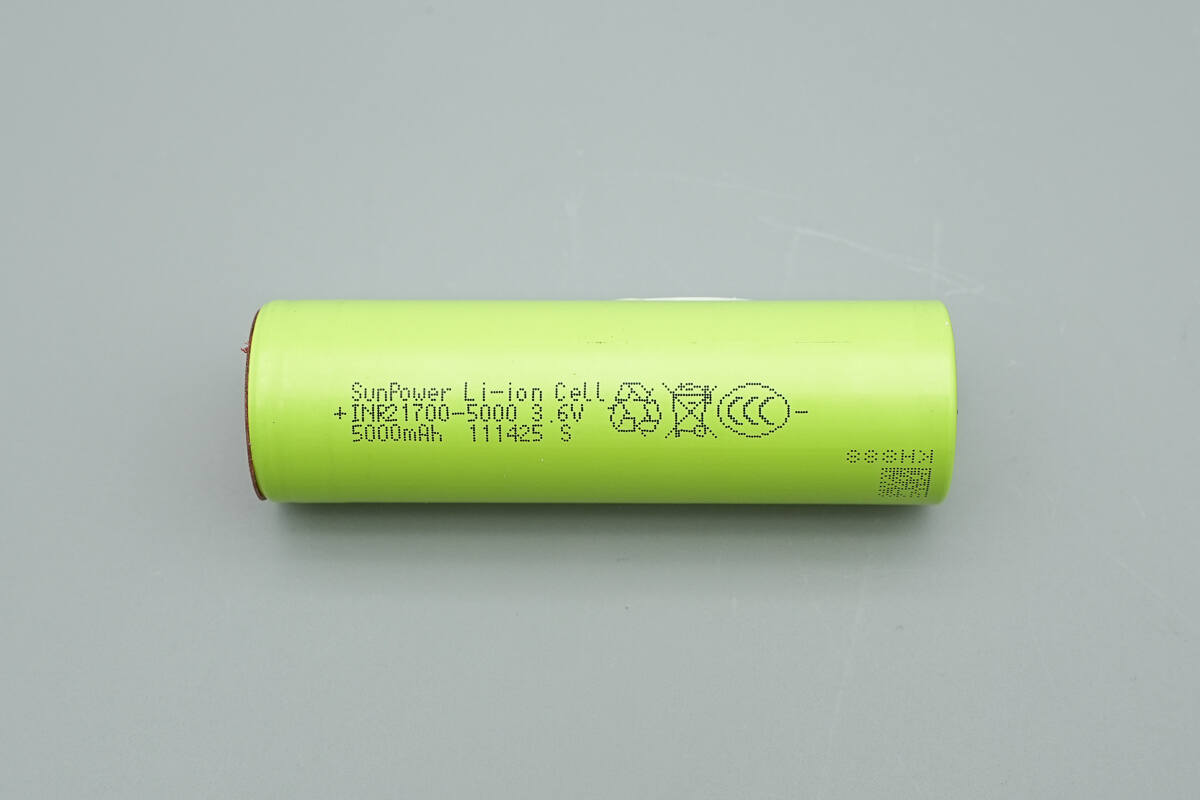
The 21700 cells are from SunPower, model INR21700-5000, each with a voltage of 3.6V and a capacity of 5000mAh, resulting in a total capacity of 25,000mAh for all five cells.
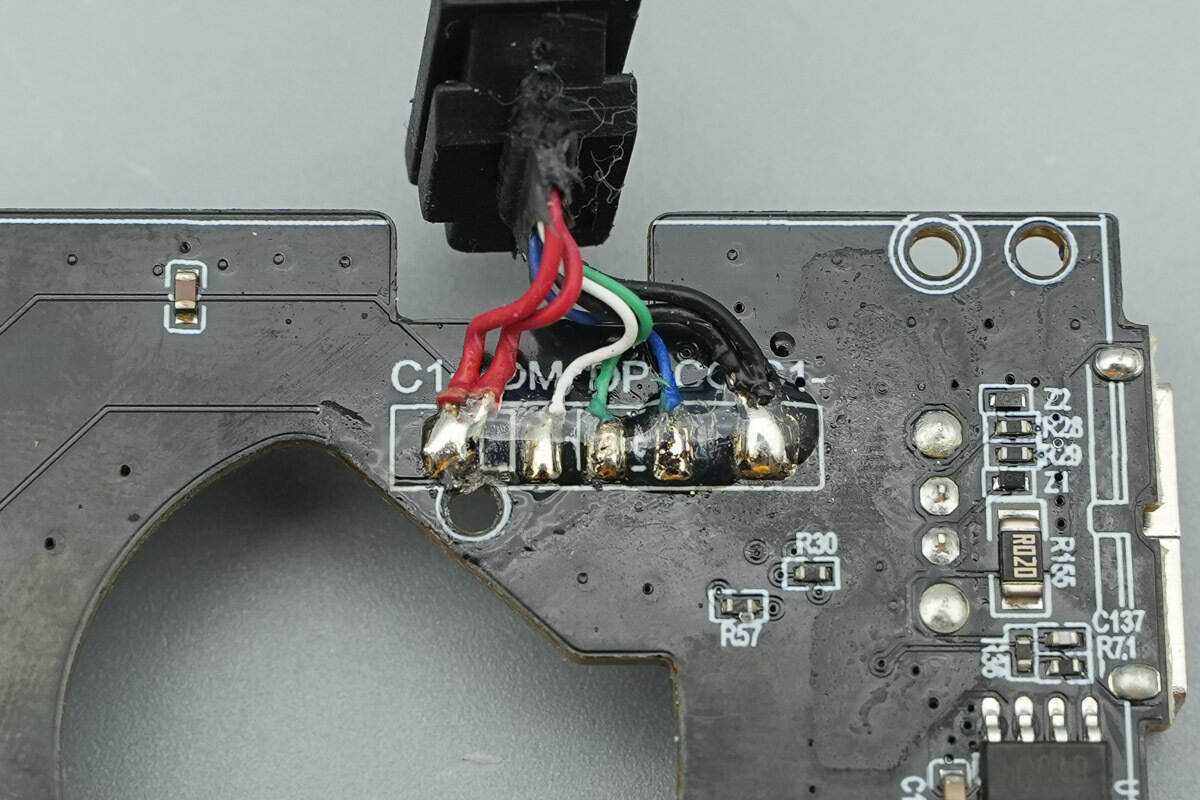
Close-up of the solder points at the end of the braided cable.
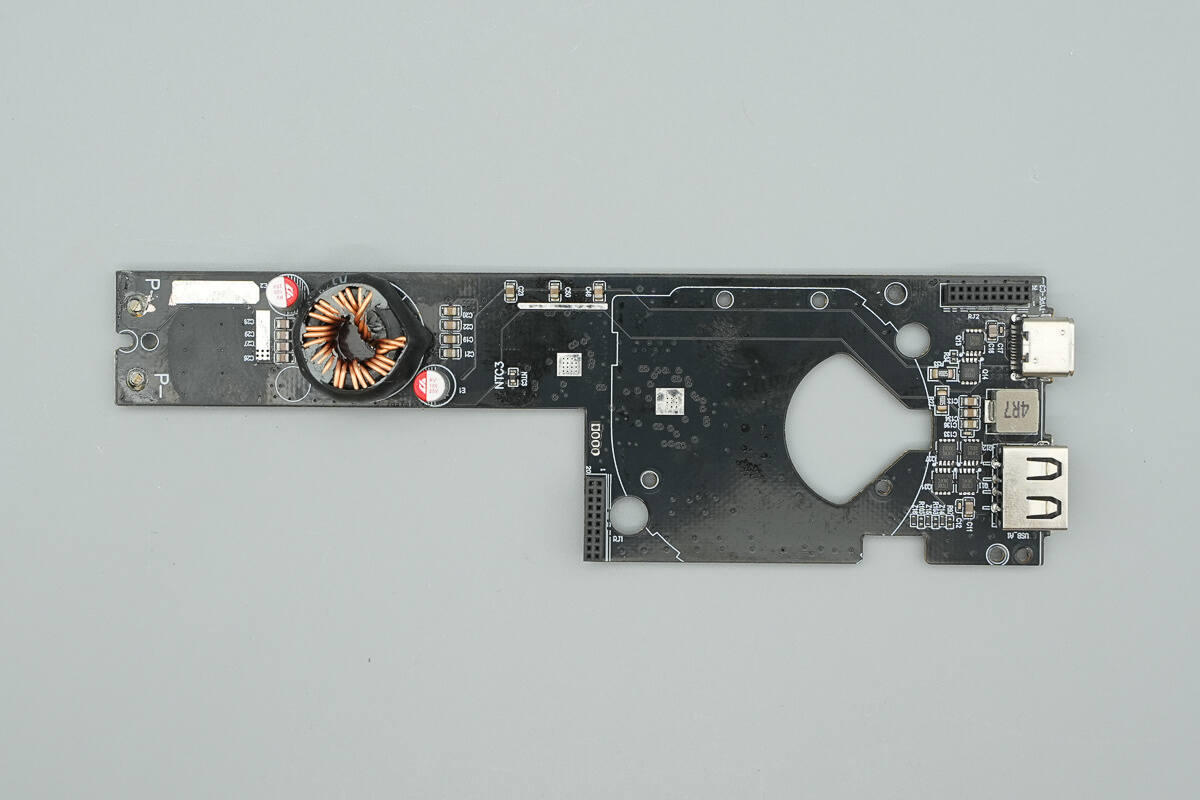
On the front of the lower PCB, there is a toroidal inductor, USB-C and USB-A sockets, and the corresponding VBUS MOSFETs.
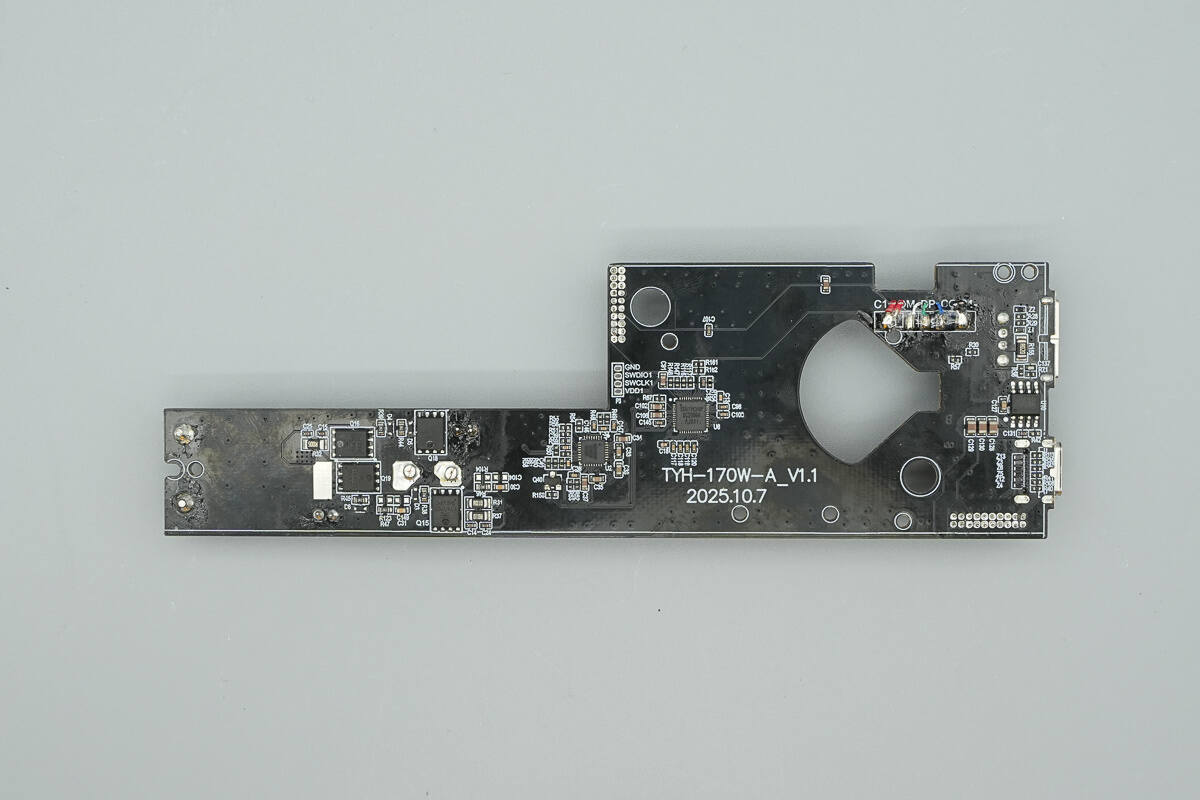
The back of the PCB is marked with “TYH-170W-A_V1.1.” The cutout on the right side is for installing the retractable cable module. It also contains buck-boost MOSFETs, a buck-boost controller, and protocol chips.
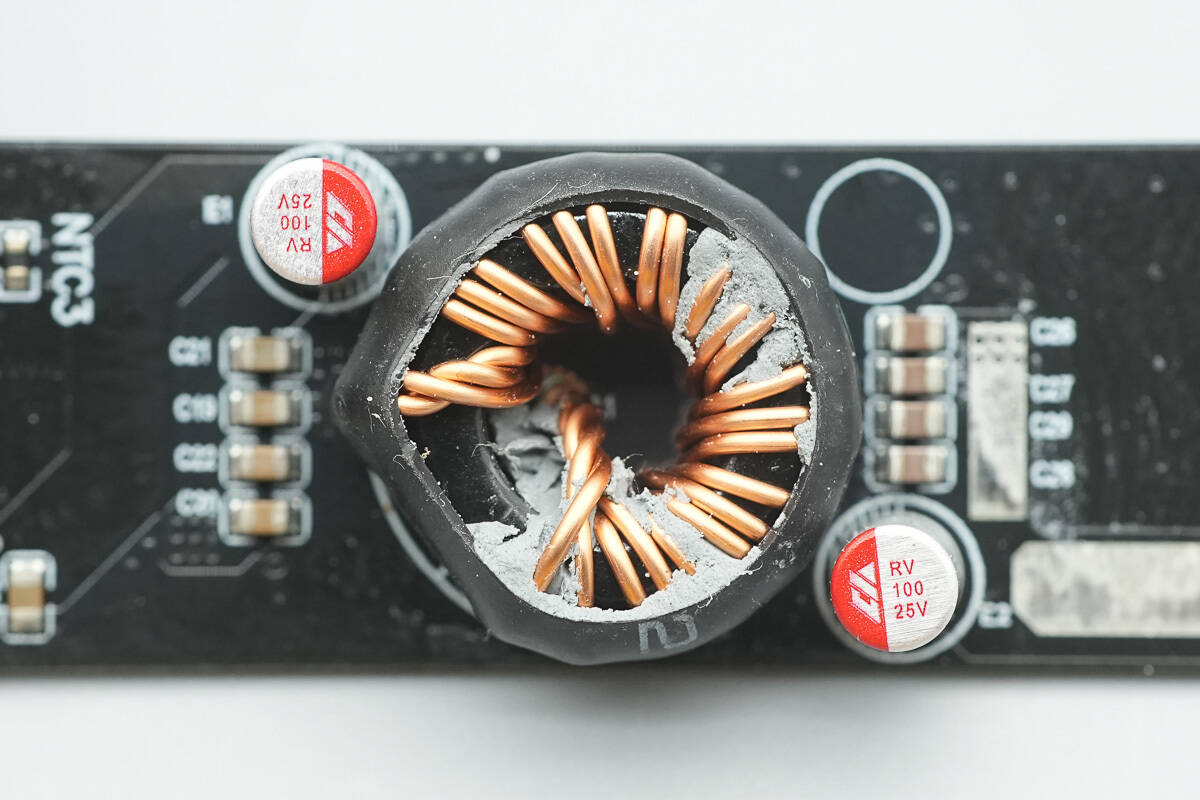
The toroidal inductor on the front of the lower PCB is wound with multiple strands of enameled wire and insulated with a black heat-shrink tube. Nearby are two identical CH 25V 100μF solid filter capacitors.
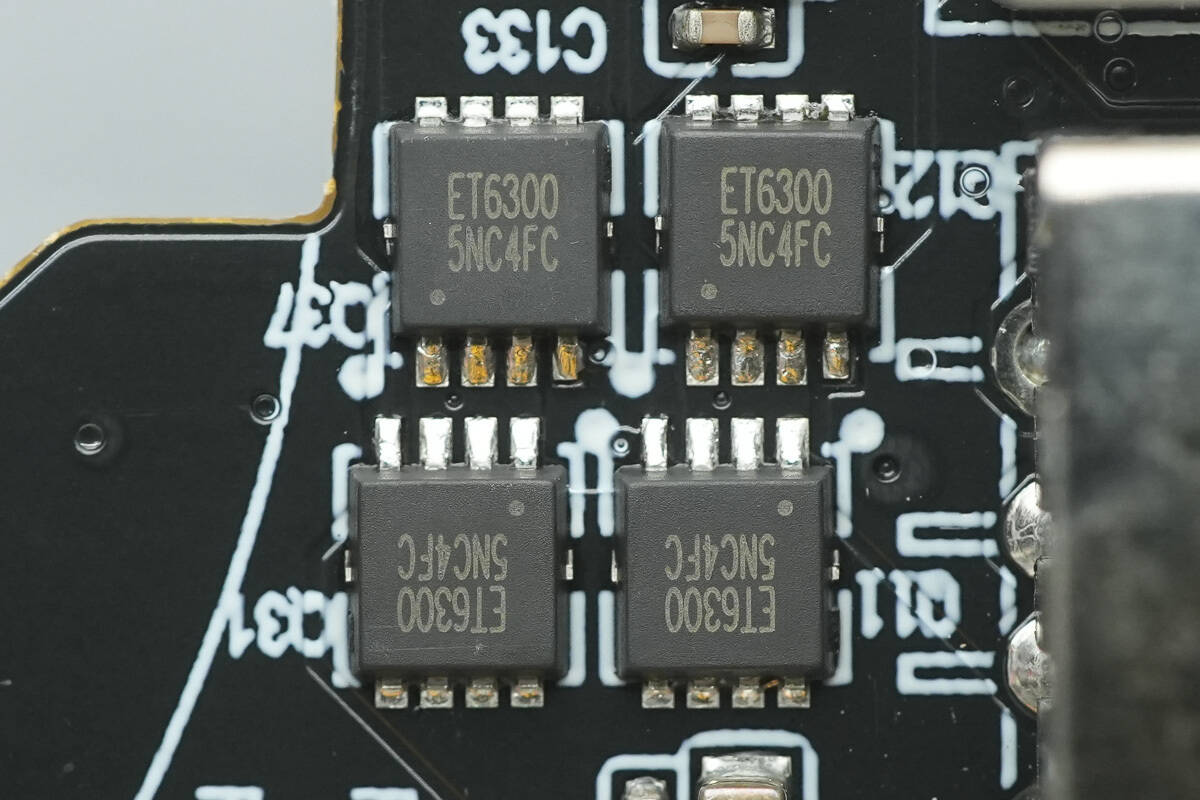
The four VBUS MOSFETs are from Eternal, model ET6300, rated at 30V with an on-resistance of 7.9mΩ, and use a PDFN 3.3 × 3.3 mm package.
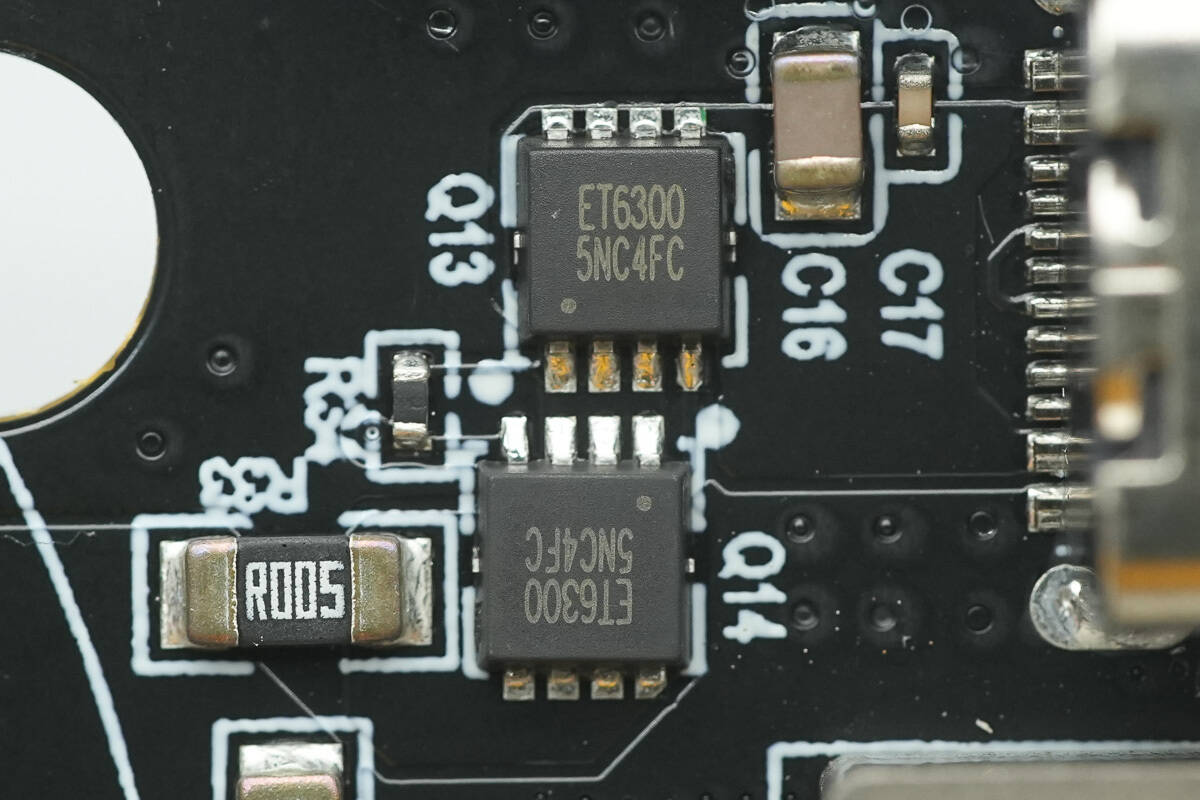
The other two VBUS MOSFETs are also from Eternal, model ET6300.
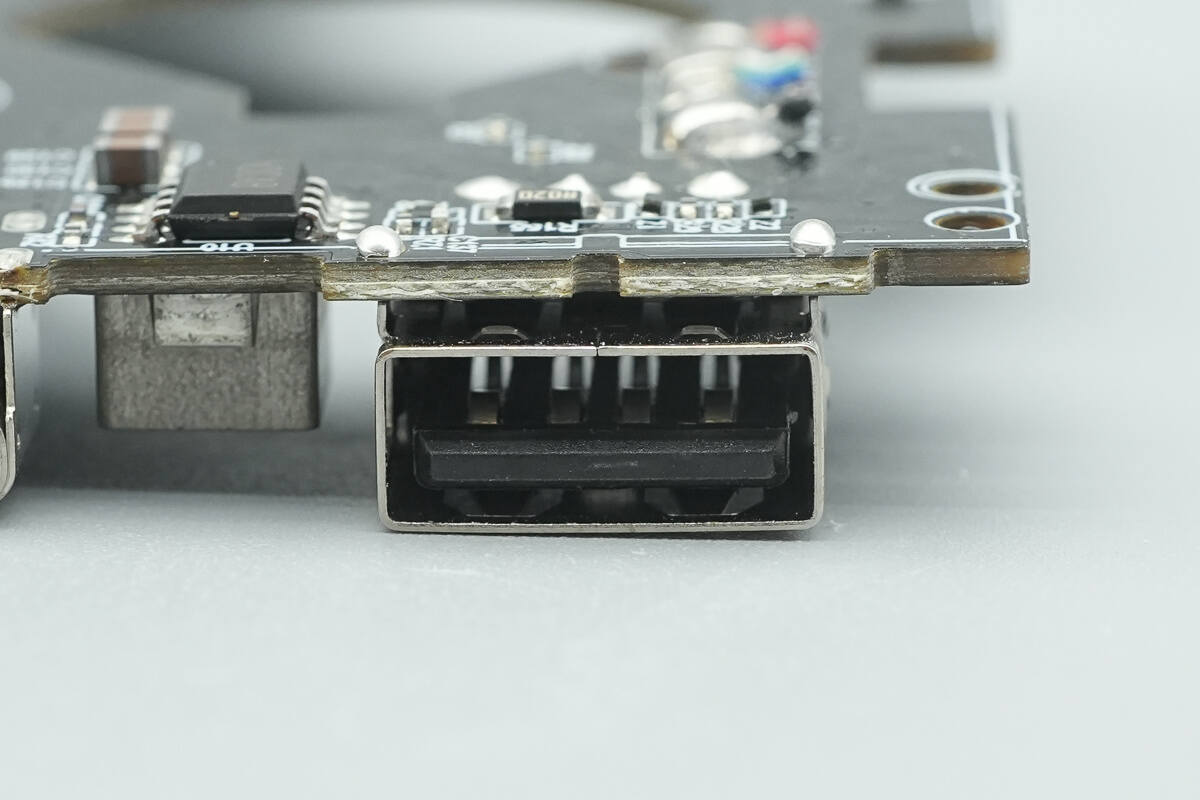
Close-up of the USB-A socket.
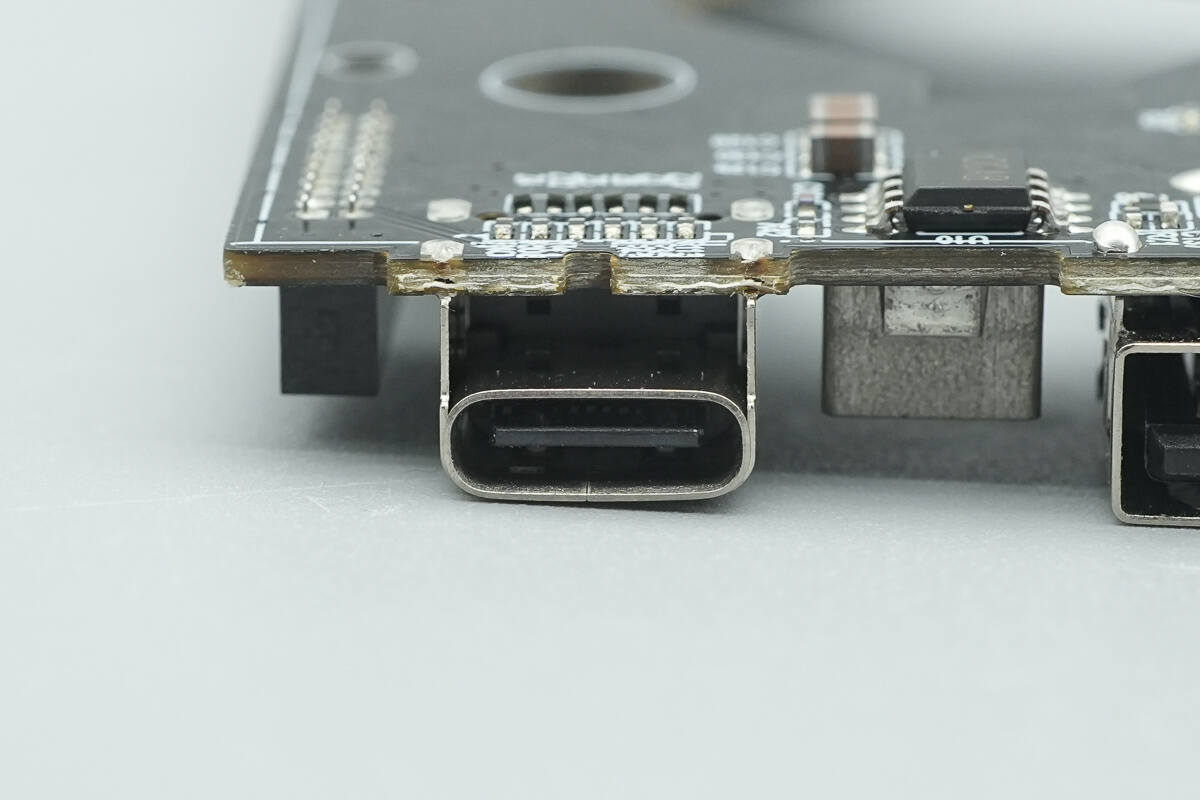
Close-up of the USB-C socket.
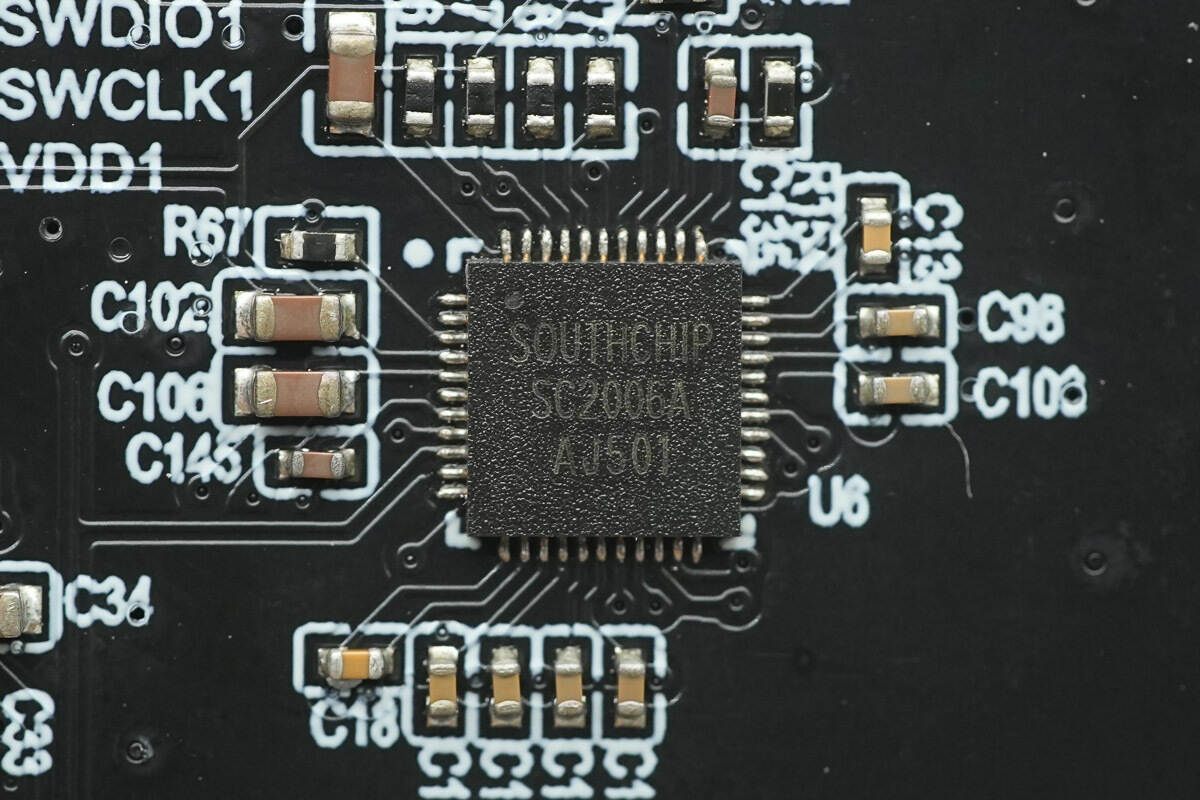
The protocol chip is from SouthChip, model SC2006A, a fast-charging controller supporting three Type-C DRP ports. The chip supports all major fast-charging protocols and features CC and DPDM interfaces. Its intended applications include power banks, car chargers, and power tools.
The SC2006A integrates Type-C/PD circuitry, DPDM/UFCS protocol circuits, VBUS discharge paths, voltage and current detection, an 11-bit high-performance ADC, two 11-bit DACs, NMOS gate drivers, an I2C interface, and protection circuits, minimizing the need for external components.
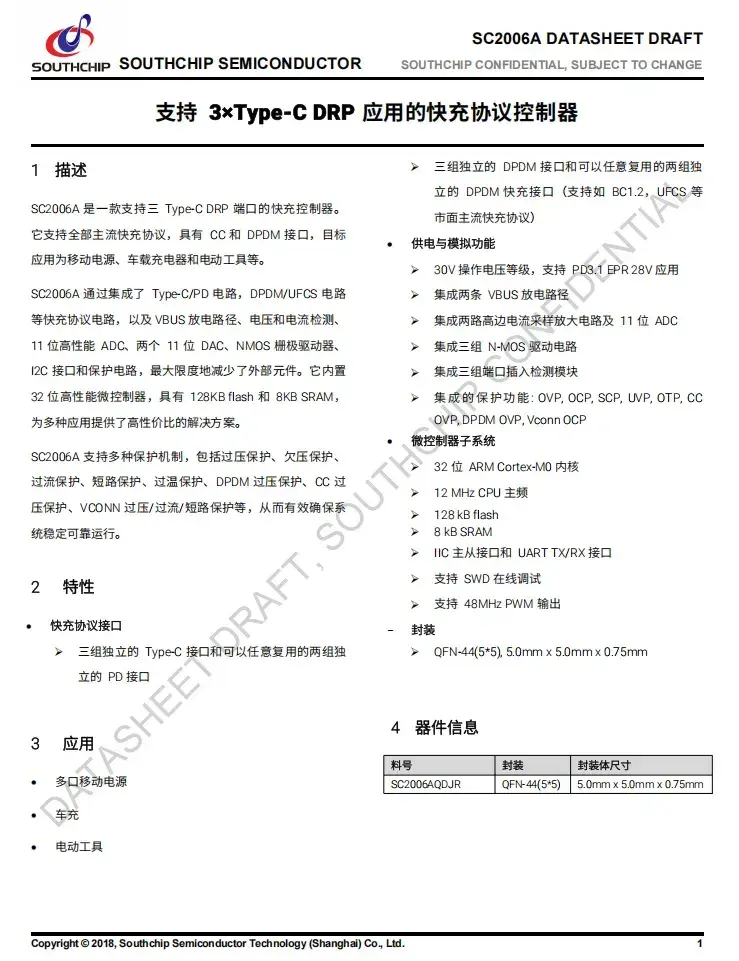
The SC2006A features a built-in 32-bit high-performance microcontroller with 128KB of flash memory and 8KB of SRAM, providing a cost-effective solution for various applications. It also supports multiple protection mechanisms, including overvoltage protection, undervoltage protection, overcurrent protection, short-circuit protection, overtemperature protection, DPDM overvoltage protection, CC overvoltage protection, and VCONN overvoltage, overcurrent, and short-circuit protection, effectively ensuring stable and reliable system operation.
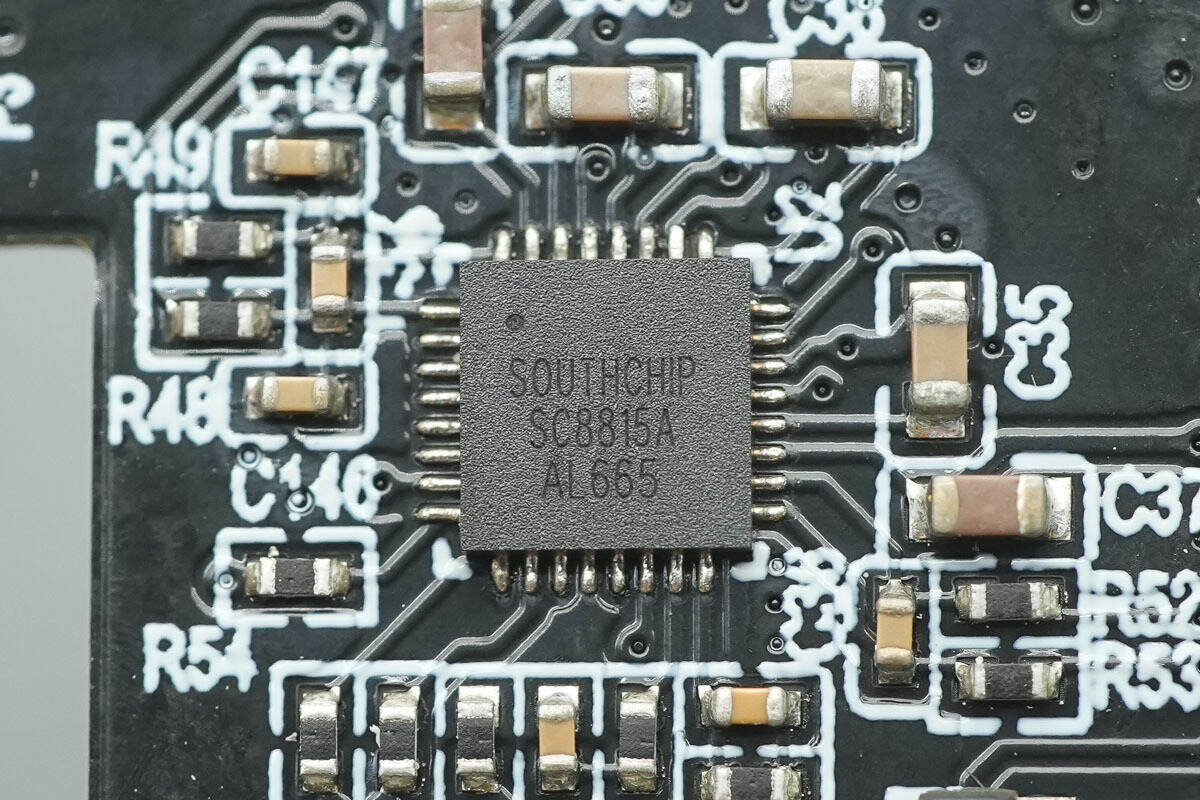
The synchronous buck-boost controller is from SouthChip, model SC8815A. It is a high-efficiency bidirectional synchronous buck-boost controller supporting 1–6 battery cells and a 36V operating voltage. The chip provides comprehensive lithium battery charging management, with battery charge current and voltage, reverse discharge output voltage, and input/output current limit parameters all configurable via the I²C bus.
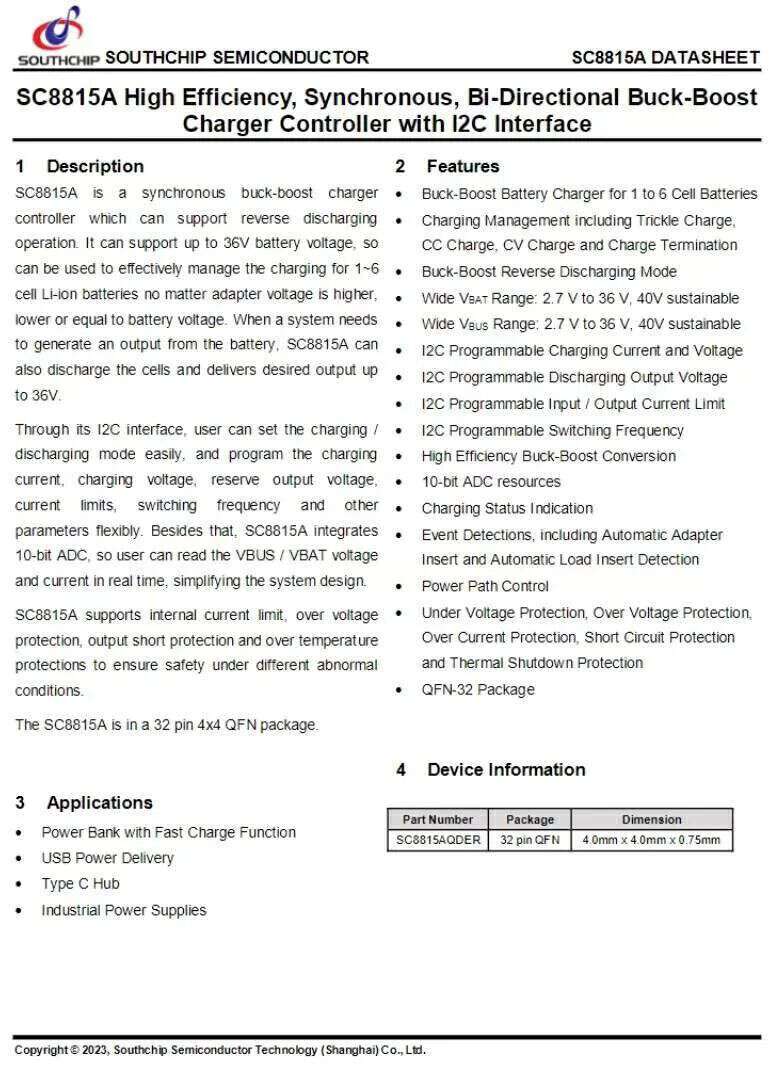
The SC8815A features a built-in 10-bit ADC and provides charge status indication. It supports automatic adapter insertion and load insertion detection, as well as undervoltage, overvoltage, and overcurrent protection. The chip also includes short-circuit protection and overtemperature shutdown protection. Packaged in a QFN32, it is suitable for PD fast-charging power banks, USB-C hubs, and industrial power supply applications.
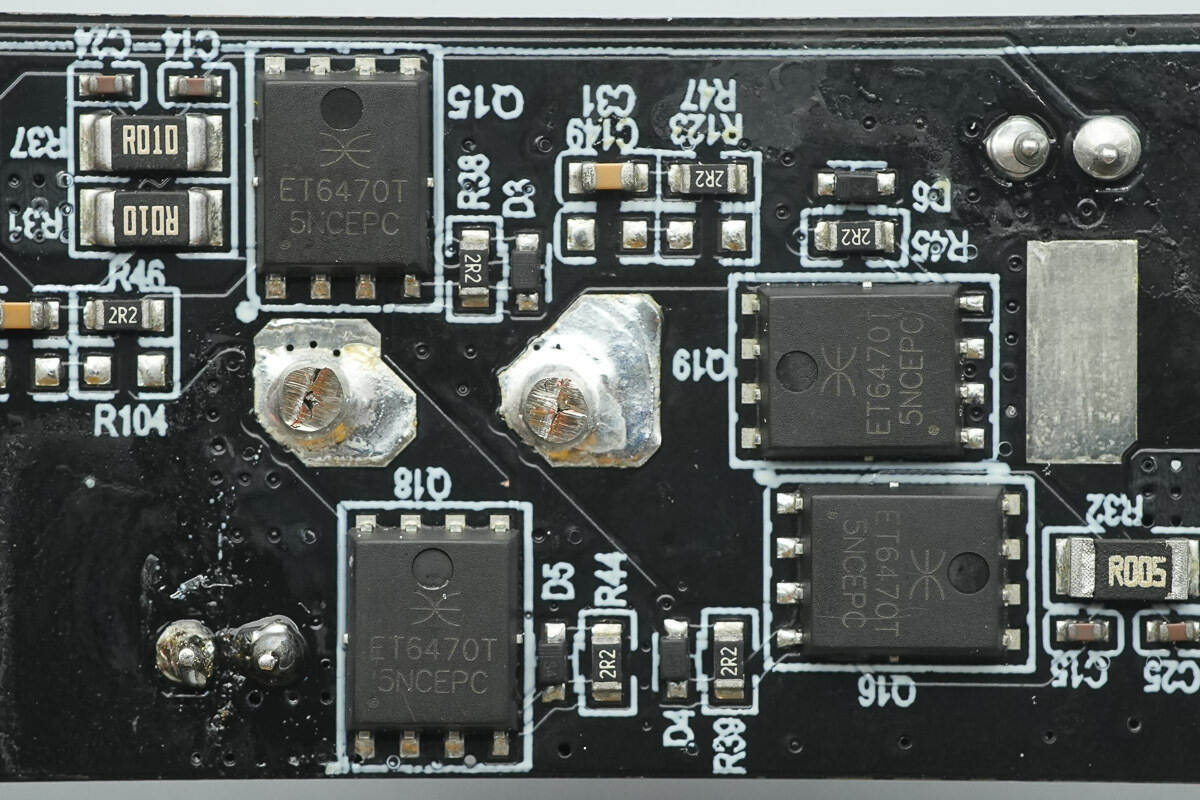
The four buck-boost MOSFETs are from Eternal, model ET6470T, rated at 40V with an on-resistance of 4.8mΩ, and use a PDFN 5 × 6 mm package.
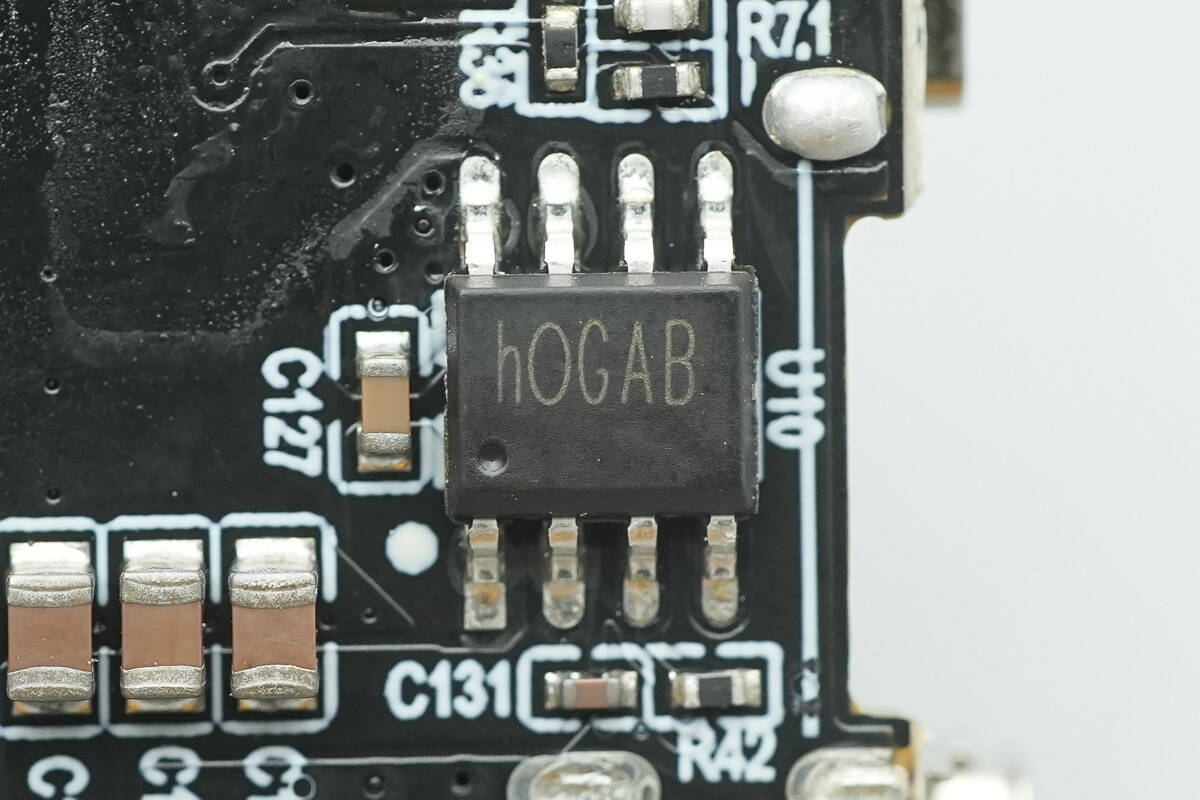
A chip marked with “hOGAB.”
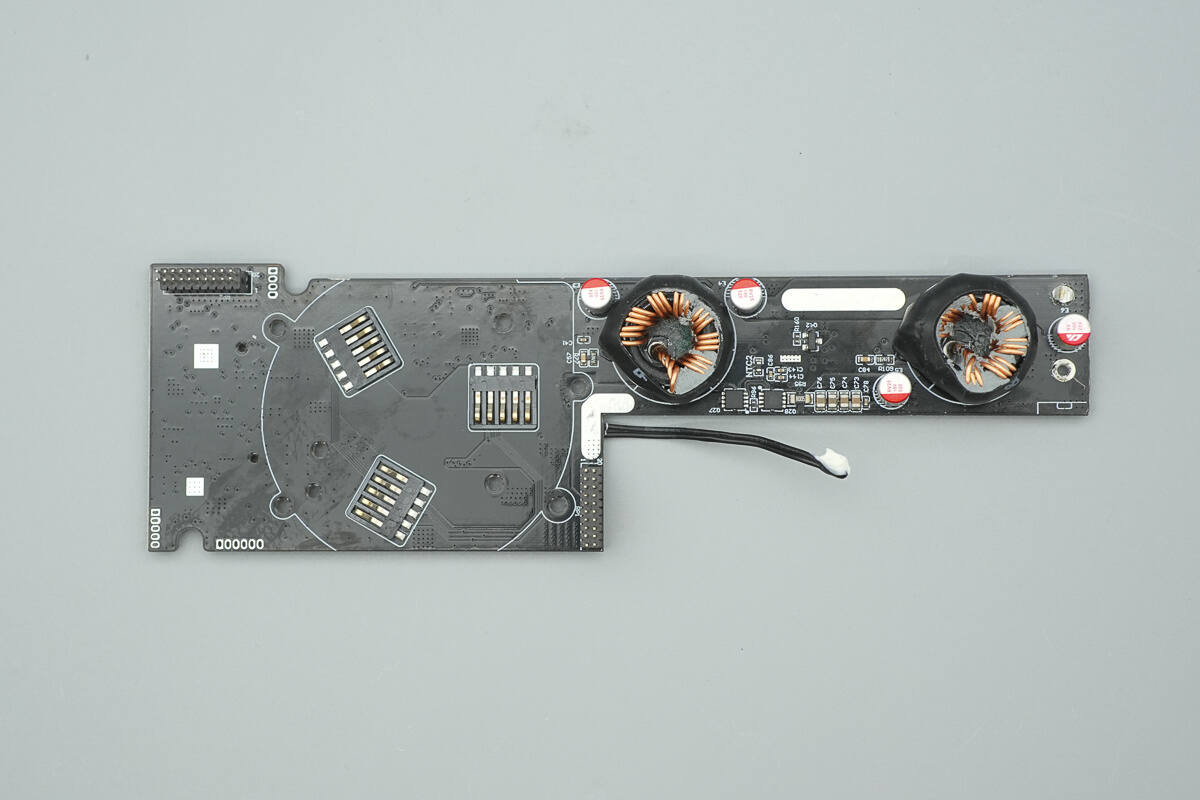
The top-layer PCB's back side features two toroidal inductors along with multiple filtering capacitors.
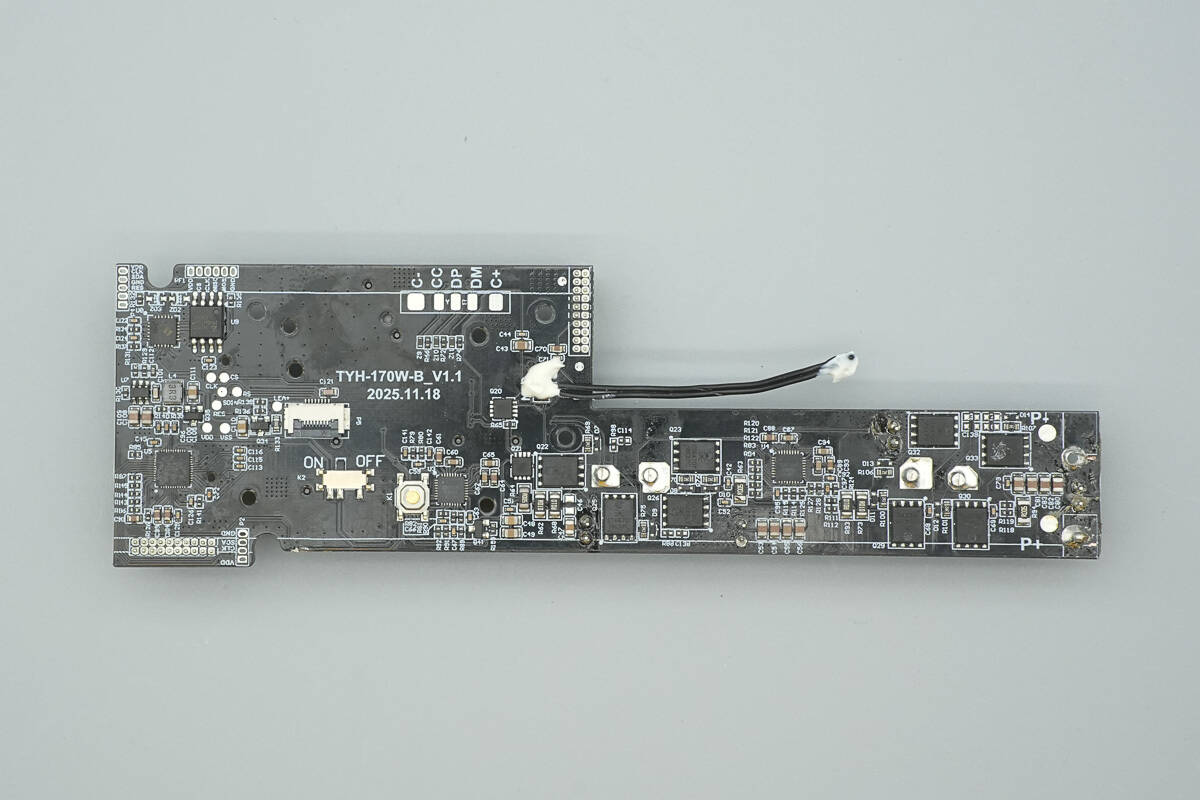
The front side contains a display, micro-switch buttons, an MCU, buck-boost controllers, and synchronous buck-boost MOSFETs.
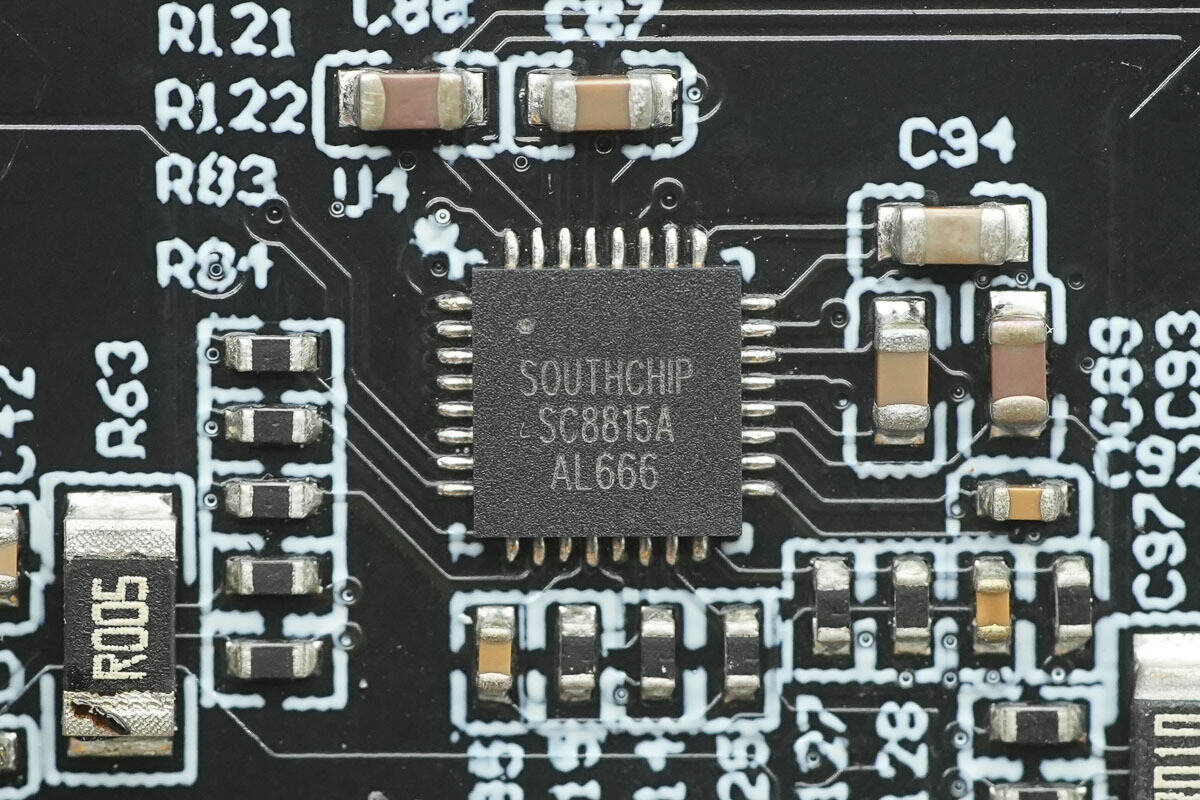
The second SouthChip SC8815A synchronous buck-boost controller is located on the front side of the top-layer PCB.
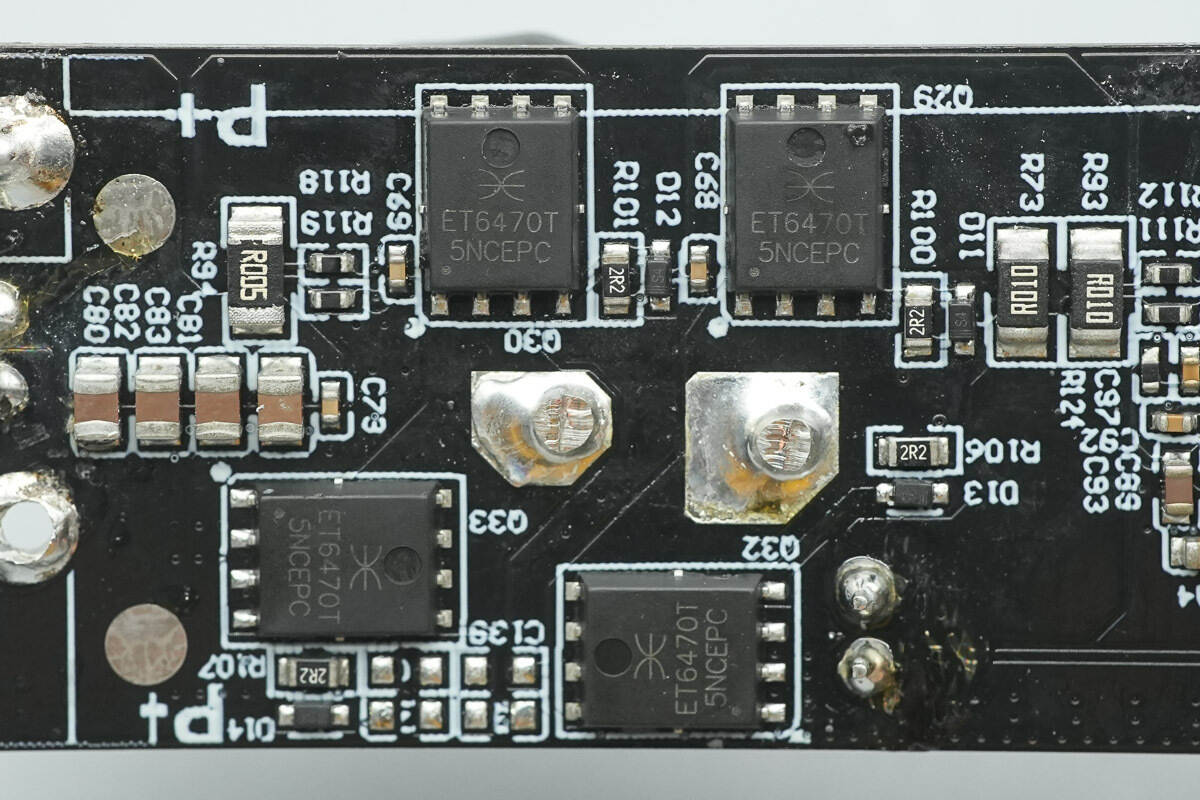
The four synchronous buck-boost MOSFETs are Eternal ET6470T.
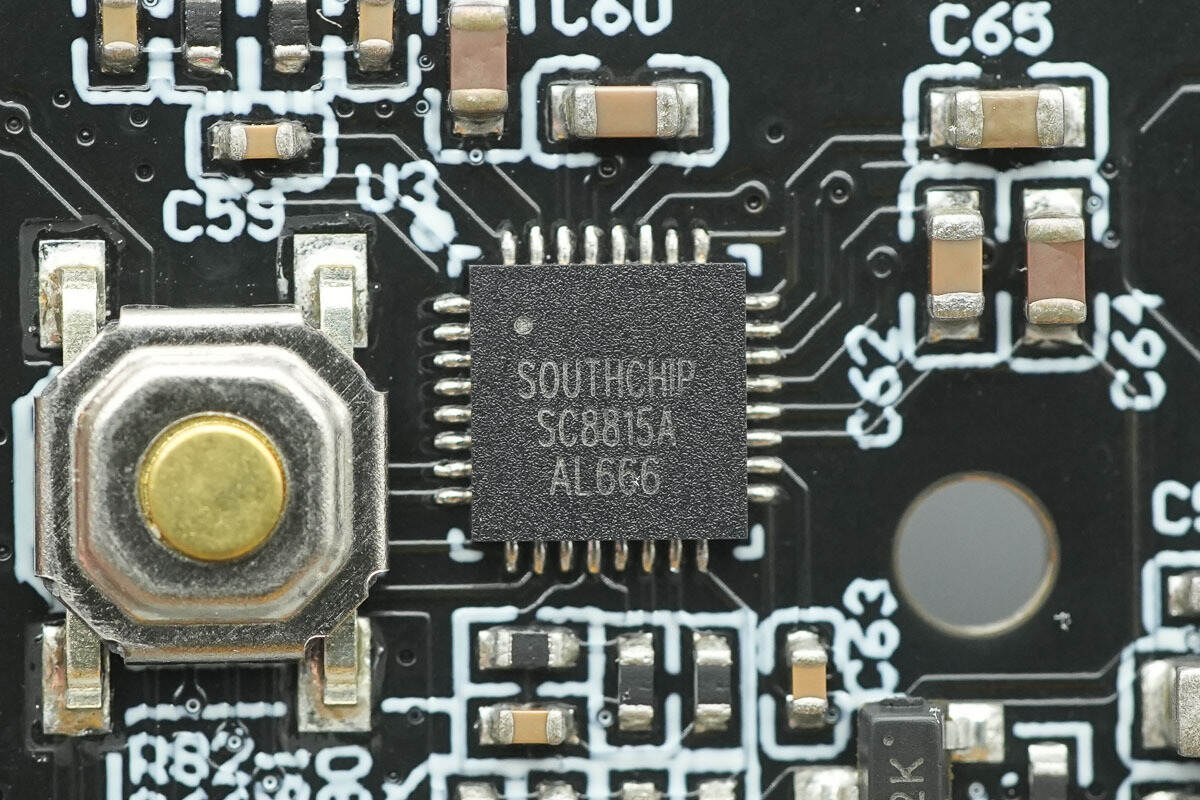
The third SouthChip SC8815A synchronous buck-boost controller.
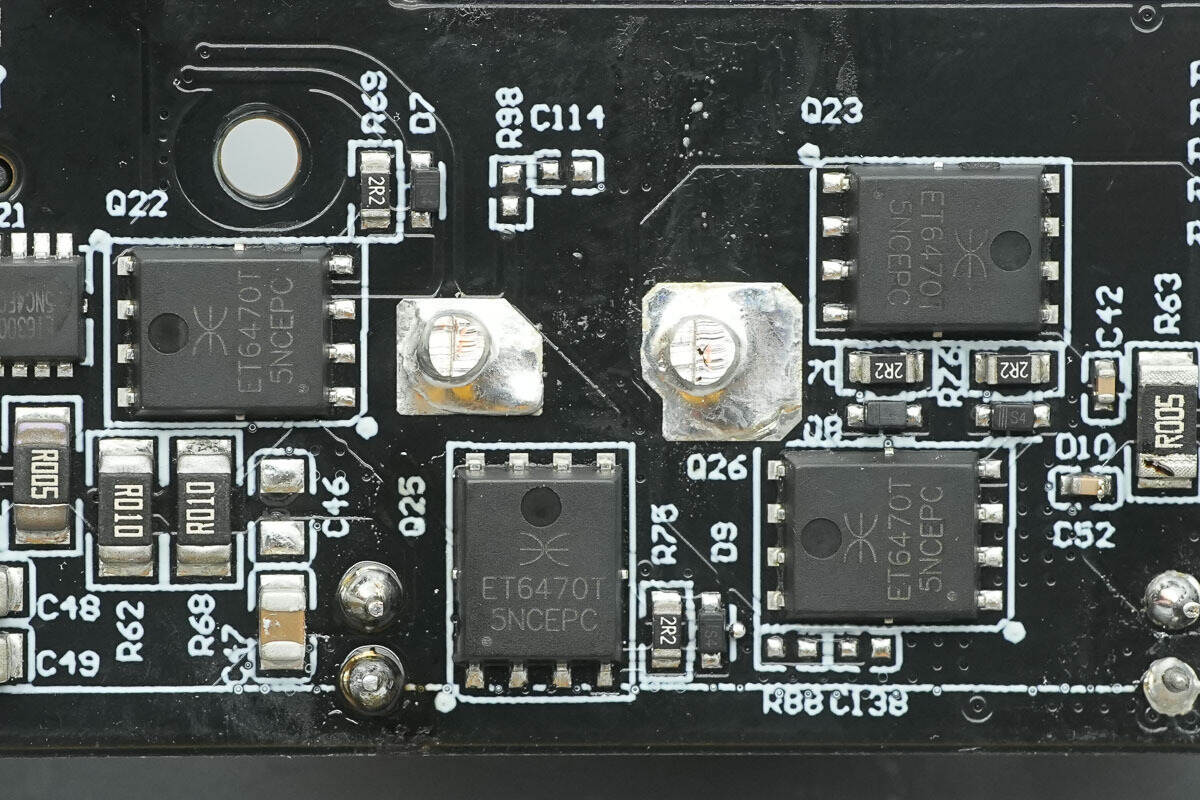
The four synchronous buck-boost MOSFETs are Eternal ET6470T.
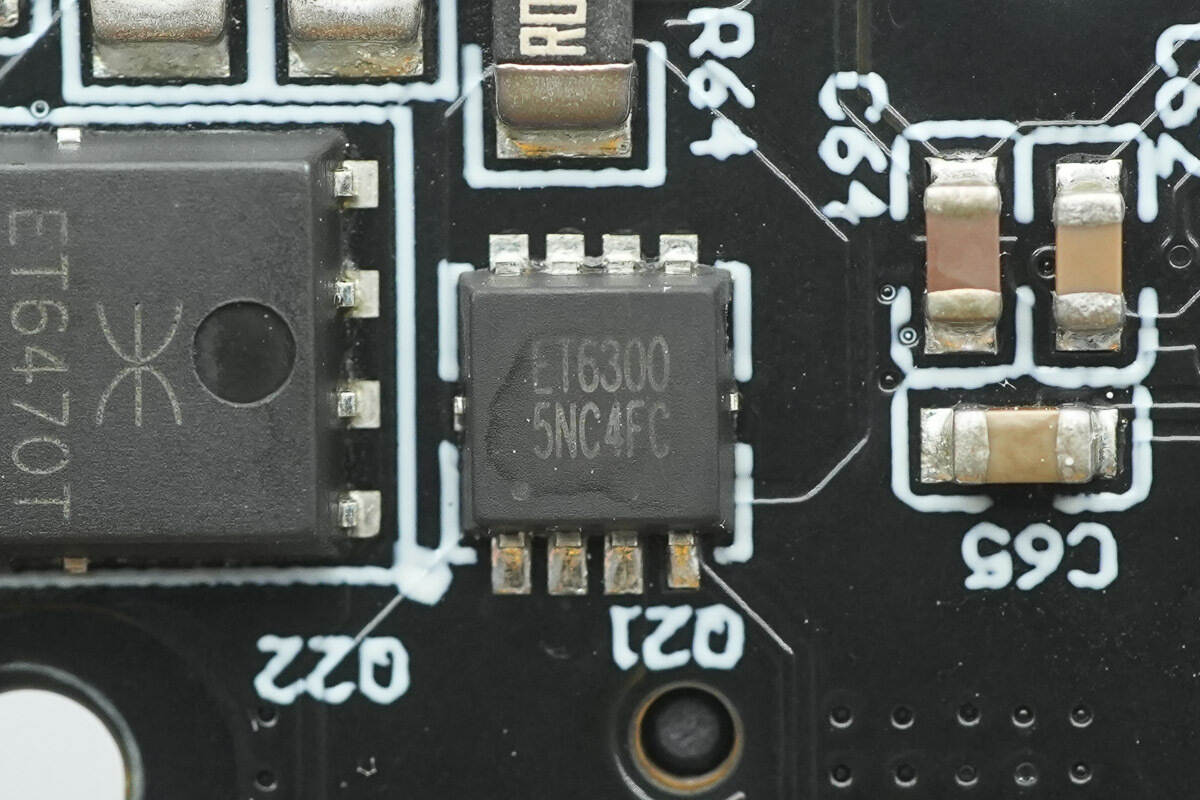
This MOSFET is also from Eternal, model ET6300.
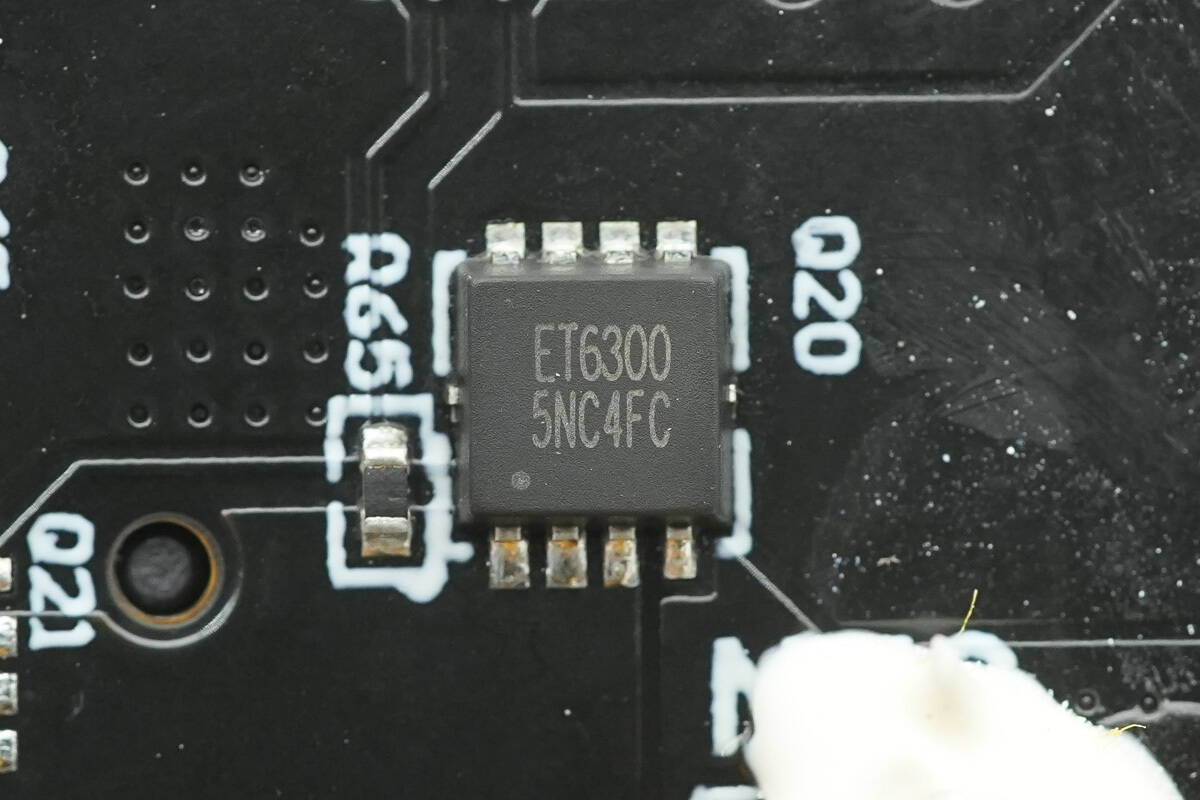
This MOSFET also comes from Eternal, model ET6300.
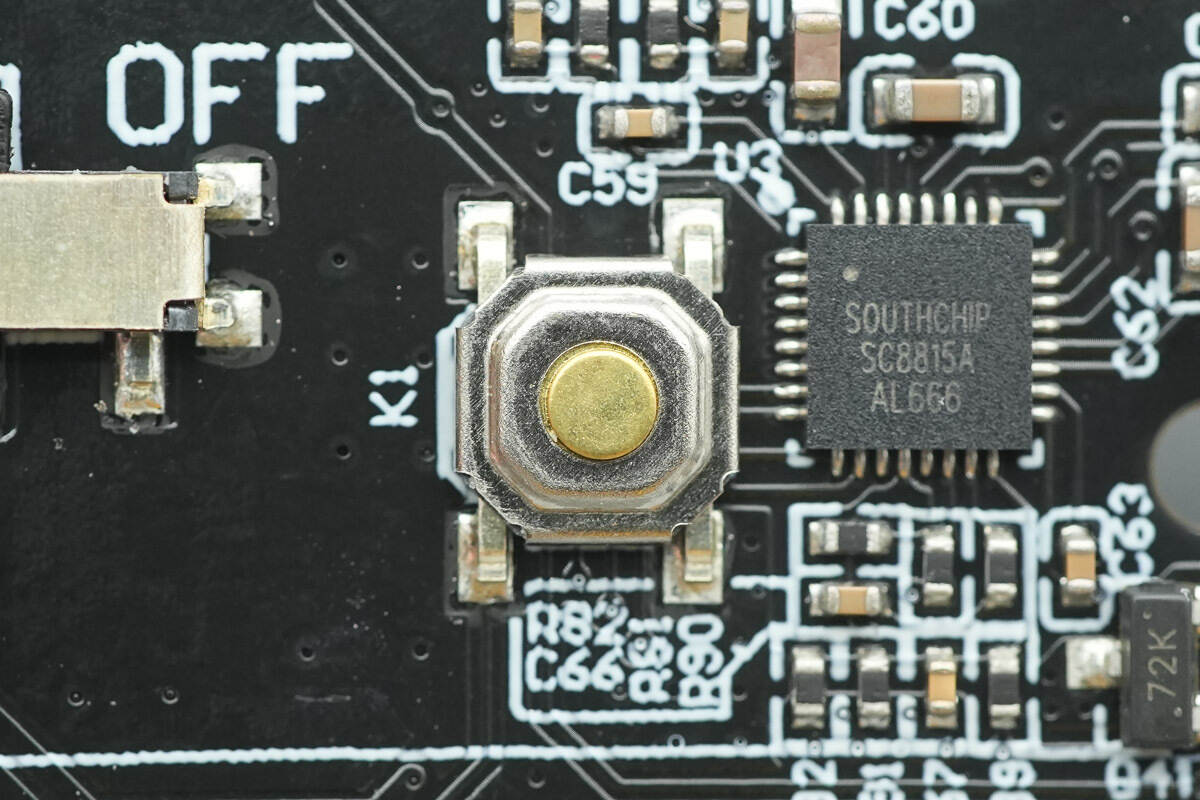
The SMD micro-switch button is reinforced externally with a metal shielding bracket, soldered to prevent detachment.
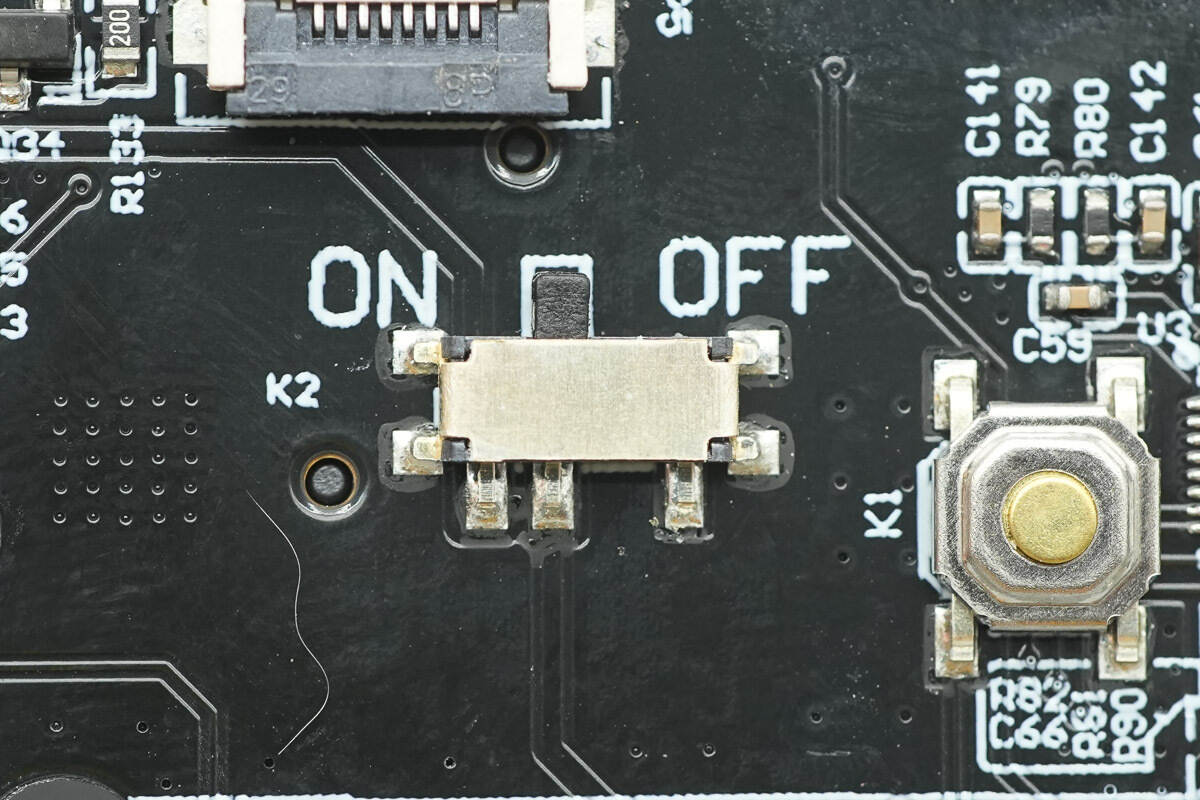
Close-up of the physical toggle switch control.
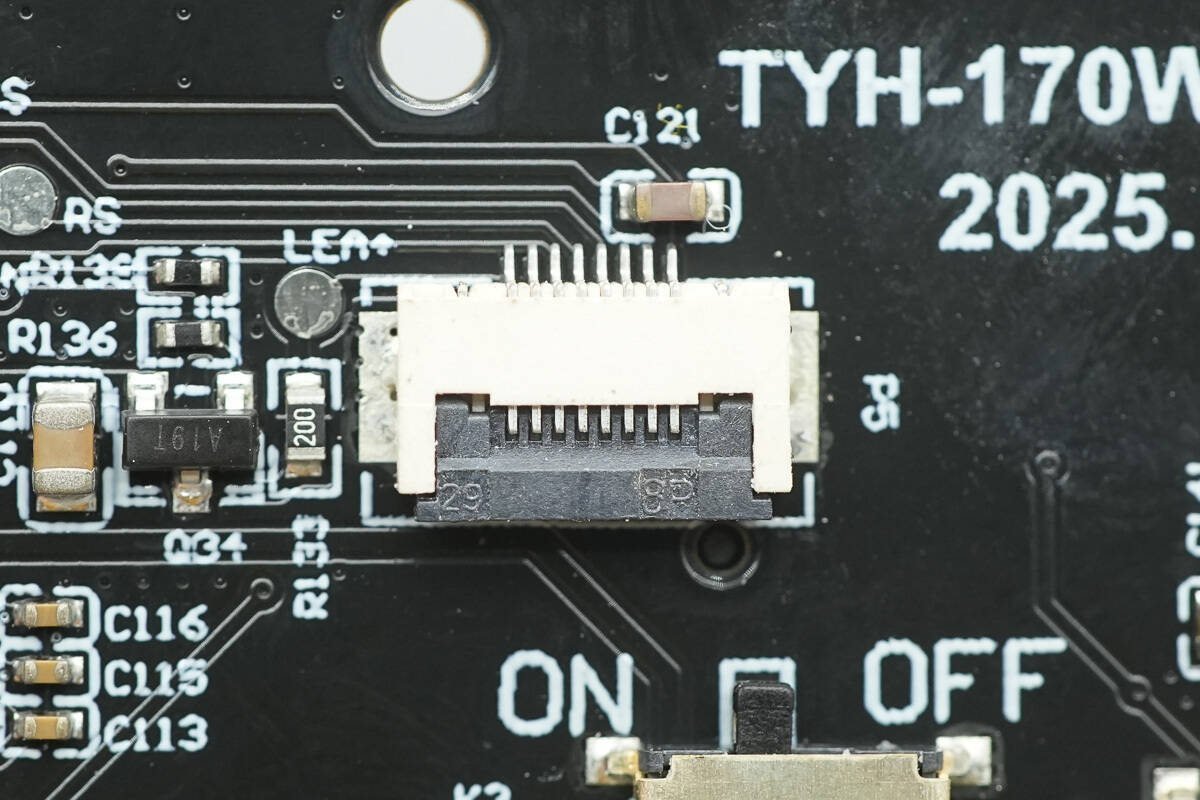
Close-up of the FPC connector for the display ribbon cable.
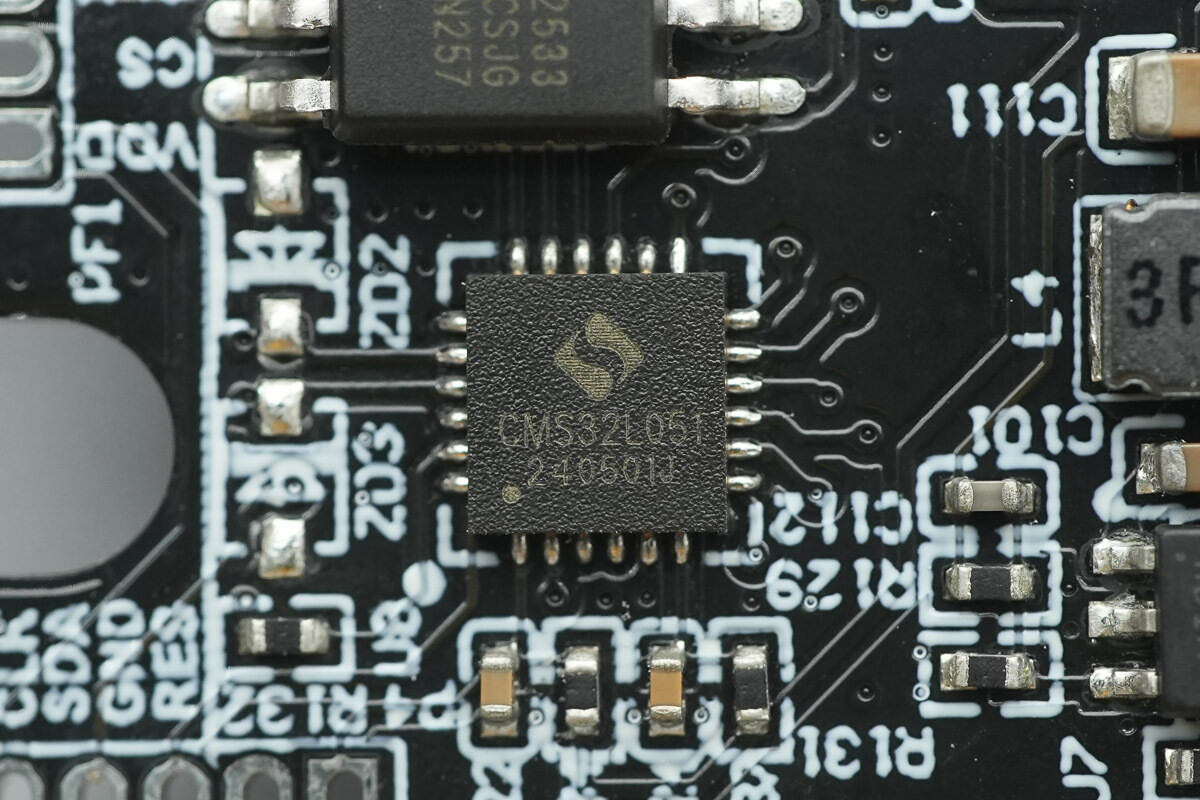
The MCU is from Cmsemicon, model CMS32L051SS24. It is a low-power 32-bit microcontroller based on the ARM Cortex-M0+, housed in a QFN24 package, used for display control as well as monitoring the power bank’s operational and health status.
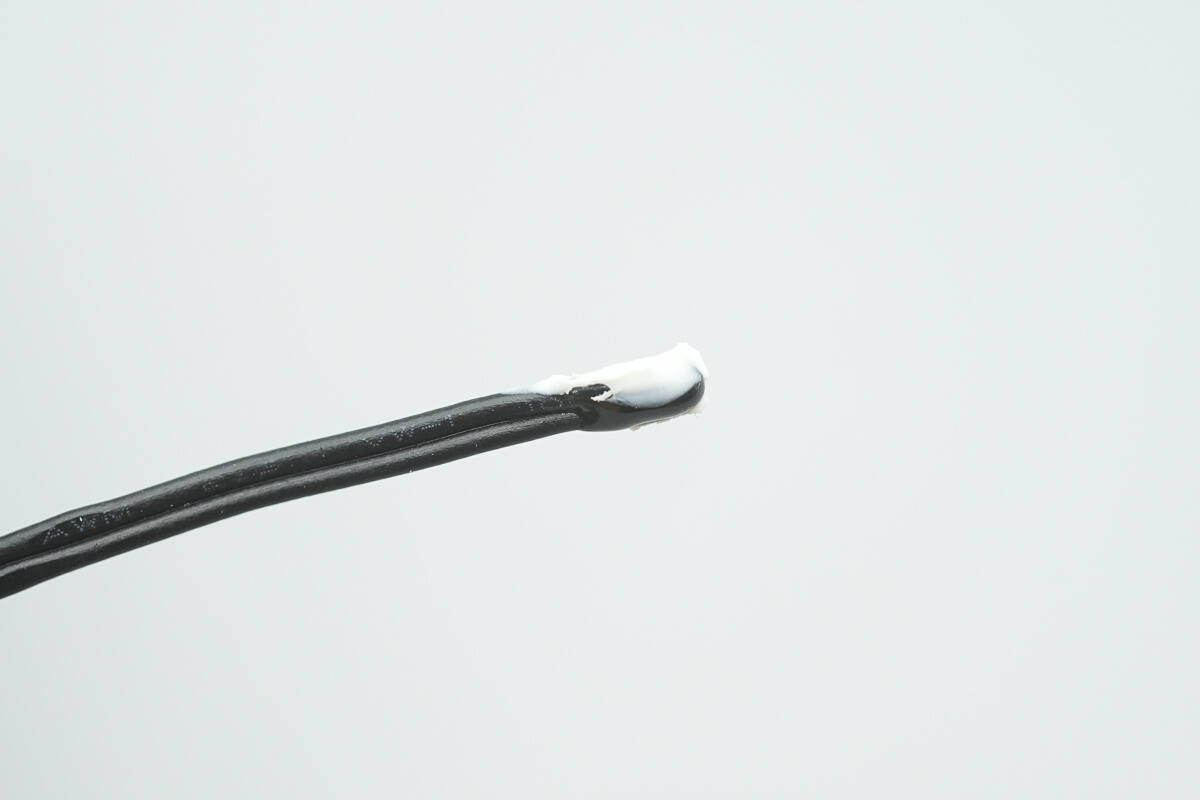
Close-up of the NTC thermistor used for monitoring the battery pack temperature.
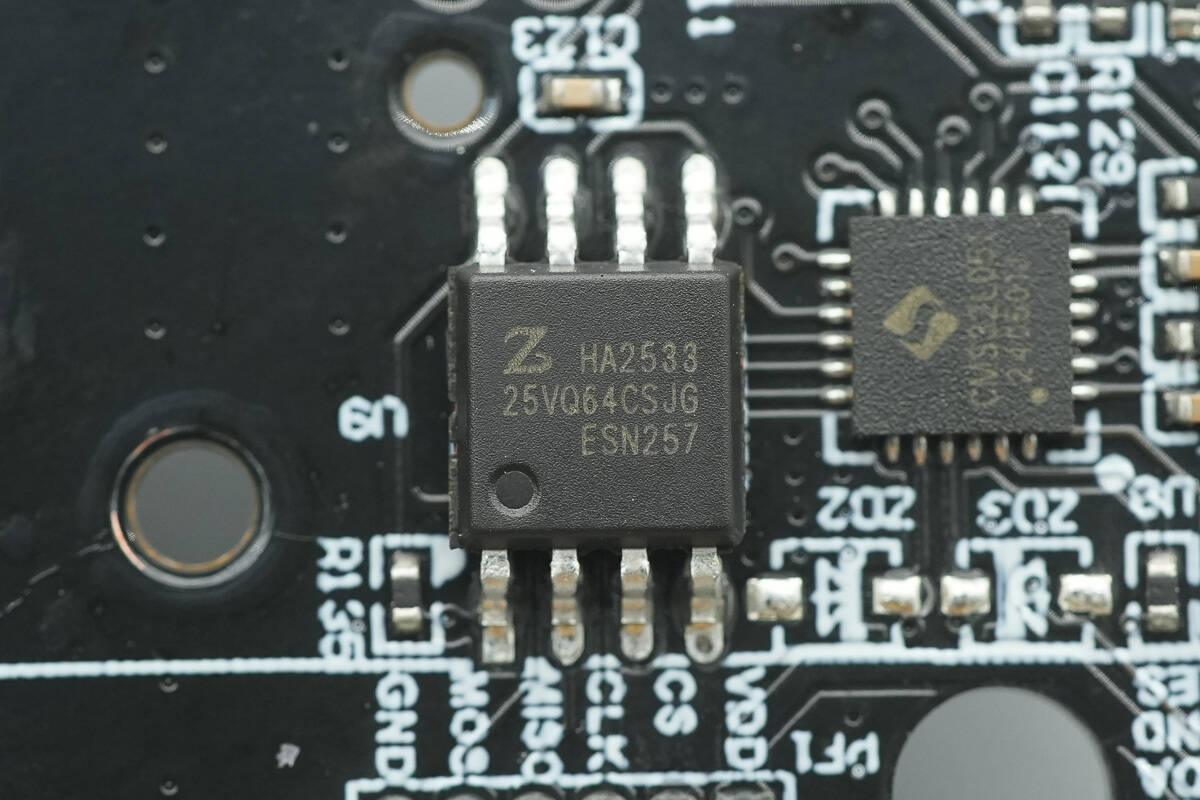
A NOR flash from Zbit, model ZB25VQ64C, with a capacity of 64 Mbit, housed in an SOP8 package.
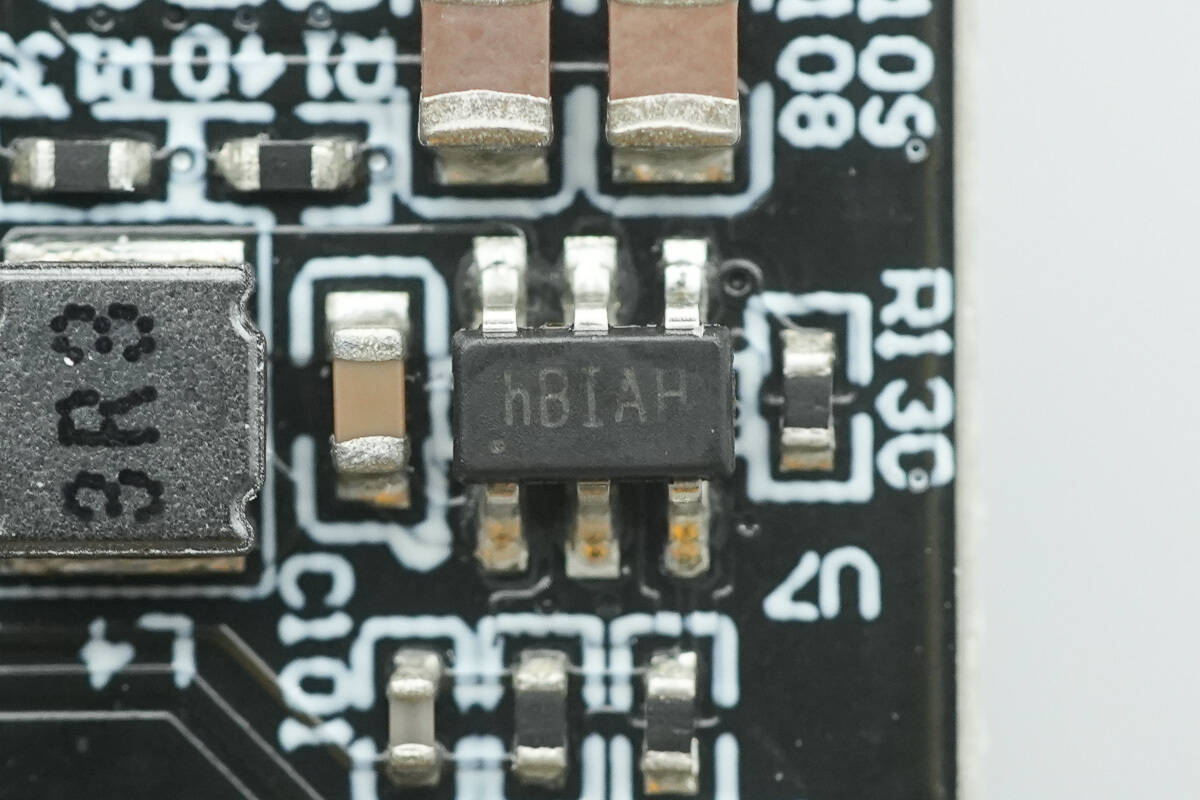
Close-up of a chip marked with “hBIAH.”
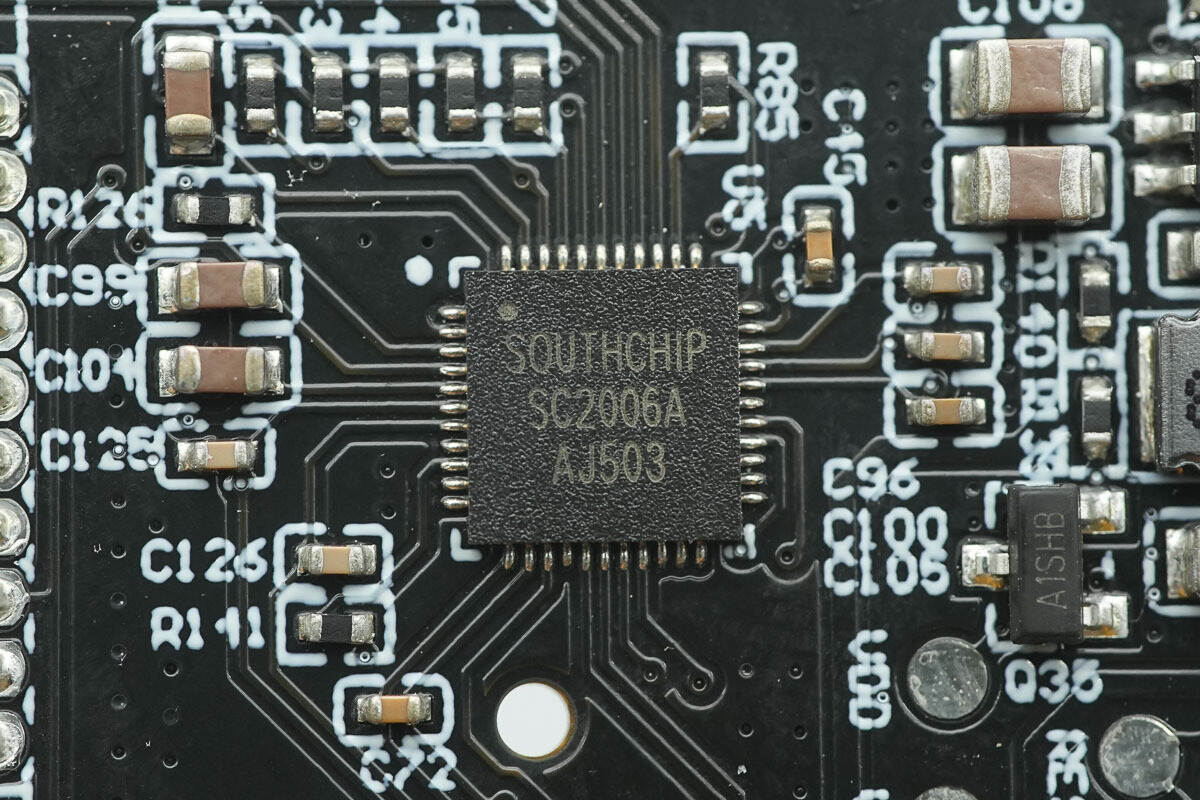
Close-up of another SouthChip SC2006A protocol chip.
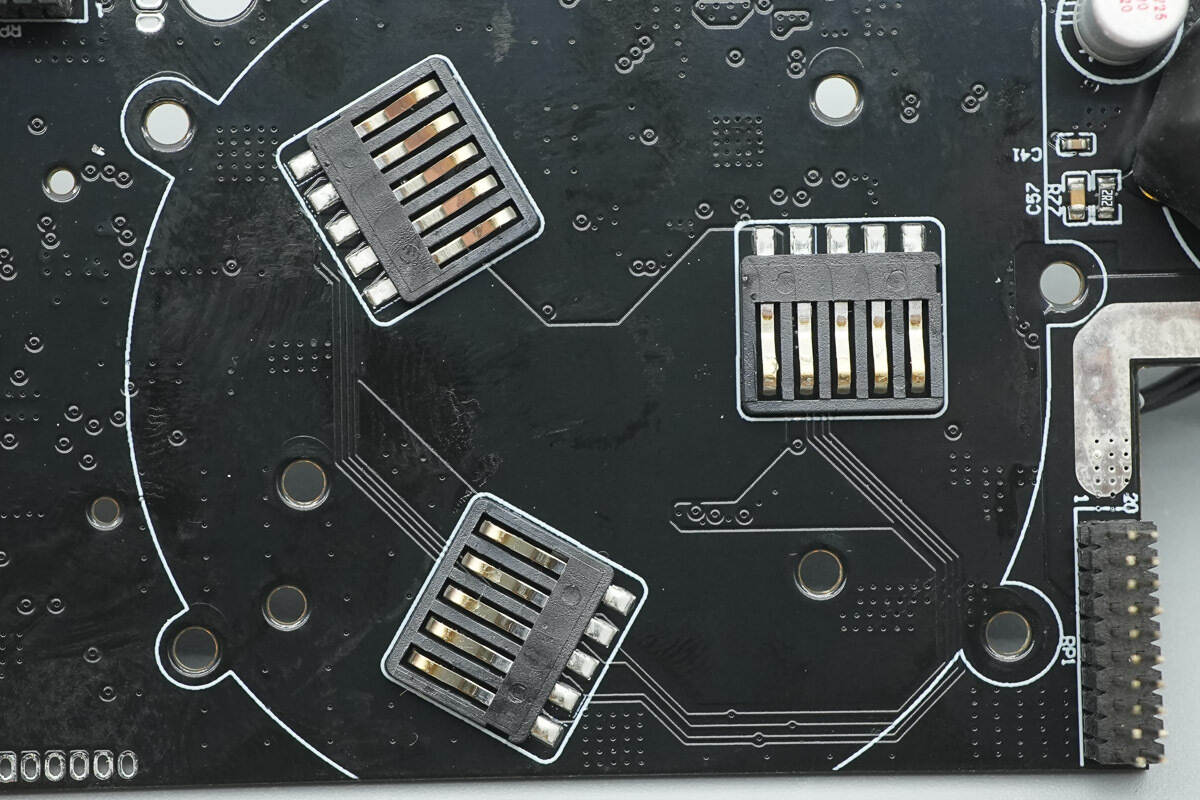
Close-up of the contacts of the retractable cable module.
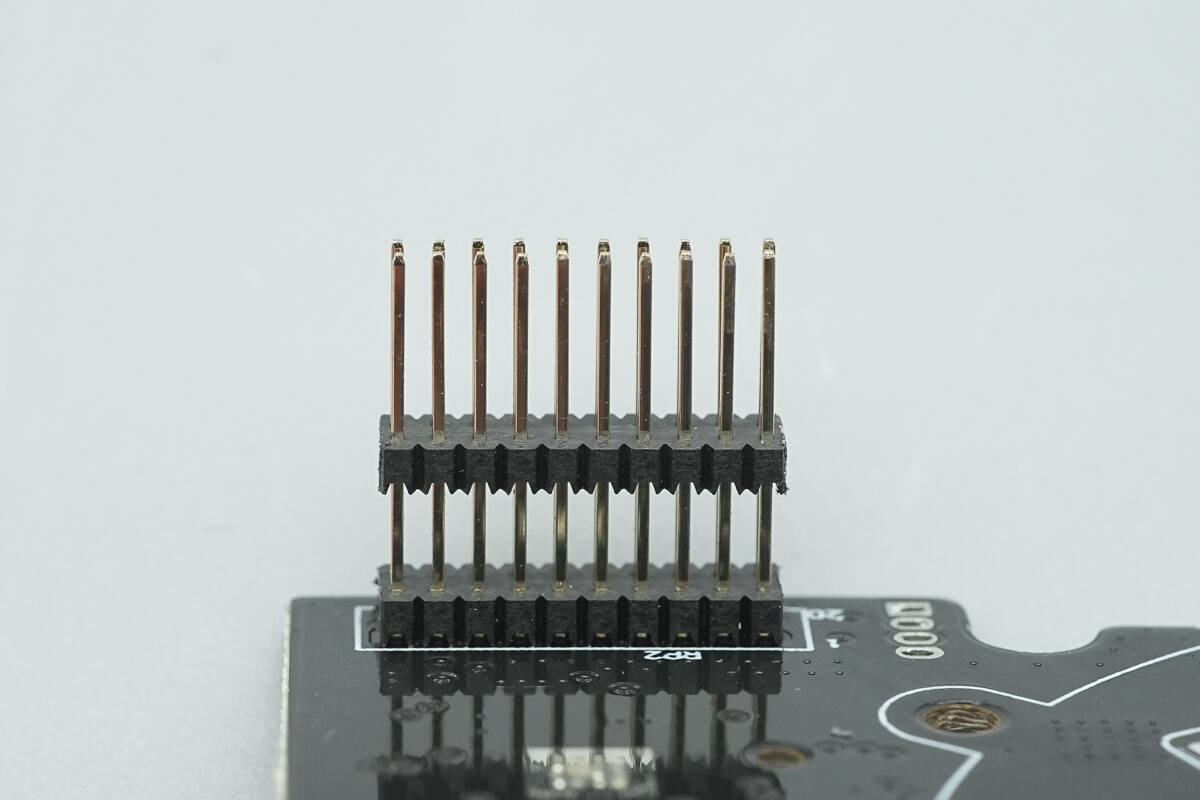
Close-up of the pins on the two-layer PCB.
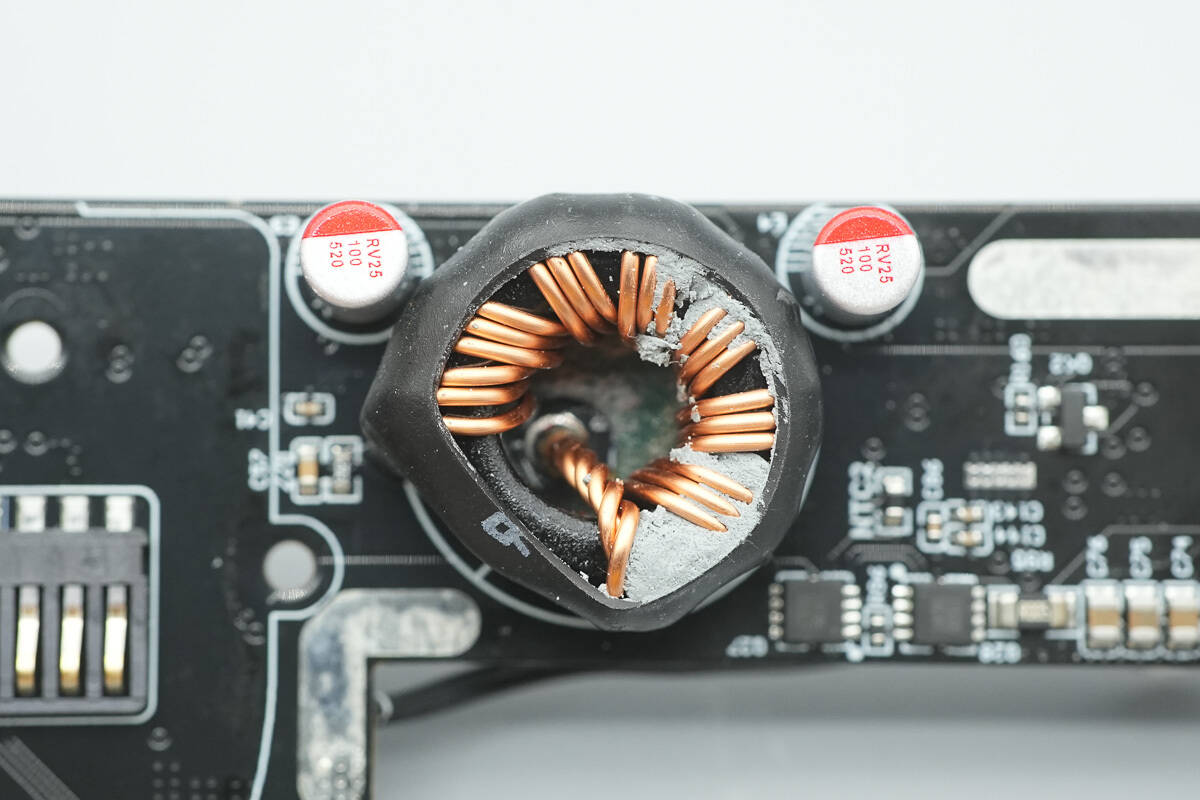
The toroidal inductor is insulated with heat-shrink tubing, with two 25 V 100 μF capacitors placed on either side.
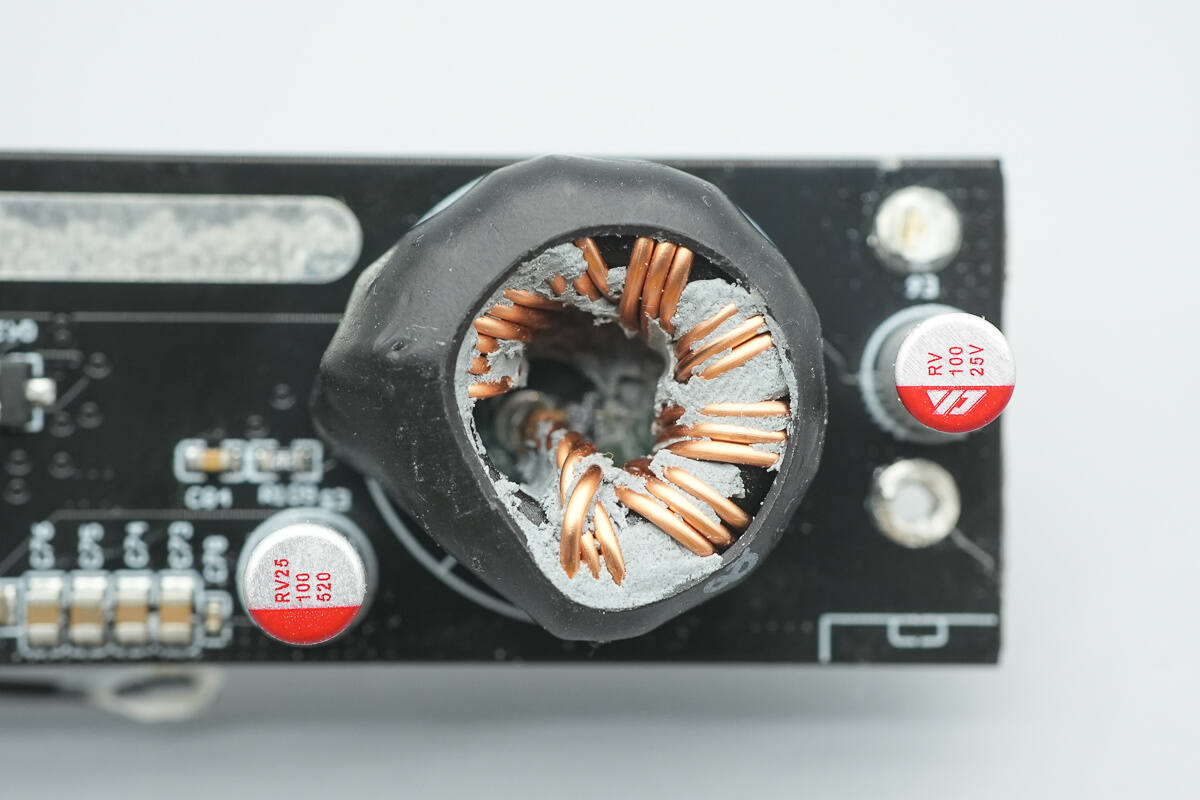
The other toroidal inductor is also insulated with heat-shrink tubing, with two 25 V 100 μF capacitors positioned on either side.
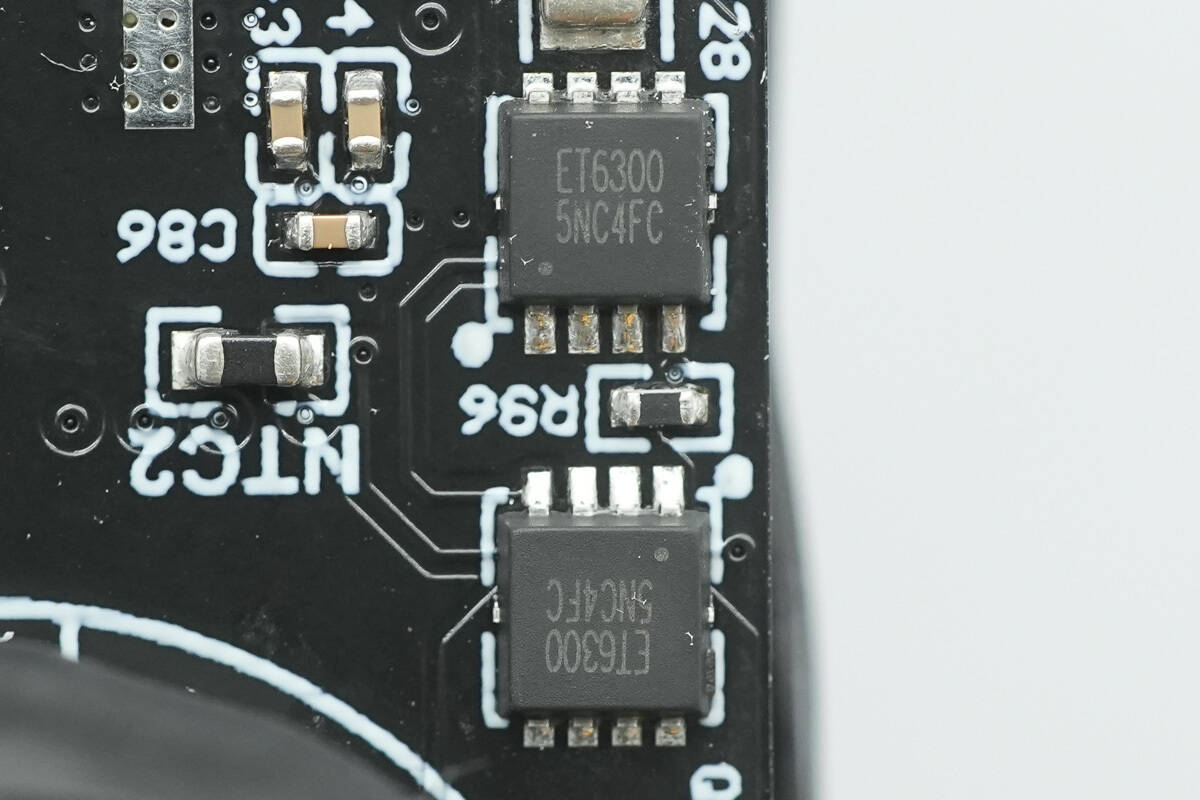
The two VBUS MOSFETs also come from Eternal, model ET6300.
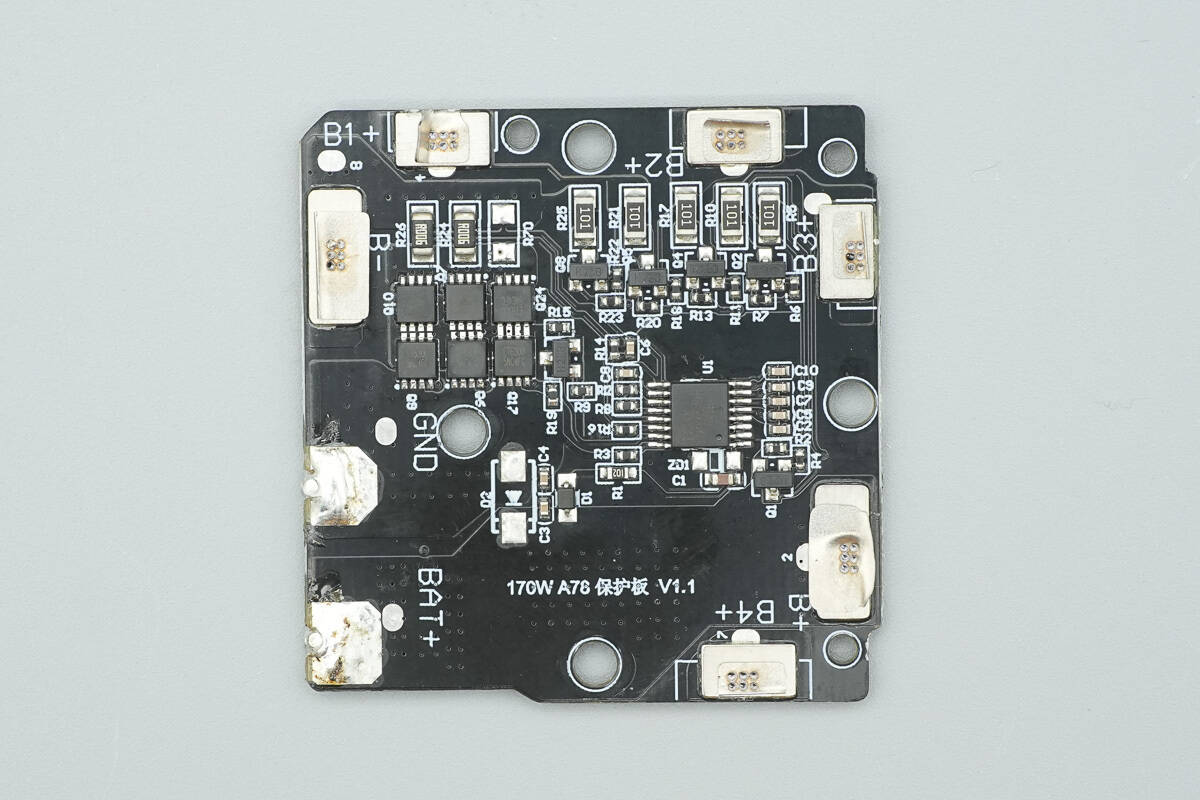
The front side of the battery protection PCB is equipped with battery protection MOSFETs and a battery protection chip.
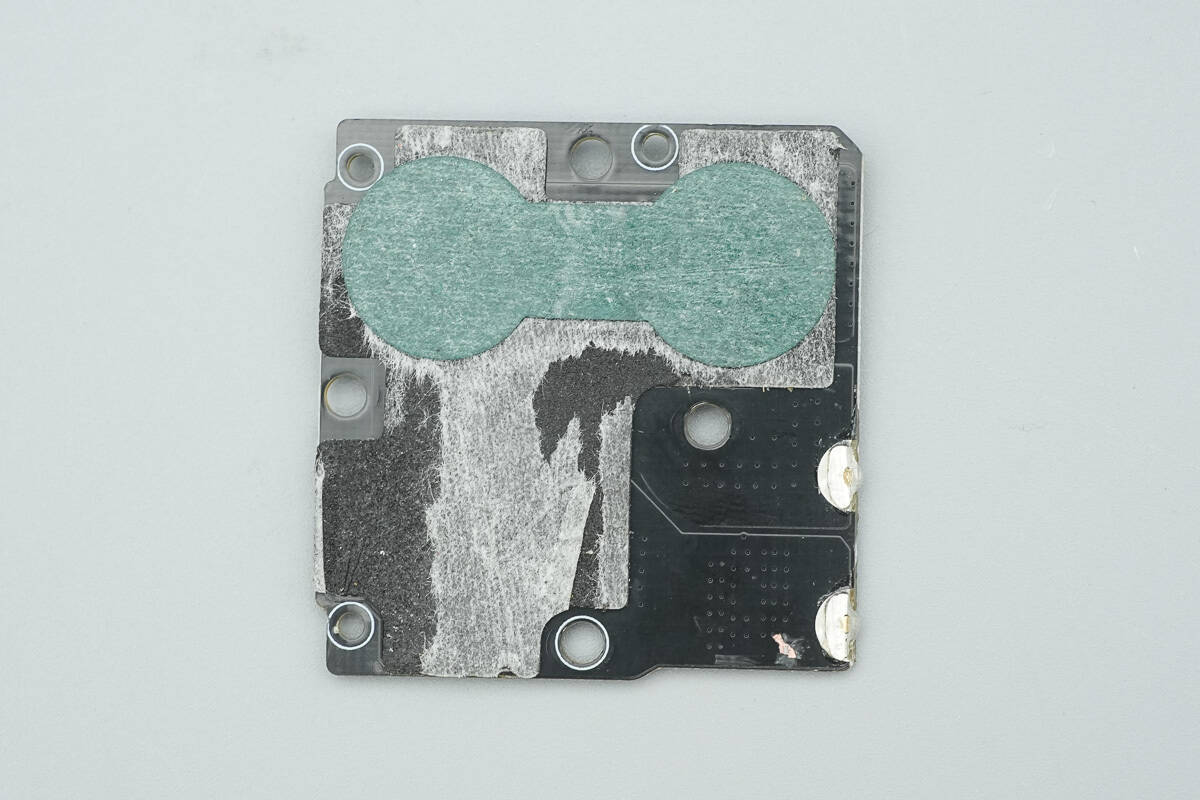
The back side has no components.
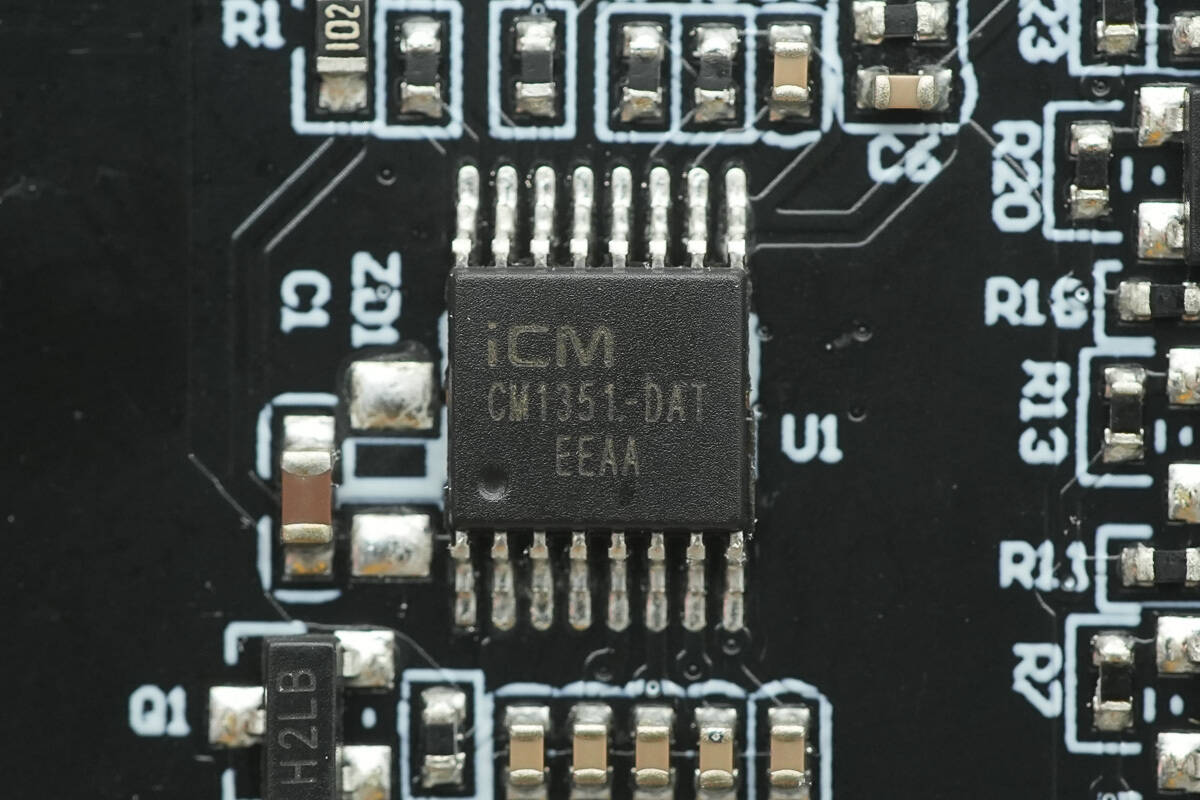
The battery protection chip is from iCM, marked CM1351-DAT, part of the CM1351 series, and housed in a TSSOP16 package. It is a protection IC specifically designed for 5-series lithium-ion or lithium iron phosphate batteries, featuring built-in high-precision voltage and current detection circuits.
By monitoring the voltage of each cell, charge and discharge current, and temperature, it provides protection against overcharge, over-discharge, cell balancing, disconnection, low-voltage charge inhibition, discharge overcurrent, short circuit, charge overcurrent, and overtemperature. The discharge overcurrent protection delay is adjustable via an external capacitor, while other protection delays are internal. The chip also includes an internal battery balancing function.
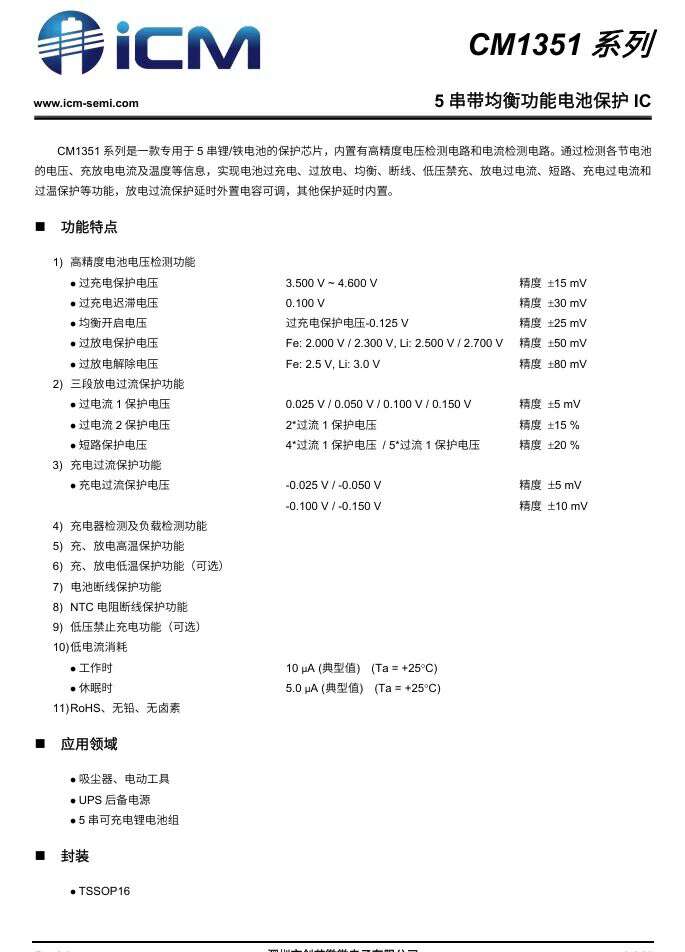
The iCM CM1351 offers 15 mV precision for overcharge protection, supports three-level discharge overcurrent protection, and provides charge overcurrent protection. It also features individual cell disconnection protection and NTC thermistor disconnection protection, delivering comprehensive protection for multi-cell lithium battery packs.
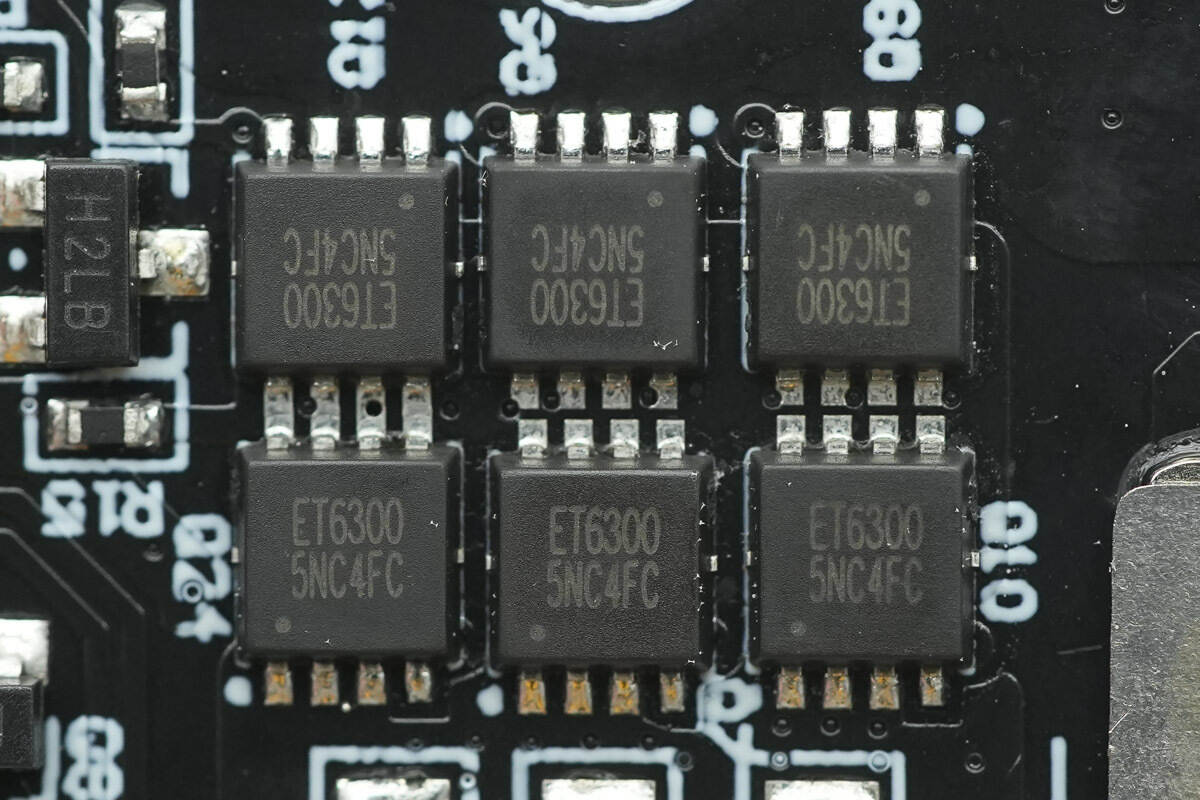
The six battery protection MOSFETs also come from Eternal, model ET6300.
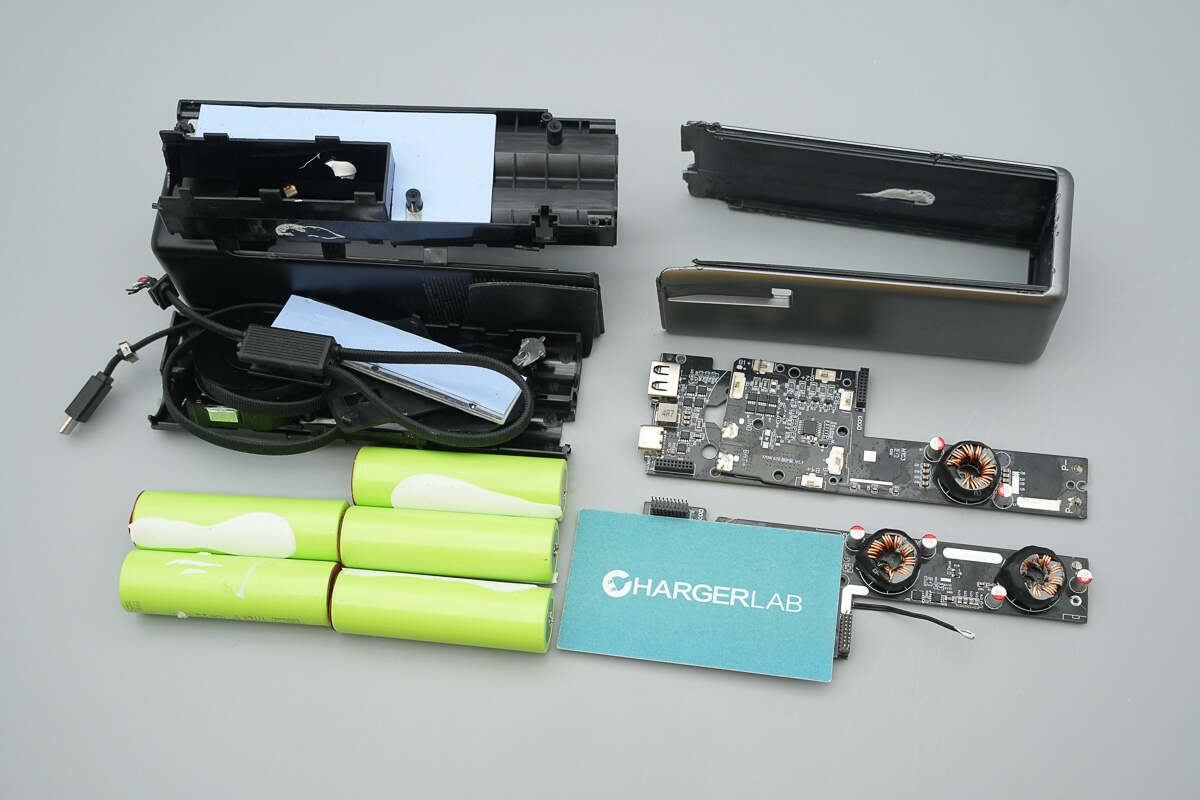
Well, those are all components of the SHARGE HyperTower 170W Power Bank.
Summary of ChargerLAB
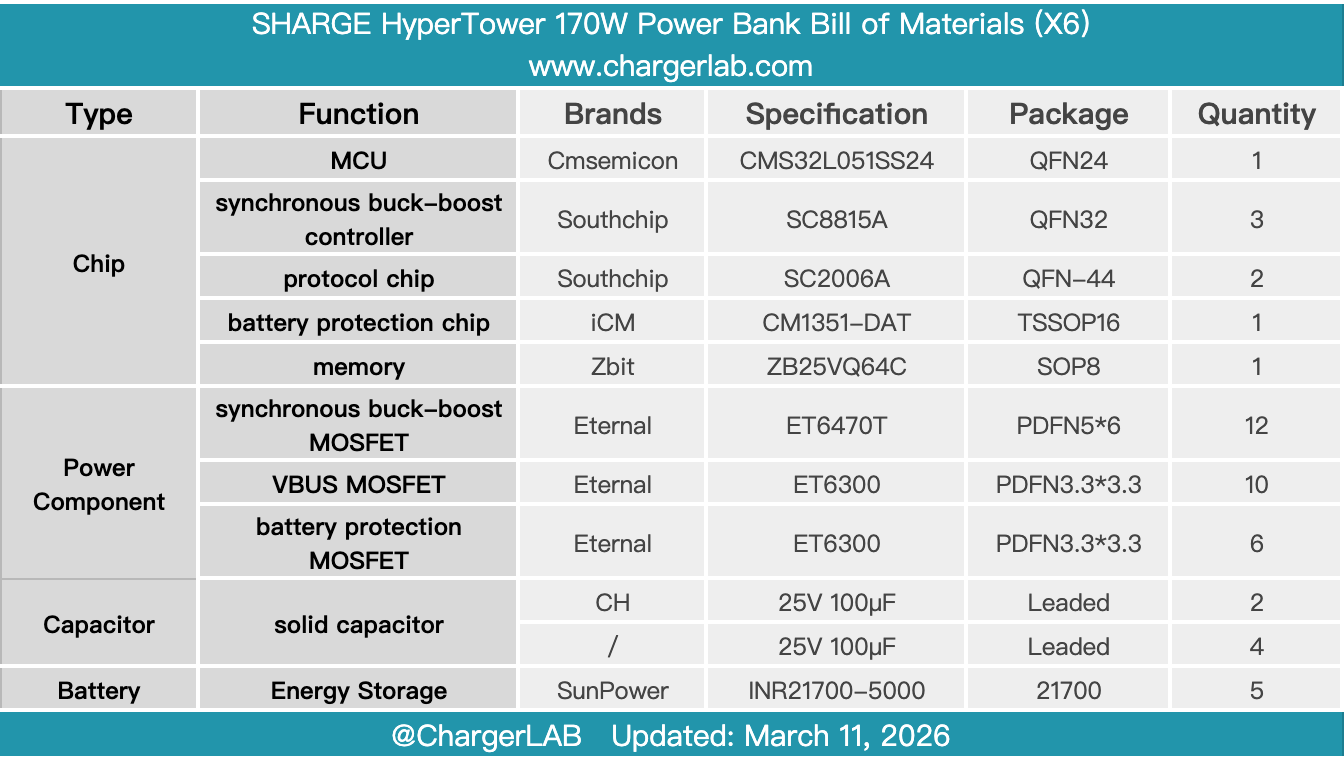
Here is the component list of the SHARGE HyperTower 170W Power Bank for your convenience.
In both exterior design and internal components, it demonstrates a high level of quality. It adopts a multi-channel independent charging architecture, implemented through multiple internal SouthChip SC8815A synchronous buck-boost controllers and SC2006A protocol chips, fully meeting the demand for fast charging multiple devices simultaneously.
It houses five SunPower 5000 mAh high-capacity, automotive-grade 21700 cells and is equipped with an iCM battery protection chip, ensuring the safety of the battery pack. The front side features a high-definition display, allowing users to monitor the power bank’s operational status at any time, significantly enhancing the experience for tech enthusiasts.
The device uses a two-layer PCB stack and applies extensive thermally conductive adhesive and multi-layer thermal pads in heat-generating areas, ensuring structural stability and efficient heat dissipation during 170 W high-power charging and discharging. This is a mobile power bank that combines geek-inspired aesthetic design with powerful performance.
Related Articles:
1. Teardown of Baseus PicoGo Air Power Bank (E00337)
2. Teardown of UGREEN Nexode Air 45W GaN Charger (X840)
3. Teardown of Tesla 4-in-1 USB-C Hub for Model 3/Y (TSL04)