
Introduction
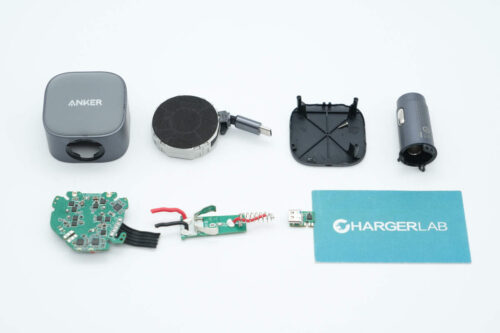
Anker's Nano series has launched a car charger featuring a retractable cable. This product is equipped with a USB-C port and a 75cm long retractable cable, supporting 35W and 45W outputs respectively. The dual ports are independently powered, with no interference between them. The total output power is 75W, making it capable of charging both the driver and passenger simultaneously. Next, we will take a closer look at the detailed design of this product.
Product Appearance

The front of the packaging features the ANKER logo, product name, image, and key selling points.
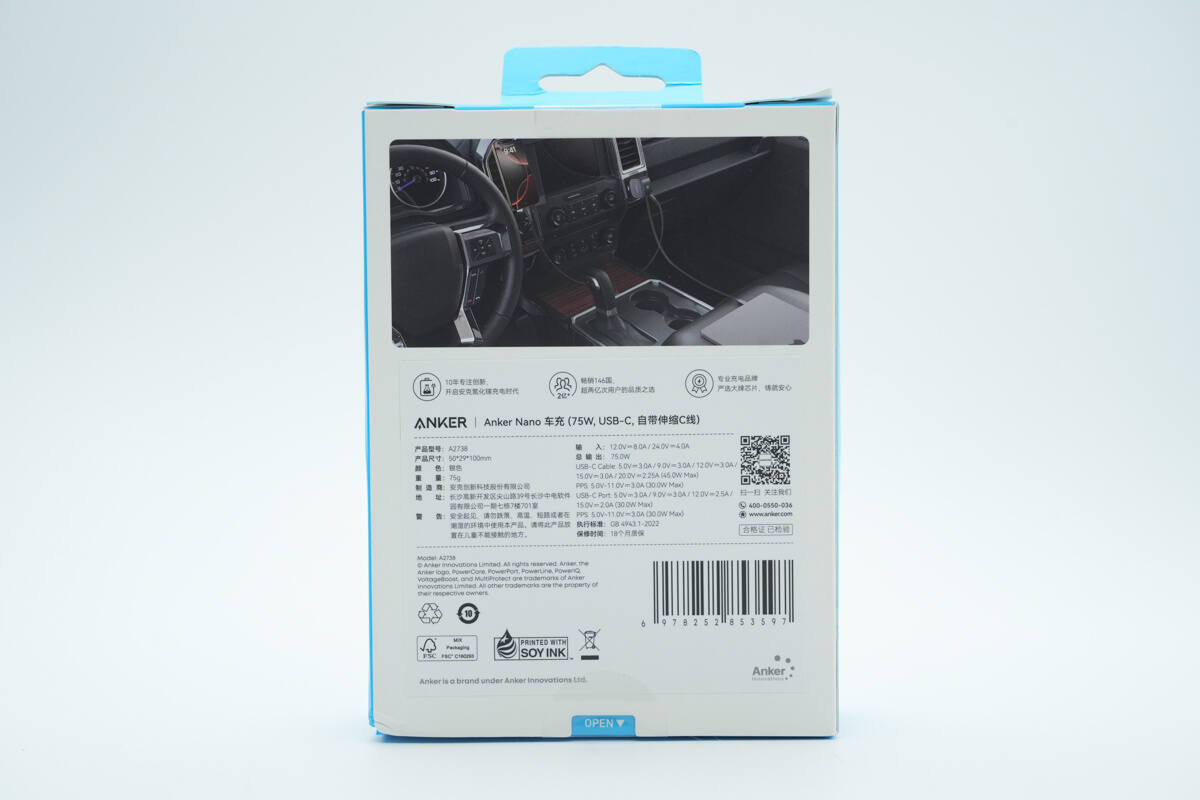
The back of the packaging displays usage scenario images and also features a sticker with the product's specifications.

The packaging includes the Anker Nano 75W retractable cable car charger, a user manual, and other accessories.
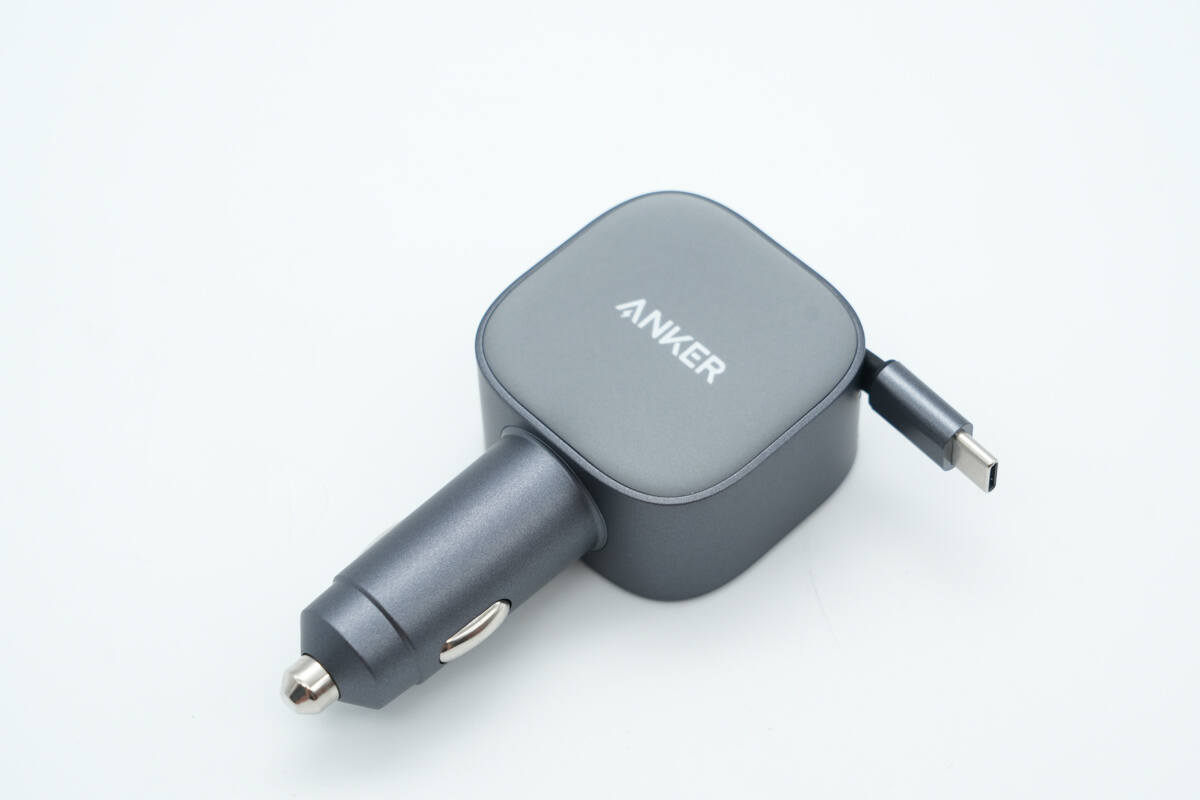
The exterior is made of flame-retardant PC material, coated with a silver-gray metallic paint. The front panel features a matte finish.
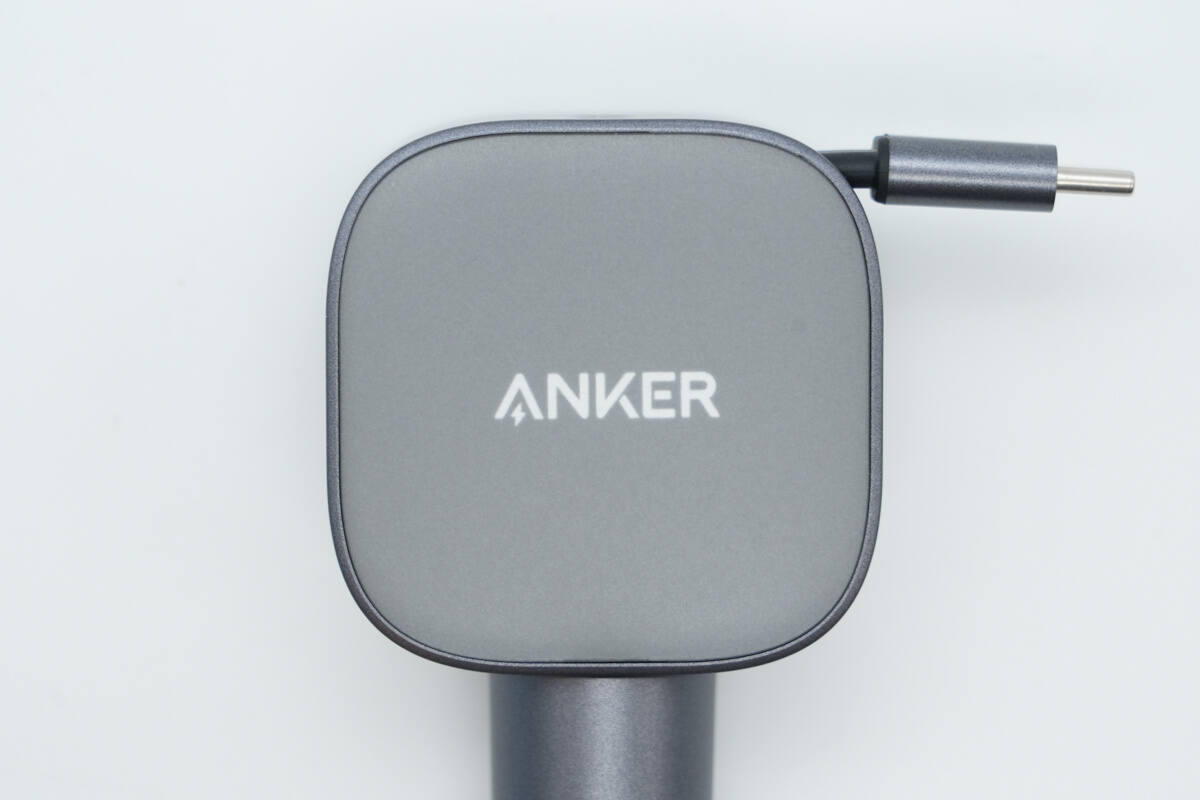
The center of the front panel is embossed with the ANKER logo.
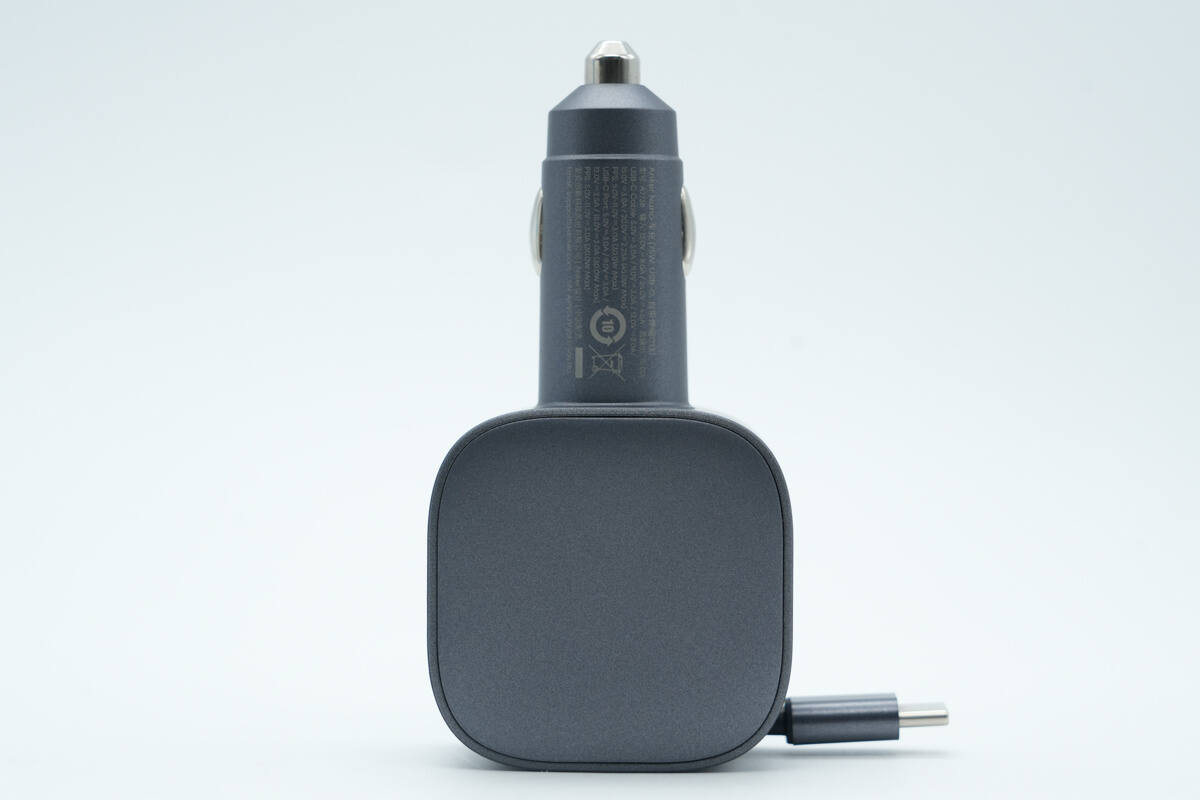
The back of the charger displays the specification information.
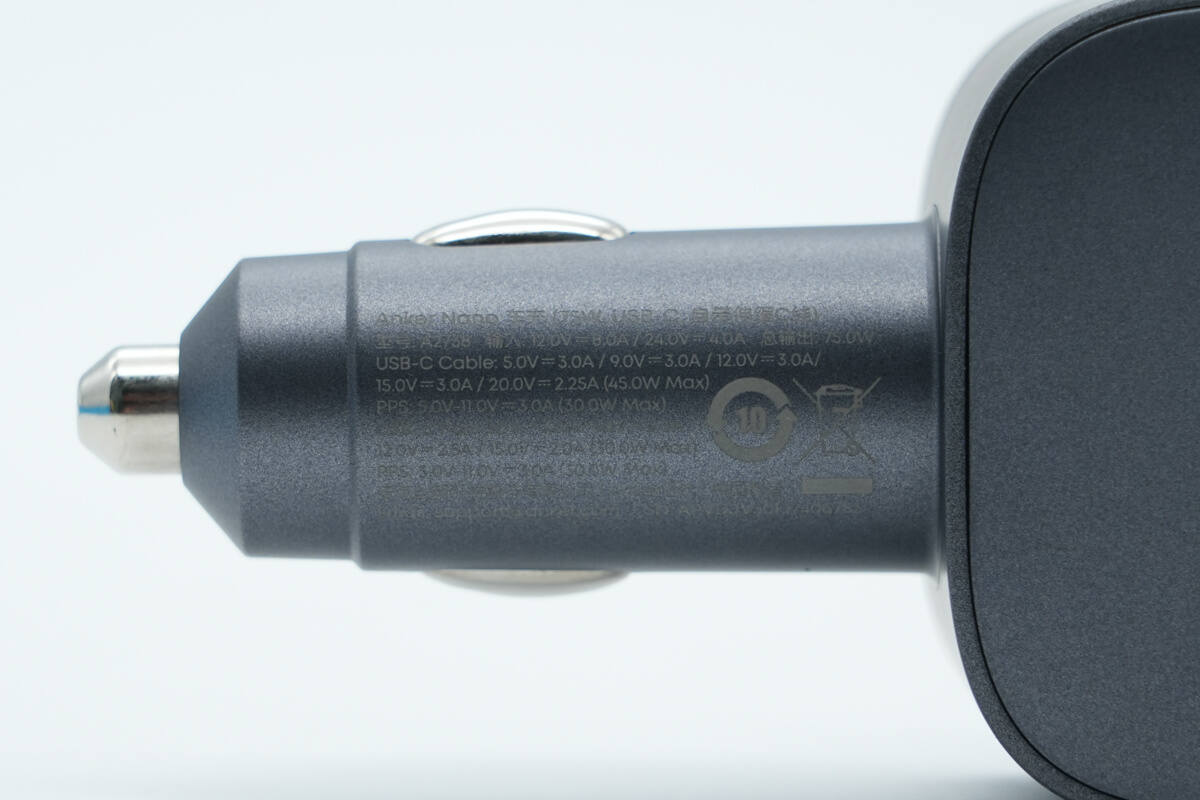
Model: A2738
Input: 12V8A, 24V4A
Total Output: 75W
USB-C Cable: 5V3A, 9V3A, 12V3A, 15V3A, 20V2.25A (45W Max)
PPS: 5-11V3A (30W Max)
USB-C: 5V3A, 9V3A, 12V2.5A, 15V2A (30W Max)
PPS: 5V-11V3A (30W Max)
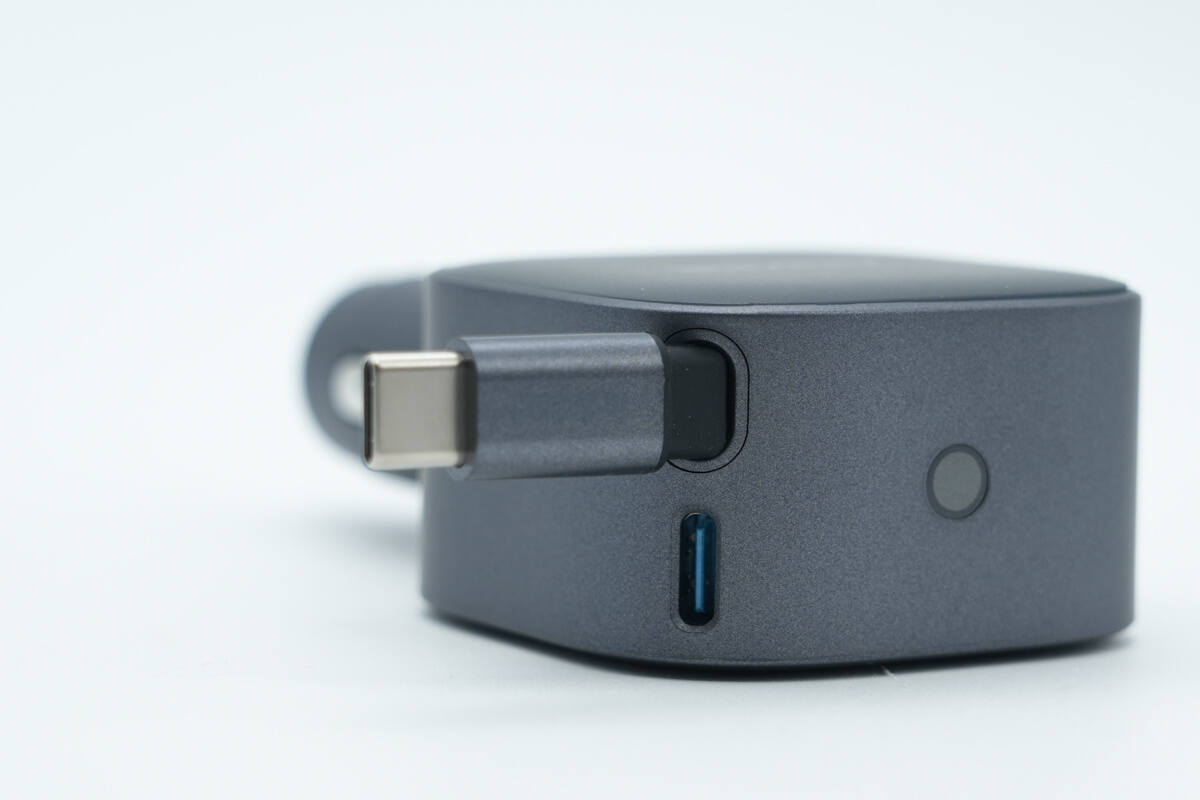
It is equipped with a USB-C port and a USB-C retractable cable.
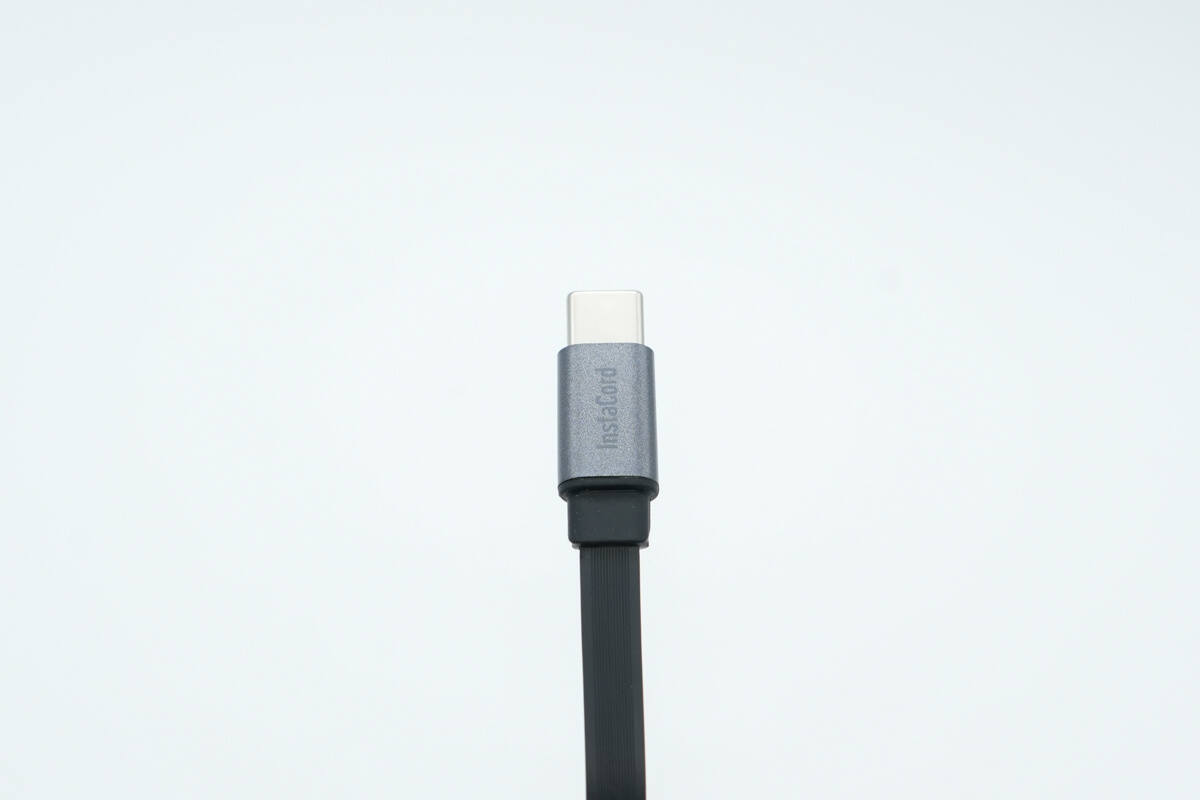
The USB-C connector housing is also treated with a spraying process, and the cable itself is flat.

A ring-shaped indicator light is positioned at the center of the top, which automatically lights up when powered on.
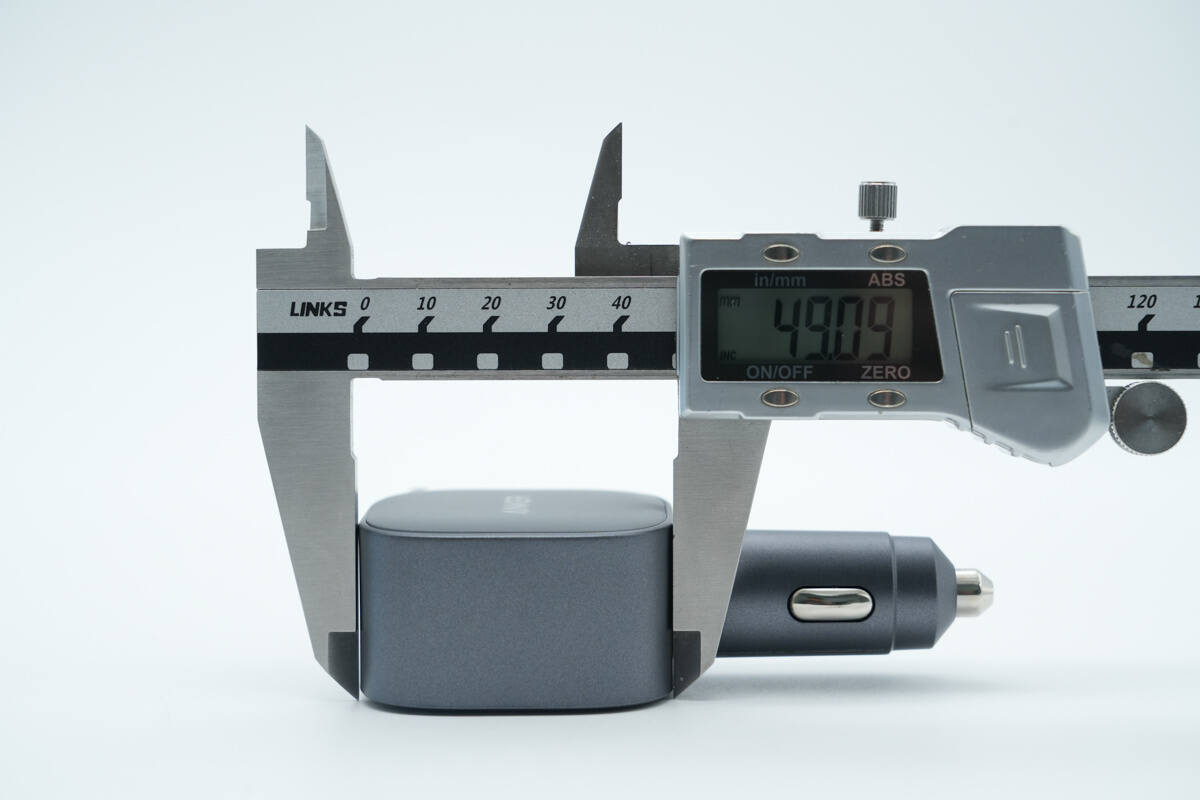
The top body length is about 49.09 mm (1.93 inches).
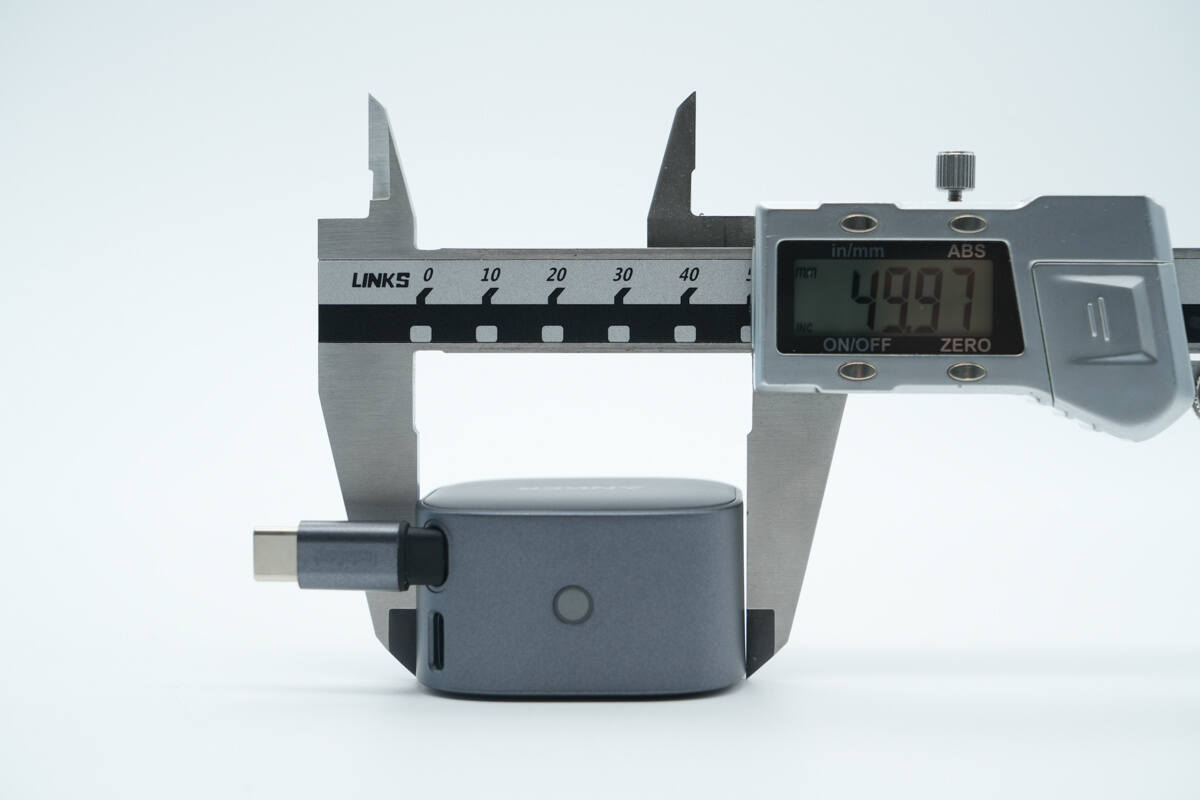
The width is about 49.97 mm (1.97 inches).
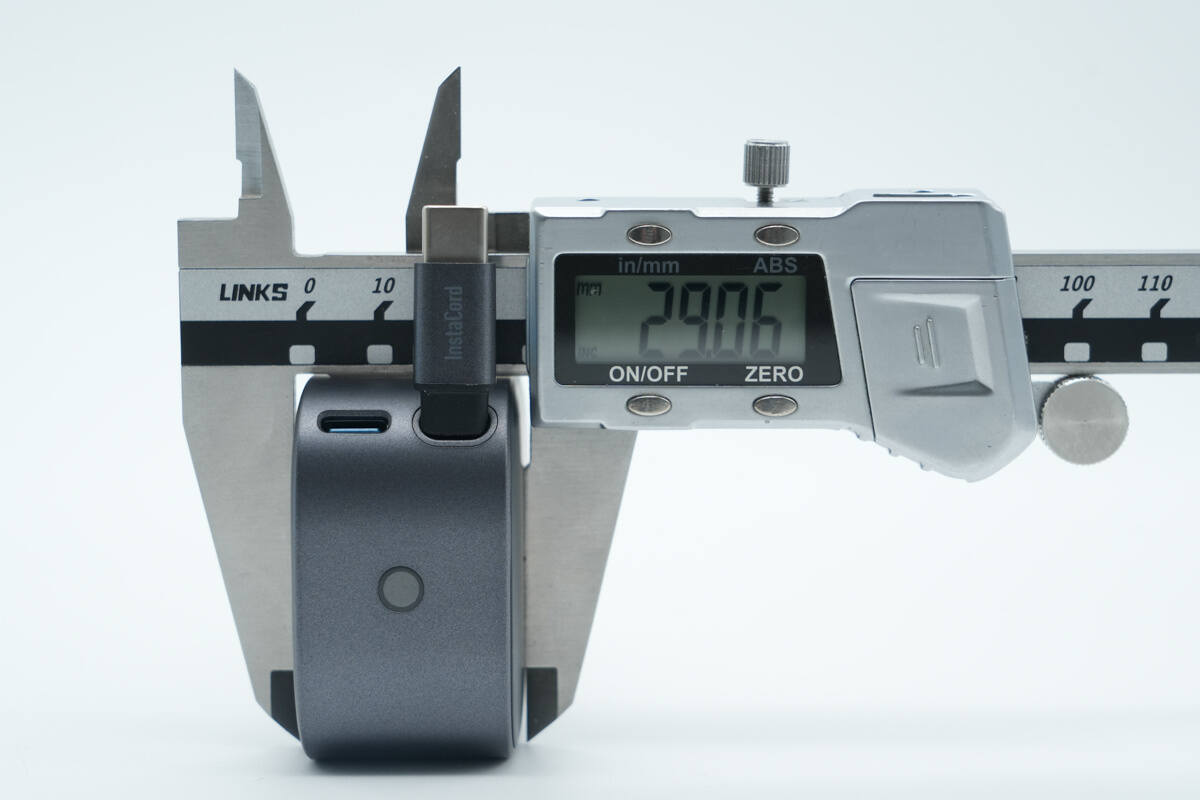
The thickness is about 29.06 mm (1.14 inches).
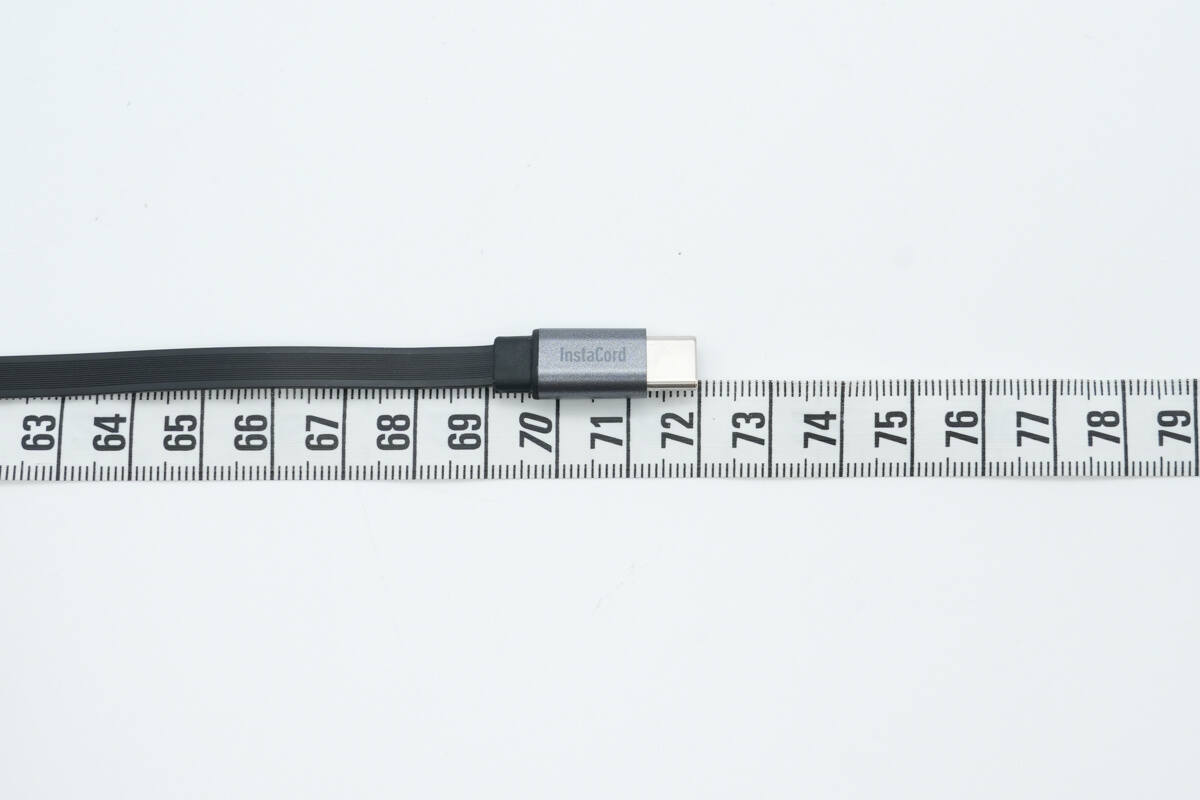
The USB-C cable length is about 72 cm (28.35 inches).
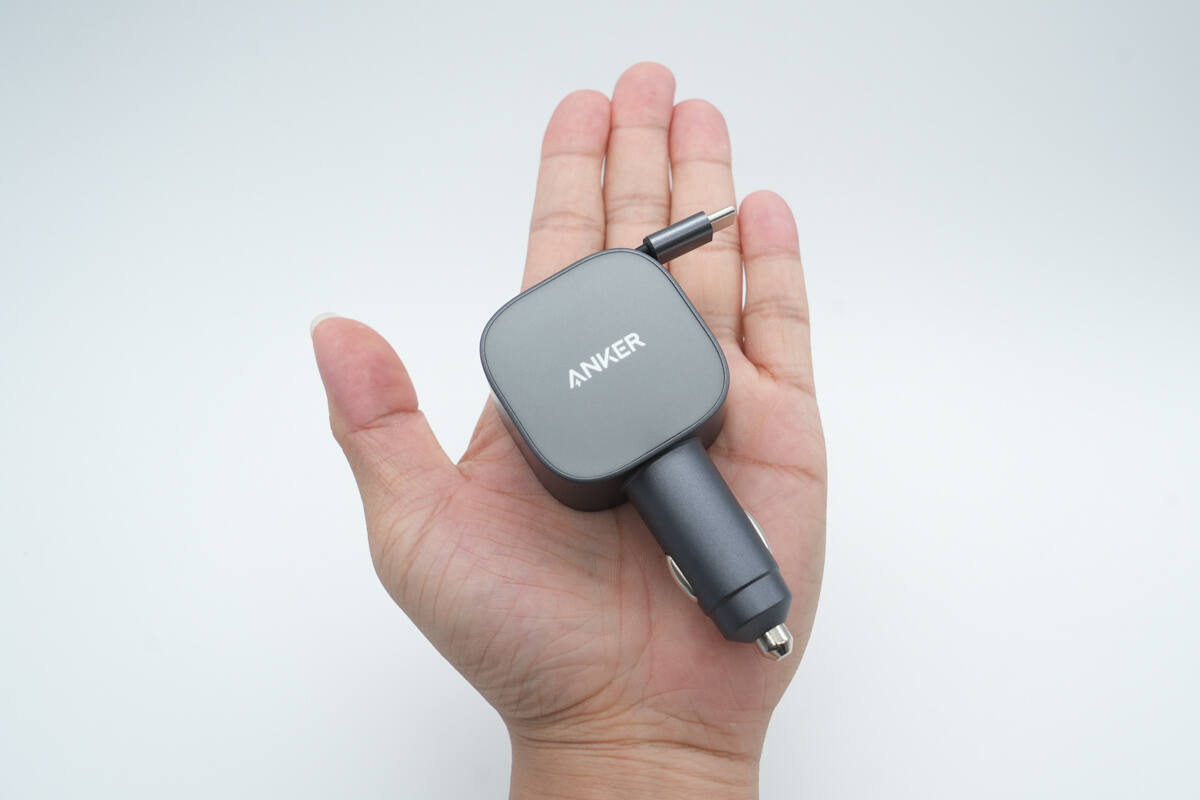
That's how big it is on the hand.
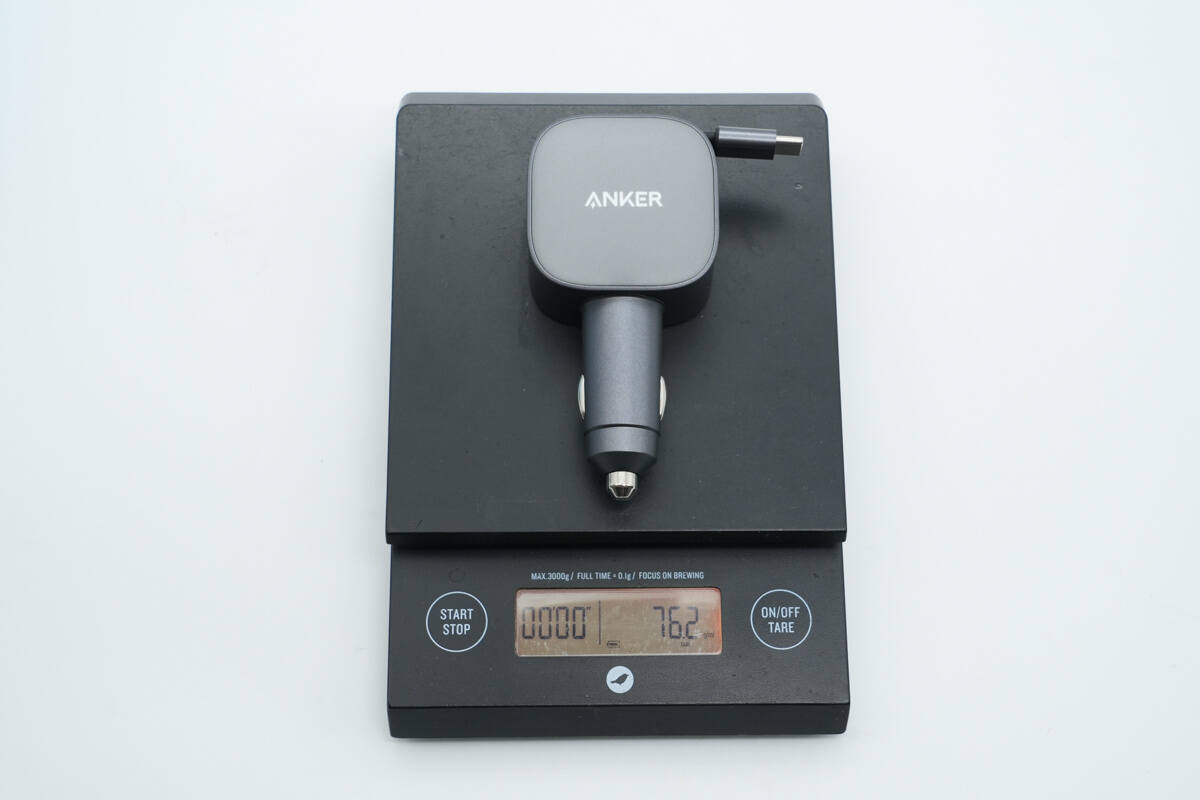
The weight is about 76 g (2.68 oz).
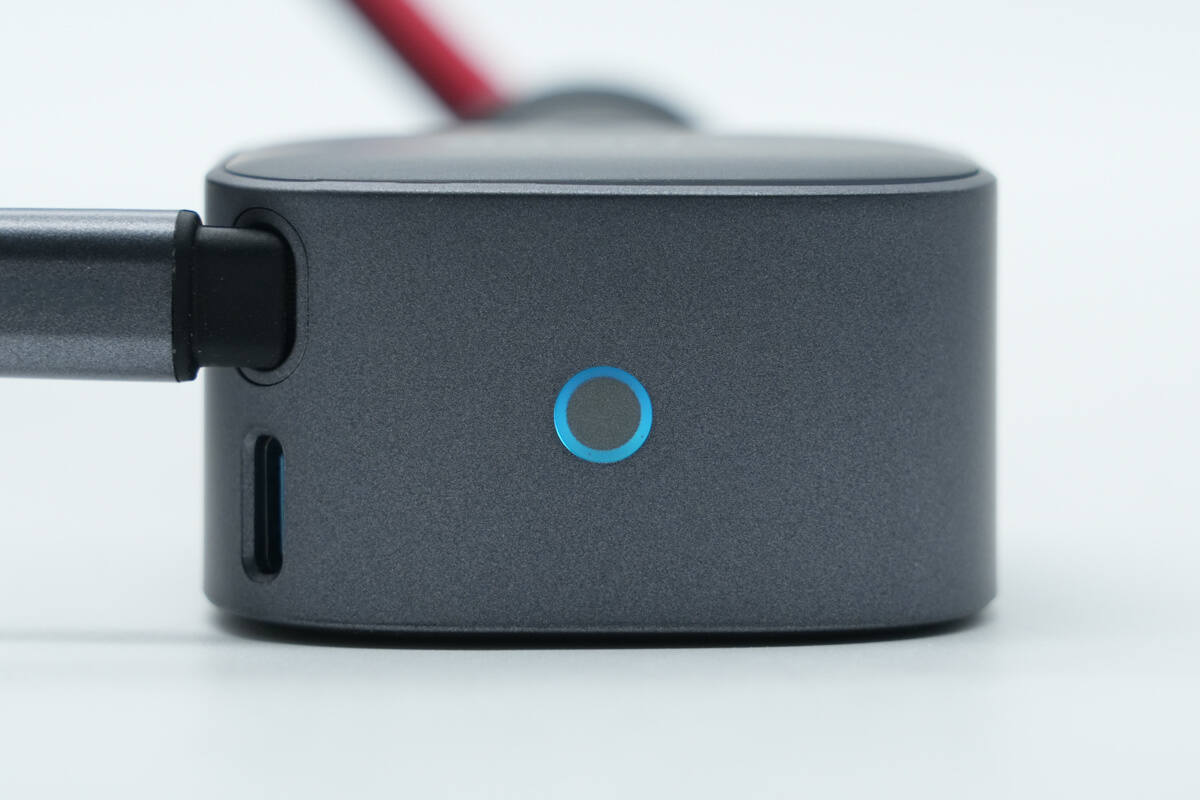
When powered on, the indicator light ring glows blue.
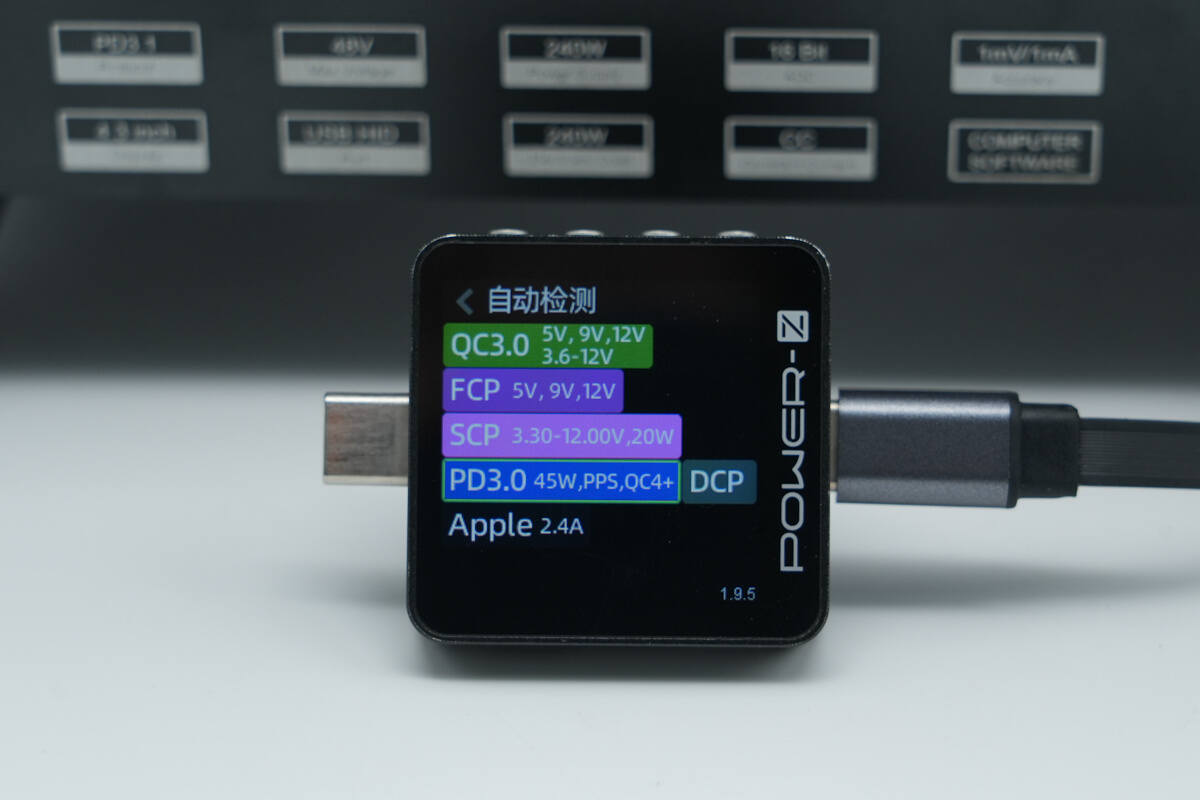
Simulating a 24V DC input scenario, the ChargerLAB POWER-Z KM003C shows that the USB-C retractable cable supports QC3.0/4+, FCP, SCP, PD3.0, PPS, DCP, and Apple 2.4A charging protocols.
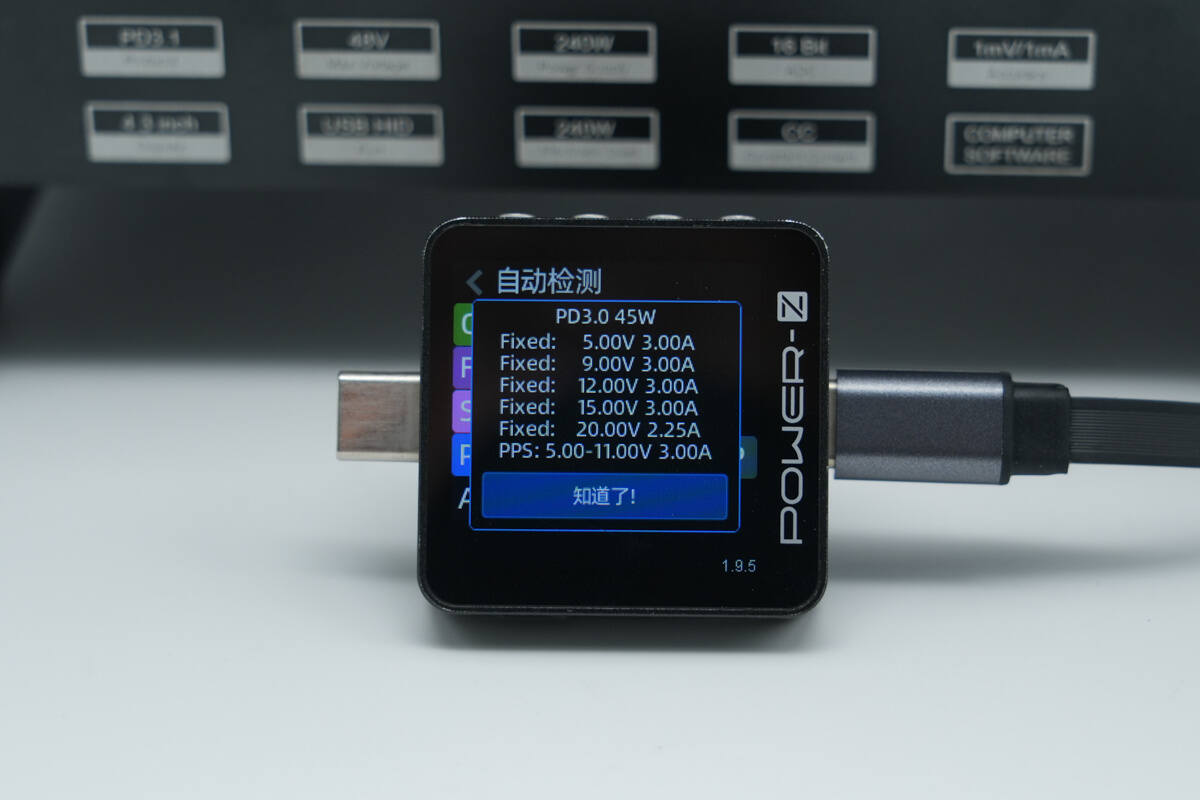
It has five fixed PDOs of 5V3A, 9V3A, 12V3A, 15V3A, and 20V2.25A, as well as a set of PPS, which is 5-11V 3A.
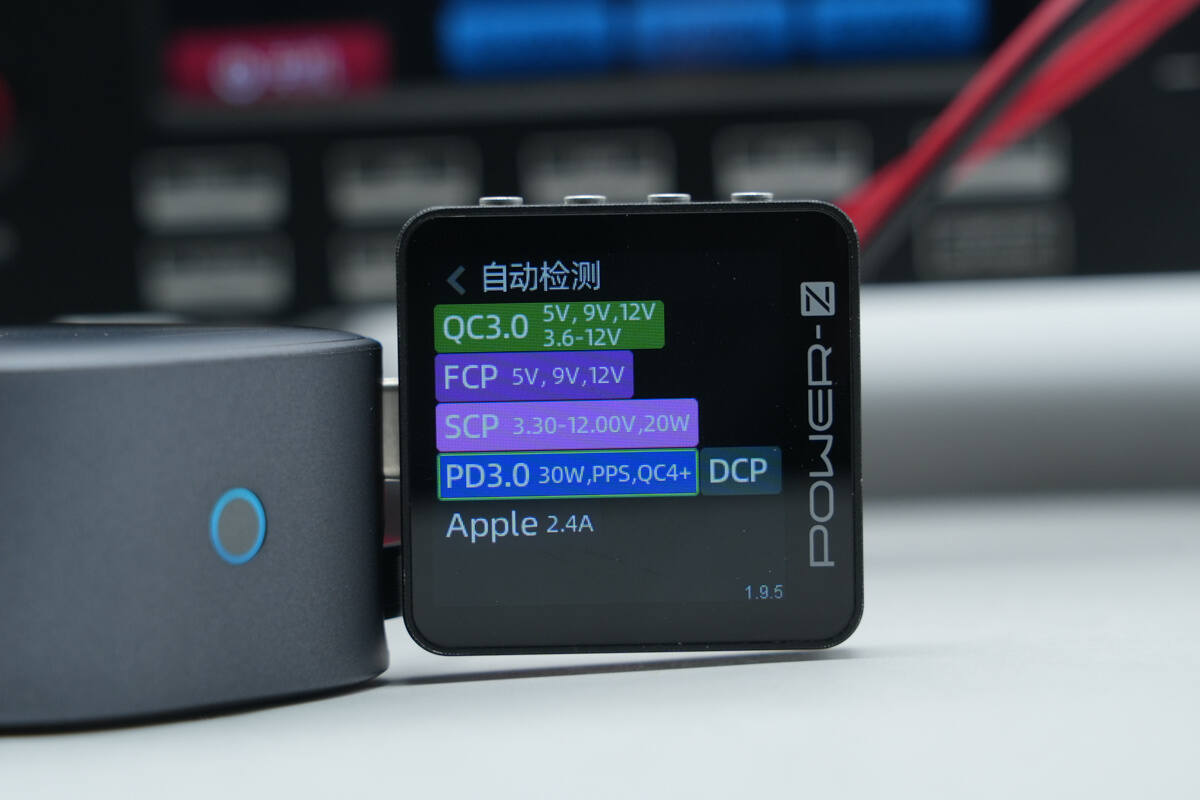
The USB-C port supports QC3.0/4+, FCP, SCP, PD3.0, PPS, DCP, and Apple 2.4A protocols.
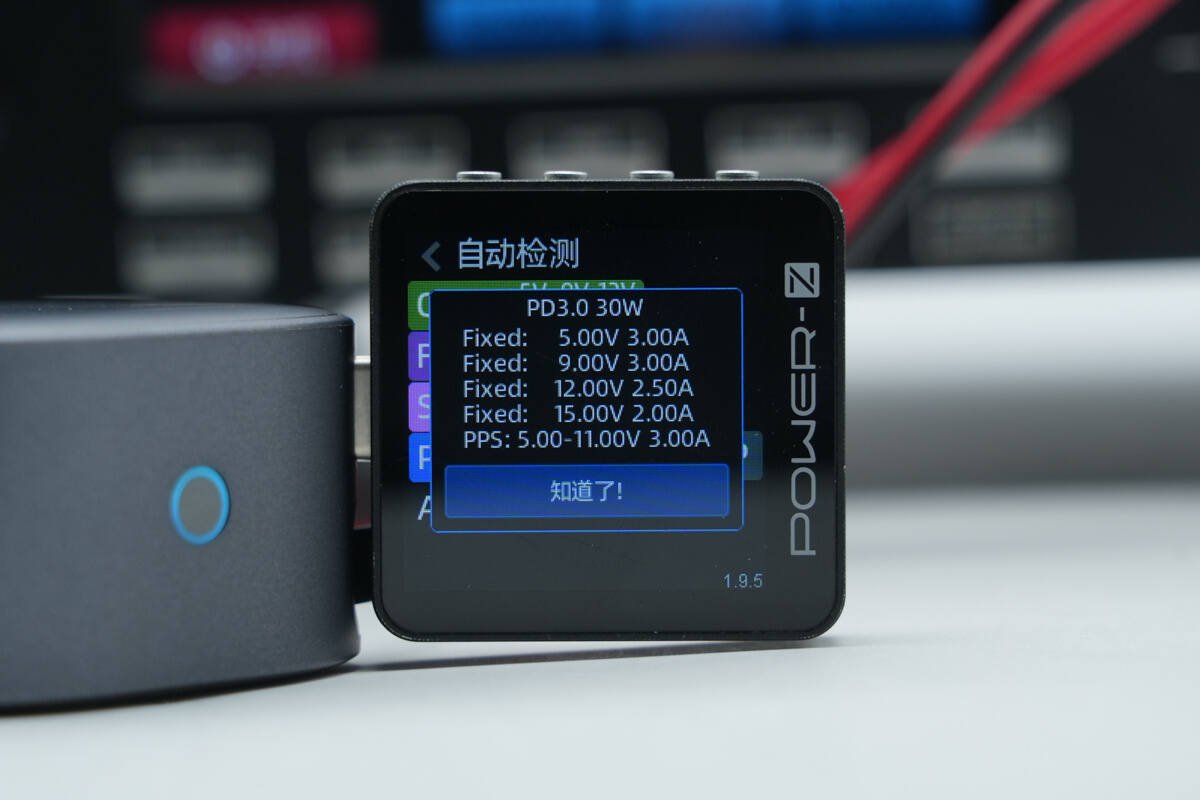
It has four fixed PDOs of 5V3A, 9V3A, 12V2.5A, and 15V2A, as well as a set of PPS, which is 5-11V 3A.
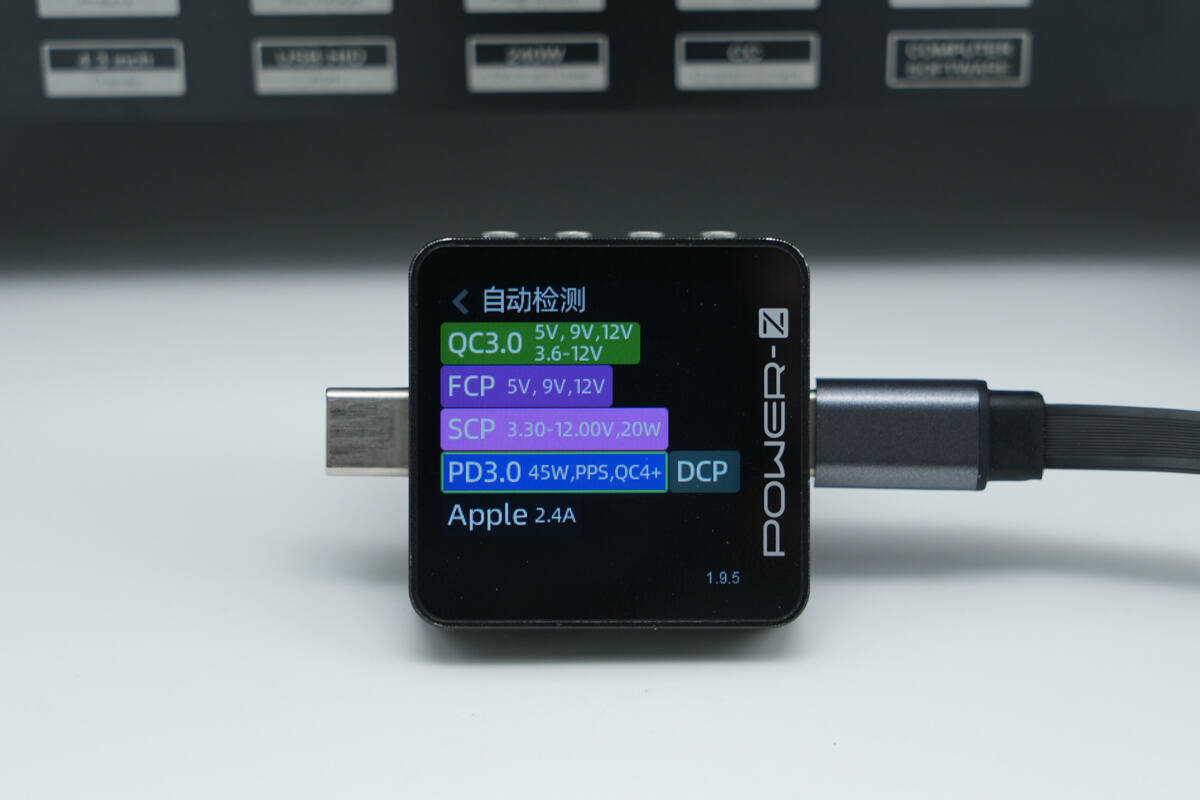
Simulating a 14V DC input scenario, the protocols compatible with the USB-C retractable cable were found to be the same as those under the 24V DC input condition.
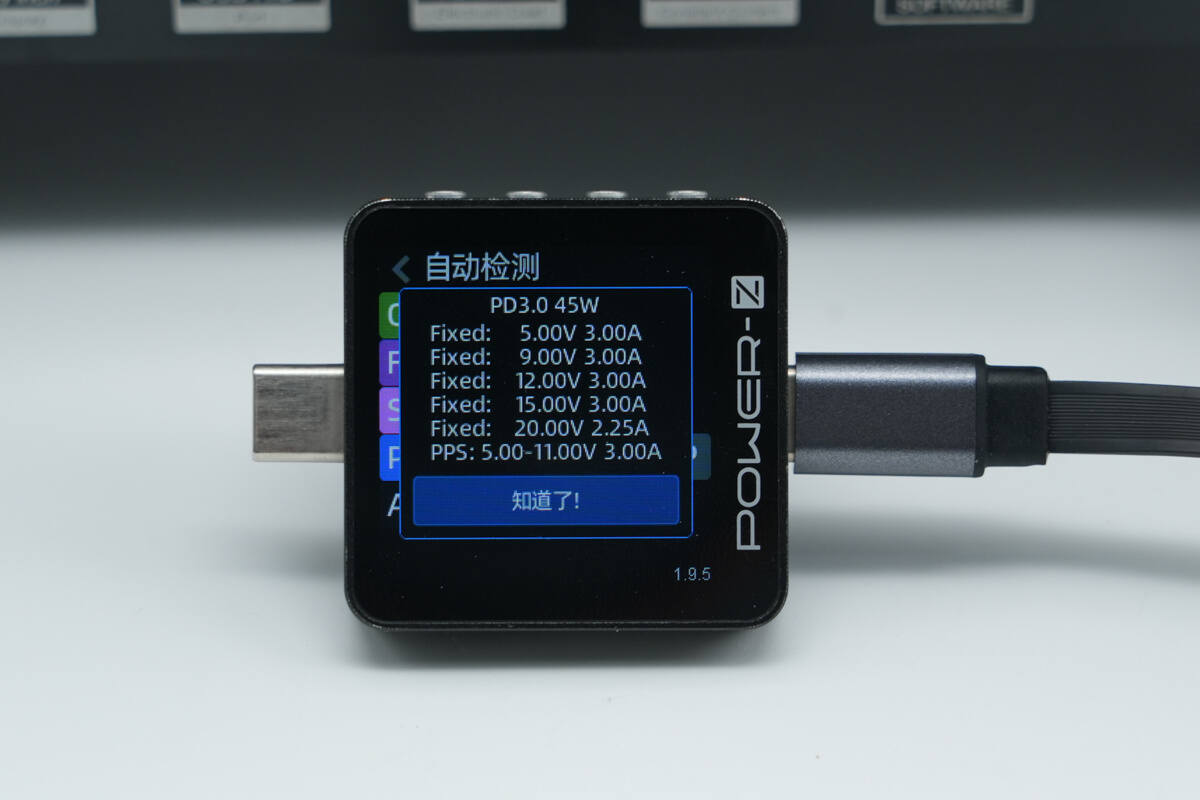
The PDO messages are also the same.

The protocols compatible with the USB-C port are also the same as those under the 14V DC input scenario.
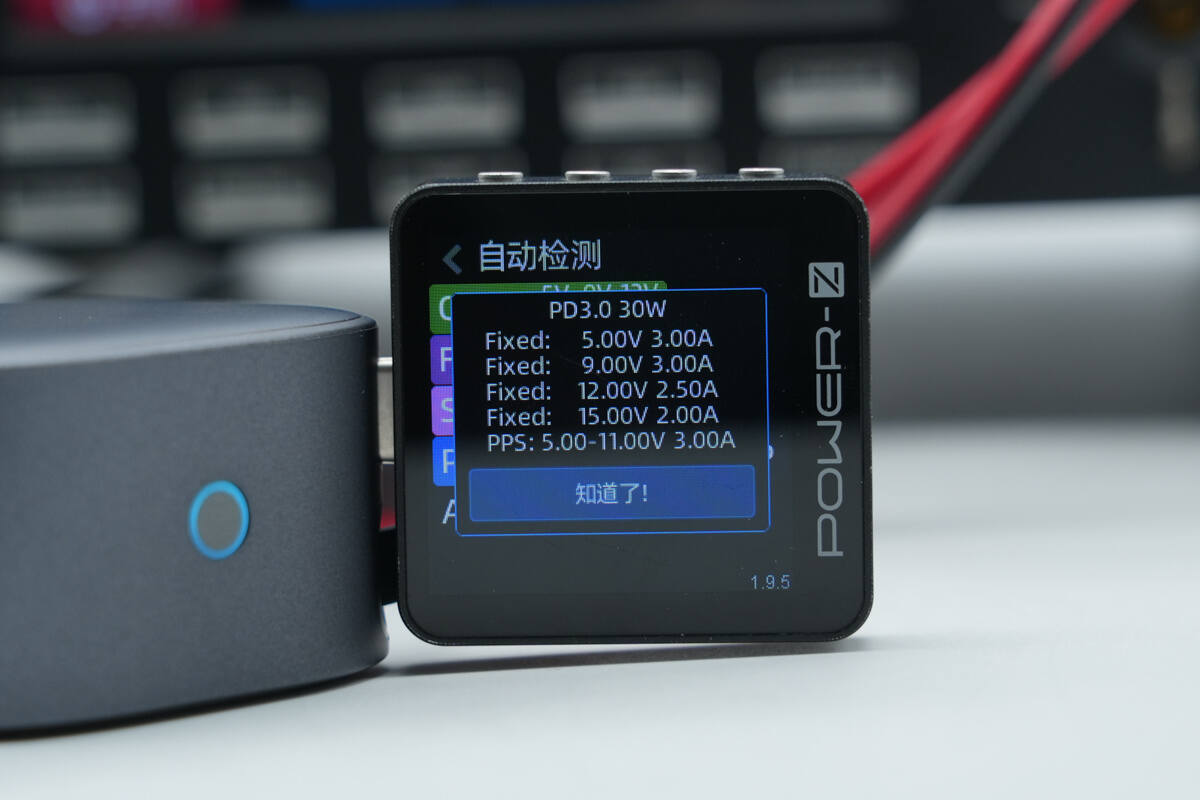
The PDO messages are also the same.
Teardown
Next, let's take it apart to see its internal components and structure.
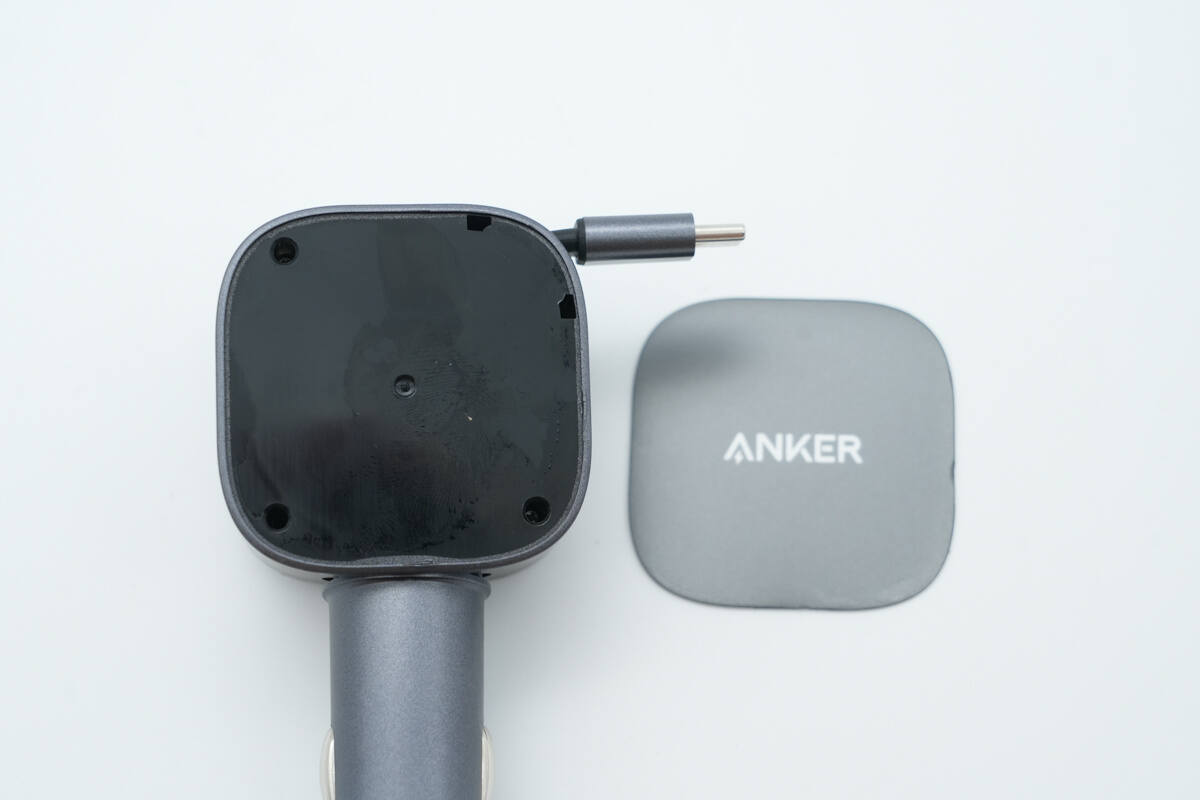
Upon removing the front panel, there are screws inside.
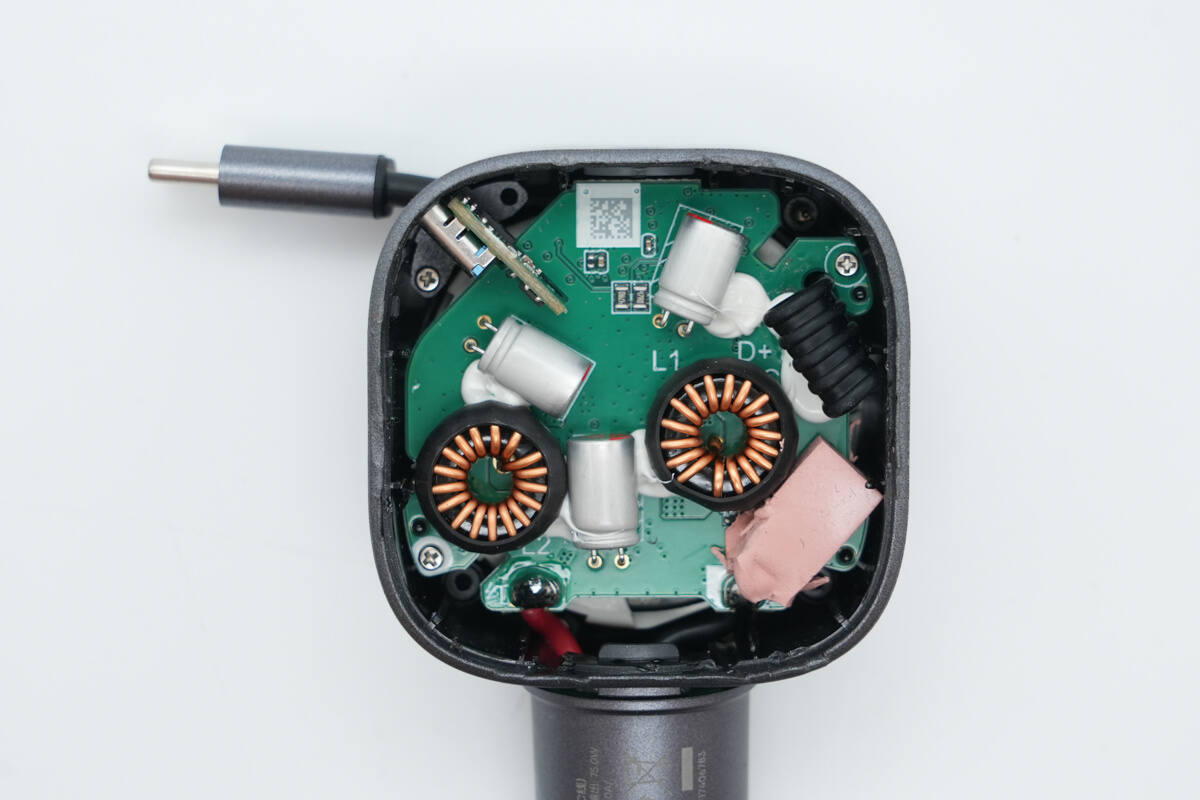
After removing the screws and continuing the disassembly, the PCBA is also secured with screws.
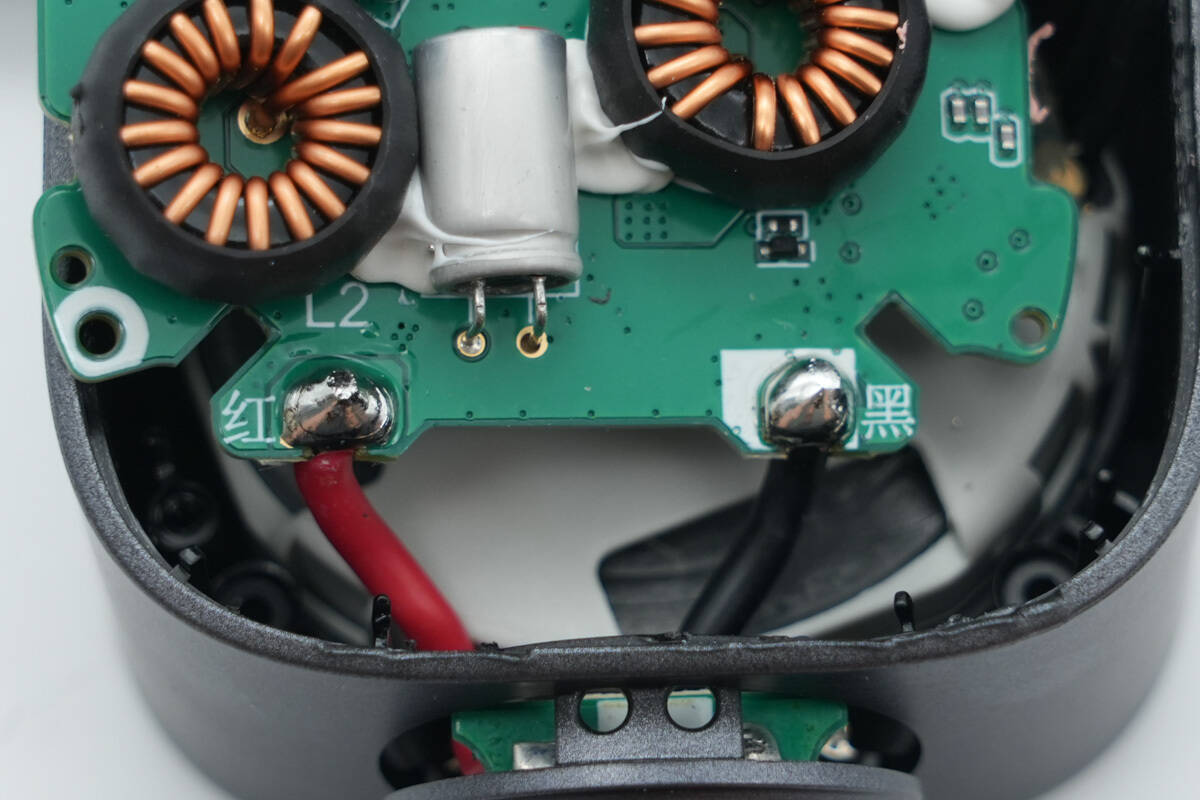
Inside, there is also a small input PCB and a retractable cable module. The small input PCB is connected to the PCBA module via red and black wires.
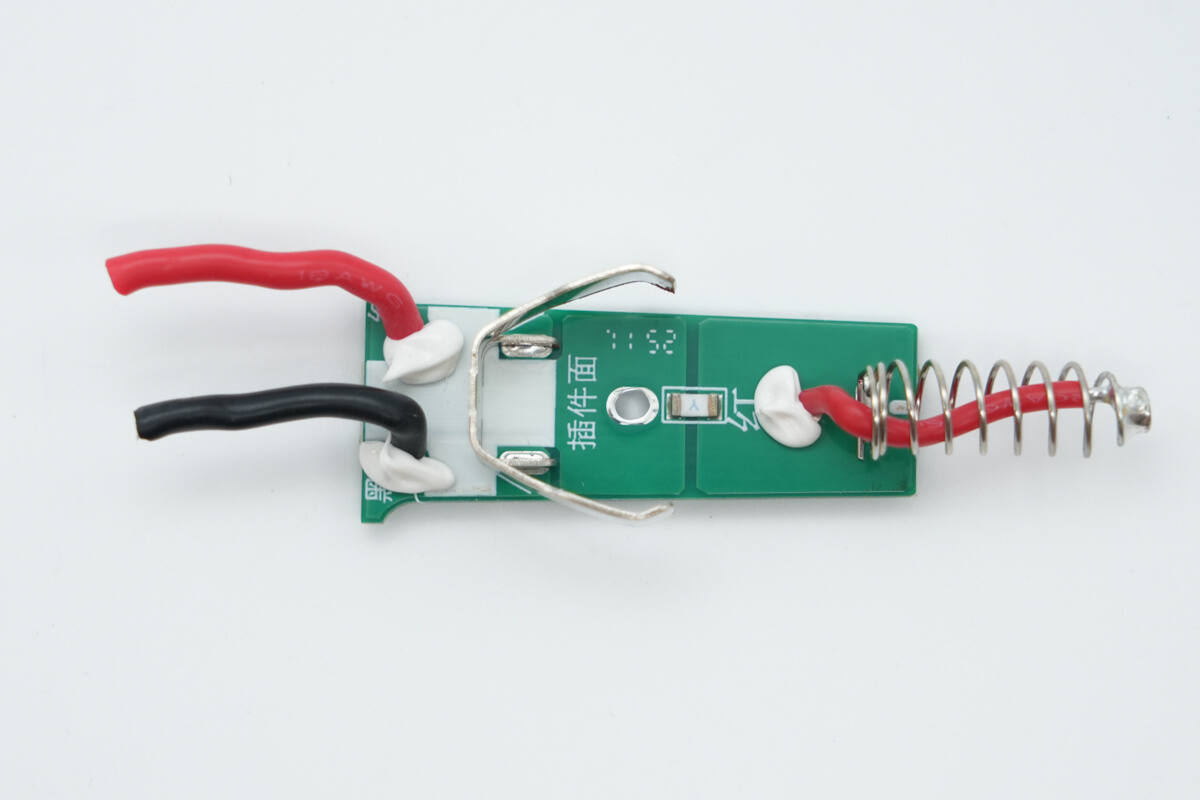
Remove the small input PCB; the front features an SMD fuse, a negative metal contact, and connecting wires.
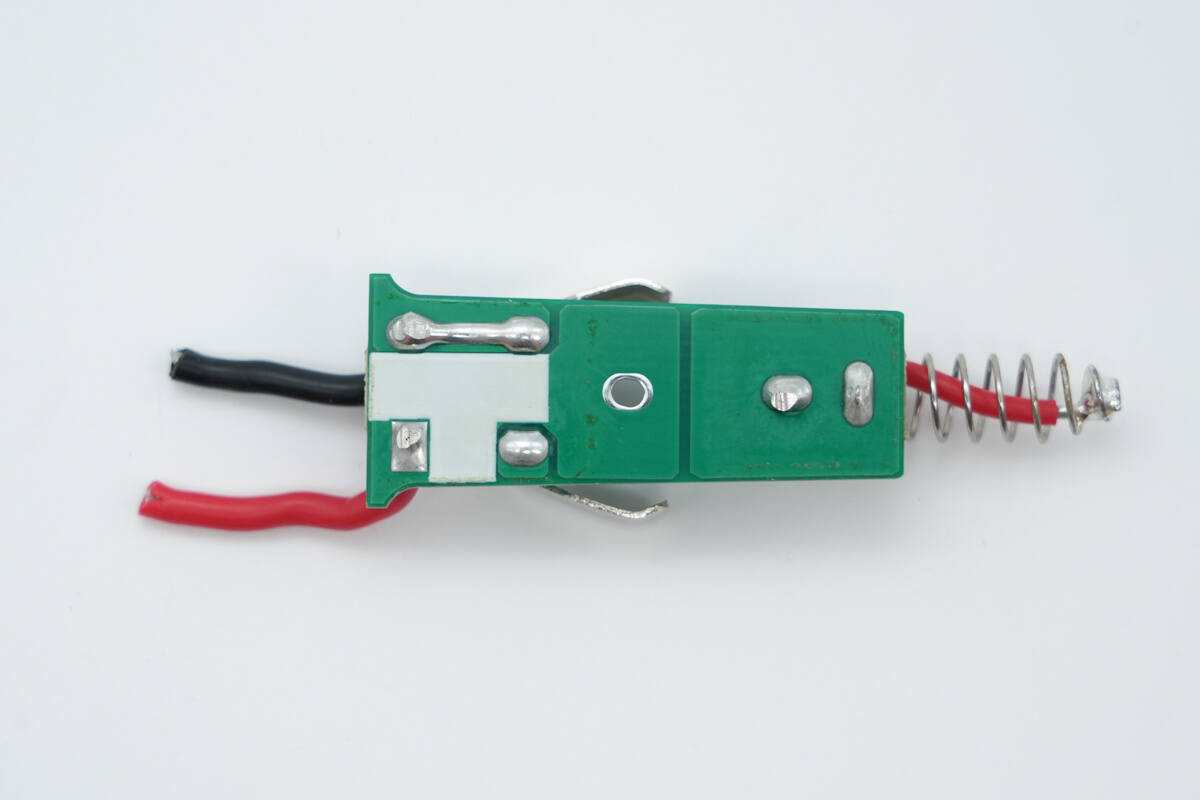
The back side has no components.
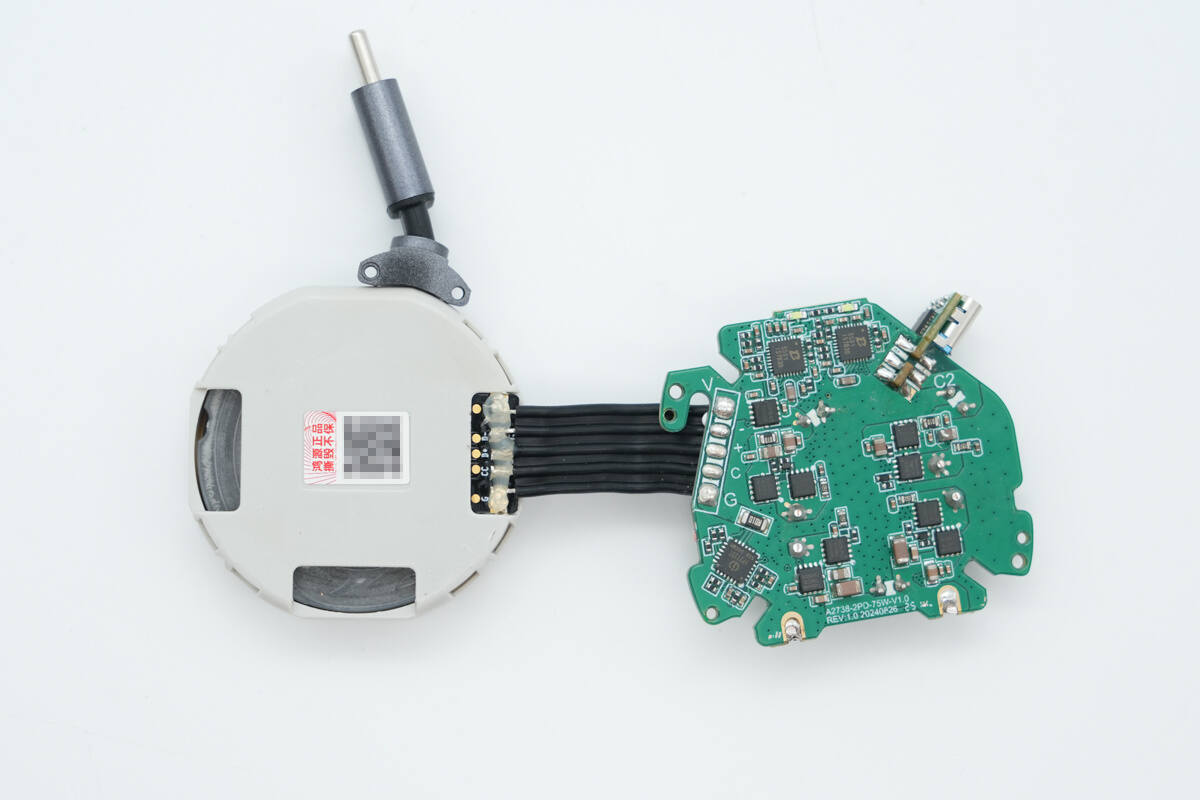
The PCBA module and the retractable cable module are connected by a ribbon cable, with both ends of the solder joints sealed with glue.
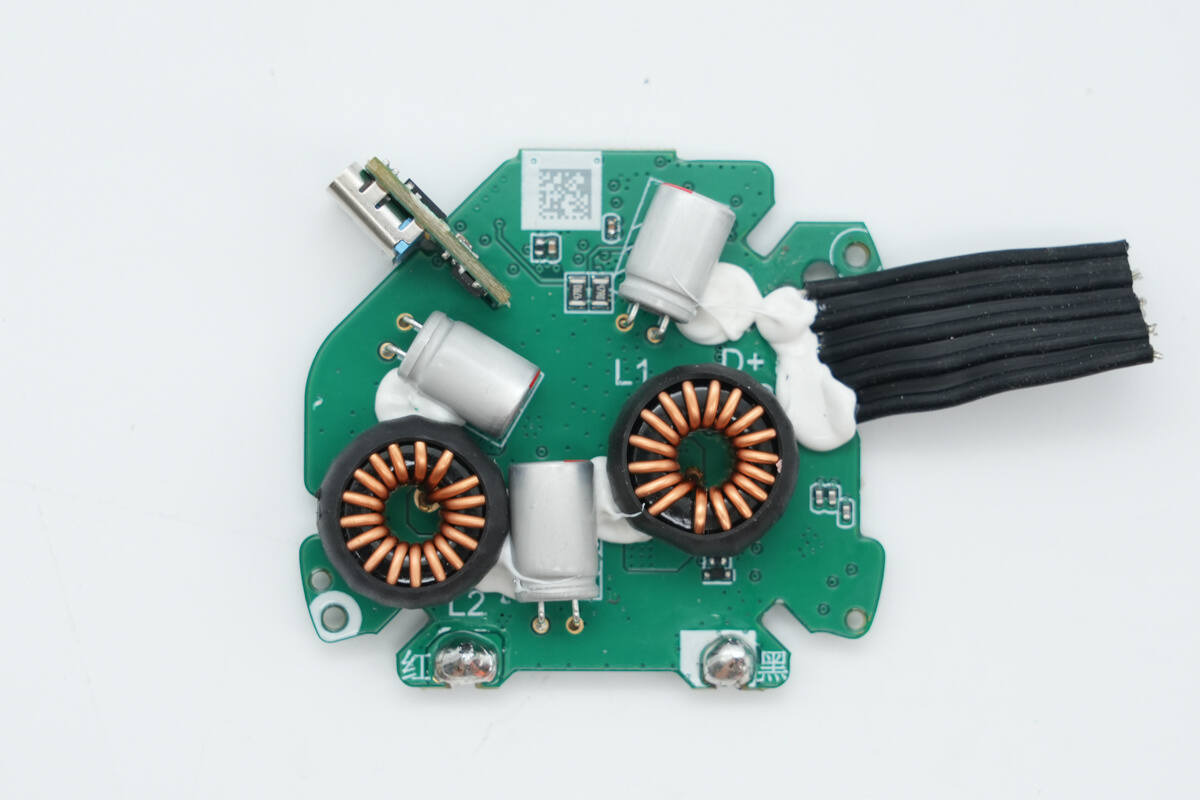
A front view of the PCBA module shows the USB-C port soldered onto a small PCB. The solid capacitors and inductors are reinforced with glue.

The back side features synchronous buck-boost controllers, synchronous buck-boost MOSFETs, a protocol chip, and an output VBUS MOSFET.
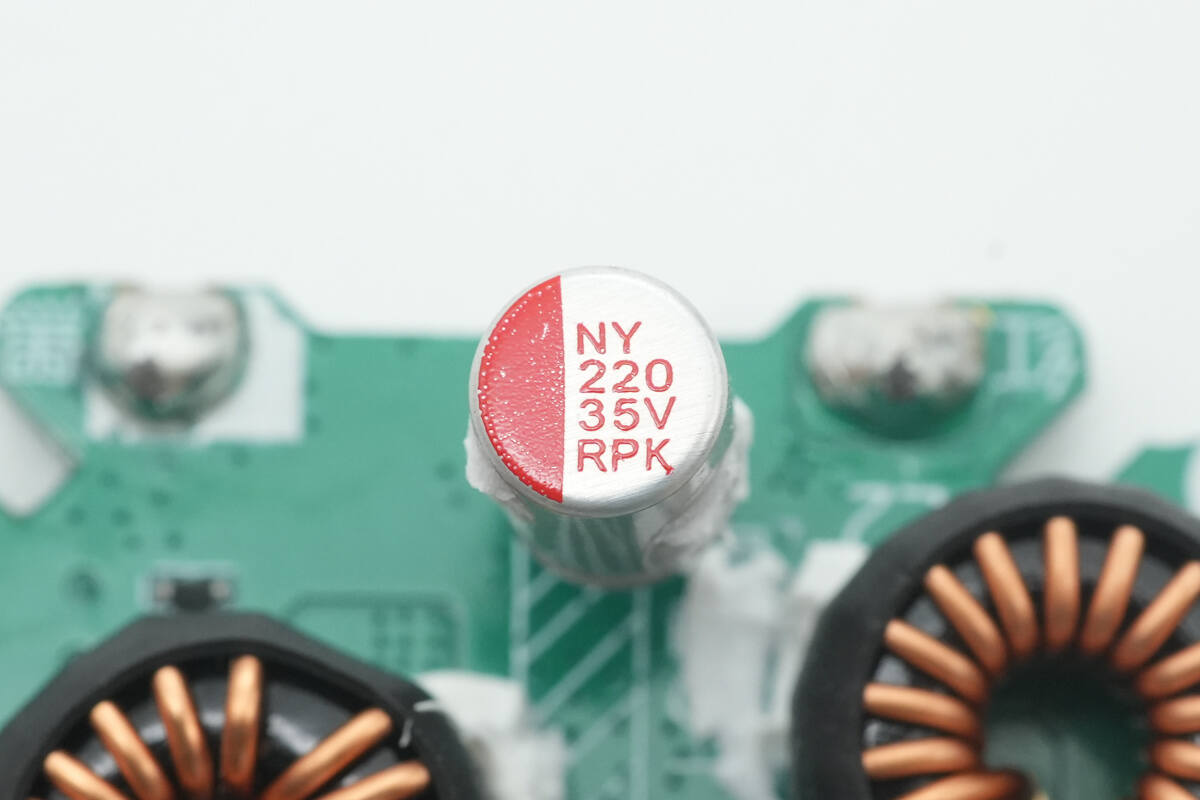
The solid capacitor used for input filtering has a specification of 35V 220μF.

The synchronous buck-boost controllers used for both the USB-C retractable cable and the USB-C port are identical, sourced from Powlicon with the model PL5501. They support a wide input voltage range of up to 32V and a continuous load current of 20A. The controllers operate in buck, buck-boost, and boost modes with constant-time control to achieve excellent load and voltage regulation. They support programmable switching frequencies of 150kHz, 300kHz, 600kHz, or 1.2MHz, and are packaged in a QFN 4*4-32 form factor.

The four synchronous buck-boost MOSFETs are from Techcode, with the model number TDM3578. They are NMOS transistors, rated for 40V voltage tolerance, with a conduction resistance of 5.6mΩ. These MOSFETs are packaged in a PPAK 3*3-8 form factor.

The other set of four synchronous buck-boost MOSFETs also uses the Techcode TDM3578.
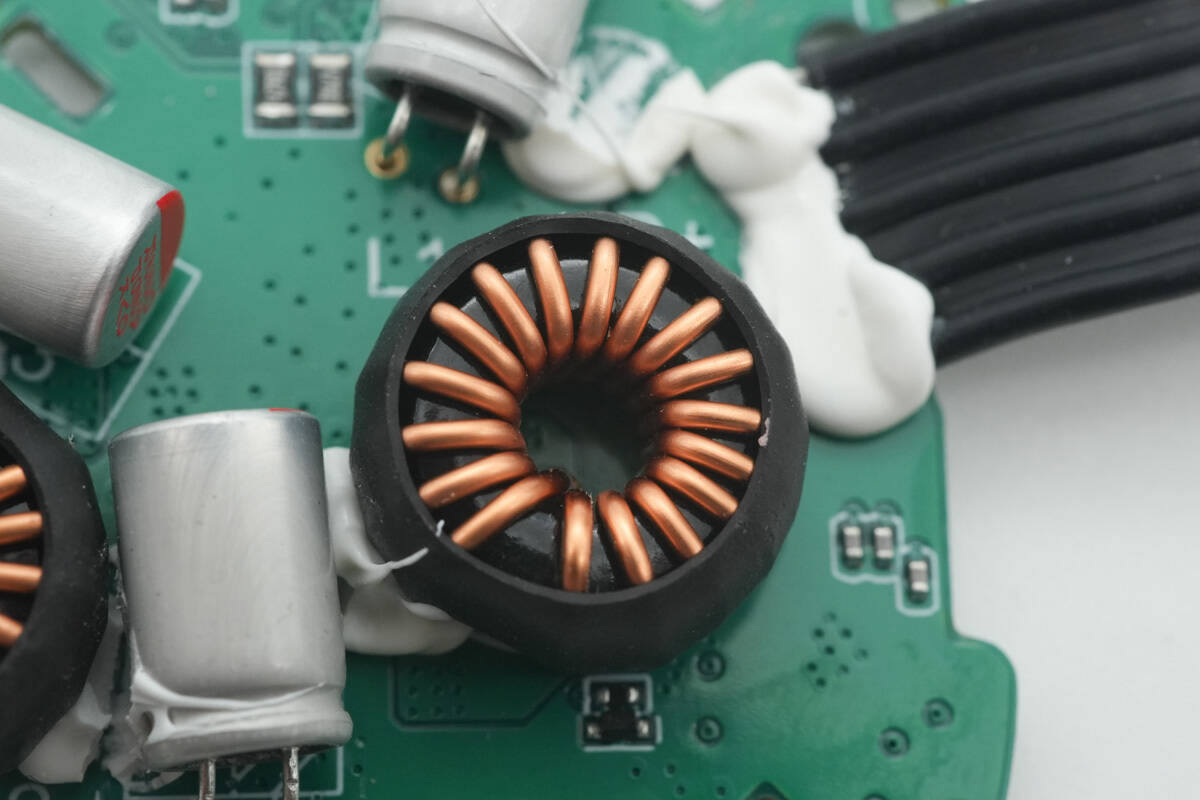
The paired buck-boost inductors are insulated with heat shrink tubing.
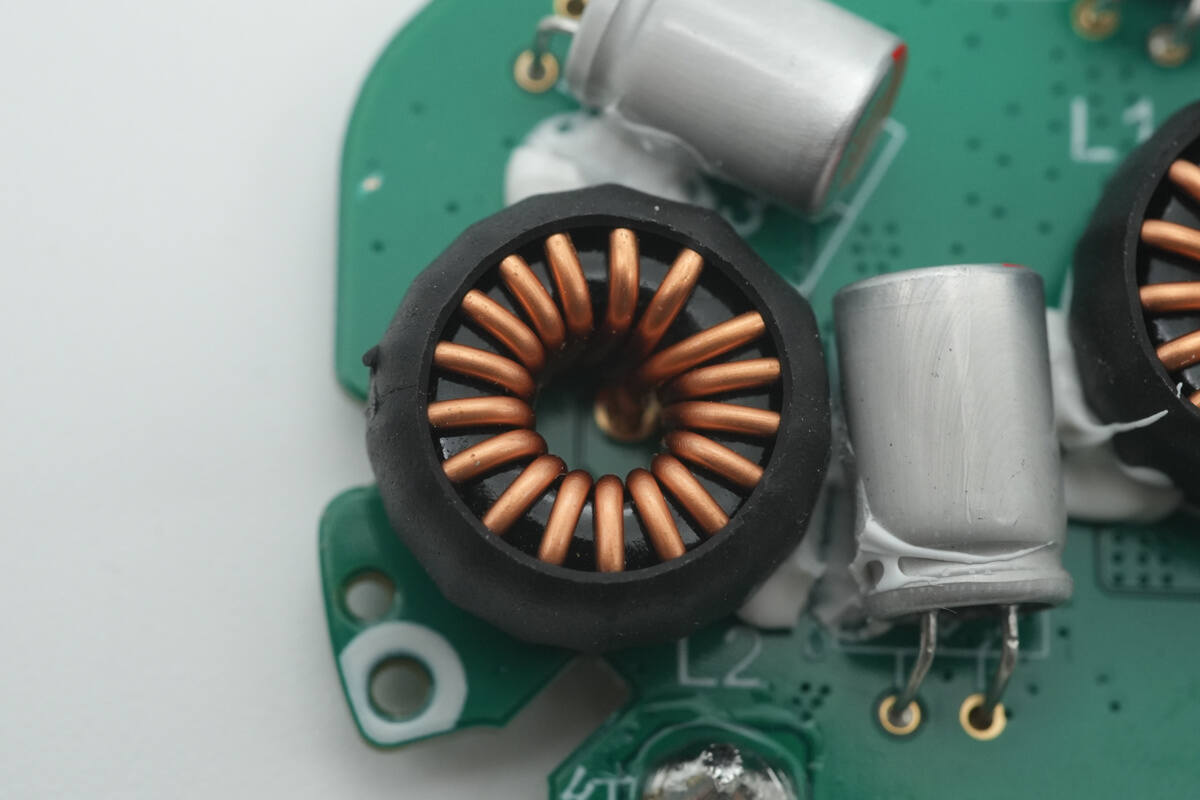
Close-up of the other inductor.
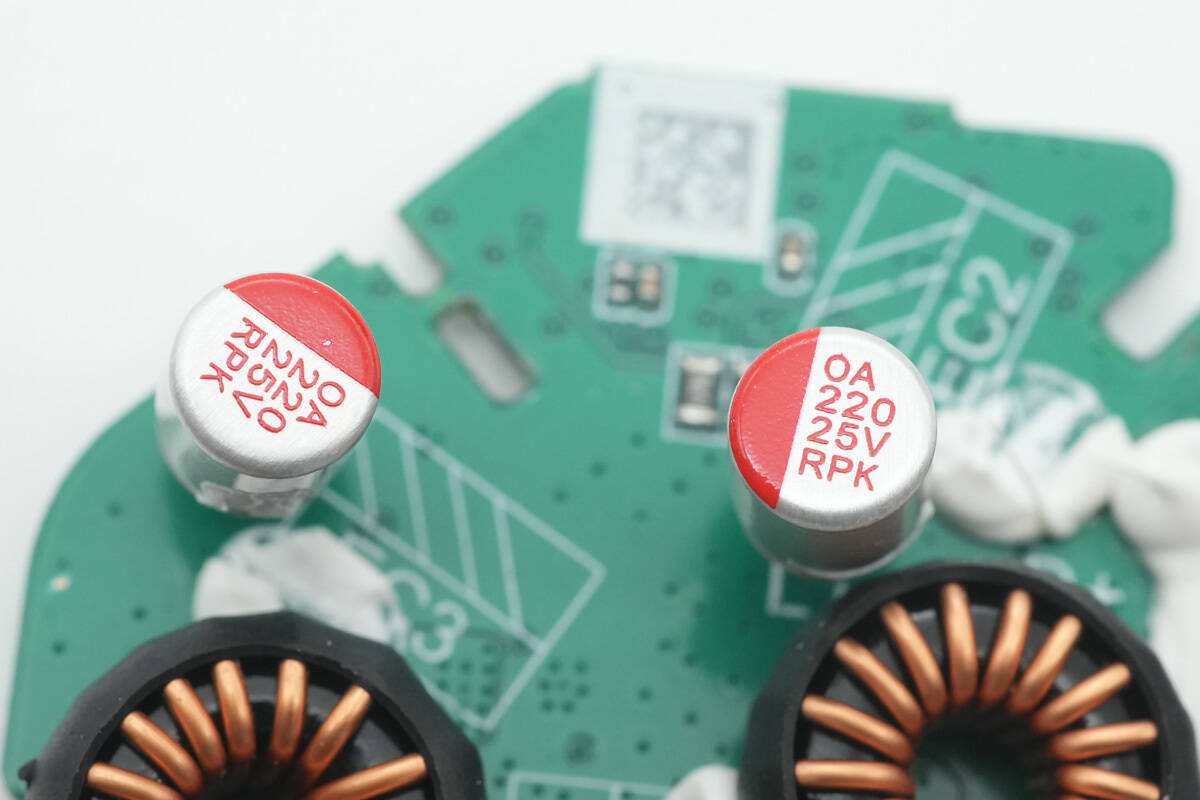
The two solid capacitors used for output filtering both have a specification of 25V 220μF.
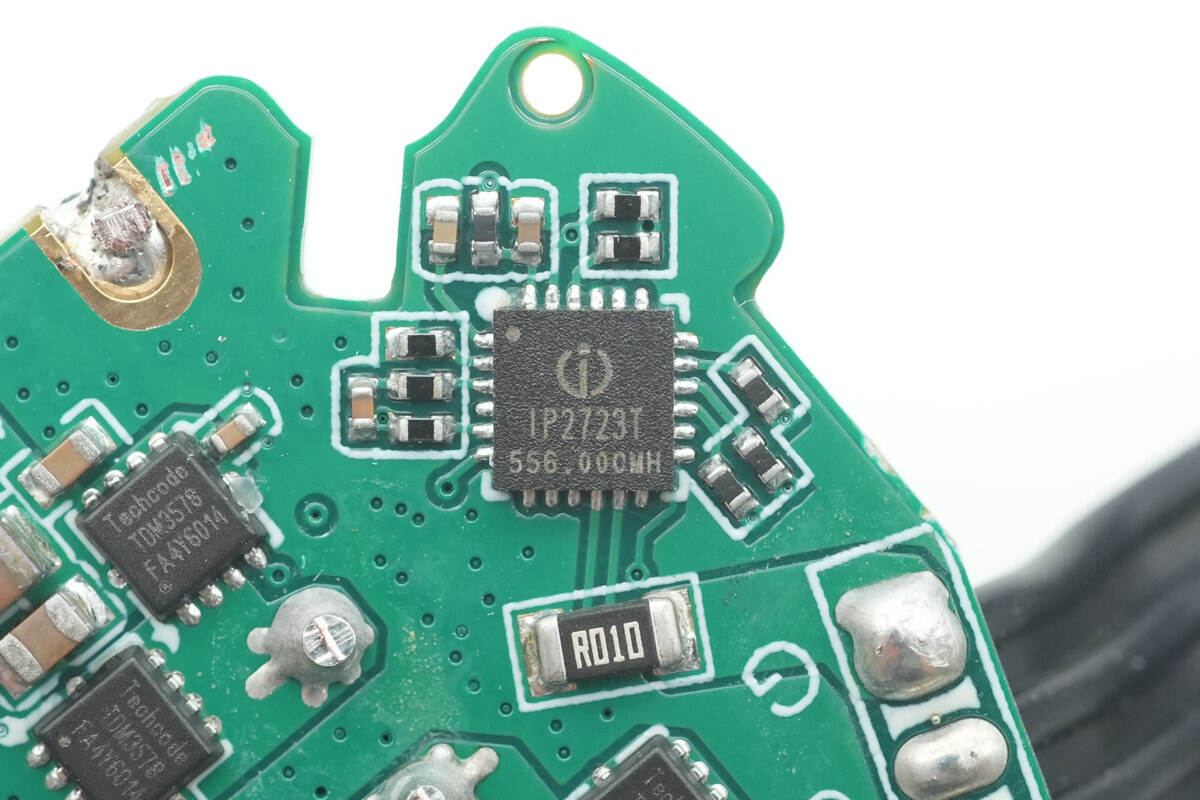
The protocol chip for the USB-C retractable cable is from Injoinic, with the model IP2723T. This chip has been certified by the USB-IF Association for PD3.0 PPS, with TID: 3135. It is an integrated protocol IC for fast charging protocols used in USB output ports. The chip supports multiple fast-charging protocols, including USB Type-C DF, PD2.0/3.0, PPS, HVDCPQC4, QC4+, QC3.0/2.0, FCP, SCP, AFC, MTKPE+2.0/1.1, Apple 2.4A, BC1.2, and Samsung 2.0A.
On the right side is the TVS protection diode for the USB-C female connector, which provides electrostatic protection.
The IP2723T provides a complete TYPE-C solution for adapters, car chargers, and other single-output applications. Additionally, it features high integration and rich functionality, requiring minimal external components during implementation, which effectively reduces the overall solution size and lowers BOM costs.

Here is the information about Injoinic IP2723T.

The VBUS MOSFET is from ADAMANT, with the model number AD30N54D3. It is an NMOS transistor, rated for 30V voltage tolerance, with a conduction resistance of 5.7mΩ. The MOSFET is packaged in a PPAK 3*3 form factor.
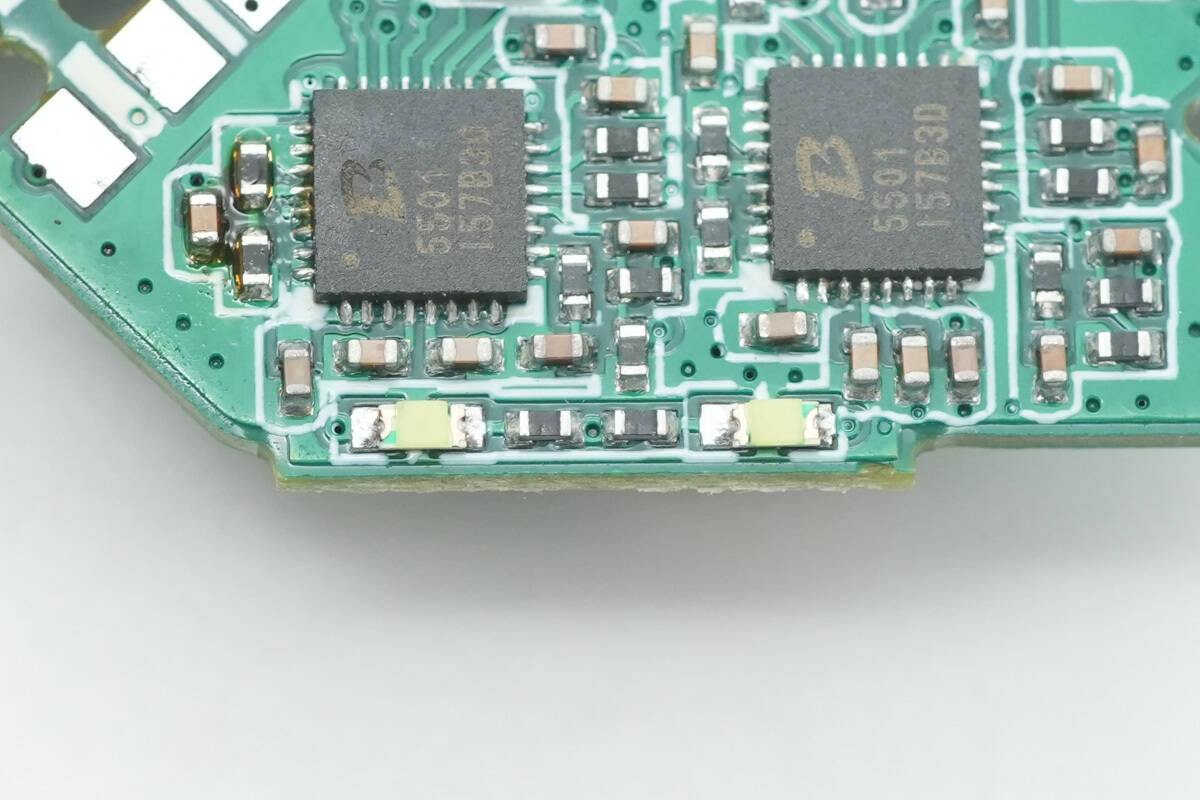
Close-up of the LED indicator lights.
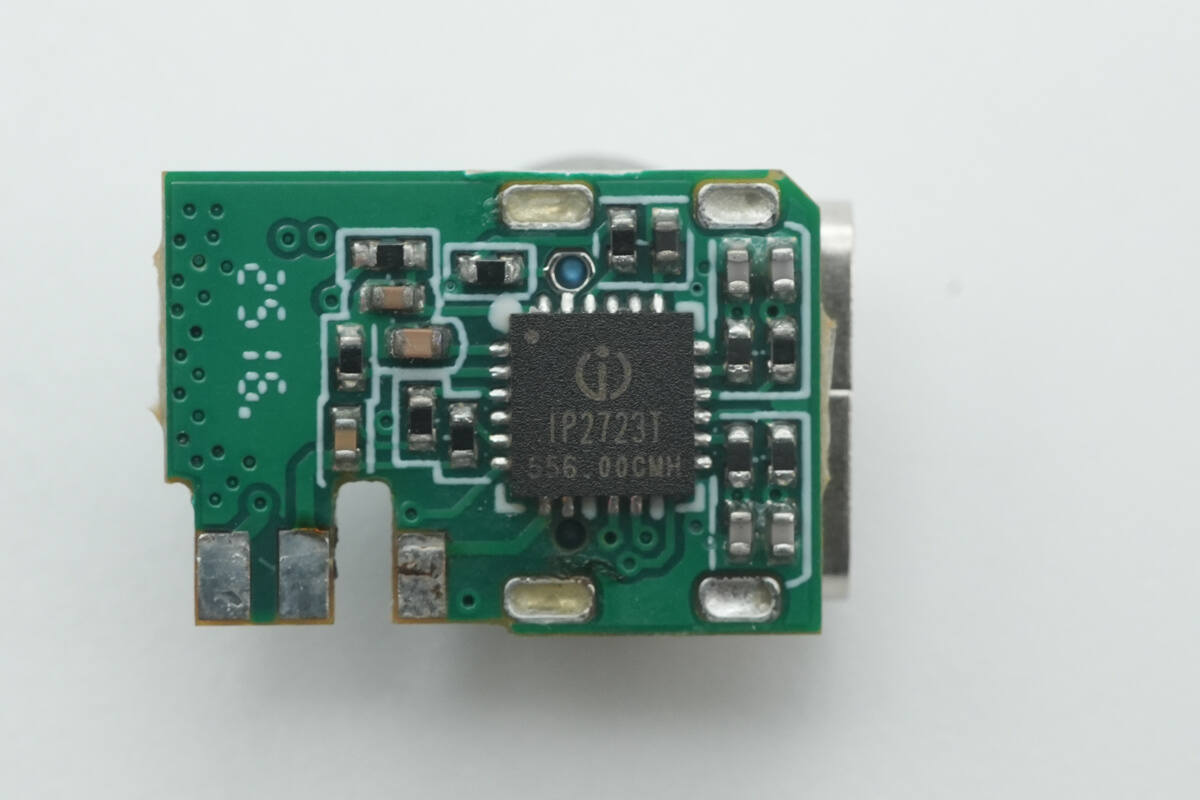
The protocol chip for the USB-C port also uses the Injoinic IP2723T model.
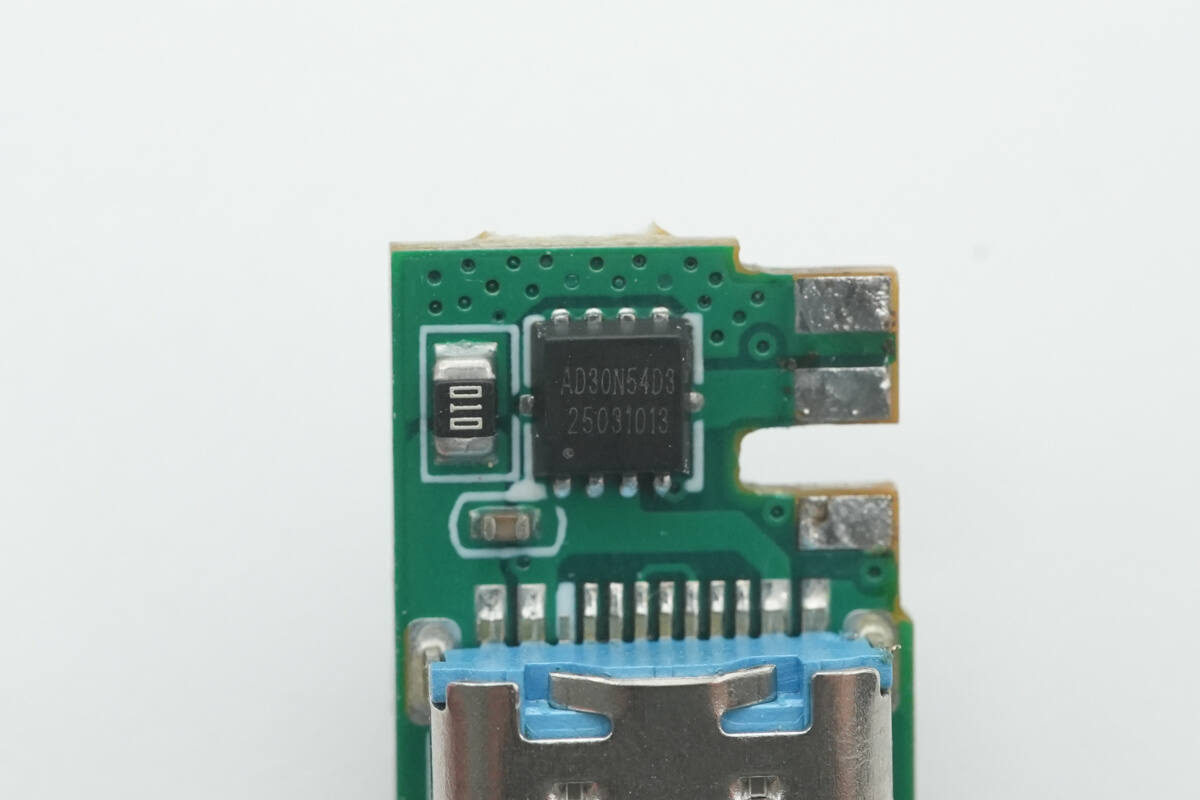
The output VBUS MOSFET also uses the ADAMANT AD30N54D3.
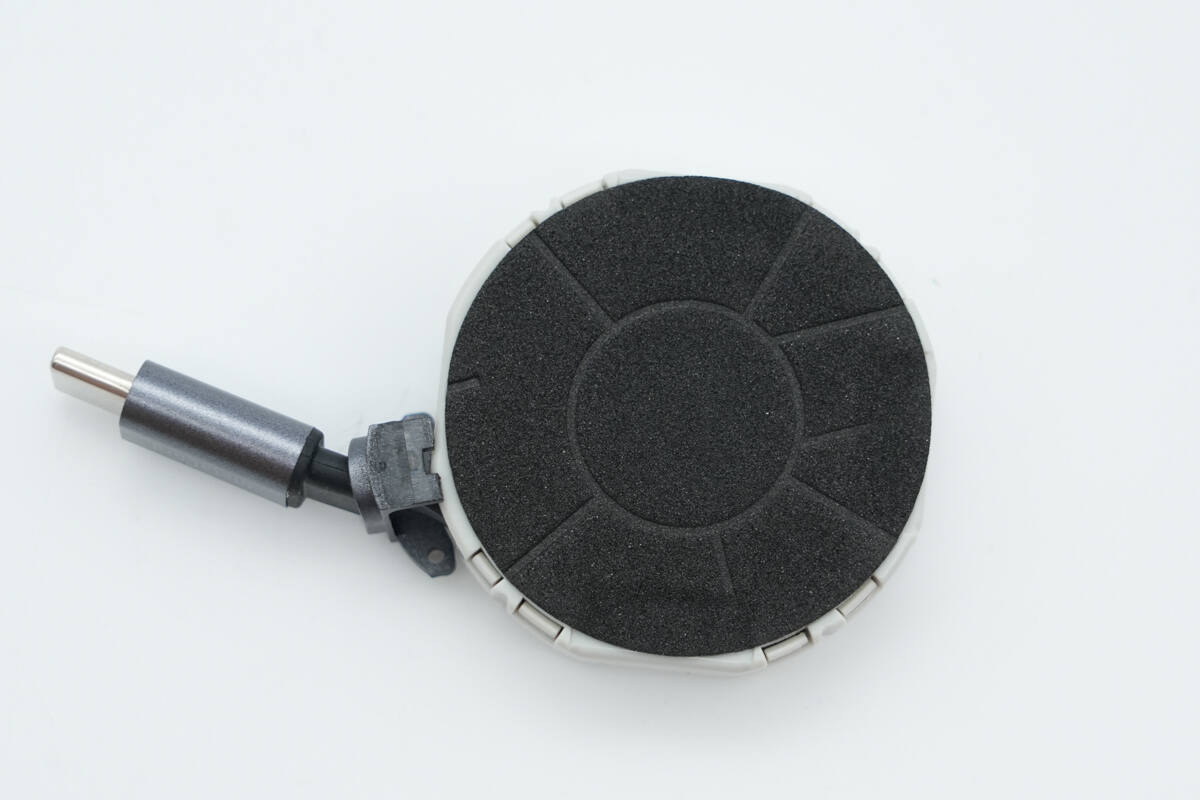
The other side of the retractable cable module has a cushioning protective pad attached.
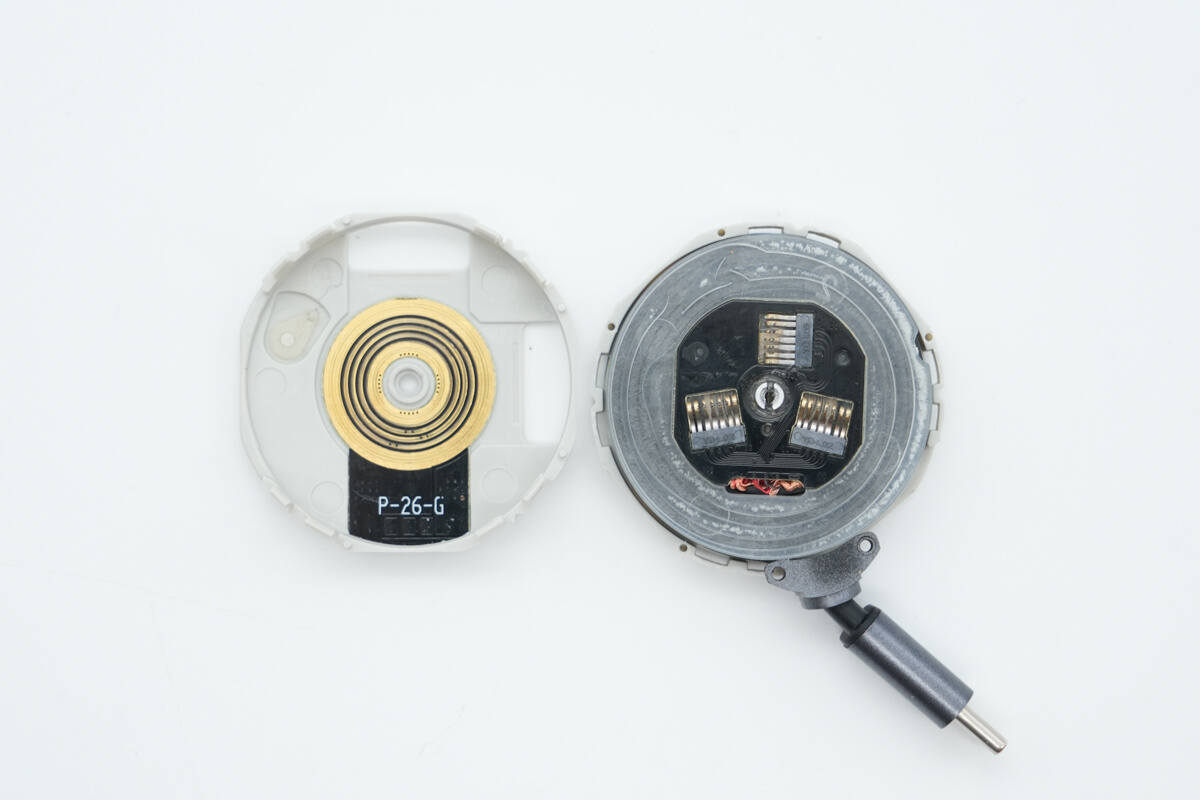
A view of the disassembled retractable cable module.
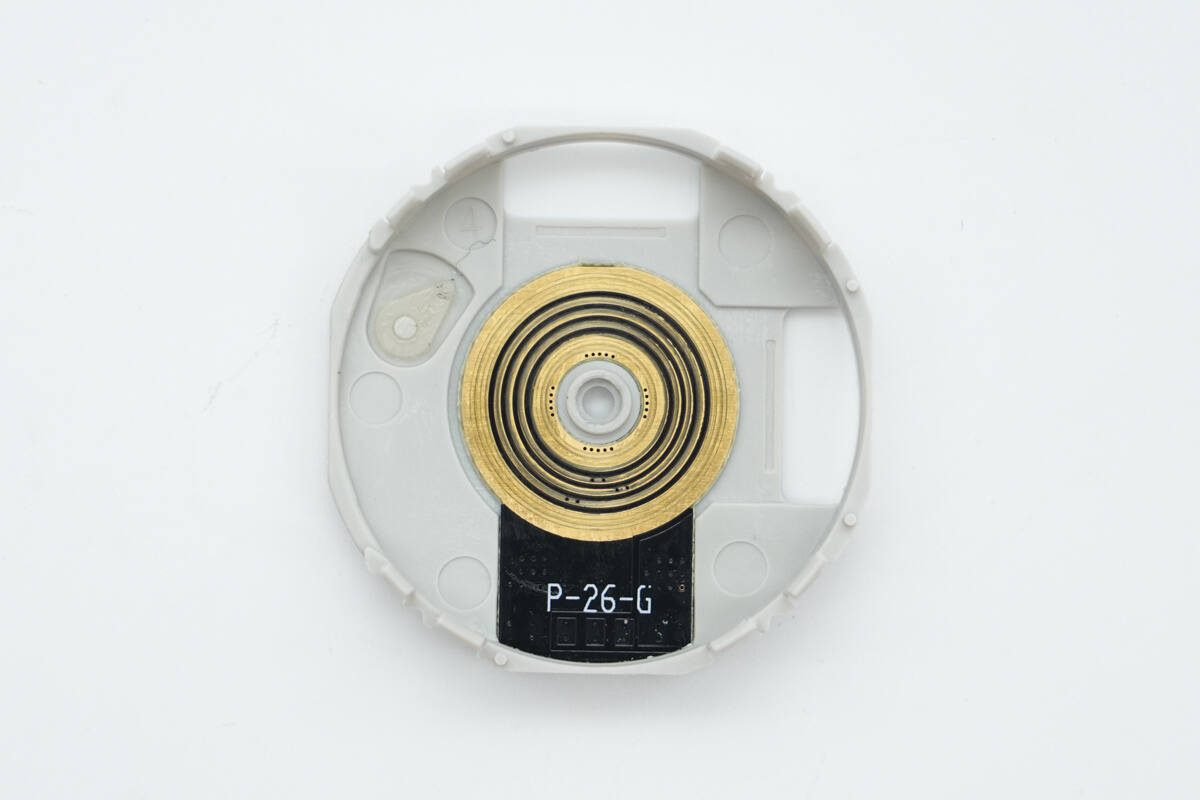
Close-up of the PCB slip ring.
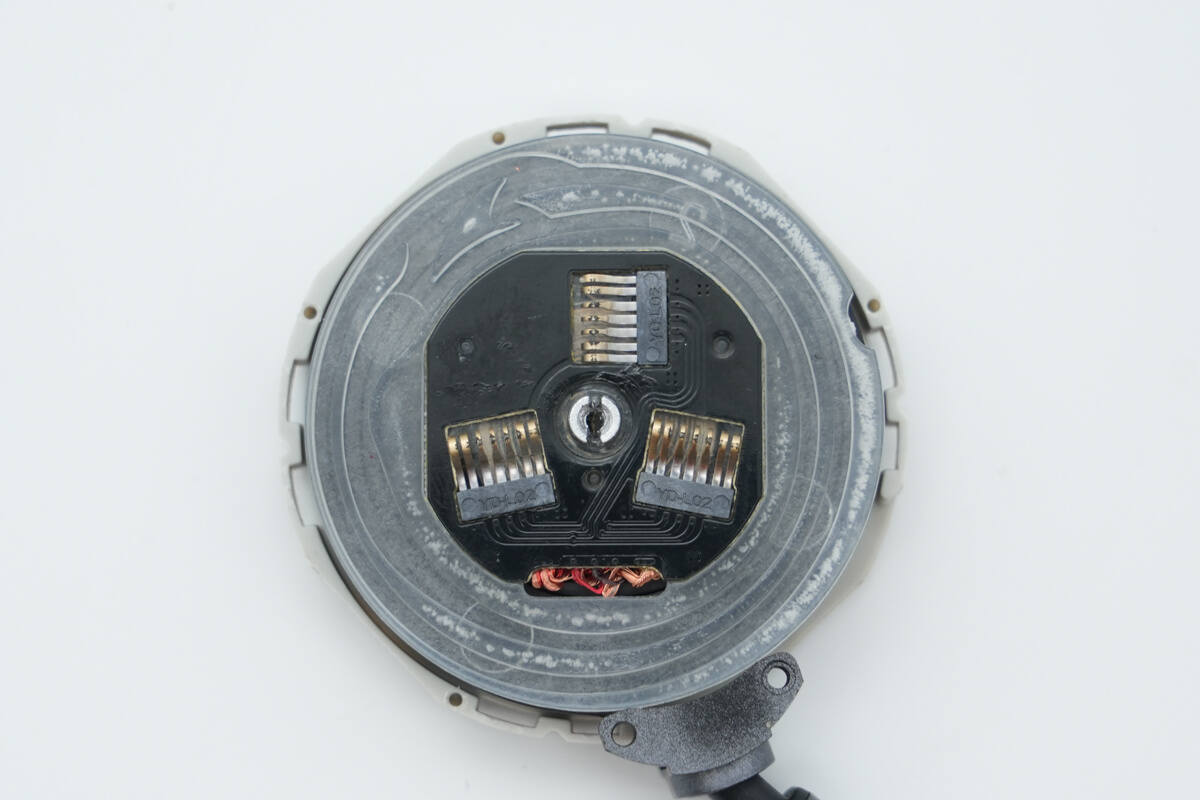
The spool is equipped with three brushes to increase current-carrying capacity.
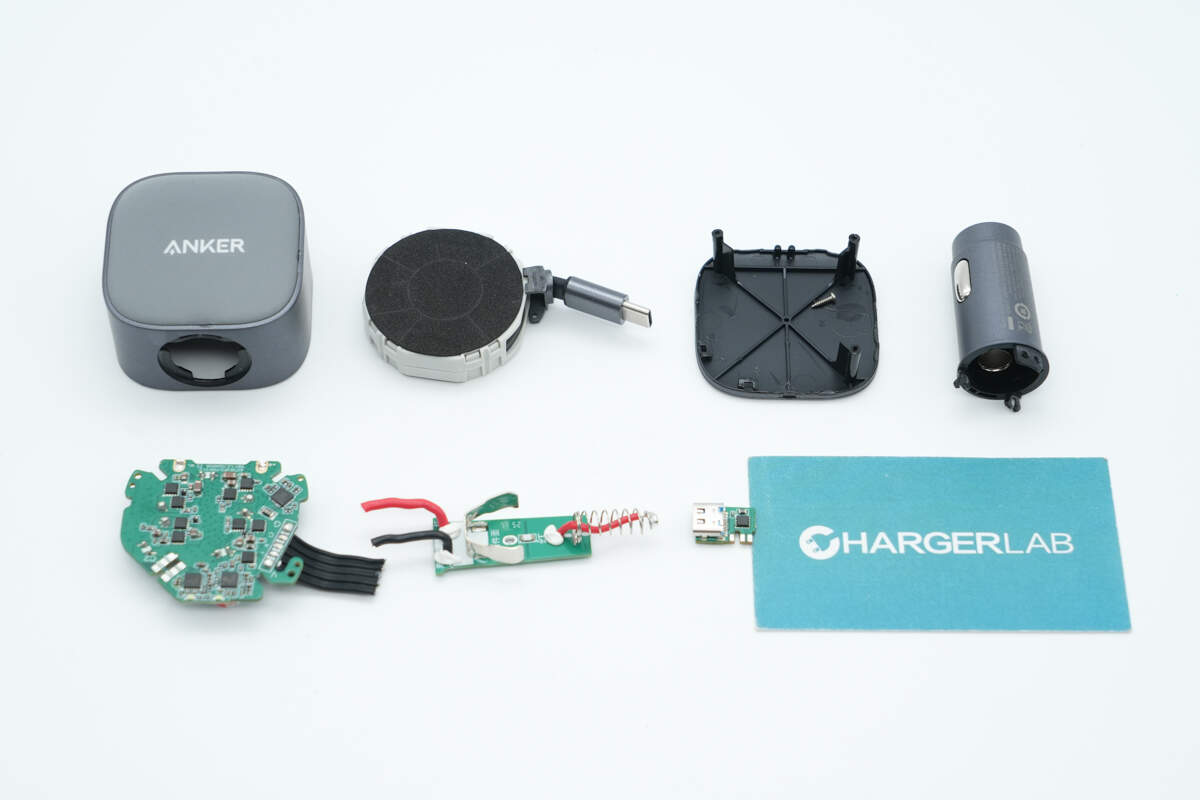
Well, those are all components of the Anker Nano 75W Car Charger.
Summary of ChargerLAB
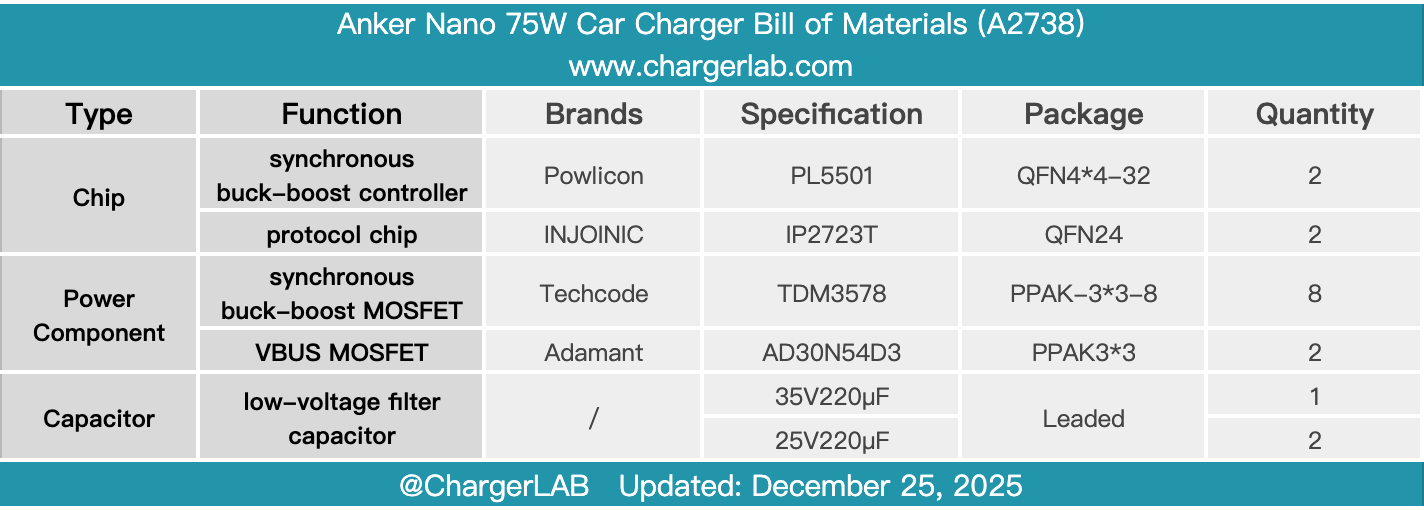
Here is the component list of the Anker Nano 75W Car Charger for your convenience.
It is equipped with a USB-C port and a USB-C retractable cable, supporting independent dual outputs of 45W and 30W, meeting the charging needs of both the driver and passenger simultaneously. The retractable cable module features manganese steel bearings, which support over 10,000 pull-retract cycles without stuttering. The cable is durable, capable of withstanding more than 12,000 bends without cracking, ensuring a long lifespan and smooth retracting experience. With a cable length of 75cm, it is more than sufficient for use within the car.
After taking it apart, we found that it uses two independent buck-boost circuits, both utilizing the Powlicon PL5501 synchronous buck-boost controller paired with Techcode MOSFETs. Both protocol chips are the Injoinic IP2723T. The PCBA module is secured with screws, with capacitors and inductors reinforced with glue. The retractable cable module is equipped with a cushioning protective pad.
Related Articles:
1. Teardown of DJI Power 1000 Mini Power Station (DYM1000M)
2. Teardown of Honor Choice LCHSE Clip-On Earphone 2 Pro
3. Teardown of Moore Threads MTT S70 Graphics Card