
Introduction
With the NVIDIA DGX Spark GB10 bringing 200B-parameter local AI model execution to personal desktops, the demand for 240W USB-C power has never been higher. The bundled Delta PD3.1 unit is rock-solid, but there’s a growing market opportunity for third-party alternatives that balance high-end performance, broad compatibility, and competitive pricing.
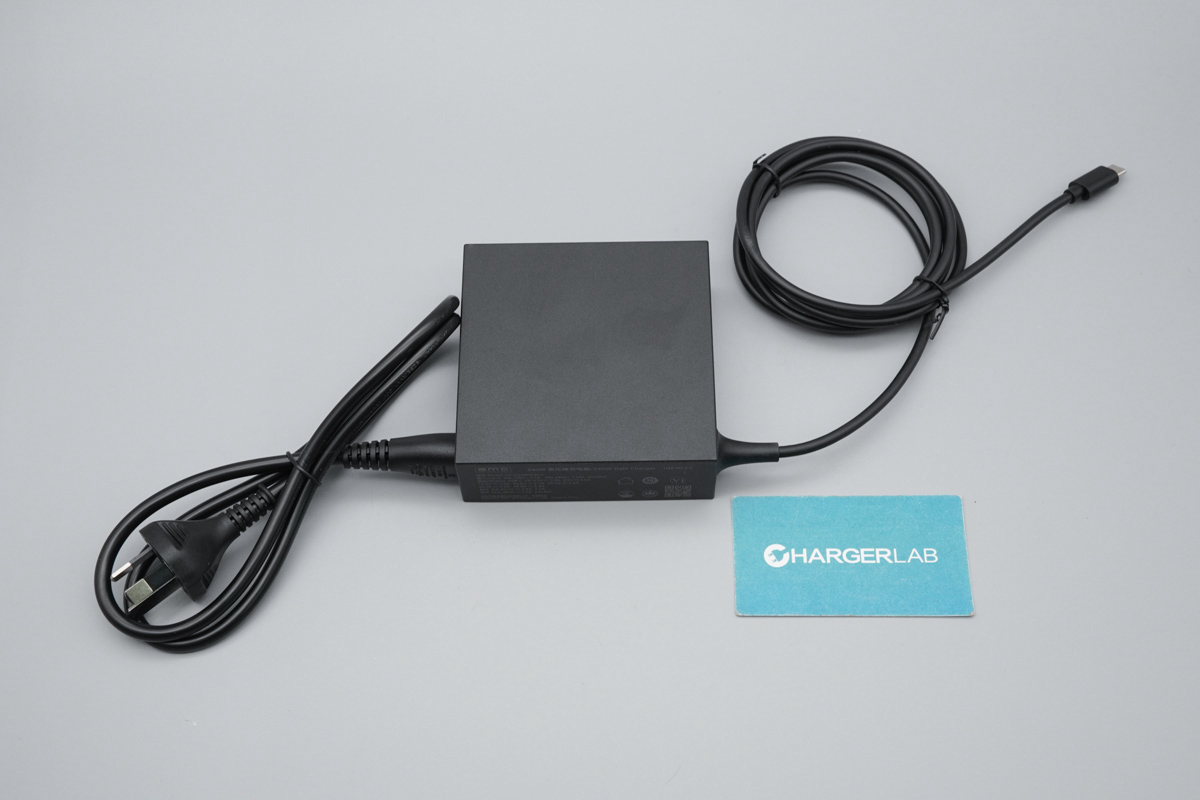
AMC's new 240W GaN adapter is a game-changer, being one of the first to support the PD 3.2 EPR protocol with specialized optimizations for the DGX Spark GB10.
By combining GaN technology with an efficient AHB topology, this adapter delivers exceptional power density in a compact form factor. Its fully digital control architecture enables a staggering 96% conversion efficiency, easily meeting Level VI efficiency requirements. Even under 240W continuous load at room temperature, it keeps its cool under 60°C, making it ideal for non-stop, 24/7 AI compute tasks. It's the perfect companion for power-hungry rigs like the Framework Laptop 16, along with high-performance laptops from Acer, Dell, and Gigabyte.
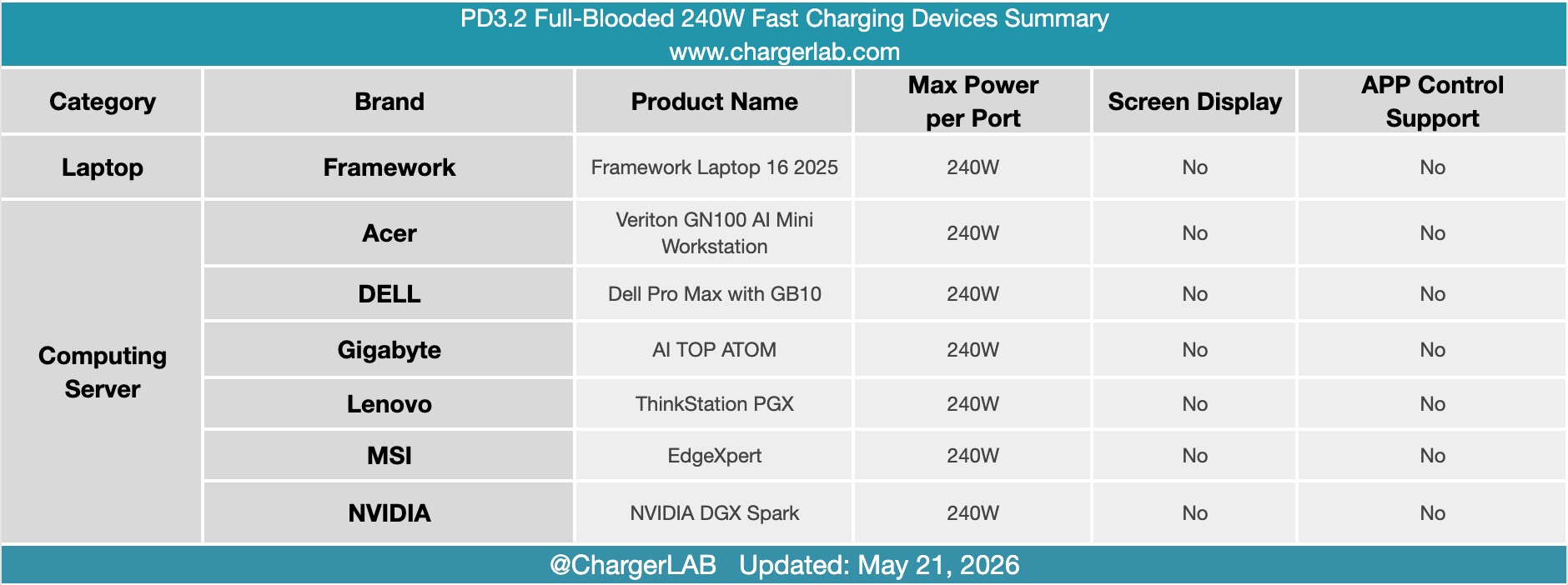
We’re putting the Yajingyuan 240W GaN adapter through the wringer. Our testing protocol spans everything from basic PDO profile checks and handshake stability to real-world stress testing. And we’ll be running the DGX Spark at peak AI-training loads and testing cross-compatibility with a range of major brand devices. Our goal is to provide a clear, objective guide for AI power users looking for reliable, high-performance power solutions that actually live up to the spec sheet.
Protocol Testing
Knowing your adapter's protocol support is the key to perfect device pairing and unlocking an optimized, high-speed charging experience.
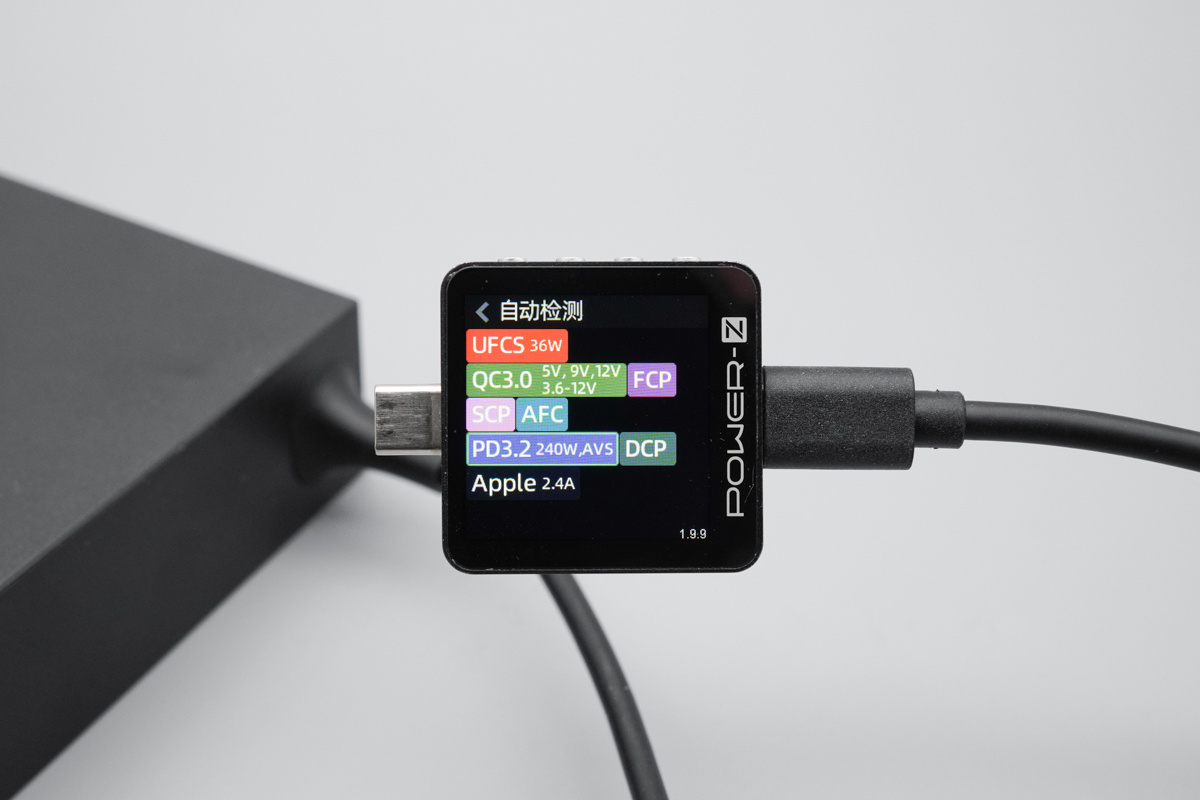
ChargerLAB POWER-Z KM003C shows that the Type-C port supports UFCS, QC3.0, FCP, SCP, AFC, PD3.2, AVS, DCP and Apple 2.4A.
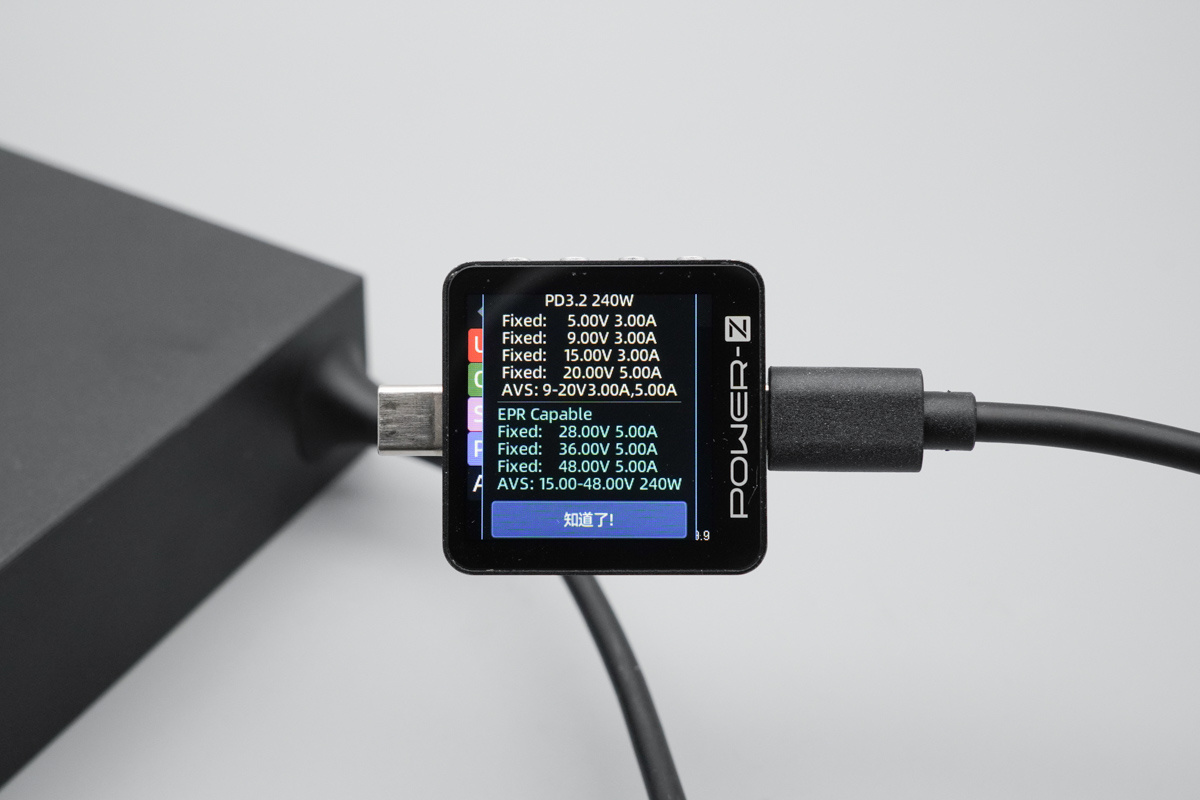
And it also supports four fixed PDOs of 5V3A, 9V3A, 15V3A, 20V5A, 28V5A, 36V5A and 48V5A, and features AVS subset: 9-20V 3A/5A and 15-48V 240W .
Charging Compatibility Testing
We've stress-tested 49 devices across five key categories—smartphones, tablets, laptops, gaming consoles, and servers—to deliver a comprehensive look at the charger's real-world compatibility.
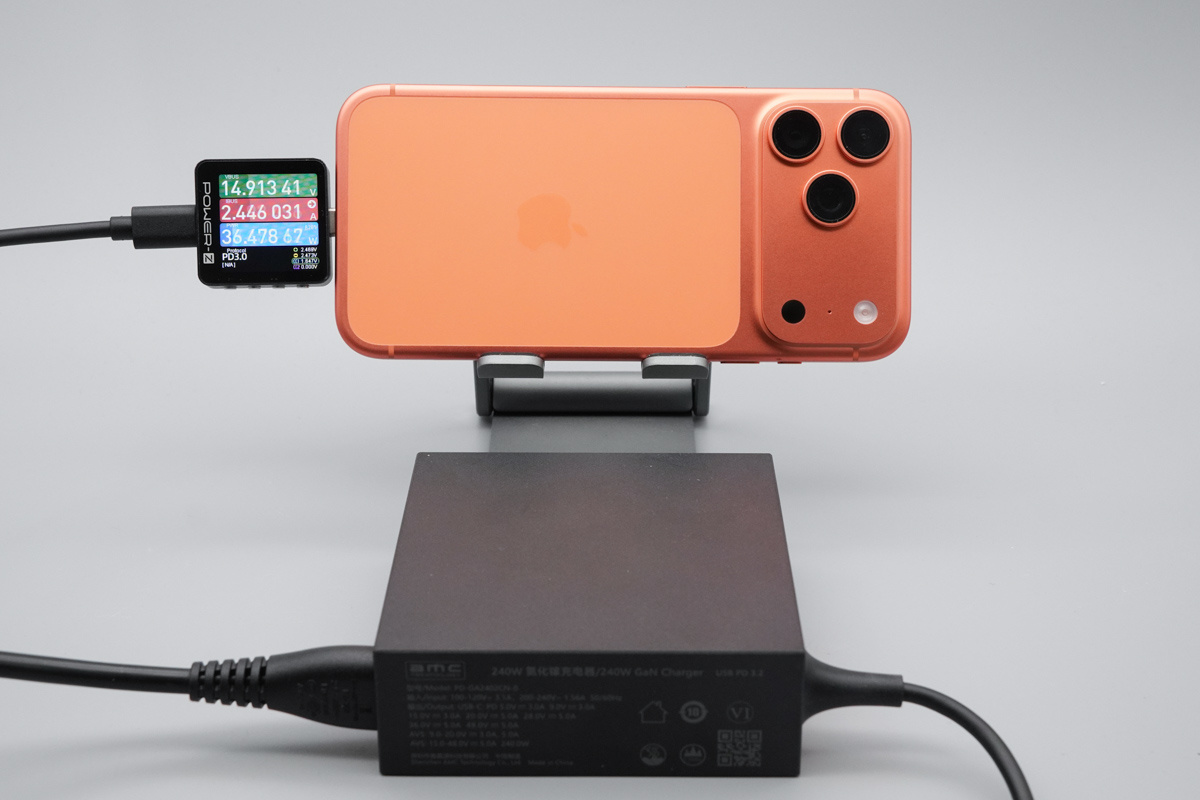
Testing the iPhone 17 Pro Max with the KM003C reveals a peak charging performance of 36.48W (14.91V/2.45A).
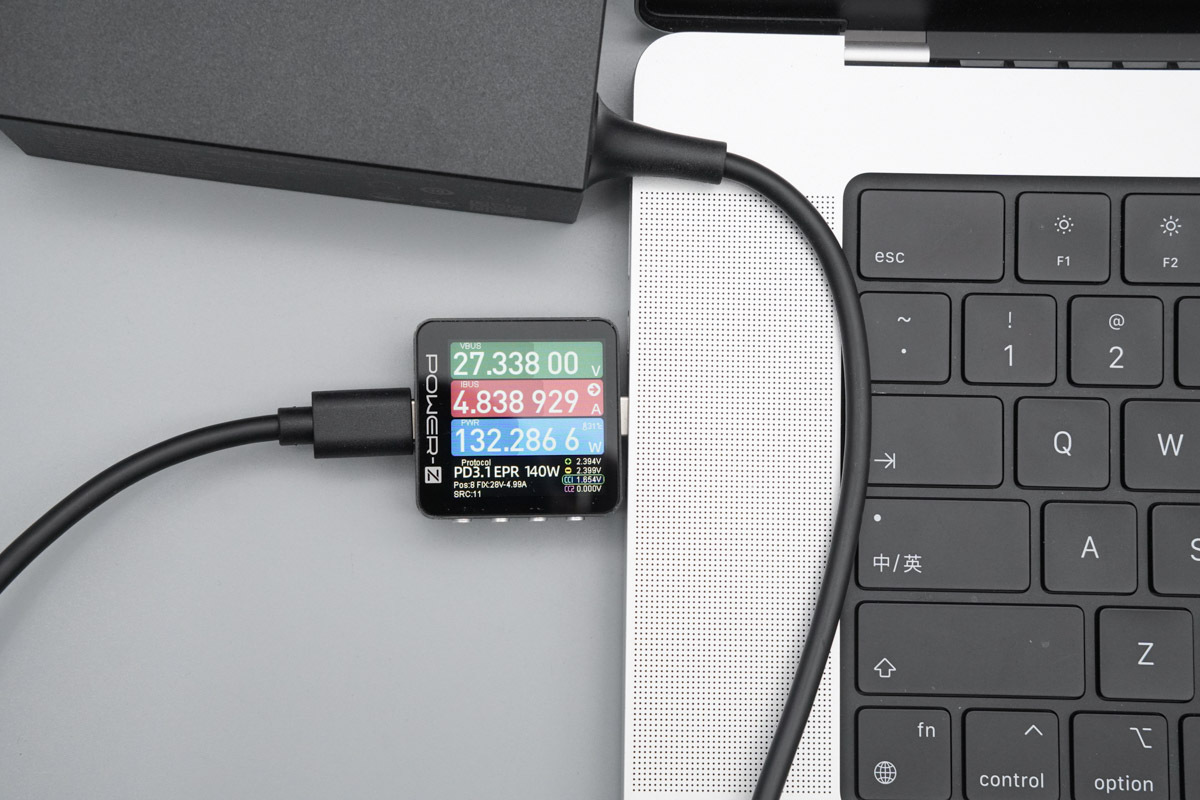
Testing the MacBook Pro 16 M4 Pro with the KM003C reveals a peak charging performance of 132.29W (27.34V/4.84A).
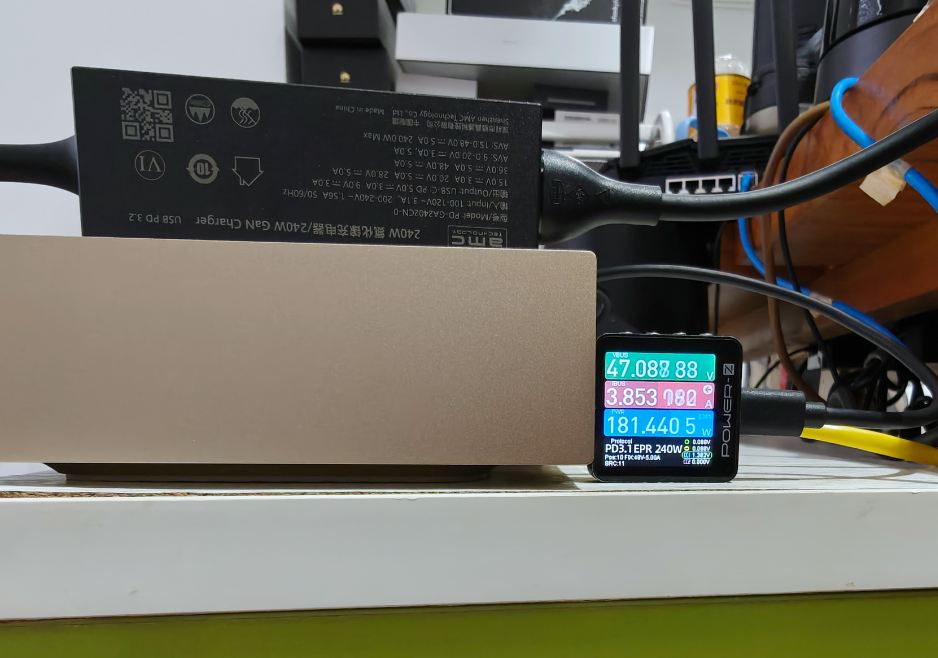
Testing the NVIDIA DGX Spark with the KM003C reveals a peak charging performance of 181.44W (47.09V/3.85A).
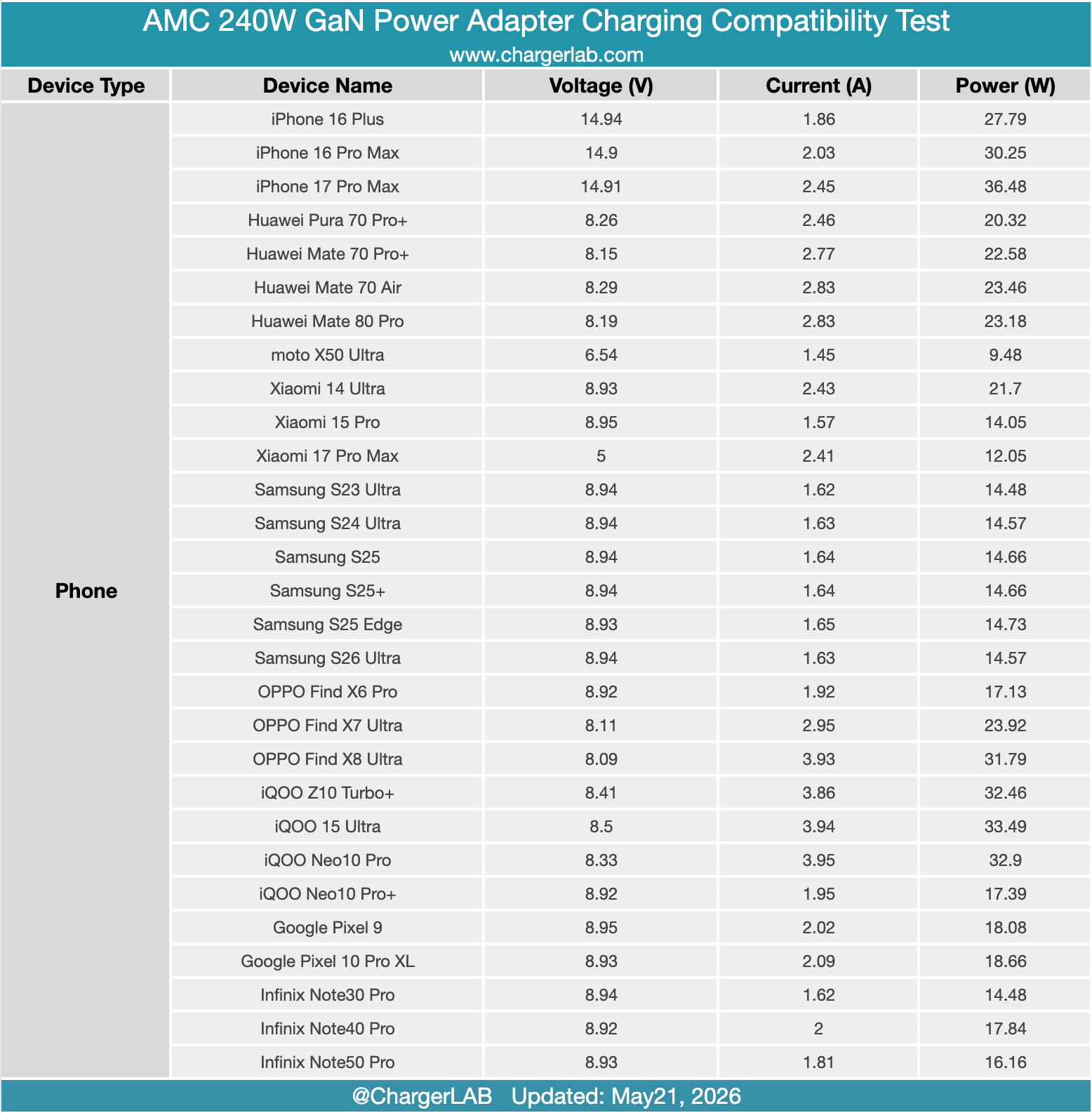
Our extensive compatibility test confirms that it plays well with a wide range of devices, showing stability with zero charging drops across 49 test subjects. Apple’s latest lineup is a standout, as all three models successfully hit the 15V profile and reached impressive peak speeds up to 36.48W on the iPhone 17 Pro Max. The Android field is equally impressive, led by iQOO’s performance models that consistently broke the 32W barrier, while OPPO’s Find series delivered a competitive power range between 23W and 32W. Huawei’s Mate series kept things steady in the 20-23W band, while Samsung, Xiaomi, and Motorola devices displayed varied, manufacturer-specific charging signatures that reflect their unique power management strategies.
In short, whether you are using a high-wattage gaming phone or a power-efficient flagship, this adapter maintains a seamless and reliable connection across every major brand.
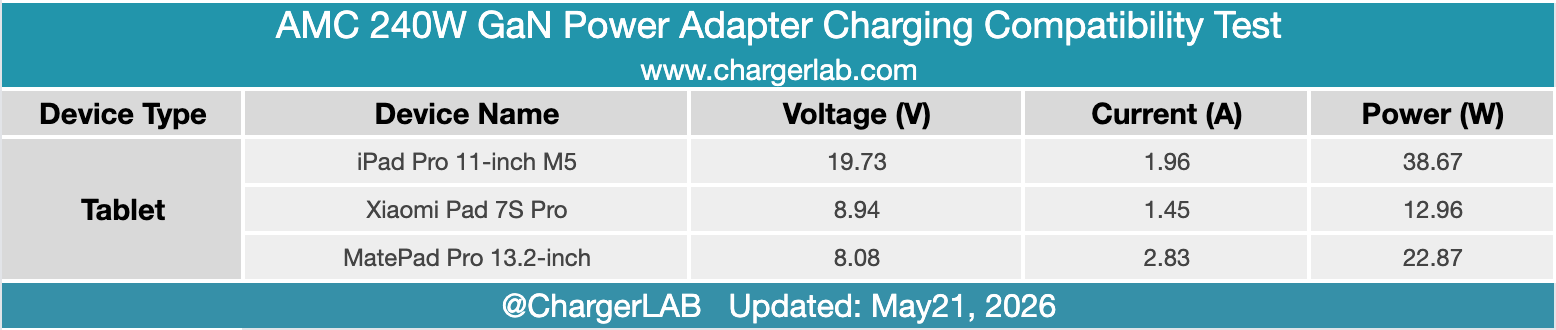
Our tablet compatibility tests reveal how it balances power delivery across different flagship models. The iPad Pro 11-inch (M5) is a clear standout, triggering the 20V profile to pull an impressive 38.67W for high-speed charging. And the Huawei MatePad Pro 13.2-inch draws a solid 22.87W, and the Xiaomi Pad 7S Pro settles in at 12.96W.
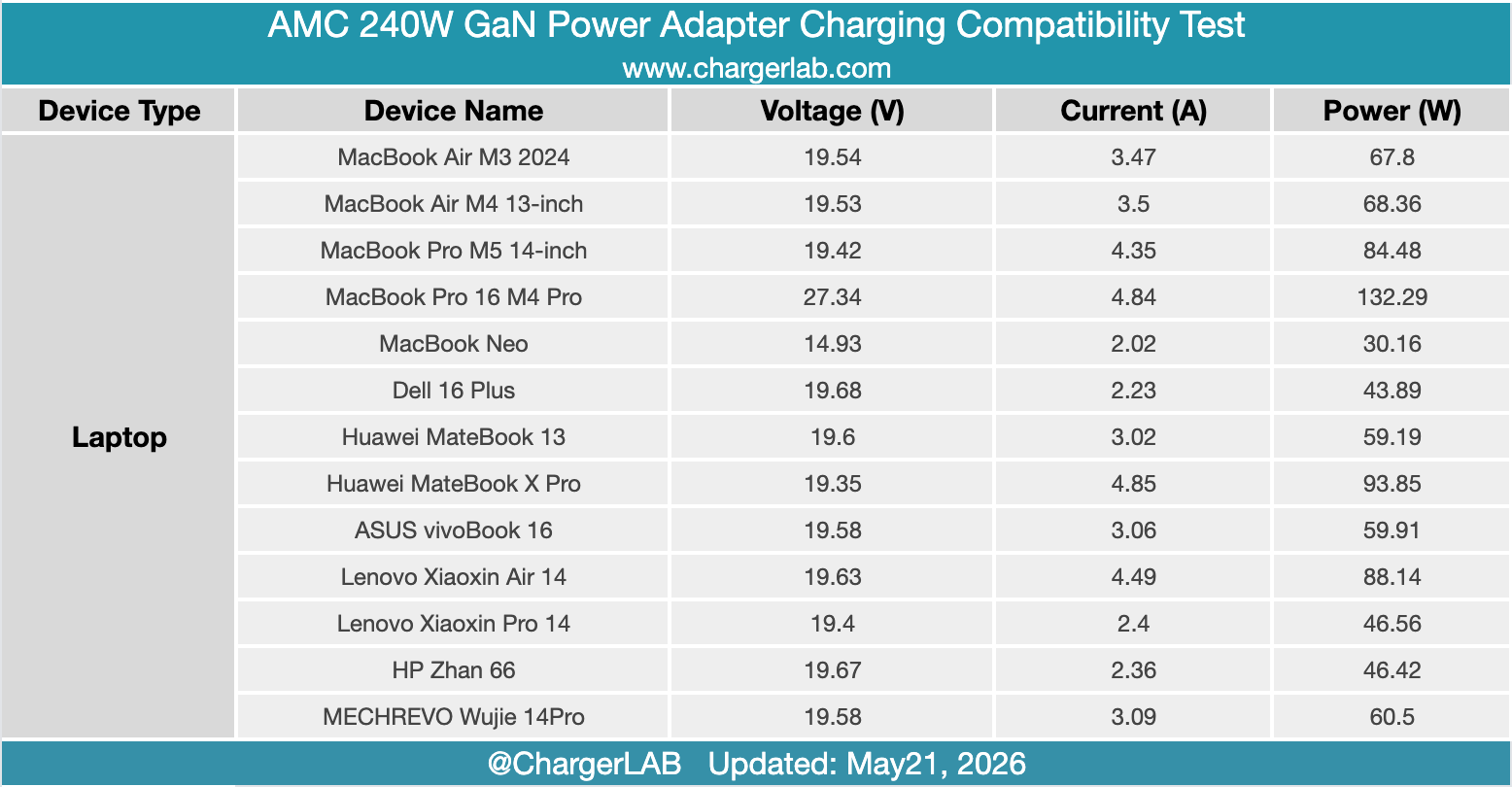
When it comes to laptops, it is a powerhouse, delivering top-tier performance across the entire spectrum of tested hardware. The MacBook Pro 16 (M4 Pro) leads the pack, taking full advantage of the 28V EPR protocol to pull a remarkable 132.29W. And the Huawei MateBook X Pro and Lenovo Xiaoxin Air 14 hitting solid marks of 93.85W and 88.14W, respectively. MacBook Air users can expect a steady 68W intake, while a wide range of standard Windows ultrabooks successfully triggered the 20V profile to pull between 43W and 60W.
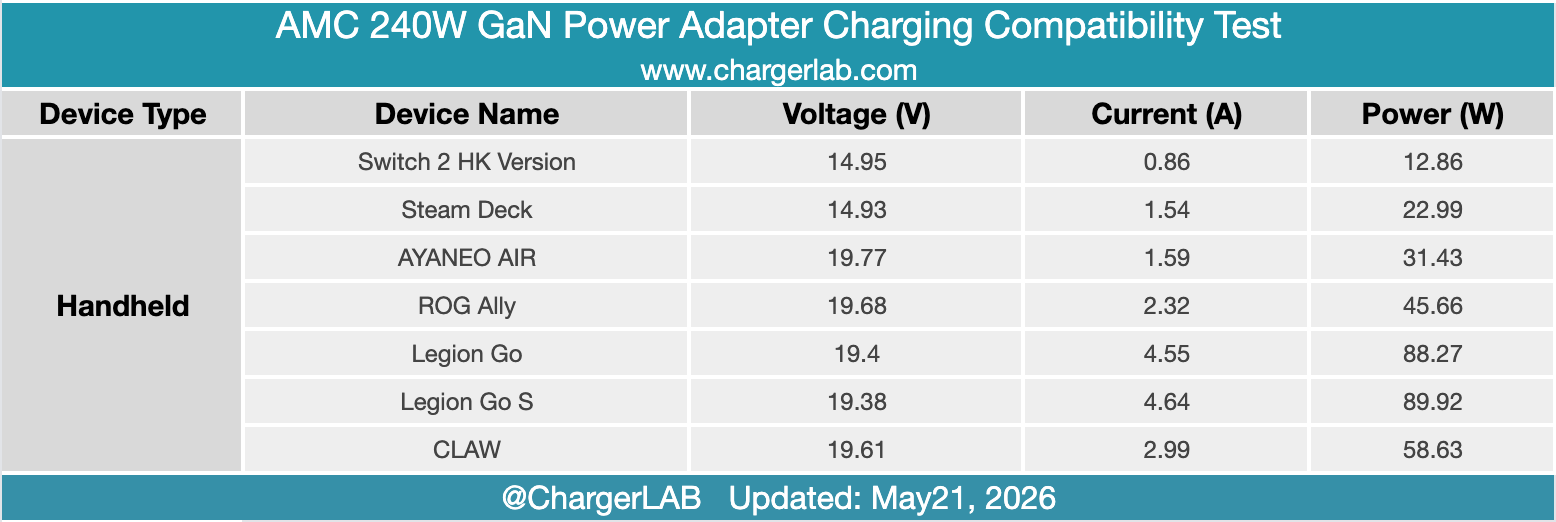
This adapter proves to be an excellent companion for gaming handhelds, Lenovo’s Legion Go S and Legion Go top our charts, pulling a robust 89.92W and 88.27W respectively via the 20V profile. Other handhelds like the MSI CLAW (58.63W), ROG Ally (45.66W), and AYANEO AIR (31.43W) also saw stable, optimized power intake throughout our testing. For consoles that favor the 15V standard, such as the Steam Deck and the Switch 2, it reliably initiated the correct protocol handshake without a hitch.

We pushed the adapter to its limits with the NVIDIA DGX Spark GB10, it successfully triggered the PD 3.2 EPR protocol, locking onto the 48V profile to deliver a steady 181.44W (47.09V/3.85A).
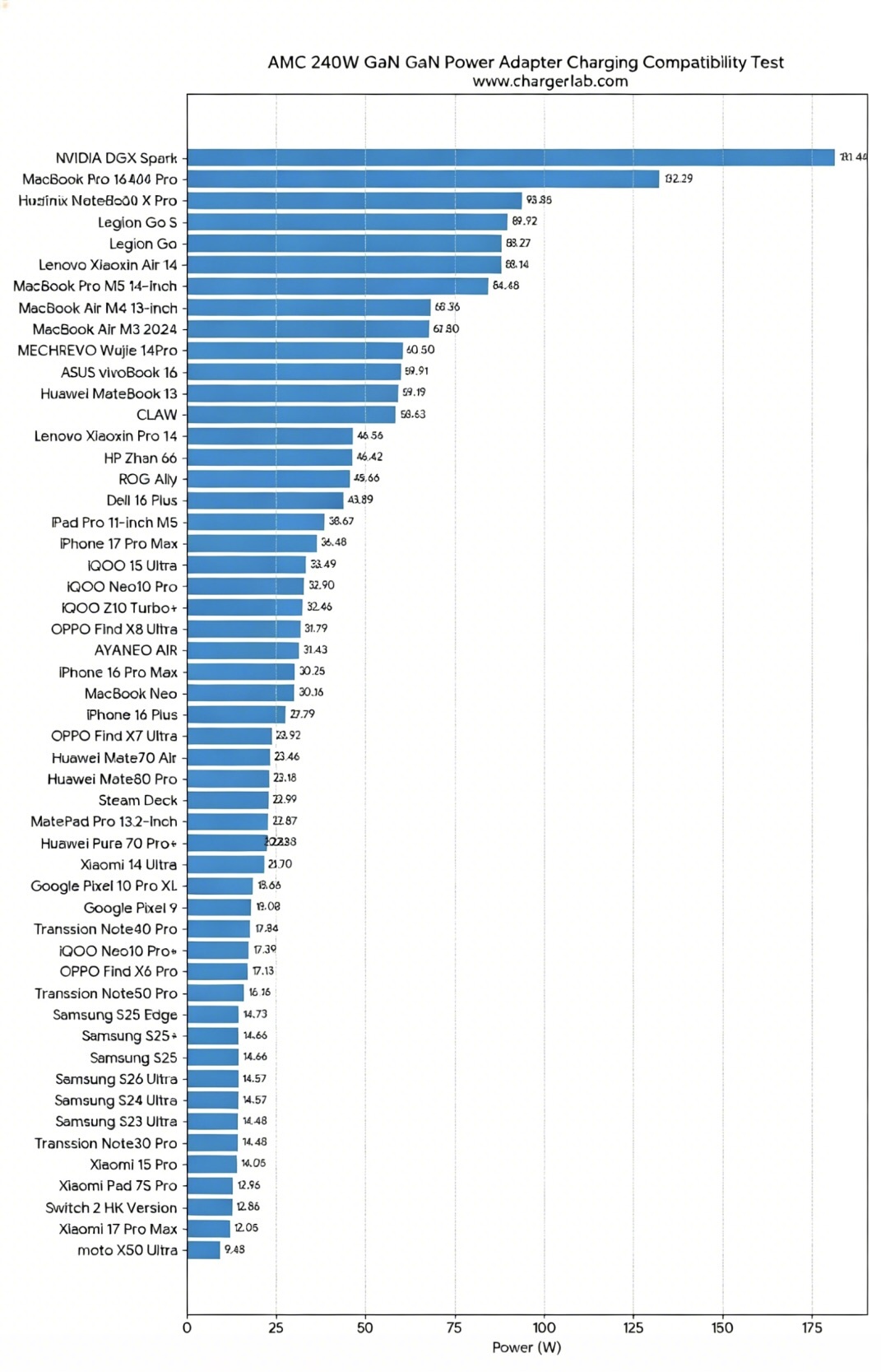
This 240W adapter, showing a massive power range that scales effortlessly from tiny handsets to heavy-duty AI hardware. In the laptop arena, the Huawei MateBook X Pro tops our tests at 93.85W, with Lenovo’s Air 14 and Legion Go S right behind at over 88W, while the MacBook Pro 14 (M5) holds its own at 84.48W. On the mobile front, we see a wide range of charging behaviors: the iPhone 17 Pro Max hits a fast 36.48W, and the iQOO 15 Ultra and OPPO Find X8 Ultra both top 31W, though some Android flagships like the Xiaomi 15 Pro and Samsung series favor a more conservative 12-15W range. The headline, however, is the NVIDIA DGX Spark GB10, which pulls a massive 181.44W on the 48V EPR rail. This dramatic power gap perfectly illustrates the adapter’s ability to serve as a single, versatile power solution for everything from your daily carry to high-end AI compute clusters.
Summary of ChargerLAB
The AMC 240W GaN adapter is a masterclass in versatility and protocol support. At the protocol level, it supports major industry standards, including PD 3.2, UFCS, and QC 3.0, with PDO profiles spanning seven fixed voltage tiers (5V to 48V) and AVS capabilities.
Our stress test across 49 devices—ranging from everyday phones to heavy-duty AI servers—was flawless, not a single handshake failure or drop occurred. The standout performer was the NVIDIA DGX Spark GB10, which triggered the 48V EPR profile and pulled a solid 181.44W, proving the adapter is ready for pro-grade AI tasks. Meanwhile, it easily handled laptops and consoles with nearly 94W of power, while scaling down dynamically for mobile devices.
In short, this is an incredibly reliable, one-stop power solution for users who need consistent energy for everything from a smartphone to an AI supercomputer.
Related Articles:
1. AMC latest 90W GaN charger can juice your MacBook Pro and iPhone at the same time
2. ChargerLAB POWER-Z Tests: AMC Technology PD3.2 240W GaN Charger
3. Teardown of Apple 140W USB-C Power Adapter (A3607)