
Introduction
This issue presents a teardown of the thinkplus 125W FLUXO power bank. As a new member of FLUXO, this product is smaller and lighter than previous models. It is equipped with two USB-C ports and one USB-A port, supports up to 45W input and a maximum output of 125W, and is compatible with multiple fast-charging protocols, meeting the fast-charging needs of thin-and-light laptops, smartphones, tablets, and other devices.
It also features digital hybrid charging technology with support for simultaneous charge and discharge, allowing the original power adapter to function as a multi-port charger to power the power bank while charging laptops, smartphones, and other devices at the same time. The unit is equipped with a digital display that shows remaining battery capacity as well as input and output power. Below, we will take a closer look at this product.
Product Appearance
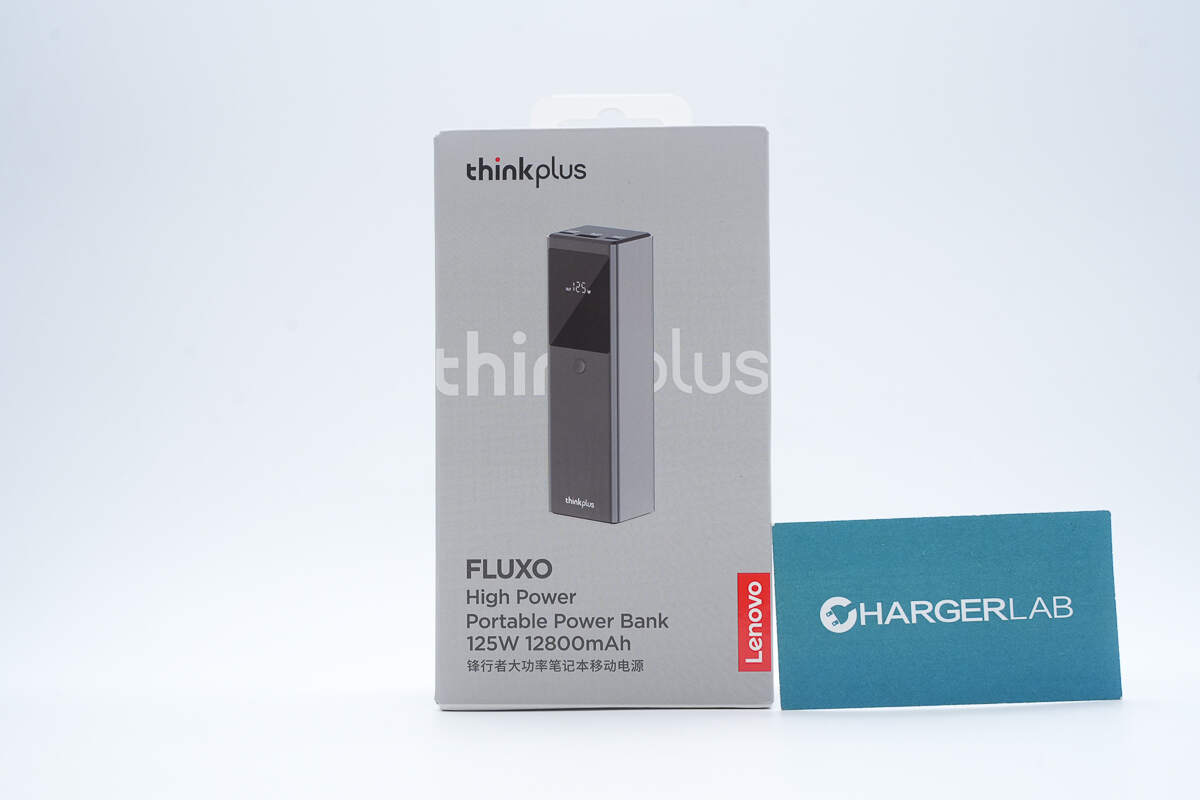
The front of the packaging box features the Lenovo and thinkplus logos, along with an image of the power bank and the product name.
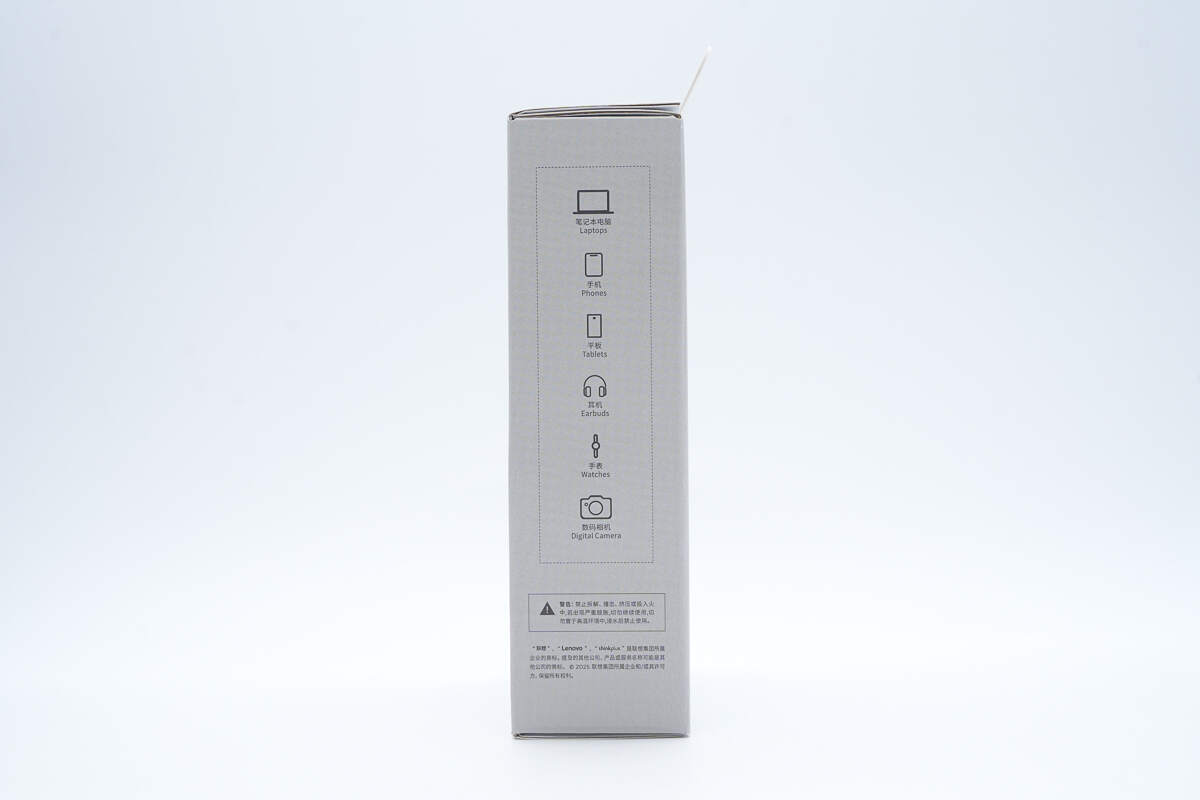
The side of the packaging is printed with icons indicating compatible devices, as well as safety and usage notes.
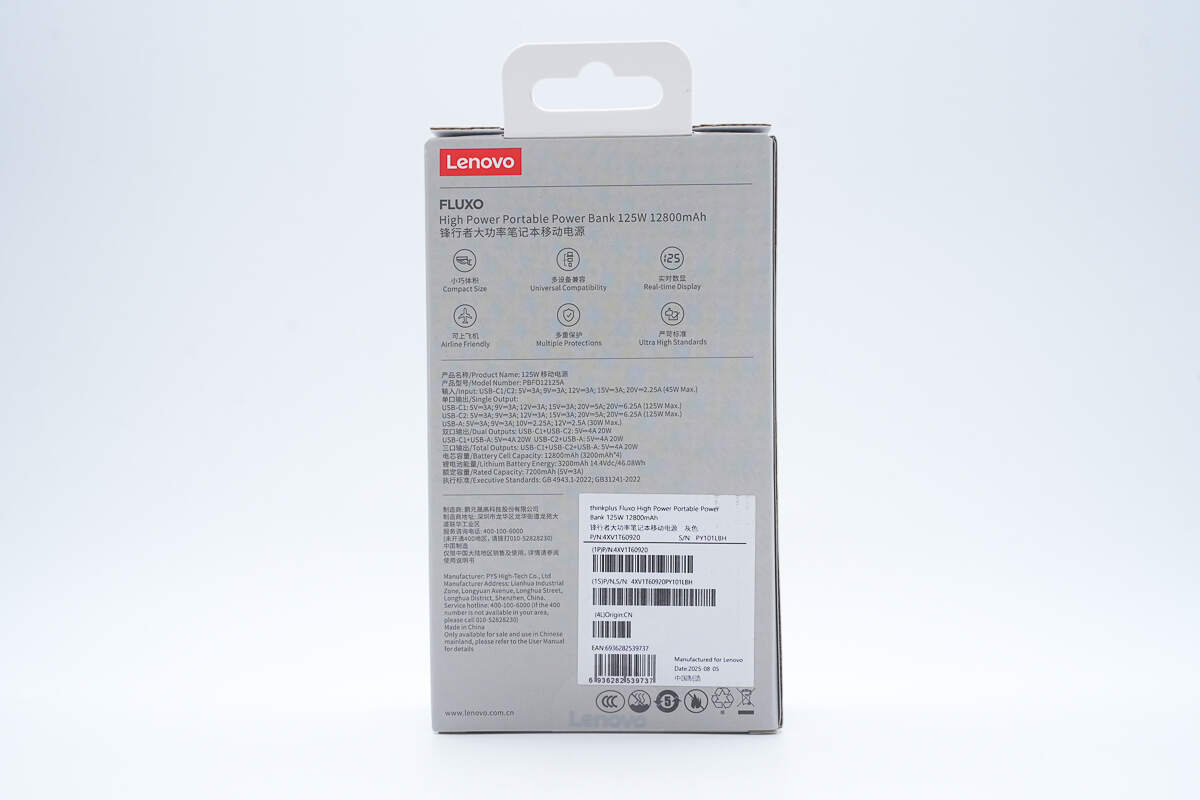
The back of the packaging lists the key selling points, specifications, and manufacturer information.
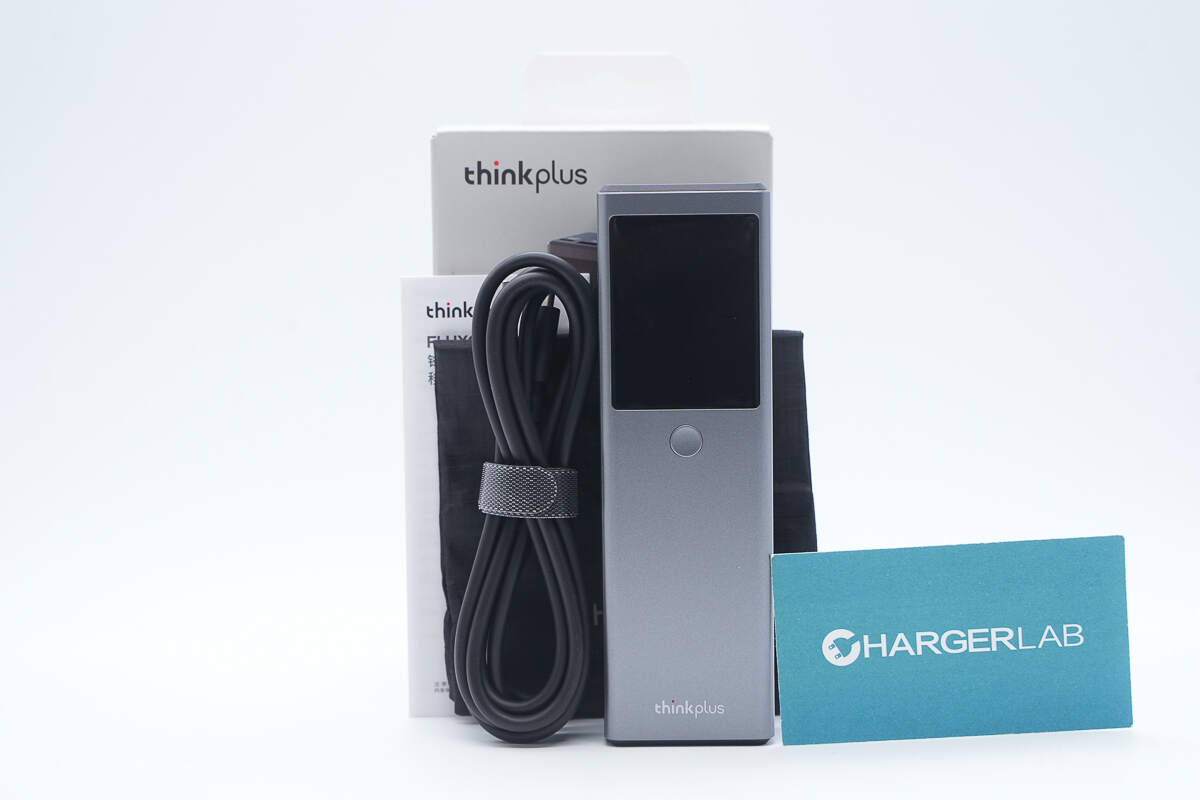
The package includes the power bank, a charging cable, a carrying pouch, and a user manual.
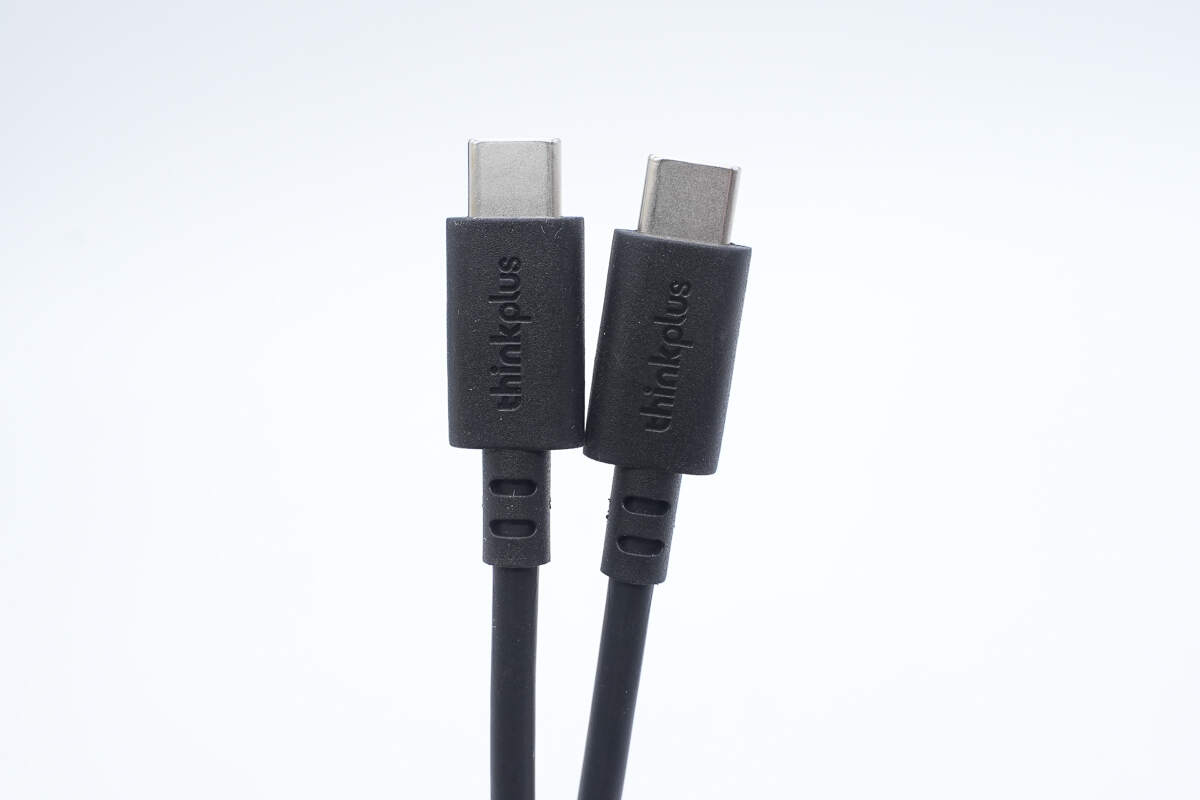
The included cable is a dual USB-C type.
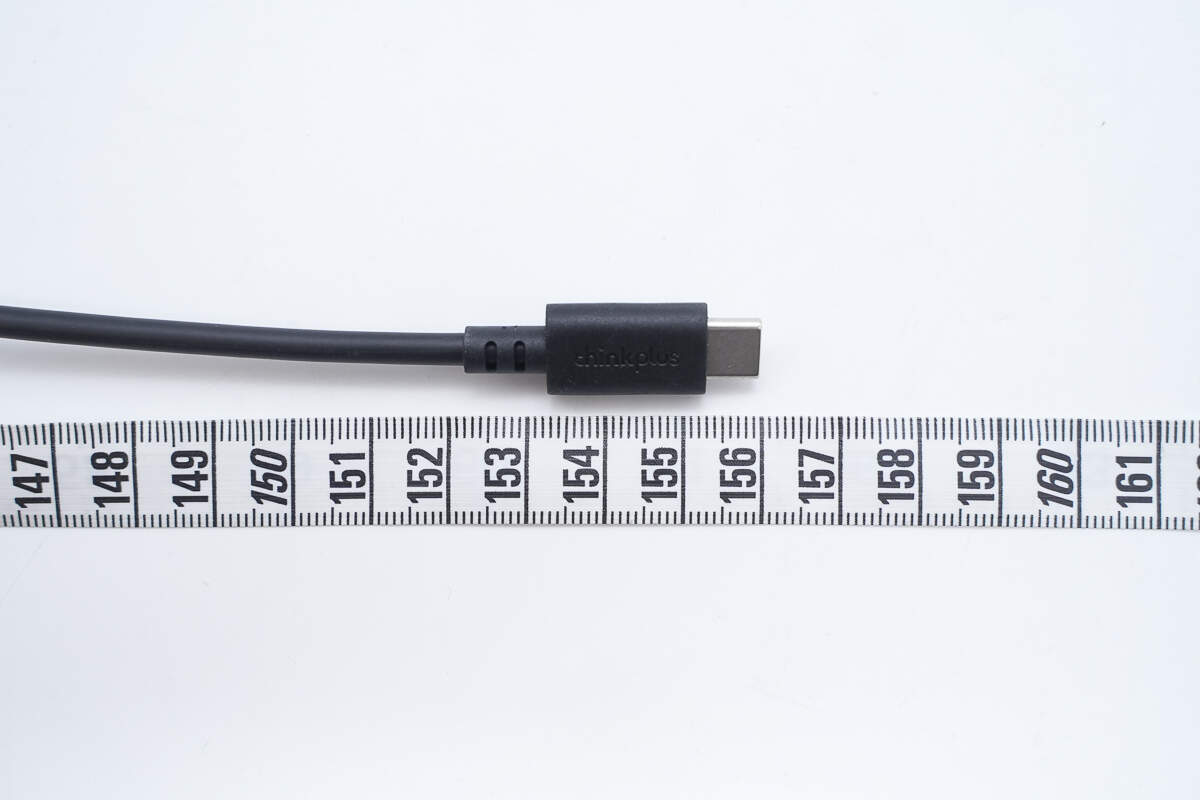
The length of the cable is about 1.56 m (61.4 inches).
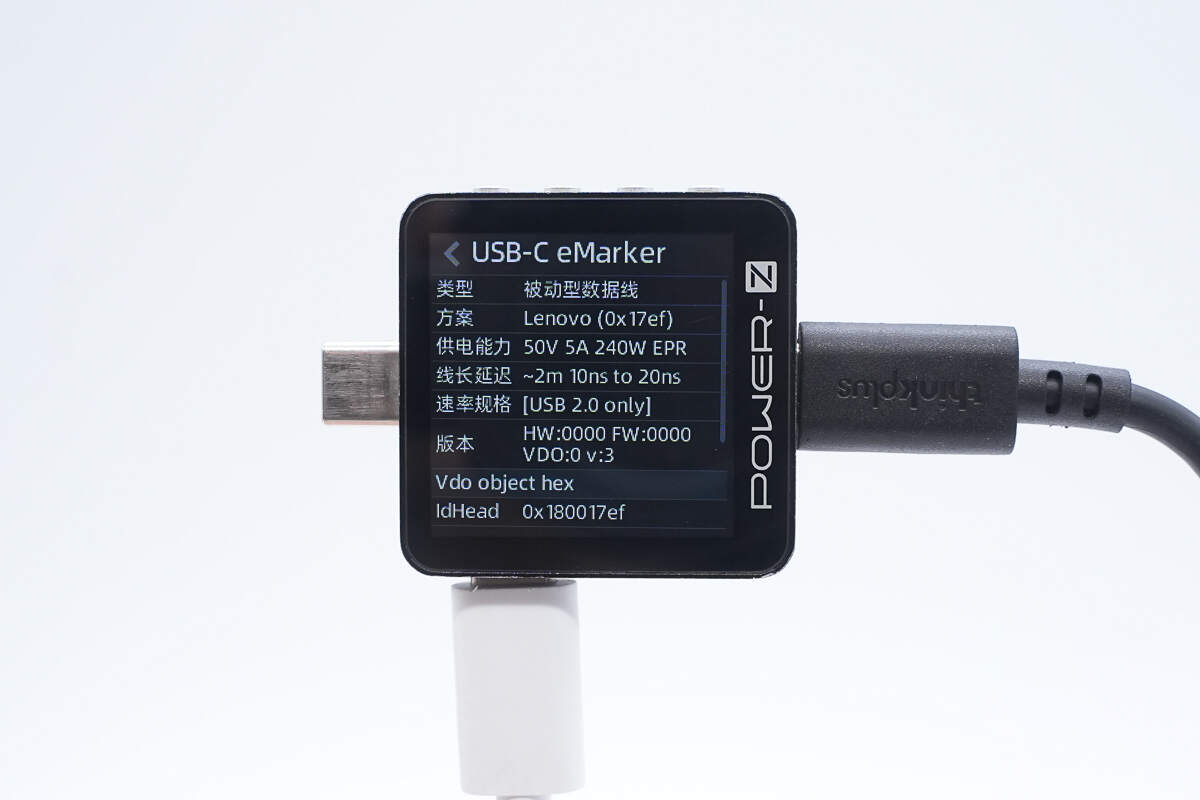
ChargerLAB POWER-Z KM003C testing shows that the cable is equipped with an E-Marker chip. It supports a power transmission capability of 50V 5A and also supports 20V 6.25A (125W), enabling it to carry high current levels exceeding 6A.
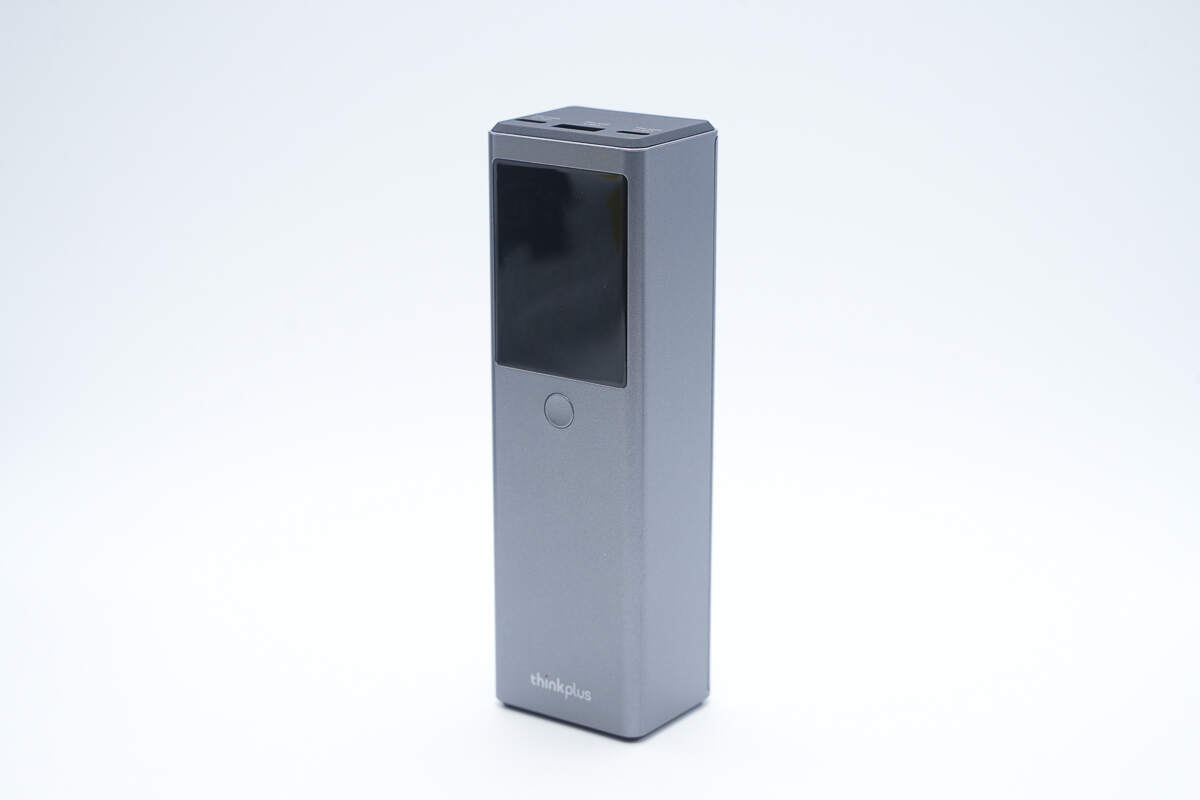
Overview of the power bank’s exterior.
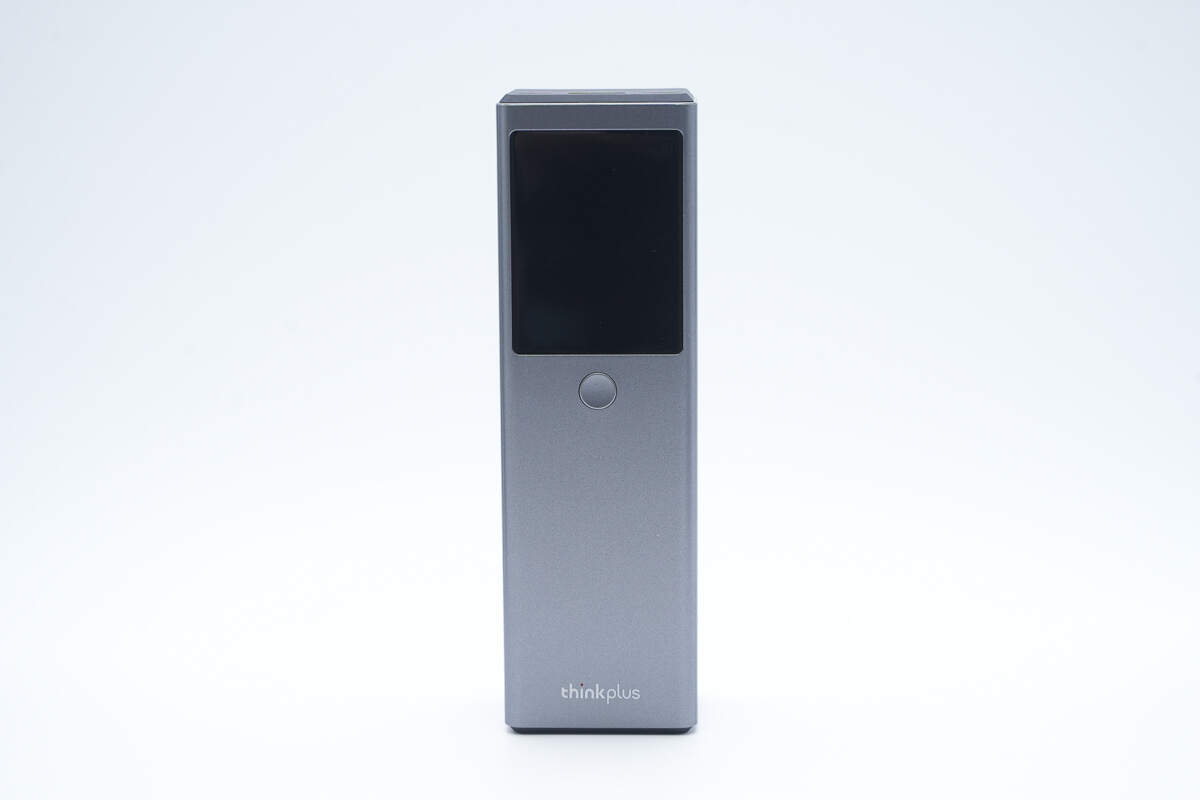
The front features a digital display and function button, with the thinkplus logo printed below.
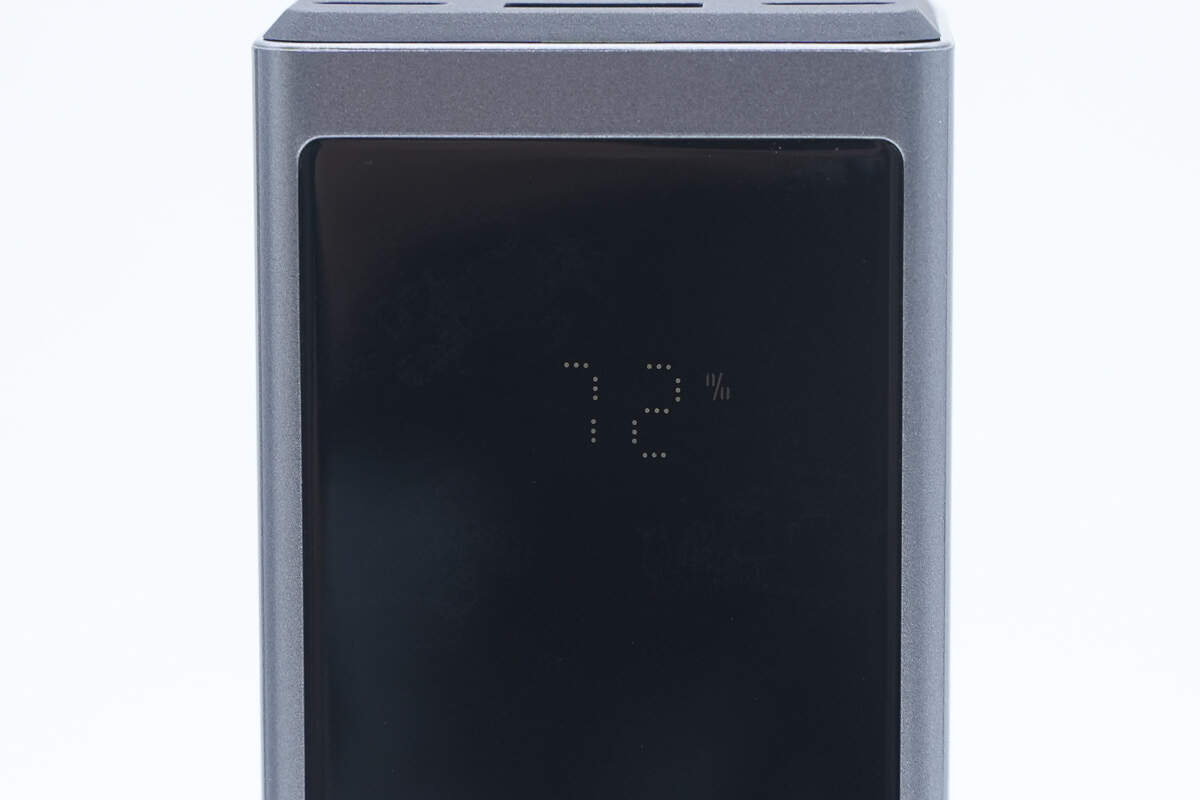
It can display the remaining battery capacity.
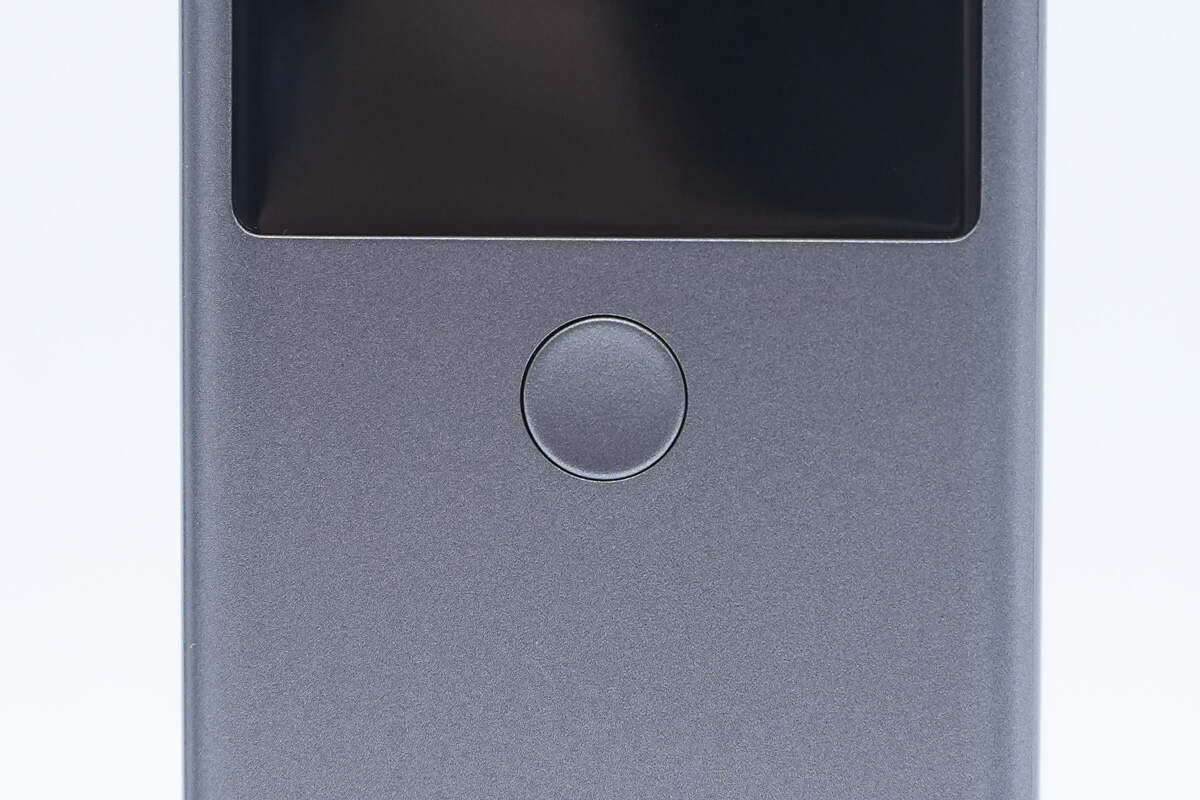
Close-up of the function button.
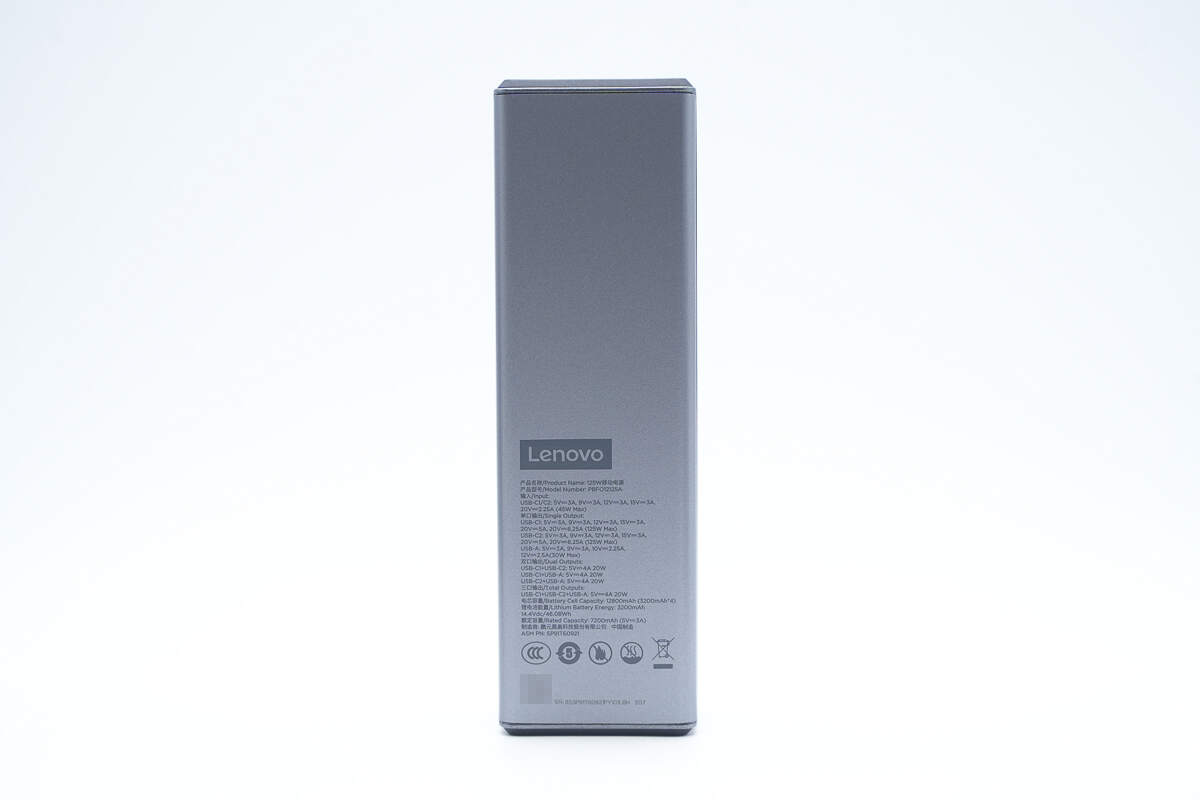
The back is printed with the product’s specifications.
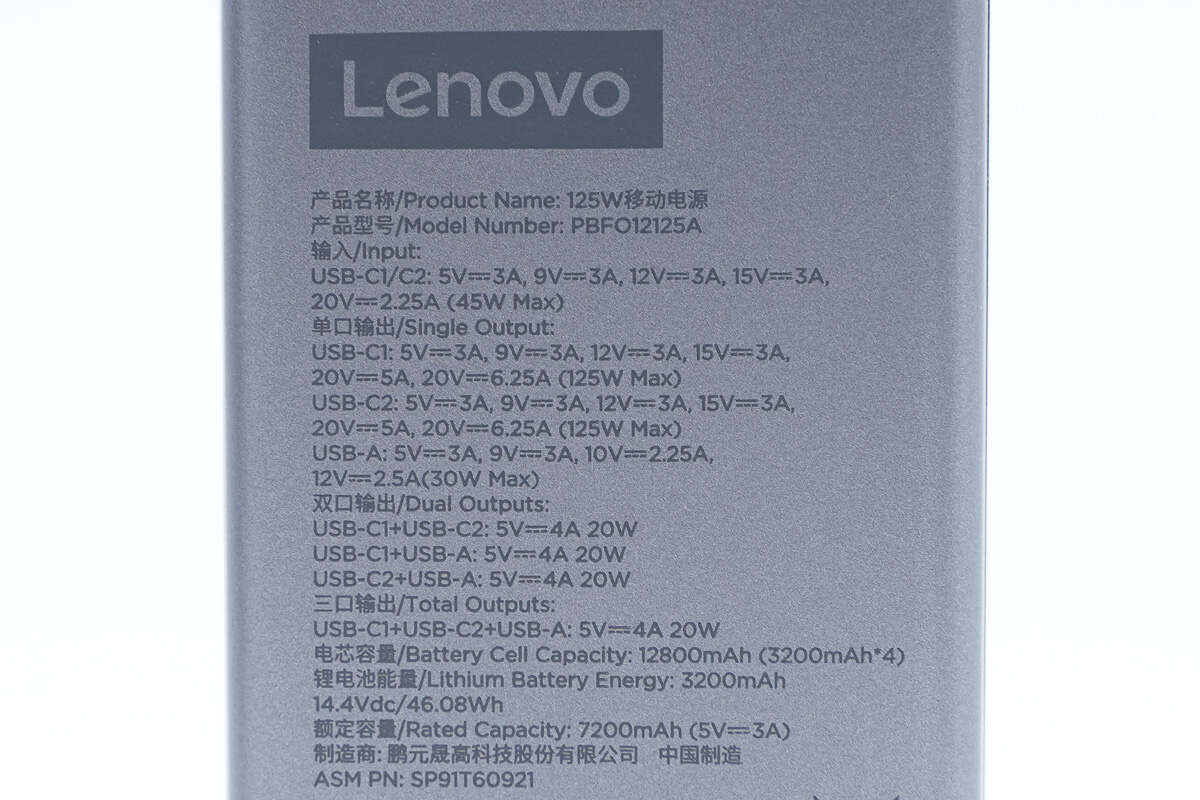
Model: PBFO-12125A
Input:
USB-C1/C2: 5V 3A, 9V 3A, 12V 3A, 15V 3A, 20V 2.25A (45W Max)
Single-Port Output:
USB-C1/C2: 5V 3A, 9V 3A, 12V 3A, 15V 3A, 20V 5A, 20V 6.25A (125W Max)
USB-A: 5V 3A, 9V 3A, 10V 2.25A, 12V 2.5A (30W Max)
Dual-Port Output:
USB-C1 + USB-C2: 5V 4A 20W
USB-C1 + USB-A: 5V 4A 20W
USB-C2 + USB-A: 5V 4A 20W
Triple-Port Output:
USB-C1 + USB-C2 + USB-A: 5V 4A 20W
Battery Capacity: 12800mAh (3200mAh * 4)
Lithium Battery Energy: 3200mAh 14.4Vdc / 46.08Wh
Rated Capacity: 7200mAh (5V 3A)
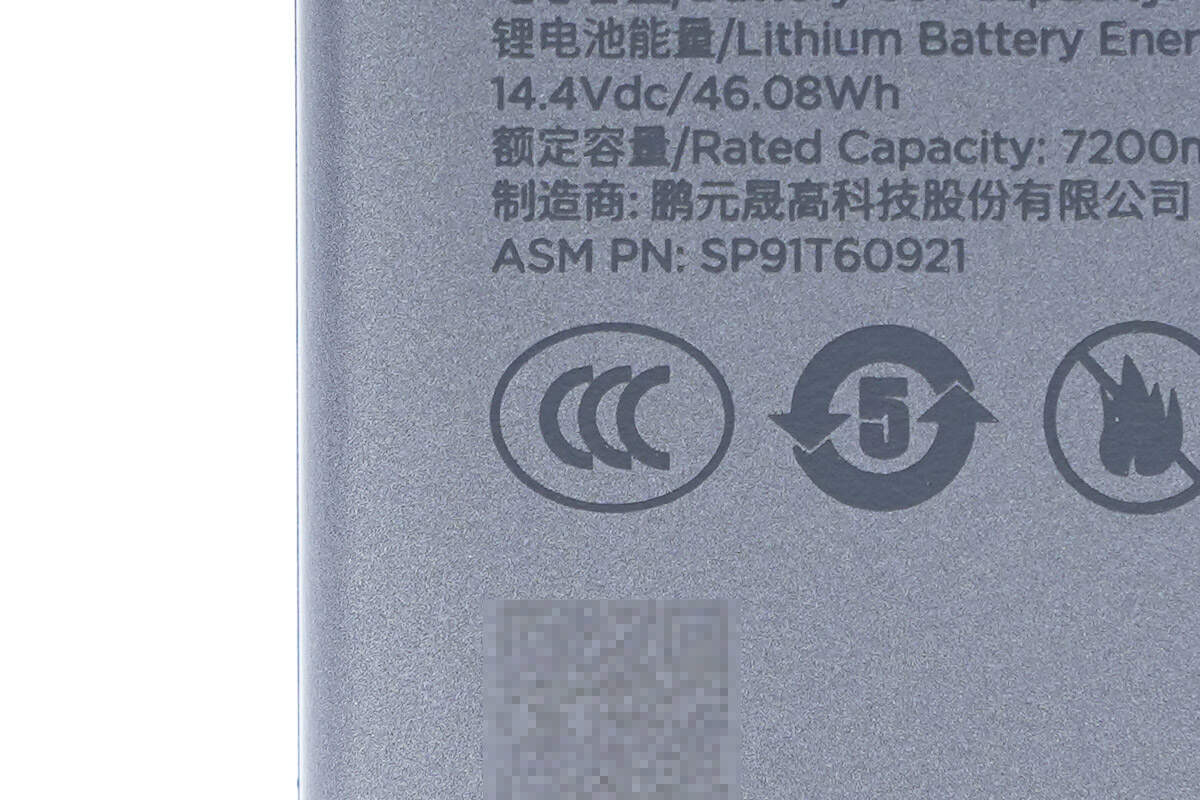
It has obtained CCC approval.
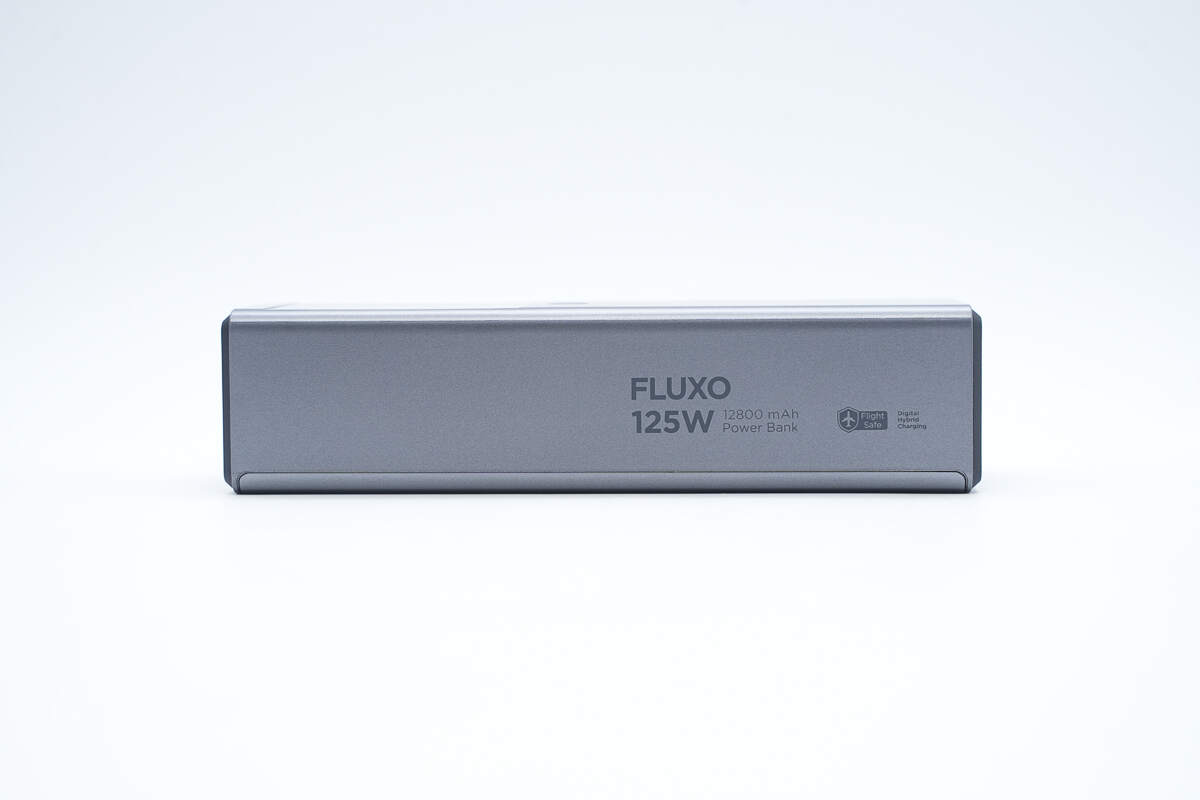
One side of the body is printed with FLUXO 125W 12800mAh Power Bank and an icon indicating it is allowed for air travel.
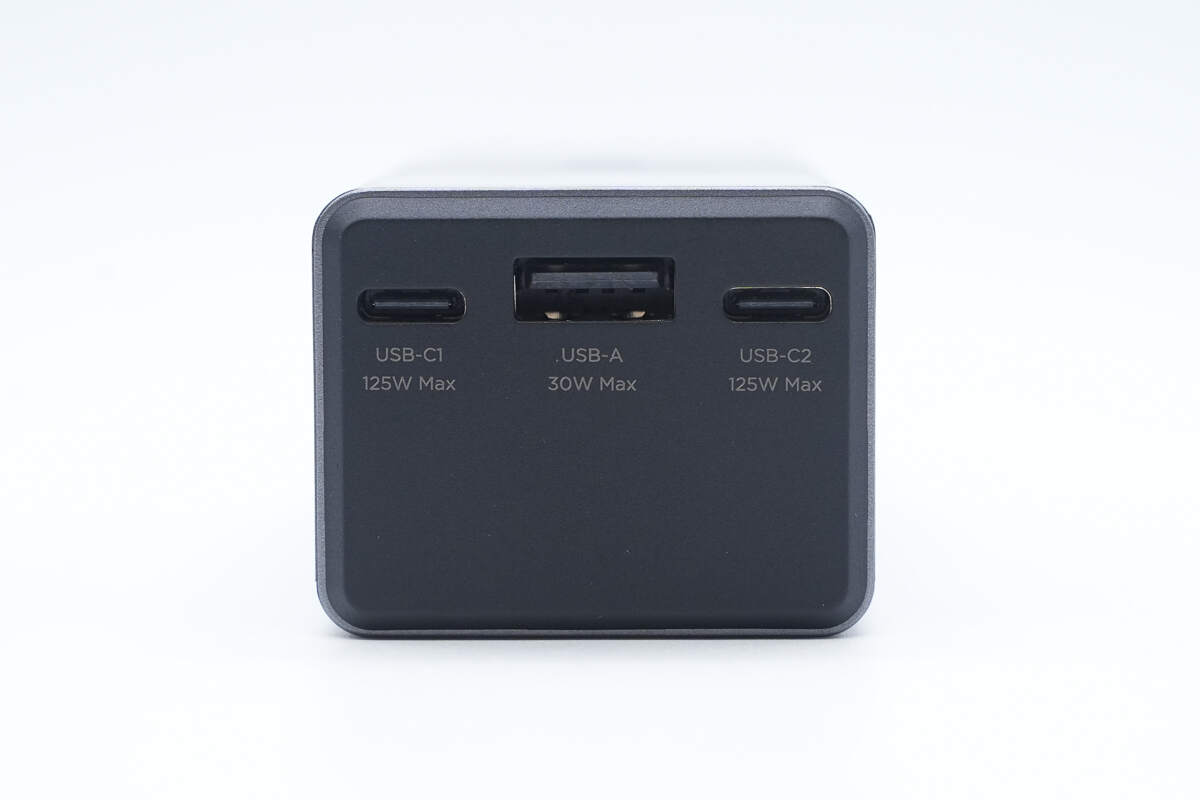
The top features two USB-C ports and one USB-A port, with corresponding icons and output specifications printed next to each port.
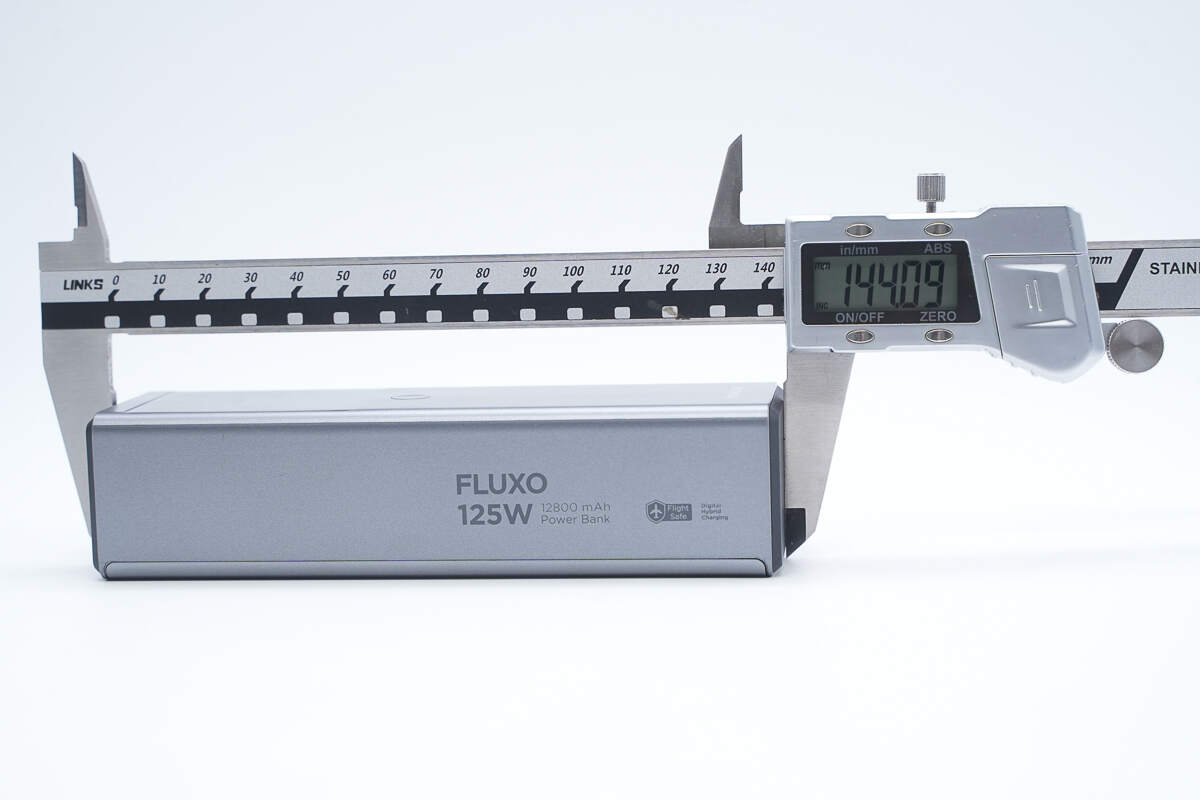
The length of the power bank is about 144.09 mm (5.67 inches).
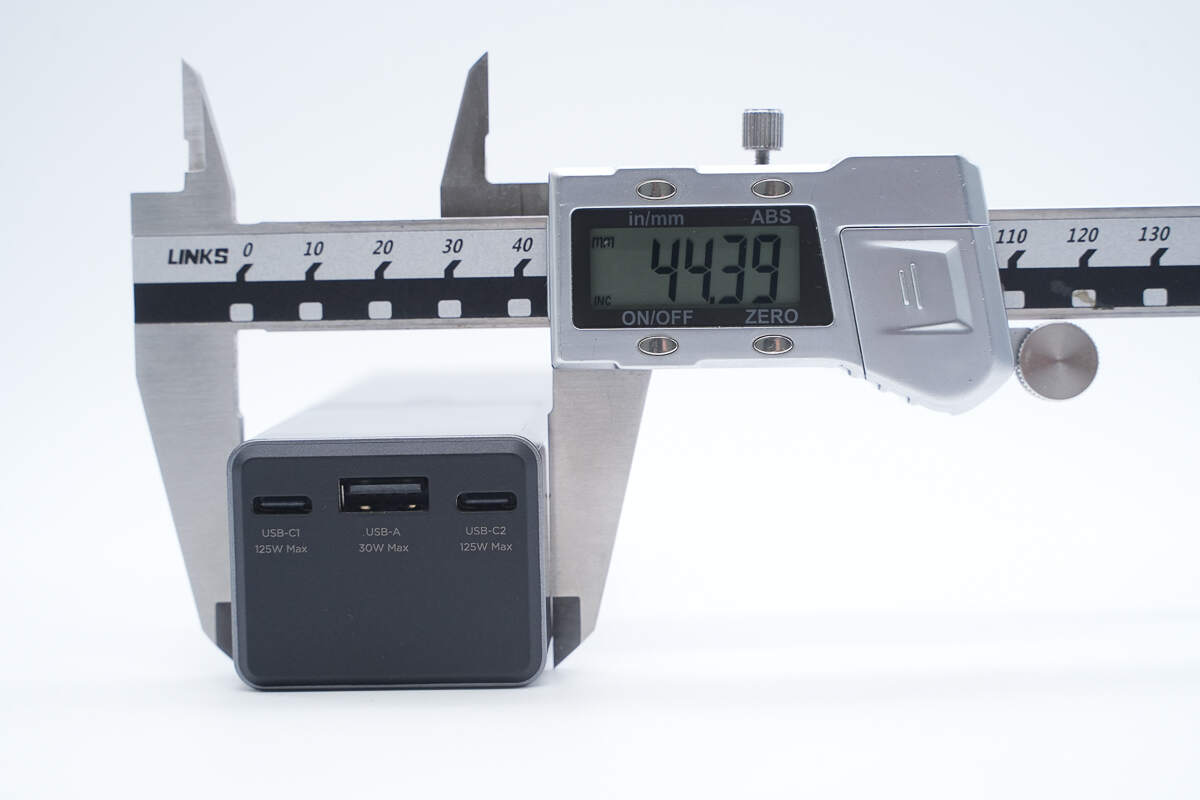
The width is about 44.39 mm (1.75 inches).
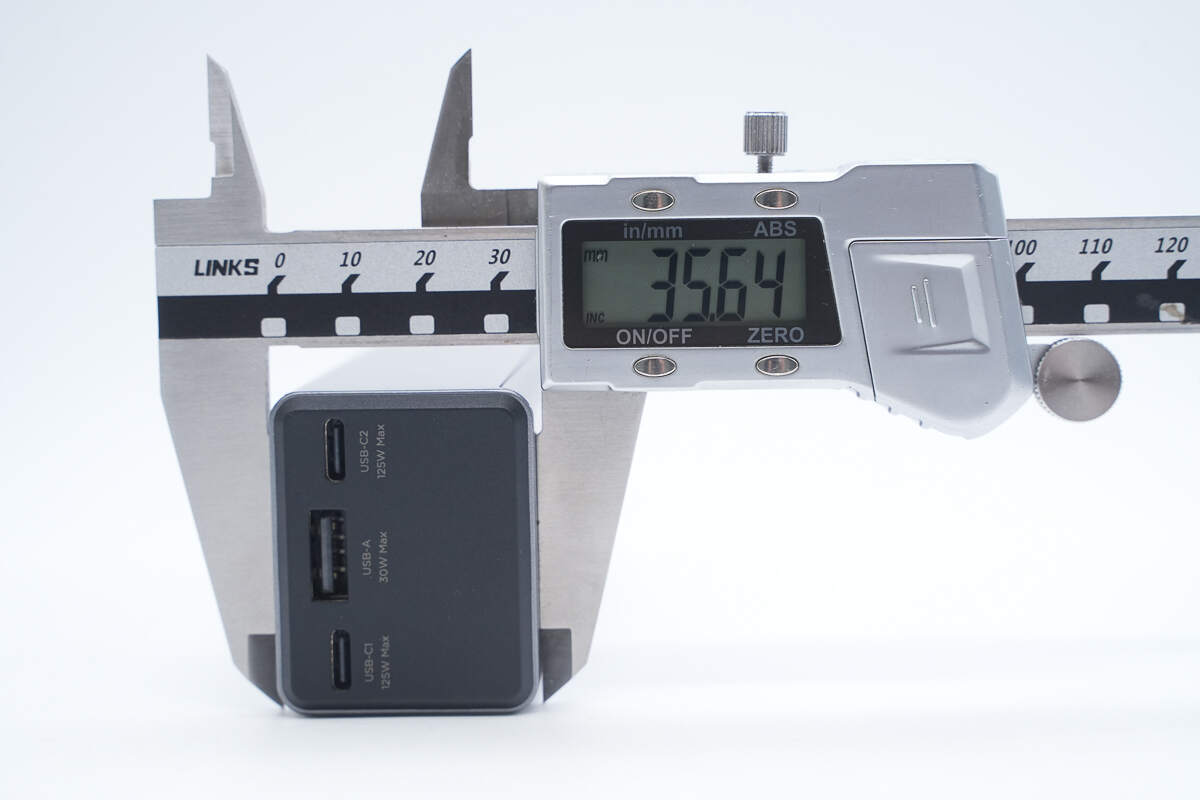
The thickness is about 35.64 mm (1.4 inches).
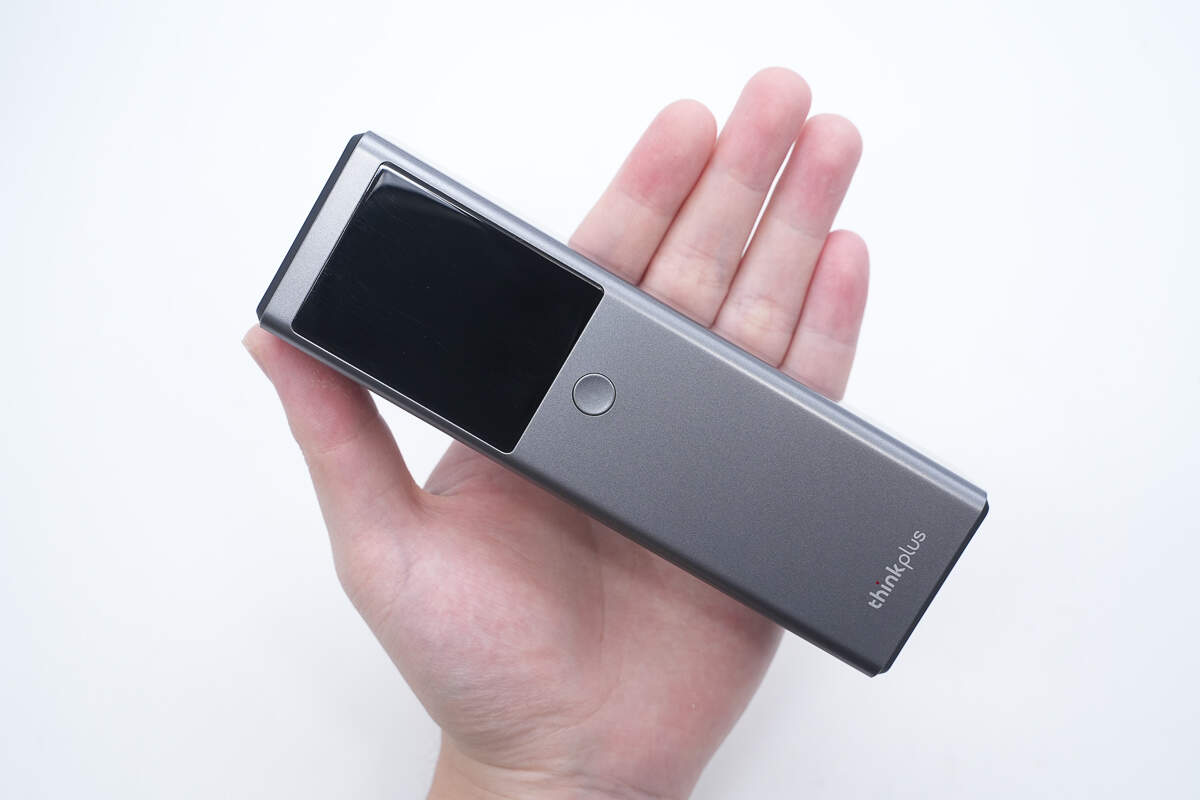
That's how big it is on the hand.
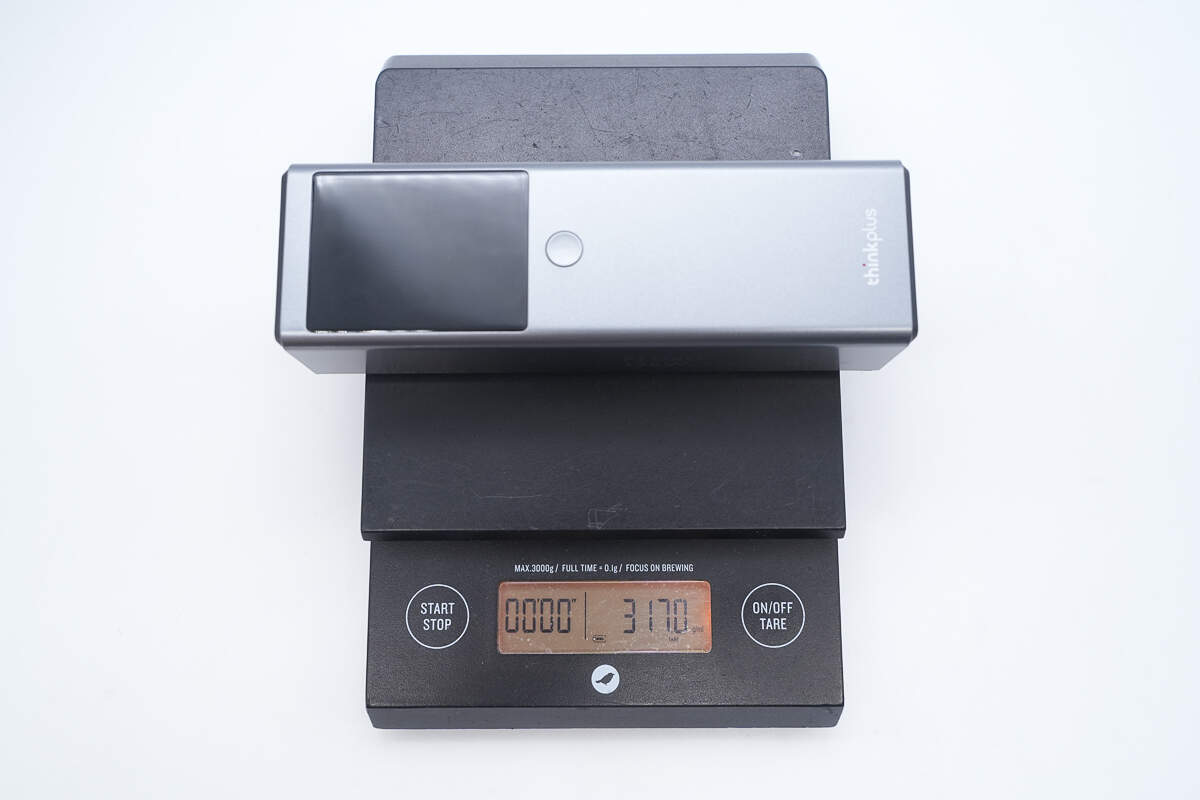
The weight is about 317 g (11.18 oz).
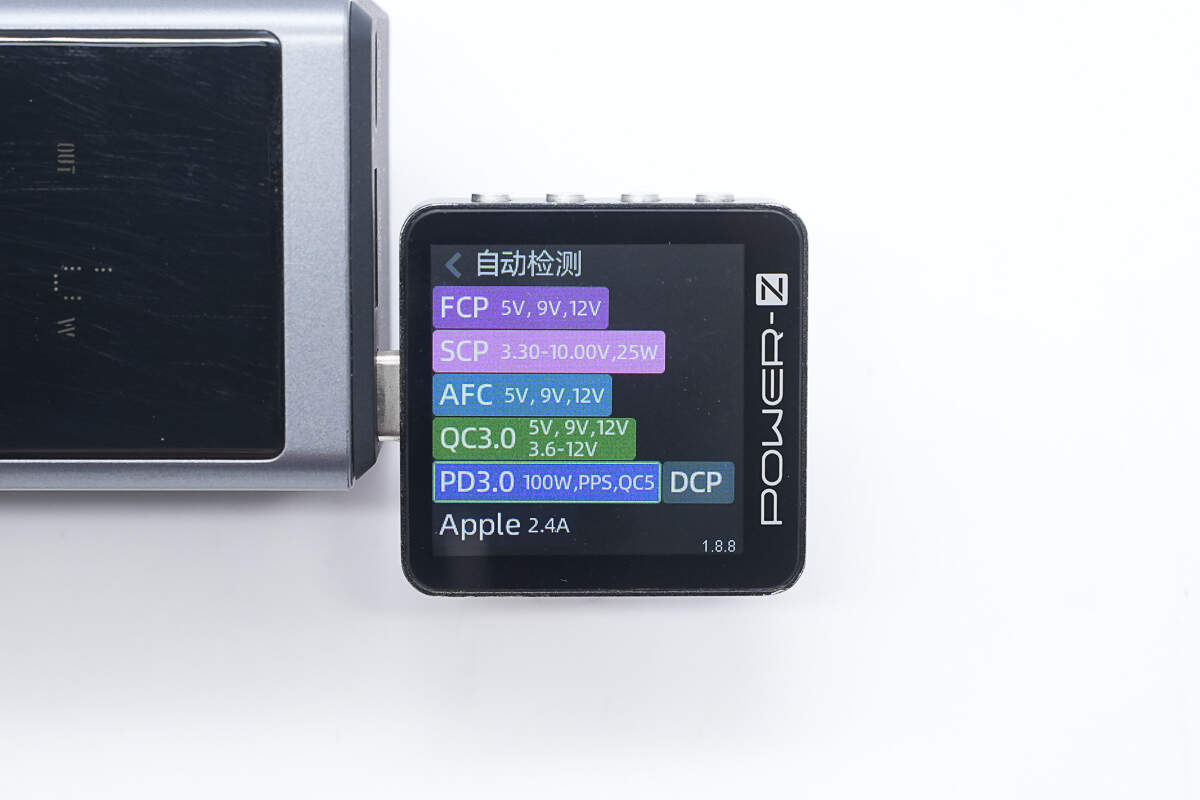
ChargerLAB POWER-Z KM003C shows that the USB-C1 supports QC3.0/5, FCP, SCP, AFC, PD3.0, PPS, DCP, and Apple 2.4A charging protocols.
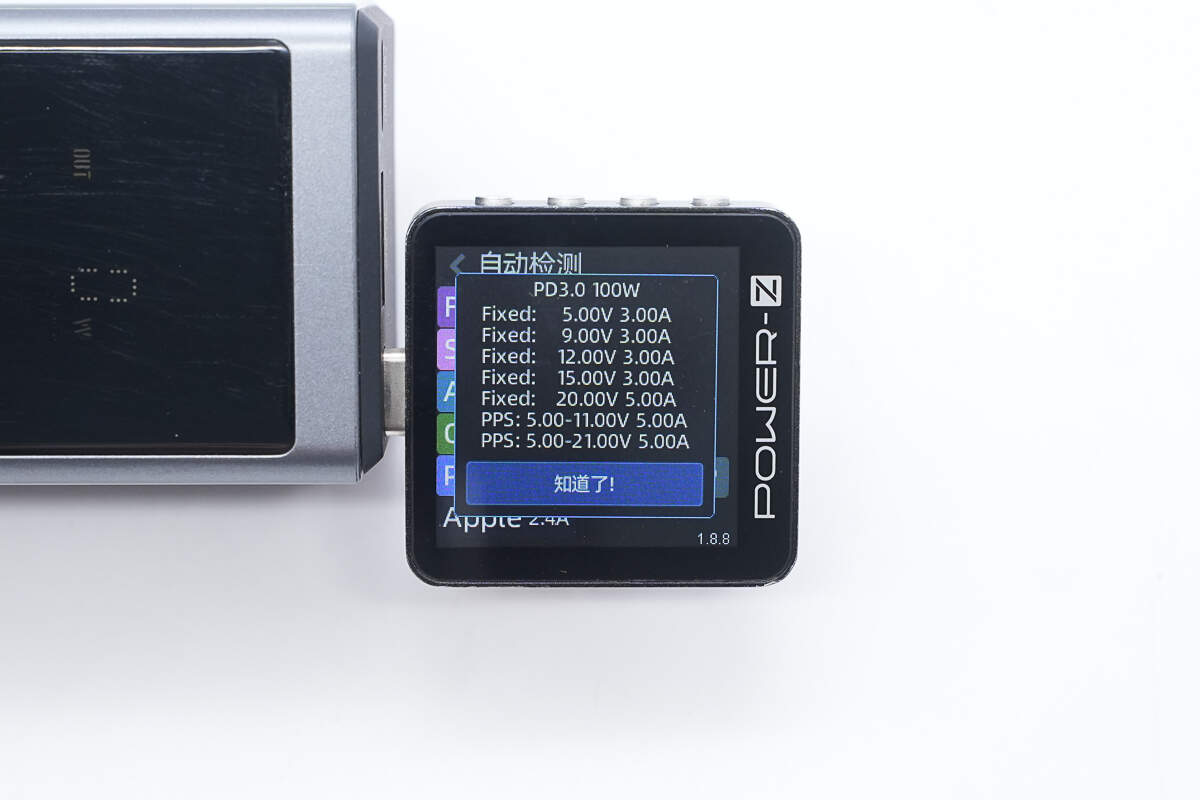
And it has five fixed PDOs of 5V3A, 9V3A, 12V3A, 15V3A, and 20V5A. It also has two sets of PPS, which are 5-11V5A and 5-21V5A.
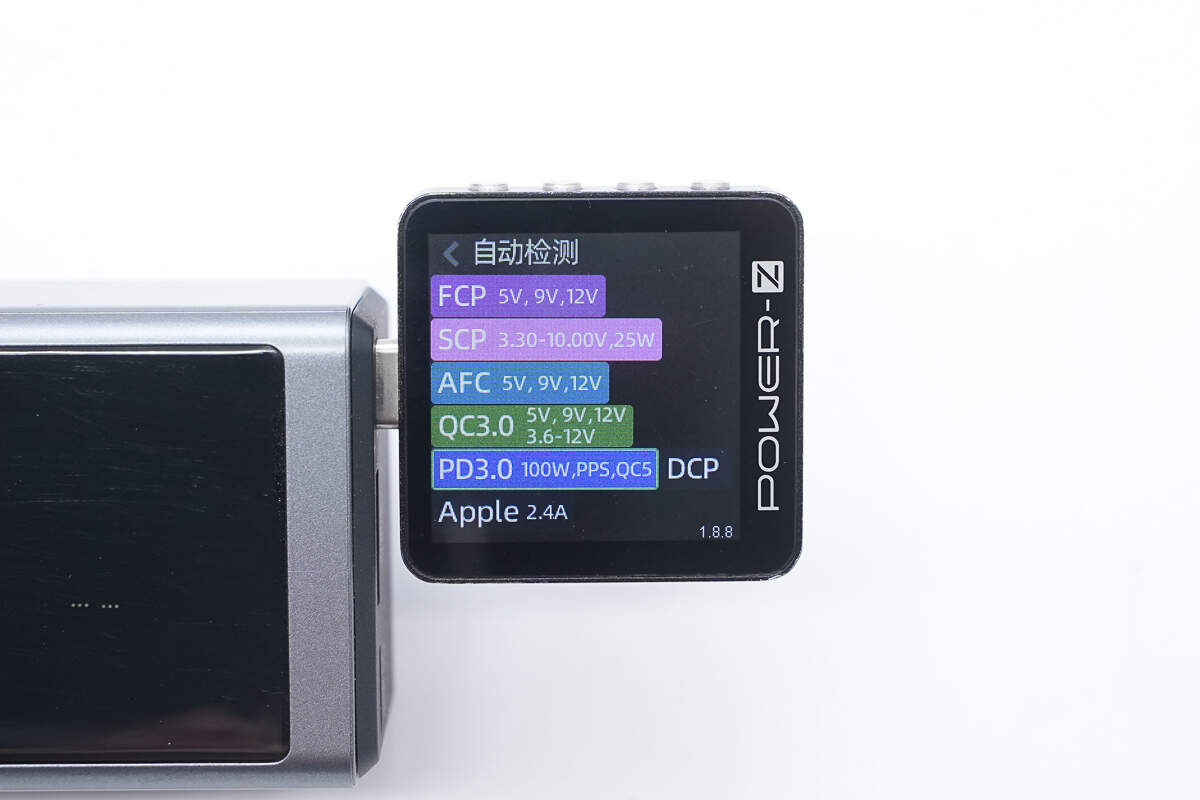
The USB-C2 supports QC3.0/5, FCP, SCP, AFC, PD3.0, PPS, DCP, and Apple 2.4A charging protocols.
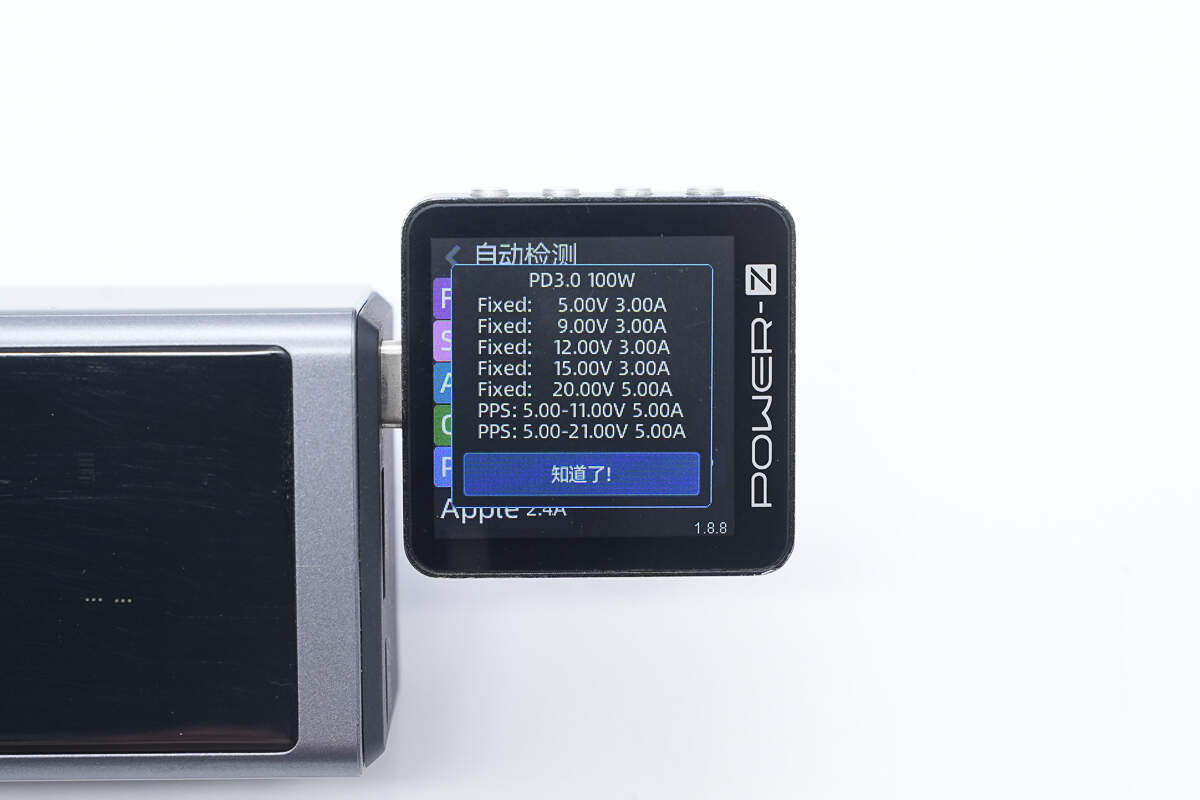
It has five fixed PDOs of 5V3A, 9V3A, 12V3A, 15V3A, and 20V5A. It also has two sets of PPS, which are 5-11V5A and 5-21V5A.
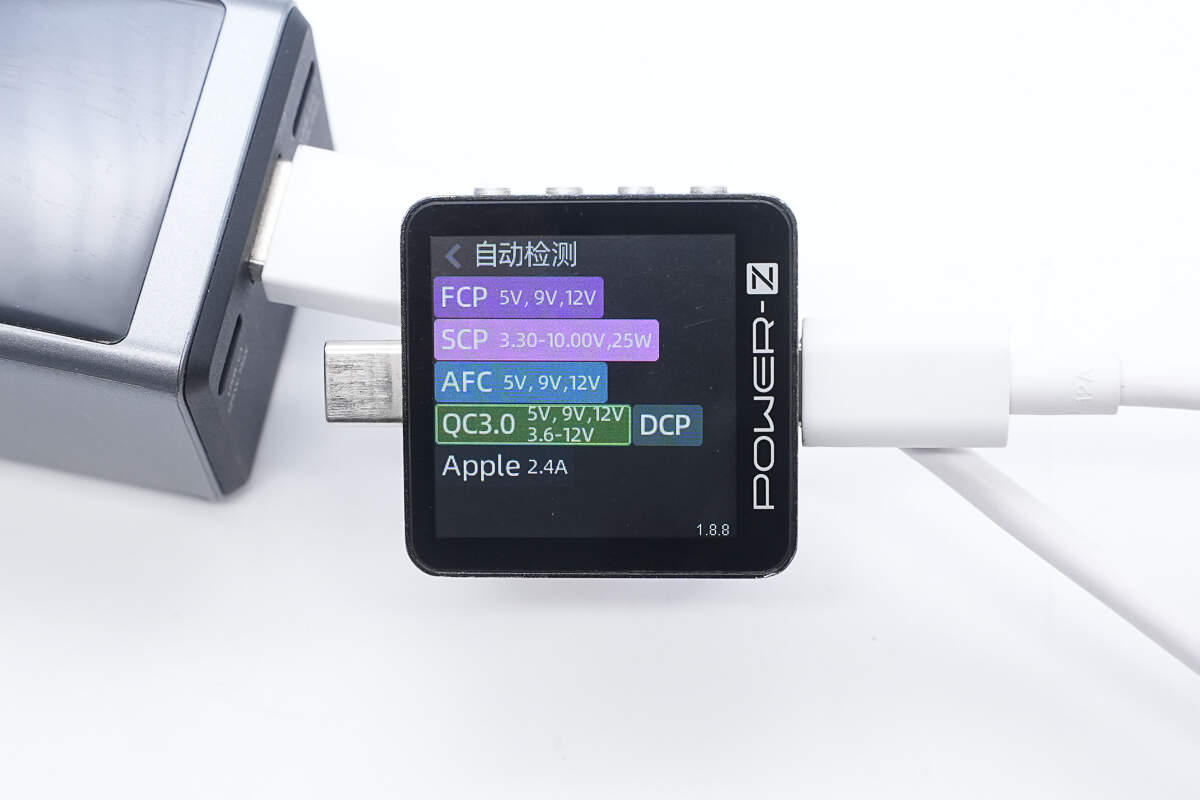
The USB-A supports QC3.0, FCP, SCP, AFC, DCP, and Apple 2.4A charging protocols.
Teardown
Next, let's take it apart to see its internal components and structure.
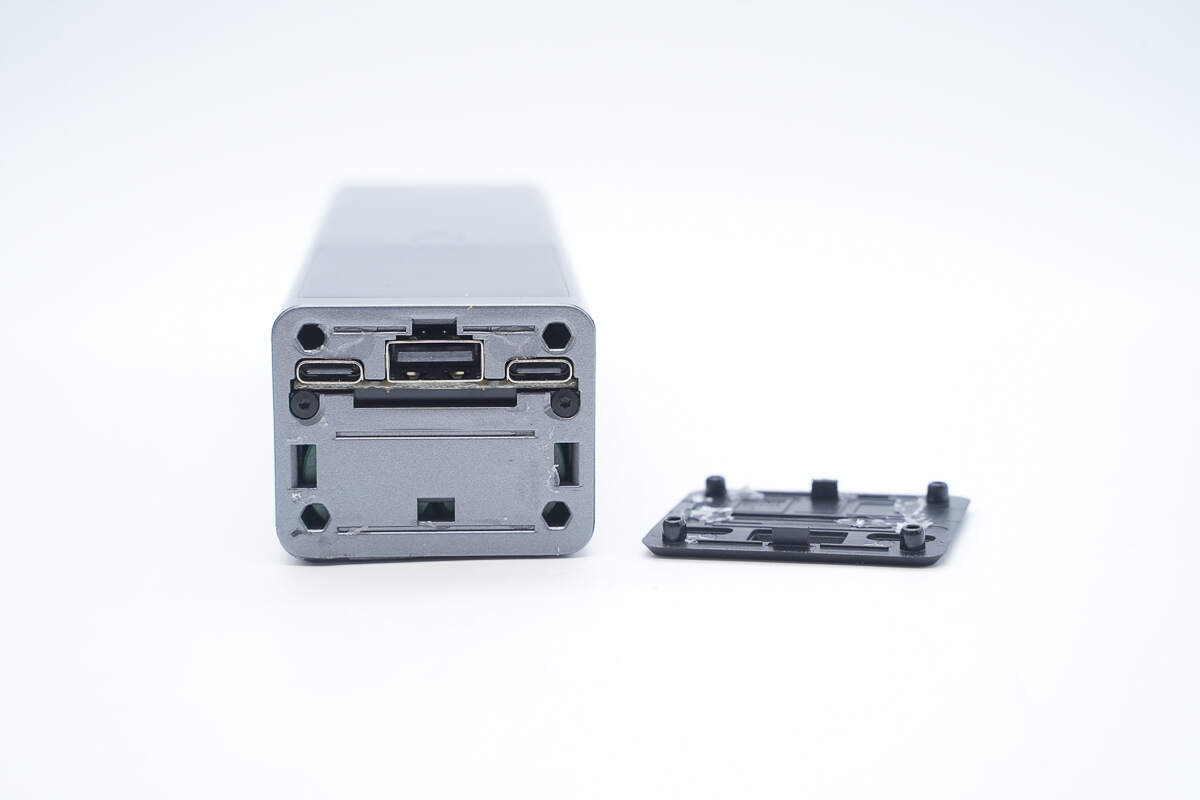
Remove the top cover, which is secured with clips and mounting posts.
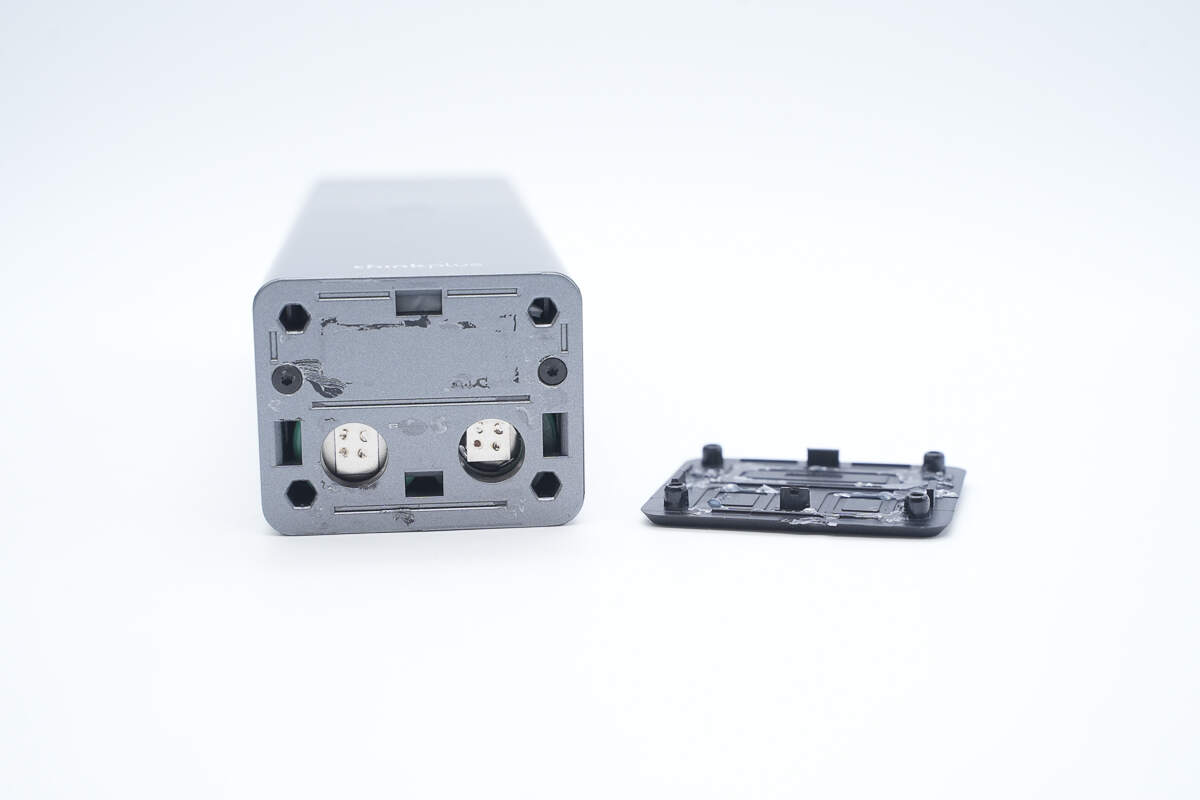
The bottom cover is secured in the same way.
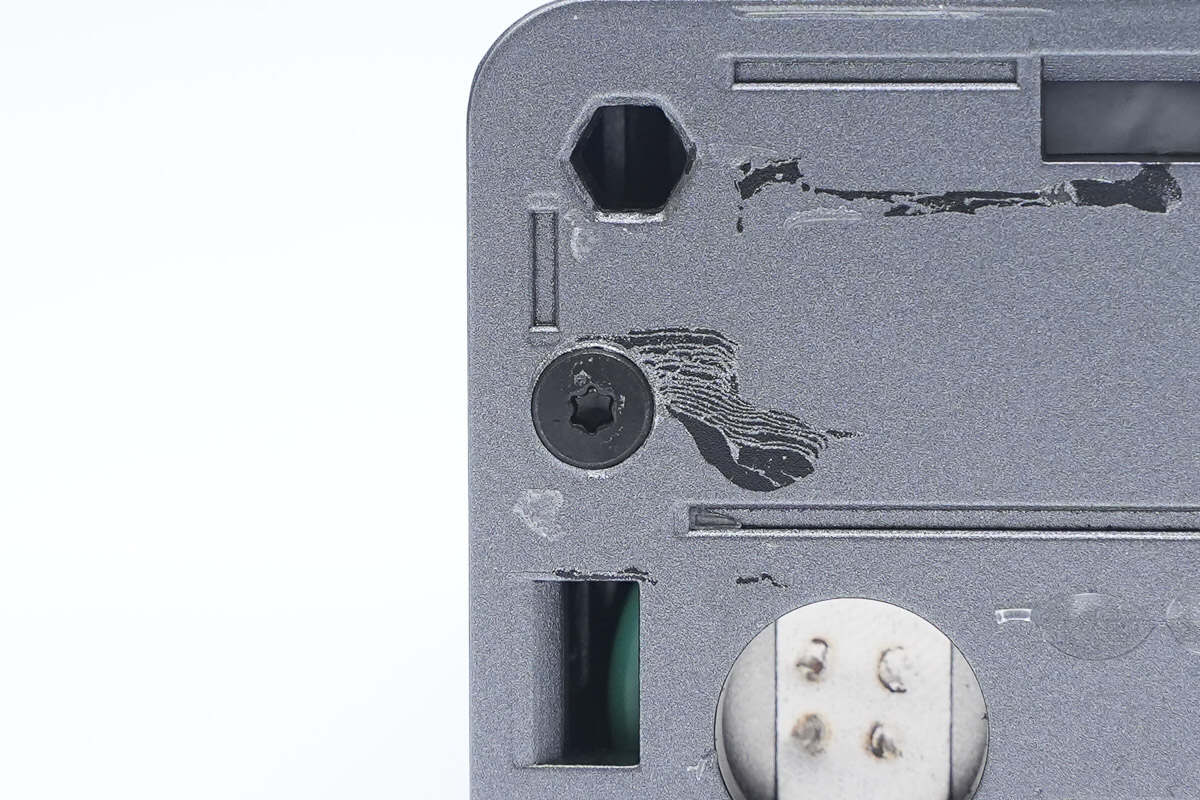
Screws are installed at both ends to secure the internal modules.
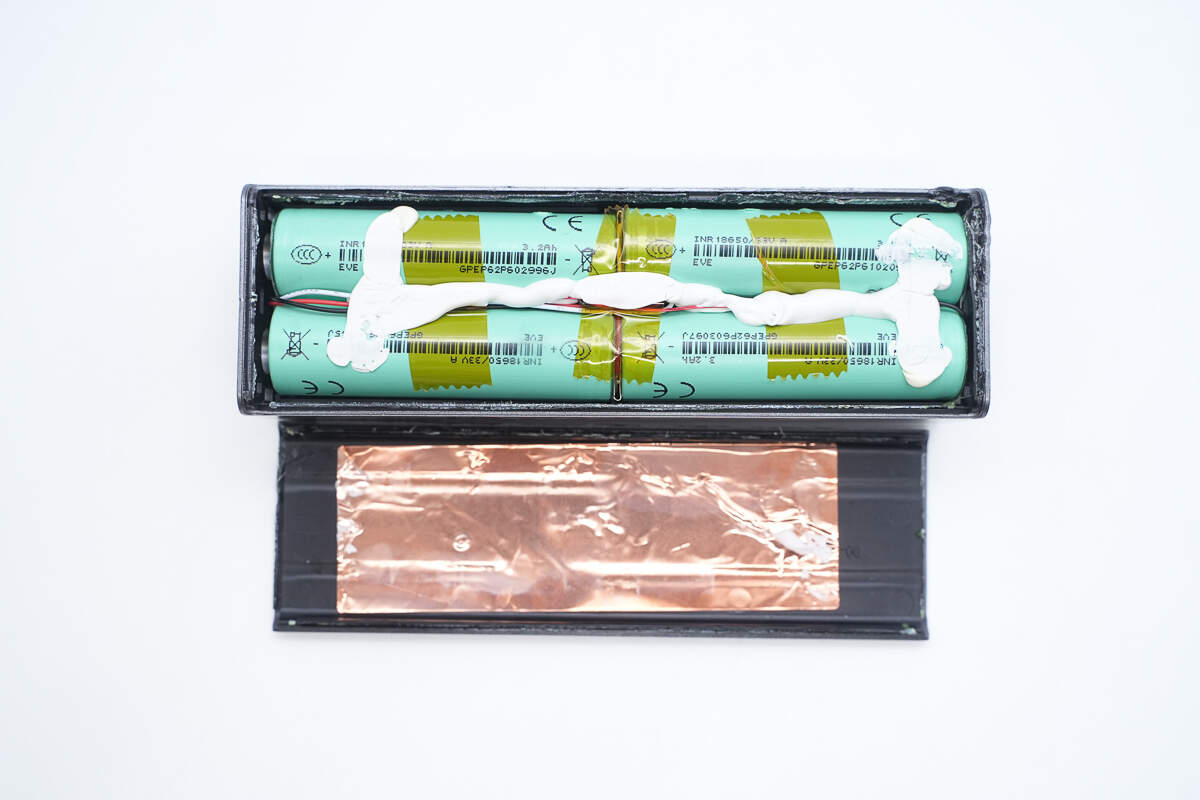
Cut open the back casing, revealing heat-dissipation copper foil on the inside.
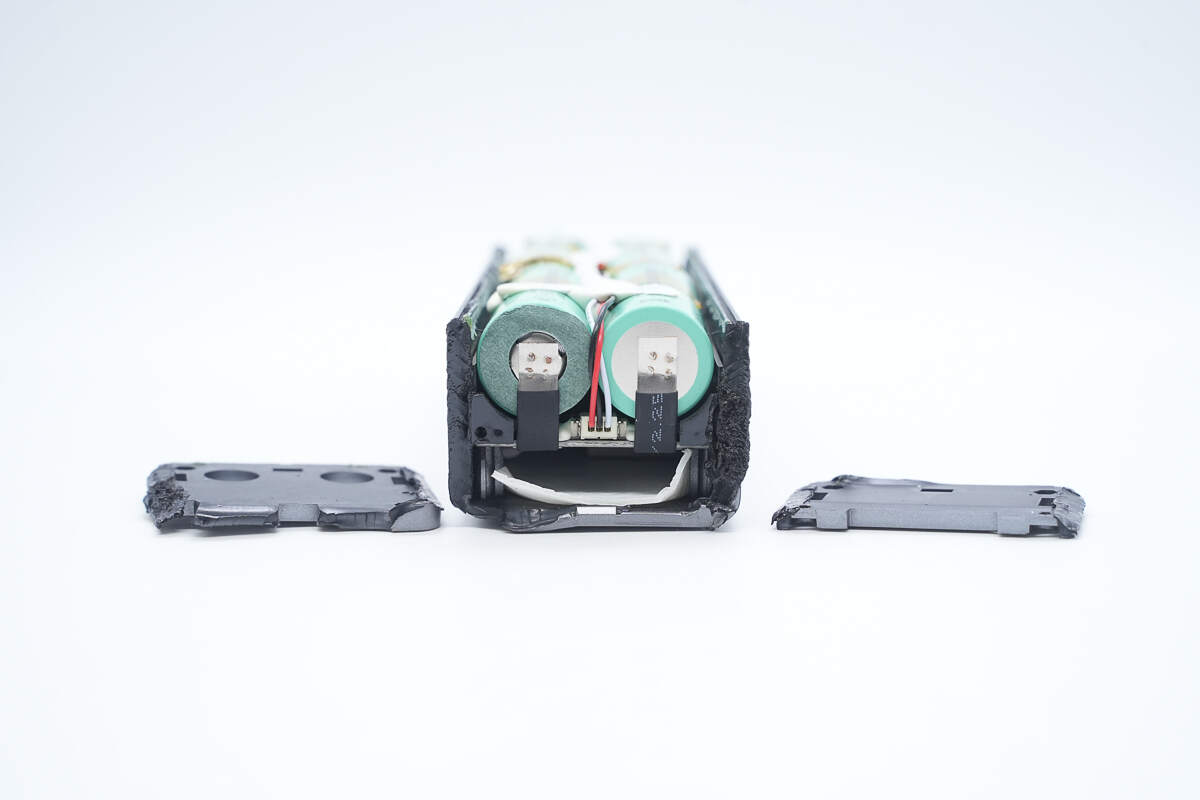
Cut open the casing at both ends.
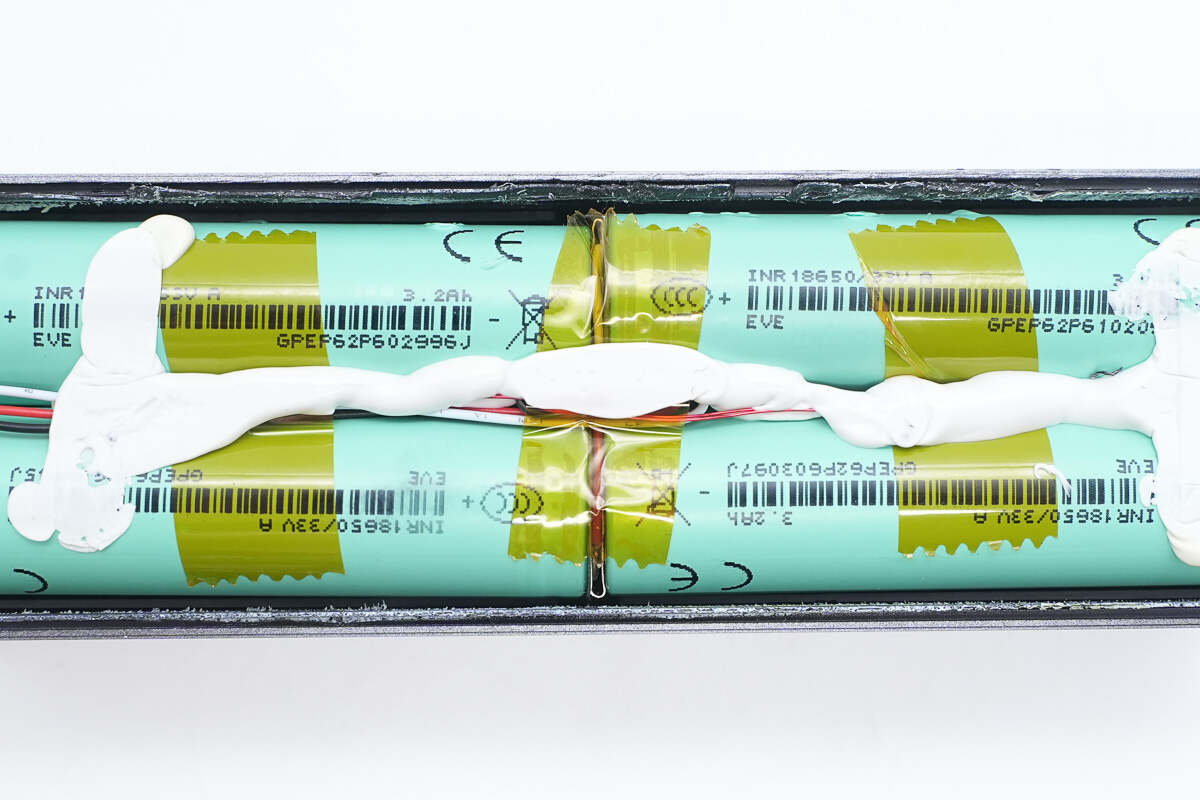
A thermistor is attached to the battery cells, reinforced with white adhesive.
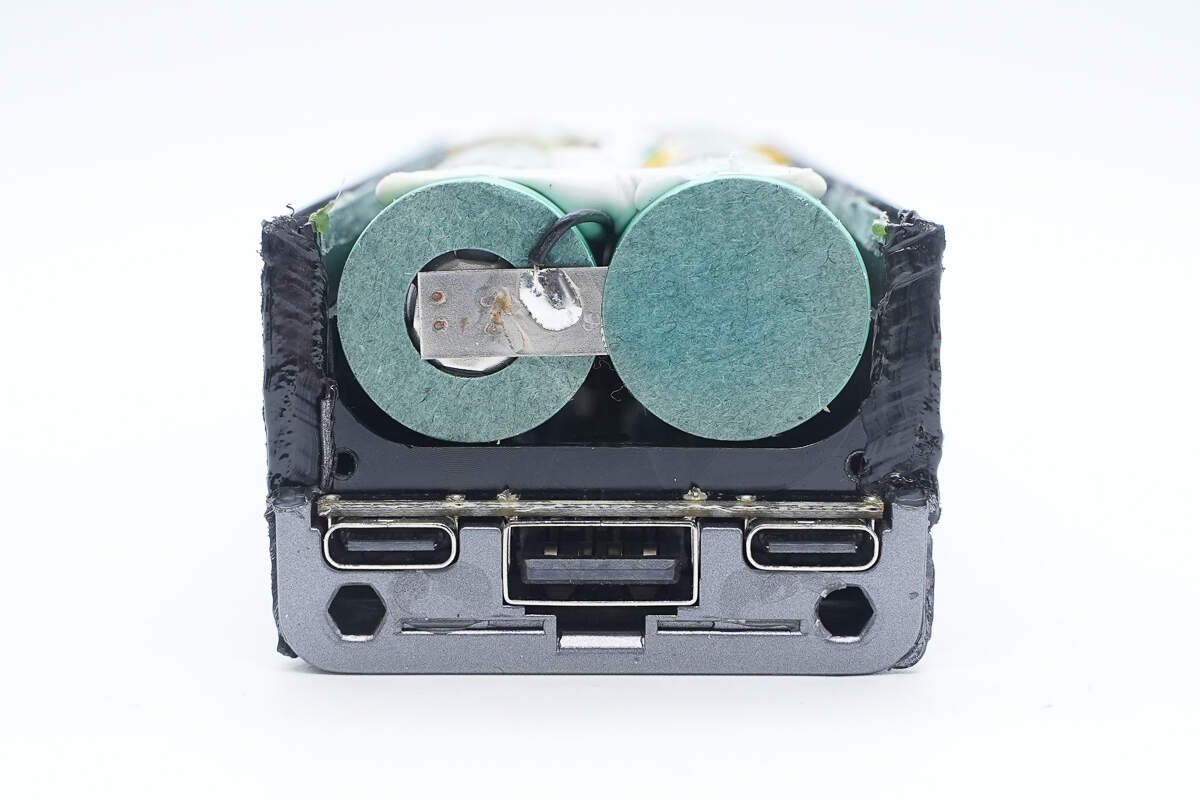
The battery terminals are insulated with Kapton tape, and nickel strips are spot-welded between them. A plastic isolation plate is placed between the battery pack and the PCB below.
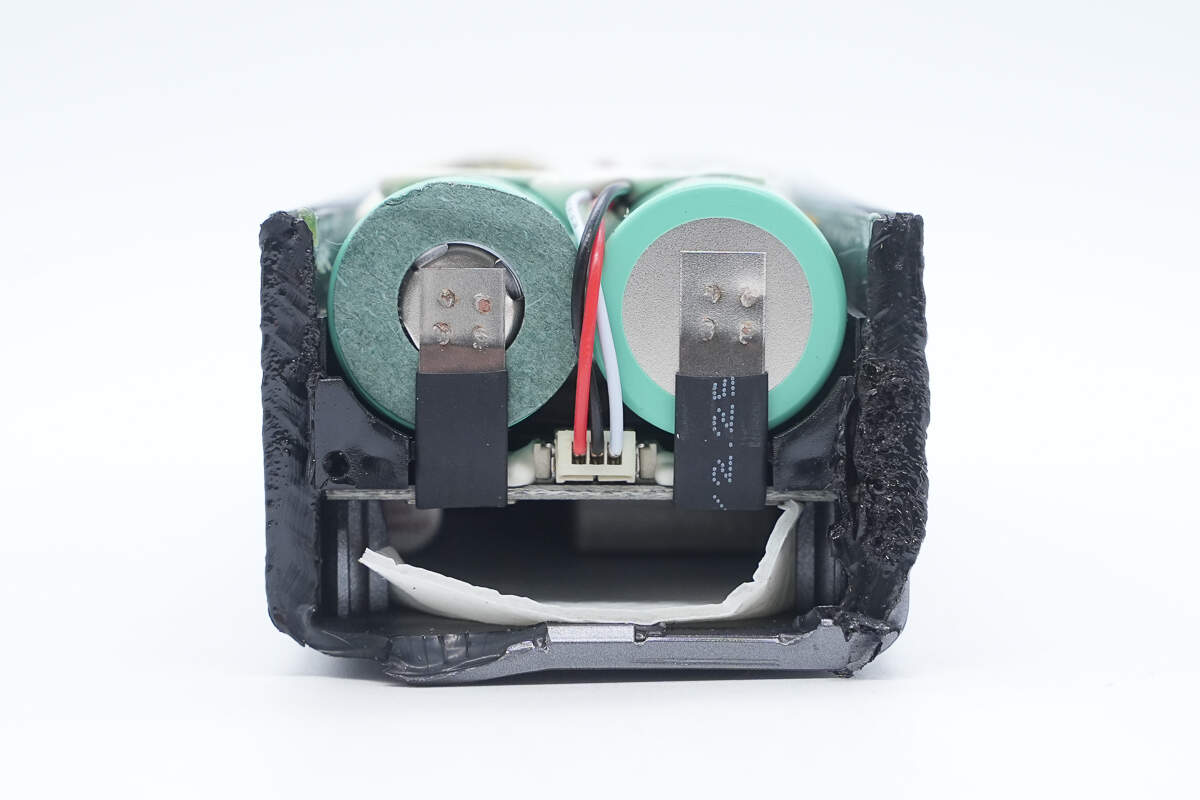
On the other end, the battery cells are spot-welded to the PCB using nickel strips, which are covered with insulating sleeves.
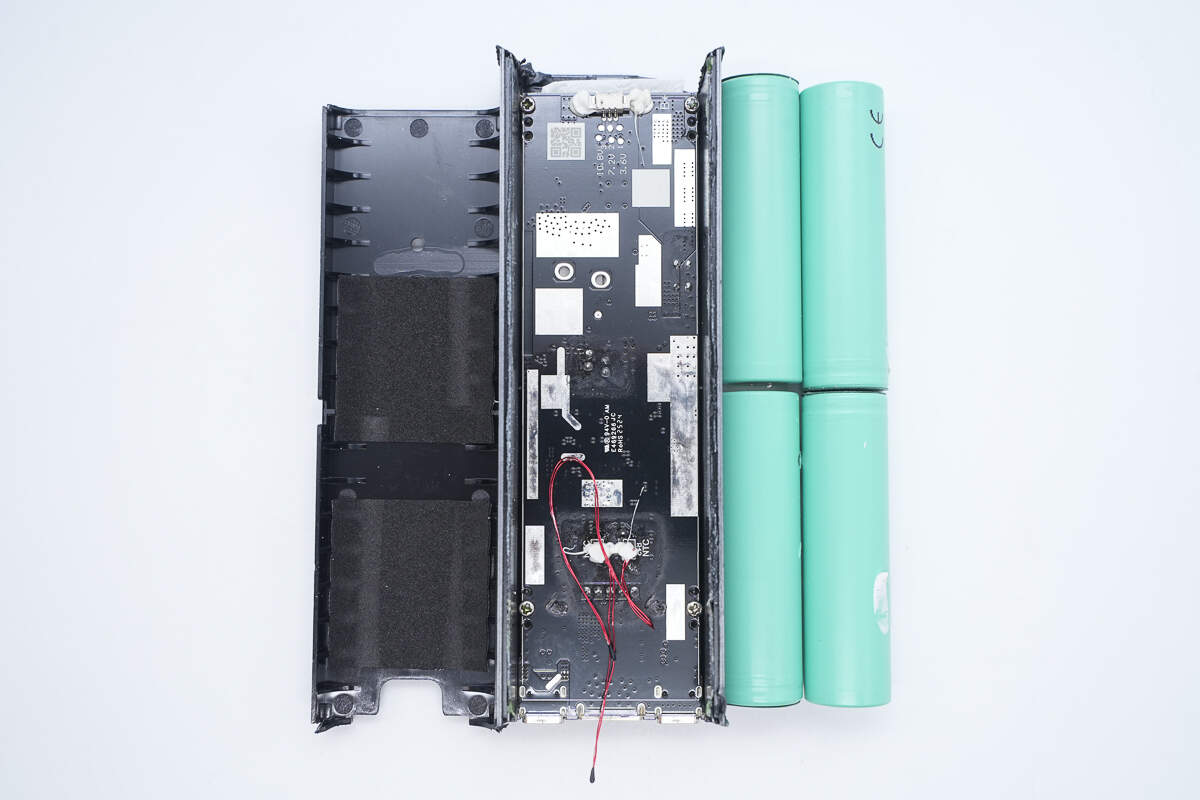
Remove the battery pack and the plastic isolation plate underneath.
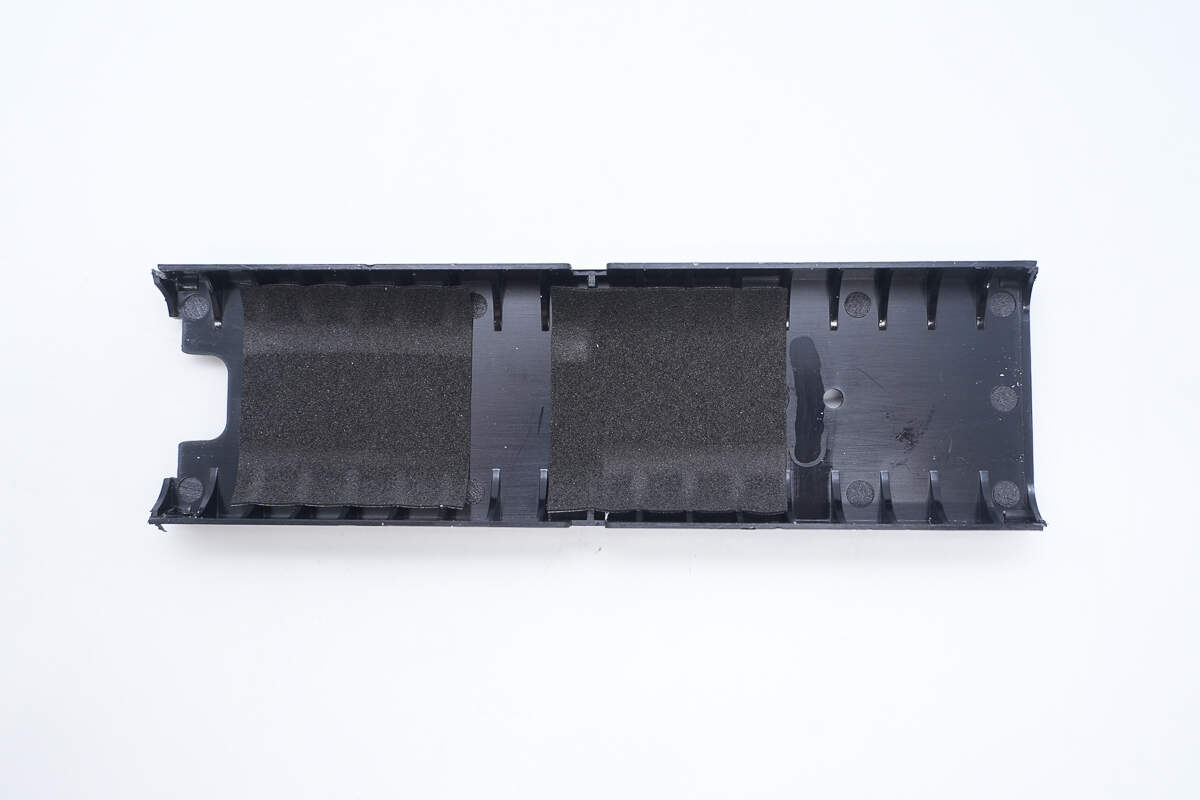
The front side of the plastic isolation plate is lined with protective foam.
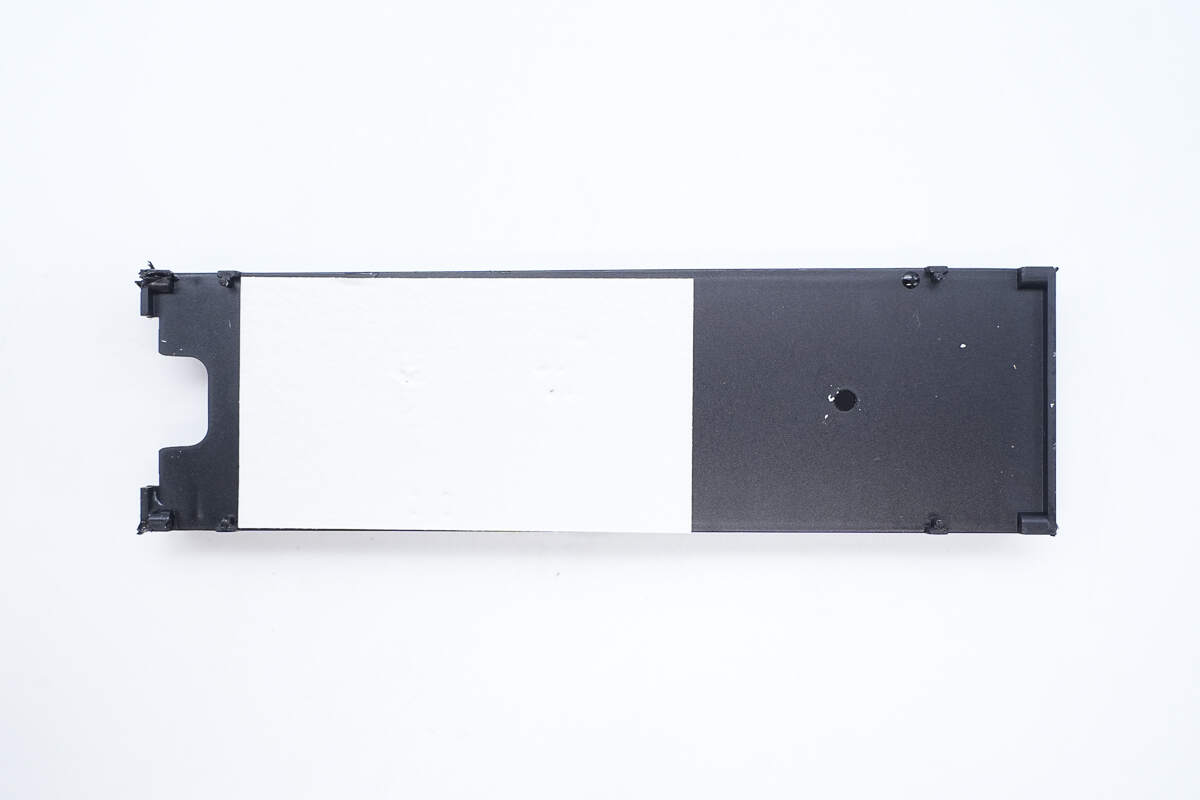
The back side is lined with white protective foam.
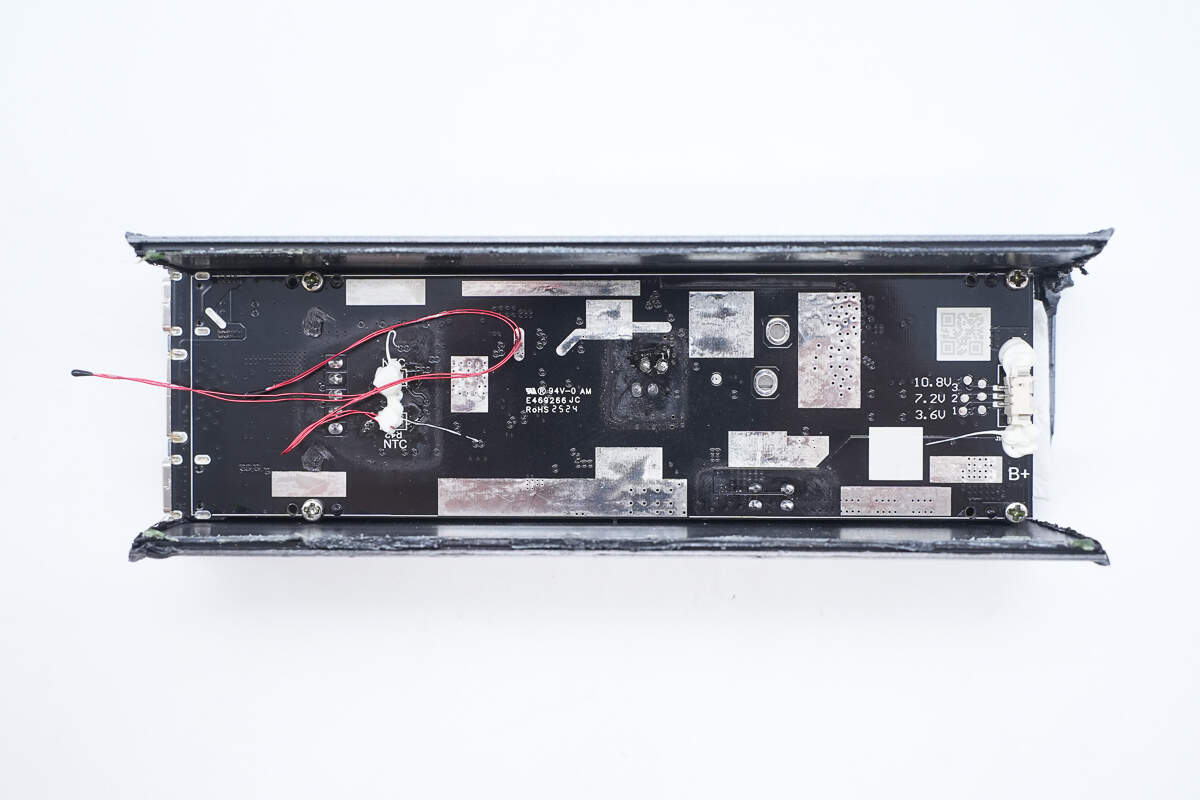
The PCB is secured with screws on both sides.
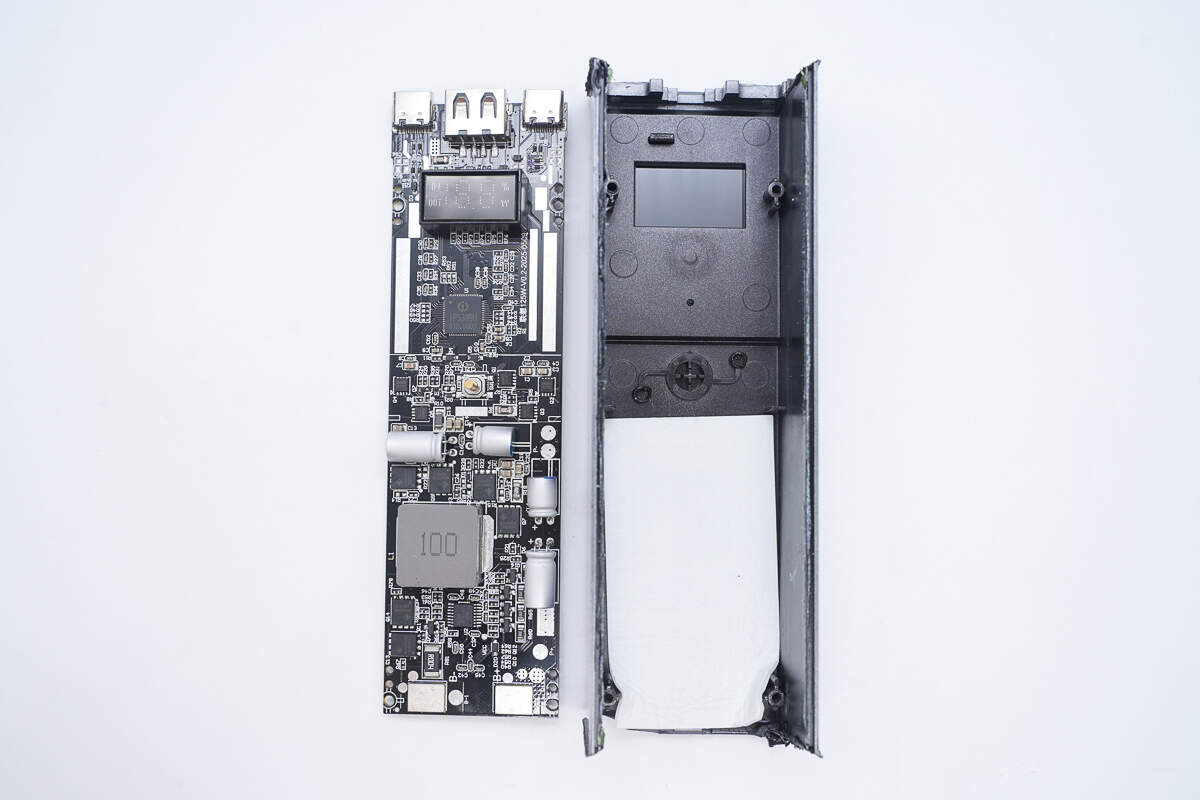
The PCB is removed, and the bottom casing is also lined with foam.
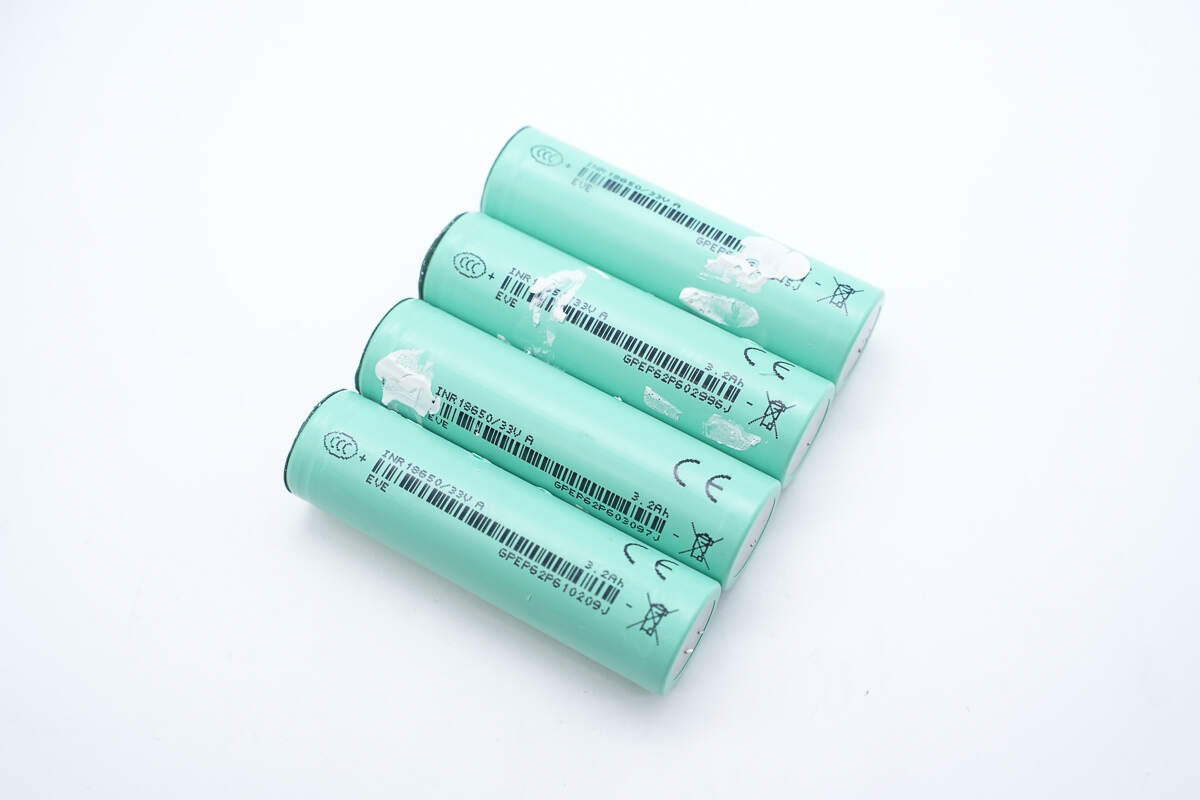
The battery pack consists of four automotive-grade 18650 lithium-ion cells, all with the same part number.
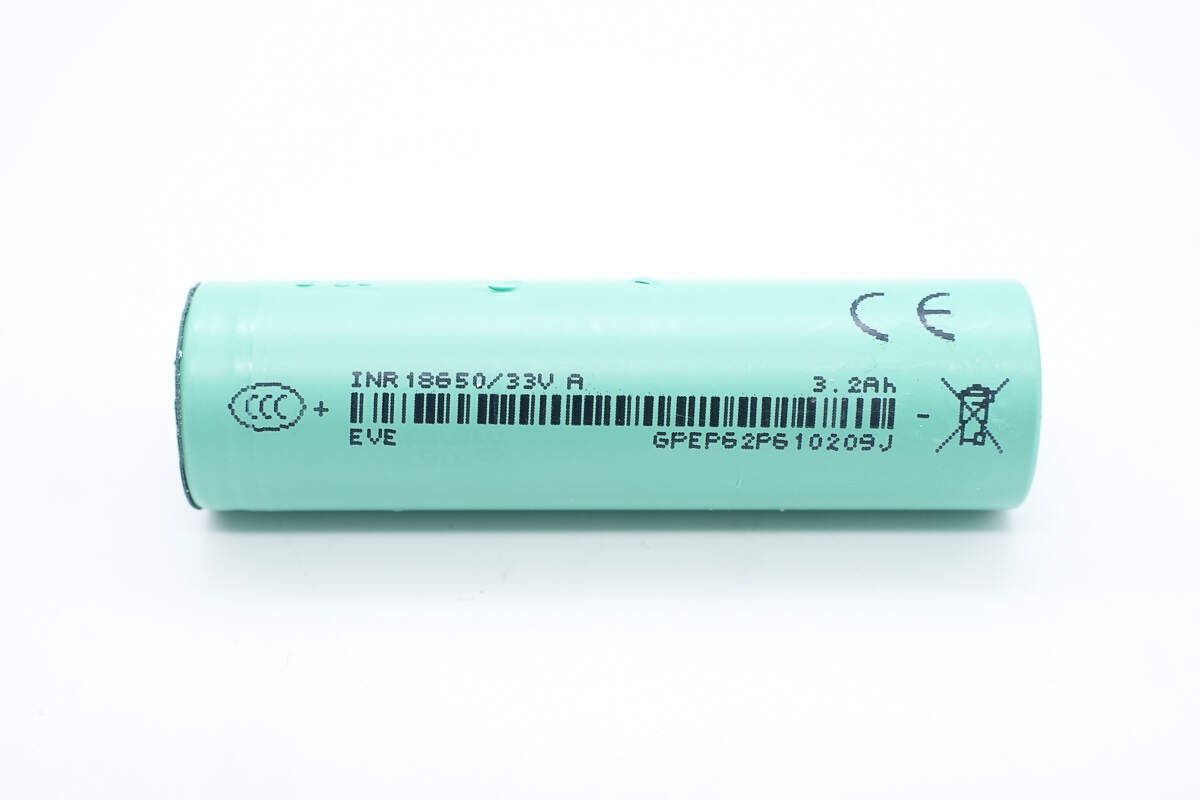
The cells are supplied by EVE, model INR18650/33V. They are automotive-grade cells with a capacity of 3.2Ah, a nominal voltage of 3.6V, and a nominal energy of 11.52Wh. The cells have passed CCC and CE certifications.
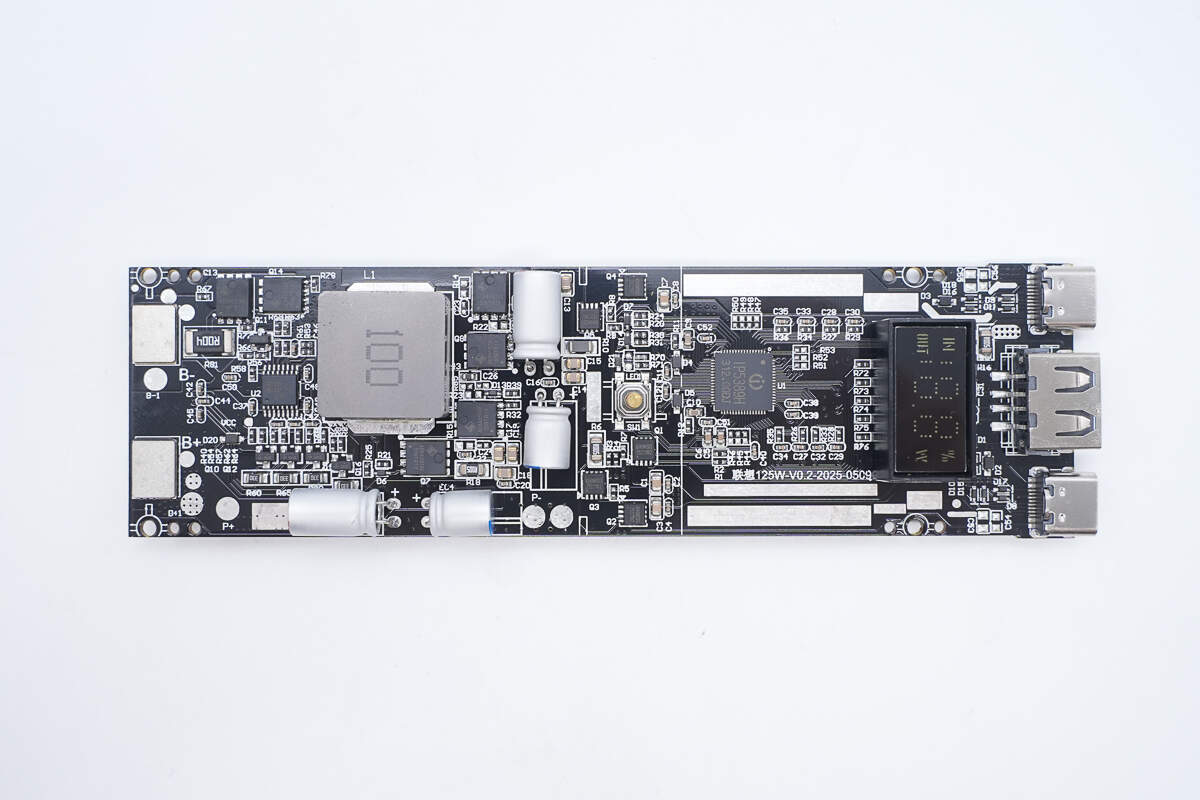
The front side of the PCB integrates a battery protection chip, battery protection MOSFETs, power bank SoC, synchronous buck-boost MOSFETs, VBUS MOSFETs, solid capacitors, and the digital display.
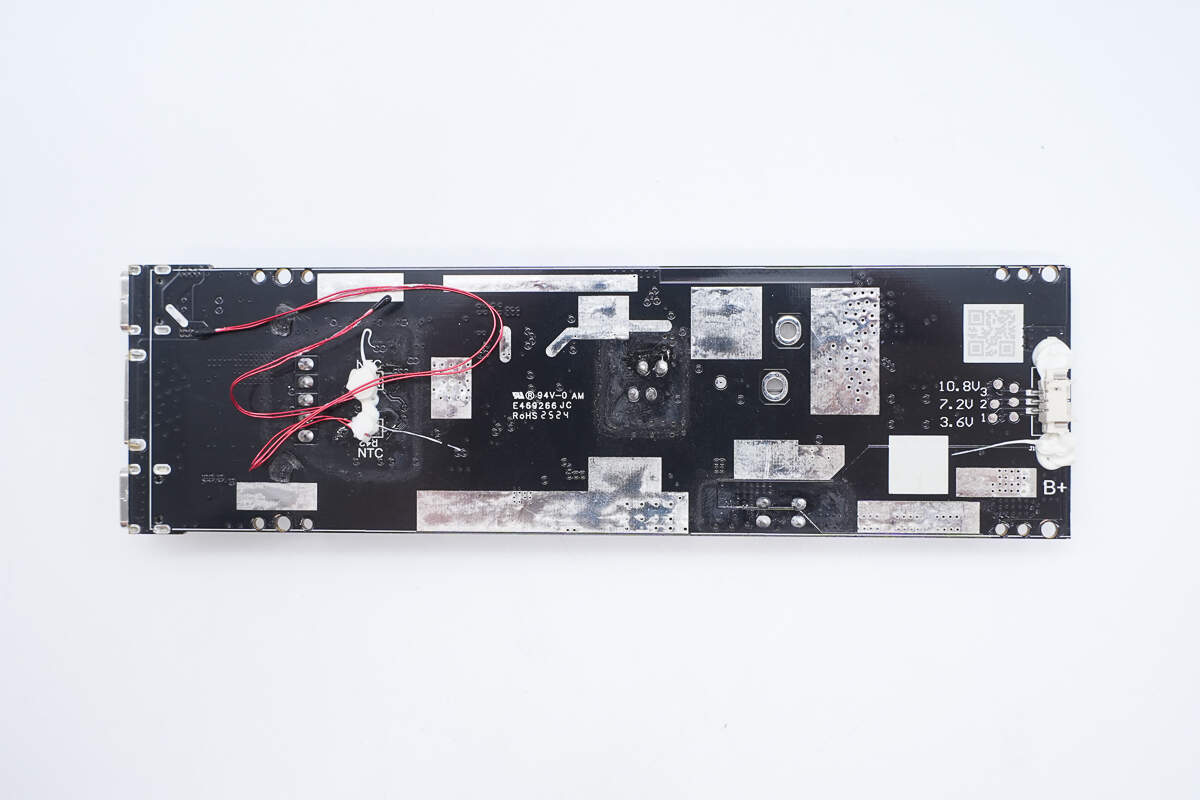
The back side features two thermistors, and the areas beneath the corresponding chips have exposed copper with added solder to enhance heat dissipation.
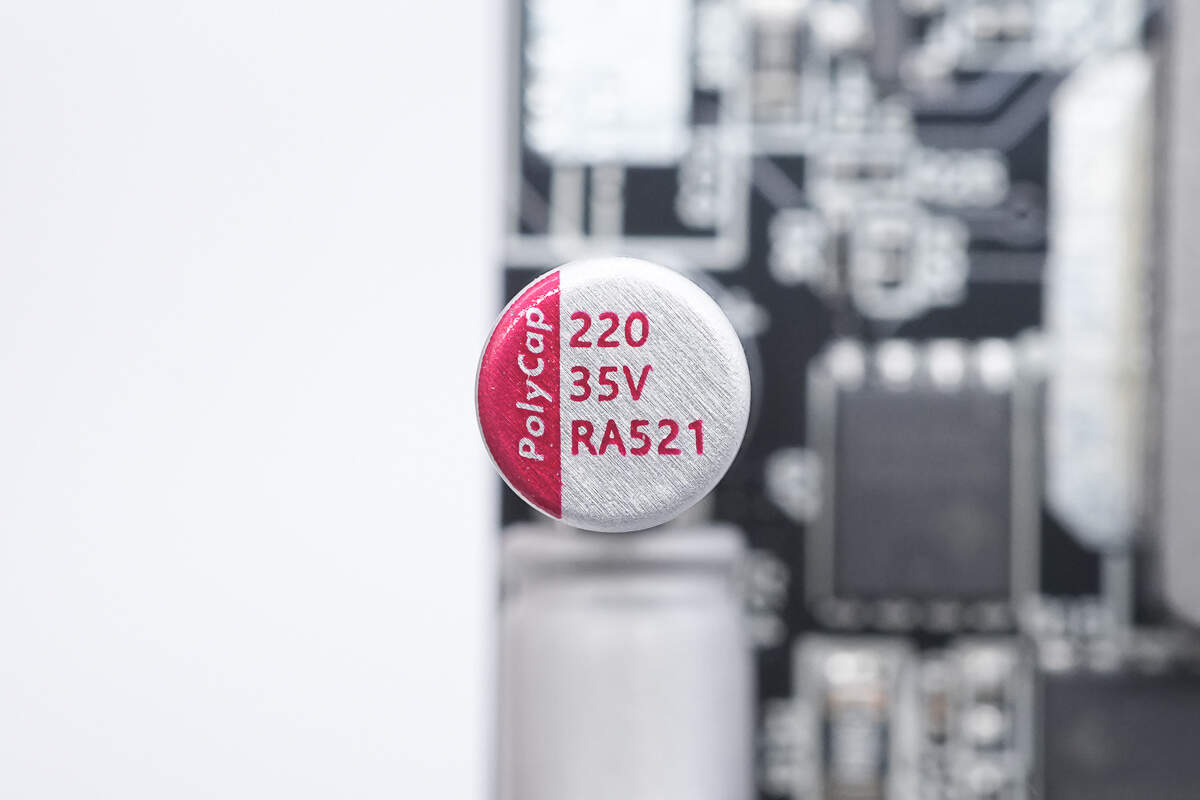
The solid capacitor on the battery side is from PolyCap and is rated at 35V 220µF.
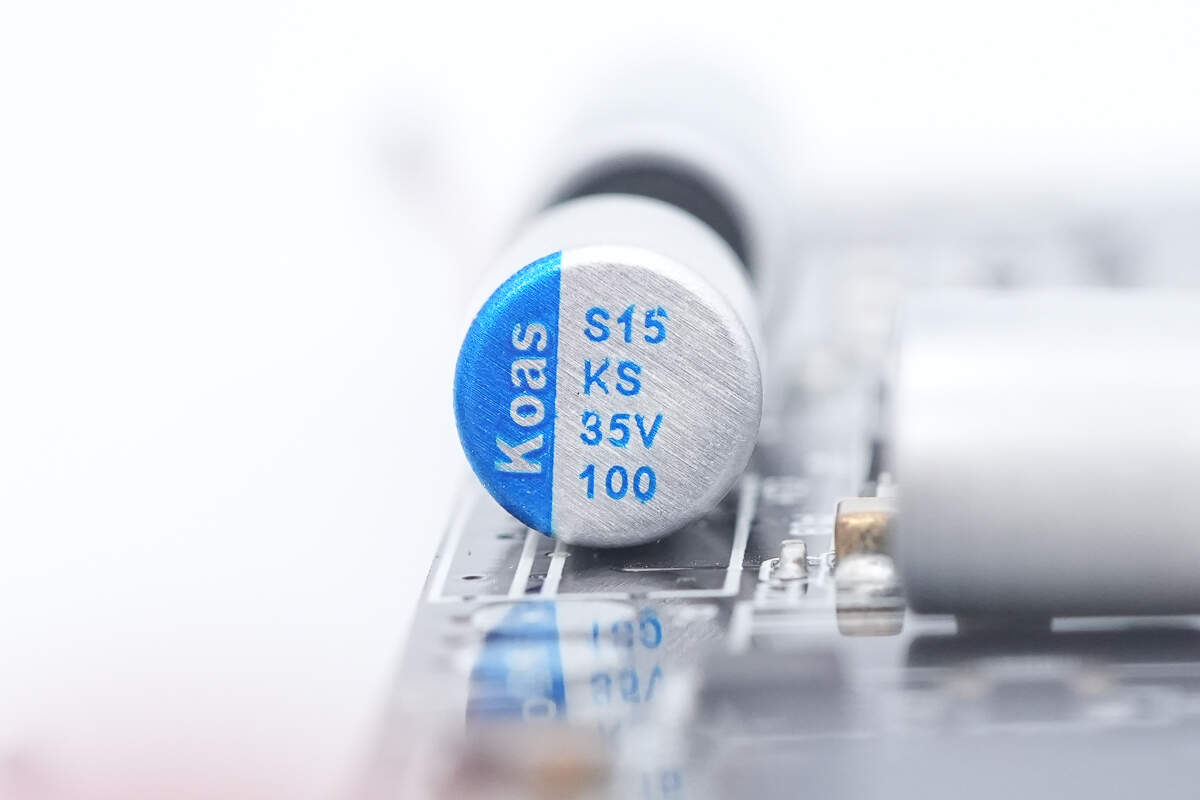
The other solid capacitor is from Koshin, rated at 35V 100µF.
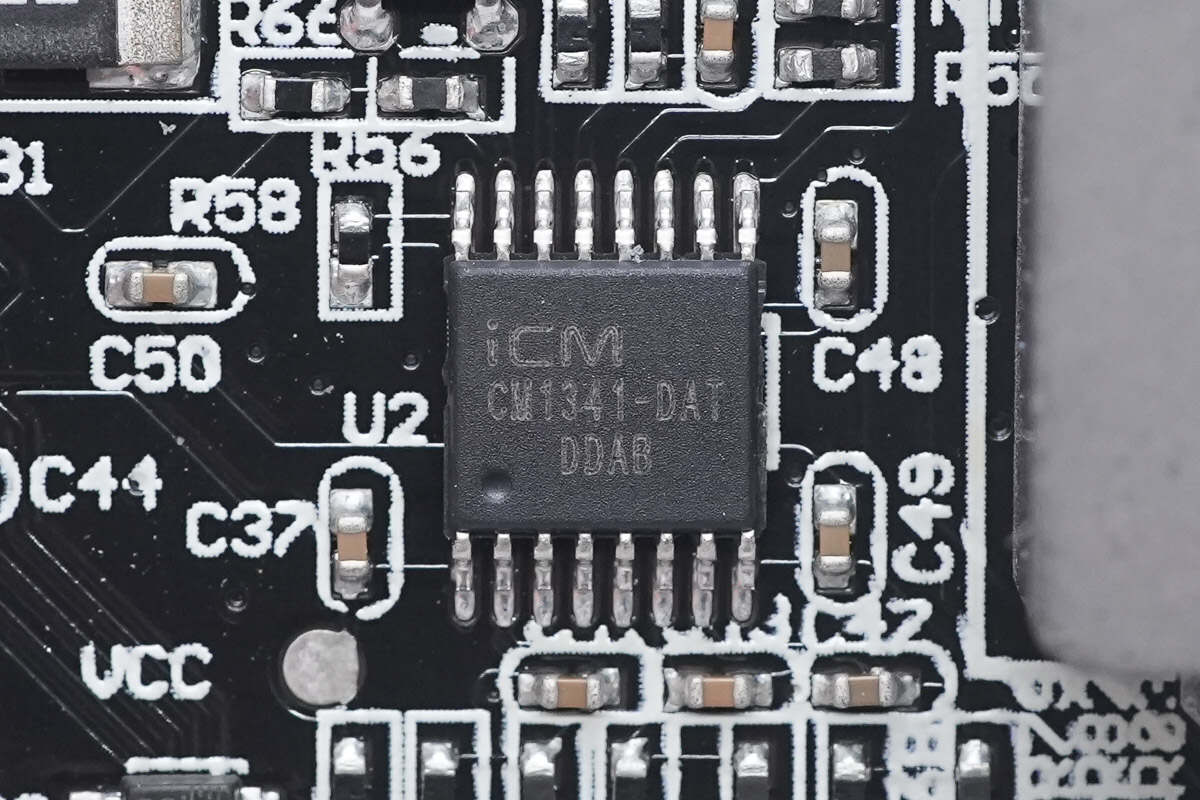
The battery protection chip is from iCM, model CM1341-DAT. It is a protection IC specifically designed for 4-series lithium-ion and lithium iron phosphate battery packs, integrating high-precision voltage detection and current sensing circuits. By monitoring the voltage of each cell, charge and discharge current, and temperature, it provides protection functions including overcharge, overdischarge, cell balancing, open-circuit detection, low-voltage charge inhibit, discharge overcurrent, short-circuit, charge overcurrent, and overtemperature protection. The discharge overcurrent protection delay is adjustable via an external capacitor, while other protection delays are internally set.
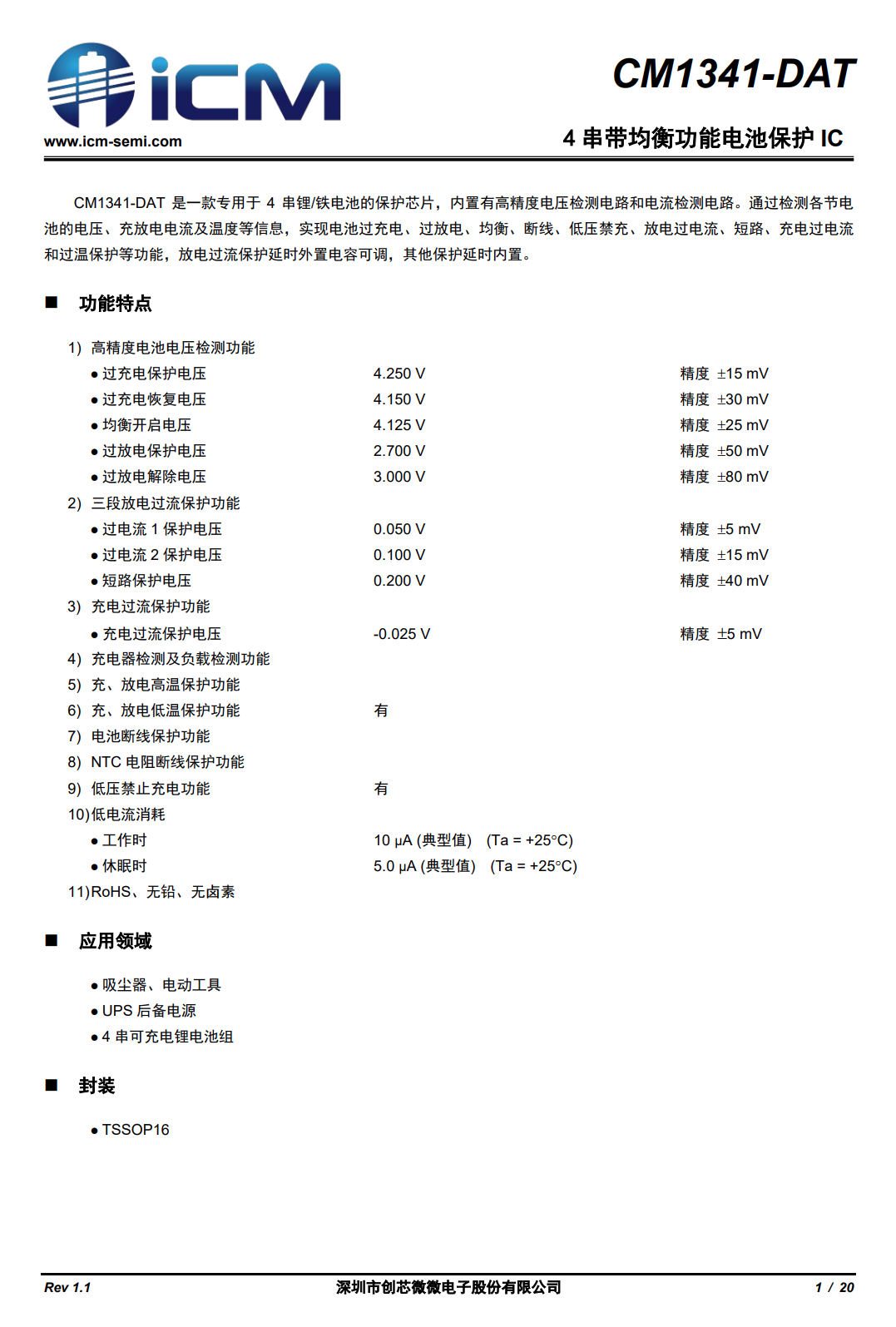
The iCM CM1341-DAT features a battery overcharge protection accuracy of 15 mV, supports three-stage discharge overcurrent protection, and includes charge overcurrent protection. It also supports cell wiring open-circuit protection and NTC thermistor open-circuit protection, providing comprehensive protection for multi-series lithium battery packs.
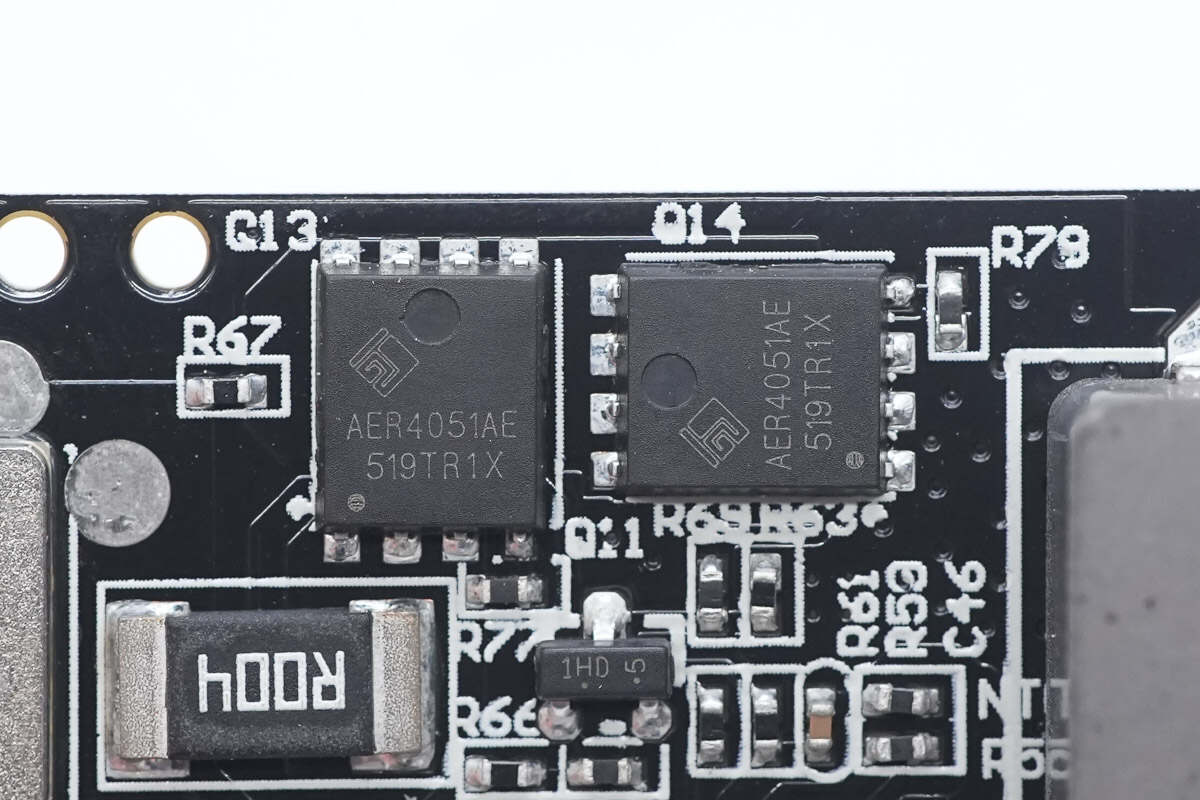
The battery protection MOSFETs are from ALLEPIC, model AER4051AE. They are NMOS devices rated at 40V, with an on-resistance of 5.5 mΩ, and are packaged in a PDFN5060 package.
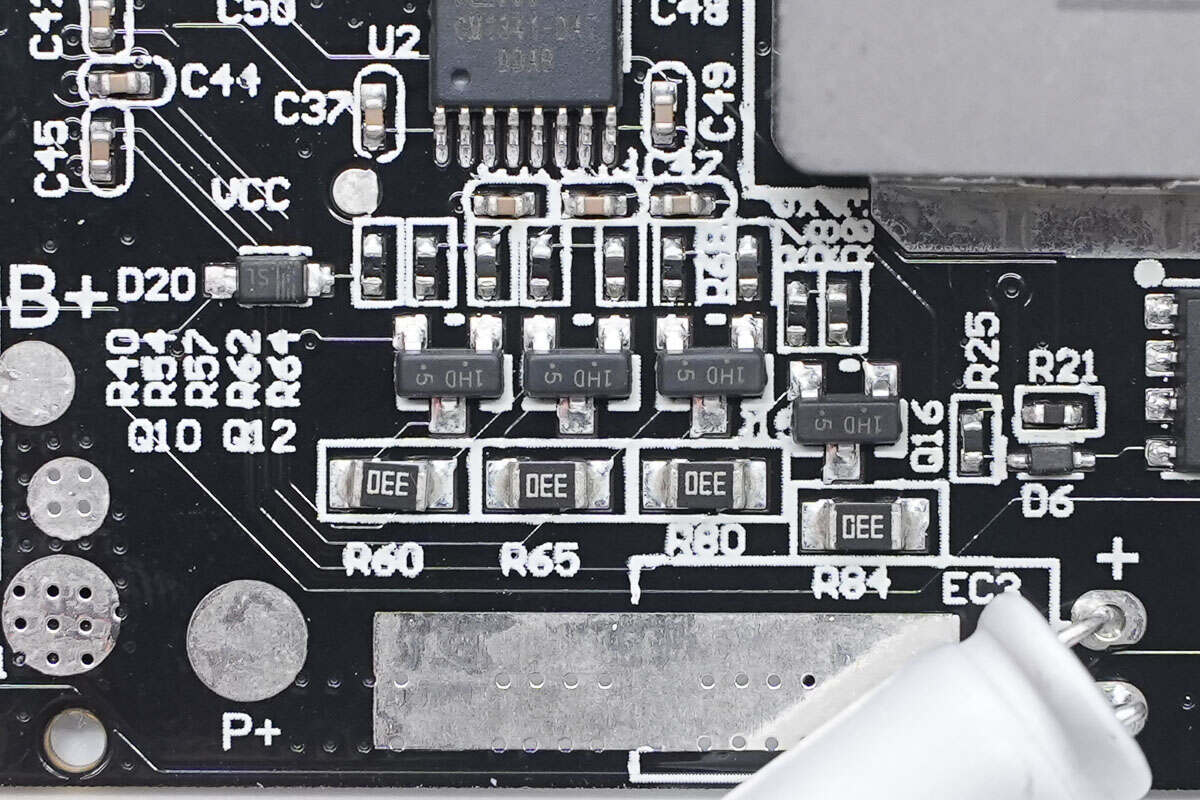
Close-up view of the cell balancing circuit.
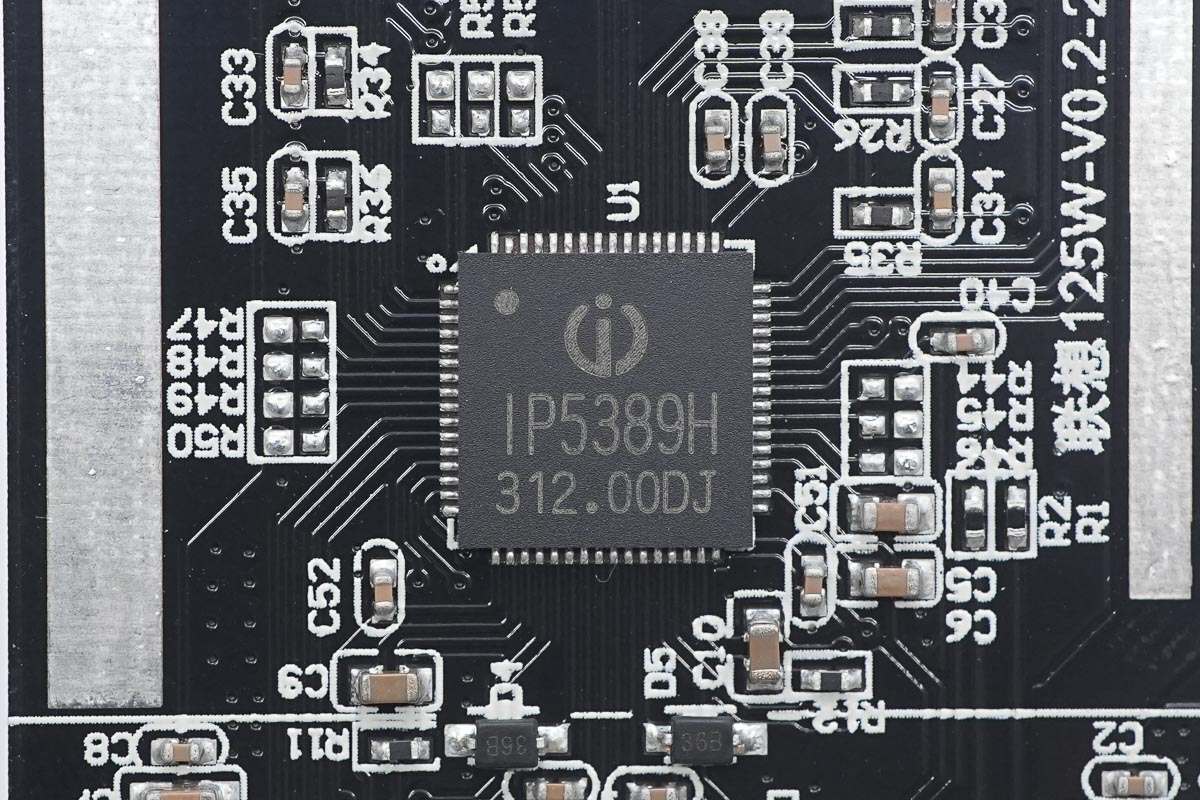
The master control chip of the power bank is supplied by Injoinic, model IP5389H. This chip integrates a synchronous buck-boost controller, supports multiple fast-charging protocols, and can be used with 2–6 cell battery packs, delivering a maximum output power of 100W. It supports two USB-C ports for input and output, as well as one additional USB-C or USB-A output, with any port capable of fast charging.
The IP5389H supports a wide range of fast-charging protocols, including UFCS, and allows protocol customization. It integrates a bidirectional synchronous buck-boost controller and a charge pump to drive external NMOS transistors. The chip supports adaptive charge current adjustment and is compatible with lithium iron phosphate, ternary, and high-voltage lithium batteries.
Internally, the chip integrates a coulomb counter and a 14-bit ADC. It supports four LED indicators or an 88/188 digital display for battery capacity, allows battery capacity to be set via resistors, and can perform self-learning of battery capacity for precise charge display. Additional features include automatic device detection, fast-charge status indication, battery temperature monitoring, and multifunction button support. The chip comes in a QFN64 package.
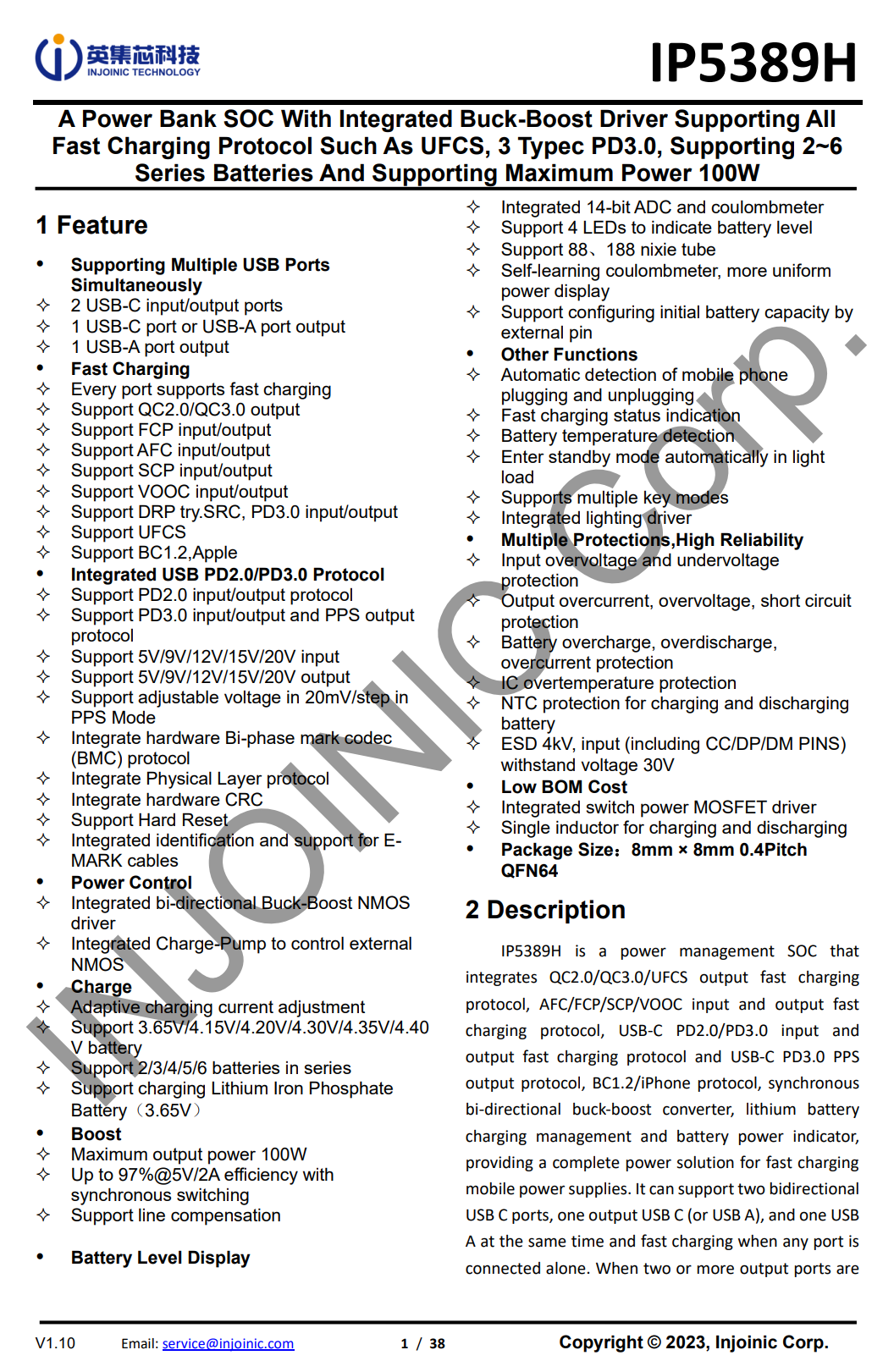
Here is the information about Injoinic IP5389H.
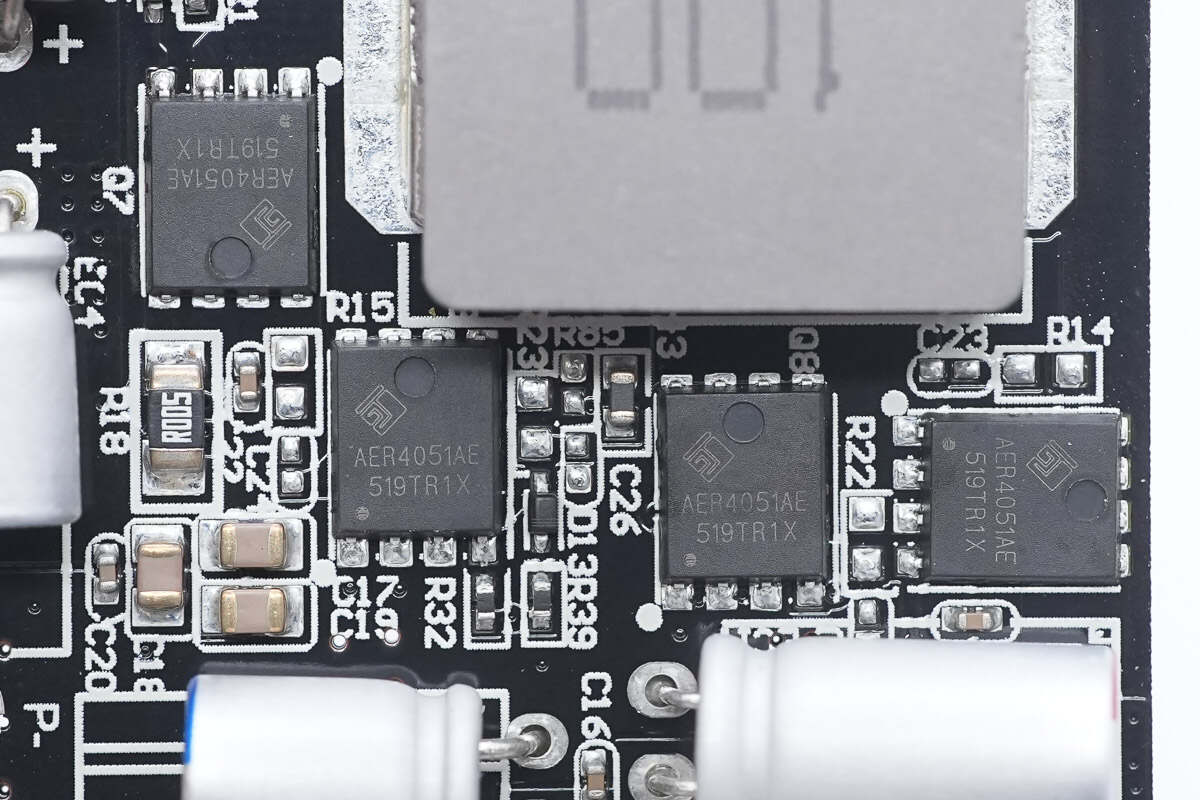
The four synchronous buck-boost MOSFETs are also supplied by ALLEPIC, model AER4051AE.
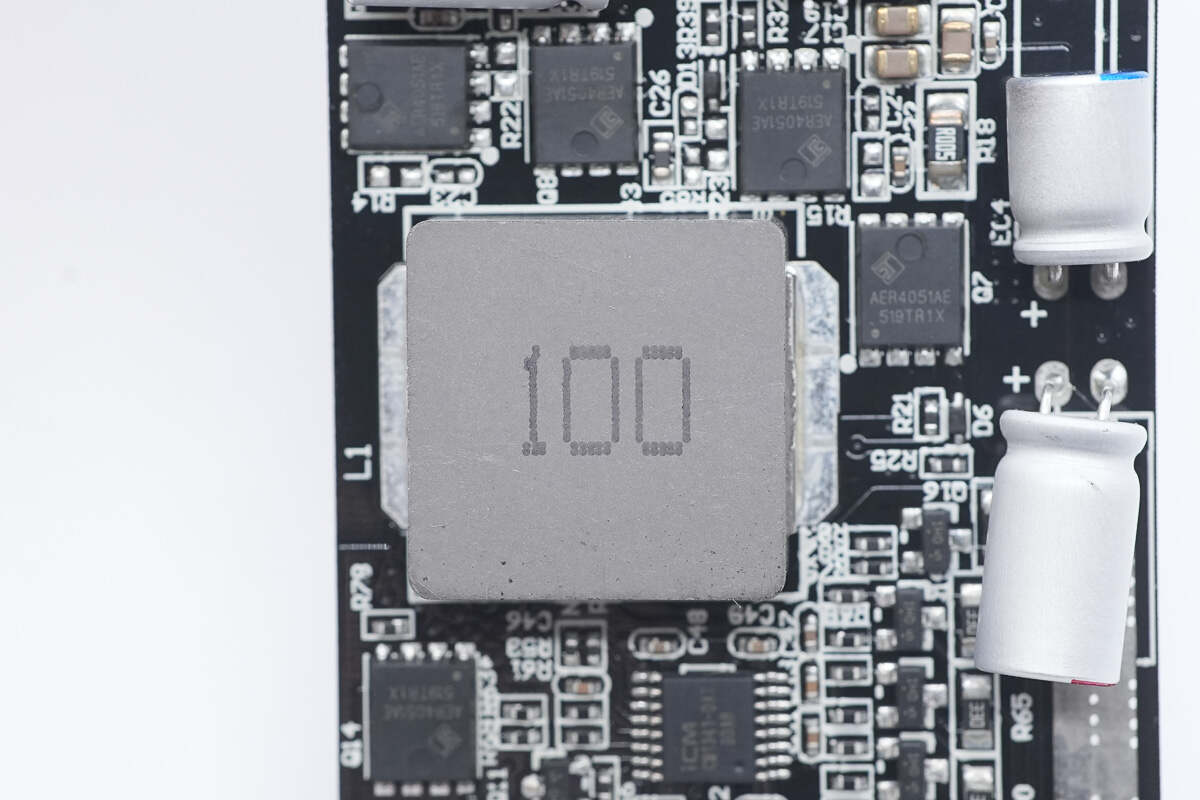
Close-up of the paired 10 μH buck-boost inductor.
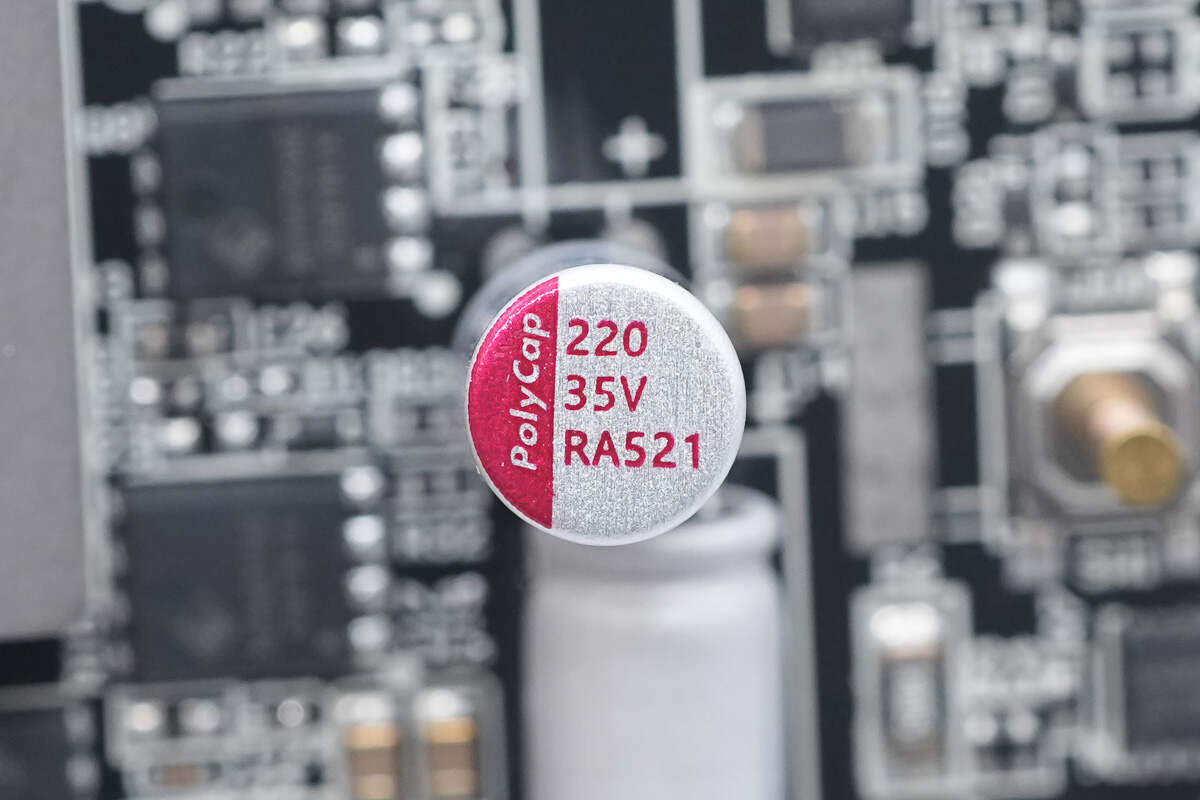
The buck-boost solid capacitor for output filtering is also from PolyCap, rated at 35 V 220 µF.
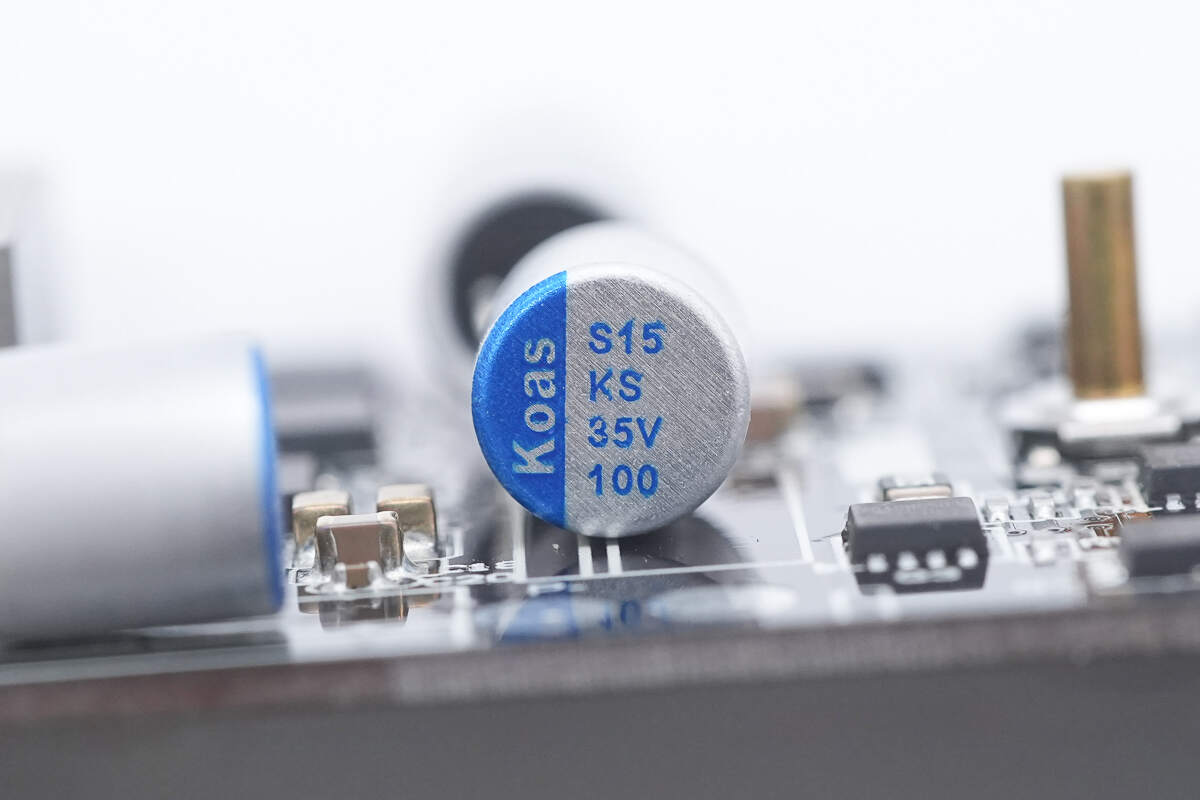
The other capacitor is from Koshin, rated at 35 V 100 µF.
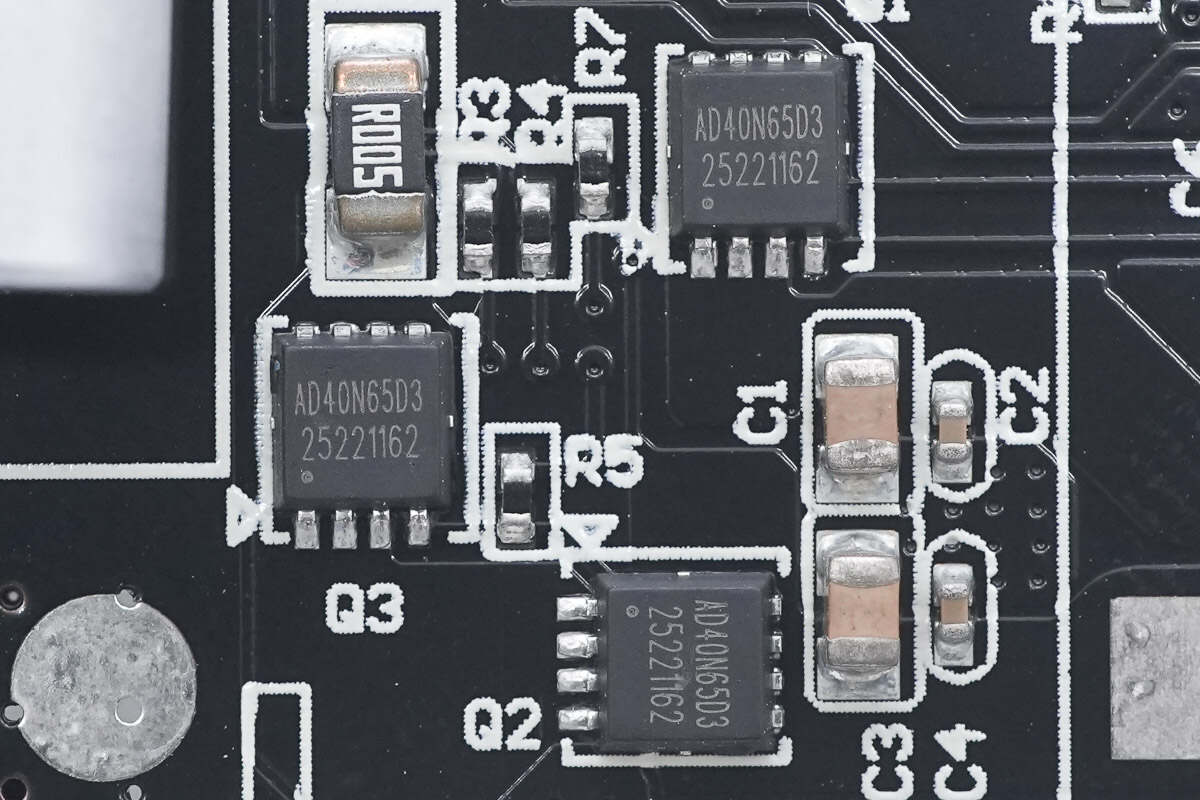
The two VBUS MOSFETs for the USB-C1 port and the VBUS MOSFET for the USB-A port are all ADAMANT AD40N65D3 NMOS devices, rated at 40 V with an on-resistance of 4 mΩ, and use a PPAK 3×3 package.
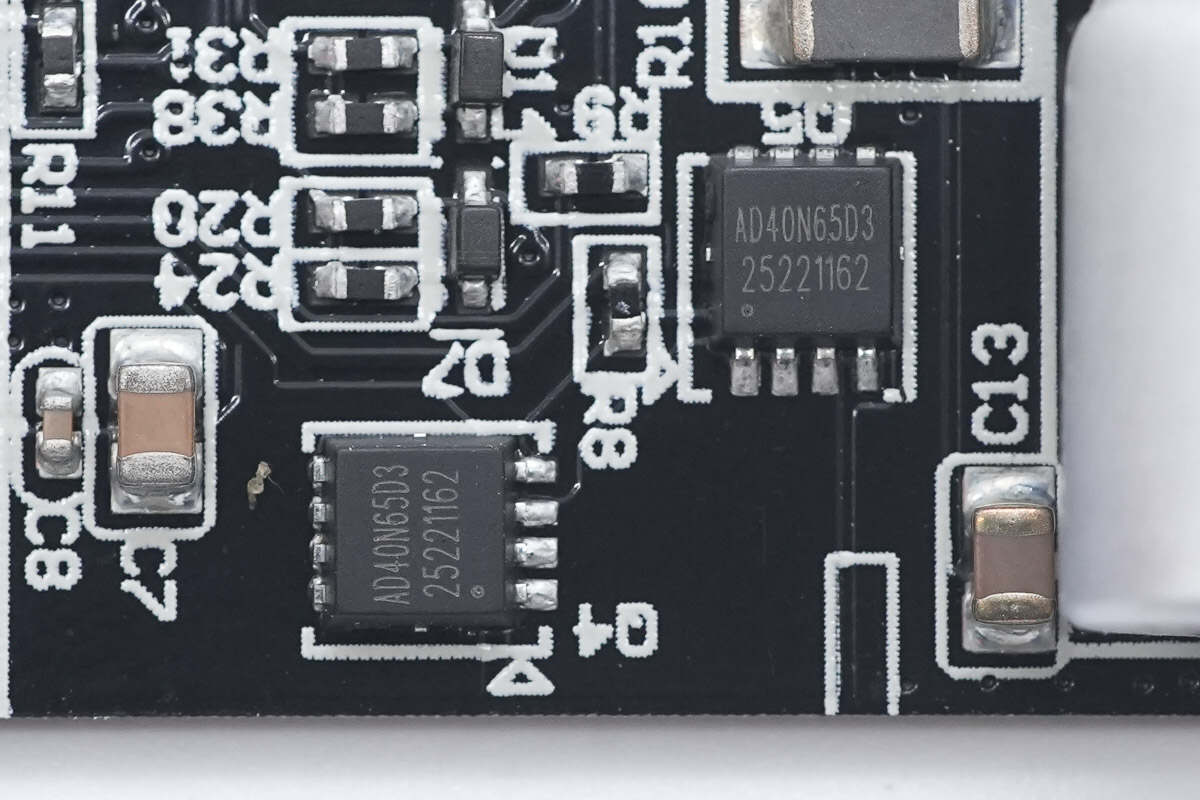
The two VBUS MOSFETs for the USB-C2 port are also ADAMANT AD40N65D3.

Close-up of the thermistor.

Close-up of the other thermistor.
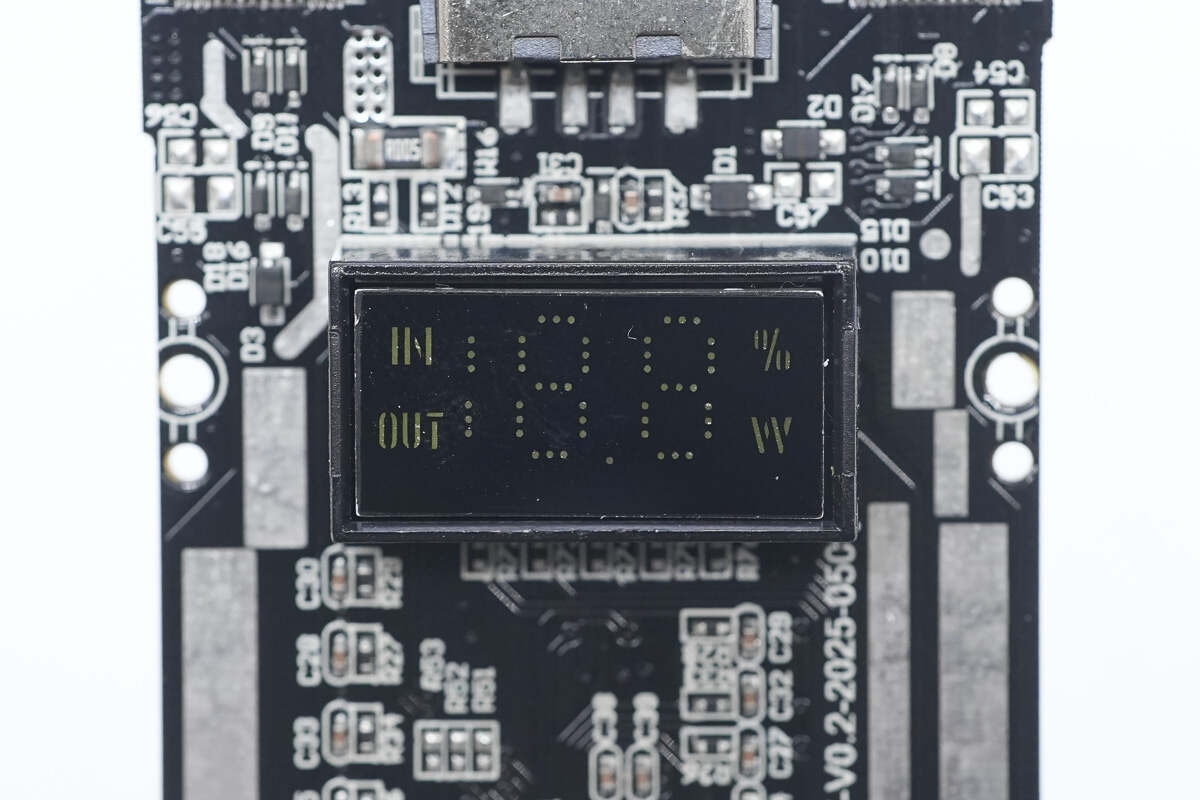
The digital display is protected by a plastic bracket.
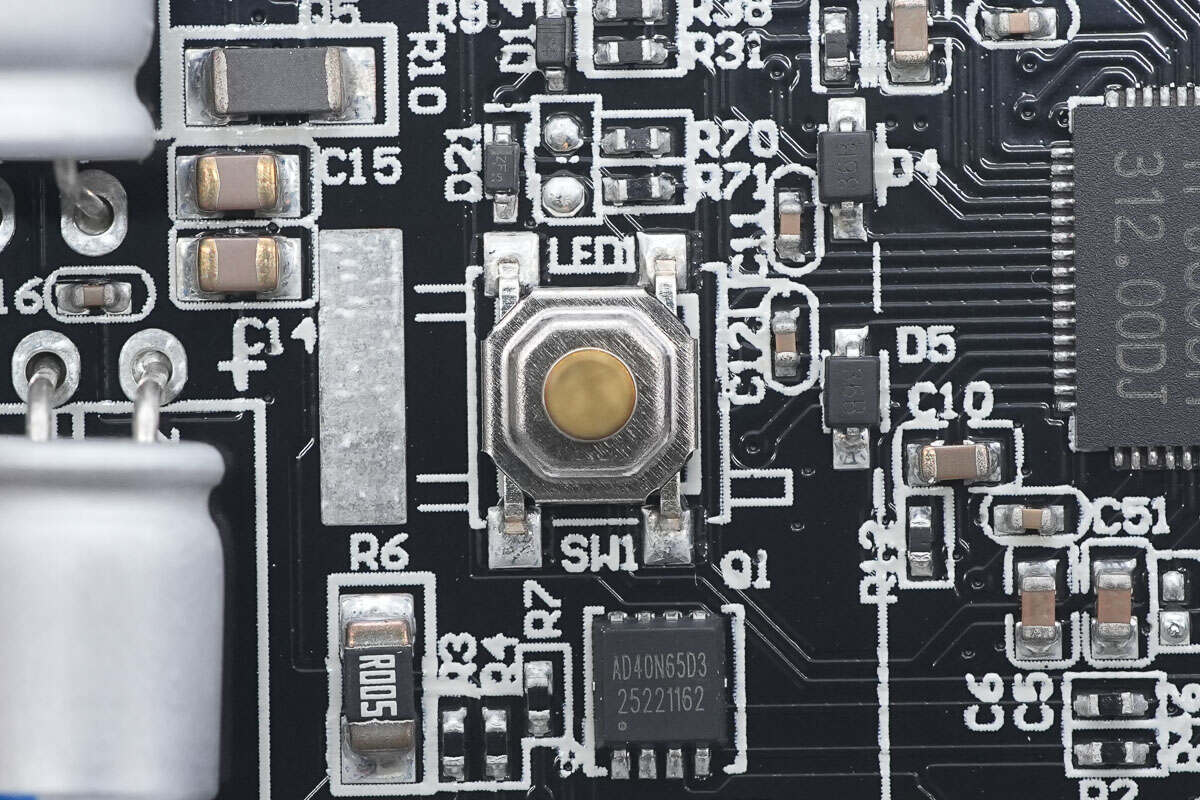
Close-up of the power button.
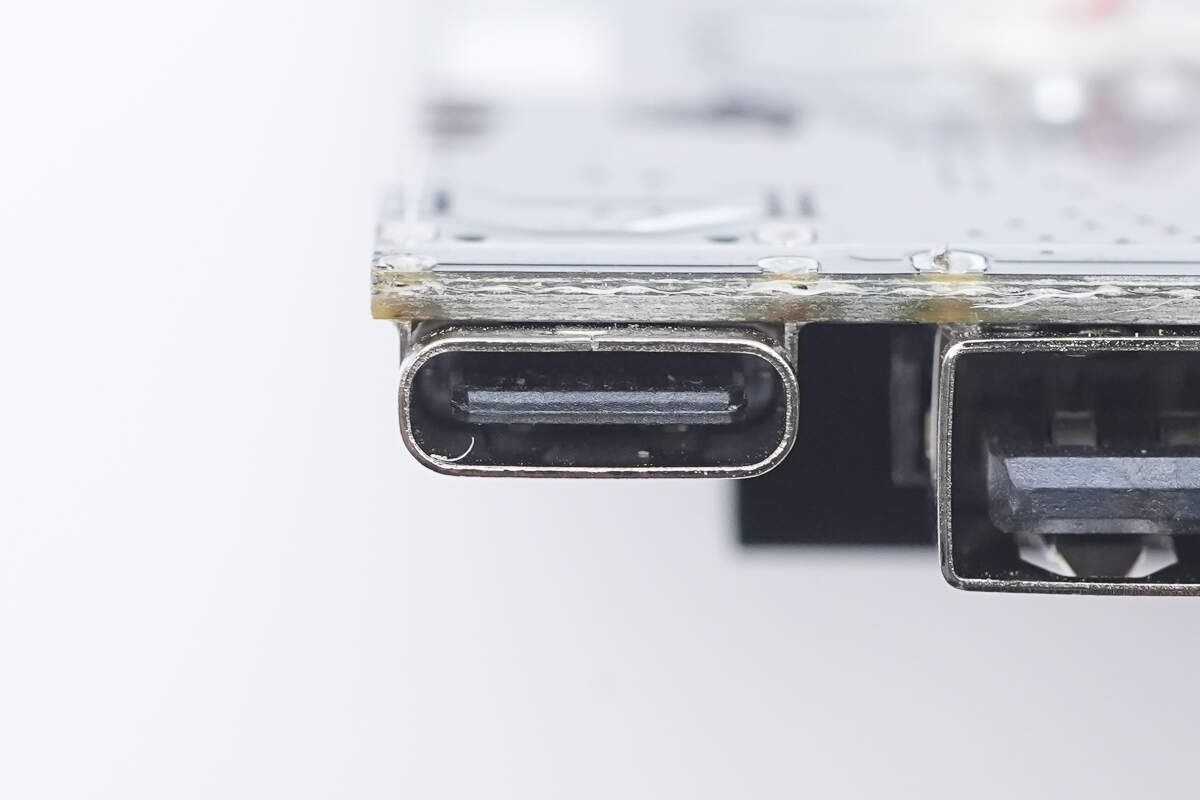
Close-up of the USB-C socket.
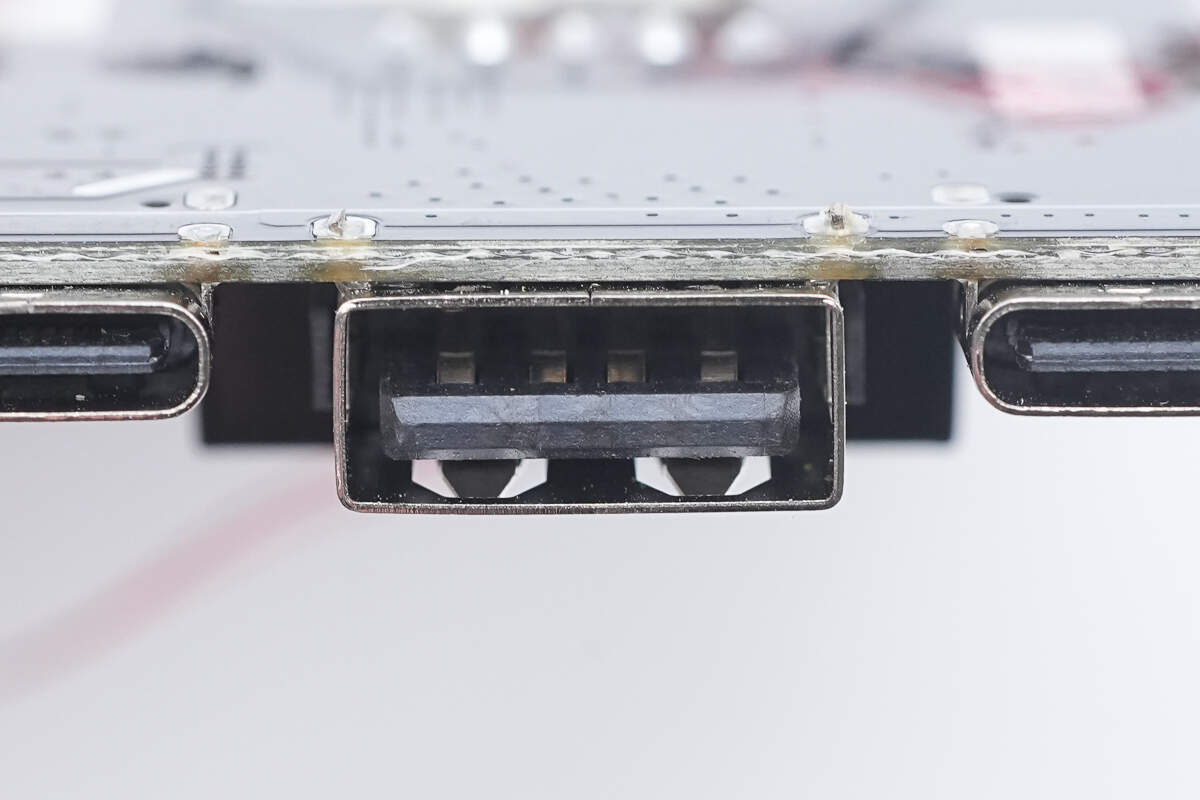
Close-up of the USB-A socket.
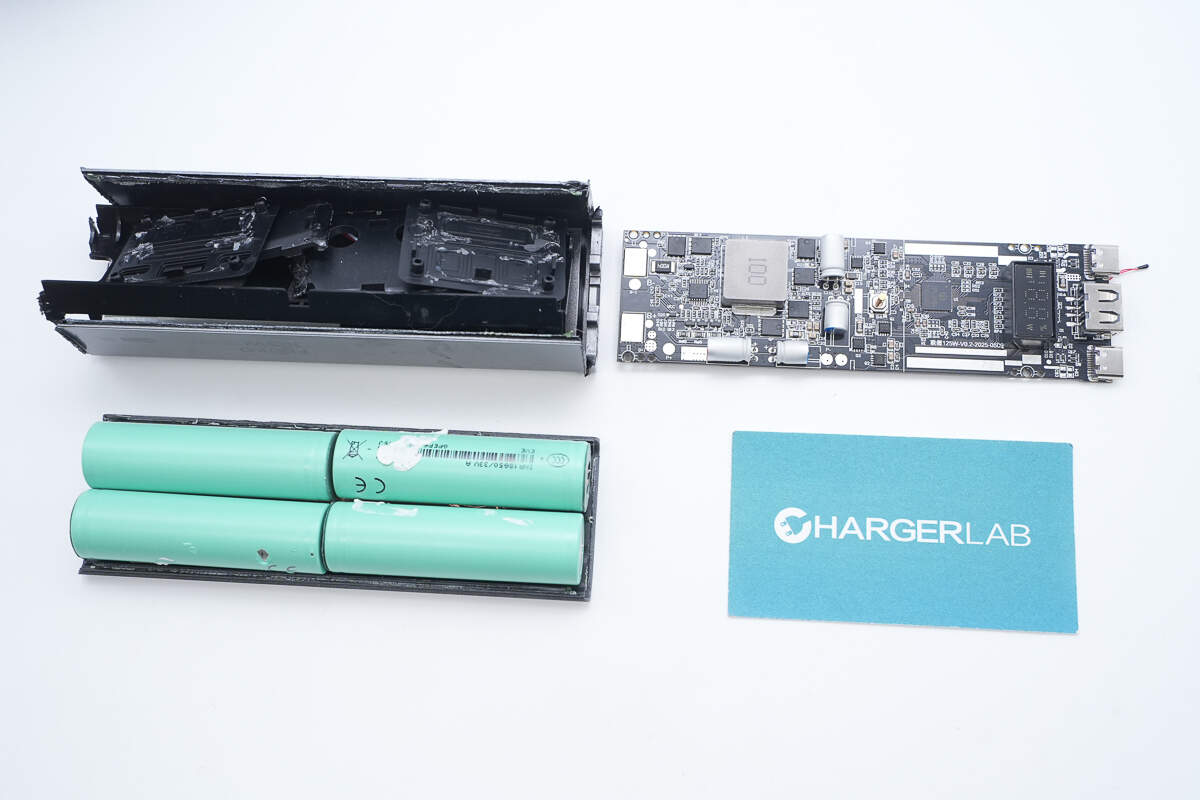
Well, those are all components of the Lenovo Thinkplus FLUXO 125W 12800mAh Portable Power Bank.
Summary of ChargerLAB
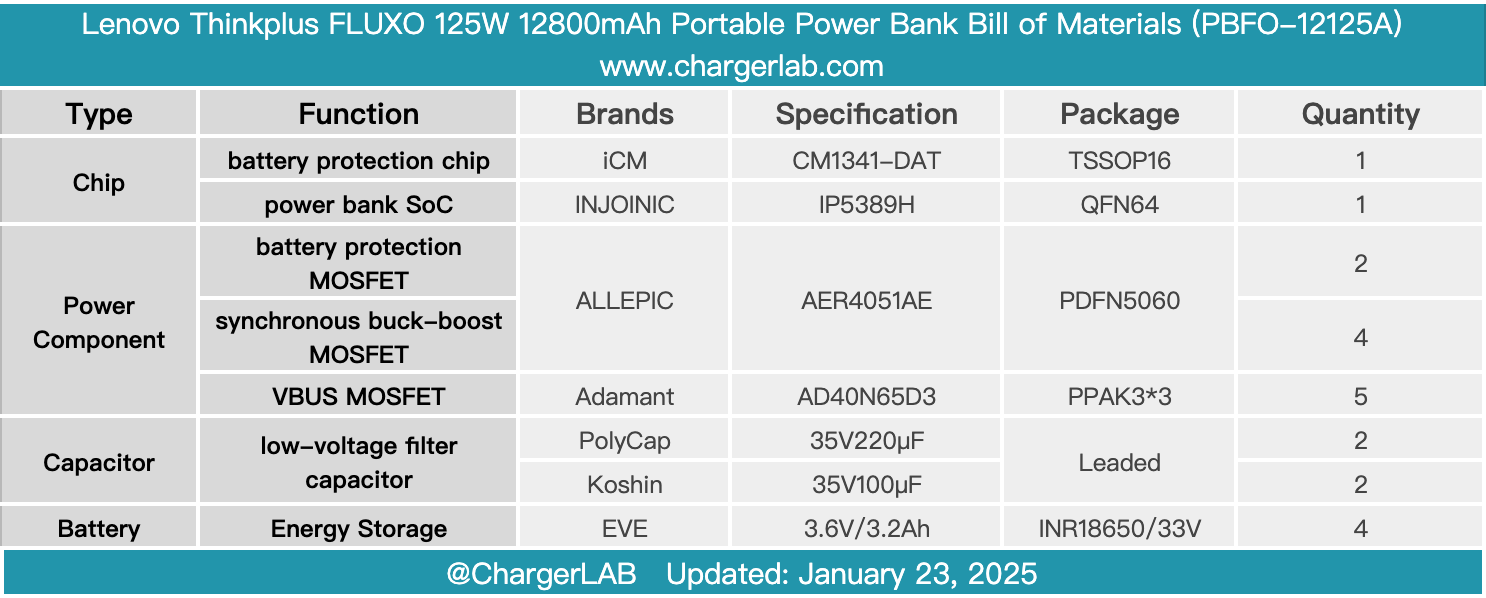
Here is the component list of the Lenovo Thinkplus FLUXO 125W 12800mAh Portable Power Bank for your convenience.
It is equipped with a digital display that shows real-time battery level, input, and output power. Featuring digital hybrid charging technology, it supports simultaneous charge and discharge, dynamic power distribution, and other functions. It delivers up to 125 W output and supports 100 W PD/PPS. A low-current mode is also included to accommodate small devices such as Bluetooth earphones and smartwatches.
After taking it apart, we found that it uses four automotive-grade EVE INR18650/33V cells. The battery is protected by an iCM CM1341-DAT protection solution and monitored with thermistors for temperature. An Injoinic IP5389H highly integrated power bank SoC manages buck-boost charging and discharging as well as control of the three ports. PolyCap and Koshin solid capacitors are used for filtering. The unit features a one-piece enclosure with a securely mounted PCB module. A plastic plate separates the battery pack from the PCB, and protective cushioning such as foam and sponge is applied, reflecting careful and well-thought-out design.
Related Articles:
1. Teardown of DJI Osmo Mobile 8 (DS308)
2. Teardown of Bull 22.5W 10000mAh Semi-Solid State Power Bank (GNV-PGA10EB)
3. Teardown of Baseus 100W 7-in-1 Charging Station (E0307A)