
Introduction
Honor recently launched a 120W charger that supports Honor 120W SuperCharge, capable of fast charging devices such as the Magic V6. It also supports PD3.0 and 65W PD protocols. The 120W output is condensed into a compact body measuring approximately 45 × 45 × 31 mm, offering a clear size advantage compared with other chargers of similar power. Next, we will take a closer look at the design of this product.
Product Appearance
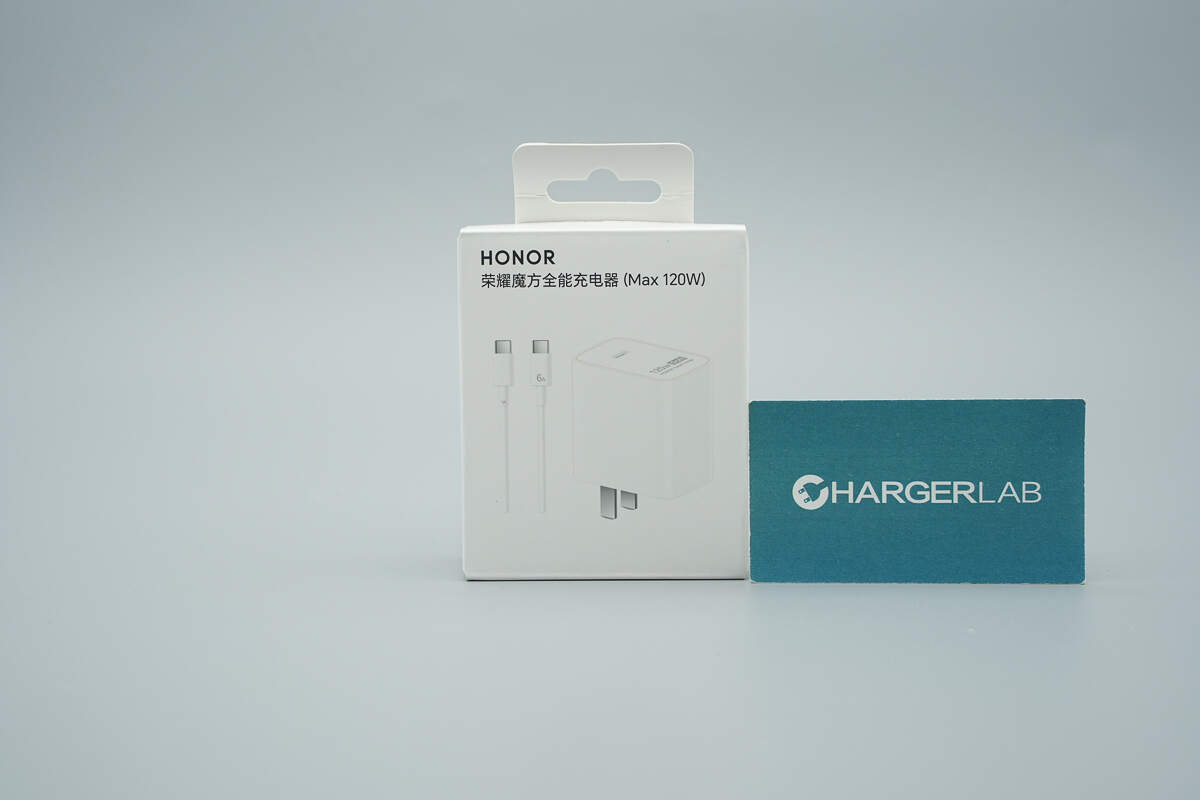
The front of the packaging features the HONOR logo, the product name, and an image of the complete product set.
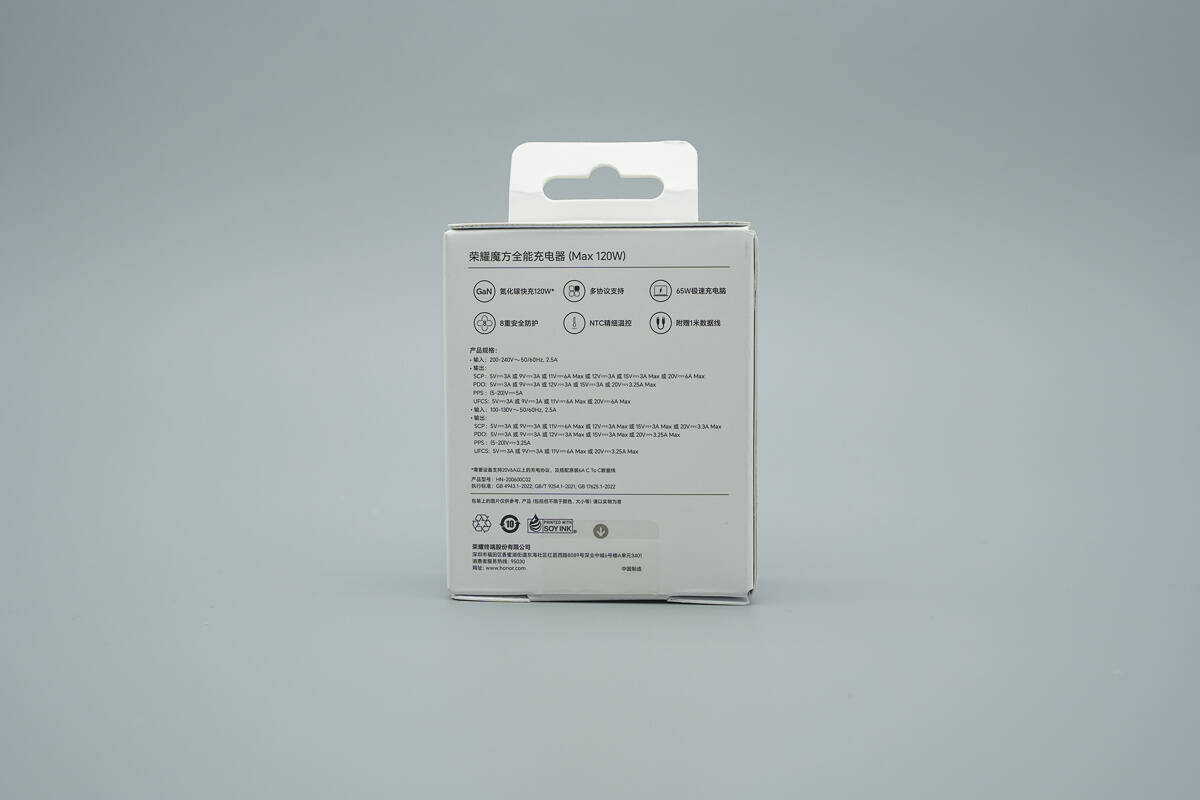
The back of the packaging displays key selling points, specifications, and other relevant information.
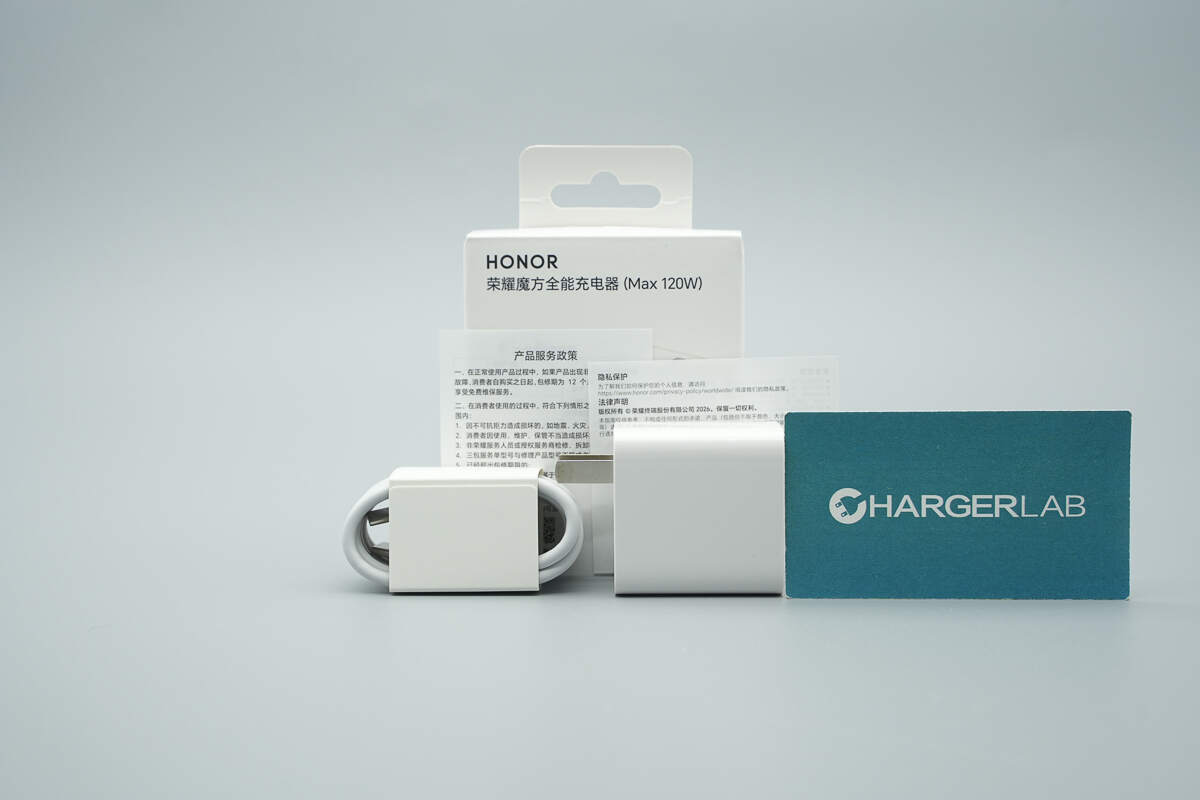
The package includes the charger, a cable, a user manual, and a warranty card.
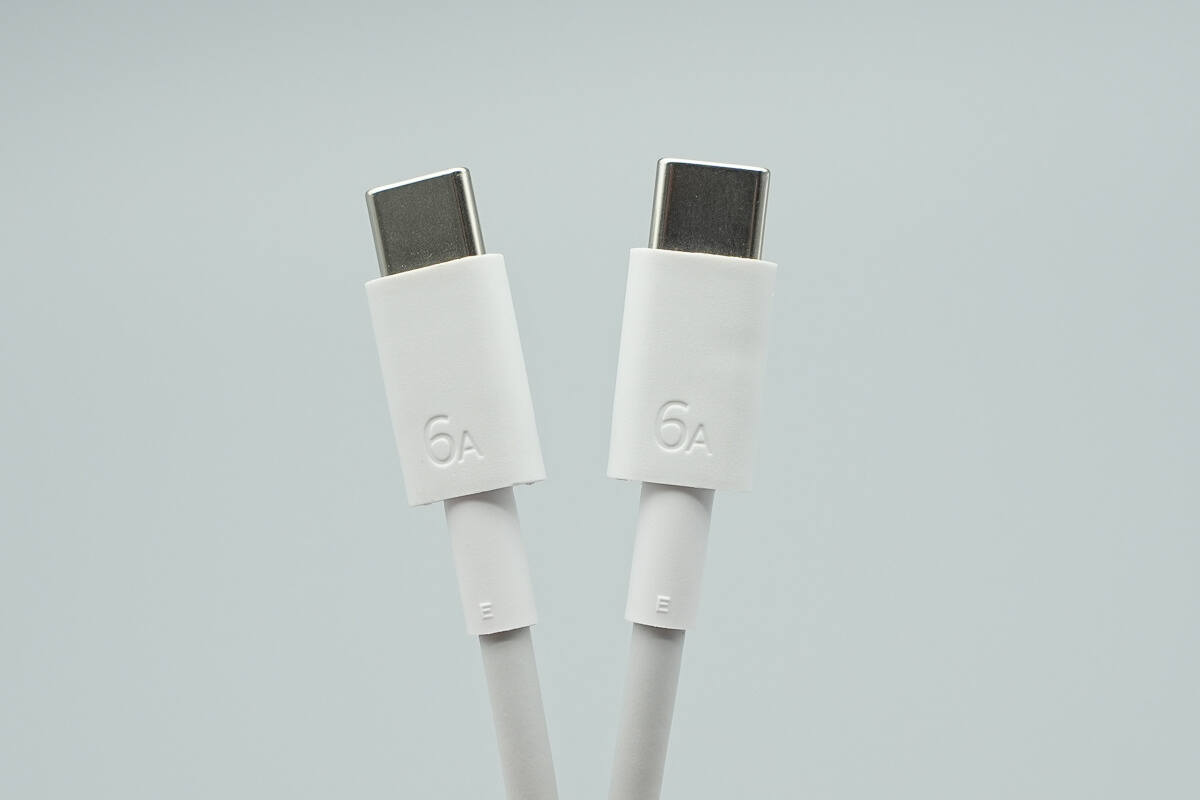
The included cable features a matte-finished connector housing for easy plugging and unplugging, with “6A” engraved on it.
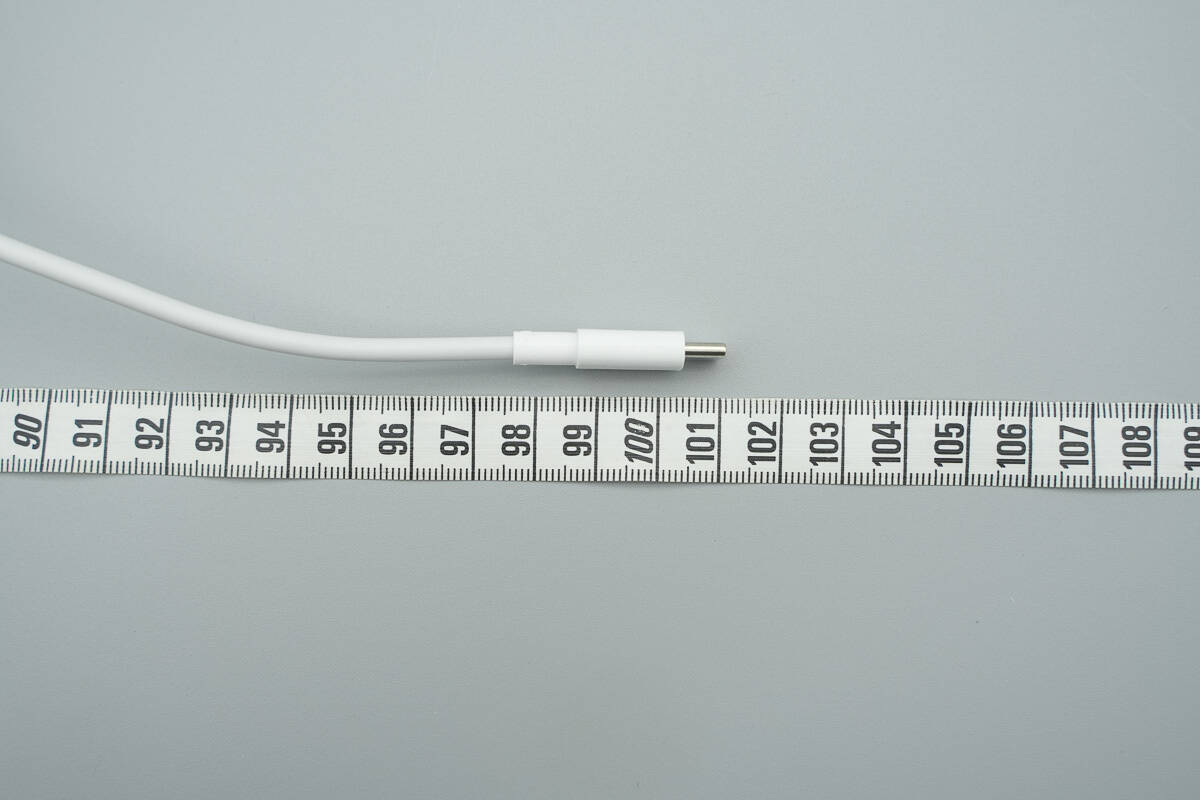
The length of the cable is about 101 cm (39.76 inches).
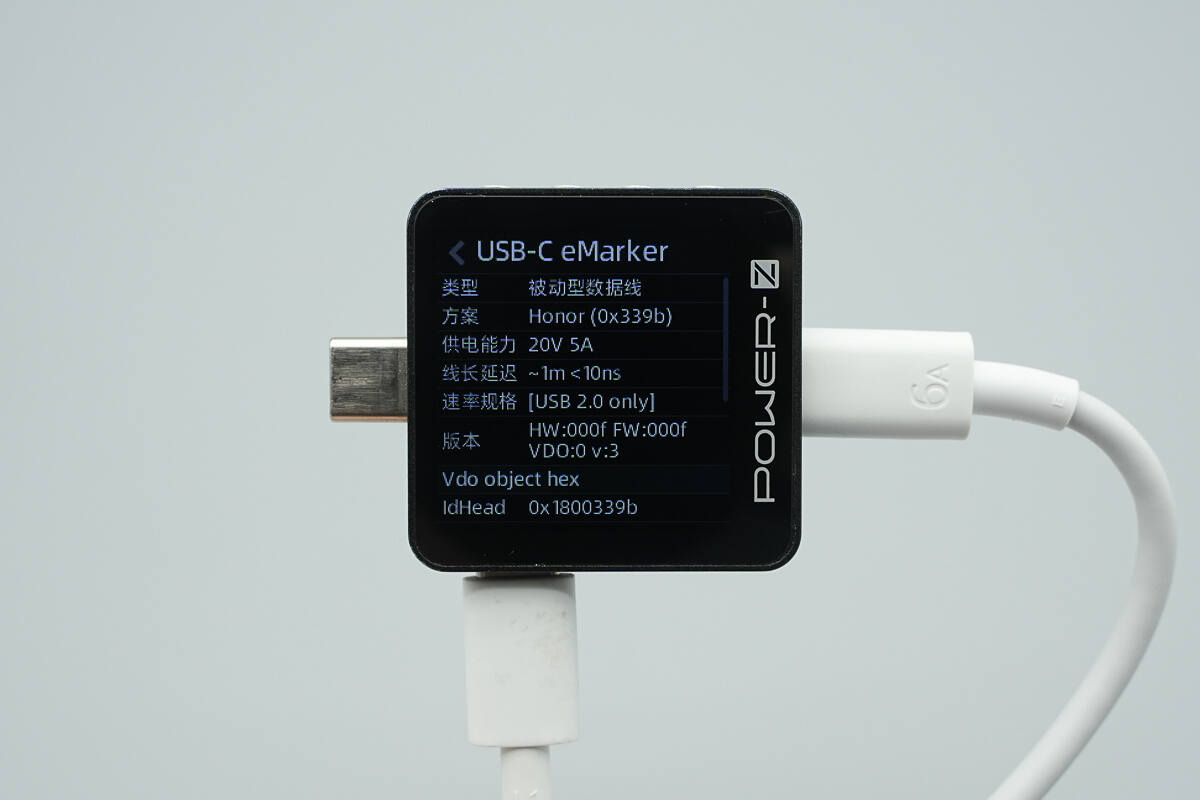
ChargerLAB POWER-Z KM003C shows that the cable’s built-in E-Marker chip is from Injoinic, with a power delivery capability of 20V/5A and a data transfer rate of USB 2.0.
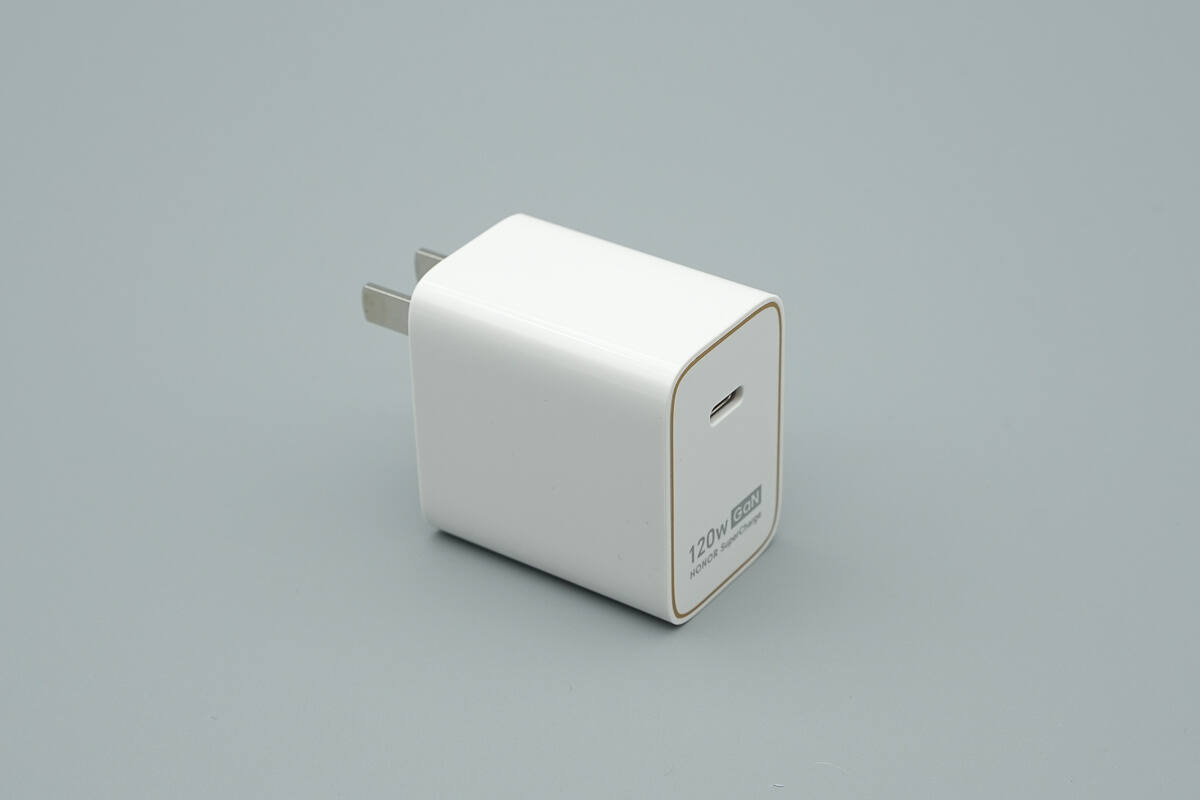
The top edge features a gold decorative ring, and the charger has a compact form factor.
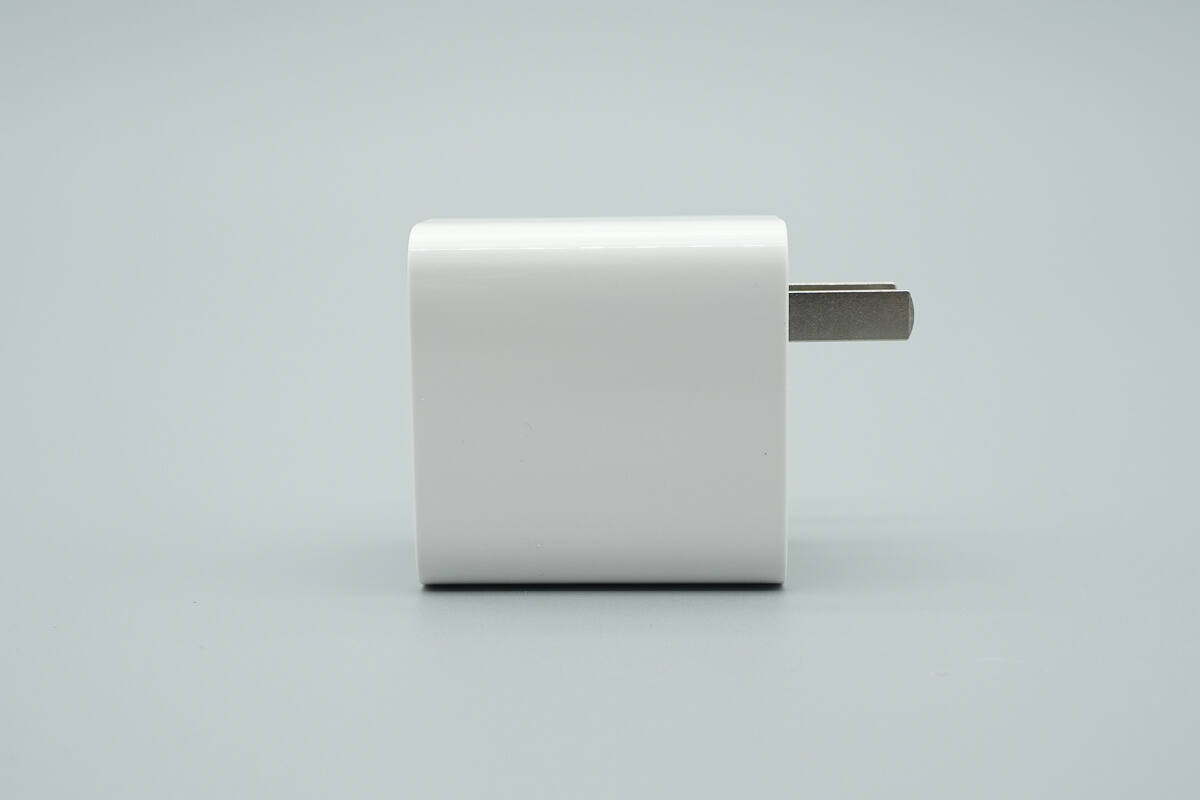
The case has a glossy finish, giving it a very smooth texture.
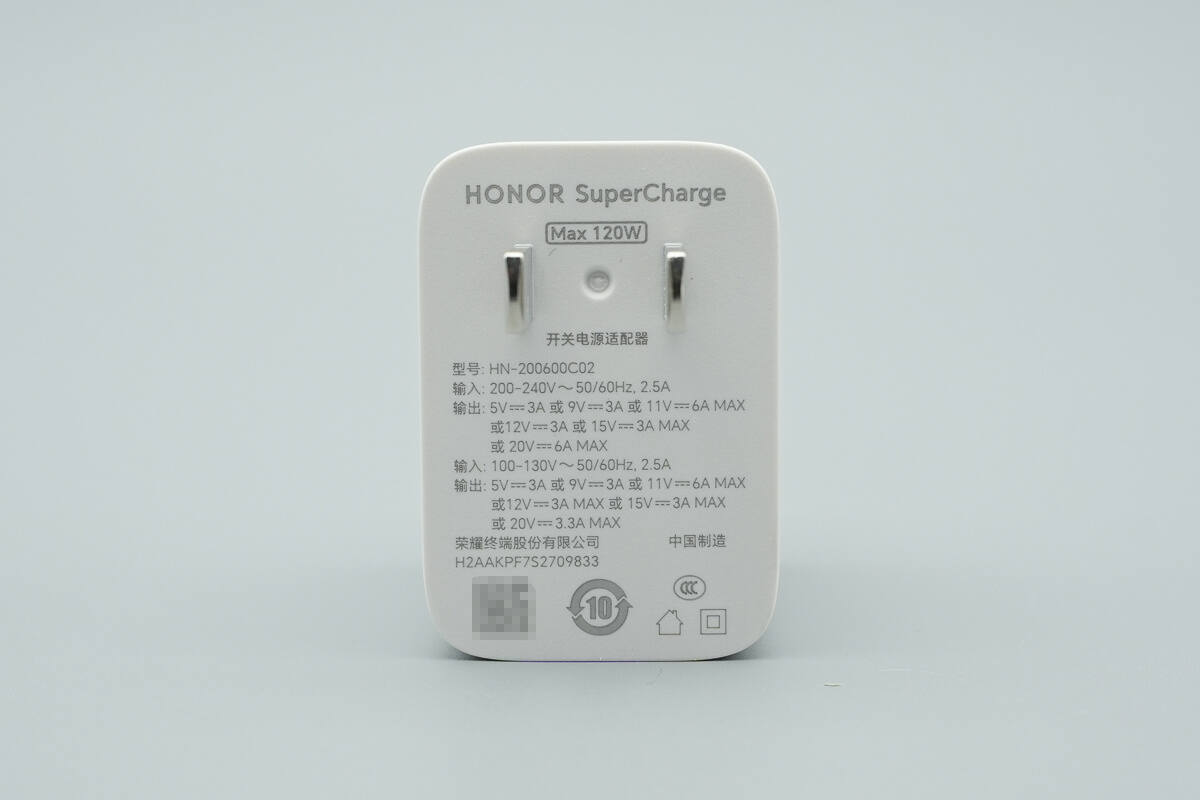
The housing of the input port is printed with the relevant specifications.
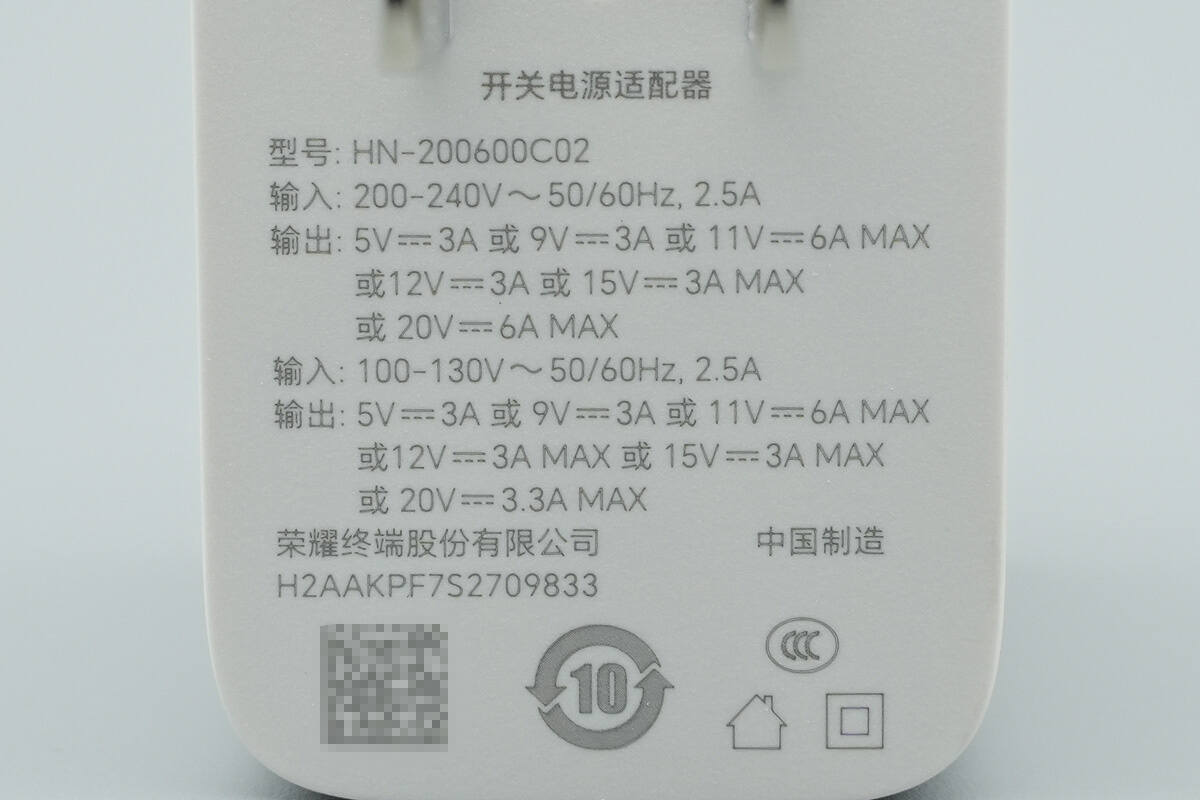
Model: HN-200600C02
Input: 200-240V~50/60Hz 2.5A
Output: 5V 3A, 9V 3A, 11V 6A, 12V 3A, 15V 3A, 20V 6A MAX
Input: 100-130V~50/60Hz 2.5A
Output: 5V 3A, 9V 3A, 11V 6A, 12V 3A, 15V 3A, 20V 3.3A MAX
The product is CCC certified.
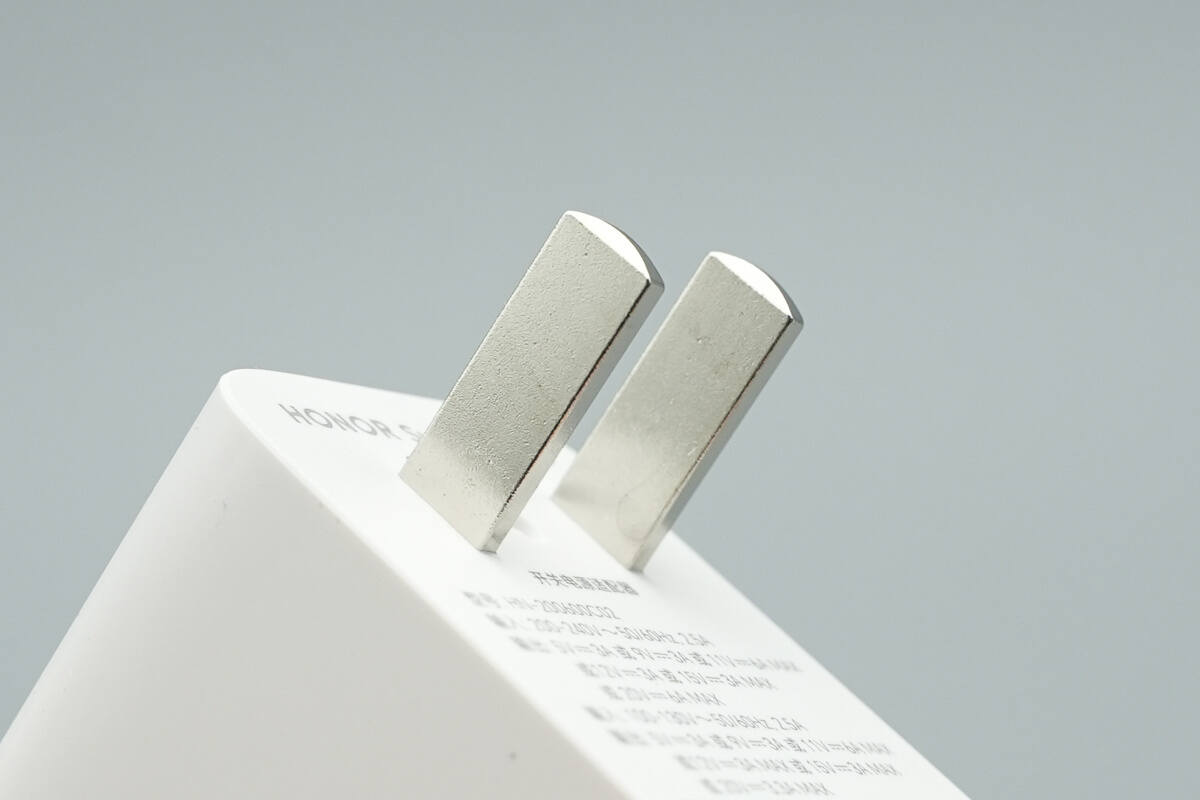
The charger is equipped with fixed prongs.
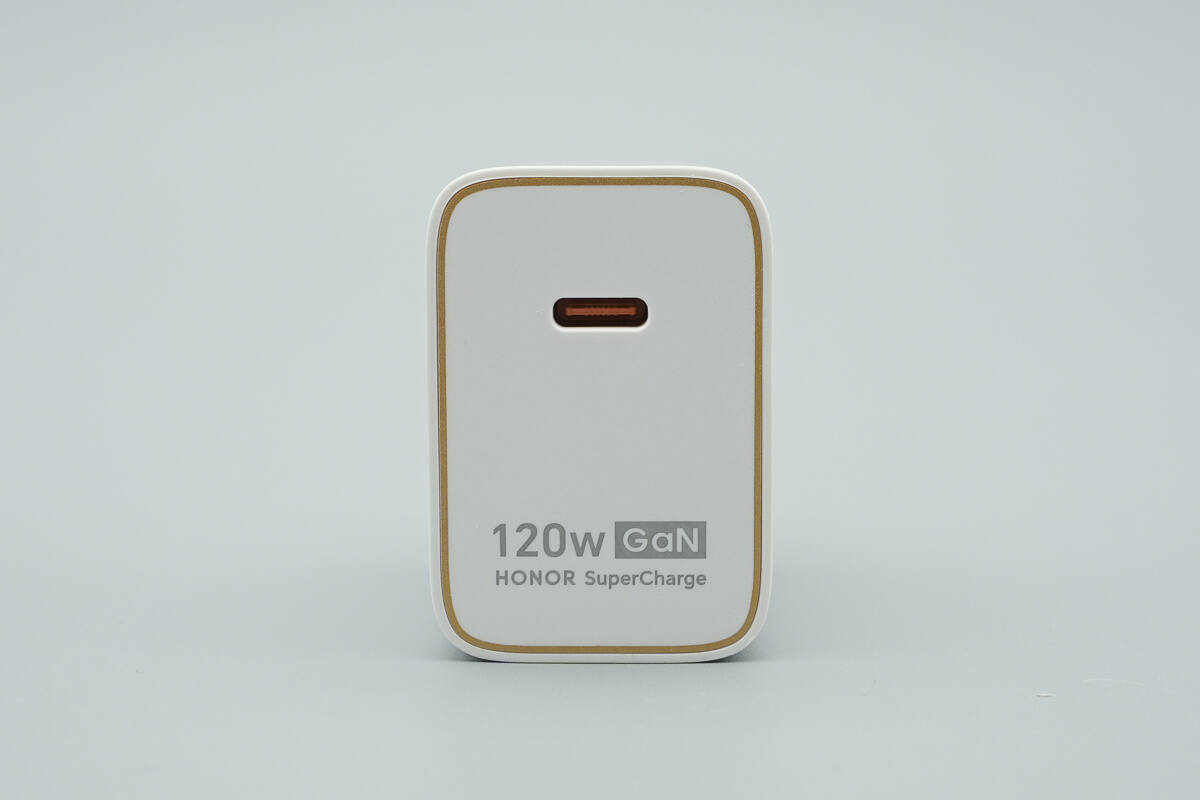
The top is marked with "120W GaN" and "HONOR SuperCharge," and it features a single USB-C port.
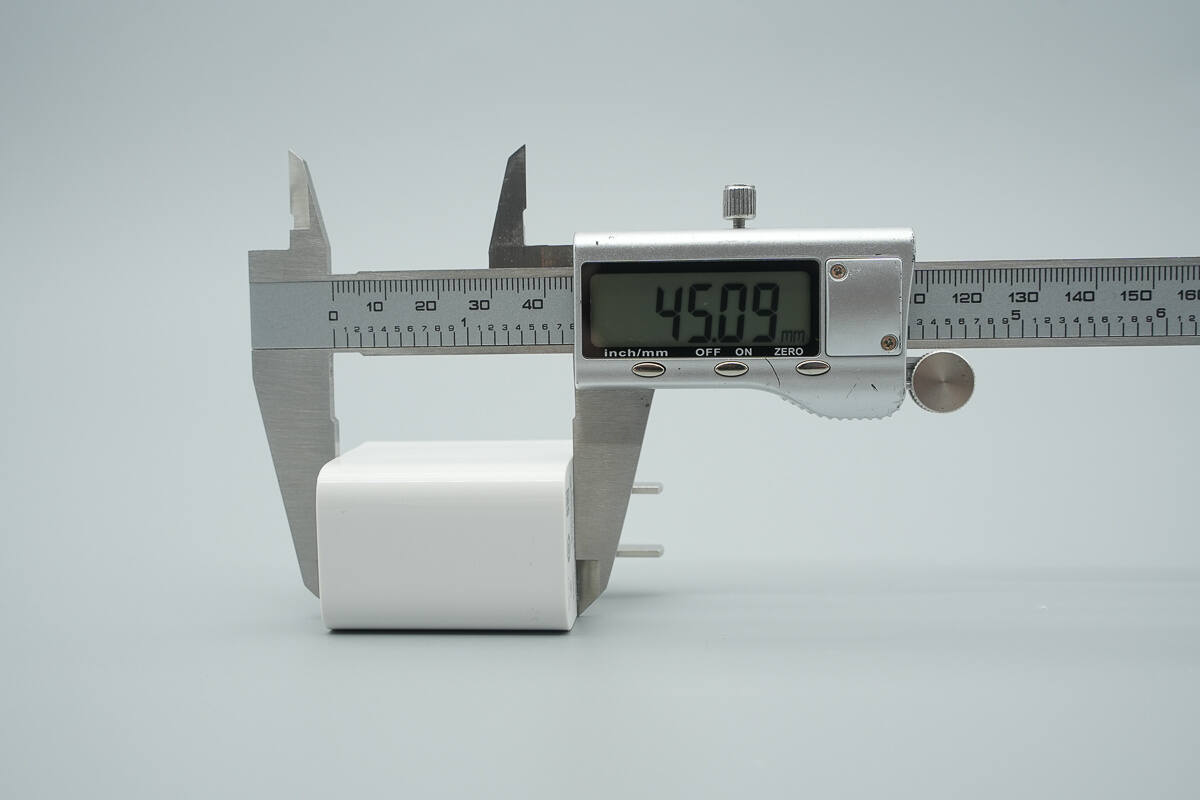
The length of the charger is about 45.09 mm (1.78 inches).
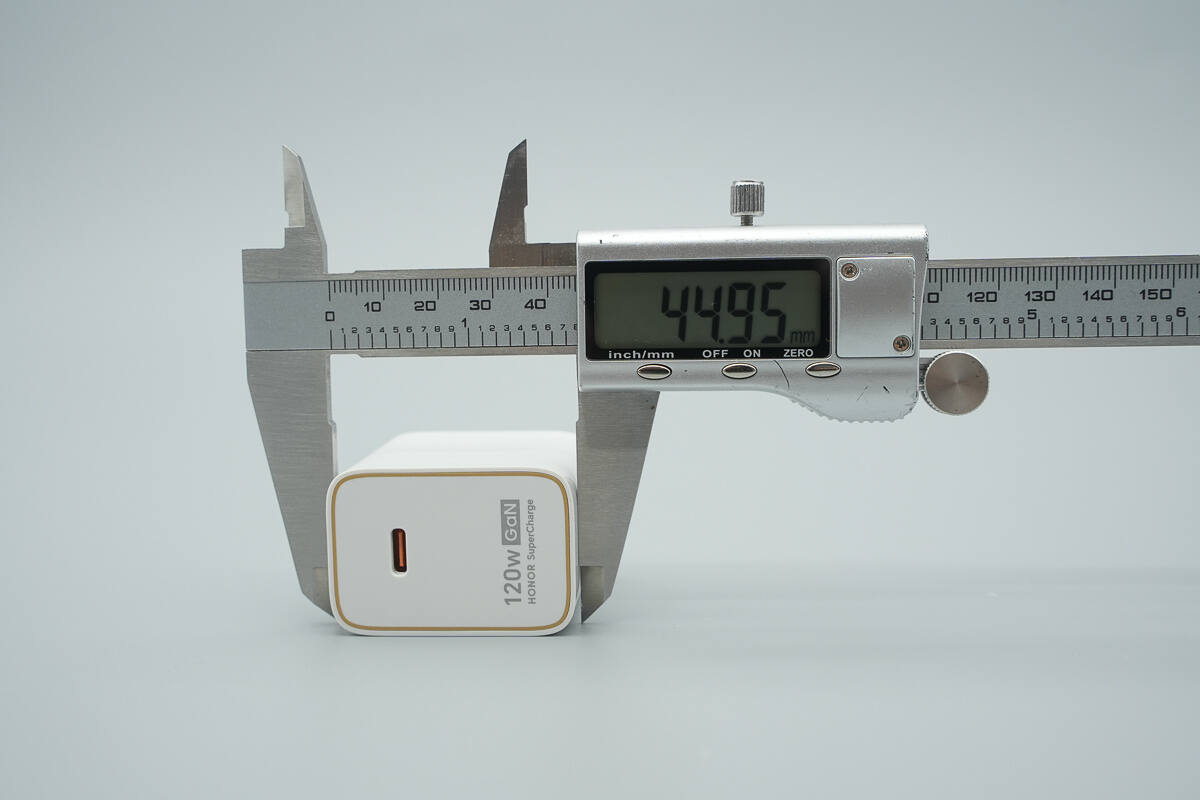
The width is about 44.95 mm (1.77 inches).
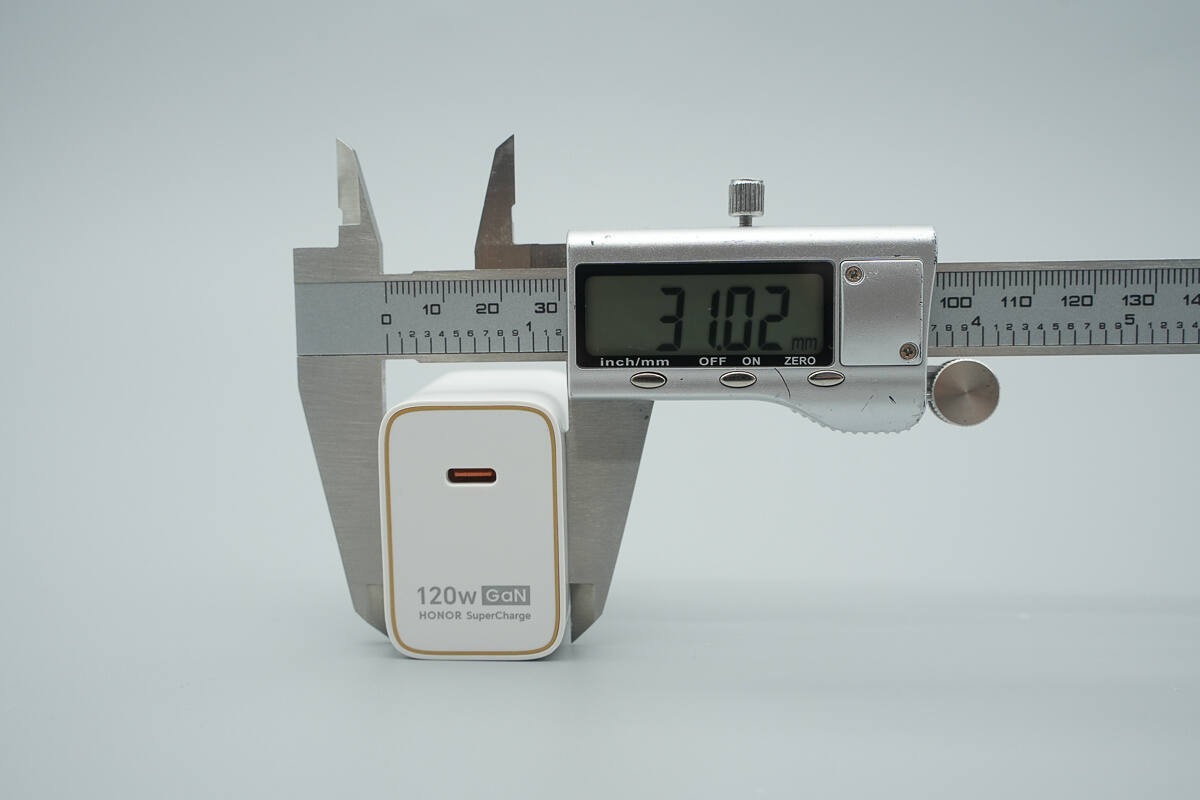
The thickness is about 31.02 mm (1.22 inches).
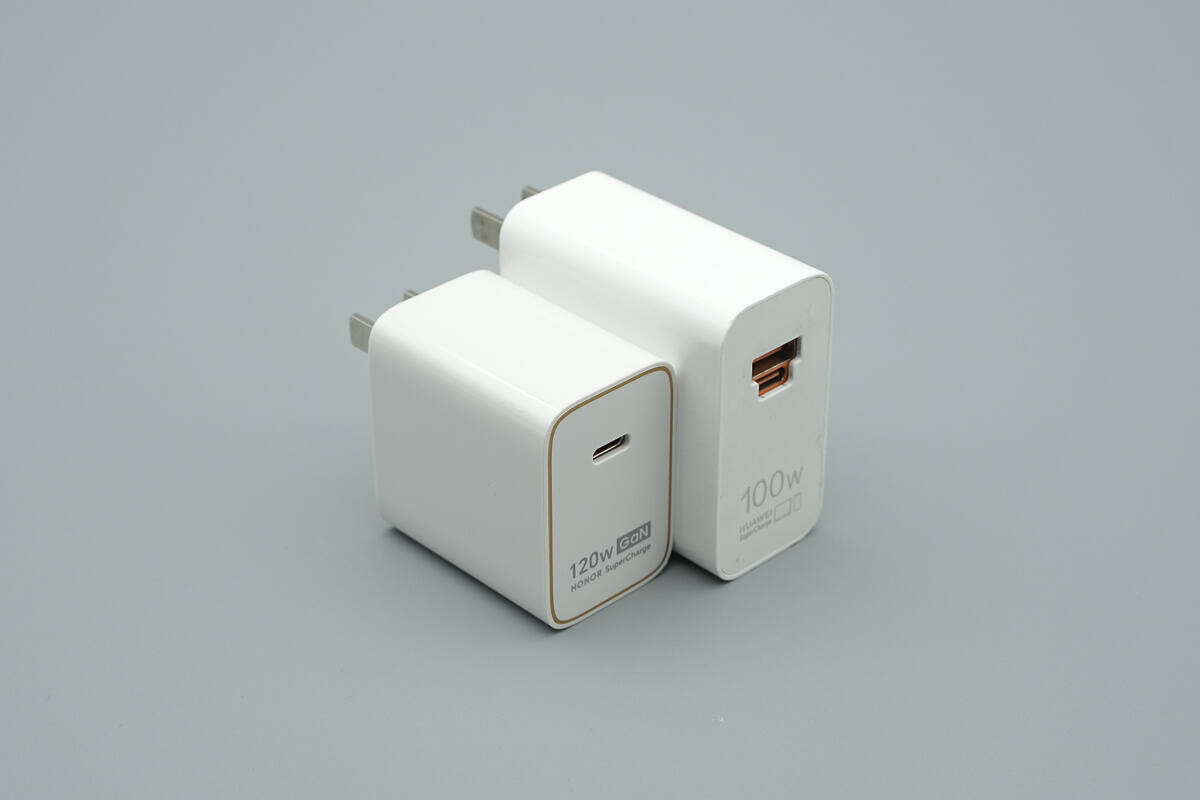
When compared side by side with Huawei’s 100W charger, the HONOR charger clearly demonstrates a size advantage.
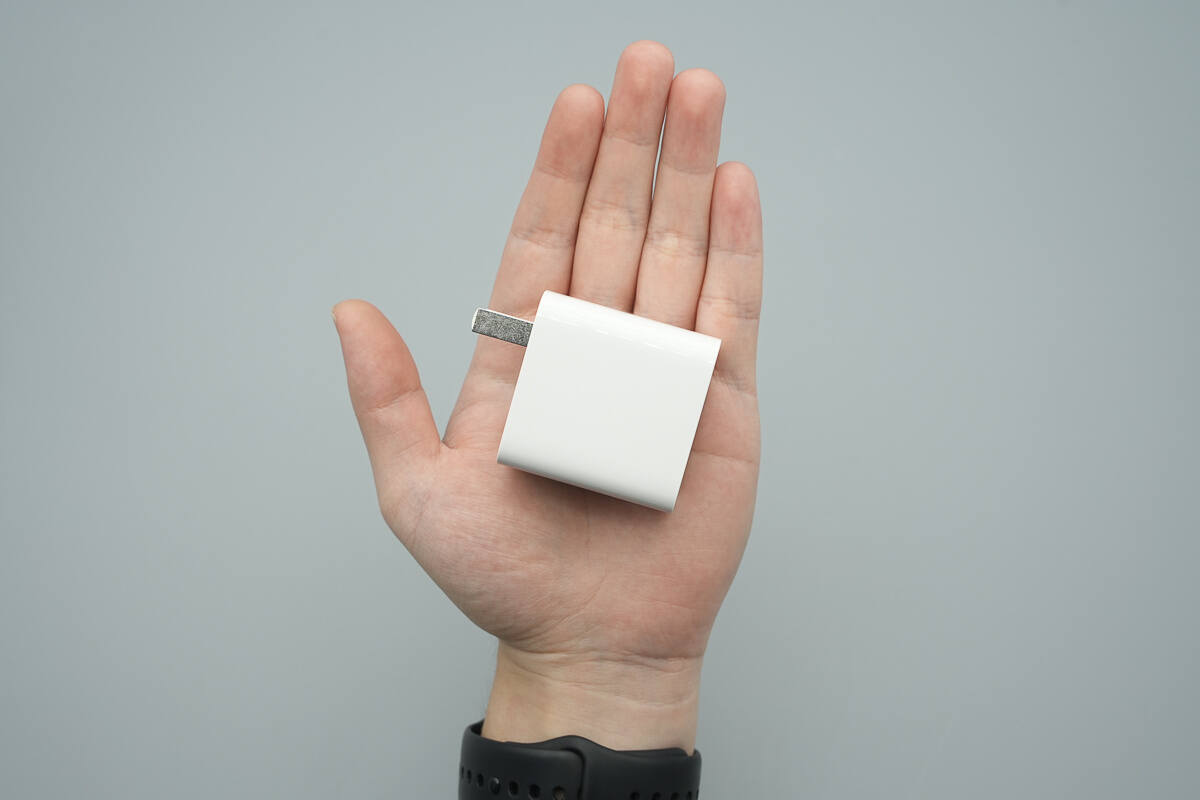
That's how big it is in the hand.
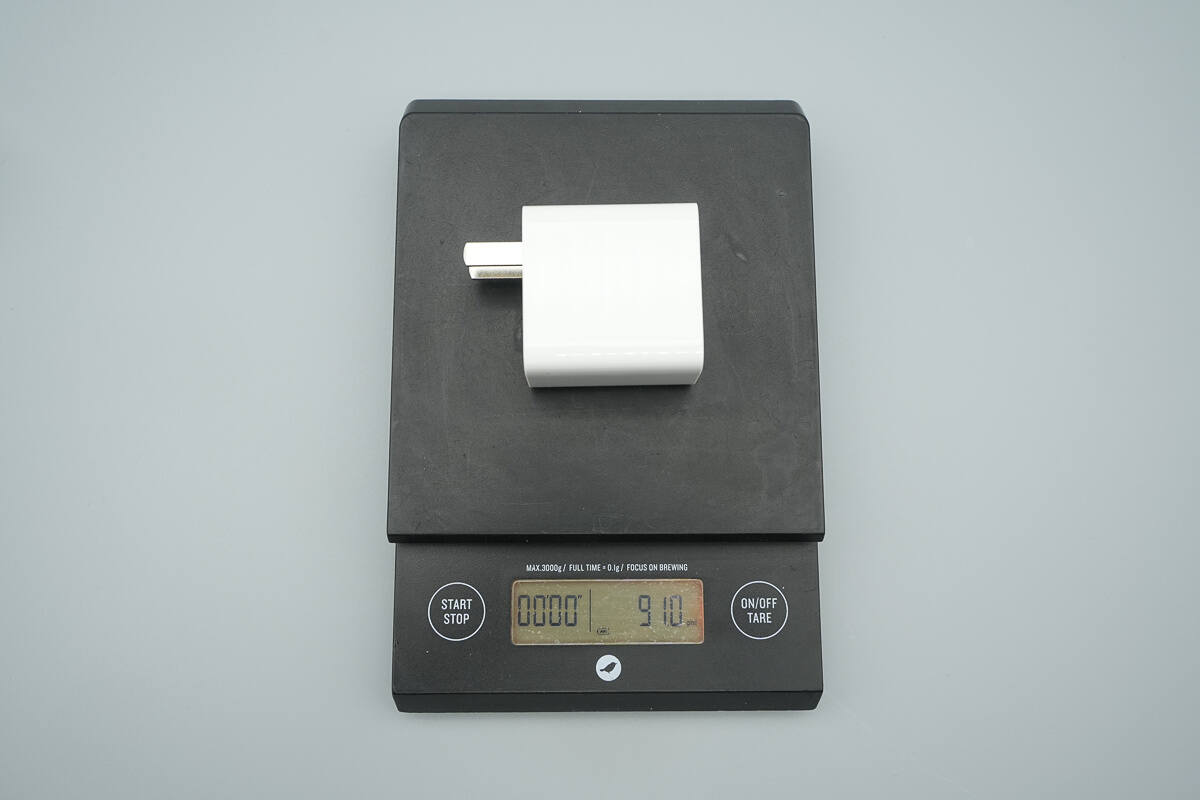
The weight is about 91 g (3.21 oz).
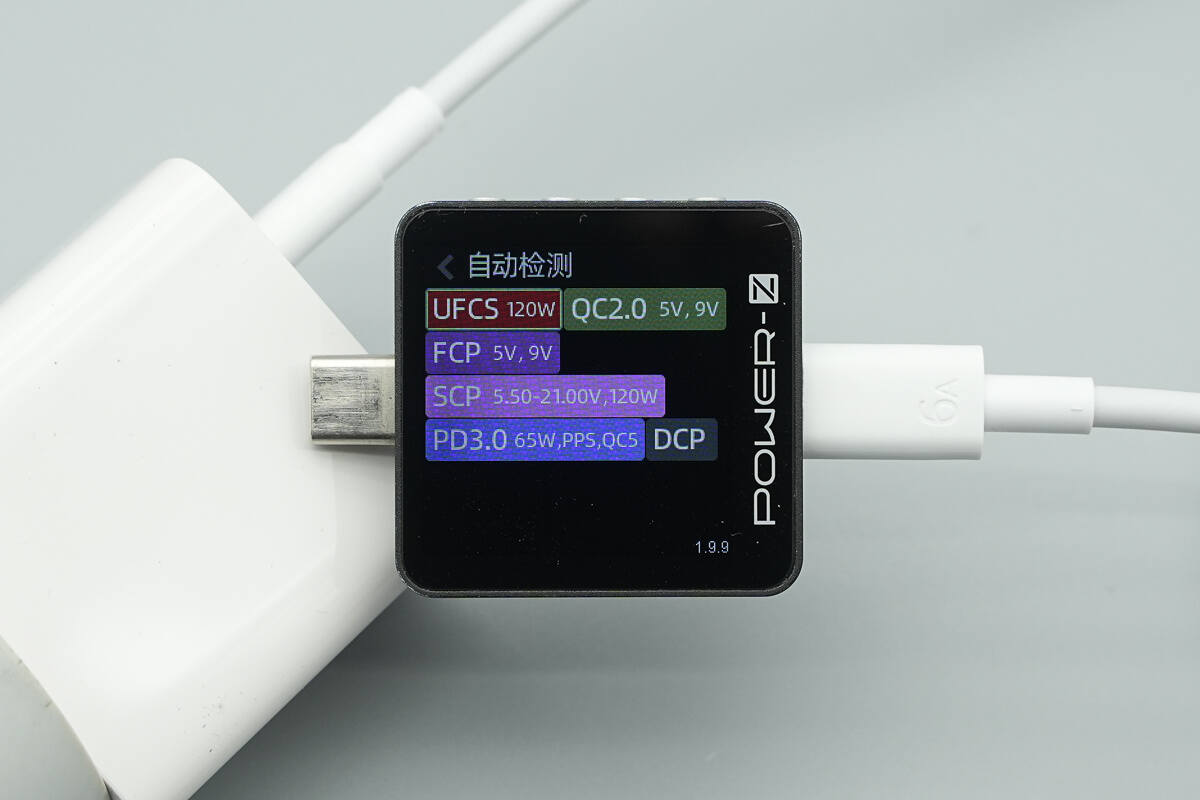
ChargerLAB POWER-Z KM003C shows that the USB-C supports QC2.0/5, FCP, SCP, PD3.0, PPS, and DCP charging protocols.
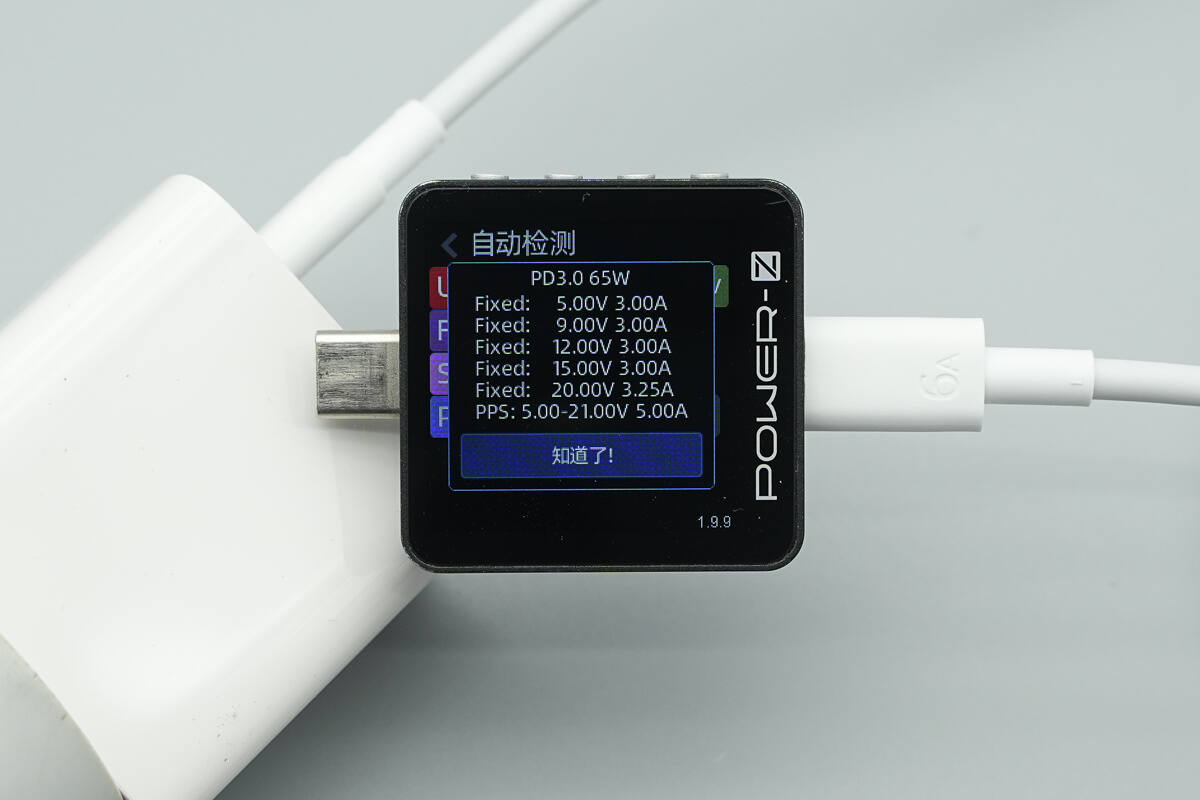
It features five fixed PDOs: 5V3A, 9V3A, 12V3A, 15V3A, 20V2.35A, as well as a 5-21V5A PPS voltage range.
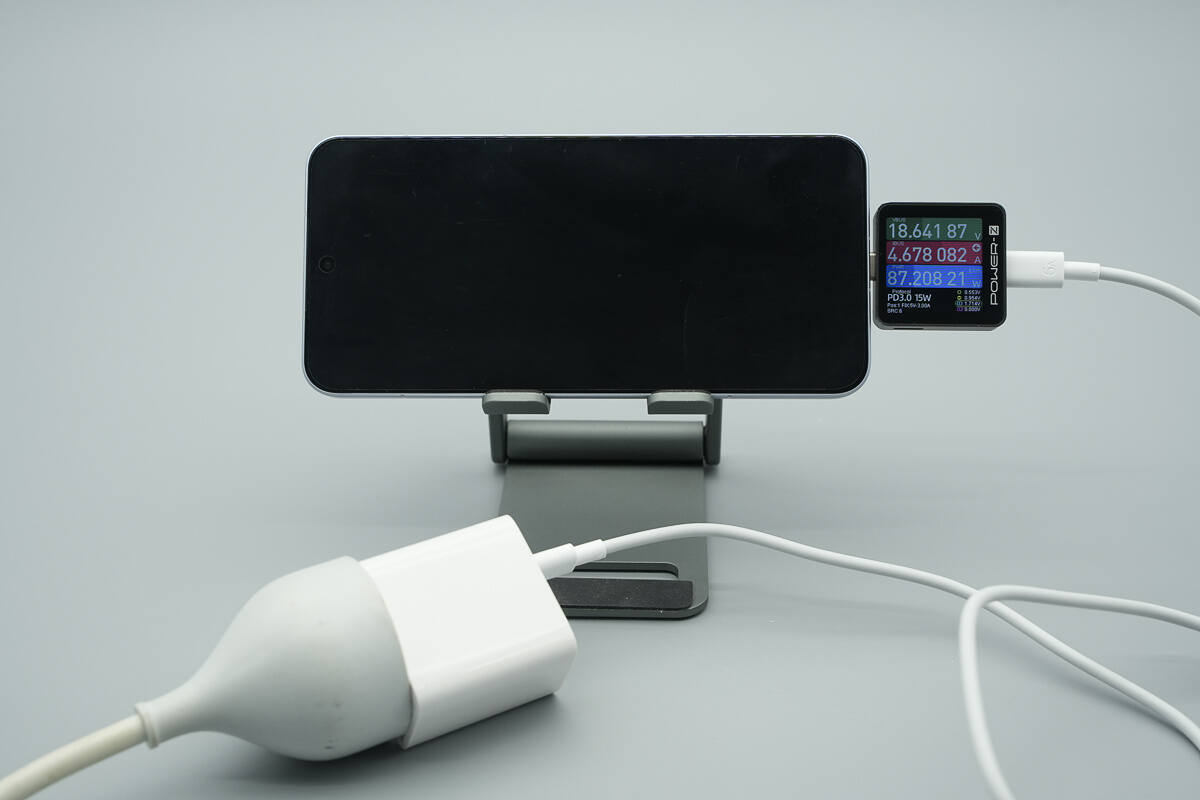
When used to charge the Honor WIN smartphone, it successfully activated 100W SuperCharge, with a charging power of about 87.21W.
Teardown
Next, let's take it apart to see its internal components and structure.
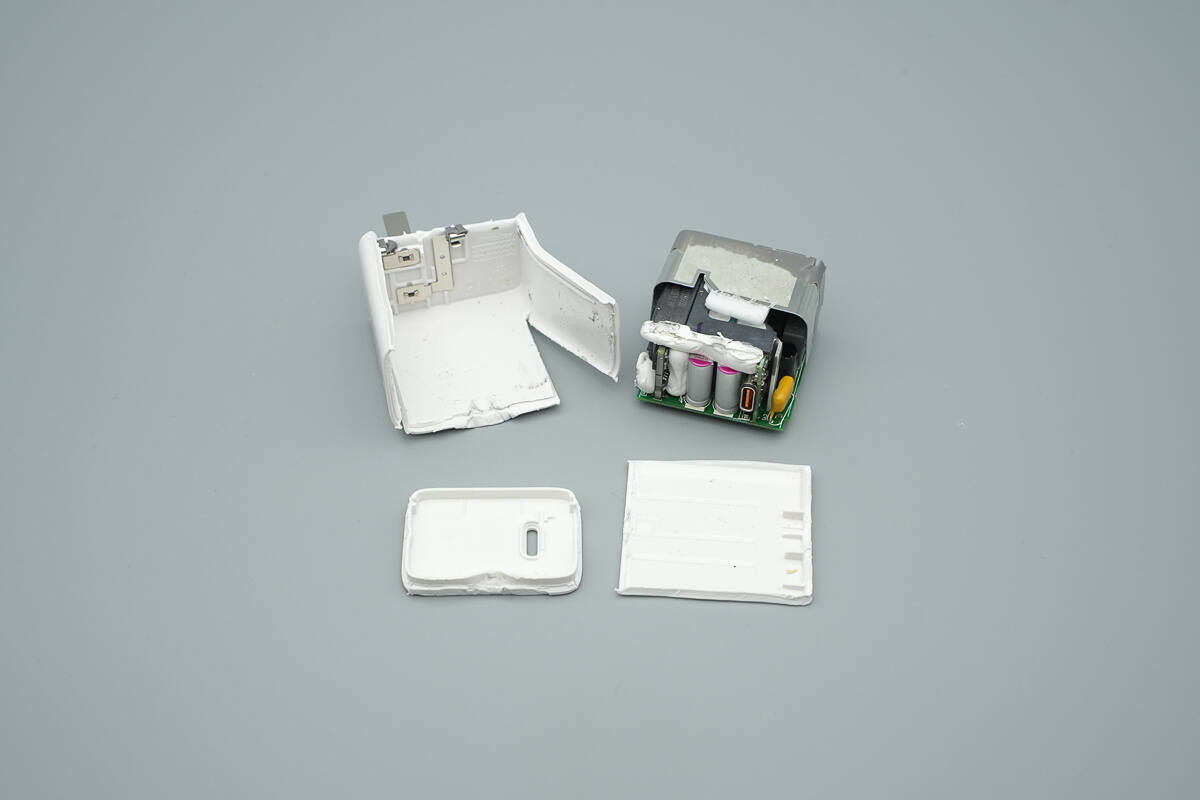
Cut open the casing to remove the PCBA module.
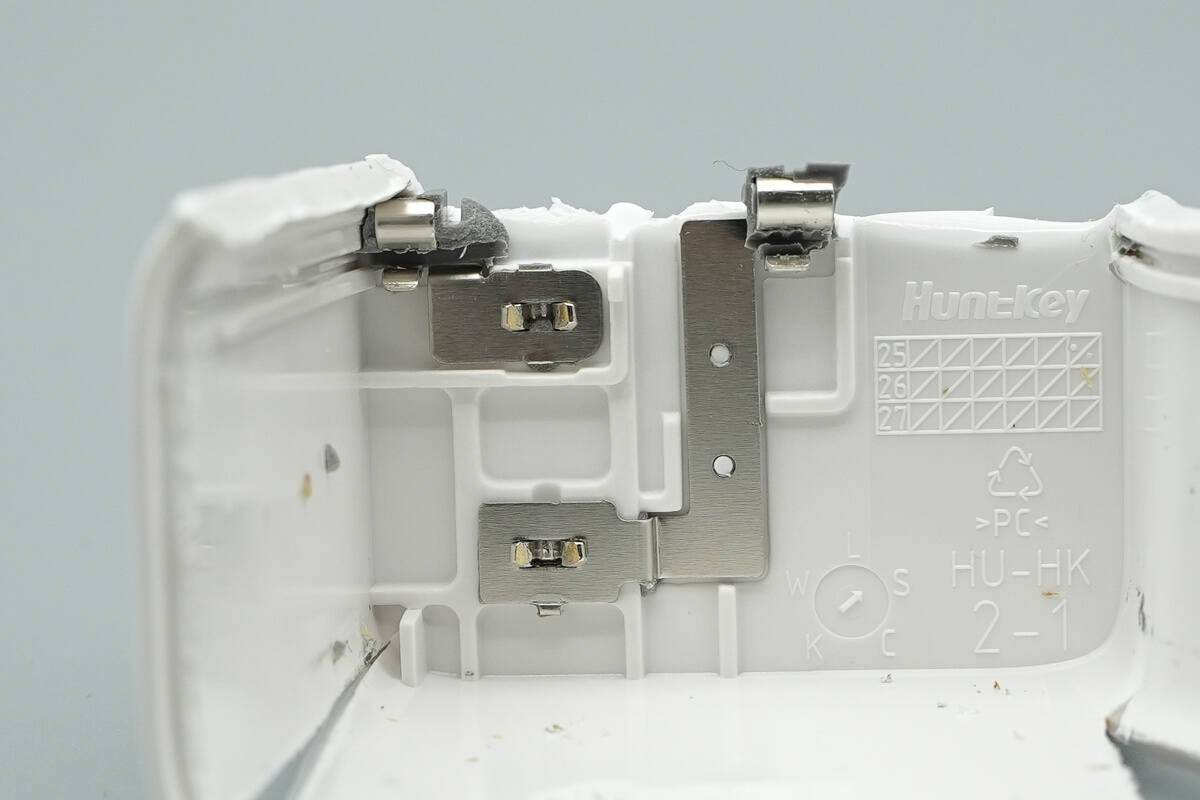
The input section features a contact-based power design, with the prongs crimped to metal plates.
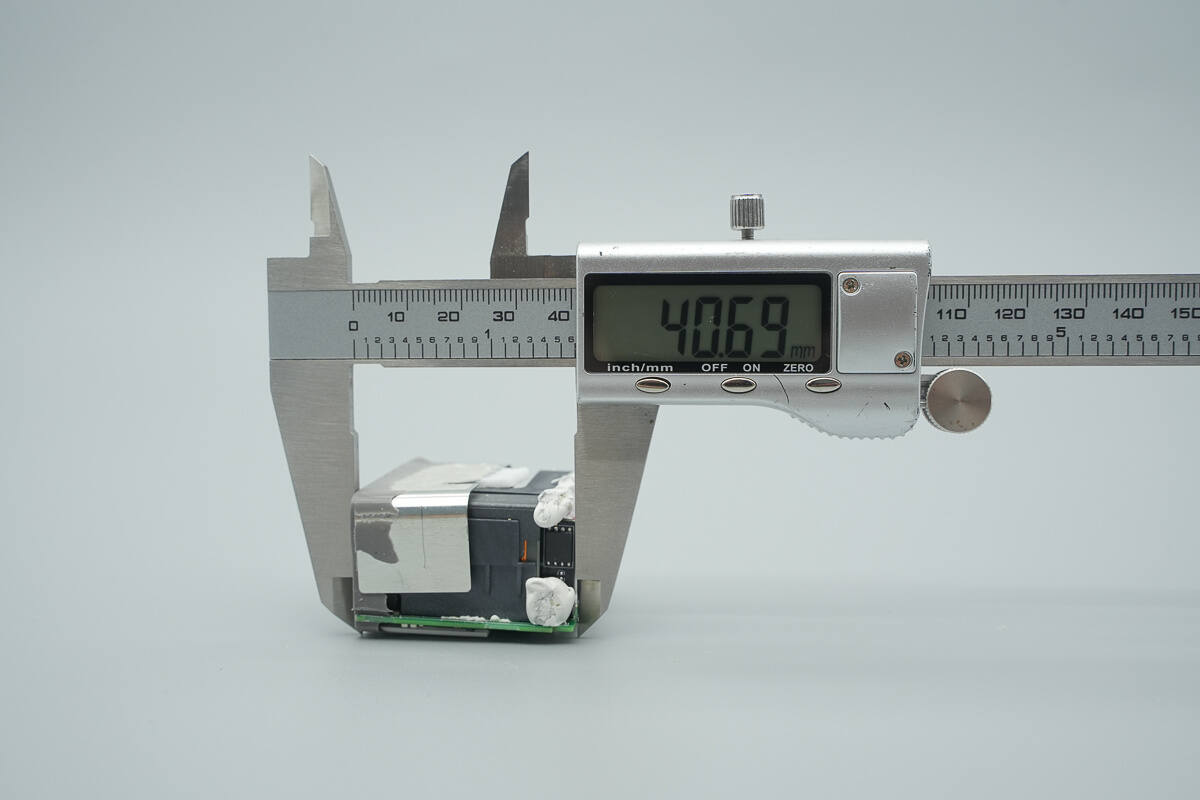
The length of the PCBA module is about 40.69 mm (1.6 inches).
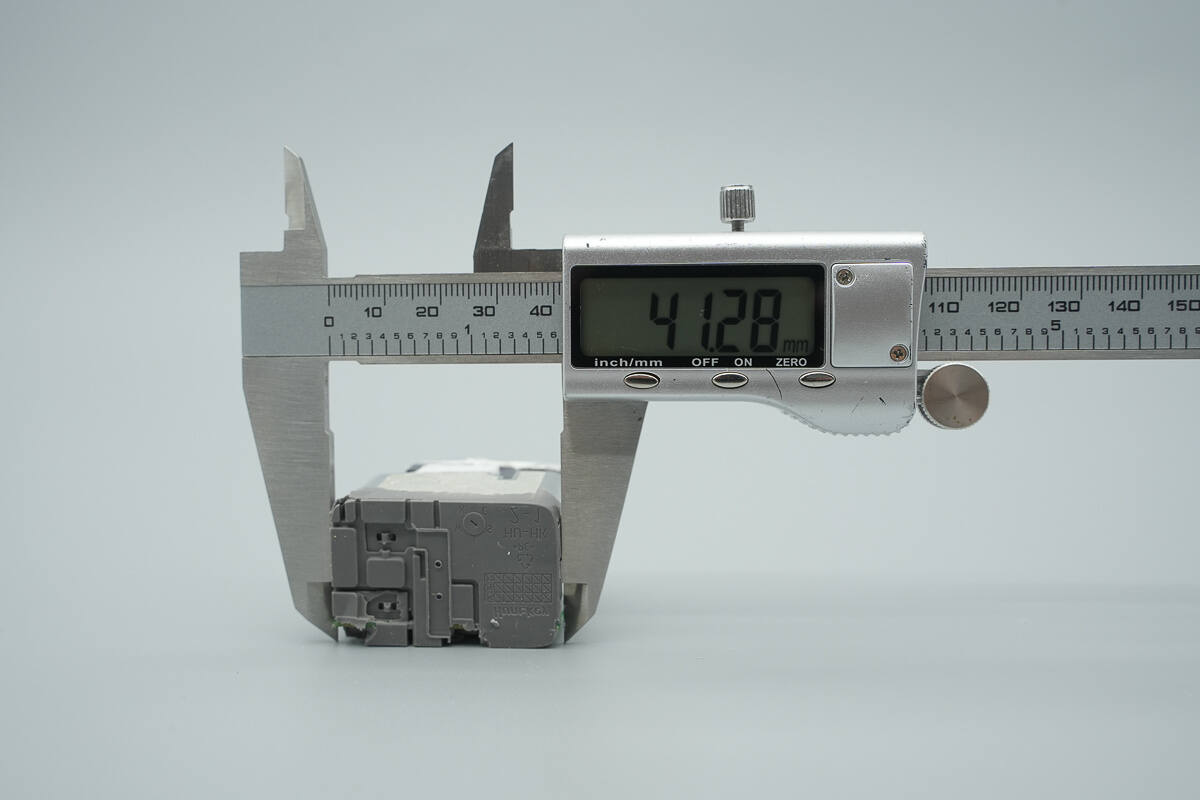
The width is about 41.28 mm (1.63 inches).
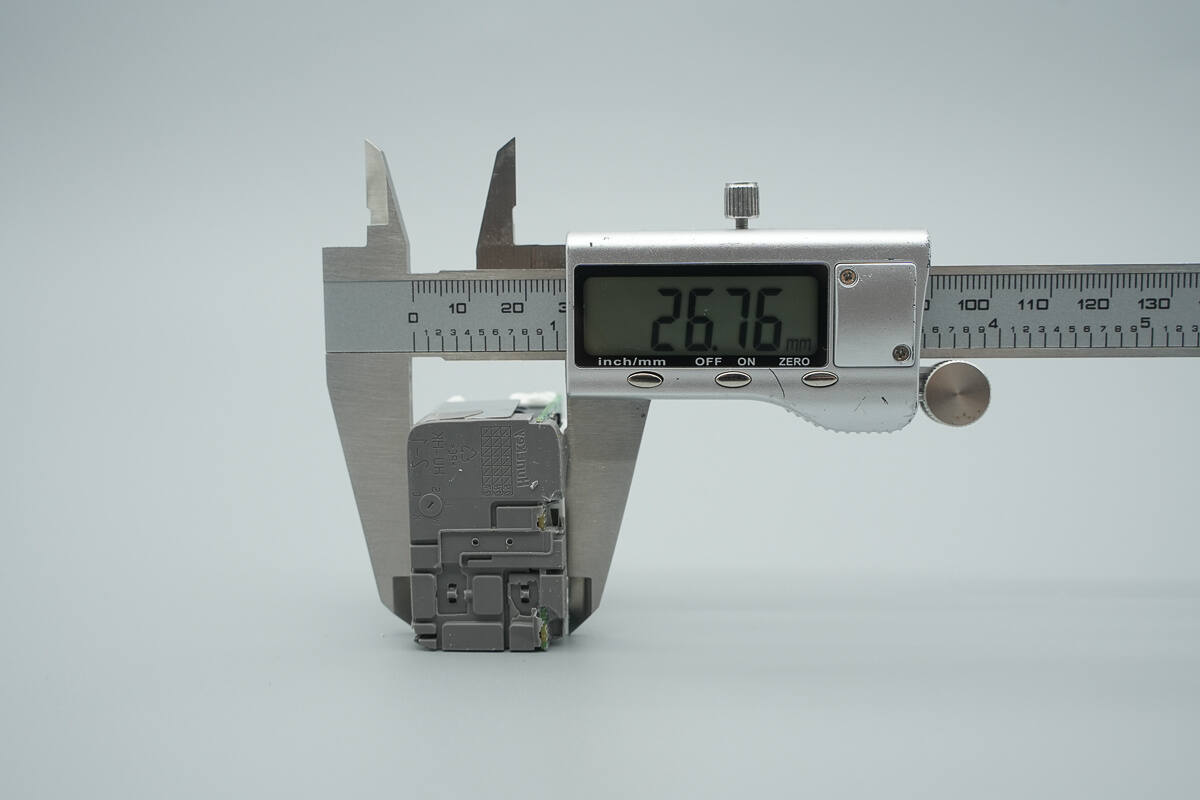
The thickness is about 26.76 mm (1.054 inches).
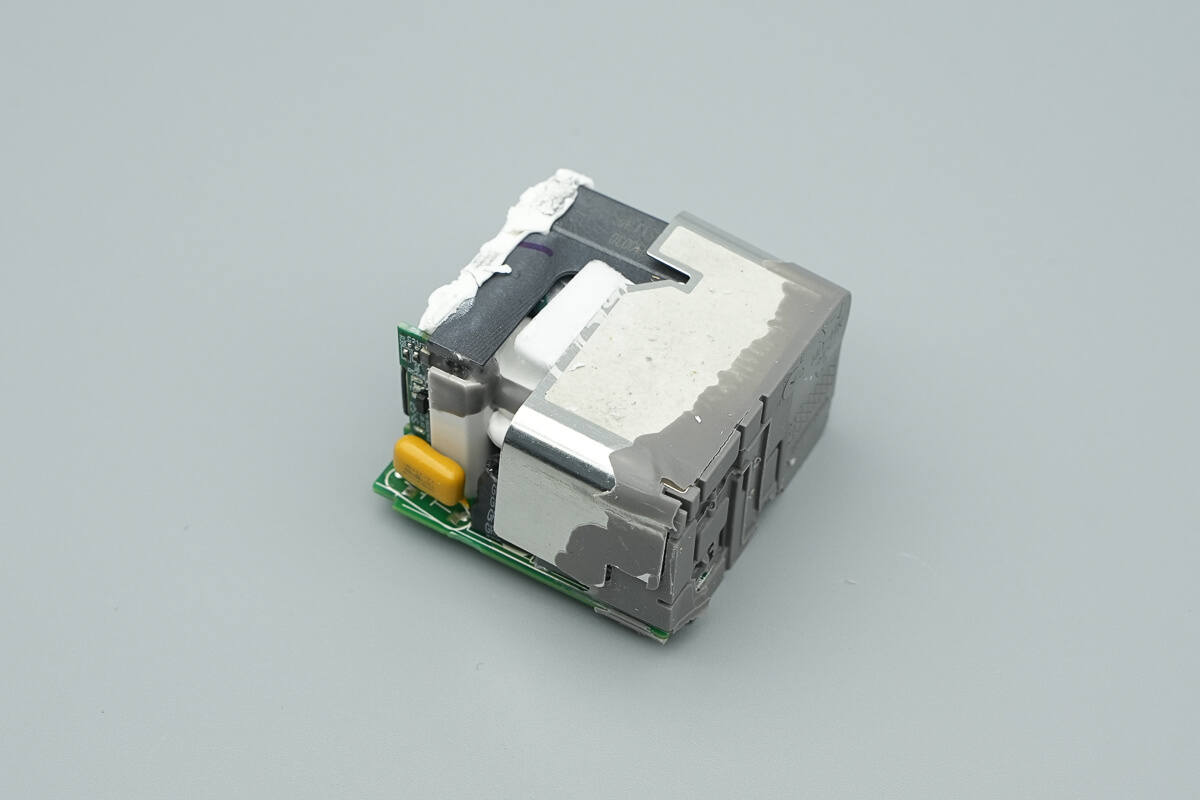
The PCBA module’s input section is encapsulated with adhesive, with gaps between the central capacitors reinforced with white glue, and a heatsink is also mounted on top.
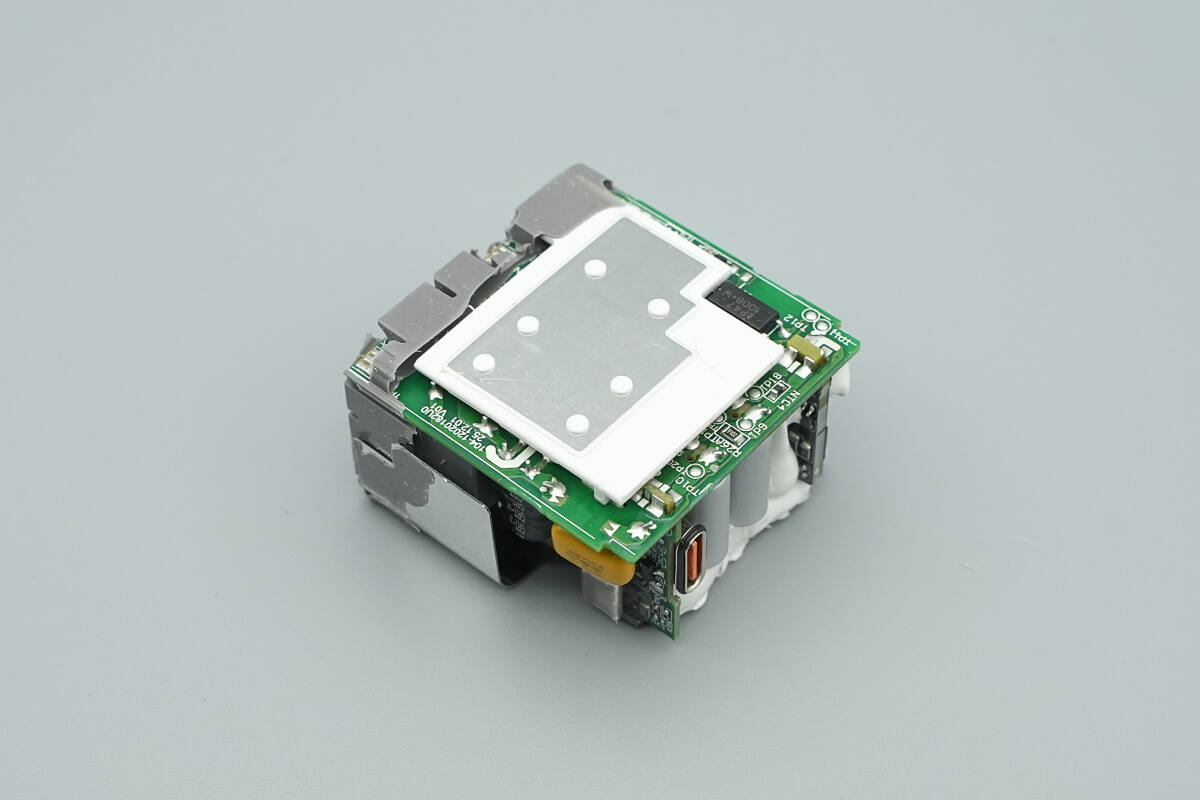
The central area on the back is filled with adhesive and covered with a white plastic plate and a heatsink.
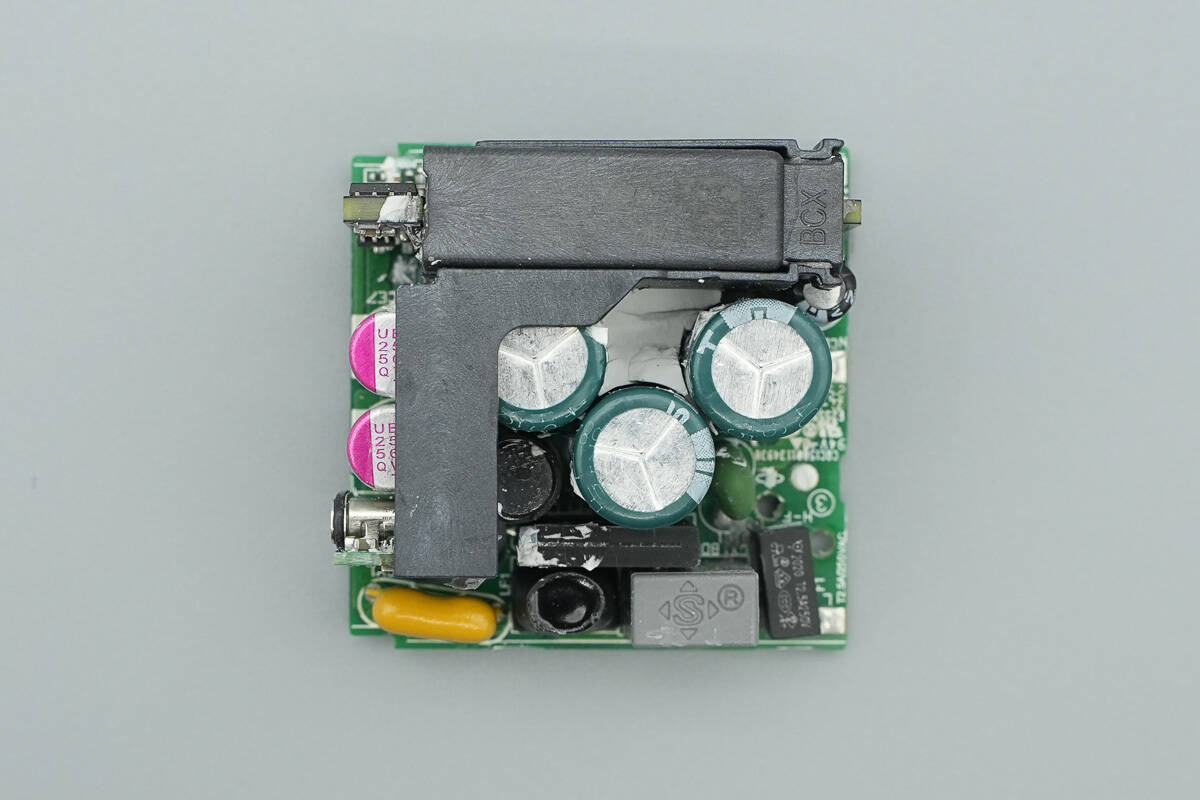
After cleaning the module, the plastic casing provides insulation and separates the primary and secondary circuits.
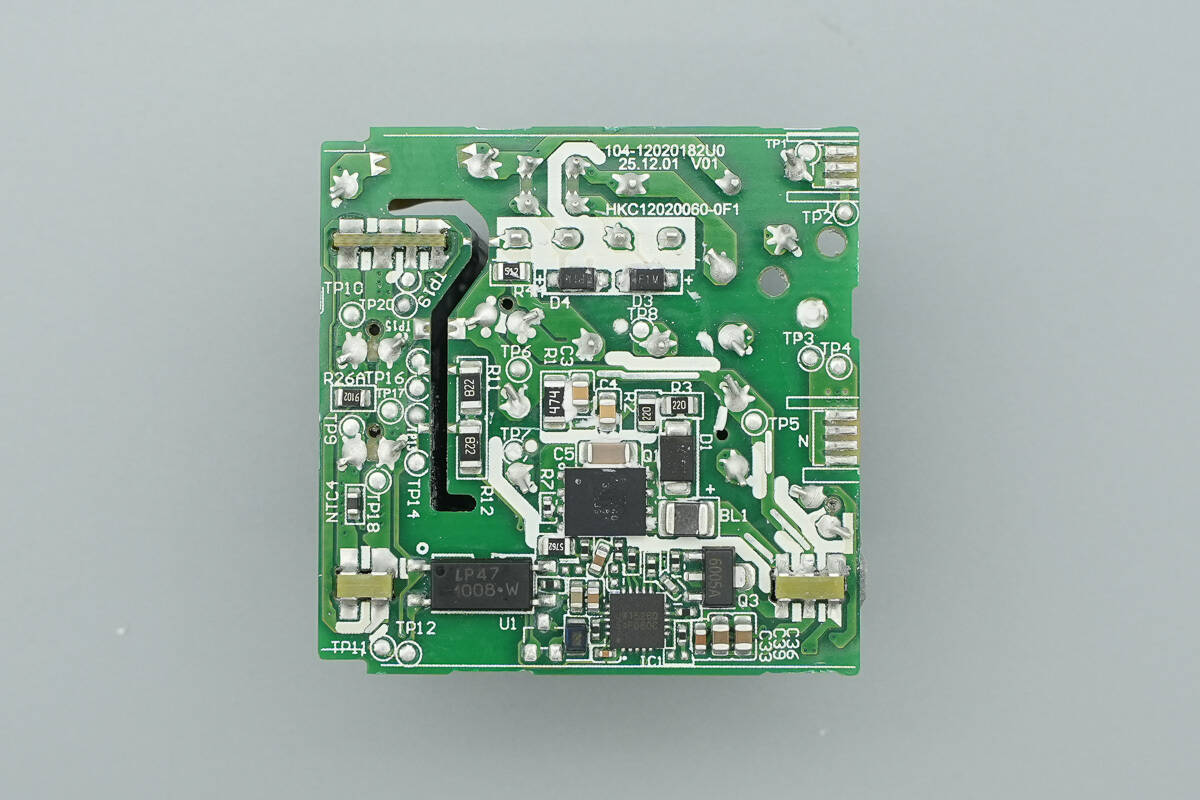
On the back of the module, there are components such as the master control chip, a primary MOSFET, and an optocoupler.
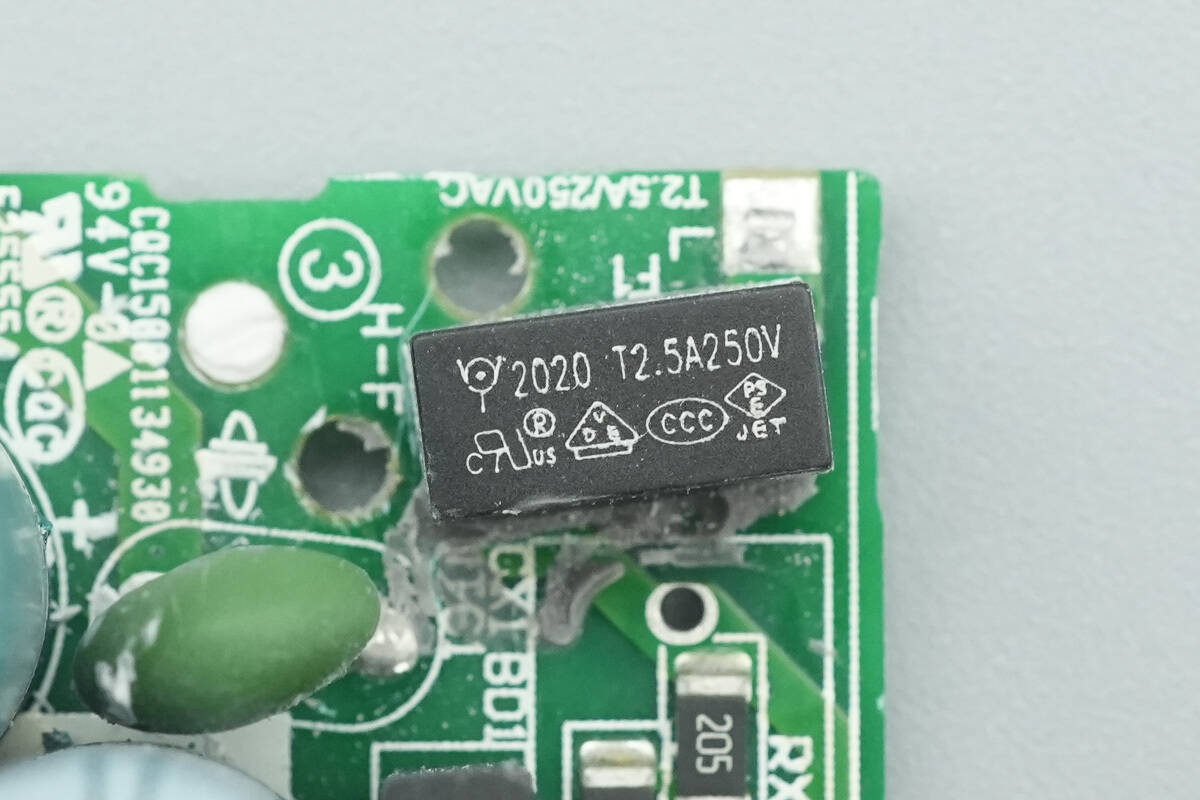
The time-delay fuse is from WalterFuse, rated at 2.5A 250V.
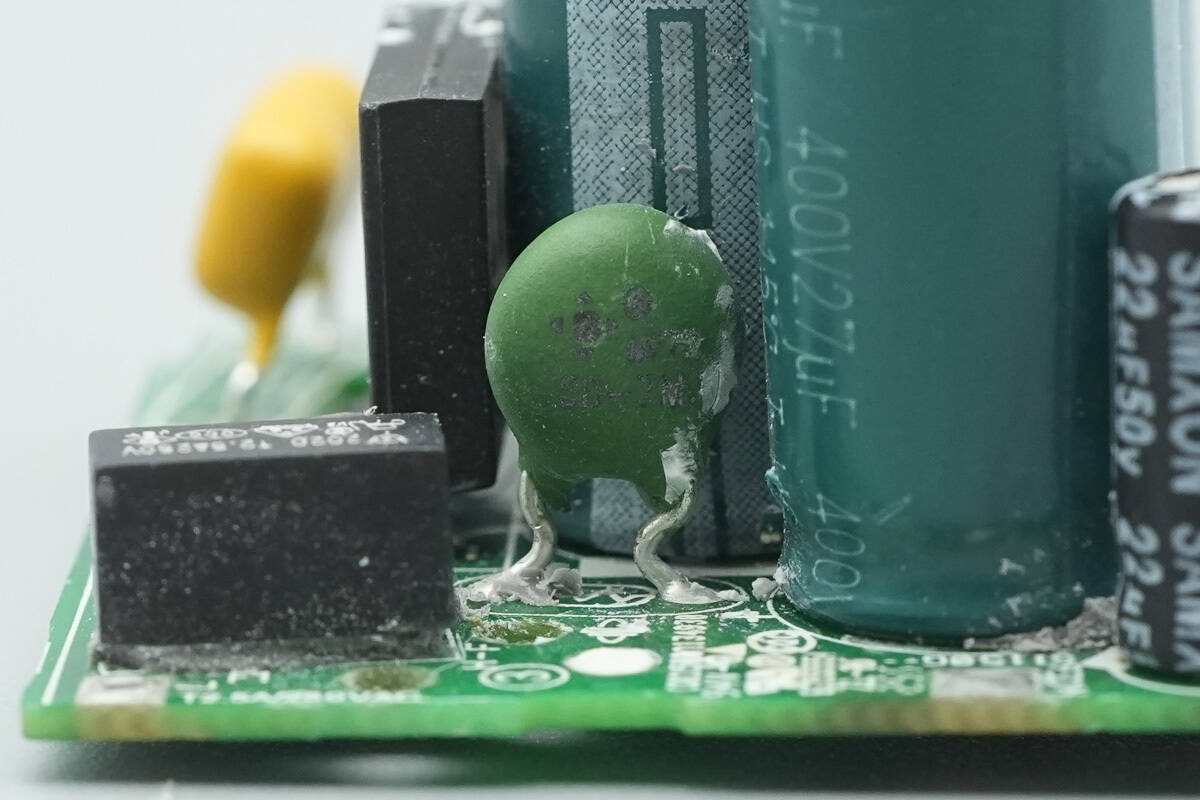
An NTC thermistor is used to suppress inrush current at power-on.
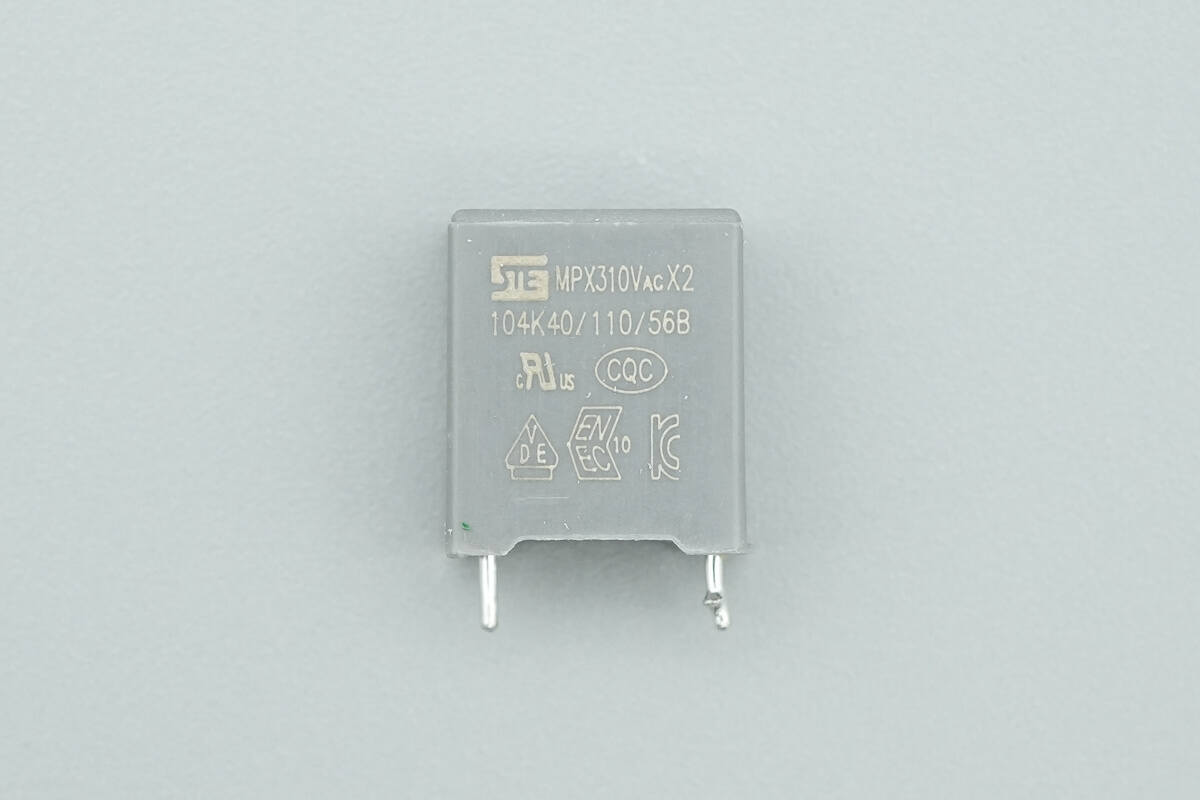
The safety X2 capacitor is from STE, with a capacitance of 0.1 μF.
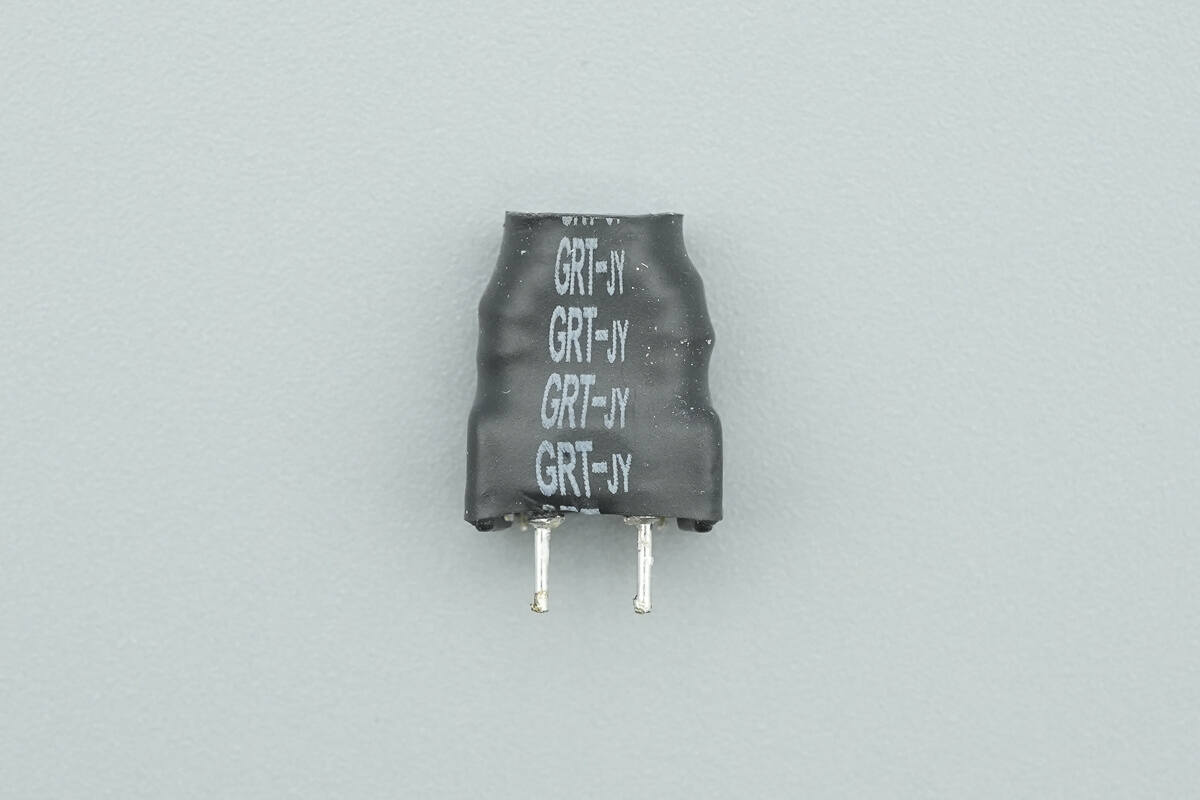
The common mode choke is used to filter EMI interference and is insulated with a heat-shrink sleeve.
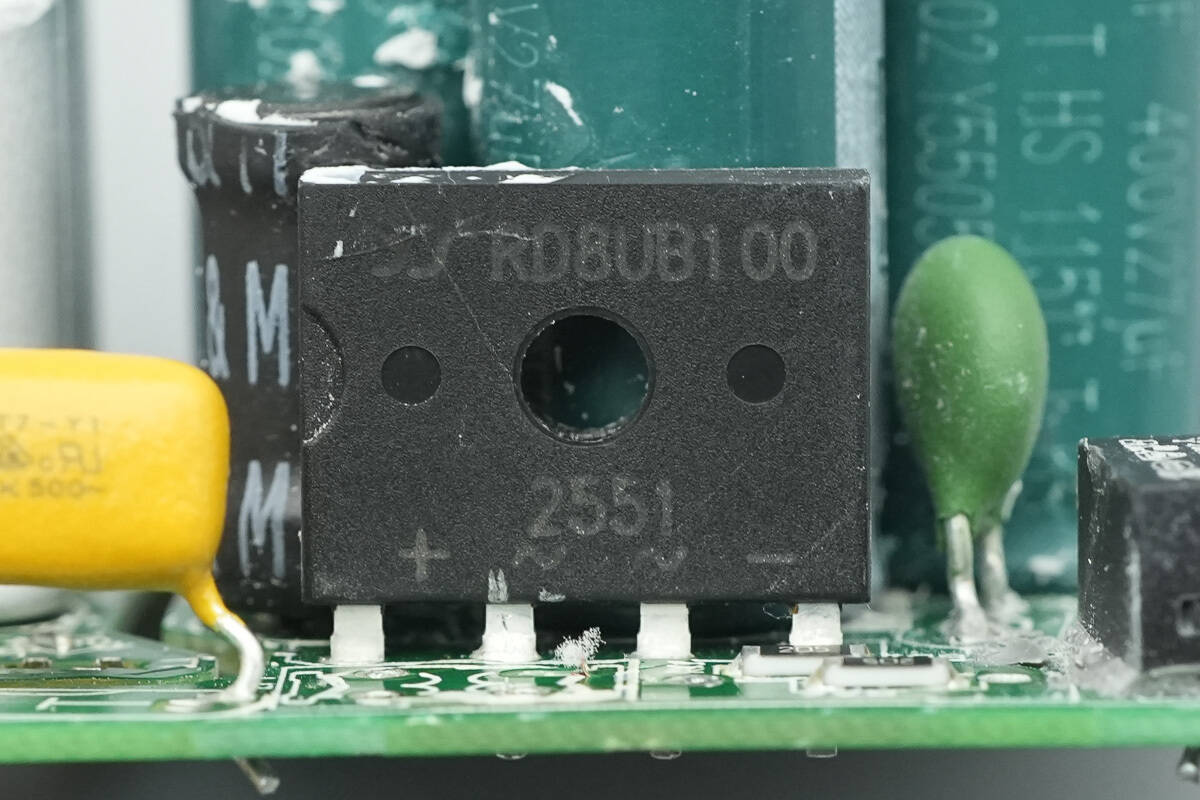
The bridge rectifier is from YJ, model RD8UB100, rated at 8A 1000V, and uses a D3K package.
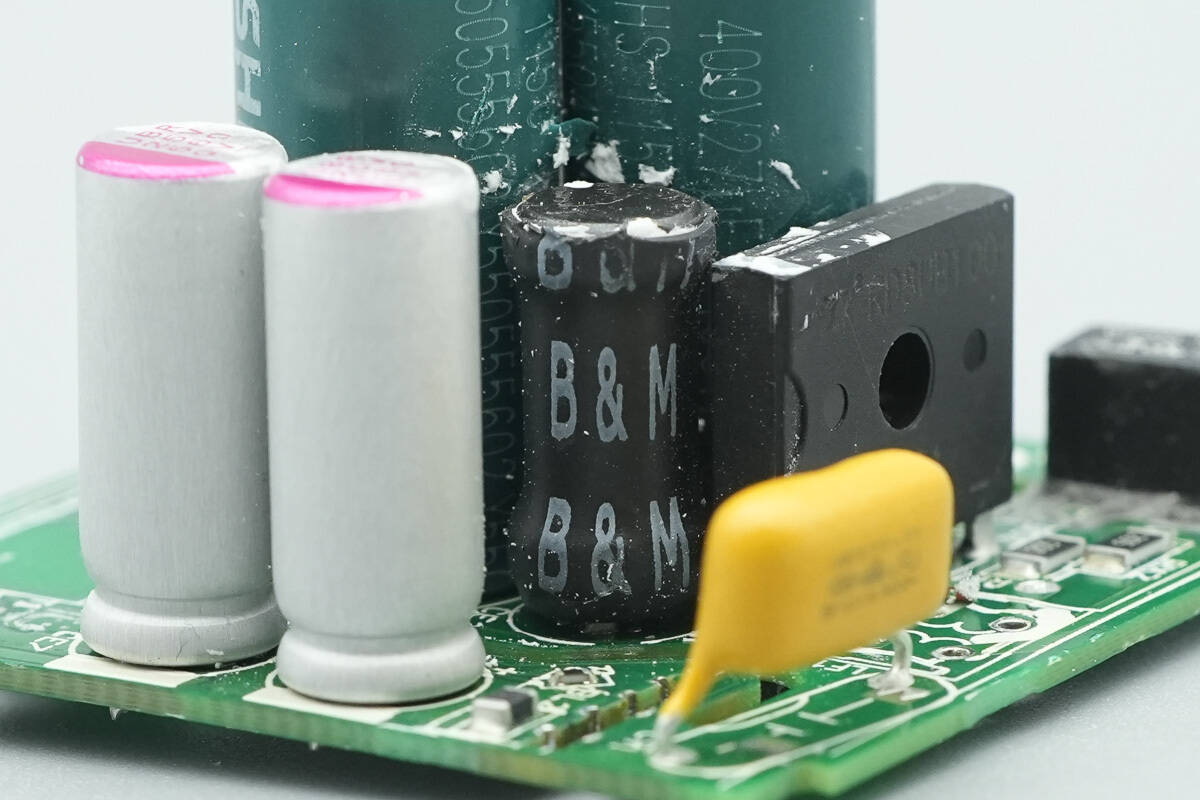
The I-shaped inductor is insulated with a heat-shrink sleeve.
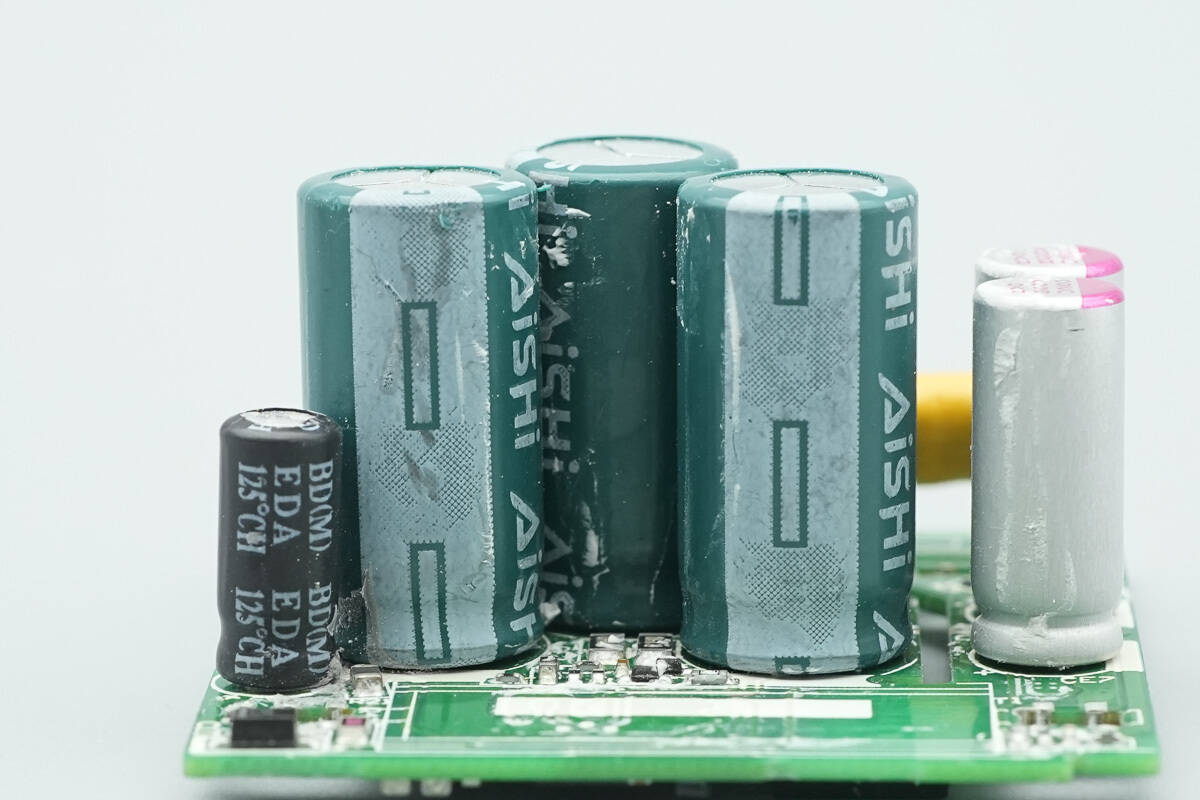
The three high-voltage filter electrolytic capacitors are from AiSHi.
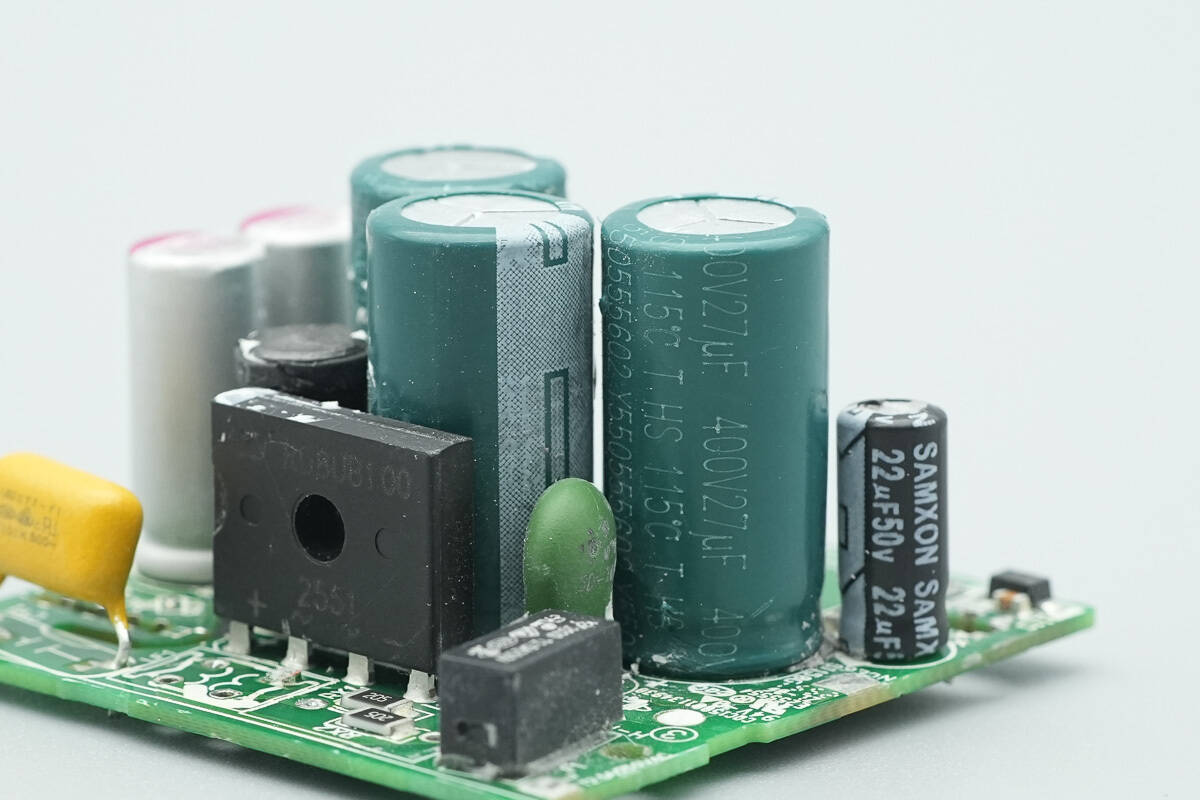
All are rated at 400 V, 27 μF.
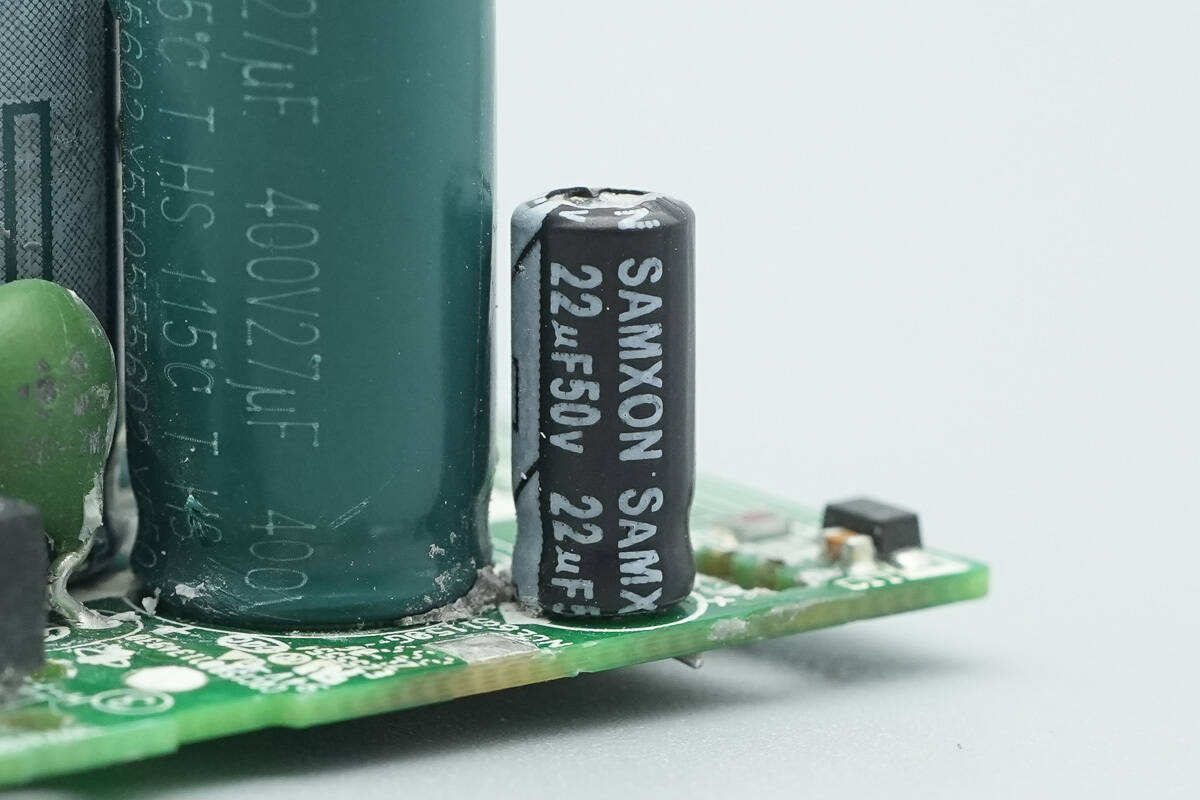
The capacitor supplying power to the master control chip is from SAMXON, rated at 50 V, 22 μF.
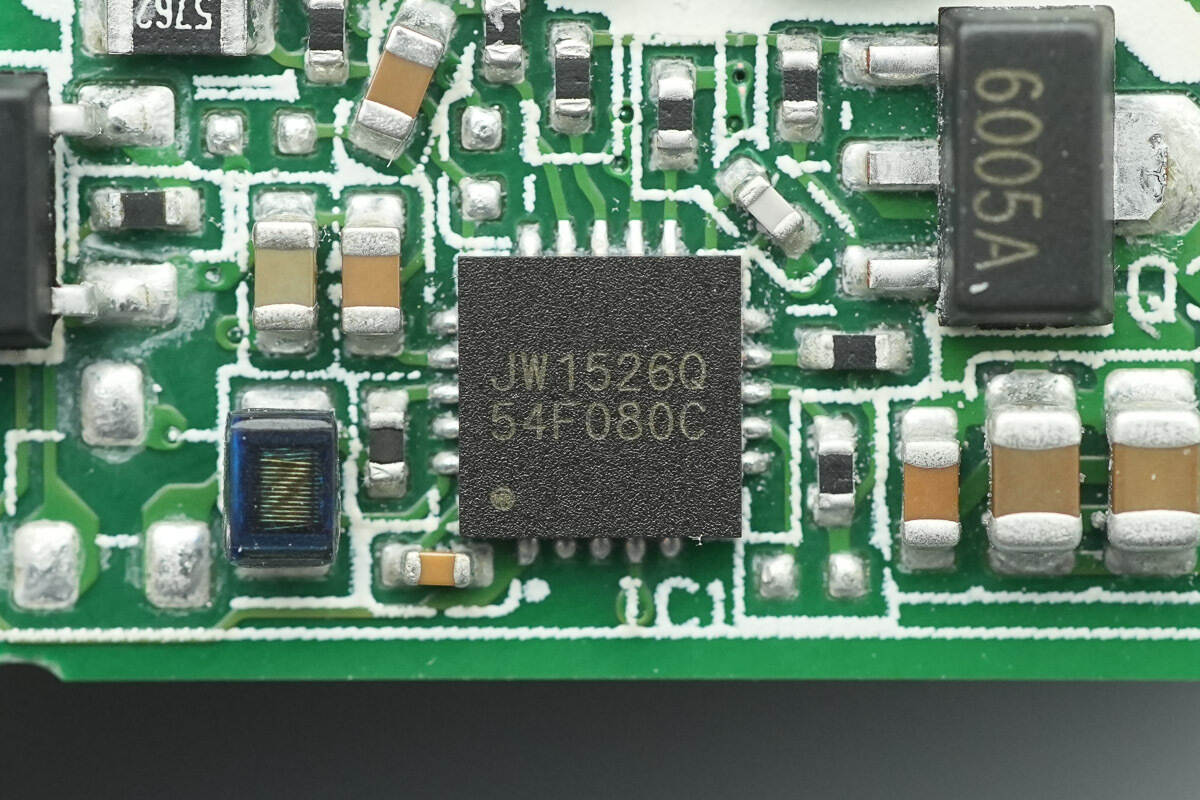
The master control chip is a JOULWATT JW1526, a high-frequency ZVS controller with programmable ZVS turn-on voltage and programmable operating frequency, reaching up to 270 kHz. It also features built-in negative-voltage current sensing, supports X-cap discharge, and includes a dithering function to improve the system’s EMI performance. The chip is designed for fast charging applications ranging from 30 W to 200 W.
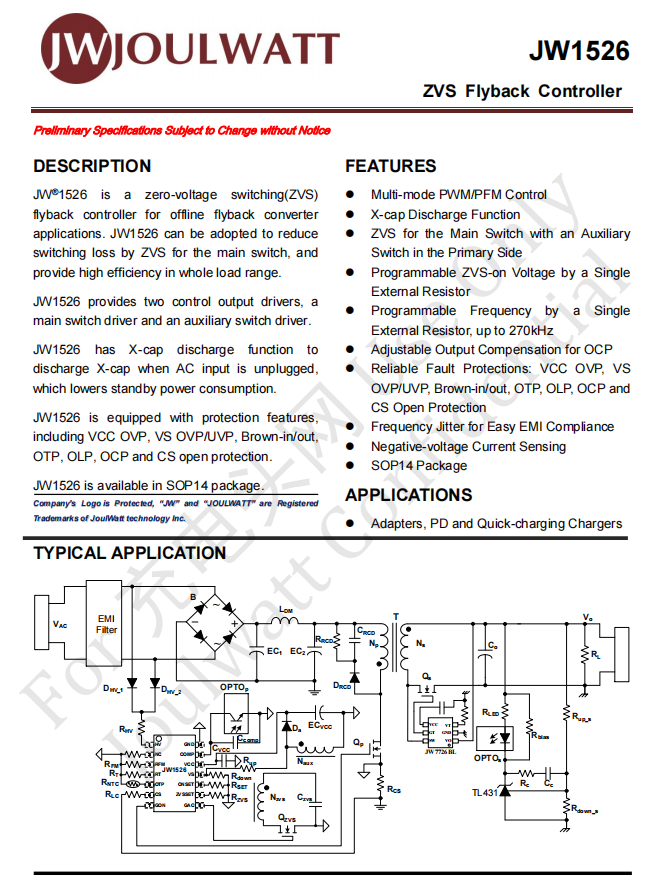
Here is the information about JOULWATT JW1526.
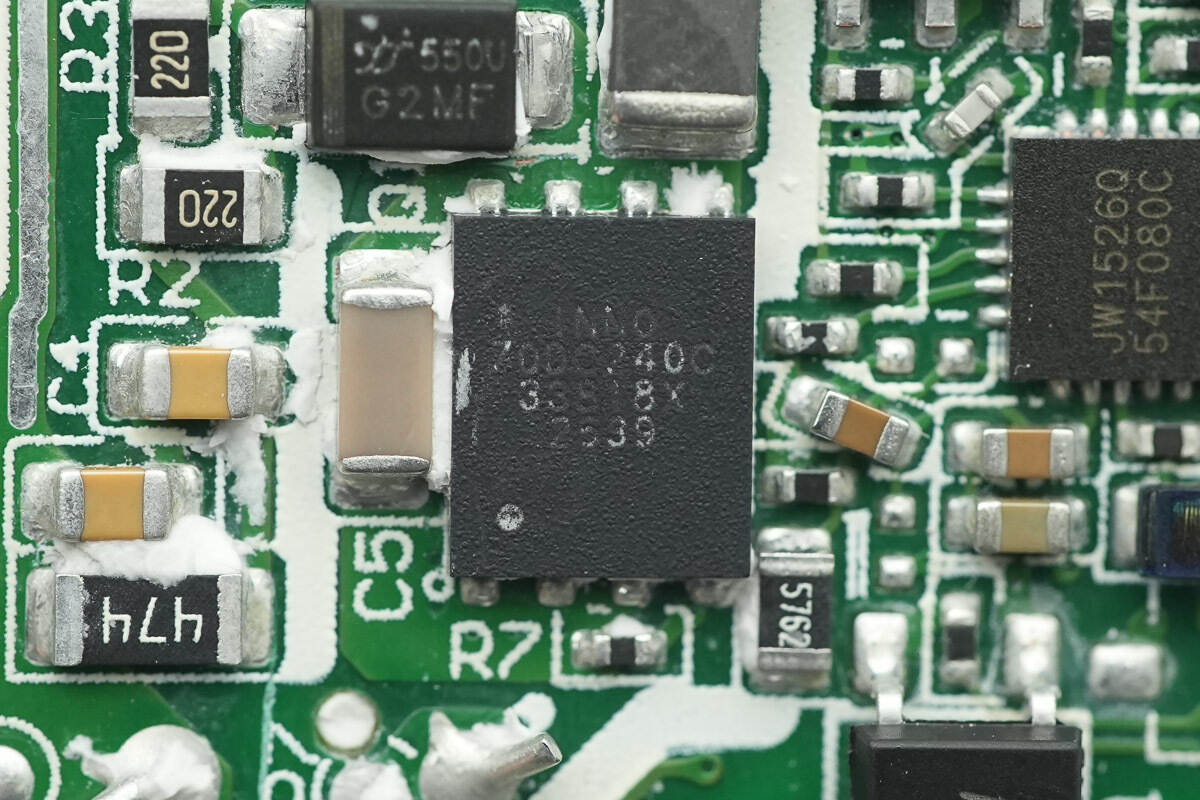
The primary MOSFET is an Innoscience INN700DC240C, a 700 V-rated enhancement-mode GaN FET with an on-resistance of 240 mΩ. It meets JEDEC standards for industrial applications, features built-in ESD protection, and comes in a DFN 5×6 package.
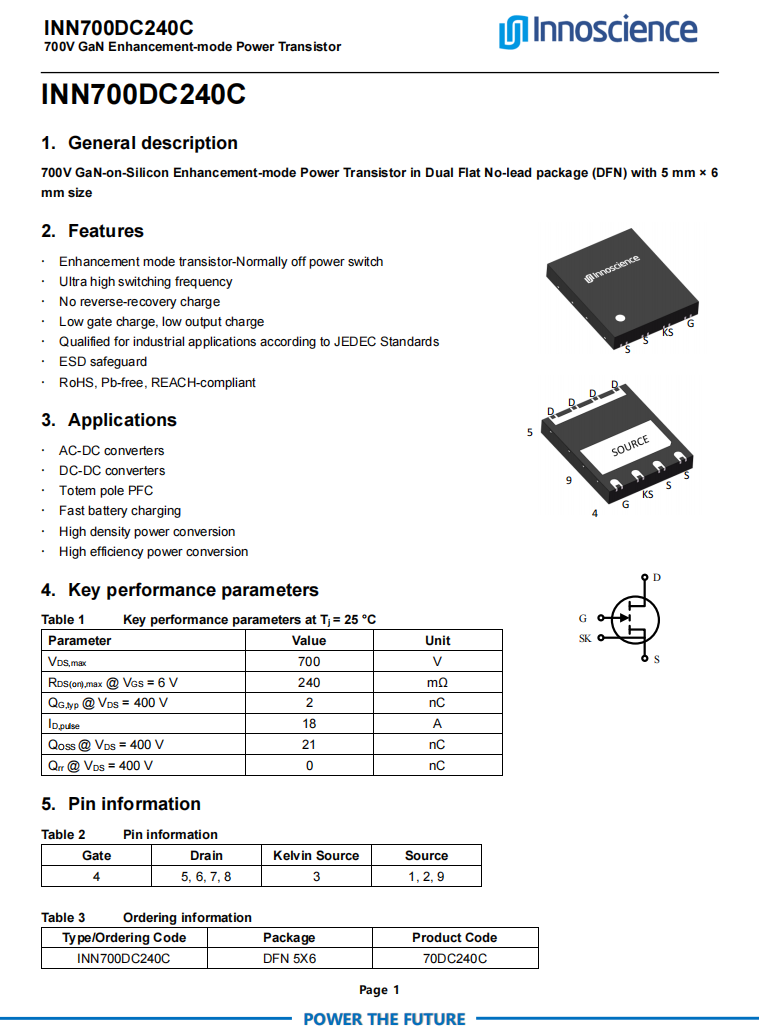
Here is the information about Innoscience INN700DC240C.
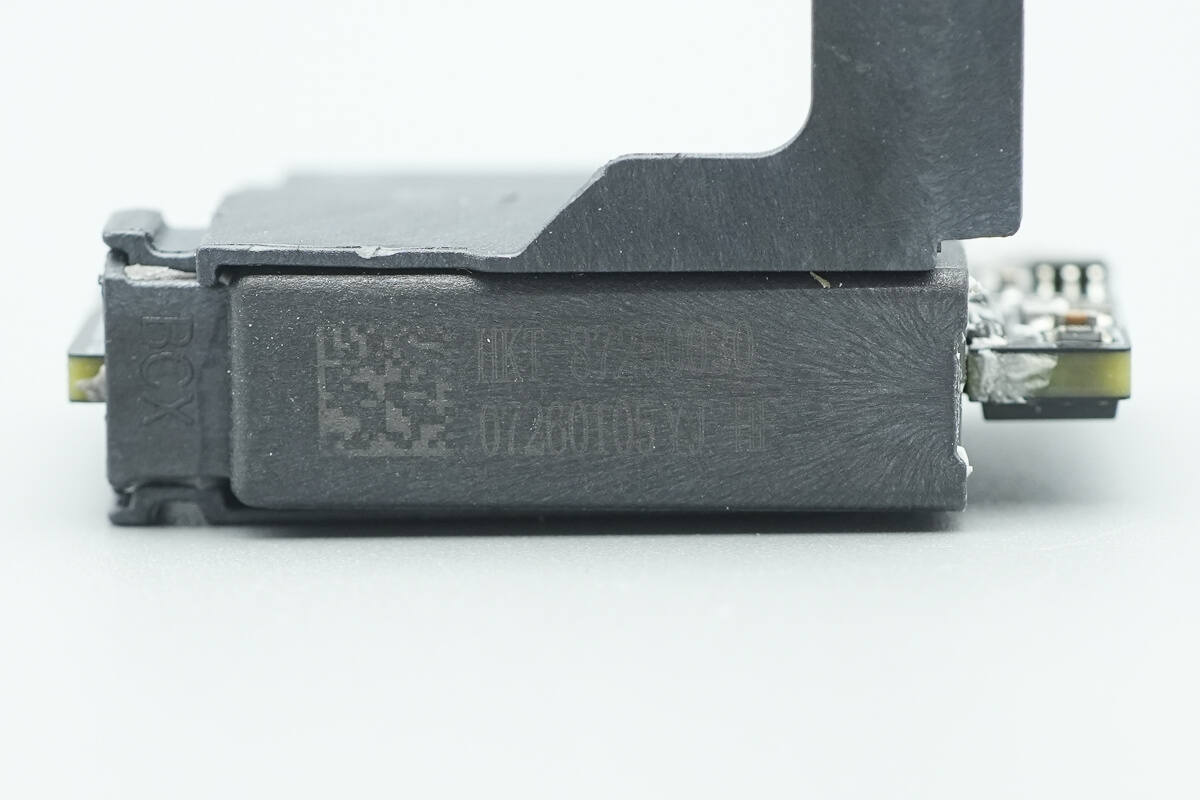
The planar transformer module was removed, and the silk-screen markings indicate that it is supplied by Huntkey.
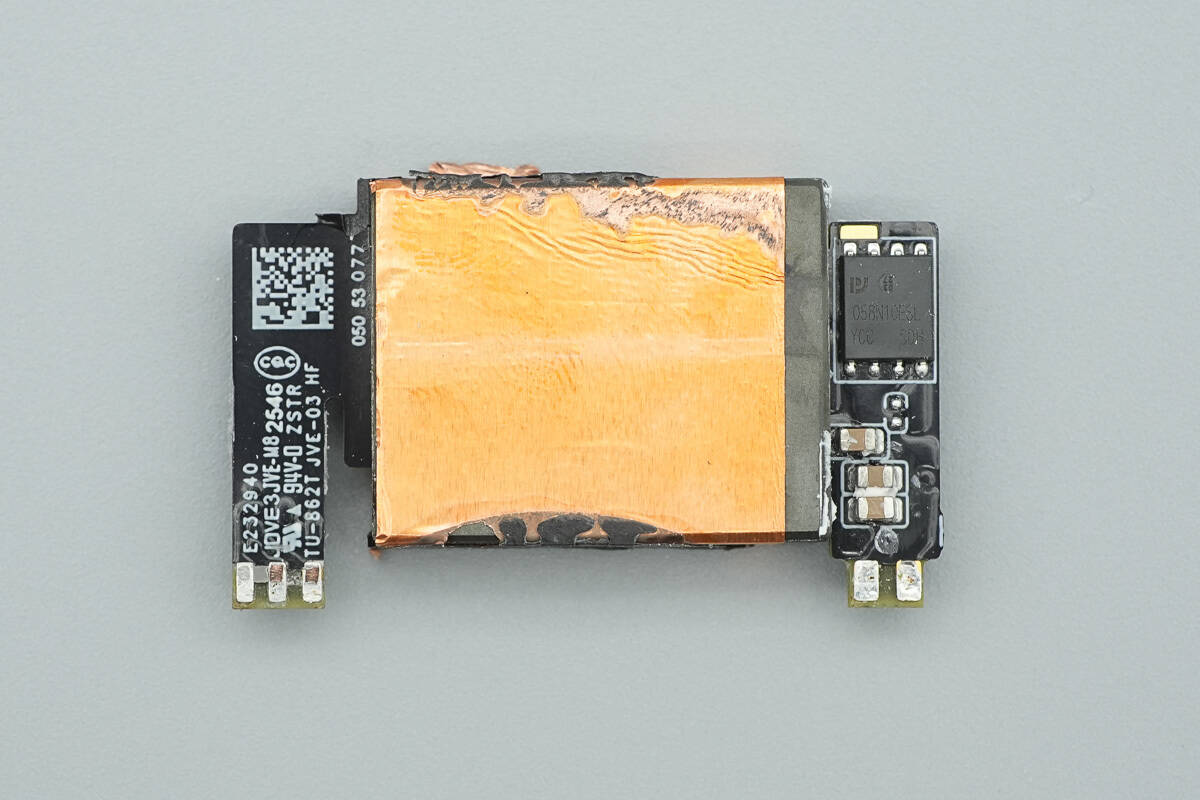
Remove the plastic casing. On the right side, there is a synchronous rectifier.
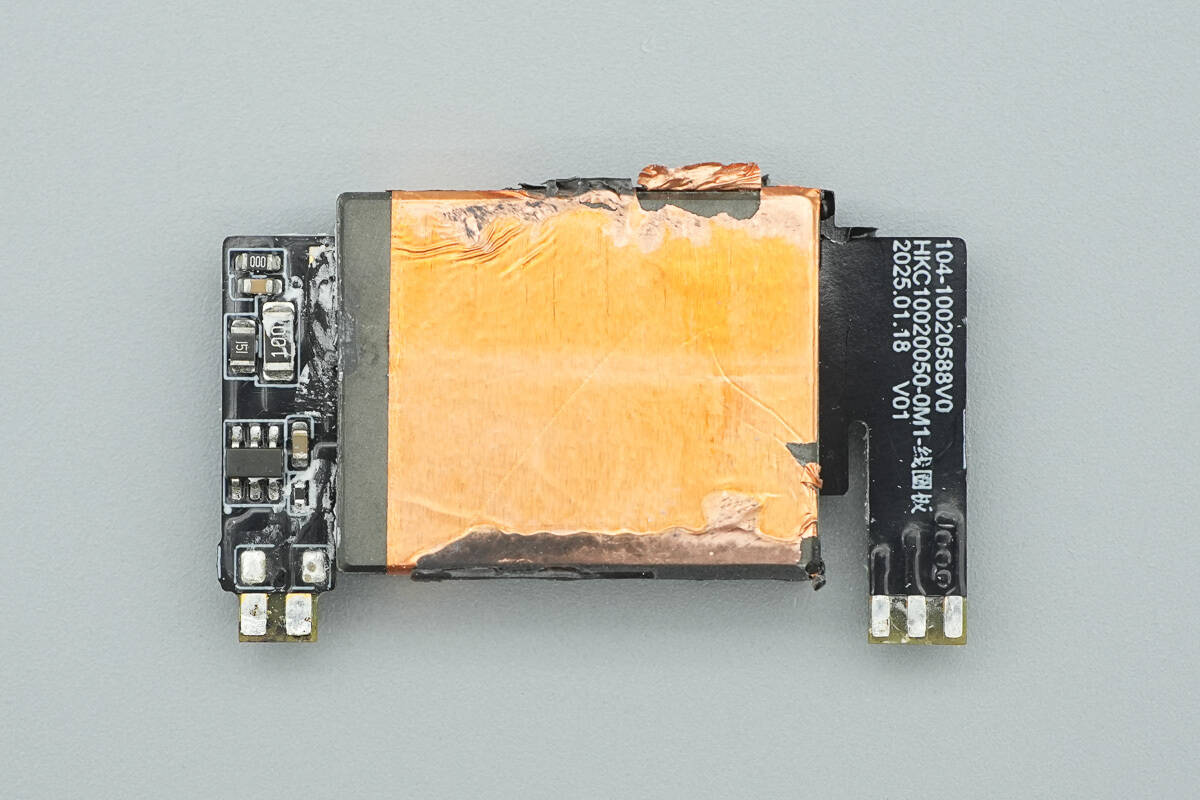
On the back of the same side, there is also a synchronous rectifier controller.
Shatter the magnetic core of the planar transformer module.
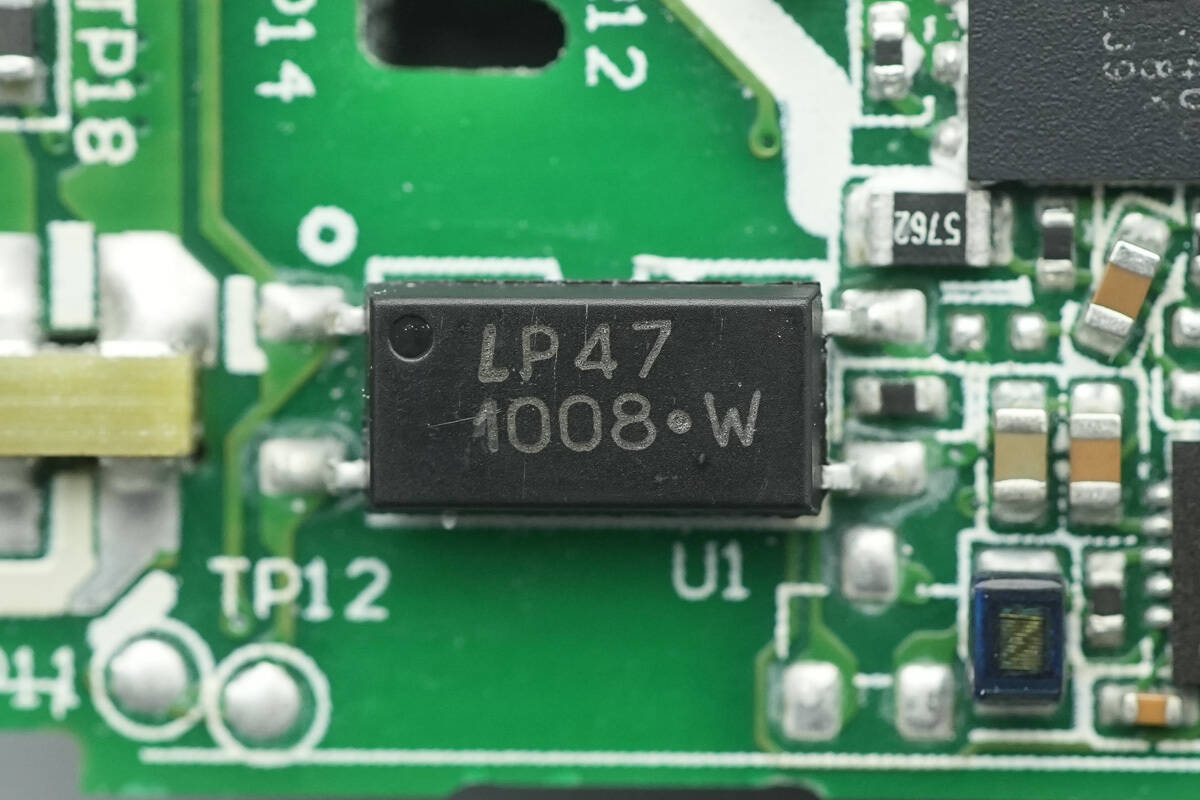
The 1008 optocoupler is used for output voltage feedback.
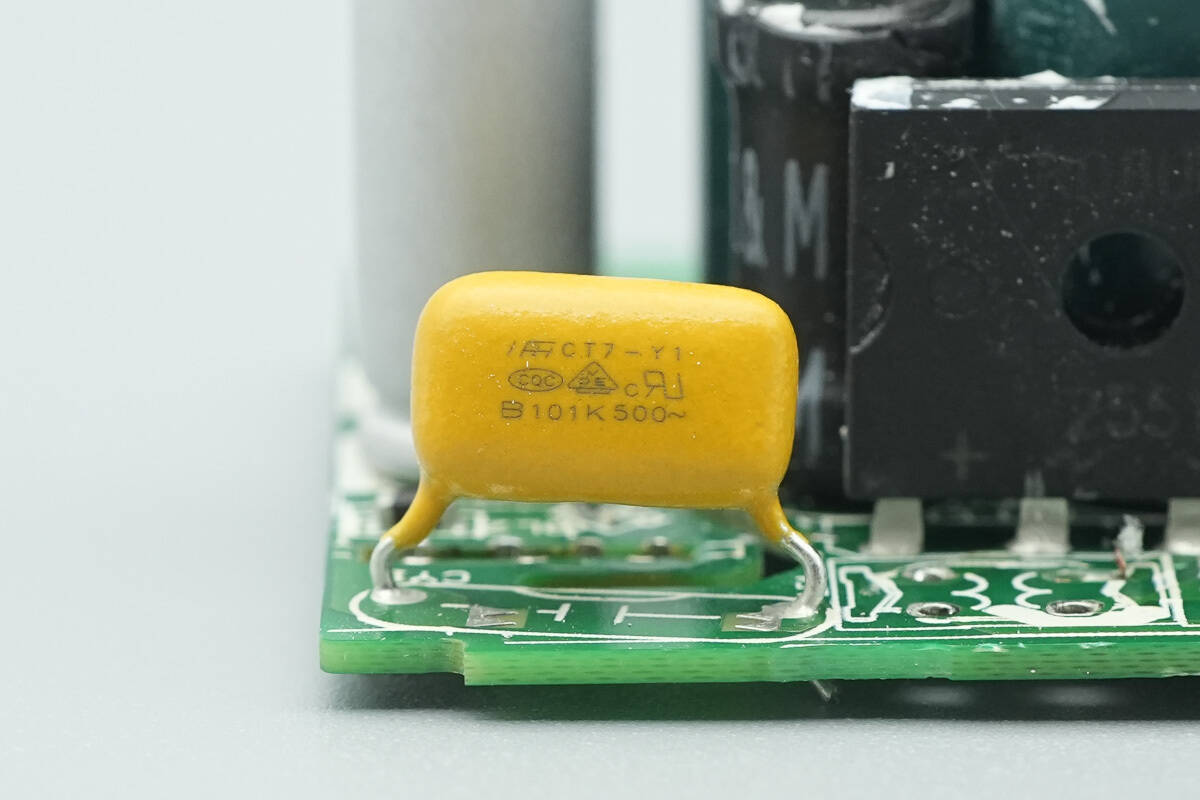
The safety Y capacitor is a CT7 series series-connected Y capacitor, enclosed in a yellow resin casing.
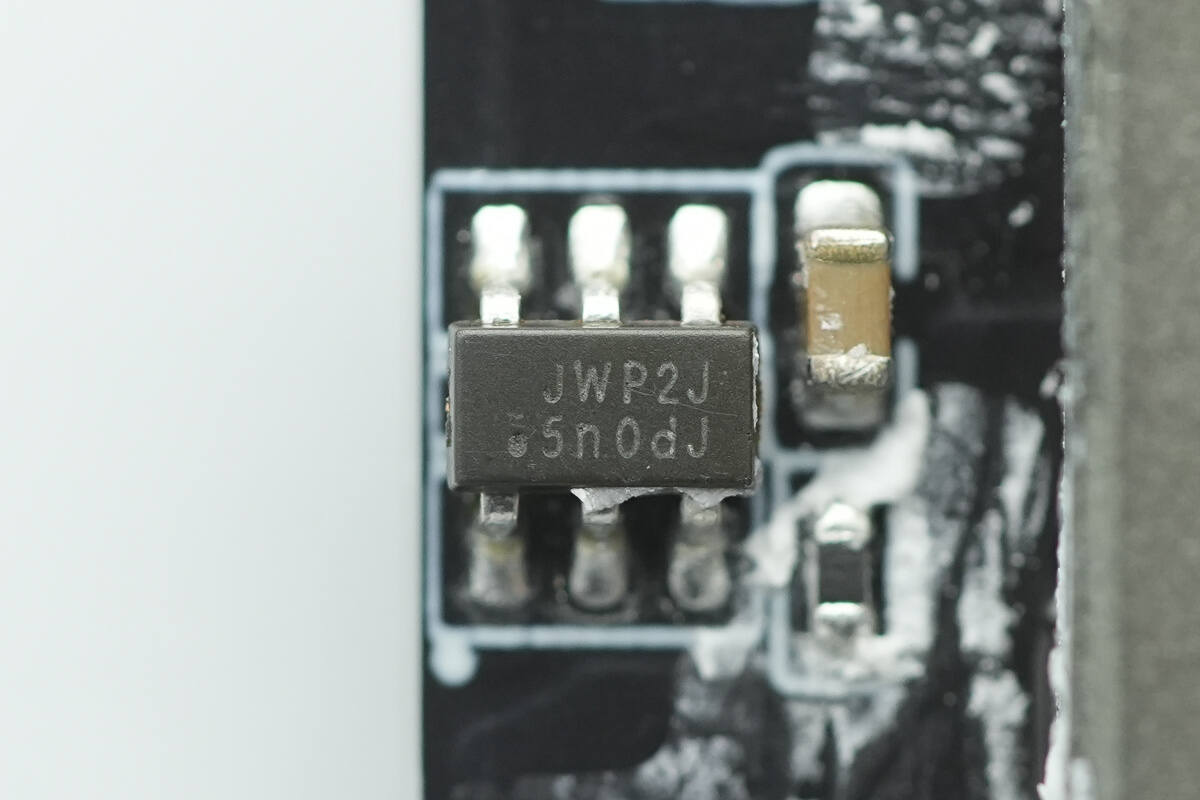
The synchronous rectifier controller is from JOULWATT, marked JWP2J, model JW7727L. It is specifically designed for secondary-side rectification in ACF and CCM/QR/DCM isolated topologies. By driving external MOSFETs, it can significantly improve system efficiency compared with traditional diode rectification solutions.
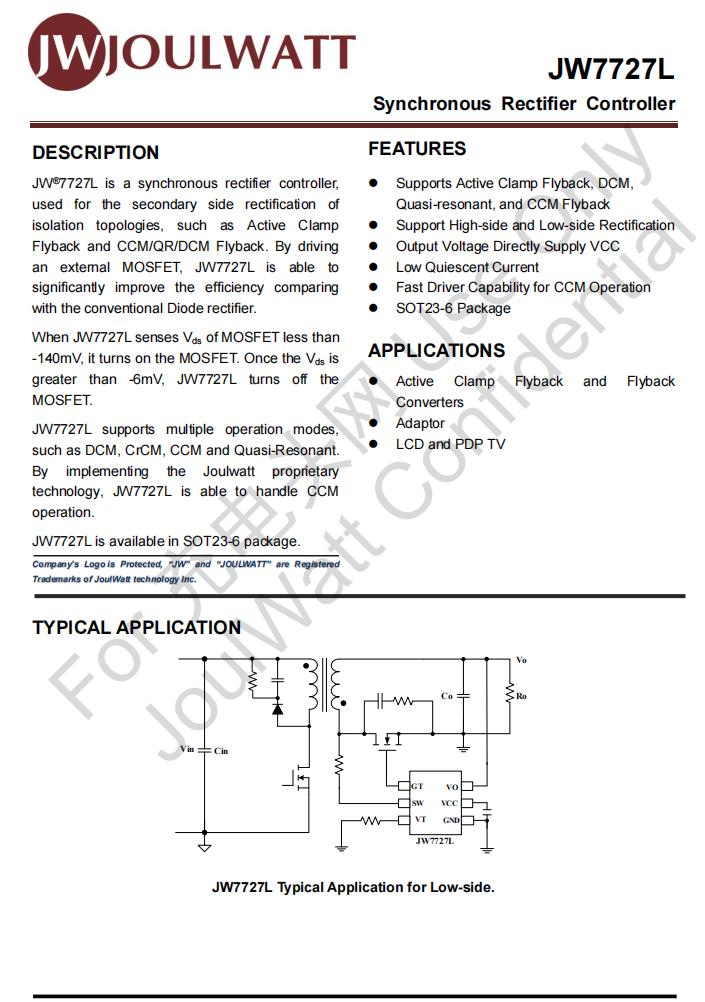
When the JW7727L detects that the MOSFET’s drain-to-source voltage (V_DS) drops below -140 mV, it immediately turns on the MOSFET; conversely, when V_DS rises above -6 mV, it automatically turns off the MOSFET. This controller supports multiple operating modes, including DCM, CrCM, CCM, and quasi-resonant modes, using JOULWATT’s proprietary technology to achieve efficient control in CCM mode. It comes in a SOT23-6 package.
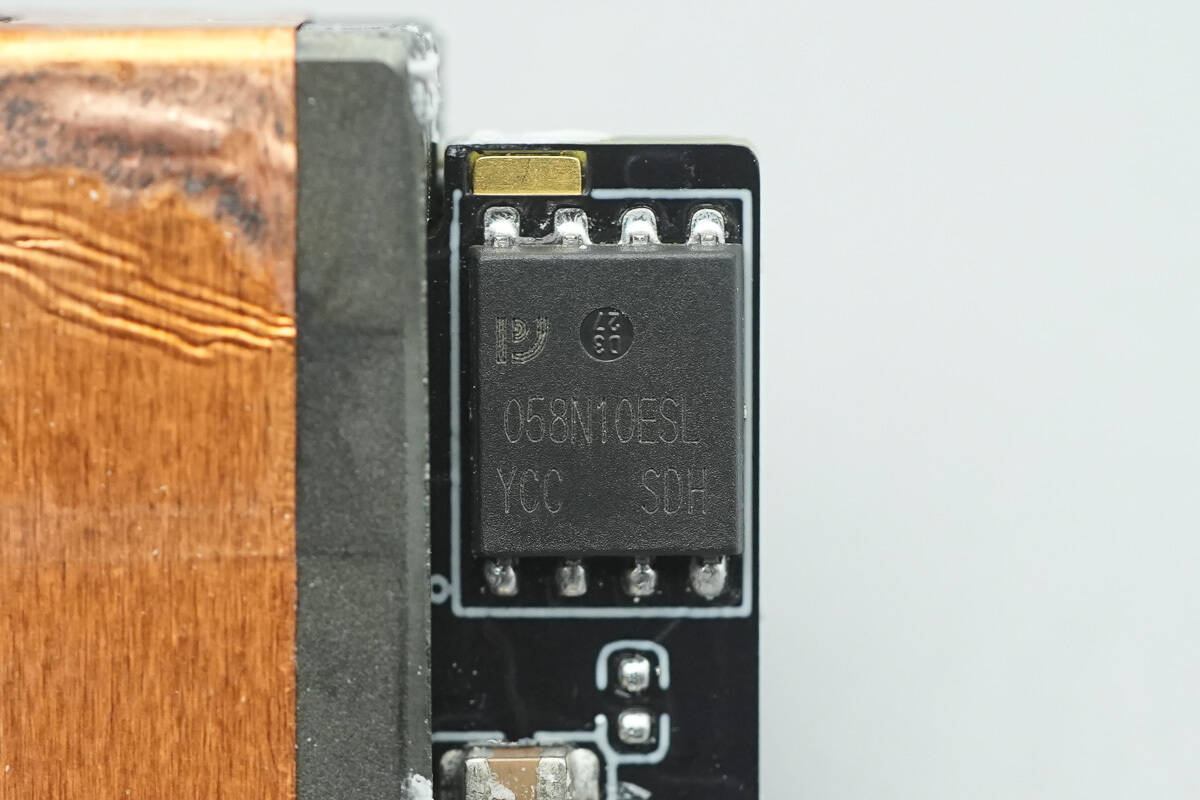
The synchronous rectifier is from PY, marked 058N10ESL. It is an NMOS with a voltage rating of 100 V and comes in a DFN 5×6 package.
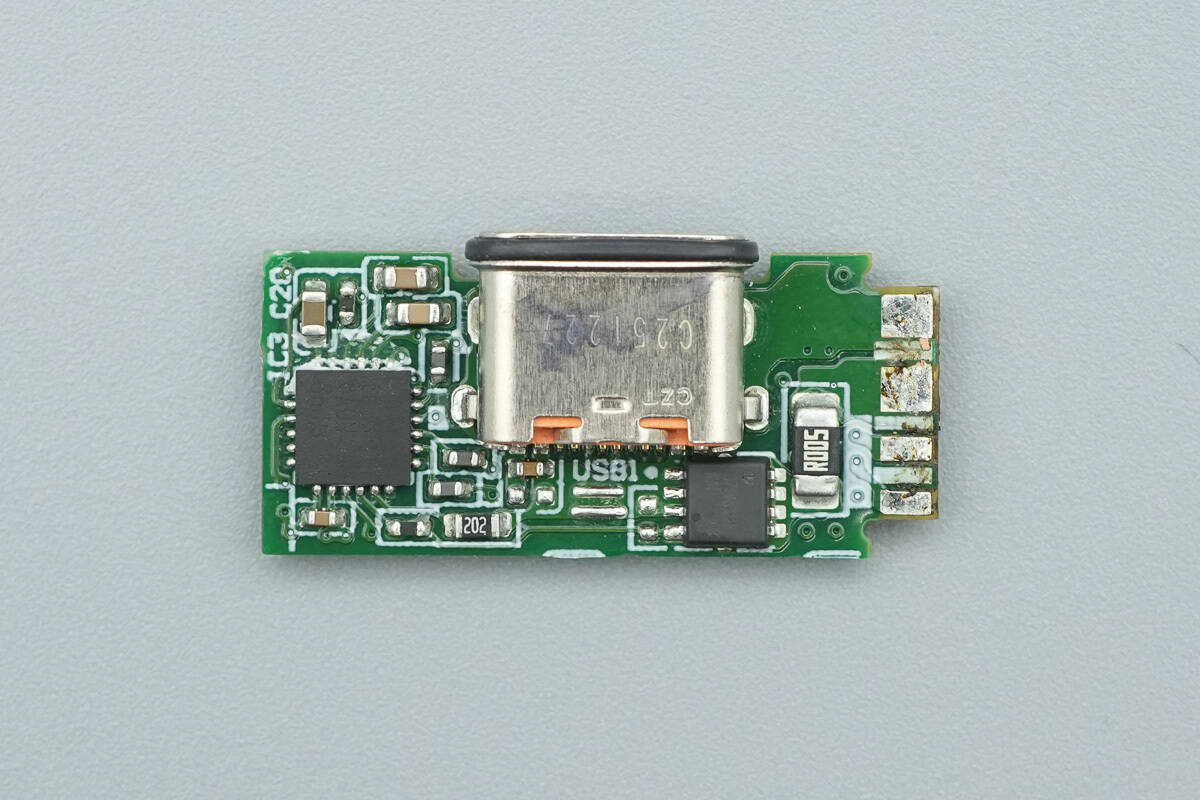
Remove the small PCB of the socket, with a protocol chip and a VBUS MOSFET mounted on the front side.
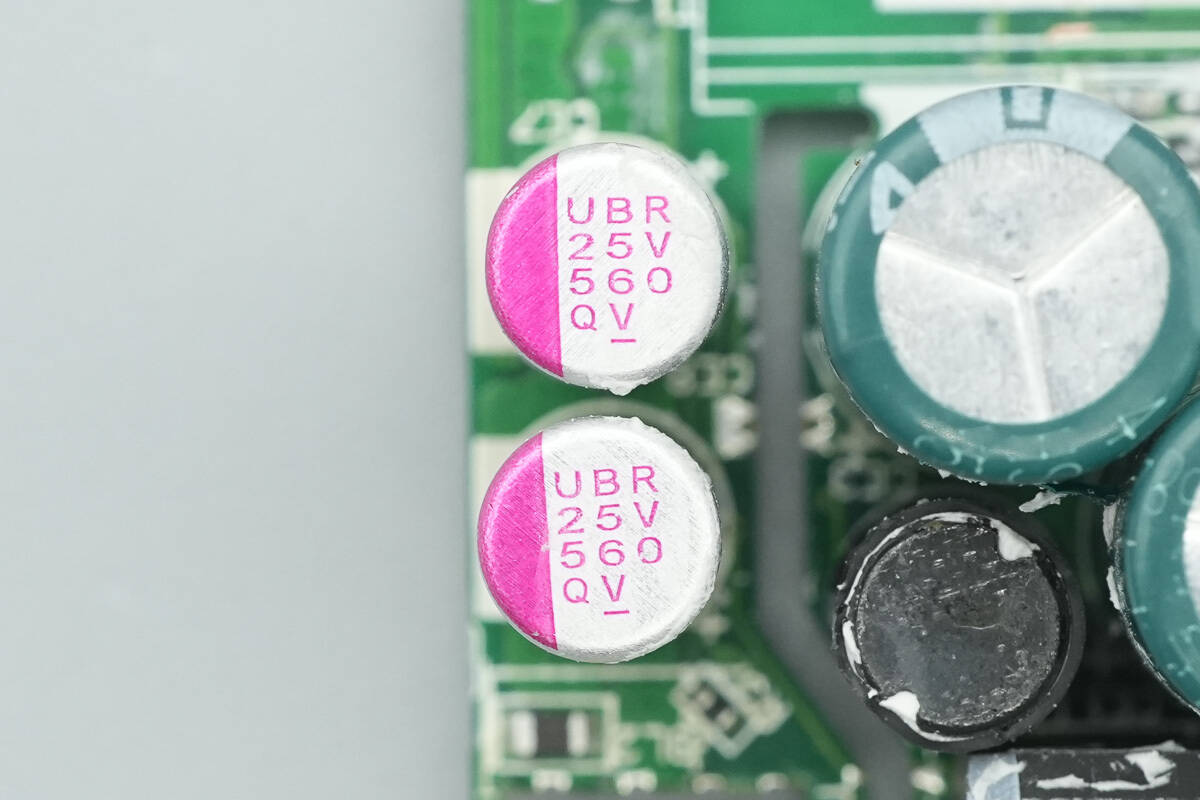
Two solid capacitors from the SAMXON UBR series, both rated at 25V 560μF.
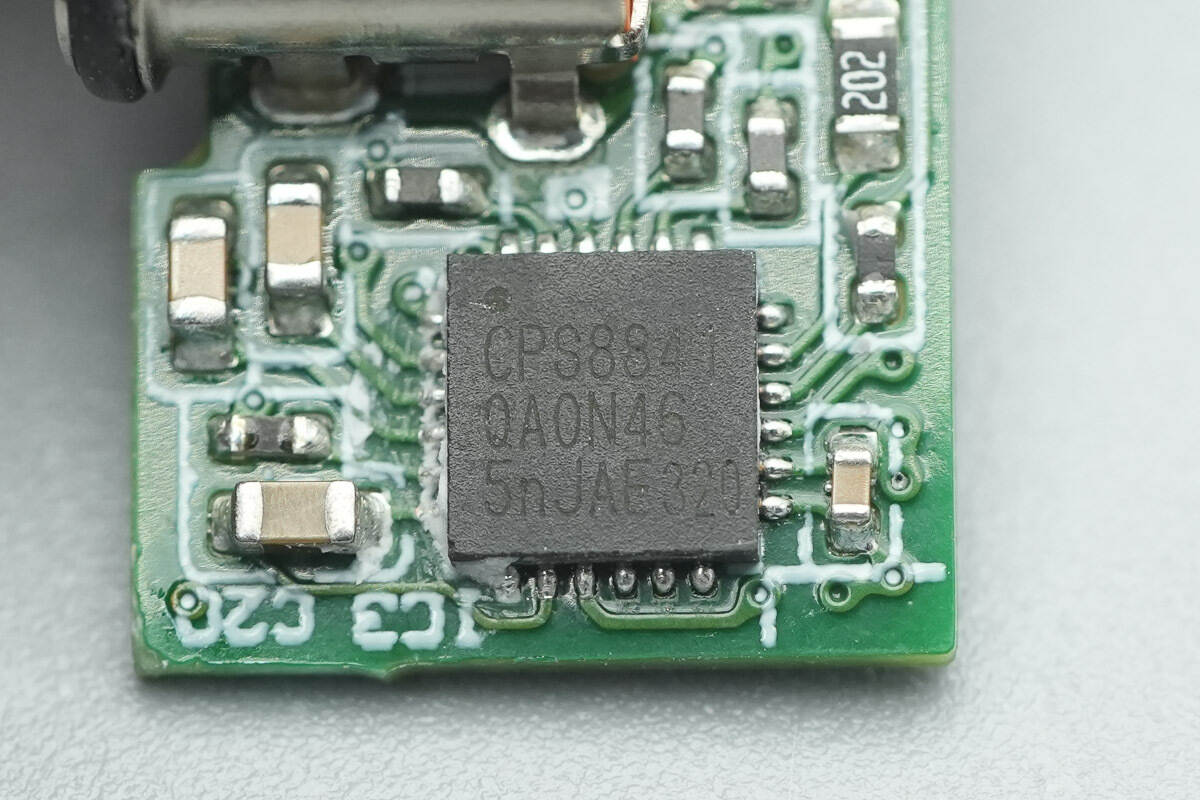
The protocol chip is from CPS, model CPS8841. It is a highly integrated USB PD 3.0 protocol chip, featuring PPS fast charging and supporting UFCS unified fast charging as well as Huawei SCP fast charging protocols. It integrates constant voltage and constant current control, supports I²C communication, and includes three GPIO pins for greater flexibility.
The CPS8841 comes in a QFN 4×4 package, with an input voltage range of 3–22V. It integrates a VCONN power supply, can recognize E-Marker cables, and supports configurable cable impedance compensation. The chip has a built-in NMOS driver and can use NMOS as the VBUS MOSFET. It also includes programmable overvoltage, overcurrent, and overtemperature protection, offering a comprehensive set of functions.
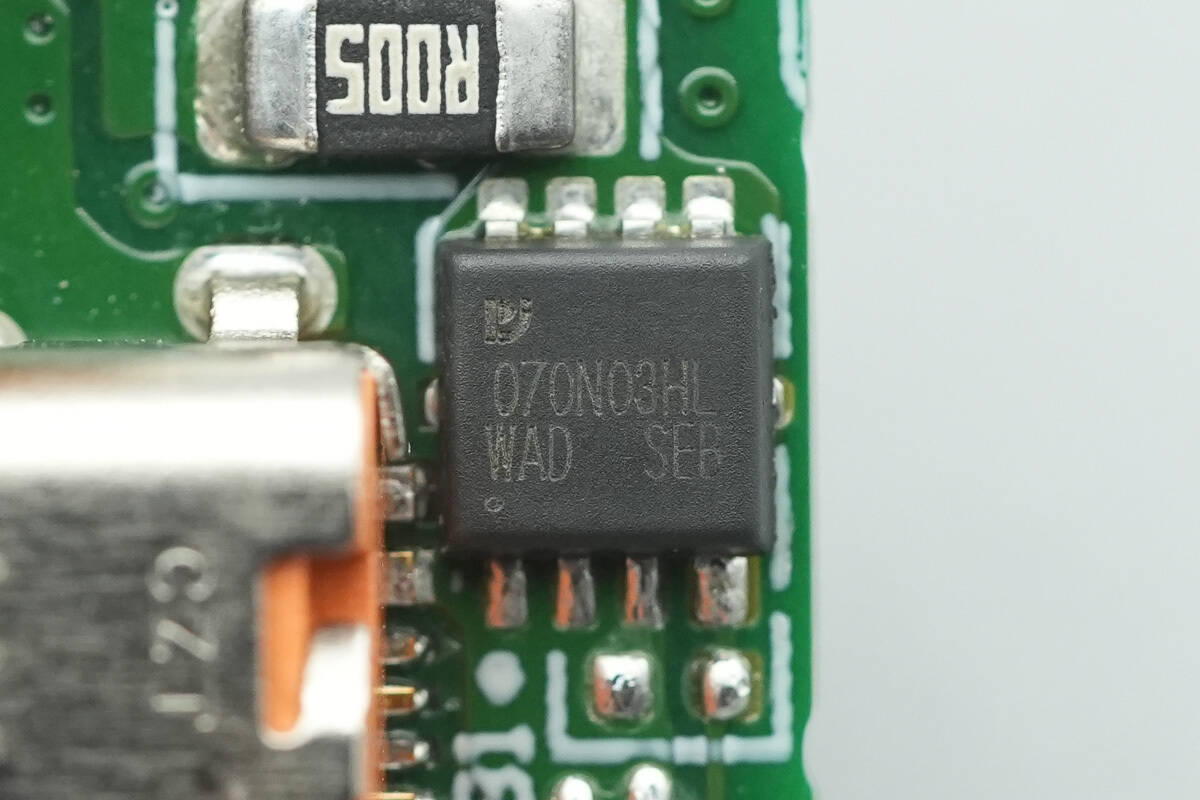
The VBUS MOSFET is from PY, marked 070N03HL, and comes in a DFN 3×3 package.
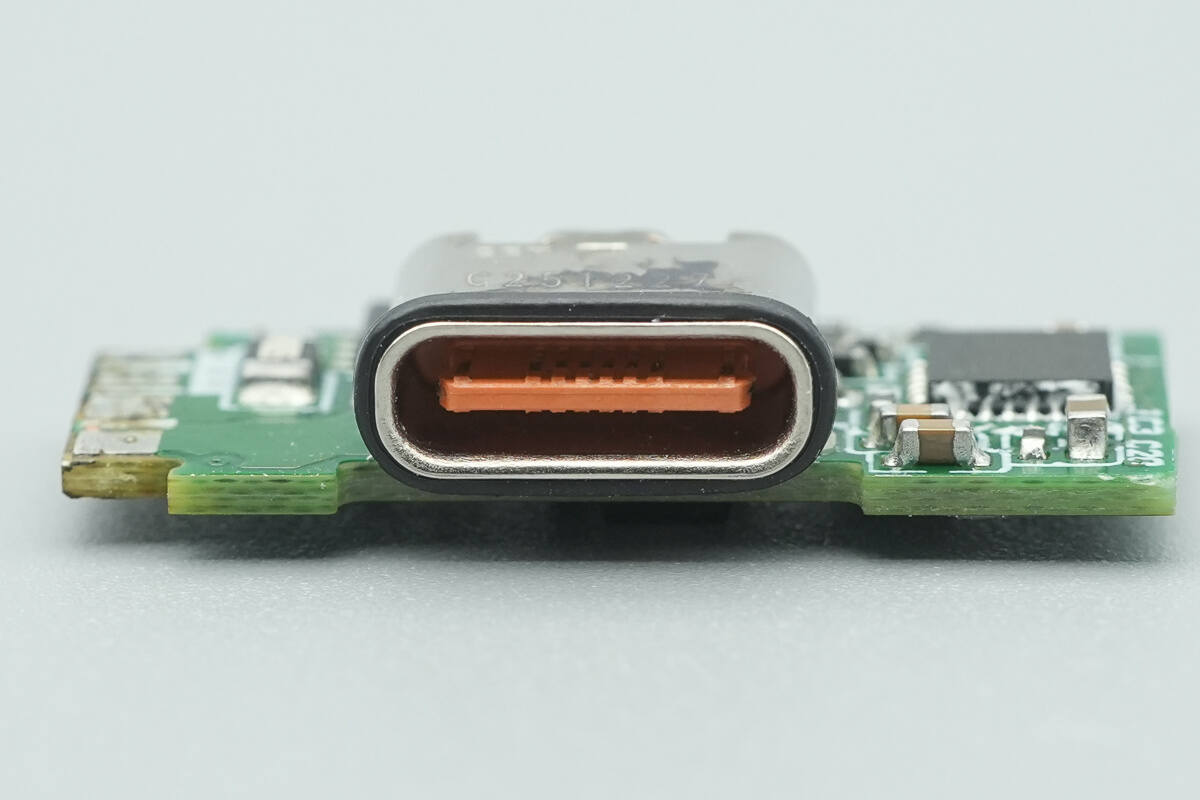
Close-up of the USB-C socket.
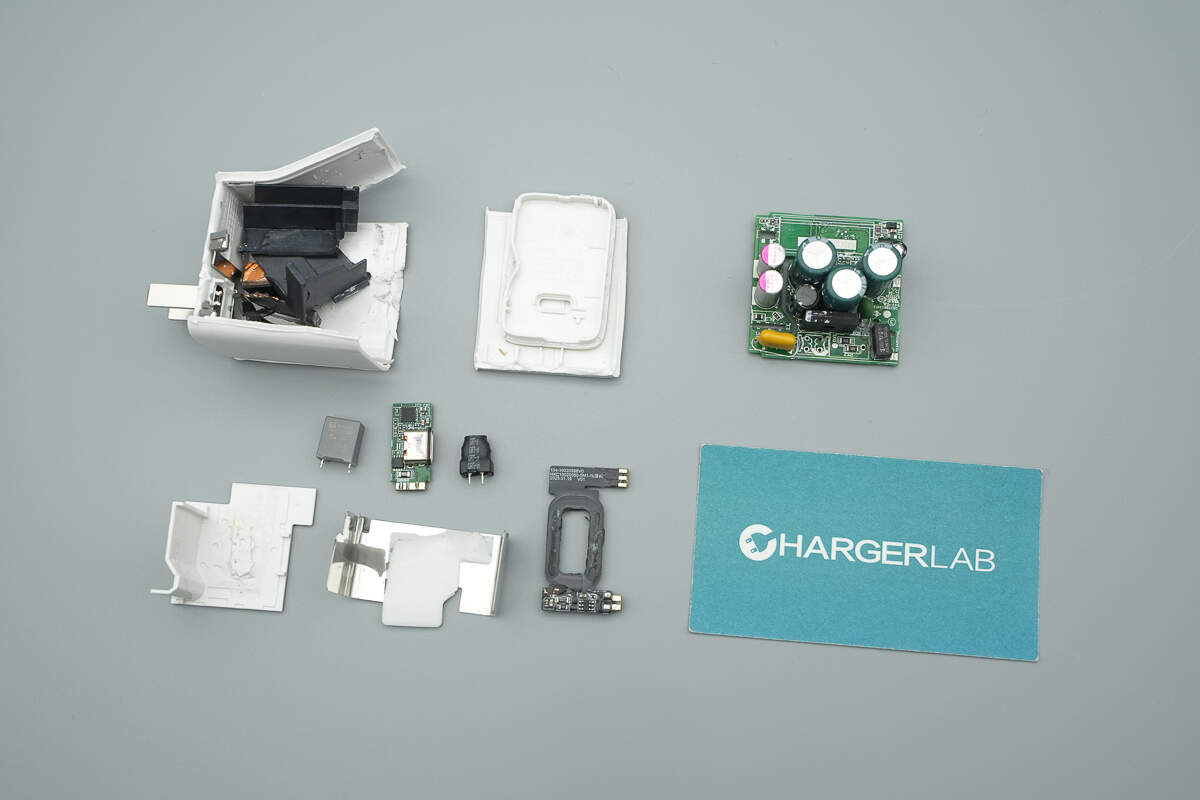
Well, those are all components of the HONOR 120W GaN Charger.
Summary of ChargerLAB
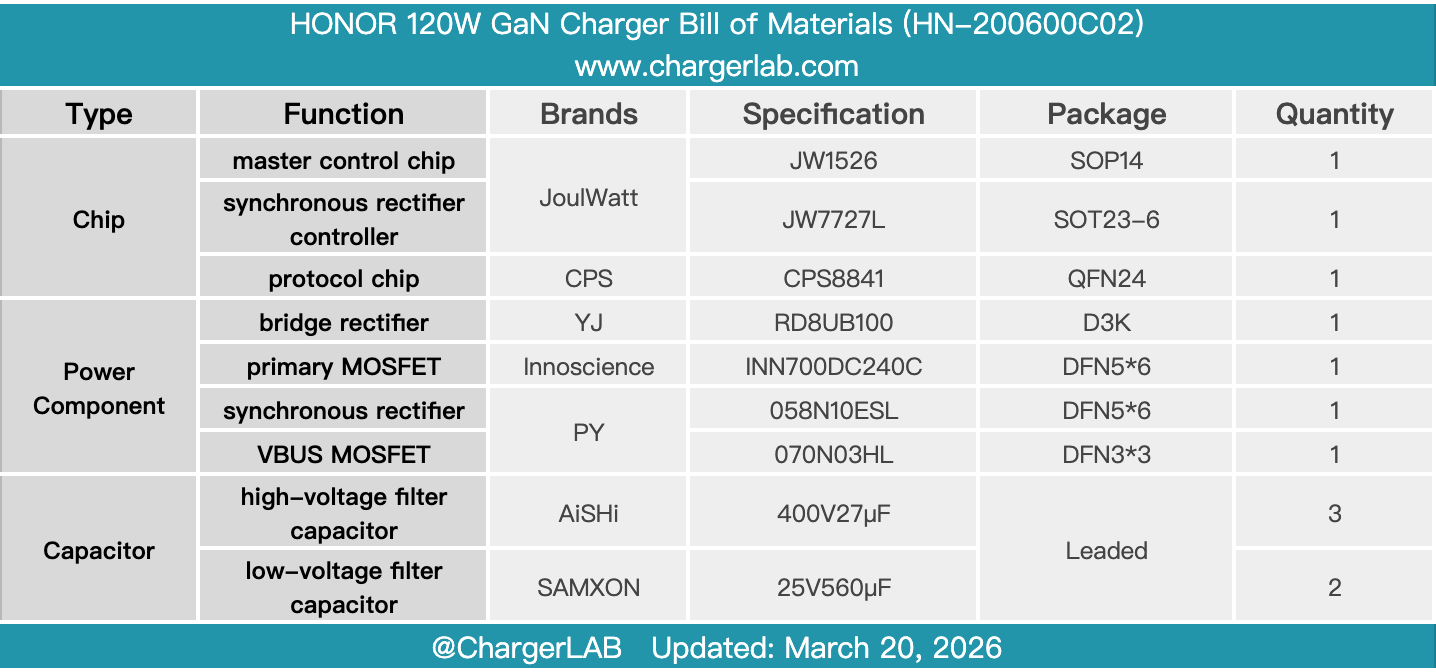
Here is the component list of the HONOR 120W GaN Charger for your convenience.
The charger is compact in size, with a power density of up to 1.91 W/cm³, fully demonstrating the advantages of GaN technology and high-integration design. It not only supports the Honor SuperCharge protocol but is also widely compatible with fast-charging standards such as PD 3.0 and QC, and supports 65 W PD fast charging.
After taking it apart, we found that it uses the JOULWATT JW1526 + JW7727L highly integrated fast-charging solution, paired with the Innoscience INN700DC240C GaN FET and Huntkey’s planar transformer module, achieving a compact PCBA layout. Internal potting, heatsink coverage, and multiple component reinforcement designs ensure effective heat dissipation under high-power output and long-term reliability.
Related Articles:
1. Teardown of Great Wall 800W Platinum SiC Server Power Supply (GW-CRPS800N2)
2. Teardown of Anker Nano 10000mAh Magnetic Wireless Charger Power Bank (A110Z)
3. Teardown of Apple 140W USB-C Power Adapter (A3607)