
Introduction
Up for teardown today is the inno3C Magnetic Wireless Power Bank. This 10,000mAh portable charger stands out with its versatile power options: it features a bidirectional fast-charging USB-C port, an integrated USB-C cable for convenience, and delivers up to 22.5W of wired output.
For wireless enthusiasts, it supports 15W magnetic wireless charging and includes built-in compatibility for Apple Watch. The design is rounded out by a dedicated battery status display on the side and a handy foldable metal kickstand on the back.
Join us as we strip it down to take a closer look at the components inside.
Product Appearance
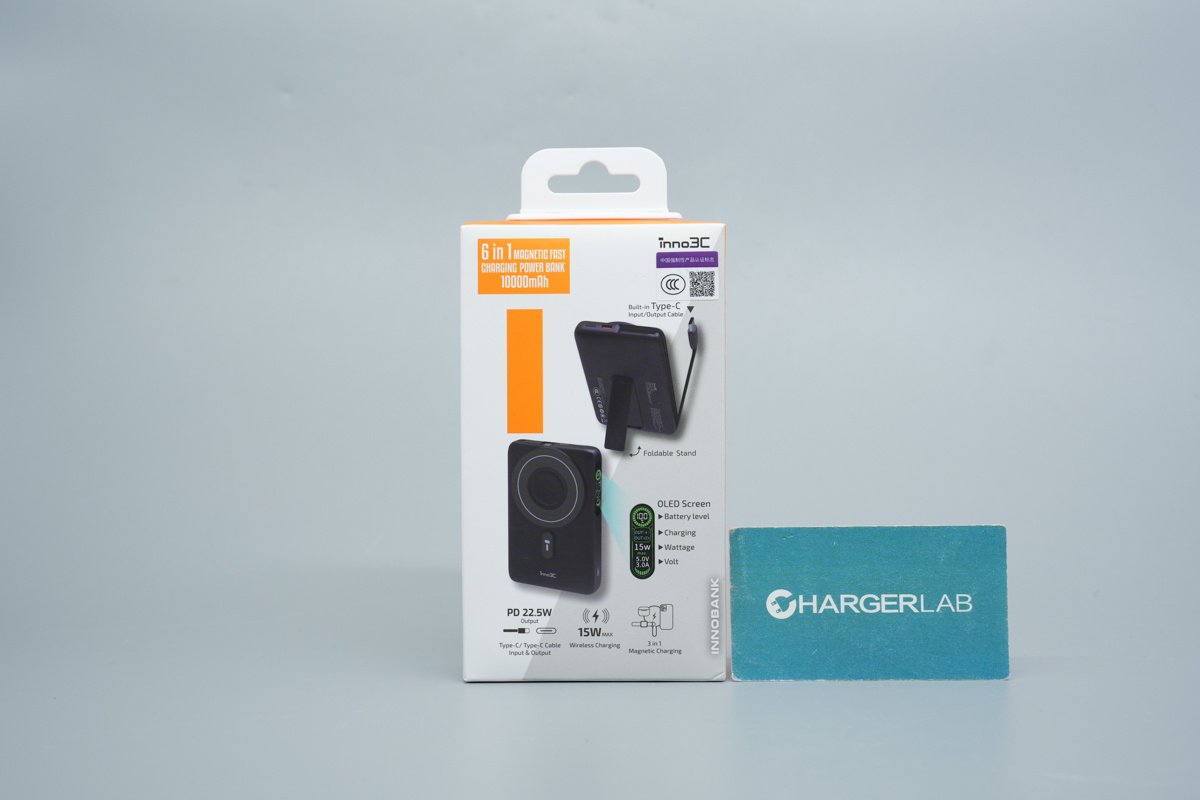
The front of the packaging box displays the inno3c logo, product name, front/rear product visuals, and key specs/selling points.
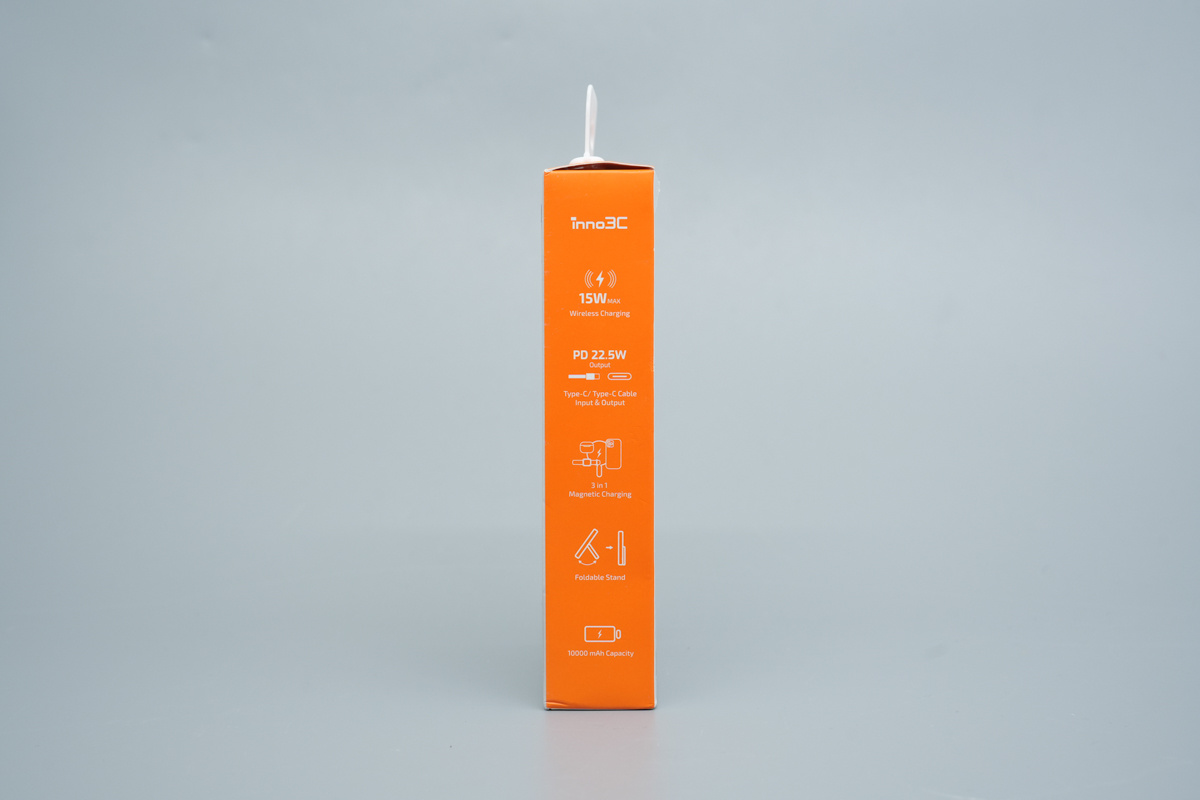
The side of the box highlights the key specs: 15W wireless charging, 22.5W PD output, a built-in USB-C cable, 3-in-1 magnetic charging, a foldable stand, and a 10,000mAh battery capacity.
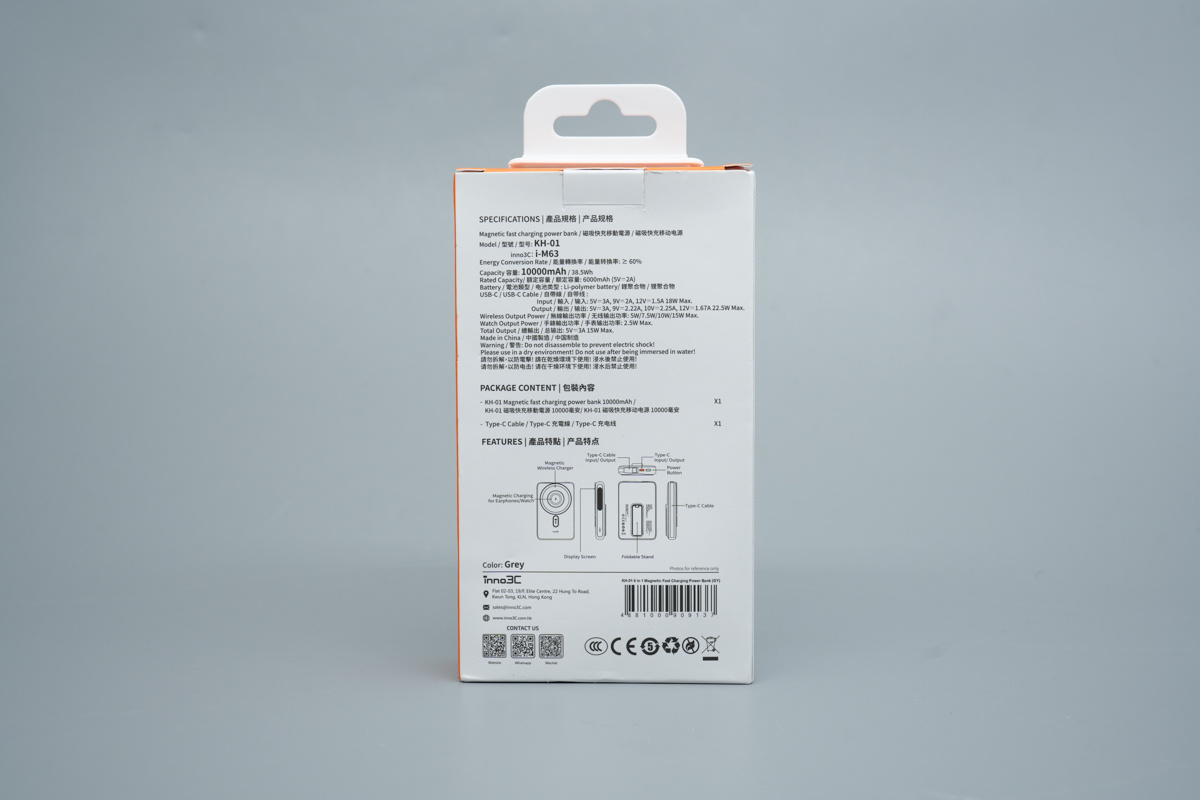
The back of the box contains detailed technical specs and the product package list, and detailed parameters will be covered during the physical evaluation section.
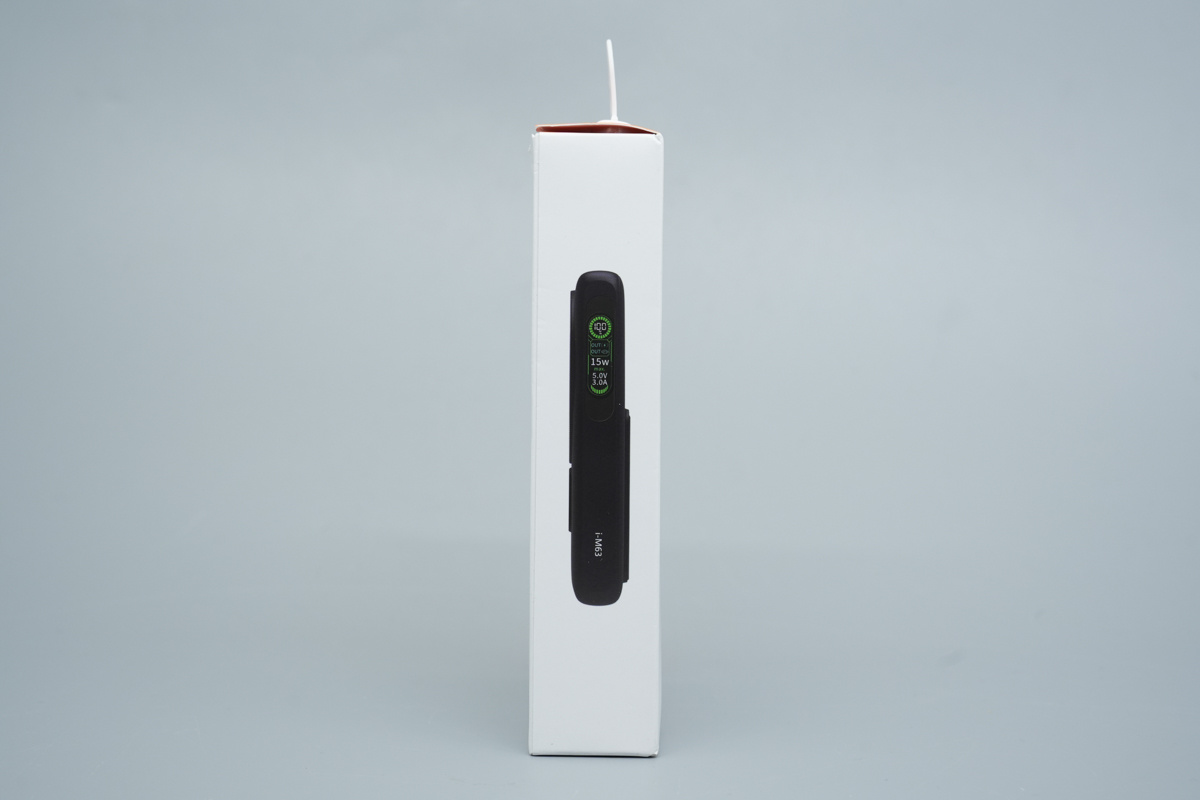
The other side of the box showcases the side profile of the product, emphasizing the integrated display screen.
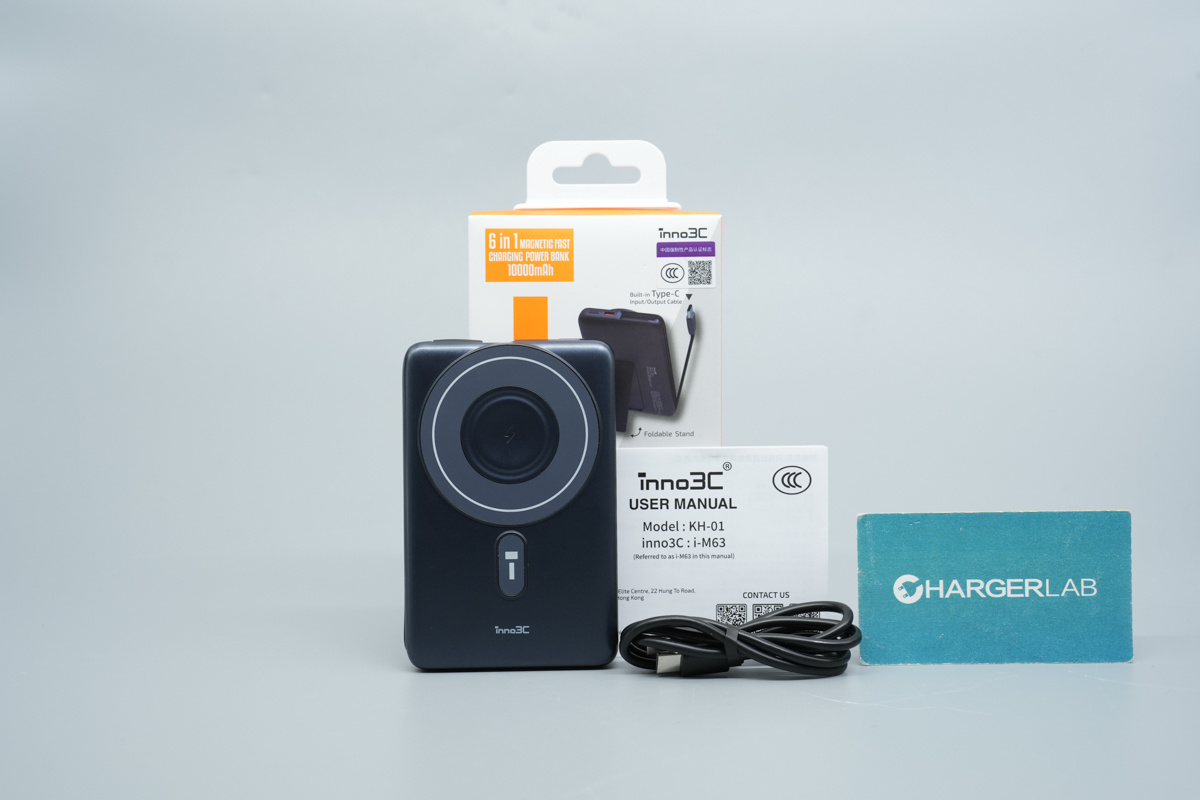
Inside the box, you’ll find the power bank itself, the user manual, and a bonus charging cable.
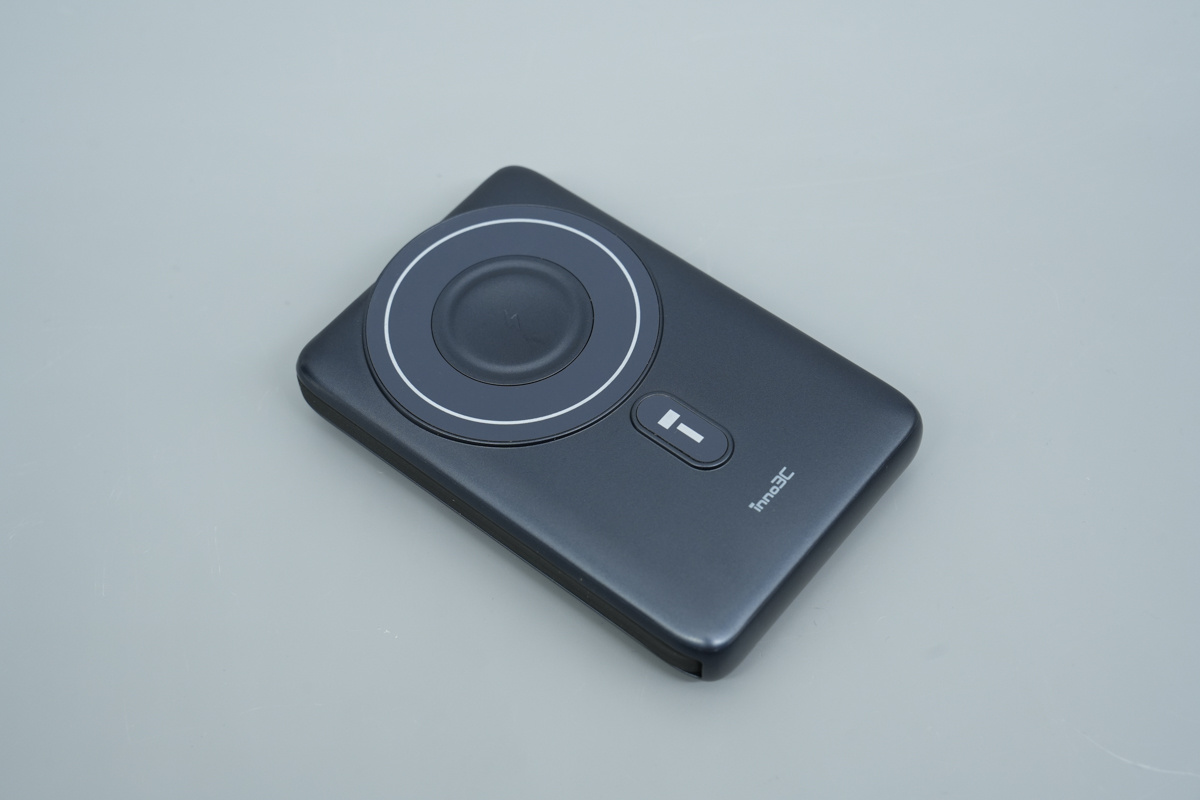
The inno3c power bank features a deep grey, matte-textured chassis. The front is designed with a magnetic wireless charging zone and alignment magnets.
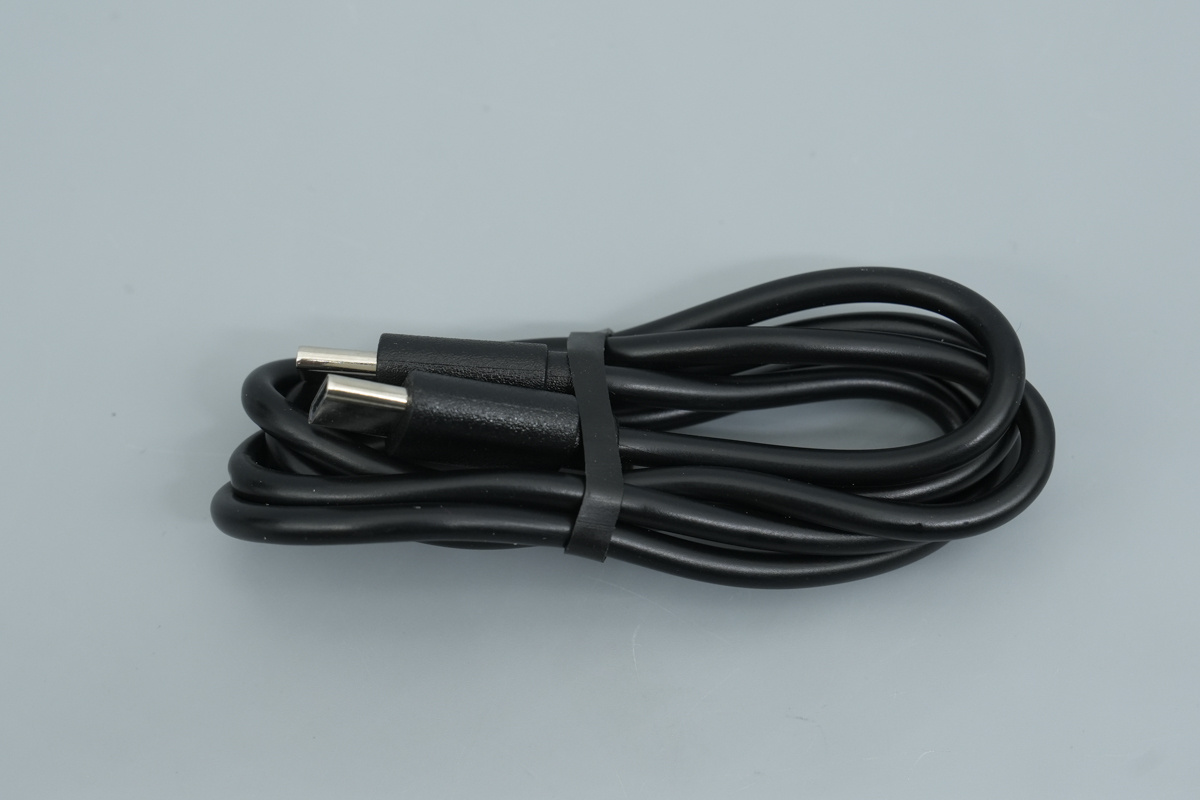
The box includes a black USB-C to USB-C cable, neatly bundled with a rubber tie.
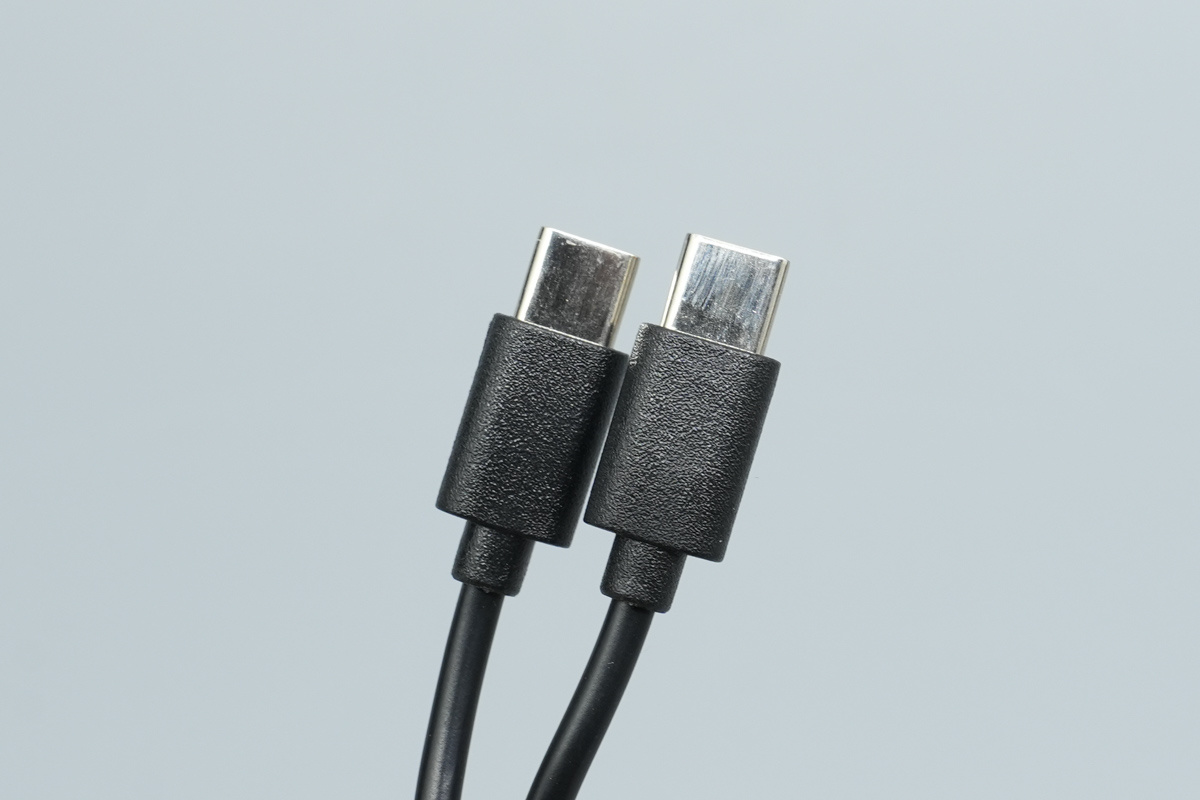
Both ends of the cable feature durable, injection-molded USB-C connectors.
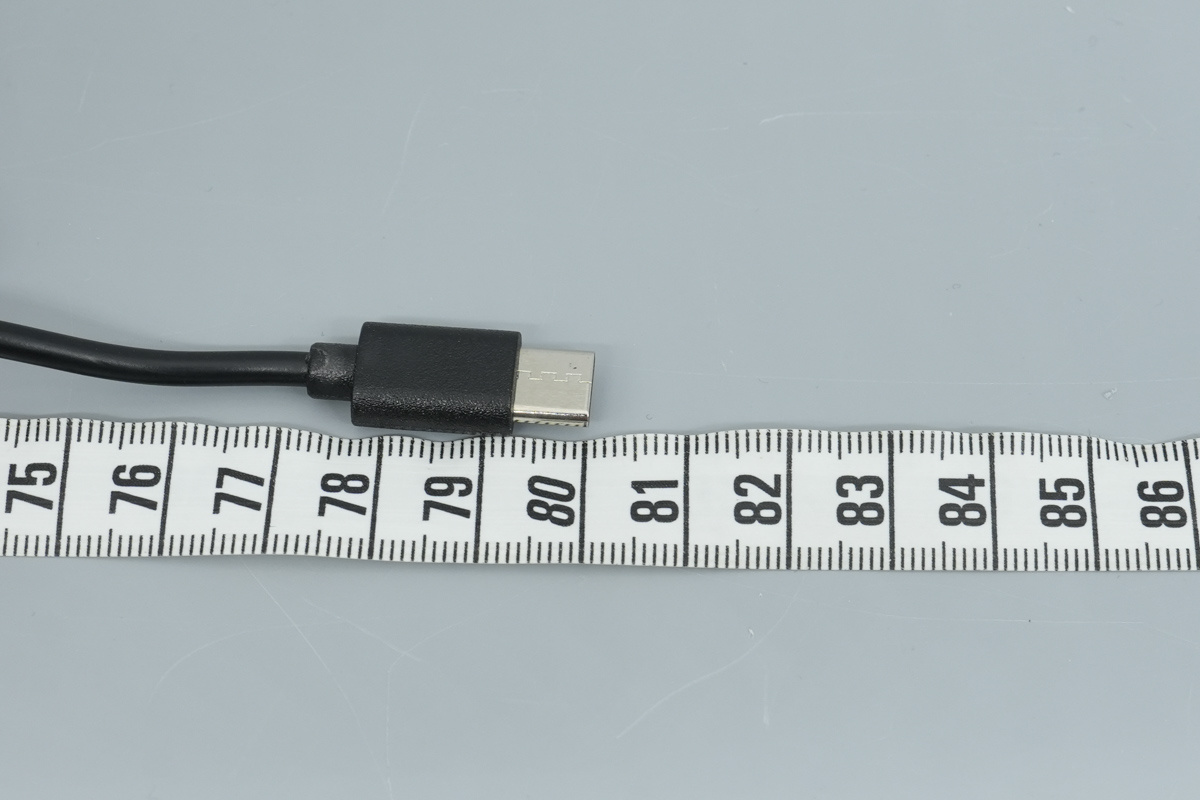
The length of the integrated cable is approximately 80cm.
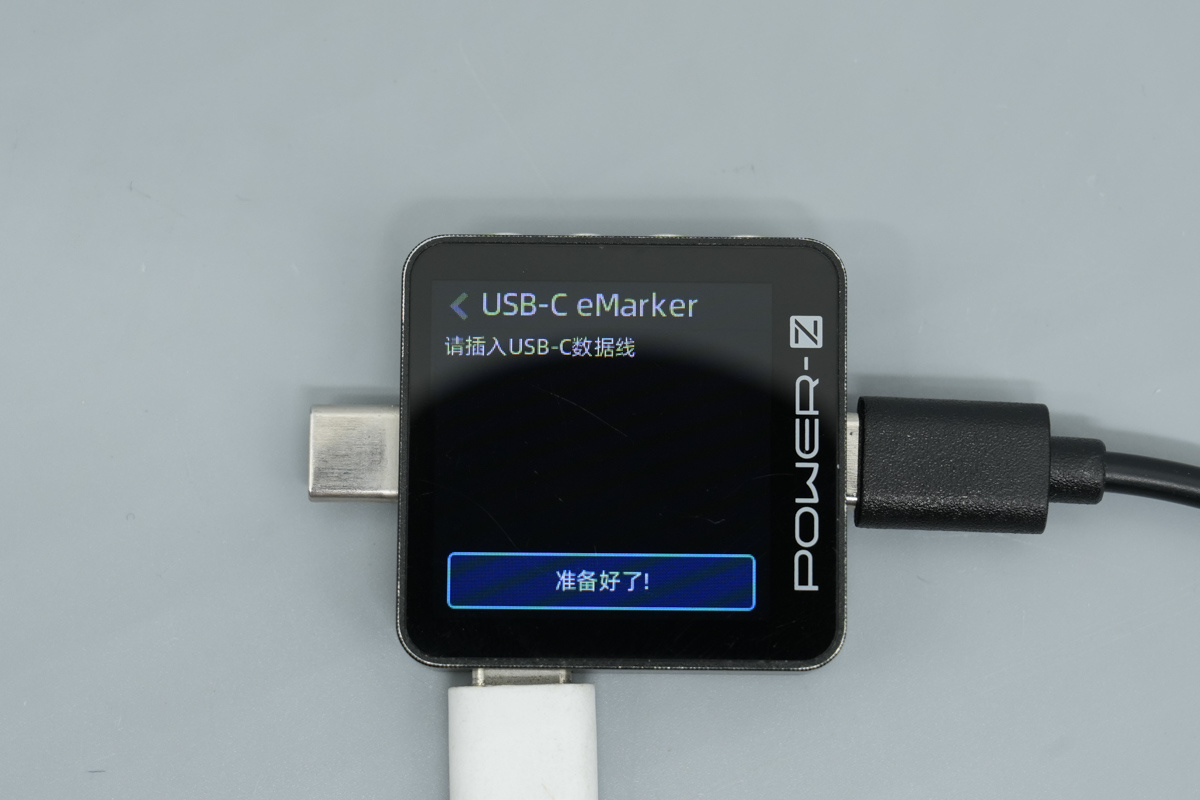
ChargerLAB POWER-Z KM003C shows that the cable supports that it doesn't contain an E-Marker chip.
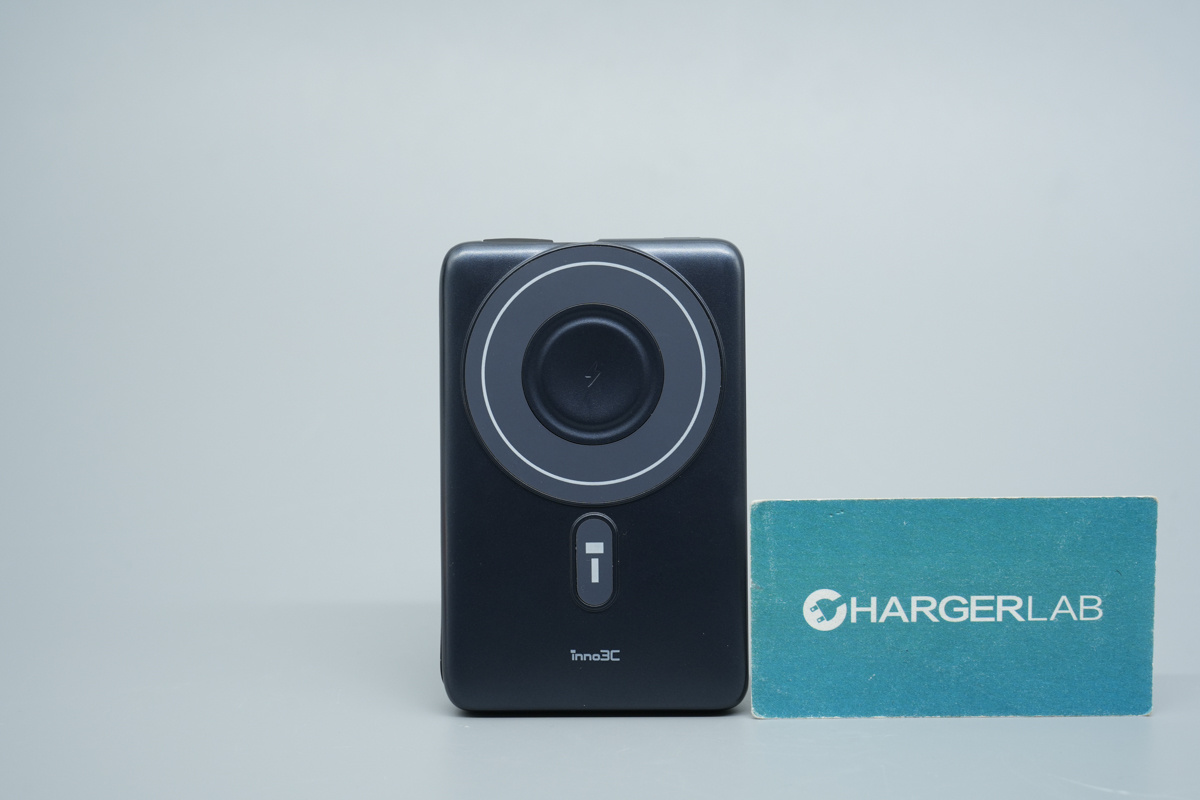
The 2-in-1 magnetic charging zone on the front uses a sleek concentric circle design to intuitively guide users where to place their smartphone and watch for optimal charging.
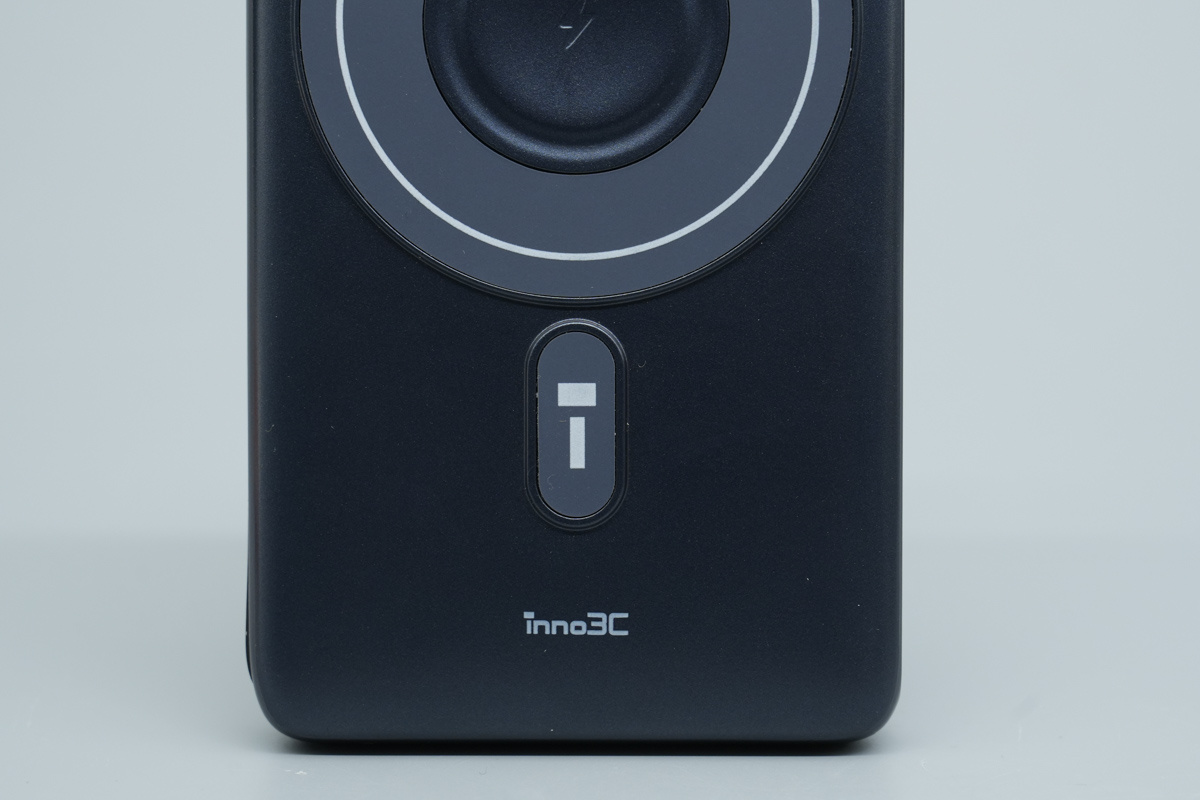
The inno3C logo is located on the alignment magnet area.
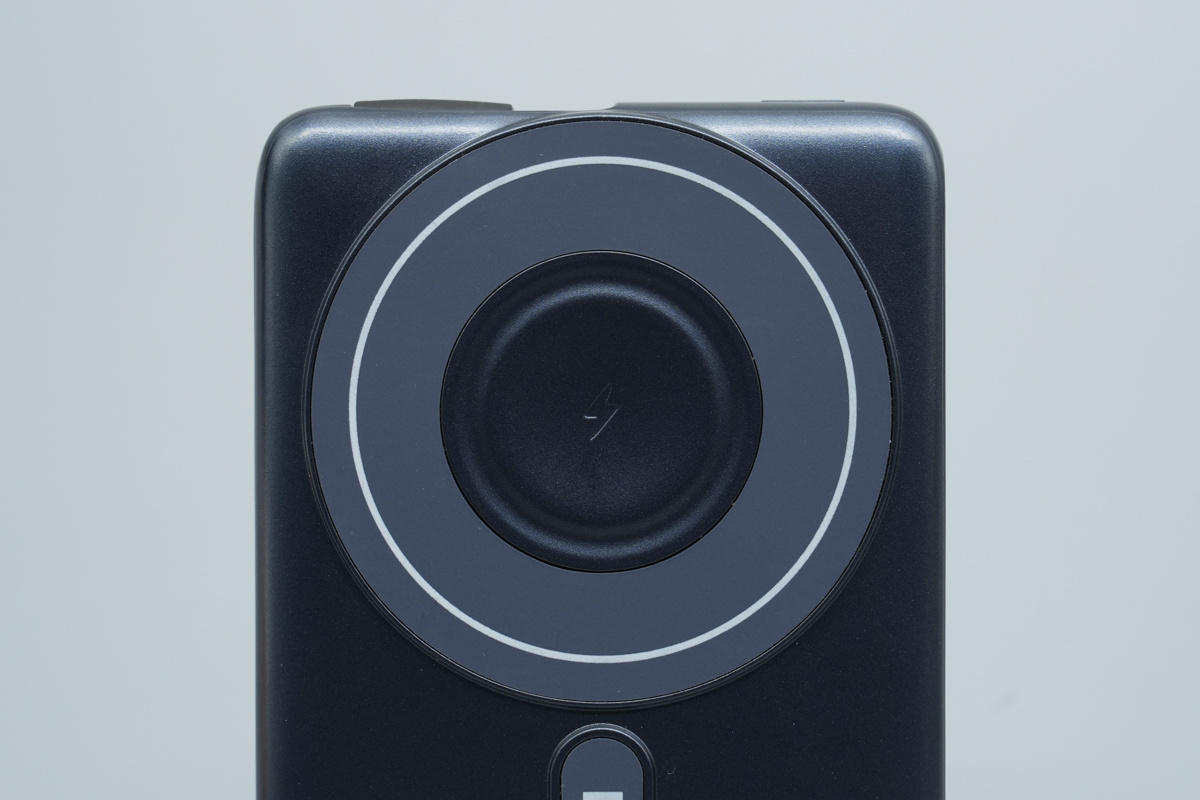
A lightning bolt icon located at the center of the magnetic wireless charging zone.
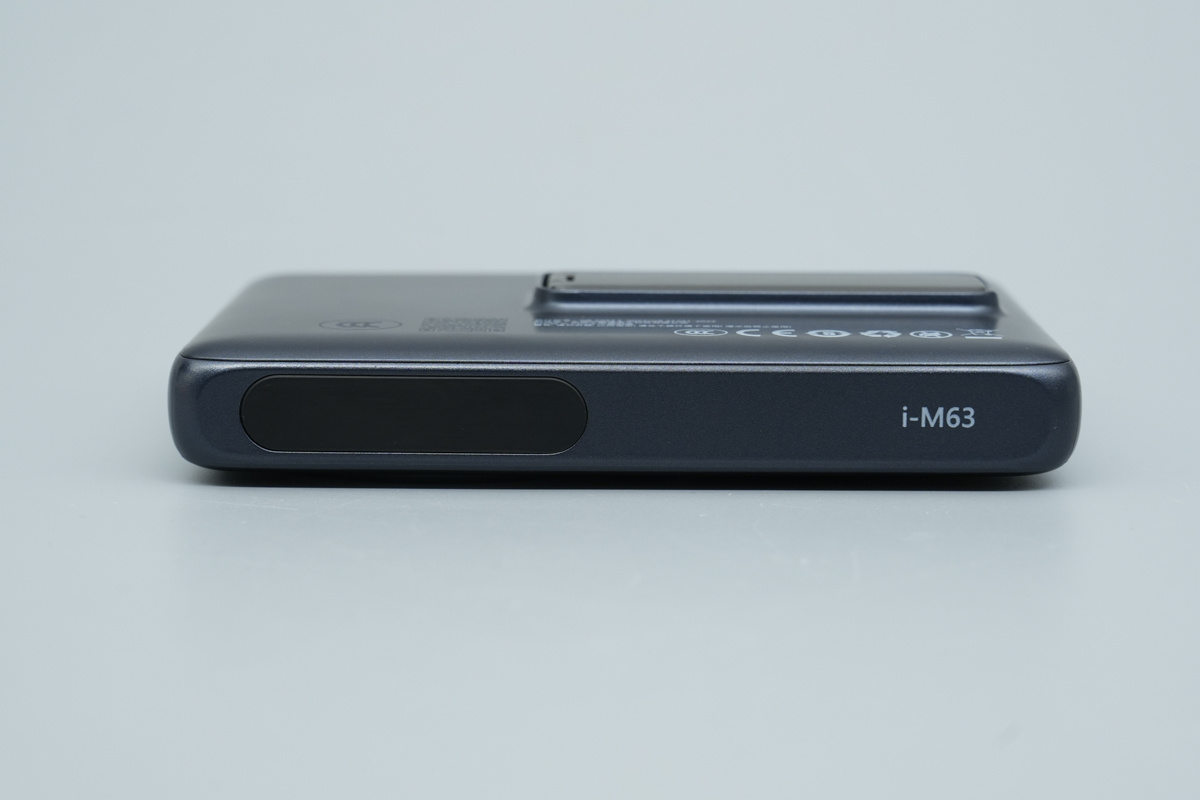
The side of it features a hidden display screen, with the model number "i-M63" printed on the right side.
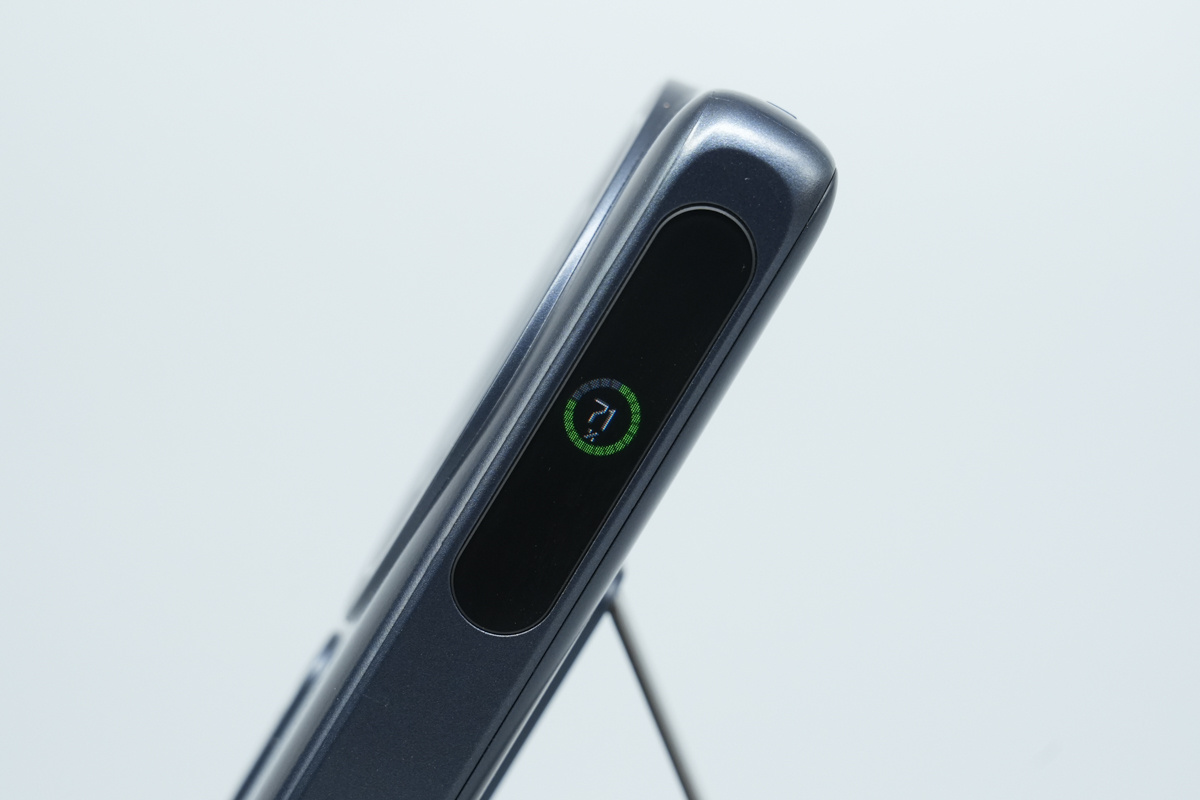
A quick press of the power button wakes up the OLED screen, providing a crisp readout of your battery level, output status, and slick charging animations.
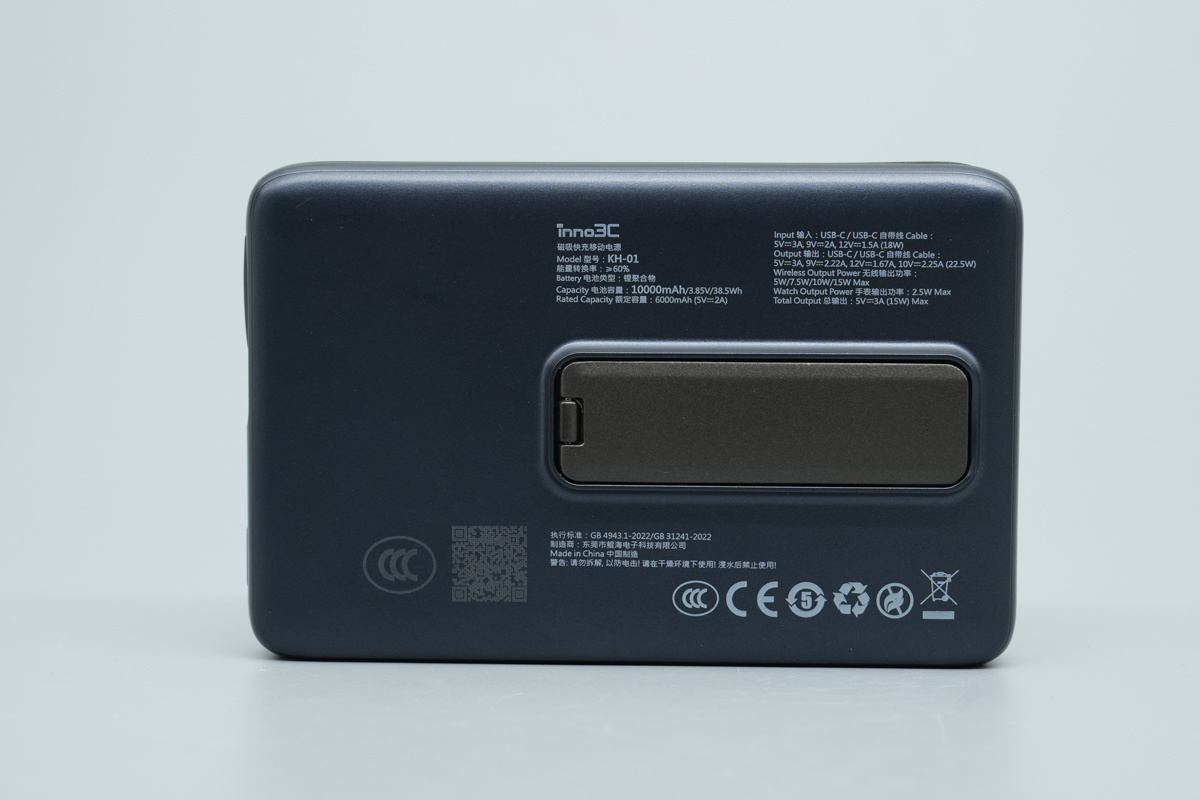
The rear of it features an embedded foldable metal kickstand, with detailed product specs printed in the area above it.
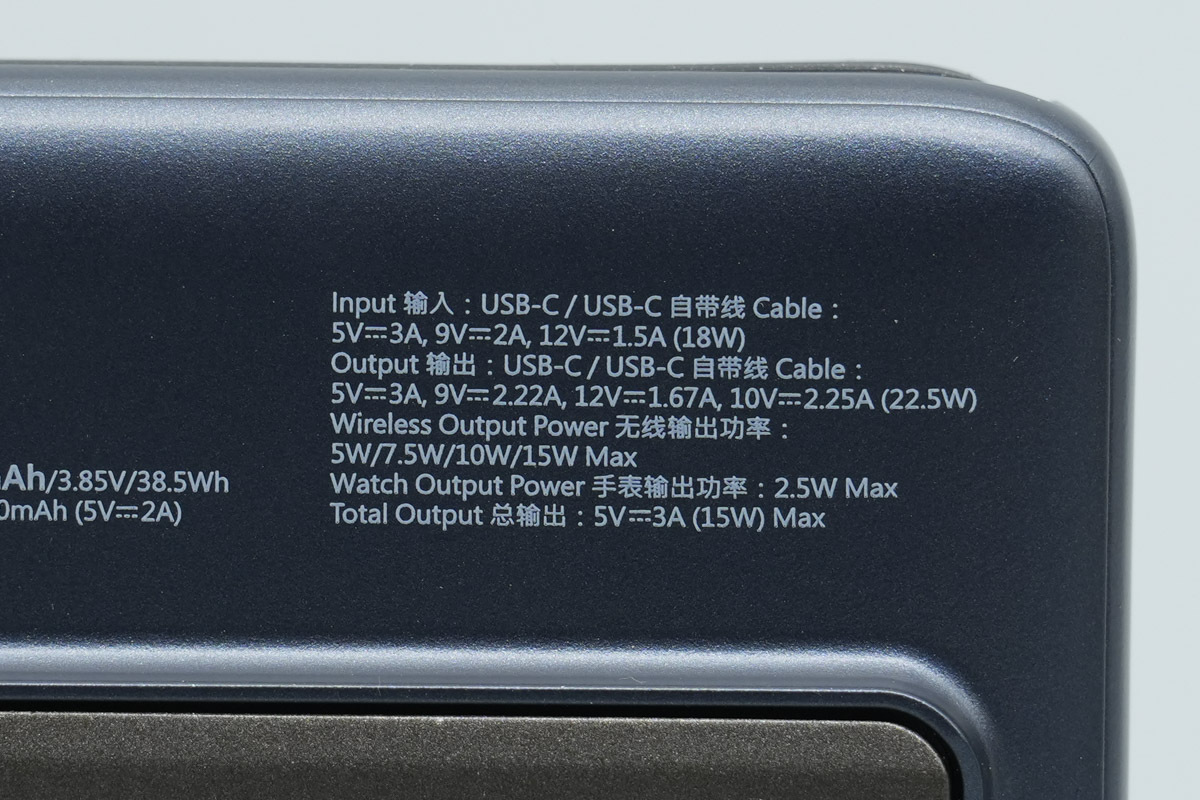
Product Specs:
Model: KH-01
Battery Type: Lithium Polymer
Battery Capacity: 10,000mAh / 3.85V / 38.5Wh
Rated Capacity: 6,000mAh (5V=2A)
Input (USB-C / Integrated Cable): 5V=3A, 9V=2A, 12V=1.5A (18W)
Output (USB-C / Integrated Cable): 5V=3A, 9V=2.22A, 12V=1.67A, 10V=2.25A (22.5W)
Wireless Output Power: 5W / 7.5W / 10W / 15W Max
Watch Output Power: 2.5W Max
Total Output: 5V=3A (15W) Max
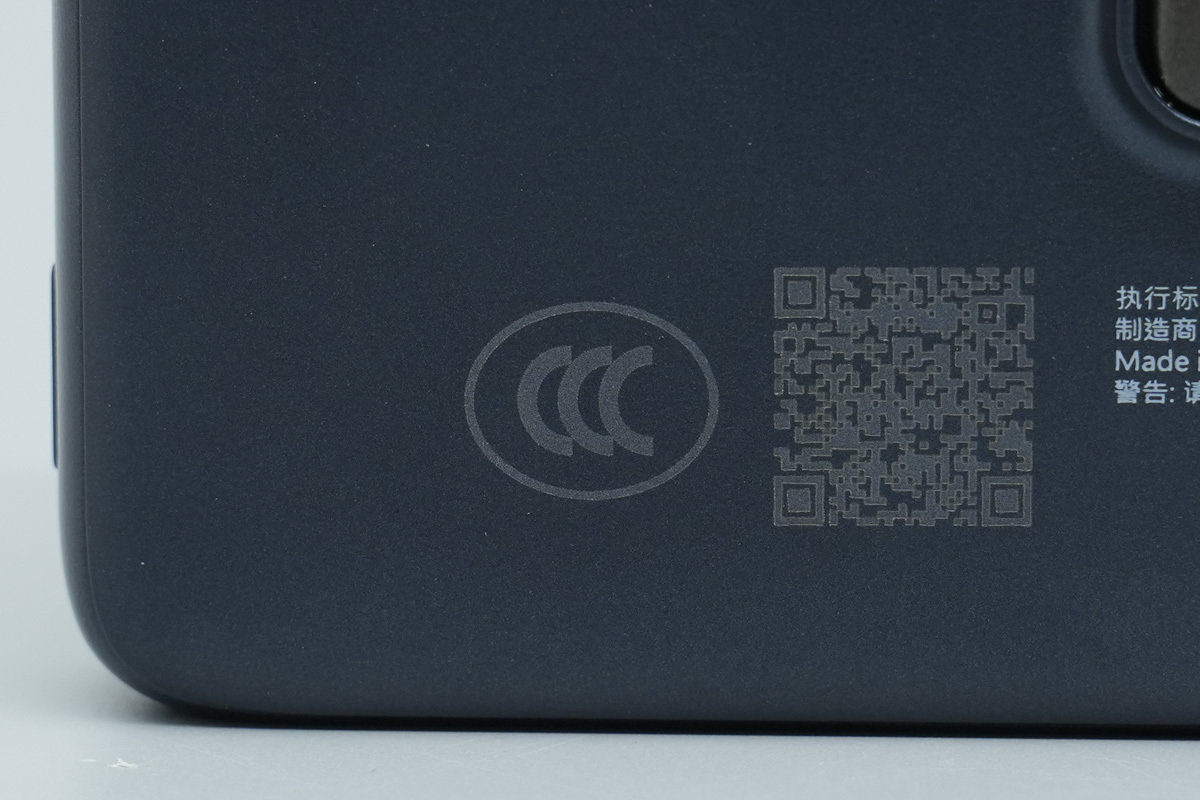
The product is Chinese 3C certified.
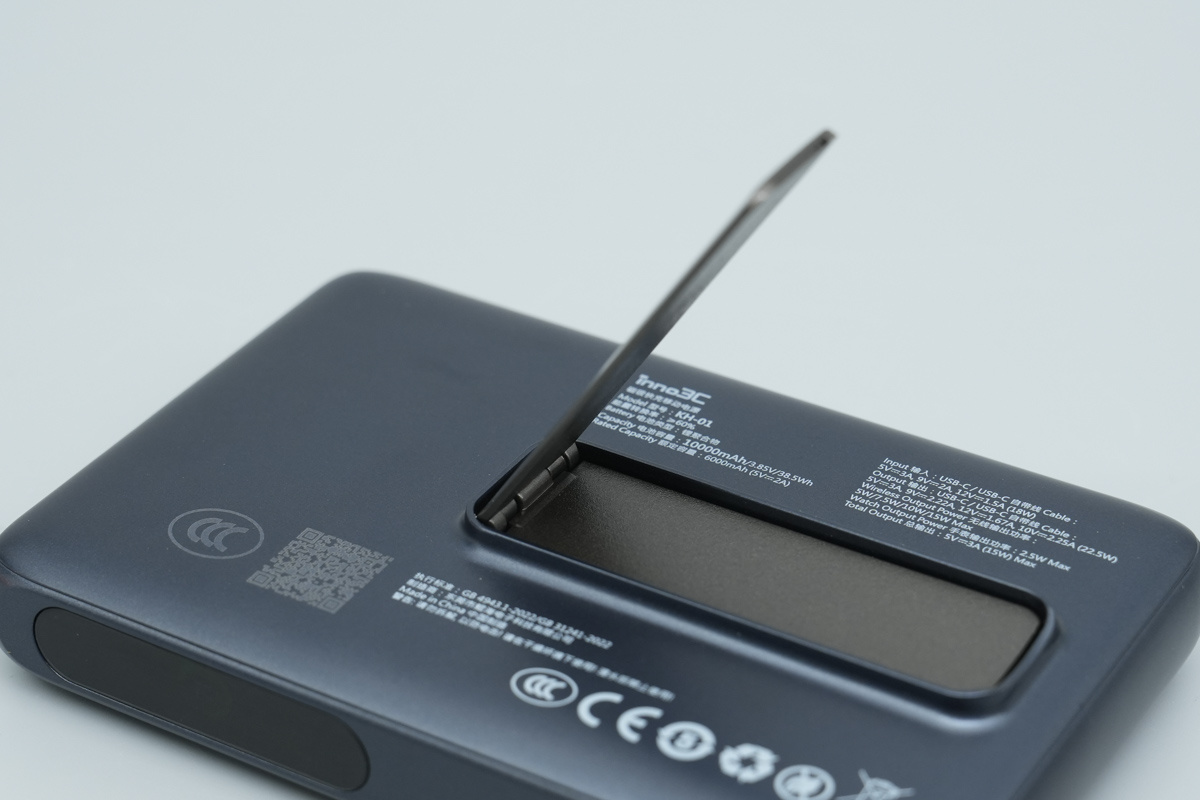
The metal kickstand deploys with a satisfying, smooth resistance, ensuring it remains firmly propped up during use.
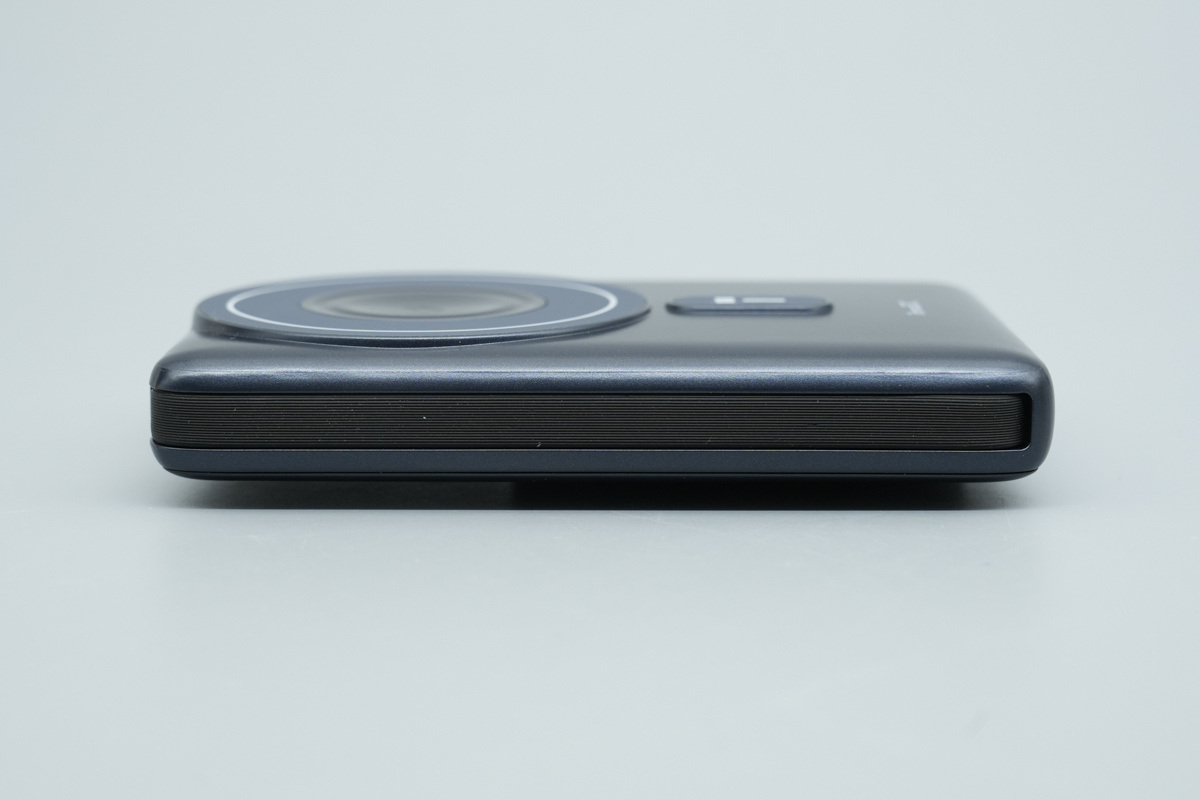
The recessed design along the right side of it provides a seamless, flush-fit storage solution for the integrated USB-C cable.
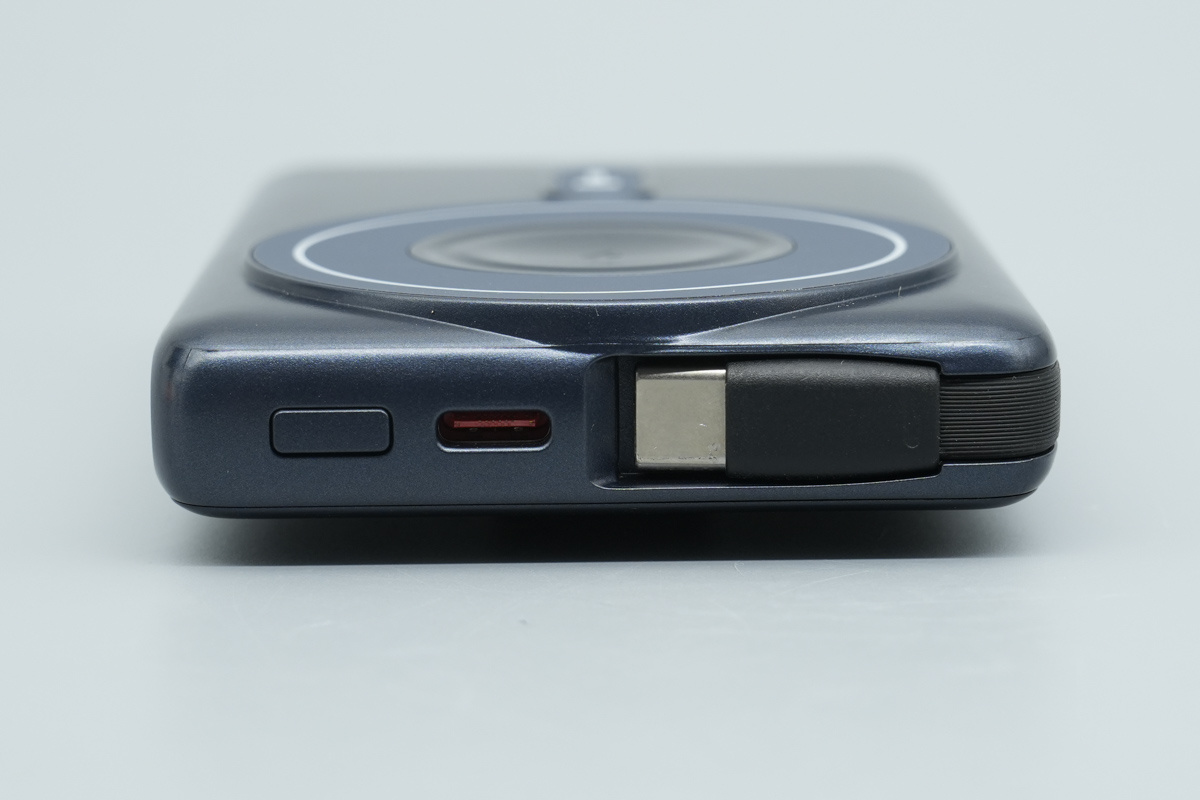
The base of it is arranged with a power button, a USB-C bi-directional fast-charging port, and the storage slot for the integrated cable's connector.
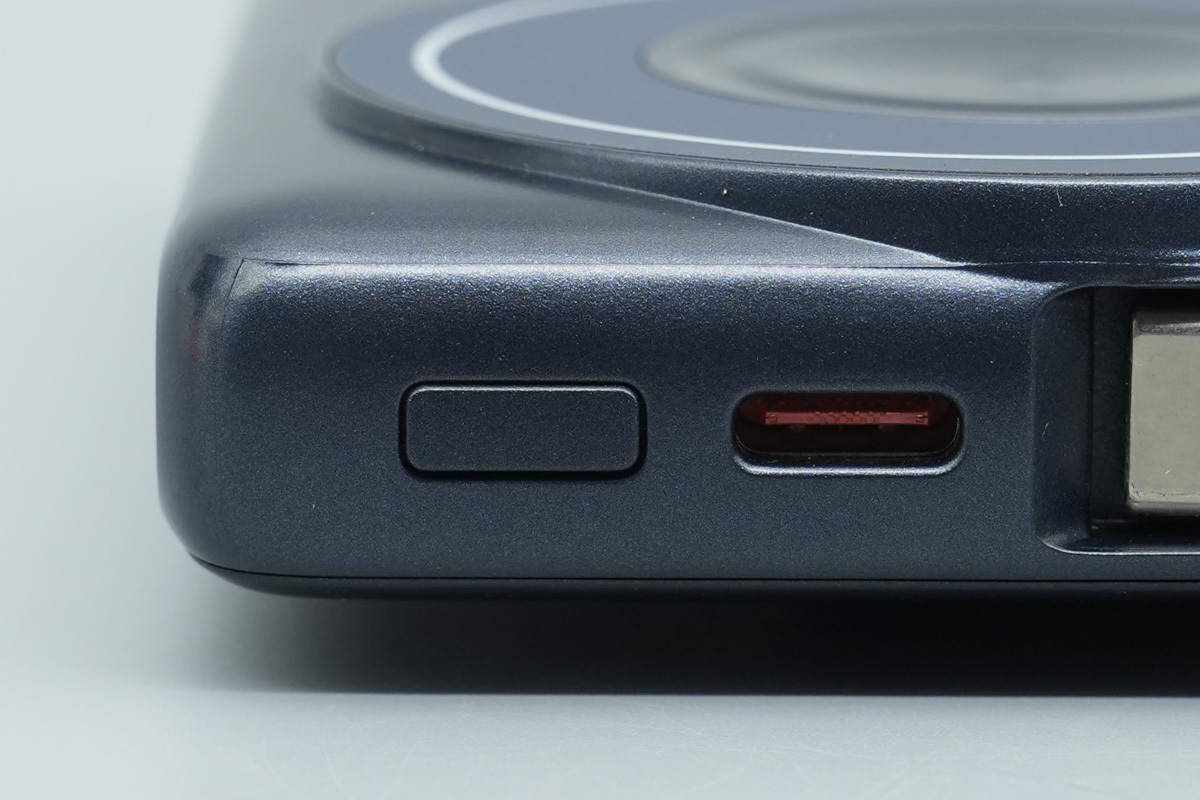
The base interface houses a power button alongside a USB-C port, which stands out with its bold red plastic sheet.
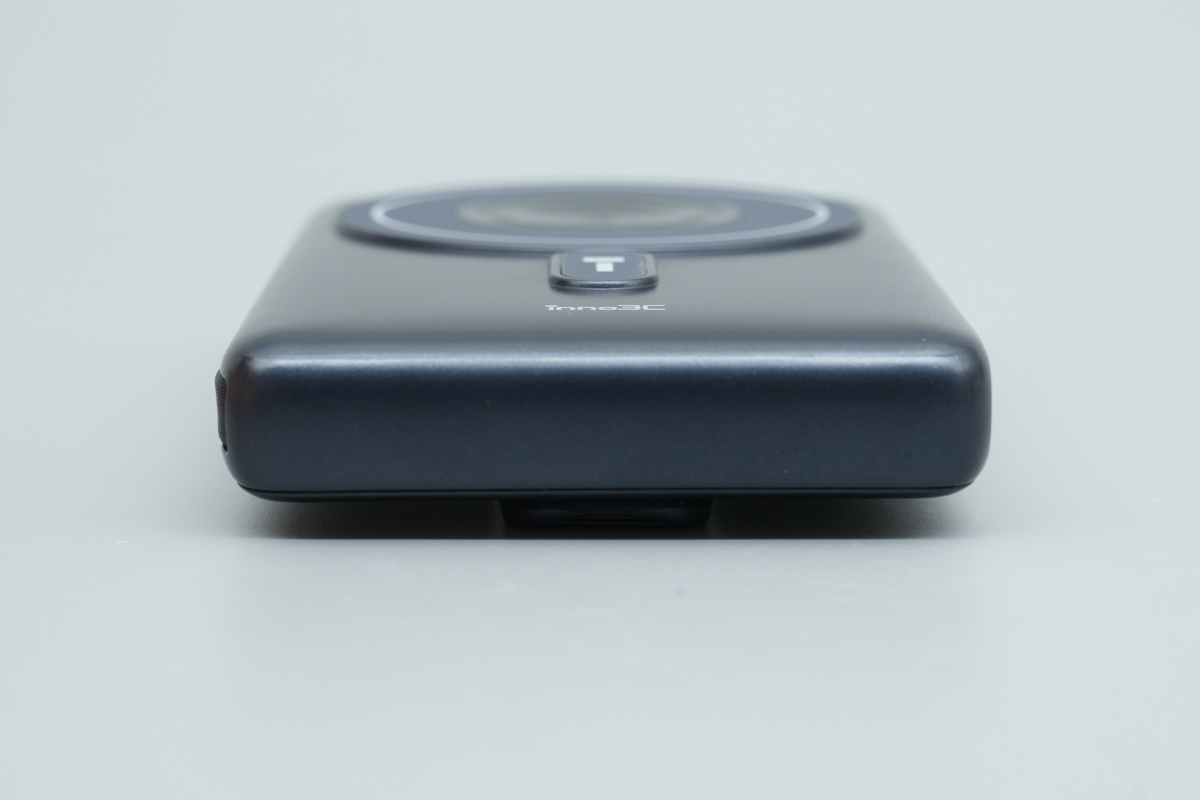
The edges are finished with a soft, rounded profile, providing an ergonomic and seamless feel in the hand without any sharp corners.
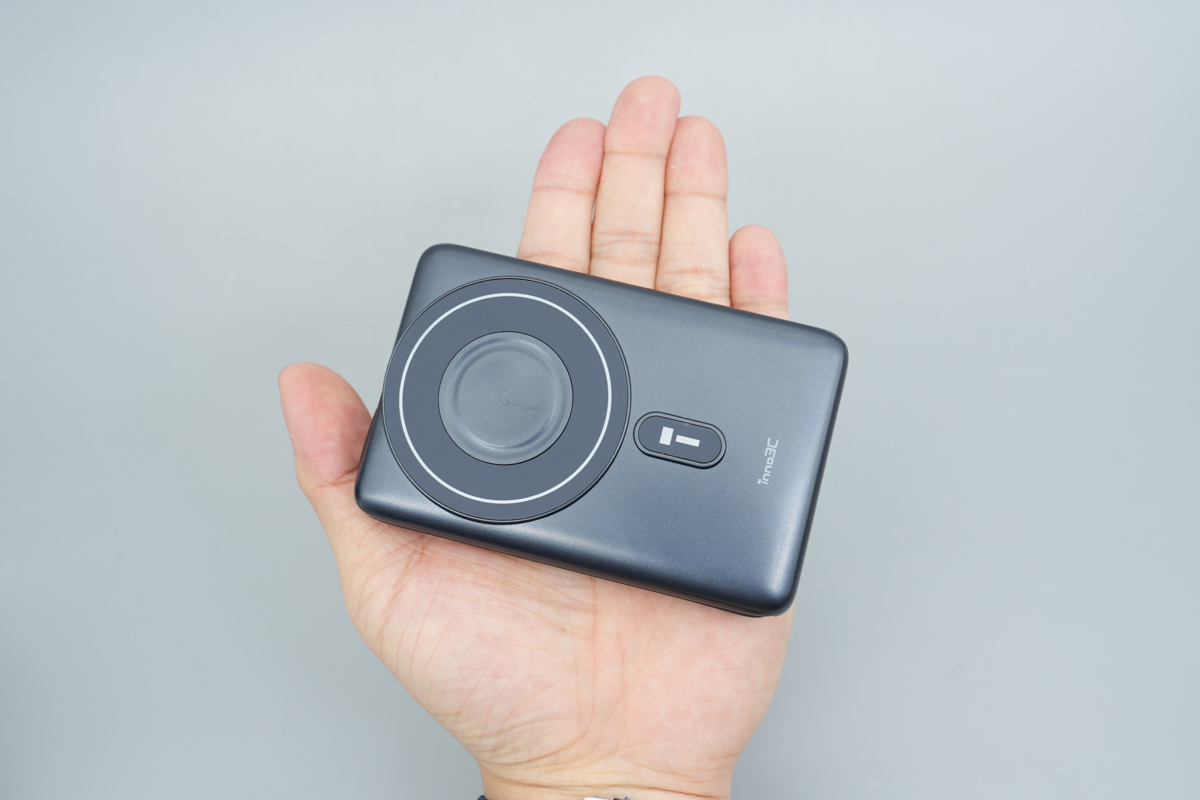
That's how big it is in the hand.
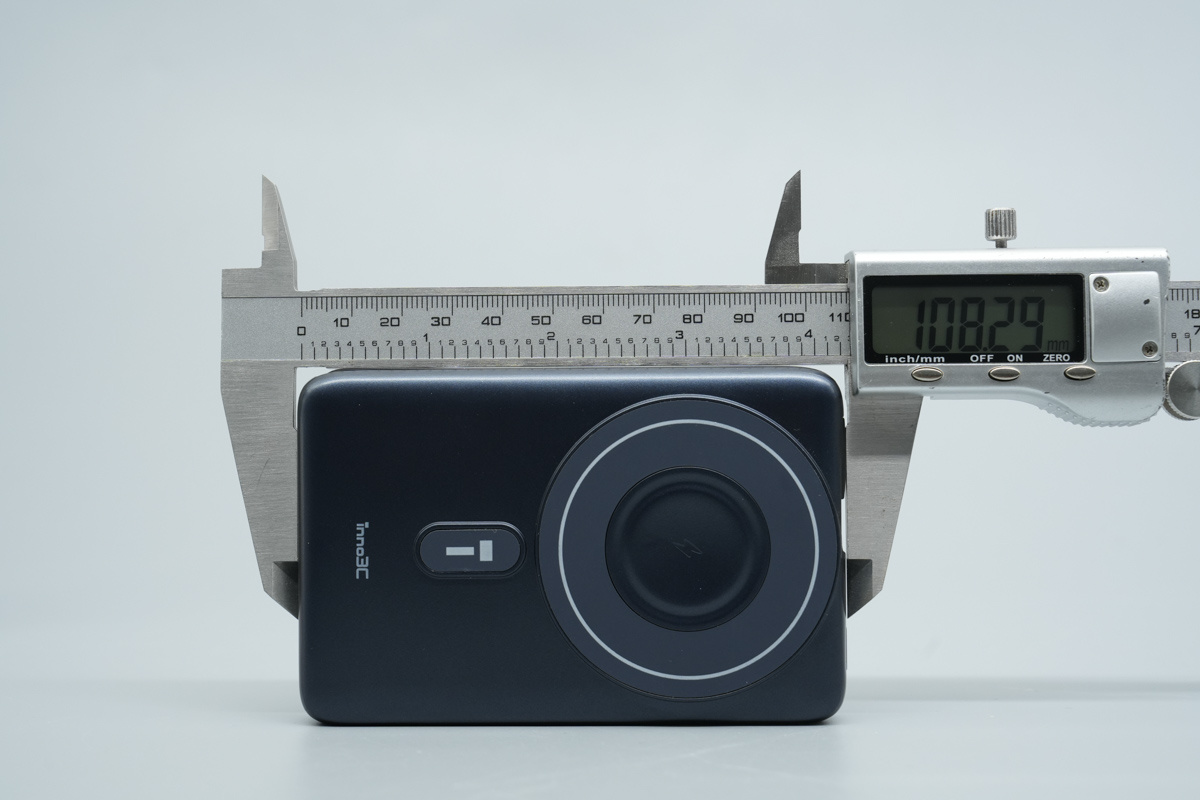
The length of the power bank is about 108.29mm (4.263 inches).

The thickness of the power bank is about 20.78mm (0.818 inches).
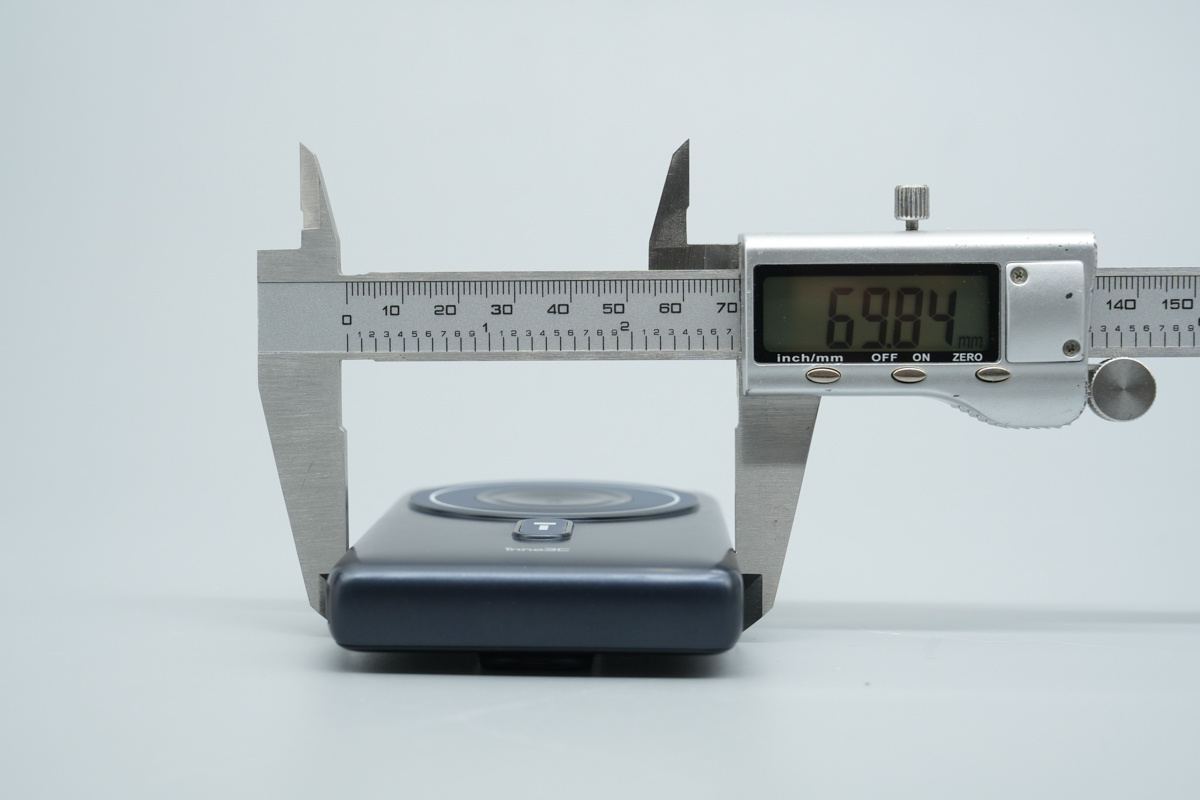
The width of the power bank is about 69.84mm (2.750 inches).
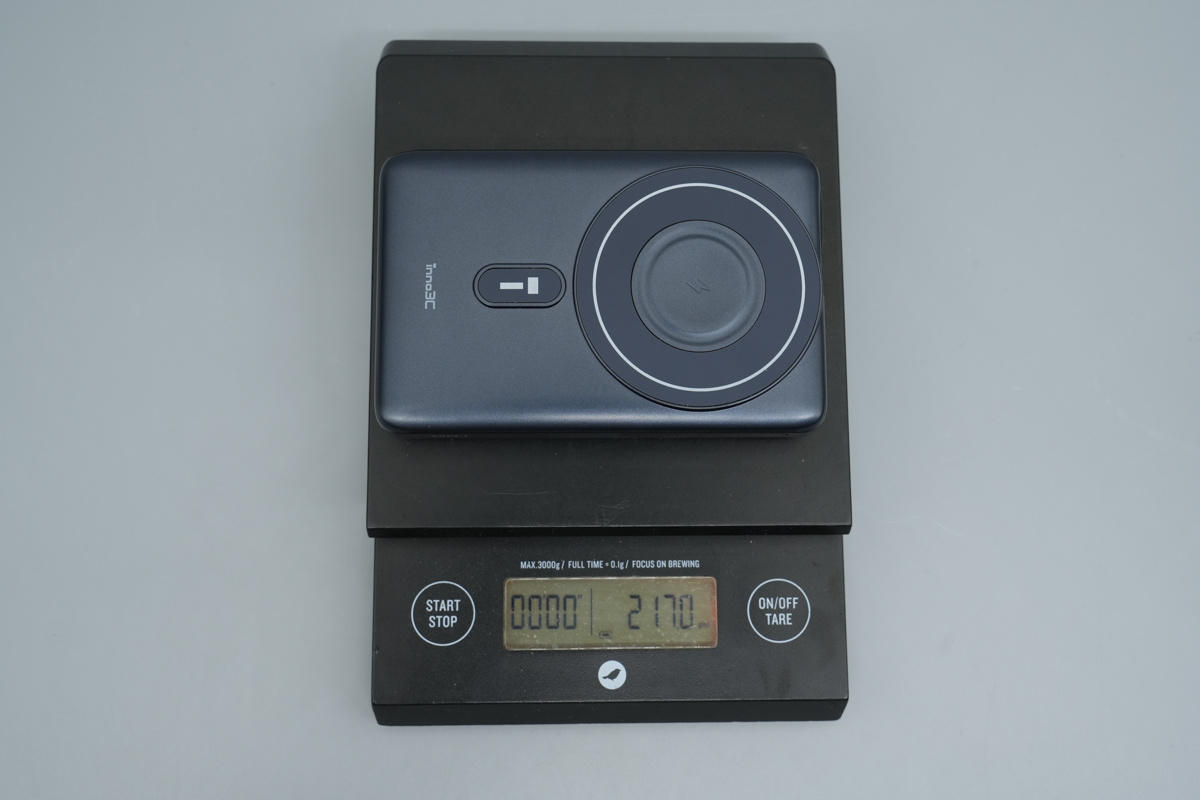
The weight is about 217g (7.65 oz).
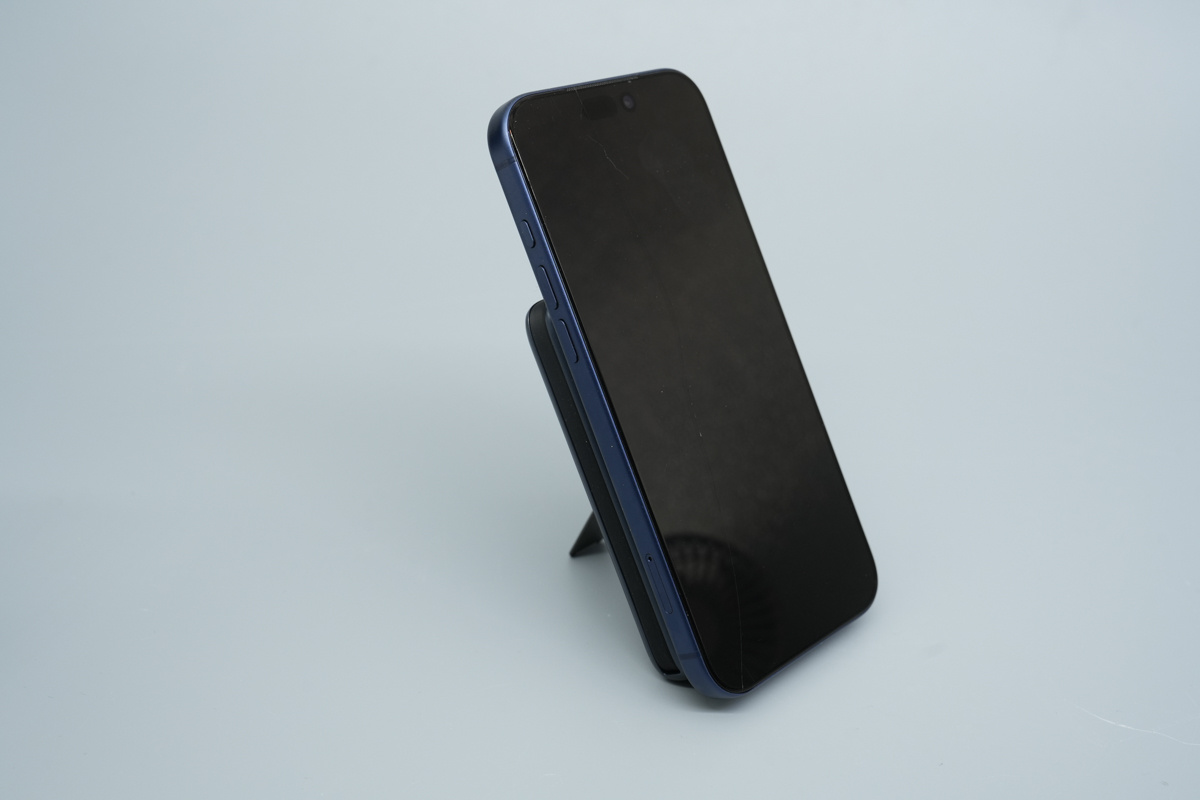
With the back stand unfolded, you can easily magnetically attach your iPhone to a power bank to charge and watch movies simultaneously, making it perfect for desktop viewing.
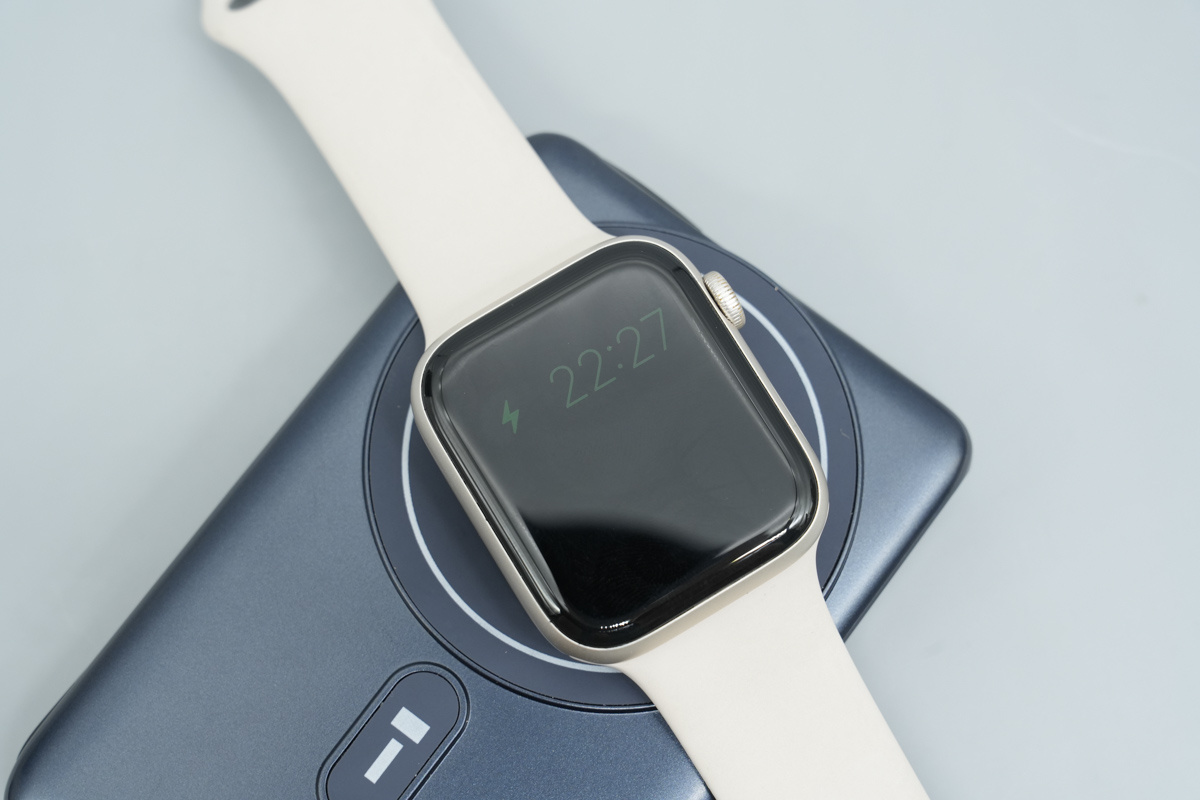
Placing the Apple Watch onto the designated wireless charging zone on the front panel, the device's wireless charging function is successfully activated.
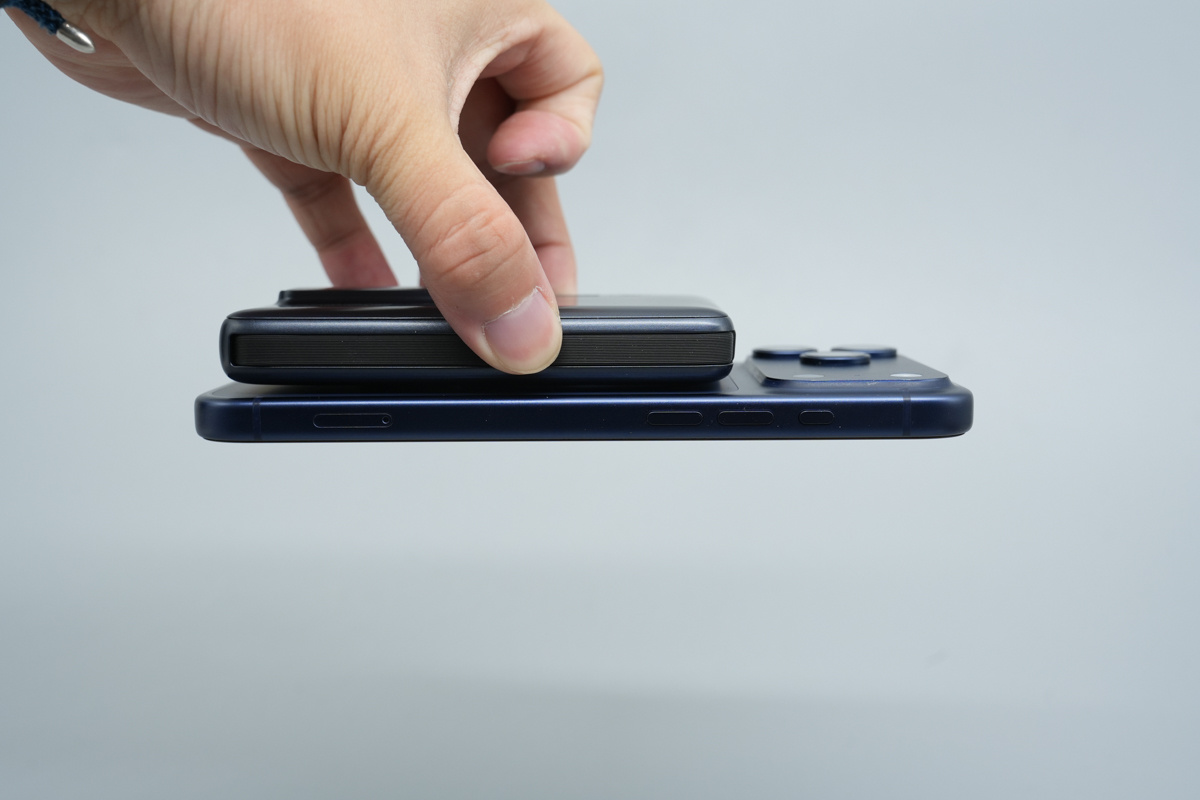
The design ensures a perfect fit that stays clear of the camera array. The magnetic hold is impressively strong—the phone stays firmly anchored to the power bank, even when you lift it by the phone alone.
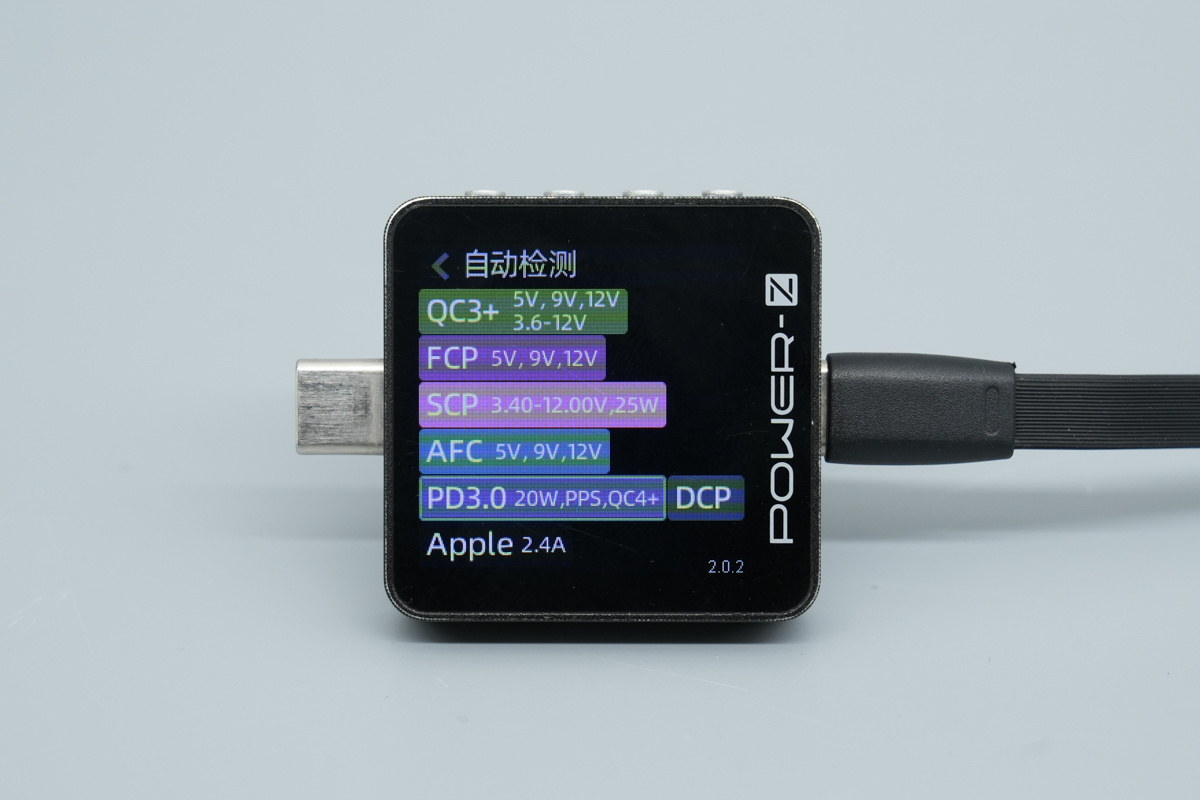
ChargerLAB POWER-Z KM003C shows that the USB-C port supports QC3+, FCP, SCP, AFC, PD3.0 20W, PPS, DCP and Apple 2.4A.
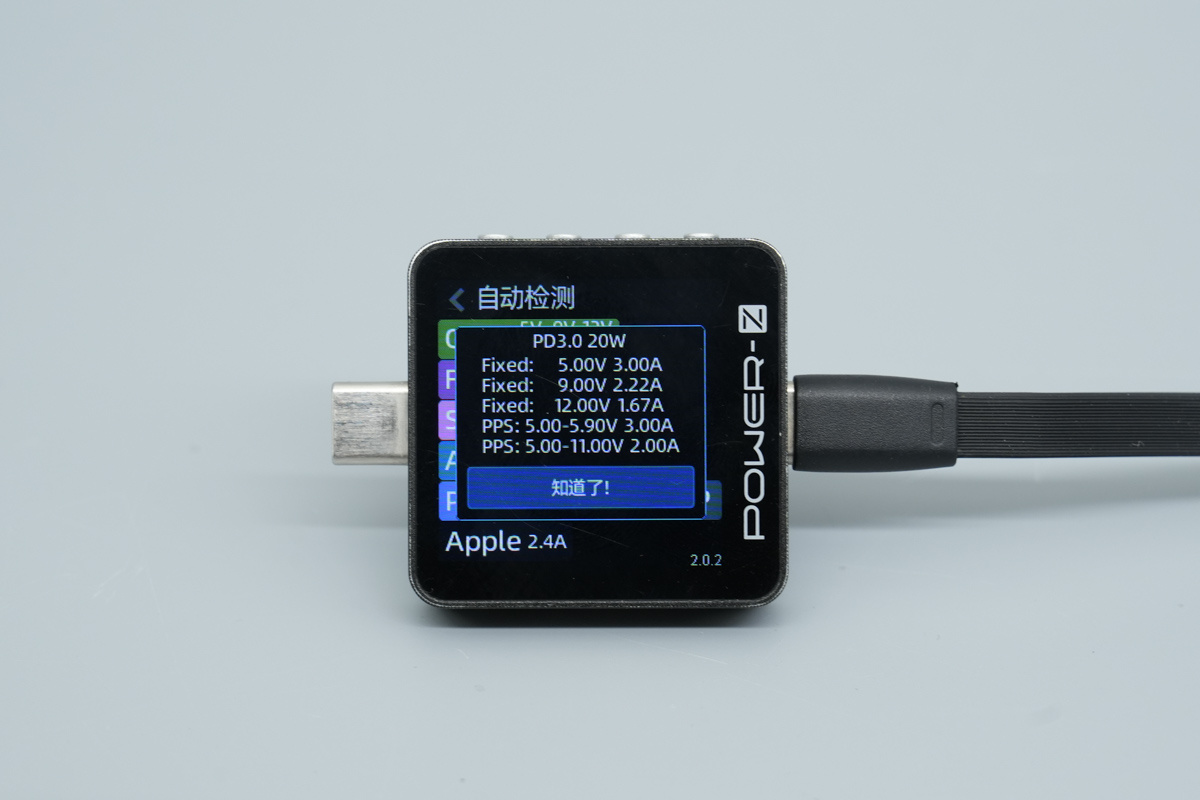
And it also supports three fixed PDOs of 5V3A, 9V2.22A and 12V1.67A, and features two PPS subsets: 5-5.9V 3A and 5-11V 2A.
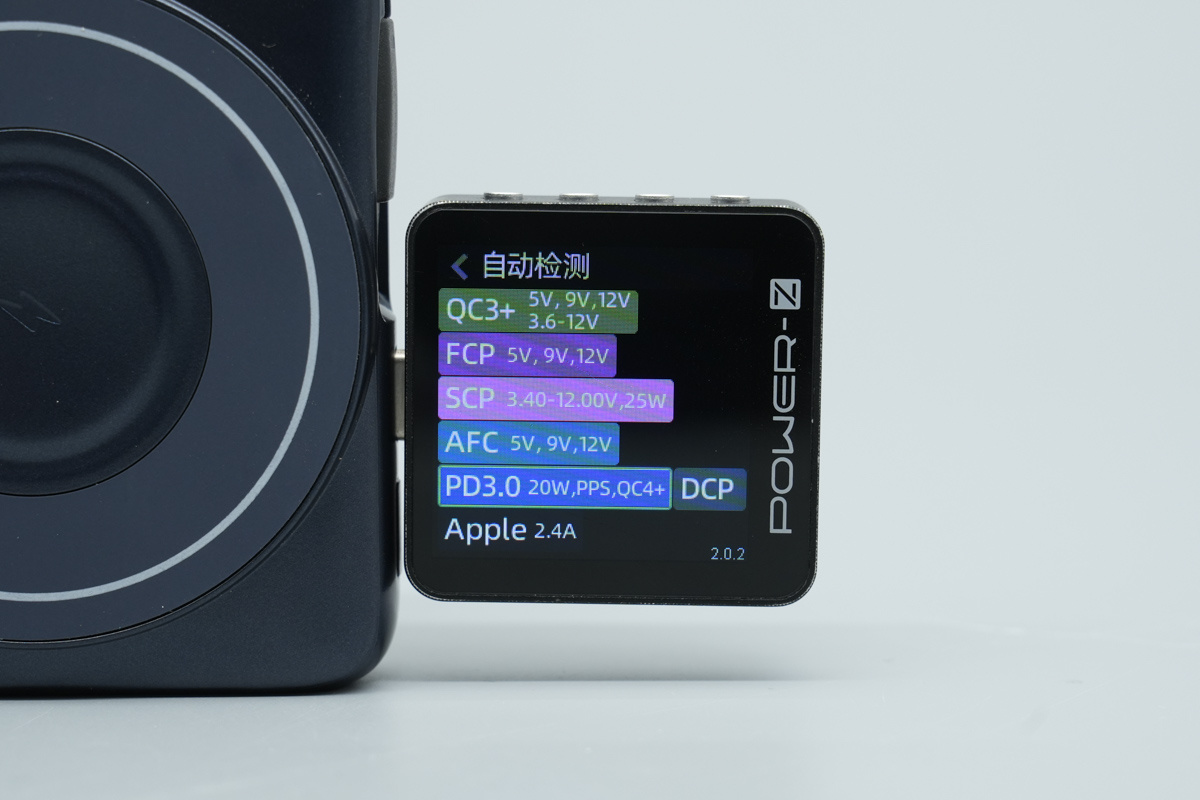
The USB-C port and the built-in cable share the same protocol compatibility.
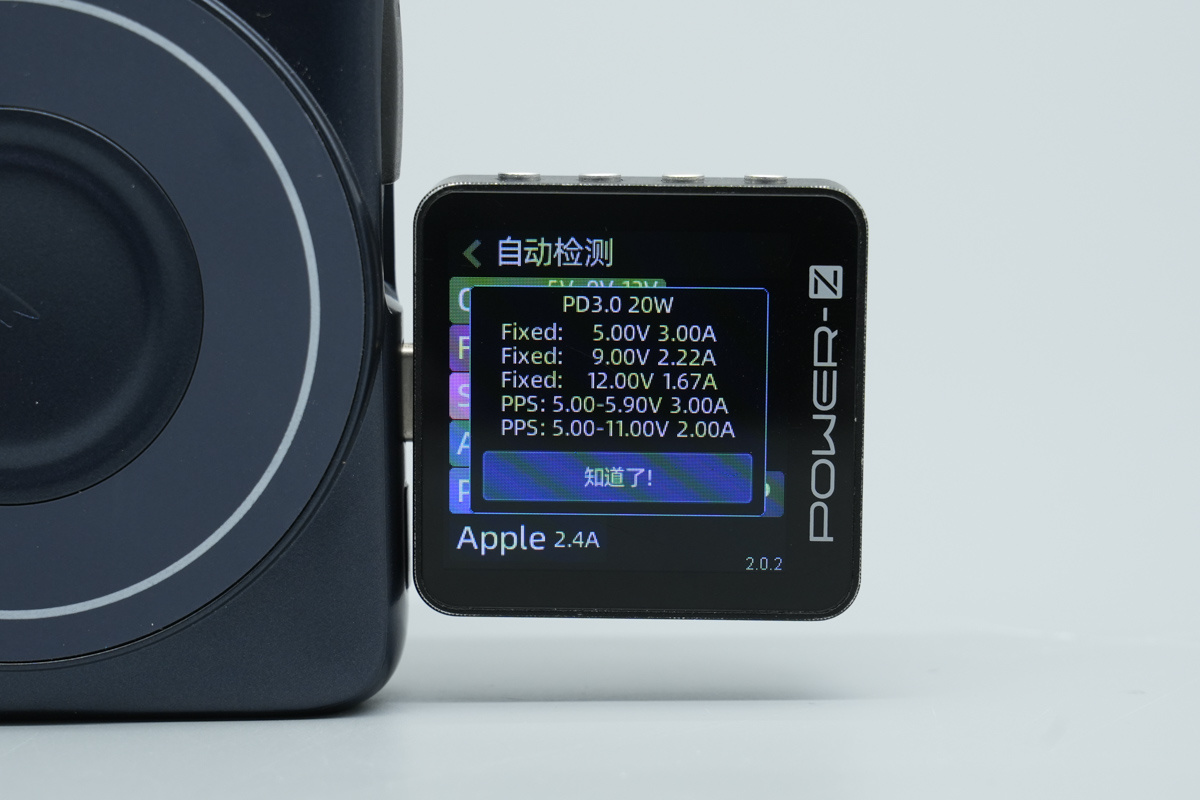
The USB-C port and integrated cable share identical fast-charging protocol support.
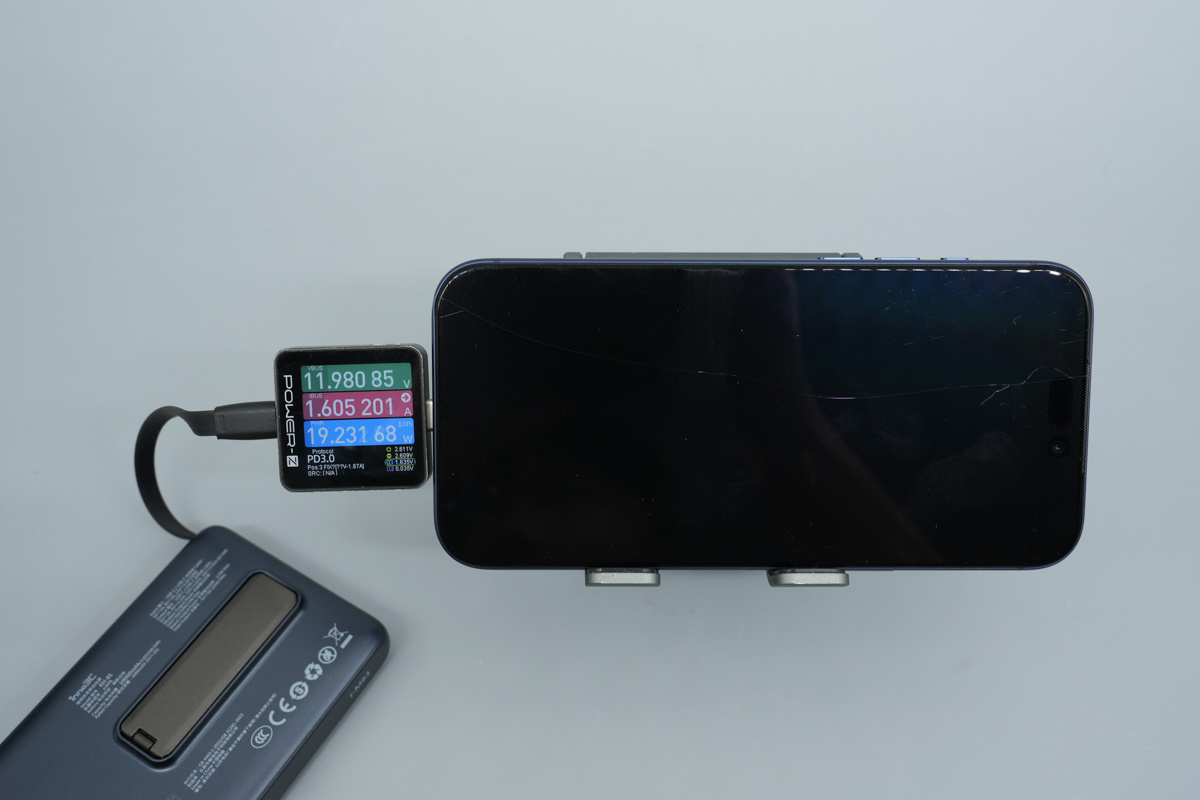
Using the USB-C interface for wired fast charging of the iPhone, the actual charging power reached 19.23W, successfully establishing a PD fast charging connection.
Having looked over the product's design and compatibility, let's moving on to the teardown.
Teardown
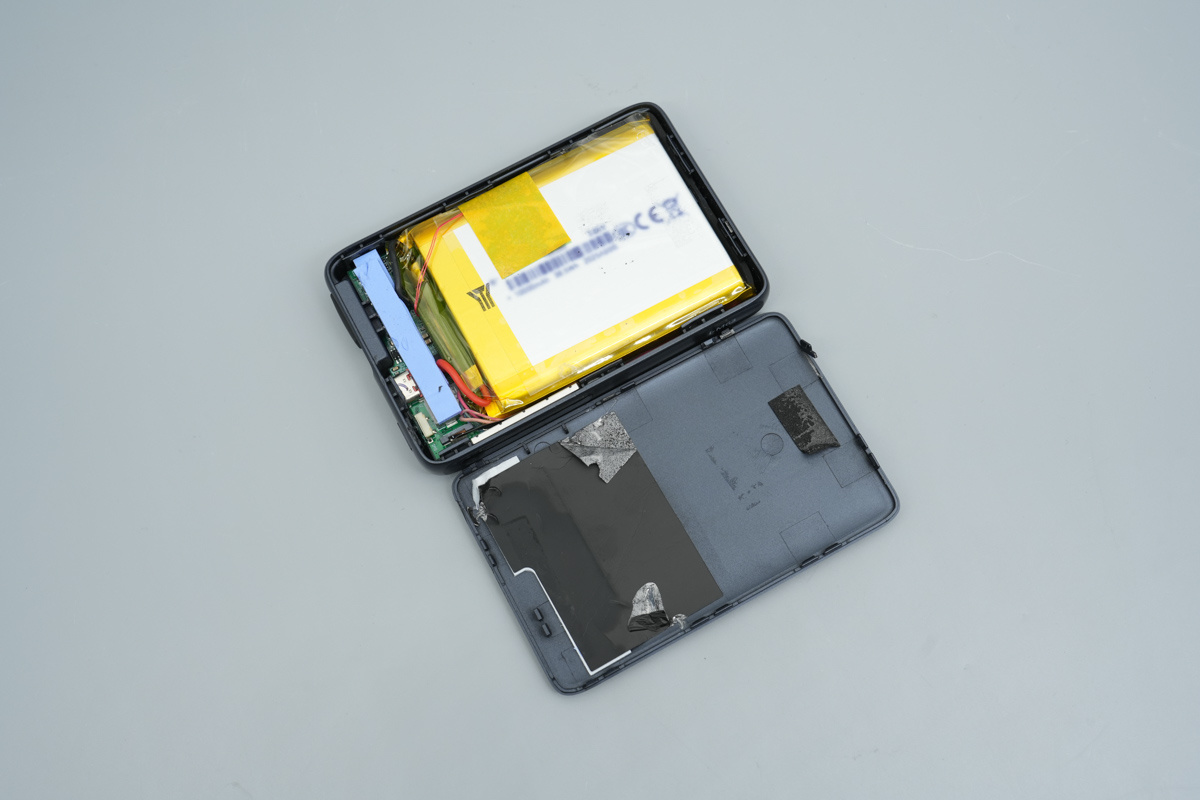
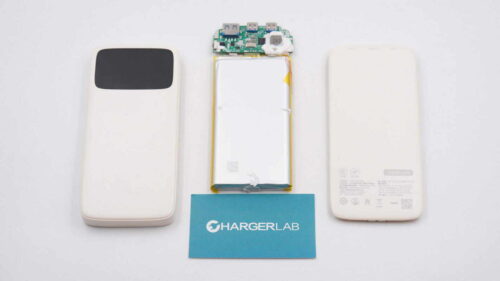
Removing the rear panel reveals an efficient internal layout, the massive battery cells take up most of the space, while the mainboard is neatly tucked away at the top edge.
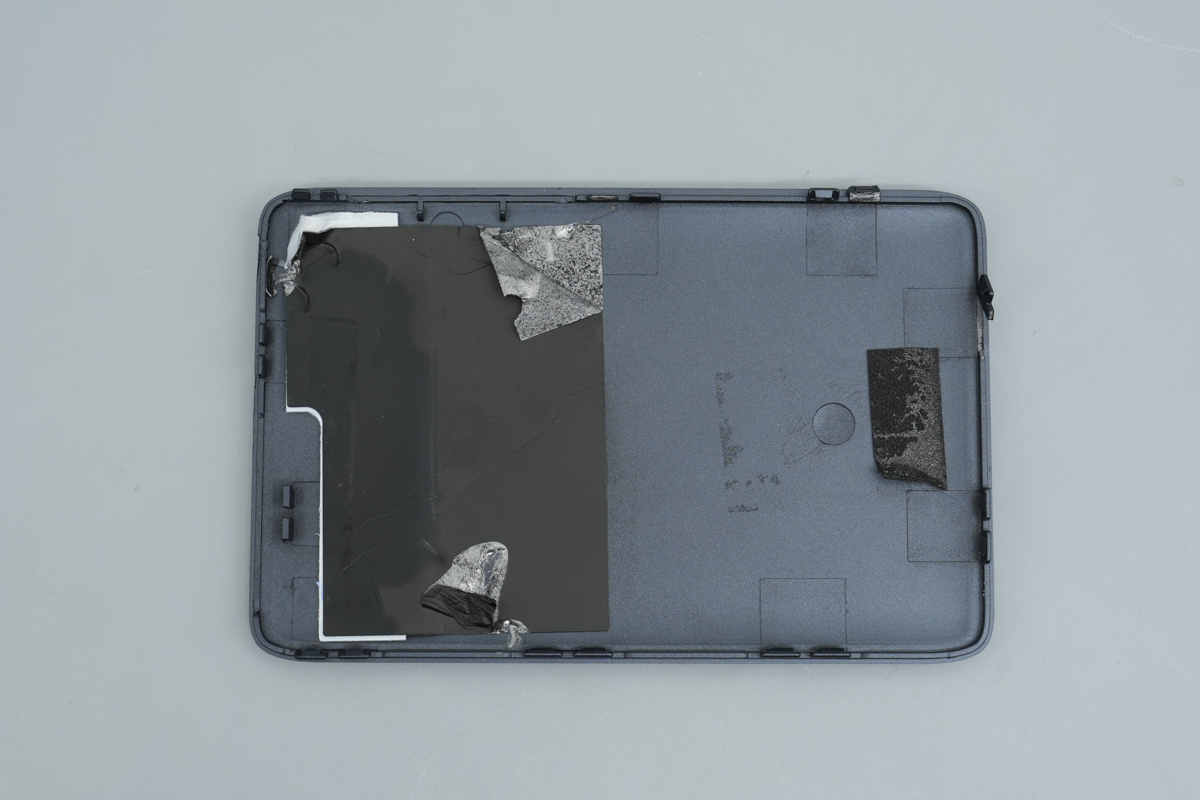
A large black graphite thermal pad lines the back panel, which uniformly dissipates heat from the battery cells and the PCBA.
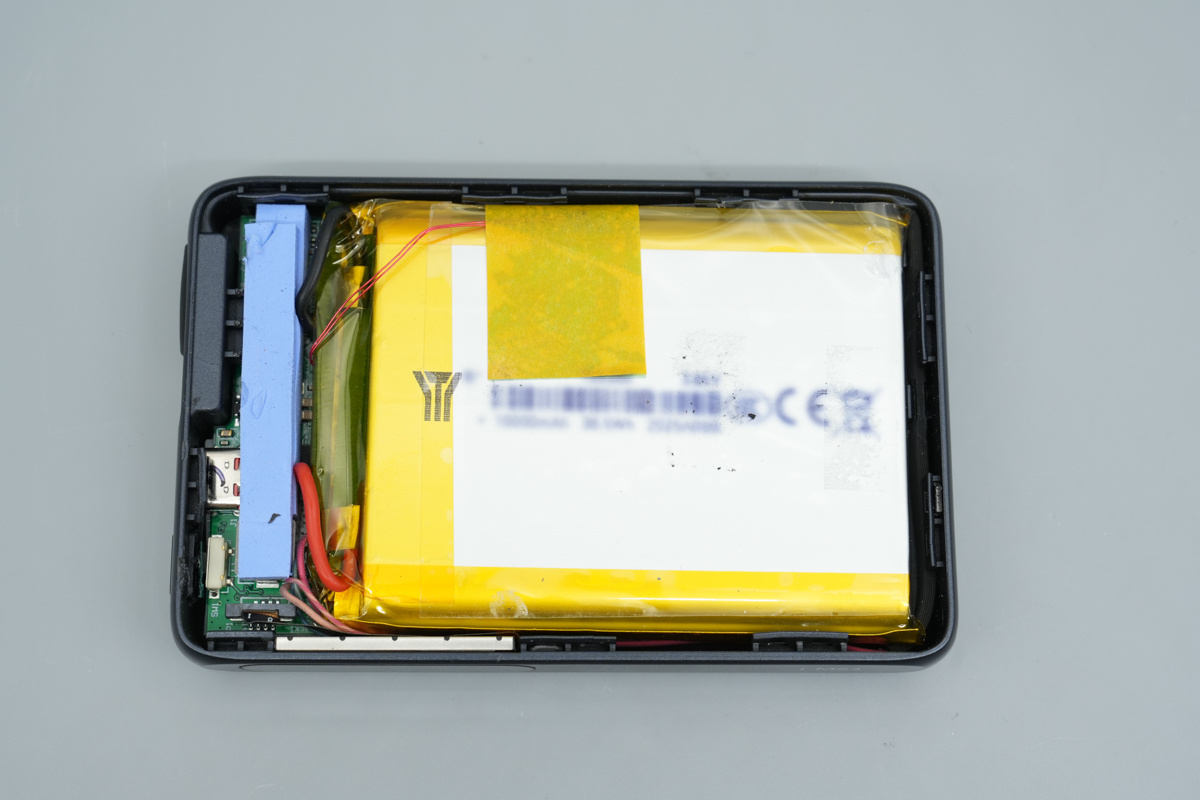
The surface of the battery cell is covered with high-temperature tape for protection, and a long strip of blue thermal pad is attached to the PCBA to assist in heat dissipation.
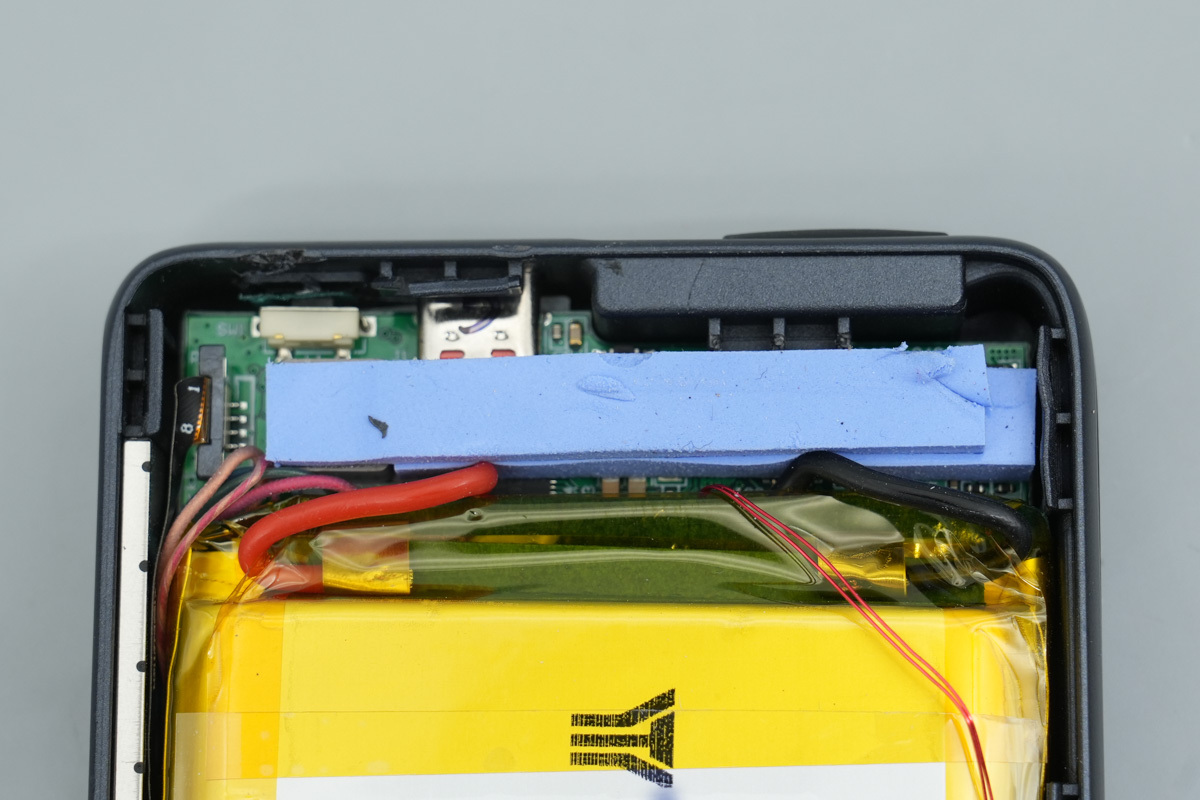
The PCBA is layered with a blue thermal conductive pad, which ensures that heat from the mainboard's core components is quickly transferred to the external housing.
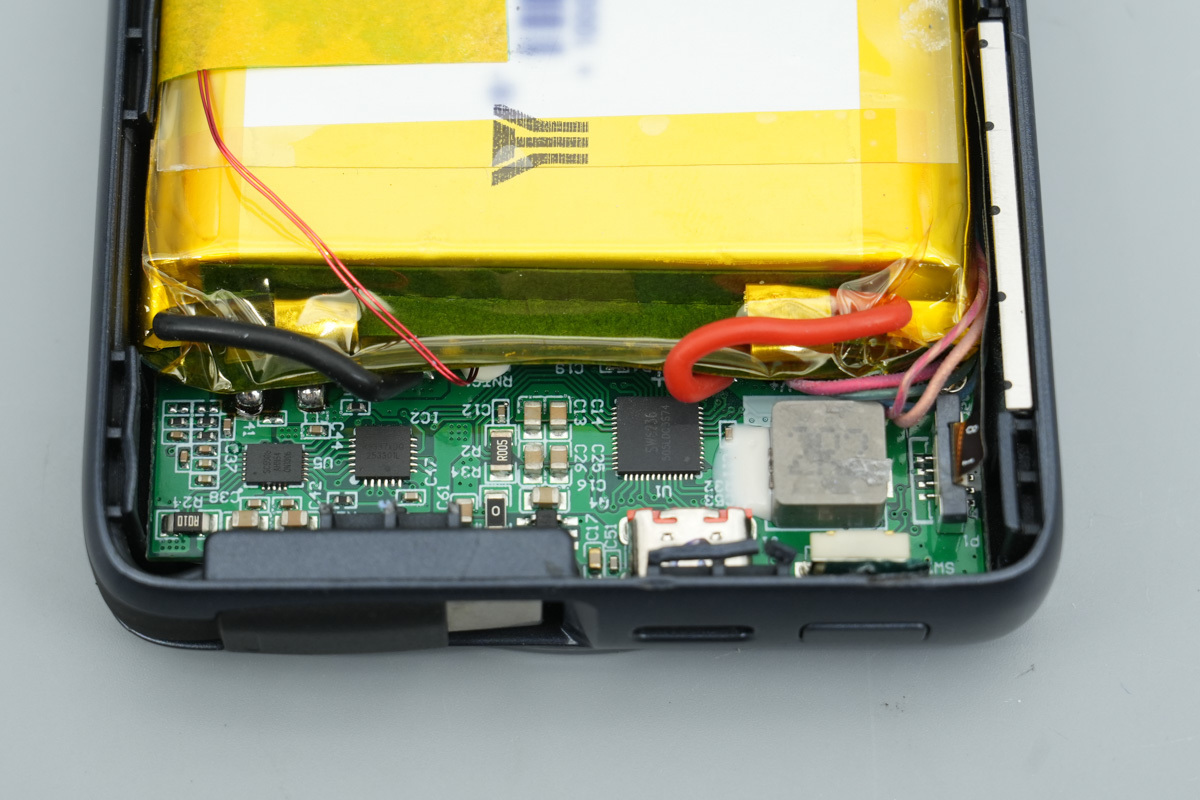
Components are clearly visible once the thermal interface material is removed, and the battery leads are hard-soldered to the PCBA.
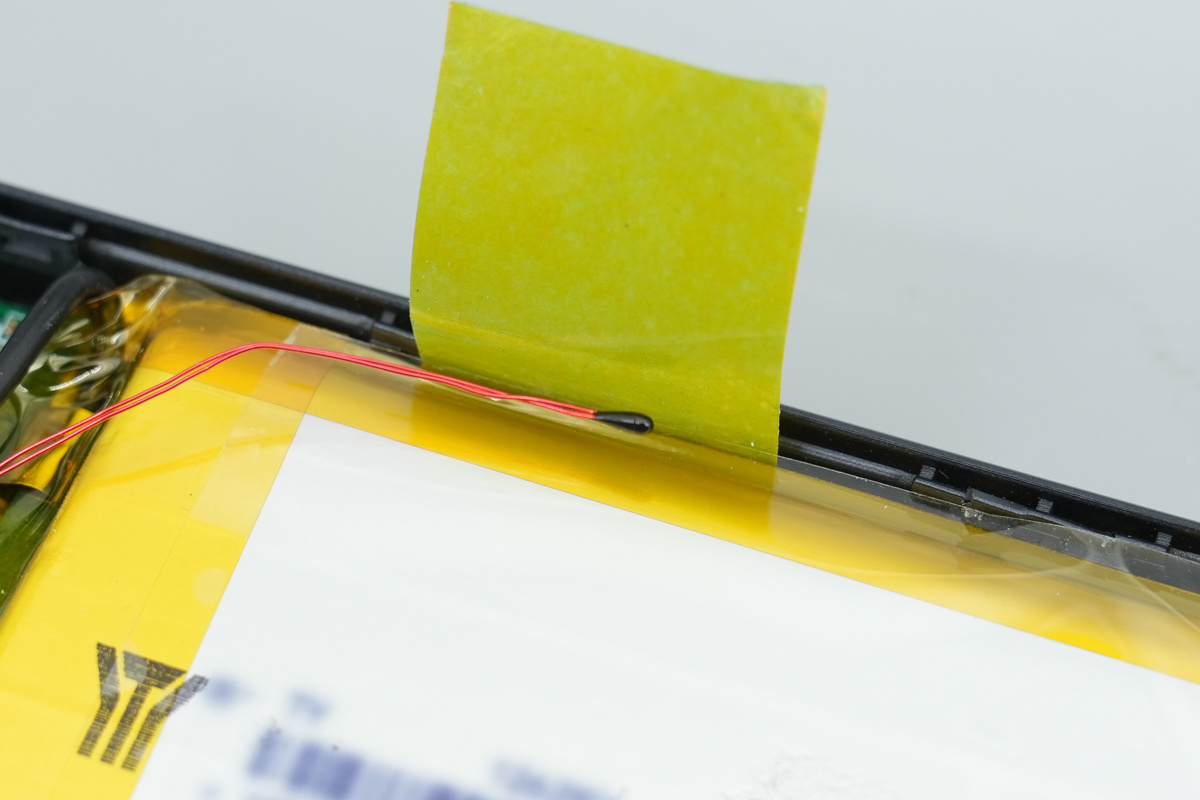
An NTC thermistor probe is fixed to the side of the battery with high-temperature tape to monitor the cell temperature in real time and ensure charging and discharging safety.
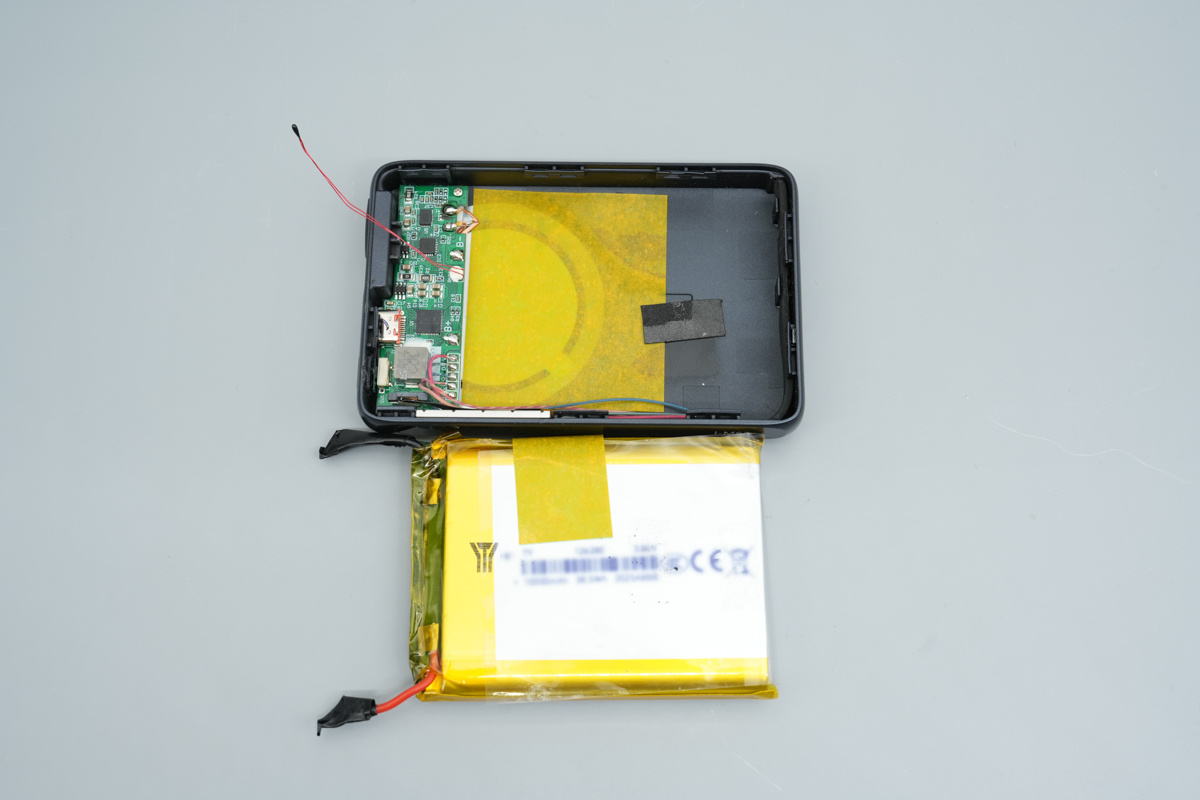
With the battery pulled from the housing, we can confirm the cell is manufactured by Tuoyuan. It’s good to see the 3C and CE safety certification, other info is rather blurry and difficult to identify.
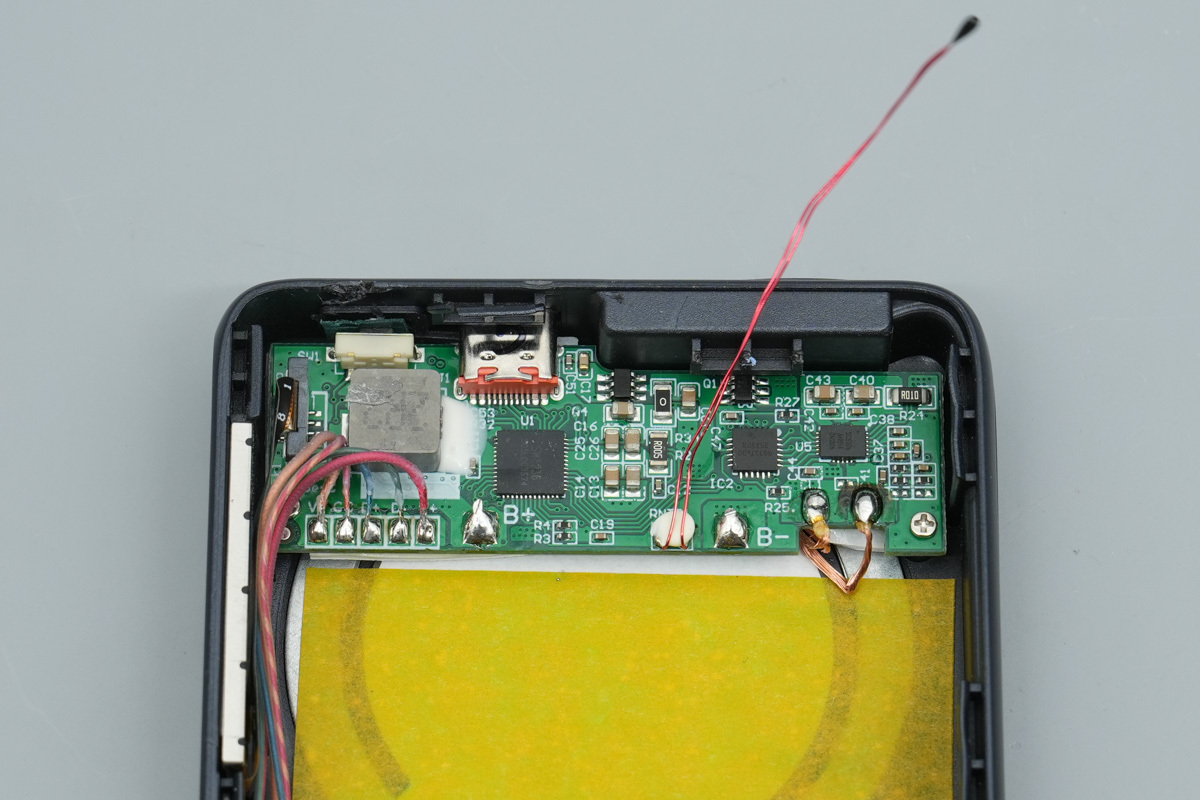
The PCBA is laid out with precision. Moving from left to right, you'll encounter the display ribbon cable and the integrated cable's terminals, followed by the battery leads, the NTC thermistor contact, and the wireless charging coil assembly on the far right.
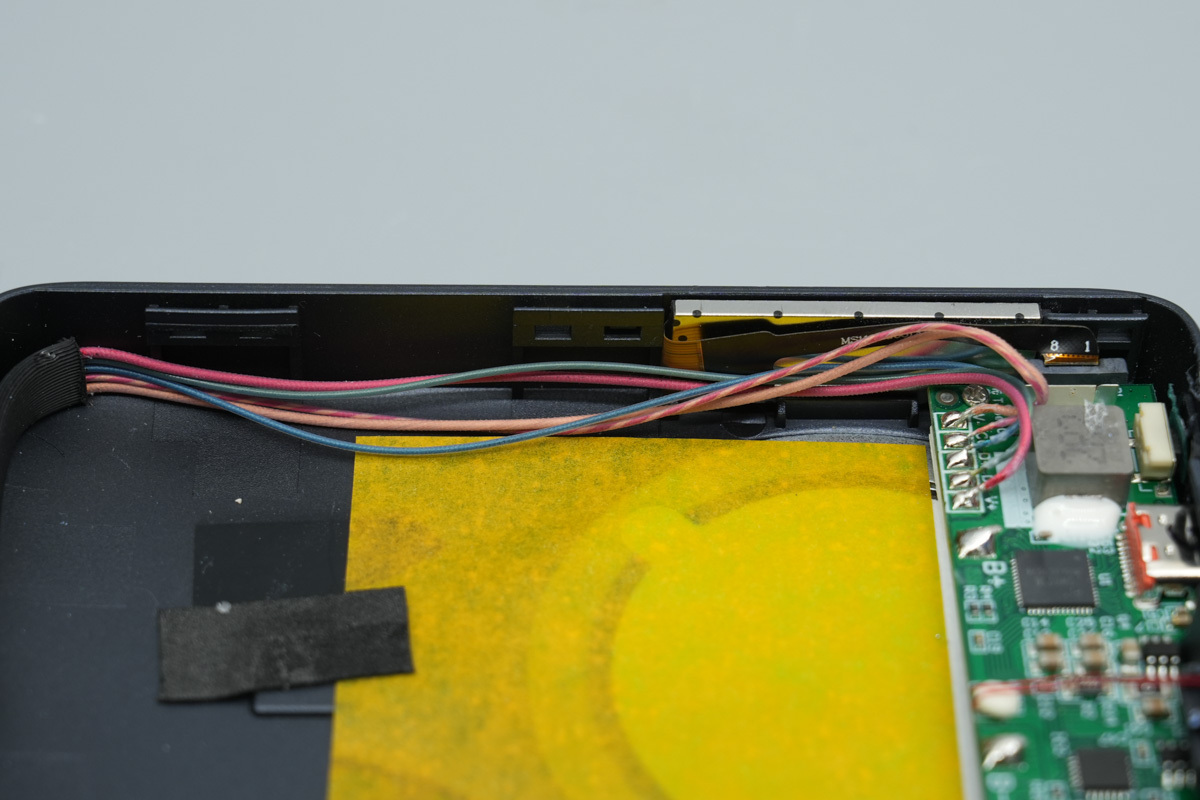
As shown in the image, the cable channel is perfectly integrated into the side of the housing.
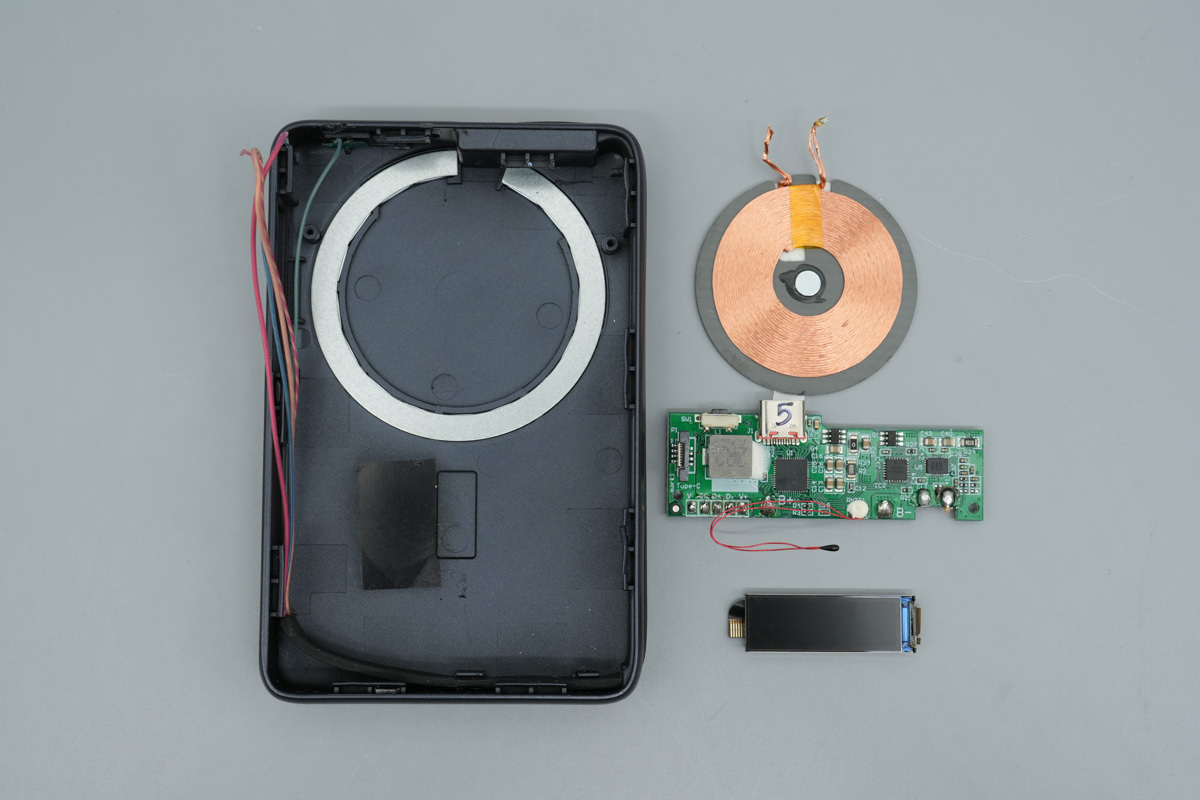
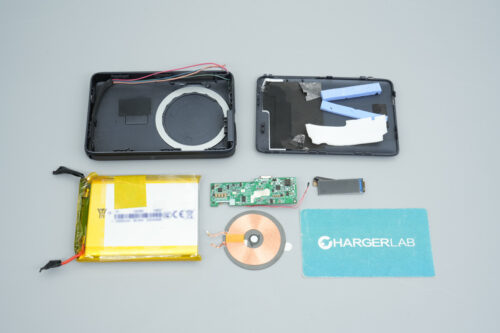
Separating the internal chassis, the wireless charging module, the PCBA, and the display panel.
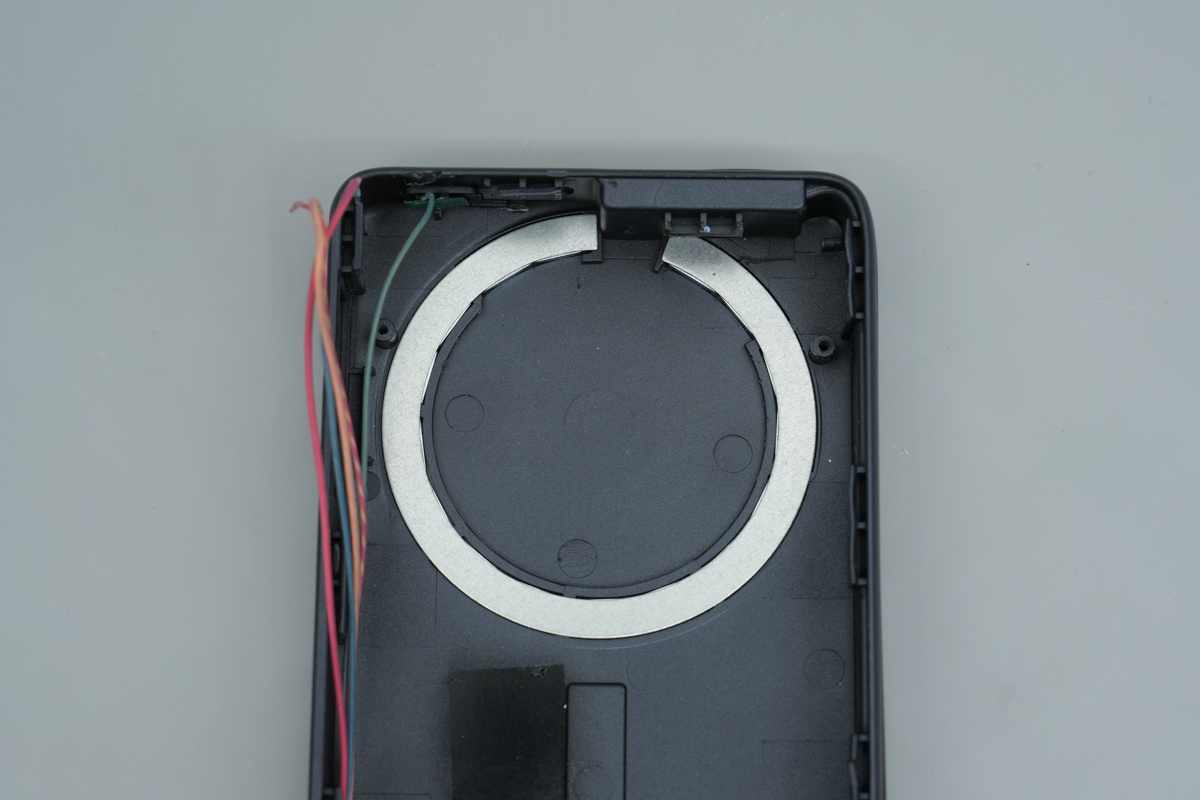
The front panel housing has a ring of strong magnets and a positioning magnet in the middle, providing magnetic positioning for the iPhone.
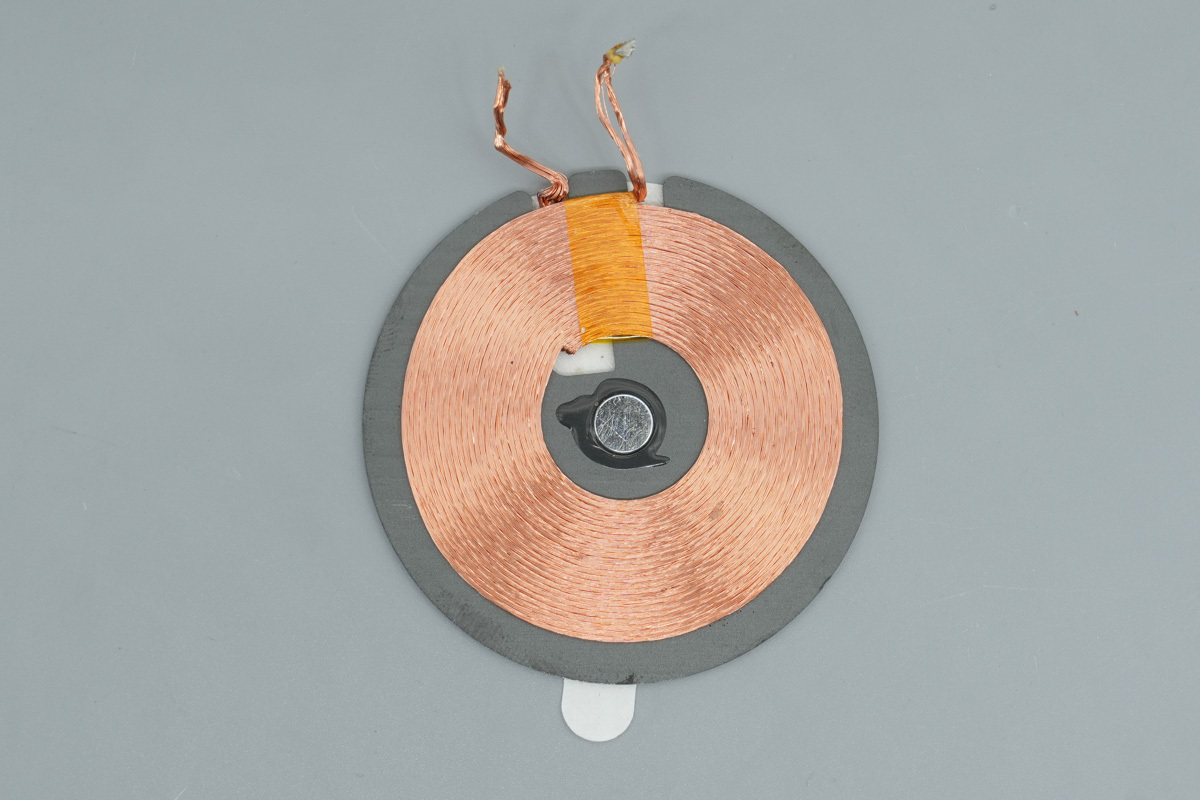
The wireless charging transmitter coil uses multiple strands of Litz wire tightly wound on a magnetic shielding sheet, with a circular magnet in the center, specifically designed for Apple Watch positioning and charging.
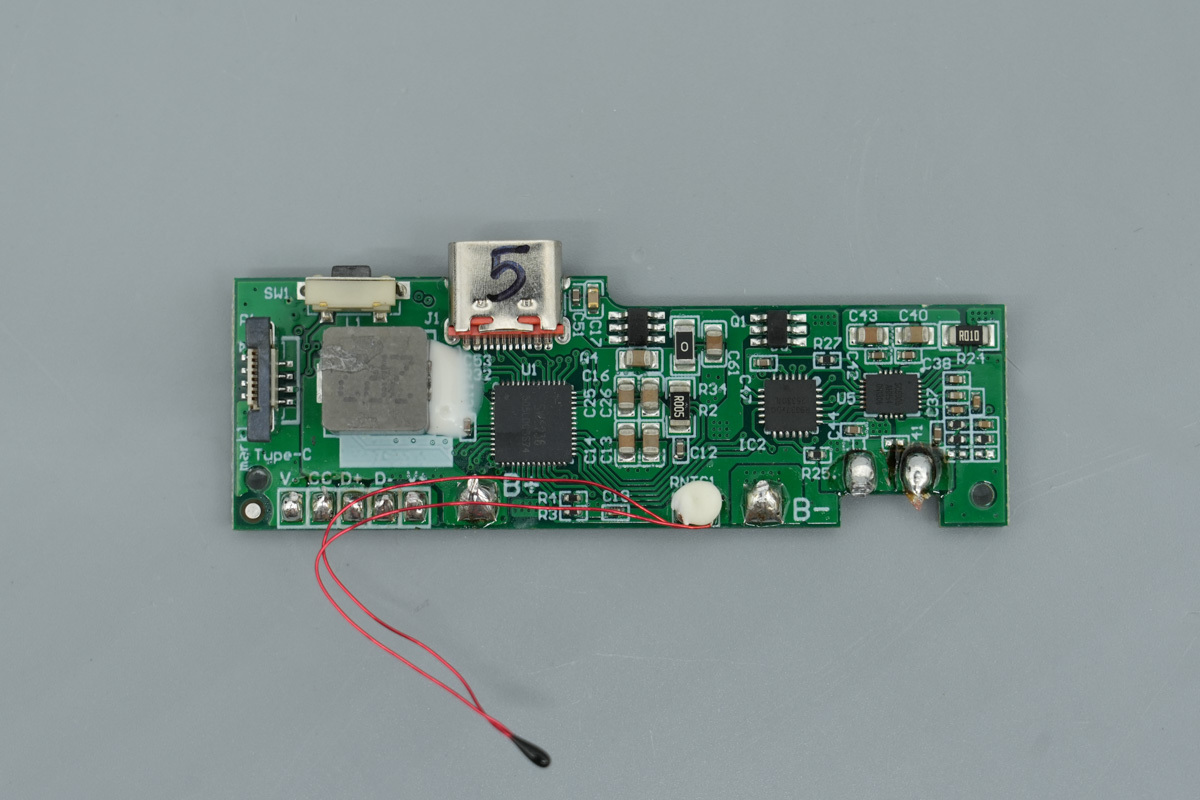
The front of the PCBA features the USB-C interface, power choke, power button, filtering caps, the master control chip, and the dedicated wireless charging transmitter chips, including the power stage drivers.
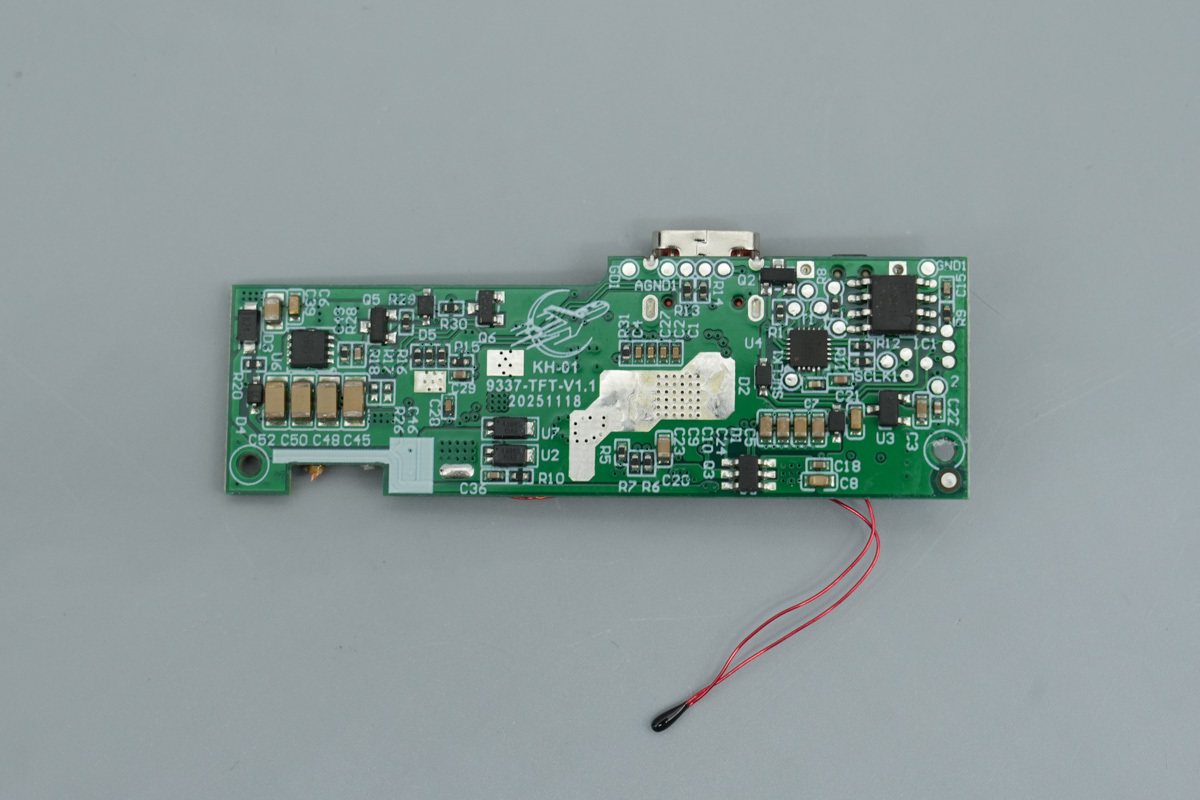
The back of the PCBA features the lithium battery protection chip, the display driver MCU, and the NOR Flash.
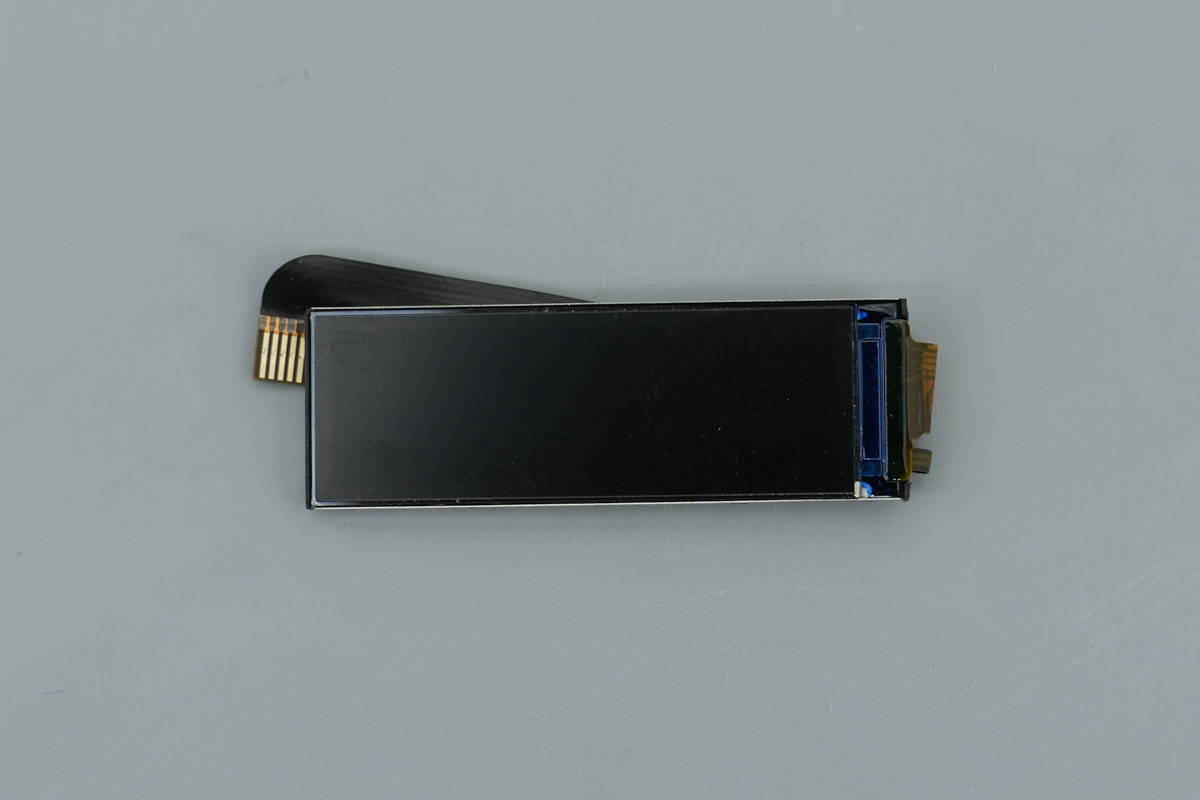
Here is the elongated display module we've isolated from the main unit.
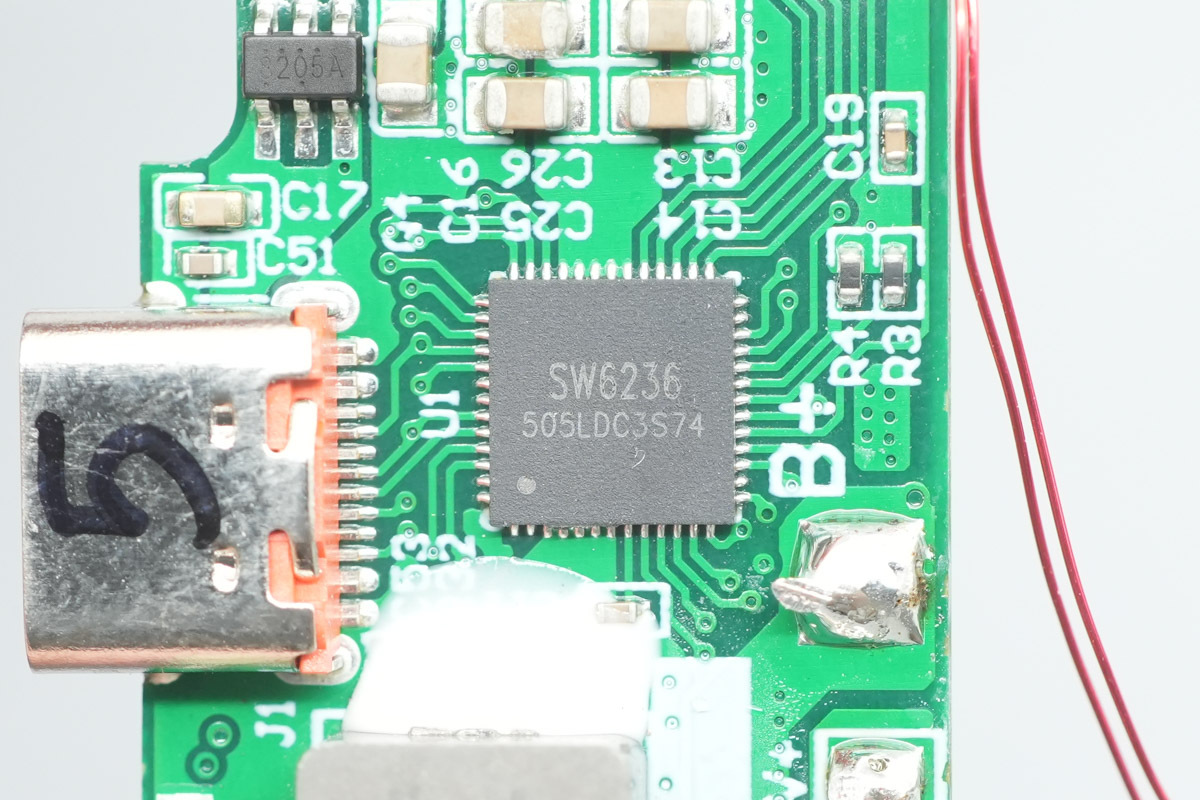
The master control chip is from iSmartWare, model SW6236. This high-integration SOC is designed for multi-port power banks (2USB-A and 2USB-C), featuring a high-efficiency 5A switching charger and a 22.5W synchronous boost converter, achieving an impressive conversion efficiency of up to 95.73%. Furthermore, it maintains an ultra-low standby power consumption of less than 40μA at 3.7V.
It supports fast charging on all four ports, with the two USB-C ports facilitating bidirectional input and output. It is compatible with a wide array of mainstream fast-charging protocols, including PPS, PD, SCP, FCP, QC, AFC, PE, and BC1.2, ensuring universal compatibility for most market-leading devices.
The SOC offers versatile battery chemistry support, including 3.6V/3.65V LiFePO4 and various ternary lithium battery voltages (4.2V to 4.5V). Through its I²C interface, developers can precisely configure charging currents, output voltages, and current limits. Additionally, the chip supports smart insertion detection, low-current mode, and wireless charging mode, including the capability for simultaneous fast-charged input and wireless output.
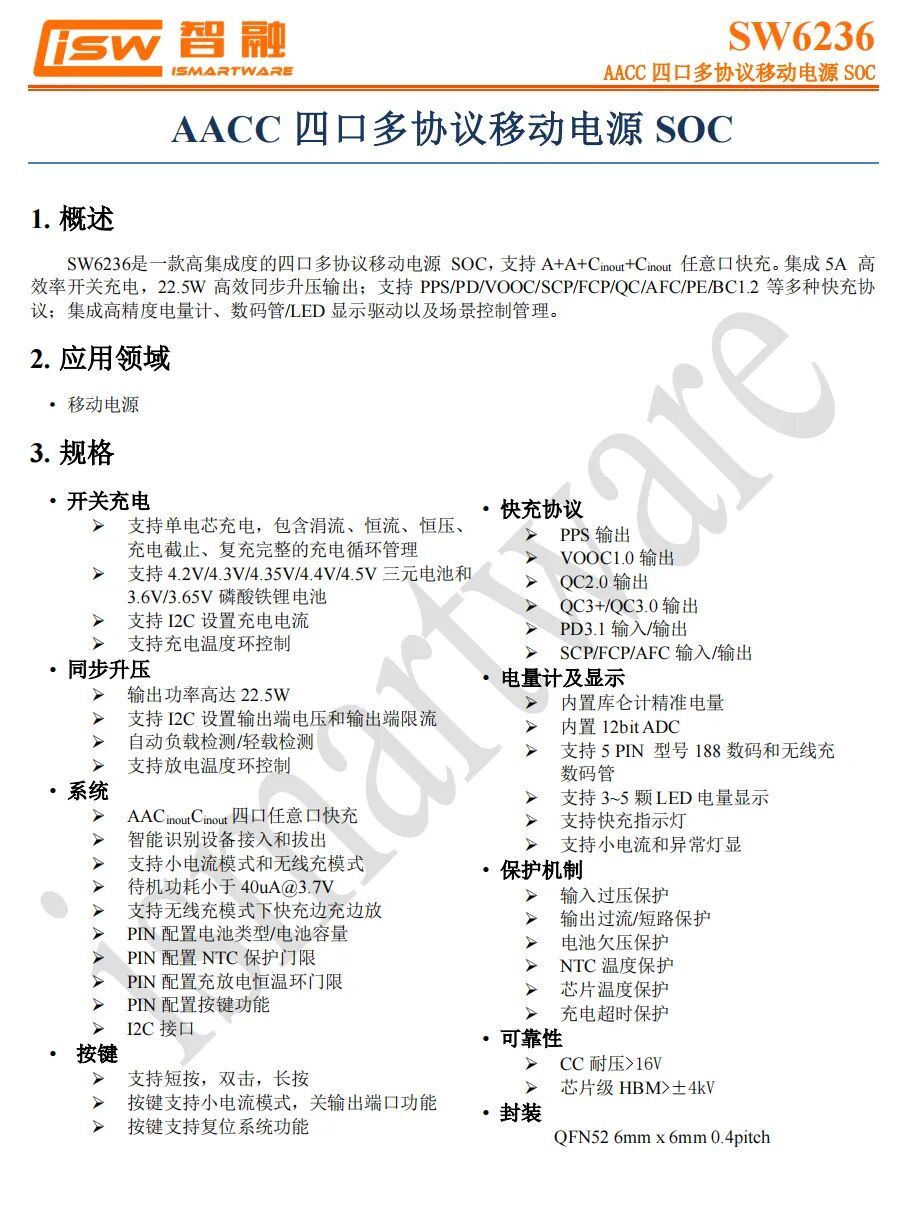
iSmartWare has packed a lot of "smarts" into the SW6236. Its built-in Coulomb counter and 12-bit ADC deliver pinpoint battery accuracy, allowing for versatile display options like simple LEDs or an advanced "188" numeric display that even includes icons for wireless charging status.
Beyond display functionality, it is equipped with a comprehensive suite of safety protections—including OVP, OCP, UVP, OTP, CTP, and NTC-based temperature monitoring—guaranteeing operational reliability and device longevity.
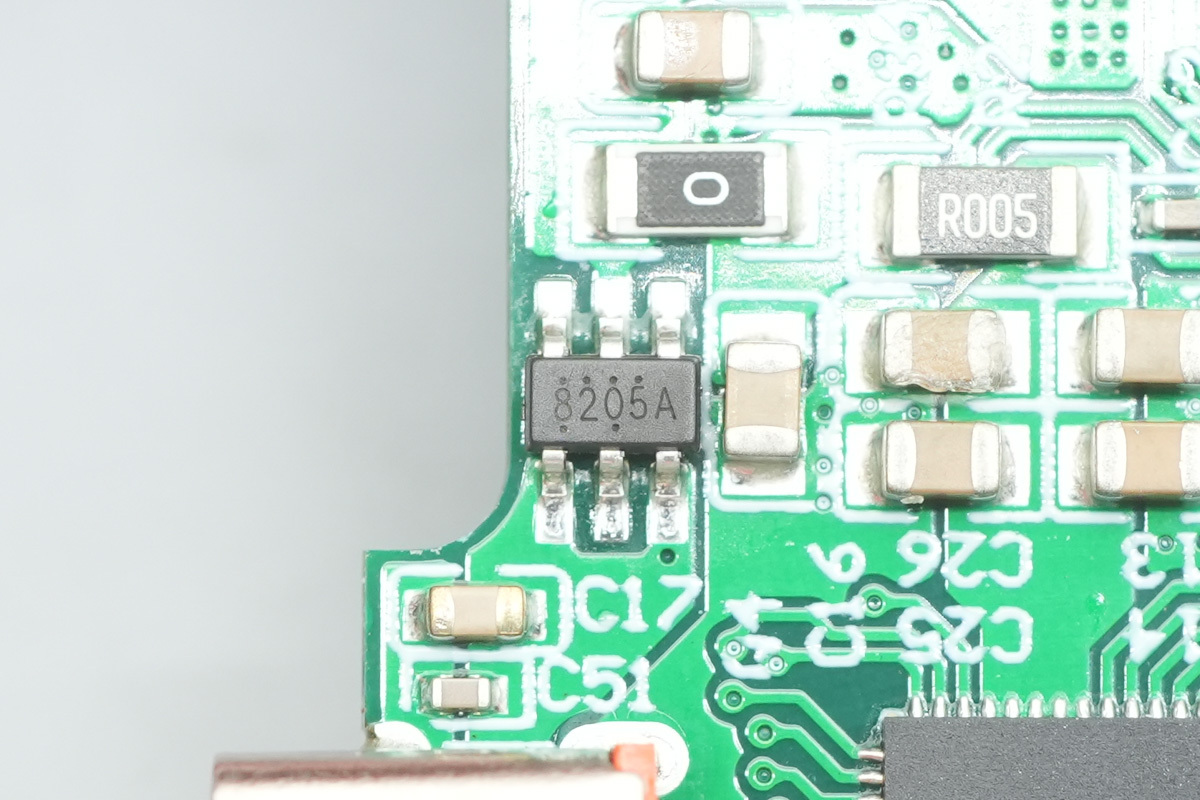
A VBUS MOSFET, marked 8205A.
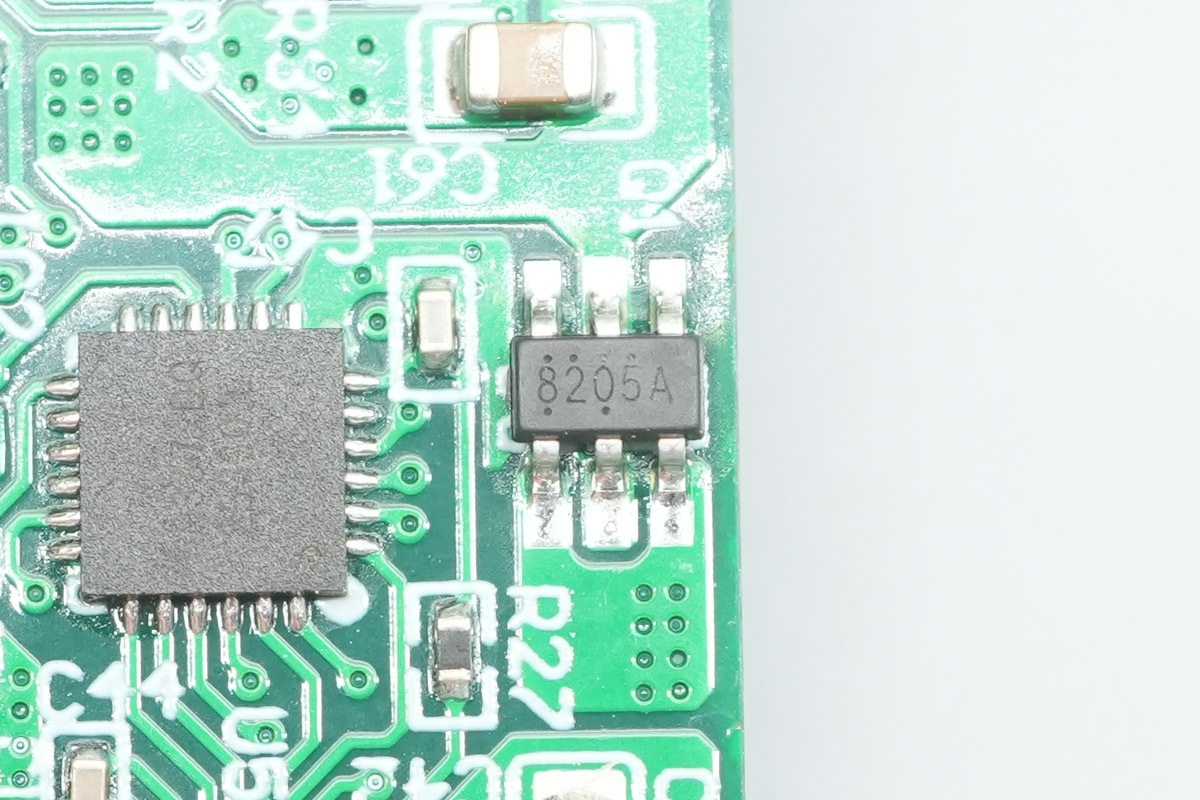
Another one, also marked 8206A.
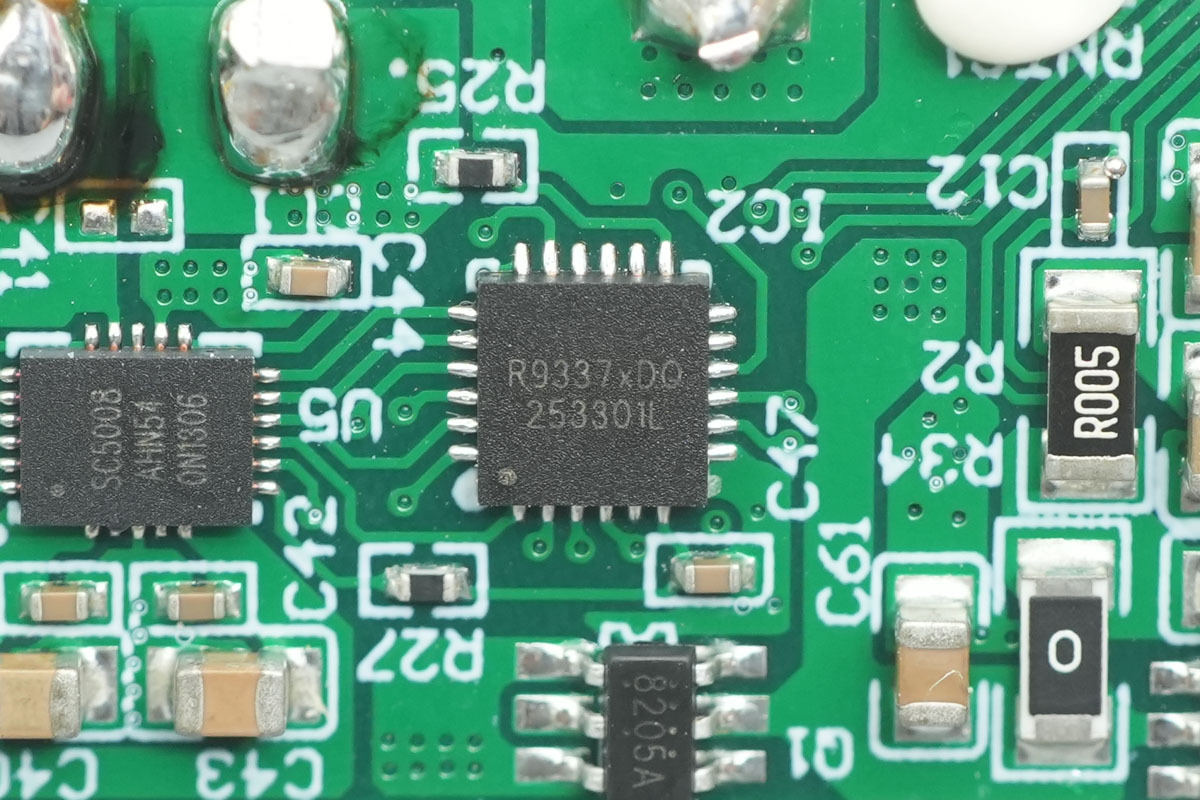
The wireless charging master control chip, marked R9337xDQ.
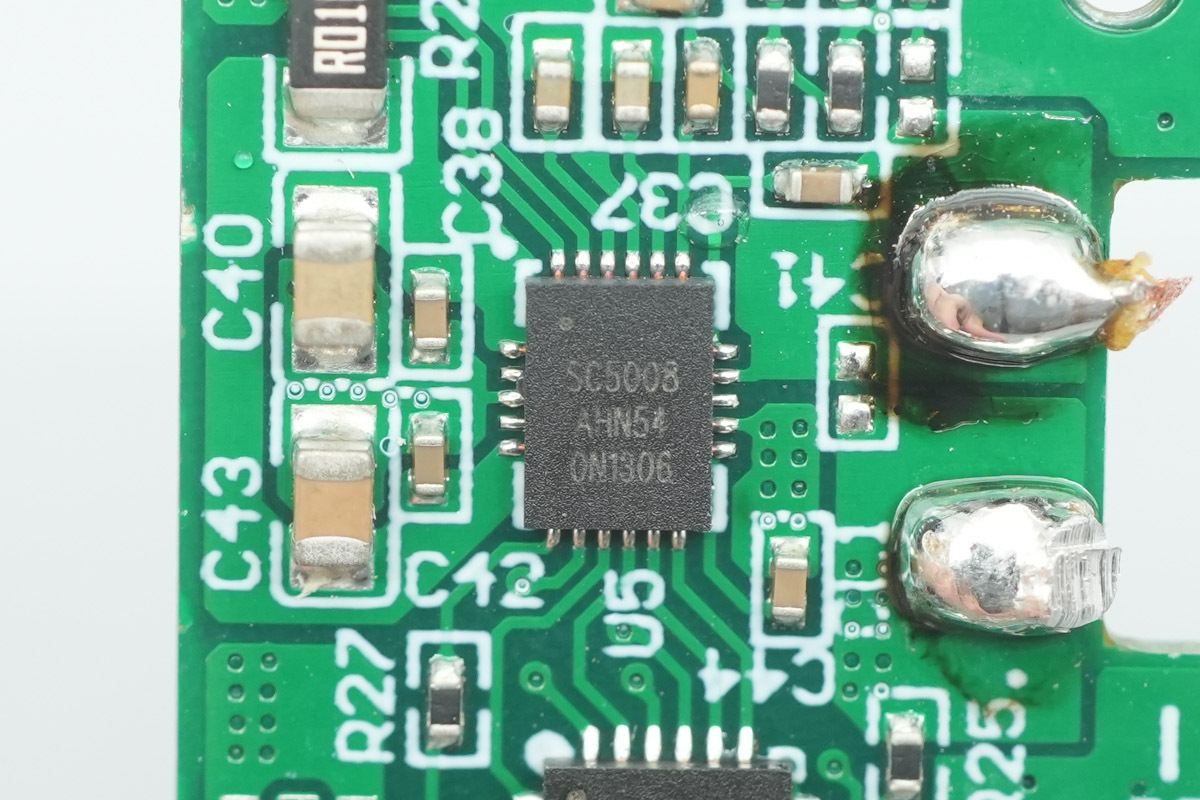
The wireless charging power stage is from SouthChip, model SC5008. This highly integrated 15W full-bridge power stage controller is engineered to meet the rigorous WPC standards.
It encompasses all essential analog components required for WPC-compliant wireless power transmission, including low-resistance MOSFETs, high-efficiency gate drivers, internal 5V and 3.3V LDOs, precise communication demodulators, and integrated input current sensing circuitry.
Designed to work in tandem with the primary transmitter controller, it facilitates a robust, cost-effective architecture compliant with both WPC V1.3.2 Baseline and Extended Power Profiles.
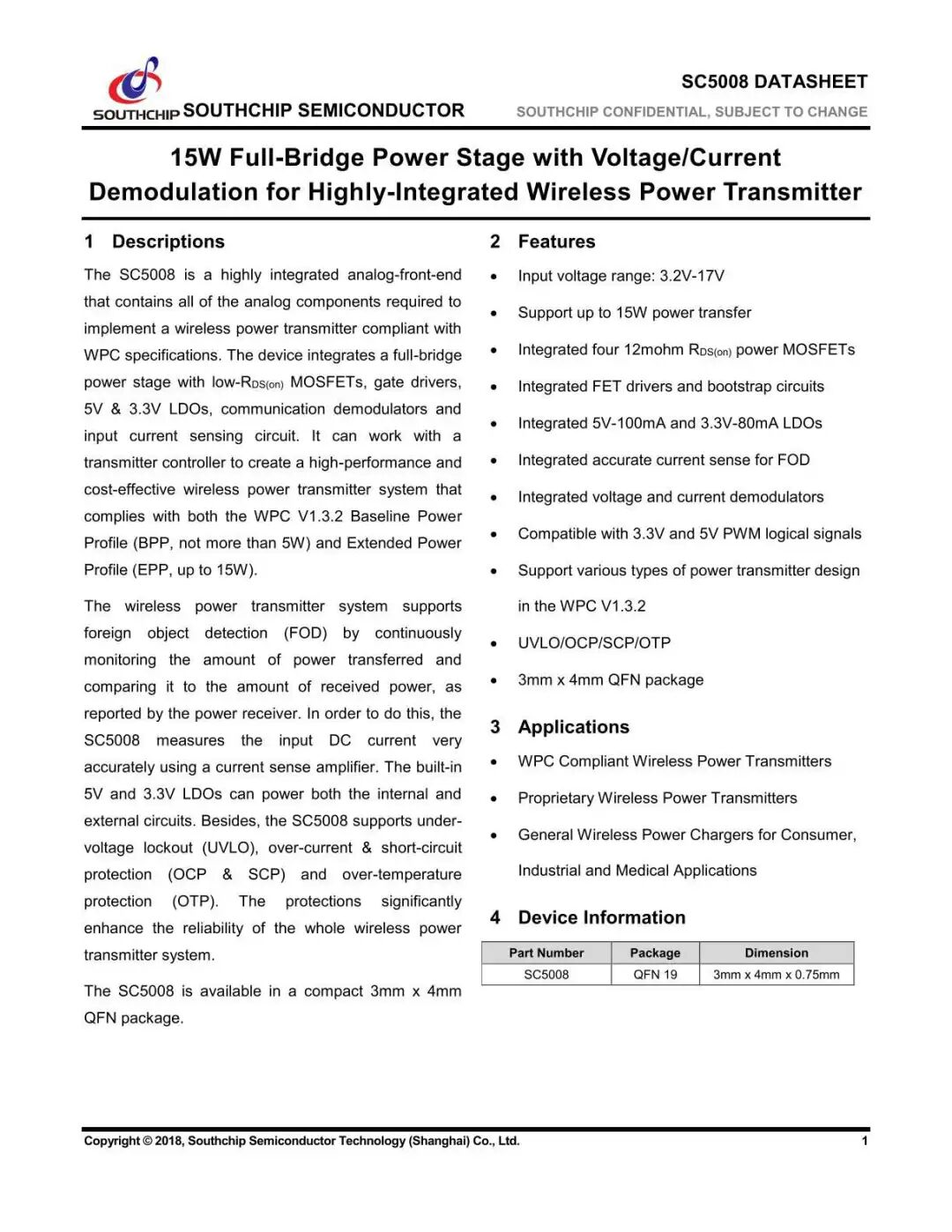
The SC5008 enhances system safety and reliability through advanced Foreign Object Detection (FOD). It achieves this by continuously monitoring transmitted power and comparing it against the power received, utilizing a high-precision integrated current sense amplifier to measure the input DC current accurately, and the device integrates 5V and 3.3V LDOs to power both internal and auxiliary external circuitry.
Its robust protection suite—including UVLO, OCP, SCP, and OTP—ensures stability under varied operating conditions. It is housed in a compact 3mm x 4mm QFN package.
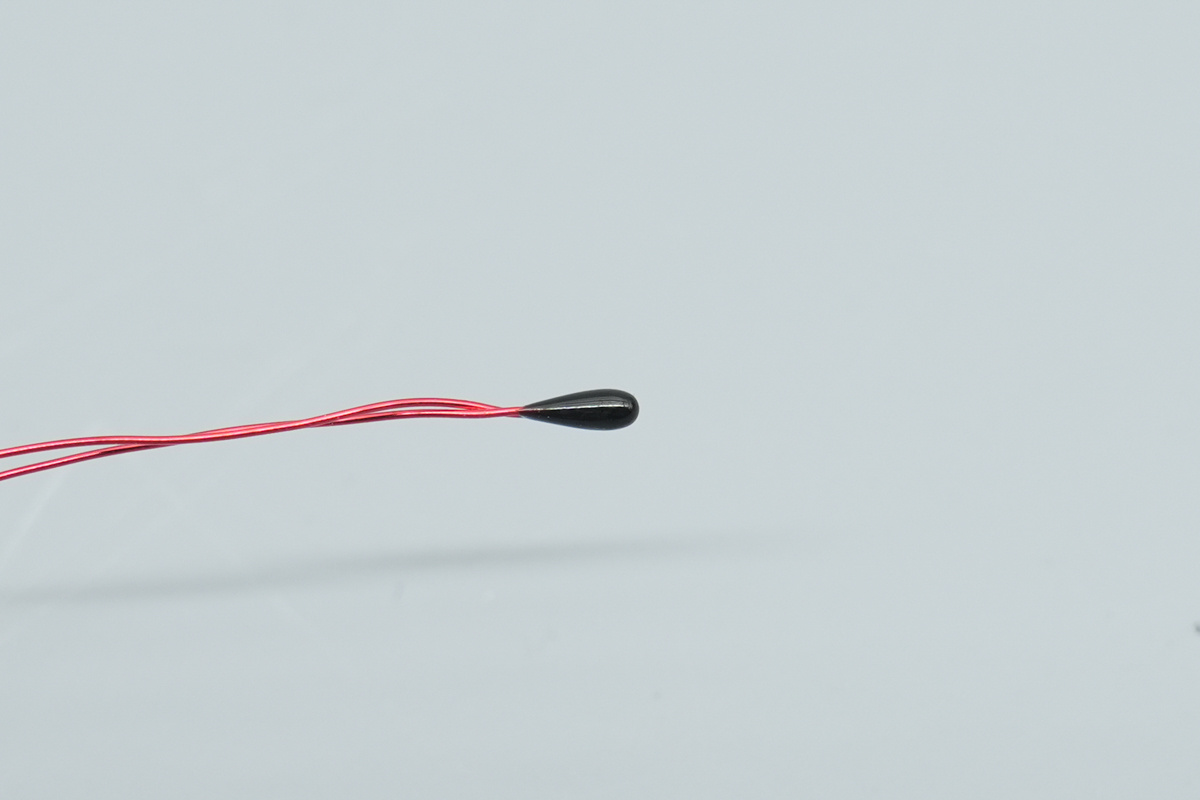
This is an NTC thermistor, utilized for OTP.
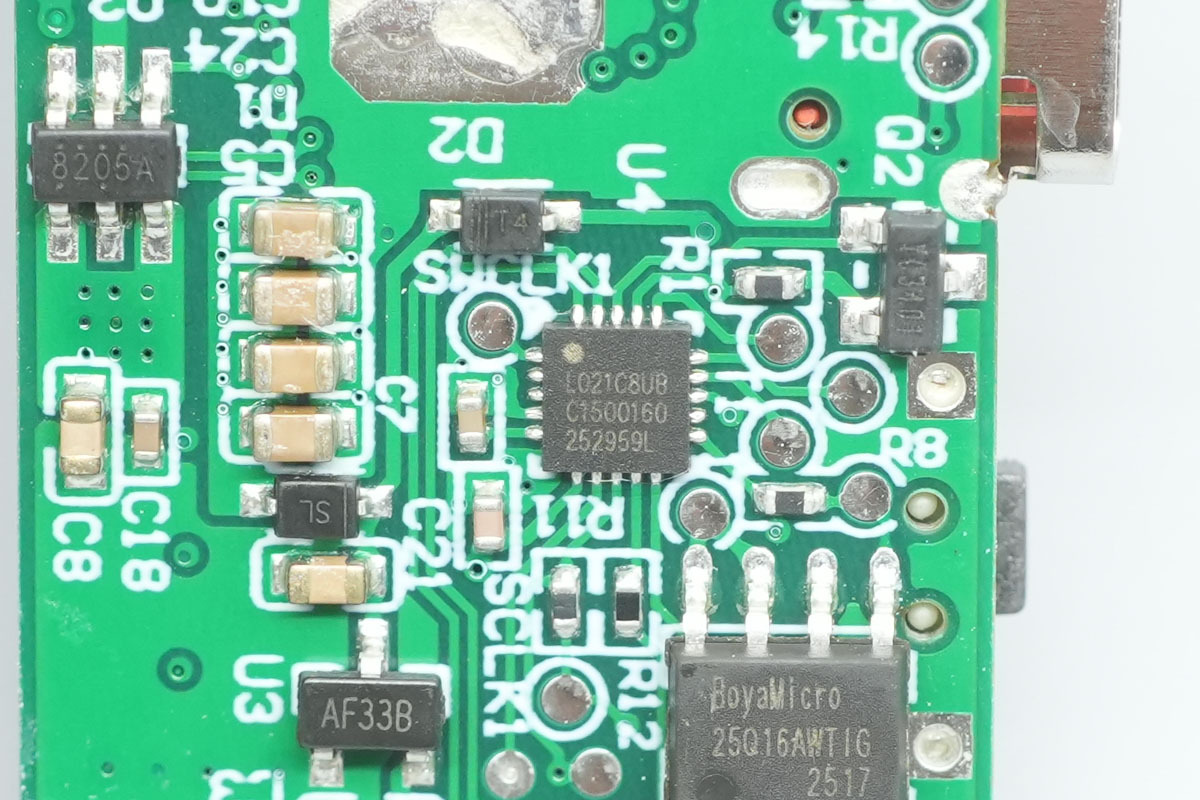
The MCU is from XHSC, model HC32L021. It features a 48MHz ARM Cortex-M0 core and is housed in a QFN20 package, and is used for screen display driving and related logic control.
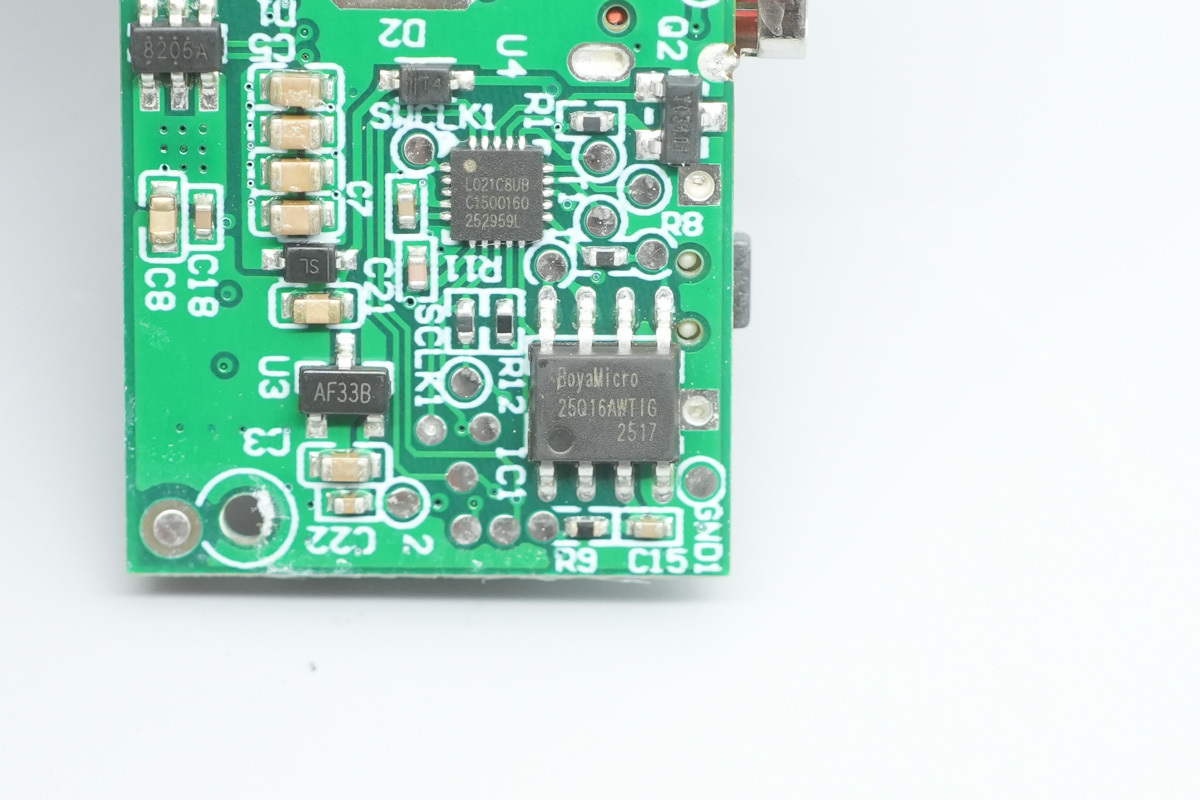
Next to the MCU is a SPI Flash memory chip from BoyaMicro, model 25Q16AWTIG , which is used to store firmware and screen UI information.
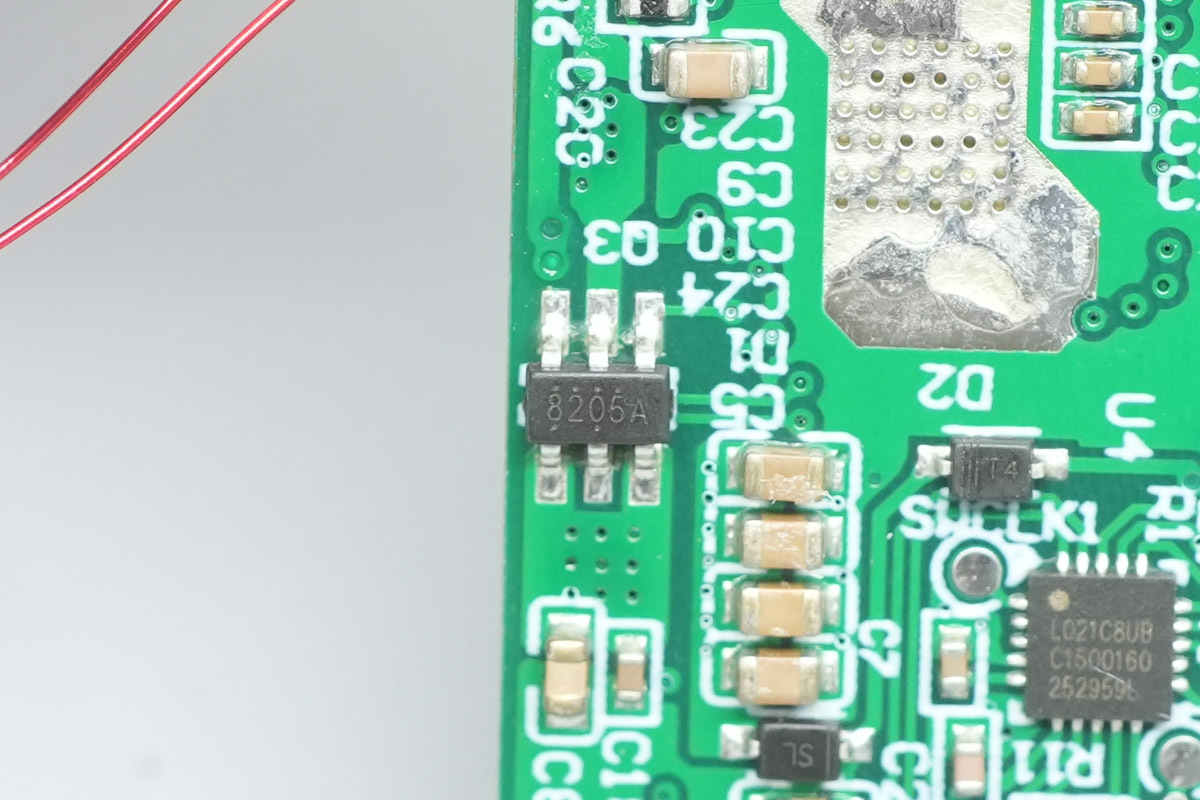
A MOSFET, marked 8205A, is used for power supply switching control.
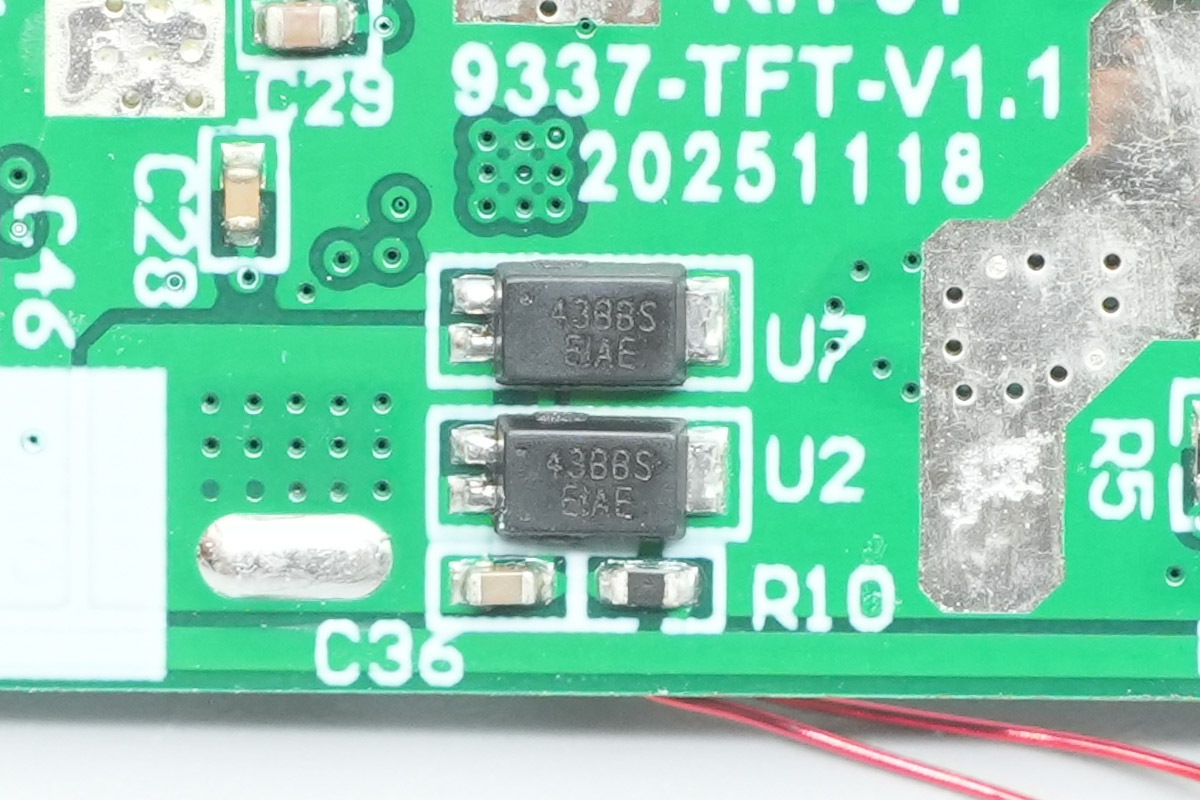
The two lithium battery protection chips are from iCM, model CM1143-BBS, and are packaged in SSOP-3.
These chips incorporate high-precision voltage detection and delay circuits. By detecting the battery's voltage and current, they provide protection against overcharging, over-discharging, and overcurrent. They are suitable for protection circuits of single-cell lithium-ion/lithium polymer rechargeable batteries.
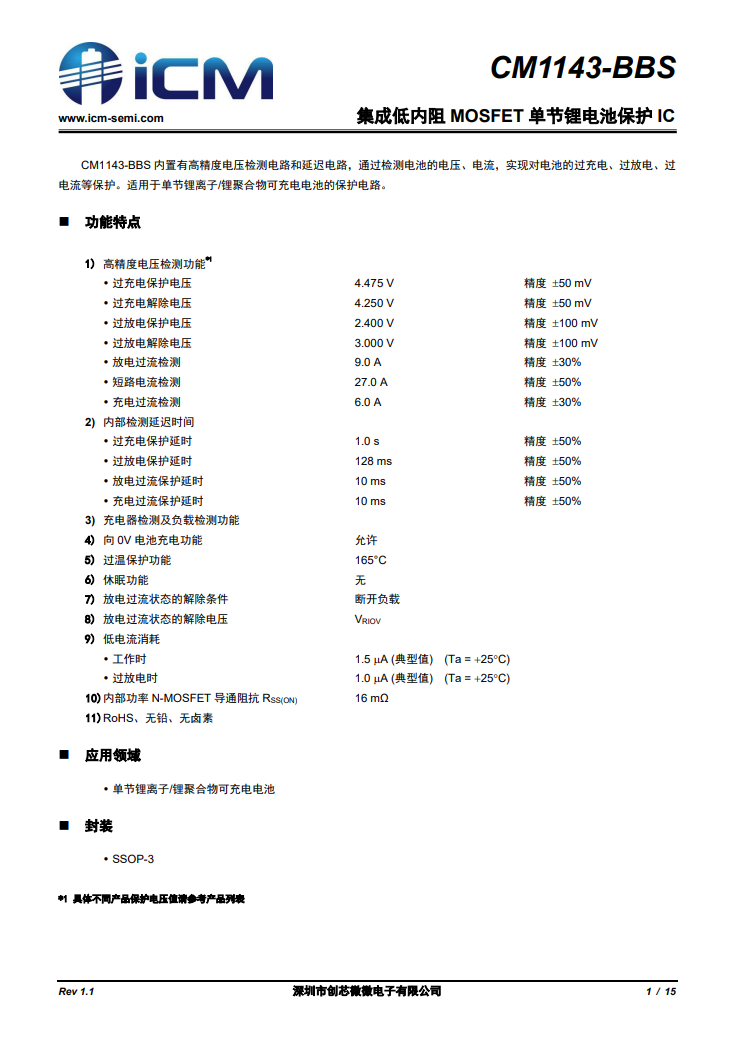
Here is the info about ICM CM1143-BBS.
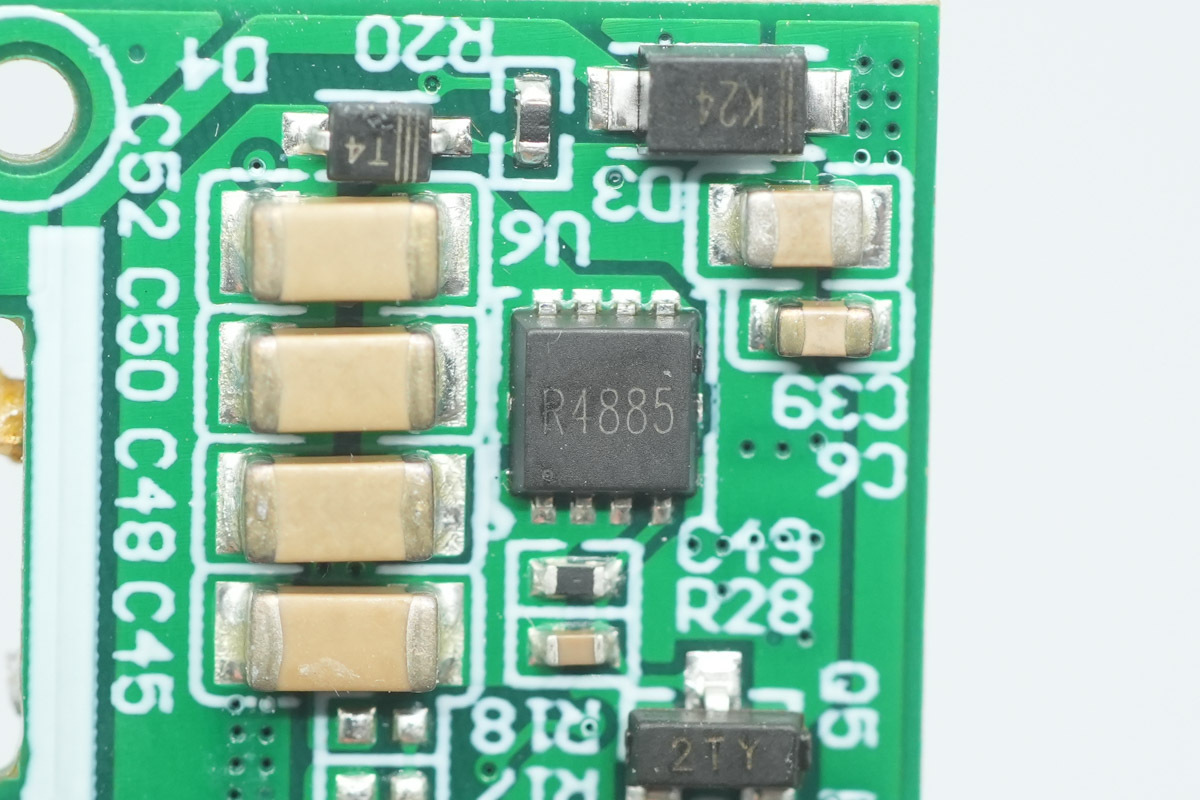
The wireless charging resonant cap MOSFET, marked R4885.
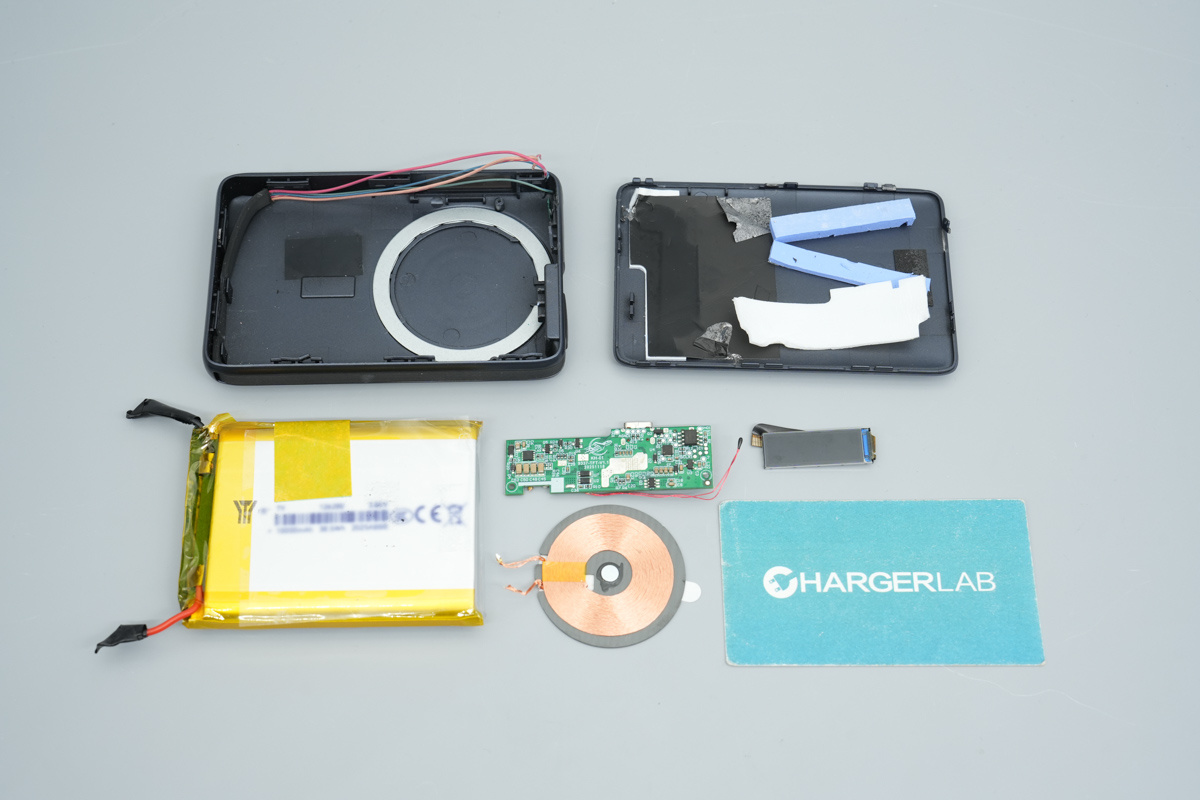
Well, those are all components of the inno3C 22.5W Magnetic Wireless Power Bank.
Summary of ChargerLAB
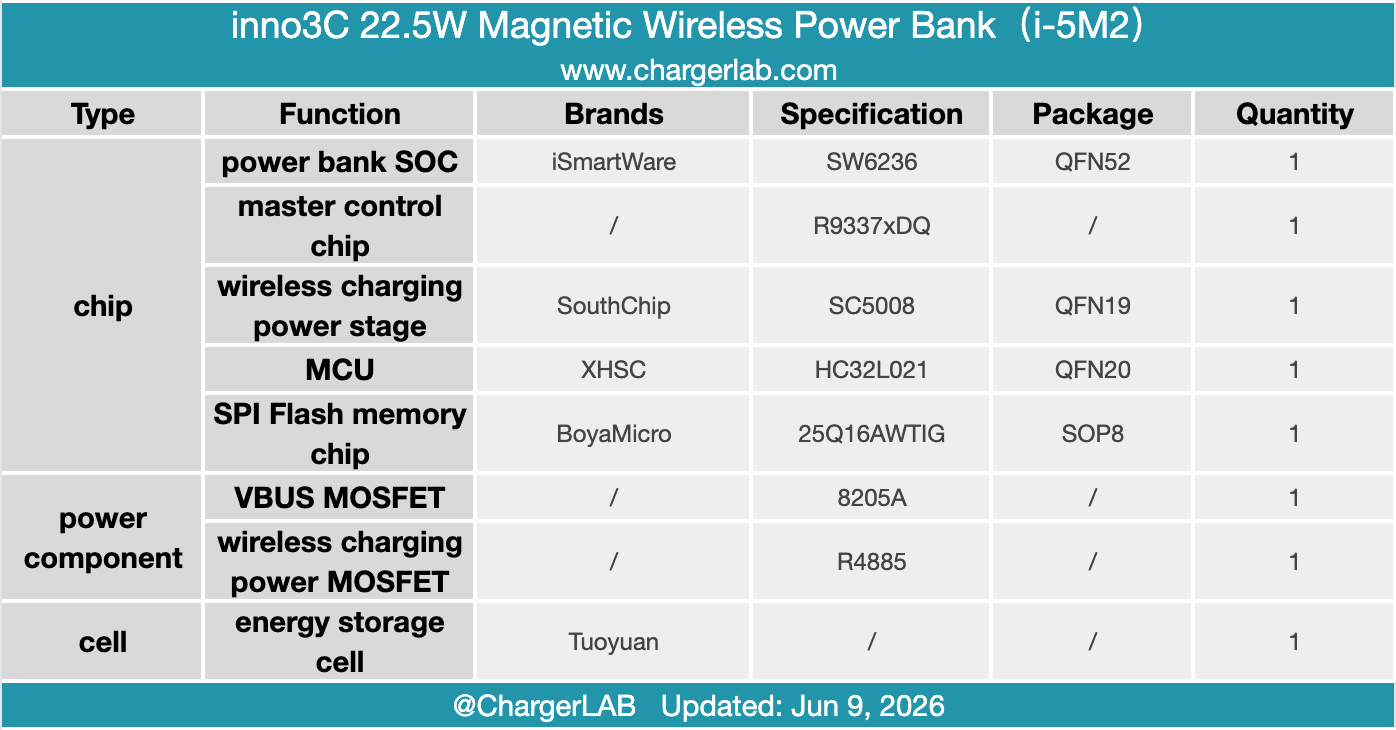
The inno3C Magnetic Wireless Power Bank strikes a balance between convenience and performance. Equipped with a USB-C port and a built-in cable, it pushes 22.5W via wire and 15W wirelessly, with added Apple Watch compatibility.
Under the hood, we found a high-capacity 10,000mAh Tuoyuan battery cell. The logic is managed by an iSmartWare SW6236 controller, while the wireless charging heavy lifting is performed by SouthChip’s SC5008. The display and firmware are handled by an XHSC MCU and BoyaMicro Flash memory. Finally, safety is prioritized with dual iCM protection chips and an NTC sensor, keeping the device stable during high-speed operations.
Related Articles:
1. Teardown of Inno3C 7-in-1 Docking Station
2. iCM Chip Joins Tesla Supply Chain: A Milestone for China’s Semiconductor Industry
3. Leading the Charge, Baseus and Highpower Collaborate on Safety-First Power Bank