
Introduction
Amid the surge in AI computing power and the widespread adoption of high-performance devices, power supply solutions are increasingly defined by power density, energy efficiency, and adaptability to diverse scenarios as key drivers of technological breakthroughs.
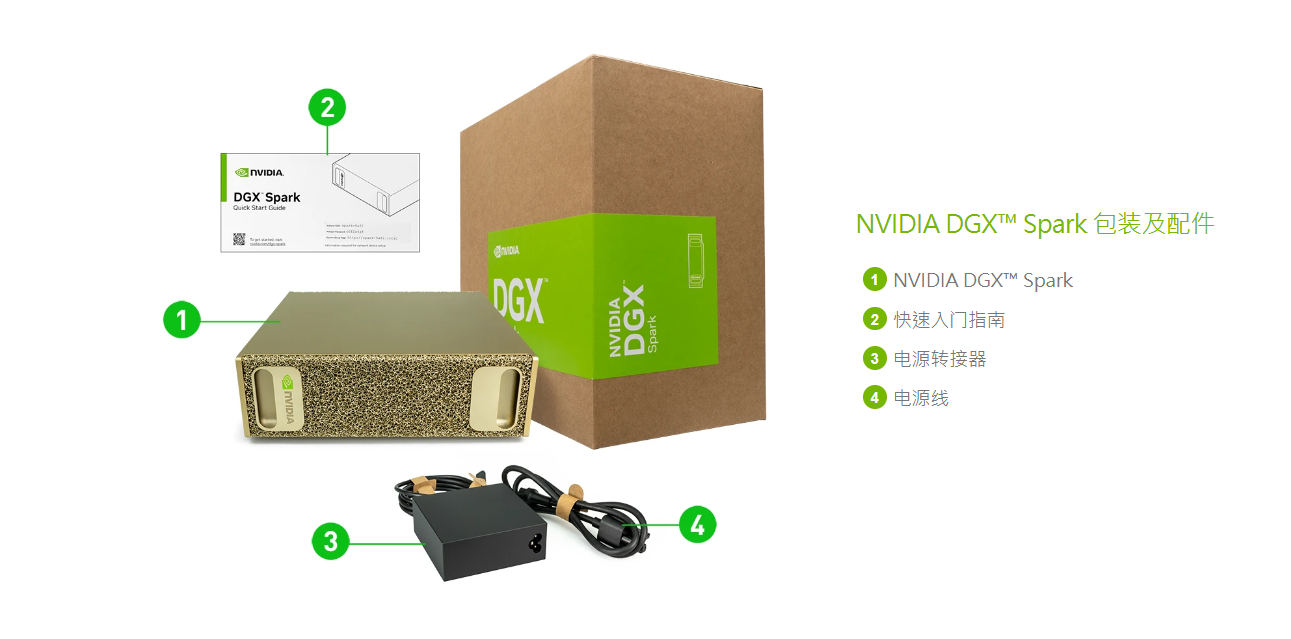
Recently, AMC Technology officially launched its 240W GaN charger, emerging as a new dedicated power solution tailored for the NVIDIA DGX Spark GB10 chip platform. It is among the first GaN products to support PD3.2 240W output and strictly adheres to NVIDIA’s customized size and appearance specifications. Featuring an AHB topology and digitalized design for enhanced energy efficiency, it achieves superior power conversion efficiency through 7-level energy certification.
This power supply can reliably adapt to a range of applications, from high-load AI PCs to continuous operation of commercial-grade intelligent robots, and even high-end smart home devices. Thanks to the high integration enabled by GaN technology and precise protocol compatibility, it provides a power solution that balances performance and efficiency for cutting-edge computing scenarios and premium consumer devices. It also sets a new benchmark for industry-tailored power solutions. Next, let’s take a closer look at the performance of this server-grade charger.
Product Appearance
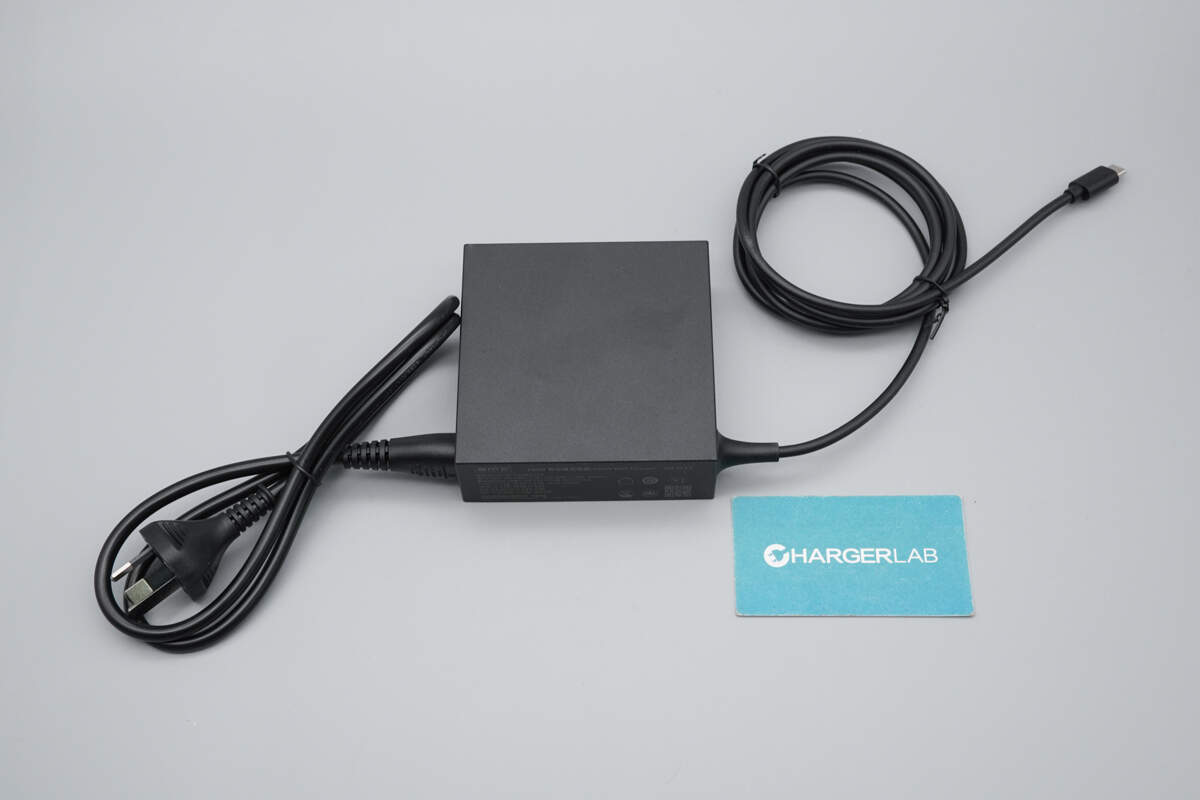
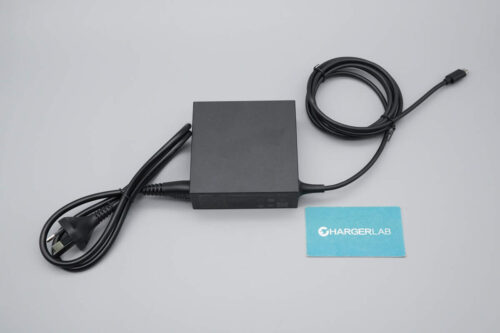
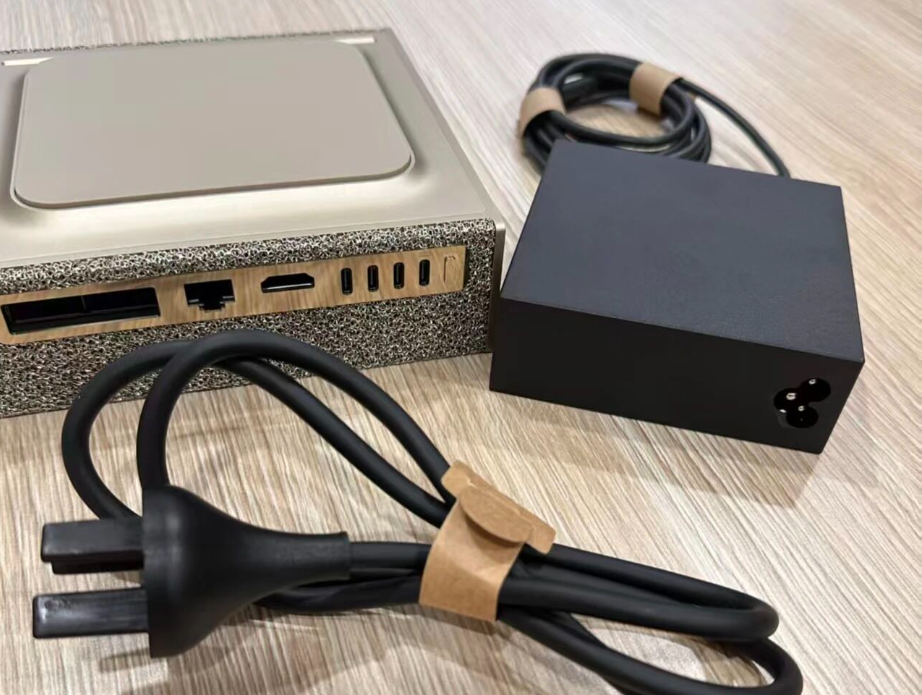
The charger features a block-shaped design with sharp edges on all sides. Its black, fire-resistant PC casing has a matte finish, and the input/output cables are integrated into a single-unit design.
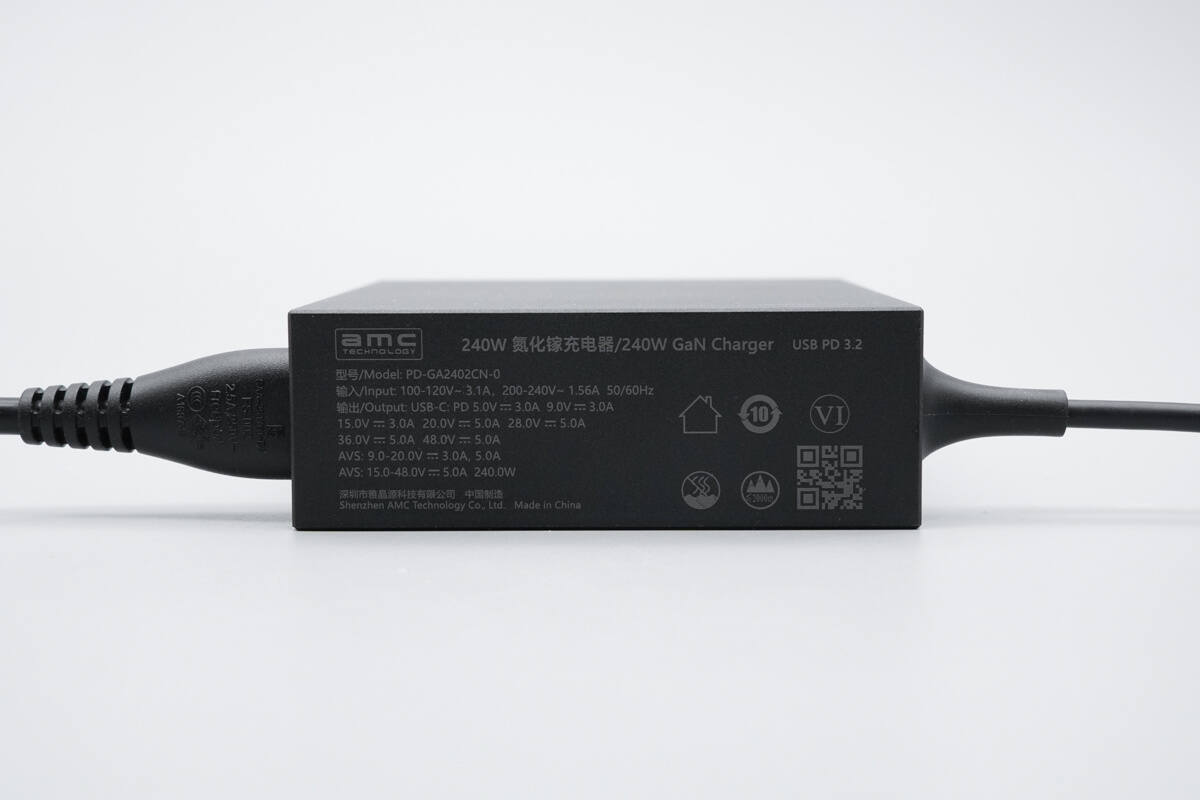
Detailed specifications are printed on the side.
Model: PD-GA2402CN-0
Input: 100–120V~3.1A, 200–240V~1.56A 50/60Hz
Output (USB-C):
PD 5.0V ⎓ 3.0A
9.0V ⎓ 3.0A
15.0V ⎓ 3.0A
20.0V ⎓ 5.0A
28.0V ⎓ 5.0A
36.0V ⎓ 5.0A
48.0V ⎓ 5.0A
AVS: 9.0–20.0V ⎓ 3.0A, 5.0A
AVS: 15.0–48.0V ⎓ 5.0A, 240.0W
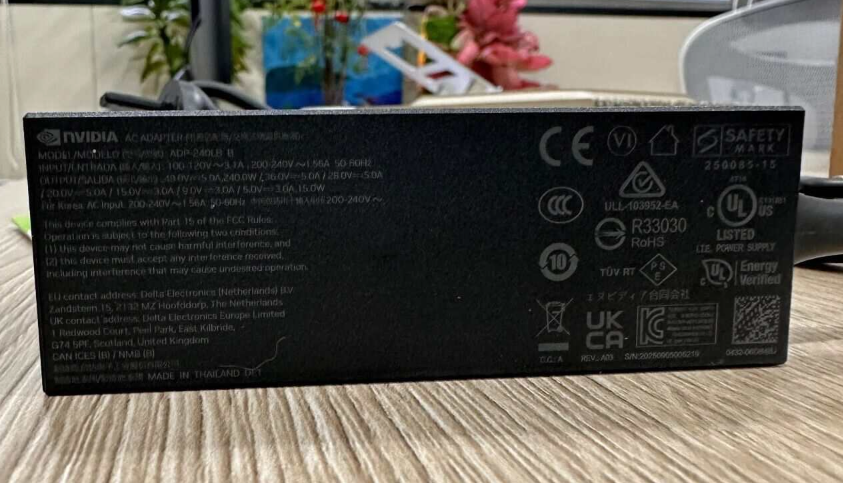
Compared with NVIDIA DGX Spark’s original PD3.1 240W charger, which features a 100–240V wide-range input and an external AC power cord with a C5 “cloverleaf” connector, providing full EPR output levels on a single port (48V 5A, 36V 5A, 28V 5A), the AMC 240W GaN charger fully matches these specifications. It meets all the original requirements and also adds support for the PD3.2 protocol, offering improved power compatibility and stability, and enabling adaptation to a wider range of high-end computing devices.
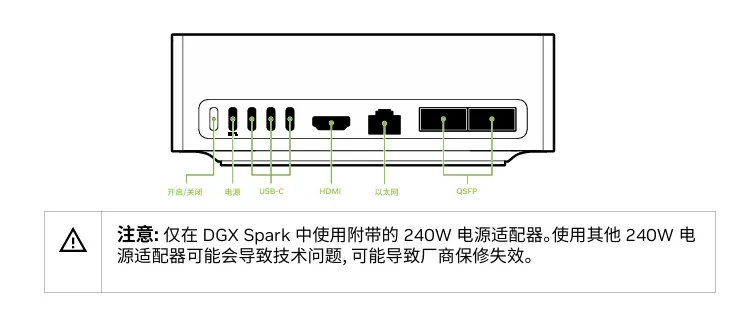
Its PD3.2 full-power 240W delivery capability can seamlessly support the NVIDIA DGX Spark GB10 chip platform, ensuring stable thermal management and reliable operation under high-power scenarios.
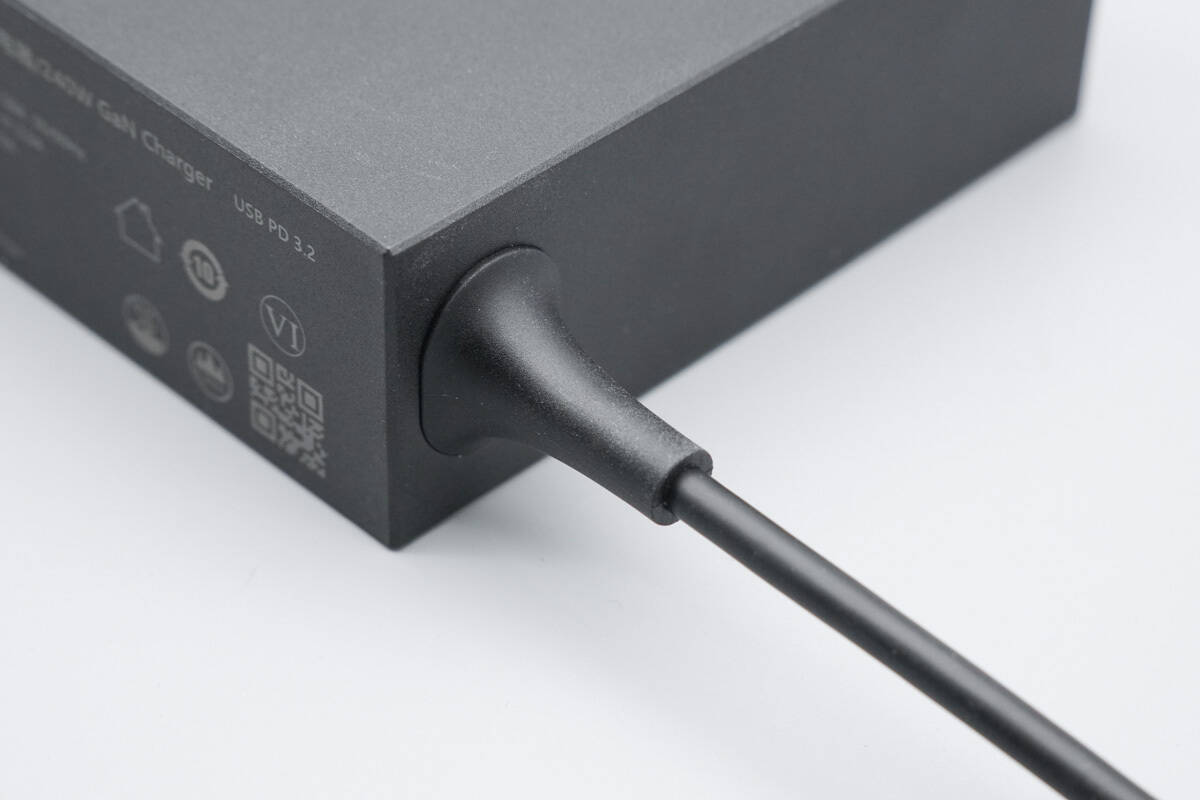
The output cable has an anti-bending design at the end, which can significantly extend its service life.
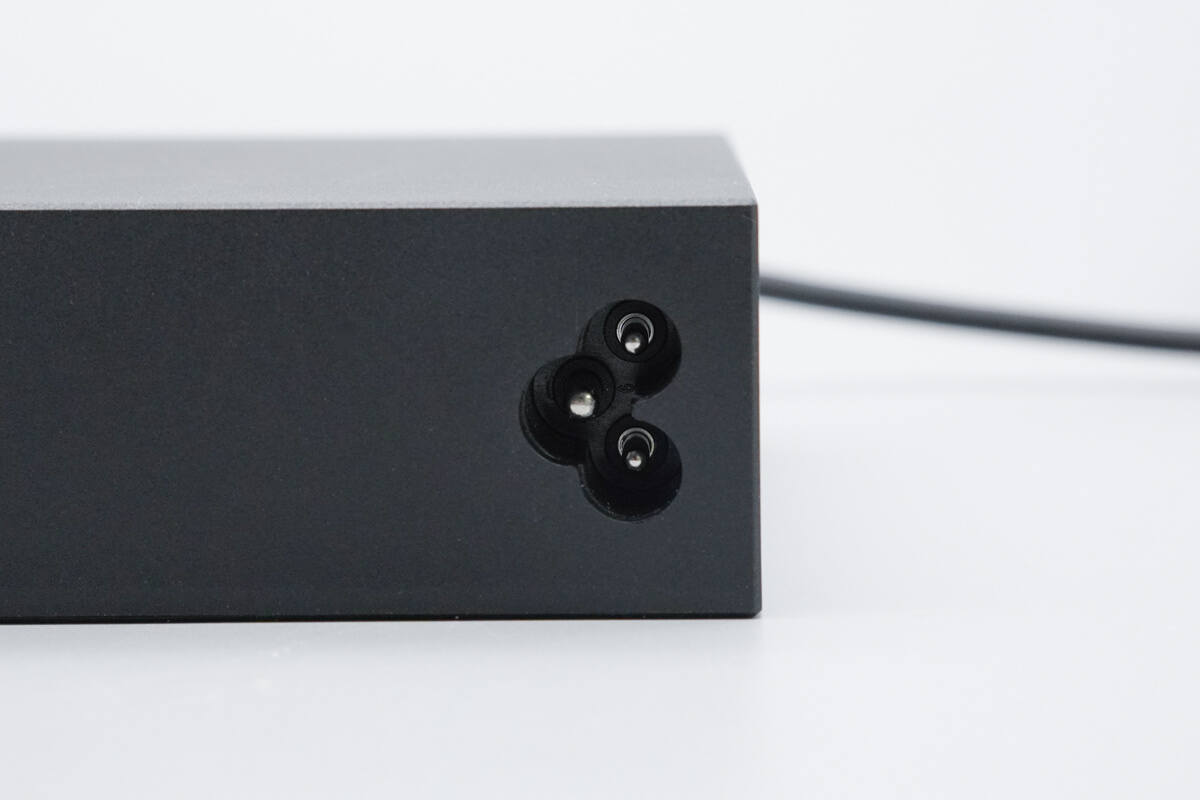
The power input interface is a C5 inlet.
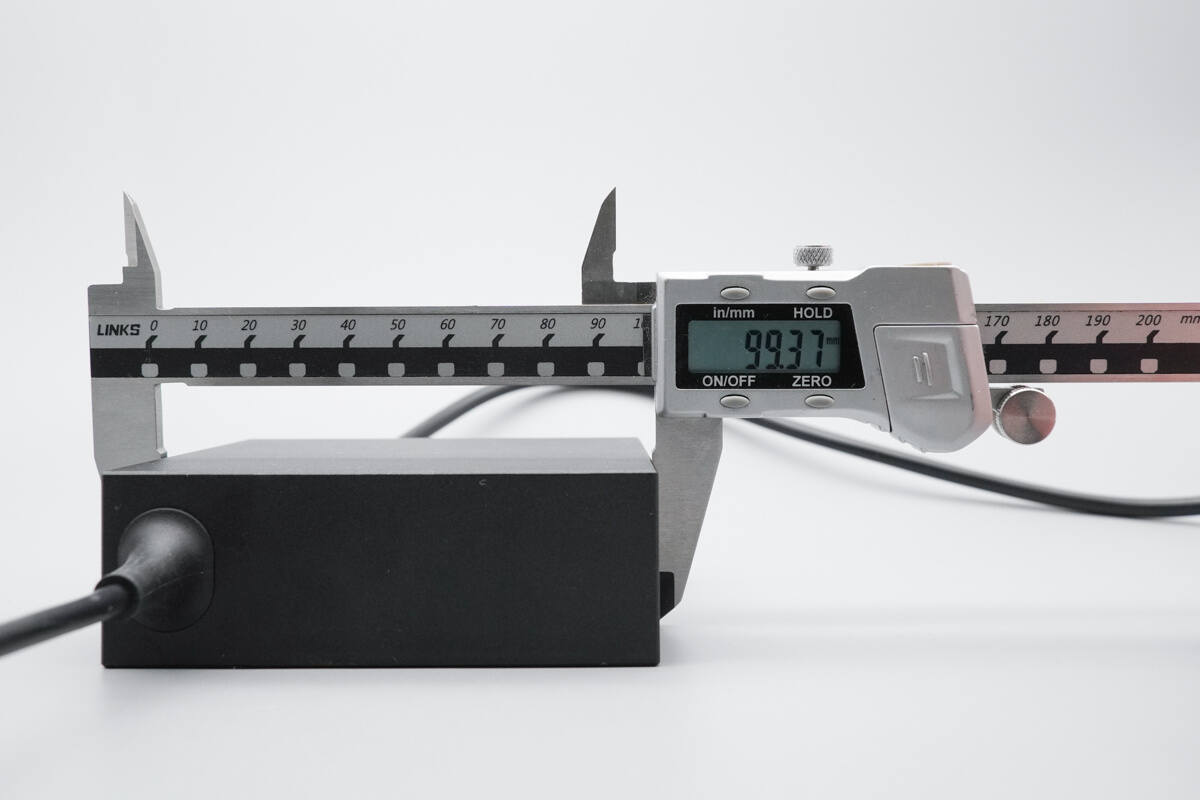
The length of the charger is about 99.37 mm (3.91 inches).
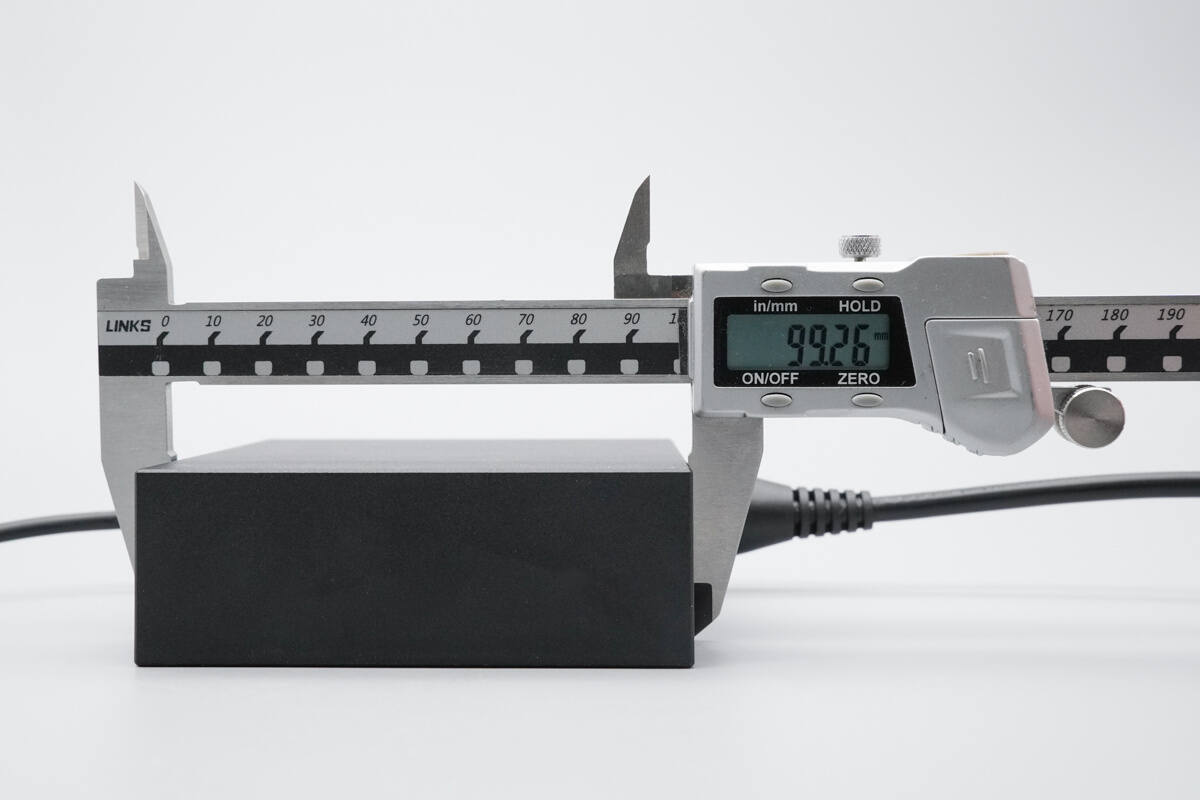
The width is about 99.26 mm (3.91 inches).
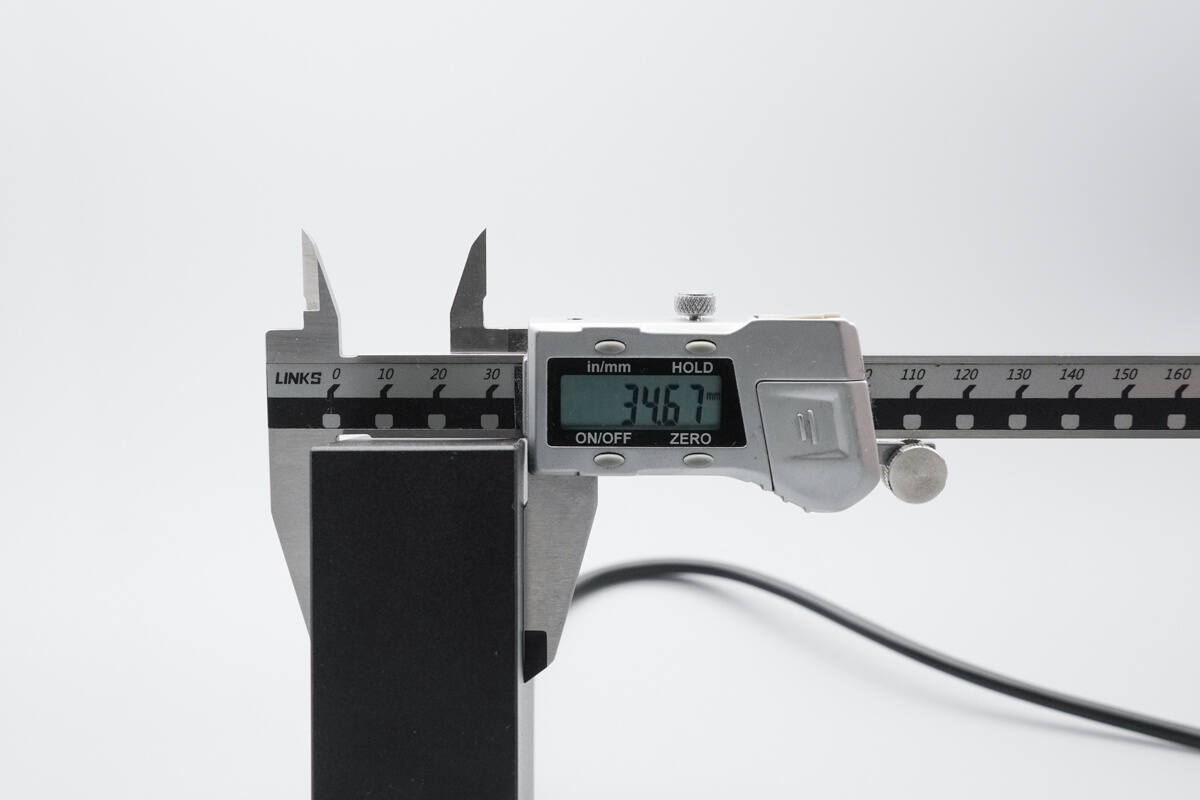
The thickness is about 34.67 mm (1.36 inches). Designed as an adapter for the NVIDIA DGX Spark GB10, it strictly adheres to the device’s custom specifications in appearance and dimensions, perfectly meeting usage requirements.
AHB Topology
It adopts an advanced AHB topology based on an asymmetric half-bridge circuit design, combined with soft-switching technology, balancing conversion efficiency, power density, and operational stability. This makes it one of the preferred topologies for high-power GaN power supplies. When paired with GaN power devices, it further reduces switching losses, providing core technical support for subsequent high-efficiency and low-thermal-performance operation.
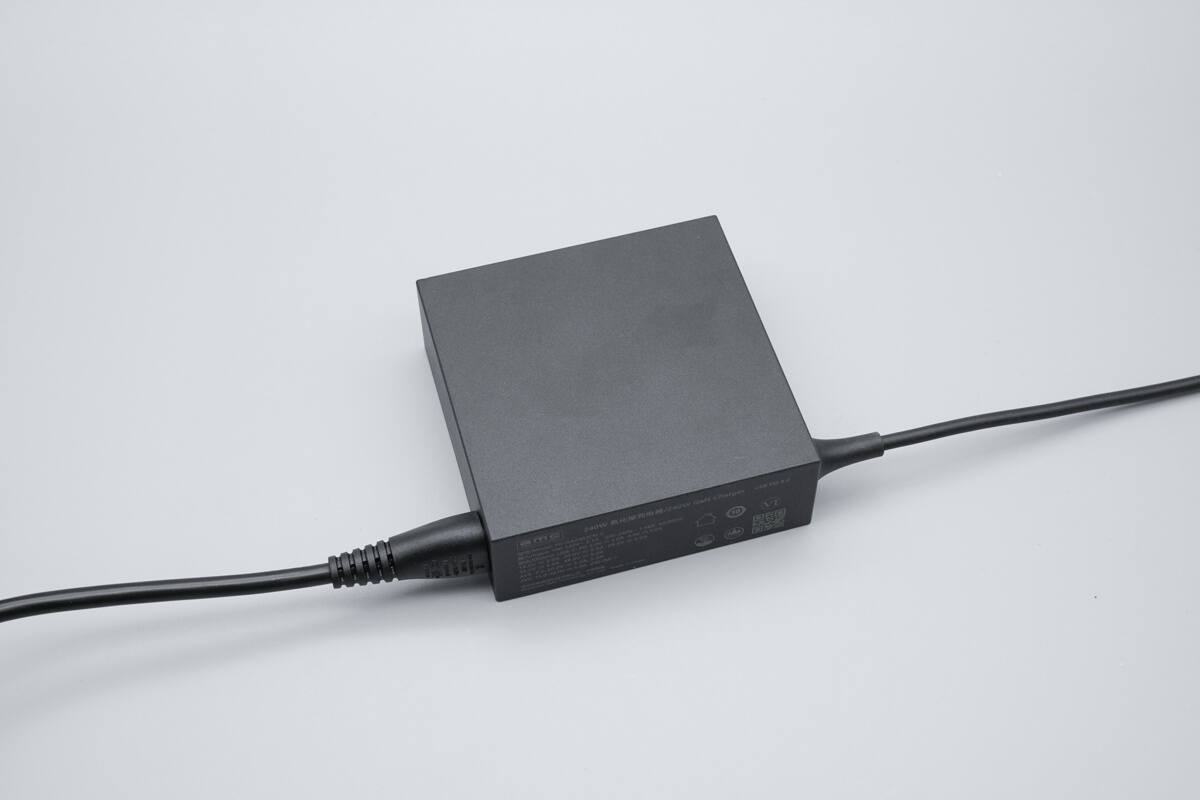
AMC has combined AHB topology with GaN technology to develop this 240W GaN charger, effectively addressing the four core challenges of AI server power: high efficiency, high density, high reliability, and broad compatibility. It provides a stable, efficient, and cost-effective power solution for AI computing platforms such as the NVIDIA DGX Spark GB10, supporting AI data centers in achieving “green computing” objectives, making it an ideal choice for high-end AI server power supplies.
Protocol Test
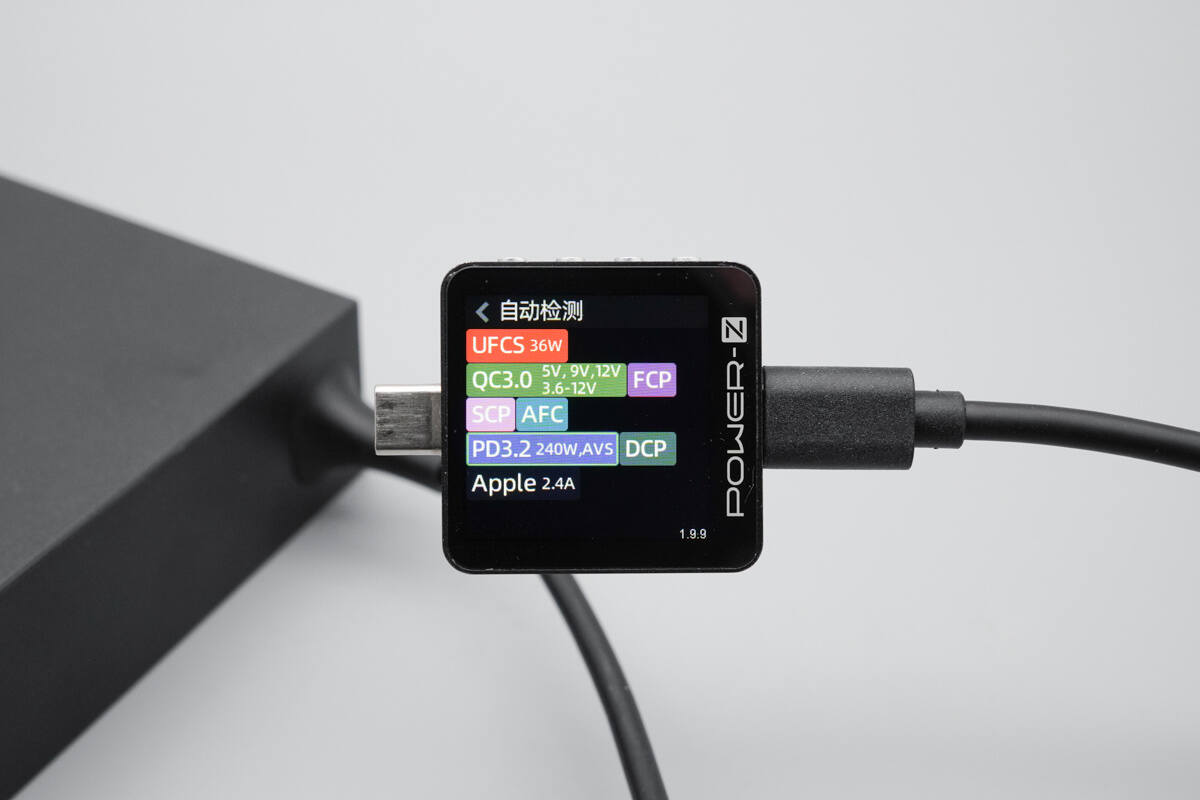
ChargerLAB POWER-Z KM003C shows that the USB-C supports UFCS, QC3.0, FCP, SCP, AFC, PD3.2, AVS, and DCP charging protocols.
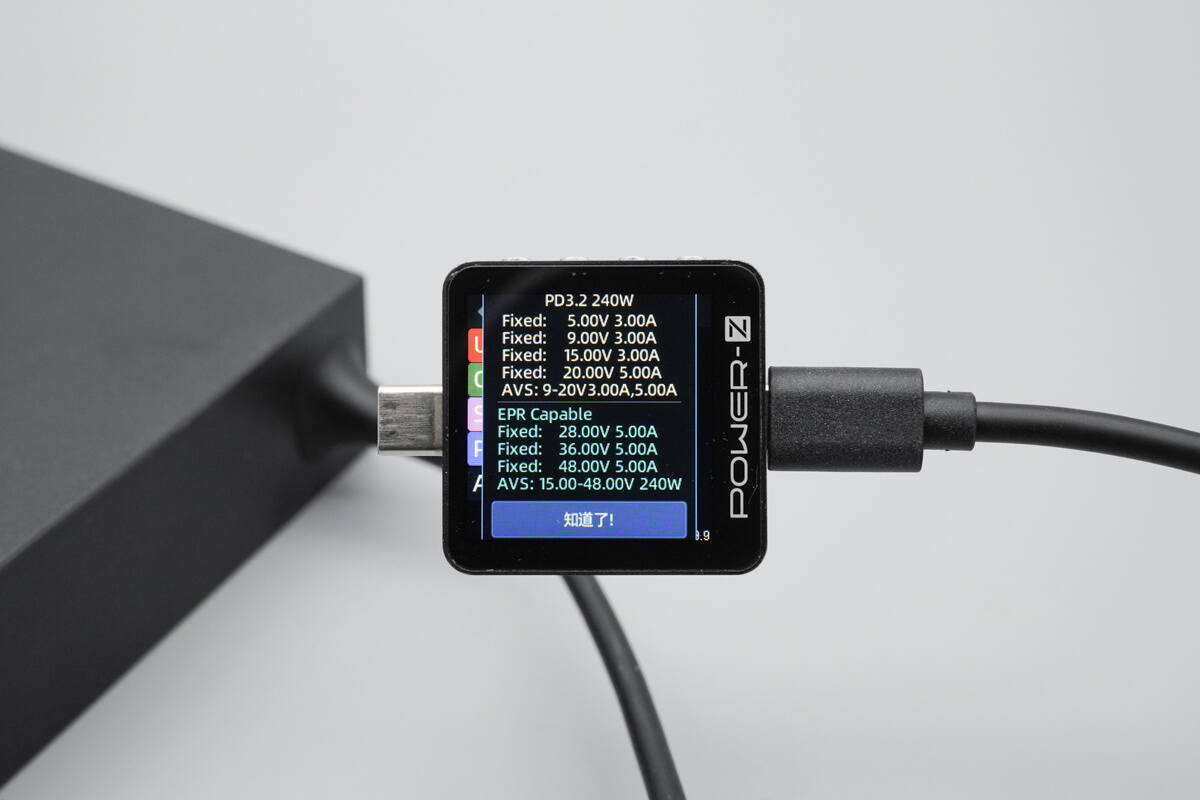
It features seven fixed PDOs—5V 3A, 9V 3A, 15V 3A, 20V 5A, 28V 5A, 36V 5A, and 48V 5A—along with AVS voltage ranges of 9–20V at 3A/5A and 15–48V at 240W.
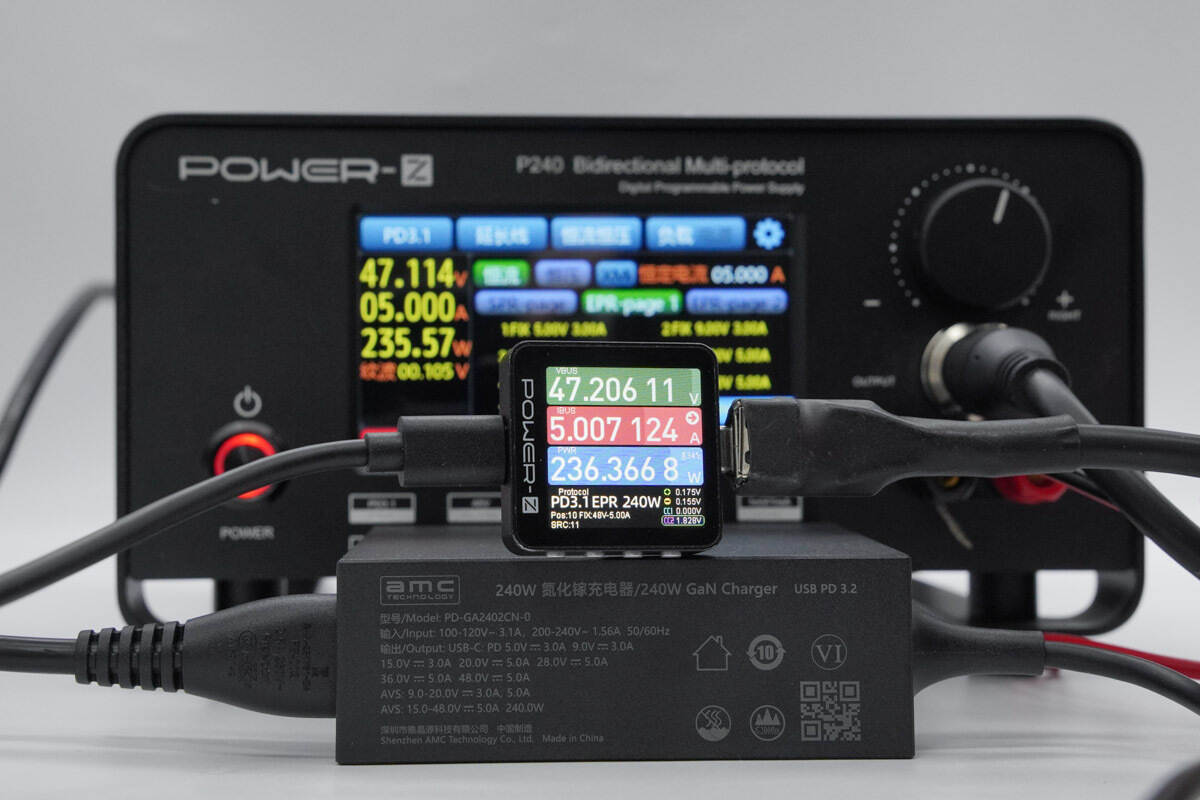
Using the POWER-Z P240 tester as a load, it was measured to deliver a stable output of about 240W.
Supported Devices
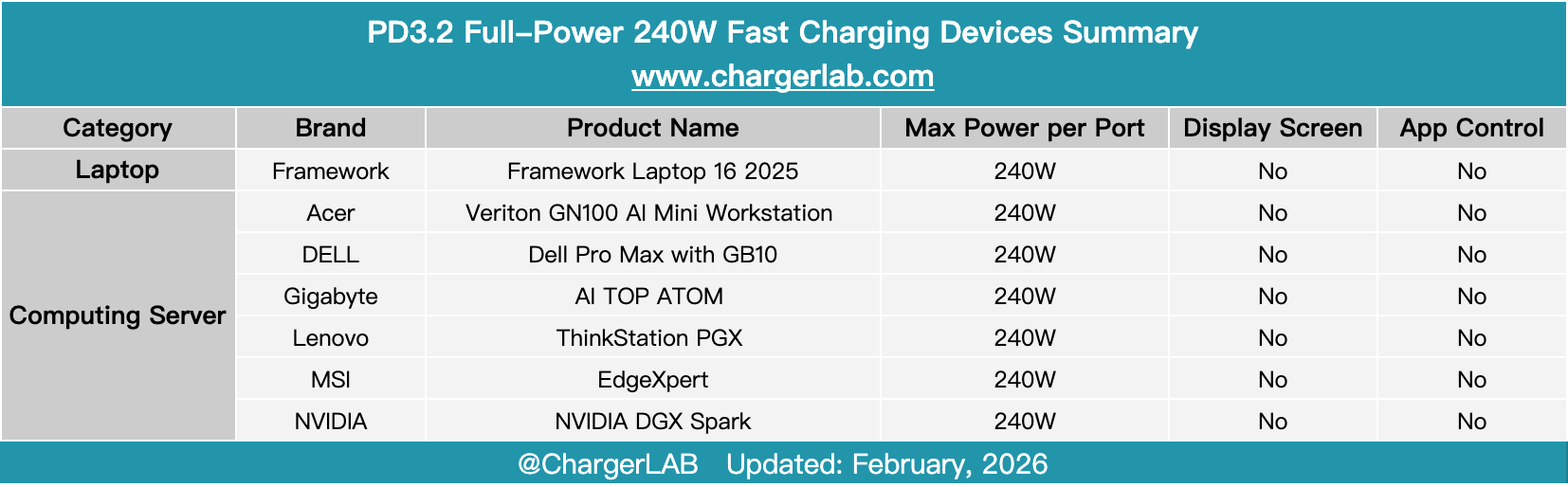
According to statistics, the NVIDIA DGX Spark also supports the Framework Laptop 16 (2025) and high-performance AI computing servers from other major brands, such as Acer, Dell, and Gigabyte, providing reliable high-performance delivery across a wide range of mainstream devices.
Product Review
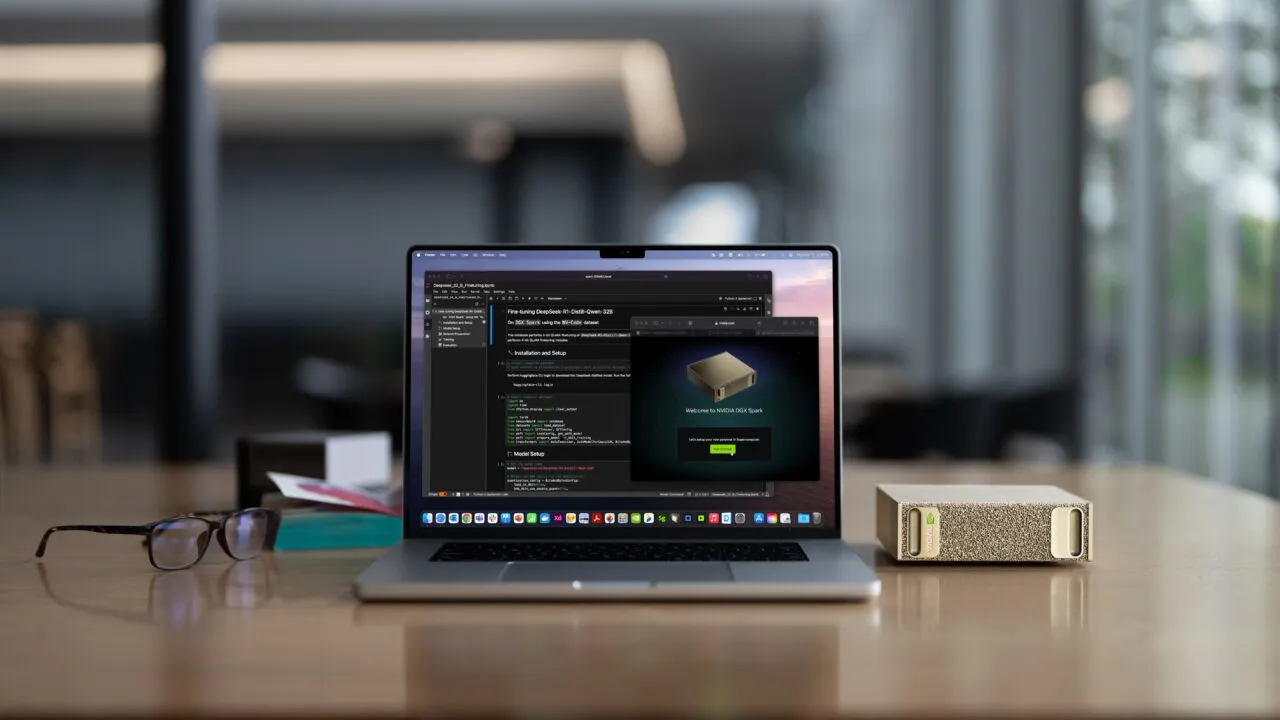
As the world’s leading compact AI supercomputer, the DGX Spark delivers tens of thousands of multidimensional computations within a small form factor. Behind its high performance is a powerful power supply that ensures stable operation. The following sections provide a comprehensive evaluation of this charger, covering compatibility test, full charging test, standby power test, and conversion efficiency test.
Compatibility Test
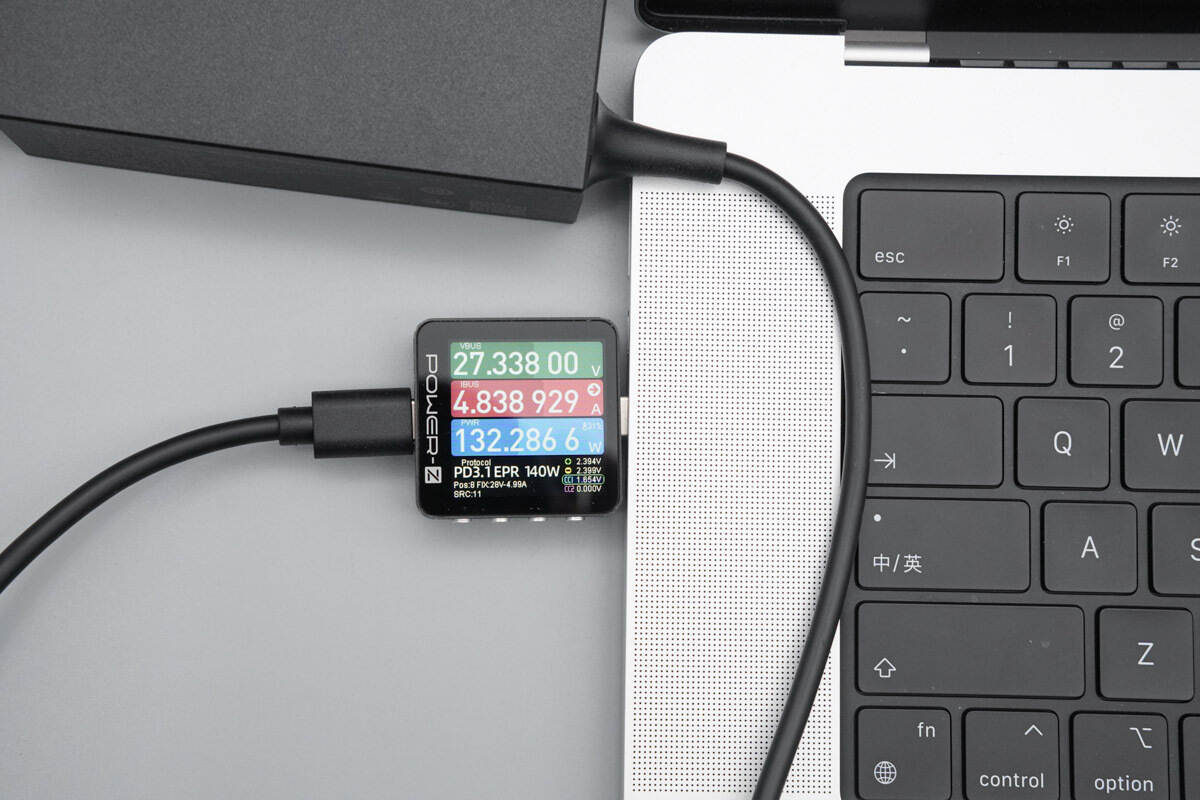
Use it to charge the MacBook Pro 16 M4 Pro, ChargerLAB POWER-Z KM003C shows the power is about 27.34V 4.84A 132.29W.
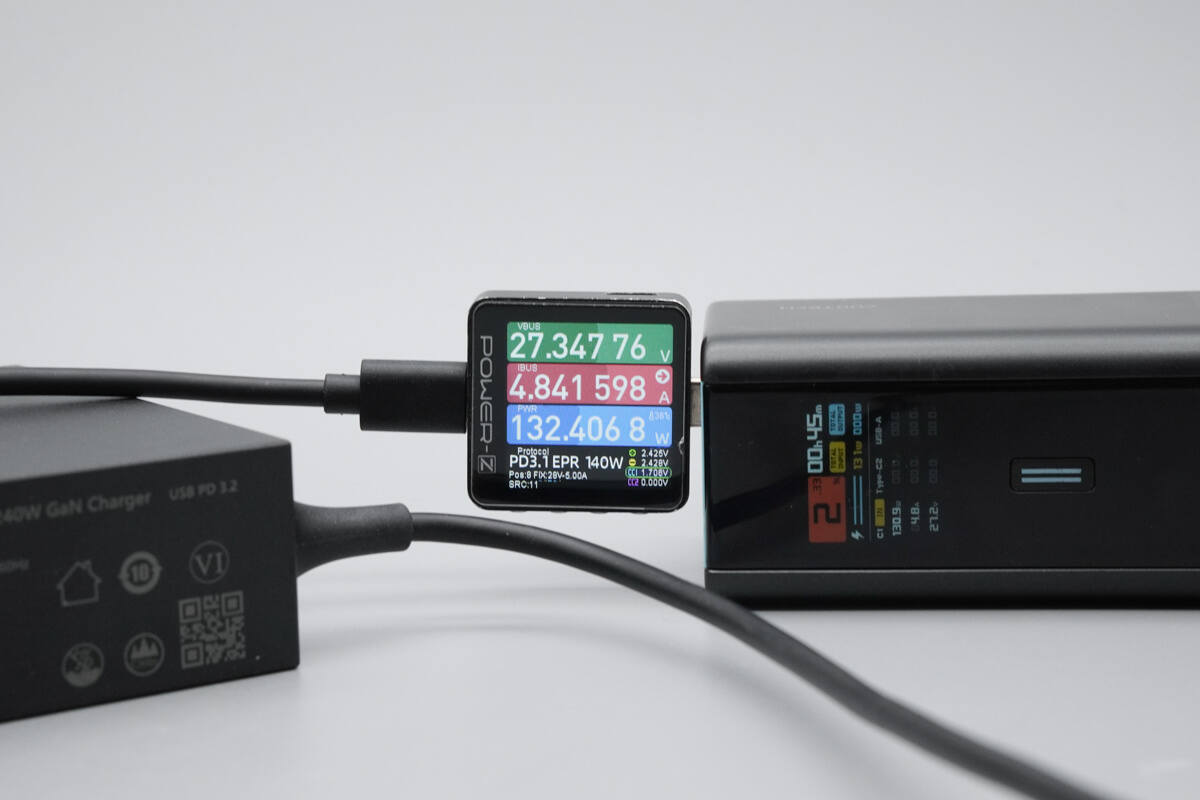
By connecting a high-power portable power bank to it, ChargerLAB POWER-Z KM003C shows the power is about 27.35V 4.84A 132.41W.
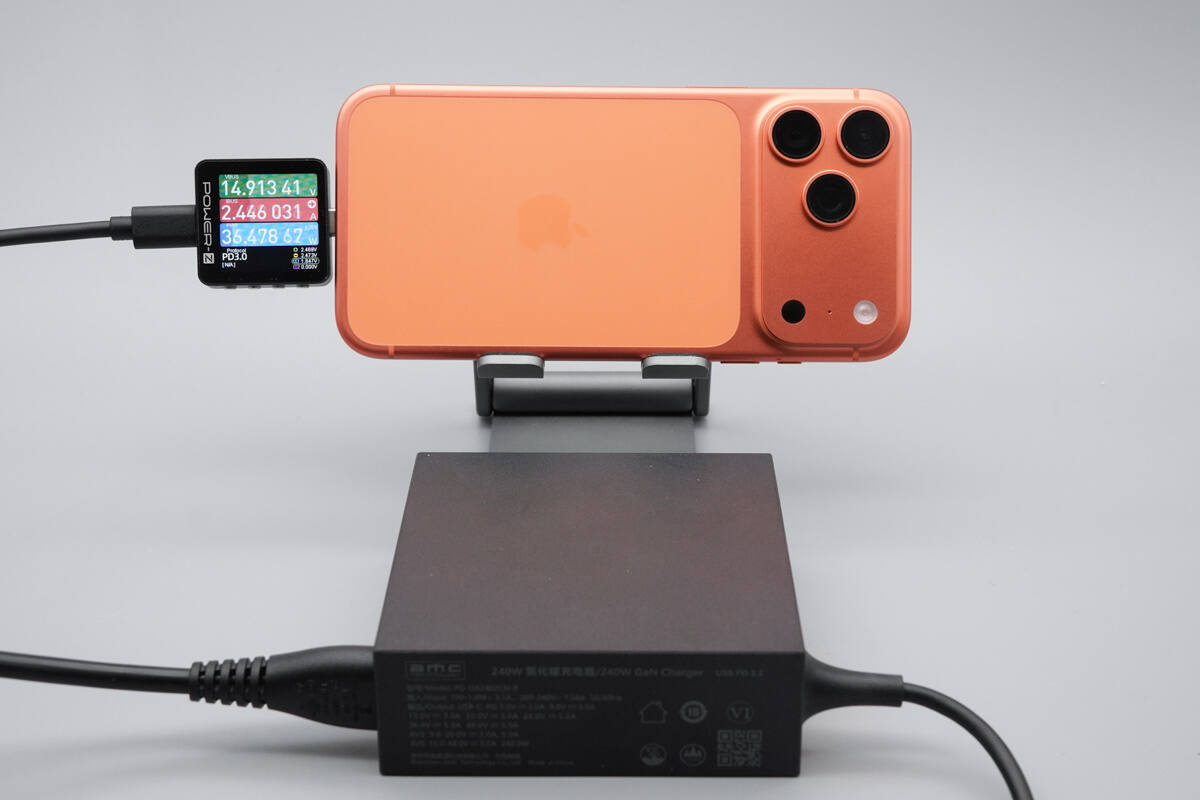
Use it to charge the iPhone 17 Pro Max; the power is about 14.91V 2.45A 36.48W.
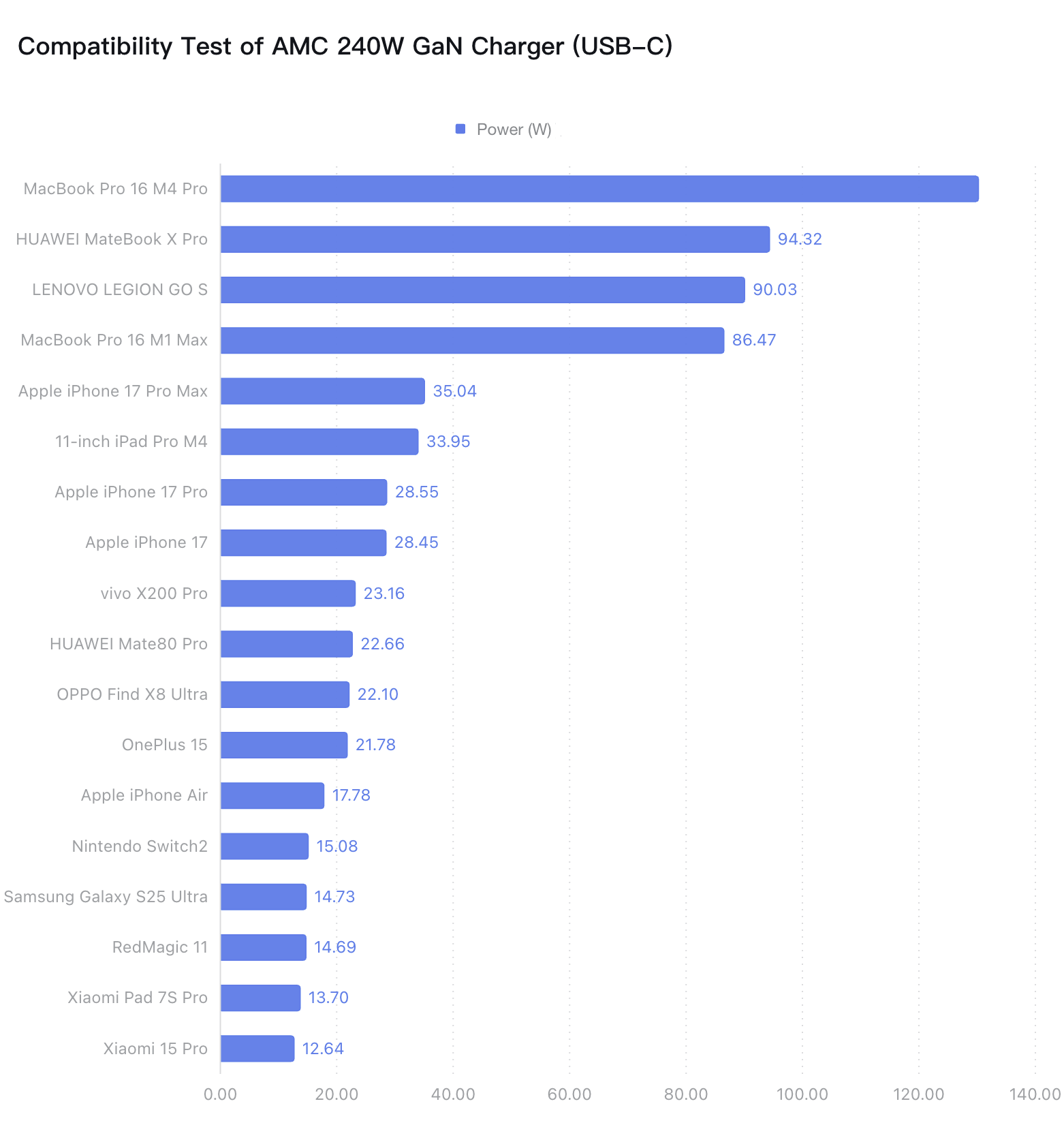
We have compiled the test results into a bar chart. It can deliver sufficient charging power, ranging from 86W to 131W. For some UFCS-supported models, the power is around 22W, while other Android devices charge at 12–17W.
Full Charging Test
The AMC 240W GaN charger supports up to 240W PD3.2 charging. However, most current devices on the market, such as laptops and power banks, have USB-C input power limited to around 140W. Although this does not fully unleash the AMC 240W GaN charger’s potential, the measured performance data can still serve as a useful reference.
Next, we'll use it to fully charge the iPhone 17 Pro Max. They will be put into a 25°C (77℉) thermotank throughout the test. Here is the charging curve made by the PC software of KM003C.
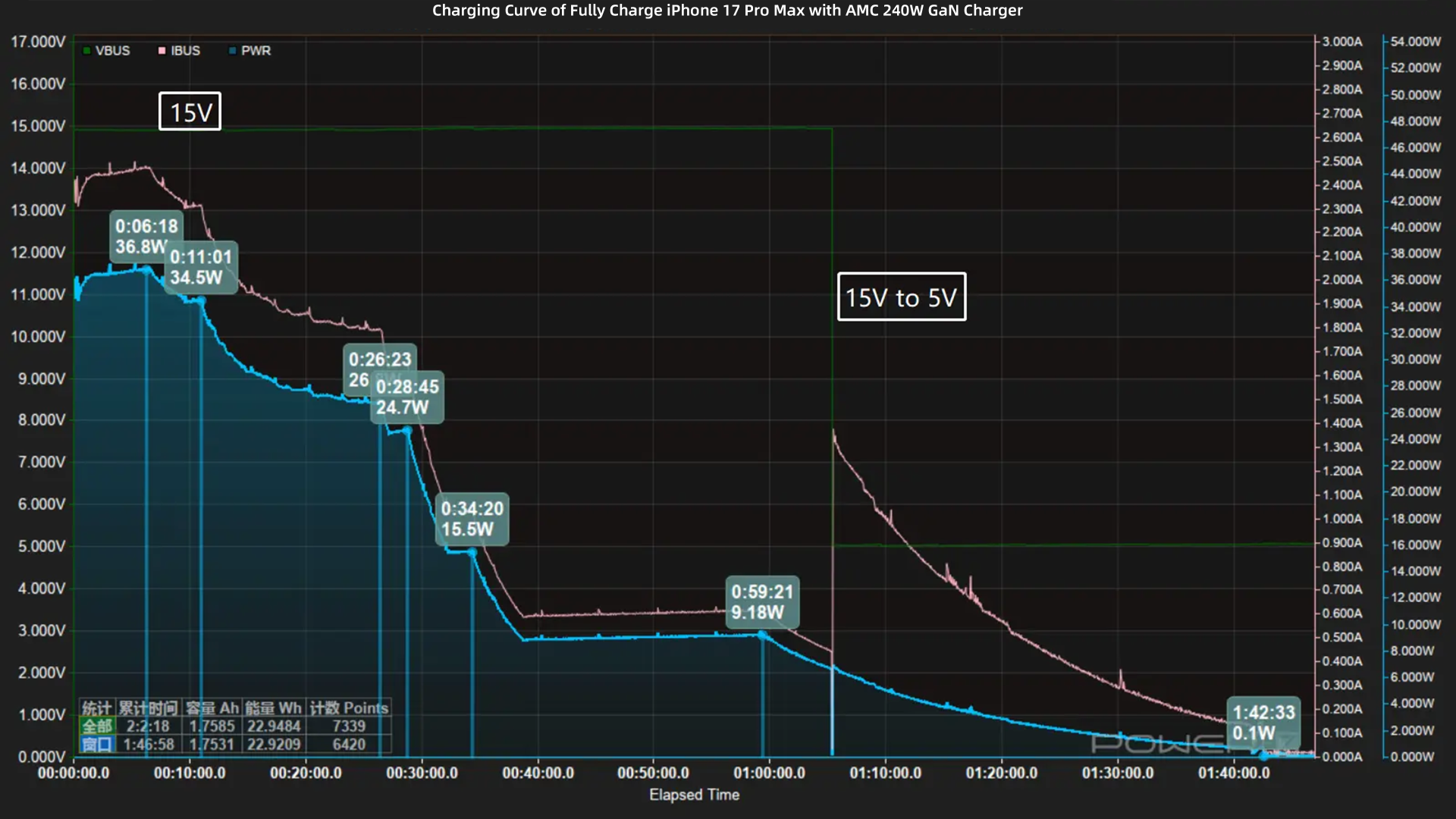
The voltage is around 15V first. The charging curve can be divided into six parts. In the first part, the peak power stayed at 36.8W for the first 6 minutes. Then, the power gradually drops to 34.5W, 26W, 15.5W, and 9.18W in turn. The final part begins at 59 minutes, and the power slowly drops to almost zero. At 1 hour and 5 minutes, the voltage drops to 5V. It takes 1 hour and 42 minutes to fully charge the phone.
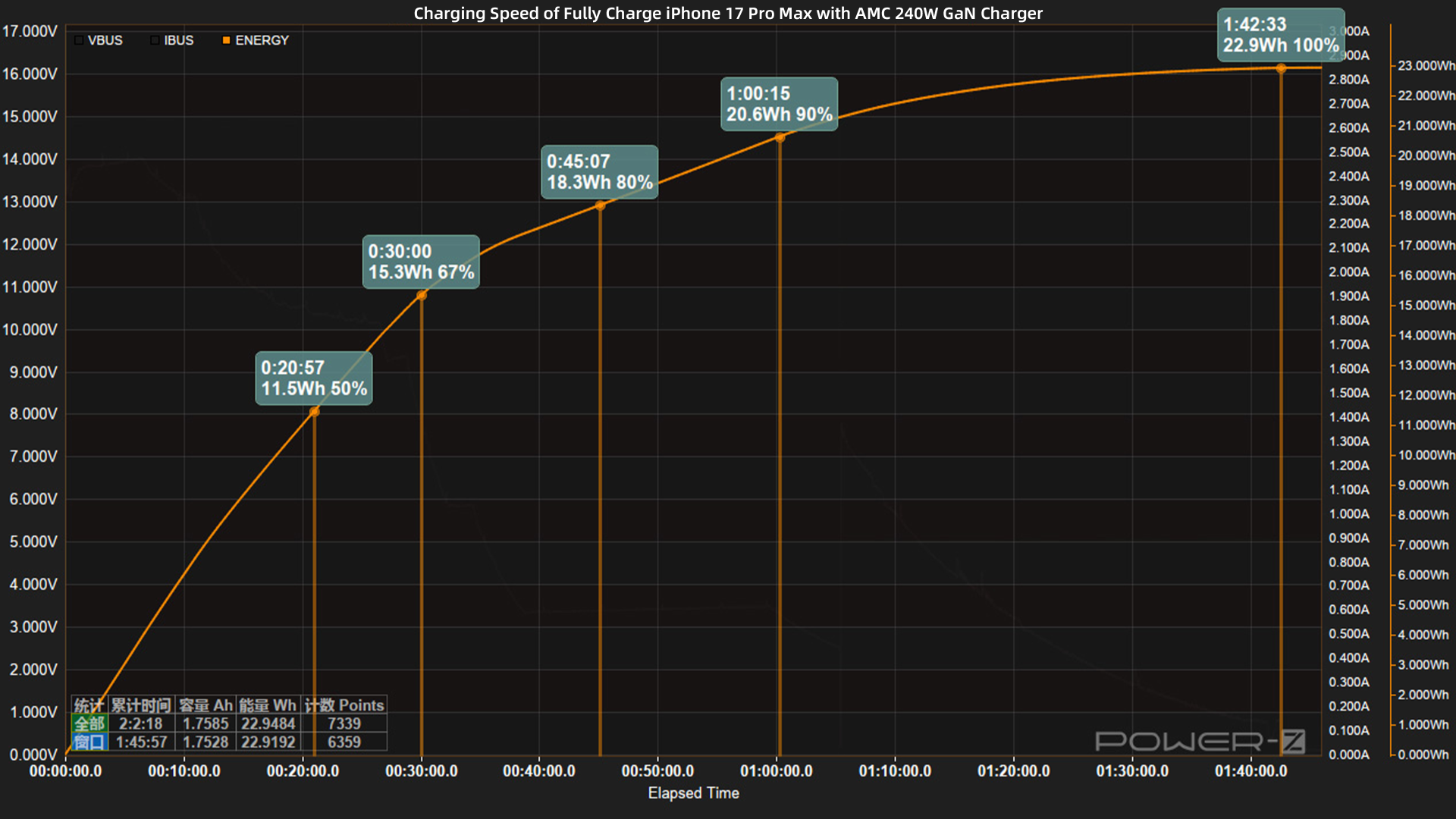
It can charge the iPhone 17 Pro Max to 50% in 20 minutes, 67% in 30 minutes, 80% in 45 minutes, 90% in 1 hour, and 100% in 1 hour, 42 minutes, and 33 seconds.
Next, let’s take a look at its charging performance with the MacBook Pro 16 M4 Pro.
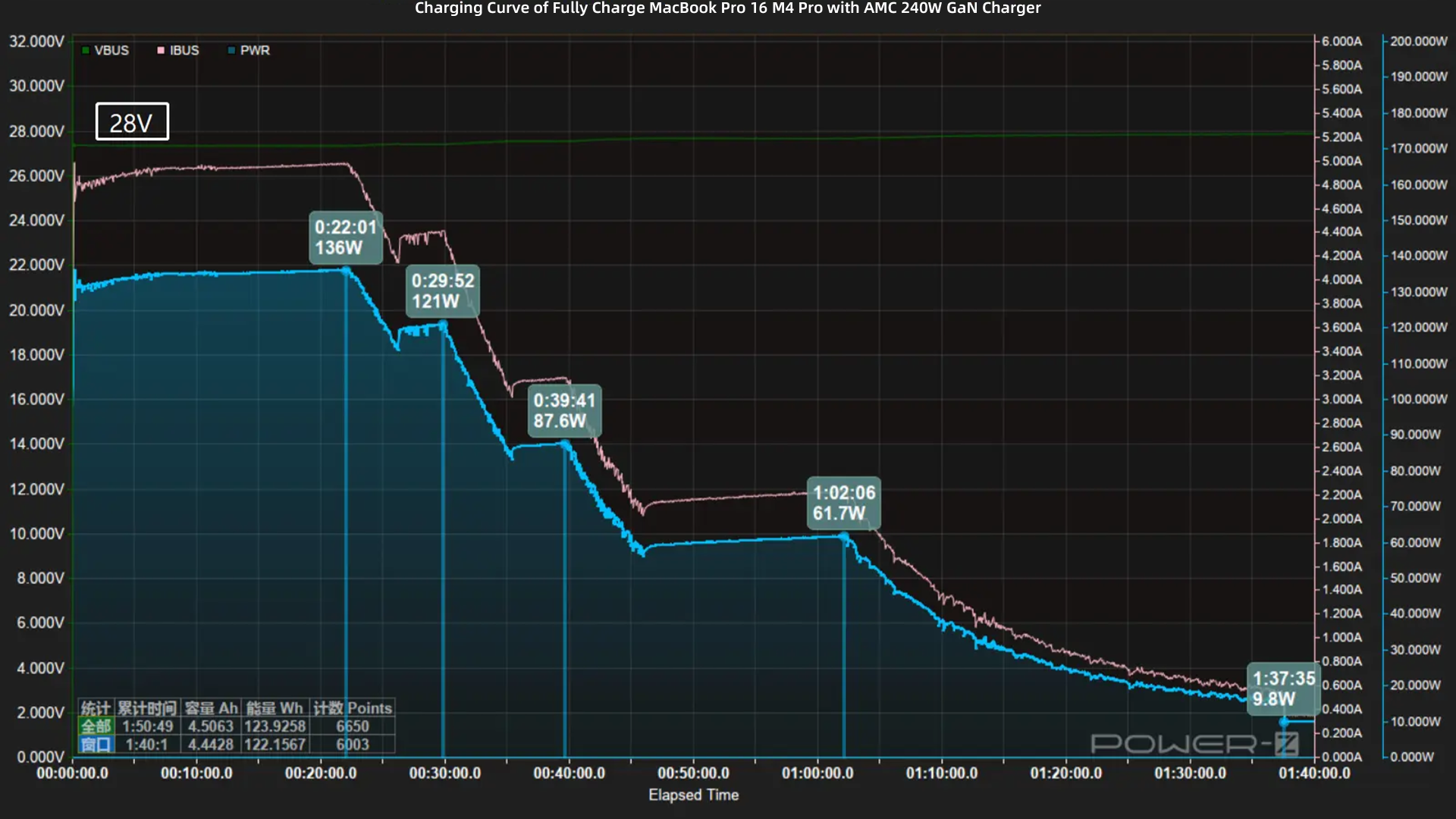
The voltage is always around 28V. The charging curve can be divided into four parts. In the first part, the peak power stayed at 136W for the first 22 minutes. Then, the power gradually drops to 121W, 87.6W, and 61.7W in turn. The final part begins at 1 hour and 2 minutes, and the power slowly drops to almost zero. It takes 1 hour and 37 minutes to fully charge the laptop.
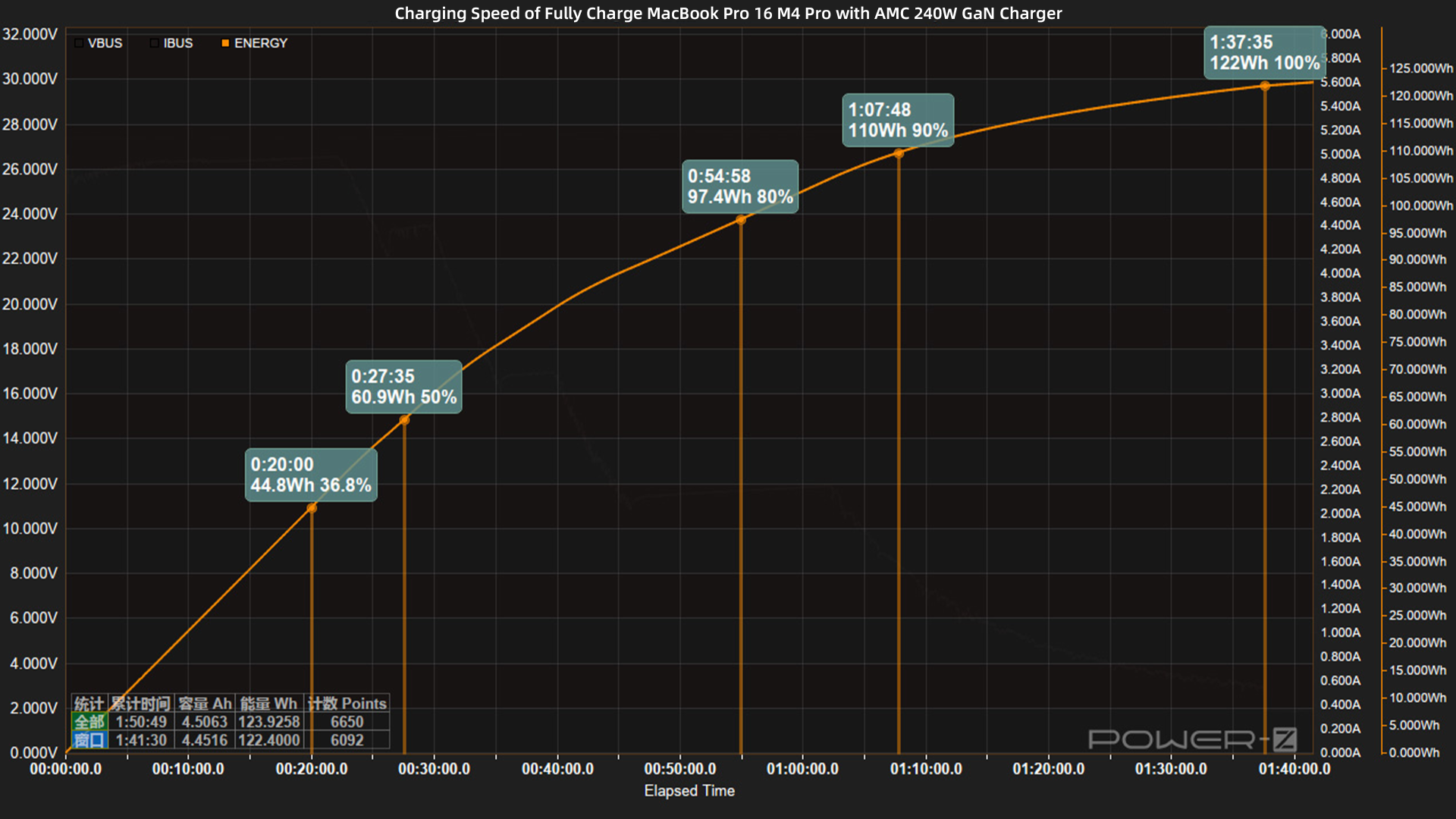
It can charge the MacBook Pro 16 M4 Pro to 50% in 27 minutes, 80% in 54 minutes, and 100% in 1 hour and 37 minutes. Overall, the charging time is comparable to that of the laptop’s standard 140W charger and USB-C to MagSafe 3 charging kit.
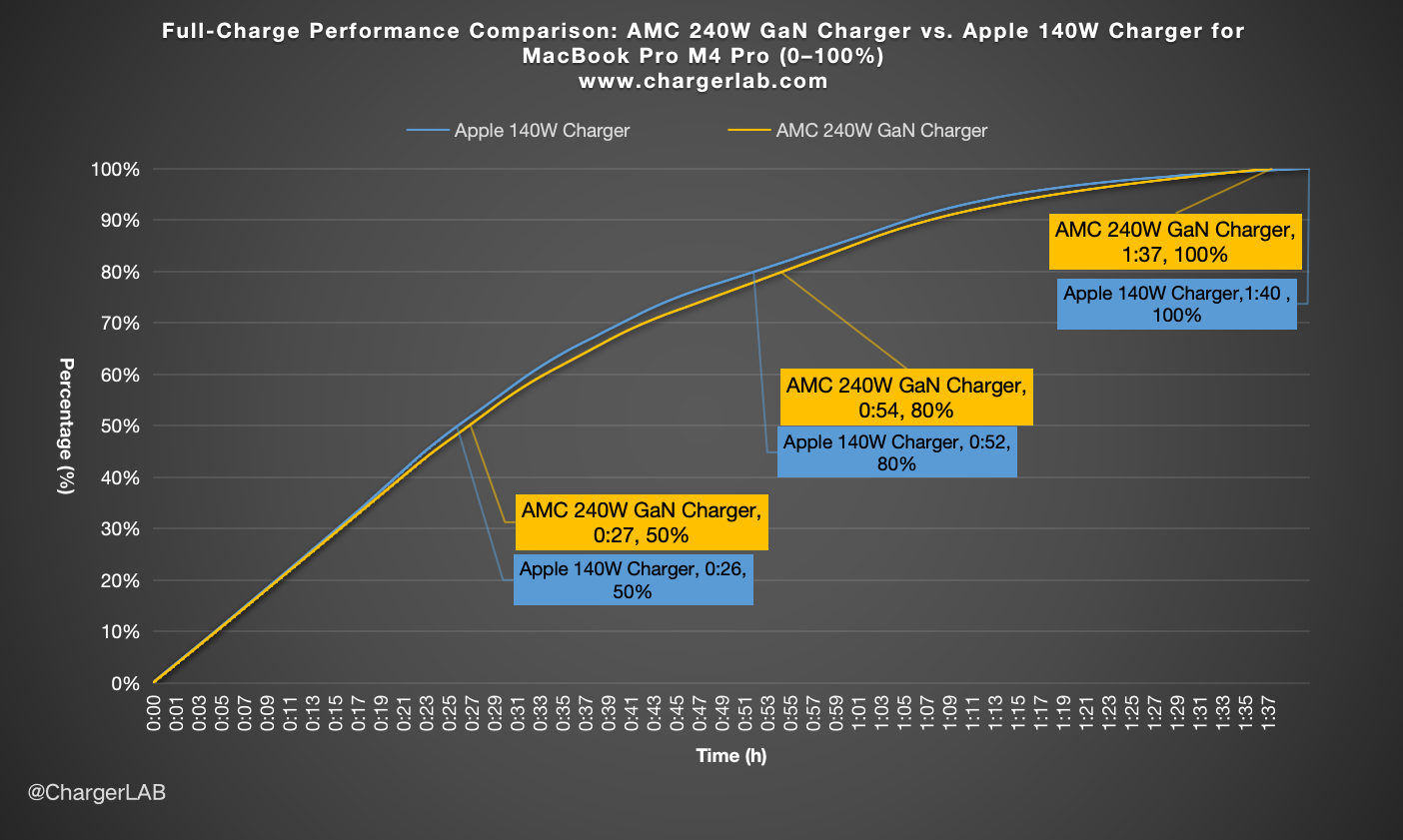
Compared with Apple’s original 140W charger, the AMC 240W GaN charger is about 3 minutes faster.
Standby Power Test
Next, we will test its standby power consumption.
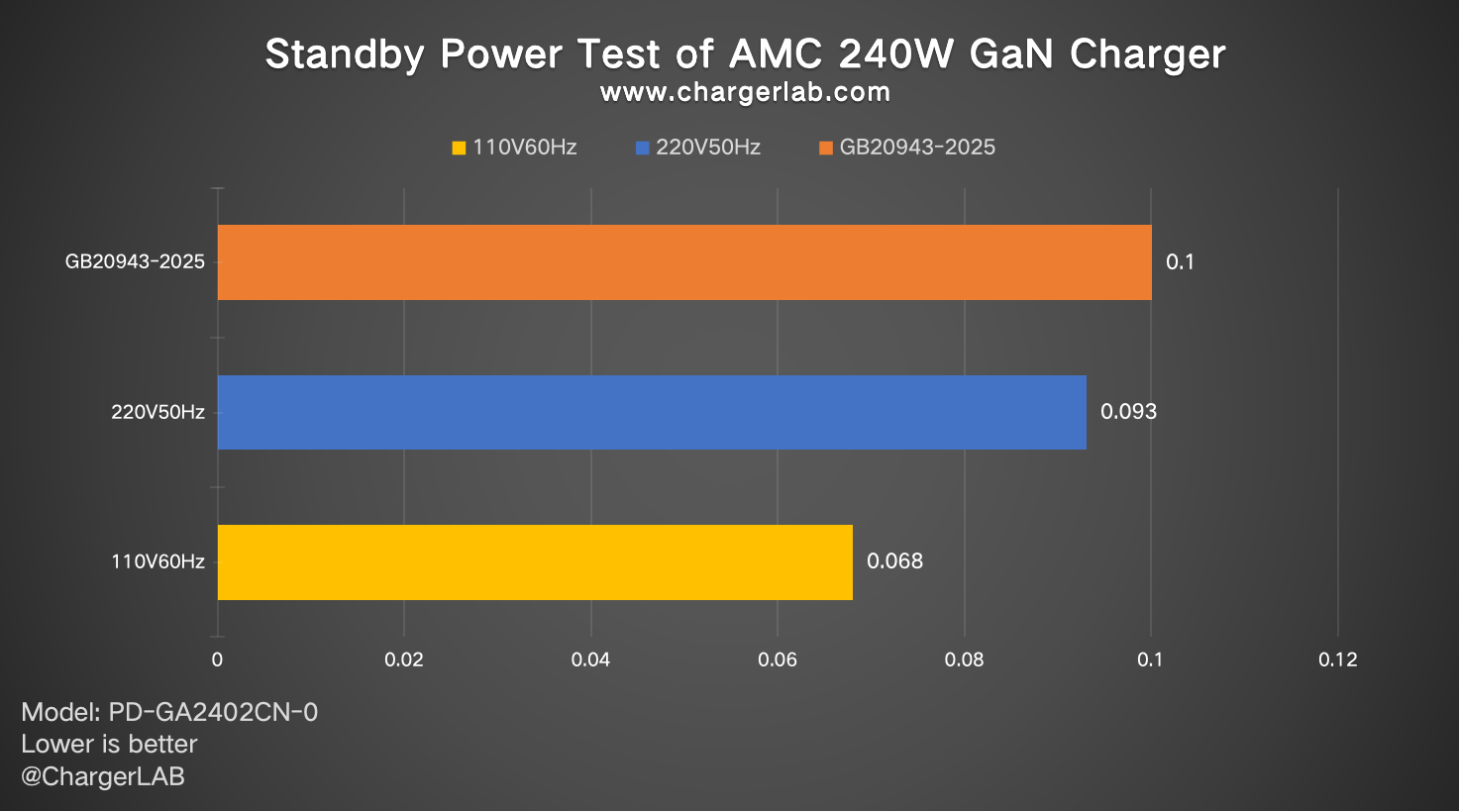
Tested with a Yokogawa power meter, the charger’s no-load power consumption is only 0.093W at 220V 50Hz, which translates to an annual energy loss of about 0.815 kWh. For data centers deploying dozens or even hundreds of AI devices, this cumulative value can significantly reduce long-term operational costs.
At 110V 60Hz, the no-load power drops to 0.068W, corresponding to an annual loss of about 0.595 kWh, making it equally suitable for the long-term power demands of AI computing nodes.
Summary
The charger’s no-load power consumption under both 220V and 110V dual-voltage platforms is below the strict ≤0.1W requirement of the GB20943-2025 standard. This performance not only ensures reliable 7×24 operation of AI devices but also optimizes overall energy efficiency in computing infrastructure, making long-term AI power delivery more economical and sustainable.
7-Level Efficiency Test
In commercial AI computing scenarios—such as AI servers, edge AI nodes, and high-end GPU workstations—the long-term stability and efficiency of the power supply directly determine sustained computing performance and operational costs. The AMC 240W GaN charger has passed the U.S. Department of Energy’s DOE VII 7-level efficiency rigorous testing, demonstrating excellent performance under both North American (115V AC/60Hz) and European (230V AC/50Hz) power environments, making it fully compatible with global AI infrastructure deployment requirements.
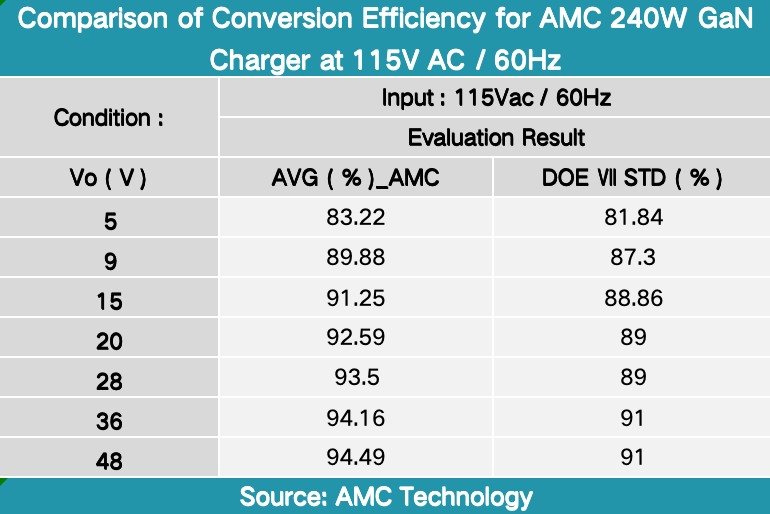
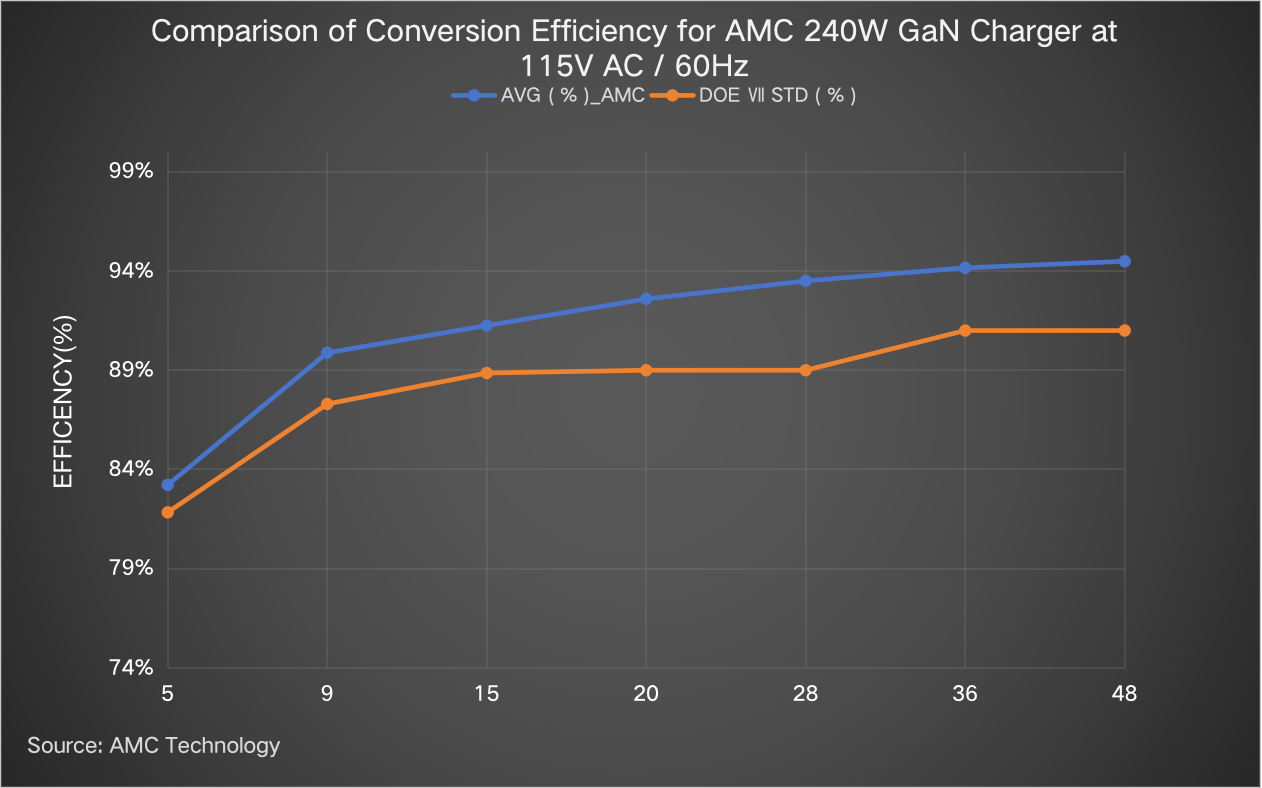
For the North American 115V AC/60Hz power environment, data shows that across the full voltage range—from 5V low-voltage to 48V high-voltage—the measured AVG (%)_AMC efficiency consistently exceeds the DOE VII standard requirements. Specifically, the 48V output, tailored for high-power AI loads, achieves an efficiency of 94.49%, while the 5V low-voltage output still reaches 83.22%. With efficiency surpassing the standard across all levels, it provides low-loss, highly stable power delivery for AI workstations and edge computing devices in North America, effectively reducing long-term thermal stress during continuous AI operation.
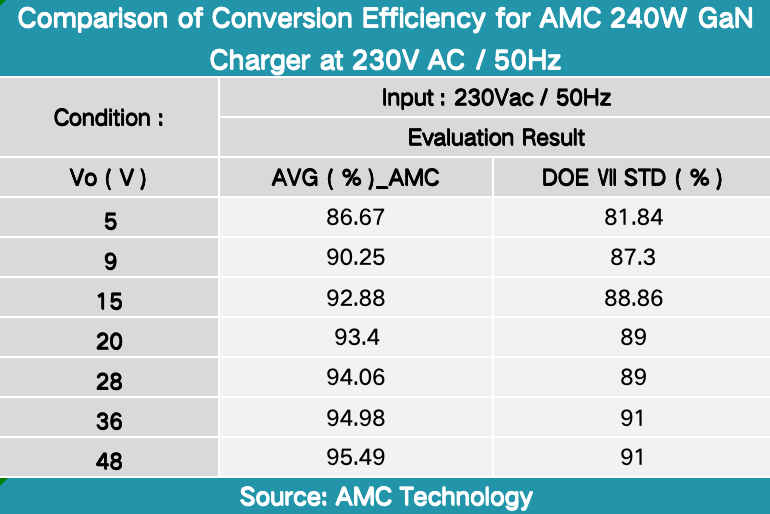
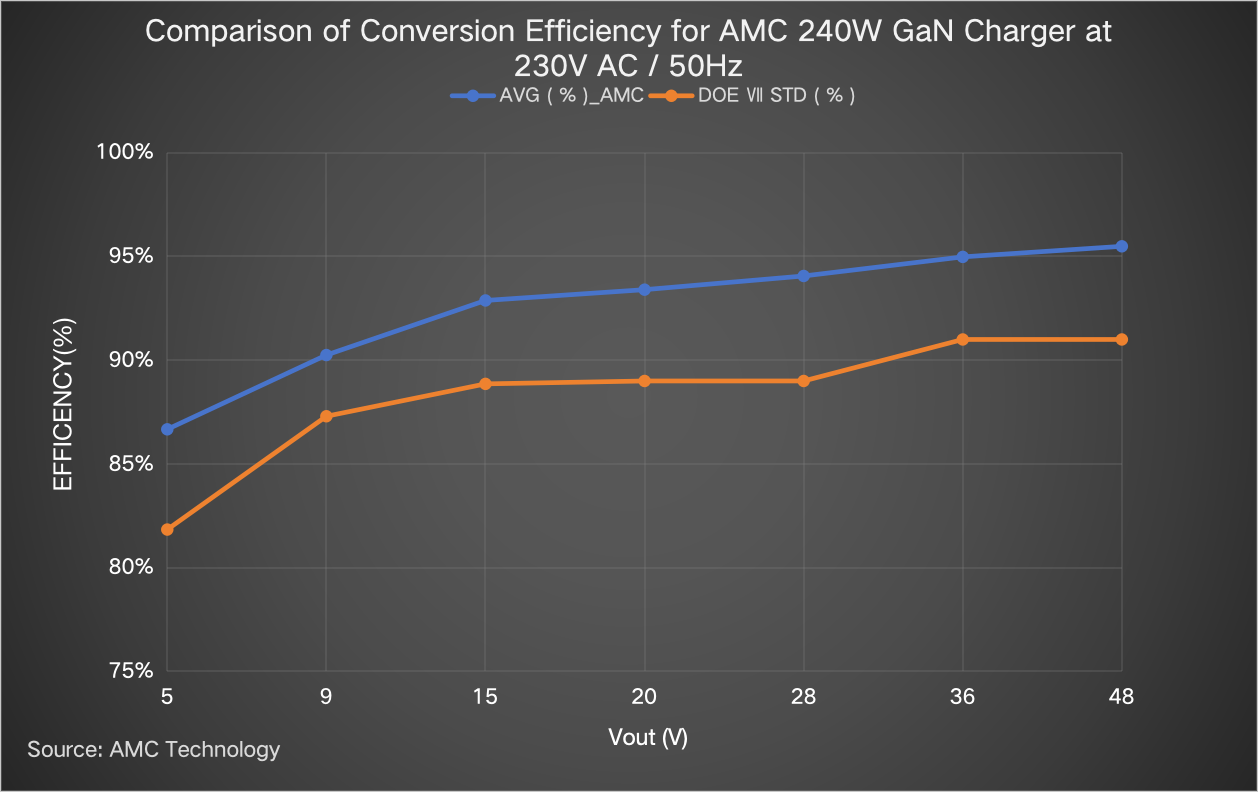
Under the European 230V AC/50Hz power environment, the charger’s efficiency performance reaches an even higher level: as the output voltage increases from 5V to 48V, the measured AVG (%)_AMC efficiency steadily rises from 86.67% to 95.49%. The high efficiency at higher voltage levels perfectly matches the power demands of AI servers, GPU clusters, and other high-power computing devices, significantly reducing long-term energy costs for data centers and making AI computing output more economical.
Comparing the two test sets, the AMC 240W GaN charger demonstrates measured efficiency across all voltage levels well above the DOE VII 7-level efficiency standard, with overall efficiency performing better under the 230V high-voltage grid. This performance provides a highly efficient and reliable power solution for AI infrastructure deployment worldwide, enabling AI devices to achieve lower energy consumption and more stable 7×24-hour computing output.
Leveraging the low-power, high-efficiency advantages of USB-C power delivery, the DGX Spark achieves 1000 TOPS NVFP4 AI performance with a 140W SoC TDP. For scenarios such as model prototyping, edge AI inference, and memory-consistent architecture research, its combination of “convenient USB-C power + powerful computing” allows professional AI computing to operate without the constraints of space or equipment, making it a flexible and efficient creation tool for developers.
Conversion Efficiency Test
Then, we are going to the conversion efficiency test. We tested the conversion efficiency at two inputs: 220V 50Hz and 110V 60Hz. Below are the test results.
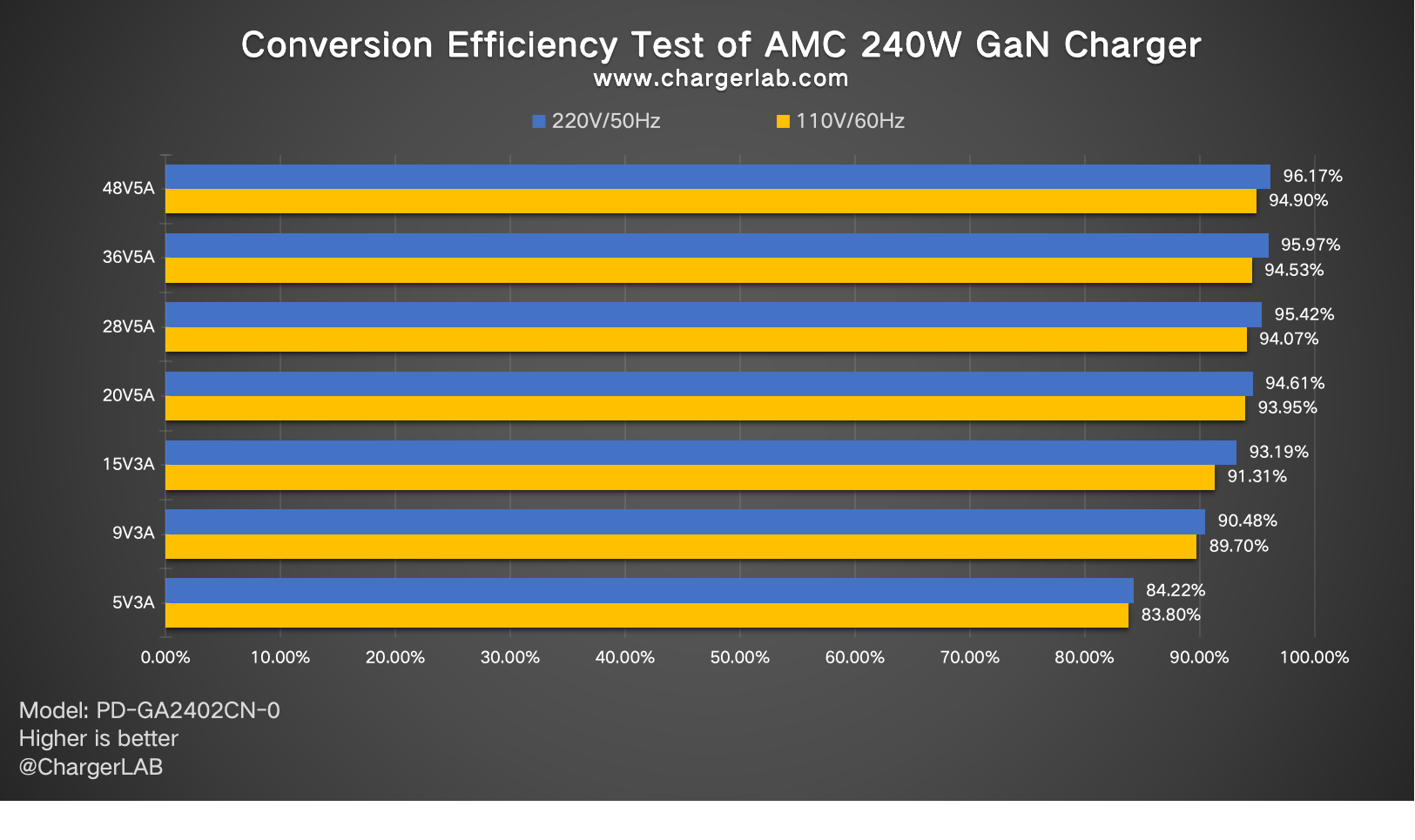
Let’s first examine the conversion efficiency at 220V 50Hz: overall efficiency ranges from 84.22% to 96.17%. The highest efficiency is achieved at the 48V 5A output, reaching 96.17%, while the lowest occurs at the 5V 3A output, at 84.22%.
At 110V 60Hz, the overall conversion efficiency ranges from 83.80% to 94.90%. Again, the 48V 5A output achieves the highest efficiency at 94.90%, while the 5V 3A output is the lowest at 83.80%.
Overall, the AMC 240W GaN charger demonstrates top-tier conversion efficiency compared to other chargers on the market. Except for the 5V low-voltage output, nearly all other outputs achieve high efficiency above 90%.
Ripple Test
Power adapters rely on switch-mode power supplies, which means that the output from the transformer's secondary winding is not direct current and must be rectified and filtered by capacitors before being output. As a result, ripples can exist in the output signal. To evaluate the quality of the adapter's output, ChargerLAB employs an oscilloscope to test the ripple value of the converter's output and compare it with industry standards. In general, the lower the ripple, the higher the output quality.
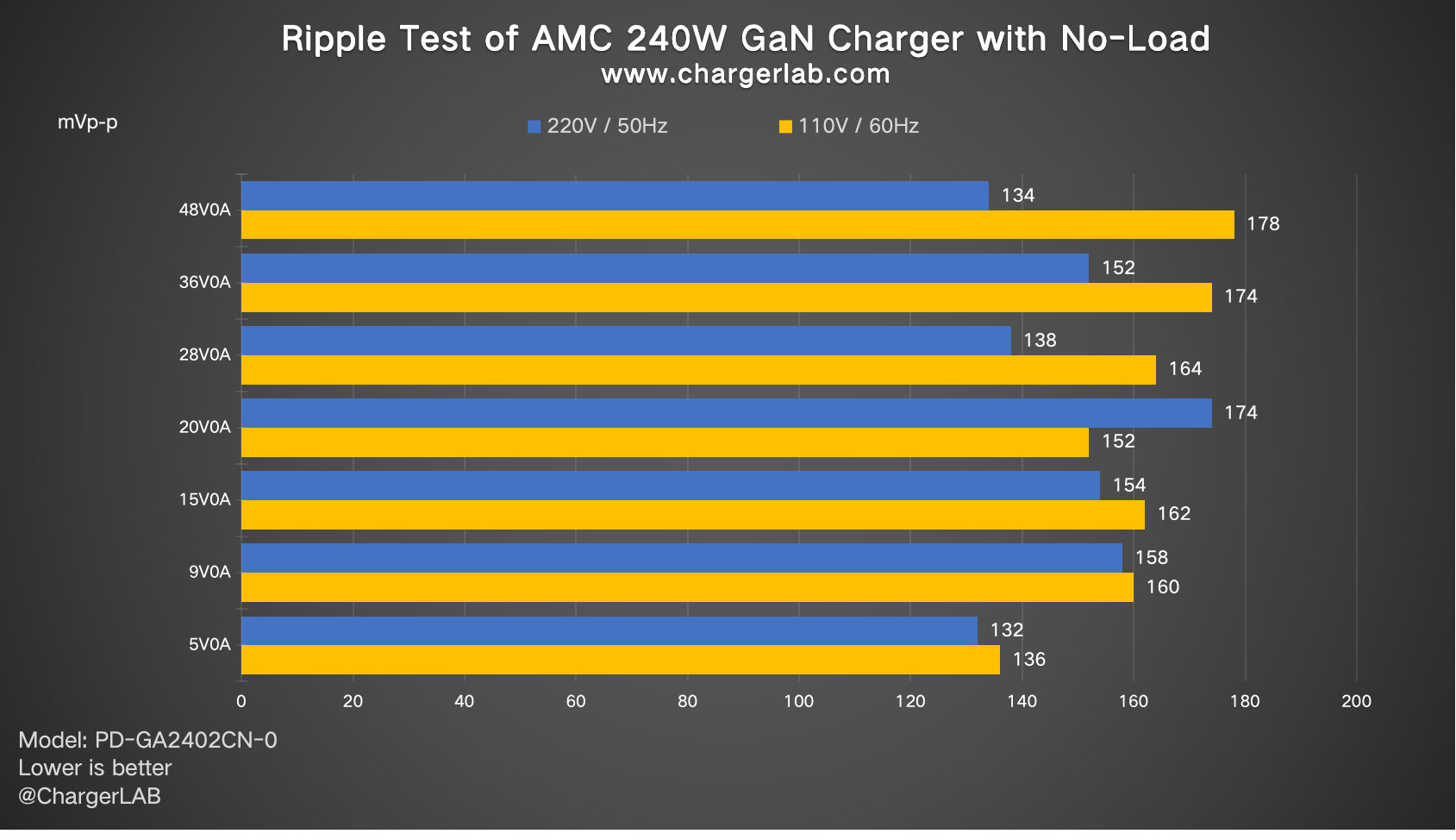
At 220V 50Hz no-load, the highest ripple peak-to-peak occurs at the 20V 0A output, measuring 174 mVp-p, while the lowest is at the 5V 0A output, measuring 132 mVp-p.
At 110V 60Hz no-load, the highest ripple peak-to-peak occurs at the 48V 0A output, measuring 178 mVp-p, and the lowest is again at the 5V 0A output, at 136 mVp-p.
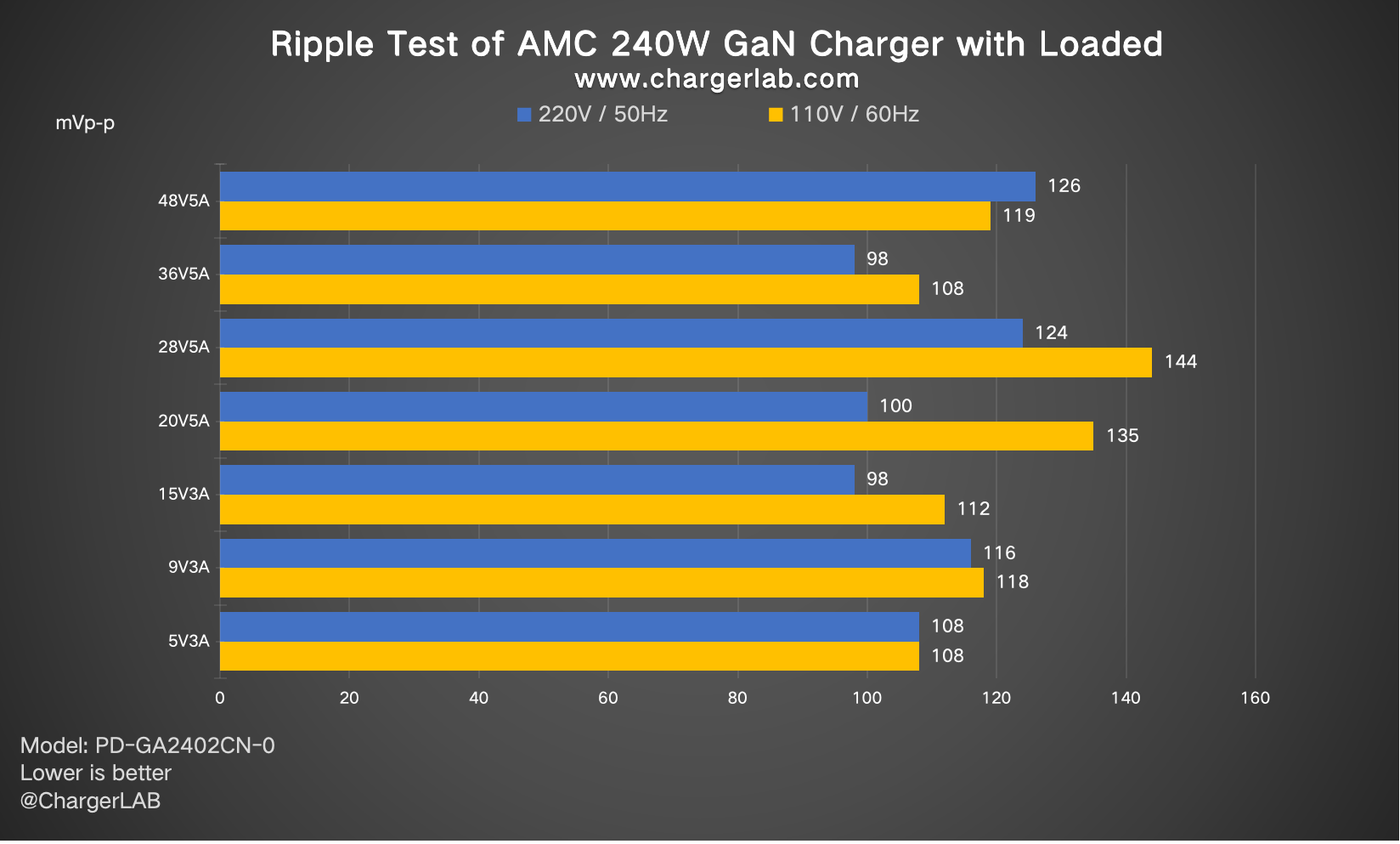
Under load at 220V 50Hz, the highest ripple peak-to-peak occurs at the 48V 5A output, measuring 126 mVp-p, while the lowest is at the 15V 3A and 36V 5A outputs, both at 98 mVp-p.
Under load at 110V 60Hz, the highest ripple peak-to-peak occurs at the 28V 5A output, measuring 144 mVp-p, and the lowest is at the 5V 3A and 36V 5A outputs, both at 136 mVp-p.
Overall, ripple output is stable across both voltage platforms, ranging from 98–144 mVp-p under load. The actual ripple performance meets the GB/T 20943-2025 power supply ripple standard, ensuring reliable power delivery for AI computing devices and high-end electronic components.
Temperature Test
Then, we are going to the maximum temperature test. We put the charger into a 25°C (75℉) thermotank throughout the test. And recorded the highest temperature on the front and back after charging at 48V 5A 240W for an hour.
First, let’s examine the charger’s temperature performance at 220V 50Hz output.
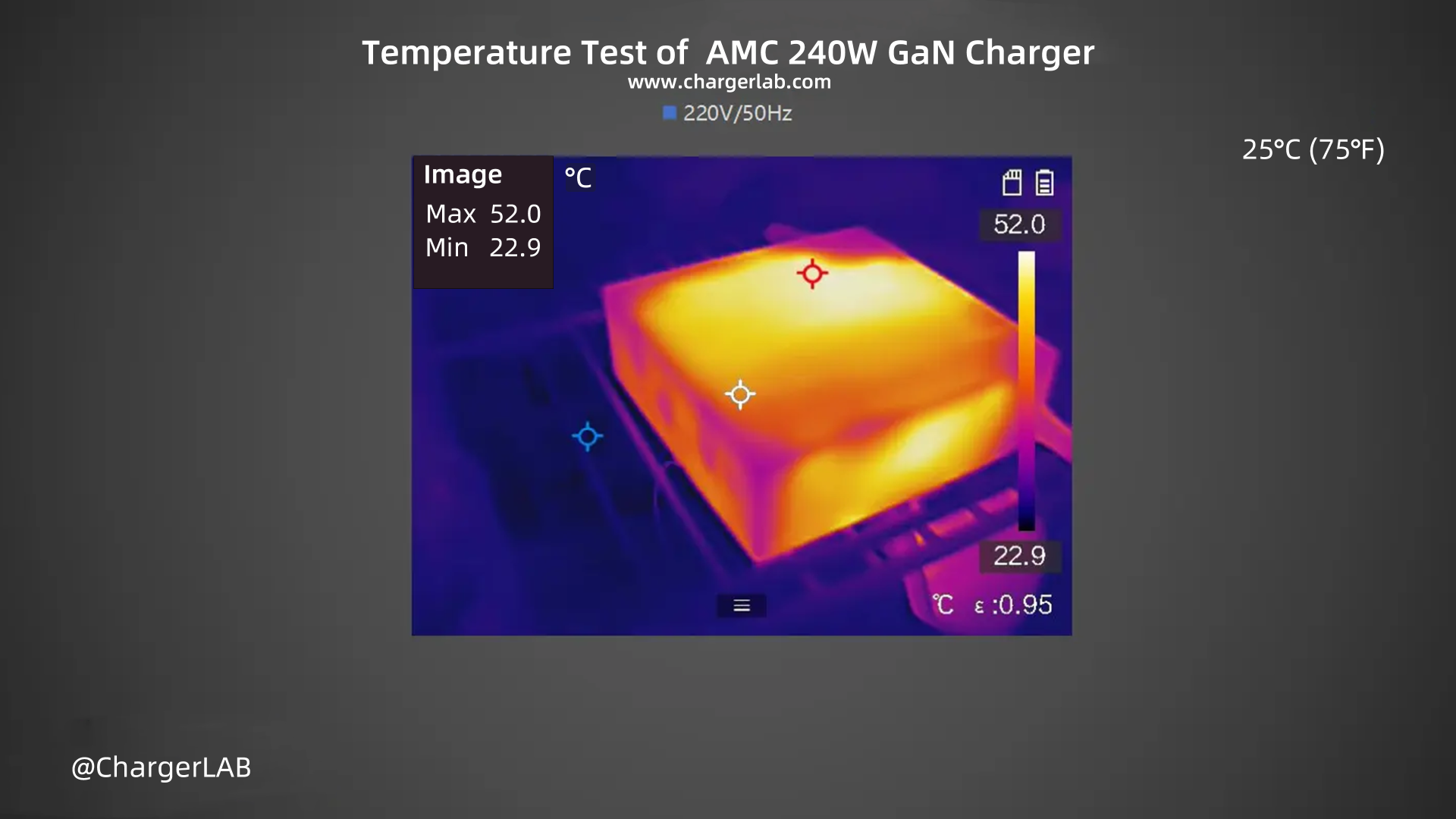
After one hour of loading, the maximum front temperature is 52.0℃ (125.6 ℉).
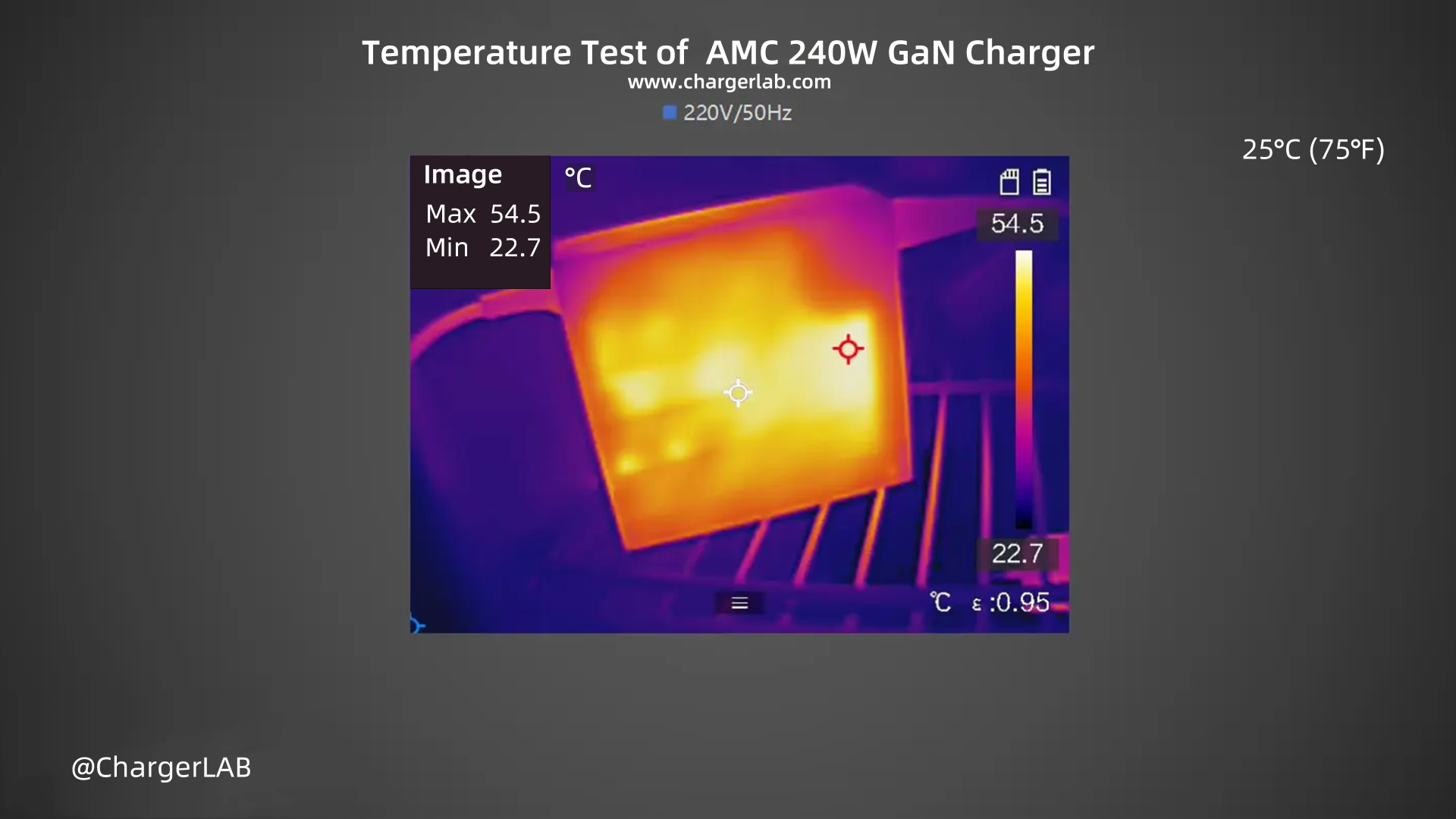
And the maximum temperature on the back is 54.5℃ (130.1 ℉).
Next, check how the temperature performance is under 110V 60Hz.
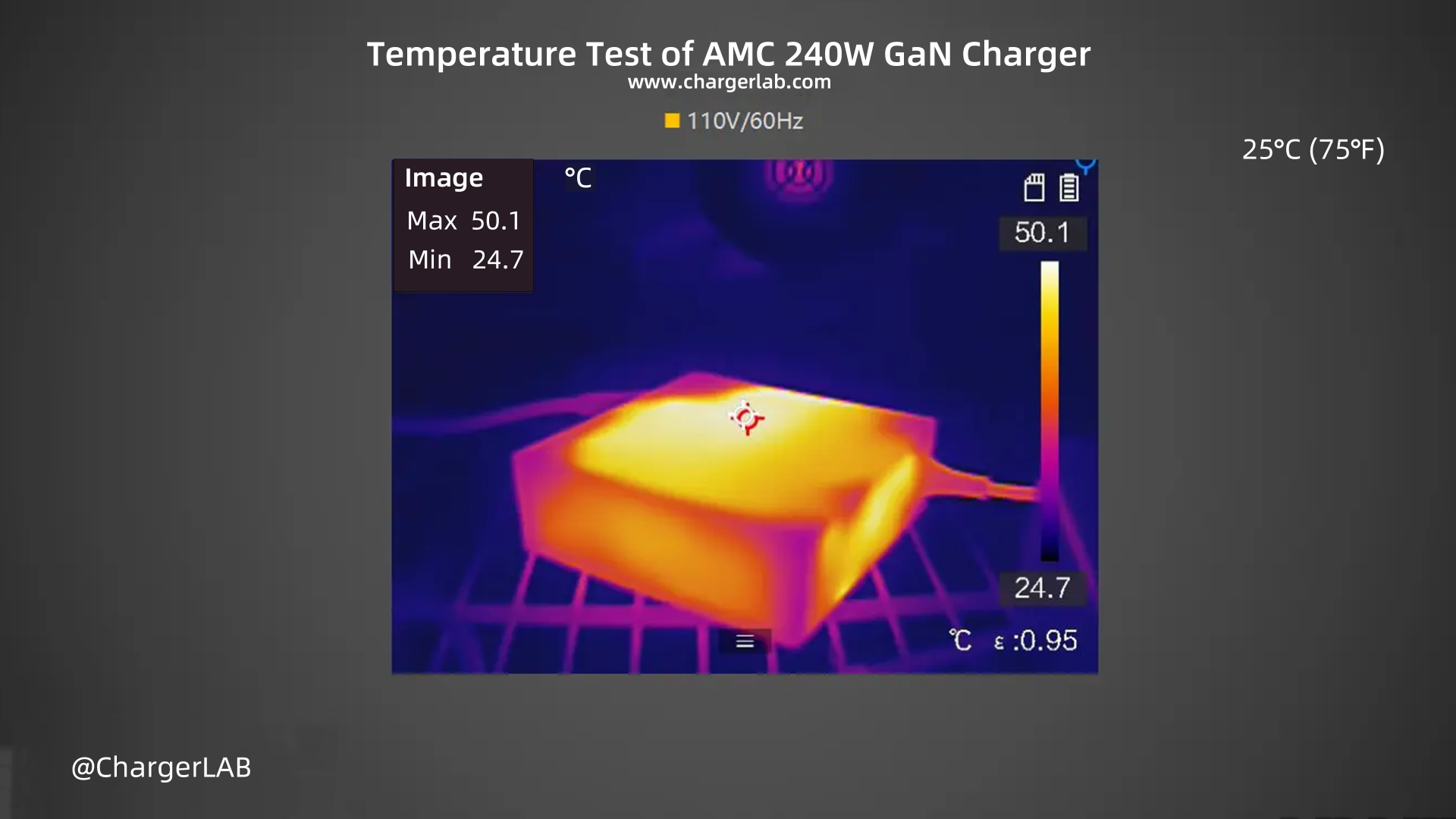
After one hour, the maximum front temperature is 50.1℃ (122.18 ℉).
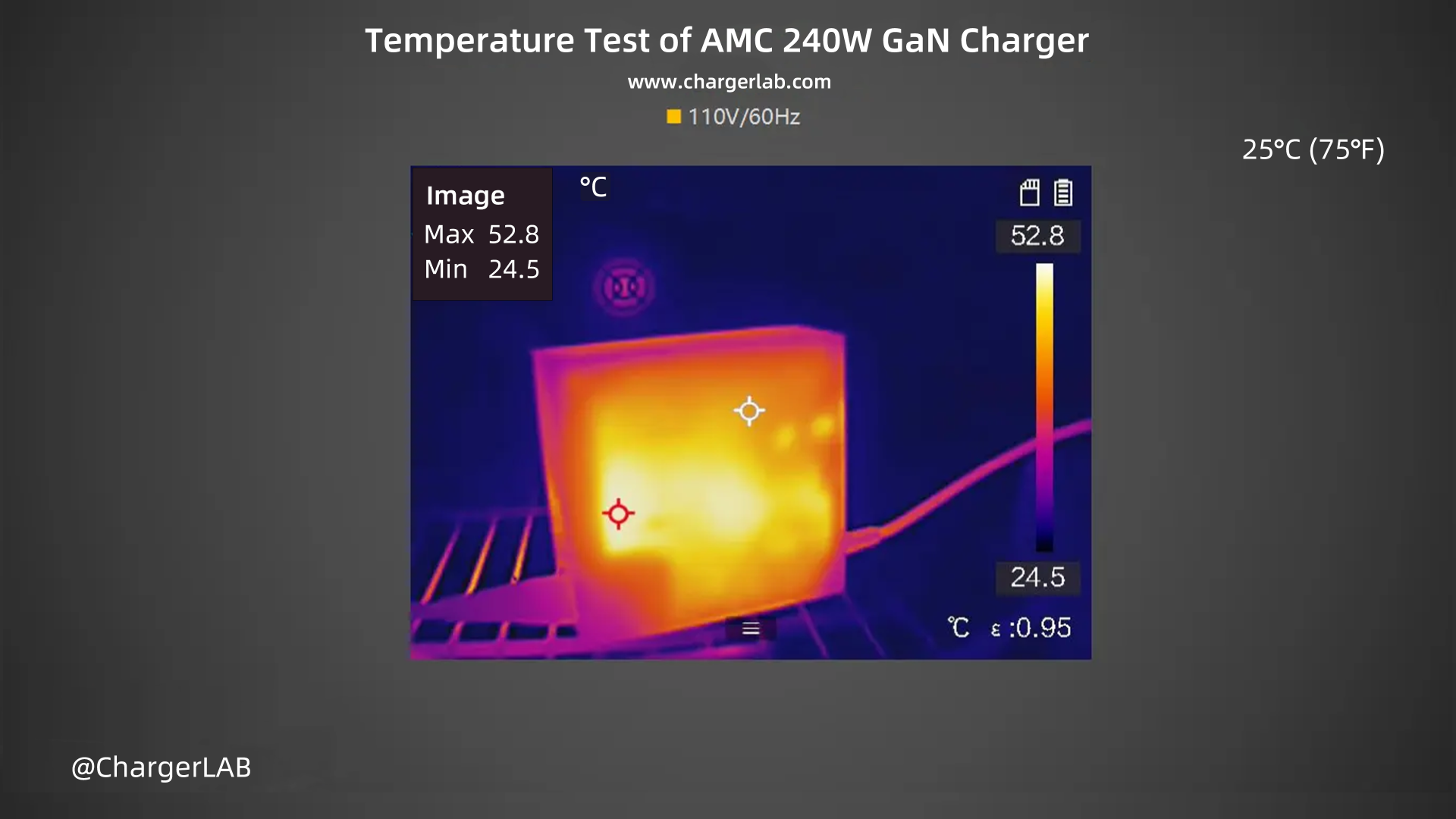
And the maximum temperature on the back is 52.8℃ (127.04 ℉).
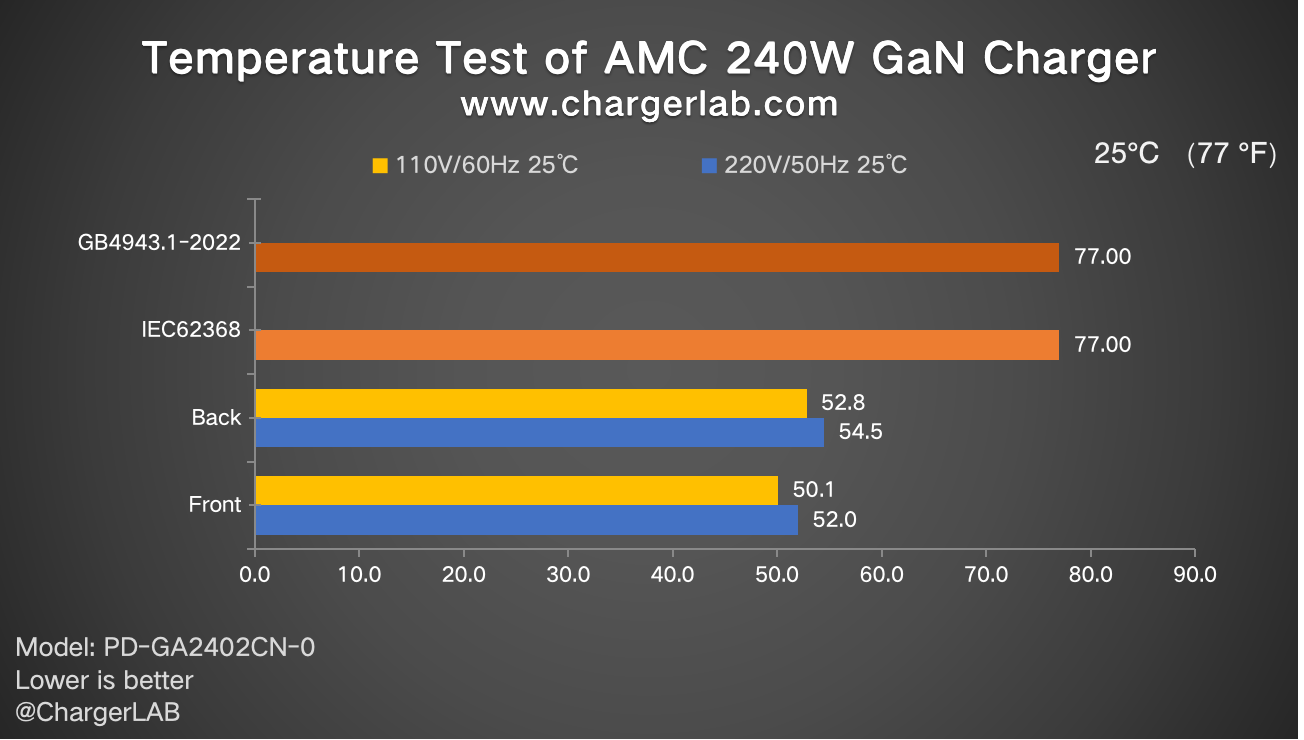
Plotted as a bar chart, it can be seen that the AMC 240W GaN charger reaches a maximum temperature of 54.5℃ (130.1 ℉) during output under both 220V 50Hz and 110V 60Hz conditions. Overall, its thermal performance is excellent, and after the load test, it can be touched without noticeable heat, meeting power supply industry safety and thermal control standards.
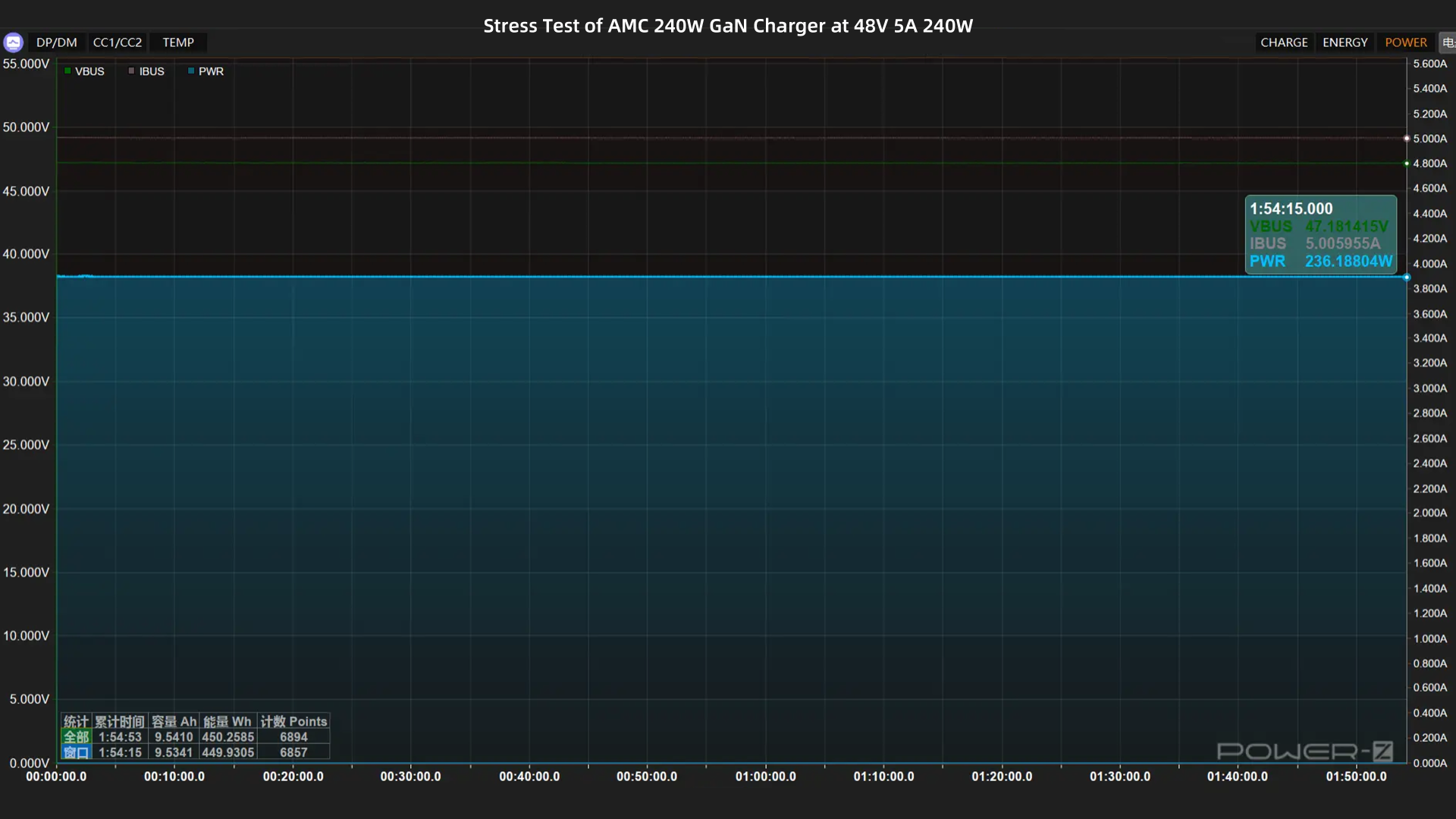
During the subsequent 2-hour stress test, its output remained rock-solid, with no fluctuations in voltage or current under load, and the full-load output curve stayed stable throughout.
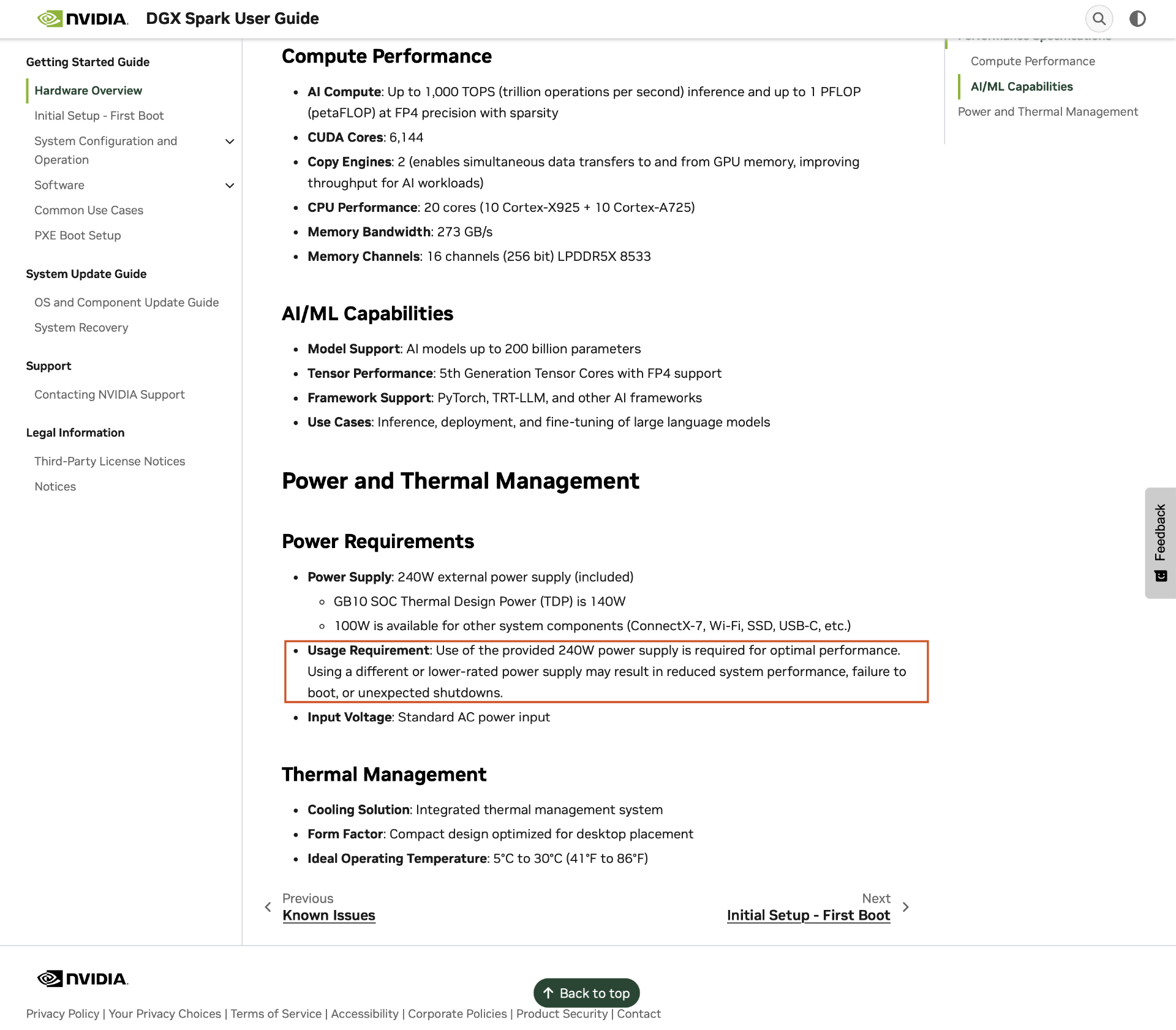
A quick check on NVIDIA’s official website shows that to unleash the DGX Spark’s full performance, it must be paired with a power supply capable of sustaining 240W over extended periods. The AMC 240W GaN charger has been tested and precisely meets this requirement, providing reliable support under long-term full-load operation across both voltage platforms, with excellent thermal control performance.
Summary of ChargerLAB
In today’s era of explosive AI computing growth, the AMC 240W GaN charger stands as a benchmark for high-end customized power delivery and a core support for AI infrastructure deployment. As the power adapter solution for the NVIDIA DGX Spark GB10 chip platform, it leverages AHB topology and full-digital design to achieve primary-side soft switching and low losses, enhancing both power density and conversion efficiency. With a stable 240W output, it provides reliable 7×24-hour power for AI servers and GPU clusters, balancing computing stability with energy cost control.
Its 7-level efficiency certification and extremely low no-load power consumption significantly reduce long-term operational costs for AI data centers. Outstanding thermal management at full 240W load further ensures the continuous and stable operation of AI computing devices, minimizing performance fluctuations caused by overheating. At the same time, it seamlessly integrates with high-end consumer electronics and supports commercial intelligent robots and premium smart home devices, achieving full-scenario coverage across computing devices, consumer electronics, and commercial intelligent equipment—maximizing adaptability.
Whether powering AI clusters for large-scale model training or meeting the diverse power demands of consumer, commercial, and smart robotics applications, as well as high-end smart home setups, the AMC 240W GaN charger strikes the perfect balance between power, efficiency, and versatility. It provides the optimal solution for power delivery in the AI era, making it the go-to choice for high-end, high-power AI scenarios.